Celtics point guard Rajon Rondo is the current league leader in assists, with a whopping 13.4 per game. He is likely to remain the league’s assist leader for the indefinite future. Two time MVP Steve Nash is second on this season’s list, yet he is a considerable distance behind Rondo, averaging 10.8 assists per game. This gap will not be overcome.
To put it into some context, assume for a moment that Nash and Rondo both play every game remaining in their respective regular seasons, and that Nash assumes his 10.8apg pace throughout. If Nash passes for exactly 10.8 apg over Phoenix’s remaining 43 games, Rondo need average only 9.3 assists per game for the remainder of the season to stay ahead of him. That’s still a lot, but not for Rondo.
(As an aside, when was the last time had 10 times more assists than fouls? Because that’s where Steve Nash is at right now.)
Rondo’s 13.4 apg average, should it sustain, would be the 8th highest total of all time. Only 7 times has it been bettered – 5 of those times by all time assist leader John Stockton – and never by more than 1.1apg. It is perhaps therefore understandable that Rondo, notorious over-passer than he is, is unashamedly going for the record. On a team filled with scorers other than him, and in such proximity to the record, he might as well. He has both the talent and the mindset.
However, he still needs huge assists from others.
While it is not the intent of this author to debate Rondo’s playmaking nor shot selection skills, it is worth noting quite how much goes into obtaining even one assist. This is particularly the case when you are playing at home.
In last night’s game against Orlando, Rondo passed for his customary 13 assists, an ever-important cog in a good win over quality opposition.The tone for the evening was set within the first 14 seconds, when Shaquille O’Neal made the game’s first basket on the game’s first possession. Rondo was credited for the assist on the play, and here is the play in question.
Decent finish. There are, however, a few problems here.
Firstly, it’s an incredibly generous play on which to give an assist. Shaq took over three seconds to complete the bounce, spin-move and lay-in; regulation post feeds are not assist worthy moves. If you need three seconds, a dribble and an up-fake to get past your defender, you weren’t open.
Secondly, Shaq can clearly be seen to travel in the clip. If we assume that his right foot was his intended pivot foot – it’s hard to say for sure, since not even he seemed to know – then the foot can clearly be seen to move twice. Shaq shuffles his right foot on the catch, and then moves it a good 18 inches on the spin move, seemingly lifting it in the process. And if his pivot foot was actually supposed to be his left, then it’s even worse; he moved that one three times.
Thirdly, O’Neal flirts with a three second violation. It probably wasn’t a three second violation, and it would have been a very anal call to have made (especially in what became an otherwise very liberally called game), yet worse have been called before.
The second point can easily be accredited to bad officiating. The travel was obvious, and its oversight even more so. And the first point is even more easily chalked up to the age-old phenomena of generous home scorekeeping. It happens, we all know it happens, and it’s nothing new. Everyone is the recipient of this, and Rondo is no different.
But there’s a more significant problem here. No amount of generous score-keeping, hometown bias or bad officiating can overlook one slightly important thing.
With the second signed ten day contract of the season – the Clippers used the first to re-sign Jarron Collins – Phoenix called up guard Zabian Dowdell from the Tulsa 66ers of the D-League, re-signing a player they had only recently cut in training camp.
Dowdell did not make the initial list, perhaps in part due to an oversight, but because his numbers thus far this season had not been overwhelming. Playing on the incredibly deep 66ers roster, Dowds averaged 14.5 points, 4.6 assists, 2.4 steals and 1.8 turnovers in 29 minutes per game, shooting 41% from the field and 31% from three, with 261 points on 230 shots. The assist to turnover ratio was nice, and the defence as present as ever, yet Dowdell’s individual scoring ability has not been there. Nevertheless, Phoenix now gives a regular season look to this long-coveted player for them, who should fit in nicely with an up-tempo game, and defend better than the Nash/Dragic point guard combo (which, while awesome, only impacts one end).
In a bit to avoid another such occurence, here are some more names for the call-up list. Players who can be removed from the original list, however briefly, include Collins, Damien Wilkins (re-signed with Atlanta), Patrick Beverley (signed in Russia with Spartak St Petersburg) and J.R. Giddens (signed in Spain with Valencia). New players again listed in no order but alphabetical.
Marqus Blakely – Blakely went to camp with the Clippers, despite interest from Atlanta, and picked up $35,000 for doing so. That’s more than he’s currently getting in the D-League, where he is averaging 12.9 points, 5.9 rebounds, 2.2 steals and 0.8 blocks for the Bakersfield Jam in only 23 minutes per game. Blakely still does not have an outside jump shot, and remains a 6’5 defensive specialist with a scrappy power forward’s game in an average shooting guard’s body. But there’s always a couple of 6’5 defensive specialists that find their way into the NBA, so while improving his perimeter offensive skills would help, it need not make the man.
Andre Brown – Brown landed his usual training camp contract this season, making it five years in a row that he has found one, and his sixth time in the last seven years. He rejoined the Nets, with whom he landed his first contract in 2004, but had absolutely no chance of making the roster and didn’t even survive a week. Brown then went to Greece to play for Panellinios, but the team has had a truly terrible season, flumping out of the EuroCup early and getting off to a terrible 1-8 start in the A1. As a big name, big money import, Brown’s performances (10.2ppg/5.0rpg in the A1, 4.7/2.3 in the EuroCup) were deemed insufficient, and he was cut last month as the team sought a more conventional centre. Brown is a solid but unspectacular athletic 6’10 face-up power forward; he’ll score through athleticism and effort, and rebound reasonably, but he turns 30 in May and has not really added to his game. He has enough game to keep getting NBA looks, but not enough to stick in it.
Derrick Byars – Byars was Brown’s team mate at Panellinios, yet he too left after the team’s terrible start. He played better than Brown, putting up 15.2 points and 6.2 rebounds in A1 play, but left the team due to the quality of Greece’s economy and returned to the D-League, where he has joined the Bakersfield Jam. Byars can shoot, Byars can defend, Byars will rebound, and Byars has good size for the wing. But Byars is an average athlete without a whole lot of ability to create his own shot. He could potentially be a solid role player at the NBA level, but adding some Landry Fields to his game would help greatly.
Justin Dentmon – Dentmon scores wherever he goes. He averaged 14.4ppg in only 28mpg in his senior season for Washington, and then last year led the whole of Israel with a 19.8ppg average. This season, with the D-League’s Texas Legends, Dentmon is putting up 18.8 more points per game, and he’s doing it on 51% shooting. And he’s 5’11. You wouldn’t normally look at 5’11 scorers, but when they score big and score efficiently, you have to.
Nick Fazekas – After being the first pick in the 2010 D-League draft, Fazekas has somewhat underachieved. He has averaged 14.6 points and 7.5 rebounds per game in 26 minutes a contest, shooting 53% from the floor and somehow committing only 1 foul a game; good numbers, to be sure, but not what you would expect from your number 1 fringe NBA pick. Yet part of the reason why has been injuries; Fazekas has been hobbled by an ankle injury that has left him in a walking boot, and it’s an ankle injury that prematurely ended his 2009/10 season as well. (Same injury, same ankle? Don’t know. But it’s a logical conclusion to make.) Fazekas has also had a cyst in his shoulder that required surgery, and is currently out of action recovering from these injuries. However, if he’s able in the next few weeks to get healthy and put up the big numbers again, he’s a late season call-up possibility.
Ivan Johnson – As described here, Johnson is a journeyman. Racking up the air miles, Johnson returned to the D-League after a two year absence and is putting up the best numbers of his career there. Playing for the Erie BayHawks and their tiny frontcourt, Johnson is averaging 17.9 points, 7.2 rebounds, 2.6 assists and 1.6 steals in 32 minutes per game, shooting 50% from the field and 74% from the line. Johnson also plays good aggressive perimeter defence, and is significantly improved in that regard. The production is not flawed; Johnson turns it over 3 times a game, does not have three point range (despite being a face-up jump shooting power forward), and is neither an interior defender nor a small forward at the NBA level. But size, athleticism and production make for an intriguing combination.
Kevin Kruger – UNLV graduate Kruger has tried not to sign in the D-League lately, picking up stints with the quickly bankrupted Martos Napoli, as well as a stint in Mexico with Soles de Mexicali a couple of months ago. Yet, inevitably, he wound up back for a fourth season with the Utah Flash, starting at point guard alongside Orien Greene’s two guard. In 13 games with the team this season, Kruger is averaging 16.8 points and 5.0 assists, alongside only 1.9 turnovers, on shooting percentages of 41%/38%/89%. He is getting to the line over 7 times a game; in fact, he has taken 96 free throws, compared to 71 three point attempts, compared to 60 two point attempts. So it’s an efficient 41% FG he’s shooting. However, despite being a good shooter and solid half court point guard, Kruger is not big, not fast and not athletic, with no NBA physical tools to his credit and only a solid yet unspectacular playmaking ability. He ranks just behind Chris Quinn in every facet of the game.
Anthony Mason Jr – After underperforming at St John’s, in large part due to injury, Mason landed a training camp contract with the Heat and has parlayed that into an extended D-League run. The early returns on his first professional experience are good; Mason is averaging 15.1 points, 8.2 rebounds, 3.3 assists, 1.6 steals and 1.1 blocks in 35 minutes per game for the Sioux Falls Skyforce, shooting 51% from the field and 74% from the line. He puts up this universal stat line as an athletic, hustling, aggressive 6’7 small forward. Such aggression leads to mistakes – overpassing, shot selection, running through people on offence, running away from people on defence, etc – and the outside shooting, ball handling and ability to create his own shot are far behind the athletic stuff. But Mason rebounds, runs, dunks, finishes, passes, hustles and defends, all sought-after commodities. Comparisons between Anthony Mason Jr and Patrick Ewing Jr are highly valid and run beyond things their fathers did.
Sasha Pavlovic – Several years of poor production finally took their toll, and Sasha was unable to take his 5.4 PER last season and turn it into a new contract. He has not played since, forgoing European basketball offers in favour of trying to get back into the NBA. Even if you don’t like PER as a statistic, its uses become obvious when it is considered that Sasha’s PER has been above 9.0 only once in his entire NBA career, and even the one “good” year was a below average 12.1. But he does offer size, experience, and the increasingly occasional good outside shooting night.
Marvin Phillips – Phillips is a journeyman and veteran of the US minor leagues, who has gone from being an also-ran D-League bench player to its current leader in double doubles. Traded from the Iowa Energy to the Fort Wayne Mad Ants at draft time, Phillips has gone on to average 13.2 points, 10.0 rebounds, 2.0 steals and 1.2 blocks in only 28 minutes per game, shooting 58% from the field and 89% from the line. He does this while standing only 6’7; he is able to put up this production through a combination of athleticism and relentless, innate hustle. Of course, this hustle also leads to 4.2 fouls per game, which is why he only plays those 28 minutes per game. And in spite of his advancing age (27), Phillips’s offensive skill is unspectacular, save for the free throw stroke (which, it must be said, is rather anomalous from the rest of his career). But this does not change the context, impact, and potential impact of his style of player. Grab me ten rebounds per 28 minutes while standing only 6’7 tall, and I’ll let you foul as much as you like.
Gabe Pruitt – Since being waived out of the NBA in the 2009 offseason, Pruitt has struggled. In fact, he struggled even before then. Pruitt played last season in the D-League, spending a lot of time backing up the aforementioned Kruger, but averaging only 11.0 points and 2.8 assists. Pruitt also put up 2.2 turnovers per game, alongside shooting percentages of 45%/26%/60%. To begin this year, Pruitt signed with Israeli team Ironi Ashkelon, but he again struggled, averaging only 8.5 points and 2.2 assists in 27 minutes on 38% shooting. More importantly, he was involved in yet another drink-driving incident, roughly two years after his first, and was released two weeks ago. At age 24, Pruitt still has time on his side. But he is more flair than production, and simply has not improved.
Walter Sharpe – Sharpe’s comeback after a year out of the game has involved stints with two D-League teams, and combined averages of 10.8 points, 6.3 rebounds and 2.1 turnovers in 25 minutes per game on 41% shooting. The man who was a 31st overall pick two short years is back playing, but not playing especially well. Sharpe’s struggles may be in part attributable to the Dakota Wizards’ spacing problems, briefly described in the previous post. Then again, by not hitting a single 3 for the team, Sharpe isn’t helping to alleviate those problems either. He remains a project.
Jawad Williams – An accidental omission from the previous list, Williams re-signed with the Cavaliers this offseason and began the season in the team’s rotation. Unfortunately, all this resulted in is the second worst PER of anyone to have played more than 200 minutes. Williams was waived to avoid his contract becoming guaranteed, and he remains unsigned. As he ages, Williams is becoming increasingly reliant (confident) in a jump shot that just isn’t brilliant, and his defensive intensity isn’t trending upwards. However, on certain nights, he can be a useful bench scoring threat.
Jeremy Wise – Wise went undrafted this summer, and returned to the D-League with the Bakersfield Jam. Unfortunately, his numbers are almost exactly what they were last season, with but one exception. Wise is averaging 15.8 points and 5.8 assists, but he’s also averaging 4 turnovers per game, up from 2.6 last season. He’s also shooting 47% from the field; good for a 6’2 scoring guard, but down from last season’s 52%. Wise looked like an interesting prospect last season, and earned a stint with the Warriors in summer league, but this is not a good time to stagnate.
Qyntel Woods – Woods started the season with Russian team Krasnie Krylya Samara. However, for some reason, Samara barely played the guy who was the second leading scorer in the EuroLeague last season. Woods averaged only 5.3 points in 4 games of EuroCup play before being released, and is currently unsigned. Since leaving the NBA, Woods has become a high quality (and expensive) player at the upper echelons of European basketball. The wild child is now a grown man (he turns 30 next month), and has realised some of the potential he once carried. If an unlikely NBA return is going to happen, now would be the time.
Three years in Poland saw Qyntel Woods’s beard realise its lottery potential.
In some additional related bookkeeping, the reason for many of the players listed in the previous list was due to the NBA’s contract guarantee date. All players on NBA rosters on or after January 10th have their contracts guaranteed for the remainder of the season (future seasons are unaffected); this also includes waivers. In-season waivers are 48 hours long and do not include weekends; therefore, with the 10th of January being a Monday, players had to be waived by close of business on Wednesday 5th in order to have cleared waivers before the deadline date.
Top 101 NBA Ten-Day Contract Candidates (When 20 Would Probably Have Been Enough)
January 5th, 2011
As of today, January 5th, NBA teams are able to start signing players to 10 day contracts. Up until now, players signed mid-season had to be signed to contracts lasting at least until the end of the season; as of Wednesday, however, you need sign them for no longer than 10 days, either as emergency cover or an extended tryout. This system is widely used every year, and sometimes leads to beautiful stories, such as the successes enjoyed by players such as Reggie Williams, C.J. Watson and Anthony Tolliver (all 10 day contract signees at one part), or the record breaking NBA career of JamesOn Curry (whose NBA career, despite technically being two years long, has resulted in 4 total seconds of playing time earned while on a 10 day contract with the Clippers last year).
Players signed to ten day contracts tend to be young prospects, and tend to be signed by teams destined for the lottery, either by accident, destiny or design. That said, the occasional veteran will sign one or two ten day contracts with a team, thereby enjoying something of a comeback. This has been the case for players such as Alvin Williams, Doug Christie and Darius Miles in the past, and is particularly good news for Antonio Daniels.
There follows a subjective yet comprehensive list of possible if highly unlikely ten day contract candidates, crafted from a combination of the current free agents list, as well as current D-League players (who, more often than not, are the recipients). Listed in no order other than alphabetical.
“POPPYCOCK!”
Point guards
Blake Ahearn – Ahearn started the year in Italy, playing for struggling Serie A team Bancas Teramo. He averaged 9.3 points and 1.3 assists in 24 minutes per game, but shot only 35% from three point range and 28% from two point range whilst being largely signed for his scoring. He was then released and returned to the D-League for a fourth season, rejoining the Erie BayHawks, with whom he averaged 26 and 6 down the stretch of last season. Ahearn has only 25 points and 19 assists through his first three D-League games of this season, but should have his shooting numbers return to the median in short order.
Ahearn was a recipient of two ten day contracts from the Heat back in 2008, eventually sticking around for the remainder of the season and helping them to a 15-67 record. He hasn’t changed a lot since then, not getting any quicker or becoming any more of a purist’s point guard. But he didn’t lose his jump shot either.
Rafer Alston – Alston’s temperamental and inconsistent NBA career seemed to end last year with him being used as a mere pawn in a trade, a stint on the bench of the worst team in the league, a buyout, a return to Miami, a brief resurgence with a shot as a starter on a playoff team, ultimately followed by an indefinite suspension after losing the starting spot and leaving the team. This won’t have been the way he nor anyone would have wanted their NBA career to end; however, as he heads towards middle age and loses his once significant skills, he probably doesn’t have a choice. Alston tried out for a spot in China this offseason, agreeing to sign with Zhejiang Lions whilst simultaneously trying to secure a spot with Qingdao, yet eventually bailed on both teams by choosing to stay at home in NYC instead to tend to personal matters. All things considered, a comeback looks unlikely.
Chucky Atkins – Atkins went to camp with the Suns this offseason, needing to catch a second wind. He didn’t do this, however, and lost out on a roster spot to undrafted rookie Matt Janning. Atkins managed a full NBA season as recently as last year, but he hasn’t managed a productive full NBA season for four years. There has been no official word as to his employment status, but aged 36 and unsigned, his career may be over.
Andre Barrett – Despite being in the relative prime of his career, Barrett has yet to play anywhere this season. He was one of the D-League’s better point guards last season, averaging 19/7 for the Idaho Stampede, yet he remains unsigned. Israeli team Maccabi Haifa are rumoured to be interested in his services, despite already having Americans Derrick Low, Sylvan Landesberg, Frank Robinson, Larry O’Bannon and Drew Houseman at guard.
Barrett has signed contracts with 9 different NBA teams before now, including 6 ten day contracts. Aged 28 and fresh from a good season, it’s still possible that he could get another one.
Patrick Beverley – Despite a two year fully guaranteed contract, given to him during some champagne induced money-frittering by a giddy front office, Beverley was cut from the Heat roster in training camp and has remained unsigned since. Chicago took a good long look at him, but eventually decided to go with John Lucas III instead. Beverley was another player linked with a move to China, specifically the Shanghai Sharks, but he ultimarely did not sign there.
JamesOn Curry and Scottie Reynolds – The two are listed together because they currently form a high scoring if undersized backcourt for the D-league’s Springfield Armor. Curry averages 18.0 points, 3.8 assists and 2.6 turnovers per game on 44% shooting and 47% 3PT; Reynolds averages 16.3 points, 5.0 assists, 2.2 turnovers, 47% FG and 38% 3PT. Curry is one of the best available shooters, although he doesn’t offer much else from the point guard spot; Reynolds offers slightly more conventional point guard skills, but is still best as a scorer and a shooter, without being quite as good of a shooter as JamesOn.
Antonio Daniels – Daniels’s incredibly surprising D-League comeback trail after missing last season due to knee surgery was off to a fine start; however, the use of the past tense is deliberate. AD averaged 17.0 points, 8.2 assists and only 2.2 turnovers in the Texas Legends’ first 9 games, shooting 49% from the field and 36% from three, while attempting 91 free throws to only 70 field goals. With 153 points on those 70 shots, Daniels led (leads) the league in true shooting percentage with a .695 mark (unheard of for a modern-era point guard), as well as ranking second in the league with 3.7:1 assist/turnover ratio. (Strangely, the league leader in assist/turnover ratio is 6’11 Bakersfield jump shooting centre Luke Zeller, with a 4.3:1 mark. Luke also has 75 three point attempts to only 4 free throw attempts. He is a centre in height only.) Daniels was well on his way to earning a return to the NBA as a heady veteran point guard, with Portland reported to be interested, but he injured his hand in the 9th game and has not played since. He makes this list, however, for the fact that he will be back soon, where once again he will become a front line call-up candidate.
Dan Dickau – NBA veteran Dickau was taking an approach similar to Daniels last year, when he returned from a European career to average 14.9 points and 7.1 assists per game for the Fort Wayne Mad Ants. This year, though, the Polish citizen has not signed anywhere. It is unclear whether he intends do; Dickau now has a basketball academy business venture that appears, from the outside at least, to be a successful and professional operation.
Steve Francis – As mentioned previously, Francis started this season in China, signing a big money contract with the Beijing Ducks and seemingly beginning something of a comeback. But it turns out that it wasn’t. In three games with Beijing, Francis totalled (not averaged – totalled) 11 minutes, 2 points and 4 turnovers. And here are those two points.
For comparison’s sake, Beijing’s other import Randolph Morris averages a league leading 30.4 points, plus 11.7 rebounds per game. Even Sun Ming-Ming and his 2.0 points per game average managed to outperform Francis. And Sun has done it without any bird flipping.
In addition to doing absolutely nothing on the court, Francis had other problems. The long term knee injury that has robbed him of his athleticism remains, joined by a concurrent ankle problem that saw him play 17 seconds while wrapped in ice. Furthermore, Francis drew a fine and a “serious warning” from the league for flipping off the refs whilst on the bench, in protest to a foul call he didn’t like. And here is that gesture.
Francis then failed to attend Christmas Day practice, left at half time during a game after being DNP-CD’ed in the first, and eventually was asked to leave the team. Ironically, he turned up to practice to announce his departure.
Sundiata Gaines – Gaines was waived by the Jazz in training camp, then quickly picked up by the Timberwolves when they needed an emergency point guard due to injuries elsewhere. However, he was once again waived today, before his contract became guaranteed. Gaines didn’t play especially well for Minnesota, with 6 assists to 6 turnovers in 65 minutes, and 21 points on 22 shots. However, he was genuinely good for Utah last season, and remains near the top of the point guard pile.
Orien Greene – Greene is having the best offensive season of his career. Playing shooting guard alongside Kevin Kruger, Greene is averaging 21.8 points per game for the D-League’s Utah Flash, alongside 4.8 rebounds, 4.5 assists and 3.4 turnovers per game. Combine all that, with all this, and all of this, and see how you feel.
Jason Hart – Hart earned a ten day call-up last year with the New Orleans Hornets as emergency injury cover, and it’s not unfeasible that he could do so again. He certainly oozes the necessary qualities of age, experience, and passing first. But he is no longer top of the list and might struggle. He has not played since his Hornets stint.
Lester Hudson – Hudson has had a couple of stints with the Wizards this season, but played only 73 total minutes. He shot only 25% from the field and put up a 6.1 PER, and is yet to bring his jump shot to the NBA.
Cedric Jackson – After failing to make the Cavaliers roster out of training camp, Jackson returned to the D-League for another season with the Cavs’ affiliate, Erie BayHawks. He was averaging 12.1 points, 6.6 assists and 2.1 steals through the BayHawks’s first 14 games, before he was traded to the Idaho Stampede. (It probably hurts to get traded to another city when you’re only earning $25,000.) Jackson has played 2 games. He is a good defensive player, yet Jackson’s offence appears not to have progressed much over the summer, and he turns 25 in March. Nevertheless, Jackson played for three NBA teams last year, his first professional season, and is firmly on the radar.
Mike James – James started the season in China with the Zhejiang Cyclones, marking the first time since 2001 that he has played in a league outside of the NBA. (Miami picked him up midseason from the CBA’s Rockford Lightning, back in the day when the CBA was the primary American minor league. The CBA no longer exists.) James played well, averaging 27.9 points, 4.8 rebounds, 3.5 assists and 3.6 steals per game, but he was released anyway as the team started 2-6. They have won both of their games without him.
Marko Jaric – After being bought out by the Grizzlies this time last year, Jaric signed with Real Madrid to see out the season. He started well, but his play tapered off throughout the campaign, and he was not retained. Jaric has not signed anywhere thus far this season, but he is still being paid about $6 million by the Grizzlies, so he’s probably not in a rush.
Dontell Jefferson – Jefferson has been in the NBA before, spending a part season with Larry Brown’s Bobcats a couple of years ago, used largely as a defensive specialist combo guard. He’s been a good quality D-League player for a few years, and has improved significantly as a scorer since leaving Arkansas. However, he blew out his knee partway through last season, missed the remainder of the campaign, and is still far from at his best. Jefferson averages only 10.3 points and 3.4 assists in 8 games with the Idaho Stampede this season; the Stampede traded for him just after the season began, yet have only this week had to release him due to injury, as Jefferson’s struggle to get back to 100% continues. When healthy, he’s a talent.
Anthony Johnson – Johnson was unable to secure a contract from anywhere this offseason, and remains unsigned. He is now 36 and in danger of never getting back into the NBA, yet strangely, last season was the third best season of his career. According to PER, at least.
Oliver Lafayette – Rumours persisted all summer and all autumn that Serbian team Partizan Belgrade were in talks to sign former Baylor point guard Curtis Jerrells, despite the fact that Jerrells was under contract to the San Antonio Spurs the whole time. Once Lafayette had been released by the Boston Celtics, he moved to Partizan instead to be their replacement for Bo McCalebb, yet the Jerrells rumours persisted regardless. And when the Spurs cut Jerrells a month into the season, the inevitable happened; Partizan released Lafayette and snagged CJ. It was the worst kept secret since Sylvester Stallone’s porn debut.
Importantly, Lafayette had struggled with Partizan. He did fairly well in the Adriatic League, averaging 10.2 points, 4.0 rebounds, 4.3 assists and 2.2 steals per game, but in EuroLeague play he shot only 15 for 68 from the field. After being released, Lafayette returned to the D-League, coming back to the team whose GM said he never should have left. He has averaged 14.3 points, 4.5 rebounds and 3.1 assists in the 8 games hence. Rather like Jackson, he is better defensively, a good athlete who rebounds surprisingly well for one so small, and who produces in transition. But he’s turnover prone in the half court, and his jump shot, while improved, remains mediocre and inconsistent.
Lafayette played in the NBA with the Celtics last year, totalling 7 points and 4 rebounds in their regular season finale (his only game for the team) and having a great seat during the team’s lengthy playoff run. If he never makes it back to the NBA, he certainly had one of the best minimal NBA careers imaginable. But he may yet make it back.
John Lucas III – Lucas made it back to the NBA after a four year absence when he joined the Bulls in training camp, joining up with the coach who called him “the perfect third point guard.” The Bulls cut Lucas, then brought him back midseason, but all Lucas managed in the 10 minutes that he played was to miss two very important free throws. With two roster spots open, Chicago still need a third point guard, and Tom Thibodeau’s affinity for Lucas might give him the inside track should they look to add one. Then again, this point guard list is quite long.
Aaron Miles – Miles is currently in the D-League, and he’s the best half court point guard anywhere in it. He leads the D-League in assists per game at 9.2 (Terrence Williams and Jonny Flynn both have more, but played only 5 games total on assignment), and turns it over only 2.8 times per game in the process. Miles also pours in a useful 15.8 points, 4.4 rebounds and 2.5 steals per game as well, while shooting 52% from the floor. The fact that he has 0 made three pointers on the season does nothing to prevent him from breaking down defences.
There can surely only be one reason why Miles, a player clearly capable of playing in the EuroLeague, is in the D-League. It’s the same reason he went to training camp with the Warriors. He’s trying to get back into the NBA. Could he do it, despite his small stature and still-absent jump shot? Quite possibly.
Jannero Pargo – Pargo badly injured his knee over the summer, and was passed over in free agency. He later caught on with the Hornets, and may well have made their team were it not for the injury. Since being released again, he has remained unsigned. Pargo has enough of an NBA calibre legacy to be a candidate again when healthy – however, in order to sign him, teams must overlook how genuinely bad he was last season.
Walker Russell – Russell has never played in the NBA, aside from a training camp stint with the Isiah-era Knicks in 2007. A few trips to Europe have not gone very well, including a tryout in Germany to begin this season, and Russell has returned to the D-League with the Fort Wayne Mad Ants, where he ties with Daniels for third in the league in assists at 8.2 per game. This is particularly impressive considering that he has paired up for much of the season with Lafayette, another premier D-League point guard. As is often the case, Russell struggles from the outside, shooting only 3-17 on the season from three, but he contributes 15.8 points of his own whilst being emphatically a pass first player. But as with others before him, Russell’s size (6’0) and lack of outside shot have thus far negated the passing from an NBA perspective. Also counting against Russell is his age; something of a late bloomer, he turned 28 in October.
Jon Scheyer – Since leaving Duke, very little has happened for Scheyer. He was not drafted, he got injured in summer league, he barely played, and he has not signed elsewhere since. Israeli offers have always been there – as a Jew, citizenship could easily be obtained – and the D-League remains an option. As it is, however, he’s taken none. The freak eye injury he suffered in summer league was rather serious, and required surgery, but he is back working out and is hopefully now beyond it.
Mustafa Shakur – Shakur returned to the D-League this year, but his averages of 15.8 points, 4.6 points and 4.9 assists are down on last year’s. They also seem unbefitting of a man of such strong talent, talent which saw him briefly appear in the NBA last year with Oklahoma City (although he did not play any minutes). Shakur is big, quick, athletic, a scorer, a slasher, a full court player and an occasional defensive pest. He’s prone to silly mistakes, not a great half-court point guard and a mediocre jump shooter, but there’s a lot of talent, and it makes very little sense that someone like Smush Parker has played 7,069 NBA minutes while Mustafa Shakur has played 0.
Curtis Stinson – As ever, Stinson is in the D-League, his fifth consecutive year in the league and his fourth with the Iowa Energy. Stinson’s production is about as distinct as it is consistent; every year he puts up enormous minutes, huge assists, very good rebounding numbers, good steals, decent scoring on terrible efficiency, and very little outside shooting. This year is no different; Stinson is averaging 15.3 points (nominally up from last year’s 15.2), 8.4 assists (down from 10.9), 1.1 steals (down from 2.2), 4.5 rebounds (down from 5.6), and a whopping 5.4 turnovers (up from 4.2), all in 40.1 minutes per game (down from 42.4). Stinson shoots 47% from the field, which is healthy for a point guard, but it’s a number that doesn’t tell the truth; he has 0 made three pointers on the year, and rarely gets to the free throw lines, recording 245 total points on 223 total shots. His weaknesses are still present, his numbers are down from last year, and so is his stock. He also turns 28 next month. Nevertheless, if he can get his numbers back to where he is once again averaging a double double in points and assists, plus some big rebounding numbers for a 6’2 guard, then he’ll be impossible to ignore.
D.J. Strawberry – Strawberry has been playing two guard this season alongside Miles, and has also had to battle for time with Warriors assignee point guard Jeremy Lin. Last year, Strawberry had to come off the bench behind two other good quality D-League guards; Russell Robinson/Will Blalock and Desmond Farmer. He’s therefore not had much run as a full time point guard over the last two years, splitting time between the two guard positions depending on who is around him. Nevertheless, Strawberry is putting up 13.8 points, 3.2 rebounds and 2.3 assists in 29 minutes per contest, whilst playing his usual good quality defence, and had a realistic shot of making an NBA roster as recently as three months ago, when he signed with the Hornets for training camp.
Jamaal Tinsley – One thing that was never in doubt when Tinsley was in his prime was his talent. There were off-the-court incidents, weight problems, contract problems, glaring inconsistency, occasionally terrible shot selection, ball dominance, inefficiency, and some holes in his skill set, but few could deny his ability. He was an elite ball handler, a highly capable passer, a useful scorer and rebounder, and an incredibly capable defensive player when he wanted to be. But two years out of the game seemed to rob him of much of that; last year, in his comeback with the Memphis Grizzlies, Tinsley offered little. He still couldn’t shoot (.307% EFG on jump shots, with 78% of his FGA being jumpers), his turnovers were way up (3.9 per 36), his passing was way down (6.6 assists per 36 minutes with a 1.7:1 ratio), he couldn’t score (.438 TS%), he couldn’t run (there’s no statistic for this), and he couldn’t defend like he once could (his defensive rating of 109 wasn’t terrible, but it was a career worst). Tinsley could still dribble, but that doesn’t mean a lot on its own. He has remained unsigned this year, as have many players who posted a PER of 7.8 last year, and he turns 33 next month.
Bad hairstyle
Shooting guards
Maurice Ager – Ager started the year with the Timberwolves, surprisingly (and commendably) returning to the NBA after a terrible first three years. He played 29 minutes in 4 games, and shot 6-11 from the field, one of which was this:
Ager was waived when the Wolves needed a roster spot with which to sign an emergency point guard (Sundiata Gaines). He has remained unsigned since. However, with Gaines now waived, there may be an opportunity to return.
Antonio Anderson – Anderson is having a strangely bad season. Last year he was on the cusp of the NBA, having stints with both the Bobcats and Rockets, and even briefly played in it with the Thunder. When he wasn’t in the NBA, he was in the D-League, averaging 16/4/6 with good defence as a 6’6 point guard. This year, however, his numbers have nose dived. In 30 minutes per contest, Anderson is averaging only 8.1 points, 1.9 rebounds and 3.8 assists per game, shooting 37% from the field and 28% from three, looking considerably more like the player that he was in college. Anderson has been disadvantaged by the stacked Rio Grande Valley Vipers backcourt and wing positions; until recently, Garrett Temple was on the team, alongside the starting backcourt of the aforementioned Mustafa Shakur and leading scorer Jerel McNeal, with Richard Roby, Stanley Robinson and Terrel Harris also getting minutes. But Anderson was still getting opportunities as the starting small forward, and yet he has not responded.
Devin Brown – Brown flumped out of the NBA this summer after a poor season split between the Hornets and Bulls. His combined PER of 10.0 does not look good; his PER with Chicago of 0.4 tells an even less flattering tale. The formerly athletic player who used to be able to do everything but shoot, now does nothing but shoot, and yet is not a good shooter. Having turned 32 last week, the athleticism won’t be returning. An NBA redux looks unlikely.
Mardy Collins – Collins’s rookie contract expired without fanfare this summer, and he was passed over in the free agency market. He signed with the Wizards for training camp, but eventually did not attend due to a wrist injury, and has been unsigned since. Collins’s NBA career did not go particularly well; his positional crisis never got resolved, and in 189 career games, he returned a career PER of only 7.9, indicative of his struggles. He really needs to land somewhere secure, get in a good body of work, and put up significant production for the first time since college.
Joe Crawford – Crawford went to camp with the Kings, but did not make the team. A month after being waived, he joined up with Serie A strugglers Bancas Teramo, as a replacement for Mike Hall, yet he failed his physical and returned to America, where he has remained unsigned. Crawford appears not to want to get stuck with another year of D-League salaries, which is understandable, yet at this stage it would not be a bad idea. That is, unless he can find a way to return to China.
J.R. Giddens – Giddens also signed with Kings, yet too didn’t make it to the regular season roster. He instead found some EuroLeague ball when he joined Polish champions Gdynia. However, Gdynia failed to make it out of the EuroLeague group stages last month, and have thus released several of their imports to save money, one of whom was Giddens. Giddens averaged 9.0 points and 5.2 rebounds in 24 minutes per game in Gdynia’s unsuccessful EuroLeague run, and he took advantage of the shorter three point line to go 9-19 from downtown. That bodes well for a man whose biggest weakness has always been foul shooting. However, Giddens turns 26 next month, and needs to make his moves quickly. As of this moment, he hasn’t done much.
Larry Hughes – The Bobcats had Hughes last season, but in 14 games for the team, he put up career lows in PER (11.1) and true shooting percentage (.467). As has always been the case, Larry bases his game around a jump shot that he just doesn’t have, and with his 32nd birthday in a couple of weeks, it doesn’t look like things will change. Despite his flaws, Hughes is better than some players currently in the NBA, and is good enough to get back into it. Memphis were sniffing around recently. But with Larry Brown ousted in Charlotte, he’s running out of supporters.
Matt Janning – Janning won a roster spot from the Suns in preseason on account of the calibre of his jump shot. He lasted only three weeks before being waived to open up money for Earl Barron, whom Phoenix needed after Robin Lopez went down with injury, and Janning unfortunately never managed to play any regular season minutes for the team. Upon being waived, he went to the D-League to play for the Maine Red Claws, which has proven to be rather an unfortunate location for him. Every big man Maine acquires seems to get injured, yet they survive with an acceptable 8-9 record anyway due to the strength in depth of their backcourt. Janning is a part of this depth, yet the depth also hinders them; he has to share court time and the ball with Mario West, Jamar Smith, Lawrence Westbrook, Champ Oguchi, Paul Harris, Kenny Hayes, and for a while Bobcats assignee Sherron Collins. Nevertheless, Janning is putting up 8.1 points, 2.8 rebounds and 2.2 assists in his 22 minutes per game, shooting a sizzling 49% from three point range.
DerMarr Johnson – Johnson was a surprise inclusion on the Timberwolves training camp roster, but he didn’t even last a week. He quickly moved to the Lebanon to play for Sagesse, but was quickly replaced by Darryl Watkins. He is now unsigned.
Trey Johnson – Johnson is arguably the best player in the D-League. He certainly leads it in scoring, averaging 25.6 points per game, and adding 4.1 rebounds and 4.4 assists to along with it. Despite the name, Johnson doesn’t just cast up three pointers; in fact, he’s not even especially good at them. But every other part of his offensive game is fluid, effective and complete. He can drive, create his own shot, finish around the basket, hit any kind of jump shot from the mid-range, get to the line, isolate from the wing, run the break, lead the break, and even play some point guard. He is no athlete and not much of a defender, but he scores big and he scores efficiently, and is big enough (6’5-6’6ish) to play in the NBA. Trey has had a couple of looks in the big league, and has played in it on ten day contracts with the Cavaliers. But he should probably have had more than that by now.
Damon Jones – Since falling out of the NBA, Jones has continued to play basketball. He started last year in Italy, but the team he joined went bankrupt within about six weeks, then he earned some summer money in Puerto Rico. Jones is currently unsigned, doing a series of endorsements and appearances.
Rashad McCants – McCants’s employment situation is unclear. He signed very late in training camp with the Dallas Mavericks, apparently believing that he had a legitimate chance of making the team. The Mavericks, however, seemed to believe they were signing McCants purely so that when he later went to the D-League, he would be automatically assigned to their self-owned affiliate, the Texas Legends. This is eventually what happened, yet McCants did not report immediately as he pursued other NBA offers, and when he finally did, he left after only three games to allegedly go and sign in China with Liaoning. However, Liaoning eventually settled upon former Hawks swingman Donta Smith instead, so McCants is now once again in limbo, being neither with the Mavericks, the Legends or the Panpan Hunters. Somewhere amidst it all, McCants committed to giving his D-League salary away to charity.
In the three games he played for Texas, McCants averaged 12.3 points in 18.7 minutes per game. He certainly has the ability to get back into the NBA. But as ever, that isn’t really the point.
Ronald Flip Murray – Murray went unsigned this summer after a pretty poor season split between the Bobcats and Bulls. He went to China to look for a contract, but was unable to get one, and was similarly unsuccessful at a workout with the Grizzlies last month. He remains unsigned, and is a reasonable candidate for an NBA return some day.
Kareem Rush – Rush has been out for an extended period after a serious knee injury sustained with the Clippers early last season. He has been rehabbing since that time, as well as releasing some music, but has yet to make his playing return.
Garrett Temple – Temple began the season with the Spurs, but was released after only two weeks. He subsequently went to the D-League, and averaged 12.4 points, 3.4 rebounds and 3.2 assists on the stacked Rio Grande Valley Vipers roster, before being traded to the Erie BayHawks last week. Temple is one on the cusp of the NBA, and has considerably improved his three point shooting.
Kyle Weaver – Weaver signed with the Bulls for training camp, and, in his few preseason minutes, played rather well. He had every chance of making a Bulls roster that had two open roster spots, plus a need for a two guard. However, Weaver undermined his own chances by reportedly being late for practice on more than one occasion, which is just not a good idea when you are fighting for a roster spot on an unguaranteed contract. Weaver has since gone to the D-League to play for the Bulls’s affiliate, the Iowa Energy, and has returned good all around stats. He is averaging 17.4 points, 6/1 rebounds, 3.3 assists, 3.1 turnovers, 1.3 steals and 1.3 blocks in 39 minutes per game, shooting 46% from the field and 43% from three. He remains on the cusp. But with Chicago, he blew a good chance.
Another bad hairstyle
Small forwards
Rodney Carney – Carney was just cut by the Warriors, after receiving scant little playing time behind the breakout star that is Dorell Wright. He shot 45% from three point range this season, but the sample size was so small that it probably doesn’t mean anything; until emphatically proven otherwise, Carney is the 33% outside shooter that he was before this season. Carney hasn’t improved in four years, and while he’s decent defensively, it’s nothing exceptional. There’s no one particularly strong facet to his game. Not unless he can sustain the 45% three point shooting, at least.
Ricky Davis – Davis is still going, despite long since departing the NBA. He signed in China to begin this season, proudly announcing his intention so win the championship, the MVP award, and the scoring title. But in reality, he was one of the least effective imports of all. Davis averaged 13.1 points, 3.8 rebounds and 3.0 assists in 30 minutes per game, scoring 118 points on 112 shots; they’re solid numbers, but they pale in comparison to what Chinese import numbers are normally like, and they certainly weren’t what Jiangsu were paying big money for. Davis was released last week and replaced by Antoine Wright. After three mediocre years, Buckets looks done.
Ronald Dupree – Right when it looked as though Doop would never get back to the NBA, he did exactly that when he joined the Raptors last month. However, Dupree has been a victim to both the contract guarantee date, the Raptors record, and their depth chart – with only two point guards on the roster, both of whom are injured, any slim chance Dupree had of sticking around was stamped out to the more pressing (albeit still unfilled) need for an extra point. Dupree is still an athletic defensive specialist, but teams looking for such a player might look for a younger one.
Patrick Ewing Jr – After missing 18 months due to injury, Ewing began his comeback with the Knicks, and would have won a roster spot were it not for Shawne Williams’s rather amazing career resurgence. After being cut, Ewing went to the D-League, where he has had the best season of his career with the Reno Bighorns. He is averaging 17.3 points, 8.1 rebounds, 3.7 assists, 2.0 steals and 1.1 blocks per game, an effective and dynamic player on both ends of the court. He’s even shooting slightly better, pouring in a three a game at 34%. Ewing was always more about potential than production, even when he was drafted, but now there’s a lot of production there. A call-up would be highly justified.
Michael Finley – Finley didn’t secure a new contract over the summer, and fell out of the NBA at age 37. At that age, and with his talents withered away to the point that he is a marginal NBA player, he is not likely to return. But all it takes is one or two major injuries to a contending team, and he could be right back, spotting up for big playoff threes.
Tony Gaffney – Gaffney was an early cut by the Celtics in preseason, and moved to Turkey to play for Turk Telekom. He did not stay long, however; after only two months, averaging 6.0 points and 2.4 rebounds in 8 Turkish league games, he has left the team and gone to the D-League. At the time of writing, Gaffney has yet to join any specific D-League team.
Devean George – Last year was George’s best statistical season of his NBA career, a testament to how Nellieball consistently achieved the unlikely accomplishment of getting the most out of its players while getting the least out of its team. Nevertheless, George was unable to turn this performance into a new contract, and he remains unsigned. However, while Don Nelson was able to get production out of George, Donnie Nelson was always his biggest fan. And with Caron Butler suffering a season ending patella tendon injury this week – here’s a picture of him going for surgery – George’s luck might not be out yet if the Mavericks have any residual love left for him.
Danny Green – Green was waived by the Cavaliers in training camp, but briefly caught on with the Spurs. He scored 6 points in 9 minutes, but was waived in favour of Ime Udoka. After this, Green was in talks to be Joe Crawford’s replacement at Serie A side Bancas Teramo, but they were unable to meet his salary demands. Green remains unsigned, and because he was called up to the NBA as recently as two months ago, another call-up could certainly be possible.
Paul Harris – Syracuse graduate Harris missed all of last season due to injury, but is now back playing. He has joined up with the Maine Red Claws, the D-League team he would have been with last season were it not for the injury, and is averaging 11.5 points and 7.5 rebounds in 16 games. Harris is also shooting 10-26 from three point range – it’s not spectacular, but it’s certainly the thing he needed to work on most. If he can now grow 4 inches, he’ll be primed for a call-up.
Trenton Hassell – Hassell’s $27 million contract expired this summer, and his NBA career seems to have expired with it. He is only 31 years old, yet throughout the life of his contract, Hassell became such a poor offensive player that his defence no longer made up for it. Hassell is unsigned, and offers good if unathletic defensive play, but all he will contribute offensively is one post-up a night and reasonable entry passing. Others in this list will offer more than that.
Jarvis Hayes – Like Hassell, Hayes walked away unchallenged from the New Jersey Nets this summer, and last month got renounced to accommodate Sasha Vujacic. Talks with Boston at the beginning of free agency went nowhere, and Hayes has been unsigned since. He offers decent wing defence, size and some moderate outside shooting, but excels in no individual facet.
Julius Hodge – Since leaving the NBA, Hodge has put up superstar numbers in a variety of leagues. He put up 19/8/9 in the D-League down the stretch of the 2006/07 season, put up 24/8/6 in the same place at the end of the 2007/08 season, and in between the two averaged 25/9/6 in Australia. He went back to Australia for 2008/09 and averaged 26/8/6, but left in acrimonious circumstances, and saw out the season averaging 12/6/6 in France. A further 18/5/6 in Australia followed last year, and this summer he played in the Chinese NBL league – a summertime campaign without the calibre or prestige of the main CBA – putting up 29/9/7. Included in that last stint were statlines like 30 points, 20 rebounds, 7 assists and 6 steals, or 48/17/5, although these say more about the standard of the league. Hodge fell out of the NBA because he wasn’t hugely athletic, couldn’t defend the point guard position at the NBA level, and had a very poor outside jump shot. These things are still true. It also didn’t help that he got shot. But he’s putting up huge numbers regardless, and should probably look for a better quality of employment.
Luke Jackson – Perennial candidate Jackson continues to seek an NBA comeback, which he fleetingly achieved with a training camp contract in Memphis. However, his subsequent trip to the D-League has seen a decline in his numbers. In his fourth consecutive season with the Idaho Stampede, Jackson is averaging 14.9 points, 5.8 rebounds, 4.5 assists and 1.9 steals in 32 minutes per game, but he’s doing so on sub-40% shooting. And while Jackson is shooting 36% from three, there are better shooting specialists out there.
Othyus Jeffers – Jeffers was waived by the Jazz in camp, and returned to the D-League. He is averaging 19.4 points, 9.3 rebounds, 3.0 assists and 1.8 steals per game, improving his numbers from last year. However, his shooting percentage is down to 44% from 54% two years ago, and while he’s taking more threes than before, he’s hitting only 20% of them. His turnovers are also up to 3.2 per game, the side effect of increased offensive responsibility. But in spite of his subpar jump shot, Jeffers gets to the line, defends in a slightly gambly way, rebounds very well from the wing, and has NBA size.
Marcus Landry – Landry is also in the D-League, playing for the Reno Bighorns. He is averaging 16.6 points and 4.1 rebounds in 37 minutes per game, shooting 42% from the field and 41% from three, while taking almost 6 three pointers a game. While his fellow starting forward Patrick Ewing Jr is doing a little of everything, Landry continues to develop a niche as a shooting specialist. This is fine in theory, and he’s proving to be a good one, but he shouldn’t completely go away from the more versatile game he used as Wisconsin. He could also benefit from improved rebounding numbers, something he’s never been above average at.
Desmond Mason – In the summertime, it was said that Mason wanted to make one last comeback attempt. However, as of right now, it has not happened. Mason is instead making his way as an artist, something that was always a part-time venture during his NBA career. Three months ago, Mason won a year’s free use of an art studio, for the showcasing of his work. No longer the athlete he was, Mason’s previous comeback attempt with the Kings was not pretty. And outside of that one summertime sentence, there’s not a whole lot of evidence that another one is sought. But if it is, Mason will be on the radar because of the pedigree of his CV, moreso than his time with the Kings.
Renaldo Major – Major received a ten day contract four years ago with the Chris Mullin-era Warriors back in 2006-07, but things have not gone so well since. Major was in the D-League at the time of that call-up, and has been there ever since, a consistently productive player on both ends of the floor. However, he also suffered quite a serious heart scare that robbed him of the 2007-08 season, that required open heart surgery. Major is fine now, though, and still productive; he’s averaging 16.8 points and 4.4 rebounds per game for the Dakota Wizards this season, along with some of the best perimeter D in the D-League, and a fine two point jump shot.
Adam Morrison – Workouts with basically every NBA team over the summer eventually culminated in a training camp contract with the Washington Wizards, yet that in turn eventually culminated on losing out on a roster spot to Cartier Martin. Morrison is unsigned, not in the D-League nor anywhere, and would probably do well to suck it up and go to the D-League. The prorated $25,000 salary is a far cry from the $5.5 million he earned last year, but if he treats it like summer league (and produces as if it was summer league as well), then that might represent his one chance at a ticket back. In spite of everything else, Morrison is not talentless.
Stanley Robinson – Robinson’s stock has been completely annihilated in the last twelve months. Even though he showed some improvements in his senior season, UConn imploded around him, and Robinson’s once-surefire first-round draft stock eventually picked with the penultimate 59th pick of the entire thing. He then got injured, failed to make the Magic team, got waived, went to the D-League, came off the bench behind Antonio Anderson, got injured again (or more specifically, ill, with a staph infection in his foot that left him hospitalised), and thus got waived again.
In his brief time with the Rio Grande Valley Vipers, Robinson showed the range of his talents, averaging 9.7 points and 2.7 rebounds in only 11 minutes a game. He’s big, athletic, hustles, plays defence, deflects, blocks, dunks, yells, rebounds, runs, passes and posts. The D-League is the perfect place to rebuild his crippled stock, and he certainly has the talent to do so. But a stroke of luck wouldn’t go amiss.
(EDIT – My incredibly close personal friend Scott Schroeder informs me that Robinson’s staph infection has ruled him out for the year.)
Bobby Simmons – Simmons began the year with the Spurs, and helped them on the way to their current 70 win pace with 16 scoreless minutes. He was then waived as the Spurs began an early season end-of-the-bench carousel that saw them eventually settle on Chris Quinn and Ime Udoka. Simmons didn’t appear to have anything left, nor did he appear to have anything left last year with the Nets. He’s only 30, but he’s lost a lot since he was 25.
Jerry Stackhouse – Stackhouse briefly sniffed the NBA earlier this season with the Miami Heat, but shot only 25% in 7 games and was cut for Erick Dampier. Since that time, Stack has been doing work for NBA TV rather than playing. He has already made one comeback from what appeared to be early retirement, but a second one doesn’t seem likely. And at aged 36, I don’t think retirement could be considered “early” any more.
Ime Udoka – Udoka was cut yesterday by the tax-threatened Spurs, just before the contract guarantee date. He was far less successful in his second stint with the Spurs than in his first, averaging only 3.9 points per 36 minutes and missing all of his threes. Udoka was never a particularly adept or versatile dynamic offensive player, but at least he offered a jump shot. Over the last two years, he seems to have lost it.
Damien Wilkins – Wilkins was picked up midseason by the Hawks when Joe Johnson got injured, but he too was released because of the contract guarantee date. He didn’t manage much in his 13 games with the team, putting up a PER of 9.7 and not exactly being an ideal fit for the team already with the fairly similar Maurice Evans. Wilkins can contribute on both ends of the floor, but he turns 31 next week and offers no one particular speciality.
Power forwards
Jeff Adrien – Adrien did well to win a roster spot with the Warriors in training camp, making up for his significant size disadvantage through sheer bloody mindedness and aggressive. He was however waived in December, after averaging 2.9 points and 3.3 rebounds in 16 games, when Ekpe Udoh returned from injury and the Warriors’ priority became point guard depth. (Or conceivably, since they signed Acie Law, small forward depth.) Adrien went immediately to the D-League, where he averaged 11.2 points and 8.0 rebounds off the bench for the Erie BayHawks before being traded to the Rio Grande Valley Vipers (where, with the recall of Patrick Patterson, he immediately became their best big man). Adrien played sufficiently well in his time at Golden State that he’s in position for another call-up later – as Chuck Hayes and Craig Smith have proved, it’s OK to be a power forward with a shooting guard’s height if you’re just better than the bigger guys.
Joe Alexander – After two years of unadulterated fail, Alexander has started to put something together. Failing to make the Hornets regular season roster out of training camp – although picking up $200,000 for his efforts – Alexander went to the D-League, and was acquired by the Mavericks’ affiliate, the Texas Legends. Alexander has gone on to become one of the better players in the D-League, averaging 19.3 points, 11.1 rebounds, 3.3 assists and 1.4 blocks in a hefty 43.6 minutes per game, shooting 48% from the field and 33% from three. Alexander also averages 4 fouls and 3.4 turnovers per game, yet the rest of the production is there across the board. A lottery team looking to use 10 day contracts to find potential future pieces could find some success with Alexander, if they forget what has gone before.
Jonathan Bender – Bender’s comeback last season was a nice story with an anti-climactic ending. A bench player for an underwhelming Knicks team, Bender went unsigned in free agency and has not caught on anywhere since. In the court time he managed, Bender showed some skills on both ends of the court, albeit without any of the athleticism that made him such a coveted asset before the injuries. He was, to coin a phrase, all right. But an extended comeback has not been forthcoming, and it’s unclear as to whether he even wants one.
Wayne Chism – Tennessee graduate Chism began the season in the Turkey, playing for Antalya, where he was known as Dwayne (which is actually his given middle name; Devon Dwayne Chism. Guess he didn’t like the D. Or the Devon.) He injured his knee in preseason, returned to play four games, averaged 5 points and 3 rebounds, then was released late last month when Antalya decided they would prefer more of a true centre. This has led to a contract dispute between the team and Chism’s agents that, as far as I can tell, has not yet been resolved; when it is, Chism would seem a logical candidate for the D-League, unless he can find good highly paid work elsewhere. In this era of the face-up athletic power forward, Chism has a faint chance.
Shane Edwards – Edwards has capitalised on his breakout season last year by becoming one of the best players in the D-League. The power forward in a small forward’s body has not made any significant strides to becoming a better small forward; rather, he’s focused his efforts on becoming a better power forward. It’s working, too, as Edwards has uppsed his scoring (12.7ppg in 2009 to 19.9ppg in 2010), his rebounding (5.3 to 7.8) and his assists (0.8 to 2.0), with only a slight decline in his efficiency (59% FG from 62%). This was expected with such an enhanced scoring load, yet it also disguises the fact that Edwards gets to the line 8 times a game and hits them at 76%, resulting in a true shooting percentage of .649%. 6’7 220lb power forwards are not the norm at the NBA level, but when you’re good, you’re good.
Marcus Fizer – Fizer’s career has been decimated by knee injuries, starting with the one he sustained as a Chicago Bull in early 2003 and continuing 8 years later. He has spent most of the last few years split between Israel and Puerto Rico – as far as I know, there is no direct flight between the two – and intended to return to the Israeli Superleague this season when he signed with Maccabi Ashdod last month. However, Fizer failed the medical examination because of his long standing knee history, and the signing was never finalised. It might behoove Fizer to lose some of the formidable upper body strength he has always carried in order to prolong his career; the injury history rather confirms that his knees can’t handle it, and he is now 32 years old. Knees don’t improve at 32 years old.
Tiny Gallon – After being cut by the Bucks, picked up by the Celtics, and cut by the Celtics, Keith went to the D-League to play for the Maine Red Claws. As the only decent quality Red Claw big man not to have been injured so far this season, Gallon has had ample opportunity to impress, and has returned decent numbers of 16.3 points, 8.5 rebounds, 2.1 assists and 3.7 turnovers in 31 minutes per game. However, the same problems remain; the 300lb Gallon will still drift outside to shoot jumpers than stand under the basket and throw himself at it, and needs constant coercion to remember to rebound. Still only 19 for another fortnight, Gallon has a very long time to turn it around, and has plenty of skills. He just needs to get his attitude to match his talent. And if he could lose the chip off of his shoulder in the process, this would help.
Marcus Haislip – Haislip was today released by Spanish giants Caja Laboral. He averaged 6.3 points and 1.9 rebounds in ACB play, but was released and replaced by Esteban Batista. Haislip was in the NBA to begin last season with the Spurs, but asked for a midseason buyout to return to Europe as he could not find minutes in their stacked front court. Haislip is certainly capable of playing in the NBA, and gave up doing so only because he wanted to seek high level European basketball employment (which for him offer more playing time, stardom, and money). However, now that he doesn’t have high level European basketball employment – not this week, at least – might he want to come back?
Walter Herrmann – Herrmann negotiated a release from Caja Laboral in the summer so that he could pursue a return to the NBA, yet ended up with no team whatsoever. He is single and looking.
Alexander Johnson – The Rockets waived Johnson in preseason, and he too is unsigned and looking. It is a surprise as to why. He is strong, athletic, aggressive and relentless, with good touch, decent hands, a great rebounding rate, and even the ability to create some offence for himself. He absolutely cannot stop fouling, but since he would not be a big minute player in the NBA, this doesn’t matter as much. Unless he is hurt, Johnson should be signed somewhere, anywhere, and the NBA is as feasible of a place for him as any.
Pops Mensah-Bonsu – Pops made the Hornets roster in training camp, but was waived today because of the contract guarantee date. He played only 35 minutes in total for the Hornets, recording 2 points, 11 rebounds and 11 fouls. As ever, Pops stands to provide plenty of good with plenty of bad, an intricate mix of exciting and excruciating play. By this time, his dye is cast.
Steve Novak – Dallas waived Novak yesterday after giving him a spot out of training camp. His dye is cast, too, and unashamedly so, although the three point specialist managed to get off as many twos (4) and he did threes (4) in his brief stint with the Mavericks. This is probably not evidence of Novak’s development into a more all-around player, however.
Darius Miles – Miles signed with the Bobcats in preseason, seemingly in anticipation of an extended comeback. But he did not make the team and has not yet signed elsewhere. The comeback might be over, but I’m willing to bet that the party isn’t.
Shavlik Randolph – Randolph received $250,000 from the Heat this summer in exchange for absolutely nothing at all. This represents the value of being a midseason pick-up for a team with cap space aspirations the following summer; if they strike gold, they might get drunk and commit money to you, even when knowing you will not make their team. Flush with cash, Randolph inevitably did not make the team, and has not signed elsewhere. He still has not played anywhere except in the NBA since leaving Duke, and looks to be in no hurry to start doing so.
DeShawn Sims – Sims began the year with a training camp invite from the Boston Celtics, but turned it down in order to sign in Greece with PAOK Thessaloniki. He played only three games with PAOK, however, one of which was this truly bizarre event. (All Greek players, except those of Olympiacos and Panathinaikos, were on strike, and PAOK had only their five imports available. Rough night for Donnie McGrath, one assist away from the elusive 40 Trillion.) Sims then walked out on PAOK without telling them and returned to America, where, after a brief contract dispute, he joined the D-League’s Maine Red Claws. Sims has since poured in 17.7 points and 8.8 rebounds per game, shooting 54% from the field, and being the inside/outside scoring threat he was at Michigan to go along with some decent rebounding and acceptable defence. He is not of the forward call-ups list, but he’s on it.
Stromile Swift – Despite starring there last year, Stromile Swift has not returned to China this year. And despite being a good player in it for many years, Stromile has yet to return to the NBA either. Stromile is unsigned altogether, and the comeback doesn’t look possible now.
Kenny Thomas – Thomas attempted a comeback from a progressive yet emphatic three year decline when he signed with the Grizzlies for training camp. However, he didn’t show that he had anything left. If Thomas can rustle up a second wind from somewhere, he will be looked at for his heady veteranness. But a second wind seems unlikely. These days, he is little more than a trillion threat.
Antoine Walker – You probably already knew that Toine was attempting an inauspicious comeback via the D-League, knowing full well that $25k wouldn’t assuage his money worries but hoping it could vault him onto a bigger platform that might. Here’s how it’s going: 9 games, 5 starts, 17.0 points, 6.2 rebounds, 3.6 assists and 3.3 turnovers in 32 minutes per game, shooting 46% from the field, 35% from three and 59% from the line.
Look at some of the D-League numbers above and tell me if these ones would stand out to you if the man who put them up was actually called Spanky McFadden or something. I doubt it. They stand out because they’re the number of fallen giant Antoine Walker, not because they are especially good. Antoine’s comeback might be well intentioned, but he just doesn’t have the skills to be an NBA player any more.
This is funny.
Centres
Earl Barron – Barron was a midseason pick-up of the Suns, but he struggled badly. In 12 games, featuring six starts, Barron averaged only 3.0 points, 3.3 rebounds and 2.7 fouls per game, shooting only 24% from the field and losing the rebounding interest that he demonstrated for the first time last season. Barron has great size and a (normally) highly effective mid-range jump shot, but he struggles defensively, and he just doesn’t rebound enough. His seven game stint with the Knicks in 2009-10 was an impressive yet anomalous fluke.
Jackie Butler – It has now been four years since Jackie Butler last took the floor in a professional basketball game. And yet strangely, he is still only 25. Butler makes this list anyway because athletic, scoring bigs like he was are permanently difficult to find. But not as difficult to find as Jackie Butler currently is.
Jarron Collins – Collins made the Clippers roster in training camp, but did the usual Collins thing of having no statistical production whatsoever. He averaged 4.1 points, 3.3 rebounds and 5.6 fouls per 36 minutes, shooting 33% from the field and putting up a PER of 1.3. Coaches love the Collins’s for the things that don’t show up in the stat sheet, but when absolutely nothing shows up in the stat sheet, you can’t overlook it all.
Marcus Cousin – Cousin has gone from being a decent player at Houston, to a bad player in Turkey, to a good player in the D-League. There was nothing in his professional career prior to this season to suggest he could have achieved what he has done this season, yet playing for the Spurs owned affiliate the Austin Toros, Cousin (Coo-sawn) has averaged 14.6 points and 8.6 rebounds in 29 minutes a game, shooting 54% from the field and 82% from the free throw line. It’s not the most fluid or exceptional production, but it’s good, and from a hitherto surprising source. Cousin has NBA size as 6’11 and 255lbs, and despite being something of a late bloomer, he’s definitely bloomed.
Jermareo Davidson – Former Bobcats and Warriors big man Davidson began the year in Russia, backing up Primoz Brezec at Krasnie Krylya Samara. However, he averaged only 4.6 points and 4.0 rebounds in the Russian PBL, and was released along with Qyntel Woods after Samara fell out of the EuroCup. Davidson then returned to the D-League to play for the Idaho Stampede, where he has totalled 33 points and 13 rebounds in 2 games. He will score on jump shots and sheer athleticism, while rebounding decently to boot. If Ryan Hollins is a semi-regular NBA player, surely Jermareo Davidson can be too.
Steven Hunter – Hunter’s NBA career probably ended this summer when his five year Billy King special did. The young Steven Hunter that was a athletic 7 foot shot-blocking specialist has been taken from us (and more importantly, from him) due to chronic knee complaints that have effectively forced his retirement, even if such retirement is not official yet. Given the chance of a miracle cure, Hunter would garner interest, but if you want an athletic 7 footer, you might as well have Ryan Hollins. Or Jermareo Davidson.
Chris Johnson – Johnson has taken his training camp contract with the Boston Celtics, and turned it into a hugely productive D-League season. Starting at centre for the Dakota Wizards, Hunter is averaging 17.1 points, 9.4 rebounds and 3.1 blocks in 38 minutes per game, a lone bright spot in the Wizards’s otherwise tortuous 4-13 season. Johnson is only averaging 1.3 assists per game, compared to 3.3 turnovers per game, but this is explainable with a look at the Wizards’s god awful floor spacing. In 17 games, the team has hit only 40 total three pointers, shooting 23.4% as a team from downtown. Starting point guard Darren Cooper leads the team with 10 makes, but he’s taken 50 tries to do it; the second leading three point shooter is his backup, Brandon Johnson, yet Johnson is shooting only 8-36 from downtown. Ironically, the team’s leader in three point percentage is Johnson, who is 1-2. Johnson has always been a good jump shooter, which, combined with his athleticism, height and shot-blocking, makes him an interesting prospect in a modern NBA that favours this skillset.
Mikki Moore – A player Johnson somewhat resembles, Moore has not played since being waived by the Warriors this time last season. Moore is 35, which is never a good sign for a man whose game is predicated on athleticism, yet he was still a fairly athletic player at this time last season, and was an NBA-rotation calibre player as recently as three years ago. There may still be something left. Conversely, considering how mediocre he was for Golden State (and how bad he was for Boston before that), there may not be.
Patrick O’Bryant – O’Bryant signed in China fairly early on this summer, but was replaced in preseason by Chris Porter after Fujian were disappointed with his play. (Porter himself lasted only 2 games.) O’Bryant has not signed elsewhere since, but for him to make it back into the NBA, he would have to start improving. He has not done this for four years.
Courtney Sims – As usual, Sims is with the Iowa Energy. His stock has wavered over the last year, after previous being a highly desired fringe NBA centre, but he’s in the midst of a good season that has put him back in the frame. Sims is averaging 18.4 points and 9.6 rebounds, shooting 59% from the floor and 74% from the free throw line. Alarmingly, he is turning it over 3.4 times per game, and is not much of a defensive presence, yet he is that rare and special creature, the 6’11 scorer.
Brian Skinner – After waiving him in training camp, Milwaukee brought back Skinner as injury cover a month later, but have since cut him again. Skinner put up six trillion for the Bucks, but despite a couple of quiet years, he may still have something left to give. He certainly used to.
Jake Voskuhl – Voskuhl lost out on a spot in training camp to Jarron Collins. He has remained unsigned since, and is increasingly far removed from his last decent NBA season.
Justin Williams – The former Kings project has not played for over two years, since an unsuccessful tryout with Turkish side Besiktas. Now 26, if he’s as raw offensively as he was before, his window will be shut.
Sean Williams – Williams’s disjointed season last year, best described here, has given way to more consistent employment with the Texas Legends. He is averaging 16.5 points, 10.0 rebounds and 3.1 blocks in 35 minutes per game, shooting 64% from the field and an improved 70% from the free throw line. Williams is fouling 4 times a game and has 2.8 nightly turnovers as well, but he is playing well, showing the skills he always had, improving his flaws, and not getting into trouble. It’s been a successful start to his comeback.
Brian Zoubek – Zoobs failed to make the Nets roster out of training camp, and has not signed elsewhere in the two months since. Through sheer size and rebounding alone, he has something to offer an NBA team, and could easily what Aaron Gray does without interspersing the occasional moments of offensive grandeur (and even more occasionally, effectiveness) that Gray does. He could do this for the Nets, who could still use a centre.
Not all of the players on this list are likely or viable ten day contract candidates. Not even slightly. There is no way in hell, for example, that Steve Francis returns to the NBA as a player, no matter how short the period of time. The athleticism has gone, the skills are fading fast, and the basketball IQ was never there. The list is nonetheless designed to be comprehensive.
Furthermore, there aren’t a whole lot of spaces for these players to go. At the moment, there are 425 players on NBA rosters, out of a possible maximum of 450. Of those 25 remaining spaces, many are owned by teams such as the L.A. Lakers, Atlanta Hawks and Denver Nuggets, who won’t be using them because of luxury tax concerns. When teams such as Sacramento utilise their payroll flexibility to help these expensive teams dump salary, this may open up potential spots for D-League call-ups and the like, yet it still remains a huge number of people vying for a tiny number of spaces. The chances of any player on the cusp earning a call-up to the NBA and sticking, as Will Conroy will tell you, are somewhere between slim and none.
Signings will happen, however. And by being so comprehensive, it is hoped that it’s a statistical certainty that they will come from this list.
– Houston dealt: Lottery protected first-round draft pick to New Jersey; draft rights to Sergei Lishouk to L.A. – Houston received:Terrence Williams from New Jersey.
– L.A. Lakers dealt:Sasha Vujacic and their 2011 first-round draft pick to New Jersey. – L.A. Lakers received:Joe Smith, New Jersey’s 2011 second-round pick and Chicago’s 2012 second-round pick from New Jersey; the rights to Sergei Lishouk from Houston.
– New Jersey dealt: Terrence Williams to Houston; Joe Smith and the two second rounders to L.A. – New Jersey received: Sasha Vujacic and the two first rounders.
All teams arguably profit from the move, which is how trades should be. The Lakers saved money, and somehow snagged two second-round picks in the bargain when they probably would still have been quite happy to do the deal without them. Houston gained a player probably better than the one they would have drafted with that pick, and New Jersey freed themselves of a problematic backup while piling on two first-round picks, which they can now either use as trade bait or use to acquire yet more backups. Everyone was a winner, except for Vujacic.
Many people have questioned, however, how the move was legal under the terms of the soon-to-be-obliterated Collective Bargaining Agreement. Trade calculations are a confusing process at the best of time, and even more so when talking about three team deals involving mismatched salaries. But because of the inclusion of Smith, the finances just about work.
And I do mean just about.
Going into the deal, the Rockets and Lakers were over the salary cap. Indeed, they’re way over the tax threshold as well. Conversely, New Jersey were over it, too, but only by $321,303. And included in their cap number was the cap hold to Jarvis Hayes, worth $2,681,640. By renouncing that, they became $2,360,337 under it.
The reason New Jersey were $2.36 million under the cap, and not $1.86 million as reported elsewhere (including, unfortunately, this own site’s salary page) was because of Keyon Dooling. Dooling was waived at the start of the summer because, if done before a certain date, his contract was only guaranteed for $500,000. This happened, and Dooling was thus on the Nets’ cap number for that amount this season, which was the amount reflected on the site’s salary pages.
That cap hit no longer exists, however, due to the right of set-off that teams have on waived players. After being waived, Dooling signed a two year contract with the Milwaukee Bucks that started at $2,080,000 in the first year. With the right to set-off, New Jersey were able to remove from their cap number an amount equal to half of the difference between the player’s new salary and the second year player’s minimum. The second year player minimum for the 2010/11 season is $762,195, so the amount New Jersey could set off was $658,902.50 ($2,080,000 – $762,195 / 2). And because this amount is greater than $500,000, the Nets could set-off Dooling’s entire cap hit. Dooling still got his money (EDIT: no he didn’t), but the Nets got some cap relief.
The reason this was incorrectly listed on the Nets’ team salary page is because I forgot. Although it seems as though this should be a commonplace practice, it isn’t. Rights to set-off are normally waived when a player negotiates a buyout, and since players rarely have outstanding cap holds when not on the roster for any reason other than a buyout, it just doesn’t crop up as much as you might imagine.
At $2,360,337 under, the Nets had enough cap room to make the trade. By sending out the $2,214,480 salary of Williams alongside the $854,389 salary of Smith, New Jersey had opened up $5,429,206 in cap room. This amount is ever so slightly smaller than Vujacic’s salary of $5,475,113; however, teams under the cap are able to make trades that take them up to $100,000 over the cap. And this trade just about fits within that limit, to the tune of a $54,093 margin for error. By NBA standards, a negligible amount, yet an amount in this instance of vital importane. The trade is therefore just about legal for the Nets perspective; they started $2,360,337 under, traded a further $3,068,869 away, received $5,475,113 in return, and ended up $45,907 over.
All it cost them was Jarvis Hayes’s early Bird rights.
From the Rockets perspective; they gave out no salary, and received Williams’s $2,214,480, yet they were able to do so using their $2,500,000 trade exception, originally created in the David Andersen trade. And from the Lakers perspective, things are even easier; they gave out a more salary than they took on, so they didn’t need to match salary.
Incidentally, Smith, if he plays for the Lakers, will be playing for his twelfth different NBA franchise. This would tie him for the all-time record along with Chucky Brown, Tony Massenburg and Jim Jackson.
Additionally, it is incredibly likely that he is dealt again, for he is surplus to requirements in LA and is nought but an expensive cheerleader, costing the team about $1.5 million when luxury tax payments are included. Smith earns the minimum and thus will be easy to salary dump; the Bulls 2012 second rounder, obtained in this trade, could be used as incentive for any recipient team, as could good old fashioned cash. If Smith plays for the Lakers, is traded somewhere else later on, and winds up playing for them as well, he will be the new record holder. However, to do this, he’ll have to be traded to either Boston, Charlotte, Dallas, Houston, Indiana, L.A. Clippers, Memphis, Miami, New Orleans, New York, Orlando, Phoenix, Portland, Sacramento, San Antonio, Toronto, Utah or Washington. There’s also a good chance that he doesn’t even play for the Lakers and sticks at 11. Start hoping, though.
(For all your Sergei Lishouk information, go here.)
The CBA information in this post, as ever, was supplied both directly and indirectly by Larry Coon. If I know it, he probably told me.
The first two rounds of games in the 2010/11 Chinese Basketball Association were played this week, giving us an opportunity to confirm once and for all who is actually playing there. With no major English language version of a Chinese Basketball Association website available – other than perhaps here – accurate information as to signings is hard to find. We are reliant upon snippets, leaks, the occasional accurate translation, and often the players themselves.
This is a pity because of the calibre and volume of import players to be found within that league. Every year China lands quality former and fringe NBA talent, normally fairly athletic ex-NBA big men, who put up double doubles and dominate amongst domestic players without the athleticism and strength to stop them. And it’s fun to watch their statlines as they do it.
This year, it appears, will be the year of the guard.
There follows a lot of all the imports in the CBA to begin this season. As will perhaps become apparent fairly quickly, each team is allowed two imports, and all meet that quota, save for the Bayi Rockets (whose players also serve in the People’s Liberation Army, which would explain a lot).
Of those 32 players, 24 have played in the NBA before; of the remaining 8, another 5 have signed at least one NBA training camp contract at some point. Of the remaining three – Lee Benson, Myron Allen, Josh Akognon – two have had NBA looks as well; Benson was a draft prospect in 2002 at the ripe old age of 28, and former Washington State point guard Akognon was a competitor at the 2009 Portsmouth Invitational. Indeed, Myron Allen is probably the anomaly on the list, and yet even then, the former North Dakota guard has played the last two years in the CBA. He is known, at least.
Represented in the list above are 19 former NBA draft picks, 10 of whom are former first rounders, and 4 of whom are former lottery picks. The fallen stars of Starbury and Stevie Franchise clearly headline the list, yet even former undrafted players such as Mike James and Dwayne Jones can boast of pretty significant NBA careers in their own right. In total, the 32 players above have combined to play in 5,131 NBA regular season games, 186 NBA playoff games, and 5 NBA All-Star games.
It is not a surefire thing that any ex-NBA talent can just bowl up and play there. Some, like Chris Hunter, don’t want to, declining the big Chinese monies in favour of a tiny D-League one on the presumption and/or gamble that a midseason NBA call-up might be forthcoming. And a good many more tried and failed – players to have tried out for a spot in China this summer include, but are not limited to, Eddie Gill, Patrick O’Bryant, Will Conroy, Ronald Murray, Rashad McCants and Rafer Alston. In recent years, the CBA has become an even more attractive place to play, and thus has been able to become pickier.
There are two main reasons why players want to play in China – the money and the stats. In both cases, the numbers are huge. A couple of years ago, ex-Magic and Sonics centre Oyedeji averaged 20/20 for a season, something not even Kevin Love can do. Ex-Rutgers forward and one time Sixers camp signee Lamizana regularly flirts with quadruple doubles like a prime Andrei Kirilenko, and ex-Grizzlies signee Rodgers averaged 29ppg there last season, down from 35ppg the year before. The style of play, the NBA-like rules, the tempo, and the lack of defence and physicality from the domestic players, allows for statistical dominance from those just outside the NBA. It’s a bit like the D-League, only more so. For this reason, it’s hard not to love it.
That statistical dominance is back in full effect this year, and we’re only two rounds in the season. There follows the averages for the above players so far on the young season, in no order other than alphabetical.
With but a couple of exceptions, those numbers are huge. And the anomalous ones will probably work their way around soon enough.
Salaries, too, are a significant lure. To return to the Chris Hunter example of above, Hunter chose to return to the D-League this season in anticipation of a midseason NBA call-up. The D-League classifies all its players into grades, and then pays them according to which pay grade they are; since Hunter is a former/fringe NBA player, he receives the top available A grade, and thus gets the highest possible D-League salary. But that A grade salary is still only a puny $25,000 – B grades receive $17,000, while C grades get a lowly $13,000.
Whilst it is impossible to provide particularly accurate or complete salaries for CBA imports, it doesn’t take much Googling to see the massive disparity between the Chinese millions and the D-League crumbs. The $60,000 monthly salary limit the CBA had on imports last year has been removed, and spending has quickly skyrocketed; Francis’s $800,000 deal is far from being the biggest.
Some NBA veterans, such as Antonio Daniels and Sean Williams, have gone to the D-League to re-establish their careers. This is a commonplace move and a sensible one; there’s nowhere better to be seen by the NBA than in the D-League, right on its doorstep, and the deliberately formed call-up system allows for these players to be signed by the NBA at a moment’s notice, with no hassle or letter-of-clearance delays. The D-League is a great platform for those on the cusp of the big time, and a decent place to rebuild a wavering career for those who were in the big dance but who fell out for some reason. The upper echelons of European basketball do of course pay more, yet the flexibility to return to the NBA at a moment’s notice is often sacrificed by being there, and only rarely does Europe pay more than a minimum salary NBA contract. You’ll have to be very good or very lucky to get more than that.
But whereas the choice for good non-NBA players in recent years has often been Europe or D-League, China is emerging as a third way, providing possible incomes by far in excess of those found elsewhere, and usually more reliably. The notoriously inconsistent Greek league is currently even more bankrupt than ever; Panathinaikos are fine, but everyone else is taking it in turns to go broke, and even Olympiacos decide to cut costs significantly this summer. The usually steadfast Spanish ACB is starting to wobble, the Adriatic League is struggling, and the Italian league, while it retains great depth (and has decent parity outside of Siena), is not as good as it once was. Turkey is on a bit of a high after the World Championships run, which has been reflected via a talent influx in their domestic league, yet European basketball as a whole has suffered in recent times from declining fortunes and dwindling payrolls.
Unequivocally, the NBA Draft is my favourite night of the year. In a few short hours, the entire landscape of the best league of the world’s best sport can be changed beyond all recognition. Infusions of talent, mind-boggling trades, wonderful quotables and brave shirt-and-tie combinations are guaranteed; one short evening of drama gives us repercussions and discussion points that can last for years. Whereas sport must always ultimately be able the guys in the uniforms, the men in the jackets have their time to shine on that night. And as an aspiring man-in-a-jacket, its lure is magnetic to me.
The D-League draft does not have the same lustre, for a few reasons. For one, it’s not got the same talent level; for two, the repercussions are far less substantial for teams with lower fanbases and far greater roster turnover than the big league compatriots. Lesser calibre players on a far smaller stage must inevitably have lesser impact, less coverage, and thus less lure.
However, whereas the NBA draft has only 2, the D-League draft has 8 rounds. With 16 teams in the league, that means there are 128 draft picks on offer. 128 players means 128 draft capsules, 128 attempts at analysis, 128 opportunities to hunt for trivia, and a good many opportunities to learn.
That was something I wasn’t going to pass up.
There follows, therefore, an extended look at the compelling protagonists of the 2010 NBA Developmental League Draft. Little consideration is taken for team need, for draft night is about the players.
Even though he was drafted by the Mavericks with the 34th pick in 2007, and even though he signed to a two year guaranteed deal with the team, Fazekas only ever played 9 minutes with Dallas, and was cut a few months into his first season to open up a roster spot for the Jason Kidd trade. The Clippers picked him up for the remainder of that season, and in limited minutes, Fazekas played extremely well; he shot 57% from the floor, grabbed 19.1% of all available rebounds, and had a PER of 19.8. However, due to their cap space aspirations, L.A. didn’t keep him. Fazekas has since spent most of his last two seasons in France, where last year in an injury-shortened season he averaged 12.3 points, 7.8 rebounds and 1.3 blocks in 24 minutes of 9 games for Dijon.
Despite not having the best couple of years – not helped by injury – Fazekas absolutely has the talent to be in the NBA. And he probably should be. He can score from inside and out, rebounds incredibly well, and is big enough defensively. By putting himself into the D-League, Fazekas is now set up for a call-up that he may well get. Teams like Chicago, Denver and Indiana could use him already.
After going undrafted in 2005, Anderson played a couple of years with the Bobcats. He didn’t play especially well, and struggled with injuries in his second year (which led to him being cut in November, and picked back up again 4 months later). Anderson was a solid if unspectacular all-around player at Michigan State, who tried to make his niche in the NBA as an athletic defender/slasher. He has since toured the upper echelons of Europe, playing in Italy, Russia and Croatia, before spending last season in Israel with Maccabi Tel-Aviv. Again battling various injuries, Anderson averaged 13.7 points, 3.6 rebounds, 2.3 assists and 1.6 steals in 27 minutes of EuroLeague play, shooting 34% from three point range. He’s athletic, good defensively, can slash, has a decent enough jump shot (better from mid-range) and can make plays for others; on the downside, he’s also prone to over-penetrating, being a bit ball-dominant and a ball-stopper. Nevertheless, even if his style of play doesn’t do it for you, there’s always production there.
Try as they might, Indiana couldn’t find a roster spot for Rolle, so he comes to the D-League to earn a pay packet that’s only just over half of the $50,000 guaranteed that he left Indiana with. Rolle wasn’t allocated to Indiana’s affiliate, the Fort Wayne Mad Ants, who instead have Bucks camp cuts Chris Kramer, Billy Rush and Tory Jackson as their assigned players. So Rolle now joins the Red Claws, affiliate of both the Celtics and the Bobcats. While this ultimately doesn’t change anything – he can still sign with whichever NBA team he so chooses, and always could – Maine isn’t close to Indiana. So it doesn’t help the Pacers that much.
Rolle has been covered a few times in the last few months, the most recent of which was in part 2 of the NBA training camp battle round-up thing. He didn’t play well in his limited preseason minutes, yet this didn’t change Indiana’s opinion of him. They sought to keep him. Unfortunately for Magnum, they didn’t seek to keep him enough, and decided to cut him instead of the guaranteed contract of Solomon Jones. Solomon could now repay them by starting to rebound the ball again.
Rogers went to training camp with the Bobcats, after not appearing with them (or with any team) in summer league. He came into camp as one of the great unknowns, largely unheralded out of Division II Southwest Baptist, and with the added caveat of missing most of his senior season with a torn ACL. At that time, in part 1 of the training camp round-up, I wrote this about him:
Charlotte have since added Matt Rogers, a 6’11 centre out of Division II Southwestern Baptist, which sounds more like a profession than a university. Rogers is recovering from a torn ACL that he suffered in January, which won’t help his already incredibly limited chances; nevertheless, the Bobcats like what they see. Despite going to such a small school, he didn’t have to; Rogers also had offers from Purdue, Georgia and Iowa State, but turned them down in favour of going to a Christian school. In 2008-09, Rogers averaged 18.3 points, 8.7 rebounds and 4.1 blocks per game, shooting 51% from the field, 40% from three and 76% from the line. He made the MIAA All-Defensive Team in all four seasons, was the DPOY twice, and was the overall MIAA Player Of The Year once. No film seems to exist, but here’s a really big picture of the man.
Rogers played in 3 preseason games for the Bobcats; in only 14 minutes, he grabbed 8 rebounds, snagged 2 blocks, and got up 7 shots. He missed them all, but the per minute numbers there are pretty special. They’re also highly insignificant; nonetheless, they still represent his career to date. Rogers shoots jumpers, blocks shots, is 6’11 tall and is white, so poor man’s Raef LaFrentz comparisons are inevitable. It’ll be interesting to see how true they are.
Another training camper, Goodridge went to camp with Golden State, and had previously been to summer league with the Nets and Sixers, at which time I wrote this about him:
Once intriguing, Vernon Goodridge absolutely and completely fell off the map. He enrolled at Mississippi State aged 21, and barely played for two seasons. He then sat out a year while transferring to La Salle, and then averaged 6.7ppg, 5.9rpg and 1.6bpg in 2008-09 for the Explorers at the ripe old age of 25. His professional career since then has involved one stop (in a Dominican Republic minor league with the catchy name of the ABASAPEMA) and one dismissal from the team (for an undisclosed breach of contract). That begins and ends the chronicles of Vernon Goodridge so far.
Goodridge didn’t play especially well in summer league, not doing much else but foul, and he played only 5 preseason minutes. He is an intriguing mix of size and athleticism; he can block shots, rebound, foul you in both good and bad ways, run the court, jump, and has a bit of a hook shot with his right hand. What he doesn’t have, however, is a CV. Goodridge turns 27 in February yet has almost nothing to show for it, save for a solid if unspectacular season at La Salle. And a 25 year old man of such athleticism probably needed to do better than 7/6. Goodridge still has time, and the D-League represents a good place to develop (hence the name). A good season here, in which he does what he does well, adds a left hand, hits his foul shots and threatens a double-double nightly, and his professional career will be in full swing. Time is running out, though. He started very late.
Chris Lofton is probably the best shooter in this draft, or any draft. He’s only 6’2, which is roughly Eddie House size, and he shoots the ball comparably to House. Not as quickly, but almost as well. Lofton, a testicular cancer survivor, played in Spain last year, splitting time between Caja Laboral and Estudiantes Madrid and averaging 12.7ppg in ACB play. And in Turkey in 2008/09, Lofton played for Mersin and averaged 20 points per game, highlighted by a 61 point outing that included 17 made three pointers. If you weren’t convinced by the explicit House comparison of above, then maybe that will validate it. However, he doesn’t do much other than shoot jump shots; he’s not a threat around the basket, he doesn’t rebound or create, he’s not particularly good defensively, and he’s also not exceptionally quick. And while his jump shot is always good, his shot selection sometimes isn’t. Lofton, therefore, is still a bit of a one trick pony.
You can pretty much take Chris Lofton’s scouting report above, and apply it to Robert Vaden. Vaden, too, is a shooting specialist, who demonstrated this when he averaged 16.9 points per game for Italian Lega Due team Aget Imola last season, shooting 40% from three point range on almost 8 three point attempts per game. The 6’5 Vaden is bigger than Lofton, offers slightly more defensively, yet does even less within the paint and is equally underwhelming athletically.
Vaden was drafted 54th overall by the Oklahoma City Thunder (via the Charlotte Bobcats), yet was not allocated to the Thunder’s self-owned D-League affiliate, the Tulsa 66ers. Nevertheless, the 66ers traded point guard Mustafa Shakur to RGV in exchange for this pick, bringing Vaden back into their stable. (Shakur had been allocated to Tulsa as a returning player, a unison further enhanced by his midseason stint with the Thunder last season.)
Last year was Costner’s professional season, and he missed much of it due to injury. When he did play, he was almost as inconsistent as his minutes. Costner spent the year with Belgium team Dexia Mons-Hainaut, and finished the year with Belgian league averages of 9.5ppg and 4.3rpg, yet it wasn’t a smooth ride. He took more three pointers than twos, and almost took more FT’s than two’s as well, cementing his transition into a perimeter player. Yet despite his perimeter play, Costner is no small forward; he’s a not-especially-athletic-but-talented 6’9 face-up power forward, and a power forward only. He’s everything Marcus Fizer wanted to be. Fizer, however, was (is) much bigger and a far better rebounder. (When he wanted to be, at least.) Costner doesn’t rebound well, defends largely via the foul, and spends increasingly little time around the basket. Nevertheless, he makes shots.
Johnson is fresh from a training camp stint with the Boston Celtics; however, he was not an allocation player of the Maine Red Claws. They instead opted for Boston’s other camp cuts; Stephane Lasme, Mario West and Jamar Smith. About him in training camp, I wrote this:
Johnson is a former LSU big man who graduated in 2009, averaging 7.7ppg, 7.2rpg and 2.7bpg in his senior season. His first professional career was a disjointed affair, featuring only short stays in both Poland and Turkey, and he did not play in summer league this year. Johnson’s shot blocking skills are self-evident, and he’s an athletic 6’11 interior player, which is always intriguing. However, he’s thin, not good at physical play, and not a good offensive player, turning it over too much and being unable to finish at high percentages around the basket. Unless it’s a dunk, of course.
Johnson never played for the Celtics in preseason and thus awaits his NBA debut. Like Goodridge, he’s been more potential than production thus far.
Muonelo played with Goodridge on the Sixers summer league team, at which time I wrote this about him:
Muonelo is a fairly athletic wing player and a shooter, whose shot selection has improved over the years. To go with that athleticism, he is very strong, and can play good defence on opposing wings when he wants to. He also became an interested rebounder in his junior season, when Oklahoma State played a four guard lineup and needed someone (anyone) to do it.
[However], he has no stand-out characteristics about his game. Muonelo is prone to bad shots and prone to daydreaming on defence, and he loves the jump shot more than he loves his strength advantage. His free throw shooting also got worse year on year in college, for no obvious reason whatsoever. Muonelo will probably be a fine D-Leaguer if he goes that route, and could well be back here next year. But he’s not an NBA player. Not yet, anyway.
He’s now gone that route, albeit not entirely on purpose; Muonelo signed earlier this month with German team EWE Baskets Oldenburg, but they exercised an opt-out clause in his contract after only two weeks. Ergo, Muonelo’s now here in the D-League, where he should produce around 16/5.
Samb is a former draft pick of the Pistons who, at the time of his drafting (2006), measured 7’1 and 195lbs. He was drafted as a long term project, who needed to develop his frame (obviously) as well as his skills. The Piston then brought him over to the NBA a year later, yet a two year NBA odyssey saw stints with 4 teams (Detroit, Denver, L.A. Clippers, New York) saw absolutely no production. Samb spent a month with Real Madrid last year, but disappointed and didn’t earn a longer term contract, and while he went to summer league with the Raptors this year, he fouled 17 times in 49 minutes. Samb is athletic, a good shot-blocker, an interested rebounder, and a pretty good jump shooter; however, he’s now 26, and a lack of stable employment in his professional season hasn’t helped his development, which hasn’t gone according to plan. The D-League is the best place for him right now.
Blakely was the last training camp cut of the L.A. Clippers training camp, after they had signed him out of summer league to a deal paying $35,000 in guaranteed money. The Clippers didn’t need to cut him, yet they decided to carry only 14 players, and Blakely didn’t make it. Blakely had been with the team in summer league (7.0ppg and 4.8rpg in 23mpg) and preseason (8 points and 3 rebounds in 18 minutes), at which time I wrote this about him:
Blakely won the American East Defensive Player of the Year award in each of the last three seasons. Last year he averaged 17.3ppg, 9.3rpg, 3.7apg, 2.4spg and 1.9bpg, shooting 54% from the field. Unfortunately, he did all this as a 6’5 power forward. And he did all this as a 6’5 power forward who shot 7% from three point range. If and when he adds a jump shot to his game, Blakely could carve out a career similar to that of Mo Evans or Michael Curry; however, as of right now, he’s still a 6’5 power forward without many ball skills.
Since the Developmental League is designed to develop, Blakely’s primary task this season should be obvious.
The Jam are not only a quality band, but are also the Clippers’s D-League affiliate, so Blakely stays right where they can see him. This, then, somewhat explains why they didn’t keep him.
After going undrafted out of Villanova – which, despite his flaws as an NBA prospect, is still kind of surprising when you consider the career that he had at the school he was at – Reynolds went to summer league with the Suns. At that time, I wrote this about him:
Reynolds’s strength is as a shooter; he can shoot off the dribble or get open without the ball, and he gives forth good effort defensively. However, he’s too short and slender to really do much on that end, and his point guard and ball handling skills do not advance much beyond the basic. Germany and France are tailor-made for Reynolds’s game, but the NBA is a long shot. (Admittedly, Reynolds likes to take long shots.)
Reynolds averaged a healthy 10.3 points and 4.7 assists in three summer league games, and in the end went to Italy, signing with Lega Due team Prima Veroli. In four games there, he averaged 12.3 points, 2.5 assists and 2.3 steals per game, and didn’t shoot it especially well; he then requested his release from the team last week to come back home and enter this draft. (Veroli replaced him with Scoonie Penn.) Reynolds could very well score big points in the open, high-tempo, stat-friendly D-League, which might lead to bigger gigs down the road. But the NBA is no nearer of a long shot.
(Tulsa later traded Reynolds to the Springfield Armor in exchange for the Armor’s 2011 first-round draft pick. This marked the first trade of a future draft pick in D-League history; not coincidentally, this is the first year teams have been allowed to do it.)
Archie is truly a pick for the long term, particularly when you consider that he will be out until February with the ACL injury in his right knee that ended his senior season after only 5 games. (The injury wasn’t initially classified as a tear, but whatever it was, it’s taken 14 months to recover from. Sounds like a tear to me.) Archie couldn’t take a medical redshirt, however, as he’d already redshirted his freshman so that he could “physically mature.” In that offseason, he had surgery to his right MCL. Two heavy right knee surgeries in four years. It’s a concern.
When healthy, Archie has been (and should be again) an athletic, exciting and dynamic player. He runs, jumps, dunks, rebounds and defends, and has some offence both in the paint and on the perimeter. Archie’s not a great shooter, has scant little off-the-dribble game, and doesn’t handle the ball much, and he turns it over too much trying to do those things, but he affects the game in ways not too dissimilar to D-League veterans such as Paul Harris and Noel Felix do. Of course, without his athleticism, that’s a problem.
Ivan Johnson is well travelled. He played for L.A. Southwest Junior College in 2004-05, then spent a year with Oregon (averaging 7.5 points and 3.2 rebounds), then spent a final year at Division II Cal State St. Bernadino (averaging 16 points and 5 rebounds, and making it to the national semi-finals.) Johnson then began his first professional season with the now-defunct Anaheim Arsenal (13.3ppg, 6.6rpg), moving to the Rio Grande Valley Vipers (15.8/7.0), before spending the last two seasons in Korea. For KCC Egis in 2009-10, playing alongside Ha Seung-Jin, Johnson averaged 17.0 points, 6.3 rebounds and 1.5 assists, shooting 58% from two point range and 28% from three point range. Additionally, in his previous season, playing with the LG Sakers, Johnson had a beard so epic that it spawned fake tribute beards, the owners of whom’s head he would then sign:
Shouldn’t think he’d get so much adulation in Erie, but we’ll see.
As is customary for American imports in Korea, Johnson is an athlete. He can also make mid-range jump shots and defend. But if he keeps the beard, that’ll be the first thing you notice.
Damon’s cousin has not played outside of the NBA in his professional career. He also hasn’t played in an NBA game since April 16th 2008. After the Hawks passed on re-signing him that summer, Stoudamire signed with the Spurs for training camp, and had $200,000 of his minimum salary contract. This would have given him the inside track on a roster spot, had he been healthy. But he wasn’t, and the vegan was waived in favour of Desmon Farmer (who I guess you could also add to this list, although I won’t). Stoudamire stayed on the shelf for most of the rest of the year, but was picked up by the Bucks for no obvious reason with about two weeks left in the season and signed through this season as well. However, the Bucks waived him this summer, and Salim has not signed or played anywhere since. Because of injuries and his one dimensional skillset, it seems unlikely that he ever returns to the NBA.
As mentioned there, this will be the first time Salim has played outside of the D-League; it’s been NBA or bust the whole way through until now. In addition to providing a platform for developing young players, or young players on the cusp of the bigs, the D-League is also sometimes a place for veterans to rebuild their careers. As we’ll see later, Salim isn’t the only player both of those statements apply to.
After being drafted by Detroit 32nd overall in the 2008 draft – ahead of players like Baha Mootay, Mario Chalmers, Sonny Weems and Goran Dragic – Sharpe played only 15 minutes for the team that drafted him. He was then traded twice, cut by Milwaukee last October, and has not played since. Sharpe was drafted as a weak but hugely athletic 6’9 power forward, with lots of work still to be done. Two years in, and no work has been done.
After a year out of the game, the comeback is finally on. However, Sharpe suffers from narcolepsy, a disease that can never be properly treated. And as far I understand it – and I did look – narcolepsy gets harder to treat the longer you have it; once the body becomes use to the medications, they stop working. Sharpe, therefore, does not have time on his side. He’s already had two nothing years in the NBA, and while those two year’s salaries were both fully guaranteed (thereby earning him over a million dollars for those 15 minutes), he has yet to produce anything. This pick nonetheless represents a comeback for him, and a good gamble for Idaho.
Spain has gone to summer league with the Washington Wizards for two consecutive years. About the latter, I wrote this about him:
[Spain] spent his first professional season in Belgium (sadly not in Spain), averaging 13.1 points in 26.1 minutes per game for the Leuven Bears before being ruled out for the season in March due to injury. Spain is a good outside shooter and extremely strong for a wing player, but he’s not a brilliant shooter. Merely a good one. Since this is also the thing he is best at, it’s the reason why he remains on the outside of the NBA.
In the end, he didn’t play for the team this time. Spain doesn’t yet stand out in any facet of the game – OK defensively, OK shooter, OK rebounder, big but slow, and great at nothing – and thus would help himself greatly if he could find a specialism to build his CV off of. It should probably be the jump shooting.
David McClure was once a member of the Toros, and that probably had something to do with this pick. Fellow Dukie Lance Thomas is capable of defending 3’s, 4’5 and 5’s, and will do a decent job on 1’s and 2’s if assigned to them on switches – without putting up many stats to prove it, he’s a good and versatile defender. But his lack of stattage applies also to the other end of the court. Thomas is not capable of making a mistake, but nor is he capable of making a basket. He’s is a 6’9 power forward who can’t score or rebound; he is the slightly smaller version of Jarron Collins. That’s fine, of course, but it’s not NBA material. Ryan Bowen wasn’t NBA material either, of course, and he made it for a decade. But lightning tends not to strike twice.
Before John Calipari got there, Perry Stevenson used to play quite a lot at Kentucky. But when Calipari and his hoards of freshman arrived, Stevenson could barely get a minute. Stevenson’s minutes per game progression by year reads 10.0, 24.4, 28.1, then all the way down to 7.6, and it wasn’t injuries that caused that decline. However, while Stevenson played only 259 minutes last year, time enough for only 27 shots, he never complained about it. He stuck out his four years through three different head coaches, played well when called upon, and did it nicely. You don’t see this often enough.
Stevenson is nonetheless a rather limited player; an athlete, a dunker, a decent rebounder and a very good shot-blocker, but very thin, with few ball skills, no jump shot, and a propensity for turning the ball over. This makes him a solid D-League player, but not ever an NBA calibre one. Indeed, with nought but the rarest of exceptions, that’s the case from here on out.
Wallace was the man who kept Dominique Archie to the bench in his early years. He’s a stat stuffer in every column except points, and briefly spent time with the Boston Celtics for this reason. Standing 6’9 and very athletic, Wallace is a big time shot blocker, a very good rebounder and a threat in the open floor, who can’t take contact on either end and who makes bad decisions (including, but not limited to, trying to dunk everything) but who can make shots around the basket as long as you set them up for him. His jump shot is weak, but not non-existent, and he will run the court for as long as you let him. It’s strange that he would be drafted behind Perry Stevenson, since he’s essentially a better version of him; it may, however, have something to do with the fact that Wallace hasn’t really developed in his three professional seasons.
Marshall is a 6’6 wingman who graduated Boston College in 2007, finishing his senior season with averages of 14.8 points and 4.5 rebounds per game. Most of his offence comes from the outside shot, although he’s nothing more than a decent three point shooter; in fact, last year for French team Dijon, he struggled mightily from outside, shooting only 27% from three point range in 29 games. Marshall can drive the ball as well, but he doesn’t get to the line much, and is a poor free throw scorer when he gets there. He can also be turnover prone. Nonetheless, Marshall is a decent all-around player on both ends of the court.
Hayes is a 6’2 scoring guard who just graduated from Miami, Ohio. He’s a scoring guard, with a decent jump shot, who has played a lot of point guard even though he isn’t one. His turnovers spike when he does this, and he’s not a halfcourt creator for anyone other than himself, but he handles the ball capably and can both drive and shoot. However, he’s still only a 6’2 shooting guard, which brings with it the usual defensive concerns.
Maine acquired this pick from Fort Wayne in exchange for Darnell Lazare, who had previously been designated a returning player.
Johnson played in summer league with the Phoenix Suns, at which time I wrote this about him:
Johnson is a 6’0 scoring guard with an ordinary jump shot, no half-court point guard abilities, and a recently torn Achilles tendon. He is a good scorer, and San Diego’s all time leader in that regard, but 14.0ppg in the WCC is probably not getting it done [as far as the NBA is concerned]. There’s a player below with a similar skill set, body type, and far more pedigree in his history.
The player in question was Scottie Reynolds, who rightly went before Johnson in this draft. Johnson played 4 minutes for the Suns, doing nothing of note. Admittedly hampered by injuries, Johnson shot only 35% from the field last year, and had a career low assists average of 3.8; his best usage might come defensively, where his good strength compensates for his height disadvantage.
Ojougboh averaged 9.2ppg, 7.2rpg and 2.3bpg in his senior season at Northeastern, where he’d transferred to after one season at Texas El-Paso. The Nigerian big man shot 56% from the foul line and 70% from the foul line; his skill set is perhaps made extremely obvious by those averages. Nevertheless, here’s a highlight reel that is half about Joogs; he’s the one wearing number 54.
Not sure what was impressive at the 1.05 mark, to be honest, but there’s some nice plays in there anyway.
Gilstrap has had a busy summer. He played for both the Bobcats and Cavaliers summer league entries, averaging 1.8 points and 1.4 rebounds for Charlotte, alongside 4.0 points and 2.0 rebounds for Cleveland, before it was announced that he’d signed in Turkey with Turk Telekom. However, Gilstrap never played for Turk Telekom, and nor did Larry Owens, who was also named as a Turk Telekom signee (and who is now back in the D-League as a returning player for Tulsa).
Because of the school he played for, Gilstrap has far more available footage than many other draftees, and his status as a recent (and valid) NBA draft candidate enhances that. For the most part, he’s an athlete and a rebounder. But there’s some offence to work with there as well, offence which needs some refinement but which has some potential. And here’s a compendium of said offence.
Zeller is not nearly as good as his younger brother – Tyler, a starter at North Carolina – and nor does he play like him. Whilst Tyler makes his living with hook shots and movement around the basket, Luke mainly takes jump shots, and subsequently shot 39% in his senior season despite standing 6’11. Furthermore, his senior season averages of 4.9ppg and 2.8rpg were also career highs, which is slightly worrying in almost 15 minutes per game. And it’s not as though he defends like Connor Atchley.
Zeller played last year in Japan, averaging 8.2ppg and 7.2rpg in 22 minutes of 50 games for the Shiga Lakestars of the BJ League. He was also playing in Lithuania up until two weeks ago, averaging 5.2 points and 3.7 rebounds for Naglis-Adakris Palangos.
Williams is a 6’4 guard who averaged 8.7ppg, 5.6rpg and 1.8apg in his senior season with the Demon Deacons, appearing on the ACC All-Defensive team for the second consecutive season. He is definitely best defensively; whilst a touch short, Williams is strong, and whilst he’s not especially quick (and definitely not with the ball), he can leap. Williams can also get open without the ball and hit 16 footers off of screens. He can’t, however, shoot three pointers; his three point percentage declined every year, and bottomed out at 16% last season. Williams also doesn’t handle the ball, create for himself or others, or have much ability to finish around the basket if contested by any size. Mind you, if he’s not, then he certainly knows how to finish:
Daniels’s inclusion in this draft is strange on two counts. It’s strange that he’d want this; the man hasn’t played anywhere other than the NBA since he was drafted out of Bowling Green back in 1997, and the 35 year old didn’t play at all last season. It’s also strange that the D-League would let him – after all, the D stands for “Developmental”, and all Daniels has left to develop is a pension plan. Nevertheless, he’s here, and while it’s been two and a half years since he was an NBA calibre talent, there might still be a spark in the fire. He now needs to throw a log on it.
Rashad McCants and Sean Williams were other former NBA players allocated to the Legends roster – the Mavericks-owned affiliate seems to have a clear MO only a few months into their existence.
30th: – Maine Red Claws – Chamberlain Oguchi, Illinois State
Oguchi is a Nigerian international swingman who spent three years at Oregon, but who transferred to Illinois State for his senior season after his playing time took a hit in his junior season. In his one year at Illinois State, Oguchi averaged 15.2ppg and 5.4rpg on 41% shooting; his first professional season last year saw him averaged a 7.6/1.8 in 29 games for French team Le Havre. Oguchi is a three point shooter, who takes two threes to every one two (if that makes sense). He doesn’t dribble or get to the basket; he just catches and launches threes from all ranges, and can hit almost any. However, he’s also not that efficient of a shooter. Oguchi shot 39% from three at Illinois State, yet shot only 30%, 36% and 26% at Oregon, and hit only 34% of his outside shots with Le Havre. This is in large part due to his shot selection, which is not good.
Oguchi has one of the draft’s best nicknames: “Champ.”
Richardson, a one time Hornet signing, is an athletic forward who graduated from Florida State in 2005. Since that time, he has done the rounds in Europe, most recently spending the last two years with Dutch team Eiffel Towers Den Bosch. The Dutch league isn’t very good, but Richardson was a good player in it, averaging 13.3 points, 4.6 rebounds, 2.1 assists and 1.3 steals last season whilst also being named to the All-Star game. He also won the 2009 dunk contest, and his performance can be watched here (if you are able to tolerate the terrible music):
However, Richardson’s time in Holland did not end well. He is now embroiled in a bitter dispute with the team over outstanding money, as is the team’s former coach, Sharone Wright. The comments on that post for the most part don’t support his viewpoint; nevertheless, the unpleasant reality is that this sort of thing happens a lot.
Brown has had a strange and disjointed career. He spent two years at Southeastern Illinois Junior College, and then a year at Georgia, where he averaged 14.2 points and 5.6 rebounds per game. He was then kicked off the Georgia team before his senior season began for unspecified rule violations, so embarked on a professional career while still draft eligible. He began in Puerto Rico, then moved to Finland to play for a Helsinkish team called Torpan Pojat (nicknamed ToPo), where he averaged 18.1ppg/6.7rpg. In 2008-09, Brown moved to Slovenia and averaged 14.5 ppg/8.9 rpg/1.2 bpg for Alpos Sentjur; however, despite signing in Argentina in the offseason, Brown missed all of last season due to a knee injury.
A big old boy, Brown is an out-and-out post player, save for the occasional mid-range shot. He scores in the post, he rebounds from the post (obviously), and he’ll body up anyone in the post and not give up his position. Despite a height deficiency for the next level, Brown has always had plenty of talent, and has been on the radar since his JUCO days. But because of his issues – first academic, then disciplinary, and now knee – his stock has been cooling for three years. This would be a good place to rebuild it.
Florence played with the Philadelphia 76ers in training camp, and was covered hence:
Last season, Florence averaged 17.7ppg, 3.1rpg and 4.6apg in his senior Mercer. That’s the good bit. The bad bit is that he did that on percentages of 41%/32%/75%, alongside 3.7 turnovers in only 33 minutes per game, on an Atlantic Sun Conference team with few quality wins and who couldn’t even beat East Tennessee State for the conference championship. While his assist totals were nice, and his scoring totals decent, Florence’s CV looks fairly ordinary from an NBA perspective. Watching him in his senior season, these were the disjointed notes I managed:
highest scorer….high scorer….takes too many 3’s + has lots of TO’s…..gets to line a ton…..high steals……pushes ball…..fairly quick……smart….pump-fakes.
So, that’s about all I’ve got there.
Florence did not appear in any preseason games for the Sixers, and nor was he chosen as an allocation player for their affiliate, the Springfield Armor. So now he’s with Reno.
Bostic was the Division II player of the year in 2008/09, and enjoyed some pre-draft looks as a result. He averaged 18.6ppg, 6.2rpg, 2.8apg and 2.3spg in his senior season, winning three consecutive All-Defensive team selections, being named an All-Star in 2009, led Findlay to a 36-0 record that season, and won the D2 championship. For his first and thus far only professional season, Bostic went to Japan to play in the BJ League, and played well. He ranked third in the league in scoring with 21.9ppg, and tied on 9.7rpg, 3.4apg and 1.7spg on 46% shooting. The BJ league is historically the weaker of the two Japanese leagues, but that doesn’t demean the huge numbers; to give it some context, Robert Swift is currently in the BJ League, and he only averages 12/7. And Byron Eaton averages 13/6. 22 and 10, therefore, is pretty epic. Especially from a 6’5 swingman.
…Well, I say he’s a swingman – Bostic doesn’t necessarily agree with that. Not unless, you know, swingman is not used to describe swinging between the 2 and 3 positions, you know, but instead, y’know, meant to mean a guy who can play all 5 positions. Because that’s what Bostic, y’know, can, y’know foresee in himself.
Like Damian Johnson, Westbrook makes it here on account of his career at the University of Minnesota. Westbrook is a 6’0 scoring guard who averaged 12.8ppg, 2.6rpg and 2.2apg in his senior season in only 26.4 minutes per game. West brook shot 47% from the field and 41% from three point range; the question of why he did not play more is an entirely valid one. He’s a good shooter and a good athlete, able to get to the rim, an efficient scorer who takes good shots and a solid defensive player against similarly sized guards. But unfortunately, he’s only a scoring guard, not a point guard. At 6’0, that’s a problem. Westbrook is a good all around player, but not an NBA player.
Westbrook didn’t play particularly well for the Timberwolves, scoring only 4.8 points per game on 30% shooting and turning it over 7 times in 66 minutes. But 66 minutes doesn’t change a four year resumé. At this point in the draft, he’s a great value pick.
Dentmon is even more size-deficient than Westbrook, for his measures in at only 5’11. He briefly formed an explosive midget backcourt with Huskies teammate Isaiah Thomas – Explosive Midget Backcourt would be a decent band name – but graduated in 2009 and went to Israel to play for Hapoel Afula. Dentmon played extremely well in Israel, leading the league in scoring with 19.8ppg and tacking on 3.8 rebounds, 2.8 assists and 1.8 steals per game while shooting 45% from the field and 36% from three point range. Being a 5’11 shooting guard has obvious problems, as evidenced by Westbrook above, and Dentmon has never showed the point guard ability of someone like Tweety Carter (who played off the ball for a long time, but, when given the chance to play point guard, proved he could do it). By this stage, he probably never will. He does, however, get buckets.
Washington was once a significant NBA draft candidate on account of his combination of size and athleticism. However, he’s lost much of that athleticism due to two years of back injuries. He went undrafted this past summer and was due to sign with the New Orleans Hornets for training camp; however, the signing was rescinded when the Hornets’s training staff couldn’t clear Washington to practice. The citing of these injury concerns before anything else is deliberate, because they had stagnated a once promising career.
When healthy (or if healthy), Washington was an athlete 6’9 240lber who piled up the rebounds, made some shots in the paint, and defended the interior well enough. He turned it over a lot, missed his foul shots, scored more with athleticism than dexterity, and was clumsy and inconsistent, yet he produces. But once he got injured and fat, his strengths got weaker, and his weaknesses got no stronger. He needs to turn around this one year decline, and the D-League should be a good place to do that.
Taylor is a 6’2 scoring guard who graduated from the Badgers with averages of 13.3 points, 2.3 rebounds and 1.9 assists in 2007. A lot of his offence comes via the three; in fact, as Champ Oguchi’s teammate at Le Havre last year, Taylor shot a higher percentage from three (38%) than he did from two (37%). The Chris Rock lookalike also played in Hungary last season, averaging 21.1 points for Szolnoki Olajbanyasz, and previously had stints in Turkey and the LEB Gold. In all cases, his role was the same – to handle the ball a bit, and try hard defensively, but mainly shoot spot-up threes.
Faye turns 25 in a couple of months, and just finished a season where he averaged 10/5 for Southern Methodist University in Conference USA. The Georgia Tech transfer would have potential if he was 19, for he’s an athletic 6’10 small forward with fledgling ball handling and shooting skills. But aged 25 with little to show for five years of college play, it’s not going to happen. He’s only three months younger than Darko Milicic, for God’s sake. And Darko’s been done for five years.
In five summer league games for the Mavs, Faye averaged a solid 5.4 points and 6.0 rebounds in 18 minutes per game. In ten regular season games for the Wolves thus far, Darko Milicic is averaging 5.3 points, 5.4 rebounds, 1.9 turnovers and 2.8 fouls in 23 minutes per game. On 30% shooting.
Bell’s game is quite similar to that of L.D. Williams. He too is a defensive specialist shooting guard whose offence consists of little more than the mid-range jump shot. The reason why Bell slipped so far below Williams is that he doesn’t have Williams’s athleticism, and the production that it brings.
Bell played for the Heat in summer league, about which I wrote this about him, in a post that went unpublished:
Bell, a 6’6 guard out of Georgia Tech, was a good college player who won’t play at the next level. He’s a good defensive player with a lefty mid-range jump shot; that’s about it. The shot lacks range, and Bell is not a ball handler. He cannot slash or run any offence, and isn’t particularly quick, which doesn’t do much for his defensive potential at the higher levels of the game.
Knox spent a couple of years in junior college, where he was a shot-blocker and rebounder. But last year with Auburn, he was mainly an offensive player, trying to dunk the bejeezus of anything and being productive if unpolished. Knox, a 6’10 240lb post-exclusive player, averaged 8.7ppg, 3.9rpg and 1.0bpg in 21 minutes per game his senior season, shooting a whopping 66% from the field and a shocking 50% from the foul line. He had initially signed to begin his professional career in Portugal, signing with a team called Barreirense/Cidade do Barreiro, but he left the team last month and will instead go the D-League route. This is probably a good idea.
Allmond is another former JUCO player who averaged 15.8ppg, 2.4rpg, 2.3apg and 1.0spg in his senior season with Sam Houston State. The Bearkats [sic] went to the NCAA tournament last year after winning the Southland Conference tournament, before being knocked out by Baylor; Almond had 10 points, 8 assists and 0 turnovers in the loss. Almond is not normally a high assist guy, but he keeps turnovers down, and shoots the three pointer well (over 40% for his Bearkat [sic] career), but he’s also a volume scorer who is prone to some chucking. The flipside of that is occasionally explosive shooting nights, such as a 37 point outing against Kentucky in which he made 11 threes. And he adds some swag along with that.
Byerson played one season at West Virginia….or rather, Byerson played 36 minutes at West Virginia. He then transferred to Division II Virginia Union, and averaged 16.8 points, 8.1 rebounds, 2.4 assists, 1.3 blocks and 1.3 steals per game in his senior season. Byerson’s professional career has involved two stops; 8ppg and 5rpg for Romanian team Otopeni Bucurest in 2008-09, and then 21.5ppg, 11.8rpg and 1.7bpg for Israeli team Hapoel Natzrath in 2009-10. Natzrath play only in the Israeli second division, which is not a good standard of play – statistics from the first division are inflated enough. Nevertheless, 22/12 is still 22/12. And at 6’7, it’s even better. Byerson is all power forward and no small forward, but he’s strong and productive.
Brad Byerson fact: Brad Byerson’s team mates at Virginia Union included his two brothers, Brandon Byerson and Braxton Byerson. The other two Byersons are guards and would sometimes start alongside Brad Byerson in the one season the three spent together. Brandon Byerson and Braxton Byerson are still at Virginia Union. But despite the Byerson overload, they can’t call the university Virginia Byerson, for that is Brandon Byerson, Braxton Byerson and Bradley Byerson’s mum’s name. True story.
Taylor left Texas in 2005, and has been on a lengthy worldwide career since. His stops so far have been in Croatia, Greece, Spain, Croatia again, Mexico, the D-League, Greece again, Cyprus, Bosnia, and Venezuela, where he most recently averaged 7.8ppg, 2.5rpg and 2.1apg for Trotamundos. In his previous D-League stint, Taylor averaged 15.3ppg, 4.5rpg and 3.1apg for the Rio Grande Valley Vipers, shooting 45% from the three point line. Like some before him on this list, and like many more to come, Taylor is a scoring point guard that is best as a three point shooter, yet he also plays some decent defence.
Kenny Taylor was nicknamed “Big Head” by former Vipers team mate and current Bulls guard C.J. Watson, not because he’s egotistical, but on account of the fact that he has a really big head. He was also a member of the Baylor team at the time of the murder/scandal, hence his transfer to Texas.
Lomers just graduated from Baylor, and played for the Spurs in summer league, at which time I wrote this about him:
Lomers just graduated from Baylor, where he was the starting centre. In his senior season he averaged 6.6ppg, 3.7rpg and 1.1bpg, shooting 70% from the field and 71% from the foul line. His offence consists solely of the easy layup and the simple yet effective art of standing still and letting people run into him (i.e. screening).
That, sadly, is about it. Lomers is a big old boy, standing about 7 feet and 280, with hair you could stitch a tapestry from (not pictured), but he’s not a talent. He is really really really slow, clumsy, even less athletic than Bryan Davis (who routinely owned him in Big 12 play), and whatever the opposite of fluid is when used in a basketball sense. He’s somehow still a good shot-blocker in spite of his inability to jump over invisible dustmites, yet he doesn’t score, rebound, dribble, catch, shoot, run without falling over, or do much of anything other than stand in the middle and hit you if you come near him. And in the NBA, that’s just going to lead to a lot of posters.
He then proceeded to post summer league numbers of 21 minutes, 0 points, 2 rebounds, 0 blocks, 5 turnovers and 11 fouls. Lomers later went to Estonia to tryout with BC Kalev/Cramo, but was unsuccessful.
Carr is comparatively well known, a one-time draft prospect out of St. Joseph’s who spent last year in China, averaging 18.5ppg, 5.0rpg and 4.2apg. He’s a big point guard or a small two guard, athletic, strong, physical and loud, who can’t shoot from outside particularly well or do anything consistently in the halfcourt. However, he can defend, get out and run, and keep the turnovers down. He probably should have gone higher than this.
Azusa Pacific is an NAIA school that I have never heard of. They made it to the NAIA Finals last season, led by Johnson, who was an NAIA All-Division I Team selection. Johnson missed a clutch foul shot and turned it over in the 1 point final game loss, which resulted in your usual sort of Bill Plashcke article. Johnson averaged 17.2 points and 4.2 rebounds for Azusa, shooting 49% from the field and 39% from three; the rest, we must entrust to the tape.
Roberts just left Bradley, where he averaged 9.2ppg, 4.6rpg, 2.2apg and 1.5spg in his senior season. He also appeared in the 2010 dunk contest, as did the aforementioned L.D. Williams, finishing second to Vermont star, recent Clipper and current Jam forward Marqus Blakely (also mentioned above).
Roberts’s best known moment might be this game winning 75 foot shot with 0.9 seconds left to beat Oakland in the 2009 CollegeInsider.com Postseason Tournament quarter finals. Unfortunately, the cameraman took that play off.
Raivio is well known to all, as the point guard on the Gonzaga Bulldogs teams that won all four WCC tournaments in his time there, but which in 2006 unfortunately did this:
Still sucks to see Adam Morrison completely break like that. But Gus Johnson still makes you think that J.P. Batista’s shot is going in.
After Morrison left, Raivio upped his scoring production to 18.0 points per game, alongside 3.1rpg, 2.6apg and 1.5spg. He has played his three professional seasons thus far in Germany, where last year he averaged 9.1ppg and 2.6apg. Raivio is small and no athlete, but he can shoot and runs a reasonable floor game.
51st: – Austin Toros – Garrett Williamson, St Joseph’s
In his senior season, Williamson doubled his scoring average to a decent 12.1 points per game from only 6.1 in his senior season. This is important because it showed offensive mediocrity from a defensive specialist, who had never previously been even as much as offensively poor. Williamson is still not an outside shooter, but he made a better job of using his good athleticism to get to the basket, in both the halfcourt and the open floor. And he’s still a big, athletic, strong and aggressive defender.
52nd: – Tulsa 66ers – Devin Sweetney, St. Francis (PA)
Sweetney averaged 16.9ppg, 7.4rpg and 2.1apg in his senior season, and it was done mostly via athleticism. Here is some of that athleticism, in a video featuring a color commentator with the voice of a castrated 30 year old Eric Cartman.
Devin Sweetney is Michael Sweetney’s cousin. But he’s nothing like him as a player.
Tate posted 7.0 points and 5.7 rebounds in his senior season at Iowa, and went to Japan for his first and thus far only professional season. There, playing for Rera Kamuy Hokkaido in the JBL, the lefty averaged a further 7.6ppg and 5.3rpg, but alongside 2.6 fouls per game, no defensive stats, 7 assists all year and 63% free throw shooting. Tate is a big old boy, about 6’8 and 260lbs, who can make shots around the basket, run the court well for a man of his size, be tough, grab rebounds, and push you around in the post. But he won’t jump, shoot, hit foul shots, create offence for himself, create offence for others, pass, or defend the perimeter.
Keaton Grant shot 38% in his senior season, the second best mark of his college career. In two other seasons, he shot only 36%, and while he shot 44% from three in his sophomore season, his next best mark was 34%. The other two teams, he didn’t even crack 30%. Grant is reasonably athletic, tries hard defensively and makes few mistakes, but offensively, he just didn’t help much. He couldn’t shoot (save for the occasional hot night), dribble, or create. If Luther Head couldn’t shoot, he’d be like Keaton Grant.
Goods was drafted in the third round last season by the Bakersfield Jam. He played in 9 games, shooting only 21% from the field, before opting for season ending surgery on a long standing hip problem. In his senior year for Stanford, the 6’3 Goods averaged 16.2 points and 3.3 rebounds per game, shooting 39% from three point range; however, he only once managed a positive assist to turnover ratio, and only once shot over 39%. Goods doesn’t defend particularly well, but he is athletic, and can be a useful bench shooter.
Pickett entered the 2010 NBA draft early, and really shouldn’t have done. The Alabama transfer averaged an impressive 17.7 points per game for Manhattan last season, but he did so with a 1:2 assist/turnover ratio, a 51% true shooting percentage (1.12 points per shot), and defensive concerns. He stopped being the pass-first-if-turnover-prone point guard that he was at Alabama, and became an out-and-out-shoot-first player; rarely do you see a guy’s assists per game plummet from 3.3 to 1.0 at a time when his minutes per game rise from 21.2 to 31.4. Pickett is extremely athletic, can handle the ball, finish, slash, run the court, and has plenty of flair, but he really should still be with Manhattan right now.
Before Curtis Kelly and Wally Judge, Kansas State were reliant upon Darren Kent in their front court, a 6’10 thoroughly unathletic 230lber who averaged 9.0 points and 5.8 rebounds in his senior season. Kent had barely played in the previous three seasons, and his previous best career highs were 2.5 ppg and 2.3 rpg. While the points per game were good, especially in only 23mpg, Kent was no scorer; he was merely a better one than Luis Colon. Kent shot 41% from the field, and turned it over twice a game in only those 23 minutes. He has a bit of a jump shot, and rebounds well enough, but he can’t defend anybody. His one professional season thus far consisted of 52 minutes in the French second division with a team called Quimper. He grabbed 16 rebounds, committed 9 fouls, scored 15 points on 19 shots, before being released after three weeks.
Roby is a Colorado graduate, which explains a lot. He was a draft candidate in 2008, but went undrafted, and has spent the last couple of years in Israel. For Maccabi Haifa last year, Roby struggled, averaging only 7.7 points and 2.5 rebounds per game. Roby is a 6’6 guard who plays decent defence and rebounds well, yet as his jump shot release has improved, its effectiveness has disappeared. Roby has shot under 30% from three in both his professional seasons. And his defence, while good, is not good enough to overlook his lack of offence.
In that tournament, Roby averaged 6.8 points and 3.4 rebounds per game, but shot only 32% from the field. He started this season in Mexico, signed with Halcones Rojos de Veracruz and averaging 14.9 points, 4.8 rebounds, 2.3 assists and 1.9 steals before coming home.
Michael Haynes (no relation to Aaron) is the closest thing to a guard on this list. He’s a 6’7 swing man/small forward out of Fordham who has spent the last couple of years in Germany, who can rebound but can’t shoot a foul shot. If you wish to know more about Michael Haynes, his agent (who apparently also owns a musical jingle company) has put up two Polish league games of Haynes’s on Youtube, starting here;
Clearly, Haynes never signed in the KBL. The team that drafted him, the Seoul Knights, instead went with KBL veteran Marquin Chandler, who has scored 71 points in 98 minutes.
Blair is a 6’5 guard from small Atlantic Sun Conference school Stetson. He averaged 17.3ppg, 7.7rpg and 2.1apg in his senior season, turning it over almost 4 times a game. He didn’t play last year for whatever reason, save for a summer with the Jamaican national team, where he averaged 8.8 points in the CAC (Central American and Caribbean) Games. As mentioned, Blair turns it over a ton, and rarely shoots jump shots; he is however very athletic, making him effective on both ends of the floor.
Kelvin Lewis was the “second guy” on the University of Houston roster last year, behind the statistically dominant Aubrey Coleman. (Incidentally, you would have thought Aubrey would on the Rockets roster, no?) Playing on the team where his dad is an assistant coach, the 6’4 Lewis averaged 15.5 points, 4.0 rebounds and 1.2 assists per game, shooting 41% from the field and 40% from three. He played entirely off the ball – as does everyone when Coleman is around – and usually the tougher defensive matchup. However, Lewis is a pretty average defender and not a slasher, making him largely a catch-and-shoot player on the next level.
Lewis played in one game, scoring 8 points in 12 minutes. He had signed with Greek team Enosi Kalathosfairisis Kavalas (a new team formed after a merger; formerly known as Kavala/Panorama), but he left in preseason.
In his senior season last year, Porter averaged 13.1ppg, 2.5rpg and 2.0apg for the Ducks, shooting 36% from the field and 36% from three. That shooting percentage can be largely explained by the fact that Porter is only 5’6 (or 5’7, depending on who you believe). Even with the obvious limitations that brings – finishing around the basket, defence, etc – that can be fine if a player is good enough. Unfortunately, in his four seasons at Oregon, Porter only once managed a positive assist/turnover ratio, when he sported 2.4apg and 2.3tpg in his sophomore season. Porter is a good three point shooter and Oregon’s all-time leader in makes, but he’s clearly no point guard, which means you have a 5’6 three point specialist and (probable) backup shooting guard. That could be a problem. Horace Wormely, he is not.
Atkinson was picked for his size. I say that because his senior season averages weren’t great; Atkinson put up only 5.6ppg, 3.6rpg and 1.3bpg, shooting 53% from the field and 60% from the foul line. He’s athletic, fluid and mobile, and can certainly block shots, but he’s very underdeveloped offensively. He’d be a good looking freshman, if he were one.
Atkinson initially signed to play in Taiwan with a team that goes by the bizarre name of Pure Youth Construction. However, he was registered ineligible in the team’s domestic games after exceeding the league’s 200cm height limit (about 6’6), and they eventually opted to keep one time Gonzaga forward Tyler Amaya instead.
64th: – Reno Bighorns – Chavis Holmes, Virginia Military Institute
In 2009-09, playing in his senior season for VMI, Holmes averaged 22.0ppg, 4.6rpg, 3.1apg, 3.4spg and 1.1bpg. He played in Spain last year, averaging 13.2ppg and 2.8rpg for LEB Silver team Caja Rioja.
Reggie Williams also went to VMI. Reggie Williams played alongside Chavis Holmes. Reggie Williams also put up huge stats in his senior season; 27.8ppg, 9.7ppg, 3.9apg, 2.2spg. Reggie Williams also played his first professional season abroad, averaging 12.5ppg and 5.3rpg for Dijon in France. Reggie Williams was also picked in the middle of the D-League draft; the 45th pick back in 2008. Reggie Williams went on to tear up the D-League and is now an NBA rotation player. And it is Reggie Williams who Chavis Holmes replaced in the VMI system that produced those big senior season numbers.
Williams is clearly better; Holmes is largely a three point specialist, whereas Williams is the smart and versatile multi-dimensional combo guard/swingman. But the comparison is nonetheless obvious, for all those circumstantial reasons.
The last two years of the Daniel Horton Experience have not gone well. In 2008-09, due to a combination of injuries and his team’s (Pau Orthez’s) struggles, Horton played in only 4 games all year, averaging 11.3 points and 4.0 assists. And last year was even worse; now with a different French team (Hyeres-Toulon), Horton played the first three games of the French league season before getting injured. He missed two months of action and only returned in the new year; he then played seven more games, yet in those ten games, Horton averaged only 3.4 points and 3.0 assists in 22 minutes per game. He shot 10-46 from the field; 8-33 from two point range and 2-13 from three. And then he was released.
Four years ago, Horton was in the NBA with the Miami Heat with a small dollop ($50,000) of guaranteed money. Now he’s in round five of the D-league draft. The jump shot, with which he made his name at Michigan, has not been with him for most of his professional career. Horton surely knows he needs to begin again, hence why he’s here. It’s probably the right decision.
Kashif Watson graduated from Idaho University last year, and averaged 10.7 points, 3.0 rebounds and 2.1 assists in 26.6 minutes per game in his senior season. The 6’4 guard can get to the line (142 free throw attempts to 227 field goal attempts), but can’t make them (68%). He hit only 1 three pointer all season, took only two, and has no defensive stats to report.
He is here because he is C.J. Watson’s brother. This happens a lot with player’s brothers – Tony Durant was on the Thunder’s summer league team last year, and Joel Bosh has played with the Raptors one before now. Rodney Billups once played with the Pistons, Zach Marbury with the Knicks, William Pippen (Scottie’s nephew) with the Blazers. Additionally, LeBron James’s high school team mates Dru Joyce and Romeo Travis have received numerous summer league stints with the Cavaliers, at James’s behest. But the common trait behind that list of players is that the famous brother is a star for that time. This is not true of C.J. Watson, who is a free agent backup.
I guess they’re trying to give him an incentive to stay.
Such incentive didn’t work, for C.J. is now a Chicago Bull. Kashif played in two summer league games, scoring 6 points on 3-10 shooting and committing 5 fouls in 22 minutes. As of right now, he still doesn’t have a CV. But then, that’s the point of the D-League.
Lewis is a 6’3 guard out of NAIA school Fresno Pacific. He was a two time NAIA All-American, and averaged 17.5 points, 4.2 rebound, 1.4 assists and 2.0 steals last season. In lieu of anything else to say, here’s a highlight montage.
The Texas Legends are owned by the Dallas Mavericks, and the Mavericks have had Seck on their radar for at least two years, when seemingly no other NBA team has done. He has played for the Mavericks on their summer league team for two consecutive years, and in 2009, I wrote this about him:
When he was 19 years old, Moussa Seck was a streetside cosmetics vendor in his native Senegal who had never played basketball before. He was spotted on the street by a scout, who may have picked up on the subtle fact that Seck is 7’4 tall. He’s now 22, which means he’s far from a polished and experienced basketball product. But he’s still 7’4, so people are still interested in him. Seck spent last year with Poderosa Supernova Montegranaro, the feeder team of Serie A team Premiata Montegranaro. They play in a division so far below the big league team that I can’t tell you a single other fact about them. To play in a lower standard of basketball and still be Googleable is damn near impossible, unless you’re Bryson McKenzie’s agent. But, at the very least, it’s the start of a CV.
Seck is also 220lbs, which is only slightly more than what I weigh. Except I’m 6’3 and he’s 7’4. I don’t know what this says about either of us.
Seck played 25 minutes across 4 games in this year’s edition, and put up 2 points, 9 rebounds, 4 blocks, 4 turnovers and 5 fouls. As raw as advertised, perhaps. But now, they’ve finally got him right where they want him. If he ever becomes anything of note, it’ll start now.
Smith is a four year player at Louisville, who is all defence and no offence. At 6’2, he was a good defender in the Louisville press, but outside of open threes and the very occasional drive, he didn’t contribute much offensively. As the old saying never went, college role players without NBA physical skills do not an NBA role player make.
They can make a D-League role player, though. Smith averaged 8.3ppg, 3.2rpg and 1.9apg for the Cardinals last year, and could do this again. And he’ll hit his threes. The 28% he shot from three last year should just be a blip.
VanderMeer is a three time Horizon League Defensive First Team winner, and a one time Pacers summer leaguer. He’s big, a very good shot-blocker, armed with a bit of a jump shot….and really, really slow. In his senior season at Illinois-Chicago, VanderMeer averaged 10.3ppg, 8.9rpg and 2.5 blocks per game, but shot only 40% from the field. And last season – his first professional campaign – VanderMeer averaged 5.3ppg, 6.2rpg, 1.1spg and 2.3bpg in only 18 minutes per game. He could outproduce or match the production of Steven Hill, but he won’t ever have the NBA attention Hill has (rather unjustly) had. Here’s some highlights.
In his two seasons at Wichita State, Hannah shot 41% and 43% from three point range. He passed for 4.3apg and 4.7apg, and in his senior season had a good 2.3:1 assist/turnover ratio. He also shot 90% from the free throw line. He’s only 5’11 and does little around the basket, but I like what those numbers say. Here’s some more video.
It’s unusual to see Ricky Shields here, both in the draft and this far down it. Shields is a former signee of the Nets, way back in 2005, and has been at the upper echelons of European basketball ever since. Last year, he averaged 10.4 points per game for Kavala/Panorama in Greece’s A1 league, then moved to Helios in Slovenia and averaged 20.3 points per game in the Adriatic League. That average came in only 3 games, yet the Adriatic League is one of the very best leagues in the world, and Shields shone in it. So why’s he being picked behind Jerry Smith? And why’s he even here? I do not know.
What I do know is that Shields is a scorer; specifically, Shields is a shooter. He’s only 6’4 and about 200lbs, but he knows how to get the three away, and does so. A lot.
73rd: – Dakota Wizards – Robert Diggs, George Washington
Information on Robert Diggs is hard to find, since Robert Diggs is also the real name of RZA from the Wu-Tang Clan. Nevertheless, Diggs (normally known as Rob) is a 6’8 forward who averaged 13.4ppg, 7.3rpg and 1.7bpg in his senior season for George Washington, shooting 50% from the field and 80% from the foul line. That’s pretty good. Not so good is his professional season thus far; he lasted only 4 games and 36 minutes in Holland last year before being released, and although he signed with Israeli second division team Maccabi Hod Hasharon in the summer, he was released in preseason. Diggs is an athlete, a dunker, a rebounder, a shot-blocker, and an efficient and productive offensive player, but he never passes, turns it over a ton, and is a power forward in a small forward’s body.
Zahn posted the unimpressive averages of 2.5ppg and 2.1rpg in his senior season at Oregon, and recorded 171 fouls in his 999 minute college career. In comparison, he had only 206 rebounds. His professional career thus far has encompassed some unusual retreats; some time in the IBL with the Eugene Chargers, a year in Norway, a year in the WCBL, and a year in Japan’s BJ League (posting averages of 10.2ppg and 6.2rpg). His last playing gig came in Jordan in the summer of 2009, when he played for Zain in the Asian Club Championships. With so little behind him, it’s hard to know what to make of Adam Zahn; however, in this merciful Youtube era, everyone has a highlight montage. In fact, Adam Zahn has two.
Both have insufferable background music, but they make the same point.
Wankmaids played in the D-League last season, averaging 4.7 points, 3.1 rebounds, 3.0 assists and 1.7 steals in the final 9 regular season games of the Tulsa 66ers. He had begun the year in Turkey, where he averaged 11.5ppg, 4.5rpg, 3.2apg and 1.8spg for Oyak Renault, and had averaged 14.3ppg, 4.1rpg, 2.8apg and 1.4spg in his senior season at UNLV. He signed this summer with Belgian team Verviers-Pepinster, yet now he’s here instead.
Adams is an extremely quick 6’1 scoring point guard with good defensive intensity yet without jump shot range; however, with the 66ers last year, he looked as though he was trying to make the transition into a more traditional point guard. Adams has always kept the turnovers down, and it went rather well.
Wade is a 6’4 shooting guard and a big time athlete who averaged 14.0ppg, 4.6rpg and 2.8 apg in his senior season. Last year was his first professional season; he started with Kavala/Panorama in Greece, but was released due to poor performance after only three games. Wade had averaged 10.7 points, 2.7 rebounds and 1.0 blocks in those three games, but apparently it wasn’t enough. He then went to the Philippines to play for the San Miguel Beerman, although I’m not sure if he ever did, because almost immediately after that news came out, Wade was also announced as signing in Mexico. There, for the Rayos de Hermosillo in the CIBACOPA, Wade put up 97 points in his first three games, but got injured after one minute of the fourth and didn’t play again. He then returned to the Philippines to play for the Derby Ace Llamados, and averaged 25.2 points and 12.8 rebounds in 5 games – as in Taiwan no one over 6’6 is allowed – but was again released to poor performance, specifically defensively. Wade returned to Mexico to begin this season, and averaged 14.1 points and 4.1 rebounds per game for Soles de Mexicali, but he didn’t shoot well. The jump shot is still mediocre, and the defence hasn’t changed much. He’s still mainly just an athlete.
As is kind of a theme at this point, Diane is an athlete with not many skills. He averaged 11.3ppg and 2.3rpg for Huesca in Spain’s LEB Silver last year, but the LEB Silver is the third division. Diane takes a lot of jump shots without being a good shooter (save for one season), and he’s no ball handler or creator.
Diane has triple nationality; Ivory Coast, the Republic of Congo, and Guinea. This despite being born in DC. Howvever, it is the Ivory Coast national team that he plays for.
Hubbard is no stranger to the D-League, having played there for the last two seasons; last year he averaged 9.9 points and 6.4 rebounds on 39% shooting for the Reno Bighorns. He’s also no stranger to the NBA, having signed a couple of training camp contracts in the past, and thus has had plenty of previous coverage on this site. Arbitrarily, we’ll choose this bit:
Marcus Hubbard is a D-League veteran, one time Hawk and one time Buck, who is an athletic 6’9 face-up power forward. (Such is the trend in the KBL, it appears.) He has spent most of his professional career in the D-League; last year in 21 games for the Albuquerque Thunderbirds, Hubbard averaged 7.2 points and 5.4 rebounds per game on 37% shooting. Hubbard is athletic, but all he really uses that for is to rebound and get elevation to take a lot of long two point jump shots.
That was taken from a review of the 2010 KBL Draft. In that draft, Hubbard was picked by the LG Sakers, but was released in preseason after disappointing performances and was replaced by another D-League veteran, T.J. Cummings.
Gomez averaged good all around numbers in his senior season; 14.4ppg, 6.2rpg, 1.6bpg, 54% FG, 41% 3PT, 72% FT. This led to a spot at the Portsmouth Invitational, where he further performed, averaging 12.0ppg and 7.7rpg. This then turned into a stint in Poland at ISS Sportino Inowroclaw, and further averages of 10.2 points, 5.2 rebounds and 0.7 blocks per game. Apart from the occasional three point attempt – which he’s pretty solid at – Gomez is an out and out post player, and a productive scorer.
80th: – Idaho Stampede – Kentrell Gransberry, South Florida
Gransberry is huge. In fact, he’s too huge. He’s fat. He gobbles up rebounds, averaging a double double in both seasons at South Florida and grabbing 4.5 rebounds in only 15 minutes per game last year in the D-League, but he just can’t move off the spot. This makes him extremely limited defensively, as well as offensively; he can’t play full-court, and is nailed to the post on either end. And he’s just not a very good shotmaker, as evidenced by his 40% free throw shooting last season. Gransberry is a big guy, an interested rebounder, and uses his strength to his advantage as much as possible on both ends, but he’s just too limited at that size.
Lamar is not a big school; they play in the mid-major Southland Conference, and haven’t done much in it of late. But this gave Daniels the chance to put up numbers, and he certainly did that; in his senior season in 2005/06, Daniels averaged 23.5 points, 6.7 rebounds, 3.0 assists and 2.3 steals per game. This led to a stint in Serie A – which is rare for an American rookie – and Daniels responded with a 15.2ppg scoring average. Since then, Daniels’s stock has cooled considerably; two lukewarm seasons in Poland, plus a missed 2009-10 season, have seen him go from a big scorer in Serie A and frequent NBA workout candidate to being in the 6th round of the D-League draft behind Adam Zahn. But that also explains the logic behind the pick.
Alan Daniels is nephew to both Lee Mayberry and Nolan Richardson. Fact.
Carter spent four years at Kentucky, although you mightn’t know it; he played only 185 minutes in 4 seasons, and (I’d suspect) didn’t get a single non-garbage minute outside of non-conference play. Carter was in the D-League last year, playing four games for the Fort Wayne Mad Ants, and recording 2 points and 4 rebounds, and then moved to the Vermont Frost Heaves of the PBL, where he recorded the only significant playing time of his life, recording 8.2ppg and 5.7rpg in 18 minutes of 19 games. With so little PT behind him, it’s hard to say what Carter is good at, but his measurements of 7’2 and 270lbs should hint towards an answer.
Hamilton was recently in training camp with the Detroit Pistons, his second such training camp stint in three years. That move prompted this exciting blurb:
Hamilton is a defensive minded point guard, formerly of Clemson. It helps to be defensive minded if you’re playing at Clemson, and Hamilton was named to the ACC All-Defensive Team in 2006, averaging 12 and 3 that season. However, despite the defence, Hamilton is a bad shooter, very bad free throw shooter, and undersized for the NBA, who is also not a particularly good half court point guard. Nonetheless, he’s doing OK in Europe, averaging 19.0 points and 2.9 assists in the Swiss league last season.
He did not make the Pistons roster, and was never going to. But it’s quite the CV boost. And it’s perhaps bizarre that said CV boost has only gotten him this far.
84th: – Tulsa 66ers – Brandon Brooks, Alabama State
Brooks averaged 13.7ppg, 4.2rpg and 6.6apg on 50% shooting in his senior season at Alabama State in 2008-09, winning the SWAC tournament and winning the conference’s Player Of The Year award at the same time. Alabama State then lost to Kenneth Faried’s Morehead State in the NCAA tournament’s 64th place decider thing, mainly because Faried had 21 rebounds to the whole Alabama State team’s 26. (Alabama State’s wonderfully named centre, Chief Kickingstallionsims, had 0 points and 2 rebounds. He is currently unsigned.) Brooks can get a bit wild with his passing at times, but he’s a very talented ballhandler and efficient scorer who looks to pass first, and who his decent athleticism to boot. And while he’s not a great jump shooter, he could always just do this with his misses:
This is not the same John Bryant that was in the D-League last year, the 300lb former Santa Clara centre and rebounding machine. The major clue lies in the fact that this John Bryant is black, and that one is white; the 300lb John Bryant is not coming back to the D-League this year, as he is signed in Germany with ratiopharm Ulm. In a highly confusing coincidence, ratiopharm Ulm is where this other John Bryant just so happened to play last year – rest assured, however, that it’s Ulm whom have had the significant upgrade. This John Bryant was a co-captain at St Joseph’s, but only ever a bit-part player, with modest career highs of 3.0ppg and 3.4rpg. He’s a good shot-blocker, as evidenced by the 2.9 blocks per game the recorded with the Vermont Frost Heaves in 2009 (his third stint with the team), yet he just can’t score the ball at all. That makes him a 6’7 offensively devoid shot-blocking specialist, who turns 28 next month. It’s more a depth pick than a potential pick.
Cox is 6’11, 250lbs, and a shot-blocker. Every team needs that. Since leaving Mississippi Valley State in 2008 (averaging 12.2 points, 8.0 rebounds and 2.2 blocks per game in his senior season), Cox has had a varied career, beginning in the WBA and then moving to the Lebanon. Further stints in the WBA followed, as did time in the SEBL, Mexico and the UBA. The D-League, then, will be the peak of his career thus far. If he sticks.
Shawn Hawkins – grandson of Hall Of Famer, Connie Hawkins – is a 28 year old journeyman 6’6 swingman. His post-Long Beach State career has read Austria, CBA (the defunct minor league, not the Chinese league), USBL, and Taiwan, where he played this summer. In there also was a stint with the Mad Ants in 2008-09, which saw him average 7.6ppg and 4.7rpg. Hawkins shot a sizzling 47% from three point range in his first Mad Ants stint, but when viewed alongside the rest of his career, it’s a clear anomaly.
Remarkably little exists that documents Dominique Scales’s career – so sparse is any information that I couldn’t even find a picture of the man, and had to substitute in one of country legend Toby Keith instead. Nevertheless, here’s what I could find.
Scales spent his first two seasons at junior college, where statistics are unavailable, and while he went to Maine for his junior season at Maine, he played only 68 minutes. He then missed a year before transferring to Division II school East Central University (Oklahoma) where he averaged 8.0 points, 5.0 rebounds, and 2.1 turnovers per game. This led to him being drafted in the 3rd round of the 2008 D-League draft by the now defunct L.A. D-Fenders (that’s not why they’re defunct), but he played only 21 minutes over 3 games for the team before being released, shooting 0-6 and recording 6 fouls. He then played 8 games for the now defunct Minot Skyrockets of the now defunct CBA, averaging 2.5ppg and 2.1rpg, and seemingly did not play last season.
As for what makes him intriguing to D-League teams, let’s ask the tape.
89th: – Utah Flash – Carlos Medlock, Eastern Michigan
Medlock is a 6’0 170lb guard who just graduated from Eastern Michigan, averaging 16.9 points, 3.5 rebounds and 3.8 assists in his senior season. Unfortunately, he also shot only 39% from the field and 34% from three point range; in fact, both his overall FG% and his three point percentage went down for all four seasons of his career. One thing that improved in all four seasons was his turnovers per game average, yet he still recorded 3.5 of them per game as a senior, and in his entire career finished with a 400:406 assist/turnover ratio. Medlock is a good jump shooter and a lefty, with a nice pull-up, but he’s also a 6’0 scorer. And that’s hard to pull off.
Swann is a stocky 6’2 shooting guard who last year played in Israel, averaging 8.5ppg, 2.3rpg and 1.9apg for Galil Gilboa. He’s not a good defender, but he is a good shooter, consistently round the 40% mark from three and shooting 43% from there last season whilst shooting twice as many threes as twos. (The year before that, he shot 47%.) He can also get up there.
That play came before a torn ACL injury that prematurely ended his college career, but it wasn’t a one-off.
(Turn the sound off before you watch that second video.)
91st: – Iowa Energy – Kendric Price [sic], Michigan
Price was a top 100 high school recruit, and went to a good school at Michigan, yet in three years there he played only 22 minutes. He redshirted his freshman year, played those scant few minutes as a sophomore, then left the program in his third year to concentrate on his academics. (He walked, and was not pushed.) It was then announced that Price was transferring to Delaware, but he eventually didn’t go due to family issues. For all his status as a prized recruit, then, all Price has to show for it thus far is 22 minutes at the end of 2006, plus 37 minutes with the Vermont Frost Heaves of the PBL in January of this year. Price is an athletic 6’8 forward, but moreso than anyone else on his list thus far, he hasn’t done anything yet.
Booyer is a 28 year old forward who played two years with Ooeypooey between 2004 and 2006, averaging 6.8 points, 4.4 rebounds and 1.2 blocks per game in his senior season. Since that time, he has seriously lacked for steady work; he started in South Korea, played in every American pretty much minor league you can think of (ABA, USBL, PBL, CBA), and then finally found his way to the D-League last year. In two games for the Fort Wayne Mad Ants, Booyer managed the impressive feet of going 0-4 from the floor and 0-4 from the foul line in only 9 minutes. Booyer is an athlete, a dunker and a shot-blocker, but he fouls a ton, has no ball skills, and no CV.
This video of him dunking is unintentionally funny.
Woodfox is second only to Kyle Korver on Creighton’s single season three point makes list, with 91 makes in his senior season (2008-09). He hit those 91 shots at 48%, and scored 15.8 points in only 25 minutes per game. Woodfox also only had 1.1 assists per game, so he’s in there to shoot, but he’s such a good shooter that there’s nothing wrong with that. And he can also dunk, if sufficiently co-erced:
Woodfox was drafted by the Mad Ants in last year’s draft, and although he did not make the team, he was later acquired by the Erie BayHawks. He never appeared in a game for either, however.
JaJuan Smith is also a shooter, and he too is no stranger to the D-League. After starting his professional career with a training camp contract with the Mavericks in 2008, Smith first spent a season in France, then moved to Brazil to begin the 2009/10 season, then bizarrely played one game in the Spanish third division, and then came to the D-League, where he finished up the season with the Tulsa 66ers. Smith averaged 7.9ppg, 3.1rpg and 2.9apg in the 66ers final four regular season games, but did not shoot the ball well. Smith hasn’t had the best professional career thus far, but if he gets back to what he was, he could be a steal this far down the draft; he’s a good shooter with a quick release, but he’s also interested defensively and on the glass. Maybe he’s a bit of a known article, and he’s limited (no off the dribble game or point guard skills to speak of), but he’s certainly got more pedigree behind him than some of the shooters draft ahead of him.
Coleman is another player with D-League history; in fact, he was once one of the better players in it at one time. Playing all 50 games for the now defunct Colorado 14ers in 2008-09, Coleman averaged 15.4 points, 7.8 rebounds, 4.8 assists and 2.9 steals per game, shooting 50% from the floor and 41% from three point range. The D-League is unapologetically stat-friendly, but that doesn’t change the fact that those are damn good numbers, especially from a 6’3 guard. I even mentioned him in this Best Remaining Free Agents rundown from back in the summer time:
Last year was an awkward one for Coleman. He played for two different D-League teams, started the year in Belgium, and had a reasonably successful but very short term stint with Angellico Biella in between. Coleman had made his way onto the scene the year before, averaging 15.1ppg, 7.6rpg, 4.8apg and 2.8spg for the now-defunct Colorado 14ers of the D-League, and even shooting an uncharacteristic 40% from three point range. He loves to rebound, gamble for steals, wins possessions as a defensive player, and isn’t too bad offensively.
Unless there’s something I don’t know about, with pedigree like that, it’s truly strange to see 94 players picked ahead of him in this draft. It feels as though someone dropped the ball.
Smith transferred from William and Mary to Division II Augusta State for his senior season in 2010, arriving there just as Garret Siler left. (Siler is now in the NBA with the Phoenix Suns. I like that.) He helped Augusta State to the D2 number 1 ranking on multiple occasions, and averaged 14.7 points and 6.5 rebounds per game. Smith is only 6’5 and has no perimeter skills, but he weighs 250lbs, which should explain how he’s able to perform on the interior at that height. Smith also majored in kinesiology, the science of human movement, which is probably irrelevant.
With size at a premium, it’s perhaps unusual that the 7’1 Fall fell this far. Perhaps it has something to do with the fact that he only weighs (or weighed) about 200lbs. Bamba’s scouting report isn’t entirely dissimilar to that of fellow countryman Cheikh Samb above; indeed, the two even share a first name (Bamba is a nickname). For those who can’t remember that far back, Cheikh Samb’s scouting report went like this:
Samb is a former draft pick of the Pistons who, at the time, measured 7’1 and 195lbs. He was drafted as a long term project, who needed to develop his frame (obviously) as well as his skills. The Piston then brought him over to the NBA a year later, yet a two year NBA odyssey saw stints with 4 teams (Detroit, Denver, L.A. Clippers, New York) yet absolutely no production. Samb spent a month with Real Madrid last year, but disappointed and didn’t earn a longer term contract, and while he went to summer league with the Raptors this year, he fouled 17 times in 49 minutes. Samb is athletic, a good shot-blocker, and interested rebounder, and a pretty good jump shooter; however, he’s now 26, and a lack of stable employment in his professional season hasn’t helped his development, which hasn’t gone according to plan. The D-League is the best place for him right now.
Fall doesn’t have the jump shot, is even rawer offensively, and even thinner. He’s never proven himself able to handle the physical play, which is more important than his height. But he’s still a shot-blocking 7’1 centre. That’s not easy to find in round seven.
Hughes played three years at Kansas State, posting season best averages of 2.2 points and 2.9 rebounds in his sophomore season. Since leaving, he has played in all the American minor leagues, including being drafted by the Dakota Wizards in 2008. And last season in Uruguay, Hughes averaged 16.8ppg, 11.6rpg and 2.5bpg on 60% shooting.
He is nicknamed “Bird Man” for his combination of athleticism and 7 foot height, in a homage to NBA stalwart Chris Andersen, who goes by the same nickname. But Hughes did something worse than Andersen has ever done. Something far less comfortable.
Andersen used hard drugs, but Tyler Hughes is a registered sex offender.
This is why he left Kansas State after only three seasons. The team dismissed him in August 2006 after finding out that three months previously, Hughes had been placed on the Kansas Bureau of Invesitgation’s sex offenders register for a crime involving young boys, for incidents that took place many years previously. (You can see his entry in the register here.) In an incident (or rather, incidents) that occurred before he was 18, Hughes committed repeated and sustained “aggravated indecent liberties” with two male victims under the age of 14, that went on for “a number of years.” (Those quotes are from here. Notably, Hughes’s entry in the register cites the purported victim age as 10.)
Maybe he made a mistake and deserves a chance. Maybe he did something unforgivable and doesn’t deserve a second chance whatsoever. I don’t know which it is. By law, we’re not allowed to know the specifics of the guilt – it seems stupid to not hear both sides of the story like this, but it’s the law, and it protects the victims, so this is the way it has to be. We can therefore only know what we’re told. But I do know that he plead guilty, is compliant with his punishment terms and conditions, and keeps getting those second chances.
In three years at Northeastern, Spates never shot better than 37% from the field, and never scored more than 7.9 points per game. However, in a strange twist of fate, Spates’s first professional season saw him average 34.6ppg, 13.2rpg, 3.9apg and 2.1bpg on 56% shooting. This is because he dropped all the way down to the lower regions of basketball, playing for a team in the Luxembourg second division by the rather amusing name of BC Mess. We’ve never had a player covered on this website ever play in Luxembourg before, and thus we’ve certainly never had a player in the Luxembourgish second division before. The arse end of the D-League draft serves up these pleasures.
In his senior season at UNLV, Terry averaged 10.8ppg, 3.2rpg and 4.9apg, playing as a 6’5 point guard. Not bad. This led to Terry being drafted in the 2008 D-League draft, in the 4th round by the L.A. D-Fenders. Terry played in 19 games with the team and averaged 3.1 points and 1.5 rebounds on 32% shooting. He then played last year in Angola, of all places, where statistics are unavailable. Terry is a decent defender, a big point guard, versatile and a good shooter, but with no standout facets other than his height advantage, and very little dribble-drive game.
Curtis Terry fact: Curtis Terry is Jason Terry’s brother. The younger brother is normally the better brother. Not this time, though.
This cheerful looking chap averaged 18.1ppg, 4.5rpg, 1.5apg and 1.0spg in his senior season at Jackson State last year, was best defensively, and won the SWAC player of the year award. That’s the good news. The bad news is that he shot 37% from the field, is not hugely athletic, and is not a good outside shooter. The worst news is that he doesn’t seem to understand how little the D-League pays.
Bobby Maze says that his favourite player is Allen Iverson, and you can see where the influence comes from. He too is a quick and athletic point guard, dynamic in the open floor and with plenty of flair. And he even looks a bit like him in the face.
Unfortunately, it ends there. Maze is not a bad defender, but only when he wants to be one, and he’s only ever wanted to be one in big situations. The rest of the time, he’s just not that good at it. His jump shot is poor, he’s not able to get to the rim with any ease, he can’t run a pick-and-roll, and he’s inconsistent. That leaves a midrange jump shooting inconsistent fast break point guard with questionable defence. It’s nothing that can’t be fixed, but it’s not been fixed yet.
…actually, that’s quite an accurate description of Iverson as well. Minus the relentless ability to score in the halfcourt.
Tisby left South Carolina four years ago, and has since piled up the air miles. He started in the German minor leagues, then moved to the CBA to play for the Butte Daredevils, a team which would be much funnier if it was pronounced how it is spelt. After that came stints in disparate places such as the IBL, Chile, Saudi Arabia, New Zealand, Mexico and Uruguay, and last season Tisby encountered three stops; Chile again, the Lebanon, and New Zealand again. Indeed, Tisby was playing up until mid-October with Mexican team Lobos Grises de la UAD Durango; with four teams in four continents in a 12 month span, he certainly puts his work in.
As for that work consists of, it’s mainly rebounding. Tisby is not a scorer, and what he does get, he gets around the basket. He does so inefficiently, with turnovers and bad free throw shooting, and is a 6’8 230lb not especially athletic centre. Wherever he’s played since leaving South Carolina, he’s pretty much dominated, but the D-League is a step up from those places. So time will tell how he responds.
104th: – Utah Flash – Amadou Mbodji, Jacksonville State
In his senior season at Jacksonville State – not to be confused with Garrison Johnson’s Jackson State – Bodge averaged 5.7ppg, 5.3rpg and 1.8bpg, shooting 57% from the field and 74% from the free throw line. He measures in at about 6’10 and 225lbs, and is a Senegalese big man. Anything else would be guess work on my part, so instead, here’s some really poorly dimensioned tape. (He’s the tall one in white.)
So, a smaller and less productive Bamba Fall, it appears. If it seems like all tall thin Senegalese shot-blocking centres get stereotyped and readily compared to each other, then maybe it’s their own fault for being too damn similar.
Gerrity played for three different colleges. He started with Pepperdine, averaging 14.1 points, 3.4 assists and 3.8 turnovers per game as a freshman while shooting 22% from the field. He then put up 4.7ppg and 3.5apg in 19 minutes per game in one year at Charlotte – more assists in roughly half the court time – then moved to USC for his senior season to put up 9.3ppg and 3.6apg on 39% shooting. There follows a highlight tape of that senior season.
That video makes him seem like an outside shooter. He isn’t. Gerrity hit only 13 threes combined in his time at Pepperdine and Charlotte, and made only 18 with USC. And most of them are in that video. Gerrity is a good ballhandler, interested defender, and likes to push the ball, but is less good in the halfcourt, can’t finish against much size or athleticism, is not a shooter, and hasn’t size or athleticism of his own. He turned around USC’s season and helped them towards mediocrity, yet that was more to do with the fact that they had no one else at point guard. Well, apart from L’il Romeo.
In his senior season at Long Beach State in 2006/07, Nixon averaged 18.8ppg, 4.9rpg and 3.1apg, good enough for a spot at the Portsmouth Invitational Tournament. He then spent a couple of years in Israel, leading the Premier League in scoring in the final 10 games of the 2008/09 season with a 19.1ppg scoring average. However, last year wasn’t as good; he played only 26 minutes for Bosnian team Siroki before being released, and didn’t resurface until several months later, when he appeared with Venezuelan team Bucaneros de La Guaira, averaging 11.5ppg, 2.9rpg and 1.6apg per game. (I assume he was injured, but cannot find anything to confirm or deny.) Nixon is a shooter, but he doesn’t do much else.
Hazzard is a 6’2 scoring guard who just completed a four year career at Troy University in the Sun Belt Conference. I watched him play there – I’m not kidding when I tell you that I will watch anything – and the following is a verbatim quote of my Brandon Hazzard notes.
Very much a scorer with lots of threes. Almost none of anything else. High TO’s. Quick, has a pull-up.
It’s not the lengthiest, exhaustive or most grammatically perfect scouting report in the world, yet a long at the stats corroborates it fairly well. On the season, Hazzard averaged 33.1 minutes, 16.7 points, 2.0 rebounds and 1.6 assists per game; if that doesn’t count as “almost none of anything else,” then nothing does. Hazzard also turned it over 2.3 times per game, resulting in a 0.68:1 assist/turnover ratio. In a 6’2 guard, that’s pretty bad. There are plenty of places in this world suitable for quick jump shooting undersized scoring guards – France, for example – yet the NBA is not one of them.
Ultimately, Hazzard didn’t appear in any games for Charlotte.
108th: – Bakersfield Jam – Ollie Bailey, Oklahoma City University
Bailey played three years at Rutgers, but saw his averages decline year on year. So he upped sticks and moved to NAIA school Oklahoma City University, averaging 18.7ppg and 8.3rpg as a senior, winning a national title and being named NAIA Player Of The Year. Bailey’s two professional seasons thus far have seen stints in Switzerland, Argentina, Uruguay, the Czech Republic and Venezuela, highlighted by a 25.6ppg, 8.6rpg stint in Switzerland with SAM Massagno.
109th: – Tulsa 66ers – Marlon Jones, Oklahoma City University
Jones was who Ollie Bailey replaced in OKC’s frontcourt. The 6’10 centre was a member of the OKC team that won the national championship in 2007, but missed all of 2007/08, which was Bailey’s one year. Jones then returned for the 2008/09 season and averaged 5.5 points, 6.0 rebounds and 0.5 blocks in 23 minutes per game. He did not play in 2009-10. I don’t know what part of that the 66ers are digging.
Alleyne is no stranger to the D-League, having been there for parts of the last three seasons. His CV contains some pedigree; three years of D-League, three years of college at Kentucky, one NBA contract (Philadelphia, 2007 training camp), some stints in the PBL, and a stay with the Globetrotters. The reason he gets all this work is because he’s 7’3, and there just aren’t many 7’3 guys out there. However, Alleyne is about to turn 27, and still hasn’t many developed skills to go with that height.
Last year, Alleyne started in Norway, then returned to the D-League and averaged 3.2 points, 3.9 rebounds and 2.2 blocks per game for the Albuquerque Thunderbirds, before moving to the Halifax Rainmen of the PBL. It’s now the Toros’s turn to keep him for a month.
Robinson is another former training camp signee, joining the Clippers for a fortnight in 2006. Since then, he has toured Europe, leading the French division in scoring and averaging 13.1ppg in the ULEB Cup for Polish team Slask. He’s spent the last two years in Italy; however, as this blurb indicates, it’s not gone well.
Rhode Island guard Dawan Robinson has spent two years in Italy with incredibly little to show for it. He signed with Prima Veroli in Lega Due to begin the 2008-09 season, but managed only three games before breaking his hand. He returned 4 months later and played 7 more games, but broke his foot in the days before their season finale. Robinson stuck with Prima Veroli to begin this season, obviously hoping for a better run of things. However, in an eerie coincidence, he once again got injured after only three games, breaking his foot for the second time. Robinson never played again for Veroli; when he was ready to return to action this February, he joined Serie A team Umana Reyer as a replacement for the injured Kiwame Garris. And inevitably, he then broke his foot for the third time only two days after signing. That’s three foot breaks in a year, and 13 total games in two seasons. Poor guy.
Injuries have been the story of Robinson’s career – in fact, they’ve been the story of his career since 2004, when he had to redshirt his senior season. They are why he’s gone from the cusp of Serie A to being drafted behind Marlon Jones. Robinson turns 29 in a couple of months and is here to put his career back together; when healthy, he is an athletic slashing high scoring 6’2 guard, who can be a bit wild and who is no point guard, and who doesn’t shoot jump shots well, but who will get after it defensively. Or at least, he was all those things, before the injuries. We’ll just have to see where he’s at now.
Jenkins averaged 19.7 points, 6.8 rebounds, 2.3 assists, 1.9 steals and 4.0 turnovers per game as a senior at Tennessee Tech, way back in 2004-05. Since then, he has been at familiar haunts; Turkey, Israel, France and Germany, most recently playing in 2008-09 with French second division team Le Portel. Jenkins averaged 9.6ppg and 5.0rpg there, but shot only 37% from the field in 27 games, and did not play last season. Here’s some tape that makes him look like a much better three point shooter than he actually is.
Tiller just graduated from Missouri, averaging 8.9ppg, 3.1rpg, 3.3apg and 1.6spg per game. He was a starter, a leader and a mainstay of the team; the starting point guard and the instigator of the irritating defence that made them tick. Tiller can’t shoot threes, can only hit mid-range shots if you give him a while, is not great off the dribble, nor much of a half court point guard; however, he’s good in the open court, and because of his defence, he gets those opportunities a lot.
Conyers just graduated from Akron with averages of 10.1 points and 6.7 rebounds in his senior season. He shot 51% from the field, but never boasted an assist/turnover ratio above 0.8:1 in his four seasons at the school, and hit only 31 three pointers in 129 games. He’s decently athletic and defensively versatile, but is also a four stuck in a two’s body, without the handle or the shot.
McFadgon is a D-League veteran. He was in it last season, and used to be one of the best players in it. Here’s a blurb about what he did last year:
Scoot-Mac started the year in France to play for Brest. (French people do know that this is a funny place name, don’t they?) Brest only play in the French second division, yet McFadgon was released before the season started (apparently due to injury) and returned to the D-League, drafted as a member of the expansion Maine Red Claws. He was waived in late November before the season began, and moved to Argentina to play for Quilmes Mar del Plata. In 26 Argentinian league games, Scooter has averaged 10.8 points in 24 minutes per game.
Scoots averaged 18.6 points per game for the Bakersfield Jam in 2006/07, plus 16.0ppg more the following year. He averaged similar numbers in his final two years for Tennessee, transferring into the program during a down time and giving them something to cheer for, and earning a training camp contract with the Hornets in 2006. Fadge had no three point jump shot and relied upon slashing and mid-range jumpers for his points, so they weren’t the most inefficient points in the world. However, they were still points, and his production has tailed off quite a lot since then, as evidenced by the previous blurb. Scooter never could defend and still can’t; now nearly 29 years of age, he’s barely on the cusp of a league he once shone in.
116th: – Tulsa 66ers – Michael Sturns, Holy Family
Sturns once led the country in scoring. He played three years at North Texas, averaging 12.1 points per game as a junior, but transferred to Division II Holy Family because he wanted to play more point guard than North Texas would let him. Once at Holy Family, he averaged 26.6ppg, 6.7rpg, 3.0apg and 2.3spg on 47% shooting, and was subequently drafted by the Toros in the 5th round of the 2008 D-League draft. Sturns never played in the D-League, however, moving to Japan to play for BJ League team Rizing Fukuoka, which has to pose a strong challenge for the best team name of all time. (Especially since the renaming of Purefoods Tender Juicy Giants.) Once there, Sturns averaged a further 17.8ppg, 6.1rpg, 2.3apg and 3.1spg, but shot only 34% from the field and 32% from three point range. Sturns shots 140 field goals and 34 free throws in only 245 minutes of action, scoring only 142 points in the process. Huge numbers, but woeful efficiency.
Acker shot 33% from the field as a freshman at Ball State, then transferred to Marquette. He barely played, but got a chance when Dominic James got injured, and ended up becoming a starter by his senior season. Last year, Acker averaged the unspectacular numbers of 8.7ppg, 3.7apg and 1.2spg in 29 minutes per game, but he did shoot 50% from three point range while boasting a 3.1:1 assist/turnover ratio. However, that’s mainly because Marquette’s offence involved basically no risk whatsoever. Acker is a solid little player, but the word “little” is unfortunately imperative there, for he is only 5’8.
Inman played 4 years at Rutgers, and four bizarre years at that. The 6’9 forward never shot better than 42% from the field, never bested a 0.48:1 assist/turnover ratio, and never came close to replicating the 1.8bpg average of his freshman season, yet he slowly upped his averages to 12.2 points and 7.2 rebounds in 32 minutes per game in his junior season. Then as a season, those numbers went into freefall, and Inman finished his Rutgers career averaging only 4.9/4.8 in 21mpg on 38% shooting. This is in no small part because he fell out with his coach, Fred Hill, who he felt lied to him and mistreated him many times. Indeed, so angry was Inman at this, that he openly stated he’d quite like to punch Hill in the face. And then some. It’s quite the diatribe.
After finally getting free of his arch nemesis, Inman went to the Czech Republic to play for Ostrava, averaging 7.7 points and 6.1 rebounds. He then moved to Japan in midseason to play for BJ League team , averaging a further 8.2ppg and 6.4rpg. Neither of those numbers are particularly impressive, and Inman’s once-decent draft stock is now nought but a memory. Is this really Fred Hill’s fault? JR says yes.
Thomas started his adult life with two years at junior college, before transferring to Indiana. He averaged 3.6 points, 2.3 fouls and 1.8 rebounds in 11 minutes per game in one season there, and transferred from the Hoosiers to the NAIA Robert Morris (the one which Othyus Jeffers and Billy Rush went to) after the Kelvin Sampson debacle saw the program implode. After his senior season at Robert Morris, Thomas played 10 games with the PBL’s Halifax Rainmen, averaging 2.2ppg and 2.3rpg, then went to the IBL and averaged 16.6/9.3 for the Albany Legends. He he already signed and left teams in both Chile and the ABA before this draft started. Thomas is easy to pigeon-hole: his measurements of 6’8 and 295lbs should give you some clue as to Thomas’s strengths; the fouls, inefficient scoring and measurements should also give some clue as to his weakness. Size isn’t a virtue unless you can do something with it.
Darger played in the D-League last year, drafted in the 5th round by the Utah Flash and playing 6 games and 17 minutes during a mid-January call-up. After the season finished, Darger played in the WBA with a team called the Cartersville Baseline Warriors; this, however, is not a reflection of how Darger plays. He’s not synonymous with being baseliney or warrior-like; instead, he’s a shooter. To put that into some context, Darger shot 251 field goal attempts in his senior season at UNLV, and all but 40 of them were threes. Andy Rautins did something very similar and got drafted, but Rautins can pass and defend a bit. Darger can’t pass, dribble, rebound or defend. He’s there to shoot and shoot only, and he’s not Steve Novak.
Joe Darger fact: his dad is a polygamist. ShamSports.com: NBA-DL news that doesn’t really matter, but which you’d probably like to know.
The draft is nearly over, but the surprises keep coming. We’ve had a Luxembourgian second division superstar, a registered sex offender…..and now, a guy who doesn’t even play basketball.
Kent Tuttle went to BYU, but he did not play basketball there. Instead, he played volleyball.
Somehow, after graduating this summer, this led to him trying out for a basketball career. Tuttle went to the Eurobasket Summer League, and played well against a minnow standard of competition, and then landed a tryout with Austrian team Furstenfeld. He then had tryouts with the Flash, and while he didn’t win a spot as a local tryout player, he clearly impressed them enough to pick him. All this without having played college basketball. It’s certainly not the conventional route.
Tuttle is 6’6, 225lbs, and can get up. Does he have any skills other than that? As of right now, we have absolutely no idea. But he must have something to have gotten drafted.
Potter has absolutely no off-the-dribble game. He can’t handle the ball, create for himself, create for others, shoot jump shots off the bounce, get to the basket, or even finish there. He hits some open threes, some open two point jumpers, and is improved as a foul shooter, but that’s about it. And they do have to be open. Defensively, things are better; Potter gambles a bit, but is intelligent and tough, which overcomes his underwhelming size for the forward spots (6’6) and his average athleticism. He might be best served as a two guard, but it’s hard to be a guard if you can’t dribble. (Then again, Keith Bogans manages.)
123rd: – Iowa Energy – David Nurse, Western Illinois
I’d tell you how a 6’3 Summit League guard who averaged 9.2ppg, 2.8rpg and 1.5apg on 36% shooting in his senior season made it into the D-League draft, if I knew. But honestly, I don’t know. Nurse made his reputation for his defensive play, yet he’d have to be quite the defensive player to overcome those numbers in that conference. Nevertheless, David himself has uploaded a highlight video.
Got the ol’ Mark Jackson jump shot release there. Like it.
Pearson shared a backcourt with the aforementioned Rico Pickett at Manhattan last season, and now shares an agent. Playing alongside Pickett, Pearson averaged 7.9ppg, 2.3rpg and 2.1apg, shooting 39% from the field, 29% from 3, and 66% from the line. Pearson’s efficiency actually went down year on year, and his scoring production also noticeably declined from the 12.2ppg he put up as a sophomore (on 44% shooting with 41% 3pt). Pearson can handle the ball, but 2 assists a game with an as-near-as-is 1:1 ratio isn’t going it done as a point guard.
Hampton left Division II Adams State in 2008, after averaging 15.6ppg, 8.0rpg, 2.2bpg and 2.0spg as a senior. Those “big man” numbers come from a 6’5 player who, athleticially at least, is best suited to the wing. Since that time, Hampton has scrounged out a living in the ABA and IBL, where he played most recently for the Battle Creek Knights, averaging 19.7ppg and 8.1rpg.
Hampton’s name is actually William. Don’t know where the Rece comes from. Nor why it’s spelt like that.
Bassett made a bit of a name for himself in the NCAA tournament last year, due in no small part to getting there in the first place. The Indiana transfer paired up with freshman backcourt teammate D.J. Cooper and took the MAC team to the big dance for the first time in five years, then surpassed themselves by knocking off number 3 seed Georgetown in the opening round. (Georgetown should never have been a number three seed, but that’s not the point.) Bassett played the whole game, and scored 32 points with 3 assists to lead the Bobcats to the upset win. He didn’t play well in the second round game against Bobby Maze’s Tennessee, shooting 2-10 with 7 turnovers, but at least he got them there.
However, although Bassett impressed and put himself out there with his performances, no one told him that he didn’t raise his stock high enough to get drafted. He can certainly shoot, but he’s an extremely undersized two who makes bad decisions, takes bad shots, isn’t much of a point guard, only drives left, and who doesn’t play defence. He should have gone back and tried to do the same thing again, alongside an improved Cooper. As it is, he’s now beginning his professional basketball career drafted behind a volleyball player. It might work out for him anyway, but he didn’t seem to make the right decision.
For Yale last year, Zampier averaged 17.4ppg, 2.9rpg, 2.4apg and 2.0spg. He also shot 39% from the field, 30% from the three point line, turned it over 3.1 times per game, and is an unathletic 6’3 off-guard. But against Ivy League defence, he could certainly drive the ball, as evidenced here.
128th: – Reno Bighorns – Gerard Anderson, Cal. State Fullerton
With the 128th and last pick, the Bighorns picked an athlete. Most definitely, they did that. Here’s some clips of Anderson dunking.
In addition to the dunking, Anderson also put up 12.0 points and 6.1 rebounds per game. Those were flawed numbers; Anderson’s a 6’6 swingman, but he has no jump shot range, turns it over way too much, and doesn’t play the defence like an athlete of that calibre should. Nevertheless, if he gets transition opportunities, there’ll be some fun to be had.
Those players will pair up with the returning, allocated and local tryout players to form the training camp rosters. There’s too many players listed there to do capsules for them as well – just know that for the good ones, they can be found elsewhere on the site.
Because this post took so long to write, many camp cuts have already been made, and so some of those players will not be beginning the season on D-League rosters. Indeed, many of them won’t play in it at all. Many will, though, and there’s plenty of talent to be found in that list. With some amusing trivia and the occasional registered sex offender uncovered along the way, we’ve seen that there’s talent all the way through the draft board, and a talented-looking top end comprising of fringe NBA talents. When combined with the incumbent talent found in the returning and allocated players list, the attraction of the upcoming D-League season is (hopefully) obvious.
The D-League season starts next week, and it’s going to be stacked this year. If you have not previously watched enough D-League in the past, make sure that this is the season you change that. If only for the fact that you’ll be watching next season’s NBA starters.
With a full roster, Oklahoma City saw fit to bring in four more. They signed undrafted point/combo guards Jerome Dyson of UConn and Tweety (Demond) Carter of Baylor, as well as fellow undrafted swingman Elijah Millsap of UAB. They later brought in former University of Oklahoma centre Longar Longar to round up the numbers and complete a roster of 19. Curiously, but probably rightly, they did not bring in any of their currently unsigned second rounders. 2009 pick Robert Vaden was rumoured to be a candidate, but eventually did not come over, and 2010 picks Latavious Williams and Ryan Reid also did not sign, despite currently not being under contract elsewhere.
There was a time when averaging 20/5/5 at UConn meant a guarantee to be drafted. Not so for Dyson. For all the scoring numbers, Dyson is far from a complete scorer; for all the assist numbers, Dyson is far from a point guard. And at 6’3, he’ll struggle to be a shooting guard as well.
Much of his production comes from the fast break, where he is unbelievably good. He can snake his way to the basket with blistering speed, and finish with athleticism despite his small size. In the half court, however, he can’t get to the basket as readily. This is due in no small part to his jump shot, which doesn’t really exist. And while Dyson has the athletic tools for perimeter defence, he lapses.
If he goes to the D-League – and he should, because he’s going to be on the cusp of a call-up – then he could put up similar numbers to that. But without a jump shot, his ridiculously tremendous upside potential is limited.
That last point is the reason why he is here. Dyson is not quite good enough to play in the NBA, but he could be one day if he hones that jumper slightly. For that reason, he needs to be in the D-League; for that reason, Oklahoma City want him on THEIR D-League team. That’s why they’ve signed Dyson, because now, when he is waived, he will be allocated to the Thunder’s self-owned affiliate, the Tulsa 66ers. From there, Dyson is free to be called up by any NBA team, not just the Thunder; however, Oklahoma City will have the inside track on his progress. It’s all deliberate.
The same applies to Carter, another guy on the cusp. Tweety played with the Nets in summer league, at which time I wrote this:
Carter had a much improved senior season at Baylor after Curtis Jerrells left. Rather than just standing in the corner and waiting for passes, Carter was allowed to handle the ball and run the offence, and he proved that he could. Carter was efficient with the ball, ran the team in the open floor and the halfcourt, and mixed in his long range jump shot with an endless series of floaters. He finished the season averaging 15.0 points and 5.9 assists per game; to put that into some context, the 5.9 assists per game tied for 5th in Division One. And three of the five players ahead of him (Evan Turner, John Wall, Greivis Vasquez) were all first rounders.
He’s still small, very small. Not as small as Devan Downey, but still small. However, save for about 20 lbs, some leaping ability and four years of media love, there’s not much to separate Tweety from someone like A.J. Price. Such is life.
Elijah is the younger brother of Paul and John. Paul, I’m assuming you know about; John can be found here. Elijah is the youngest and smallest of the three, with a great frame for a shooting guard (6’6, 210), but the skills of a forward. He does not have a good outside jump shot and turns it over a huge amount, an undersized face-up power forward in an undersized small forward’s body. For that reason, he’s going to take John’s career path, not Paul’s.
Longar Longar will no doubt join them there. He doesn’t have a chance of making the big league roster; he’s already 27 years old and is just too damn ordinary. He’s here to make up the numbers in practice, as regular backup centre Nick Collison is struggling with injury. However, the D-League veteran and local boy has been a solid contributor throughout his career. Last year for the L.A. D-Fenders, Twice As Longar averaged 6.7ppg, 5.7rpg and 1.3bpg; the year before, he averaged 7.8ppg, 6.2rpg and 1.4bpg. Longar will probably return to the D-League, and since the L.A. D-Fenders no longer exist, he’s a candidate to join the Tulsa 66ers as well.
Prediction: Oklahoma City’s roster is 15 full even before those guys. Players like Daequan Cook and Mo Peterson can’t really play, but they combine to form about $9 million in expiring salary. Add the useful Nick Collison to that, and you’re nearer $16 million. You can’t trade those contracts if the player aren’t on the roster. And while there exists the strong possibility that the Thunder trade none of the three, they’d be taking away that option if they cut any of them for Jerome Dyson. Dyson’s good, but they don’t need him. He’d be a luxury, and you can’t afford luxury players with roster spots at a premium. He should instead go to the Tulsa 66ers, averaging about 20/5/5, and go the Will Conroy route. Hopefully he’ll have more luck than Will ever has.
Orlando’s roster was set before training camp began. They spent their MLE on Chris Duhon and Quentin Richardson, brought back Whit Eboy, signed Daniel Orton, and committed $15 million next year alone to J.J. Redick, whose backup shooting guard role they had just marginalised by signing Q. Some good things there, and some strange ones. Nevertheless, with a roster of 14 players in place, Orlando brought in two more; veteran free agent power forward Malik Allen, and second-round draft pick Stanley Robinson.
Robinson would in theory replace Matt Barnes, a defensive minded small forward with athleticism and the ability to get out and run. Orlando should have considered themselves lucky to get him; Robinson was long considered to have first round talent, and with good reason. He’s a 6’9 athlete with good passing, rebounding and defensive skills, who can post up a bit, run the court, and may one day develop a jump shot now that he has learnt not to shoot on the way down.
Malik Allen, meanwhile, will take a lot of inefficient long two-point jump shots.
Prediction: Allen serves no obvious purpose on a team already with Brandon Bass and Ryan Anderson. This is particularly because of Bass, whom Allen somewhat resembles, except with worse defence, rebounding, post-up play, isolation play, ability to get to the free throw line, and overall productivity. If Allen ever wants to make it back into the NBA, he had best turn those 20 footers into 25 footers, because if you’re going to only score in this league, then you’d better have more points than shots. Robinson, meanwhile, would help the team in a role that no one else on it could really fill, other than maybe Quentin Richardson. Unfortunately, it doesn’t look like they want him. The signing of Q, the re-signing of Redick, and the increased small forward opportunities for Rashard Lewis, have already marginalised the role of Midnight Pietrus – so named because he couldn’t be any blacker; his slightly less black brother, Florent, is therefore known as 11.58pm – and if Midnight doesn’t have much of a role, then Robinson definitely doesn’t. And whilst more Shard at small forward might open up the vague possibility of one more spot for a power forward, Malik isn’t good enough to fill it. Malik has had ten years of experience, but not ten years of improvement. Orlando have the roster space for both players, yet because their payroll is already freaking enormous, they probably haven’t the financial incentive to keep either. The same was true of their signings of Morris Almond and Linton Johnson last season; both had the talent to make it, but because of the money, neither did.
Philadelphia’s offseason involved trading away one of their best players for a bad contract at a position of no need, making an obvious if sensible draft pick that further imbalances a terribly unbalanced roster (time will prove he is better at small forward), signing a 34 year old third stringer, and picking up a free power forward prospect signed cheaply for four years. Until that fourth move, things hadn’t gone too well. Yet despite their imbalanced roster, underwhelming talent base, lottery status and multiple short- and long- term needs, the Sixers didn’t attract much quality to training camp. Whereas other teams have stocked up on fringe talents, Philly have brought in only three players; undrafted Mercer guard James Florence, former Pistons draft pick Trent Plaisted, and veteran point guard Chris Quinn.
Last season, Florence averaged 17.7ppg, 3.1rpg and 4.6apg in his senior Mercer. That’s the good bit. The bad bit is that he did that on percentages of 41%/32%/75%, alongside 3.7 turnovers in only 33 minutes per game, on an Atlantic Sun Conference team with few quality wins and who couldn’t even beat East Tennessee State for the conference championship. While his assist totals were nice, and his scoring totals decent, Florence’s CV looks fairly ordinary from an NBA perspective. Watching him in his senior season, these were the disjointed notes I managed:
highest scorer….high scorer….takes too many 3’s + has lots of TO’s…..gets to line a ton…..high steals……pushes ball…..fairly quick……smart….pump-fakes.
So, that’s about all I’ve got there.
Quinn has found himself in a good spot, a jump shooting point guard on a team that needs both jump shooters and point guards. Four of the best outside shooters on Philadelphia’s team – Jodie Meeks, Jason Kapono, Andres Nocioni, and even Darius Songaila – figure to play about 1,500 minutes combined all season. Additionally, while the duo of Evan Turner and Andre Iguodala figure to do a lot of the half court playmaking, the point guard tandem of Jrue Holiday and Louis Williams aren’t great at it. If nothing else, Quinn can run the pick-and-roll and shoot the three pointer. Philadelphia need those skills. Then again, Philadelphia need quite a lot.
In signing Plaisted, Philadelphia have pulled off the unusual move of signing another team’s draft pick. Detroit decided not to retain Plaisted’s draft rights beyond this summer – whether this was their own decision, or done at the request of Plaisted and his agent, is unclear. The last time this happened was in 2007, when Joseph Blair asked Seattle to release his draft rights so that he could sign with Chicago for training camp. However, the fundamental difference is that Blair was drafted 11 years previously, while Detroit only drafted Trent in 2008. As for the most recent time before that, I have no idea. Needless to say, it’s an extremely rare move, and a worrying misappropriation of assets from a team who:
a) traded a first rounder in obtaining those rights in the first place, and b) who did this only last year.
Rough couple of years for Detroit management. Need a second wind. As for Plaisted himself, he brings athleticism to the table, but a series of injuries in his professional career have hindered the development that he needed in order to become an NBA player. It won’t be this time, if ever.
Prediction: The Sixers still need shooting, and Quinn is definitely a shooter. They also still need good centres, yet they decided on Tony Battie instead. The problem there is that since Philadelphia are paying so much for such a mediocre team, salary slots for the inactive list players are hard to come by. There’s no value in tacking on minimum salary slots to mediocre veterans if they’re not going to change your win total in any significant way. This should have put the kybosh on the Battie signing, but since it didn’t, it might instead by the kybosh on keeping Quinn. Chris turned 27 this week and won’t get any better than this. It’s probably not worth it. But if any of the three are to make it, it will be him.
After a summer of great upheaval, expenditure, acquisitions and losses, Phoenix had their roster mostly finalised by August, when the completely unnecessary Hedo Turkoglu trade was completed. The Suns promptly brought back one of the components of that trade – journeyman centre Dwayne Jones – to compete for a spot in training camp alongside second year centre, Garret Siler. The Suns also brought in Zabian Dowdell – who they would have signed last year as well, were it not for an injury – to compete for a spot at guard alongside Matt Janning (signed soon after summer league ended) and veteran Chucky Atkins.
Atkins spent last year with Detroit, but showed only that, at age 35, he was probably done. Chucky kept the turnovers down, but he didn’t shoot the ball well, and hasn’t done in the three seasons since his unexpected but genuinely effect career year at the age of 32. With that one anomalous exception, Chucky’s play has declined for a decade; as thoroughly solid as he once was, the last three years have seen a significant decline in his speed and skills. His only chance of a redux now is if he starts shooting again as well as he did in his first Pistons stint. This does not seem likely.
Janning went to summer league with both the Suns and Celtics, and impressed. He averaged 12.6 points and 5.4 rebounds for Phoenix, alongside 11.5 points and 5.0 rebounds, and when both teams tried to sign him afterwards, he took the one offering the most guaranteed money ($25,000). Craft and guile more than size and speed were the reasons behind Janning’s surprising success; versatility, sense, and decent jump shot/ballhandling are skills that translate, even if 6’4 and 195lbs don’t. He probably can’t defend his position, but then again, J.J. Redick never used to be able to do that either. Yet he can now.
Dowdell’s stock has been plummeting for three years, and last year was no different. After injury prevented him from signing with the Suns, Dowdell went to the D-League, where he put up rather pedestrian averages of 13/3 (perhaps still recovering from the injury). He was soon bought out of his D-League contract by Spanish giant Unicaja Malaga, but didn’t play particularly well there, averaging 6.4 points and 1.9 assists in 21 games, recording 134 points on 138 shots. Dowdell is best defensively and in transition, two things the Suns require; he’s also a good slasher, a fairly high IQ player, with good energy and a great wingspan. He ticks most of the boxes, even if he could be a better outside shooter. There’s a reason his stock is as high as it was. However, after a couple of down years (he scored 20ppg in 2008-09, but was only in the Italian second division for some reason), the now 26 year old Dowdell needs to make his biggest moves now. With a legitimate chance of making the Suns team, though, this might be that.
Jones continues to rebound the crap out of the D-League, and it is for this simple reason that he keeps making it back to the big league. He averaged 17.6 points and a whopping 16.0 rebounds (6.2 of which were offensive) for the Austin Toros last season, alongside 1.8 blocks per game. Offensively, Jones doesn’t offer much; he doesn’t have touch or much strength, gets stripped easily, offers nothing away from the basket, and while he gets fouled a lot, he’s not a good free throw shooter. But that rebounding rate can’t be discredited. Phoenix signed Jones down the stretch of last season, traded him as filler in the Hedo deal, and brought him back after Toronto cut him; this time around, he has a $50,000 guarantee, and every chance of making the team again.
Siler has been covered on this site a great many times, mainly because he’s so freaking intriguing. Arbitrarily, here’s a blurb from him in the Nets summer league round-up:
The Hawks signed Siler for training camp last season, but despite their perennial lack of centres, they did not keep him. Siler then went to China, where he averaged 14.1ppg, 9.3rpg and 1.6bpg in only 23.2 mpg. His per minute numbers are obviously substantial, and the field goal shooting (76%) was as ridiculously freaking efficient as ever, but unfortunately Siler can’t stay on the court. After putting up 13 points, 14 rebounds, 7 blocks and 6 fouls on 32 minutes on debut, Siler’s PT after that inconsistent due to his foul problems. Only four times did he play more than 30 minutes per game, and he once fouled out in only 10. Siler averaged 4.2 fouls per game will playing less than half of it, which is quite an extreme problem. (Mind you, Amir Johnson just got $7 million a year after a lifelong struggle with the same problem.)
Scoring that efficiently cannot be overlooked, though. The lowest field goal percentage Siler has ever shot anywhere, ever, is 68.9%. That is simply ridiculous, and it makes a team want to overlook the flaws in his game. Rightly. Siler has a chance.
True to form, Siler shot 83% from the field in that tournament. And he also fouled 12 times in 43 minutes. Those are the things Garret Siler does, for now and for ever, in accordance with prophecy. I want to see that on an NBA court.
Prediction: I’ve said it so many times that it’s becoming kind of repetitive, yet it bears no less true – Phoenix really, really, really, really need rebounding help. Amongst their big men, the only average calibre rebounder is Robin Lopez, and even he’s only been average for one season. He was a poor rebounder in both his rookie year and his college career. Other than him, Channing Frye is poor at it, Hakim Warrick is flat out bad at it, and Hedo Turkoglu is bloody awful. And yet that’s all of the Suns main big man rotation right there. They’re going to rebounding whether they know it yet or not, and this advantages Jones more than Siler. Additionally, despite his good summer league showing, Janning doesn’t offer the defence that Dowdell does. Whoever wins the third string point guard role isn’t going to play a minute behind the two headed Nash/Dragic monster anyway, but nevertheless, the need for a situational defensive specialist exists on this Suns roster that has no good defensive options for small guards. (At least, I’ve concluded that it does.) Zab-Dowd might be it; Chuck-At definitely is not. Thus, I predict Dowdell and Jones.
In addition to finally re-signing Patty Mills, the Blazers brought in four more to bring their roster up to the full compliment of 20. They signed former Clemson big man Raymond Sykes, USC’s leading scorer and best perimeter defender last season Dwight Lewis, recent Oregon State graduate Seth Tarver and former Wake Forest centre, Eric Williams. Williams and Lewis have already been waived, and the rest know in advance that they’re battling for 0 spots. The Blazers already have 15 guaranteed contracts, and that doesn’t include Mills.
Sykes graduated from Clemson in 2009, and went to camp last summer with the Phoenix Suns. He didn’t have much of a chance of making the team, however, and thus didn’t. Sykes subsequently spent his first professional season in the D-League, averaging 10.2 points, 4.6 rebounds and 1.0 blocks per game for the Sioux Falls Skyforce, mainly off of the bench. Sykes shot 58% from the field for the simple reason that most of his shots are dunks; he’s a dunker, an athlete, an energy player and a help defender, who can help on both ends of the floor for that reason. Unfortunately, he’s also doing that at 6’8.
Lewis just graduated from USC, where last year he was both their leading scorer and best defender. (Marcus Johnson gambled a bit too much for my liking.) He’s 6’5, athletic, fundamentally sound and strong, with all the physical tools to be such a defender at the next level. However, while he was the team’s leading scorer, he wasn’t a particularly good one. Lewis scored 13.8 points per game, but used 36mpg to do so, and shot less than 40% from the field. He is not a good outside shooter or ball-handler, and is a finisher not a creator. This is evidenced in those senior year numbers; as the supporting cast around him got worse, his offensive production went down, not up. His decent defence won’t be enough on it’s own. Even Trenton Hassell was a scorer once, both at Austin Peay and in his rookie year. (He really was. His knuckleball jump shots used to go in. They quickly stopped doing so.)
Tarver has a similar skill set to Lewis; he comes to the Blazers fresh from winning the Pac-10 defensive player of the year award, leading the conference with 2.2 steals per game. (Actually, there was a stop-gap in between; after graduating Oregon State in the spring, Tarver played in a minor league called the NABL in the summer time, joining a team called the Portland Showtime. The Showtime also landed Portland State graduate Dominic Waters, who went to summer league with the Jazz, and who has since tried out for/signed with four more teams. Busy few months for Dominic Waters.) Tarver’s offence is what holds him back; he scored 10.2 points per game, and got them on an efficient 48% from the field, but at 6’5, he has no outside shot at all. He can finish in the open court and make some mid-range shots, but he is not as big, athletic, quick or versatile as someone like Ronnie Brewer.
Williams graduated from Wake Forest in 2006, and has had several NBA looks since. This is his first NBA contract, however. He has spent his entire career to date in Italy, and averaged 13.7 points, 7.9 rebounds and 2.0 steals in 26 minutes per game for Scavolini Pesaro last season. Williams is a bit old boy – about 280lbs, standing only 6’9 – and is exclusively a post player. He rebounds well, has touch and footwork around the basket, but he does nothing away from it, and won’t defend the perimeter. At 6’9, he’s also a bit small for the NBA, despite his girth, and he also turns it over a lot. A lot. How much is a lot? 3.1 times per game last year, in only 26 minutes. Hard to be an offensive focal point when you’re shooting 53% from the line and turning it over like that.
If they’re not doing so already, the Kings might be regretting signing Antoine Wright to a guaranteed contract. Nothing against Antoine, who’s a reasonable player, but the calibre of training camp signings that the Kings have made make him largely redundant. The Kings were already deep in the backcourt and on the wings, with Tyreke Evans, Beno Udrih, Omri Casspi, the returning Francisco Garcia and the much improved Donte Greene set to take all 144 of those nightly minutes. Pooh Jeter was signed to a guaranteed two year deal to act as the deep bench guard, and the need for an inactive list swingman wasn’t much of a need of all. Bringing in Wright to fill it was fine; however, by signing players like Marcus Landry, J.R. Giddens, Joe Crawford, Luther Head and Donald Sloan to camp. At least two of those players are comparable to Wright, if not better than him. The Kings also brought in former Texas big man Connor Atchley, and have former Kansas and Cavaliers forward Darnell Jackson on a fully unguaranteed contract.
Sloan was signed before summer league began, to a minimum salary contract with a nominal $10,000 in guaranteed compensation. However, he then played very badly in summer league, averaging only 3.0 points despite starting all 5 games, shooting 22% from the field, with a near 1:2 assist/turnover ratio. Sloan improved as a scorer in his career at Texas A&M; strong, athletic enough, efficient from all areas, crafty, and able to create for himself off the dribble, but by being neither a point guard, nor a two guard, nor an athlete, nor a defender, nor a shooter, undersized at 6’3 and a bit ball-dominant, he doesn’t have an obvious role in the NBA.
Head’s been in the NBA since 2005, with five years of inconsistent playing time and endless puns to his credit. In a way, Head embodies the best case scenario for Donald Sloan; despite being a point guard that can neither dribble nor pass, Head has survived in the NBA with good defensive effort and a decent quality catch-and-shoot jump shot. Head is only ever a minimum salary player, and he needs a certain situation in which to thrive; after all, if your point guard can’t dribble, pass, or defend opposing two guards, then you’re going to need a good quality shooting guard next to him that can get the ball over halfcourt, dominate the offence, and take on the bigger defensive matchups. Luther had Tracy McGrady to do that for him in his Houston days, and fortunately for him, Sacramento have Tyreke Evans. Alongside Tyreke, or even alongside Francisco Garcia, Head could be useful.
Landry joins the team that just traded for his greatly superior brother, Carl. While Carl is a high quality NBA player, long underrated and unfortunately soon to become overrated, Marcus finds himself on the fringes. Often playing centre at Wisconsin, Marcus is reinventing himself as a three point shooting small forward at the NBA level, decently athletic and with adequate defence. He played for both the Knicks and the Celtics last season in this role, surviving most of the season on an NBA roster. However, the prognosis for such players is about a one or two year career.Bill Walker’s been lucky to have signed a four year contract; however, other players of a similar ilk (Demetris Nichols, Rob Kurz, Kaniel Dickens, Marcus Vinicius) have never gotten beyond the two year mark. This of course does not dictate that it is over for Landry, or even that it will be soon; it does, however, suggest that he needs a new string to his bow.
Giddens also spent last year with the Knicks and Celtics; he was a part of the same Nate Robinson trade that Landry was, only he went the other way. Since the rules were changed that meant only two seasons of a rookie scale contract were guaranteed, Giddens has become one of only 7 players all time to not have their third year option exercised. That unfortunate claim to fame is a testament to Giddens’s career thus far – not much has happened for him. He has spent much of his time in the D-League, and in the opportunities Doc Rivers gave him early last season to be a defence and rebounding specialist from the wing – 21 games, including one start – Giddens responded only with very little production. The same was true of his 149 minutes with the Knicks; improved, but sub-par. Giddens came into the league needing to either develop an outside jump shot or turn into Bonzi Wells, but after two seasons, neither of these have happened.
Crawford’s another former Knick who played a smattering of minutes with the team at the end of the 2008/09 season. He spent last year in the D-League, trying to get a call-up back to the big dance again; however, unable to get one, he left the D-League at the very end of the season to get some better paper in China. Crawford averaged 17.8 points, 3.1 rebounds and 3.1 assists for the L.A. D-Fenders, alongside 20.7/5.7/2.3 in his tree CBA games with Jiangsu. He’s a good all around guard, despite his lack of ideal size, who might stick in the NBA for a year if he can improve his three point stroke. Crawford shot only 29% from three point range in the D-League last season; if he can take a leaf out of his brother Jordan’s book, and put 15 points on that, then that call-up might be coming. If Crawford does not make the team, he will return to the D-League and play the waiting game again.
Atchley’s going to go back to the D-League. This seems inevitable. He will take with him the $5,000 in guaranteed compensation that Sacramento generously gave him, yet he’s not an NBA calibre player, and thus he won’t be sticking here. After a bad senior year at Texas that saw him try to become a specialist outside shooter in order to accommodate Dexter Pittman, whilst concurrently seeing his previously decent jump shot completely disappear, Atchley rebounded to have a decent first professional season in the D-League, averaging 7.4 points, 5.5 rebounds and 1.2 blocks in 18 minutes per game for the Iowa Energy. In theory, Atchley could be like Chris Andersen with an outside jump shot, a good help defender and (formerly) good shooter who won’t do much on the interior on offence, but who will hustle and jump and make himself a nuisance defensively. However, at the moment, Atchley is just a 25 year old 6’10 230 lb foul machine without the size or strength for the physical play, and who shot 0-16 from three point range last year. Long twos and excessive fouls are not the recipe for success.
Darnell Edred Jackson has been in the NBA for two full seasons, yet he has managed only 551 minutes in that time. He has 121 total points, but on 116 total shots, and while he has 109 rebounds in that time, he also has 98 fouls. Jackson can make some baskets and rebounds well, but at a not especially athletic 6’8, his defence so far has been mainly fouling. Jackson sticks in the league because of his good rebounding skills, decent offence, and his physique. However, now that he’s no longer D-League eligible, and stuck on a team with a plethora of big man talent, it might be impossible to find a minute.
Prediction: Head, Jackson and Landry. But they may only be here briefly. If and when Sacramento use their significant remaining cap space to make trades with tax-burdened teams gain assets, the roster spots will be needed more.
San Antonio like to fill out their roster, and in recent years have shown intelligent use of the D-League as a means of stashing fringe young players that they can’t keep due to roster constraints. Draft picks Marcus E. Williams and Malik Hairston have been the main beneficiaries of this manipulation; however, both have gone now. Williams is unsigned and seemingly no longer in the team’s plans, while Hairston was waived earlier in the summer to go and join Italian powerhouse Montepaschi Siena (who subsequently released him due to injury, but who then brought him back again.) Their latest three entries into that game are guards Alonzo Gee, Garrett Temple and Curtis Jerrells, all called up to the team late last season (Jerrells also went to camp with the team in 2009), and all signed through 2011 to partially guaranteed deals with varying degrees of guaranteed. To fill out their camp roster, San Antonio also brought in veteran scoring guard Kirk Penney, their 2008 second-round draft pick James Gist, former University of Houston centre Marcus Cousin, and old man swingman Bobby Simmons. (The team also briefly signed Thomas Gardner, but only because Penney missed the first couple of days of training camp due to visa issues. Upon his arrival, Gardner was cut.)
Penney has played in the NBA before, but it was a long time ago now. Between 2003 and 2005, he spent time with the Timberwolves, Heat and Clippers, compiling 29 minutes of court time. Since then, the New Zealand international spent a couple of seasons in the upper echelons of the European game, before returning home (kind of) in 2007 to play for the New Zealand Breakers (who, despite the name and the location, play in the Australian league). Penney has absolutely destroyed the NBL since he went there, leading the league in scoring for the last two seasons, and averaging 23.2 points and 5.2 rebounds last season. He came back to America at the tail end of the season to join the D-League’s Sioux Falls Skyforce, where he scored 22.7 more points per game, before averaging a further 24.7ppg for New Zealand in this summer’s world championships. Penney was always good at Wisconsin, but now he’s even better, a terrific jump shooter with enough size and speed, who’s also dragged his defence up to acceptable levels. He may not have been in the NBA for a while, but that doesn’t mean he couldn’t have been.
Cousin played for the Rockets summer league team on account of his local ties. The Seton Hall transfer averaged 10.9 points, 8.4 rebounds and 2.1 blocks in his senior season at Houston, shooting 50% from the field and 76% from the foul line; solid numbers all, but not NBA calibre from Conference-USA. In his first professional season, Cousins averaged 5.3 points and 2.4 rebounds in 7 games for Turkish team Mersin, before moving to Israel and Galil Gilboa, where he averaged 2.7/2.0 in 16 more games along with 0.6 blocks. Cousin is a 6’11 post player who moves well enough and who will chip in with some big man stats, giving him value as a practice presence. But DeMarcus Cousins, he is not. (Additionally, for whatever reason, “Cousin” is pronounced as if it was a Turkish name called “Cusan”. Take the -San from Ersan Ilyasova, and the Koo from Mrs Koo Stark, and put them together. Koosarn. Like that.)
Simmons played in the Nets’ first 18 games last season, then played in only 5 more the rest of the way. He was injured; rather, he was DNP’d, hoping for a trade or a release that never came. Simmons’s production has fallen off wildly over the years, but he was genuinely good once, and retains a good jump shot. If he can stay healthy and if he hasn’t lost too much of his athleticism, he’s a logical candidate to make the team (which has no real backups to Richard Jefferson at small forward), in theory becoming the next Bruce Bowen/Keith Bogans type for the Spurs, who apparently are contractually obligated to have at least one wing player each season who mustn’t take a dribble.
Gist was drafted by the Spurs with the 58th pick in 2008, at a time when they’re usually drafting foreigners. In his first professional season, Gist averaged 13.0 points and 6.0 rebounds for Italian team Angellico Biella – it’s rare to even an American rookie in Serie A, let alone to have one play that well. Last year, Gist moved to Russia to play for Lokomotiv Kuban, averaging a further 11.4 points, 4.2 rebounds, 1.5 steals and 1.2 blocks per game. Gist is that classic tweener, the athletic 6’8 shot-blocker who needs to develop either ball handling skills, some much improved strength, or both. But one thing he does have going for him is a decent jump shot; despite shooting only 31% from three in Russia last season, and whilst not being very consistent with it, Gist is a decent and constantly improving outside shooter.
Like Gist, Jerrells, Temple and Gee were covered in the Spurs summer leageu roster round-up thing. Jerrells averaged 10.8 points and 4.4 assists on 43% shooting; Temple totalled 11 points in his only 1 game; Gee averaged 14.2 points, 5.2 rebounds and 2.4 steals, and was the team’s best player. All of them did better than Baylor centre Josh Lomers, who in 4 games recorded only 21 minutes, 0 points, 2 rebounds, 0 assists, 0 blocks, 5 turnovers and 11 fouls. Tough week for Josh Lomers.
Prediction: With three roster spots open, most of them has a chance. Cousin doesn’t, but the other six have legitimate chances of making the team. Simmons, if healthy, must be considered a favourite simply because of the position he plays. The others are less clear. As good as Kirk Penney is, Gary Neal has a guaranteed contract, and is too similar for the Spurs to need both. The same could be said for Gee alongside James Anderson, although there’s more separation there. With the departure of Roger Mason, the Spurs don’t have a third point guard option behind Tony Parker and George Hill, other than the unsuitable Manu Ginobili, so it stands to reason that Jerrells and Temple are fighting for that spot. With Jerrells being the more suited to the position, I’ll take him. And Gist picked the wrong year to come over – there’s too many options at power forward ahead of him, and he’s still no small forward. Ergo; Jerrells, Gee, Simmons. (Not Gene Simmons.)
Sadly, Toronto chose not to take part in the training camp game. They rarely do. In 2008, they signed only Jamal Sampson, who would have been the fourteenth player were it not for the fact that the Raptors were only $1,107 beneath the luxury tax threshold – in 2009, Toronto bettered that total by signing no one at all. In the season where teams are stocking up on signings so that they can then have them assigned to the D-League for future monitoring purposes, Toronto – infrequent D-League users – just don’t want to play. They did sign NBA veteran Ronald Dupree for camp, who will go to camp to battle for the 15th roster spot with incumbent Joey Dorsey (who has only 25% of his contract guaranteed), but that’s it. (Sonny Weems also has an unguaranteed contract, but he will make the team regardless.)
Dupree has been in and around the NBA for the best part of a decade now, trying his best to make it back to the big dance once last time. He is a perennial training camp signee, as described here, and in accordance with prophecy, here he is again. Dupree played in Germany last season, averaging 12.5ppg and 4.0rpg for Bonn, shooting an un-Dooplike 41% from three point range. He also played for Toronto in summer league, averaging 10.0ppg and 4.0rpg in 20 minutes a night. Dupree has one advantage over Dorsey in the sense that he plays a position of greater need; while the Raptors have Linas Kleiza, Sonny Weems, DeMar Derozan and Leandro Barbizzle as regular wings at the moment, along with some lashings of Julian Wright, they have considerably more front court options. Between Andrea Bargnani, Amir Johnson, Ed Davis, David Andersen, Solomon Alabi, Reggie Evans and yet more Julian Wright, it’ll be hard for Dorsey to find even a single minute. However, Dorsey provides something that no one other than Evans really provides; he’s pretty bloody rugged. And he’s also better. So….
Contrary to the widely reported story (originally emanating from here) that the Jazz would sign Jon Scheyer for training camp, they didn’t. After signing Earl Watson to a guaranteed deal, Scheyer and his representatives decided against signing there, knowing that the chances of him making the team had been severely crippled. Nevertheless, Utah nabbed one of the best undrafted talents when they signed Rider guard Ryan Thompson, whilst also bringing in small forward Demetris Nichols as well. Utah also have the incumbent unguaranteed contracts of Sundiata Gaines ($50,000 guaranteed) and Othyus Jeffers (nil) left over from last season, and had signed draft pick Jeremy Evans to a partially guaranteed deal ($50,000) earlier in the summer.
Despite the small school that he played for, Thompson was a viable and at one time likely draft candidate this summer, and he wasn’t basking in his brother’s shadow to do it. Thompson emerged as a big time scorer and good all-around player, smart and versatile, good defensively and when slashing to the basket. He could stand to be a slightly better shooter, and won’t ever have Jason’s size or athleticism, but he’s smart and effective.
Evans, Jeffers and Gaines were covered in the Jazz summer league round-up from back in July. Jeffers averaged 7.6 points and 3.6 rebounds per game in the tournament, while getting to the foul line a ton; however, Gaines struggled, averaging 8.6 points on 37% shooting and turning it over 2.6 times a game compared to only 3.0apg. Evans, though, impressed in his limited minutes. Playing behind James Augustine for no real reason, Evans averaged 5.0 points, 3.0 rebounds, 1.0 steals and 0.8 blocks in only 16 minutes per game, impressing the Jazz staff with his defence whilst doing enough offensively. Some more rebounds would have been nice, yet Evans won enough hearts to all but secure his place on the team, in ways not really reflected in the stat sheet. Utah’s decision to pick him in the second round was highly surprisingly and easily questionable, yet now looks thoroughly validated.
Nichols is a former draftee of the Blazers and/or Knicks, who has also spent time with the Cavaliers, Bulls and Pacers. He too went to summer league with the Jazz, scoring 20 points on 18 shots in 46 minutes. He also played with Portland’s summer league team, scoring 15 points on 13 shots in 47 minutes. Nichols is coming off the worst season in his career, averaging only 7/2 in France last year, and his stock is not where it was a couple of years ago. Nevertheless, as a big wing player with a jump shot and decent defence, he continues to still get looks.
Prediction: In an ideal world, Gaines, Thompson and Evans make it. Those are the three best players, and their inclusions would take the Jazz roster up to the maximum of 15. However, this is not an ideal world. The ice caps are melting, puppies die, and the Jazz don’t want to pay luxury tax. And as the salary link above shows, they stand to do right now for the second consecutive season. Utah vowed not to pay tax last year, and went to significant lengths to avoid it, dumping draft pick Eric Maynor and trading Ronnie Brewer in a valiant yet futile attempt to get under it. They will attempt to get under it again, and that resolve might be reinforced by last year’s near-miss. As described here, trading C.J. Miles would be one way to approach this, but C.J. is too good of a player to be sacrificed unnecessarily. The short-term scrimping and saving might have to come from elsewhere, or as a part of a bigger deal. That spells bad news for the camp invites. If and when Ronnie Price is salary dumped, Gaines could (and should) be called back up to take his place; however, it already doesn’t look good for Nichols, Jeffers or Thompson. Gaines earned a spot with his play last year, but with Evans being as cheap as he is, and with the depth chart in his favour, he might have an advantage on the mandatory 13th spot instead. However, if Utah run with 14, they’re both favoured.
In the midst of a comprehensive and long-overdue rebuild – one that has seen every tradeable player traded, 11 new players acquired since the end of last season, 14 new players acquired since the beginning of last season, a new owner brought in, potentially a new name on the way, and 100 other more subtle changes taking place – Washington are in a position to try anything. With 12 guaranteed contracts in place after a summer of rather underwhelming upheaval, the Wizards brought in six more for camp; they re-signed small forward Cartier Martin, brought in small forwards Adam Morrison and Kevin Palmer, signed draft pick centre Hamady N’Diaye, tacked on veteran big man Sean Marks, and signed guard Lester Hudson from their summer league team. The Wizards also initially signed ex-Clippers and Knicks guard Mardy Collins to their camp roster, but he failed his physical and did not join the team.
The reason for the presence of all the small forwards on that list becomes obvious when you look at the Wizards current starting lineup. At the moment, they are starting point guard Kirk Hinrich at the small forward spot, Kurt serving as the physical manifestation of Don Nelson’s Acie Law-inspired pipe dream of having a 6’3 small forward. This won’t work long term, and nor will it work short term – anyone who remembers the results of Scott Skiles trying the same thing with Hinrich back in 2007 will attest to this as being the truth. Washington have gone this route due to a lack of options at the position; despite being re-signed this summer, Josh Howard is still injured and might be for a while, while Al Thornton still hasn’t learnt how to maximize his talents and continues to take bad shots. Martin was a part of the small forward rotation at the very end of last season, playing decent defence and chipping in 6 points per game during the garbage time that was Washington’s month of April. He’s joined by Morrison, the oft-chronicled and seriously unsuccessful player, who continues to struggle with the awkward reality that he’s better at hitting tough shots than open ones, without being good enough of a player to justify taking any tough ones. And considering that the only thing he’s good at is scoring, this would be the reason why Adam Morrison’s career thus far has been spectacularly underwhelming. The knee injury didn’t help, but that’s not what caused all this. And Palmer, the other training camp swingman option, impressed the team during summer league, at which time I wrote this about him:
Palmer is a 6’6 swingman from Texas A&M Corpus Christi, who averaged 19.7ppg, 5.4rpg, 2.8apg and 2.4spg in his senior season. This was enough to get him to the Portsmouth Invitational Tournament, where he averaged 13 points, 8 rebounds, 2 assists, 2 blocks and 4 steals per game. However, he also shot only 36% from the field in doing so, and 27% from downtown. Palmer is a stat sheet wonder, as can be seen above, and does most things except shoot threes. However, he’s also extremely turnover prone, turning it over 4.3 times per game. The D stats and rebounds are nice from a guard, but if a guard can’t shoot or prevent turnovers, then he’s going to struggle.
Palmer averaged 8.0 points and 3.0 rebounds in only 17 minutes per game in summer league, shooting 57% from the field and even slashing in 50% of his threes. Another player from the summer league team to impress was Hudson, who averaged 11.2 points, 2.8 rebounds, 2.8 assists and 1.4 steals in 22 minutes per game, shooting 48% from three point range and turning it over only 6 times in 111 minutes. In summer league, that’s quite impressive. (For comparison’s sake, John Wall turned it over 21 times in 129 minutes.) As a full court point guard, pesky defensive player, and three point jump shooter, Hudson can be useful. He has $25,000 in guaranteed money to that end. However, he’s also already 26.
N’Diaye barely played in summer league, much to this annoyance of his agent, as Epic Vale started four of the five games at centre instead. The Wizards didn’t really need to do this; McGee’s place in next year’s rotation was (or should have been) already secured, and as a third year player, all his presence in summer league did was minimise the opportunities for N’Diaye. (The third centre on the roster, Aaron Pettway, had 14 fouls in 33 minutes. Not even Josh Lomers had that many.) With his minutes gone, N’Diaye did not have much opportunity to impress, and thus he did not have much opportunity to drum up overseas interest; therefore, here he is, on a completely unguaranteed one year minimum salary contract, trying to make it as a young project big man on a team already with two of those. Hamady has a chance of sticking, but this situation isn’t ideal for anyone.
Marks has been in the NBA for over a hundred million years, by which I mean ten years. He has barely played in that time, but has continued to make it back because of his talent level. That talent level has never translated into much production, yet Marks can shoot from mid-range, runs well enough, and gives forth the kind of effort that gets a marginal NBA talent such a lengthy NBA career. Unfortunately, he’s also a slightly thin 6’10, does not like physical play, and just turned 35. So this is probably his last chance. If it doesn’t work out, and it probably won’t, then he might go home.
Prediction: Even though they’re starting three guards – which would imply a lot of guard depth – the Wizards could use another one. Hudson is that player, and is the best of the bench. N’Diaye also has a chance to stick, because while the Wizards have a multitude of backup big man options, one of them is Hilton Armstrong. Using the same logic, Marks has a chance, even moreso when you consider that this is the team that kept Paul Davis out of camp last year. But he’s a decade older than N’Diaye, and not any noticably better any more. And of the three small forward options, Martin is best.
Apropos of nothing, here are the total contract values of all centres in the NBA, not including those on minimum salaries (or with really close to minimum salaries, such as Samardo Samuels). In cases where a player’s position is debatable or flexible, discretion is used, and the player’s primary position is used (i.e. Pau Gasol wouldn’t be listed at centre, even though he essentially backs up there, because he starts at power forward). In the case of someone like Al Jefferson – who was paid to be a power forward but who will now be a centre – the latter option is used. Figures are as accurate as I can get them to be, which is very.
By the way, I lied. This was apropos of Joakim Noah’s extension.
Some people out there think Noah is only Varejao’s equal. As such, they think Noah should have been paid roughly equal to that of Varejao. And some people even think Varejao is overpaid, so God knows what they’re expect Noah to have rightfully gotten. Nevertheless, what Noah actually got, as reported by Sam Smith at Bulls.com, is five years and $60 million. The above list attempts to quantify that extension, its value to the team, and examine where it stacks up amongst Noah’s peers.
Joakim Noah averaged 10.7 points and 11.0 rebounds last season. Giving mulligans to Lamar Odom (9.8rpg) and Al Horford (9.9), and not including Earl Barron (who only played 7 games), only 14 players averaged rebounding double-doubles last season. And of those 14, only 7 were centres, one of whom (David Lee) does not figure to be a centre this year. Additionally, Joakim averaged 2.1 assists per game in that time, a 700% increase on Brendan Haywood’s assist total. He blocked 1.2 shots a night, and also averaged 0.7 steals, which is pretty healthy for a centre. And he did all this in only 30 minutes per game.
Calling someone an “energy” player is usually meant pejoratively. Its intent is usually to infer that the player has no skill, and impacts the game only by running around like a blue arsed fly, flailing wildly at the ball while having no ball skills themselves. It’s an accusation often levied at Noah by those wanting to besmirch him. And when it’s not meant only pejoratively, Noah is absolutely an energy player. But he’s also highly skilled, a simple yet important detail that the phrase “energy player” overlooks. And he’s also extremely productive.
Comparable contracts include those of Bogut, Okafor, Nene and Kaman. Bogut was paid during the summer of 2008, at a time in which he had already begun his transition into an elite defensive centre, but before such time that anybody outside of Milwaukee had noticed. He is now underpaid for his services, or would be if it weren’t for bad luck with his health. Okafor is overpaid; he never developed offensively, has gotten worse defensively, does not have centre size, is not very athletic any more, and is best served only as a rebounder. Nene is paid exactly correctly, which is perhaps slightly fortuitous given that he was paid after missing a whole season due to injury, yet ultimately laudable. And Chris Kaman, when he’s in a good year, is also underpaid. You just don’t always know which it will be.
Some of the contracts in that list are close to expiring, and were signed at a time when VFM was different. Lest we forget, it was as recently as 2004 when the salary cap was only $43.9 million, barely enough for two Rashard Lewises. Additionally, those that are currently underpaid, such as Marc Gasol and the unlisted Al Horford, won’t be so for much longer. Bargains such as Kendrick Perkins and Tiago Splitter are the exceptions, not the rule; Boston had the foresight to lock up Perkins before he was good, and San Antonio’s negotiations with Splitter were helped greatly by the fact that they were the only NBA team he could negotiate with. On the open market, both would command a great deal more than that. And next summer, Perkins will get it.
Where you place Noah in the rankings of current NBA centres is up to you. It seems clearcut that Dwight Howard is the best, and that Andrew Bogut is second best. [Note: Tim Duncan has played a lot of centre for many years, but now that Tiago Splitter’s here, next year should see more power forward again, and thus I count him as one accordingly.] How you choose to judge the rest of the list is open to interpretation; however, the group including Noah, Horford, Lopez, Kaman, Yao, Jefferson, Oden, Marc Gasol and Bynum must surely make up the next few spots in whatever order. (Personally, I have him eighth. And I’m not telling you who goes 3-7.) Two of those players, Yao and Oden, are significant injury doubts; it is beyond question that they are better than Noah when they are healthy, but it’s also extremely doubtful that either will ever be 75% healthy again. Their rankings must therefore be adjusted accordingly. With all this to consider, there is never going to be a clearcut answer to a question like that, one which deals in hypotheticals and an ever-changing landscape of variables and personal biases.
Whatever the answer is to you, though, the financial comparison between Noah and those peers reveals results flattering to Chicago. $12 million per annum for a guy who struggles to make shots around the basket, who can’t post up, who can be outmuscled by Rashad McCants, and whose jump shot is fledgling at best, sounds stupid at first glance. Noah is certainly a flawed player. Yet his substantial production, outlined above, is the reason to be cheerful. Noah’s flaws don’t stop him from putting up the kind of statlines that few others are capable of, the ones he will be paid to repeat.
If you put him on the level of Varejao, Jeff Foster, or even Andris Biedrins, then you’re just not trying to appreciate him.
Furthermore, the oft-held idea that Joakim Noah is a nothing offensively is extremely baseless. He is flawed offensively, but he is not Dan Gadzuric out there. Noah is a good passer of the ball, which is why Chicago run offence through him despite his own limited isolation scoring ability. He never takes bad shots, and takes only shots he can make; this, in itself, is a very underrated skill. He has become a good pick-and-roll option, a developing pick and pop options, has a decent left hand, and is particularly adept at a running left handed hook shot that you’ll probably think was just a fluke if e’er he makes it against your team, but which really isn’t. Noah’s jump shot has improved considerably, going from an absolute nothing to a respectable open shooter, and he shoots 75% from the foul line. Your team’s centre probably doesn’t. But his most underrated offensive ability is his ability to run the court. Even if he doesn’t get the ball, Noah will run anyway. And he will either finish with a dunk, or provide a wonderful decoy for another guy to finish. This ability was responsible for about 100 Chicago Bulls points last year; while I’ve admittedly fashioned that number out of my arse, the point stands. These are abilities most centres either don’t have or don’t use, and they must be factored into any evaluation of Joakim’s abilities.
When you combine this with his elite rebounding and his decent defensive skills – which can be overrated at times, but which are still pretty good – then you’re talking about a useful and productive two-way player. Joakim has significant flaws, and it always stings the balls to give $12 million annually to an obviously flawed player. But the flaws are only hugely detrimental if you perceive them to be; considering that Noah’s style of play and resulting effectiveness greatly mitigate these weaknesses, you shouldn’t perceive them to be as important as his production. Players like Brendan Haywood and Dam Salembert have more of what you might call “centre size” – a fact often cited in their defence in comparison with Noah – yet it barely matters that they’re slightly heavier and thus easier to imagine at the spot. The value for money is different at the centre position to what it would be in the backcourt. This list evidences that. And that list doesn’t even include the power forwards.
$12 million annually for Joakim Noah is the most Chicago could pay without the contract becoming “bad”, and Noah will still need to improve some more to justify that amount. A big part of that improvment must come from his health, because he can’t ever be value for money at $12 million annually if he only does what he does for 65 games a year. $2 million a year less would be far more palatable for the team and for the fans, whilst $1 million more would have been difficult to justify. It is still a fair price, though, and reflects the costs of doing business with such a young productive athletic 6’11 centre.
Good big men get 8 figures annually. That’s the game.
Indiana already has 15 guaranteed contracts, so they didn’t bring in many for camp. The only two players they signed were D-League veteran centre Lance Allred, and their second second-round draft pick from this summer, Magnum Rolle. Additionally, the contracts of both A.J. Price ($175,000 of $762,195 guaranteed) and Josh McRoberts ($500,000 of $885,120) are not fully unguaranteed, although you can pretty much guarantee McBizzles is making the team since Pacers coach Jim O’Brien has already said he’s considering him at starting power forward. Weber State graduate Allred played briefly with the Cavaliers down the stretch of the 2007/08 season, his only NBA experience thus far. Cleveland called him up on account of the 16.2 points and 10.0 rebounds he had averaged during the season for the Idaho Stampede; in the ten minutes of NBA playing time he received, Allred put up a negative PER (admittedly a far from reprehensible act in only 10 minutes). Allred has spent most of the last four seasons with the Stampede, and has not had much luck on the occasions that he’s chosen to leave. Last year, for example, Allred signed with Italian team Napoli, only for this to happen. He stayed in Italy to play four games with Scavolini Pesaro, averaging 5.3 points and 4.0 rebounds, before returning to the Stampede again and averaging 13/9. Allred, perhaps most famous for being legally deaf (although not fully deaf), signed this summer for Ukrainian team Khimik, but left there to try to make this team instead. Now aged 29, this might be his last NBA chance.
Rolle’s draft rights were acquired by the Pacers for those of Ryan Reid. He immediately impressed in summer league, averaging 13.4 points, 7.0 rebounds and 2.0 blocks, shooting 57% from the floor. The Pacers have every intention of having him on their roster, and always have. However, that’s easier said than done. Solomon Jones, signed last season with the Bi Annual Exception, occupies both Rolle’s role and Rolle’s roster spot. In all honesty, the Pacers need someone like Rolle rather badly; they ranked 29th in rebound differential last season, ahead of only the Warriors (who were last by MILES), and yet they just traded away Troy Murphy, their only good rebounder last year. Rolle – and to a lesser extent, Allred – can help to fill that void, as will the returning Jeff Foster and Tyler Hansbrough. But even though he used to be a good rebounder, Jones certainly wasn’t one last year, sporting a total rebounding percentage of only 11.6%. Starting centre Roy Hibbert is also particularly bad at it (12.4% from a 7’2 centre), and no wing players or guards chip in with any decent percentages. Therefore, sans Murphy, Indiana figures to struggle once again in the rebounding department, maybe even being the worst rebounding team in the league now that the Warriors have built a more conventional roster. It all looks good for Rolle’s chances, then. But can they be sufficiently confident in the skills and humanity of Lance Stephenson to be able to forego having A.J. Price as an inactive list point guard?
Prediction: ….Possibly, hopefully, yes. If they’re able to make a small trade to dump Solomon or Dahntay Jones, then that’s even better. (Although note that dumping either or both of them would mean that Indiana misplayed last offseason’s free agency even more than David Kahn did, and without the theft of Ricky Rubio to override it all. Will they catch as much flack? No, because Larry Bird doesn’t talk to the press like David Kahn does. And also because William Shatner never shouted “BIIIIIIIIIIRRRRRRRRD!!!!!!”.)
After their free agency washout, L.A. found themselves with only 12 guaranteed contracts, one of whom was Brian Cook (the fortunate recipient of a two year guaranteed contract given to him for no obvious reason). They also still had holes in the team; no backup centre other than DeAndre Jordan, and only four guards, one of whom is a 19 year old rookie and one of whom is so out of shape that even his coach can’t help but mention it. To that end, the Clippers brought in rookies Jon Scheyer and Stephen Dennis to battle for a guard spot, along with old men Jake Voskuhl and Jarron Collins to fight at centre. They had also previously signed second-round draft pick Willie Warren ($100,000 of $500,000) and undrafted rookie Marqus Blakely ($35,000 of $473,604) to fight for camp spots, leaving six players battling for three spots at most.
As first reported by this website and re-reported around the world, Scheyer was initially going to camp with the Utah Jazz. When this did not happen, I looked a fool, but it really was going to happen; in fact, even though this was not my initial source, here’s a video of Jon Scheyer saying so himself. His mind was changed when Utah signed Earl Watson instead, essentially ending Scheyer’s chances of making that team. He’s landed in a good spot, though, a place where he’s likely very able to find minutes. Scheyer’s media day photo suggests that he’s even smaller than he was before his eye injury, and he’ll never have physical tools on his side. But he’s so efficient that he should be able to overcome that, if only in a Chris Quinn-type role.
Warren had a pretty remarkably terrible sophomore year, and then declared for the draft anyway. He was wild, shot-happy, poor defensively, stuck on a losing, imploding team, and promptly undid most of the progress he had made in his freshman season. He also got arrested. Nevertheless, he was just about drafted, and for all the damage his stock has taken in the last 12 months, there still remains the talented guard whose effective slashing ability once had him projected as a top 10 pick. Dennis is here to challenge Warren for that role of emergency slightly undersized shooting guard; while Dennis measures in at a respectable 6’6, it’s mostly neck, and he’s also incredibly lean. Dennis comes from Division II school Kutztown, for whom he averaged 26.4ppg, 5.8rpg, 4.5apg, 2.1spg and 1.2bpg last year, winning the Division II Player Of The Year award. As unproven as he is, those numbers are hugely impressive; however, without NBA calibre size or much of an outside shot, he must be considered a longshot for now.
Blakely won the American East Defensive Player of the Year award in each of the last three seasons. Last year he averaged 17.3ppg, 9.3rpg, 3.7apg, 2.4spg and 1.9bpg, shooting 54% from the field. Unfortunately, he did all this as a 6’5 power forward. And he did all this as a 6’5 power forward who shot 7% from three point range. If and when he adds a jump shot to his game, Blakely could carve out a career similar to that of Mo Evans or Michael Curry; however, as of right now, he’s still a 6’5 power forward without many ball skills. And by re-signing Rasual Butler and Craig Smith, to along with acquisitions Cook, Ryan Gomes and Al-Farouq Aminu, plus the returning Blake Griffin, Blakely might just have been squeezed out of a spot here.
Collins played with the Suns last year, doing his customary thing of neither rebounding nor scoring, just playing the intangible defence that can’t be measured statistically. This is fine in theory, although it led to rather unattractive +/- numbers, and a PER of a career low 3.8. This, however, still doesn’t touch Jake Voskuhl’s career low PER of 0.4, set in 2008/09 with the Raptors, a season in which he had 60 fouls and 35 points. Voskuhl did not play anywhere last season, and really needs to catch a second wind. He is still only 32, so one is possible; he was a reasonable enough player for many years for one to be possible. If he does not make the team, he will allegedly go to the D-League.
The Lakers had signed their second-round draft picks, Devin Ebanks and Derrick Caracter, long before training camp started. Ebanks’s contract was already guaranteed, while Caracter’s, in a story originally reported by this website, became guaranteed if he weighed 275lbs or less on September 10th. (He did this emphatically; in fact, he damn near weighed 175lbs instead.) With their 14 man roster in place, a hefty payroll inevitable, and a history of never unnecessarily filling out their inactive list just for the sake of doing so, there is therefore incredibly little for anyone to play for, save for the glory and the fun of playing with the two time defending champions for a couple of weeks. It’s good for the CV and good for the soul. With that in mind, four players have done it; guards Anthony Roberson and Trey Johnson, and centres Russell Hicks and Drew Naymick.
Roberson is a veteran of several teams, including the Bulls, Grizzlies and Knicks. He’s a shooting specialist in the mold of someone like Eddie House, who really does very little else but shoot jump shots, and who doesn’t always have the best discipline as to when to do so. Playing in France with Strasbourg last season, Roberson averaged 18.5 points, 2.6 rebounds and 1.0 assists in only 28 minutes per game, taking 9 threes a game in that time and hitting hem at a 41% clip. Roberson is good at what he does, but because he only does this one thing, he is only as good as his shot selection. And that’s….intermittent.
Johnson is similarly a scoring specialist, who last year in the D-League was pressed into playing some point guard. He responded, averaging 21.3 points and 7.1 assists per game, including a 20 point 20 assist night. For a man who had never played significant point guard minutes before, this was impressive. It also earned him a call-up to Italian team Angellico Biella, for whom he averaged 11.5ppg in the final 4 games of the season. Johnson is talented and on the cusp of the NBA – he certainly has Chris Paul’s vote. But that’s why it’s perhaps surprising that he has opted to play for a team where he’s very unlikely to make the cut.
Naymick was scheduled to play with the Lakers in summer league, at which point I wrote this about him:
It has been two years since Naymick left Michigan State, and he remains their all-time blocked shots leader. In the two years he’s been going, he has played in Poland and the LEB Gold, averaging 10.6ppg/7.5.ppg/2.0bpg for Kotwica in 2008-09 and 8.8ppg/6.4rog/1.9bpg for Caceras in 2009/10. He is 6’11, pretty athletic (very much so for a ginger) and with good shot blocking skills. He can’t score outside of gimmes and the occasional 18 footer, and is very thin, but he doesn’t make mistakes and will play physically on the interior.
It is perhaps a wonder, then, why he averaged only 4/4/1.7 in his senior season.
For whatever reason, Naymick never actually played in summer league, so they’ve had to wait until now to get their extended look at him. That’s all it will be; an extended look. Even if Naymick impresses, he will not win a roster spot, because the Lakers will not spend on unnecessary, replaceable parts. That’s simply because of how big their payroll and tax bills are. The same is true of Hicks, a big shot-blocking Canadian centre formerly of Pepperdine and Florida International, whose one year professional career thus far has consisted solely of teams called “Energy” (three games for the D-League’s Iowa Energy, then a stint in the IBL with Edmonton Energy). Whatever they do, they’re not making it. They’re not beating out Theo Ratliff, and they’re not taking the superfluous 15th spot. To further that point, in any other circumstance, Tony Gaffney would have won a roster spot last season, for he did enough to win everybody over. But because the Lakers had decided they wouldn’t carry a 14th player, he didn’t. Gaffney had done everything right to win that spot; the only thing he couldn’t do was engineer a salary dump trade of Luke Walton. Because that didn’t happen, Gaffney didn’t stick. Naymick et al will face the same situation – even when the moment comes that Sasha Vujacic is paired with a first-round pick and salary dumped to a team with excess cap space, they still won’t make the team.
Prediction: None of them.
(EDIT: Roberson and Hicks have already been waived. The other two won’t be long.)
Like many teams, Memphis are mostly set. With Xavier Henry and Greivis Vasquez finally signed, Memphis entered camp with 14 players under contract, 13 of which are guaranteed. The only one that isn’t is that of third string point guard Acie Law, who has $500,000 of $885,120 guaranteed. Memphis have at least three options at every position, and thus don’t have a lot available to any potential signings. But they played the game anyway, bringing in five players with varying amounts of NBA experience; Kenny Thomas, Tre Kelley, Damien Wilkins, Josh Davis and Luke Jackson.
Thomas had been a member of the Kings from the date of the Chris Webber trade (February 2005) until they waived him (February 2010). He used to be a big part of the team, starting in a combined 106 games in his first two full seasons after the trade. However, over the last three years, he played only 57 games combined. He played 26 in 2007/08, 8 in 2008/09, and 23 in 2009/10, combining for only 656 minutes in three calendar years. In what little time he has managed, Thomas’s production has declined beyond belief; this formerly athletic inside/outside scorer (who made 57 three pointers in his first two seasons, and then only 2 in the last ten) can now barely score the ball at all. Thomas averaged only 4.7 points per 36 minutes last year, 3.5 in 2008/09, 4.1 in 2008/09, and 8.4 in 2006/07. He retains a solid rebounding rate, but aged only 33, he seems to have lost all of his ability to both score and defend. Memphis are more than entitled to see if he can do anything about their comparatively weak backup power forward rotation, yet until further notice, Thomas is done.
Davis has signed contracts with seven different franchises before now; Chicago, Phoenix, Houston, Milwaukee, Indiana, Philadelphia and Atlanta. He has also played in summer leagues with Denver, Orlando, Portland, Minnesota and New Jersey – pretty much every NBA executive of the last 7 years has had a look at Josh Davis by this time. He didn’t play regular season games for all of those teams, but he’s managed 368 NBA minutes; 328 of them with Philadelphia, and 40 split between the Bucks, Rockets, Hawks and Suns. When Davis left Wyoming in 2002, he wasn’t a good outside shooting, but now it has become his main weapon. Davis can get open for shots on both the interior and the perimeter, and makes a good amount of both; he’ll also rebound well and try his best on defence. Problematically, however, he’s just not athletic. Last year for Greek team Panellinios, Davis averaged 6.7 points and 4.4 rebounds in the A1 league while struggling with injuries; now aged 30, Davis doesn’t seem like a strong candidate to make the roster. He had a lot of troubles doing so when he was only 25.
Jackson has had many, many opportunities to succeed in the NBA so far, but has failed in them all, partly due to injury and partly due to circumstance. In all these years, Luke has managed only 73 NBA games, the most recent of which came in 2007-08, when he was a midseason pick-up on that absolutely horrific Miami team that was making no attempt to win. Jackson spent the 2008-09 season in the D-League, hoping for a return, and then spent last year in Italy, averaging 15.1 points and 5.3 rebounds for Carife Ferrara. He turns 29 in six weeks, and this might be his last chance. He does have one, though.
Kelley is a former USC point guard and camp veteran, a former member of the Thunder and Heat for very brief periods of time who has yet to play in the NBA. He is a scoring guard whose best asset is his speed, yet whose biggest problem is his size. At 6’0 and 185lbs, Kelley is a crafty and adept slasher, combined with a solid outside jump shot and capable of explosively high scoring nights. But at the NBA level, he is truly lacking for size.
Wilkins is perhaps the best player of the bunch, a decent NBA player as recently as last year. Playing for the Timberwolves – the team who initially signed him to that 5 year contract back in the McHale era – Wilkins averaged 5.6 points, 3.1 rebounds and 1.7 assists in 20 minutes per game, playing on a bad team insistent upon a lot of triangle offence with a load of players who didn’t know how to run it. Nothing about those numbers is stand-outy, nor does Wilkins shine in any facet of the game when given the eye test. But he’s solid. Wilkins does absolutely nothing attractively, not being a great athlete, not being a great ball handler, not being a good shooter, and prone to mistakes. But he’s good at most things, is versatile both defensively and offensively, and does just enough. (He even scored 40 points once. A bit of a fluke, yet fun nonetheless.) He’s never advanced beyond being an ordinary NBA player, and he never will do, but that’s enough. There will be about 70 players in the NBA next year that are worse than that. There always are.
Prediction: Assume that Law is in; too much of his contract is guaranteed for him to be cut now. He’s at least free until January, so he may as well be kept until then. His presence precludes that of Kelley; with Vasquez, Law and Mike Conley all signed at point guard, plus some time lined up there for O.J. Mayo, there’s no more point guard minutes for Kelley to taKe. From the remaining five, the best player on the list is Wilkins, but the players who play the position of need are Davis and Thomas. And since Kenny Thomas has been done for a while, and Josh Davis was only ever a marginal NBA talent, I will assume no one makes it.
Miami’s camp signings have basically nothing to play for. After assembling their core three, and finagling their way into good contracts for Mike Miller, Udonis Haslem and Joel Anthony, Miami used the minimum salary exception in the spirit it was intended and packed out their roster with veterans. They now have fifteen players with guaranteed contracts for the 2010/11 season, and thus have little room for training camp battles. Nevertheless, after signing their second-round draft pick Da’Sean Butler to a deal, and re-signing last year’s inactive listers Shavlik Randolph and Kenny Hasbrouck to deals that both have $250,000 in guaranteed money, Miami then also saw fit to bring in D-League big man Mickell Gladness and St John’s forward Anthony Mason Jr, bringing their roster up to the maximum of 20.
Why Randolph and Hasbrouck have been brought back, and with such a large amount of guaranteed money, is not clear. Both were on the team for the end of last season, yet Hasbrouck didn’t play a minute with the team, and Randolph played only 3 games. Both are decent players; Randolph in particular is a good energy with a mid-range jump shot who sticks around in the NBA for a reason. Yet neither is going to make the team, and so the money Miami gave them just seems excessive. Them being here for a combined five weeks for a combined cost of half a million dollars is essentially the basketball equivalent of making it rain. Slightly overzealous spending by some rather generous and highly satisfied executives, maybe. But good luck to them.
Butler is a good all-around player with terrible all-around luck. A good slasher, ball handler, shooter, passer and creator, who played all spots from 1-4 for West Virginia at times, Butler tore his ACL in his last game for the Mountaineers that hurt his stock. He slid to the middle of the second round, where Miami picked him up regardless of the injury, only for him to now join a team that frankly hasn’t the room or the time for carrying many young players. When healthy, Butler is good enough to play in the NBA, and it will help his slim chances that he plays the position at which Miami currently has its least number of possible options. Unfortunately, one of those options is LeBron James; how many options do you need behind him?
Mason Jr – better known as “Yung Mase,” where dropping the O makes it cooler – averaged 14.0 points per game for St John’s in his junior season. However, he then got injured after only three games of his senior season, and took a medical redshirt; he returned last season at half speed, averaging only 7.0 points per game in 19 contests. This killed whatever draft stock he had, and it was no surprise to anyone when Mase went undrafted. When he was at his best, Mason was more athletic than his old man, a 6’7 combo forward with good athleticism and decent defence, but with high turnovers, bad shot selection, and a mediocre outside shot. The hampered Mason took far less shots in whatever senior season he had, yet he was just as inefficient. Mason’s best bet would be to go to the D-League, get healthy, and try to earn a call-up the Renaldo Major way. That, in fact, is probably why he’s here.
Gladness became relevant in 2006/07, when, in his second season at Southwestern Atlantic Conference team Alabama State, he averaged 7.6 points, 7.6 rebounds and a whopping 6.3 blocks per game. Included in that was an NCAA record 15 blocks in a game against Texas Southern; even if it was the only thing he did, Gladness did this one thing so well that everyone had to pay attention. He then put up 10/9/5 as a senior, before spending his first professional season in Holland, averaging 3 points and 4 rebounds for Nijmegen. Gladness spent last year in the D-League, but played only 11.8 minutes per game, averaging 3.9 points, 3.0 rebounds and 1.2 blocks per game. His height, wingspan and athleticism are his virtues – while most people have wingspans roughly equal to their height, Gladness uniquely has each arm roughly equal to his height, making for a total wingspan of 14 foot 6 inches. But while this arm length is his greatest virtue, it’s also his weakness, because those arms are damn thin. The same is true of his legs (not pictured). At this time, Gladness can’t handle the physical play of the D-League, let alone the NBA. He will always be thin, but at this moment in time, he’s Mikki-Moore-on-Rimonabant-level thin. He’s also not a particularly good offensive player, save for the easy ones that avail any athletic 6’11 player. Maybe these things never change. Either way, Gladness is not ready for the NBA, and Miami knows that too.
Prediction: Mason and Gladness are here for D-League assignment purposes. They are not ready for the NBA, and may never be. Additionally, Dexter Pittman’s contract is guaranteed. So is that of Patrick Beverley; in fact, Beverley’s has two guaranteed years. Miami didn’t sign those guys to those contracts just to cut them – this is particularly true in the case of Beverley, whom Miami traded a future pick to acquire. Neither is immune to being cut or traded, but there seems little point in cutting either. Therefore, since Randolph and Hasbrouck don’t seem to offer anything that those two cannot do, their futures look brief. (If and when Hasbrouck is waived, he will have earned over a quarter of a million dollars to not play a single minutes for the Heat. Lucky bugger.) As for Butler, he plays a position of need more than either of Beverley or Pittman, yet there just doesn’t seem to be the room for him right now. It’s possible that they could eat the salary of Pittman, the seventh big man, in order to keep the injured Butler, or maybe even that of Juwan Howard. Yet this is also the only plausible way that Da’Sean makes it, barring an unlikely trade. And a trade isn’t likely.
In addition to signing their two second rounders – Tiny Gallon and Butta Hobson – Milwaukee brought in four more players. Billy Rush, Tory Jackson and Chris Kramer have all signed their first professional contracts, whilst veteran Brian Skinner returns to the Bucks for his third run with the team. He never writes, he never calls, and that’s why they’ll never truly love him, but dammit, they can’t deny how they feel. (Note: Luc Richard Mbah A Moute also has an unguaranteed contract, but that’s a mere technicality. He’s staying.)
Kramer has worked out for many teams this summer, and went to summer league with the Pacers, where he totalled 32 minutes, 8 points, 6 rebounds and 7 fouls in 2 games. At that time, I wrote this about him:
Kramer is an extremely strong 6’3 defensive specialist with no discernible offensive talent whatsoever, who really should have played football instead. He was a great fit for a big program in the college game, but he’ll be far less great in the professional arena, where the players get harder to defend. It would be a great thing for the fan’s perspective to see him do well, for the Purdue graduate is a local boy, but unfortunately, Kramer is let down by his own face. He’s just too good looking for me to root for anything other than his abject failure.
His problem, succinctly yet fairly, is that he can’t make a shot. Kramer is tough, smart, gritty, strong, defensively aggressive and defensively tenacious, but offensively, he can’t dribble, shoot, create or pass. Kramer has not got a good set jump shot, can do nothing off the dribble, can’t finish around the basket, and can’t get there either. He averaged only 6.5 points, and while he again does the little things well – moves the ball, makes the extra passes, only took good shots, shot a good percentage – he also can’t contribute the big things. Is there room in the NBA for a player like that? Yes, always, but not when they’re 6’3.
Jackson, meanwhile, needs to prove he can be a good quality player without Skillz Train to accompany him. Jackson is a pass first point guard who was always particularly adept at finding Harangody open on the baselines – the two made each other better. Jackson’s assist numbers are high, and his turnover numbers low; he’ll be a pure point guard candidate on a team with a pure point guard coach who really did love Chris Duhon once upon a time. Unfortunately, Jackson doesn’t have Duhon’s defence nor his size; measuring in at only 5’11, Jackson has good hands and tries hard defensively, but is forever severely disadvantaged by his size. He’s also not a good shooter from any area, which is one too many flaws to overcome.
Rush is one of the biggest unknowns there is. There’s no video of him, scant little coverage, and only really one picture;
Billy comes from Robert Morris; not the Northeast Conference school from Pennsylvania, but the NAIA school from Illinois that also gave birth to Othyus Jeffers. Rush wasn’t even the scoring leader at Robert Morris, his 16.1ppg trailing someone called Robert Jones for that crown. But he did grab 7.7 rebounds per game, good for second on the team, and also shot 41% from three point range while taking more threes than twos. Milwaukee worked out Rush before the draft – I think they were the only team that did – and they clearly liked what they saw. As a 6’7 wing player with athleticism and an outside jump shot, you can see why.
Just when I thought Skinner wasn’t going to get signed, Milwaukee snuck in there and signed him a couple of days after camp broke. Last year was easily the worst of Skinner’s career; he played only 123 minutes, and fouled once in every six of those. He’s been productive for over a decade, but now aged 34, he’s probably ran out of steam.
Prediction: Baha Mootay is an obvious lock; the lack of guarantee on his minimum salary was predetermined two summers ago and has no bearing on his current standing within the team. As much as Scott Skiles might fall in love with Chris Kramer – despite Kramer’s status as a worse version of the already questionable Mario West – there’s no room for him. The same is true of Rush and Jackson, even if they were to show the kind of NBA talent that they so far haven’t. This leaves Gallon, who unfortunately is the 16th man on a 15 man roster. There seems to be no incentive to keep him over Darington Hobson; in the unlikely event that Erick Dampier signs with the Bucks, there doesn’t seem to be the incentive to keep either. So the likelihood is that none of the four non-draftees makes it, while only Hobson does from the draftees. If Hobson ($190,000 guaranteed) and Gallon (fully unguaranteed) both don’t make it, then Milwaukee will have returned 0 games played from three second-round picks. And that would be a mistake.
Only really needing a two guard, Minnesota brought in two of them with a combined 11 years of NBA experience; Maurice Ager and DerMarr Johnson. They also brought in two players with a combined 67 years of age, both of whom have played with the team before; centre John Thomas and point guard Jason Hart.
Hart went to camp with Minnesota last season, along with five other players, all battling for just one roster spot. Current Spur Alonzo Gee was one of them, yet he and the others had to watch as Hart won the spot and made the team. Jason didn’t stay long, as Minnesota used his unguaranteed contract to acquire Alando Tucker from Phoenix, and after Phoenix instantly waived Hart, he played on a ten day contract with New Orleans, and then didn’t play for the remainder of the season. Hart is a veteran point guard, a sterotype which brings with it obvious connotations – steadiness, determination, high IQ, heart, graft, intangibles, fundamental defence, and extremely marginal talent. These aren’t necessarily meant as pejoratives.
Ager has been covered a few times this summer, the most in-depth of which was here. He was reportedly going to go to camp with the Knicks, yet may have chosen more wisely in coming to New Orleans, who need a two guard more than New York does. DerMarr Johnson is fighting for that same spot; he hasn’t been in the NBA since the end of the 2008 season, and has spent much of his time since on Twitter (where all he does is talk about how he’s trying to bed every woman in Denver. It grows tiresome.) Johnson played this spring in Saudi Arabia of all places, where he averaged 22.3ppg, 6.7rpg, 3.6apg, 2.3spg and 1.4bpg in the Asian Club Championships for Al Hilal. Before that, he played briefly in China and Puerto Rico. All three are stat-heavy places that aren’t even close to replicating the calibre of NBA play. Always a marginal talent, save for one good year, DerMarr will have to go some to win this spot.
Finally, John Thomas may have five years of NBA experience, but he’s also 35 years old. He hasn’t played in the NBA for five years, and in the five years he has played in the NBA, he was not good. Thomas is not a scorer (8.9pp36m for his career), nor a rebounder (6.9rp36m career), nor a shot-blocker (0.8bp36m) or a passer (1.0ap36m), and his defence is hampered by the constant threat of the foul (6.1fp36m). He’s not a jump shooter, he’s not a foul shooter, and he’s only 6’9 while playing the centre spot. What he is is a hard arse, an aggressive post defender and a monster of a man, who might not produce much on an NBA court but who is a seriously good practice player. That’s why he’s here; once training camp starts, you can’t practice unless you have a contract. Thomas is here to provide tough, physical, fearless play on the interior, to be a coach’s favourite and an opponent’s nuisance that will help the team prepare for the season. However, while it’s a genuine virtue that has got him to this point after such a lengthy hiatus, it’s also what means he won’t be here long. And perhaps the biggest thing working against John Thomas is the fact that in my country, his name is a slang term for “penis,” as ably demonstrated by Eric Idle in the following video.
That’s unfortunate.
Prediction: DerMarr Johnson proved a long time ago that being an athletic 6’9 shooting guard is only an asset if you do something with it. DerMarr never did, showing himself only to be a jump shooting specialist who’s only average at jump shooting. (You might also want to keep him away from his similarly heighted namesake, Wesley, who is a bit too similar offensively to DerMarr for comfort.) Mo Ager has had a truly terrible professional career so far, and is unlikely to prove in two weeks that he’s got the kind of talents he’s been missing for three years. He ought really go to the D-League and start afresh. Hart won’t have a role on this team until Sebastian Telfair is traded, which might not happen quickly if at all. And Thomas’s presence is a token gesture. He may have once defied the odds when he returned to the NBA in 2004 after a four year absence, but he wasn’t much of a player then, and he’s definitely not going to be one now at 35. He’s a good player to have in practice, yet it won’t be enough for him to make the team. Thus, I predict none of them will.
Straight after the draft, on the first possible day, the Nets signed Tulsa guard Ben Uzoh and Duke centre Brian Zoubek. Uzoh has $35,000 of his $473,604 contract guaranteed, and Zoubek has $50,000 guaranteed. The Nets also brought in some veterans; Joe Smith, Eddie Gill and Andre Brown. Brown has already been cut, so the other four are fighting for a maximum of two spots. (Stephen Graham could also still be cut, but it’s unlikely.)
This marks the seventh time Gill has been acquired by the Nets. They first signed him to two ten day contracts at the end of the 2000-01 season, then re-acquired him on draft night 2004 as a part of the trade of Viktor Khryapa’s drafts rights (waiving him two weeks later). They then brought him in for training camp in 2007, cut him before the season started, but brought him back two weeks later, and then also brought him in for training camp in 2008 as well. After a brief two year gap, absence made the heart grow fonder, and Gill is back for his seventh stint with the team he’s somehow only played 301 minutes for. Gill played last season in Belgium, averaging 7.0 points, 3.8 rebounds, 4.3 assists and 2.2 steals, ranking second in the league in both assists and steals. Unfortunately, he also shot only 28% for the year, from both two point range and three point range, going 2 for his last 37 over the last month of the season. He will battle Uzoh for the third point guard spot, a role which became necessary after Courtney Lee was traded to Houston. However, Uzoh – who was broken down here, along with Zoobs – should have the inside track on the spot, because of his skills, his upside, and his guaranteed compensation.
Smiling Joe is fresh from the worst season of his career, when he played only 592 minutes and shot less than 40% for the Hawks. Worryingly, it was also the season in which he passed the 1,000 regular season games mark, not good for a man with a history of knee problems. There’s a possibility that this was a blip, but it’s more likely to be a worrying sign of an irreversible decline, considering his age (35).
Prediction: Uzoh’s only competition for the third point guard spot is Gill, and Uzoh is helped by being younger, cheaper, guaranteed more money, and better. So he should win that. (If The Thrill gets cut, there’s always next year. Eighth time lucky.) Meanwhile, New Jersey’s excess of power forwards (for now) coincides with a lack of depth at centre, where only Zoobs and Johan Petro (or an out of position Kris Humphries) can back up Brook Lopez. Smith and Graham are both good enough for roster spots, despite the competition ahead of them; however, it’s impossible to know what that competition ahead of them will actually be until this Carmelo Anthony trade is (or isn’t) finalised. If no trade happens, I predict Zoubek makes it and Smith doesn’t – if Derrick Favors and/or Troy Murphy is traded out, I’m predicting both make it. Whatever happens, though, Andre Brown hasn’t made it.
D.J. Strawberry, girls, and a cowboy hat. Something for everyone there.
Pops initially signed for this season with Spanish team Caja Laboral, but was released after they detected some scar tissue in his knee during his preseason physical. That scar tissue has been there since a knee operation Pops had during his George Washington days, and it hasn’t prevented him from being as athletic and productive as he’s been in his professional career. Yet it scared off Caja Laboral anyway, and New Orleans swooped in to get this possible contributor. Pops makes a series of excruciatingly dumb plays in every game, yet he also makes a series of good ones. He rebounds, runs, scores through hustle and defends through hustle. For what he provides, it’s worth putting up with the occasional wing isolation possession that results in him dribbling off his foot.
Shakur has yet to play in the NBA, but is technically a two year veteran after brief stints with the Kings and Thunder. Watkins can do slightly better than that, boasting a total of 71 minutes played with the Kings back in the 2007/08 season. New Orleans needs some backup size and some interior defence, which Watkins provides. He is not much of an offensive player, but rebounds and blocks shots in the way you want your centre to do. Unfortunately for Darryl, he missed all of last season through injury, which has killed his stock somewhat. Meanwhile, Shakur has great athleticism, speed and ball handling skills, and compliments a good driving game with good enough jump shooting, half court point guard play and defence. He’s someone who has just needed a chance, and this time, he might just have found one.
Alexander’s NBA career thus far may as well not have happened. Save for a dunk contest campaign, he’s done nothing of note. Last year, for example, he made precisely one shot. That said, despite the lack of production, the fact he was drafted above Brook Lopez, the alleged internal suspension in his rookie year for a biblical relationship with a cheerleader, and the general stench of failure surrounding his career so far, he’s not THIS bad. Alexander could, and should, be a contributor somewhere, and he’s only 23. There’s still potential there.
Strawberry spent his first professional season in the NBA, playing in 39 games with the Suns in 2007/08. The two years hence have been spent in Italy and the D-League, the latter of which saw him averaging 13.7 point and 5.5 assists per game last year for the Reno Bighorns. Those decent if underwhelming numbers don’t do justice to Strawberry’s good defensive play at both guard spots, and his decent slashing ability – however, they’re also not really call-up calibre numbers from a D-League player. In Strawberry’s defence, he didn’t start a single game, coming off the bench behind Will Blalock and Desmon Farmer in every one. If he returns to the D-League next year and starts, this will help his numbers (and thus his call-up chances) considerably. With the Hornets, he has a chance to stick anyway, as does Shakur. However, the late signing of Jannero Pargo may have closed the door on either or both of them.
Prediction: The Songaila/Craig Brackins trade, in all its pointlessness, opened up a need for a power forward. Unless they’re going to put Jason Smith, Peja Stojakovic or Quincy Pondexter there, New Orleans don’t currently have one. Pops is one, and Joe Alexander could be one. Those two therefore have a chance. Watkins hasn’t done enough in his professional career to win a spot right now, and Shakur is both better and more of a point guard than Strawberry. So, barring a trade, give me him, Pops and Joe. (I assuming Pargo is guaranteed a place.)
By the way, if Chris Paul has his way and New Orleans make a push for Carmelo Anthony, wouldn’t it have been nice to have had Craig Brackins as a part of that package?
New York have had a productive if anti-climactic summer, and their series of decent-if-relatively-underwhelming moves have left them with a pretty full roster. After signing their second-round picks and failing to get Moody Fernandez, the Knicks roster stood at 14 players with depth at all positions. Without much to play for, therefore, the team brought in only two players for training camp; forwards Patrick Ewing Jr and Shawne Williams
In keeping with the Anthony Mason Jr thing above, here’s some more nepotism. This is Ewing Jr’s third time with the Knicks; he was traded to the team in time for training camp 2008, and was also with them for summer leagues in both 2009 and 2010. Ewing didn’t play last year due to injury, which leaves him in the awkward situation of being a 26 year old athlete recovering a significant injury, with next to no professional experience (29 games in the D-League only), and still with underdeveloped ball skills. There’s still productivity there, but this must be the season he gets it underway.
Williams is here because Knicks president Donnie Walsh is the one who brought him into this world. It was he who drafted him back in 2006, he who saw more in him than anyone else. Therefore, it stands to reason that he’s the one who wants more out of Williams than anyone else; many others have already had enough. In the last four years, Williams has been arrested many times, fallen way out of shape, barely played, played badly, not improved, and been cut for being a cancerous presence when he wasn’t even with the team in question. While he showed talent in his Memphis days, it was more potential than actual production, potential which he’s done nothing with since. Shawne has reportedly lost a ton of weight in anticipation of this comeback attempt, which is a start, yet he may have already burned his final bridge. He was never good enough to get away with all this.
Prediction: These two players are best at small forward. Unfortunately, so are Danilo Gallinari and Wilson Chandler. Bill Walker also plays that position, and Kelenna Azubuike is best there too, despite a slight size disadvantage. All can fluctuate between a couple of positions, yet all will also have to. Landry Fields is there for the mop-up minutes. There’s no need, then, for these other two. There’s an open roster spot, which makes it a possibility, yet there’s not much to gain. The Knicks could very much use an insurance third string point guard, since neither Andy Rautins nor Roger Mason is that player. But unless something changes, they’re going to have to be.
We're Adding A Little Something To This Month's Sales Contest. As You All Know, First Prize Is A Cadillac El Dorado.
September 28th, 2010
No matter how much you may think you know, NBA training camp always offers an opportunity to learn more.
In that respect, it rivals summer league and draft night; all three present chances to learn more about players about whom you previously did not know about, and you get to try to understand what the NBA sees in them. If a player makes it as far as training camp, after all, then they must be doing something right, because all these players have signed valid NBA contracts. They’re no longer just here for show; they’re under contract, and even being paid a small stipend. In some cases, the player’s presence is for no reason other than convenience and/or practice purposes, and some are there purely as fodder. Yet even then, it’s intriguing. A contract is a contract. And as Jason Richards has proved in the past, even unguaranteed contracts can be lucrative.
There follows both predictions and analysis, if you will, of the upcoming training camp battles in October 2010. This post is so named because I like to imagine that this NSFW speech by Alec Baldwin in Glengarry Glen Ross actually takes place at every team’s media day. If it doesn’t, don’t tell me otherwise.
The Hawks have already taken the purpose out of any training camp signings. They have already emphatically stated that the 14 man roster they already have is the 14 man roster that they will begin the season with; their three signings (Evan Brock, Ricardo Marsh and Richard Delk) serve only to prove that. Additionally, of those 14 contracts, only one (that of Etan Thomas) is unguaranteed. And the only way Thomas doesn’t make it is if he’s in some way unhealthy. Considering Thomas has played only 396 games in 10 seasons, that threat definitely exists; however, even if Thomas doesn’t make the team, none of those other three will either.
Brock is a 6’8 athletic forward who graduated from Alabama in 2006. (He is nothing like his namesake and current Tide guard Anthony Brock, nor does he appear to be related to him.) In his senior season, Evan averaged 3.8 points, 2.8 rebounds and 1.0 assists in 19.3 minutes per game, shooting 44% and not hitting a three in four seasons. His professional career has been less than substantial, too, beginning in 2007 with a stint in the WBA and then moving to Venezuela in early 2008, where he did stuff like this:
Averages of 16.1ppg, 6.9rpg, 2.2apg, 2.2spg and 1.0bpg during that short season in a mediocre league nevertheless represented the first significant production of Brock’s career, amateur or otherwise. He went back there again this year and averaged 16.3 points and 6.5 rebounds; however, that also represents the sum total of his CV. Brock is 26, and certainly athletic, but that’s about it.
Richard Delk, the nephew of former Hawks guard Tony Delk, graduated from Troy University this summer after spending his first two years at Mississippi State. He rarely featured in Mississippi State’s offence, but was used much more on that end at Troy; however, his offensive game mainly consisted of the three pointer. (Delk played mainly off-guard at Troy to accommodate Michael Vogler, who is basically the perfect point guard. I really like Michael Vogler, and I want you to know this.) Whilst athletic, Delk is not big and not a slasher, and while threes account for about half of his offence, he’s not that good at them (never shooting better than 35% from three in any season at either school). Worse still are his free throws, which have yet to be better than 59% in any season. Delk is a decent defender and willing to rebound, but he hasn’t the physical size for the NBA.
Marsh is an Old Dominion graduate who has toured Europe since 2003. His life story in his own unparagraphed words can be found here; long story short, he’s played mainly in Turkey. Marsh started last year with BC Donetsk before they folded, averaging 10.7 points and 3.4 rebounds in 19 minutes per game in the Ukranian Superleague, before moving to Cedevita Zagreb in Croatia and averaging a further 13.5/4.7 in 20.6mpg. As those numbers suggest, Marsh is a scorer, and as his 6’8 240lbs measurements suggests, he’s a big old boy. That’s pretty much what Marsh does; he’s unathletic, yet he uses his size and skill to make shots inside the paint at a prolific rate. However, he’s not much of a rebounder, and even at lesser standard leagues, he can’t defend. So while he’s a good player, who will go back to Europe and continue to be a good player for a few more seasons yet, he’s not an NBA player.
Prediction: Just Thomas, and no one can really claim otherwise. Even if Thomas gets cut, the other three aren’t sticking. Atlanta brought in a load of capable players last year when there were genuine battles for spots, but this year, there are no such battles.
EDIT: Etan’s contract is actually guaranteed. This changes nothing, however.
Boston were all set to bring in the full compliment of 20 players (which is the maximum offseason roster size), but at the last minute, they waived Oliver Lafayette. Fats had no chance of making the roster, since there were already three better point guards in front of him, and four if you project Avery Bradley at that position (which you probably should in the long run, in a Derek Fisher type of way). The team did keep Tony Gaffney, though, and after already adding Delonte West (fully unguaranteed) and Von Wafer ($150,000 guaranteed), they went on to also sign Jamar Smith, Chris Johnson and Stephane Lasme to boost the camp roster to 19.
For all of the things that count against Delonte – not least of which is the fact that he’ll be suspended for the first 10 games of the season – he’s an NBA rotation calibre player. For obvious reasons, Delonte had a down year last season, yet even then, his PER of 13.8 was right in line with his career numbers of 13.9. Boston is one of the few places where Delonte’s talents are enough for tolerating his dramas to be just about worthwhile; the fact that he’s suspended, gets injured a third of the way through every season, and hasn’t fulfilled the potential he showed in his first two seasons, does not change the fact that he’s a decent player on both ends of the court. He is therefore a worthwhile reclamation project for the Celtics, the place where he also spent his best years. West didn’t do dumb stuff when Paul Pierce was around.
Wafer showed in his fourth NBA season with Houston that he could produce in the NBA in a very select role. Give him shots around screens from off the bench, don’t expect much else from him, and you’ll have yourself a useful contributor. Wafer has the talent to produce in the NBA, and would serve Boston as an entry-level Ray Allen for the times Ray Allen is on the bench. Marquis Daniels certainly can’t do that. For this reason, he’s the only one of the unguaranteed contracts to have any guaranteed compensation.
The infamous Smith played for the Timberwolves in summer league, at which time I had written this about him:
Smith – the former Illinois guard who was suspended for a year and a half after driving into a tree while drunk and fleeing the scene, leaving his teammate for dead, and who was then kicked out of the program after being caught underage drinking again and violating his probation – got a second chance at Division II Southern Indiana. He averaged 21.6ppg, 4.1rpg and 4.6apg there last year – all while playing with an electronic ankle bracelet – and earned an invite to the Portsmouth Invitational Tournament last month. However, he averaged only 5.6 points in 3 games there. Nothing about his resumé suggests the NBA is in his short or long term futures.
In said tournament, Smith put up 9 points, 3 assists and 5 turnovers in 38 minutes. There’s still nothing on the resumé that suggests an NBA future. But by being here, Smith can now be assigned to Boston’s D-League affiliate, the Maine Red Claws, upon his inevitable arrival there. There’s a method to it all.
Johnson is a former LSU big man who graduated in 2009, averaging 7.7ppg, 7.2rpg and 2.7bpg in his senior season. His first professional career was a disjointed affair, featuring only short stays in both Poland and Turkey, and he did not play in summer league this year. Johnson’s shot blocking skills are self-evident, and he’s an athletic 6’11 interior player, which is always intriguing. However, he’s thin, not good at physical play, and not a good offensive player, turning it over too much and being unable to finish at high percentages around the basket. Unless it’s a dunk, of course.
Gaffney and Lasme are similar players who, fittingly, both came from Massachusetts. Lasme has played for both the Warriors and Heat before now, a former second-round pick of Golden State’s, who averaged 5.1 blocks per game in his senior season and who has continued his professional career in much the same style. Lasme piles up the blocks, rebounds rather well, and gets some points through that athleticism as well. He was due to sign with Spartak St. Petersburg earlier this month, but the signing fell through due to some technical issues with his visa, so he’s here instead; the inclusions of all three of him, Gaffney and Johnson should tell you that Boston is looking for a shot-blocker. Not sure why, though.
(EDIT: It transpires that Lafayette was waived to accommodate former Hawks guard, Mario West. West has had a lot of tryouts with teams this summer, including the Celtics and the Spurs, because teams love his athleticism and his defensive hustle. But in 3 years, Mario also showed that he can barely make a shot. In fact, in three years, 156 games and 681 minutes with Atlanta, West made precisely 47 shots. He totalled 132 points, 131 rebounds and 122 fouls. He’s in there for defensive purposes, often in one possession situations, and he isn’t bad at that. But can any team afford to carry a player on their roster with such limited usage? Atlanta thought they could, but Boston surely can’t.)
Prediction: The six players are battling for two spots, at most, since the other 13 players on the Celtics roster (including both Semih Erden and The Skillz Train) have guaranteed contracts. Wafer was signed before West became available, yet the signing of Delonte should make Vaekeaton available; the team does not need both, and Delonte is both better and more versatile. Gaffney and Delonte would be my picks, although the possibility of keeping both West and Wafer exists if Harangody proves capable of playing the small forward spot (at least offensively).
After the slightly crazy Erick Dampier trade, and the hideously-unlikely-yet-actually-sensible Kwame Brown signing, Charlotte have found themselves with 14 guaranteed contracts and almost no financial wiggle room, both this season and in the future. Unfortunately, a lot of that committed money is dead money. The quadrant of Matt Carroll, Eduardo Najera, DeSagana Diop and Nazr Mohammed are on the books for exactly $45.11 million, and of the four, only Mohammed will figure into the healthy rotation. Despite this bad roster assembly, however, there remains a spot that can be won, on a team that certainly has needs to fill. And with Larry Brown being the kind of coach that is always willing to give players second chances – along with Charlotte being the kind of team that needs some under-the-radar pickups – the Bobcats have brought in problem children Javaris Crittenton and Darius Miles to fight for that spot, along with undrafted rookie point guard Sherron Collins.
As an undrafted pickup, I commend the move. Player’s abilities are all relative to expectations, and by going undrafted, Collins’s expectations crashed. Now that nothing is expected of him by any NBA team, I am more confident in his abilities to play in it.
This is still true, and Collins has had the good fortune/judgement to wind up on a team that needs a point guard. The only current options at the position are D.J. Augustin and Shaun Livingston, and neither is a sure thing. Augustin is not a natural at the position (although it will help to have a ball dominant playmaker in Stephen Jackson alongside him), and Shaun Livingston is yet to play more than 61 games in any season, despite his many attempts.
The same could be said of Crittenton’s prospects, but his chances of winning the third point guard spot could be worse. For one, he’s not really a point guard; there’s more to being one than just being ball dominant and a decent passer. (It doesn’t help that he’s also not a two guard, since he can neither play off the ball nor shoot it.) Crittenton is also coming off of surgery on bone spurs in his foot, as well as that rather embarrassing thing with guns involving then-teammate, Gilbert Arenas – as a result, he didn’t play a single minute last year. And the 1,853 minutes he managed in his first two seasons were far from productive. In three years, Crittenton’s NBA career could be considered nothing more than an unmitigated disaster; traded twice, making no improvements, getting caught up in embarrassing off-court drama, and having major surgery. However, there’s still something to be said for ball handling and passing 6’7 guards, and at age 22, his upside has not fully burnt out yet.
To win a roster spot, Darius Miles will have to go through Derrick Brown. Brown struggled to get minutes in his rookie season behind Larry Brown’s love for the solid but unspectacular Stephen Graham, and while Graham has since moved on to New Jersey, Dominic McGuire has (rather unnecessarily, I feel) been brought in on a guaranteed deal to replace him. Both of those players are behind Gerald Wallace (who plays 80% of the minutes in 80% of the games), and Boris Diaw and Tyrus Thomas make for a strong power forward duo. There’s little scope for Miles to get minutes, therefore, unless he can sufficiently outplay Brown that the team opts to waive him, in spite of his $200,000 guaranteed compensation.
(EDIT: Charlotte have since added Matt Rogers, a 6’11 centre out of Division II Southwestern Baptist, which sounds more like a profession than a university. Rogers is recovering from a torn ACL that he suffered in January, which won’t help his already incredibly limited chances; nevertheless, the Bobcats like what they see. Despite going to such a small school, he didn’t have to; Rogers also had offers from Purdue, Georgia and Iowa State, but turned them down in favour of going to a Christian school. In 2008-09, Rogers averaged 18.3 points, 8.7 rebounds and 4.1 blocks per game, shooting 51% from the field, 40% from three and 76% from the line. He made the MIAA All-Defensive Team in all four seasons, was the DPOY twice, and was the overall MIAA Player Of The Year once. No film seems to exist, but here’s a really big picture of the man.)
Prediction: Just Brown. While the need for an extra guard exists, the money does not. Charlotte has wiggle room under the tax, yet it’s not a team that spent on luxuries under Bob Johnson, and it remains to seen if Michael Jordan will change that. And if Charlotte acquires Devin Harris for Diaw as a part of the Carmelo Anthony deal, as rumours suggest, then the need will no longer exist either.
In hindsight, this was really obvious to predict. So why did none of us predict it? Whoops.
Chicago went the cap space route this summer, yet wound up with $2.3 million that they couldn’t use. They sat on it, trying to use it via trade, yet when they couldn’t get the deal done for Moody Fernandez – yet – they had to press on with their camp signings regardless. Those signings were former Rockets guard John Lucas, former Celtics forward Brian Scalabrine, former Thunder guard Kyle Weaver, former Timberwolves draft pick Chris Richard, and former Illinois forward Roger Powell.
Powell played with the Bulls in training camp 2008, and has spent the time in between in Israel, Spain and France. He started last season with CB Murcia, and averaged 8.3 points and 3.4 rebounds before leaving in late January due to the inevitability of the team’s relegation. He signed in France to finish up the season with Dijon, and put up 28 points and 8 rebounds in 38 minutes of 2 games before breaking his cheekbone and missing the remainder of the season. Powell is the same player now that he was when he left Illinois; athletic, defensively versatile and capable of the little things, but without a great offensive game (it’s better, but not great), and undersized for a combo forward at about 6’6. He’s here because he’s the home town boy, but the depth chart is against him. The Bulls have way too much money invested in way too many small forward options to be able to find a place for Powell.
Lucas hasn’t played in the NBA since 2007, but has made the Bulls camp roster after a strong summer league performance. He averaged 18.3ppg in 3 games, shooting 71% from the three point range, and very much living up to his billing as a small shooting specialist who doesn’t provide a lot other than that. One thing that counts hugely in is favour is the fact that the Bulls, for all the changes they’ve made this offseason, figure to be a worse three point shooting team than they were last season, no mean feat when you’re talking about the team that ranked 28th in three point percentage and 29th in total makes. If he makes the team, Lucas instantly becomes the team’s second best shooter behind Kyle Korver; the 25% he shot from three point range in his two seasons with the Rockets are the anomalies, not the norm.
Scalabrine is also here for much the same reason – he will default as the Bulls’ best big man jump shooting option. This would be fine were it not for the fact that Scal is only a career 39% shooter from the field and 35% from three point range, numbers he put up while shooting almost exclusively open shots. In his Nets days, Scalabrine was barely productive, topping out at a PER of 11.0 in his final season; in five years for the Celtics, he was even worse than that. Last year – playing at power forward, remember – Scalabrine shot 34%, grabbed 3.7 rebounds per 36 minutes, and blocked 4 shots all year, putting up a PER of 3.6. His career PER of 7.2 is lower than even Jarron Collins’s (9.5), and he has 1,542 career points on 1,446 career shots. Scalabrine makes extra passes and rotates into the right places defensively, but he can’t defend any individual player in this league, can’t rebound, and can’t score. There’s no point doing all the little things if you can’t do any of the big things. And yet regardless of that, here he is again, following the coach who loves him more than most, trying to make a roster through a combination of charm and grit. He probably will, too. But tell me again why Walter Herrmann isn’t here instead.
Chris Richard is similarly unproductive. He is an average-to-decent rebounder, yet offensively, he contributes incredibly little. He has no jump shot, no free throw stroke, can’t catch, can’t move without the ball, dribble, post-up, or make anything consistently around the basket. This would be fine in an NBA centre if Chris Richard were really an NBA centre. But that’s debatable as well. Undersized at 6’9, and not quick, Richard plays defence via the foul. He has a limited use, coming into the game and pushing guys around a bit, which is a role that can be occasionally useful to have even if it doesn’t sound like it. However, the Bulls already have Kirk Thomas. No team ever needs Chris Richard, but the team already with Kirk Thomas definitely doesn’t need Chris Richard, who is like the 38-year-old Kirk Thomas without the jump shot. (And if you don’t know why Kurt Thomas is being called Kirk Thomas this season, then don’t worry about it.) The Bulls have Omer Asik as the project third string centre, so whatever upside the 25 year old oft-injured Richard may be considered to have is upside he’ll have to realise elsewhere. Specifically, the Iowa Energy.
Weaver’s chances of making the team would be very good were it not for the presence of Keith Bogans. Whatever role he could have filled as the versatile and productive backup shooting guard has been negated by the Bogans signing; Keith Bogans has always had an uncanny knack of squelching out 1,000 minutes a season, and he will not stop now. This could put the death knell on Weaver’s chances, since Kyle Korver can (and should, but won’t) play some two guard as well, and the occasional two point guard lineup of Derrick Rose and C.J. Watson might also figure. Then again, even with the Notorious B.O.G.[a.n.s.] on the team, the Bulls need a quality two guard, and Weaver is that. He was given little opportunity in his first two NBA seasons due to a depth chart that was stacked against him and some struggles with injuries, yet he’s a versatile player who is adequate in all facets of the game, a solid playmaker and defender with a sufficient jump shot. If his jump shot was slightly better than adequate, he would be a lock to stick, considering the Bulls aforementioned and well-established jump shooting problems.
Prediction: Scalabrine and Lucas will stick. Weaver might do so, too, even though there doesn’t exist a single minute for him on the depth chart. (Some might become available if James Johnson is assigned to the D-League next year. This probably should happen, but also probably won’t.)
Considering the quite formidable roster desolation that befell Cleveland this summer, it should perhaps be no surprise that they’ve kept their options open, and signed a boatload of players for training camp. In addition to the incumbent Danny Green (whose contract is fully unguaranteed) and the returning Jawad Williams (likewise), the team has brought in Samardo Samuels, Manny Harris, Greg Stiemsma, Loren Woods, Cedric Jackson and Tasmin Mitchell. Of those few, only Samuels ($200,000 of $500,000) has any guaranteed money. The team is also said to have agreed to a deal with Didier Ilunga-Mbenga, although any potential signing there has not yet happened.
Cleveland State graduate Jackson spent some time with the Cavaliers last season on a couple of 10 day contracts. He also played briefly with the Spurs, before finishing out the season with the Wizards. What he did to earn time with three different teams is not immediately obvious; it’s not meant disrespectfully, but Jackson is not an NBA calibre player offensively. He was averaging only 10ppg at Cleveland State, and was shooting less than 28% from three point range in the D-League before his call-up. Jackson is a good defender who is willing to rebound, with good size for a point guard and skills in transition, but he’s not a half court point guard. And Cleveland could kind of use one right now, since no other players on the team at any position have much half-court ability. Not since that guy left.
Samuels should make the team with the level of guaranteed money on his contract, and could be a good centre prospect for a few years. He simply has to start caring about rebounding more, and he will never be athletic or 7 foot tall, but he has great hands, good touch, footwork, shot blocking instincts and strong interior defence. Contrastly, Stiemsma is pretty offensively devoid (save for an excellent free throw stroke), and is a fairly average rebounder, but he’s also a big old boy with fantastic shot blocking rates. Given that their centre rotation currently reads Anderson Varejao and Ryan Hollins (unless J.J. Hickson plays significant time there), the Cavaliers could probably use both. But since roster spots mandate that only one can realistically win a spot, Samuels has the upper hand.
Loren Woods’s return to the NBA for the first time in two years is an unexpected but not unwelcome surprise. Partly because it’s both good and interesting to see that this 32 year old six year veteran is still just about on the NBA radar, but also because it gives us a chance to peel off his slightly patronising yet ultimately well intentioned highlight reel once again.
(And yes, that is Hedo Turkoglu playing for the Magic in garbage time during a 24 point loss to the 10-22 magic. Lots of things have changed since then.)
Since being waived by the Rockets in 2008, Woods has played in Lithuania, Spain and Iran (which must be a difficult gig for any American). With Iranian team Mahram this summer, Woods won the Asian Club Championships, averaging 12.3 rebounds and an undisclosed number of points per game. (Jordanian great Jack Rebel Slims led the tournament with 24.6ppg.) He’s the same player he always was; a nimble if slender 7’1 rebounder and shot-blocker who is very inconsistent and not very good at scoring, but who likes to try to do so anyway. Pretty much the exact same description could be used to describe Mbenga, should he sign there as well, but Mbenga is better offensively, younger, and slightly bigger. Of the two, he has more chance. But still, it’s good to see Loren back here.
In his rookie year, Green played only 115 minutes. A large part of the reason why he sat was the presence of Jawad Williams, who took most of whatever available wing minutes there were behind Anthony Parker, Jamario Moon and the guy who left. Hot Wad played 742 minutes on the season, although he did not play them well, shooting below 40% from the field and rarely passing or rebounding. Yet the Cavs benched Green in favour of Williams at almost every possible opportunity, and have brought Williams back with a view to doing it again. Minutes, again, may be tough for Green to find. Even though that guy with the TV show has left, Joey Graham has been brought in to play small forward, and Christian Eyenga has been brought over to begin his transformation into the next Kirk Snyder. Cleveland’s small forward and shooting guard rotations are not good, but there are nonetheless many options there. For Green to get any minutes – and for him to even make the roster – he’ll need to show he belongs in a mix that already involves Parker, Moon, Graham, Eyenga, Williams and Boobs Gibson. This is even worse news for Manny Harris, who will have the same problem; he’d be an apt fit for the roster, were Eyenga not already in his place. And Tasmin Mitchell (described here, along with Harris) is going to have problems showing that he’s more fitting of the backup forward role that Moon, Graham and even Williams already fill.
Dallas’s roster was set; 14 players all under contract and all guaranteed, with at least three options at every position. But then Tim Thomas decided not to play next season, and a need for a new stretch four was opened up. Dallas looked at Bobby Simmons, but in the end went vanilla with Brian Cardinal and Steve Novak. They also brought in former NBA players Dee Brown and Adam Haluska, although neither can realistically make the team.
Time was when Brian Cardinal was a high quality NBA role player. But Cardinal is now 33 years old, and it’s an old 33. The health of his knees has been in decline for years, and it’s taken his productivity with it. Last year for Minnesota, Cardinal played only 267 minutes, totalling 48 points, 29 rebounds, 24 assists and 56 fouls. He can still hit open threes, and still knows how and when to pass, but he can’t defend, rebound or shoot 48% any more. Sadly, just as that ambitious contract given to him by Jerry West finally expires, Brian Cardinal looks done.
If the Mavericks just want someone to hit open threes, they’d be better off with Steve Novak. Novak is the most one dimensional player in the NBA, doing literally nothing else but taking three point jump shots (usually only just having enough to time to take his tracksuit off as Mike Dunleavy Sr throws him into one possession situations two hours after his pre-game warm-up ends). It’s therefore a blessing and a happy coincidence that he’s very good at it. Novak didn’t shoot the three well last year, shooting only 31% from there and helped in no small part by the incredibly unfair way in which he was used (unfair, and yet, as a specialist, something he’ll have to live with until he ups his total rebounding percentage from 5.3%). His jump shot should not be doubted, though.
Brown was in Italy last year, where this happened. In addition that, Brown averaged 14.8 points and 5.2 assists per game, with the assists per game total leading the league. However, Brown also shot more three pointers than two’s, and hit them at only 32%. Therein lies Dee’s problem, the thing that has kept him on the cusp of the NBA these last four years without ever sticking in it; he’s no half court point guard, nor can he create for himself in the halfcourt, and nor can he hit most open jumpers. Dee’s very, very good at the things he does well, namely the open court game. But until an extra 10-15% appears on that three point percentage, he’ll stay on the fringe.
Haluska was drafted by the Hornets in the second round in 2007, and signed a two year deal with the team, yet only made it as far as the trade deadline in his first season, traded to Houston as salary filler without ever playing an NBA game. In the two and a half years hence, Haluska has played little; a short stint in the D-League to finish off the 2007/08 season, then 15 games in Israel in 2008/09, and then not playing at all last season. He’s an average sized shooting guard out of Iowa with a decent (but not elite) jump shot, who can also slash and finish around the basket in an unathletic, disjointed fashion. However, a combination of his lack of playing time in the three and half years since he left Iowa, and the fact that he’s about to turn 27, haven’t done much for Haluska’s already-limited NBA prospects. If the Mavericks really need to replace the recently departed Matt Carroll, then Haluska could perhaps do that, but they really don’t.
Prediction: Novak. Or, if Tim Thomas changes his mind, none of them.
Denver has only 12 players under contract at the moment (where “at the moment” is used to mean “before any Carmelo Anthony trade”). They therefore need to bring in at least one more player; teams can have twelve man rosters for two weeks at a time, but the mandated minimum roster size is 13. With this in mind, they have brought in five for training camp, although the fact that the team is $12 million over the luxury tax threshold might mean only one makes it. Or, if someone good were to fall into their hands later, then none might make it. The signed players; Shane Edwards, Gary Forbes, Courtney Sims, Eric Boateng and Melvin Ely.
Edwards played for the Nuggets in summer league, and played well, averaging 10.8 points, 4.2 rebounds and 2.0 steals in 5 games. Before summer league began, I wrote this about him:
Shane Edwards was a decent 6’7 forward at Arkansas-Little Rock, who went on to become a decent D-League player. What makes a decent D-League player? Something like 12.7 points, 5.3 rebounds, 3.12 fouls and 0.8 blocks in 25 minutes per game, shooting 63% from the field and 72% from the foul line. Edwards can’t really play away from the basket and is small for the interior, but he is very athletic and is improving as a post-up player.
Summer league is a good place for decent D-League players, since it’s much the same calibre, and Edwards performed decently as a result. But the concern about his measurements and style of play are still true. Edwards didn’t take or make a three in summer league, and went 0-1 from there in the D-League last year. He’s athletic enough to be a small forward, and will run the court, but he doesn’t have a small forward’s ball skills. This makes him the classic tweener – too small for power forward, but without the small forward’s skill set. If you want a tough but possible challenge, name 150 more of these.
Believe it or not, Melvin Ely is now 32. He did not play in the NBA last year, signing with the Kings for camp but failing to make the team, and then never played anywhere else either. Ely’s reputation as an interior scorer persists, even though his numbers tell a less flattering story; for his career, Ely is shooting .457%, with a total rebounding percentage of only 11.7% and average D. He never advanced beyond being an OK NBA player, and with his age being what it is, he’s not about to change that. It’s be quite the feat to even get back to that.
Boateng went to summer league with the Knicks, for which I wrote this:
Boateng is an English centre who played one year at Duke, before transferring to Arizona State, where he just completed his senior season. He barely played at all in his first four seasons, but finally got a chance to play last year, and responded with averages of 8.8ppg and 7.2rpg on 66% shooting. However, even though he turns 25 in November, Boateng is still an incredibly raw player. He turned it over 2.1 times per game in only 27 minutes, despite not taking any dribbles at any point, and shot only 50% from the foul line. He’s also not much of a shot-blocker; essentially, he’s a 6’10 slightly above average rebounder.
Despite his nationality, it’s not possible even for me to conclude from that skillset that Boateng could be an NBA calibre player. His summer league averages of 3.6 points, 3.2 rebounds and 4.4 fouls per game somewhat confirm that. But if you’re American and you’re easily pleased by English people (which happens a lot), you might dig his accent.
Sims has been covered on this site many times before, the most recent of which was here. In summer league for the Lakers, Sims averaged 8.6 points and 5.8 rebounds in 25 minutes per game, helping to bolster his stock that has wavered for a couple of years. Forbes was also covered in the summer league posts; he played with Houston, and averaged 3.8 points and 3.0 rebounds per game. In basically the verse of the norm, Forbes shot 3-4 from three point range but only 2-15 from two. Shooting isn’t normally his thing.
Prediction: Ely, although I’d rather it was Boateng for obvious reasons. Unless he’s traded, Renaldo Balkman lays claim to any spot Edwards might occupy, and the team that just gave a full MLE to Al Harrington has aspirations of winning now, even if they remain unfulfilled. I’m not saying that Ely offers the best chance of doing that, but I do think it’ll be believed that he will be, which is why I am predicting he makes it. If Carmelo is traded before camp breaks, that changes things, but for now, we must assume that that won’t happen. (It’s perhaps surprising that they didn’t look for an extra guard, since they’re not deep in the backcourt. The closest thing to one here is Forbes, and he’s not one. Coby Karl has signed in Spain, though, so he will not be returning.)
With 15 guaranteed contracts already in place, there’s not a lot for Detroit to do here. After last season’s training camp blunder, Detroit have played it conservative, bringing in only two additional players; Ike Diogu and Vernon Hamilton.
Hamilton is a defensive minded point guard, formerly of Clemson. It helps to be defensive minded if you’re playing at Clemson, and Hamilton was named to the ACC All-Defensive Team in 2006, averaging 12 and 3 that season. However, despite the defence, Hamilton is a bad shooter, very bad free throw shooter, and undersized for the NBA, who is also not a particularly good half court point guard. Nonetheless, he’s doing OK in Europe, averaging 19.0 points and 2.9 assists in the Swiss league last season. He can also now claim to have signed in the NBA twice; he once signed with the Cavaliers for training camp, but did not make the team. Not many can make that claim.
As stated here, Ike Diogu is a much maligned player:
– Diogu missed last season after microfracture surgery on his knee. Because of that, and because of his limited minutes on his rookie contract, Diogu has become overlooked by media and executives alike. But even if he’s not the smartest sausage in the world, Diogu can play. His career PER is 16.1; his career TS% is .577%. Injuries and lack of opportunity have defined his career, yet Diogu is a good and efficient interior scorer (17.7pp36m career) who has become much overlooked. Unless it’s due to the knee injury, there’s no reason why Ike Diogu should not be in the NBA next season.
He’s running the risk of not making it, because Detroit aren’t a team with much “roster flexibility” (the thing cited by GM’s whenever they waiving players with unguaranteed contracts). But Ike’s level of offensive production cannot be questioned. It’s the 2,311 total minutes in 5 seasons that’s the problem.
Prediction: Health permitting, Diogu has the talent to make this team. He has the talent to make any team. But what he’s done is join a team with 15 guaranteed contracts. As much as Chris Wilcox has disappointed in Detroit, he’s being paid $3 million next year. Is Diogu so valuable that it’s worth eating than $3 million and using the roster spot on Diogu instead? No. And so barring a trade, Diogu will likely not make it. Hamilton definitely won’t.
The Warriors started early, nabbing Jeremy LinJeremy Lin after summer league ended to a contract that has $350,000 in guaranteed money. Since this represents almost 75% of his entire rookie year salary, you can safely assumed he’s sticking around for the duration. They also signed ex-La Salle big man Vernon Goodridge soon after that – it was only recently announced, yet it happened ages ago – and signed ex-UConn power forward Jeff Adrien early this month. They’ve now rounded things up by also signing Cheyne Gadson, Aaron Miles and James Mays – those six players are fighting at most only two spots.
Goodridge played for both the Nets and Sixers in summer league this year. Concerning his inclusion on the Nets roster, I wrote this:
Once intriguing, Vernon Goodridge absolutely and completely fell off the map. He enrolled at Mississippi State aged 21, and barely played for two seasons. He then sat out a year while transferring to La Salle, and then averaged 6.7ppg, 5.9rpg and 1.6bpg in 2008-09 for the Explorers at the ripe old age of 25. His professional career since then has involved one stop (in a Dominican Republic minor league with the catchy name of the ABASAPEMA) and one dismissal from the team (for an undisclosed breach of contract). That begins and ends the chronicles of Vernon Goodridge so far.
Ultimately, Goodridge didn’t play a single minute for the Nets, and while he did play in all 5 games for the Sixers, he totalled more fouls than both points and rebounds. Somewhere in there, though, came the training camp offer from the Warriors. Perhaps it has more to do with the potential that he had in 2005 more than the fulfilment of that promise since then. Either way, Goodridge is going to have to stop fouling in a hurry for his rebounding abilities to be any use.
Adrien also played in summer league, averaging 5.2 points and 7.8 rebounds for the Memphis Grizzlies, as well as 8.5 points and 7.3 rebounds for the Orlando Magic. Last year he played in Spain’s LEB Gold (second division), averaging 12.3ppg and 7.7rpg for Breogan Lugo. After somewhat predictably going undrafted, Adrien’s only way back to the NBA was to try and do what Udonis Haslem did, putting up big rebounding numbers and playing good defensive even in spite of his lack of size for the NBA. He’s off to a pretty good start. Adrien will always be a 6’7 power forward; he hasn’t tried (and shouldn’t try) to become a small forward, although adding a mid range jump shot and a free throw stroke would greatly help his chances. If he does not make the team, Adrien has already committed to going to the D-League next season.
Mays was another summer leaguer, and his stints in China and Puerto Rico (two regular ports of call for this website) have made him an oft-chronicled figure around here. He averaged 3.5 points, 5.3 rebounds and 2.5 fouls in 4 summer league games with Toronto this year.
Miles is returning to the team with whom he played the only 118 minutes of his NBA career, way back in November and December 2005. Since that time, he has been in Europe doing what he does best; passing, playmaking, being small, and not making jump shots. He is good in this role, and is a successful player regardless of whether or not he ever makes it back to the NBA, but for as long as he continues to shoot 19% from the European three point line (like he did last year with Aris in the EuroLeague), then he will struggle to ever make it back. Meanwhile, Cheyne Gadson is a 30 year old former Oklahoma State combo guard who is a well travelled veteran of Europe, the minor leagues and Latin America, who even played 7 games in England with the Brighton Bears back in 2005. He went to training camp with the Mavericks in 2008, but last year averaged less than 10 points and 4 assists in the D-League. Gadson is athletic and a great ball handler, but also wild and ball dominant, with not much of a jump shot and no defined position.
Prediction: Lin, obviously. But none of the rest. After the signing of Lou Amundson, there’s no longer any point. The Warriors will probably battle injuries again; with Ekpe Udoh going down before summer league started, they already are. Yet with Amundson, Udoh, Andris Biedrins, David Lee, and a fit-again Brandan Wright, the Warriors have a good many good quality big man options. They even have Dan Gadzuric around for emergencies, and could crank out Vladmanovic at power forward in an emergency situation. The Warriors needed all these power forwards last year, back when Devean George was getting centre minutes; they’ve got them now, and thus don’t now need these new guys.
At the time of writing, Houston have 14 guaranteed contracts. 13 of the 14 are there on purpose; the only one that isn’t is Jared Jeffries, who will be traded at some point to ensure Houston gets under the tax. (That’s not a cast-iron fact, but it may as well be.) With one spot up for grabs, Houston have brought in six players; Mike Harris and Alexander Johnson (signed last season to contracts running through 2011), Patrick Sullivan, Jordan Eglseder, Ishmael Smith and Antonio Anderson.
Smith is the only one with any guaranteed money; $50,000’s worth, to be precise. This gives him the inside track on the roster spot. He’s also probably got the inside track on the roster spot due to him being a point guard, and for all their depth, Houston only has two of those right now. Smith doesn’t have NBA calibre size nor any kind of a jump shot, but he makes some things happen on both ends of the court. And given that he’s now free for a couple of weeks with that partial contract guarantee, he might stick around for a bit.
Anderson can pretend to be a point guard, but he isn’t really one. He’s a passer and ball handler, but he’s best at defending the shooting guard. Shooting is also his weakness, leaving Anderson floating between positions. He’s well and truly on the NBA radar, however, playing briefly with the Oklahoma City Thunder last year and appearing on summer league rosters for both the Bobcats and Nuggets this summer, averaging 4.6 points and 2.4 rebounds for Denver but playing only 1 minute for Charlotte.
Eglseder played with the Pistons in summer league, about which I wrote this:
Eglseder is a freshly graduated senior from Northern Iowa who made his legacy by owning Cole Aldrich in NI’s upset win over Kansas in the NCAA tournament. He was a good player before then, averaging 11.9 points and 7.2 rebounds on the season in only 21 minutes, but that was the game that made his legacy. Eglseder really has nothing in his favour other than that game, his 7 foot 280lbs frame, and his turnaround jump shot. But as Aldrich will testify, it’s a hard shot to stop.
In that competition, Eggs didn’t score a point, and committed 5 fouls in 21 minutes. It wasn’t a glowing endorsement of his already tenuous NBA prospects. With Yao Ming a constant injury risk, and Brad Miller already struggling, the Rockets are actively looking for a centre. It’s why they sniffed around Kyrylo Fesenko recently, and it’s why they’re in the chase for Erick Dampier. But Eglseder will not suffice. They’d be better served playing Jordan Hill or even Charlie Hayes out of position before that.
Sullivan also played in summer league, tacking on with the Memphis Grizzlies. He played only 14 minutes, stuck behind more established players who are either already on a roster, or who have better chances of making them. Sullivan is a recent graduate of Southeastern Louisiana in the Southland Conference, averaging 15.7ppg, 8.7rpg, 2.1apg, and 3.3bpg in his senior season, the blocks per game ranking eighth in the nation. (Five of the seven ahead of him were draft picks this past summer.) He’s a thin but athletic 6’9, who can’t shoot or handle physical play, but who can score through his athleticism alone and (obviously) block some shots. You could perhaps liken him to JaJuan Johnson, but without the 20 foot of jump shot range and the overall poise. And the draft billing.
Harris and Johnson are players who have long been on the cusp of the NBA without ever quite managing to stick. Johnson in particular is a fine talent, a talented scorer and good rebounder who would have stuck by now were he able to just stop fouling. Working against Johnson is the fact that because they signed through 2011 at the end of the 2009/10 season, they aren’t on one year contracts, meaning they aren’t subject to the veteran’s minimum reimbursement thing better described on the Rockets salaries page. As a result, if Johnson makes the team, Houston pay him $885,120 instead of $854,389 next season. Not that it will matter much, because Patrick Patterson just made him superfluous.
Prediction: None of them. Erick Dampier will sign there, taking the 15th spot, and rendering all of these signings temporarily redundant. However, Eglseder, Smith and Anderson will go to the D-League and be assigned to the Rio Grande Valley Vipers, the Rockets’s self-owned affiliate. And then after Jared Jeffries and Jermaine Taylor are traded to Sacramento in the new year to avoid the luxury tax, Smith and Anderson will return to the team on 10 day contracts. You heard it here first. And if it doesn’t happen, you’ll not hear of it again.
There follows a compendium of all players who have signed, or agreed to sign, for 2010 training camp. I could not find such a compendium elsewhere and thus decided to make one. This list also includes earlier signings of players with unguaranteed or partially guaranteed deals. In some cases, such as with Cucumber, certain players will obviously make it, yet they are included for the sake of uniformity. There exists the possibility that any of these signings could yet change – nothing is certain until the date that the contract is signed. This was recently proven to be the case with Jon Scheyer, who was going to camp with Utah as recently as last week, even seen saying so himself here. But then Utah signed Earl Watson and Scheyer/his agent changed their minds. However, with so little time left until camp starts, most of the signings can be assumed to happening now. Some already have.
In the recent Creative Financing In The NBA post, I wrote at great length about the Xavier Henry situation. In the span of about 27,000 words, I tried to explain all the nuances of this largely unprecedented and highly unattractive situation, using as many real-life examples and corollaries as I could find.
After that time, far more significant media personalities ran with the story. Starting with NBA.com’s David Aldridge – who ran a very similar piece that even used the same Glenn Robinson-based introduction, but who had the ability to get the quotes that a 20-something English student doesn’t have – and culminating in an explosive interview with Grizzlies owner Michael Heisley on the Chris Vernon Show, the story became one of the most protracted subplots of the offseason, its explosive crescendo at the Vernon interview making for late-summer viewing joy.
The Griz have offered Henry 100 percent of that salary with the extra 20 percent tied to performance-based bonuses.
The Grizzlies’ proposed incentive package includes:
Participation in summer league.
A two-week workout program with the team’s training staff.
Satisfying one of the following: play in NBA rookie/sophomore game during All-Star weekend, or earn an all-rookie selection, or average 15 minutes in at least 70 games.
The agent, Arn Tellem, says the Grizzlies are trying to make Henry meet performance bonuses, such as making the rookie challenge at All-Star weekend or being named to one of the all-rookie teams. He says only one player out of more than 450 since the rookie salary scale was instituted in 1995 has agreed to a performance bonus.
“Basic fairness and equality are fundamental aspects of every positive organization-player relationship, and those concepts are totally absent from the Grizzlies’ current proposal to Xavier,” Tellem said.
Tellem said Henry would agree to bonuses that are frequently offered to reach the full 120 percent, such as taking part in conditioning programs or playing in the summer league, but said no other team in this draft had asked a player to accept a performance incentive.
In the end, he’s not going to need to do that; Heisley has changed his mind, backed down from the pressure, and rescinded the minutes played incentives. Vasquez and Henry will now sign in short order and begin their post-soap opera lives. And it only took slightly longer than a guinea pig’s gestation period.
Tellem’s overview of the situation seems to lie in direct contradiction to my own breakdown of the situation, as described in the initial post. In that piece, I described at great length the fact that not just some, but most rookie contracts contain performance incentives, including those of the top three players in this year’s draft. In direct countenance to that is Tellem’s subsequent claim that it’s only previously happened once. Because of the direct confrontation between those two points of view, both of my regular readers have posed the same question; Who is right? Me, or Arn Tellem?
The answer: Both of us, kind of.
This year’s unnecessary September-time drama
As my study emphatically concluded, performance incentives in rookie scale contracts are a commonplace occurence. More contracts have them than don’t have them; as unlikely as that sounds, it was shown to be demonstrably true.
However, that statement alone doesn’t tell the whole story. Two particular paragraphs from that initial piece need to be re-stated for the sake of clarity:
Incentives in rookie contracts usually come in two forms; promotional incentives and performance incentives. Promotional incentives – such as that which appears in Lawson’s contract above – are irrelevant to a player’s salary cap number. If they make the appearances, they get the money, and if they don’t, then they don’t. Whichever it is, it doesn’t change the cap number. That is not however the case with performance incentives.
[Ty] Lawson’s incentives [excluding the 700 minutes per season] are pretty standard practice, although his minutes per season requirement is pretty harsh. (He made it comfortably, but many others wouldn’t.) It is incredibly normal for rookies to sign rookie scale contracts featuring incentives requiring both summer league participation and appearances at summertime conditioning programs. Those are almost always included; any additional performance bonuses on top of that, such as Lawson’s minutes played requirement, are both rarer and more varied.
The significant part of that statement, that part that makes both Tellem and I largely accurate in our claims, is about the type of performance bonuses mentioned.
As explained in my article, and as referred to by Tellem, the summer league and conditioning program incentives are very commonplace, and it is those that can be found in the majority of rookie contracts. (As an aside, Miami even like to use offseason workout clauses in some non-rookie contracts.) Tillery’s article uses the phrase “performance bonus” as a synonym for the minutes-per-game criteria, which is not entirely accurate and thus confuses the issue; the summer league and workout clauses are also performance incentives. They’re just ones no one had given any credence to before, because they just didn’t matter.
Tellem is right in claiming that not many rookies sign performance incentives of the minutes-played calibre that the Grizzlies were asking Henry and Vasquez to do. Ty Lawson did, and James Anderson also has them from this draft, but it’s true that not many do. However, it’s also true that most contracts do contain performance incentives of some kind. “Performance incentives” should not be interpreted as stuff only related to a player’s performance, despite the name; the summer league and conditioning programme clauses also count as performance incentives, as would anything comparable.
Hopefully now, with the terminology established, we can rationalise the methodology.
Last year’s unnecessary September-time drama
It would have been very possible for Henry and Vasquez to meet those incentives. A 15 minute-per-game average in at least 70 games played in a season sounds like a lot, but it’s not; 176 players in the NBA achieved this last year, including six Grizzlies. Two other Grizzlies damn nearly did it; Hasheem Thabeet (13mpg in 68 games) and DeMarre Carroll (11.2mpg in 71 games), and they did it while playing fairly badly (with PER’s of 12.9 and 8.5 respectively). Henry and Vasquez would have the depth charts in their favour, with no backup point guard options on the roster to challenge Vasquez, and with plenty of minutes available to Henry in a wing rotation that should see more O.J. Mayo at point guard, and less Sam Young in general. They should have achieved those incentives, while doing so on a team challenging for a playoff spot. If they weren’t able to outperform Thabeet and Carroll, then perhaps they don’t deserve the extra 20%. Therein lies the logic, and it’s sound.
Contained within Heisley’s interview is a rationale of the Henry situation from the Grizzlies situation, not entirely dissimilar to my own. Heisley makes this point in a really, really, really, really bad way, yet contained within his disjointed stuttering does lie a point, one which I had a stab at explaining thusly;
If Memphis are looking to buck a trend and start a protocol of their own, whereby a rookie earns their money, then I can’t really fault them […]. If they are offering Henry (and Vasquez) 100% of the scale guaranteed, with the maximum amount available in incentives that are slightly harder to reach than normal, then what, really, is wrong with that?
Heisley essentially tried to make the same point in the interview. The possibilty for doing this is has always existed, and yet no one has done it, outside of a few notable exceptions. Teams sign players to the full 120% out of loyalty and respect for the player and their agent, yet no one has to be loyal. If another people went along with this idea, it would become a trend, and in no way the reprehensible act that it is now perceived to be.
But in making that point, Heisley misses others. The point of giving rookies the full 120% was not about rewarding them for things that have not yet done and might not ever do – the point was to avoid the fallout from not doing so. This is a risk that the Grizzlies strode confidently towards, balls-to-the-wall, yet one which has now removed said balls and attached them to a passing freight train. The methodology is legal, the logic sound, the possible outcome attractive. But the potential rewards were so comparatively tiny, the risk was not worth taking on. Put simply, there was no need to do this.
As the initial post stated, Memphis were not being entirely pioneering here. There was a small amount of precedent, both from Ty Lawson’s situation above and from the San Antonio Spurs:
A fifth player joined the less-than-120% club this year; Spurs draft pick and England frontline seamer James Anderson. After about a month of negotiations, San Antonio eventually signed Anderson to a contract that pays a maximum of 120% of the scale in the first year, but only 115% in the second year, and 117% in the third (fourth year salaries are calculated as a percentage of the third), all years of which contained more significant performance incentives than usual. This is the kind of thing Memphis are accused of being doing, if not an even more extreme example. Furthermore, this now means that three of the five players to have received less than the full 120% have been Spurs picks. They’ve actually gone through with the deed Memphis stand accused of trying, and they’ve done so on an annual basis. In the cases of [Ian] Mahinmi and [George] Hill, San Antonio could invoke the “no one else was drafting you that high, so live with it” excuse. Not so with Anderson. San Antonio have better leverage, given their strength as a franchise and the fact they aren’t doing it with lottery picks, yet it is the same practice.
I would like to stand by the justification that I gave for the Grizzlies modus operandi in this matter. However, it has been made untenable to do so now that the revelations of the thought process behind them – or lack of such – have been made apparent. The corrolary with the San Antonio Spurs is now no longer applicable; the Spurs have manipulated the situation for years to their systematic advantage, whereas the Grizzlies were doing what their ill-informed owner prescribed without sufficient grounding in the situation.
It’s a joke! There’s two James Andersons!
Ultimately, it is not mandatory nor necessary for the owner of a franchise to understand to the Collective Bargaining Agreement. We shouldn’t expect Michael Heisley to know the inner workings of the rookie salary scale any more than we should expect Micky Arison to be able to break down the Over-36 Rule, nor any more than we should expect Michael Jordan to be able to pinpoint every meticulous difference between a player option and an early termination option. It seems bloody dumbfounding that Heisley would say he’s never even heard of the CBA, as he did in the interview, and as such I will interpret that as an exaggeration; however, there’s no room for selectively interpreting his emphatic honesty when he states, “brutally,” that he hadn’t known of the 120% rule in previous years.
Not knowing of the rule is a somewhat justifiable thing. It’s mystifying that Heisley or any NBA owner would not know anything it, since it’s not hard to find out about – just browse this bloody website for 20 minutes and you’re bound to find something about it. [I also know for a fact that Larry Coon’s NBA CBA FAQ, which is gospel to us little men, is not a universally known tool amongst NBA executives. They read the actual thing because they’re all trained in law. Gents, you really should tackle that FAQ one afternoon. It’s single handedly responsible for a significant improvement in NBA media coverage.] However, that doesn’t mean they have to know it. They just have to listen to those that do.
Memphis, like every NBA team, has salary experts whose job it is to know and manipulate these parameters. That’s why it shouldn’t matter whether Heisley knows them or not; there are people who do know them, and those people clearly did. Even I know these things, and I’m an idiot from a different continent. Those people probably didn’t think they were making a mistake in telling their boss about this hitherto unused payroll-cutting vehicle. But it would appear that they have, because Heisley ran with it, to the detriment of the entire franchise.
Like most if not all majority shareholders, Heisley is an entrepeneur. This is not his only business; he owns several dozen others. As dumbfounding as it is to us little men, therefore, Heisley’s interest in the Grizzlies represents nought but a small part of his overall interests, business portfolio and life. As much as we care about our sports teams, those with huge financial interests in teams do not always see it the same way. That is not to say that Heisley or any owner does not care, yet it does mean they can’t always be assumed to understand the nuances of the industry that doesn’t guide their lives. The handful that do are not fair comparisons for those that don’t, and therefore those that don’t must always be dependent upon advisors. That is the way of business.
Yet therein lies the problem. If these people are in place to advise and inform on such a decision, their advice should be heeded. It’s possible that Memphis’s salary personnel recommended this course of action, yet it doesn’t seem likely, particularly in light of what Heisley said in his public Ratnering of the situation. Heisley overruled those who effectively should be overruling him; if he doesn’t know what to do, he should ask. And if he thinks he does know what to do, he should surely know why he thinks that, and what the repercussions would be.
Clearly, this did not happen.
By backing down, Heisley has merely compounded the problem. Memphis will now end up paying the duo exactly what they would have paid them before, yet with the bonus caveat of looking like prize gimps for the whole ordeal. They played a game of chicken with a powerhouse agent, and lost emphatically.
None of this need have happened; they didn’t need to demand Henry and Vasquez sign incentives, they didn’t need to try to be so pioneering over such a small portion of their overall pay structure, they didn’t need to be so steadfast in handling the situation, Heisley didn’t need to go on the Chris Vernon Show and open the floodgates, and they didn’t then need to back down unreservedly. But they did. And all they’ve wound up doing is creating an unnecessary PR backlash to a team that couldn’t afford another one of those. All for the sake of a few dollars that they would have wound up giving anyway.
It no longer matters, but, for point of reference, four year 120% contracts for Henry and Vasquez will total a combined $15,167,563. Contrastly, 100% scale contracts for the two of them would have totalled a combined $12,639,636. That is a difference of $2,527,927, over four years, for a combined eight years of service between the two players. That total amount is less than they just sold Dominique Jones for, less than they just gave Tony Allen, less than they got for taking on Steven Hunter’s deal last year, and less than 40% of what they’re still paying Marko Jaric, a man currently without a job. Worse still, Henry and Vasquez would probably have met those minute incentives – if not in year one, then through the remainder of the contract. The savings, therefore, would have been even less. Yet that comparatively trivial amount was deemed enough to risk everything.
On a wider scale, it’s a justifiable course of action. But this was not the time, and not the team. And the way it was so publicly mishandled renders any defence impotent. Heisley stuffed up.
Griz don’t lies, though. Griz tell the truth. That is Griz problem.
Despite Memphis’s status as obvious losers here, there are many winners. In the world of basketball, Arn Tellem further enhances an already seamless reputation. Henry and Vasquez will get their full amount of money, and will now begin playing in a good situation. They’ll be members of a good team, a young team with both long-term potential and moderate short-term success, while being the beneficiaries of a good many minutes in their rookie season. And the league in general avoids an embarrassing holdout, a mere months before it’s due to head into another one.
But the real winners here are the San Antonio Spurs and the Denver Nuggets. If you’re going to do this sort of thing, do it quietly.
The transfer markets are pretty much closed. In many places, pre-season has already begun. EuroLeague qualifiers begin next week, as does the mighty British Basketball League regular season, and while signings continue to go down, most are done by now. By this time, if you’re still a free agent without a training camp invite, you’re struggling. Unless you’re going to the D-League, of course.
There follows a list of the whereabouts of all the players featured on NBA summer league rosters this year. Summer league is a terrific catalyst for the worldwide basketball market; it’s not just NBA teams who find their next players here. GM’s, scouts and agents the world over find players here, and thus these moves often form the basis of the international import market. With that in mind, here’s who has gone where. In the instances of players quite obviously under NBA contracts, I’ve tried to write something really interesting instead.
– Alade Aminu – Signed with French ProA team Chalon. Aminu signed with Chalon before summer league started, yet played for two SL teams anyway looking for an NBA offer.
– James Augustine – Moved from Spanish ACB team Gran Canaria to Spanish ACB team Valencia. Valencia were last year’s EuroCup champions and will therefore be in the EuroLeague this year, making this a good move for Augustine.
– Jordan Crawford – Signed with Atlanta, and might see more of a role if and when his namesake Jamal is traded.
– Jermareo Davidson – Joined KK Samara in the Russian Professional Basketball League. The PBL replaces the Russian Superleague; at the end of last season, all members of the Superleague voted as one to abandon the Superleague (run by the Russian Basketball Federation), in order to set up their new league (unattatched to the RBF.) Thus, the PBL remains the top tier of Russian basketball. Davidson joins Spurs draft pick Sergei Karaulov, former Celtics guard J.R. Bremer, and another Celtics guard that we’ll come to later.
– Trey Gilder – Gilder is unsigned and a candidate for a training camp contract somewhere.
– Sergiy Gladyr – 2009 second-round pick Gladyr will spend a second season in Spain with Ricoh Manresa.
– Richard Hendrix – Hendrix moved from Granada in Spain to Maccabi Tel-Aviv, thereby upgrading to EuroLeague play.
– Luke Jackson – It was reported that Luke Jackson had signed with Lottomatica Roma, and then it was reported that he hadn’t. In the end, he didn’t, and thus he remains unsigned.
– Landon Milbourne – Joined French second division team, Boulogne.
– Randolph Morris – Morris is currently in China on a tryout with Beijing. Chinese teams proved to be very picky last year with their imports, and as far as I can tell, Stephon Marbury is the only import guaranteed a spot thus far. But Morris fits the bill for what the CBA looks for, so he should land somewhere there, if not Beijing.
– Pape Sy – Sy has completed his buyout from Le Havre, and signed with Atlanta earlier this week.
– Jaycee Carroll – Unable to get a significantly better offer, Carroll will spend a second season with CB Granada.
– Semih Erden – Erden signed with the Celtics during the moratorium (you’re allowed to sign draft picks then), doing so before both Jermaine and Shaquille O’Neal.
– Tony Gaffney – Gaffney is still with the team and will be going to camp to fight for a spot. Even though the team has 17 players under contract, and Gaffney is one of those without guaranteed money, he has a valid chance of making the team.
– Rodney Green – Green signed with Israeli team Galil Gilboa, but was released yesterday when they weren’t satisfied that he was enough of a point guard. Would’ve thought they’d do their research there.
– Luke Harangody – Harangody has signed a two year minimum salary contract with Boston that is fully guaranteed.
– Matt Janning – Something of an also-ran before summer league started, Janning played sufficiently well to earn multiple training camp offers. He eventually signed with Phoenix to a deal guaranteeing him $25,000, and with Phoenix’s lack of guard depth, he has a chance to stick around for more.
– Vyacheslav Kravstov – Kravstov has moved from Ukrainian team BC Odessa to Ukrainian team BC Donetsk. Donetsk went bankrupt partway through last season and were thrown out of the Ukrainian Superleague – they were unbeaten league leaders at the time.
– Oliver Lafayette – Like Gaffney, Lafayette has an unguaranteed deal and will go to camp with Boston. However, unlike Gaffney, Lafayette doesn’t have a strong chance of making the team, due to all the guards Boston acquired this summer.
– Artsiom Parakhouski – Parakhouski has gone to Latvia to play for VEF Riga, ensuring himself EuroCup basketball in his rookie season, and the opportunity to play about 60 games in all competitions.
– DeShawn Sims – While it was initially reported that Sims would go to training camp with Boston, yet he then signed with Greek team PAOK. That effectively ends that.
– Ryan Thompson – Thompson will go to camp with the Utah Jazz.
– Ryan Wittman – Wittman signed with Italian LegaDue team VemSistemi Forli.
– Antonio Anderson – Signed with Houston to a fully unguaranteed two year minimum salary contract.
– Brandon Bowman – Bowman signed with Bulgarian team Lukoil Akademik, possibly the only Bulgarian team you’ve heard of. You’ll’ve heard of them because they play in the EuroChallenge and land decent imports.
– Derrick Brown – Brown is still with the Bobcats; the acquisition of Dominic McGuire was not his death knell. Brown is now guaranteed $200,000 of next year’s salary, and would have been guaranteed only $100,000 were he waived in August, so this is a good sign for him.
– Denis Clemente – Clemente signed with Israeli team Maccabi Rishon, making him one of the very very few non-American Israeli imports.
– Sherron Collins – Signed with the Bobcats to an unguaranteed deal that will become $100,000 if he makes the team for opening night.
– Marquis Gilstrap – Will start his career in Turkey after signing with Turk Telekom Ankara.
– Marcus Ginyard – Ginyard joined Bundesliga newcomers BBC Bayreuth.
– Brandon Hazzard – Unsigned.
– Gerald Henderson – Still with Charlotte, and should get a bigger role next year, unless Stephen Jackson cracks the elusive 45mpg mark.
– Nathan Jawai – Jawai signed with Partizan Belgrade in Serbia to replace Aleks Maric, who went to Panathinaikos.
– Tyren Johnson – After summer league with both Charlotte and Sacramento, Johnson signed in Belgium with Okapi Aalstar.
– Darius Miles – Miles is expected to go to camp with Charlotte, and technically he has a chance of winning Derrick Brown’s roster spot.
– Jeremy Pargo – Pargo moved from Galil Gilboa to Maccabi Tel-Aviv, where he’ll replace Mikhail Torrance after Mikhail’s heart attack ruled him out indefinitely.
– Pape Sow – Sow re-signed with ACB team, Meridiano Alicante.
– P.J. Tucker – Tucker has signed with Greek team Aris Thessaloniki. Aris have lost a lot of talent over the summer, including coach David Blatt, but at least they’re solvent.
– Joe Alexander – Alexander is unsigned and has been spending a lot of time with Minnesota lately, which may or may not lead to a training camp contract.
– Morris Almond – Signed with Scavolini Pesaro in Italy.
– Tyrell Biggs – Biggs, a late addition to the Bulls SL roster, has signed with Achilleas Kaimakliou in Cyprus.
– Derrick Byars – Signed in Greece with Panellinios.
– James Johnson – After a really bad performance in summer league, and considering the Bulls offseason moves, it wouldn’t be a bad idea for James Johnson to go to the D-League next year, while he still can.
– John Lucas – Lucas will go to camp with Chicago.
– Jack McClinton – McClinton is signed in Israel with Galil Gilboa.
– Rodrigue Beaubois – Boobwar currently has a pin in his foot, but should still be back in time for opening night.
– Mouhammad Faye – Unsigned.
– Shan Foster – Signed with Belgian team Dexia Mons-Hainaut.
– J.R. Giddens – Giddens will go to camp with Sacramento.
– Dominique Jones – Signed his rookie contract, and will now begin the struggle for minutes.
– Jeremy Lin – Tore up summer league, and soon found himself awash with offers. Ended up signing with Golden State to a minimum salary contract with $350,000 guaranteed. Since that’s almost 75% of the total 2010/11 salary, he’ll see out the year.
– Ian Mahinmi – Mahinmi had signed with Dallas before summer league started, and will remain there. He’s had a good summer and might even play a bit.
– Josh Mayo – Mayo was a late addition to the Mavericks team, a 6’0 three point shooter formerly of Illinois-Chicago. He is unsigned.
– Omar Samhan – Samhan signed soon after summer league ended with storied Lithuanian team Zalgiris Kaunas.
– Moussa Seck – Unsigned. Pure speculation on my part, but he seems like a likely candidate for the new Mavericks-owned D-League team, the Texas Legends.
– Romel Beck – Beck has gone to Italy to play for LegaDue team, Trenkwalder Reggio Emilia. They sound like a couple. Hi, I’m Reggie, this is my wife Emilia, and we are the Trenkwalders.
– Brian Butch – Butch got seriously injured in summer league, breaking his kneecap. He will be out for most if not all of the season, and the Nuggets have waived him accordingly.
– Dontaye Draper – Draper has signed with Croatian team Cedevita Zagreb.
– Shane Edwards – Edwards averaged 10.8 points and 4.2 rebounds in a strong performance for the Nuggets, and yet is unsigned. When someone plays that well and then goes unsigned through mid-September, this usually means a training camp spot is coming up, but that’s just a guess.
– Laurence Ekperigin – Ekperigin was drafted in the 2010 KBL draft by Mobis Phoebus, and, while it’s hard to tell when players have signed in Korea, Laurence does appear on Phoebus’s wildly over-engineered website.
– Coby Karl – Karl was waived at the same time as Butch, for both had August 15th contract guarantee dates. He is unsigned.
– Ty Lawson – Will back up Chauncey Billups for one more year, or maybe six more months. If and when Carmelo Anthony goes, Billups goes too. Maybe not in the same deal, but at the same time.
– Richard Roby – Roby is signed in Mexico with defending LNBP champions, Halcones Rojos. For some reason he is known by the media over there as Richard Dominique. Roby is Kenyon Martin’s half brother, so there’s some trivia there.
– J.R. Smith – Still with the Nuggets, but might not be by the time you read this.
– Jordan Eglseder – Eglseder has signed a two year deal with the Rockets that is fully unguaranteed.
– Marquez Haynes – Haynes will be Alade Aminu’s team mate at French team Chalon.
– Jonas Jerebko – Last year’s lone bright spot won’t even be a starter next year if Chuck Newhouse gets his way.
– Mac Koshwal – Koshwal has signed in Spain’s LEB Gold with La Laguna Socas Canarias.
– Elijah Millsap – Unsigned.
– Greg Monroe – Which is a better option at centre; the 6’11 finesse player who doesn’t like the contact, or the 6’7 muscle man who isn’t afraid of it, yet who just doesn’t have the size for the position? (Note: I was talking about Jason Maxiell, not Ben Wallace.)
– A.J. Slaughter – Slaughter will be one of not-very-many American rookies in SerieA next year after signing with Angellico Biella. For context’s sake, the only American rookie in SerieA last year was K.C. Rivers. And even he didn’t start there.
– Edgar Sosa – ….and Sosa will be his backcourt teammate.
– Dajuan Summers – Staying with Detroit, waiting for both Tayshaun Prince and Austin Daye to leave.
– Terrico White – Signed a two year minimum salary deal with the first year fully guaranteed.
– Anthony Randolph – Randolph was traded to the Knicks as a part of the deal for David Lee. The Warriors certainly addressed their rebounding problems this summer, but if they were going to give up Randolph for Lee, why not give up Vladmanovic instead of the Kelenna Azubuike/Ronny Turiaf combination? Where did New York get the leverage to land three decent players?
– Kim Tillie – Tillie signed with ASVEL Villerbanne in France, rather than going to the Dutch league, which isn’t very good. (Tillie is half French, half Dutch. His dad played for France, his mum played for Holland.)
– Ekpe Udoh – Udoh is signed, but is already hurt. Such is the life of a Warrior. That nickname may need changing.
– Kashif Watson – Unsigned.
– Reggie Williams – Williams is signed with the Warriors and in no danger of losing that spot.
– Blake Ahearn – Ahearn is signed in Italy with Bancas Teramo. Bancas Teramo lived and died by the 3 last year, so he should blend in.
– Chase Budinger – Not the next Brent Barry, contrary to increasingly popular opinion. But this isn’t a smite on the awesome Chase Budinger; it’s merely that as role players go, Bones was something else.
– Tony Crocker – Crocker has signed in Hungary with a team called Albacomp that I had never previously heard of.
– Gary Forbes – Forbes is going to training camp with the Denver Nuggets.
– Jordan Hill – With Yao Ming back, Brad Miller in, and Erick Dampier possibly joining him, Hill might not see the court for a single minute this season. And for that reason, he might get dealt. But whatever happens to him, Hill doesn’t need to do a damn thing for the trade with New York to be a huge success. (For the Rockets.)
– Trevon Hughes – Currently trying out with Slovenia team Union Olimpija, who have a storied history, but who ran out of money last year and kind of imploded.
– Alexander Johnson – Johnson is still a member of the Rockets, yet his deal is unguaranteed. He will be one of five unguaranteeds battling for the 15th roster spot, but as Houston is over the tax threshold, they might all lose.
– Maarty Leunen – Cantu will spend a second season with SerieA team NGC Cantu.
– Dwight Lewis – Unsigned.
– Kelvin Lewis – Lewis has signed in Greece with Kavala/Panorama.
– Chas McFarland – McFarland is signed in Brazil, of all places, with Vivo/Franca.
– Patrick Patterson – Houston’s frontcourt is a bit confused right now, with many of options and much talent there. But someone of Patterson’s skill level will always find minutes. Very accomplished player.
– Ishmael Smith – After an impressive summer league, Smith made Mark Jackson proud by signing a two year deal with the team that has $50,000 in guaranteed money. As Houston has only two real point guards, he has a chance of sticking, particularly if they can pawn off Jared Jeffries to the Kings (which they seem likely to do at some point, although more likely at the deadline).
– Jermaine Taylor – Minutes for Taylor will be very hard to come by, with Kevin Martin and Courtney Lee ahead of him in addition to the occasional two point guard lineup. For this reason, it’s not impossible that he gets moved at some point, although it would be a bit of a waste to do that on someone you spent $2.5 million on acquiring.
– Thomas Heurtel – Heurtel will spend another season out on loan, this year going to Meridiano Alicante. Generous if perplexing for ASVEL to loan him to an ACB team, but great for Heurtel.
– Adam Koch – Koch has signed for Czech team Nymburk, which means he’ll be in the EuroLeague qualifiers that begin next week. Good gig.
– Chris Kramer – Unsigned, but has worked out for several NBA teams, including Denver and San Antonio.
– James Mays – Unsigned, and allegedly going to camp with the Warriors, although their signing of two others on this list might have cooled that off.
– Josh McRoberts – While his contract is not fully unguaranteed, it will be come opening night.
– Russell Robinson – Robinson has moved to Joventut Badalona in Spain’s ACB.
– Magnum Rolle – Has not signed with the Pacers yet, but is expected to.
– Lance Stephenson – Signed a 4 year contract, then pushed his girlfriend down the stairs, ran down after her, and smashed her head on the bottom step. Allegedly.
– Bryce Taylor – Taylor has upgraded in German teams by moving to ALBA Berlin, the EuroCup runner-up last year.
– Al-Farouq Aminu – Currently a Clipper, depending on how the Carmelo Anthony thing plays out.
– Ryan Ayers – Ayers has signed in Finland with Namika Lahti. Finnish teams have also signed Wisconsin-Stevens Points’s very own Brant Bailey, as well as former William & Mary forward Danny Sumner. Finland making moves this year.
– Rod Benson – Done with D-League paychecks, Benson has gone to South Korea to play for Dongu Promy.
– Marqus Blakely – Blakely has signed a two year minimum salary deal with the Clippers that includes $35,000 in guaranteed money.
– Eric Bledsoe – Bledsoe is all ready to back up Baron Davis, who doesn’t weigh 270lbs, contrary to what you may have heard. By the way, the first rounder that the Clippers gave up for Bledsoe’s rights is top 10 protected through 2015, then unprotected in 2016. So if the Clippers just miss the playoffs this year, OKC will have traded up again.
– DeAndre Jordan – Jordan’s contract is now fully guaranteed; lest there was any doubt, he’ll be back. (There wasn’t.)
– Jeremy Richardson – Richardson has moved to Valencia, last year’s EuroCup champions, thus earning him some more EuroLeague time next year.
– Sofoklis Schortsanitis – Sofo averaged 2.5 points, 3.8 rebounds, 2.8 fouls and 2.3 turnovers per game in summer league, shooting 33% from the field and 46% from the line. Time to drop both the “Baby” and “Shaq” parts from his nickname. He is signed with Maccabi Tel-Aviv in Israel, yet after even years of the same thing, that potential doesn’t look like it’s ever going to be realised now.
– Willie Warren – Warren has signed a three year deal with the Clippers, but only $100,000 is guaranteed in year one.
– DaShaun Wood – Wood’s comeback after a year out of the game has seen him sign with German team, Deutsche Bank Skyliners of Frankfurt.
– Cecil Brown – Brown was a late addition to the Lakers summer league team, a three point specialist out of Cal-Santa Barbara who spent last year in the D-League. Currently unsigned, Brown is in China on tryouts.
– Derrick Caracter – As reported by me and re-reported by the rest of the world with various levels of attribution, Caracter’s rookie deal was only $250,000 guaranteed unless he weighed 275lbs or less at a weigh-in last Friday. He did, and thus his contract is now guaranteed.
– Devin Ebanks – Ebanks has also signed a two year minimum deal, and his first season is guaranteed without any such clauses.
– Gerald Green – Green is the aforementioned former Celtics guard signed with Russian team KK Samara.
– Ibrahim Jaaber – Jaaber has moved from Lottomatica Roma to Armani Jeans Milano.
– Rob Kurz – Kurz didn’t wait for the training camp contract that he could easily have gotten, instead signing in Spain with CB Granada.
– Ben McCauley – McCauley has moved to Belgium to play for Dexia Mons-Hainaut.
– Frank Robinson – Robinson has signed in Israel with Maccabi Haifa.
– Tyler Sanborn – Sanborn is signed in Spain with LEB Gold team Consmetal Navarra. Pretty good work considering where he’s come from.
– Courtney Sims – Sims is currently unsigned. The title of this article infers that Sims might be about to sign with Italian team Enel Brindisi, yet the rest of the article doesn’t mention Sims at all, instead talking at length about Charles Gaines. Strange times.
– Darrell Arthur – Back from a torn boob muscle, Arthur has every chance of winning the Grizzlies backup power forward spot. Indeed, it should be his. But in two years so far, he hasn’t done anything. And all the money Memphis would have saved getting Greivis Vasquez and Xavier Henry to sign 100% scale deals could be just as easily saved by declining Arthur’s fourth season team option. So he needs to move fast.
– DeMarre Carroll – Here’s a thing; if 1,050 minutes was such a difficult incentive for Vasquez and Henry to achieve, why did Carroll nearly get there with 795 minutes played when he had a PER of only 8.5 to show for it?
– Justin Dentmon – Dentmon is expected to play in the D-League this year.
– Hamed Haddadi – After a summer full of spin moves from the three point line to the soothing dulcet hum of Fran Fraschilla pointing out that he’s not a starter, Haddadi will be back with Memphis next year, pushing Hasheem Thabeet more than any of us should be comfortable with.
– Xavier Henry – Henry didn’t play for Memphis in summer league, as well we know. He will soon sign for Memphis, after owner Michael Heisley rescinded his demand that Henry sign a rookie contract with minutes based incentives. More on this later.
– O.J. Mayo – Mayo had 6 assists and 15 turnovers during the two summer league games, in which he was trying to get in some point guard practice. A season of on-the-job training next year will hurt the team at times, but is still probably worth it.
– Dinma Odiakosa – Signed with LEB Gold team La Palma, alongside Louisville forward Juan Palacios.
– Patrick Sullivan – Unsigned.
– Hasheem Thabeet – Averaged 5.2 fouls per game in summer league. At what point can we accept that the pace of the NBA game will ALWAYS be too much for him? Not yet, but soon.
– Sam Young – Young scored 19.4 points in 27 minutes per game in SL, doing exactly what he did in the regular season and shooting it every time he touched it. Still, Lee Nailon was a good player and thus not a bad role model to have.
– Jermaine Beal – Beal is signed in Poland with Trefl Sopot.
– D’Andre Bell – Unsigned.
– Patrick Beverley – Beverley has signed a two year fully guaranteed contract with the Heat. Lucky him.
– Weyinmi Efejuku – Efejuku will be Adam Koch’s teammate at Nymbruk in the Czech Republic.
– Kyle Gibson – Unsigned.
– Mickell Gladness – Unsigned, and if he’s not going back to the D-League, he probably should.
– Kenny Hasbrouck – Hasbrouck has re-signed with the Heat to a contract with $250,000 guaranteed.
– Davon Jefferson – Jefferson has signed with ASVEL Villerbanne in France.
– Damian Johnson – Johnson has signed with the Heat, but not the Miami Heat; instead, the Oita Heat Devils of Japan’s JBL.
– Anthony Mason Jr – Unsigned.
– Zach Peacock – Peacock is signed in the German Bundesliga with the Giessen 46ers.
– Dexter Pittman – Pittman has signed a three year contract with Miami, the first year of which is guaranteed. But if Erick Dampier takes the minimum to go there, there’s a chance Miami waives or trades Pittman to open up the roster spot.
– Shavlik Randolph – Like Hasbrouck, Randolph will return to the Heat on a contract that contains $250,000 in guaranteed money, even though he has a 1% chance of making the team. I can envision a scenario in which a very happy Heat front office, utterly gazeboed on Cristal and success, and taking calls from everyone in the NBA world, decided to give this money to these players to reward them for their “loyalty,” so care-free were they in the wake of the biggest free agency coup ever. Randolph and Hasbrouck are the beneficiaries here; so were Beverley and Pittman, in a way.
– Antywane Robinson – Robinson has re-signed for a third season with French team Cholet.
– Jon Scheyer – Scheyer is still unsigned after a freak eye injury in SL that turned out to be far more serious than just a usual poke. He will be going to training camp with the Utah Jazz.
– Garret Siler – Siler is going to training camp with the Suns.
– Raymond Sykes – Unsigned, and probably returning to the D-League.
– Mikhail Torrance – Torrance signed with Maccabi Tel-Aviv, but before going over there, he collapsed during workouts and had a serious heart attack. Thankfully, training staff were able to resuscitate him, and despite a few days in a coma, Torrance pulled through. He has regained the ability to see, talk, walk and tweet, but a lot of rehab awaits.
– Jarvis Varnado – The Heat did not sign Varnado this summer, busy as they were with signing everyone else, so he has gone to Italy to play for second division team Carmatic Pistoia.
– Tiny Gallon – Signed with the Bucks, but the odds of him making roster aren’t great, which will not pacify the already substantial chip on his shoulder. Relax, Tines.
– Darington Hobson – Also signed with the Bucks, but nursing a hip injury that will stunt his rookie year.
– Sean Williams – Williams initially signed with Hapoel Jerusalem, but they released him a couple of days ago. They claim it’s because he wasn’t really a centre; he claims it’s because they panicked when they learnt of an ankle injury that he claims he had previously told them about. I tend to believe Williams; Hapoel replaced him with Sam Clancy – who isn’t any more of a centre, even by Hapoel’s standards – and if they didn’t know what kind of player they were getting in Williams, then they didn’t do their due diligence. Either way, Williams is a free agent again, albeit one with an ankle injury.
– Mo Charlo – Unsigned, and a logical candidate to return to the D-League.
– Wayne Ellington – The only real two guard on the Timberwolves roster might struggle for minutes anyway next year. Proving to be more Fred Vinson than Voshon Lenard. But it’s still early.
– Jonny Flynn – Flynn had a pretty terrible year last year, dominating the ball too much, stuck with a triangle offence that he just couldn’t handle, and on a team with no obvious direction and a severe lack of talent, particularly on the wings. Ramon Sessions was replaced because he couldn’t handle it, and Flynn needs to improve quite severely, if only to booster his trade value before Ricky Rubio gets here.
– Lazar Hayward – Hayward, another small forward, is signed.
– Cedric Simmons – Simmons has re-signed with Greek team Kavala/Panorama.
– Jamar Smith – Smith is going to training camp with the Celtics.
– Greg Stiemsma – Stiemsma was waived by the Timberwolves earlier this week, but knew it was coming a while ago, and has been working out for the Spurs. Unsigned, for now.
– Kosuke Takeuchi – Takeuchi has returned to Aishin Sea Horses, the Japanese team he has been with his whole professional career.
– Deon Thompson – Signed with Greek team, Ikaros Neas Smyrnis.
– Lawrence Westbrook – Westbrook is unsigned, but has been working out with the Suns. This doesn’t necessarily mean anything, but there’s logic to a training camp unison.
– Damion James – The additions of Travis Outlaw and Stephen Graham, plus the continued presence of Terrence Williams, has pretty much eaten up all of James’s minutes. That’s fine, of course, but if he doesn’t play, then trading the #31 pick to move up three spots to get him looks different.
– James Peters – Signed with Mexican team Potros ITSON.
– Gabe Pruitt – Signed in Israel with Ironi Ashkelon.
– Cezary Trybanski – Trybanski has been working out with the Suns, one of his five former NBA teams. But he is unsigned; his move to Prostejov in the Czech Republic broke down due to Trybanski’s still-spluttering NBA dream.
– Ben Uzoh – Uzoh is signed to a one year minimum salary contract with $35,000 guaranteed. Unless New Jersey brings in a different third string point guard – and they haven’t yet – then Uzoh could make it.
– Terrence Williams – Wouldn’t be a bad idea for Williams to play a lot of guard this season, especially with that handle. But it might not be optimum in the long run.
– Brian Zoubek – Zoubek is signed to a one year minimum salary contract with $50,000 guaranteed. Unless New Jersey brings in a different third string point centre – and they haven’t yet – then Zoobs could make it.
– Maurice Ager – Ager was said to be signing with the Knicks, but hasn’t done it. Yet.
– Armon Bassett – Unsigned, but currently in Greece on tryouts.
– Craig Brackins – Signed, and ready to back up David West. By the way, how much sense does an Erick Dampier signing in New Orleans make right now? Before you say none, consider that
a) they have their MLE,
b) they’re able to spend much of it without paying tax,
c) this team used Darius Songaila at backup centre last year.
New Orleans’s biggest weakness is at centre, particularly defensively, where their frontcourt was too small and unathletic to stop anyone. Dampier is old, but he’s still a good defensive anchor. New Orleans has no defensive anchor. Make it happen. Not all signings need to be long term.
– Josh Carter – Carter is signed with Maccabi Ashdod in Israel.
– Aubrey Coleman – Coleman is signed with Aliaga Petkim in Turkey.
– Darren Collison – Collison has been traded to the Pacers in a not-very-good trade, one which could have turned out OK had the Hornets been able to land Louis Amundson, but which now, since they didn’t, looks bad. Trevor Ariza is too average to use your best trade asset on.
– Brian Cusworth – Cusworth re-signed with ACB team, Manresa. They will be known as Assignia Manresa this season for sponsorship reasons.
– Nikola Dragovic – Dragovic has recently moved to Russia to play for Spartak St. Petersburg, where he’ll replace Stephane Lasme, who couldn’t join the team for unspecified visa reasons, and who will instead go to camp with the Celtics.
– Kyle Hines – Personal favourite Kyle Hines will play for Brose Baskets Bamberg in Germany, a EuroLeague team this year.
– Quincy Pondexter – All the good things I have previously said about Quincy Pondexter have been somewhat mitigated by the Ariza trade.
– Liam Potter – British centre Potter has signed in the Ukraine with Khimik.
– Sean Sonderleiter – Sonderleiter has gone abroad for the first time since his Australian semi-pro days, signing with ratiopharm Ulm.
– Marcus Thornton – Marcus Buckets and Chris Paul will be the best starting backcourt in the league next season. Had they kept Darren Collison, it might have been the best three guard rotation, too. Unless you’re a Phoenix fan.
– Warren Carter – Signed in Israel with Galil Gilboa.
– Toney Douglas – All set to backup Raymond Felton. In fact, currently the Knicks only backup to him. An insurance point guard would be a good idea, because Andy Rautins is not getting it done. And nor is Roger Mason.
– Patrick Ewing Jr – Ewing has signed a one year deal with the Knicks, although minutes will be hard to come by. He is now aged 26 and thus can’t be considered to have too much upside any more, although he has struggled a lot with injuries that haven’t allowed him to get going yet.
– Olu Famutimi – Famutimi is signed with Paris-Levallois in France. He went to the World Championships with Canada this summer, but fell out of the rotation quickly and played only 8 minutes.
– Landry Fields – Fields has signed with the Knicks, for two years. Do the Knicks really need all three of him, Ewing and Bill Walker? Probably not. And this will be a problem for Ewing, not the other two.
– Charles Garcia – Signed in Turkey with Oyak Renault Bursa.
– Ron Howard – Signed in Israel with Netanya. It’s not a coincidence that Turkey and Israel are common themes to this list; they are good first gigs.
– Cliff Hammonds – Signed in France with ASVEL Villerbanne.
– James Harden – How would a Russell Westbrook/Tyreke Evans backcourt have worked, when neither can shoot? I don’t know. Maybe it wouldn’t. But you have to try that, right?
– Serge Ibaka – Serge Ibaka went slightly underrated last year. When he’s starting over Jeff Green by midseason that inevitably leads to Green being traded at the deadline, this will no longer be the case.
– Marcus Lewis – Lewis will almost certainly return to the Tulsa 66ers.
– Eric Maynor – In two years, OKC have turned eight figures worth of cap room into Eric Maynor and Cole Aldrich. Was it worth it? Could they have done better? This can be argued either way. Whichever it is, they haven’t addressed their power forward hole. But when Ibaka breaks out, they also won’t need to.
– B.J. Mullens – Mullens made progress last season, if mainly as a jump shooter. Yet until Nenad Krstic, Nick Collison and even D.J. White leave the team, there doesn’t seem to be a minute left for him.
– Ryan Reid – Reid signed with Polish team Intermache Zastal Zielona Gora, but then did not report. He is unsigned and looking for all the world like a Tulsa 66er next year.
– Mustafa Shakur – Shakur will sign a two year partially guaranteed deal with the Hornets, and will be (at least initially) their slated regular backup point guard. All other options got traded.
– Robert Vaden – Vaden has been linked to Carife Ferrara for several weeks, but looks like he will be going to camp with the Thunder.
– Kyle Weaver – Weaver was waived by the Thunder to open up a roster spot before his contract became guaranteed. It was announced that he had signed with Maccabi Tel-Aviv, but the announcement was erroneous; instead, Weaver will stay in the US to go to training camp for an undisclosed team.
– D.J. White – White will be back with the Thunder, almost certainly, but can’t go to the D-League this year. How he’ll get minutes is a mystery. Such is the risk of Oklahoma City doing what they do; the value of assets is mitigated by their inability to get court time. Portland have suffered from this, too, and Houston might soon do the same. This is also what happened with Weaver. Negative from a positive.
– Daniel Orton – Despite his pretty woeful summer league performance, Orton was signed by the Magic, who’ll give him to Patrick Ewing for two years and see what they come up with.
– Jerome Randle – Randle has signed in Turkey with Aliaga Petkim, joining up with Aubrey Coleman.
– Stanley Robinson – The Magic signed Robinson, but only to an unguaranteed one year minimum salary contract. I am convinced Stanley is worth more than this. He can’t create off the dribble, but who will need him to?
– DeVon Hardin – Signed in the Israeli second division with Elitzur Yavne.
– Jrue Holiday – Insert incisive comment about Jrue Holiday.
– Jason Love – While playing for the Sixers, Love tore both his ACL and MCL, which is about as bad of a start to a professional career as can be. He is unsigned, of course.
– Jodie Meeks – Insert incisive comment about Jodie Meeks.
– Obi Muonelo – Muonelo signed with German team EWE Baskets Oldenburg, but was released after a couple of weeks. Guess they didn’t find what they were looking for. He is unsigned.
– Trent Plaisted – Former Pistons pick Plaisted will go to the Sixers for camp. Plaisted never signed with the Pistons; instead, they just renounced his draft rights. This almost never happens; the last time I know of it happening was in 2007, when Seattle renounced the draft rights for Joseph Blair at his request so that he could sign with Chicago. Blair had been drafted 11 years previously, and was 33 years old; Plaisted was drafted as recently as 2008 and is only 23. This is almost unprecedented. I don’t know why Detroit have done this. It’s especially weird considering that they traded a first-round pick to get Plaisted’s rights, along with those of Walter Sharpe. Sharpe played only 20 minutes with Detroit before being traded, and Plaisted won’t even have played that many. What a gross misappropriation of assets.
– Earl Clark – The Suns have had an interesting offseason, yet there have been casualties. For some reason, they have seriously stocked up on forwards, bringing in Hakim Warrick, Hedo Turkoglu, Gani Lawal and Josh Childress, but there have been victims from that. Louis Amundson was one; he was the team’s best rebounder, and he’s now gone in favour of Hakim Warrick, who is much worse at it. The Suns’ rebounding now falls squarely on Robin Lopez’s shoulders, and he’s not even really that good at it. The other victim is Clark, who figures not to play a single minute. And I’m not sure what he did to deserve that. (Also, what’s Jared Dudley going to do? What did he do to deserve a minute cut? Because he’ll inevitably have to have one, even if you play Childress as a full time backup 2.)
– Dwayne Collins – Collins will not sign with the Suns, having signed with Italian team Cimberio Varese, another of the few American rookies in SerieA. Times are a-changing.
– Zabian Dowdell – Dowdell will go to camp with the Suns.
– Gavin Edwards – Edwards was drafted by the KT&G Kites in the 2010 KBL Draft, and has signed with the team.
– Taylor Griffin – The Suns waived Griffin to avoid guaranteeing his contract, and he immediately signed with Belgian team Liege.
– Lawrence Hill – Hill has returned to Mexico to spend a second season with Halcones Rojos de Veracruz.
– Marcus Johnson – Signed in Croatia with Cibona Zagreb.
– Gani Lawal – Signed a three deal with Phoenix, but only the first season is guaranteed.
– Anton Ponkrashov – Has moved to Spartak St. Petersburg from CSKA Moscow. Looked great at the start of the World Championships, combining aggression with an uncharacteristic yet welcome degree of control. Yet as the tournament went on, he got exposed and wild.
– Shaun Pruitt – Pruitt signed recently with Croatian team Cedevita, yet was released a couple of days ago after failing a medical examination due to “problems with his blood pressure”. Doesn’t sound good.
– Scottie Reynolds – Surprisingly, but understandably, Reynolds signed early with Italian second division team Prima Veroli.
– Ryan Toolson – Toolson has landed with Benetton Treviso, which is pretty sweet for him.
– Ekene Ibekwe – Ibekwe is signed in Germany with the Artland Dragons of Quakenbrueck.
– Armon Johnson – Signed a two year minimum salary deal that is fully guaranteed. And now to find him any shred of playing time.
– Joe Krabbenhoft – Krabbenhoft had a training camp offer from Portland; however, knowing he had no chance of making the team, he instead went to Spain to get steady work with LEB Gold team Lleida. Team mates include Corey Brewer (not THE Corey Brewer, but the one drafted by the Heat in 1998) and Marc Rubio (Ricky’s brother).
– Patrick Mills – Unsigned for now after he declined a move to Lottomatica Roma. Expected to return.
– Jeff Pendergraph – If Dante Cunningham’s going to have problems finding minutes, Jeff Pendergraph definitely will.
– Nik Raivio – Raivio was here because he was the hometown boy, which isn’t meant disrespectfully. Has since signed in Belgium with Belgacom Liege.
– Luke Schenscher – Schenscher has moved Australian teams and will now play for the Townsville Crocodiles.
– Reyshawn Terry – Signed in Germany with Brose Baskets Bamberg.
– Elliot Williams – Has signed his rookie deal, and is waiting for Moody Fernandez to leave. It’s the only way he’ll get a minute. And even then, with Matthews on board, it won’t be easy.
– Omri Casspi – If you haven’t read the Casspi mural story, don’t. It’s a depressing reality of lives that people still do these things. Will there ever be a society free of any and all bigotry? Nope.
– DeMarcus Cousins – Geoff Petrie makes an impressive balance of bad moves and insanely obvious ones that no one else makes. Somehow, people passed on Cousins and Tyreke Evans, presumably by overthinking; Petrie didn’t, and thus now has one of the best young cores in the league. That’s a commendation, even if it doesn’t sound like one. The hardest and yet most important part of GMing is not making mistakes.
– Lee Cummard – Cummard has re-signed for a second season with French second division team Ouest Provence.
– Devan Downey – Will be Chism’s team mate at Antalya.
– Jason Ellis – Ellis will stay on for a second season with Dutch team GasTerra Flames Groningen.
– Donte Greene – Any pessimism I may have had – OK, did have – about Greene’s ability to be an NBA player was misplaced. Greene made key strides last year, calming the hell down and becoming a decent spot starter. He will not be a star, despite his billing as a 6’11 shooting guard, but he’ll be pretty solid.
– Sylvain Landesberg – Landesberg will begin his professional career in Israel after signing with Maccabi Haifa.
– Tyrese Rice – Rice has moved to Germany to play for the Artland Dragons of Quakenbrueck.
– Donald Sloan – Sloan signed with the Kings before summer league began to a one year minimum salary contract with $10,000 in guaranteed money, and will go to camp to fight for a spot alongside J.R. Giddens, Luther Head and Joe Crawford.
– Hassan Whiteside – Whiteside has signed a four year deal with the Kings, of which only the first two years are guaranteed. This example of creative financing is becoming relatively common, and has been used on Kyle Weaver, Chase Budinger, Jermaine Taylor and Bill Walker in recent years. It’s strange, in a way, for it just means a chance of losing that player to unrestricted free agency at the earliest possible opportunity.
– DeJuan Blair – Blair’s another one who signed a four year deal with only two years guaranteed. However, he’ll see his through to the end. Obviously.
– Michael Cuffee – Unsigned.
– Bryan Davis – Contrary to my prediction that he would become an Austin Toro, Bryan Davis has signed in Poland with Energa Czarni Slupsk.
– Eric Dawson – Signed with KCC Egis in South Korea.
– Sean Denison – Signed in Germany with Bremerhaven.
– Alonzo Gee – Will go to camp with the Spurs, and unless they pick up some veteran for the spot instead, he has every chance of making the team as third string small forward. He has $100,000 in guaranteed money.
– Curtis Jerrells – Jerrells will also go to camp with the team, but unfortunately his contract is fully unguaranteed.
– Carldell “Squeaky” Johnson – Unsigned, and assumed to be returning to the Toros. Time will tell.
– Josh Lomers – After one of the worst summer league performances since Dalibor Bagaric’s 3 flagrant outing in 2003 – totalling 21 minutes, 0 points, 2 rebounds, 0 blocks, 5 turnovers and 11 fouls – Lomers signed in Estonia with BC Kalev/Cramo.
– Dee Brown – Brown will go to camp with the Dallas Mavericks.
– Ed Davis – Davis was the right pick, but this doesn’t mean that (a) he will be a starter, or (b) he will ever be a starter. But the upside to become so is certainly there.
– DeMar Derozan – I have heard from more than one person this summer that DeMar Derozan is going to become a 20ppg scorer. All right. It might be advantageous for him to learn to dribble and shoot first, though. Shawn Marion was the exception.
– Joey Dorsey – Dorsey will go to camp with a 25% guarantee on his $854,389 salary.
– Ronald Dupree – Dupree has signed with the Raptors for training camp. He has now signed for training camp in 2003 (Detroit), 2004 (Detroit again), 2006 (Detroit for a third time), 2008 (Cleveland), 2009 (Utah) and 2010 (Toronto). The only reason he didn’t sign in 2005 and 2007 was because he didn’t need to; he was already under contract, as the latter two of those Detroit deals were two year deals. Ronald Dupree is a stayer. You have to respect that.
– Jeremy Evans – Signed for training camp with $50,000 in guaranteed money.
– Sundiata Gaines – Gaines’s contract is fully unguaranteed at the moment, yet he should win the backup point guard spot. When Ronnie Price is salary dumped, don’t be surprised.
– Gordon Hayward – Will back up C.J. Miles and Andrei Kirilenko; however, if Utah are as dedicated to dodging the tax as they were last year, Miles’s days might be numbered. Would a combination of Hayward, Raja Bell, Kirilenko and Ryan Thompson be enough on the wings after all those salary dumps? Possibly. I’m not saying it should happen; it just might due to budget constraints.
– Othyus Jeffers – Jeffers will also go to camp, but his contract is unguaranteed, and the financial constraints may cost him.
– Bernard Robinson – This summer league marked Robinson’s return from three years out of the game, and he played fairly well in limited minutes. However, it has not yet led to a contract anywhere.
– Darian Townes – Townes is signed in Hungary with Soproni Sordogok.
– Dominic Waters – Waters had signed with French team Le Havre, but was released two days ago. He has now signed with German team Bremerhaven.
– Trevor Booker – After the draft, how many teams have a better young big man crop that Booker, JaVale McGee, Kevin Seraphin, old man Yi Jianlian and Andray Blatche? Not many. Hilton Armstrong ambitiously fancies his chances as a starter amongst that group, but nevertheless, it’s a good group.
– Corsley Edwards – Edwards is unsigned, but is a candidate to replace Shaun Pruitt at Croatian team Cedevita.
– Eric Hayes – Hayes is signed with Spanish second division team Leche Rio Breogan Lugo.
– Lester Hudson – Hudson will go to camp with Washington.
– Abdulai Jalloh – Jalloh is unsigned. He would have benefited greatly from a good showing at the World Championships with Tunisia – however, for whatever reason, he didn’t attend. So we had to just slum it with Jack Rebel Slims instead.
– Carter Martin – Will return to Washington for training camp.
– JaVale McGee – JaVale McGee is better than you think he is. More importantly, he’s better than Flip Saunders thinks he is.
– Raymar Morgan – Signed in Israel with Maccabi Rishon.
– Hamady Ndiaye – Ndiaye barely played in summer league; McGee came along, for whatever reason, and took all his minutes. Ndiaye supposedly will not sign with the Wizards this year, and hasn’t found any overseas work yet.
– Kevin Palmer – After an impressive summer league performance, Palmer will go to training camp with Washington.
– Aaron Pettway – Signed in Croatia with Cedevita Zagreb.
– Jonathan Wallace – Signed in Germany with Bayern Muenchen.
– Curtis Withers – Unsigned, but after summer league ended, Withers went to China to play in the NBL for ShenYang Dongjin. The NBL is China’s second league that takes places in the summer time; others who went there this year included Julius Hodge, Chris Ellis and Eddie Basden. However, the NBL season has finished now.
The best of what's left after what was the best of what's left has gone and is no longer left
August 21st, 2010
It’s weird that Ben Wallace is the only one of these four with a contract.
This snappily titled post is, in essence, an update to the earlier similarly titled one that detailed the best remaining free agents in the world of basketball. The list was designed to be comprehensive – which is why Greg Buckner was in it – yet it wasn’t perfect.
Some players should have been listed on it before, and are listed now. Some others who should have been listed before, but weren’t, have now signed elsewhere and are once again not listed (as is the case with Ishmael Smith, who has signed a two year deal with the Rockets, and Artsiom Parakhouski, who signed with Latvian team VEF Riga.) And these players need removing from the list, as they have now signed contracts:
In place of those guys are some new ones. In place of the blurbs of the repeated players are updates on their progress since the last check-in, if any. To see the old blurbs for players on the previous list, click the asterisks next to their name.
Dan Dickau’s Maserati
Point guards
– Earl Watson* – News of where Earl Watson might play next year is not forthcoming. But he has been in the news, due to an domestic assault in which he was the victim. As shown in the link, though, Earl and the wife have decided to reconcile.
– Cedric Jackson* – Washington rescinded Jackson’s qualifying offer, making him an unrestricted free agent. He may still go to training camp with the team, however. And even if he doesn’t make the roster, he’s so close to the NBA that a return to the D-League looks both inevitable and correct.
– Bobby Brown* – Maccabi Tel-Aviv were interested in Brown, as they are interested in everybody. But nothing came of the move due to Brown’s salary demands. The same became of a possible move to Lithuania and Zalgiris Kaunas.
– Chris Quinn* – The Magic were in talks with Quinn, but were able to get Whit Eboy to calm down instead, and so they no longer need a point guard. Diener’s depature to Italy should benefit Quinn, since the two are quite similar; then again, Diener’s departure to Italy was also quite a good idea and one that Quinn may also want to consider. Maccabi Tel-Aviv are now said to be interested in him as well.
– Patty Mills* – Mills remains a restricted free agent of the Blazers, and while both Lottomatica Roma and Virtus Bologna pursued him, Mills decided he didn’t want to go to Europe. He may yet return to Portland, although Indiana, with their new found salary flexibility, might want to consider the idea.
– Marko Jaric* – Jaric will not return to Real Madrid after all. Unless of course he does.
– Sarunas Jasikevicius* – It’s still possible that Cabbages returns to Panathinaikos, but it hasn’t happened yet.
– Dontell Jefferson – Jefferson, a one time Bobcat, is a big point guard (6’5) who is best on defence. He was an absolutely dreadful scorer in college, scoring only 5 total points more than total rebounds grabbed in his senior season at Arkansas, but a few years of developing in the Developmental League have helped him improve. Jefferson can now drive to the basket and shoot to adequate standards, and looks to score rather than just swing the ball now. It’s a good example of the D-League in action, and Jefferson earned a lengthy stay with Charlotte in the 2008-09 season. Jefferson was on the cusp of a call-up last season as well, averaging 18/6/4 for the Utah Flash, but went down with a season-ending knee injury in early March, just as all the call-ups had begun.
– Dan Dickau – So it’s pretty obvious by now what Dan Dickau provides. Jumpshooting, no size, runs the break and the pick-and-roll, little defence, bouncy hair. Dickau turns 32 in September and can no longer dine out on that half-season he had with the Hornets in 2005. Nonetheless, I’m listing the newly Polish citizen anyway, partly because he averaged 15 points and 7 assists per game for the Fort Wayne Mad Ants last season.
– Mike Wilks – After playing four games for Oklahoma City last season – totalling 16 points and 4 assists in 59 minutes – Mike Wilks can now rightfully claim to have 9 years of NBA experience. Better still, he’s played only 233 games in that time for nine different franchises (Atlanta, Houston, Minnesota, Denver, Washington, San Antonio, Seattle, Oklahoma City, Cleveland), and has been on the rosters of five more (Chicago, Milwaukee, Orlando, Memphis, Sacramento). So, apart from one season in the D-League (2001-02), and one fortnight with Montepaschi Siena (March 2008), Wilks has spent his entire career in the NBA….where he’s barely played and signed about 46 different contracts. Is there one more left in the gun? You have to hope so.
– Will Conroy – Contrastly, Will Conroy has long been on the cusp of the NBA, without ever quite getting into it. Conroy appeared in 5 games and 36 minutes for the Rockets this season, taking his career totals to 12 games and 88 minutes; he also scored his first six NBA points. Yet that’s all the NBA time Conroy has to show for a career constantly on the cusp. Conroy turns 28 later this year, and thus is in his prime; it seems inevitable that he will once again do a training camp dance somewhere. But will he stick? History suggests not.
– Dominique Coleman – Last year was an awkward one for Coleman. He played for two different D-League teams, started the year in Belgium, and had a reasonably successful but very short term stint with Angellico Biella in between. Coleman had made his way onto the scene the year before, averaging 15.1ppg, 7.6rpg, 4.8apg and 2.8spg for the now-defunct Colorado 14ers of the D-League, and even shooting an uncharacteristic 40% from three point range. He loves to rebound, gamble for steals, wins possessions as a defensive player, and isn’t too bad offensively.
– Andre Barrett – Barrett signed with the Cavaliers for training camp last season, and was a late cut. He then spent a couple of months on the shelf, exploring various European trade routes, before winding up in the D-League with the Idaho Stampede. Once there, Barrett averaged 19.3 points and 6.7 assists per game, including a 42/11 outing. He remains a talented ball handler and willing passer, who would probably have no trouble making it in the league if he was 6’2. But he still isn’t.
– Tyronn Lue – Lue retired last year aged only 32, and immediately went to work as an assistant for the Boston Celtics (who, until that time, had been a candidate to sign him as a player). He is now rethinking that career change while he still has time to rectify it, and can be considered back on the market.
– Curtis Stinson – Last year was Stinson’s third in the D-League, and his second full season with the Iowa Energy. Just like in the first one, he played all 50 regular season games. He played 44.6 mpg in 2008/09, and 42.4 mpg in 2009/10; hardiness is definitely not one of his flaws. He also maintained his averages even with the slightly reduced minutes, going from 16.1 ppg, 8.4 apg, 7.0 rpg and 2.2 spg in 08/09 to 15.2 ppg, 10.9 apg, 5.4 rpg and 2.2 spg in 09/10, raising his scoring from 44% to 46%, and his free throw shooting from 74% to 81%. Stinson still can’t shoot from outside, making only 11 three pointers all season on only 19% shooting. His PER of 15.7 was also pretty sedate. But the rest of the numbers were all there, again. Because of the fact that his numbers are so inflated by the minutes he plays, plus his lack of jump shot, plus the fact that his strengths lie largely in the full court game, Stinson has not yet gotten in the NBA despite the stats. However, 10.7apg is significant in any league. Stinson went to summer league with both Orlando and Toronto, averaging 5.5ppg/5.0 for Orlando and 4/4 for Toronto. But neither seems to have any room for him.
From right to left; Sebastian Telfair, Chris Taft, some short guy, Norm Richardson, Quincy Douby, and some angry guy making guns with his fingers
Shooting guards
– Allen Iverson* – The Hornets want him, but the Hornets don’t want him. That about sums that up. Iverson is publicly saying all the right things, but it’s not making a difference. No one seems to want him, and because of what happened last year, he brought this upon himself. If he really has learnt humility, is it too late to make a difference? Not yet, but nearly.
– Delonte West* – As expected, Delonte was waived by the Timberwolves. Lots of teams could use a player of his talent and versatility, but no one wants to deal with the headaches. The NBA also just handed down a 10 game suspension for Delonte for his gun-toting violin case thing, which will make signing him even less desirable.
– Larry Hughes* – Hughes wants to return to the Bobcats, but that’s not the same thing as the Bobcats wanting him to return. The Celtics were said to be interested in him, but they may have saved their own bacon by running out of roster spots. There’s no reason for any team to have both Larry Hughes and Q6.
– Luther Head* – Since his physical with New Orleans was failed and the signing rescinded, nothing has been heard about Head’s movements.
– J.R. Giddens* – They hadn’t done it initially, but the Knicks have now renounced Giddens. It doesn’t really change anything – he was an unrestricted free agent regardless. But there it is anyway.
– Kyle Weaver* – As expected, Oklahoma City waived Weaver at the end of July to save on his contract. It was then announced by American media that Weaver had signed with Maccabi Tel-Aviv, only to be shot down by Israeli media, who said the signing had not gone down. (Normally, it’s the other way around.) Weaver declined Maccabi’s offer in favour of finding a good training camp gig, and he should get one.
– Antonio Anderson* – Angellico Biella (Italy) were once interested in Anderson, and he also worked out with Cleveland, yet both teams seem to have gone elsewhere. He is now reportedly about to sign with the Rockets.
– Greg Buckner* – Always a bit ambitious to have listed him here, really.
– Mike Taylor* – All is quiet on the Mike Taylor front, which is unusual, because he’s one of the better players on this part of the list.
– Gordan Giricek* – Croatian team KK Zadar were said to be interested in signing Giricek, but the move broke down because Giricek’s salary demands were too high. Keep it right here, America, for your Gordan Giricek news.
– Bryce Taylor – Oregon guard and friend of the site Taylor played in Germany last season with Telekom Baskets Bonn, and averaged 12.5 points per game. He played for the Pacers in summer league, averaging 4.4 points and 3.0 rebounds per game. Taylor is a versatile two-way player, not exceptional in any one facet of the game, but with no discernible weaknesses either. Vanoli Cremona were said to be interested in him, although signing Artur Drozdov last week may have ended that possibility.
– Thomas Gardner – Gardner signed with the Grizzlies for training camp last year, but was an early cut. He later signed in Belgium, and scored 100 points in 8 games for the Antwerp Giants. 63 of those points came via the three, which demonstrates Gardner’s style on offence. Last year was a bit of a nothing year for him, but with two years of NBA experience under his belt, he is capable of good things.
– Mo Ager – Ager went to Spain last year, but was no better there than he was in the NBA. He shot only 28% in 12 games for Cajasol Sevilla before being let go, returning to America to play in the D-League. Joining the Maine Red Claws saw Ager’s professional career finally get underway, with averages of 15.6 points, 4.5 rebounds and 3.4 assists in 22 games. But three years after leaving Michigan State, that’s all Ager has to his name so far. His career needs a kickstart.
EDIT – Since this was written, Ager has agreed to a deal with the Knicks.
– DerMarr Johnson – Johnson hasn’t been in the NBA since an abortive stint with the Spurs at the end of the 2007-08 season. He played only 5 games for them, then got done for DUI after the season finished. Since that time, Johnson has been in China, Puerto Rico and Saudi Arabia, avoiding Europe after an unsuccessful stint there in 2007. Johnson is touted as a tall shooter, but he’s just not that great of a shooter.
– Quincy Douby – Doobs started last year with the Raptors, but got waived before his contract was guaranteed. He then went to Turkey play for Darussafaka, and led the lead in scoring by 4.8ppg more than the guy in second place (Josh Shipp, 18.8ppg). The Montenegrin international is an elite scorer at levels of basketball just below the NBA, but in three and a bit years of trying to make that translate to the NBA game, he has not been successful. Nevertheless, he is still on the cusp. Aris (Greece) have been linked to him, but like all Greek teams, they’re working to a budget.
– Donta Smith – Former Hawks swingman Smith has somewhat realised his potential, but not in leagues of much calibre. He averaged 21/8/3 in China last season, 17/6/3 in Venezuela, 12/7/3 in Puerto Rico the year before, and 15/5/4 as a star sixth man for the 2009 Australian NBL champion Melbourne South Dragons. And here he is in a Bulgarian slam dunk contest.
Smith still can’t shoot threes and never quite turned into Ron Artest, as planned. But the most recent player to be drafted directly out of junior college is certainly talented.
– Coby Karl – As was expected, Karl was waived by the Nuggets this week so that his contract did not become guaranteed. Having played for both Denver and Cleveland last season, he is a candidate to return to the NBA next season. After all, he’s about the same as Andy Rautins, and Rautins got a three year contract.
– Norm Richardson – Former Bulls and Pacers guard Richardson was just released from German Bundesliga team Bremerhaven, for whom he averaged 2/1 last year. His inclusion on this list is more to do with the fact that I like him.
– Jarvis Hayes* – At one point, Hayes was linked to the Boston Celtics, but they signed Von Wafer instead. Hayes could still return to the Nets, who could use one more shooter.
– Rodney Carney* – Unless I’ve missed it, Carney has not been linked to any team thus far. He’s going rather overlooked here; Carney may be offensively awkward, but he’s a decent perimeter defender, and better than some wing players already signed ostensibly to be perimeter defensive specialists. (Mentioning no names.)
– Joe Alexander* – Alexander has been working out with the Timberwolves. The Wolves absolutely, completely, totally and indisptuably don’t need another forward, but that isn’t necessarily an obstacle. It’s also not entirely baseless; Minnesota are the kind of team that needs to air out the retreads and the reclamation projects. There may be nothing to gain, but there’s also nothing to lose.
– Derrick Byars – Byars would have made the Bulls roster last season, were it not for the financial constraints inflicted by the final year of the repercussions of the Ben Wallace disaster. The Bulls need for him is not what it was, now that Keith Bogans is on board; Byars is a comparable shooter and defender, is younger and about the same size, but he doesn’t have the reputation and the perceived advantage of age that Bogans does. Byars could still make the Bulls roster, but if he doesn’t, Vanoli Cremona are said to be interested.
– Trey Gilder – Gilder played briefly for the Grizzlies last season, then returned to the D-League and put up an almost identical season to his one in 2008-09. Gilder’s certainly athletic enough for the NBA, and has improved on his mistakes over the years; however, rather than continuing to develop an outside shot, Gilder has been using it less than ever. And he also doesn’t play defence as well as a man of his athleticism should.
– Ronald Dupree – Doop managed his customary training camp gig last season, signing with the Jazz, and will be looking for another. Despite his seemingly never ending career, he’s only 29, and still has plenty to give. Dupree’s shots from both three point range and six foot range are not significantly better than before, but he’s still a strong defensive player and interested rebounder, who contributes some offensively anyway.
– Deron Washington – Washington should have made the Pistons roster last year, but didn’t, due to a completely inexplicable turn of events. He subsequently went to the D-League, where he started out with the L.A. D-Fenders and quickly moved to the Tulsa 66ers. In 48 games for Tulsa, Washington averaged 12.4 points and 4.7 rebound, but shooting only 41% from the field, 29% from three, turning it over 1.9 times per game and fouling 3.5 times. Washington is a tremendous athlete and a decent wing defender, but the offence hasn’t gotten very far.
– Sun Yue – Yue spent last year playing for the Beijing Aoshen Olympians, the team with whom he played before he was drafted. The Olympians spent the year playing a series of exhibition games, before playing in both the ABA and the WCBL. Have you ever heard of an NBA prospect who was able to develop his NBA flaws while playing in the semi-professional WCBL?
– Sean Banks – One time Memphis forward Sean Banks seems to have left the problems of his youth behind him; unfortunately, his career has hit a slight lull. After big seasons in 2006-07 and 2007-08, in both the D-League and Puerto Rico, Banks struggled with injuries last year and missed pretty much all of it. Lesser talented players are currently in the NBA, and more are listed above.
– Leon Rodgers – Rodgers, a much travelled shooter, finally turned his permanently astronomical numbers into an NBA gig last year when he went to training camp with the Memphis Grizzlies. He didn’t make the team, but another similarly stat heavy season followed; 28.5ppg, 8.5rpg and 3.5apg for Jilin in China’s CBA. If you want a 6’8 athlete and shooter, try this one. He’s 30 and unproven against higher levels of competition, but nonetheless, he’s one to monitor.
– Walter Sharpe – After being drafted by Detroit 32nd overall in the 2008 draft – ahead of players like Baha Mootay, Mario Chalmers, Sonny Weems and Goran Dragic – Sharpe played only 15 minutes for the team that drafted him. He was then traded twice, cut by Milwaukee last October, and has not played since. Sharpe was drafted as a weak but hugely athletic 6’9 power forward, with lots of work still to be done. Two years in, and no work has been done.
Do an image search for Marcus Haislip, and try to find a picture of him smiling. This is as close as you get.
– Ikechukwu Somtochukwu Diogu* – As always, Diogu is going overlooked. Forget what you’ve heard. Look up the numbers. They’re good numbers. The only one to worry about is the games played number. He does get injured a lot. But that’s why you’d pay him the minimum.
– Andre Brown – NBA journeyman Brown played in China last year, and did his usual things. He’s an athletic 6’9 power forward who uses that athleticism to score some points and grab some boards, but who has a wonky jump shot/foul shot release, and who doesn’t like to pass. Brown has played for the Grizzlies and the Sonics, and has had workouts with basically every NBA team there is. A final comeback is unlikely.
– Marcus Haislip – Haislip returned to the NBA with the Spurs last year, but could only find garbage time in their deep frontcourt. He asked to be let go midseason, and went and joined Panathinaikos to replace Jurica Golemac (who himself was going to make the second installment of this list, until he signed with KK Zadar earlier this week). Jonathan Givony then reported that Haislip was going to join Caja Laboral this summer, but Caja have signed Pops Mensah-Bonsu instead. And no team ever needs both Marcus Haislip and Pops Mensah-Bonsu. They’re just too similar. If Lior Eliyahu leaves, however, Haislip may still go there.
– Shaun Pruitt – Former Illinois big man Pruitt made the Warriors training camp roster last year, and subsequently played in Greece and Puerto Rico. He’s a strong 6’10 centre, interior defender and incredibly good rebounder, but who is not a good offensive player, and who shoots everything he can find anyway. Pruitt was released by his Puerto Rican team last season for unexplained “disciplinary problems”, which doesn’t bode well; however, the team brought him back at the very end of the season, so whatever it was, it can’t have been too bad.
– Elmedin Kikanovic – Kikanovic is a 6’11 Bosnian big man, who averaged 9.5 points in 21 minutes in the Adriatic league last year for Crvena Zvezda, and who went undrafted in the past draft. He’s a scorer and an absolute beast off the pick-and-roll, who didn’t get drafted because he can’t rebound or do anything on the interior. And the reason he can’t do anything on the interior is because he weighs about 200lbs. This would be relatively normal thing for a 22 year old, were it not for the fact that Kikanovic tested positive for steroids at the end of last season. How can you be 6’11, 200lbs and on steroids? I don’t know. Maybe he was using them wrong.
– Kevinn Pinkney [sic] – Former Celtics forward Pinkney was most recently in Israel, where he played for Hapoel Jerusalem as a pseudo-centre. Pinkney is a scorer, able to score on the interior, from mid-range, off the pick-and-roll, and occasionally from outside. However, despite being athletic for a 6’9 240lber, Pinkney is a disinterested rebounder and defender, grabbing only 3.7 boards per game last year while playing a lot of centre.
– Elton Brown – Virginia forward Brown has had NBA looks before, with the Knicks, Bobcats, Bulls and Magic amongst others. Three years ago he was once of the best players in the D-League, averaging as-near-as-is 20/10 for the Colorado 14ers. However, his stock has cooled considerably since then; last year in Germany, Brown averaged only 8/4 for Brose Baskets Bamberg, and apparently completely forgetting how to shoot a foul shot (50%).
Do an image search for Marcus Haislip, and try to find a picture of him smiling. This is as close as you get.
– Primoz Brezec* – Brezec was linked at one point to Unicaja Malaga, but no signing is official.
– Brian Skinner* – The Hawks were mentioned as a possible candidate for Skinner, as for some reason they are determined to build an old cap-strung team with no young core. They’re not an old team yet by any means, but there’s no real upside there.
– Kyrylo Fesenko* – Nothing is finalised, but Fesenko is expected to return to Utah.
– Kwame Brown* – Bizarrely, Kwame Brown might be the best available centre. Boston were interested in him, but wound up with Shaq instead; outside of that, no one seems to want him.
– Sean Marks* – It was expected – and slong since rumoured – that Marks was going to return to his homeland to play for the New Zealand Breakers (who, despite the name, play in Australia’s NBL.) However, the Breakers rounded out their roster yesterday by signing former Utah State forward Gary Wilkinson instead, and Marks is therefore left in the lurch.
– Jarron Collins* – With Jason having signed with Atlanta, Jarron will probably die of loneliness. I think that’s how it works. Unless I’m confuusing the Collins twins with parakeets.
– Earl Barron* – As with J.R. Giddens above, the Knicks have now renounced Earl Barron. This doesn’t necessarily mean anything, though. He wasn’t likely to return anyway, and even if he did, it was going to be for the minimum. It still can be.
– Nikola Vujcic* – Vujcic was in talks about a return to Maccabi Tel-Aviv, the place where he enjoyed his best years.
– Sean Williams* – Williams is reportedly close to signing with Israeli team Hapoel Jerusalem. This will be the closest thing Hapoel have had to a centre for a while.
– Garret Siler* – Siler was linked to the Heat; however, with 15 guaranteed contracts and 2 partially guaranteed ones ahead of him, it now no longer makes sense. Maybe if Miami completes the Mario Chalmers/Dexter Pittman for Moody Fernandez trade, but in light of Aunt Flo’s latest message to Rudy, that doesn’t now look possible either.
– Dwayne Jones – Perhaps inevitably, Jones was waived by the Raptors. He is now by default one of the better players on this list. Jones is a thoroughly awkward offensive player, but he defends around the rim and grabs rebounds like few others. He keeps getting back into the NBA for good reason.
– John Edwards – Former Hawks and Pacers centre Edwards is still playing, and just turned 29. He is the same as he ever was; blocks the occasional shot, and hits one footers, but is no scorer, not much of a rebounder, and fouls a ton. His career PER of 6.0 is more than slightly influenced by his career totals of 76 fouls and 48 rebounds. An NBA return is basically impossible. But if Edwards spends another year in the D-League, he’ll be spending another year on the American scene. Which may count for something.
– Kurt Looby – Looby is a late starter and even later bloomer, who did absolutely nothing in college or the pros until he turned 25. Then, pressed into emergency service by the Rio Grande Valley Vipers, Looby responded with huge rebounding and blocked shot numbers, and is now an established D-League big man presence. Looby is a truly poor offensive player, but his rebounds and blocked shots averages are significant; in 26 games for the Albuquerque Thunderbirds last season, Loobs averaged 6.8 points, 9.0 rebounds and 3.3 blocks in 31 minutes per game. If you want a big man who can catch, pass, make foul shots and layups, then Looby is the worst possible candidate. But as a defensive big man, he has a legitimate chance, and could be a training camp invite somewhere.
– Arinze Onuaku – Onuaku is the opposite of Looby. He’s an incredibly strong but unathletic 6’9 interior player from Syracuse, who scores at an incredibly high field goal percentage despite barely having the ability to create his own shot. Onuaku is also notorious for being one of the worst free throw shooters you ever saw, hitting only 39% from the line for his college career. If he was bigger, he’d have a chance; if he was more athletic, he’d have a chance; if he was able to post up without constantly being stripped by the Reggie Redding’s of this world, he’d have a chance. It would also helped if he rebounded better. But since none of those things are true, it doesn’t seem likely that he will ever make the NBA.
(Which begs the question of why I put him here.)
– Jamal Sampson – Sampson is 27, has five years of NBA experience, and yet hasn’t played in the NBA for the last three years. He was an early starter, athletic and an incredibly good rebounder, with many questions about his offensive game. Those questions still remain. But so does the very good rebounding.
– Robert Traylor – Covered in depth here, Traylor hasn’t had the best time of it lately. But even though he’s fallen out of the NBA landscape, he’s being incredibly productive in lesser leagues. Traylor was never a particularly good NBA player and only ever a role player, but his career PER of 14.5 testifies that he was always a pretty good one. Maybe he still could be.
– Ha Seung-Jin – It seems to be often assumed that Ha is an unathletic clunker. And that doesn’t seem right. He’s rather slow, of course, as is inevitable for any 7’4 homosapien other than a young Shawn Bradley. But unathletic? In relative terms, no, not really.
Ignore the underlying slightly mocking tone of the video, and focus on the agility. For a 7’4 monster of a man, that’s pretty good. Ha is back in his native South Korea and starring at a low level of basketball, and there’s absolutely no reason to assume an NBA return will ever happen. Yet let’s try to at least carve an accurate legacy.
Last year, I wrote a couple of posts under the heading of “Creative Financing in the NBA.” Inspired by seeing a series of quirky salary techniques that I had not previously seen in my three long and sexless years of compiling NBA salary information, I was inspired to steal Magic GM Otis Smith’s favoured phrase without permission, and use it to describe some of the financial anomalies that the offseason transactions had puked over our spreadsheets. The posts were reasonably successful, drawing in both the 25th and 26th regular viewers to the site; more than anything, however, they were a pleasure to write.
Therefore, there follows another post for salary anomalies and trivia from the 2010 NBA offseason, a breakdown of all quirky payroll-related idiosyncrasies and manipulation that took place in front of our very eyes, even if we didn’t really notice it at the time. Note: this will not interest you, unless you are really big on pedantry.
(Mind you, that could be said about this entire site.)
– One of the first signings announced in this free agency period was that of Amir Johnson, who last year backed up Chris Bosh in Toronto. He played well, being possibly Toronto’s best defender and averaging 6/5 in 17.7 minutes per game with a PER of 16.7. The Raptors re-signed Johnson to a deal worth $30 million in base compensation (not $34 million as was widely reported), with incentives in the deal to potentially boost its value that are currently listed as “unlikely.”
Amir’s contract before incentives will pay him $5,000,000 next year, rising by $500,000 annually to a total of $7 million in the fifth and final year. However, that $7 million salary in the final year is only $5 million guaranteed; if Toronto (or whoever owns him at that time) waives him, that’s all they’ll pay him. He’ll be off the team, of course, yet the team will save $2 million.
[Note: for the purposes of the upcoming blurb, team options in rookie scale contracts are ignored, since they are mandated.]
Unguaranteed or partially guaranteed final seasons are becoming quite the trend in the NBA, and they are quickly replacing team options. In fact, there are only 11 team options in the entire league, belonging to Chase Budinger, Jermaine Taylor, Andrew Bynum, Sam Young, Andres Nocioni, Hakim Warrick, Goran Dragic, Pooh Jeter, Francisco Garcia, Solomon Alabi and C.J. Miles. In contrast, there are so many partially or fully unguaranteed contracts in future years that I can’t be bothered to go through and list them all. And considering the length of this post, and all the things I could be bothered to do, that should signify something.
(For all salary details, visit the salaries pages. And for more information about specific unguaranteed deals, read below.)
In Amir Johnson’s case, the unguaranteed portion of the deal means very little. His contract currently costs $6 million annually; all that waiving him will do will raise that per annum cost to $7 million. As unguaranteed contracts go, it’s almost as useless as Eduardo Najera’scurrent one, which had all but $500,000 guaranteed in his final two savings, for no obvious reason. (It is now fully guaranteed.) Nevertheless, the trend for including a partially guaranteed final season/s for non-star players continues.
There are very few instances in which contracts must be guaranteed. In fact, there are only two; the first year of a signed-and-traded contract, and the first two years of a rookie scale contract (which must be guaranteed for a minimum of 80% of the scale amount). Nothing else has to be guaranteed, but it is self-evident that almost all are. Would you accept an unguaranteed contract as a player? Not without incentive to do so, no. It is self evident why so many contracts are fully guaranteed. Yet the unguaranteed contract fad has its basis in logic.
In a lot of cases, unguaranteed contracts function much like team options do. However, there are some significant advantages to doing it in this way, which is why it happens. The differences:
1) Team options have to be decided upon by the final day of the previous season. Seasons change over on July 1st, and thus team options must be decided upon by June 30th. This is not the case with unguaranteed contracts, which either have guarantee dates that can be negotiated to different dates, or which have no guarantee date at all. A lot of unguaranteed contracts have some guaranteed money, becoming fully guaranteed upon a certain date, or no guaranteed money at all becoming slowly guaranteed upon several dates; for players earning the minimum salary is often the latter, which bigger contracts are usually the former. Common dates include July 15th (two weeks after free agency starts, giving teams times to analyse the situation), August 1st (same sort of thing) and August 15th (for the very tardy); however, in practice, anything goes. In this way, these contracts serve as delayed team options.
Sometimes, such as in the case of Ian Mahinmi’s second season, the contract is fully unguaranteed if not waived on or before June 30th, thereafter becoming fully guaranteed. Contracts with guarantee dates such as those are basically exactly the same as team options; however, the reason they are not done with team options is because of the reasons below.
2) Salaries for option years in contracts cannot be for a lesser salary than the salary of the previous season. But no such stipulation applies to unguaranteed years. One such example of this is with the recently expired contracts of Steve Blake and Travis Outlaw. Blake’s contract paid $4.25 million in its first two seasons, dropping to $4 million in the final one; Outlaw’s contract was $4 million for two seasons and then $3.6 mil for the third. By making the final seasons for the duo unguaranteed, even though they had June 30th guarantee dates that made them basically team options, the Blazers were able to use the lower salary trick.
3) Players can be traded from the minute a team’s season ends, up until the start of the moratorium (so for lottery teams, that’s mid April until the end of June.) This is how draft night trades are allowed to happen. However, players can only be traded if they’re not going to be free agents that summer, or if they have no options that would allow them to become so. If they have an option, player or team, then that option must be exercised concurrent with the trade, and thus the player will not be a free agent. Teams can bypass this by making the final year an unguaranteed season, rather than an option year. This is how Erick Dampier was traded. It is also how Ryan Gomes was traded before free agency started.
Lords Of The Unguaranteed this offseason were Chicago. The contracts they gave to all three of C.J. Watson, Ronnie Brewer and Kyle Korver all have unguaranteed third seasons. Watson’s and Brewer’s are evidential of the aforementioned delayed-team-option thing, fully unguaranteed contracts that become fully guaranteed if not waived on or before July 10th. Korver’s is different; he has $500,000 in guaranteed compensation, yet has no contract guarantee date (save for the league-wide guarantee date of January 10th), and will thus be an incredibly useful trade chip that summer because of reason 3 above. It is largely for this reason that unguaranteed contracts are so en vogue right now.
(Incidentally, the wonky up-and-downy contracts the Bulls have handed out are done so entirely deliberately. It is not a coincidence that Carlos Boozer’s salary takes a significant upstroke only after that of Luol Deng has expired; similarly, it is not a coincidence that these three unguaranteed contracts all come in the summer that Derrick Rose will need paying. It is not a coincidence that Brewer and Watson’s contracts goes down over their lifespan, nor that J.J. Redick’s would have done, nor that Korver’s flatlines, nor that Boozer’s hits its lowest point at the time Joakim Noah will need a new contract. Once the max-slot guys all agreed to sign with Miami, Chicago’s priority became obtaining good quality role players at competitive prices while maintaining roster flexibility. They have done it well, even if they still need another shooter.)
The downside to doing it this way is that players have to be waived for the savings to take effect, which means they get renounced in the process. In contrast, if a team declines a player’s team option, they would still have Bird rights on that player in order to re-sign them, and they could also still extend a qualifying offer (if applicable). By being waived as an unguaranteed contracts instead, those benefits are lost. But that minor inconvenience is more than offset by the benefits to such a team-friendly mechanism, which is why its usage is becoming increasingly prevalent in the NBA.
– There follows a Youtube video of a song that signifies everything that is wrong with hip hop music today.
Celtics swingman Marquis Daniels appears on the above track, under his rapping soubriquet (is that the street term?) of “Q6.” Marquis contributes the first verse on this frankly seminal smash, bringing us an intricate narrative of a time he went out for a quick evening beverage in his favourite evening garments, and found himself involved in all kinds of hilarious capers.
(No, really. It really is him doing the first verse. As proof of sorts, here is Marquis appearing as Q6 in a studio, in the midst of recording another song, with a self-confident man who laments society’s portrayal of him as being overly gangster, which he considers to be an unfair misrepresentation of his personal doctrine. He is wearing more than one chain.)
In addition to making musical history, Daniels also had some basketball business to take care of this summer, and did so when he re-signed with the Eastern Conference champion Boston Celtics a couple of weeks ago. Daniels signed a one year deal worth exactly $2,388,000, the maximum he was able to receive under the non-Bird exception, precisely 120% of his previous salary of $1,990,000.
Daniels had signed that one year, $1.99 million deal last summer; it was seemingly the best contract he could get, even though he had put up his best season in 2008/09 since his rookie year. He then proceeded to put up career lows across the board for Boston, averaging only 5.6 points, 1.9 rebounds and 1.3 assists per game, scoring only 11 points per 36 minutes, playing only 51 games due to injuries, rocking a PER of only 9.6, and still being unable to shoot threes. However, he played slightly better than those raw numbers indicated, shooting 50% from the field, playing decent defence at the small forward position (to which he is not really suited), and making a valiant effort at playing as an emergency point guard (at which he is equally unsuited). He was also pretty good in the playoffs, and so although he had played his worst season to date, Boston saw fit to re-sign him.
Of course, they would not have had to do so had they signed him to a two year deal in the first place. Five players signed full BAE contracts for only one season last year, and Daniels was one of them; by having only spent one year with the team, Boston had only non-Bird rights on him. That limited them in what they could offer, only able to offer a contract starting at 120% of Daniels’s previous salary, for a maximum of five years. However, this $2,388,000 figure represents a larger amount that Daniels would have received had he signed a two year deal initially ($2,149,200). And all he did in between was put up his worst ever season.
On the surface, that looks suspicious. Why would a player who played as well as Daniels did in 2008/09 (13.6ppg, 4.6 rpg, 2.1apg) take a contract so far below his market value, just to then play worse and yet get a maximum raise anyway? On the surface, it looks premeditated, Joe Smith-esque, a pre-conceived sequence of events designed to get Daniels more money in the future in exchange for taking less now. (All $100,000 of it.)
However, I’m not saying it was cap circumvention. It wasn’t; it just looks weird. Both contracts were all that Boston could give him, and if Marquis was willing (or only able) to take those two separate deals rather than whatever offers were extended elsewhere, then that’s his perogative. Boston had spent their whole MLE already this year on Jermaine O’Neal, and had done so last year on Rasheed Wallace; without Bird rights, an MLE, or any other mechanism for signing him, the Celtics HAD to use their BAE and non-Bird exceptions on Daniels. There was no other way. And Daniels essentially HAD to take one year deals, knowing that he was being underpaid for his talents (use of past tense deliberate), and needing to test free agency again at the earliest possible opportunity. Neither party was diddling the system. There was no circumvention.
But you just don’t seem that normally, and so that’s why it was interesting. Especially since he can’t now be traded. More on that later.
(Bonus Marquis Daniels trivia: Daniels has a tattoo on his arm in Chinese characters which, he thought, represents his initials. It actually translates, however, as “healthy woman roof.” Similarly, Shawn Marion wanted one that said “The Matrix” in Chinese, but actually came away with “demon bird moth balls.” It doesn’t get much more fail than that.)
Twelve months later, this factoid became far more important than we knew, purely because of the Xavier Henry saga.
Of the 30 first-round draft picks in this past draft, 28 have signed. Rookie first rounders often sign without fanfare, and sometimes without as much as a press release, since there’s not really anything to announce. With only the rarest of exceptions, first rounders were drafted to be signed straight away, so it doesn’t really need breaking when, say, John Wall signed his rookie contract. (Google “Washington signs John Wall.” This is the only website you will find.) Sometimes it goes unannounced before it is even announced; Wizards draftee Kevin Seraphin signed his rookie deal about a week before it was announced, in a scoop I wish I’d tried a bit harder to publicise. But regardless of how quietly these signings happen, they happen. And with Cavaliers draft pick Christian Eyenga (30th overall pick in 2009) also signing a rookie scale contract, 29 rookie contracts in total were signed this summer.
The only two players from the 2010 draft that have not signed theirs are the two picks that the Grizzlies didn’t sell; Xavier Henry (#12) and Greivis Vasquez (#26).
Nothing is said about why Vasquez hasn’t signed, although the fact that he just had his ankle scoped may well factor. Henry, however, is the subject of a broo-haha. A rum-do. A fracas. A rumpus. Henry – or perhaps more specifically, Henry’s agent Arn Tellem – are offended at the Grizzlies suggestion that Henry sign a rookie contract that includes performance-related incentives. He sat out of summer league play due to the drama, ensuring that the beef has been taken public, and the Grizzlies have thus been made to look like a cheap, reprehensible franchise.
However, as we learnt in the above quote from last year’s post, the inclusion of said incentives is standard practice. So what’s the problem?
Of the aforementioned 29 players signed so far, all but Wesley Johnson, DeMarcus Cousins, Greg Monroe, Gordon Hayward, Avery Bradley, Craig Brackins, Quincy Pondexter and Lazar Hayward have performance incentives in their contracts. This means that the top three picks all have them, as do most of the ones below them. So when I say it is standard practice to have performance incentives in rookie scale contracts, I am not just yanking your crank. It really is.
After negotiations for player’s first NBA contracts started getting insanely insane – punctuated by Glenn Robinson’s 10 year, $84 million deal after being drafted 1st overall in 1994 – the NBA brought in the rookie scale. First rounders are now extremely limited in the contracts they can sign; in a more rigidified version of MLB’s slot system, the amount of years and money that first rounders can sign for is all predetermined. Players can sign for 80% of that amount, 120% of that amount, or anywhere in between……but for nothing more and for nothing less.
It is customary for players to sign for 120% of the scale. In all the years I have done this [not including this year; more on that later], I only known of four players that haven’t; Sergio Rodriguez (signed for 100%), George Hill (signed for 120% for the first two years, then 80% for the final two), Donte Greene (signed an incentive laden contract that he hasn’t yet got up to 120%) and Ian Mahinmi (all over the show). More specifically, as mentioned above, it is customary for players to sign for a guaranteed 100% of the scale, whilst earning the last 20% in incentives.
There is absolutely no rule about that, other than to declare 120% as being the maximum allowable amount. There is no stipulation that a player must get that much; they just always do so due to precedent. As I said, only four players have ever signed for less than the maximum 120%, even if several hundred have been eligible to do so. It is evident, therefore, that the precedent is strong, and that the protocol is set. Regardless of whether incentives are used, 120% is the standard operating procedure.
To earn the full 120% of his rookie contract that he signed for, Lawson has got to make five promotional appearances for the Nuggets, play in summer league, play in another two week summer skills and conditioning program, and play 900 minutes next season.
Incentives in rookie contracts usually come in two forms; promotional incentives and performance incentives. Promotional incentives – such as that which appears in Lawson’s contract above – are irrelevant to a player’s salary cap number. If they make the appearances, they get the money, and if they don’t, then they don’t. Whichever it is, it doesn’t change the cap number. That is not however the case with performance incentives.
Lawson’s incentives are pretty standard practice, although his minutes per season requirement is pretty harsh. (He made it comfortably, but many others wouldn’t.) It is incredibly normal for rookies to sign rookie scale contracts featuring incentives requiring both summer league participation and appearances at summertime conditioning programs. Those are almost always included; any additional performance bonuses on top of that, such as Lawson’s minutes played requirement, are both rarer and more varied.
Quite what incentives Memphis are demanding that Henry and Tellem accept is not clear. It seems inevitable that Memphis IS breaking protocol, when you consider the following factors;
1) Arn Tellem has signed players to rookie contracts that start at 100% and use incentives to get to 120% in previous years; he did this only last season with Gerald Henderson, and in 2008 with both Danilo Gallinari and Anthony Randolph. He knows the rules and has played by them before.
2) Memphis signed Hasheem Thabeet and DeMarre Carroll to the standard contract of 100% + 20% in likely performance incentives, as recently as last year. They know the protocol, too, and historically have always played by it.
(There exists the third option; that Tellem and Henry are overplaying their hand to deliberately force a trade away from Memphis. I do not buy that one, however, and will thus give it no further consideration.)
It therefore seems like an inevitable and accurate conclusion that the game got switched, and that Memphis is making a greater-than-usual demand on Henry’s incentives. Maybe they’re asking he plays 1,200 minutes, or averages 26 points per game, or shoots greater than 68% from the field, or some combination thereof, in order to get the full 120%. We the public don’t know that.
However, while what Memphis is doing might be different from the norm, it is not necessarily wrong. In this current economic climate, NBA franchises are imploring to us that they’re losing too much money and need to redraft the entire collective bargaining agreement, while also continuing to throw the gross national product of Micronesia at a whole host of players that don’t deserve it. (Memphis are as guilty of this as anyone, with their wildly excessive max contract to Rudy Gay.) While complaining with one arse that their expenditure outweighs their income, owners are using their second arse to wildly overpay the underdeserving, greatly increasing that expenditure level while under pressure from nothing but their own aspirations. We’re looking at an impending lockout a mere 11 months after learning that Johan Petro got an 8 figure contract. Joe Johnson got the fifth highest contract in the history of the sport. Rudy Gay got the max. Chewbacca lives on Endor. It does not make sense.
Rookie scale contracts are not the biggest reason for this double-standard, yet they are a part of it. They represent one more way in which owners are giving players more than they have to. As the examination above has shown, there exists a strong precedent for doing so, yet there is not a rule. If Memphis are looking to buck a trend and start a protocol of their own, whereby a rookie earns their money, then I can’t really fault them, even in light of the Gay hypocrisy. If they are offering Henry (and Vasquez) 100% of the scale guaranteed, with the maximum amount available in incentives that are slightly harder to reach than normal, then what, really, is wrong with that?
Not a lot. But this is Memphis, so the world assumes the worst.
(A fifth player joined the less-than-120% club this year; Spurs draft pick and England frontline seamer James Anderson. After about a month of negotiations, San Antonio eventually signed Anderson to a contract that pays a maximum of 120% of the scale in the first year, but only 115% in the second year, and 117% in the third (fourth year salaries are calculated as a percentage of the third), all years of which contained more significant performance incentives than usual. This is the kind of thing Memphis are accused of being doing, if not an even more extreme example. Furthermore, this now means that three of the five players to have received less than the full 120% have been Spurs picks. They’ve actually gone through with the deed Memphis stand accused of trying, and they’ve done so on an annual basis. In the cases of Mahinmi and Hill, San Antonio could invoke the “no one else was drafting you that high, so live with it” excuse. Not so with Anderson. San Antonio have better leverage, given their strength as a franchise and the fact they aren’t doing it with lottery picks, yet it is the same practice.)
This is not a sweeping, all-encompassing defence of Memphis. I personally believe they handled their draft very badly. Henry was the right pick, and Vasquez was OK, but a team ostensibly designed (if not mandated) to build through the draft decided to sell a first rounder (Dominique Jones, #25) for $3 million, which seems like a hypocrisy and a grave misallocation of assets. (It’s an even graver error when that $3 million is instantly invested in Tony Allen, who will earn that much just to play 1,500 minutes at backup shooting guard next year. In a role Dominique Jones could easily have played. For less money. And for four years.) It also further defies belief why the same draft-built team, with no realistic short term goals, decided to trade a first rounder for a player (Ronnie Brewer) whom they then refused to extend a qualifying offer to. Those two moves ensured the loss of two first-round picks in ways that not even Ted Stepien could replicate; to claim that this Henry diatribe of mine is nothing but the continuation of an endless campaign to defend every move the Memphis Grizzlies make would be unfair.
The Henry saga, however, is not one such mistake. Unless Memphis really are trying to diddle Henry in an unfair manner, or are setting the bar in his incentives unrealistically high, then what they are doing here is not a mistake. While the player has only the power of the agent (which, in the case of Arn Tellem, is significant), the team holds all the leverage. Henry can either accept the offer, or not play in the NBA. The offer Memphis wants him to accept will see him attain a competitive pay rate with his peers, whilst obtaining the maximum salary that they are able to pay him, as long as he proves to be more useful than a paper condom.
The Spurs use this creative manipulation of the rookie salary scale protocol all the time. In fact, they’re worse for it; there were no incentives that George Hill could meet in order to get his 120%. He was getting only 80% regardless (and since 80% of the third year of George Hill’s rookie contract actually worked out to less than the minimum salary, he had to be bumped up to that by the league instead.) The Spurs knew what they were doing here, just as they did when they did it to Anderson last week. The only people who didn’t know were the fans, and that’s because no one sought to tell them.
When San Antonio do it, it’s “shrewd.” When Memphis do it, it is “cheap,” and representative of a moribund franchise that needs contracting. This is the prevailing attitude born out of a desire to disparage the Grizzlies at every juncture, symptomatic of a wider problem of favouritism for certain executives by certain media. For example; Daryl Morey is a vastly superior general manager to David Kahn, but why did the very similar mistake signings of Ryan Hollins and David Andersen, and their subsequent correcting trades, get different levels of press? Because Morey is good and Kahn is bad, thus Morey’s mistakes are all minor while Kahn’s are all major. There’s an element of truth to that logic, yet it is all overblown.
The same is true of the Spurs’ and Grizzlies’ handling of this year’s first-round draft picks. If it’s wrong when Memphis do it, it’s wrong when San Antonio do it. And since it’s not wrong when San Antonio do it, it’s not wrong when Memphis do it either. It’s not going to be wrong when any team does it. Perhaps more of them should.
I appreciate this post is quite hard to read when obstructed by the massive chip on my shoulder.
– One final note about rookie scale contracts; in last year’s post, I also wrote this:
[T]his season, the Indiana Pacers found a new way to make things interesting. When signing Tyler Hansbrough, they gave him the customary 120%, but with an interesting caveat; all four seasons of the contract are only 80% guaranteed. (Note: that’s all that rookie scale contracts have to be guaranteed.) The purpose of this isn’t entirely obvious; if Hansbrough really sucks or dies or something, the option years won’t be exercised anyway, so having a partial guarantee on them doesn’t make much of a difference. But it’s interesting because it’s creative. And, dammit, that’s what we’re after.
This is no longer the case. Hansbrough’s contract is now like the rest of them; 100% guaranteed, with the final 20% available in likely incentives.
Whether the terms of the contract were changed, or whether they were just incorrectly listed in the first place, is not immediately clear. Either way, scrub this anomaly from your mind.
As a part of the new scheme of turning this website’s salary information from a static exhibit into a working reconstruction of life in First World War France, there now exists a page that lists all remaining salary cap exceptions for every NBA team. Of note on this list is the curious case of Channing Frye, the former Blazers and Knicks forward whose transformation from the next Dirk Nowitzki to the next Malik Allen is almost complete. The Suns signed Frye last month to a 2 year, $4,139,200 contract; not coincidentally, that is the same amount as the full value of the Bi-Annual Exception. However, the Suns didn’t actually use their Bi-Annual Exception to sign him. Knowing that they wouldn’t be using the full MLE to sign somebody due to their payroll concerns, the Suns cleverly (and creatively) used an equivalent chunk of their mid level exception instead. As the name would suggest, you get to use the Bi-Annual Exception a maximum of once every two years, so if the Suns used it this year, they wouldn’t get it next year. But if they roll it over, they do. It’s pretty shrewd, when you think about it.
(Teams that should have done this but didn’t include Washington – who used their BAE on Fabricio Oberto, and who won’t use their MLE – and Chicago – who used their BAE on Jannero Pargo and who also won’t use their MLE; however, if their plan for 2010 cap space comes off, it won’t matter.)
It turns out that it didn’t matter. As was extremely obvious, Chicago went the cap space route, and after Washington’s fourth annual explosive decompression, so did they. By both going the cap space route, the two teams thereby ensured that the exceptions they might have lost never actually mattered. (Had Washington not finally decided it was the right time to blow it up, they would have been down a BAE this summer for no good reason. It wasn’t a good idea, but they got away with it.)
Only two teams this summer have used their Bi-Annual Exceptions so far. Milwaukee used theirs on ShamSports.com favourite Keyon Dooling, while Detroit used theirs to re-sign Ben Wallace (whose lack of effort during his time with the Bulls has permanently sullied any affection I once had for him). However, while Milwaukee used their BAE because they’d spent their MLE on Drew Gooden, Detroit used their BAE while their MLE sits there untouched. That MLE is probably going to stay untouched all summer, because they’ve certainly shown no inclination to use it thus far, and all the MLE calibre free agents have gone. They could have used it on Wallace so that they could carry over their BAE; they should have used it on Wallace so that they could carry over their BAE. But they didn’t.
As was the case with Washington, this might turn out to be completely insignificant. But what if it isn’t? What was the point of that?
– As an addendum to the above, Phoenix used their MLE this summer to re-sign Frye to a 5 year, $30 million contract, after Frye opted out of the second year of his BAE-equivalent contract outlined above. This means that Phoenix have used some of their MLE on the same player for two consecutive seasons.
That has to be a first, surely.
Brian Butch at something less than his best
– In last year’s post, I also wrote this:
[T]he Magic signed [Mike] Wilks to an unguaranteed contract for training camp, somewhat expecting him to make the team but absolving themselves of all liability if something better came along. However, during a preseason game on October 16th, Wilks tore his knee up. Badly. He completely tore his ACL, slightly tore his MCL, and badly sprained his meniscus, knocking him out for the season. Because he was under contract to the Magic at the time, the Magic were now liable for his salary until he returned to full health.(That’s the rule. Same as any job, really.) And this meant his contract became guaranteed.
This is why the Magic kept Wilks on the roster for half a season, despite him not playing any games; they were stuck with paying him anyway, so they might as well keep him around. They only shifted him from the roster when they were able to include him as salary filler in the Alston trade, sending him to the Grizzies, with whom he stayed on the roster until the end of the year. That was Mike Wilks’s year in a nutshell – two teams, 7 months, 1 injury, 0 minutes played, over a million dollars earned. Could have been worse, I suppose.
The same thing happened to the Heat. Always willing to play the training camp game, Miami obliged us once again last year by bringing in the full compliment of 20, even when most of the extra signings (Omar Barlett, Tre Kelley, Eddie Basden, Matt Walsh, David Padgett) had no real chance of making the team. Along with Padgett, they signed former Davidson point guard Jason Richards right after summer league, to a contract that had only $50,000 guaranteed. However, Richards too blew out his knee, and so the Heat were liable for his salary until the day he recovered. And that saw them have to pay him for the full season.
The worst part about it all was that Richards’s now-guaranteed salary meant that the Heat were now going to be taxpayers, when previously they’d budgeted to be just under it. As a result, they had to salary dump Shaun Livingston, now the Thunder’s premier backup. Bad times.
It’s happened again. In his second summer league game, Nuggets big man Brian Butch took a bad fall during the third quarter, dislocated his knee cap, and ruptured his left patella tendon. It’s a serious injury that puts Butch’s career on hold just as it was hitting its highest point; the positive from this extremely painful negative is that he was under contract at the time.
Unless there’s something I’m not aware of – which is entirely possible as an outsider – Denver now must pay Butch’s salary until he is healthy again. Significantly, Butch’s contract as it was written was fully unguaranteed until August 15th, at which point it became fully guaranteed. Butch is likely to be out for the year, as the injury is a severe one, so a return between now and next Sunday is not possible. As such, the Nuggets will be on the hook for his whole season’s salary, purely because of the misfortune of his accident. They can still trade him during the season – and as a luxury tax paying team, they will – yet the necessary inclusion of cash as incentive in the deal will make this accident an expensive one for Denver, and a lucrative one for Brian.
The lesson, as always = only ever get hurt when under contract.
(By the way, Jason Richards was forced to retire due to the injury he suffered. It never properly healed, and after two more significant setbacks, he gave up playing last month to go and work for Pittsburgh as a video co-ordinator. Mike Wilks, however, is fine now.)
Even when drafted, Erick Dampier had a tiny head.
– The following players have unguaranteed 2010/11 contracts. They are the only ones who do.
Boston – Von Wafer ($150,000 of $854,389 guaranteed, no guarantee date)
Boston – Tony Gaffney (none of $762,195 guaranteed, becoming $50,000 guaranteed on opening night)
Boston – Oliver Lafayette (none of $762,195 guaranteed, no guarantee date)
Charlotte – Erick Dampier (none of $13,078,000 guaranteed, no guarantee date)
Charlotte – Derrick Brown ($100,000 of $762,195 guaranteed, becoming $200,000 guaranteed on September 1st, becoming fully guaranteed on November 1st)
Cleveland – Danny Green (none of $762,195 guaranteed, becoming $125,000 guaranteed on opening night)
Denver – Brian Butch (see above)
Denver – Coby Karl (none of $854,389 guaranteed, becoming fully unguaranteed on August 15th)
Golden State – Jeremy Lin ($350,000 of $473,604 guaranteed, no guarantee date)
Golden State – Vernon Goodridge (none of $473,604 guaranteed, no guarantee date)
Houston – Alexander Johnson (none of $885,120 guaranteed, no guarantee date)
Houston – Mike Harris (none of $854,389 guaranteed, becoming $10,000 guaranteed on August)
Indiana – A.J. Price ($175,000 of $762,195 guaranteed, becoming $380,000 guaranteed on opening night, becoming $531,000 guaranteed on December 1st, becoming fully guaranteed on January 5th)
Indiana – Josh McRoberts ($500,000 of $885,120 guaranteed, becoming fully guaranteed on opening night)
L.A. Clippers – Willie Warren ($100,000 of $500,000 guaranteed, becoming fully guaranteed on November 1st)
L.A. Clippers – Marqus Blakely [sic] ($35,000 of $473,604 guaranteed, no guarantee date)
Miami – Shavlik Randolph ($250,000 of $992,680 guaranteed, becoming $500,000 guaranteed on opening night)
Miami – Kenny Hasbrouck ($250,000 of $762,195 guaranteed, becoming $500,000 guaranteed on opening night)
Milwaukee – Luc Richard Baha Mootay (none of $854,389 guaranteed, no guarantee date)
Minnesota – Greg Stiemsma (none of $762,195 guaranteed, becoming $100,000 guaranteed on September 15th)
New Jersey – Ben Uzoh ($35,000 of $473,604 guaranteed, becoming fully guaranteed on opening night)
New Jersey – Zoobs ($50,000 of $473,604 guaranteed, no guarantee date)
New Jersey – Sean May (unknown)
Phoenix – Matt Janning (unknown)
Sacramento – Darnell Jackson (none of $854,389 guaranteed, no guarantee date)
Sacramento – Donald Sloan ($10,000 of $473,604 guaranteed, no guarantee date)
San Antonio – Curtis Jerrells (none of $762,195 guaranteed, no guarantee date)
San Antonio – Alonzo Gee ($100,000 of $762,195 guaranteed, becoming $200,000 guaranteed on November 25th, becoming $300,000 guaranteed on December 20th)
San Antonio – Garrett Temple ($110,000 of $762,195 guaranteed, no guarantee date)
Toronto – Joey Dorsey (25% of $854,389 guaranteed, becoming 50% guaranteed on November 1st, becoming fully guaranteed on December 1st)
Toronto – Dwayne Jones (none of $992,680 guaranteed, becoming fully guaranteed on August 15th)
Toronto – Sonny Weems (none of $854,389 guaranteed, no guarantee date)
Utah – Sundiata Gaines ($25,000 of $762,195 guaranteed, becoming $50,000 guaranteed on opening night)
Utah – Othyus Jeffers (none of $762,195 guaranteed, no guarantee date)
Utah – Jeremy Evans (unknown)
All but two of those are for the minimum salary. Dampier is the significant one that isn’t, and it is a mere matter of time until Charlotte waives him. (They seem to be waiting to hear about a brilliant deal that Dampier’s contract with facilitate, unaware or unwilling to accept that Dallas would have taken such a deal if it existed.) The other non-minimum, that of Clippers draft pick Willie Warren, is a mere $26,396 above the minimum, and will therefore be treated as one from now on.
The fact that these players are earning the minimum makes it unlikely that they will ever be used as trade bait; although it’s happened before, such as in the trade that took Renaldo Balkman to Denver, it’s more likely that they’ll be used as trade filler, or not traded at all. The latter is the significant favourite there. Use your own discretion as to who will be waived and who won’t, but in some cases (Dampier, Weems, Mbah A Moute, McRoberts), the answer should be pretty obvious.
Of those above players, 14 belong to the aforementioned list of players who signed partway through last season with unguaranteed 2011 salaries as well (see the section about Butch for more on that). Brown, Green and Price are mid-to-late 2009 second-round picks, for whom it is fairly commonplace to have an unguaranteed second season. Mbah A Moute, Jackson and Weems are 2008 second-round picks moving into unguaranteed third years, which is an increasingly common trend. Warren and Evans are 2010 second-round picks, most of whom haven’t signed yet. McRoberts is the rare exception of the player whose second contract has only a partially guaranteed second year. And Dampier signed his deal a hundred million years ago.
That then leaves 11 players whom could be considered as very early 2010 training camp signings; Wafer, Lin, Goodridge, Blakely, Randolph, Hasbrouck, Uzoh, Zoubek, May, Janning and Sloan.
The significance there is that at least 9 of those 11 players have signed training camp contracts that have guaranteed compensation. Janning does, although I don’t know the specifics of it yet; so far, Goodridge is the only that doesn’t. This comes as a direct contrast to last season; despite all of the players who signed for training camp, only seven had any guaranteed money. Those were Sun Yue (Knicks, $10,000), Mike Harris (Thunder, $10,000), Luther Head (Pacers, $250,000), Stephen Graham (Bobcats, $100,000), Trey Gilder (Grizzlies, $25,000), Malik Hairston (Spurs, $50,000) and Curtis Jerrells (Spurs, $75,000). Deron Washington got $250,000, but as a former draft pick of the team who signed him, we’re not counting him. None of the rest of the scores of camp signings had any guaranteed money. Some players like Wesley Matthews and Coby Karl made rosters in spite of this, and some like Derrick Byars and Linton Johnson were waived deliberately late to get them a couple of days worth of money, yet that’s all the money non-draft picks got to go to camp. In only the second week of August, we’ve seen more guaranteed training camp contracts than in the whole of last season.
Perhaps we should cite this as an example of the economic turnaround.
(It’s mystifying how teams can haggle over a few million dollars with their best players, and haggle equally stubbornly over a few thousand for their fringe players. But such is the nature of the business.)
Paul Pierce taking the John Wall to a new level
– In re-signing for four years and $80 million with the Dallas Mavericks, Dirk Nowitzki was able to secure himself only the second no-trade clause in the league. The other one belongs to Kobe Bryant. Not many players are eligible for no-trade clauses; to be eligible, a player has to have 8 years of NBA experience, at least four years of which have to have been with the team he’s signing with (albeit not necessarily consecutive years). Other eligible players such as Paul Pierce and Tim Duncan could have had them worked into their most recent contracts, but didn’t; then again, they didn’t really need to. They’re not being traded. Not now, not ever.
The other type of no-trade clause – the one made famous by Devean George – involves players on one year contracts who will have early or full Bird rights at the season’s end are given the right to veto any trades that they may be in, so that they aren’t powerless to prevent having their Bird rights taken away from them (which is what happens when such players are traded, for reasons I am not aware of.) The players who qualify for that criteria and thus yield that power are as follows;
Just because they have this power, it doesn’t mean they will use it. Devean George did, but that was the exception; players last year who could have done but didn’t include Nate Robinson and Royal Ivey. Nor did Aaron Gray, who has achieved the unusual feat of having the right to veto a trade in back to back seasons. It is, however, something to note.
– I don’t actually know what happens to Lorenzen Wright’s cap hold after his death. I would have assumed it had disappeared from Cleveland’s cap number, given that it serves no purpose any more. However, as of the time of writing, it has not.
– The Miami Heat’s contract situation now looks like this.
(picture removed)
At the start of free agency, they were projected to have this.
(picture removed)
So how did they go from one to other? With the kind of creative financing that Otis Smith could only dream of. Since several people have asked, there follows an explanation of how Miami managed to get so far below the salary cap, and then so far above it, all in the same offseason. [Note: the renouncements were way more staggered than this, yet that is irrelevant to the wider discussion.]
Miami finished last season with a 16 player roster, due to Rafer Alston being on the suspended list. Of those 16 players, 13 were able to become free agents. And 12 of them did.
Listed in the second picture there are team options for Kenny Hasbrouck and Mario Chalmers, as well as player options for Dwyane Wade and Joel Anthony. Hasbrouck’s option was declined and Chalmers’s was exercised, while Wade and Anthony both opted out. That left Miami with only Chalmers, Michael Beasley, Daequan Cook and James Jones under contract, in addition to the cap hold for their first-round pick.
To free up more space, Miami traded Cook and the pick to Oklahoma City for the #32 pick. First rounders have a cap hold, and second rounders don’t, so with Miami receiving no incoming salary in return, they were able to shed about $4 million from their 2010/11 payroll.
James Jones’s weird contract saw the final three seasons guaranteed for only $1,856,000, $1,984,000 and $2,112,000 respectively, for a total of $5,920,000. If Miami cut him, that’s all they would have owed him, a significantly lesser amounted than the $14,910,000 they would have owed him had they not waived him before July 1st. Miami tried to trade this contract so that they could owe him nothing at all, yet there were no takers, and so they ended up waiving him.
However, rather than paying Jones $5,920,000, they instead paid him only $4,920,000. In a bid to open up more cap room, Miami co-erced Jones into giving up a million dollars of what they owed him; they did this by agreeing to pay him what they owed him in one lump sum. The two most important rules with buyouts are that;
a) the amount of money that the team pays the player is that amount that is charged to the cap,
b) the amount that is charged to the cap is spread evenly amongst all remaining guaranteed compensation on the contract.
However, that doesn’t affect how the money itself is paid out. Players and teams can pretty much do what they want in that regard. Put more simply, what you see on a team’s salary cap chart (such as the one above) is not always what is actually paid out. Jones’s incentive to give up $1 million was to turn three years of small checks into one big fat $5 million one that he could have instantly; Miami’s incentive to cut him that check was to to reduce Jones’s cap hit and open up more cap space. Using rule (a) above – whereby the distribution of the buyout amount must be equal to the distribution of guaranteed compensation in the original contract – Jones’s cap hits became $1,544,172, $1,650,667 and $1,757,161 respectively, thereby opening up $311,828 in 2010 cap room for Miami.
(Shawn Kemp went the other way with his buyout. The Blazers are still paying him, and will be for a few years, yet his cap hit disappeared a long time ago. Kemp sacrificed a significant amount of money in order to leave the Blazers and attempt to resurrect his career, agreeing to take his payout over a much longer period of time. Probably a wise choice, given the younger Shawn’s expensive past. But while he’s on their payroll, sort of, you’ll never again see him on their cap. This is another example of how salary cap numbers and salary paid out don’t necessarily match up.)
(If you don’t know what renouncements or cap holds are, click here. And if you don’t know what they are, well done on making it this far.)
Miami did not renounce Wade because they wanted to keep him (obviously), and they didn’t renounce Anthony because his cap hold was so small. After Anthony opted out, Miami extended him a qualifying offer, which they were perfectly capable of doing since he had only three years experience. You can make any free agents of yours with three years or less experience into restricted free agents, whether they like it or not, by extending a qualifying offer. The only exception is players on rookie scale contracts who had options declined, but this did not apply here. (Kenny Hasbrouck was also eligible for a qualifying offer, but did not get one.) Anthony’s QO was equal to the minimum salary plus $175,000 (a total of $1,029,389), and his cap hold was equal to his qualifying offer. So after all the renouncements and options and buyouts and qualifying offers and trades and stuff, Miami then found themselves in this position;
Dwyane Wade [sic] – $16,568,908 (cap hold)
Michael Beasley – $4,962,240
James Jones – $1,544,172 (waived)
Joel Anthony – $1,029,389 (cap hold)
Mario Chalmers – $854,389
Eight roster charges = $473,604 * 8 = $3,788,832
Total = $28,747,920
At that point, Chris Bosh agreed to join the team, concurrent with Dwyane Wade’s decision to re-sign. LeBron James then spent an hour the following afternoon wanking himself off on international television over thoughts of his own greatness, inventing a new metaphor for wanking in the process, and while simultaneously committing to joining the Heat. At that point, Miami needed to open up even more cap room.
Even though Pat Riley said it wouldn’t happen, Miami pawned off Beasley to Minnesota in exchange for the Timberwolves’s 2011 and 2014 second-round draft picks. [David Kahn might not have a plan, but he’s made two unbelievable steals in the last two years that are in danger of going overlooked. This was one of them. More of the other in another post.] Subtracting Beasley’s salary and adding one more cap hold put the Heat’s total salary number at $24,259,284, cap room of $33,784,716. Wade then re-signed to a less-than-maximum contract, which started at $14,200,000 and paying $107,565,000 over the full six seasons; for reference’s sake, this is over $16 million less than Joe Johnson got from Atlanta. (This is also the only time Joe Johnson will ever get mentioned in a “creative” financing post. Nothing creative about that contract.) Sign and trades for Bosh and James were then completed, both players signing identical $109,837,500 contracts starting at $14,500,000.
This left Miami here:
LeBron James – $14,500,000
Chris Bosh – $14,500,000
Dwyane Wade – $14,200,000
James Jones – $1,544,172 (waived)
Joel Anthony – $1,029,389 (cap hold)
Mario Chalmers – $854,389
Seven roster charges = $473,604 * 7 = $3,315,228
= $49,943,178
= $8,100,822 in cap room.
Miami then signed Mike Miller, prioritising – rightly – their backup swingman spots before addressing their massive holes at point guard and centre. Miller signed a five year, $29 million deal starting at exactly $5,000,000; the addition of his salary, plus the removal of one roster charge, left the Heat with $3,574,426 in cap room.
To facilitate all this, Udonis Haslem had had to be renounced. So in order to keep him, as they so badly wanted to, Miami had to use that space on him. As was the case with the big three, it involved Haslem taking a discounted contract that was below his market value, yet with the incentive of the stars around him, maximum raises and a big arse trade kicker (more on that later), Haslem was persuaded to do so. He signed a five year deal starting at $3,500,000, using up the last of Miami’s cap space in doing so. And they still only had six players under contract.
(Miami used the last dreg of their cap space to sign 2010 second-round draft pick Dexter Pittman to a three year minimum salary contract; the Minimum Salary Exception only lets you sign players to the minimum for up to two years, so the Heat had to use cap room to get Pittman his three years. His contract, starting at the rookie minimum of $473,604, used up the final dollop.)
Joel Anthony’s contract did not require cap space. Because Anthony had spent three years with the Heat without changing teams as a free agent, he was a “qualifying veteran free agent” – a lawyerish way of saying they had full Bird rights on him. As such, they could re-sign Anthony for whatever they wanted using the Larry Bird exception, and did so when they re-signed him to a five year, $18,250,000 contract after the Haslem deal was closed. His cap hold was incredibly small, and he’s BYC because of the big jump in his salary, yet there was nothing untoward behind how they were able to sign him. It was all a very well planned and timed case of creative financing. (Why they gave $18 million to a 28 year old who averages 2/2 and who is both a poor scorer and rebounder is not immediately obvious – his defence isn’t THAT good – yet we’ll overlook that for now.)
Miami have since signed nine other players; free agents James Jones (again), Shavlik Randolph (again), Kenny Hasbrouck (again), Carlos Arroyo (again), Jamaal Magloire (again), Zydrunas Ilgauskas, Eddie House and Juwan Howard, along with second-round draft pick Patrick Beverley (2009). All but two of those contracts are fully unguaranteed in 2010/11; the only two that aren’t are those of Randolph and Hasbrouck, both of whom are $250,000 guaranteed. Miami signed these players using the Minimum Salary Exception, a simple and oft-used exception that allows over-the-cap teams to sign anyone to a minimum salary deal for either one or two seasons. (To sign someone to the minimum for more than two years requires either cap space or a chunk of a suitable exception; since Miami didn’t have an MLE or DPE or anything, this is why they used their last dollop of cap space on Pittman.) These final signings have given Miami a roster of 17 and a salary cap number of $68,340,295; from having less than $4 million committed at one point, they are now less than $2 million below the luxury tax threshold.
So, that’s how Miami managed to simultaneously clear as-near-as-is their entire cap and approach the luxury tax barrier in the same season. Reliant on discounts it may have been; it was still creative, and it was definitely financing. You will probably never see this again.
(Additionally, it is quite irritating quite how many people have come out and commented about how Miami hasn’t won anything yet, the latest being Robert Parish. It’s an automatic and logical reaction any time anyone ever puts together a title contender; to shoot them down straight away and downplay what’s on paper by highlighting that nothing has been translated onto the court yet. It’s true, they haven’t won anything yet. They aren’t defaulted a championship just because of what they did in free agency. They haven’t won anything. They might not win anything. And if they don’t, it’s their own bloody fault. But let’s not be contrarian for the sake of being contrarian. The Miami Heat absolutely killed it in free agency. Apart from their bizarre love for Joel Anthony, they went out and put together what should in theory be the almost perfect team, a series of quality pieces for a series of quality prices. They got everything they wanted; they got everything everyone wanted. They destroyed the field. They won the battle by so far that there’s no point even remembering who won the silver medal. They Usain Bolted this competitive 2010 free agency period and made it not competitive at all. As much as we might want to piss on those chips, we can’t. Not until they lose something.)
This picture is rather old.
– Inspired by the above, and because it’s fun, here’s a list of players who were renounced by teams with cap space this offseason.
Teams with cap space didn’t necessarily renounce everybody, though. Chicago still have a cap hold on Martynas Andriuskevicius, as do New Jersey with Jarvis Hayes, as do New York with J.R. Giddens and Earl Barron, as do Oklahoma City with Kevin Ollie and Mustafa Shakur, as do Sacramento with Ime Udoka, and as do Washington with Fabricio Oberto, Cartier Martin and Cedric Jackson. Teams don’t normally renounce these cap holds until they need to, and none of those teams used enough cap space to need to open up every last drop of it. Of course, neither did Minnesota, who nevertheless went ahead and renounced everyone anyway.
A full list of current free agent amounts, along with an explanation of what you can do with them (and also how to get rid of them), can be found here.
“Elevate,” it says, next to a picture of Matt Carroll.
– The magical, mystical, my-God-this-is-such-a-unique-contract-and-a-history-making-trade-chip Erick Dampier unguaranteed contract DUST chip thing – I hate unnecessarily abbreviations almost as much as I like hearing myself talk – was used last month in an underwhelming trade that brought Tyson Chandler to Dallas, while sending the non-expiring contracts of Matt Carroll and Eduardo Najera the other way. Bizarrely, Charlotte preferred this Chandler deal to a prospective one that would have sent him to Toronto, even though this trade saw them taking on significant salary for players they won’t (or shouldn’t) play. John Hollinger summed up the deal thusly:
I’d like to congratulate Michael Jordan on being the first executive in history to avoid saving money in a salary dump. Tyson Chandler and Alexis Ajinca have one year left at a combined $14.1 million, while Eduardo Najera and Matt Carroll are owed a combined $17.1 million over the next three years. Throw in cash (presumably the maximum allowable $3 million) from Dallas, and they managed to break even while giving away their starting center for two guys who will occupy seats 11 and 12 at the end of the bench. Strike up the band.
Sacramento once did something similar when they took on salary to save money; at the 2009 trade deadline, they took on the 2012 expiring salary of Andres Nocioni in exchange for the 2010 expiring ones of John Salmons and Brad Miller, just so that they could get Drew Gooden’s 2009 expiring back. However, they gained cap space out of their deal. Charlotte haven’t. Until such time as they waive Dampier, they’re going to be over the luxury tax threshold, a team that just sold for half of what the Warriors did, with only one playoff appearance in their history, a coach who doesn’t really want to be there, and little youth around which to restart. Expansion wasn’t the problem; mismanagement was, as was clogging the cap with unnecessary contracts to marginal players (one of which was the Carroll contract, which they are now again stuck with.) This trade bought them some wiggle room over the next twelve months, but only at the expense of less wiggle room in the 12 months after that.
A better way to save on salary is to stop taking on crap contracts.
Dork Elvis
– Because of the 2010 free agency bonanza, there’s considerably more teams with cap relief than there are teams that need it. This is a far cry from the usual fare, where many teams have to bite the bullet and pay some tax, because there aren’t enough teams able to take on their excess salary (nor enough dead salary to dump). Oklahoma City were the beneficiaries of this system last year when they took on Matt Harpring’s dead weight contract from Utah, receiving Eric Maynor as the sweetening incentive for doing so. Oklahoma City also did a similar deal on draft night when they agreed to take on Mo Peterson’s deadweight salary from New Orleans as a vehicle for obtaining Cole Aldrich’s draft rights; in return, they sent the #21 and #26 picks the other way.
In making that trade, the Thunder took themselves out of the free agency running. Their cap space, which could have otherwise been significant, was bludgeoned to a dollop by the presence of Peterson’s redundant post-trade kicker salary of $6,665,000, money which could otherwise have been spent on free agents. Of course, the Thunder knew this in advance, and did the deal anyway. They clearly felt that Aldrich was a better player and a better fit than anyone they could realistically land in free agency.
Based on what transpired, they were right. Three of the biggest free agents landed in Miami. Three more re-signed. David Lee went to a team without cap space. New York and Chicago bagged only one each; New Jersey, L.A. Clippers, Sacramento and Minnesota came away with none. There remain very few decent free agents now – Louis Amundson excepted – and yet some teams out there still have money to spend without anyone to spend it on.
Since so many teams had so much cap space, only to strike out, some of that cap space still remains. There also exist some TPE’s, a list of which can be found on this website. (It’s slow to update, however.) With the market largely bereft of multi-year contract candidates,, teams might now have to use that cap space via trade. Just like Oklahoma City did.
There’s not a whole lot of luxury tax-paying teams out there. Or rather, to rephrase that; there’s not a whole lot of teams out there who are threatened by the luxury tax and looking to make moves to get under it (like New Orleans were with the Aldrich deal). Most of the tax paying teams are there on purpose. Yet there exist some teams that both want and need to dump salary in ways which, if you think about them enough, are entirely predictable. Maybe not the specifics, but the general idea.
The teams projected to be over the $70,307,000 luxury tax threshold in 2010 include Boston ($77.8 million, assuming Sheed got nothing), Dallas ($84.5 million), Denver $83.8 million), Houston ($73.6 million after the Trevor Ariza/Courtney Lee trade), the L.A. Lakers ($91.9 million before Shannon Brown), Orlando ($92.6 million), Portland ($72.8 million) and Utah ($75.3 million). Some of those teams will never get under the tax threshold, and some of them won’t try. But some will, and even those that don’t make it will probably pawn off excess salary onto the teams with cap space they’re otherwise struggling to use. Here are some such dumps that I’m officially predicting, apart from the ones that I’m not.
– Called it early in this long piece which is now no longer relevant; a few days after that was written, the concurrent story broke. It makes sense; L.A. has a crapload of salary committed, yet apart from the contracts of Vujacic and Luke Walton, it is all committed on purpose, i.e. spent on the rotation players that have seen them win back to back championships. Walton’s three year contract would be the one they’d rather dump, but because of its length (and the fact that Walton will probably miss next season), it’s the one that can’t be shifted right now. So for the sacrifice of a first-round pick – which would only otherwise be spent on a player who wouldn’t play, if not sold outright – the Lakers can move Vujacic. This is the kind of deal that Minnesota or Sacramento should look to do. After all, it’s basically a free pick. Don’t expect it until the deadline, however.
– Similar to L.A, Dallas has huge amounts of salary committed, but it’s mostly to worthwhile players. After dumping Eduardo Najera and Matt Carroll off to Charlotte, DeShawn Stevenson remains their last dead salary, a $4.1 million expiring for an excess guard who figures not to see a minute behind Jason Kidd, Jason Terry, Jason Barea, Jason Butler, Jason Beaubois and Dominique Jason. Trading Stevenson doesn’t get Dallas out from the luxury tax – nothing feasible ever will. But if that bothered them, they wouldn’t have traded for Jason Chandler. Even with their willingness to pay the tax, though, they’ll only pay it for players who are worth it. Since Stevenson isn’t, he represents easily trimmable fat, just like Shawne Williams was last season. If Stevenson gets paired with a 2011 first, he’ll make a good backup free-pick plan for whoever doesn’t get Vujacic. Dallas can always buy another one.
– Before yesterday’s four way trade that saw them move Trevor Ariza for Courtney Lee, and before the dump of David Andersen onto Toronto, Houston were about $10 million over the luxury tax threshold. After those moves, they’re now about $3.2 million over it. They also currently have 16 players, eight of whom are big men, and only two of whom can play point guard. The unguaranteed contracts of Mike Harris and Alexander Johnson are easy enough to cut, yet they save only $1.7 million and are not enough to get Houston under the luxury tax. Cutting those two, as well as trading Chuck Hayes for no returning salary, would achieve this. Yet Hayes has done nothing to deserve to be salary dumped; at $2 million for one season, he represents good value for the amount he contributes. Jeffries’s $6.8 million expiring will be harder to dump, but it’s possible; pairing him with a pick like above and sending him to Sacramento or Washington, or trading him with sweetener (maybe Jermaine Taylor, who was just made redundant by Lee’s arrival) to Minnesota for Sebastian Telfair, are all possibilities.
– In spite of it all, Utah are still over the tax. Trying to get under it has cost them Ronnie Brewer, Eric Maynor and Wesley Matthews, and yet they’re still $5 million over it. To get under it this year, they could dump the above two, yet Miles is a good two-way player on a decidedly reasonable contract. They don’t want to just have to dump him. Doing so would leave only Othyus Jeffers and Raja Bell at the two guard spot, which isn’t really sufficient, and it’d mean losing a young contributor. Even if they get a first-round pick for him, it’ll smart. But if there’s another way to get under the tax, I don’t see it. As much as it might be preferable to trade Andrei Kirilenko somewhere – especially since he’s bolting for New Jersey next offseason – it won’t be easy. $17.8 million contracts are not easy to deal. This, then, puts Miles on the hot seat.
The only question is how much of a priority Utah puts on dodging the luxury tax. Based on last year, it’s quite a lot.
– Denver’s paying tax unless they can salary dump Kenyon Martin. Since they can’t, they’re paying tax. They did so last year as well, and yet they didn’t let this prevent them from giving Al Harrington the full MLE this summer, so it obviously didn’t bother them too much. However, Harrington’s contract, as well as the position he plays, should be the death knell for Renaldo Balkman. Balkman is under contract for three more years at an entirely reasonable $1,675,000 per annum, but he played only 13 games and 91 minutes for Denver all last year. And while a back injury was partly responsible for that, the majority of it was done via DNP-CD’s and trips to the inactive list. With Harrington now ahead of him, forward minutes just became even harder to find, and Balkman became even more surplus to requirements. Nonetheless, Balkman fits a need on many teams and should be relatively easy to trade at that price. He makes sense in Washington, for example.
– It’s not that Przybilla can’t play. He can. Przybilla has been a good player ever since he learnt to gets his rebounds per game average above his fouls per game average, and after six years with them, Portland know that as well as anyone. However, Przybilla is recovering from a broken kneecap, and while he aims to return for opening night, it might be a tough ask. And when Portland return to full health, Przybilla is struggling to find a role. With Greg Oden and Marcus Camby on board, and assuming both are fully healthy – an ambitious ask for both of them – Przybilla has no role to fit. It’d be great to keep him anyway, since you can never have enough quality size, particularly when you have such health concerns amongst your big men. However, Portland are also $2.4 million over the luxury tax threshold, even before Patty Mills signs. Prizz, as the non-core luxury excess veteran player thing, is the obvious candidate to be moved to help get them under it. How much money they can take back is dependent on whether the Blazers finally concede that Chicago’s offer of a future first-round pick for Moody Fernandez is more than fair. (Which it is. But hey, if you want to keep him and see his value get any lower, be my guest.)
8) Something from Orlando
– Orlando has a $92 million payroll because the father of creative financing, Otis Smith, can’t creative finance to save his life. The Magic’s ownership just keep cutting him bigger and bigger checks, letting him sign and retain whoever he wants and whatever the cost is. It’s kind of ludicrous, yet such generosity has allowed the Magic to assemble a competitive team, more with financial muscle than craft. (If you’re a Magic fan who doesn’t thank ownership every day for this, there’s something wrong with you. Organisations win championships.) However, is there a limit to this spending? By matching Chicago’s offer sheet to J.J. Redick, Orlando will be CTCing for $15 million this year just on Redick, after the luxury tax and signing bonus are taken into account; all that for a backup shooting guard. Was that the final straw?
If it wasn’t, perhaps it should have been.
Apropos of nothing, here’s a vexed Jon Scheyer
– A recent post listed all unused trade kickers in the NBA at that moment, which you may or may not have been interested in. In light of this offseason’s transactions so far, that list now needs updating.
Six of those players were signees of the Heat this summer. You can probably see what they were doing there.
Al Harrington, still not looking as dumb as he did when he had that mohawk
– Finally, one final blurb inspired by last year’s post. Regarding Paul Millsap, I wrote this:
The Blazers’ offer sheet to restricted Jazz free agent Paul Millsap was oft described as “toxic”. The four year offer sheet started at $7,692,932 – which represents every last dollar that Portland had under the salary cap – before dipping to an even $7,600,000 in the second year. The final two years were for $8,103,435 and $8,603,633 respectively, bringing the contract’s total worth to an even $32 million.
Furthermore, the Blazers did something fairly rare when they included a maximum 17.5% signing bonus into the contract; put simply, this means that Millsap receives 17.5% ($5.6 million) of the entire value of the contract up front. They did this so that it might deter the Jazz (pressed financially this season) not to match it. But ballsily, they did so. And doing so will work in their favour in the long run; for the next three seasons of his deal, whichever team owns Millsap will have $1.4 million less in obligations to pay him than his listed salary will indicate. If ever they decide to trade him, this will be a welcome reprive for the recipient team.
You probably knew all that, but there it is again anyway.
This year, a GM-less Blazers did it again. They signed another Utah restricted free agent (this time, Wesley Matthews) to a frontloaded offer sheet they were hoping the tax threatened Jazz wouldn’t match. And this time, it worked.
Matthews’s new contract calls for the following cap numbers:
Keen mathematicians and idiot savants the world over will notice that even though that contract starts at the value of the full MLE, it is not worth the full value of the full MLE throughout the life of the contract. The full five year MLE, as evidenced in the contract of Al Harrington, is worth $33,437,000: Matthews’s totals only $32,526,600, $910,400 less.
But regardless of that, Matthews has full maximum increases in his contract. His deal contains a $5,690,000 signing bonus, which is a mere $2,155 below the maximum allowable 17.5% signing bonus. Matthews’s contract is 100% guaranteed in every season with no option years; as such, the signing bonus is added to the cap by the symmetrical amount of 20% each season ($1,138,000). With that amount now paid up front, Matthews will now actually get the following annual salaries:
Notice that the 2011-12 salary is 108% of the 2010-11 salary, and thus Matthews is the getting salary possible after his signing bonus is accounted for. The first set of numbers, however, are how he will appear on the cap for whichever team owns him. Portland did pretty much the exact same thing to Utah this offseason that they did last year, and this time, it worked.
Jazz fans should be worried about Sundiata Gaines’s next contract.
It’s impossible to get a job in the NBA as a numbers guy unless you have a law degree. But I’ll keep trying.
The international basketball market is incredibly dry right now, and there’s a lot more produce than buyers. The whole nation of Greece is broke, and Spanish clubs are running into financial barriers they’re not normally known for. Even Italian teams, including four time defending champion Montepaschi Siena, are facing budget cuts.
In the NBA, most of the big stuff has been done. Of the 280 or so rotation spots in the league, most have been filled, and rosters in general are starting to fill up. That said, there’s still a lot of players out there looking for work, ranging from the meh to the intriguing. This excessively long list attempts to chronicle them all.
The following is written with an eye on NBA signings; however, these players are of course open to the world at large. Hardened readers will note that a lot of these blurbs are jacked from other places where I have written them before…..but, you know, whatever.
Travis Diener, aged about 12
Point guards
Earl Watson – Watson played with the Pacers on a one year contract last season, and averaged 7.8 points and 5.1 assists alongside a PER of only 10.9. His jump shot, which is inconsistent from season to season, decided to be particularly bad for the second season in a row; it probably didn’t help that Watson started 52 games, when he’s overmatched as a starter. Watson is a capable backup, however, and should find a home in the NBA next year.
Anthony Johnson – Johnson fell out of the rotation last year, losing his spot as the Magic’s backup point guard to a man with no sideburns that we’ll mention in a minute. He actually put up his best season for four years, putting up a PER of 12.4 and shooting 44% from the field. However, it still wasn’t that good of a year, and the preceding three were really bad. Johnson will turn 36 before opening night, and has probably run out of legs.
Chucky Atkins – Not satisfied with only having two point guards that aren’t really point guards, the Pistons brought in Chucky Atkins last summer. Chucky did not impress, putting up a PER of only 8.3 and shooting 36% on the season which was an improvement on his marks the previous two seasons of 34% and 30% respectively. Incidentally, 36 is also how old he turns next month.
It also goes largely unspoken that Chucky Atkins put up his career at aged 32. In 2006/07 with the Grizzlies, Atkins averaged 13.2 points, 4.6 assists and only 1.7 turnovers per game, shooting .434% from the field (second best mark of his career), .379% from three, attempting 4.1 free throws per game (his career high by a long way), putting up a PER of 17.4, and doing all this in only 27 minutes per game. Needless to say, it was a contract year. (Hey, I’d try harder in a contract year, too. Believe that.)
Cedric Jackson – In a completely unexpected turn of events, undrafted Cleveland State point guard Cedric Jackson played for three different NBA teams last year; the Cavaliers, the Spurs and the Wizards. The Wizards then extended him a QO at the season’s end, although they later retracted it. Jackson is a good defensive point guard who also chips in with the rebounding, yet his own offence (jump shot especially) is not particularly good, and he turns the ball over far too much. He might make it back into the NBA next year, or alternatively, he might go the Bobby Jones route and play for a hundred million different teams……in one season.
Jason Williams – Dear Deliliah. Why, why, WHY, did Jason Williams decide to live the last year of his life without any sideburns? How can you have a full head of hair and smiultaneously decide that it’s a good idea to shave the burns up above ear height? And why for the life of Brian did Matt Barnes do the same?
Bobby Brown – Brown just completed a two year guaranteed minimum salary contract, initially given to him by the Sacramento Kings. He won that contract because of his play in summer league 2008, where he scored a lot of points in a variety of different ways. The Kings didn’t play Brown much in any regular season games, and later included him in the trade that brought over Shelden Williams from Minnesota, as was their perogative. Minnesota forwarded him on last summer to New Orleans as a throw-in to the Darius Songaila trade, as was their perogative. (So, that’s that joke out of the way early.)
Once in New Orleans, Bobby started to get regular minutes. Byron Scott played him as the primary backup guard, often ahead of Darren Collison and Marcus Thornton, but it really did not go well. Brown shot the ball every time he touched it, taking 152 field goals in only 328 minutes, and attempting only 8 foul shots. To put it bluntly, he chucked. (Byron Scott was later fired, Collison and Thornton started to play more, and the Hornets’ season was salvaged. These things are all related.)
Brown was traded to the Clippers in a salary dump later in the season, where he did more of the same; 191 minutes, 85 field goals, 7 foul shots. Brown took a three pointer every 5 minutes last year, and didn’t seem to mind that he hit only 27% of them. He’s a scorer, of course, and scorers need to shoot. But he just…..won’t……..stop……….shooting……………..
Chris Quinn – Chris Quinn has played 4 seasons in the NBA. I don’t mean to be rude when I say that that is enough. He is a marginal talent, a good three point shooter with a great assist to turnover ratio, but who can’t do anything inside the paint in the NBA, and whose ratio masks the fact that he’s not a great playmaker. Not making mistakes can only get you so far, and I think four NBA seasons would be a fair representation of how far it gets you. Then again, Quinn could definitely make an inactive list as a shooting option.
Earl Boykins – Boykins returned to the NBA with the Wizards last season, yet another of their pointless signings who all somehow conspired to help them win the lottery. He did his usual thing, scoring some points, hitting a lot of long twos, not turning it over much and taking every shot in the fourth quarter. Considering the Wizards were trying to lose, this was actually a good thing for a change.
Mustafa Shakur – Shakur has been in and around the NBA for the three years since he went undrafted out of Arizona in 2007. He spent a couple of days on the Kings roster at the very start of the 2007/08 season (getting $20,000 for his troubles), and spent three weeks on the Thunder’s regular season last year (however, he did not play in any games). Shakur has improved since being undrafted; he’s still prone to wildly flailing towards the basket out of control, but he’s more controlled now while just as athletic as before, and has improved his jump shot slightly. He’s a 15th to 16th man in the NBA, one of several who just need a stroke of luck to get a chance. The kind of chance that Will Conroy hasn’t had yet, and that Pooh Jeter just got. Unfortunately, by signing Royal Ivey, it looks like the Thunder won’t be giving Shakur another chance.
Acie Law – Acie Law has played two good games in his NBA career. One of them was this one in March, and one of them was the following night. That’s been it, though; in three years, Law hasn’t shown much half court ability at all. And yes I know he should be on the small forward list.
Antonio Daniels – Daniels didn’t play last season, taking a buyout from the Timberwolves in preseason in anticipation of a new contract elsewhere that never came. He turns 36 last this season and hasn’t been good for three years; nonetheless, he was a good player back in the day, and was sufficiently adequate even as he fell out of the league. A return must therefore not be ruled out.
Travis Diener – Diener has basically the same skill set and CV as Chris Quinn above. He’s even managed five years to Quinn’s four, and has been paid above the minimum for the last three of those. But Diener is better than Quinn, and is not just a jump shooter. The three pointer is pretty much the sum total of his own offence, but Diener can also run a good pick-and-roll and has a terrific assist/turnover ratio (more than 4.3 to 1 for his career, and more than 5:1 over the last three years). Diener is 28 years old with 179 NBA games with three NBA teams to his name, and while his defence is open season, he’s more offensively capable than most minimum salary third string point guard options. Failing that, he could always opt to go star in Israel.
Eddie House – House should be one of the next players signed, because he is a proven role player. Maybe he’s not been at his best these couple of years, yet it matters not; House’s usefulness as a role player is proven. He’s going to come in and shoot jump shots, do nothing but score, and score inefficiently at that, yet provides a permanent option in the halfcourt offence because of the speed and accuracy of his three point jump shot. That’s all he does, and all he needs to do. Some teams will need that. Hell, my Chicago Bulls need that. Heading into his 11th NBA season, House is probably just a minimum salary player now, but that’ll do.
EDIT – Scratch that. House is going to the Miami Heat.
Jamaal Tinsley – Tinsley’s NBA redux with the Grizzlies just was not a successful experience. He scored 133 points on 140 shots, turned it over 4 times per 36 minutes with a roughly 3:2 a/to ratio, and was part of the reason why Memphis allowed the most field goal attempts at the rim of any team in the NBA. Amindst the soap opera and weight problems, the young Jamaal Tinsley used to have a lot of talent; however, he didn’t show any of it last year. Memphis are the kind of team that need to rely on retreads, yet they won’t be bringing him back, and so Tinsley’s NBA options list just got considerably shortened. Indiana needs a point guard, but…….well, you know.
Marcus Williams – Williams was Memphis’s other backup point guard last year, alongside Tinsley. Like Tinsley, he had fallen out of the league due to weight problems and lacklustre play; like Tinsley, he was looking to the Grizzlies (who were willing to take more chances in a bid to strike gold) as a way back into the fold. And like Tinsley he wasn’t very good either. Williams got back into the NBA because of how brilliantly he ran the Grizzlies full-court offence in summer league, but it didn’t translate to the regular season, where his own lack of offence was again costly. Williams might still get other looks, and it would probably benefit him greatly to get them on teams with more disciplined offences than Memphis. It’s a talented team, but not a smart one.
Rafer Alston – Alston’s career is dribbling to a stop, and not in great fashion. He was bought out last season to return to the Heat, and played a lot of minutes early, but then fell out of the rotation and left the team without permission; ostensibly, Alston left to deal with a family issue, yet he was put on the suspended list and stayed there for the duration of the season. More importantly, he shot only .348% on the field, and now aged 34, he has lost the ballhandling and playmaking of his youth.
Brevin Knight – Knight didn’t play in the NBA last year, nor did he play anywhere. He hasn’t been good since an injury-shortened 2006-07 season with the Bobcats; in his last two years in the NBA, Knight declined quicker than Travis Hafner. That, combined with him not playing last season, means that the 34 year old is probably yet. Yet the NBA still has an elite “old veteran point guards who are perceived to have value to NBA teams largely on account of their age” club, of which Anthony Carter is the President and CEO. Knight might still be paying his membership to that club; the next guy definitely is.
Jason Hart – Hart was a member of three NBA teams last season, first winning a roster spot with the Timberwolves (no point guard jokes) and then being traded to the Suns for Alando Tucker (who immediately waived him). He then joined the Hornets for a short while as injury cover, recording 22 minutes and about half a million dollars on the season. Lucky bugger. Hart is only 32, yet hasn’t done anything since his fluke year with the expansion Bobcats.
Lester Hudson – Hudson made the Celtics roster out of training camp, but did not make it beyond the contract guarantee date with the team. However, he got his money anyway when the Grizzlies claimed him off waivers, and Hudson saw out the rest of the season there. The Grizzlies waived Hudson as well at the start of this month, and he’s now without a team. However, he went to summer league with the Wizards, where he impressed with averages of 11.2ppg and 2.8apg, and is now a candidate for a roster spot with the team. In his NBA career thus far, Hudson proved he could score in transition, but the rest of his game remains in question, particularly his skills in the half court.
Tweety Carter – Carter had a much improved senior season at Baylor after Curtis Jerrells left. Rather than just standing in the corner and waiting for passes, Carter was allowed to handle the ball and run the offence, and he proved that he could. Carter was efficient with the ball, ran the team in the open floor and the halfcourt, and mixed in his long range jump shot with an endless series of floaters. He finished the season averaging 15.0 points and 5.9 assists per game; to put that into some context, the 5.9 assists per game tied for 5th in Division One. And three of the five players ahead of him (Evan Turner, John Wall, Greivis Vasquez) were all first rounders.
He’s still small, very small. Not as small as Devan Downey, but still small. However, save for about 20 lbs, some leaping ability and four years of media love, there’s not much to separate Tweety from someone like A.J. Price. Such is life.
Sherron Collins – I was fully prepared to besmirch whoever drafted Sherron Collins early in the late first or early second round of last month’s draft. Fully prepared. In a post that never got published, I had written the following rallying cry against Sherron Collins;
Is Sherron Collins really as strong as they say he is, or does he just have a ridiculously wide neck? And if he IS really strong, what good is that if he doesn’t do anything with it? Collins is a good shooter and a fine ball handler, but he tends to use that ball handling ability just to get jump shots off, often counter-productively. He is not a floor leader or a half court point guard, not a great pick-and-roll or penetrate-and-kick player; instead, he’s an undersized scorer prone to occasional streetball moments and weight problems. He has the weight of a 4 year career at a big program behind him, and all the journalistic love that comes with it. But unless he improves throughout the duration of his rookie contract, I don’t think he’ll get another one.
As you can probably tell, I’m not convinced by Sherron Collins.
However, taking me completely by surprise (and presumably him as well), Collins went undrafted. Now, it’s a different story. As an undrafted pickup, I commend the move. Player’s abilities are all relative to expectations, and by going undrafted, Collins’s expectations crashed. Now that nothing is expected of him by any NBA team, I am more confident in his abilities to play in it. If that makes sense.
Patty Mills – Mills is a restricted free agent of the Blazers who will probably return to the team, unless he signs with Lottomatica Roma. He didn’t play much last year due to a broken foot, but in the ten games he did play, Mills averaged 2.6 points in 3.8 minutes, which equates to 24.6 points per 36 minutes. He contributed little else, as is his style, but he’s capable of scoring at the NBA level. He is also entirely capable of scoring at the D-League level, as evidenced by the 25.6 points per game he averaged on assignment with the Idaho Stampede.
Mike James – James was another caught up in the Wizards guard mess, yet after starting 50 games for the team in 2008/09, the man who one redefined the phrase “contract year” played only 46 minutes with them this contract season. James was a decent player who became genuinely good in that 2005-06 season; however, since that time, he has been genuinely bad. Now 35, he will probably not return.
Marko Jaric – Jaric may or may not be a free agent. To be honest, it is hard to tell. After being bought out by the Grizzlies at Christmas time, Jaric went to Spain to play for Real Madrid, with whom he signed a two year contract. However, Real have had a bit of a clear-out this summer, particularly at the guard spots. Long term shooting guard Louis Bullock left, as have Rimantas Kaukenas, Sergi Vidal and Morris Almond. Sergio Llull signed an extension, Pablo Prigioni is still there, Sergio Rodriguez was brought in, and Clay Tucker (allegedly) soon will be. That then leaves the status of Jaric up in the air, particularly since there exist both stories announcing his departure and announcing his return. I wish I could read Spanish. (I keep meaning to, but it’s a bit like my Parkour dream. I want to be good at Parkour, and believe I could be good at Parkour, but have made absolutely no effort to be good at Parkour, and thus am no good at Parkour. It’s on the list, though.)
Sarunas Jassercabbages – Panathinaikos declined Jasikevicius’s contract option this summer, ostensibly so that they could then re-sign him for a lower price. However, as things stand, this hasn’t happened yet. Panathinaikos lost Vassilis Spanoulis to rivals Olympiacos – who apparently don’t think Milos Teodosic and Theo Papaloukas is enough point guard quality – and yet while they haven’t brought in another point guard to replace him, they do still have Nick Calathes, Dimitris Diamantidis and Milenko Tepic (kind of) who can play at the spot, as will as perennial depth option Dimitris Verginis. They’re also linked with every free agent point guard going, from Bo McCalebb (who went to Montepaschi Siena) to Nando De Colo (undetermined), and even Rudy Fernandez (currently the subject of an insane Anthony Randolph trade rumour).
Long story short, Jasikevicius is currently a free agent.
John Lucas III – Lucas played with the Bulls in summer league, and played well. It is perhaps logical, if not destined, that he goes to training camp with the team. Lucas is largely just a shooter, and a small one at that, but also a very good one. He didn’t play well in his first two NBA seasons, yet the opportunity exists for another.
Jerome Randle – As midgets go, this one is pretty excellent. The usual knocks against undersized point guards – can’t defend their position at the higher levels, can’t finish in the paint, can’t really get there – are all kind of true of Randle. But more than once, Randle demonstrated the ability to win games single handedly. Even in the weakened Pac-23, this is no small accomplishment. Randle has range about five times greater than his height and can play point guard to go with that; the fact that he wasn’t drafted does not mean that he shouldn’t have been. (If that makes sense.)
EDIT – Randle has signed in Turkey with Aliaga Petkim, where he will pair up with Aubrey Coleman.
Jon Scheyer – Scheyer might get make the NBA, Scheyer might not make the NBA. Whichever it is, Scheyer is a fine shooter and an incredibly mistake-free point guard, who keeps the ball moving without turning it over. He’s also really, really, really efficient, as both a passer and a scorer. And if you believe Mike Shasheffski, he “only wants to win.” Not like those other players, some of who want to lose. Curse those other players. Curse their souls.
If it all comes down to Scheyer’s physical limitations and his little stumpy arms, then OK. I certainly don’t fancy his chances of defending NBA guards either, not at point guard nor shooting guard. But Scheyer proved his ability this season as an amazingly efficient point guard, controlling the tempo and never making mistakes, milking the pick-and-roll and effective in transition while able to hit the shots of his own. Admittedly, he was born to play in Israel, and probably will do if he doesn’t make an NBA roster (Maccabi Tel-Aviv have a thee year deal for him that he will accept if he doesn’t make the NBA, and Virtos Bologna are also adter him.) But that doesn’t mean he’s not NBA material. Even if it’s not as a backup point guard, there’s surely a J.J. Redick-like role for him somewhere. Not all shooters need to be like Eddie House.
Roger Mason’s tongue
Shooting guards
Allen Iverson – I can’t think of a single team for whom signing Allen Iverson is a good idea. I mean, if it didn’t work out on Philadelphia, where WILL it work out? As far as I see it, Charlotte remains the only possibility. And I think it would have happened by now.
Mario West – West has played parts of the last three seasons with the Atlanta Hawks. He has been used solely as a defensive specialist, which explains the absence of any offensive numbers; in 156 career games, West has averages of 4.4 minutes, 0.8 points, 0.8 rebounds, 0.2 assists and 0.8 fouls per game. If you need a last-play-before-the-end-of-the-quarter defensive specialist, then West is your man. But I don’t think anyone ever really needs that.
Delonte West – West is not a free agent, but he will be soon. Minnesota, who just traded him, are going to waive him for the $3.3 million in salary savings that doing so will avail them. When this happens, West becomes the best available two guard on a market short of them; he can also play point guard, if that’s what a team needs. Delonte is a good defender and shooter, capable enough of running the pick-and-roll in the half court, yet the reason he’s become so blacklisted is for all the other stuff. The violin case, the Gloria rumour, the bipolarness, etc. He is not a marginal talent, yet because of the soap opera of his off-court life, he’s costing himself job opportunities. However, there are still teams out there who may want (or need) to take a chance on that. I recommend Memphis.
(It’s somewhat upsetting that the D-League team Albuquerque Thunderbirds have moved to New Mexico, because the otherwise workable “Boom, Albuquerque!” joke, that would have been an option had Delonte ever gone to the D-League, is now no longer in effect.)
Shannon Brown – Brown is one of the hottest commodities left on the market, which confuses me. He is not a bad player, yet he recently found himself in a system ideally suited to his strengths and weakness. In the triangle, Brown got to defend the point guard (sometimes) while not playing it on offence. He got to run the court and finish in style, without having to do any ballhandling in the half court. He got every shot set up for him, and it didn’t matter as much that he’s not a good shooter. And yet he STILL wasn’t very good, shooting only 42% from the field and 32% from three, barely taking a foul shot, recording a true shooting percentage of .517% and a PER of 12.4. Brown is a useful role player and better defensively – who’ll get even better on that end when he learns to go over screens – but he’s overrated. He takes bad shots and can’t dribble or shoot well at 6’4. This is not a player to overpay for. Tony Allen is better.
Roger Mason – Roger Mason shot only 33% from three last year, and 39% overall. With only 34 free throws taken all year, Mason’s true shooting percentage was .490%, and that’s just not very good. That said, the three point percentage was a blip. Sometimes, shooters can’t shoot for a season. Check out Casey Jacobsen’s season in Memphis, for example. The days of Mason the slasher are pretty much over, and have been since he left Israel, as are the days of Mason the occasional point guard defender. But Mason can still shoot, last year excepted. And he’s good enough of a defender.
Incidentally, there exists a decent possibility that in the next week, the Bulls will hire Rick Brunson as an assistant coach and sign Roger Mason as a player. This is noteworthy for the fact that Chicago, under Paxson’s regime, once traded Mason for Brunson. A minor mistake.
Larry Hughes – Larry Hughes played for the Knicks and Bobcats last year, while Sacramento decided it was best to pay him not to play for them. Sacramento were right; in 45 games and 1,115 minutes between New York and Charlotte, the always inefficient Hughes set new lows by shooting .355% from the field with a career low PER of 11.1. If anyone out there is still making excuses for him, I fail to see how. He made a contract year push, and it came off. Now, 31 years old and losing the athleticism, he’s done. That’s just how it is.
Luther Head – Head signed with the Hornets three weeks ago, but then this happened. He averaged a reasonably efficient 7.6ppg for Indiana last season, but still faces the same awkwardness as ever; a 6’2 shooting guard who can’t dribble or pass, and who thus can’t play point guard. If the Lakers lose Shannon Brown, Head would be a decent replacement.
Ronald Murray – Murray continued his inconsistent career with an inconsistent season. Some years he’s good, some years he’s not; last year, he was not good. Murray shot only .392% from the field and .312% from three point range, and, as is his style, he didn’t do much other than shoot. He has probably played his way into minimum salary roles only now, if that. Murray was genuinely useful in 2008/09, but he’s too unreliable to be relied upon.
Mardy Collins – In 189 career games and 2,771 career minutes spread across two teams, Mardy Collins proved throughout the duration of his rookie contract that he can’t play. His career PER is 7.9, and peaked at only 9.5 in his sophomore year, which is still significantly below average. He’s not really a point, nor is he really a two, nor can he shoot, and nor could he get to the basket like he could at Temple. That leaves you with a ball dominant player who is not good enough to dominate the ball in the NBA. It’s a tough sell.
Jaycee Carroll – Lest anyone didn’t already know this, Jaycee Carroll proved in summer league that he can flat out score the ball. He will forever be disadvantaged by the fact that he shares a body with Travis Diener, yet Carroll epitomises all the parts of scoring that someone like Gerald Green (more on him later) doesn’t know how to do. He moves without the ball, gets by on craft rather than size and athleticism, takes good shots, and has a fine floater. Now aged 27, Carroll may well never play in the NBA, but if you can get him on a team where he’s allowed to defend the point guard while other players n the wings handle the playmaking, he has a chance. Failing that, he’ll continue to star in Europe.
Javaris Crittenton – In three years, Crittenton has been traded once, barely played, played badly when he did play, turns it over quite a lot, can’t shoot, tore up his knee, had his rookie contract option declined, and made Gilbert Arenas pull a gun on him. But he’s tall.
Devin Brown – Bulls fans love to daydream about the prospect of Tracy McGrady returning to his 2006 form. But I’m not allowed to daydream about the possibility that Devin Brown could return to his 2006 form. In 2006, as a midseason pick-up playing as an emergency point guard for the Hornets, Brown was good. He was athletic, a rebounder and decent shooter, capable defender and passer, a solid and versatile all-around player who was great at nothing, but contributed at everything. That’s not what he is now, of course; the athleticism has gone, and the shot, which was never very good, has gotten worse. He now can’t defend, run the court or drive, and resorts to casting up bad 3’s.
I’m not saying I want Devin back with the Bulls. I’m just saying the McGrady pipe dream is a hypocrisy. Tracy, after all, lost a lot more than Devin ever did.
J.R. Giddens – The Knicks have not renounced J.R. Giddens, even though he played on the Mavericks summer league roster and not theirs. Strange times. Giddens started last year with the Celtics, and with the news that he wasn’t having the third year option on his rookie contract exercised. This made him only the 7th player all time to have this happen to him; the other six were Patrick O’Bryant, Yaroslav Korolev, Julius Hodge, Shannon Brown, Morris Almond and Joe Alexander. He played only 99 minutes for the Celtics, spending 4 games on assignment in the D-League, and then was traded to New York as a part of the Nate Robinson deal. Giggidens then got a few more minutes, playing 140 minutes in 11 games and recording a PER of 10.5. Charged with the tasks of improve his shooting and ball handling coming out of college, Giddens didn’t; his best talent remains his ability to run around a lot. He wins possessions in this manner, but his offence in the NBA is still limited to the opportunities born out of athleticism. At 6’5, that doesn’t get it done.
Kyle Weaver – Weaver is not a free agent at the time of writing, but he might be by the time of reading. Oklahoma City will waive him before his contract becomes guaranteed, thereby opening up a roster spot, a thing they don’t have a lot of any more. Weaver played only 144 minutes in the NBA last year, and only 5 games in the D-League, due to shoulder surgery. He has done nothing to deserve to lose his roster spot, demonstrating a decent all-around game, with good defence, an OK outside shooting, size, athleticism, and the ability to occasionally masquerade as a point guard. Yet Daequan Cook and Morris Peterson are earning nearly $9 million combined next year, and can probably handle all 400 of Weaver’s slated minutes. If the Roger Mason signing does not go through for Chicago, I’d rather have Kyle Weaver than Keith Bogans.
Antonio Anderson – Anderson briefly replaced Weaver with the Thunder last year, and is a comparable player. He’s not ideally suited to shooting guard nor point guard, yet he’s a decent passer and playmaker with a two guard’s size and fine athleticism, who struggles greatly only with his jump shot. If he had one, he wouldn’t on the cusp of the NBA like this.
Blake Ahearn – Ahearn is the shooter from Missouri State who has played a few games for the Miami Heat. He’s a rather unique little sausage; an extremely brilliant shooter from the foul line and from three point range, and who can masquerade as a point guard reasonably well, but who is unathletic and doesn’t contribute much elsewhere. The most notable part of all that is the efficiency; Ahearn always shoots over 40% from three and over 90% from the line, and I do mean always.
Last year was no different. Finally leaving the D-League to go and get some proper money, Ahearn signed with ACB team Estudiantes Madrid, for whom he averaged 14.2 ppg in 24 mpg with absolutely no other statistical contributions other than fouls. He shot only 30% from two point range, but he hit his customary 41% from three, and also shot 98% from the line (57-58). When his contract expired, Ahearn returned to the D-League, where he averaged 44.5 mpg, 26.2 ppg, 6.0 apg and 4.7 rpg for the Erie BayHawks, shooting 45% from the field, 43% from three and 96% from the line. He’s about as good of a shooter as there can be, and yet he can’t get back in the NBA.
Greg Buckner – Buckner was always a marginal talent who was the lucky beneficiary of two exceptionally generous contracts. In 2002, Buckner signed a six year contract with Philadelphia, and in 2006, he signed a five year deal with Dallas. He managed to stay on the roster for only five of those eleven seasons, and did not play anywhere last year, but if anyone needs a defensive minded unathletic 6’4 guard with occasional point guard abilities but no scoring ability, then Greg Buckner is your man. He’ll sign for as many years as you are willing to give him.
Boy, am I looking forward to the Billy King era in New Jersey. Billy King + a full MLE + owner with unbelievably deep pockets = a whole lot of potential comedy in future years.
Mike Taylor – More energetic than a buggered puppy, Taylor played in Europe for Crvena Zvezda, and was one of the most unique players in the EuroCup. Ridiculously athletic, Taylor make things happen on both ends, on a team that didn’t have much athleticism other than him. But Taylor still suffers from mistakes (turnovers and fouls), height, and an average jump shot. Bo McCalebb has turned a similar skillset into European stardom, but Bo McCalebb makes far fewer mistakes than Mike Taylor does. Taylor’s decision making has improved, but it’s still not good enough.
Louis Bullock – After seven years, former Timberwolves draft pick Louis Bullock has finally left Real Madrid. This is partly because he has declined. Now 34, Bullock still rocks the three point shot, shooting 46% from three in the ACB last year, but he’s still a 6’1 shooting guard with no other statistical contributors. He is also losing his speed as he ages, and thus his defence. His NBA window shut about 11 years ago, but I’m listing him here anyway.
Matt Bouldin – Perhaps surprisingly, Bouldin went undrafted out of Gonzaga. He was definitely a valid draft candidate, but for some reason, the second round went a bit weird. Bouldin is a big strong off-guard who can occasionally play the point, armed with good passing skills, but without much athleticism. The curly haired one has a decent jump shot, but not good enough of one to make it in the league as a shooting specialist, and his lack of speed (plus his rather average 6’5 size) deemed him a defensive liability at the NBA level. It also rather undermined his driving ability.
That said, most of that was also said about J.J. Redick. And he turned out fine. As mentioned before, Bouldin does not have a jump shot the calibre of JJ’s; however, if he can get one, he might have a shot. (So to speak.)
Donell Taylor – Taylor had a strong season, averaging 21.9ppg, 7.2rpg and 4.8apg for the Idaho Stampede. He is a former Wizards and Bobcats guard, whose problem has always been jump shots (and, in his Wizards days, layups as well). Taylor’s jump shot has improved a bit, although it’s still the strength of his all-around game that makes him interesting. He probably won’t get one, but another turn in the NBA would not be unjustified.
Joe Crawford – Crawford is slightly undersized for a shooting guard at 6’4, could use a slightly better three point stroke (and definitely from the foul line), and is not exactly consistent; he is, however, a talented and versatile scorer, mainly through penetration. Crawford is a former draft pick of the L.A. Lakers, 58th overall back in 2008. Had he been drafted somewhere else, he might have stuck in the NBA by now. He’s good.
Rashad McCants – Rather than trying to describe the Rashad McCants situation, I’ll let this article do it. The article tries really hard to make McCants seem like a sympathetic figure, a man whose not faultless but who never got a fair chance. But it really doesn’t invoke much sympathy.
Ryan Thompson – Horny Postman is a good all-around shooting guard who was a surprise to go undrafted. Thompson is considerably smaller than his brother Jason, but he has the right kind of size for an NBA shooting guard, and can both drive the ball and shoot from the outside. He is far better at the former, however.
Had Thompson come from a bigger school and/or bloomed about two months earlier, he would probably have been drafted. As it is, he’ll have to make it in the hard way. He has the talent to do so.
JamesOn Curry – JamesOn Curry earned a midseason call-up to the Clippers last season from the Springfield Armor of the D-League. It was an interesting call-up; Curry was averaging only 14.4 points and 6.4 assists per 36 minutes down there, which are decent numbers yet not normally point guard calibre. Nevertheless, the shooter was called up on a ten day contract, where he preceded to set an NBA record. Curry currently boasts the shortest career of all time of anyone to have ever taken the floor in an NBA regular season game, with his four second career shattering the previous record of nine seconds set by Alex Scales back in 2005. So he’s got that going for him.
Salim Stoudamire – Damon’s cousin has not played outside of the NBA in his professional career. He also hasn’t played in an NBA game since April 16th 2008. After the Hawks passed on re-signing him that summer, Stoudamire signed with the Spurs for training camp, and had $200,000 of his minimum salary contract. This would have given him the inside track on a roster spot, had he been healthy. But he wasn’t, and the vegan was waived in favour of Desmon Farmer (who I guess you could also add to this list, although I won’t). Stoudamire stayed on the shelf for most of the rest of the year, but was picked up by the Bucks for no obvious reason with about two weeks left in the season and signed through this season as well. However, the Bucks waived him this summer, and Salim has not signed or played anywhere since. Because of injuries and his one dimensional skillset, it seems unlikely that he ever returns to the NBA.
Gordan Giricek – In a bid to make this list as comprehensive as possible, here’s Gordan Giricek.
Damon Jones – Damon Jones still only shoots. He was a midseason signing of the now-defunct Martos Napoli, and played in 9 games for the team, averaging 13.3 points per game. The self-proclaimed best shooter in the world took 42 two pointers, 71 three pointers and 0 foul shots in those 9 games, also managing to record only 6 personal fouls in 325 minutes. Complete avoidance of physical contact? That’s our Damon.
Jerome Dyson – There was a time when averaging 20/5/5 at UConn meant a guarantee to be drafted. Not so for Dyson. For all the scoring numbers, Dyson is far from a complete scorer; for all the assist numbers, Dyson is far from a point guard. And at 6’3, he’ll struggle to be a shooting guard as well.
Much of his production comes from the fast break, where he is unbelievably good. He can snake his way to the basket with blistering speed, and finish with athleticism despite his small size. In the half court, however, he can’t get to the basket as readily. This is due in no small part to his jump shot, which doesn’t really exist. And while Dyson has the athletic tools for perimeter defence, he has a size advantage at shooting guard, and is prone to lapses in focus.
If he goes to the D-League – and he should, because he’s going to be on the cusp of a call-up – then he could put up similar numbers to that. But without a jump shot, his ridiculously tremendous upside potential is limited.
Steve Francis – Did you forget about Steve Francis? I forgot about Steve Francis. Oh well. We’ve remembered now. Let’s move on.
Jerry Stackhouse in a hat
Small forwards
Bobby Simmons – Simmons’s career transition from “can do anything except shoot” to “can do nothing but shoot” is complete. Simmons put up only one season with a PER over 13.8 in his career, missed the whole 2006/07 season with injury, and played only 23 games last season as well. The contract Milwaukee gave him looks even worse than ever, and as it’s finally expired, Simmons is now in grave danger of falling out of the league altogether.
Jawad Williams – Williams has spent the last two years with the Cavaliers, playing only 20 minutes in his first season but getting 742 more last season. He developed his game in the Developmental League, becoming a versatile and polished offensive player with NBA size and athleticism. Williams is currently a restricted free agent of the Cavs, who might bring him back, even though he shot less than 40% last year and even though they just brought in Joey Graham.
Tracy McGrady – Irrespective of his injury history, and irrespective of his greatly declined performance, there’s one other fundamental sticking point to the idea; Tracy McGrady is not a shooting guard. He used to be able to play it, but he also used to have two working knees. He could, of course, just play small forward to whatever standard he can muster. But the teams said to be looking at him – L.A. Clippers, Chicago, Miami – don’t need that. In fact, not many teams need a small forward right now. This disadvantages everyone under this heading, but particularly McGrady, for he more than anyone needs a particularly good situation in which to (attempt to) realise his comeback dreams. By this stage, if he goes unsigned, it would not be surprising.
Marcus Landry – Surprisingly, Carl’s younger brother made it almost the entire season. In workouts and summer league last year, Marcus demonstrated more a far better three point shot than he was ever allowed to show as Wisconsin, and made the Knicks roster on that basis. He was later a throw-in in the Nate Robinson trade that sent him to Boston; bizarrely, with two weeks to go in the season and Landry’s contract fully guaranteed, the Celtics then waived him so that they could give roster spots to Tony Gaffney and Oliver Lafayette. I guess Landry didn’t win them over as much.
Landry’s staple has become his shooting, but he is not able to create those shots for himself. He averaged only 11.4 points and 4.3 rebounds while on assignment in the D-League, and may have just been a flash in the pan. If he can improve his ballhandling or make a name for himself defensively, it would greatly help his chances of a comeback tour.
Linton Johnson – Lint played for the Orlando Magic in training camp, and would have been a good fit and a good player had they been able to afford to keep him. He did survive two days on the regular season roster, but I’m not sure that counts. Since that time, Linton has remained unsigned, presumably waiting on the Bulls to bring him back again.
Michael Finley – Finley started 77 games in 2008/09, but it was last year, the year in which he turned 37, that he finally jumped the shark. He shot the three pointer well for the Celtics, yet was bad for the Spurs, and put up career lows across the board. There’s not much left to Finley now, and none of it is coming back.
Keith Bogans – This season, San Antonio wanted Keith Bogans to be a wing defender/shooter, in the mold of Bruce Bowen and Ime Udoka before him. Truth be told, even with 50 starts, he wasn’t very good at it. He wouldn’t be very good at it on any team, either; however, he remains a slightly-better-than-nothing option. I just don’t think 50 starts is getting it done. (And anyway, is he really that good of a defender, or has he just built up a reputation as one because his offence is so mediocre? He’s all right at defence, but that’s it.)
Jeremy Richardson – An athlete with a jump shot who has an outside chance of playing for every team in the league before he dies. Let’s make it happen.
Cartier Martin – Martin is a restricted free agent of the Wizards, and is expected to return, despite the re-signing of Josh Howard today. He played 8 games with the Wizards to end last season, and even though he is currently not under contract to the team, they do have a qualifying offer extended to him. Martin started last in Italy, had a dreadful time, went to the D-League, averaged 21/5, and then got back into the NBA. In his 8 games for Washington, Martin scored 6.4 points per game on 38% shooting, and is a valid candidate to provide some wing depth next season. If things aren’t as horrific as last year, he might not need to play so much.
Damien Wilkins – Wilkins didn’t score well last season, shooting only 43%, .295% from three point range, and averaging only 5.6 points in 20 minutes per game. Then again, he never scores well. Apart from that night he scored 41.
Jarvis Hayes – Hayes was in an unfavourable position last year, the designated three point shooter on a Nets team with absolutely awful outside shooting. He missed the first half of the year with injuries, and when he returned, he shot his worst three point percentage since his rookie year. That said, he’s normally a good shooter, defends adequately, and provides a slightly bigger alternative to other shooting options in this list. The Nets have not renounced him, which may or may not mean anything.
Rodney Carney – Carney returned to the Sixers last season, and responded with career lows in minutes, points and field goal percentage. Strangely, he also had a career high in PER, despite shooting only 40% from the field and 35% from three point range. Carney might yet churn out a long career as a Keith Bogans-like defensive specialist, and given his lack of improvements on offence over the last four years, he might have to.
Jerry Stackhouse – Stackhouse, along with Kurt Thomas, gave the Bucks some toughness last season. Scott Skiles needs some of that. But Thomas has left the team now, and Stack seems sure to follow. After a nothing season in 2008/09 crippled by injuries, Stackhouse was assumed to be done, but he was a surprise and welcome midseason addition for the Bucks. The athleticism has gone, the jump shot has never advanced much beyond “streaky”, and he’ll be 36 before next season. That might have been his lust hurrah. But if it’s not, he’ll still give it his best.
Stephen Graham – Graham played a career high 804 minutes, and shot 50% from the field. He still doesn’t dribble or shoot well, but he chips in with the rebounds, defends the wing positions well, and significantly cut down on his turnovers last season. At this point, he is a better player than Joey.
Rodney White – You have to love it when a player averages 27.5 points, 8.9 rebounds and 3.8 assists per game, as Rodney did in China this season. Will this lead to an NBA return? No, probably not.
Devean George – George might have just put up the best season of his career. It was certainly his most efficient; the career 39% shooter shot .432% from the field and .390% from the field averaging 5.4 ppg/2.4rpg and putting up a PER of 11.6, his best for 8 years. He’s still no good, of course, but that second wind might be enough to get him another contract.
Ime Udoka – A late bloomer – or rather, a late arrival to the NBA – Udoka plays decent defence and has the corner three pointer down pat. He has proven to be a contributing role player to winning teams, and even to a losing team last year in Sacramento. However, Udoka has also proven to be declining year on year, and turns 33 next week.
Steve Novak – In four years, Steve Novak has made absolutely no attempt to be anything other than a three point shooter. He is about as one dimensional as it is possible to be. For the Clippers last season, Novak took 71 three pointers, 27 two pointers, 9 free throws, did not play defence, and had a worse-than-usual total rebounding percentage of 5.3%. (Of the 441 players who played in the NBA last season, 387 of them had a better total rebounding percentage than that, including many guards. And of the 53 players that were worse, only Rasual Butler, Jason Kapono, Taylor Griffin and Paul Davis are not guards. Griffin and Davis played 40 minutes combined. The other two are comparably one dimensional shooters.) Novak turned it over twice in only 362 minutes, which is quite incredible, yet understandable when you consider that if ever Novak catches the ball, it is to shoot. And missed shots don’t count as turnovers. Novak’s career 3PT% of .403% proves his worth in this regard, yet does anyone have room on their roster for someone so truly limited? Hell, even the Clippers opted for Brian Cook over him next year.
Trenton Hassell – Hassell’s six year contract – given to him by Lord of the Contract, Kevin McHale – has finally expired. And throughout its life span, Hassell was pretty terrible. The always-terrible offence only got worse, and now aged 31, Hassell’s defence is starting to slip too. Nevertheless, if it’s at the minimum salary, he still has something to contribute. And he might be able to help out with some post-up offence. (I only half-meant that.)
Sasha Pavlovic – I’m in the midst of writing a half-arsed defence of David Kahn, which, far from announcing that the man has any kind of plan, instead focuses on good moves of his that have gone underrated. But even I cannot defend the Sasha Pavlovic move. A team with absolutely no short term ambition (nor any reason to have any) decided to bring in a 26 year old on a one year contract, who had put up PER’s of below 9.0 in 5 of his previous six seasons. Sasha responded with yet more sterling basketball, playing 877 minutes in 71 games and shooting 37% from the floor, scoring only 10.8 points per 36 minutes and not playing any defence. Signing veterans with fringe talent and no upside, to one year contracts, whilst in the midst of a full rebuild, is not indicative of a plan.
Actually, I suppose if the plan was to tank, then this move made perfect sense and was a rousing success. But I suspect Minnesota could have picked in the top 5 even if they had given these minutes to Wayne Ellington.
Joe Alexander – If you had expected the Joe Alexander/Scott Skiles marriage to end well for Joe Alexander, then…..well, you’re an idiot. Alexander was pawned off to the Bulls at the deadline, where he played almost as little as he did in Milwaukee, recording 29 minutes all season. He didn’t even play for Chicago in summer league. Given that no one has played him, we can only assume that he’s the same player he was before; hugely athletic, and able to get off shots on the back of that, but just not good at making them, and prone to every kind of mistake in the book. Someone will take a chance on him next year, yet that someone will probably be the Reno Bighorns.
Gerald Green – Last year, Gerald Green played in Russia. Playing for Lokomotiv Kuban, Green averaged 16.3 points, 3.8 rebounds and 1.6 assists per game, shooting 44% from the field and 35% from three point range. Unfortunately, there’s no stat for whether he “gets it” yet.
Taylor Griffin – The only thing Taylor Griffin did in his rookie year was go bald.
Griffin played only 32 NBA minutes in his rookie year, alongside 12 games on assignment in the D-League. Down there, he averaged 28.8 minutes, 9.6 points, 6.2 rebounds, 2.2 assists and 1.3 steals per game, shooting 44% from the field and 24% from three point range. Griffin has the makings of a good Shane Battier-esque little things type of player, but just making it to the roster next year would be an achievement. He’s not a scorer, nor can he dribble. Griffin was waived by the Suns last week, and is now looking for work. The D-League beckons.
Raymar Morgan – Morgan just finished a four year stint as a role player at Michigan State. He’s a versatile offensive player, able to drive the ball, score from the post, and hit a few outside jump shots. He’s also a decent athlete, rebounder and defensive player, with good enough size for a combo forward at 6’8 ish. Yet there’s no one thing he’s particularly good at, and his perimeter game is below par. Morgan would have had more of a chance to develop one had he not suffered so much from injuries and illness, another red flag against him.
Lee Nailon – Still going, is old Lee. Still going. Specifically in Puerto Rico, where the shots continue to go up.
Ruben Patterson – OK, so this entry might have been more fitting in 2008. But so be it. Patterson’s best NBA season was his penultimate one. As a member of the 2006/07 Bucks, Patterson set career highs in points per game, rebounds per game, assists per game and field goal percentage, scoring 14.7 points a night on 55% shooting and putting up a PER of 18.5. Since then, though, his NBA career saw only one more contract, an unguaranteed minimum salary contract at that. That was all he could get the following summer from the Clippers, despite the strength of those statistics from the previous year. Worse still, Patterson couldn’t even make it the whole season with the team, being waived before the contract guarantee date.
Patterson signed with the Nuggets for training camp in 2008, but did not make the team. He later played 3 games in Lebanon, but he has nothing to his name this year. (Except this arrest.) The 2007/08 season marked the (current) end of his NBA career, despite him still having something to give as an athlete, defender and post-up option. Perhaps it had something to do with what Steve Patterson (no relation) describes here.
Adam Morrison – Morrison is one of the biggest draft busts of all time. He can make tough shots, but because of how unbelievably unathletic he is, every shot is a tough shot. Morrison can’t play defence, doesn’t want to rebound or pass, and seems to make every shot harder for no obvious reason. On the rare occasions that he gets to play, he continues to take the kind of shots that he took in college, but without the justification for doing so any more. The resulting concoction is just not a good player. The only ability he has is one he shouldn’t really be utilising.
Desmond Mason – Mason started the year with the Kings, but he really did not look good. He put up a 6.2 PER, and was quickly waived. Mason remained unsigned since; proposed links to a couple of different ACB teams never came off. With his athleticism going, Mason hasn’t a lot to offer any more, save for reasonable perimeter defence and some 6’7 posting-up. The jump shot never developed and now never will.
Marcus E. Williams – Strangely, Williams turned down a 10 day contract from the Pacers at the end of last season. He is good enough to be in the NBA, which is why he has been on more than once occasion, and he has been putting in work to turn into a point guard over the last few years. But he isn’t a full time one. Williams can handle the ball, drive, rebound, shoot a bit and play adequate defence, yet he had an opportunity and didn’t take it. He’ll be lucky to get another.
Alando Tucker – Tucker was waived by the Timberwolves after the deadline in order to go and play in Puerto Rico. He was then waived by his Puerto Rican team for undeperforming. Not a good year. Not a good three years, actually. Tucker played only 51 games and 426 minutes on his rookie contract, most of which were in garbage time, which doesn’t give us a whole lot to go on.
Qyntel Woods – His NBA legacy isn’t pretty; too much pot, too much legal trouble, too much dogfighting, and too little realised potential. But since leaving the NBA, Qyntel Woods has managed to established a strong career for himself. Woods has played a season and a half for Polish powerhouse Prokom Gdynia, and while the Polish league isn’t amongst the best in Europe – although it’s not bad – Gdynia are a perennial EuroLeague team. If you’re in the EuroLeague, you’ve got a good gig, and if you do well in the EuroLeague, then you’ll get noticed. Woods has done especially well there this year, averaging 16.9 points, 6.2 rebounds and 2.5 assists per game, ranking third in the competition in points and seventh in rebounds. He has also averaged 14.5 points, 6.6 rebounds and 2.5 assists in only 25 minutes per game in the Polish league, and even though he’s not a particularly good three point shooter, he’s improved, cranking up 5 a game and hitting them at 35%.
Woods will likely not return to Prokom next season and is a free agent. But he’s now faced with a problem; there’s no market for him. Despite the failure of his NBA career, both on and off the court, Woods has become a star in Europe; despite the stardom he’s found in Europe, no one wants to pay him. His future is up in the air. He has been connected with the Cavaliers, Wizards and Nets, as well as Real Madrid; he may yet also return to Prokom. An NBA return is not impossible.
Florent Pietrus – The Bobcats were said to be chasing Pietrus hard last season, but didn’t sign him. They seem to really, really, really like defensive small forwards who can’t score – hence the signing of Stephen Graham instead, and Dominic McGuire last month – and Pietrus is definitely that. Florent Pietrus is everything Mickael is without the three point jump shot, and probably the better defender. But on offence, there’s problems.
Andre Emmett – In the last two years, Emmett has averaged 33ppg in China, 24ppg in France, 26ppg in Venezuela and 24ppg in Belgium. He’s carefully avoided Italy and Spain, and didn’t work out in his couple of NBA seasons, but he’s putting up the numbers. And presumably, he’s stacking paper.
Carlos Powell – Powell puts up stats across the board wherever he goes. As evidence of that, here are his stats from last season;
The knocks on him are that his outside jump shot is weak, and that he is extremely ball dominant. But production is production, and Powell is big enough and strong enough to get to the rim in the NBA just like he does in the minors. No one has taken a chance on him yet, though.
Melvin Ely – The days of Melvin Ely being thought to have promise are genuinely over. The now-32 year old did not play in the NBA last season, and may never play in it again. Apart from one good season – conveniently, a contract season – Ely has been (not had) a substantial bust in his NBA career, shooting only .457% and having a career total rebounding percentage of only 11.7% (which is only just better than Luol Deng’s career mark of 10.8%.) Ely can block the occasional shot, but so can many players. And most of them can grab rebounds and score better than that.
Louis Amundson – Amundson is way too good to be any team’s fifth man. But for whatever reason, this free agency market doesn’t seem to know that. You could make a legitimate argument that Amundson outperformed Taj Gibson last year, and the two are certainly comparable players. Amundson doesn’t have a mid-range jump shot as good as Taj’s – although it’s not bad – but he’s of a comparable size, a slightly better rebounder, a better shot-blocker and a better pick-and-roll option. He’s in his prime and fresh out of Phoenix, which can be bad for a man’s numbers, but he is better than a minimum salary 11th man. The boy showed last year that he can play. Someone should let him do this. He fits in Golden State perfectly.
James Singleton – Singleton has long been a favourite of mine, an effective combo forward who fell out of the NBA when he never should have done. He can’t dribble, but he can shoot, defend, hustle and rebound, providing the same sort of mismatches that he similarly fails to alleviate. Every team needs a player like James Singleton. This is how Devean George gets so much work.
Pops Mensah-Bonsu – Wherever he plies his trade in this world, Pops makes things happen on the court. “Things” can often include bad stuff, such as turnovers, airballs, ridiculously ambitious drives to the basket, and silly fouls. But making things happen is also a good thing in a big man, and something that’s often overlooked in a league that seems to have a bizarre fetish for old stagnant farts that doesn’t contribute on the court in any significant way. (You know the types. Some of them are on this list.) Mensah-Bonsu always sports a great rebounding rate, can get some points through sheer hustle and athleticism, and has a good handle for a power forward. He is prone to the occasional delusion of grandeur, but he causes turnovers, wins possessions, scores some baskets, grabs some rebounds, blocks some shots, runs the bejeezus out of the floor, and is disruptive around the basket. No team can have enough of that.
Maceo Baston – Baston’s NBA redux between 2007 and 2009 didn’t see him play a whole lot, but he did do quite well in the time that he did get. Last season was his worst season, yet even Baston’s worst season was pretty good; he averaged 2.5 points and 2 rebounds in 8 minutes per game, and his PER was 12.3. His career PER is 14.4, too, which makes you wonder why he’s only played 831 NBA minutes in three and a bit seasons. He didn’t play in the NBA last year and is now 35 years old, but he’s always been productive. And, in the NBA at least, he’s always been overlooked too.
Joe Smith – Smilin’ Joe is a scoring option, armed with a good mid-range jump shot, hook shots with both hands, and an impossibly chipper demeanour. He is certainly not the player he once was, and probably wouldn’t even be the player that he was once after reinventing himself from the player he was once, either. This is evidenced by the 40% he shot last season for Atlanta, scoring 194 points on 193 shots. Yet if we’re willing to overlook last year as an anomaly, then Joe has something to contribute offensively.
Mike Sweetney – Sweetney’s never-ending weight problems, covered here before, are no better. He was listed on the Wizards summer league roster earlier this month, yet he never played for the team. The Wizards wouldn’t let him because he turned up too fat. This is the story of Sweetney’s career, an oft-chronicled one around these parts. It doesn’t look like it’ll change any time soon.
Darius Miles – Miles returned from what was believed to be a career ending injury to play for Memphis in 2008-09, amidst a hugely unpleasant soap opera. And despite all the drama, even in spite of having to re-invent himself as a smaller big man, he actually wasn’t bad. He played less than 300 minutes but posted a PER of 16.1, which would have tied his career best had he played a more significant number of minutes. He chipped in with some rebounds, blocked a ton of shots, and even found a free throw stroke for somewhere, no longer the world-beating athlete of his youth but still a good one, even after the supposedly career ending knee injury. However, this was all undermined when it was revealed that Memphis were worried about Miles’s poisonous attitude, which became the reason why they did not invite him back. Of all the things Miles needs to work on – health, staying in shape, jump shot, ball skills, not smoking pot – this one must come first if this comeback is ever to get anywhere.
Malik Allen – Malik has been plying his trade with the Nets, Mavericks, Bucks and Nuggets in recent years. He has consistently not added to his game, demonstrating little else but a pick-and-pop jump shot and an aversion to physical defence. Last year, he wasn’t even good at the shooting part, shooting only .397% and doing his usual act of taking only 13 free throws all season. At the very least, you know what you’re getting from Malik Allen. I reared back for a compliment there, but that’s all I could find.
Sean May – As a lottery pick, Sean May busted quite badly. Partly due to weight problems, and partly due to knee injuries exacerbated by the weight problems. May lost weight last summer and joined up with the Sacramento Kings, looking for a career redux; however, he didn’t get one. May played only 37 games for the Kings – which admittedly is a career high for him – and was out of the rotation for most of the season. May can make shots from inside and out, as well as pass the ball, but he makes plenty of mistakes, scores inefficiently, and has a very lengthy history of knee trouble.
Keith Brumbaugh – If you know anything about his story, you’ll know that talent was never the issue, not when compared to his lengthy arrest record and complete lack of professional background. It’s why he didn’t play in the NCAA, and why he subsequently get drafted. Brumbaugh has spent two years in the D-League, averaging 8.3 points and 3.7 rebounds in his first season, rising to 15.9 points, 5.5 rebounds and 2.4 assists last season. He is starting to realise his potential. But unfortunately, he turns 25 tomorrow. You’re not past it at 25 – which is a relief, since I’m 25 as well – yet you need to be somewhere close to your best at that time.
Rob Kurz – Kurz was a Chicago Bull as of the start of this month. He never played for them, but got a few grand and great playoff seats for the privilege of spending two months with the greatest team in the world. Kurz is an NBA calibre player with very good rebounding numbers, decent defence and an old-school one handed jump shot, a face-up combo forward with occasional post offence who should be in the NBA somewhere next year.
Jonathan Bender – Last season, Bender came out of retirement at the ripe old age of 28 to play for the Knicks. Bender was always good, but retired because he ran out of bone cartilege; after a few years of letting the pain subside, Bender came back to see if he still had anything to give. He was OK, putting up a PER of 10.8 in 25 games, not helped by a broken finger. Bender’s lost the athleticism of his youth, but he’s a skilled face-up 7 footer who can shoot and drive the ball. He’s always been an incredibly disinterested rebounder, and he turns it over quite a lot (perhaps in part due to the lack of court time), yet Bender can still block shots, even now he can’t jump as much. He’s a permanent injury risk, but he’s still intriguing.
Esteban Batista – Batista’s two years in the NBA saw him do nothing but offensive rebound and foul. He then won a place in fan’s hearts for his performances with the Uruguayan national team against the USA, including an alley-oop dunk over Amar’e Stoudemire. Batista has been in Europe since leaving the NBA, with mixed results, and he continues to offensive rebound and foul. He couldn’t get any shots off in the NBA and was too slow to keep up, but his jump shot has improved in his time in Europe, which might help.
James Mays – Former Clemson forward Mays has always preferred to face the basket, and is a talented face-up passer, yet in recent years he has resorted to taking a lot of threes. Perhaps the reason for his new-found three point affinity has something to do with the torn achilles tendon that caused him to miss almost all of the 2008-09 season. That can cripple a man’s athleticism. Whatever the reason, though, his 29.6% conversion rate in Puerto Rico this spring doesn’t seem to justify the career move.
Chris Hunter – Hunter spent all of last season with the Warriors, where he fouled a lot. He also didn’t rebound well. Nevertheless, aside from the fouls, Hunter doesn’t make too many mistakes, which is a far cry from his Michigan days. He also blocks some shots, is decently athletic, and has an OK jump shot. If he can get better at the last thing, he might find a niche for the long term.
Mikki Moore – Moore started last year with the Warriors, but was waived part way through the year, even with 20 starts under his belt. He was an underrated and underpaid backup who, because of the brilliance of Jason Kidd, quickly became overrated and overpaid. Soon to be 35, Moore hasn’t got many years left, yet he should still be able to help a team with his athleticism, energy and rangy jump shot.
Tim Thomas – Since the last time Chicago bought him out it, Thomas has been with the Mavericks, whose former stats guru called him “underrated.” Thomas responded to that acclaim by playing in only 18 games all year due to injury, and recording a plus/minus of -5.3. Thomas will probably re-sign with the Mavericks, giving him a chance to improve upon that and prove Winston right.
Ike Diogu – Diogu missed last season after microfracture surgery on his knee. Because of that, and because of his limited minutes on his rookie contract, Diogu has become overlooked by media and executives alike. But even if he’s not the smartest sausage in the world, Diogu can play. His career PER is 16.1; his career TS% is .577%. Injuries and lack of opportunity have defined his career, yet Diogu is a good and efficient interior scorer (17.7pp36m career) who has become much overlooked. Unless it’s due to the knee injury, there’s no reason why Ike Diogu should not be in the NBA next season.
Anthony Tolliver – Tolliver was an undersized rebounding centre in college who knew he needed to develop an outside shot to make it at the next level, and now that he’s done so, it’s the vast majority of what he does offensively. He’s not a bad defender, either, albeit on comparably face-up power forwards and not when defending the post.
Walter Herrmann – Herrmann’s return to Caja Laboral is not certain yet. (Or if it is, I missed it.) Caja have lost Tiago Splitter (San Antonio), Vladimir Golubovic (Banvit, Turkey) and will probably be losing Lior Eliyahu (who might return to Maccabi Tel-Aviv) from their frontcourt. However, they’re also allegedly about to bring in Pneumonia Bjelica, and are also said to be chasing Esteban Batista, offering up Walter Herrmann in return. If Herrmann does become a free agent, I’d love to see him back in the NBA. He was a good little backup (career PER of 14.0), is better than Brian Scalabrine, and does a solid job of replicating of another NBA calibre talent, Bostjan Nachbar. Speaking of…..
Brian Cardinal – Gone are the days of Brian Cardinal, the overpaid yet underrated little things player and decent defender. The knees have gone, and with them has gone his production. Last season, in two separate stints with the Timberwolves, Cardinal returned totals of 48 points, 29 rebounds, 24 assists and 56 fouls. He has played over 440 minutes only once in the last five seasons, and has been kept in the league solely on the basis of his contract, which has now expired. Cardinal was a genuinely decent player for a while, but that time has passed. I only hope that David Kahn knows this.
Mac Koshwal – Koshwal has been the only good thing going for DePaul over the last two years, so it was a bit of a scrote kick when he left early. He was slated to be drafted for much of the year, but fell out of the second round later on, although staying at DePaul for another year of Big East embarrassment probably wouldn’t have changed that. Koshwal has an uncanny knack for getting steals when playing pick-and-roll defence, mainly through standing still and sticking his hands out, and he has a decent if not terrific post-up games. He turns it over a huge amount, but you probably would too if you had to kick the ball out to Mike Bizoukas.
Koshwal is reportedly going to sign with Israeli team Galil Gilboa, although nothing is official yet.
Robert Swift
Centres
Shaquille O’Neal – This, ladies and gentlemen, is why the “he’s a superstar, he can say what he likes” defence does not wash. For years, Shaq would call people out in whatever way he so chose, including unnecessary pot shots at players like Ricky Davis and Chris Quinn, just because he wanted the press to like him. But now? Now that he needs the NBA? The NBA does not need him. Had he been a nicer guy, there wouldn’t be the locker room doubts that are now submarining his otherwise-good-enough production.
Josh Boone – Boone did not improve during the duration of his rookie contract; in fact, after Marcus Williams left, Boone only got worse. This decline is evident in his free throw percentage, which achieved the unusual feat of going downwards for four consecutive seasons (54%, 46%, 38%, 33%). Nonetheless, Boone is occasionally useful for some pick-and-roll offence, and grabs enough rebounds to matter.
Radoslav Nesterovic – Rasho has had a career which has been far in excess of that of almost everyone else on this list. He has been a good player for many years, even once the starter on a title winning team. Now into the 18th season of his professional career, Rasho is very much on the backslide of his career; nevertheless, he remains productive, blocking some shots, rebounding averagely, and hitting jump shots.
In an exciting piece of additional trivia, Rasho amazingly attempted only 5 free throws all of last season, compared to 149 field goals. This isn’t really indicative of anything; I just wanted to say it.
EDIT – Rasho has signed with Olympiacos. Let’s EuroLeague!
Patrick O’Bryant – O’Bryant was Rasho’s backup last season, and has not done anything in four NBA seasons. In that time he has totalled 186 points, 127 rebounds and 126 fouls. Last year, O’Bryant played only 51 minutes all season for Toronto, and fouled 12 times in that span. O’Bryant really isn’t as talentless as his numbers suggest; he can make a few baskets around the rim and is a good shot-blocker. But to keep getting contracts,he’s going to have to get (and seize) a good opportunity. And to do that, he’s going to have to stop fouling.
Primoz Brezec – Like the majority of the “shooters” on this list, Brezec does not have three point range. Not in the NBA, at least. His jump shot is pretty much all he has – that and the clumsy foul – and even then, Brezec has only 1 career made three point field goal. He can’t dribble, post, finish, rebound, defend or run; what you’re left with is a very, very, very big jump shooter. By the way, Bruno Sundov is also available.
Brian Skinner – It has never really mattered that Brian Skinner is undersized, because he collects rebounds and blocks anyway. He may have all the catching ability of a lettuce and a soft dexterous touch akin to being groped by Captain Hook, but defence is defence. Skinner produces just as much as Kwame Brown does, and without the soap opera. He just turned 34 and was dreadul last season, but the previous 10 were pretty good.
Kyrylo Fesenko – It took a while, but Kyrylo Fesenko finally beat out Kosta Koufos for the Jazz backup centre spot. And now that Koufos has been traded, Fesenko should return and do the same once again. Maybe next year he’ll crack the 1,000 minute mark.
Nate Jawai – After three teams in two years, Jawai couldn’t get so much as a qualifying offer from the Minnesota Timberwolves. They traded for him to fill out their roster in last year’s training camp, and even gave him a couple of starts, but Jawai responded with bad foul and rebounding rates, and a PER of only 11.0. He then injured his ankle and played very sparingly after January; the team then saw fit to bring in Greg Stiemsma for the remainder of the season and did not extend Nate a qualifying offer. Those things do not bode well.
Kwame Brown – For all of the abject fail that has drizzled his career, Kwame Brown can truly defend the post. Anything offensive-related is highly questionable; Kwame can’t catch, never could shoot, doesn’t have good touch, has gotten worse in all facets of shot making, and has lost his athleticism. Yet he rebounds well enough (16.2% total rebounding percentage last season), and defends the post admirably. It comes at the expense of fouls, turnovers and no offensive ability whatsoever, but since this is the minimum salary we’re talking about, it might be OK.
Ronny Turiaf’s views on the issue are a little different.
Jake Voskuhl – Voskuhl did not play professionally last season. In the season before that, he put up a PER of 0.4 in 38 games for Toronto. Just firing it out there.
Sean Marks – Quite incredibly, Sean Marks has just completed his tenth NBA season. It’s incredible because I’d be willing to bet there’s a good many NBA fans out there who have managed to not see a single minute of hot Sean Marks action in those ten seasons. Marks’s career totals in those ten years are only 201 games and 2,067 minutes, including only 14 games and 75 minutes last year. This is partly because he’s often injured, partly because he’s often fighting for a contract, yet also because he’s a marginal talent. Marks is a soft 7 footer who doesn’t like physical play and who doesn’t rebound well, and while he’s a good shot maker, he has shot only 45% for his career. It’s very much to his credit that this limited CV has turned into more years of NBA experience than you’ve had hot dinners, yet eleven seems like a definite stretch.
Jackie Butler – Butler hasn’t played, anywhere, since the end of the 2006-07 season. And when he did play, he had only two good months. Butler is 6’11, athletic enough and can score the ball, but he does not rebound, defend, or stay in shape. Or stay in work.
Jared Reiner – 28 year old Reiner is working on a streak of seven consecutive training camp contracts. He is much the same player as he was when he played with us back in 2004-05, although Reiner started to develop a three point jump shot last season, hitting sixteen of them in 8 games in the Puerto Rican SN (making four), and somehow managing to attempt only 3 free throws to 107 total field goals. He had not hit a single three pointer in his entire collegiate and professional careers combined, over a span of ten years. It would be a stretch, though, to say that he’s now got a three point stroke.
Jason andJarron Collins – The two are listed together for the simple reason that they’re identical in every way. Jason used to be considerably better, but he’s not now – not since Kiefer Sutherland and Eddie Izzard have two different people been so identical in every way. Both are little things players, big and versatile defenders, charge-takers and heartbreakers; neither can score or rebound. Both put up absolutely dreadful numbers when measured by any conventional metrics. Coaches continue to love them anyway for their “intangibles.” Jason is said to have agreed to re-sign in Atlanta, but hasn’t done so yet. For this reason, they are candidates for your team, regardless of whether you want them to be.
EDIT: Jason’s re-signing with Atlanta is now official. This, by default, makes Jarron hotter property. Buy early to avoid disappointment.
Stromile Swift – Tyrus Thomas was more similar to Stromile than we Bulls fans ever could have accepted, which is slightly worrying as Stromile spent last season in China. He was bought out by the Nets at the 2009 playoff deadline, and signed with the Phoenix Suns to complete the 2008-09 season. But the only contract he could get for this season was an unguaranteed minimum with the Sixers, and even that was insufficient, as the team waived him before the regular season started. Stromile then went to China, where he averaged 22.1 points, 11.8 rebounds and 3.1 blocks per game for the playoffless Shandong Flaming Bulls. (As an aside, Stromile hit four three pointers on the season; curiously, all four of them came in the same game.) It was only two short years ago that Swift was an effective player on both ends of an NBA court, and although he’s now 30, I believe that he could still be so.
This dunk remains extremely underrated.
Fabricio Oberto – Last season for Washington, the 35 year old Fabricio Oberto totalled 650 minutes, 83 points, 105 fouls, 36 turnovers and 121 fouls. He’s a good little-things player, and it’s good that he is, because he sure as hell can’t do the big things any more. The fact that Washington sold the number 32 pick for $2.5 million, just to spend $2 million of that on Oberto’s terrible year, is representative of the kind of thinking that got the franchise so stuck in the first place. At least they’ve finally blown the doors off of it and can begin again.
Earl Barron – Despite their free agency plan, the Knicks never renounced Earl Barron. They did this because they intend to re-sign him for more than the minimum; in 7 games last season, Barron averaged 12/11. Barron is a big old boy – 7 foot, about 250lb – who only really wants to use that size to get off mid-range jump shots. He has great touch on that shot and is a pretty polished offensive player, but he’s not a physical defender, and nor is he normally a good rebounder. Those numbers from last season were the exception, not the rule. Nevertheless, Barron is good enough to be in the NBA.
Mark Blount – Last preseason, Minnesota encouraged Mark Blount and his representatives to seek a trade for him, since the Timberwolves didn’t want him. They couldn’t find one. Minnesota then encouraged Blount and his people to find someone who’d sign him in free agency, so that they could begin buyout talks. They couldn’t find one of those either. Minnesota eventually waived Blount anyway, and he did not play a single minute last season. That should say something.
Robert Swift – After five years and only 97 games played due to injury, Swift fell out of the NBA last summer and went to the D-League to play for the Bakersfield Jam. Swift was born and raised in Bakersfield, so it was a logical unison; however, after only two games with the Jam, Swift asked to be released for personal reasons. The Jam obliged him, and their head coach Will Voigt said that it appears Swift is done with basketball aged only 24. If he has a re-think, it is worth a team seeing if he was healthy, for, on the rare occasions that he was, Swift showed signs of usefulness. But if he isn’t, and if he just doesn’t want to do this any more, then it’s a non-starter.
Francisco Elson – Now 34 years of age, Elson split last season between the Bucks and the Sixers. Between the two he totalled only 66 minutes, 12 points and 14 rebounds. Elson has made his name as a defender, which explaisn why he continues to get NBA work despite being neither a scorer nor a rebounder.
Adonal Foyle – Adonal Foyle would be the ideal candidate for many team’s backup centre spots, were it not for one small flaw. He has played only 10 total games over the two seasons, including none last season, due to a knee injury that may force his retirement. Foyle has made no official statement on the matter, and as recently as March was said to not want to quit, yet it doesn’t look great.
Etan Thomas – Thomas’s 6 year contract has finally expired, and it didn’t exactly crescendo. Etan has played only 49 games over the last three seasons due to a variety of ailments, including open heart surgery and a torn MCL. The injuries have more than derailed his career; they might have ended. Nevertheless, if Thomas is still healthy enough to play, then he has enough skills to contribute. He insist on using a jump shot that he doesn’t have, yet he makes shots around the basket, blocks shots, and is pretty atheltic for a 6’10 player. HIi rebounding has tumbled away after all the injuries, but that used to be decent too.
Oleksiy Pecherov – Stewie’s season peaked in a preseason game versus Chicago. He kept Minnesota in the game single-handedly with 16 points in 21 minutes, then lost it for them single-handedly with a series of incredibly bad decisions. Offensively, he takes bad threes and turns it over. Defensively, he fouls. He’s quite a good rebounder, but that’s all he’s shown.
Didier Ilunga-Mbenga – Mbenga is an athletic 7 footer and a shot-blocker, with decent rebounding rates, and an occasional desire to shoot on every possession, which can be highly amusing in garbage time and highly destructive in actually important moments. He also has two championship rings, which may or may not be more than the rest of this list combined.
Randolph Morris – Morris just completed a guaranteed two year contract with the Hawks, and now has four years of NBA experience to his name. Also to his names are totals of 438 minutes, 140 points, 104 rebounds and 100 fouls. Nonetheless, he showed a little something last year. Morris only ever received garbage time minutes, but in them, he at least showed the ability to score the ball. 62 points in a season is not something to be ecstatic about from a fourth year player, yet Morris demonstrated the offensive talent that got him this far, and it might just help him land somewhere else for next year. Now, he needs to stop fouling.
(If you need proof that Morris made significant strides last year, look no further than his year-on-year PER; 1.5, 4.3, 1.8, 14.6. Quite the crescendo. Even better, Morris only played 4.4 minutes per game, so per 36 minutes that equates to a PER of 118.7. And that’s quite high.)
Michael Ruffin – Ruffin finally flumped out of the NBA last year, and spent a month in Spain instead. The worst offensive player in thie history of the NBA can still play aggressive perimeter defence. However, he is also still completely unable to produce anything of substance on the court, other than slightly above average offensive rebounding.
Steven Hunter – Hunter is probably done due to years of injuries caused by years of jumping. They are best described here.
Courtney Sims – After a blistering start to the 2008/09 D-League season, Sims became hot sizzle. He had already played in training camp with the Pacers (2007) and the Hornets (2008), but it was that year that he really broke out, winning the D-League Player of the Year and All-Star Game MVP awards, and averaging 22.8ppg/11.0rpg/2.0bpg. It earned him midseason call-ups to both the Suns and Knicks, and then for training camp 2009, he signed with Atlanta, where he failed to make the cut. Sims trailed in other leagues last year (Belgium, China, D-League, Puerto Rico), and his star was definitely burning brighter at this time last year, but he should still probably come with a training camp contract somewhere.
Nikola Vujcic – Vujcic has just been released by Olympiacos, who are looking to trim payroll. The 32 year old is a highly accomplished offensive player, standing 6’11 with great low-post and passing skills; he has the only two triple doubles in the history of the EuroLeague, both of which involved assists. He is no longer the superstar that he was, and his minutes took a nosedive due to the presence of Sofoklis Schortsanitis and Giannis Bourousis last year (amongst others), yet Vujcic is as close of a like-for-like replacement as there is for Brad Miller out there, albeit with far more low post than high. For that reason, despite his advancing age and ever-increasing tendency to get injured, there exists a good opportunity here for Vujcic to finally join the NBA. But he’d probably have to take a discount, because plays who struggle to play 15 minutes are only minimum salary calibre.
Sean Williams – Williams was in the NBA to begin this season, but only because his salary was guaranteed, and not because his play had merited it. He played in only 20 games and 227 minutes with the Mets before being waived when they needed a roster spot for someone they didn’t even want (Sean’s namesake, Shawne Williams). Considering Sean came into the NBA needing to improve many facets of his game – particularly anything resembling consistent offensive contribution – it was perhaps disconcerting that he got worse year on year, rather than better. Williams’s athleticism and shot blocking are all in order, but the other facets of his game are not, and he’s continued to encounter trouble off the court in his NBA career.
Chris Richard – Richard is an oft-injured undersized 6’9 centre who can’t score, defends via the foul and who doesn’t rebound particularly well. He was a mere sixth man in 4 years of college, underwhelmed in the D-League, and has done nothing in his time in the NBA. But aided by some love from the Bulls, he keeps coming back. And he really can play man to man post defence.
Peter John Ramos – Ramos is coming back to the NBA this summer. I can’t tell you where; not because I’m being coy or anything, but because I don’t actually know. The story, though, is that Ramos will return to the NBA in the next couple of weeks, with a team you’ll know about as soon as I do. Maybe even before.
Mario Kasun – Former Magic centre Kasun will not be returning to Turkish team Efes Pilsen, and is thus a free agent. His two seasons in the NBA still intrigue me; decent scoring, very good rebounding, and truly ridiculous foul rates. He still fouls a lot now, averaging 2.1 fouls in 14 minutes per game in the Turkish league. Now 30, this can no longer be cited to rawness. Absolutely no one in any position of authority in the NBA is considering Kasun as a candidate, and he and his agents are probably not considering it either. I think it’s just me on this one.
David Harrison – Speaking of fouling a lot, David Harrison averaged 4.1 fouls in 26 minutes per game in China next season. This was a minor improvement on his 4.2fpg the season before.
Garret Siler – The Hawks signed Siler for training camp last season, but despite their perennial lack of centres, they did not keep him. Siler then went to China, where he averaged 14.1ppg, 9.3rpg and 1.6bpg in only 23.2 mpg. His per minute numbers are obviously substantial, and the field goal shooting (76%) was as ridiculously freaking efficient as ever, but unfortunately Siler can’t stay on the court. After putting up 13 points, 14 rebounds, 7 blocks and 6 fouls on 32 minutes on debut, Siler’s PT after that was inconsistent due to his foul problems. Only four times did he play more than 30 minutes per game, and he once fouled out in only 10. Siler averaged 4.2 fouls per game while playing less than half of it, which is quite an extreme problem. (Mind you, Amir Johnson just got $6 million a year after a lifelong struggle with the same problem.)
Scoring that efficiently cannot be overlooked, though. The lowest field goal percentage Siler has ever shot anywhere, ever, is 68.9%. That is simply ridiculous, and it makes a team want to overlook the flaws in his game. Rightly. Siler has a chance.
I stopped short of including players who would have starred on this list five years ago, who continue to ply their trades elsewhere. This meant no Jelani McCoy, no Rodney Buford, no Keith McLeod, and no Dan Dickau. I could have opened it up to include more undrafted players; Trevon Hughes, Artsiom Parakhouski, Gavin Edwards, etc. But I didn’t. It had to stop somewhere.
There are players who either have or had NBA calibre all over the world; for an accurate-as-I-can-get-it and more comprehensive list off free agents, look here.
Transactions continue to take place around the world; for a list of them pertaining to relevant players, click here.
The following post will features as many Head puns as I can think of, with varying degrees of subtlety.
Earlier this month, free agent Indiana Pacers guard Luther Head came to terms with the New Orleans Hornets on a two year contract. A mere couple of days after this news was reported came the news that Head’s job offer was gone; he had failed his physical examination with the team, and that the signing had been called off. Head is now available for everyone.
Controversy surrounded the decision. Head’s agent, Mark Bartelstein, slammed the Hornets’s decision. Bartelstein claimed there was ulterior motives behind the veto, and that the Hornets had claimed Head had failed the physical just to get out of the signing, when in actuality they’d just had a re-think. Adrian Wojnarowski of Yahoo Sports took that angle further, calling the decision a “slimy trick”, and loudly calling out Hornets executive Hugh Weber.
That said, there’s always controversy when a player fails a physical. In all the time I have been following the NBA, the team trading away the player – or, in Head’s case, the free agent’s agent – have cited some kind of failure of the due diligence on the part of the recipient team as being the only reason for the vetoing of the transaction. On a case-by-case basis, that may be entirely correct; for all I know, the Hornets DID do what Barts and Woj suggest, and veto the deal on flimsy grounds because they’d simply changed their minds. Or maybe the Hornets were genuine about their claims on Head’s health. I don’t know. It’s not my place to know. And I don’t really want to know.
But what it did stir within me was a desire to investigate failed physicals over the years, and what they actually represent. If someone fails a physical because a team sees a possible long-term health problem down the road, how accurate have those assessments been? Armed with the benefit of hindsight, I was intrigued to find out.
There follows a list of all failed physicals in the NBA since the advent of the 1993-94 season; as the very least, it’s as accurate of a list as I could compile. If any failed physicals in that time span have been overlooked, let me know.
Wafer started the 2008/09 season with Greek spenders Olympiacos, but was released early due to his poor performances. He averaged 7.7 points in his three EuroLeague games, but only 3.0ppg in his three Greek league games, and the team decided they preferred Patrick Beverley. Wafer subsequently returned to America.
The Rockets then brokered a deal to re-sign Wafer for the remainder of the season, who had had his career breakout with the team in the previous season. However, the signing was vetoed when Wafer failed his physical, for reasons that initially went unexplained. Later that same month, the Memphis Grizzlies expressed an interest in signing him as well, yet they passed on signing him; the reason cited was for back and hip problems that would have prevented him from playing right away.
It is obviously too early to say in this instance what impact these injuries, and the failed physical, will mean for Wafer’s career longevity. All that is known is that two months later, the Mavericks signed Wafer to a ten day contract. That contract represented the only other games he played this season.
Ever wanting to save money, the New Orleans Hornets (them again) agreed to trade Tyson Chandler to the Oklahoma City Thunder at the 2009 deadline, irrespective of the fact that they were receiving no significant players in return and had only the unsuitable Hilton Armstrong to replace him. Oklahoma City were looking for the defensive centre that would cement their long term lineup, and were willing to sacrifice all their financial flexibility over the next two seasons to get it. The only thing that stopped them was Tyson’s physical.
Chandler had not been a pillar of health over the years. For example, he was becoming a genuinely excellent player in his third season, averaging 11/11 over the first ten games of the season, but then he landed on a chair diving for a loose ball and messed up his back. He missed 47 games, and while he returned to play the final 25, he didn’t play them very well.
The following year, though, Tyson showed no long term effects from the back injury, and played 80 games off the bench. He was awesome, too, a valid candidate for both the DPOY and 6th man awards (losing the latter to his team mate, Ben Gordon). He went on to play 79, 73 and 79 games over the following three seasons, and had played more than 71 games in 6 of his 7 seasons.
Then, in the season that he was traded, Tyson started to suffer from a succession of injuries. He dropped out of Team USA workouts in the summer with left big toe discomfort (an injury which had kept him out of the last five games of the 2006/07 season), then started out the NBA season with a sprained right ankle, and later missed games as he suffered from neck spasms. (Presumably, the three things were unrelated.) Chandler then turned his ankle in a January 2009 game, and missed a month; it was in the week before he returned to action that his trade to OKC was made and unmade. The Thunder rescinded the trade on account of the condition of his left big toe; Tyson, naturally mystified as to how it could be considered so bad, didn’t like the story. After all, he’d missed only 5 games in his career because of the toe, and they were two years earlier.
Chandler then missed another month with the same left ankle injury, returning only for the season finale. He recorded only 45 games played on the season, the second worst mark of his career. He followed that up last year by playing in only 51 games, struggling early with the same ankle injury (on which he had offseason surgery; he also had surgery on the toe) before going down at Christmas time with a stress fracture in the same left foot. He returned for the final two months and the playoffs, but was way below his best, as he was before the lay-off. None of his totals of 51 games played, 6.5 points and 6.3 rebounds per game were career lows, but they may as well has been. And they’re certainly not the player OKC considered trading for.
Are all these left foot/ankle injuries related to the left toe problem? Could not say. But Oklahoma City’s doctors feared an injury history in that exact foot, if not in that exact way. It probably is not a coincidence. I am neither a qualified physician nor a smart man, yet I see enough grounds here to logically conclude that the triumvirate of left foot and/or ankle injuries must surely be inter-related, and that therefore, since the toe injury came first and loudest, it may all have originated from that. This conclusion supports OKC’s decision. And if there’s nothing seriously wrong with Tyson’s toe, why does he keep having it operated on?
(Interestingly, Tyson has since been traded twice, to Charlotte last summer and onto Dallas earlier this month. He didn’t fail either of those physicals.)
Upon being traded to the Knicks by the Clippers as a part of the Zach Randolph trade of November 2008, it was discovered that Mobley had a heart condition that threatened his playing career. Mobley was diagnosed with hypertrophic cardiomyopathy, the disease that killed Reggie Lewis and Hank Gathers. He had been playing with the Clippers before the trade, but stopped once the illness was diagnosed, and retired a month later. He has not played since.
The Philadelphia 76ers, who had had their cap woefully mismanaged by their President Billy King (not Jean), decided they needed to save some money. At the same time, the New Orleans Hornets (who are a recurring theme in this list) are looking for immediate big man depth to fill the void left by Chris Andersen’s two year suspension, handed down the previous month.
The two agreed to a deal that saw Steven Hunter traded to the Hornets for two future second-round picks, getting the Hornets some much needed big man cover and getting the Sixers out from under one of King’s more ambitious contracts (a five year guaranteed deal to a backup big man who had only played more than 60 games once). However, this deal was also vetoed, after the Hornets doctors found a whole load of bad news in Hunter’s right knee. Hunter had torn the ACL in the knee back in 2002, and even though he was healthy and playing at the time, the Hornets doctors didn’t like the knee’s prognosis, and viewed something that the Sixers doctors had deemed to be insignificant as instead being significant enough to cancel the deal, much to Billy and Jean’s chagrin.
They were right, too. Hunter played in only 19 games and 120 minutes in the 2007/08 season due to his right knee, then missed all of the 2008/09 season because of it, and nearly retired at Christmas time due to the unrelenting pain. He was later traded to the Memphis Grizzlies as a pure salary dump, where he was once again not expected to play because of the knee. As it happens, Hunter DID play a few minutes for the Grizzlies this season; 158 minutes in 21 games, to be exact, before leaving the team in February to further rehab his permanently painful knee. This meant a total of 278 minutes played over the last three years of his contract, while earning a tasty 8 figures for his troubles.
The team rescinding the trade had once again made the right decision.
Throughout his career, Robert Traylor has been overweight. It was part of the reason why he never lived up to his draft billing; because he could never keep up, Traylor could never stop fouling. In the 2005 offseason, Cleveland declined his team option and made him a free agent, at which point Traylor agreed to sign with the Nets. But New Jersey vetoed the deal once their physical revealed that Traylor was suffering from a serious heart condition. They advised him to stay away from the game.
It is hard to say what kind of impact Traylor’s heart condition has had on his career. His career has certainly been derailed, but that was at least in part due to this. All we know for sure is that Traylor had aortic valve surgery in the autumn of 2006, and has not played in the NBA since that time. However, as the previous link showed, he has played. And he’s played rather well at that.
Walker’s failed physical was slightly different to the others. His physical examination when signing a contract with the Miami Heat threw up warning signs about the longevity of his right knee, yet rather than veto the contract, Miami just changed it slightly; they changed his guaranteed six year contract into a guaranteed four year deal with an unguaranteed final two years.
It turns out that they were right to do so. Antoine had been extremely healthy in the nine seasons he’d played before joining Miami; he had missed only 19 games in that time, never averaged less than 34.6mpg in any season, and had averaged over 41mpg three times. But in his first two seasons with Miami, Walkah’s production level declined more precipitously than Eddie Antar’s business portfolio.
Antoine played all 82 games in his first season with Miami, yet played only 27 minutes per game, easily a career low. He played 78 games but only 23 minutes per game in 2006-07, and his production fell off the planet; a PER of 9.6 and a true shooting percentage of .462% were evidence of the struggles of a man who could neither shoot threes nor make layups. And in 2007-08 – in what proved to be his final NBA season – Walker played in only 46 games for the Minnesota Timberwolves before being told to go home, traded to Memphis, and waived. At no point did he miss significant time due to injury, yet his production declined so quickly and painfully that Memphis paid him $9 million not to ever suit up for them.
No exact calculation can ever be placed on quite how much of Antoine’s career implosion can be attributed to his knee. All we know is that his talent level and production both dropped off greatly upon joining Miami, and while a dodgy wheel would certainly be a contributing factor to that, it is impossible to pinpoint with Walker; Antoine, even when he was good, did always kind of suck a bit.
But what we do know for sure is that Miami found something worrying in their physical examination, and in the months immediately following this, Walker’s decline begun rapidly. In two short years, Walker had gone from an eclectic yet good player, into a genuinely bad one. Few stars decline quite that much before the age of 30; even fewer decline that quickly when you consider that Antoine had no significant injury downtime at any point. Therefore, despite the fact that his truly irritating style of play was never going to lend itself to the style of a role player, Antoine’s career longevity simply cannot have been helped by the knee injury that Miami had predicted.
In September 2008, Shareef Abdur-Rahim retired as a basketball player. He was only 32. He immediately joined the coaching staff of the Sacramento Kings, his final team. But they were still paying his contract as a player.
Shareef started his career with the Vancouver Grizzlies, spending his first five years there and appearing in 375 out of a possible 378 games. Even more impressively, he played in 14,237 out of a possible 18,144 minutes in that span, 78.4% of all available minutes. Playing in over three quarters of almost every game for five years is a pretty Herculean effort for any man. But Reef didn’t stop there.
In the 2001 offseason, Shareef was traded to Atlanta in a one-sided deal for Brevin Knight, Lorenzen Wright and the draft rights to Pau Gasol. (Wright, Knight and rights. I see what they did there.) Abdur-Rahim kept up his warhorse approach, and played in 77 and 81 games over the next two years, averaging over 38 minutes per game both times.
(Bonus trivia; the Grizzlies GM at the time of that Pau trade was the much maligned Billy Knight, whose next job was going to Atlanta to clear up the mess his fine trade had put them in. Tough break.)
Even more impressively, Shareef was traded to the Blazers partway through the 2003/04 season, and wound up playing in an emphatic 85 regular season games that year due to the two team’s schedules not quite matching up. Reef came off the bench for the Blazers, and the 2,684 minutes that he played that season were a career low for a non-strike shortened season, but he still featured heavily. In total, Shareef had played 618 games and 22,988 minutes in his first 8 years, averages of more than 77 games and 2,873 minutes a season.
Shareef played one more year for the Blazers in 2004/05, playing in 54 games and being back to a 35 minutes per game player. He missed 28 games that year, more than his career missed games total until that point, most of which were due to elbow surgery. At the end of the year, he became a free agent, and agreed to a sign-and-trade deal to the New Jersey Nets. (Them again.)
Then it got weird. The Nets rescinded the trade, due to some bad times that they foresaw in Shareef’s physical examination results. A scan of his right knee revealed a build-up of scar tissue, and despite the fact that Shareef had not missed a single game in his career until that point with any injury with his right knee, the Nets found the prognosis sufficiently bad to rescind the trade, and to miss out on the high scoring big man that they needed so badly.
The Nets were roundly denounced as scaremongering pansies for this. Shareef wasn’t happy, feeling that his name had been besmirched, and New Jersey’s subsequent acquisition of Marc Jackson instead didn’t quite bring with it the same stench of quality that Shareef did (who averaged as-near-as-is 20 points and 8 rebounds for his career at the time).
But in the end, they were right.
Only three days after the trade was rescinded, Shareef signed a five year full mid level exception contract with the Sacramento Kings, making basically the same amount of money that he would have done under the original Nets deal. His first season with the Kings was solid, averaging 12.3 points in 27 minutes of 72 games, posting a PER of 17.2 and a true shooting percentage of .588%.
However, it then started to go wrong; his second season was a career worst, with averages of 9.9 points and 5.0 rebounds in 25 minutes per game, along with a troublesome 3 fouls a contest and a true shooting percentage of only .524%. Shareef still managed to appear in 80 games with 45 starts, but he had started to drop off rapidly.
From there, it capitulated; Reef appeared in only 6 games and 51 minutes the following season, missing almost the entire shaboodle with knee trouble, and he never recovered. He retired in the 2008 offseason with two guaranteed years left on his contract, and with only 158 games played to show for the $29 million that the Kings spent on him. The knee, which hadn’t been a problem early in his career, had broken down in exactly the way that the Nets doctors predicted that it would.
So you can see how the Nets were correct not to give him a six year contract.
In a trade that basically everyone forgot about, Sacramento (who had picked up Cleaves the previous year) tried to trade Mateen to Cleveland in exchange for Jumaine Jones. Cleveland needed a point guard at the time – this was a 16 win team that had Bimbo Coles on the roster – and Cleaves was their target, perhaps on account of his perfect surname. However, the deal was contingent upon both players passing their physicals – teams can waive physicals, and sometimes do – and Cleaves failed his. (Cleveland instead unnecessarily traded a future second-round pick for Milt Palacio, wasting a second rounder that was later used, albeit via one more trade, on Goran Dragic. This is how Jim Paxson rolled.)
It was never said why Cleaves failed his physical, only that he did. But there are clues; a mere couple of weeks after the failed physical, Cleaves had pins inserted into his left foot to prevent stress fractures, and missed the first 24 games of the season. Three years previously, Cleaves had had the same surgery in his right foot, and in his first season with the Kings, Cleaves played only 32 games due to plantar fasciitis in the same foot.
Cleaves was with the Sonics for the 2004/05 season, and spent most of the season on the injured list without actually being injured. (God bless that throwback of a system. Great for fantasy basketball, pointless in reality.) The same was largely true in the 2005/06 season, when he spent the majority of the season with Seattle and yet played only 230 minutes. Cleaves then played most of the 2006/07 and 2007/08 seasons with a variety of different teams, and then went to the D-League for the 2008-09 season. He played 37 of 50 games, briefly sidelined by a hamstring injury, but sat out last year, doing TV work and music promotion instead. Whether this was due to injury or full-blown retirement is not clear.
Regardless, whatever Cleveland failed him for, Mateen has certainly been injured. Mainly in the feet.
In 1997-98, Alvin Williams’s rookie season, he played only 54 games between Portland and Toronto. He missed six weeks from mid-February to the end of March after undergoing arthroscopic surgery on his right knee. The following strike-shortened 1998-99 season, Williams played all fifty games, yet in the 1999-00 campaign, Williams managed only 55 contest. He never missed any one long period of time; in fact, he never even went on the injured list. But he was constantly a game-time decision, missing a game here, a game or two there, a couple more in some mythical third place. His playing time also suffered; apart from 33 minutes in the season finale, Williams did not play double figures minutes in any game over the final two months of the season; this from a man who had started 73 games over the previous 18 months. The reasons he was missing all this time were knee and ankle injuries. And it was because of the right knee that his February trade to Boston was vetoed.
The following season, a resurgent Williams played all 82 games, with 34 starts, totalling 2,394 minutes. That offseason, Toronto re-signed him to a seven year contract (you could do that then), and Alvin responded in 2001-02 with 82 games, all starts, and 2,927 minutes. 2002-03 was much the same, with Alvin playing and starting in 78 games and compiling a total of 2,638 minutes.
However, then it started to go wrong. Williams’s right knee, the one which had been operated on and been the reason behind the trade’s demise, started to fail him. After offseason left ankle surgery, Williams played most of the early part of the year, but missed two games in late February with more right knee pain. After a small surgery on it and a three week lay-off, Williams returned to play two more games, yet that was all he could manage before being ruled out for the remaining 12 games of the year. Now mindful of the severity of the problem, Williams spent the whole summer rehabbing, while Toronto left him unprotected in the expansion draft (and Charlotte left him unpicked). Williams’s knee was described as “bone on bone”, and more surgeries on it forced him to miss the whole of the next season.
That wasn’t quite it; although Williams missed the whole 2004-05 season, he managed to get 10 minutes of 1 game in November 2005 with the Raptors (who then bought him out, unable to get an injury exemption), and Williams later returned from retirement to play two games on a 10 day contract with the Clippers in January 2007. Nobody said he wasn’t tough. That really was it, though, and Williams never played again.
Boston saw enough problems in Williams’s knee to refuse to trade for him. Toronto didn’t see enough problems in it to prevent them giving him a seven year contract, even after the failed physical. Because of that, they were stuck with paying four years of dead salary. Williams didn’t play after March 2004, yet he got paid by Toronto through April 2008. Only Boston’s doctors saw it coming.
June 1997: Dino Radja
Radja was drafted by the Celtics way back in 1989, yet played in Europe until 1993. He averaged 15/7 in 80 games as a rookie, and played in 66 games in his second NBA season, missing a few games over the New Year period after breaking his left hand. Radja’s third season in 1995-96 saw him play in only 53 games, spraining his ankle in late February and missing the remainder of the season, a particularly painful result giving that he was averaging as-near-as-was 20 points and 10 rebounds at the time. And then in 1996-97 came the worst injury of all, breaking his left kneecap in early January and missing the remainder of the season, playing only 25 games on the year.
That June, Boston tried to trade Radja to Philadelphia in exchange for Clarence Weatherspoon and Michael Cage. Philadelphia vetoed the deal on account of the condition of his left knee. Radja then took the unusual step of asking to be waived by Boston so that he could return to Europe; Boston obliged, and Radja returned to play six more seasons in Europe. He played them damn well, too; in his final professional season, aged 36, Radja averaged 19/13/2/2 for Croatian team Osiguranje Split.
In this instance, the failee seemed to have no long term physical repercussions.
October 1995: Victor Alexander
Alexander was drafted by Golden State with the 17th pick in the 1991 draft, and played 221 out of 246 games in his first three seasons. He played only 50 games in his fourth season, missing the last 14 games with ligament damage in his ankle; however, he had also received a lot of DNP-CD’s earlier in the season, before winning his way back into the rotation. Golden State traded him to Toronto after the season as part of the package for B.J. Armstrong, and a month after that, in October, Toronto tried to forward him on to Cleveland in exchange for Harold Miner. However, even though he had passed his Raptors physical only a month earlier, Alexander flunked his Cavaliers physical on account of his ankle. He then sat out the whole 1995/96 season and was waived in February.
Subsequently, Alexander went to Europe and played 5 years with various top level clubs, including Maccabi Tel-Aviv and Tau Vitoria. He eventually fought his way back to the NBA for the 2001-02 season, which he spent with the Detroit Pistons, and then played a couple more years in Europe before retiring aged 35. Alexander’s ankle injury cost him one and a bit seasons; since he only had one season remaining on the contract that Cleveland were due to take on, it was understandable and diligent for them to void the trade on the basis of his injury. However, unlike other compelling protagonists on this list, Alexander’s injury seemed to have had no long term repercussions. After all, he was on the All-EuroLeague 1st Team at the age of 34.
February 1994: Duane Causwell
Causwell played 11 years in the NBA from 1990 to 2001. Drafted 18th overall in 1990, Causwell first signed a two year deal (remember that this was pre-rookie salary scale), then re-signed for five more seasons after that contract expired. In 1997, Causwell was signed and traded to Miami to a multi-year contract with an opt-out after three seasons; Causwell exercised that opt-out and signed one more one year contract with Miami in the summer of 2000. That was the last time he played in the NBA.
The failed physical came only 18 months into the five year contract. Causwell had played 76 games for Sacramento in his rookie season and 80 in his sophomore season, but he never played more than that again. In his third year, Causwell played only 55 games in his third season due to a stress fracture in his left foot. He fractured the foot again in year four; it was in this year, and for this reason, that the trade with Detroit (for Olden Polynice and David Wood) was vetoed.
Foot injuries didn’t seem to bother Causwell again, yet in the seven years after the trade, Causwell played more than 58 games only once, and played only 40 four times. This was in the era of the injured list, however, and stashing players on the injured list with fake injuries was common practice. Causwell played in only 289 games over the final seven years of his career, and only 158 over the last five, yet at no point did he seem to suffer any of the long lasting repercussions with his feet that the physical may have red-flagged.
February 1994: Sean Elliot
Sean Elliott’s kidney problems, that eventually resulted in a transplant, have been well documented. What may not be so well known is that his kidney problems dated back to 1993, and were the reason he failed his physical.
Elliott was drafted by the Spurs in 1989, and played 4 years with the team, missing only 13 games. He was then traded to Detroit as the major part of the deal that sent Dennis Rodman the other way. After only a few months with the Pistons – in which his 17ppg average had dropped to only 12ppg – Detroit tried to send him on to Houston in exchange for Robert Horry and Matt Bullard. However, Houston vetoed the deal on account of Elliott’s kidney ailment, and they traded him back to San Antonio the following summer for only the rights to Bill Curley.
(Another part of the Rodman trade = David Wood, mentioned earlier in the Duane Causwell entry. Just thought I’d mention that.)
Elliott then starred for the Spurs, playing all but six games between 1994 and 1996, even becoming a 20ppg scorer in that time. He then managed only 75 games over the next two seasons with a myriad of knee surgeries – becoming partially responsible for the Spurs winning Tim Duncan in the process – before returning to play the whole of the strike-shortened 1998-99 season and winning a championship.
However, that summer, the gravity of his kidney situation came to light. Elliott announced that he was suffering from focal segmental glomerulosclerosis, and that he would require a kidney transplant. He missed the first 63 games of the 1999-00 season recovering from the operation (with a kidney donated by his brother), returning to play the final 19, making him the first NBA player to return to action after a kidney transplant. (Alonzo Mourning has since done it as well.) Elliot then curled off one more season, playing 1,229 minutes in 52 games in the 2000-01 campaign, before retiring from the game for good.
The Rockets’ physical had identified a problem with Elliott’s health that derailed, and then prematurely ended, his playing career. It didn’t happen straight away, yet as this list has shown us, it rarely does. The examination results clearly showed enough warning signs about Elliott’s long-term prognosis that they could not risk acquiring him, even if the grim realities of that prognosis did not come to pass in the duration of his incumbent contract.
As the rest of the list has shown, those diagnoses are often right.
So, what does all that tell us?
Of the 13 players above, only three (Chandler, Wafer, Traylor) are still playing. Alvin Williams now coaches with the Raptors. Shareef coaches with the Kings. Antoine would like to still play, but can’t get any work. Elliot does TV work for the Spurs; Radja is now the president of Croatian club KK Split. Alexander retired in 2004 and is now untraceable. Causwell is producing reality television, of all things. Cleaves is doing his music. Hunter is an unrestricted free agent of the Grizzlies who will likely never play again. And while Mobley is talking about a comeback, it might not come to anything.
Age of course factors into that; however, in the cases of Walker, Elliott, Williams, Abdur-Rahim, Hunter, Chandler, Mobley and Traylor, the cause for concern proved to be accurate. Those players either had to retire immediately due to health risks, or ended up losing time off the back end of their career in the way that the examination had predicted that they might. It was not always the case; Radja and Alexander didn’t seem to be held back, Wafer’s case is incomplete, Causell missed so much time by default that it’s hard to say where he would have stood, and Mateen Cleaves’s injury history is comparatively clean. Yet in the clear majority of cases, the failed physical proved prophetic.
In the cases of the aforementioned eight players, future and/or immediate injuries identified in their physical examinations did indeed go on to end, or at least greatly derail, that player’s career. For one team in particular, this is a worry. Tyson Chandler is the only player on the list still in the NBA, and yet it was but a fortnight ago that Dallas made him the centrepiece of a trade involving Erick Dampier’s unguaranteed contract. The mighty, magical, mysterious DUST chip. The thing that was supposed to get them LeBron James. The thing which would have now helped them bid for Chris Paul. The thing which just got used on a player who missed the last two seasons with foot injuries that a rival team was entirely prescient about.
The South Korean basketball league (KBL) is an interesting one. Much like the Chinese Basketball Association, it is interesting for three main reasons;
1) It’s full of import players that you’ve heard of,
2) The domestic players’ talent level is pretty bad,
3) The import players’ talent level is pretty good.
This leads to huge statistics from players that you’ve heard of. And that can never be bad.
The KBL employs a draft process for its import players that is better described here. Also at that link is the list of 165 players who registered for the KBL’s draft pool; it is from that list that the drafted players were chosen. That listed was whittled down from 224 to 165, and it is reproduced below for no real reason.
1 1 Alfred Aboya 85.01.02 UCLA
2 6 Jeff Adrien 86.02.10 Connecticut
3 7 Uka Agbai 81.05.07 Boston College
4 8 Dokun Akingbade 84.06.05 George Washington
5 15 Ramel Allen 79.06.05 Bridgeport
6 19 Serge Angounou 83.09.01 Arizona
7 24 Julius Ashby 82.09.16 Univ. of Colorado 8 30 Kyle Austin 88.10.18 UC Riverside
9 35 Alpha Bangura 80.02.04 St Johns Univ.
10 39 Ousmane Barro 84.12.07 Marquette
11 41 Nashid Beard 83.02.16 Lamar
12 43 Romel Beck 82.05.29 UNLV
13 46 Rashad Bell 82.09.23 Boston
14 48 Rodrigue Benson 84.10.10 Cal State-Berkeley
15 54 Odartey Blankson 82.03.12 UNLV
16 62 Drelke Bouldin 80.07.08 Fresno State NCAA
17 63 Ruben Boumtje 78.05.20 Georgetown
18 68 Torraye Braggs 76.03.15 Xavier
19 69 Micah Brand 80.10.18 Massachusetts
20 70 Craig Bradshaw 83.07.28 Winthrop
21 86 Robert Brown 80.02.17 Buffalo
22 88 Keith Brumbaugh 85.09.29 Hillsbrough JC
23 89 John Bryant 87.06.13 Santa Clara
24 111 Dennis Carr 81.01.27 Embry-Riddle Aeronautical Univ.
25 117 Marquin Chandler 82.03.11 San Jose St.Univ.
26 123 Ivory Clark 85.06.01 Washington St. Univ.
27 124 Ramon Clemente 85.12.11 Wichita St.
28 125 Gyasi Cline-Heard 79.08.16 Penn St
29 129 Donald Cole 81.09.06 Sam Houston St
30 139 Duke Crews 88.01.20 Bowie St.
31 143 Roberts Cummings 81.08.31 UCLA
32 146 Joe Dabbert 81.06.16 Creighton
33 147 Chris Daniels 84.04.19 Texas A&M CC
34 148 Christopher Daniels 82.01.26 Georgia
35 150 Kendall Dartez 80.12.01 Vincennes Univ.
36 152 Bennet Davis 84.03.14 Northeastern Univ.
37 154 Bryan Davis 86.12.31 Texas A&M
38 157 James Davis 85.06.12 Lamar
39 163 Eric Dawson 84.07.07 Midwestern
40 168 Terence Dials 83.07.15 Ohio State Univ.
41 170 Anthony Dill 81.10.27 Texas St
42 173 Nigel Dixon 80.09.06 W. Kentucky
43 174 Jakim Donaldson 83.09.03 Edinboro
44 179 Casiem Drummond 88.02.10 Marist
45 182 Josh Duncan 86.05.12 Xavier
46 188 Gavin Edwards 88.01.15 Connecticut
47 189 J.K (Juan Khalif) Edwards 82.09.06 UNLV
48 192 Laurence Ekperigin 88.02.21 Le Moyne
49 203 Jeremy Evans 87.10.24 Western Kentucky
50 206 Callitus Eziukwu 85.07.03 Grand Valley St.
51 210 Noel Felix 81.10.04 Fresno St.
52 212 Anwar Ferguson 81.10.10 Houston Univ.
53 214 Michael Fey 83.05.29 UCLA
54 219 Jeff Foote 87.07.14 Cornell
55 221 Richard Ford 85.01.03 Washington
56 222 Tremaine Ford 86.12.11 Cal. St. Northridge
57 234 Rashaun Freeman 81.03.15 Massachusetts Univ.
58 236 Will Frisby 81.06.09 Miami
59 243 Otis George 82.05.07 Louisville
60 247 Jeff Gibbs 80.08.04 Otterbein
61 248 Johnnie Gilbert 81.03.08 Oklahoma
62 249 Devonne Giles 83.07.21 Texas Tech
63 256 Kentrell Gransberry 85.08.01 Univ. of South Florida
64 264 Nathan Green 75.07.19 Idaho State Univ.
65 265 Rodney Green 88.06.24 La Salle
66 266 Brian Greene 81.08.30 Colorado St.
67 275 Gary Hamilton 84.08.07 U of Miami
68 291 Dennis Harrison JR 79.05.07 Trennis Jones
69 298 Christopher Hayes 87.02.17 Univ. of Detroit Mercy
70 300 Aaron Haynes 81.04.01 Boise St.
71 301 Michael Haynes 81.03.15 Fordham Univ.
72 315 Herbert Hill 84.10.01 Providence
73 316 Lawrence Hill 87.08.16 Stanford
74 317 Kyle Hines 86.09.02 NC Greenboro
75 318 Robert Hines 84.01.06 St. Francis
76 321 Delonte Holland 82.03.02 DePaul
77 330 Marcus Hubbard 83.12.23 Angelo State Univ.
78 335 Ryan Humphrey 79.06.24 Notre Dame
79 340 Cedric Jackson 84.07.14 Troy St.
80 346 Gordon James 79.12.04 Bridgeport
81 350 Anthony Johnson 79.04.13 Louisiana Lafayette
82 351 Anthony Johnson 88.05.19 Fairfield
83 363 Johnathan Jones 79.01.09 Brat
84 365 Michael Jones 82.05.19 Sterling College
85 370 Jonathan Kale 85.10.18 Providence
86 386 Joe Krabbenhoft 87.03.24 Wisconsin
87 392 Dan Langhi 77.11.28 Vanderbilt
88 394 Reggie Larry 86.10.26 Boise St.
89 400 Terrence Leather 81.01.07 South Florida
90 402 Christopher Lee 85.01.09 Georgetown college
91 404 Gerald Lee 87.11.23 Old Dominion
92 407 Jai Lewis 83.02.13 George Mason
93 413 Nathan Linhart 86.11.14 Akron
94 415 Donald Little 78.05.10 Cincinnati
95 418 Reo Logan 81.07.25 Adam Prossin
96 424 Kevin Lyde 80.09.13 Temple Univ.
97 425 Amal McCaskill 73.10.28 Marquette
98 437 Ben McCauley 86.09.06 North Carolina St.
99 442 Glen McGowan 81.03.23 Pepperdine Univ.
100 443 Akida Mclain 86.03.18 Boston
101 444 Alex Mclean 85.10.20 Liberty
102 447 Antonio Meeking 81.08.24 Louisiana Tech
103 451 Jarred Merrill 81.12.05 Oklahoma Christian
104 452 Scott Merritt 82.01.03 Marquette Univ.
105 458 Charles Minlend 73.05.15 St. John’s
106 469 Raymar Morgan 88.08.08 Michigan St.
107 481 Lee Nailon 75.02.22 TCU
108 484 Andrew Naymick 85.02.18 Michigan State Univ.
109 486 Rod Nealy 80.09.06 Houston Baptist Univ.
110 492 Justin Neuhaus 87.04.08 Colorado Christian
111 497 Pierre Niles 87.06.07 Memphis
112 498 Ray Nixon 84.09.10 Wisconsin Univ.
113 505 Dinma Odiakosa 85.12.01 Illinois St.
114 507 Andrew Ogilvy 88.06.17 Vanderbilt
115 513 Arinze Onuaku 87.07.13 Syracuse
116 519 Kevin Owens 80.06.09 Monmouth Univ.
117 520 Larry Owens 83.01.08 Oral Roberts
118 524 Elijah Palmer 81.02.20 Duquesne
119 531 Jeff Parmer 85.04.27 Florida
120 537 James Peters 81.05.24 UNLV
121 539 Marvin Phillips 83.12.28 Claflin
122 547 Shawn Redhage 81.01.21 Arizona St.
123 549 Jared Reiner 82.04.08 Iowa
124 553 Charles Rhodes 85.06.25 Mississippi St
125 556 Darius Rice 82.10.16 Miami
126 567 Michael Roll 87.03.30 UCLA
127 574 Omar Samhan 88.11.03 St. Mary CA
128 578 Marco Sanders 79.08.11 Point Park Univ.
129 584 Ernest Scott 82.08.28 Valdosta State Univ.
130 585 Kahiem Seawright 86.12.17 Univ. of Rhode Island
131 586 Sylvester Seay 85.07.29 Fresno St.
132 587 Daryan Selvy 79.01.26 Oklahoma Univ.
133 589 Ansu Sesay 76.01.29
134 595 Joseph Shipp 81.02.25 California
135 597 David Simon 82.08.09 IUPUI-Ft. Wayne
136 598 Anthony Simpson 87.03.21 Kent. St.
137 601 Stephen Sir 85.09.16 N. Arizona
138 607 Jabari Smith 77.02.12 L.S.U
139 618 Sean Sonderleiter 80.12.17 Univ. of Iowa
140 619 Michael Southall 82.03.29 Louisiana LaFayette
141 635 Derek Stribling 82.11.16 Tennessee Tech
142 642 Chris Taft 85.03.10 Pittsburgh
143 645 Cyrus Tate 85.09.23 Iowa
144 648 Joseph Taylor 85.08.17 Wyoming
145 651 David Teague 83.06.04 Purdue Univ.
146 653 Douglas Thomas 83.09.20 Univ. of Iowa
147 660 Terrance Thomas 80.12.29 Baylor
148 662 Victor Thomas 79.02.19 La Salle
149 665 Deon Thompson 88.09.16 North Carolina
150 666 Garnett Thompson 80.07.17 Providence
151 667 Ronald Thompson 81.05.14 Morehouse College
152 676 Romeo Travis 84.12.10 Akron Univ.
153 681 Larry Turner 82.12.29 Tennessee
154 693 Jeff Varem 83.07.16 Washington St
155 697 Kyle Visser 85.10.19 Wake Forest
156 702 Samaki Walker 76.02.25 Louisville, Kentucky
157 709 Gordon Watt 86.03.20 Houston
158 713 Isaac Wells 85.08.18 Arkansas St.
159 721 Wendell White 84.09.03 UNLV
160 728 Gary Wilkinson 82.10.02 Utah St.
161 735 James Williams 79.06.25 Brown Mackie
162 754 Akeem Wright 84.11.01 Kansas St.
163 755 Ryan Wright 87.01.27 Oklahoma
164 761 Kenny Younger 77.10.21 Houston
165 762 Nick Zachery 79.05.09 UALR
As much as I am tempted to write 165 capsules, I won’t.
Chris Daniels
In the time since the post with the initial draft pool was written, more information has come to light as to the particulars of the process. At the time, I wrote this:
[T]here are strict regulations on who is and isn’t draft eligible. Even though the 6’8 rule is long since abolished, there remain some strangely Draconian ones. (Or rather, there were in 2009; I can’t find a list of the 2010 regulations. I assume they are much the same, though.) This list of regulations includes two rather strange ones:
3. Have not had a contract with teams in Europe Division I (Spain, Germany, Turkey, Italy, Israel, France, Russia, Greece) Club for the most recent consecutive two (2) years
4. Have not had a contract with teams in NBA for the most recent consecutive three (3) years
Rule three seems to no longer be in force, or is at least now slightly modified. For example, in direct contravention of the rule, Antywane Robinson has spent the last two years playing in France, as has David Noel. Nevertheless, the non-NBA rule seems to be in force; none of the ex-NBA players listed here have played a game in it recently (training camp contracts are exempt).
Since that time, Mike Schmidt of DraftExpress has clarified for me that players from France and Germany ARE now eligible to play, hence the emboldenment of the memorandum that had hitherto perplexed I. Furthermore, the rule has been adapted slightly; to quote an entry from the Korean Times that I don’t quite understand:
The newly introduced regulation will keep the restrictions on a player with a three-year NBA career, or two years in European leagues, while allowing those from Spain, Turkey, Italy, Israel, Russia, Greece, and China as long as they do not fall in the aforementioned categories.
No matter what the specifics of that are, its meaning is obvious; the KBL is opening itself up to better quality import players.
Additionally, it has been announced that the KBL have reduced the amount of imports a team can have from two to one, in a bid to improve the quality of domestic players. Imports will be entitled to a higher salary, able to earn up to $400,000 for the season on their own, rather having to split $350,000 between them. This, too, is designed to entice in the quality.
The last rule is particularly interesting, since it didn’t change the fact that all 10 teams had two draft picks. (More on that later.)
Nevertheless, the draft is now complete, and as per usual, it’s full of big men. Five of the twenty players were also drafted last year, and the full list of drafted players follows.
Round 1
1st – Sonic Boom KT – Jasper Johnson
2nd – LG Sakers – Chris Alexander
3rd – Daegu Orions – Glen McGowan
4th – KT&G Kites – David Simon
5th – ET Land Black Slamer – Herbert Hill
6th – SK Knights – Terrence Leather
7th – KCC Egis – Chris Daniels
8th – Dongu Promy – Rod Benson
9th – Samsung Thunder – Noel Felix
10th – Mobis Phoebus – Micah Brand
Round 2
11th – Mobis Phoebus – Laurence Ekperigin
12th – Samsung Thunder – Aaron Haynes
13th – Dongu Promy – Victor Thomas
14th – KCC Egis – Eric Dawson
15th – SK Knights – Michael Haynes
16th – ET Land Black Slamer – Ousmane Barro
17th – KT&G Kites – Gavin Edwards
18th – Daegu Orions – Otis George
19th – LG Sakers – Marcus Hubbard
20th – Sonic Boom KT – Charles Rhodes
Capsules for the drafted score follow.
Micah Brand looks shocked to be there.
– Jasper Johnson is an unathletic and fat 6’7 big man formerly of Southern Mississippi, who transferred to Division II Delta State for his senior year. He’s offensively skilled from inside and out, shooting quite a large number of threes for a man nearer to 300lbs than 200lbs, yet consistently hitting them at about 40% every season. He can also score on the interior and racks up the assists, albeit alongside turnovers. He returns to Sonic Boom KT, whom he played for last year as well, averaging 19.4 points, 7.0 rebounds, 3.2 assists and 1.8 steals per game.
– Former Iowa State centre Chris Alexander has had a few NBA looks on account of his rebounding prowess and his height, although the latter of those is cheated by his incredibly long neck. Playing for the LG Sakers last year as well, Alexander averaged 14.3 points, 9.9 rebounds and 1.1 blocks per game, shooting 62% from the field and 65% from the foul line. His offence is not up to NBA calibre, which is why he never stuck in the bigs. But this is the KBL. It doesn’t need to be even close to that.
– Glen McGowan is a former Pepperdine forward mentioned briefly in this round-up of the 2010 Puerto Rican BSN season. He is a veteran of the D-League who averaged 16.7 points and 7.7 rebounds for the Sioux Falls Skyforce in 2008-09, a big and athletic small forward with an inside-outside-aswellassomewhereinbetween offensive game. Perhaps unusually for a drafted import, he is not a “big man”.
– David Simon is a 6’10 centre formerly of IPFW, which stands for Indiana University-Purdue University-Fort Wayne, the most overly protracted name for an academic institution since Makhanlal Chaturvedi Rashtriya Patrakarita Evam Sanchar Vishwavidyalaya. The 27 year old has spent most of his professional career in France, where last year he averaged 13.2ppg, 4.7rpg, 1.1apg and 1.2bpg in only 24mpg. He also shot a decent 74% from the foul line, which you wouldn’t have known based on this, the world’s least flattering highlight montage.
I suppose something technically needs at least two clips in it to be a montage.
– Ex-Sixers draft pick Herbert Hill is familiar to Korean basketball, having played there last season for the Daegu Orions. He was one of the league’s best players, ranking fourth in scoring (19.1ppg), second in blocks (9.5rpg) and second in blocks (2.2bpg). Hill never played in the NBA after being drafted out of Providence; he spent a year on the Sixers inactive list, recovering from a torn meniscus. He then got arrested for DUI just after that season ended, and missed the majority of the following season still recovering from the surgery. The numbers above therefore comprise his first real professional season, and it went pretty well.
– This will be Terrence Leather’s fourth consecutive season in the KBL, and he’s something of a star over there. In the 2008-09 season, Leather led the league in both scoring (27.4ppg) and rebounding (11.0rpg), shooting 60% from the field. Those numbers tailed away a bit last year, however; playing for KCC Egis, Leather averaged only 12.7 points and 6.5 rebounds per game. Leather is a 6’9 face-up power forward with a good dribble drive game, toughness and a knack for getting to the free throw line, but no real outside jump shot and a big time turnover problem. Here he is in a fight. He’s the black one who started it all for no obvious reason.
The “parental guidance” caption in the corner is the highest of high comedy.
– Chris Daniels, like Glen McGowan, was mentioned in the round-up of the 2010 Puerto Rican BSN season. In fact, apart from that brief three game spell in Puerto Rico, Daniels has spent his entire professional career thus far in Korea. Last year he averaged 21.0 points and 9.1 rebounds for the KT&G Kites, ranking second in scoring and fourth in rebounds. There are two Chris Daniels’s in the world of professional basketball, and the other one is perhaps better known, the former Georgia forward who has spent the last four years in Poland. But this Chris Daniels is the bigger one, the 6’10 centre with a jump shot and one time valid draft candidate. The one with the sleepy eyebrows.
– Rod Benson might just be the most talented player in the history of the KBL. As I have spoken about in a variety fo different places, most recently of which was here, Benson should have had an NBA career by now. But he hasn’t, and thus he’s taken the decision to leave behind the terrible D-League paychecks and start earning some significant money for his skills. The KBL represents that, and even in spite of its relative anonymity, this isn’t necessarily the end of Benson’s NBA chances.
– Noel Felix is a former NBA player, who played 12 games with the Seattle Supersonics in 2005/06. In that time, he demonstrated
a) that he was really athletic, and
b) that he didn’t have many ball skills outside of what his athleticism afforded him.
Four and a half years on, these things are still true. The now-28 year old Felix is still athletic, which means dunks, alleyoops, rebounds and shotblocks are in order. But he also still can’t shoot or dribble. And that means a LOT of turnovers are coming up.
– Micah Brand is a veteran of the KBL, spending the last two years with KCC Egis and averaging 11.8ppg/5.6rpg last season. The former Massachusetts forward then went to the Lebanon, where he averaged 22/11 for Al Moutahed Tripoli. He is 6’11 and athletic, and armed with a decent jump shot, yet he is unbelievably inconsistent. The only thing consistent about him is his inconsistency.
– Laurence Ekperigin was covered in the Denver Nuggets summer league round-up from earlier this month. He didn’t just round up the numbers, either; Ekperigin averaged 8.0 points and 3.4 rebounds in 15 games, including a combined 35 points in a combined 33 minutes over his last two games. He fouled and turned it over far too much, but it’s summer league. So did everyone. We even managed to get a picture of him this time.
Looks a bit like Magic Johnson.
– Aaron Haynes is a former Boise State lefty small forward whose professional career thus far reads USBL, Finland, Sweden, United Arab Emirates, Lebanon, Qatar and Korea. He has spent the last two seasons in the latter of those – which is also the highest standard competition of all of them – averaging 12.5ppg and 4.8rpg for Mobis Phoebus last season. In keeping with the style of import Korean teams seem to like, Haynes is very athletic and a slashing type of combo forward, without range on his jump shot. Apart from the guy who went first overall, all these players are decent to great athletes. It’s not a coincidence.
– Victor Thomas is a 6’7 former LaSalle forward who was invited to the Portsmouth Invitational way back in 2001. That was the closest he got to the big time. Since then, his career path has read USBL, ABA, Philippines, CBA (the American one), Korea, Argentina, Brazil and Holland, with parts of at least four seasons spent in Korea before this one. Last year, Thomas averaged 9.6ppg and 3.3rpg for the Seoul Samsung Thunders; in 2003/04 for the LG Sakers, he averaged 23.4ppg and 7.9rpg. That’s quite the drop-off.
– Eric Dawson was covered in the San Antonio Spurs summer league roster round-up of a fortnight or so ago. In that event, he averaged 4.6 points and 1.6 rebounds in 12 minutes per game, alongside 1.6 steals, 0.8 blocks and 2.6 fouls per game.
– Michael Haynes (no relation to Aaron) is the closest thing to a guard on this list. He’s a 6’7 swing man/small forward out of Fordham who has spent the last couple of years in Germany, who can rebound but can’t shoot a foul shot. If you wish to know more about Michael Haynes, his agent (who apparently also owns a musical jingle company) has put up two Polish league games of Haynes’s on Youtube, starting here;
Also featured in the clip; Toree Morris. So that’s nice.
– Ousmane Barro is a former Marquette backup big man who graduated in 2008, and who has spent his two years hence in Poland and Hungary. Last year, playing for the catchily named Szolnoki Olajbanyasz alongside former NBA player Darius Rice, Barro averaged 15.6 points, 10.1 rebounds, 1.9 steals and 1.2 blocks per game, shooting 68% from the floor and even hitting 4 three pointers. Barro is cast of that classic Senegalese mode, a big old boy who rebounds and blocks shots, but plays exclusively around the basket and is rather mechanical about it all. Malick Badiane got drafted with much the same sort of skill set….then again, he shouldn’t have done.
– UConn centre Gavin Edwards probably should have been drafted, but wasn’t, and was mentioned in the recent Phoenix Suns summer league roster round-up thing. In summer league, Edwards averaged only 3.6 points and 2.8 rebounds per game, and did not block a shot.
– Former Louisville big man Otis George did not play at all last year due to injury. Before then, he was playing and starring in Italy’s Lega Due, averaging 12.5ppg, 8.1rpg and 2.0spg for Reyer Venezia. Otis George was Rakeem Buckles before Rakeem Buckles was, a mid-range-and-in 6’8 athletic role playing forward who rebounded, played team defence, and didn’t bugger it up offensively. George has already signed with the Orions – who I still keep calling the Onions by mistake – and so his return to the professional game looks secured.
– Marcus Hubbard is a D-League veteran, one time Hawk and one time Buck, who is an athletic 6’9 face-up power forward. (Such is the trend in the KBL, it appears.) He has spent most of his professional career in the D-League; last year in 21 games for the Albuquerque Thunderbirds, Hubbard averaged 7.2 points and 5.4 rebounds per game on 37% shooting. Hubbard is athletic, but all he really uses that for is to rebound and get elevation to take a lot of long two point jump shots.
– Finally, like Otis George, Charles Rhodes also missed last season. He is a strong and athletic 6’8 power forward out of Fordham with a rocking fadeaway jump shot, and who once earned a training camp contract with the Dallas Mavericks. If healthy, Rhodes should star.
Rod Benson – I think – in an awesome shirt and hat combination.
Despite the aforementioned one import rule, teams are allowed to have a second import on their reserve list; they’re just only allowed to play one per night. As a result, these players might all wind up in the KBL next season, even if they barely play in the process. The money is good enough to justify that.
If you’re 6’8 and athletic, you might want to consider attending the KBL Draft Pool next summer. They hold it in Las Vegas, so even if it doesn’t work out for you, it’s a weekend in Vegas. Can’t be bad. And if it works out well, you might get money approaching the value of an NBA rookie minimum to play 60 games against grossly athletically inferior opposition.
Ex-NBA player Charles Shackleford arrested for selling prescription medication
July 23rd, 2010
Per a million places, but arbitrarily taken from ENCToday.com, former NBA big man Charles Shackleford has been arrested in an undercover drug operation that saw him trying to sell 150 pills to the rozzers.
Charles Shackleford is in trouble with the law for the second time in six months.
Shackleford, a former Kinston High School, NCSU and NBA basketball player, was arrested by the Lenoir County Sheriff’s Office on Thursday after he allegedly sold 150 prescription pills to an undercover officer.
The incident took place in the vicinity of Fairgrounds Road and N.C. 11/55 in Kinston. The 6-foot, 11-inch Shackleford was transported, processed and taken before a Lenoir County magistrate, who ordered the 44-year-old to be held in the Lenoir County Jail under a $30,000 secured bond.
Shackleford’s first court appearance is scheduled for Monday morning.
Christopher is a streak shooter out of Cal who doesn’t do a whole lot else. If he’s hot, he can score 30; if he’s not, he can go 3-15. Regardless of whether he’s making them, he takes them, which could be interpreted as a good or a bad thing. He’s athletic and strong, but he doesn’t do much with them other than take jump shots. Had he done so, he might have gotten drafted.
In spite of the disappointment of the Pistons season, Daye didn’t play over 1,000 minutes. This is partly because he didn’t do very well, particularly defensively. Daye can block shots, but he’s too thin to do much else on defence, and his effort there wasn’t particularly good either. He was better offensively, but made quite a lot of rookie mistakes and didn’t show a dribble-drive game, taking only jump shots and dunks that other people set up for him. This will be fine in the long run, but only if he ups his tree point percentage from 30%. And puts on weight. A lot of weight.
Jordan Eglseder
Eglseder is a freshly graduated senior from Northern Iowa who made his legacy by owning Cole Aldrich in NI’s upset win over Kansas in the NCAA tournament. He was a good player before then, averaging 11.9 points and 7.2 rebounds on the season in only 21 minutes, but that was the game that made his legacy. Eglseder really has nothing in his favour other than that game, his 7 foot 280lbs frame, and his turnaround jump shot. But as Aldrich will testify, it’s a hard shot to stop.
Marquez Haynes
6’3 scoring guard Haynes averaged 22.6 points, 4.3 rebounds and 3.7 assists per game for Texas-Arlington last year, but had an assist/turnover ratio of only 1:1. He scored incredibly efficiently, however, shooting 48% from the field and 40% from three point range, while also getting to the line eight times a game. Texas-Arlington only play in the Southland Conference, which is to the NBA what this blog is to Ric Bucher, but it’s a lot of points and a lot of efficiency. Must count for something.
Koshwal has been the only good thing going for DePaul over the last two years, so it was a bit of a scrote kick when he left early. He was slated to be drafted for much of the year, but fell out of the second round later on, although staying at DePaul for another year of Big East embarrassment probably wouldn’t have changed that. Koshwal has an uncanny knack for getting steals when playing pick-and-roll defence, mainly through standing still and sticking his hands out, and he has a decent if not terrific post-up games. He turns it over a huge amount, but you probably would too if you had to kick the ball out to Mike Bizoukas.
(That’s the one thing that was hardest to adjust to when I first got into college basketball. Everyone in basketball is supposed to have a role, but on not-very-good college teams, some guy’s role is to eat up minutes without making mistakes. You wonder what they’re good at, when the truth is they’re good at nothing. Their strength lies in not being disruptive; their weakness lies in having no other strengths. Mike Bizoukas, with his averages of 4 points/2 rebounds/2 assists/2 fouls in 20 minutes per game, is one such player. It’s not meant pejoratively to Bizoukas, although it can’t help but be interpreted as a slight on DePaul. Anyway, I’ve tangented again.)
Elijah Millsap
Elijah is the younger brother of Paul and John. Paul, I’m assuming you know about; John can be found here. Elijah is the youngest and smallest of the three, with a great frame for a shooting guard (6’6, 210), but the skills of a forward. He does not have a good outside jump shot and turns it over a huge amount, an undersized face-up power forward in an undersized small forward’s body. For that reason, he’s going to take John’s career path, not Paul’s.
Monroe doesn’t exactly add the rugged physical play that a frontcourt featuring Chuck Newhouse and Chris Wilcox could use. But he’s good, which was always more important. I have no problem with the unconventional way that he plays, but for it to really work, he’ll have to add a jump shot. And I have much more confidence in his ability to do this than I do in his ability to start playing primarily on the interior on offence.
28 year old Reiner is working on a streak of seven consecutive training camp contracts. Looking for his eighth, he comes to the Pistons, one of the few teams he hasn’t been with before. Reiner started to develop a three point jump shot last season, hitting sixteen of them in 8 games in the Puerto Rican SN (making four), and somehow managing to attempt only 3 free throws to 107 total field goals. He had not hit a single three pointer in his entire collegiate and professional careers combined, over a span of ten years. It would be a stretch, though, to say that he’s now got a three point stroke.
Slaughter played almost every minute of every game for Western Kentucky last season, finishing with averages of 17.5 points, 4.3 assists and 2.7 turnovers per game. He is not a full time point guard, nor is he big enough (6’3) to be a two guard. And while the three pointer accounts for half of his offence, he makes them at only 36%. Worse still, this is his idea of dress sense. That’s basically a skirt, A.J.. There’s baggy, and then there’s emasculating.
Sosa did nothing significant for his first three years at Louisville, except get told to transfer. Then, in his senior season, fashionista and ritual sodomizer Rick Pitino ran out of NBA talents and had no choice but to give Sosa the ball. He did OK, but was wildly inconsistent, and particularly on defence (which was so bad in his early years that Pitino wanted him gone). Sosa is quick and has a decent jump shot, and has just about enough size for the NBA level, but not the talent. He’s not a half court point guard, he fancies himself as a scorer way too much, and he’s not capable of consistently getting to the rim except in the open court. That’s not NBA material, not even this year.
Should be pretty solid in the D-League next year, though.
Summers was not good in his rookie year, shooting 35% in 44 games and putting up a PER of only 7.5. He shot 36% from three point range in minimal attempts, which is good, since this is probably how he’s going to have to make his name. Unless he learns to dribble, rebound or defend.
White will play point guard for the team, something he’s had some experience of doing at Ole Miss. But if any team should understand that trying to make a natural shooting guard into a point guard is an idea that has its flaws, you’d think it’d be the team that’s spent years trying (and failing) to have Rodney Stuckey make a similar conversion. Why not just get an actual point guard?
There was a time when averaging 20/5/5 at UConn meant a guarantee to be drafted. Not so for Dyson. For all the scoring numbers, Dyson is far from a complete scorer; for all the assist numbers, Dyson is far from a point guard. And at 6’3, he’ll struggle to be a shooting guard as well.
Much of his production comes from the fast break, where he is unbelievably good. He can snake his way to the basket with blistering speed, and finish with athleticism despite his small size. In the half court, however, he can’t get to the basket as readily. This is due in no small part to his jump shot, which doesn’t really exist. And while Dyson has the athletic tools for perimeter defence, he lapses.
If he goes to the D-League – and he should, because he’s going to be on the cusp of a call-up – then he could put up similar numbers to that. But without a jump shot, his ridiculously tremendous upside potential is limited.
When he was drafted at #30 in 2009, Eyenga was playing in the Spanish third division for DKV Joventut’s feeder team, CB Prat Juventud. This season, aged 20, Eyenga made it up to the big club. In 29 AC games for the team, Eyenga averaged 3.9 points, 2.0 rebounds and 0.7 blocks in 12.6 minutes per game, shooting 50% from the floor and 35% from three. Now that LeBron James has left, it’s probably quite comforting to know that a first rounder was used on such an impact player.
(Sarcasm aside, Eyenga is starting to get somewhere. For a 20 year old in the ACB, where 20 year olds don’t usually play, that’s not bad.)
Marquis Gilstrap
Gilstrap was covered in the Bobcats summer league roster round-up. In 5 games for Charlotte, Gilstrap shot only 2-13. Additionally, since the conclusion of the Orlando summer pro league, Gilstrap has signed in Turkey for next season with Turk Telekom Ankara, alongside Larry Owens. I think that means that’s it for Lamayn Wilson and Ricky Davis.
Green barely played in his rookie season, playing only 115 minutes over 20 games. He should benefit next season from the void at small forward that Cleveland now has.
Harris was both the benefactor and the victim of quite how bad Michigan were last year. They had Manny Harris, they had DeShawn Sims, and then they had absolutely nothing else. The offence involved passing it around the perimeter for 30 seconds, trying to find an open three point shooter, yet the team had no good three point shooters. If they couldn’t get one, they’d give it to Harris and ask him to create off the dribble. And while he was OK at that, he’s not great. Harris puts up numbers; he’s willing to rebound, gambles for steals, is athletic and scores in transition, but he’s a bit small and doesn’t have a good outside jump shot.
Decent scorer, decent rebounder, decent defender, decent athlete….a decent all-around NBA player, and after only two years. But where’s this stardom coming from?
Jackson, formerly of Duquesne, has not made the NBA yet. Yet maybe he should. In the last year, his first professional season, Jackson played his way into SerieA, almost impossible for an American rookie to do. Jackson is a big point guard who rebounds, shoots, drives, passes, defends, rebounds and creates for both himself and others; he stands out at no one particular facet, perhaps, yet he does everything well. And is 6’4. And a point guard. What’s not to like?
Nathan Jawai has just completed a two year minimum salary contract, and might have just completed his NBA career. In those two years, Jawai was a member of four teams, however briefly, and played only 431 minutes. The guy with supposed Shaq-like qualities demonstrated only propensities for fouls and turnovers, and while he is big and powerful, he struggled to finish that which wasn’t a dunk. Jawai has a chance of getting another contract – after all, Randolph Morris and Patrick O’Bryant did, and they’d showed even less by this time. Cleveland might be a good spot for Jawai to get one, too, with the departures of both Shaq and Z. But he has a ways to go yet.
Pooh Jeter makes a summer league roster every year because he’s very talented. He then doesn’t make the NBA because he’s very small. At 5’11, he’s a talented and versatile scorer, with a rangy jump shot and some craft inside the arc, and he’s a good ball handler. Jeter is just as much of a scorer than a passer, but at least he keeps the turnovers down and runs the pick-and-roll. As girls know, and as I’m relieved to hear, size isn’t quite everything. (Although boy, does it help.)
Lampe is a different player to the one that left the NBA. While he used to think he was Dirk Nowitzki, he now seems to acknowledge he’s more like Marcus Fizer. Lampe still occasionally floats to the perimeter to take a three, which he’s still not that good at, but he plays primarily in the post now, and is an effective and efficient scorer in there. In the EuroCup last year, Lampe averaged 16.7 points and 8.5 rebounds in 30 minutes per game, shooting 55% from two point range (and 22% from three). He can also pass out of the post, although his defence is pretty disinterested. The Fizer comparison probably doesn’t sound flattering, but Fizer was pretty good before he tore his knee up. And Lampe is bigger.
Rather than trying to describe the Rashad McCants situation, I’ll let this article do it. The article tries really hard to make McCants seem like a sympathetic figure, a man whose not faultless but who never got a fair chance. But it really doesn’t invoke much sympathy.
Tasmin Mitchell
Mitchell just graduated from LSU, where he averaged 16.8 points and 9.4 rebounds per game, but shot only 43% from the field. That was 10% below his mark the season before, and it’s because of how mightily LSU struggled last season. The Tigers went only 2-14 in conference play and 11-19 overall; their woeful offence meant Mitchell had to shoulder more of the burden, to the detriment of his efficiency.
To put things into context, here are LSU’s scoring leaders from last season, alongside their minutes per game and their scoring efficiency.
Doesn’t get much worse than that. Chris Bass in particular is a demonstration of the Mike Bizoukas Theorem.
This obviously hurt Mitchell’s production, which hurt his draft stock. Mitchell is a willing and capable passer, but it doesn’t help when he has no one to pass to. Mitchell also is not a particularly good outside shooter, which isn’t helped by the team having no one else worth defending out there (save for Spencer and his 28% 3pt on 7 attempts per game.) And as a 6’7 face-up power forward, Mitchell’s NBA prospects were already disadvantaged enough. I guess DeShawn Sims had it comparatively easy.
D-League veteran Monds made the Lakers training camp roster last season, based on his summer league performances. The strong 6’8 power forward demonstrated a fine mid-range jump shot in that competition, as well as the ability to drive the ball from about 12 feet away. In the ensuing season, Monds went to Greece to play for Kolossos in Greece, where unfortunately he only averaged 5.9 points and 4.5 rebounds in 18 minutes per game. That’s more representative of Monds than last year’s summer league was; Monds is a solid player, but not an NBA one.
Reiner was covered in the Pistons summer league roster round-up from about two hours ago. In two games for Detroit, he recorded 0 points, 1 rebound and 7 fouls.
Boateng is an English centre who played one year at Duke, before transferring to Arizona State, where he just completed his senior season. He barely played at all in his first four seasons, but finally got a chance to play last year, and responded with averages of 8.8ppg and 7.2rpg on 66% shooting. However, even though he turns 25 in November, Boateng is still an incredibly raw player. He turned it over 2.1 times per game in only 27 minutes, despite not taking any dribbles at any point, and shot only 50% from the foul line. He’s also not much of a shot-blocker; essentially, he’s a 6’10 slightly above average rebounder.
Boateng will play for the Great Britain national team this summer, but mainly others won’t. Joel Freeland and Ben Gordon just dropped out this week due to injury, and earlier, Robert Archibald had also pulled out. Nick George and Andy Betts have also pulled out, leaving the team with almost no quality left on it, and its chances of qualifying for Eurobasket 2011 in tatters.
This is why Luol Deng is so unbelievably freaking important to us. He is now our everything. Anyway, I’ve tangented.
Carroll was covered in the Celtics summer league roster round-up of last week. He starred for Boston, averaging 14.8 points, 3.8 rebounds and 2.8 assists per game, showing the all-around offensive game for which he is known.
Carter signed with the Knicks for training camp last season, but lost out on a roster spot. The Knicks kept Marcus Landry at small forward, and left the 15th post open – unbeknownst to us all, they were saving it for Jonathan Bender. Carter therefore went to Greece to play for Ilysiakos, averaging 12.9 points, 7.0 rebounds and 3.1 fouls per game, forced to defend the centre spot much of the time in a way entirely ill-suited to his size and skill set. He also doubled his three point percentage, from 8% in 2008/09 to 16% in 2009/10. Double it again, and he might be a mediocre outside shooter.
Getting inconsistent minutes for much of the season, Douglas nonetheless responded with averages of 8.6 points and 2.0 assists in less than 20 minutes, alongside good defence. He outperformed Chris Duhon, who nonetheless outplayed him (i.e. played more minutes). The Lakers should not have sold him. That’s all I have to say about that.
Ewing was covered in the Magic summer league roster round-up of last week. He played well for Orlando, averaging 11.3 points and 4.0 rebounds per game. It is inevitable that he would appear on the Knicks roster too.
Canadian/Nigerian guard Olumuyiwa Famutimi has been doing this for a while, with training camp experience dating back to 2005. He has also had a couple of training camp contracts in his time, with the Sixers in 2005 and the Spurs in 2006. Last year in Turkey, Famutimi averaged 16.9ppg, 5.6rpg, 2.0apg and 1.9spg for Bura, shooting 44% from the field. He’s also added a jump shot to his game; formerly his biggest weakness, Olu took five three pointers per game last season, and hit them at a 44% clip. The 6’5 rebounding/defending guard was a good three point shooter in college, but demonstrated no three point range in his two years of D-League experience. If he can keep up that 44% lark, good times await the former Ukrainian league all-star.
Fields probably could have gone undrafted, which makes the pick a questionable one. But in hindsight, I think it’s a better pick than Rautins was. Fields needs to improve his jump shot and maybe add a little strength (in lieu of being able to add athleticism), but isn’t that the case with basically everybody ever drafted? And don’t most people then promptly improve those things? I guess what I’m trying to say is that the Landry Fields selection was OK.
Garcia was a surefire draft candidate for the entire year, but he didn’t live up to a hot start. It would be wrong of me to pretend that I knew any more than that, so instead of regurgitating other people’s opinions, here’s the long-overdue return of a monkey on a pushbike.
Howard was with the Knicks for training camp last year. The D-League veteran is a defensive specialist who also scored a decent amount of points without the benefit of a three point jump shot. But last year, Howard added one, shooting 42-109 in 29 D-League games. (He had gone 1-17 from three in his previous 95 games.) For the Fort Wayne Mad Ants, Howard averaged 20.6 points, 4.1 rebounds and 2.9 assists, and that’s from a player best on defence.
The Knicks bought Jordan’s draft rights from the Bucks, and I like that move. Jordan can make shots, and there is forever a dearth on 7 footers who can do that. With their other moves – acquiring Amar’e Stoudemire, Ronny Turiaf, Anthony Randolph and Timofey Mozgov – the Knicks now have size, rebounding, shot-blocking, shooting, scoring and pick-‘n’-rolling out of their big men. If they round off that big man rotation with Jordan, Earl Barron, or both, then they’ll have built themselves a pretty damn nice front court, with a matchup for every occasion. Never thought that would be said about a D’Antoni team.
Landry was covered in the Pacers summer league roster round-up last week. He averaged 7.3 points, 3.0 rebounds and 1.5 in only 14 minutes per game. New York traded Landry to Boston last year as a part of the Nate Robinson deal, yet they’re clearly not averse to his return.
The knocks on him are that his outside jump shot is weak, and that he is extremely ball dominant. But production is production, and Powell is big enough and strong enough to get to the rim in the NBA just like he does in the minors. No one has taken a chance on him yet, though.
If [Rautins] comes into the Dan Tony system, hits a few threes, and maybe cranks off a couple of 20 point nights, maybe it will look like the pick is a good thing. But that honestly won’t change much. There are a great many quality shooters in this world, if not a great many in this draft, and they need to be able to do more than just shoot. Rautins can’t.
Andy Rautins is small for a two guard, underwhelmingly athletic, can’t defend one on one, and does literally nothing in the paint. He shot only 56 two pointers in 35 games, panics as soon as he gets into the paint (even on the break), and only got to the line 81 times because he was often the team’s designated foul shooter down the stretch. All he can do is shoot threes, make some nice passes, and defend in the zone. And this guy is drafted ahead of Solomon Alabi and Stanley Robinson? In fact, this guy is drafted at all? I love Rautins, truly and deeply, but this is not an NBA calibre player.
To make matters worse, Stu Scott mentions that Rautins and his dad Leo have matching tattoos. To make matters worse still, Stu Scott then says this is “very tight.” This was a low point of the draft, ladies and gentlemen. Let’s not talk about it.
In college, Andy Rautins was my favourite player on my favourite team. I recognise his awesomeness. But I don’t see the NBA talent. Good luck to him, though; this is the best place for him.
Walker was also included in the Nate Robinson deal, thoroughly taking Landry’s place on the team. He’s a similar player to Landry, and yet he’s better. The Knicks don’t need both, and if Landry does not make the team, this will be why.
(Note: when I say “Landry”, I refer to Marcus Landry. Conceivably, however, I could mean Landry Fields as well.)
Ryan Wittman
Wittman was covered in the Pacers summer league roster round-up last week. He didn’t play very well, though, averaging only 4.3 points per game.
My early proclamations that Booker might be the next Paul Millsap were a bit premature, and overlooked the fact that Booker is about half the rebounder that Millsap is. Jumped the gun a bit there, I did. However, I remain confident in Booker’s abilities to contribute at the NBA level, despite his lack of size for the position. Boozer is athletic enough and has improved his face-up game, both the drive and the shot. He’ll have to be a small power forward, but he’s strong and athletic enough to do that.
Like his namesake Chuck, Eric Hayes is a master of the running layup. He will get free without the ball, cut to the basket and make the shot, in what commentators love to cite as a display of high IQ basketball. (They’re not wrong. It is.) Hayes is also a very good three point shooter, a decent defender, and was the solid all-around compliment to Grevis Vasquez’s wild ways. Those made him a great college player. But his significant physical disadvantages – a 6’4 shooting guard with mediocre foot speed and no leaping ability – will prevent any NBA allusions. Other than this one, of course.
Hudson made the Celtics roster out of training camp, but did not make it beyond the contract guarantee date with the team. However, he got his money anyway when the Grizzlies claimed him off waivers, and Hudson saw out the rest of the season there. The Grizzlies waived Hudson as well at the start of this month, and he’s now without a team. Hudson proved he could score in transition, but the rest of his game remains in question, particularly his skills in the half court.
Abdulai Jalloh
Jalloh is a Gambian/Ivory Coastian scoring guard, formerly of St Joseph’s, who transferred to James Madison after averaging 15 points and 6 rebounds in his sophomore season. Two years later, as a junior, Jalloh averaged 16/6 for JMU. In his senior season, however, Jalloh had shoulder surgery, and could not take a redshirt because of his transfer year. He averaged only 7ppg in 7 games and went undrafted.
Jalloh played his first professional season in the D-League, starting out with the Maine Red Claws, for whom he averaged 5.6 points in 9 games. He then moved to the Springfield Armor and becaome their sixth man, averaging 11.7 points, 4.2 rebounds, 2.6 assists and 1.8 steals in only 22 minutes per game. Jalloh is only 6’2, which gives those numbers some context, and he also gets to the line a ton. But on the flip side, Jalloh turns it over way, way, way, way too much, and is not a very good outside shooter.
Martin played 8 games with the Wizards to end last season, and even though he is currently not under contract to the team, they do have a qualifying offer extended to him. He started last in Italy, had a dreadful time, went to the D-League, averaged 21/5, and then got back into the NBA. In his 8 games for Washington, Martin scored 6.4 points per game on 38% shooting, and is a valid candidate to provide some wing depth next season. If things aren’t as horrific as last year, he might not need to play either.
(Cedric Jackson also has a QO from the team, but is not listed on the simmer league roster.)
For whatever reason, Flip Saunders really did not want to play JaVale McGee last year. He instead persisted with playing Fabricio Oberto, despite how bad Oberto played. The whole science of signing him was equally terrible, but we won’t talk about that here. We don’t need to, because it’s already talked about here. To put it succinctly, McGee’s PER of 17.0 annihilates Oberto’s 5.7. And while Saunders finally got it right towards the end of the year, McGee still didn’t even get 1,000 minutes on a team that won only 26 games. There’s really no defence for that.
Morgan just finished a four year stint as a role player at Michigan State. He’s a versatile offensive player, able to drive the ball, score from the post, and hit a few outside jump shots. He’s also a decent athlete, rebounder and defensive player, with good enough size for a combo forward at 6’8 ish. Yet there’s no one thing he’s particularly good at, and his perimeter game is below par. Morgan would have had more of a chance to develop one had he not suffered so much from injuries and illness, another red flag against him.
Palmer is a 6’6 swingman from Texas A&M Corpus Christi, who averaged 19.7ppg, 5.4rpg, 2.8apg and 2.4spg in his senior season. This was enough to get him to the Portsmouth Invitational Tournament, where he averaged 13 points, 8 rebounds, 2 assists, 2 blocks and 4 steals per game. However, he also shot only 36% from the field in doing so, and 27% from downtown. Palmer is a stat sheet wonder, as can be seen above, and does most things except shoot threes. However, he’s also extremely turnover prone, turning it over 4.3 times per game. The D stats and rebounds are nice from a guard, but if a guard can’t shoot or prevent turnovers, then he’s going to struggle.
One of the teams at the Portsmouth Invitational were called Norfolk Sports Club, and was coached by a pair called Mike Head and Mark Butts. You can be mature and still find that funny, right?
Aaron Pettway
In his senior season, aged 26, Aaron Pettway averaged 1.0 points and 1.3 rebounds per game for Oklahoma State. The reason he’s such a latecomer to the game is that Pettway spent four years in the military; the obvious downside to that is that he’s now 30 years old and in the prime of his playing career with almost nothing to show for it. Pettway has had NBA looks in the past, most notably appearing in training camp with the Memphis Grizzlies in 2008. Teams like him for his size, shot-blocking and rebounding; last year in the Ukraine, Pettway averaged 10.8 points, 7.8 rebounds and 1.5 blocks in only 26 minutes per game. Yet Pettway is also inexperienced, old, without much of an offensive game and extremely foul prone. A good story, but there won’t be a documentary made about this.
J.P. Prince is Raunchy Panties’s cousin, and there are some comparisons between the two. Both are left handed, decently athletic swingmen; Tayshaun is slightly taller, but Prince is slightly stronger. Both are good defensive players and passers, with Tayshaun again better in both facets. And both are called Prince (which will surely lead to them emblazoning their jerseys with weird Love Symbols in their later careers).
There is, however, a significant difference; their offence. Tayshaun’s offence is quirky but effective, and always has been. J.P’s, meanwhile, is ineffective. He can pass, run the court and occasionally slash to the basket, but there is nothing consistent there. Moreover, his jump shot is poor (mainly because he releases it on the way down), and he is extremely turnover prone. J.P’s offence did not improve much in his four years at Tennessee, and despite his good (if slightly gambly) defence, the lack of production on one end of the court will keep him out of the NBA.
Randle was covered in the Magic sumer league roster round-up from last week. He played well for Orlando in Orlando, averaging 7.3 points and 3.3 assists per game, and is still a valid candidate to make the end of their bench. He must surely be a candidate for the Wizards, too. I’d rather have him than Cedric Jackson. Jackson’s the better defender, but the offensive difference is significant.
San Diego Spain forward Spain was on the Wizards summer league roster last year, too, and thus must have left a favourable impression. He spent his first professional season in Belgium (sadly not in Spain), averaging 13.1 points in 26.1 minutes per game for the Leuven Bears before being ruled out for the season in March due to injury. Spain is a good outside shooter and extremely strong for a wing player, but he’s not a brilliant shooter, merely a good one. Since this is also the thing he is best at, it’s the reason why he remains on the outside of the NBA.
This is actually a pretty great place for Sweetney to be. The Wizards rotation of big men for next season currently reads Andray Blatche, JaVale McGee, Yi Jianlian, Trevor Booker and Hilton Armstrong; by my troth, that’s not a very good list. And even if Kevin Seraphin is added to it, that won’t change much. Sweetney should have a good chance here to win a roster spot, because even though he’s not exactly part of a youth movement, the Wizards know they’re going to have to get by on some retreads. That’s why they traded for Yi. That’s why they signed Armstrong. That’s why they traded for Al Thornton. They’re going to (or should do) things on the cheap, build through the draft, and hope to catch lightning in a bottle. Michael Sweetney might just be that. Although lightning moves quite quickly, so it might be more like Marmite in a bottle.
The things John Wall can’t do, he soon should do. He’s not a good shooter, but his form is fine, so it should come around. He’s not a great defender, but he’s athletic enough to be, and can win possessions; he just needs to stay focused more on the perimeter. And while he doesn’t do much pick-and-roll game in the half court, he admittedly didn’t have a whole lot of opportunity to do that at Kentucky. As for the things he can do, those can’t be taught. And they’re pretty bloody hard to forget.
Everything else? Not great. Sun can’t shoot, is an open door defensively, is not fast enough for an NBA point guard, is very weak, turns it over way too much and can’t play off the ball.
Ahearn is the shooter from Missouri State who has played a few games for the Miami Heat. He’s a rather unique little sausage; an extremely brilliant shooter from the foul line and from three point range, and who can masquerade as a point guard reasonably well, but who is unathletic and doesn’t contribute much elsewhere. The most notable part of all that is the efficiency; Ahearn always shoots over 40% from three and over 90% from the line, and I do mean always.
Last year was no different. Finally leaving the D-League to go and get some proper money, Ahearn signed with ACB team Estudiantes Madrid, for whom he averaged 14.2 ppg in 24 mpg with absolutely no other statistical contributions other than fouls. He shot only 30% from two point range, but he hit his customary 41% from three, and also shot 98% from the line (57-58). When his contract expired, Ahearn returned to the D-League, where he averaged 44.5 mpg, 26.2 ppg, 6.0 apg and 4.7 rpg for the Erie BayHawks, shooting 45% from the field, 43% from three and 96% from the line.
In these posts, when I say about someone that “he’s a good shooter, but not good enough of one to make the NBA” – and I’ve had to say it a lot – Blake Ahearn is my yardstick for that. He’s about as good of a shooter as there can be, and even he can’t get in. Strange times.
Budinger doesn’t really need to be here. He proved himself last year as a rotation calibre player and accomplished scorer, who was sorely overlooked in the draft. He could stand to defend better and get to the line more, but he makes shots and doesn’t make mistakes. And he’s got three more years on his contract. So I don’t think he needs to be here all that much.
Tony Crocker
Crocker just finished a four year career at Oklahoma. Underwhelming early, the wider problems Oklahoma had last year meant Crocker shone (in relative terms) as a consistent, veteran presence. Nonetheless, Crocker is a decent player, with good size and a jump shot, occasionally useful defence, and who tried hard to fill Oklahoma’s Blake Griffin-sized rebounding hole last season. But while he was a good college player, he’s not an NBA player.
Massachusetts graduate Forbes continues to build a nearly-but-not-quite CV. He started the year with Vanoli Cremona in Italy, averaging 13.3 points and 4.3 rebounds per game, before leaving to play for Israeli team Ironi Ramat Gan, where he averaged 20.3 points, 8.7 rebounds and 4.0 assists per game. The lack of a three point shot continues to be Forbes’s downfall – combined, Forbes shot only 29% from three point range last season, which is not too different to the norm for him. Nevertheless, aside from that, Forbes is a strong all-around offensive player.
Hill was just one many rewards the Rockets enjoyed from dealing Tracy McGrady’s expiring contract. He’s not as good as Carl Landry and probably never will be, but he had a decent rookie year nonetheless. This doesn’t mean, though, that he’s a viable backup centre option. Even though he’s going to play centre for this summer league, I strongly don’t recommend he plays there in the NBA. Not at 235lbs.
Some people might love the way Wisconsin play, but I hate it. It’s 28 seconds of dribble hand-offs while waiting for a 6’8 forward to get open for a three point shot, and if that doesn’t happen, they give it to Trevon Hughes to see what he can do off the dribble. It’s just dull to me, and it probably didn’t benefit Hughes either. 6’1 scoring guards who shoot 40% and average less than 3 assists per game are not NBA material. But Hughes is athletic, can handle the ball, penetrate off the dribble, and is a decent outside shooter. If he doesn’t go to France or Germany and put up about 14/3 next year, I’ll be surprised.
Johnson is signed to the Rockets to an unguaranteed contract for next year. He continues to make and miss the fringes of the NBA, able to score and rebound but still unable to stop fouling. When not in the NBA last season, Johnson was in the D-League, where he averaged 23.3 points and 11.2 rebounds for the Sioux Falls Skyforce and was arguably the league’s best player. The Rockets gave him a chunk of their MLE at the very end of the season, in a Spurs-like act of loyalty buying, and he now has a decent chance to make their roster again. But with the arrival of Patterson, and the presence of Mike Harris (who has a similarly unguaranteed deal), it is not a clear path to survival. Johnson is also now 27 year sold, so it’s time to stop with the silly fouls.
Leunen was a second-round draft pick of the Rockets back in 2008, a jump shooting power forward not unlike Pat Garrity without NBA athleticism or a position he can defend. He spent last year in Italy playing for NGC Cantu, where he averaged 12.2 points and 5.8 rebounds in 33 minutes per game, helping the team to an unexpected 4th place finish in Serie A. Leunen will probably never join the NBA, especially since his rebounding numbers have gone down, but Cantu are happy with him and Leunen already has a contract there for next season.
Dwight Lewis
Lewis stuck at USC for his senior season, despite the desolation of the franchise right now due to the Tim Floyd incident. That was noble. However, that magnanimity didn’t help his performance. On a much weakened USC roster, Lewis struggled offensively, averaging 13.8 ppg but doing so in 36 mpg and on sub-40% shooting. Lewis also doesn’t have much range on his jump shot – it’s OK from mid range, but he struggles from farther than that, and shot only 30% from three on the season. He also turned it over too much and recorded a PER of only 12. Lewis is a good defensive player, but not good enough of one. (It’s the old Ahearn rationale again.)
Kelvin Lewis
Kelvin Lewis was the “second guy” on the University of Houston roster last year, behind the statistically dominant Aubrey Coleman. (Incidentally, you would have thought Aubrey would on the Rockets roster, no?) Playing on the team where his dad is an assistant coach, the 6’4 Lewis averaged 15.5 points, 4.0 rebounds and 1.2 assists per game, shooting 41% from the field and 40% from three. He played entirely off the ball – as does everyone when Coleman is around – and usually the tougher defensive matchup. However, Lewis is a pretty average defender and not a slasher, making him largely a catch-and-shoot player on the next level.
McFarland has been starting at centre for Wake Forest, where his primary role on the team is to be really, really annoying. This is meant as a compliment, and will no doubt be interpreted as one by people who long for basketball’s more physical eras; Chas (pronounced Chase) is a physical and (some might say) a dirty player. He is a willing antagonist and compelling protagonist, who’ll grab a few rebounds and push people around rather than try to keep up with them. He doesn’t have much offensive talent, however, save for some finishes around the basket and an awesome spin move from the top of the arc that I have seen on more than one occasion. (That is to say, I’ve seen it twice.)
Ish Smith is awesome. Frighteningly quick with the ball, and the ultimate one man fast break, Smith is a dazzling open court player who can buy your offence 15 points a night just by getting to the basket before the opposing defence does. Mark Jackson is convinced Smith should have be drafted, and Mark Jackson knows this to be true because he saw Smith play once. (Once.) He won’t be drafted, though, because he’s just too damn small. Smith also can’t shoot, which leaves you with a point guard who can only make floaters and open layups, and who can’t defend his position. That’s probably not getting it done.
Taylor didn’t have much playing time in his rookie year, appearing in only 303 minutes. He also didn’t show much ability to play point guard; it wasn’t what they drafted him to, but it would have been a welcome bonus to his game. Taylor is undersized at 6’4, but very athletic and very strong, which makes up for it. He can shoot from outside and drive to the basket – albeit with very little in between – and defends his position aggressively and effectively, despite his height disadvantage. Houston paid $2.5 million for his draft rights and then gave him a four year contract, so he is a lock to be back.


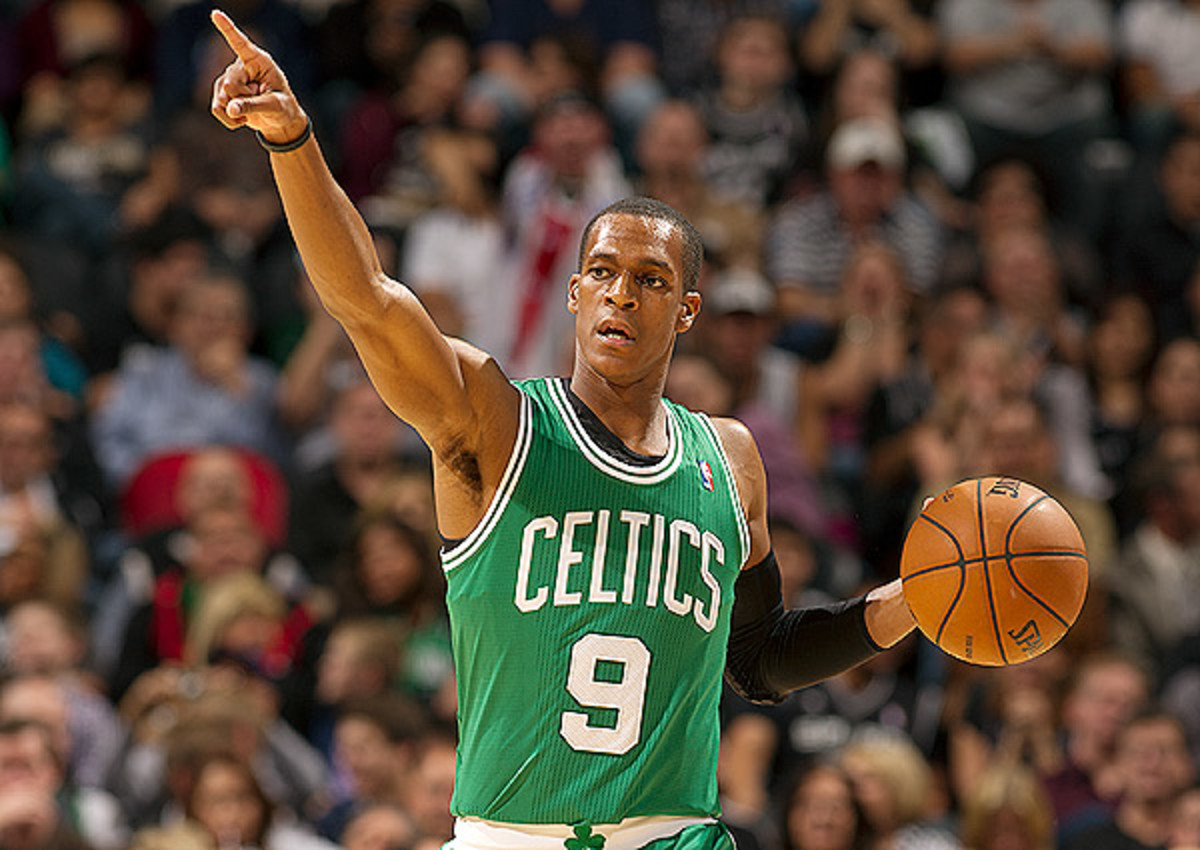





 4th: –
  9th: –
  14th: –
  15th: –
  25th: –
  26th: –
  32nd: –
  34th: –
  37th: –
  42nd: –
  48th: –
  49th: –
  59th: –
  61st: –
  67th: –
  68th: –
  87th: –
  88th: –
  89th: –
  92nd: –
  96th: –
  99th: –
  106th: –
  109th: –
  118th: –
  123rd: –
  125th: –









































:format(jpeg)/cdn.vox-cdn.com/uploads/chorus_image/image/17380243/20130304_ajw_ak9_524.0.jpg)








 Jordan Eglseder
 Marquez Haynes
 Elijah Millsap


 Marquis Gilstrap

 Tasmin Mitchell
 Eric Boateng
 Charles Garcia

 Ryan Wittman

 Aaron Pettway
 Tony Crocker
 Dwight Lewis