Signed a guaranteed one-year minimum salary contract with Dallas Mavericks.
5th August 2015
NBA
Signed a guaranteed one-year minimum salary contract with Cleveland Cavaliers.
28th July 2016
NBA
Re-signed by Cleveland Cavaliers to a partially guaranteed three-year, $7,612,500 contract.
14th October 2017
NBA
Traded by Cleveland Cavaliers, along with Kay Felder, a 2019 second-round pick, a 2020 second-round pick and cash, to Atlanta Hawks in exchange for the draft rights to Dimitrios Agravanis (#59, 2015) and the draft rights to Sergii Gladyr (#49, 2009).
Richard Jefferson SF - 6’7, 233lbs - 38 years old - 17 years of experience
With their final roster spot, the Nuggets last season decided to sign Richard Jefferson, who promptly took over Mike Miller’s role of being the veteran wing on the end of the bench not doing very much.
True to the job description of the position he applied for, Jefferson did not play very much. He managed only 163 minutes all season, the majority of which came in garbage time. The Nuggets struggled for consistency and defence from the small forward spot all season, yet did not feel Jefferson would provide it either. Which makes me wonder what they thought he would bring. Rebounding specialist, maybe. Nate Robinson clone. Power hitting shortstop in the Miguel Tejada mode. Maybe they thought he was Rondae Hollis-Jefferson by mistake.
Either way, Jefferson should have been able to provide that. And he did, in the short time he managed. A reserve veteran point guard might have been a better shout for that final roster spot, though. And as for Jefferson, with his transition into the media career seemingly already begun, this is probably it.
Player Plan: Expiring minimum salary. No need for another.
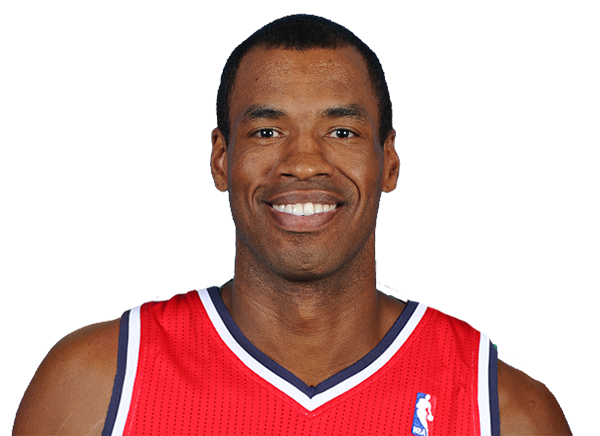
Richard Jefferson SF, 6’7, 233lbs, 37 years old, 16 years of experience
Shot only 33.3% from three-point range, a marked decline from years prior, with his usage rate and PER being career lows. A heady veteran who contributes a bit of spot-up shooting, a bit of finishing from off-the-ball movement, and some defensive effort. But with his athleticism declining considerably, Jefferson is not a rotation-calibre player any longer. His role should be that of the deep bench player who steps in for one or two laudable performances in big moments, if called upon, which ideally, he isn’t. And that’s not meant as a pejorative.
Player Plan: Two years for a combined $5,112,500 remaining, only the first year of which is guaranteed. A worthy deep bench player, but should be upgraded on.
[...] Instead, they got more shooters. They gave more roster spots to LeBron’s friends, heaped up on wings, left themselves without a tertiary playmaker, trusted Chris Andersen’s knees would suddenly lose ten years of wear and tear, and brought back pretty much the same already-aging unit as last year, except this time without any backup point guards or centres. They entered the season with little rim protection, with Channing Frye at backup centre, with no backup point guard except a young Kay Felder who they promptly did not trust with rotation minutes, and ultimately put themselves in a situation where Kyle Korver, Richard Jefferson and James Jones took up three roster spots to do pretty much the same thing.
History has done what it loves to do best and repeated itself.
Utah headed into this summer with almost two maximum salaries worth of cap flexibility, and yet they made no effort to sign players with it. Almost as quickly as free agency began, Utah committed to burning their cap space on the Warriors’s castoffs, Andris Biedrins and Richard Jefferson, a combined $20 million cap hit with some first rounders to offset the cost. Burning $20 million of cap space on Biedrins, Jefferson and Brandon Rush is about as identical to burning $20 million of cap space on Gugliotta, Rice and Clark as you can get.
The difference is, or should be, the end result. The 2003 edition of this strategy culminated in the 2004 draft selections of Kris Humphries, Kirk Snyder and Pavel Podkolzin. Snyder went to a psychiatric hospital, Humphries lasted two seasons before being traded for Rafael Araujo, while Pavel lasted about seven minutes before being traded for a pick that later became Linas Kleiza. Stocking up all the assets meant nothing when said assets were wasted – with Kirilenko (and, to an extent, Boozer and Okur) taking up all the cap flexibility without living up to the money, and the supposed young core not working out, the 2004-05 season that followed was much worse than the one which was designed to be bad. A wasted season had to follow before Deron Williams arrived and the rebuild finally began.
This time, it’s different. It is the same situation, but it’s not. This time, Utah have gotten the young quality BEFORE hoarding the cap space.
The All-Star weekend of 2003 featured one of the better slam dunk contests ever. Save for a tame effort by Richard Jefferson — in which he managed the rare feat of doing an elbow dunk that didn’t involve use of an elbow — it was a high caliber affair that culminated in a showdown between 2001 champion Desmond Mason and 2002 champion Jason Richardson, both pushing the other to produce their A-games, crescendoing beautifully with J-Rich’s final clincher: