2010 Summer League Rosters: Minnesota Timberwolves
July 14th, 2010
Mo Charlo
Charlo is a small forward formerly from Nevada who turns 27 next week. He is an athlete and defensive specialist, who has spent much of his professional career in the D-League. Last year, playing for the Reno Bighorns on account of his local ties, Charlo averaged 9.7ppg, 5.2rpg and 2.7apg. There were also a couple of near triple doubles in there, with statlines of 12/15/9 and 19/12/8, before a slow finish to the season dragged down his numbers. But for all his athleticism, Charlo struggles to score outside of the dunk. Sometimes he can slash to the basket, but there’s no jump shot there.
Wayne Ellington is Minnesota’s only shooting guard, and yet they still won’t play him. Ellington was forced (as were we) to watch Sasha Pavlovic and Damien Wilkins play a combined 2,462 minutes last season, while both playing really really badly (particularly Pavlovic, who was arguably the worst player in the league last year that actually played). And when he did get to play, he didn’t do especially well either improving as the season went on but finishing at only 6.6 points per game on 42% shooting. Nevertheless, Ellington shot 40% from three point range, which gives him a use on next year’s Timberwolves squad. (If he’s still there.)
There are other factors, of course. Lawson was playing for a good team; Flynn had Pavlovic and Wilkins play over 2,400 minutes alongside him. Lawson is a year and a half older; Flynn is only 21 and had to try and run an offence that didn’t really exist with a coach who wanted to install a triangle offence, but only for a while. These things are all true. But if and when they stop being true, and there’s still not much separation between them, I’m claiming that. It’s already far more accurate than my belief that Wayne Ellington could be the next Voshon Lenard. Whoops.
Lazar Hayward is a small forward backup, drafted by a team that absolutely did not need a small forward backup. Question; when you’ve just gone 15-67, should you really be in the market for role players? Should you not be drafting players with a shot to be something awesome, even when picking at the end of the first round? Because Hayward absolutely does not have that. Try to find some potential building blocks, THEN figure out the rest. That is not to say that anyone picked in this second round will obviously be a star, but Lazar Hayward’s upside is that of Adrian Griffin or Maurice Evans or something like that. Now not, eh?
Damian Johnson
Johnson makes it onto the team largely on account of his five year career at the University of Minnesota. He is a 6’7 small forward an NBA calibre athlete, who unfortunately is dependent upon his athleticism. Johnson blocks shots and wins possessions by free-roaming defensively, and rebounds well for his height; however, in a half court offence, there’s not a whole lot you can do with him. The same criticisms could also be levied at Stanley Robinson, and they didn’t stop him from being drafted 59th overall, but Robinson is bigger and better. Nevertheless, I hereby predict that Damian Johnson will perform more than respectably in Israel for his first professional season next year.
I am coming around on the idea that Corey Brewer and Wes Johnson can start together on the wings. Both are ideally small forwards, but between those two and Flynn, the Timberwolves get two ball handlers and enough shooting. Brewer probably won’t be able to defend all shooting guards, but I’d rather him do it than Johnson.
Of course, I am only assuming that this is the plan. They might start Luke Ridnour at point guard and bump Flynn to the two. Or bump Flynn to the bench and start Martell Webster at point. Or bench Kevin Love and start Ramon Sessions at power forward. Or bench all of them in favour of the seminal Darko/Love/Pekovic/Hollins/Stiemsma lineup. When you build a roster made of point guards, small forward and power forwards, and make no apparent effort to find any shooting guards, it’s hard to figure out the plan.
Patrick O’Bryant has now spent four years in the NBA. In that time he has totalled 186 points, 127 rebounds and 126 fouls. Last year, O’Bryant played only 51 minutes all season for Toronto, and fouled 12 times in that span. O’Bryant really isn’t as talentless as his numbers suggest; he can make a few baskets around the rim and is a good shot-blocker. But to keep getting contracts,he’s going to have to get (and seize) a good opportunity. And to do that, he’s going to have to stop fouling.
Pargo was covered in the Bobcats summer league roster round-up of last week. He averaged 8.0 points and 5.3 assists for them in only 19 minutes per game.
Smith – the former Illinois guard who was suspended for a year and a half after driving into a tree while drunk and fleeing the scene, leaving his teammate for dead, and who was then kicked out of the program after being caught underage drinking again and violating his probation – got a second chance at Division II Southern Indiana. He averaged 21.6ppg, 4.1rpg and 4.6apg there last year – all while playing with an electronic ankle bracelet – and earned an invite to the Portsmouth Invitational Tournament last month. However, he averaged only 5.6 points in 3 games there. Nothing about his resumé suggests the NBA is in his short or long term futures.
Stiemsma was picked up by the Timberwolves down the stretch of last season, and, as is often the custom for late season signings, was signed through following season as well. He is a great shot-blocker who didn’t do much in college, but who broke out last year to average 3.7 blocks in only 28 minutes per game in the D-League. Even though the Timberwolves just traded Al Jefferson, there might not be a lot of room for Stiemsma on next year’s roster; the spot he might otherwise have taken is filled by Ryan Hollins and his unnecessary contract. However, since this is the Timberwolves we’re talking about, they may have 20 to 30 more moves left in the gun yet, so no forecast can be entirely accurate.
Either way, he has more chance than Cedric Simmons does.
Thompson was a likely second-round draft candidate for much of the year, but as is often the case with steady-if-unspectacular seniors from big programs, he fell out of it as the season progressed. Thompson is an unathletic 6’8 power forward with decent offensive skills, both posting up and from the mid range, but who doesn’t have NBA size or athleticism. He also rarely passes and does not rebound very well, thus should not really be considered a candidate for making the Timberwolves roster.
Lawrence Westbrook
Like Damian Johnson, Westbrook makes it here on account of his career at the University of Minnesota. Westbrook is a 6’0 scoring guard who averaged 12.8ppg, 2.6rpg and 2.2apg in his senior season in only 26.4 minutes per game. West brook shot 47% from the field and 41% from three point range; the question of why he did not play more is an entirely valid one. He’s a good shooter and a good athlete, able to get to the rim, an efficient scorer who takes good shots and a solid defensive player against similarly sized guards. But unfortunately, he’s only a scoring guard, not a point guard. At 6’0, that’s a problem. Westbrook is a good all around player, but not an NBA player.
Aminu was covered in the Bobcats summer league round-up thing of last week. In 4 games for Charlotte, Aminu averaged 5.5 points and 4.0 rebounds. Additionally, Aminu has signed a contract to play for Chalon in France next season. So whatever chances he had of making the Hawks roster now look shot.
Augustine was previously covered on the Jazz summer league roster recap. Playing for Utah in the Orlando summer pro league, Augustine averaged 6.2 points, 4.2 rebounds, 3 fouls and 2 turnovers per game. Not great, although he did hit two 3 pointers.
After his trade from New Jersey, Jordan Crawford now gets to (or has to) battle Jamal Crawford for backup guard minutes. The two are really quite similar; 6’4, athletic and with tons of flair, extremely capable of creating their own shot with the dribble and able to hit extremely tough ones, occasionally forgetful of where thae cutoff point between a good and a bad shot is. The difference is that Jordan hasn’t had to spend a few years pretending to be a point guard. And that Jamal is better.
Like Augustine, Davidson was previously covered on the Jazz summer league roster recap. Davidson averaged 7.6 points and 2.8 rebounds per game for the Jazz, all coming in less than 11 minutes per game. Pretty good.
Gilder, too, has been previously covered. He was playing with the Magic at the Orlando summer pro league, and was thus covered here. He played in only two games for them, however, totalling 2 points and 3 assists.
Gladyr was the Hawks second-round pick in 2009, a Ukrainian shooting specialist. After being drafted, Gladyr went to Spain, where he became one of the youngest rotation players in the ACB (a league known for not playing youngsters much). Gladyr was pretty inconsistent throughout the year, as you might expect, and didn’t have great overall numbers. Playing for Suzuki Manresa, he was third on the team in scoring with a 10.0ppg average and 2.1 rebounds per game, but also recording 3.6 fouls per game and no other significant statistics. For a shooter, he did not shoot too well, hitting only 34% from three point range. And given that he attempted 170 three pointers compared to only 59 two pointers, that’s not ideal. It was not an ideal first season in Spain for Gladyr; that said, given the context of it being from a 20 year old in the ACB, it was pretty good.
Also of note was the fact that Gladyr missed six weeks between mid-February and late March due to injury. Gladyr broke his hand punching an advertising hoarding while being subbed out of the game. Whoops.
Hendrix was covered in the Pacers summer league round-up of last week. Despite my endless touting of him, he averaged only 2 points and 3 rebounds for the team.
In addition to that performance, and his already signing for Maccabi Tel-Aviv, Hendrix has made news in another way this month. He is soon to receive a Bosnian passport, which will further his career in two ways; he’ll get to bypass import rules for many European leagues, and he’ll also get to play for the Bosnian national team. It’s all exposure.
Jackson is still battling to get back in the NBA, yet it looks like an ever more impossible task. He had a good year in Italy last season, averaging 15.1ppg, 5.3rpg, 2.3apg and 2.1spg, shooting 38% from three point range. Yet in the eyes of the NBA, the book is out on him now. About to turn 29, it’s unlikely to change.
This very day, Luke Jackson agreed to sign with Italian team Lottomatica Roma. It’s a good gig for him, but it should seal his NBA fate.
Morris just completed a guaranteed two year contract with the Hawks, and now has four years of NBA experience to his name. Also to his names are totals of 438 minutes, 140 points, 104 rebounds and 100 fouls. Nonetheless, he showed a little something last year. Morris only ever received garbage time minutes, but in them, he at least showed the ability to score the ball. 62 points in a season is not something to be ecstatic about from a fourth year player, yet Morris demonstrated the offensive talent that got him this far, and it might just help him land somewhere else for next year. Now, he needs to stop fouling.
(If you need proof that Morris made significant strides last year, look no further than his year-on-year PER; 1.5, 4.3, 1.8, 14.6. Quite the crescendo. Even better, Morris only played 4.4 minutes per game, so per 36 minutes that equates to a PER of 118.7. And that’s quite high.)
Everything that I could say about Pape Sy, I said in my draft night recap thing. For those who – understandably – can’t be bothered to read all that, here it is again.
Atlanta drafts Pape Sy, a player that literally nobody has heard of. And when I say “literally nobody”, I do mean literally nobody. There was not a draft board in the land that this guy was on. This is much more of an obscure pick than Christian Eyenga. Sy is just your average, every day, run-of-the-mill French league backup. And now this.
Strange times. Really strange times. But therein lies the fun. So let’s learn.
22 year old Sy has spent his entire career with French team Le Havre, who this year finished 13th out of 16 teams in the French ProA with a 10-20 record. Sy played in all 30 games backing up former Texas A&M guard Bernard King – not THE Bernard King – and averaged 14.2 minutes, 5.2 points, 1.7 rebounds, 1.3 assists, 1.9 fouls and 0.6 steals per game. Sy shot 55% from two point range, 42% from three point range and 715 from the foul line. and he shot 69 free throws to 93 total field goals. He clearly has no problem getting to the line, and the three point percentage also came on a healthy 29 attempts. He didn’t play much, and he played only in a league with particularly bad defence, but he scored efficiently nonetheless, with 155 points on 93 shots as a 6’6 shooting guard.
However, there’s no pedigree here. The French league is not a great league, and yet Sy was a mere backup in it. He played briefly with the French Under-20 national team, yet averaged only 2 ppg in the 2007 U-20 championship for a disappointing French team. (For comparison’s sake, Nando De Colo averaged 17.9 ppg in the same tournament). Sy has played significant minutes in only one professional season, and that was this past one. He is 22 years old, has not cracked 6ppg in the French league, and has not exactly got a storied history of tearing up draft camps for many years like so many other draft picks with limited professional experience have done in the past. Pape Sy’s draft selection has literally come from nowhere. And it could only have come from Rick Sund, a man who just loves to take flyers on international players.
The only person who seemed to know that Sy would be drafted was Pape himself, because he’s here, along with the four people he brought with him. Pape spends so long hugging them that it takes almost the full two minutes to even get to Silver. It would be good comedy, were it not truly awkward.
Is this the world’s biggest steal, or the world’s biggest reach? It’ll take some kind of turnaround to be the former.
Jeff Teague’s rookie year was not particularly good. There was the occasional spark on the fire, but he never threw a log on it. Teague showed he did not have an outside jump shot, was often overly tentative offensively, passing up good shots and taking bad ones. On the plus side, Teague was OK defensively and didn’t turn it over a lot, and if you want to be really positive, then the firing of Mike Woodson might prove very important to Teague’s development. With a playbook that expands beyond watching someone else isolate and waiting for a kickout, Teague might start to show more.
Of all the undersized jump shooters in the D-League, Agudio might be the best. The cheerful looking one is the all-time scoring leader in the history of Hofstra, beating out former Bulls guard Norman Richardson when he averaged 22.7ppg in his senior season. Agudio is a 6’3 pure shooter, who last year for the Albuquerque Thunderbirds averaged 15.1ppg, 2.5rpg and 2.8apg with 44% three point shooting. He’s strong, able to also create off the dribble, and tries hard defensively to overcome his height disadvantage. Yet the height disadvantage is pretty large. Jaycee Carroll has much the same profile and is a very awesome player, but it’s also significant that Jaycee Carroll is not in the NBA. It would benefit Agudio to leave the D-League and go do something similar to what Jaycee is doing in Europe. He is capable.
Santa Clara centre Bryant was also a D-Leaguer last year, spending the year with the Erie BayHawks. He was remarkably inconsistent on his way to averaging 13.2 points and 9.5 rebounds in only 29 minutes per game. Bryant is a huge fella, which enables him to gobble up rebounds and be a defensive presence by default in the lane; the downside to that is that he is really quite slow. This doesn’t stop him from being a tremendous defensive rebounder, though, and I can’t imagine he’d do any worse in the NBA than Aaron Gray does.
Delaney was also on the Bucks summer league roster last year, and spent his time between in Israel, where he did more of the same of what he did at UAB. Delaney averaged 15.2ppg, 3.3rpg, 3.1apg and 1.6spg, while shooting 50% from the field. Such efficiency is not unusual from the 6’3 guard, and he’s also a good defensive player. However, Delaney still doesn’t have an outside shot, shooting 24% on the season. And while his defence is good, it is not exceptional.
Micah Downs
Former Gonzaga swingman Downs played with the Suns in summer league last year, and then went to play for KK Zadar in Croatia. This tweet suggests that he didn’t like it there much.
I cant believe I still have 5 months left in this place.
Downs left there in midseason to go to Belgium, where he averaged 12.4 points, 3.5 rebounds and 3.2 fouls in 23 minutes per game. He is athletic, a dunker and a shooter, with absolutely nothing in between and no real ability to create his own shot. He’s also thin and very inconsistent, and while he should be a very good defender, he isn’t always so.
Gallon shouldn’t have declared for the draft. Should Milwaukee have drafted him? Perhaps. There’s a Glen Davis-like upside there. But for now, Gallon is a long way short of that. And it’s a very long way ahead of him.
Jackson was claimed off waivers from Cleveland, and has a valid chance of winning a spot in Milwaukee. He’s strictly a post player, which is problematic at 6’8, but he can make shots and rebound. However, in bit part minutes of two seasons, Jackson’s shown he can only defend via the foul.
Nelson spent last year in Italy, playing for Air Avellino. He averaged 8.9ppg, 3.7rpg, 1.2apg and 1.5spg, but shot only 23% from three point range. Rather than his offence catching up to his defence, it actually got worse last year. He’s not normally as bad of a shooter as that.
An oft-cited DeMarcus Nelson trivia states that Nelson is the first undrafted rookie in the history of the NBA to start the first game of his first season. But he wasn’t. John Amaechi did it, too.
Sanders will have more upside that the Malik Allen/Francisco Elson/Primoz Brezec/Dan Gadzuric types that Milwaukee have used behind Andrew Bogut in recent years. He couldn’t really have less.
Jerry Smith
Smith is a four year player at Louisville, who is all defence and no offence. At 6’2, he was a good defender in the Louisville press, but outside of open threes and the very occasional drive, he didn’t contribute much offensively. As the old saying never went, college role players without NBA physical skills do not an NBA role player make.
You can see a theme running through the players on this list. The Bucks are looking for some guard defence. With no backup to Brandon Jennings in place at the moment, and with Jennings’s defence not being especially good at the moment, it makes sense. But like Delaney, Smith doesn’t have NBA talent. So it won’t be them filling the void. (Nelson has an outside chance.)
Washington should have made the Pistons roster last year, but didn’t, due to a completely inexplicable turn of events. He subsequently went to the D-League, where he started out with the L.A. D-Fenders and quickly moved to the Tulsa 66ers. In 48 games for Tulsa, Washington averaged 12.4 points and 4.7 rebound, but shooting only 41% from the field, 29% from three, turning it over 1.9 times per game and fouling 3.5 times. Washington is a tremendous athlete and a decent wing defender, but the Bucks are all right for small forward defenders and don’t need another.
Williams’s time with the Nets didn’t go very well. He kept getting in off-court trouble and didn’t develop his game; he’s still just the athletic shot blocker with no offensive talent outside of athleticism. His NBA career might have already ended, and if it has, then it was a bust. And that would be a shame.
I really don’t think DeJuan Blair needs to be here. Summer league is designed for players who need to prove something; those barely on a roster, those looking to make it onto one, draft picks trying to prove their worth, and also-rans looking to use the opportunity for good European gigs. But the only thing DeJuan Blair has to prove is the long term health of his knees. And unnecessary playing time is not the answer for that.
Michael Cuffee
Cuffee turned 27 yesterday (happy birthday!), and joins the Spurs for his second summer league stint. He was also with the team in 2008, easily the two highlights of his career. The rest of Cuffee’s CV reads Middle Tennessee State, WBA, Denmark, Finland, USBL, D-League, Lega Due (Italy) Turkey, and then the Lega Due again; last year for UCC Casalpusterlengo, Cuffee averaged 11.2 points and 5.2 rebounds. Those are rather average numbers from the below average Italian second division, and it’s hard to see what the Spurs see in Cuffee other than his tremendous athleticism (which isn’t worth a lot unless you turn it into production).
I have written before about the Spurs’s constant attempts to keep young players that they are interested in around their roster, if not strictly on it. By doing things such as owning their own D-League affiliate (thereby ensuring generous assignments) giving Curtis Jerrells $75,000 to attend training camp even when he has absolutely no chance of making the team (and subsequently having him assigned to the Toros for that reason), signing Marcus E. Williams at every possible opportunity, and using part of their MLE on signing Alonzo Gee and Garrett Temple when there’s a matter of days left in the season, the Spurs bypass the maximum roster size while keeping an assortment of young players on the fringes. It’s not illicit, but shrewd. And I’m willing to bet that Bryan Davis is the next recipient of this juggling act.
Were he more athletic, Davis would be a surefire NBA player. He is a very skilled post player, with hook shots, up-and-unders and touch around the basket, a good rebounding rate and mistake-free defence. But he’s only 6’8, and definitely an out-and-out post player; Davis doesn’t handle the ball, drive, shoot from the outside or defend the perimeter. He’s also really rather unathletic and slow, which hurts his NBA chances on both ends. If he’s going to be part of the Spurs/Toros shuffle, fair enough, but he could do pretty bloody well in Europe if he wanted to. (And bear in mind that I base my initial assumption on absolutely nothing.)
Eric Dawson
Dawson is a long time Toro who left the D-League last year to play in Japan. Playing for the Mitsubishi Diamond Dolphins, Dawson averaged 14.1 points, 9.7 rebounds, 1.8 assists, 1.7 steals and 1.2 blocks per game, while also cranking up two and a half threes a game, hitting 22% of them. This is unusual, since he had no three point attempts in 38 career D-League games. Dawson is an athletic 6’9 power forward formerly of Division II Midwestern State with no stand out facets to his game other than the athleticism, albeit no gaping flaws either.
It wasn’t a surprise when Gee went undrafted; he was good at Alabama, but not particularly good at any one thing. But it was a surprise when he then became hot sizzle. Gee went to camp with the Minnesota Timberwolves, and went to the D-League after being cut. He proceeded to tear the thing up, averaging 21.1 points and 6.7 rebounds per game, being named an All-Star and winning the rookie of the year award. This first earned him a call-up to the Washington Wizards, for whom he played two ten day contracts and averaged 7.4 points and 2.9 rebounds per game. For some reason, the Wizards opted not to keep him around after that, so the Spurs dangled a chunk of their MLE – $150,000, to be exact – just for Gee to then not play for them. That’s how those guys roll. They essentially buy your loyalty. Anyone can do it, but only the Spurs do.
James is the Spurs’s forgotten second rounder. While San Antonio love to draft either international steals, international busts, or NCAA players that everyone else overlooked, Gist is none of the above. Gist was a four year player at Maryland, the consummate power forward in a small forward’s body, who needed to develop a jump shot and ball handling abilities. He has the size and athleticism for an NBA small forward, but still likes to play around the basket, where he’s undersized. Gist spent last year in Russia playing for Lokomotiv Kuban, and barely played at the start of the year, but crescendoed nicely and finished up averaging 25 minutes, 11.4 points, 4.5 rebounds and 1.5 blocks per game. If Gist were to join the Spurs roster, he’d give them a dimension that they otherwise don’t really have, of an athletic entry-level Damion James-type combo forward that might work out better than Marcus Haislip did. Then again, they don’t really need that.
Like Gee, Jerrells has an unguaranteed contract for next season. So do Garrett Temple and Malik Hairston (who seemingly is beyond the summer league thing now). He was a camp invite and late call-up to the Spurs last year, spending all the time in between with the Toros, where he averaged 20.7 points and 5.7 assists per game. Jerrells didn’t shoot the three much in Austin, which is unusual considering that it’s one of the things he did best at Baylor, yet this clearly did not hold him back any.
Carldell “Squeaky” Johnson
Carldell Johnson, often known by his nickname Squeaky (one which I shared in my youth for reasons best left unspoken) is a long time member of the Austin Toros, the Spurs’s self-owned D-League affiliate. He is a 5’10 pass first point guard formerly of UAB, and also a very good three point shooter. Last year for the Toros, mostly backing up Jerrells, Johnson averaged 6.5 points and 3.0 assists per game, shooting 45% from the floor and 46% from three while committing only 1 turnover per game. He is a solid all-around D-League performer. But a 27 year old 5’10 point guard has to produce a lot more than that to make the NBA. Johnson is here to make up the numbers. That’s not meant pejoratively, even if it looks like it is.
Josh Lomers
Boy is it ever unexpected that an NBA website would get the opportunity to write about Josh Lomers. But it’s not unwelcome.
Lomers just graduated from Baylor, where he was the starting centre. In his senior season he averaged 6.6ppg, 3.7rpg and 1.1bpg, shooting 70% from the field and 71% from the foul line. His offence consists solely of the easy layup and the simple yet effective art of standing still and letting people run into him (i.e. screening).
That, sadly, is about it. Lomers is a big old boy, standing about 7 feet and 280, with hair you could stitch a tapestry from (not pictured), but he’s not a talent. He is really really really slow, clumsy, even less athletic than Bryan Davis (who routinely owned him in Big 12 play), and whatever the opposite of fluid is when used in a basketball sense. He’s somehow still a good shot-blocker in spite of his inability to jump over invisible dustmites, yet he doesn’t score, rebound, dribble, catch, shoot, run without falling over, or do much of anything other than stand in the middle and hit you if you come near him. And in the NBA, that’s just going to lead to a lot of posters.
So you can see why I wasn’t expecting to see him here.
Former La Salle and Towson guard Gary Neal is a surprising inclusion on this list, mainly because it’s his first time on such a thing. The 26 year old guard has long had NBA talent, yet this is his first attempt at the NBA in any form. Neal has been playing at the upper echelons of European basketball, spending a year and a half at Benetton Treviso and moving to EuroLeague team Unicaja Malaga for the stretch run. (There was a reason for his departure from Benetton, however, one which involves former Pistons guard Alex Acker.) The 6’4 guard is a scoring machine, and led SerieA in points per game last season (19.4) whilst also ranking second in the EuroCup (19.3). He can shoot, drive and create off the bounce, and also chips in with some athleticism and rebounding. But he won’t defend.
Gary Neal fact: Gary Neal was kicked out of La Salle for violating the school’s “morality rules”. Neal and a team mate were alleged to have had sex with a girl who was puking in the sink at a party; the woman later accused them of rape. The two were acquitted, but were kicked out of school; the school believed that what was heard in the court testimony was against their every principle. On the plus side, this gave Neal the opportunity to become only the third player in NCAA history to score at least 1000 points at two different schools. The others were Kenny Battle and Jon Manning.
Temple is another benefactor of the Spurs’ roster manipulation thing, although he also played with the Rockets and Kings last season. The guard who never scored more than 8.6ppg in college, and who never shot over 40%, is now a much hankered-after NBA player. It seems strange. But Temple shot the ball from the outside in his first professional season much better than expected, and if he can continue to show he’s not an offensive liability, then he can make it as a defensive specialist. This is particularly true in San Antonio, where all Temple has to do to impress the fans is not be Keith Bogans.
Tyler Wilkerson
Wilkerson is a recent graduate of Marshall, the benefactor of all the Marshall games teams watched in order to swot up on Hassan Whiteside. He led the team in scoring last year and was second in rebounding only to Whiteside, averaging 14.0ppg, 7.2rpg and 1.0bpg on the season. Any more than that, I’m struggling.
James Anderson is not playing due to a hamstring injury. And it’s a shame that Ryan Richards isn’t here either.
Anderson was previously covered in the Bobcats summer league roster round-up of last week. As it happens, however, Anderson played only 89 seconds for the Lolcats, recording nothing but a trillion. Per 48 minutes, that’s still a trillion.
Beck is a 6’8 Mexican shooting guard out of UNLV with a whole load of scoring talent. However, in his life he has only ever had one NBA contract; a training camp contract with the Rockets last year that ultimatey amounted to nothing. And the reason for that lack of NBA airtime is how ridiculously selfish of a player he has been throughout his career. Beck’s scoring talents are legitimate; for example, last year in the D-League, Beck averaged 17.9 points per game for the Dakota Wizards, shooting .543% from the field and .445% from three point range. He’s improving his decision making, and can still create his own shot with relative ease. But his reputation still precedes him, and it might be too late.
Butch, a jump shooting big man, is signed for this season to an unguaranteed minimum salary contract. Because these posts are not quite the previews that they were designed to be – sorry – Butch has already gotten hurt in this summer league tournament, dislocating his kneecap. The rule with unguaranteed contracts is that, if a player is injured while playing under contract, the contract is guaranteed until they are able to play again. (This is why Mike Wilks spent the 2008/09 season on the Magic roster, despite being unable to play.) So even though Butch is no doubt in a lot of pain, and suffering a serious career setback, it could well be a bit of a financial windfall for him, unless some hitherto unknown technicality is in place that saves the Nuggets money. (Or if summer league just isn’t insured.)
Better still, as Butch signed with three days to go in the last regular season, he is now technically a second year player, meaning he is set to get $762,195. If this injury is serious enough to keep him out for the year, Butch will now get that amount when he previously stood to get none.
Positive from a negative. And quite a big positive at that.
Draper was in training camp with the Nuggets last year, and was also with the team for summer league 2007. There’s clearly something they like a lot about the 5’11 scoring guard. Last year, playing for Prima Veroli in the Italian second division, Draper averaged 13.4ppg, 3.4rpg, 2.7apg and 2.6spg, while shooting the three much better than usual, hitting at a strong 40% mark. Draper has been trying to reinvent himself as more of a pass first guard over the years, which is kind of necessary when you’re 5’11, but reverted to being more of a scorer last year. He also doesn’t usually shoot that well, although his improvements there are significant, and he certainly has the ability to break down a defence and find the open man. Regardless, as quick and explosive as he is, it’s difficult to play in the NBA if you’re a 5’11 shoot first player who’s prone to turnovers and not the best shooter.
Shane Edwards
Shane Edwards was a decent 6’7 forward at Arkansas-Little Rock, who went on to become a decent D-League player. What makes a decent D-League player? Something like 12.7 points, 5.3 rebounds, 3.2 fouls and 0.8 blocks in 25 minutes per game, shooting 63% from the field and 72% from the foul line. Edwards can’t really play away from the basket and is small for the interior, but he is very athletic and is improving as a post-up player.
However, decent D-League players are not NBA players.
Laurence Ekperigin
I have never previously heard of Laurence Ekperigin – this is not a bad thing, as it represents a chance to learn.
Ekperigin is a 6’7, 235lb forward from Division II school Le Moyne, who made a bit of history this year when they beat Syracuse in a preseason exhibition game on Syracuse’s home floor. Syracuse were ranked number 25 at the time, and went unbeaten for a long time after that, eventually making their way to being the first ranked team in the country; for the longest time, Le Moyne were the only team to have beaten them. Ekperigin had 20 points, 11 rebounds and 4 blocks in the upset win. On the season he averaged 21.6ppg, 12.1rpg, 1.5apg, 1.0spg and 2.6bpg, and made his way to the Nuggets via the Portsmouth Invitational Tournament, where he averaged 12 points and 7 rebounds per game.
That’s all I can tell you about Laurence Ekperigin. I can’t even find what he looks like, which is why I had to substitute in this picture of ESPN.com environmental correspondent and former Star Trek actor, James Swan. Great name for an environmental correspondent, by the way.
Hamilton and his wonderful smile of his come to the Nuggets fresh from the D-League, where he averaged 8.5 points and 4.4 rebounds per game for the Utah Flash. Those numbers, in that context, are not very good. Hamilton is an NBA calibre defensive player, but without having offence to go with it, it is not enough.
Hunter started last year with the Hawks, his second year with the team, before being waived for no valid reason. (The reason was the contract guarantee date, and the Hawks’s burning desire to bring back Mario West. For no valid reason.) Upon being waived, Hunter went to Greece, where he averaged 10.6ppg, 8.0rpg and 1.1bpg for Ilysiakos. At 6’8 and 225lbs, Hunter is small for an NBA power forward, but he runs, rebounds and dunks, and is good enough to play in the NBA. And the Nuggets need (want) a big man. It’s a question of whether they have enough money.
Karl is currently under contract to the Nuggets, signing along with Butch down the end of the 2009/10 season. Given what just happened with Butch, the risk of such a strategy is now more apparent. The now 27 year old Karl never played for the Nuggets, but he did played seven games earlier in the season between the Cavaliers and the Warriors, putting up a PER of 5.1. Like most teams, Denver could use the extra shooter, and for as long as his dad is the coach, Karl will always have the advantage.
Roby is a Colorado graduate, which explains a lot. He was a draft candidate in 2008, but went undrafted, and has spent the last couple of years in Israel. For Maccabi Haifa last year, Roby struggled, averaging only 7.7 points and 2.5 rebounds per game. Roby is a 6’6 guard who plays decent defence and rebounds well, yet as his jump shot release has improved, its effectiveness has disappeared. Roby has shot under 30% from three in both his professional seasons. And his defence, while good, is not good enough to overlook his lack of offence.
I’m still not sure of why Portland has been trying to acquire small forwards so proactively. The Luol Deng rumour won’t die, even if you want it to, and the team just signed Wesley Matthews to a full MLE contract. They also traded for Babbitt’s draft rights and signed him straight away, despite already having Nicolas Batum on the roster. Batum is really good and already has a capable backup in Dante Cunningham in place; now with Babbittt as well, I don’t see the need for this constant desire to get another one.
Baron holds every Rhode Island shooting record going. He is an absolute 100% pure, unsullied, virginal shooter, who unfortunately doesn’t do a lot else. Baron’s first and only professional season thus far saw him play for Mersin in Turkey, where he averaged 16.5 points in 28.6 minutes with 43.4% three point shooting….and nothing else. Such is the Jimmy Baron experience. Not a bad thing, but not an NBA thing.
Considering he’s always been a power forward in a small forward’s body, Cunningham made a pretty decent effort of pretending otherwise. Given plenty of opportunities due to injury, Cunningham shot his customary mid range two’s well, rebounding well enough for a man of his size, and proved he could play defence on both small forwards and power forwards. He also turned it over only 25 times all year, leading all rookies in turnover percentage at 6.0%. This is helped significantly by the fact that he doesn’t dribble, but nevertheless, it’s a hugely impressive number. (Tyler Hansbrough was next lowest at 7.1% in his part-season of work; Marcus Thornton was third at 7.3%. The worst? Jrue Holiday, 21.9%. Then James Johnson. Then Hasheem Thabeet.)
In fact, not only did it lead all rookies, the only player that played significant minutes (i.e. more than 500) to have a lower turnover percentage than that was Maurice Evans at 4.5%. Michael Redd had only a 5.8%, but he barely played all season. And Steve Novak had a 1.8% in 57 games; however, he only played 14 seconds per game. (NB: That figure is exaggerated slightly.)
Makes you wonder why they wanted Babbitt, in a way.
After underperforming at UCLA for four years, Fey disappeared from American view. He spent two years in China and one in Jordan, and before that, in 2006, he appeared on the Lakers summer league. He must have left some kind of lasting impression, because three years later, the Lakers brought him into training camp to (ostensibly) fight for a roster spot. He didn’t make it – he was never going to make it – but Fey’s return to America and subsequent trip to the D-League are quite the departure from a man previously doing the Samaki Walker Tour Of The Far East. Local connections matter.
In the D-League this year, Fey played a full 50 game campaign for the L.A. D-Fenders and averaged 12.8ppg and 6.4rpg. Once the D-League season finished, Fey returned to his favoured Eastern pastures and played for Al Rayyan (a team from Qatar, not a man called Mr Al Rayyan) in the Asian Club Championships. He averaged 9.4 points and 3.3 rebounds in 7 games. Fey turned 27 a couple of months ago and is not going to randomly start developing NBA talent.
Green was covered in the Sixers summer league roster round-up from last week. He did not play well for them, however, averaging only 5.0 points, 1.8 assists and 1.8 steals per game, while turning it over three times a game and shooting only 27% from the field. He was aggressive and got to the foul line, but forced the issue and did not put on a good showing.
In summer league last year, Ibekwe made a name for himself when he made a game saving block for a Raptors win, but landing badly on his neck in the process and not playing again. He suffered no long term side effects, however, and was back after a few weeks. Ibekwe initially had trouble getting work, being released by Turkish team Kepez Bld Antalya in preseason, and later having an unsuccessful tryout in Iran of all places (as did Othella Harrington, of all people). He finally found work in the Turkish second division, playing for a team called Genc Banvitliler and averaging 21.2ppg, 10.6rpg, 1.2apg, 2.2spg and 2.1bpg, shooting 56% from the field and 39% from three. The Turkish second division is not good, but those numbers are.
Ibekwe graduated from college as an athlete, shot-blocker and dunker, who had no offensive finesse. He couldn’t shoot or dribble, finish against size, or post-up, and turned it over way too much. Those things are still true, but he has bulked up and improved his shot over time.
Johnson has not yet signed with the team, even though Babbitt and fellow draft pick Elliot Williams have. (Note: Williams is absent from summer league with a knee he injured during pre-draft workouts.) He should do, however, because Portland could use him right away as a backup point guard.
Wisconsin forward Krabbenhoft was in summer league with the Blazers last year, too, and thus must have done something to impress them to come back. Starting in the D-League but spending most of last year in Korea, Krabbenhoft averaged 11.7ppg and 7.2rpg for the Seoul SK Knights, albeit while shooting only 13% from three point range. When the Korean season ended, Krabbenhoft joined the D-League and averaged 13.0 ppg, 6.9 rpg and 2.5 spg in 21 combined games for the Sioux Falls Skyforce (from both the start and the end of the season). Krabbenhoft is a smart passer and defender, and a capable rebounder, who just doesn’t have NBA calibre physical tools.
Mills is out of contract right now, but he does have an unguaranteed $937,195 qualifying offer extended to him right now. He didn’t play much last year due to injury. In the ten games he did play, Mills averaged 2.6 points in 3.8 minutes, which equates to 24.6 points per 36 minutes. He contributed little else, as is his style, but he’s capable of scoring at the NBA level. He is also entirely capable of scoring at the D-League level, as evidenced by the 25.6 points per game he averaged on assignment with the Idaho Stampede.
Speaking of Portland’s desire for small forwards, here’s one they drafted once. Nichols was traded to New York as a part of the Zach Randolph deal, and later spent time with the Cavaliers and Bulls. Nichols was previously covered in the Jazz summer league roster round-up from last week; playing for them in the Orlando Summer Pro League, Nichols averaged 5 points, 3 rebounds and a steal per game.
Pendergraph had only conditional guarantees on his contract for this season, yet he met them when he appeared in his tenth game last season. So he shall be back. Due to all of Portland’s injuries last year, Pendergraph got plenty of chances to play – once he’d recovered from his own, that is – and he did fairly well. He did not rebound well, and his defence was limited to taking charges and fouling people, but he shot a ridiculously good 66% from the field, and could have been allowed more shots. With Juwan Howard seemingly leaving, the backup power forward spot should be his. No one on this list will challenge him for it, at least.
Nik Raivio
Raivio is the hometown boy, recently completing a four year career at the University of Portland. There, he played the driver/slasher to everyone else’s jump shooter, averaging 14.1 points and 6.1 rebounds per game. The rebounding numbers are very good from a 6’4 guard, and Raivio is certainly strong and fearless enough. Unfortunately, he’s also lacking a jump shot and athleticism.
Incidentally for Portland fans (the University), Robin Smeulders has gone to Germany to play for EWE Baskets Oldenburg, which is a pretty sweet gig for him. And point guard T.J. Campbell has gone to Australia to play for the Melbourne Tigers.
The Schensch is back in the NBA, and on the summer league roster of one of the few teams who gave him an NBA contract in the past. Schenscher played 118 minutes for the Blazers in the 2006/07 season, totalling 19 points, 25 rebounds and 25 fouls. Unathletic and not strong, Schenscher was never made for the NBA, despite the awesomeness of his old school hook shot.
Since leaving the NBA that year, and after an abortive injury-riddled season in Germany, Schensch has spent two years back in his homeland of Australia. In his first season back, with the Adelaide 36ers, Schenscher averaged 16.6 points per game, a league leading 10.8 rebounds per game, as well as 1.4 blocks per game (third in the league). He said he would not return to the NBL in pursuit of more lucrative opportunities, but then he did exactly that, spending last season with the Perth Wildcats. His numbers tailed away to only 10.0ppg and 6.2rpg, and if his basketballreference.com page is anything to go by, Schenscher didn’t win over all the fans;
Boo Schenscher!! sponsor(s) this page.
Effective in one game out of every six. In the rest? Can’t score, can’t pass, can’t rebound, can’t defend (his man, the basket, or the pick-and-roll) and slows the team to a crawl. Boo! Booooooo!!! – Perth Wildcats fan, 2010
Terry is a former draft pick of the Dallas Mavericks (via Orlando), a 6’8 jump shooting forward out of North Carolina. Well, that was the plan at least; after shooting 44% from three point range in his senior season, Terry was drafted to be a shooter and athletic defender, without much creativity or ball handling offensively. But in his professional career, Terry’s jump shot has worsened; he shot 16% from the Greek three in his first season, and only 32% in the Italian Lega Due in his second season.
Nevertheless, last year, Terry was playing for Xacobeo Blusens in Spain’s ACB,. Any ACB gig is pretty lucrative, and because Xacobeo weren’t a very good team, Terry got the chance to play a key role on the team. He averaged 12.1 points, 4.9 assists, 1.0 steals and 0.6 blocks per game, but he also shot only 33% from three point range and 38% overall. Xacobeo did not have very good guard play, which factors, since Terry is no offensive creator on his own. He’s still not lived up to his billing as a shooter, however.
Clark’s rookie year was not great, due in no small part to a lack of opportunities. He averaged only 2.7 points and 1.4 rebounds per game, shooting 37% with an 8.5 PER, and not always playing the quality defence for which he (should) be known. The departure of Amar’e Stoudemire should in theory have gotten him more playing time; however, the acquisitions of Hakim Warrick, Josh Childress and Hedo Turkoglu, plus the retention of Grant Hill and Jared Dudley, and the possible re-signing of Louis Amundson, seem to have snuffed that out again. Where Clark’s minutes will come from next year is once again unclear.
I really, really, really, really, really, really, really, really do not like the Turkoglu acquisition.
As a third stringer slightly undersized centre in an up-tempo system, Collins should do quite well. Regardless of his lack of size, Collins goes and gets rebounds; regardless of the tempo you play it, you need rebounds. Collins’s offence at this point is pretty much only the finishing of easy ones, but Steve Nash is his point guard now. Easy ones will be there.
The Suns were going to bring in Dowdell for training camp last year, were it not for an injury that Dowdell suffered before it started. The injury kept him on the shelf until mid-December, when he returned to play with the D-League’s Tulsa 66ers and averaged 12.9 points/3.7 assists. Dowdell then moved to EuroLeague calibre team Unicaja Malaga, but struggled mightily over there. In 21 ACB games, Dowdell averaged only 6.4 points and 1.7 assists per game, shooting only 36% from the field and 24% from three point range. Dowdell is best defensively and usually a better shooter than that, yet it’s worrying numbers in Dowdell’s highest standard of play to date.
Gavin Edwards could have been drafted, but now that he wasn’t, the Suns are a reasonable place for him to play in summer league. Despite being a 6’9 centre without great athleticism, Edwards is forever running the court, and is a very good shot blocker. He does not rebound well enough, particularly defensively; it would be easy to cite this as being the occupational hazard of a shot blocker, and that does factor, but Edwards also doesn’t try to get them. He’s also not a particularly well defined offensive player, capable of finishing around the basket and hitting his foul shots, but without much of a jump shot, ability to create, or finish against athleticism. He’s a solid all around player, however, who might have made the roster were Gani Lawal and Dwayne Collins not also here.
The only thing Taylor Griffin did in his rookie year was go bald.
Griffin played only 32 NBA minutes in his rookie year, alongside 12 games on assignment in the D-League. Down there, he averaged 28.8 minutes, 9.6 points, 6.2 rebounds, 2.2 assists and 1.3 steals per game, shooting 44% from the field and 24% from three point range. Griffin has the makings of a good Shane Battier-esque little things type of player, but just making it to the roster next year would be an achievement. He’s not a scorer, nor can he dribble.
Lawrence Hill
Hill is a former Stanford forward who played for the Warriors in summer league last year, and who hates it when white people buy his albums. He’s a not especially athletic but fairly polished 6’8 scoring power forward, with something of an inside/outside offensive game, but who doesn’t rebound or defend well. In his first professional season in Mexico’s LNBP, Hill averaged 15.2 points and 6.2 rebounds in 57 games for Halcones Rojos de Veracruz, winning the LNBP regular season title and making it through to the finals, where they lost to Dontae Jones’s Halcones Xalapa.
Matt Janning
Janning was covered in the Celtics summer league roster round-up from earlier. In two games for the Celtics team, Janning averaged 11 points and 5 rebounds, reportedly earning a training camp invite in the process. Did not see that coming.
Brandon Johnson
Johnson is a 6’0 scoring guard with an ordinary jump shot, no half-court point guard abilities, and a recently torn Achilles tendon. He is a good scorer, and San Diego’s all time leader in that regard, but 14.0ppg in the WCC is probably not getting it done. There’s a player below with a similar skill set, body type, and far more pedigree in his history.
Marcus Johnson
Marcus Johnson is a 6’6 USC swingman noted most in his college days for his dunking ability. The fifth year senior is plenty athletic enough, and capable of playing extremely good perimeter defence. Unfortunately, he never learned how to score; last year he averaged 9.6ppg and 4.6rpg, but shot only 39% from the field, 28% from three point range, and turned it over 3 times per game. For all his athleticism and gambling defence, Johnson can’t dribble or shoot, which is problematic in a guard. But if someone falls in love with him like Mike Woodson did with Mario West – that is to say, very very very much – then Johnson has a chance.
The Suns second rounder from last month should have a good chance to make the team, even with the addition of Hakim Warrick. Incidentally, even though Hakim is one of the most accurate like-for-like replacements for Amar’e Stoudemire that this league has, 4 years and $18 million is about 2 years and $12 million too much. For all his faults, Amar’e was the considerably better defensive player and rebounder. And that doesn’t even include his offence, which was about 65 million times better. It’s not a bad signing, but it’s not a good price.
Ponkrashov is a member of the CSKA Moscow team that has made the EuroLeague Final Four for a whopping 8 years in a row. He is a 6’7 point guard, and a genuine one at that, with good passing vision and ball handling skills, although he can’t defend or shoot. Last year, as the third stringer backing up Zoran Planinic and J.R. Holden, the Ponkster averaged 4.4 points and 1.7 assists per game; with Planinic leaving and Holden aging, maybe Ponkrashov will get a bigger role next year. Either way, he’s not NBA material.
Illinois graduate was briefly in the NBA last year when he signed with the Warriors for training camp. He didn’t make the team, however, and therefore went to Greece to play for Peristeri. But Pruitt appeared in only 2 games and 24 minutes with the team before they released him in favour of Gary Wilkinson, unsatisfied with Pruitt’s performance. (Can’t see how 24 minutes was enough to really asses his performance, but that’s the Greek way sometimes.) Pruitt then signed early for the Puerto Rican season, and averaged 18.8 points and a league leading 13.4 rebounds per game, six of which were offensive. He had only 17 assists all year and shot 39% from the foul line, so he’s still prone to Shaun Pruitt-like moments, but those rebounding numbers don’t lie and are not to be sniffed at. (Also in that BSN season, Pruitt managed to get released for disciplinary reasons, although he returned a month later.)
Pruitt is a big old boy who can clearly rebound. However, he’s not a very good scorer. This wouldn’t be so much of a problem if he didn’t constantly try to score.
There once was a time when having a four year career of Reynolds’s calibre at a school of Villanova’s calibre meant a guaranteed draft spot. Not any more, though. Reynolds’s strength is as a shooter; he can shoot off the dribble or get open without the ball, and he gives forth good effort defensively. However, he’s too short and slender to really do much on that end, and his point guard and ball handling skills do not advance much beyond the basic. Germany and France are tailor-made for Reynolds’s game, but the NBA is a long shot. (Admittedly, Reynolds likes to take long shots.)
Oh and no, Corey Fisher didn’t knock up his woman. What you experienced there was a rumour. A slanderous one at that.
Ryan Toolson
Toolson went undrafted out of Utah Valley State in 2009, but not after drawing NBA looks. In what might become a worrying foreshadowing of the as-yet-untold Jimmer Fredette NBA story, Toolson scored an incredibly efficient 23.8 points per game (46% FG/39% 3PT/92% FT), but did not get drafted or signed due to his unathletic 6’4 frame and lack of other contributions.
After missing out on the NBA, Toolson went to Turkey to play for Pinar Karsiyaka SK Izmir, where he averaged 16.7 more points per game. He shot 48% from two point range, 41% from 3 point range, and 93% from the foul line. He has already agreed to sign for Benetton Treviso in Italy next year, where he will replace former USC guard Daniel Hackett, who didn’t do too well.
Caracter stayed out of trouble in his time at UTEP, and began developing into the player that he could always have been. He’s lost weight, shaved his stupid hair cut, and doesn’t have to worry about academic problems any more. Now, barring any petulance relapse, Caracter gets to just be a player. He’s becoming a decent one, too.
Given time, Ebanks will be able to do a decent if slightly lesser impression of Trevor Ariza during his Lakers days. Ebanks can’t dribble or shoot, but he will run the court and defend whomever you want him to. I have been saying this since about February 2009, so the fact that Ebanks is now a Laker is pretty cool. It gives me the opportunity to say it for another seven years.
Last year, Gerald Green played in Russia. Playing for Lokomotiv Kuban, Green averaged 16.3 points, 3.8 rebounds and 1.6 assists per game, shooting 44% from the field and 35% from three point range. Unfortunately, there’s no stat for whether he “gets it” yet.
Kurz was a Chicago Bull as of 9 days ago. He never played for them, but got a few grand and great playoff seats for the privilege of spending two months with the greatest team in the world. Kurz is an NBA calibre player with very good rebounding numbers, decent defence and an old-school one handed jump shot, a face-up combo forward with occasional post offence who should be in the NBA somewhere next year. However, I’m not sure it will be with the Lakers. He would be a luxury for them, i.e. a non-rotation player. And they can’t really afford those.
Jaaber was announced as a member of the Pistons summer league roster last year, but in the end did not turn up and stayed with Lottomatica Roma. He will not return to Roma next year, and is clearly chasing his NBA dream. The three-time Ivy League champion (really) and Bulgarian international point guard (no, really) is a terrific defensive player and a great athlete, without much of a jump shot. A smaller but cheaper Shannon Brown alternative? It’s possible.
McCauley featured in the Magic summer league round-up from last week. He didn’t play particularly well in the Orlando summer pro league, however, averaging only 4.5 pppg and 5.5 rpg on 25% shooting.
It was with the Lakers that McCauley starred in last year’s summer league. Starting at centre, McCauley had a 24/12ish performance on debut, and continued to make shots in all ways after that. He has no more NBA talent than he did the last time he was here, but it should be a happy reunion nonetheless.
Drew Naymick
It has been two years since Naymick left Michigan State, and he remains their all-time blocked shots leader. In the two years he’s been going, he has played in Poland and the LEB Gold, averaging 10.6ppg/7.5.ppg/2.0bpg for Kotwica in 2008-09 and 8.8ppg/6.4rpg/1.9bpg for Caceras in 2009/10. He is 6’11, pretty athletic (very much so for a ginger) and with good shot-blocking skills. He can’t score outside of gimmes and the occasional 18-footer, and is very thin, but he doesn’t make mistakes and will play physically on the interior.
It is perhaps a wonder, then, why he averaged only 4/4/1.7 in his senior season.
Assigned to the L.A. D-Fenders due to his local ties, Robinson had a decent but not great D-League season, averaging 12.4ppg/4.1rpg/3.7apg. He shot only 24% from three point range and committed three turnovers in 30 minutes per game. Robinson is athletic, energetic and best defensively – which is kind of a theme with the guards on this team, Gerald Green excepted – but he’ll need more offence than that to get any more training camp gigs.
Tyler Sanborn
Sanford is a 6’10 centre out of Guilford College, a Division 3 school in North Carolina. He was the Division III player of the year last season.
(Incidentally; Ben Strong, the man spoken about at length in the video, is a former Guilford centre who was also the D3 Player of the Year in 2007. He averaged 25/12/2 in his senior season, and now plays for Maccabi Haifa in Israel. He averaged 3.3ppg, 2.4rpg and 0.5apg for a team perhaps now wondering if it might have been a bit generous to use an import spot on a D3 player. The feel-good stories are nice, but D3 really doesn’t produce a lot of significant pros. Mind you, Maccabi Haifa were also the team that Jeremy Tyler played for last year, and Strong outperformed Tyler in every statistical category. So he’s got that going for him.)
It’s very difficult to find out anything about Sanborn, or even Guilford; a Google search for “Guildford Sanborn” reveals the fourth result to be a research paper from a Mr Guilford D. Sanborn entitled “Letters upon the effects of alcohol as a preventive to tubercular formations and desposits”, which is a sentence I’d never expected to say. That said, in all likelihood, information about Tyler Sanborn may not need to be found. To be blunt, the odds are against him.
Only eight players have ever played in the NBA when coming out of Division 3 schools; Michael Harper, Derrick Rowland, Clinton Wheeler, Bob McCann, Greg Grant, Devean George, Andy Panko (whose NBA career lasted 1 minute) and Horace Jenkins. Will Tyler Sanborn be the ninth? Probably not. Particularly not on the two time defending NBA Champion Los Angeles Lakers team. But well played to him for even being here.
After a blistering start to the 2008/09 D-League season, Sims became hot sizzle. He had already played in training camp with the Pacers (2007) and the Hornets (2008), but it was that year that he really broke out, winning the D-League Player of the Year and All-Star Game MVP awards, and averaging 22.8ppg/11.0rpg/2.0bpg. It earned him midseason call-ups to both the Suns and Knicks, and then for training camp 2009, he signed with Atlanta.
Sims did not make the Hawks team – they refused to have any centres – and therefore went to China, but didn’t win a roster spot in tryouts. Since then, he’s been around the houses. Sims first went to Russia and signed with the fabled CSKA Moscow, but was released after only one game and was replaced with Pops Mensah-Bonsu. He then returned to his former stomping ground when he joined the Iowa Energy of the D-League, but wasn’t as good there as he has been in the past, averaging only 12.4 points, 6.6 tebounds and 3.1 fouls in 19 minutes of 14 games. Sims left the D-League in March to play for the Capitanes of Arecibo – the Puerto Rican team who for some reason have juggled both Puerto Rican BSN play and American minor league PBL play – averaging 9.0 points and 4.4 rebounds in five BSN games. While there, Courtney’s name was erroneously listed on latinbasket.com as something extremely NSFW, which was amusing. However, he again moved team in April when he left Puerto Rico to sign with Charleroi in Belgium. He averaged 8.2 points and 5.8 rebounds in helping them win the Belgian league title.
Sims’s star was burning brighter at this time last year, but he should still probably come with a training camp contract somewhere. With DJ Mbenga not coming back, the Lakers could find a use for him.
Strawberry spent last year in the D-League, averaging 13.7 points and 5.5 assists per game for the Reno Bighorns. Strong defensively at both guard spots, Strawberry’s jump shot is improved, hitting 35% from three point range; he’s also a good athlete that doesn’t make too many mistakes.
A bigger, more passy, less highlighty version of a Shannon Brown replacement? It’s possible. By the way, I’m not saying the Lakers need to replace Shannon Brown. Only that they might need to.
If you read my draft recap, you’ll know how I feel about the Alabi pick. I’m pretty much all for it, and believe he has a chance to be a good contributor in the NBA. At #50, I think he was a steal. Even with hepatitis.
If you haven’t read my draft recap, go do so. But you might want to book a day off work in advance. It’s a bit long.
Brown just completed a two year guaranteed minimum salary contract, initially given to him by the Sacramento Kings. He won that contract because of his play in summer league 2008, where he scored a lot of points in a variety of different ways. The Kings didn’t play Brown much in any regular season games, and later included him in the trade that brought over Shelden Williams from Minnesota, as was their perogative. Minnesota forwarded him on last summer to New Orleans as a throw-in to the Darius Songaila trade, as was their perogative.
Once in New Orleans, Bobby started to get regular minutes. Byron Scott played him as the primary backup guard, often ahead of Darren Collison and Marcus Thornton, but it really did not go well. Brown shot the ball every time he touched it, taking 152 field goals in only 328 minutes, and attempting only 8 foul shots. To put it bluntly, he chucked. (Byron Scott was later fired, Collison and Thornton started to play more, and the Hornets’ season was salvaged. These things are alll related.)
Brown was traded to the Clippers in a salary dump later in the season, where he did more of the same; 191 minutes, 85 field goals, 7 foul shots. Brown took a three pointer every 5 minutes last year, and didn’t seem to mind that he hit only 27% of them. He’s a scorer, of course, and scorers need to shoot.
If he wants to be, Davis should become what Tyrus Thomas should have been but never wanted to become. Did that makes sense? Probably not. What I’m trying to say is, he won’t be Amar’e, and it might take a while, but he should be a good player. More in-depth analysis later.
Speaking of taking a while, we knew it would take a while with DeMar Derozan, too. But the early returns were not good. Despite 65 starts in his rookie season, Derozan demonstrated little offensive ability outside of athleticism and the occasional drive to the basket (normally without the ball). He projects well defensively, and had his moments on that end, but he also hit four threes all year and still can’t dribble. You can’t be a star if you can’t do those things, and nor can you really be a shooting guard. Especially if your point guard is Jose Calderon.
Apart from threes and free throw percentage – that is to say, guard stuff – Joey Dorsey is a D-League stat whore. In 16 games on assignment down there last year, Dorsey averaged 14.9 points, 13.3 rebounds, 1.7 assists, 1.1 steals and 1.4 blocks in only 31 minutes per game, shooting 65% from the field. Those rebounding numbers are ridiculous, and they are the reason why Toronto weren’t deterred from signing a player waived by Sacramento for being “too immature.” (The fact that he’s 26 makes that a worrying statement.)
Problematically, Dorsey also stuffs the bad stats. He averaged a whopping 3.8 turnovers in those 30 minutes per game, despite not taking a single dribble. He had two and a half turnovers for every one field goal attempt, which is quite an amazingly bad ratio, and the only shot he can really make is the dunk. Dorsey also averaged 4 fouls per game and is a 6’8 centre. The rebounding keeps him in the NBA; the offence keeps him out the rotation.
This is the 29-year-old Dupree’s 8th attempt at summer league. He has made NBA training camp rosters in every year prior to this one, from 2003 until 2009. He hasn’t made the regular season roster every time, rustling up only 154 games played over five of those seasons, yet for seven straight years, Dupree has made it to training camp. Impressive.
Of course, a lot of players have made it to training camp seven times in a row; Derek Fisher, for example, is about to attend his fifteenth. But those players are rotation calibre players, and Dupree is not. He played more minutes in his rookie season for the dreadful 2003-04 Bulls season (893) than in his entire NBA career after that (852) – he is perhaps the very definitely of the man on the cusp. Yet despite only one guaranteed contract in his life, and with only 115 NBA minutes played in the last four and a bit years, Dupree has made it back seven straight times, going for eight. So the obvious question is, does he have a legitimate shot at making it eight here in Toronto?
Clemson forward Mays was covered in the Pacers SL roster breakdown. Like many players, Mays was set to play in both summer leagues, in the Orlando one first and the Vegas one second. He did not appear in any games for Indiana, however.
Michael Roll
Roll led UCLA in points and assists last year. Normally, that makes a player draft calibre. And Michael Roll would have been, were it 1972. However, despite his good looking jump shot, despite his decent passing skills, despite his very smart and mistake-free style of play, Roll just isn’t athletic enough to play at the elite levels. He doesn’t even have J.J. Redick-calibre athleticism. It’s a shame, because he’s a very nice player.
Roll has already signed for next season, agreeing to join Turkish team Bornova. Fitting, he replaces his former UCLA team mate Josh Shipp, who has moved on to fellow Turkish team Galatasaray.
Former Pistons draft pick Samb was drafted in 2006 as a long term project. He joined the Pistons one year later on a two year contract, and played 31 minutes in his rookie season. In his second season, Samb started a long journey, starting out with the Pistons, he was sent to Denver as salary filler in the Allen Iverson trade, salary dumped by the Nuggets onto the Clippers a few weeks later, then waived by the Clippers to open up a roster spot for the similarly salary dumped Alex Acker, and finally picked up by the Knicks for a few days at the end of the season.
In his time across those four teams, Samb had a true shooting percentage of .214%. Not important, just interesting.
Samb started this year unsigned, then went to Real Madrid on a one month contract as emergency injury cover. He played in only one game, recording only two minutes, before leaving when his contract expired. He then did not play again; while he went for a tryout in Latvia with VEF Riga in early February, they couldn’t get him a work visa, and Samb left without playing. He was drafted out of the LEB Gold as a rail thin athlete and shot blocker with a fledgling jump shot, whom Detroit were hoping could quickly develop every other facet of the game. But he didn’t, and he turns 26 in October.
Stinson was covered in the Magic’s SL roster breakdown. In the Orlando Summer Pro League, Stinson averaged 5.5 points, 5.0 assists, 3.3 rebounds, and only 1 turnover per game. Considering how turnover heavy summer league tends to be, that’s pretty impressive.
Weems started as a throw-in in the Carlos Delfino/Amir Johnson trade last eyar, and went on to be a key contributor. He became a key offensive contributor for the Raptors, and a rare bright spot on a dark dark season. On the season, Weems scored 7.5 points per game on .515% FG; however, he also became the least efficient 52% shooter you ever did see. Weems made only two three pointers all season, and took less foul shots (64) than games played (69). His field goal percentage of .515% was damn near identical to his eFG of .517%, and that’s something that is basically impossible to do. Not even Malik Allen (.397 to .401) was quite that bad.
So even with his decent season, he’s still projecting to be a lifelong backup.
Blalock’s recovery from a life-threatening stroke continues, as he gets back to nearer his NBA-calibre best. He started last year with the Maine Red Claws, and was traded after 25 games to the Reno Bighorns, for whom he averaged 11.8 points and 7.4 assists per game. Blalock has battled weight problems since his stroke, but he lost weight during the D-League season and improved as the campaign went along. Blalock turns 27 in February and will probably never get back to the NBA, but his good D-League season, aided by a decent summer league performance, should see some good European gigs in the near future.
Brown is back for his seventh consecutive season on the cusp of the NBA. After hundreds and millions of summer league appearances, mini-camp tryouts and training camp contracts, the former DePaul forward has 75 NBA games played to his credit, and is looking for the big three figures. Brown is athletic and a good rebounder, but is not without his flaws; his defence is more energetic than effective, he never ever passes, and his jump shot and free throw strokes are poor due to a bad cross-handed release that he has never corrected. Brown is 29 years old now and hasn’t got any better; what he is is pretty good, but what he is is permanently juuuuuust on the outside.
Chase is a 5’9 scoring guard with a 1:1 assist-to-turnover ratio. That doesn’t bode well for a man’s NBA prospects. Chase has actually spent time on an NBA regular season roster when he spent the first two weeks of the 2006-07 season with the Utah Jazz; however, he did not appear in any games. More than a little bit like Earl Boykins, Chase is extremely quick and a very good three point shooter – in fact, a much better one than Boykins, who is more into his long twos – but that’s the only significantly plus skill that Chase has going for him. And you can always sign taller shooters.
Former Lakers camp invite Giles started this year in the Philippines as Smart Gilas’ import player. Smart Gilas are a Philippines team that aren’t like normal club teams; even though they play in the domestic Philippines league, they were founded to be the next Philippines national team. A selection of amateur and college standouts were chosen to form the basis for this new team, along with one import player, training religiously with a veteran Serbian coach (Rajko Toroman) in order to have created a competitive team in time for the 2012 Olympics. It’s a unique plan, and the fact that Smart Gilas are competing in the Filipino PBA league makes it all rather strange, but the intent makes sense.
Smart Gilas tabbed C.J. Giles as their import player, perhaps on account of his surname. However, he was released by the team for disciplinary reasons, reasons which (allegedly) include an intense nightlife, unashamed marijuana consumption, an uncooperative attitude and a punch-up with his brother. Giles played in 2 PBA games with the team and totalled 27 minutes, 12 points, 8 rebounds and 6 fouls before his release.
Giles is 6’11 and very athletic. Those two statements are true statements. However, everything else is a work in progress. In fact, calling them “works in progress” might be generous. For no progress appears to be being made.
Ingles was a member of the Warriors summer league team last year, and later went to Spain to play for CB Granada. He put up a good season, averaging 11.0ppg, 4.1rpg and 2.6apg. Ingles shot more threes than twos and hit only 35% of them, but to go to Spain and be a genuinely effective point forward aged only 22 is no mean feat. I stand by my claim that he should have been drafted. After all, Chinemelu Elonu was.
With a bit more luck, Kasib Powell could have had a multi-year NBA career by now. He went undrafted out of Texas Tech and has had to scrap for NBA looks since then, getting a few contracts here and there but always losing out in a numbers game. The only 11 NBA games he has ever played were with the Miami Heat, for whom the very comparable Da’Sean Butler will soon be playing. Three days before he signed, this happened:
That happened two years, three months and 21 days ago. And now look at them.
Jason Rich
Rich is a small scorer out of Florida State, who last year went to summer league with the Washington Wizards. He shot 21% with them, and then moved to Israel to play for Maccabi Haifa, where he averaged 14.4 points, 4.0 rebounds and 3.1 assists. 6’3 shooting guards without much of a jump shot are generally deemed to not be of NBA calibre; also factoring into Rich’s chances of making the Warriors team is the fact that he has already signed for Hapoel Jerusalem for next season. Rich’s jump shot is certainly improving, though, and it’s always fun to watch him shoot them, if only to see how high he jumps on every attempt. He also uses that athleticism to be a pesky, persistent perimeter defender.
Tremaine Townsend
Tremaine Townsend is an athletic 6’9 forward, formerly of Cal State Northridge. He played two years there; both years, he led the Big West Conference in rebounding. In his first and thus far only professional season, Townsend led the Czech Republic league in rebounding, grabbing 10.9 in only 32.5 minutes per game. [For some reason he was known as Tremaine Ford there, and is going by the name Tremaine Ford-Townsend for the purposes of this summer league.] It is easy to see, therefore, why the team that ranked last in the NBA in rebounds by a hundred million miles might value his contributions.
Working to Townsend’s advantage, Diamon Simpson was signed by the Warriors last year with much the same skillset. Furthermore, in addition to his rebounding, Townsend has the size and athleticism of an NBA forward. However, he has no real offensive game. Simpson shot 9% from three point range in the Czech Republic last season (3-34), and shot only 58% from the line. He also didn’t get there much, partly because he can’t dribble, and also because he does not create in the post. Louis Amundson is the obvious upside, but as things stand, Louis Amundson is better.
Kashif Watson
Kashif Watson graduated from Idaho University last year, and averaged 10.7 points, 3.0 rebounds and 2.1 assists in 26.6 minutes per game in his senior season. The 6’4 guard can get to the line (142 free throw attempts to 227 field goal attempts), but can’t make them (68%). He hit only 1 three pointer all season, took only two, and has no defensive stats to report.
He is here because he is C.J. Watson’s brother. This happens a lot with player’s brothers – Tony Durant was on the Thunder’s summer league team last year, and Joel Bosh has played with the Raptors one before now. Rodney Billups once played with the Pistons, Zach Marbury with the Knicks, William Pippen (Scottie’s nephew) with the Blazers. Additionally, LeBron James’s high school team mates Dru Joyce and Romeo Travis have received numerous summer league stints with the Cavaliers, at James’s behest. But the common trait behind that list of players is that the famous brother is a star for that time. This is not true of C.J. Watson, who is a free agent backup.
I guess they’re trying to give him an incentive to stay.
Ol’ Sleepy Brows is into his third summer league season. In his first two – with the Mavericks and Lakers respectively – Williams did not play much. He was forced to sit behind players who, little did we know at the time, were far inferior to he. But given an NBA opportunity with a mid-season call-up to the Warriors, Williams responded emphatically with averages of 15.2 points, 4.6 rebounds and 2.6 assists per game, with 50% shooting and a 16.0 PER. And he’s not even a three point gunner. Not yet.
Even though I love to claim accuracy on salary information, I don’t actually know if Williams’s minimum salary is guaranteed for next season. But I do know that it will be irrelevant. He’s staying.
Jeremy Wise
Last month, Wise was looking to join the list of players drafted out of the D-League, a list that currently features only two other players (Mike Taylor and Latavious Williams). His D-League season was pretty outstanding; 16.6 points per game on 52%/38%/86% shooting in only 31 minutes per game, with a 2:1 assist to turnover ratio, terrific ballhandling, athleticism and transition play. Wise is small, more of a scorer than a creator and not much of a defender, but there’s a lot of scoring talent in the little bugger, even if he only drives left. However, due to the nature of this year’s second round, Wise did not get picked.
On his Twitter account, Wise lists his occupation as “Ball Player and Entrepreneur”. Is it possible to be an entrepeneur when you’re a professional basketball player whose only paycheck to date came from the incredibly badly paid D-League?
Woodside is a 5’11, 185lb scorer. So there’s your problem.
Without the size or athleticism for the NBA, Woodside was always destined for Europe, where his style of play is tailor made. He has begun his professional career in France, and this season for Gravelines-Dunkirque, Woodside averaged 14.5 points and 4.7 assists per game in the French league, alongside 12.5 points and 3.2 assists per game in the EuroChallenge. And he has a blog that details some of his adventures along the way.
After three years, Brandan Wright has simply been a massive bust. It’s not that he’s played badly; Wright has a career PER of 18.2, a career true shooting percentage of .574%, and career averages of 16.0 points, 8.7 rebounds and 2.0 blocks per 36 minutes. The problem instead is that he hasn’t played much. Wright missed all of last season with a torn shoulder capsule, and played in only 39 games in his sophomore season after dislocating the same shoulder. He had played in only 38 games in his rookie season, due to a realm of DNP-CD’s an insanely inconsistent minutes, and has played only 77 of a possible 246 career games.
With Anthony Randolph and Ronny Turiaf now in New York out of the way, Wright and Ekpe Udoh (not playing in summer league due to injury) should have all the backup big man minutes to themselves. Only another serious injury to Wright should mean Vladimir Radmanovic plays in his place; if both are healthy, it should never happen.
Of course, it’s Don Nelson who needs convincing of this, not any of us.
The final year of Jason Terry’s contract is only partially guaranteed. Only $5 million of $10,658,000 is guaranteed; the rest becomes guaranteed dependent on how many minutes Terry plays. Terry’s contract will become guaranteed if he plays in more than 60 games and more than 1,500 minutes next year; if he doesn’t, and he’s waived before next July 15th, then whoever owns him could get a break of a few million dollars.
I’m telling you this because Boobwar is making Terry available.
Mouhammad Faye
Faye turns 25 in a couple of months, and just finished a season where he averaged 10/5 for Southern Methodist University in Conference USA. The Georgia Tech transfer would have potential if he was 19, for he’s an athletic 6’10 small forward with fledgling ball handling and shooting skills. But aged 25 with little to show for five years of college play, it’s not going to happen. He’s only three months younger than Darko Milicic, for God’s sake. And Darko’s been done for five years.
Foster is a former Mavericks draft pick and shooting specialist who hasn’t added to his game outside of the shooting. He was drafted out of Vanderbilt in 2007 after shooting 47% from three point range in his senior season; however, since that time, he has been pretty ordinary. In Turkey last year, Foster averaged 9.1 points, 2.9 rebounds and 1.6 assists in 26 minutes per game for Kepelz Bld Antalya. He shot 39% from three point range, but if it weren’t for his draft spot, we wouldn’t be talking about him.
Giddens started last year with the Celtics, and with the news that he wasn’t having the third year option on his rookie contract exercised. This made him only the 7th player all time to have this happen to him; the other six were Patrick O’Bryant, Yaroslav Korolev, Julius Hodge, Shannon Brown, Morris Almond and Joe Alexander. He played only 99 minutes for the Celtics, spending 4 games on assignment in the D-League, and then was traded to New York as a part of the Nate Robinson deal. Giggidens then got a few more minutes, playing 140 minutes in 11 games and recording a PER of 10.5. Charged with the tasks of improve his shooting and ball handling coming out of college, Giddens didn’t; his best talent remains his ability to run around a lot. He wins possessions in this manner, but his offence in the NBA is still limited to the opportunities born out of athleticism. At 6’5, that doesn’t get it done.
Dallas bought Memphis’s draft rights from Memphis on draft night, despite Memphis’s supposed designs on being a team that builds through the draft. It gives Dallas a younger and better replacement for DeShawn Stevenson. This probably wasn’t their highest priority of the summer, but it’s a welcome bonus nonetheless.
Jeremy Lin
Lin’s major strength is his scoring efficiency. As a 6’3 guard, he shot 52% last year as a first option player, which is pretty hard to imagine. But that’s about it for the moment. He’s an unathletic 6’3 score-first player who turns it over too much to be a point guard, who is too small and grounded to he a two guard, and who doesn’t shoot from outside particularly well either. He defends fairly well, though, and neither is he timid. And if he can improve his ball-handling and jump shot, there’s enough guile there to override his physical tools. But shooting and dribble are prerequisite point guard skills for a reason.
Samhan lost a lot of weight in between his junior and senior seasons, in a bid to make himself into a serious NBA draft prospect. It worked, in the sense that he did become a genuine draft prospect. However, the main thing that held Samhan back was his athleticism, or his lack thereof. And losing all the weight didn’t change that. He went from being big and very slow, to being slightly less big and still very slow. Samhan’s speed and lack of leaping ability hurts him defensively – particularly on the perimeter, where he is absolutely terrible – and it also hurts him offensively. For all the good footwork and touch around the basket, Samhan can struggle to score against athletic big men, of which the NBA is never lacking. He rebounds, he scores, he’ll block your shot if you get near him, and he won’t lack for confidence or eyebrows…..but he’s just not quick enough.
I don’t know what to suggest that could improve his chances.
Moussa Seck
Seck was on the Mavericks summer league roster last year as well. At that time, I wrote this about him:
When he was 19 years old, Moussa Seck was a streetside cosmetics vendor in his native Senegal who had never played basketball before. He was spotted on the street by a scout, who may have picked up on the subtle fact that Seck is 7’4 tall. He’s now 22, which means he’s far from a polished and experienced basketball product. But he’s still 7’4, so people are still interested in him. Seck spent last year with Poderosa Supernova Montegranaro, the feeder team of Serie A team Premiata Montegranaro. They play in a division so far below the big league team that I can’t tell you a single other fact about them. To play in a lower standard of basketball and still be Googleable is damn near impossible. But, at the very least, it’s the start of a CV.
Seck is also 220lbs, which is only slightly more than what I weigh. Except I’m 6’3 and he’s 7’4. I don’t know what this says about either of us.
In the time since that was written, absolutely nothing has happened that I can tell you about. If Seck has played, I don’t know where or how well; if Seck has developed, I could not say. The Mavericks clearly see something that they like, yet that something might simply be his height. We as outsiders have nothing else to go on.
Sims was covered in the Celtics summer league round-up from last week. The Orlando summer league has now finished, and Sims averaged 7.5 points and 1.8 rebounds for the team. He also totalled 0 assists.
Sy came to the NBA last year, despite being 28 years old and a successful player in France, to give the dream a shot. He was going to sign in training camp with the Mavericks, but did not do so because he could not get a visa finalised in time. 9 months on, the Mavericks finally get their chance to see him.
When his visa finally came through, Sy was made the fourth overall pick in the D-League draft by the Bakersfield Jam. Sy was released by the team due to injury before the season started, but returned in early December to averaged 15.0 points and 7.3 rebounds per game. The veteran of the French league took the huge discount to come to America in order to see if he could make the NBA, but he changed his mind on that fairly quickly. After only 16 games and six weeks with the Jam, Sy was bought out of his D-League contract to go play in Spain with CB Murcia. In the ACB for the first time, Sy averaged only 5.8 points and 4.5 rebounds, and was not been able to do enough to prevent Murcia from being relegated to the LEB Gold.
Unless Dallas really like what they see, a return to France next year looks somewhat inevitable.
Eric Tramiel
Eric Tramiel is a 6’7 forward who just graduate from North Texas, and who thus gets a summer league chance due to local ties. In keeping with my policy of watching every player ever and taking notes – which runs concurrent with my policy of telling everybody I do this in a bid to look like the ultimate nerd – I took the following notes about Tramiel from watching him at North Texas last year:
OK rebounder, no assists, high turnovers, average shot blocker. A scorer. Lots of foul shots, but a poor %. Occasional 3. Face-up power forward.
This post is a bit late, considering the Magic have played their games. However, the site’s outages just before free agency started set us back a bit, and then obviously free agency itself kind of blew the cock off the whole thing. Sorry about that.
It’s hard for a 6’7 power forward to make it in the NBA. You have to be pretty exceptional at something to do it. Adrien, though, is exceptional at nothing. He’s solid at most things except foul shooting; decently athletic, willing and able to rebound, capable of defending the post, prepared to run, and able to shoot right handed hook shots. But despite his height, he’s in absolutely no way a small forward. He’s a very undersized power forward who is neither really athletic nor Chuck Hayes.
Adrien played in the LEB Gold last year, averaging 12.3ppg and 7.7rpg for Breocgan Lugo. It’s a league ideally suited for him.
Crawford is slightly undersized for a shooting guard at 6’4, could use a slightly better three point stroke (and definitely from the foul line), and is not exactly consistent; he is, however, a talented and versatile scorer, mainly through penetration. Crawford is a former draft pick of the L.A. Lakers, 58th overall back in 2008. Had he been drafted somewhere else, he might have stuck in the NBA by now. He’s good.
As it is, he’s appeared in only 2 games, for the Knicks in the last week of the 2008/09 season. He scored 9 points in 23 minutes. Not bad.
Joe Crawford fact: Joe Crawford is Hawks draft pick Jordan Crawford’s brother. That is all.
Davis has spent at least part of three years in the NBA, including starting last season with the Washington Wizards. He is a jump shooting big man without three point range, who offensively rebounds but not defensively rebounds, and who doesn’t do much defensively. Yet because he’s 6’11 and able to score, he keeps making it back.
Rumour has it that Davis is going to sign with Maccabi Tel-Aviv next season. Admittedly, Maccabi Tel-Aviv are linked with absolutely everyone.
Ewing gets to join the team that employs his dad, which always seemed inevitable. It might not last long, however. Now 26 and coming off a season he completely missed due to injury, Ewing is going to try to make the team as the athletic small forward rebounder/defender who moves the ball but doesn’t have a jump shot. He’s doing this on the team that just stole Stanley Robinson with the 59th pick. It’s pretty much the worse place he could have picked. Ewing will also go to summer league with the Knicks in Vegas, where he has more of a chance, but this isn’t [wasn’t] the best place for him.
Trey Gilder was fourth in the NBA in PER last year. If I give that fact the context it needs, it’ll lose its lustre, so I won’t. When not in the NBA, Gilder was back in the D-League, spending all but 9 games of the season with the Maine Red Claws. He averaged 14.3 points, 5.5 rebounds, 2.4 assists, 1.0 steals and 1.2 blocks per game, doing a little of everything except for jump shooting. The lanky bugger is developing well as a role player; unfortunately, outside of his athleticism, there is nothing exceptional to his game. And in the NBA, basically everyone is an athlete.
Korolev was drafted ahead of Danny Granger, based on his potential. Turns out he’s not even as good as Danny Green. Korolev is still only 23 years old, but he’s still also not an NBA player. Last year, Korolev returned from three years of not playing in Russia to go to the D-League, splitting his time between the Albuquerque Thunderbirds and the Reno Bighorns. The 6’9 small forward averaged 9.9 points, 5.0 rebounds, 1.2 assists, 1.0 steals and 1.2 turnovers in 20.8 minutes of 29 games for the Bighorns, shooting 43% from two point range and 35% from three. If you see anything NBA calibre there other than the words “6’9 small forward,” let me know.
McCauley does not have NBA talent. Instead, he has French league talent. It is therefore fitting that he spent his first professional season there, averaging 10.5ppg and 5.0rpg for Strasbourg. Defense and physical play are not really required in France, which is good, because McCauley doesn’t have it. He’s a good shotmaker for a centre, including having developing three point range. But he’s not an NBA player.
Whatever Daniel Orton becomes, he certainly is not it yet. That is, unless he’s destined to be not very good. Orton is drafted on potential and, of course, is only 19. He will only be 23 by the end of his rookie contract. Let’s hope he’s a rotation player by then.
As midgets go, this one is pretty excellent. The usual knocks against undersized point guards – can’t defend their position at the higher levels, can’t finish in the paint, can’t really get there – are all kind of true of Randle. But more than once, Randle demonstrated the ability to win games single handedly. Even in the weakened Pac-23, this is no small accomplishment. Randle has range about five times greater than his height and can play point guard to go with that; the fact that he wasn’t drafted does not mean that he shouldn’t have been. (If that makes sense.)
Stanley Robinson was drafted about 25 places too low and single handedly makes Matt Barnes surplus to requirements. I stand by this. He is not as good as Barnes currently, but he will be.
Last year, former Kings draft pick Singletary signed with the Philadelphia 76ers for training camp, but had little chance of making the team. He then signed with Spanish EuroLeague team Caja Laboral, on what was initially supposed to be a short term contract; however, Singletary has ended up sticking with the team for the entire season. This was due in no small part to his January 13th performance; after shooting only 6-27 in his previous 6 EuroLeague games with the team, Singletary shot 6-8 for 16 points in the final EuroLeague regular season game against CSKA Moscow, also putting up 5 steals in only 15 minutes. Caja Laboral lost anyway, but it was enough to get him the extension.
That was his only double digit game of the season, however, in all competitions. Singletary has averaged only 3.4 points, 1.7 rebounds and 1.4 assists in 12.6 minutes per game in the EuroLeague, alongside 10.7 mpg/2.4 ppg/1.9 rpg/1.5 apg in the ACB. He is shooting a combined 36% from the field, 33% from three and 52% from the free throw line. Singletary is a small point guard who has lost his offence since joining the professional game (it’s not as easy to score 19.8ppg once you leave the ACC, as outlined above); as he is also turnover prone and too small to have much impact defensively, there’s not a whole lot of upside to Singletary at the NBA level.
Vladimir Stimac
Vladimir Stimac is a Serbian power forward/centre who looks more like bowling champion Chris Barnes than I am comfortable with.
Stimac is 22 years old and a former member of the Serbian U-20 national team. He is a former member of Crvena Zvezda, my favourite non-NBA team; like basically everyone else, he left when they stopped paying him. Stimac is basically a tough, physical rebounder; he can make shots around the basket but does not post up a lot to create them, and defensively, he is limited to only the hard foul or the touch foul. He is unathletic and not even especially big for a centre; aside for a pretty decent jump shot, he plays exclusively around the basket. In the NBA, at 6’10 and already with a foul problem, that’s not getting it done. But it was good of him to try.
Stinson has had one NBA contract in his life, and he survived all of three days on it. That was with the Bulls last year, and he was cut just as the Bulls suffered an injury crisis to their guards. Did not think that one through.
This was Stinson’s third season in the D-League, and his second full season with the Iowa Energy. Just like in the first one, he played all 50 regular season games. He played 44.6 mpg in 2008/09, and 42.4 mpg in 2009/10; hardiness is definitely not one of his flaws. He also maintained his averages even with the slightly reduced minutes, going from 16.1 ppg, 8.4 apg, 7.0 rpg and 2.2 spg in 08/09 to 15.2 ppg, 10.9 apg, 5.4 rpg and 2.2 spg in 09/10, raising his scoring from 44% to 46%, and his free throw shooting from 74% to 81%. Stinson still can’t shoot from outside, making only 11 three pointers all season on only 19% shooting. His PER of 15.7 was also pretty sedate. But the rest of the numbers were all there, again.
In the D-League playoffs, Stinson averaged 44.6 minutes, 23.7 points, 10.8 rebounds and 8.8 assists per game, going all LeBron-like when the season was on the line. However, it ended on a sour note. The Energy were tied 1-1 with the Tulsa 66ers in the three game conference finals series, but were facing elimination when down 5 with two minutes left. The game had (apparently) been badly officiated, and Stinson blew his top at a call that went against him. Stinson was ejected from the game by the ref, but rather than go, Stinson started after the ref and had to be restrained by Pat Carroll. The crowd (the Energy were at home) then also got into it, and some of them had to be ejected too. The game was postponed for several minutes while order was restored. And when play resumed without Stinson, the Energy lost.
Somewhere in that exchange, Stinson vomited on the court. After three straight seasons of D-League paychecks, it’s entirely possible that he leaves the D-League for better money elsewhere next season. If he does, then that may have been his final D-League game. There’s no better way to say goodbye than with a puke and a fight. A legacy is born.
And yes, there is a video. But not of the vomit.
Because of the fact that his numbers are so inflated by the minutes he plays, plus his lack of jump shot, plus the fact that his strengths lie largely in the full court game, Stinson has not yet gotten in the NBA despite the stats. However, 10.7apg is significant in any league.
Taylor had a strong season, averaging 21.9ppg, 7.2rpg and 4.8apg for the Idaho Stampede. He is a former Wizards and Bobcats guard, whose problem has always been jump shots (and, in his Wizards days, layups as well). Taylor’s jump shot has improved a bit, although it’s still the strength of his all-around game that makes him interesting. He probably won’t get one, but another turn in the NBA would not be unjustified.
Changes In 2010/11 Salaries Due To Performance Incentives
July 10th, 2010
The worst part about maintaining the internet’s premier NBA salary information resource is that the information is never static. It is ever-changing. Due to things such as conditional guarantees, trade kickers and the like, rarely do contracts ever stay the same. This is particularly true because of the science of performance incentives.
Performance incentives can be included in contracts for almost any reason, including (but not limited to) All-Star selections, championship, or team wins. The only rules are that any numerical definitions are specific, and that they are for positive achievements only (although God knows why you’d want it otherwise). For example, Kirk Hinrich has performance incentives based on any First Team All-Defensive placements that he gets, and Matt Bonner’s just-expired contract was based around his three point and free throw percentages.
These incentives are deemed by the league to be either “likely” or “unlikely”. If they are deemed “likely”, then they appear on a team’s cap number for the upcoming season; if they are deemed “unlikely”, then they are not. This is why this information is important to cap space calculations and the like. The likehood of incentives is decided by the league using one simple criterion; whether the player achieved the incentive last year or not. In the case of team-based incentives such as team win totals, this can be changed when a player is traded to a new team; this is perhaps most famously demonstrated by the case of Devean George, whose team win-based incentive went from “likely” to “unlikely” when he was traded from Dallas to Golden State, thereby costing him $200,000. Such is the risk.
Cap hits based on performance incentives are modified during the moratorium, due to a re-evaluation of their incentives. (That’s what the moratorium is for – bookkeeping.) Some previously deemed “unlikely” were met, and are now deemed “likely” – some unlucky players have had the opposite happen. There follows a list of all player’s salaries that have been modified for the 2010/11 season due to performance incentive changes, and by how much. Details of why these incentives have changed (i.e. what they are based on) are not listed, in part because I don’t know them all.
A lot of players still have bonuses that are no different to before. They’re either still likely, or still unlikely, and thus have no changed over the moratorium. For all salary information, visit the site’s NBA Salary Index, which is endlessly being updated.
After giving up a pick with very lax protection to get him – in the end, it became the one used on Luke Babbitt – Charlotte have spent two years not playing Ajinca. Jinx played 182 minutes only on his rookie season, and topped that in his sophomore season with only 30 minutes played all year. He spent a lot of the year on assignment in the D-League, averaging 14.6 points, 7.5 rebounds, 3.1 blocks, 3.0 turnovers and 3.9 fouls in 26 minutes per game, showing some signs of scoring and shot-blocking ability while committing far too many mistakes and not defensive rebounding much. However, entering his third year, the D-League is now no longer an option. If Ajinca is going to do anything Theo Ratliff-ish, he’s going to have to do some of it in his third year. If he doesn’t, there might not be a fourth.
Despite doing little in four years at Georgia Tech, Aminu was drafted 10th overall in the D-League draft. And despite doing little in the D-League, Aminu managed to get a 10 day call-up from the Heat last year. The oft-banded about comparison for Aminu is Chris Andersen, and however raw he is right now, he’s got more offensive talent than Andersen had when his raw untattooed self stumbled into the Nuggets rotation once upon a time. But whatever Aminu is going to be, he’s a long way from it yet. He’s too inconsistent, and just not especially productive as a shot-blocker or rebounder right now.
Anderson signed with the Bobcats in training camp last year, but did not make the team. At the time, with Ronald Murray and Raja Bell at shooting guard alongside D.J. Augustin and the recently drafted Gerald Henderson, and with Raymond Felton at point, the Bobcats were all right for guards. Anderson went elsewhere, spending most of the year in the D-League and spending a couple of 10 day contracts with the Thunder. He’s still not ideally suited to point guard, which is what the Bobcats need the most, but he has more of a chance than he did last year. And he came pretty close last year.
This is Bowman’s fifth straight season of trying to make the NBA, and he has gotten training camp contracts twice; last year with the Sixers, and in 2006 with the Nets. The versatile Georgetown forward put up his usual brand of versatile numbers last year, averaging 14.9 points, 7.3 rebounds, 2.2 assists, 1.5 steals and 1.1 blocks per game for Turkish team Tofas Bursa, even shooting an acceptable 35% from three point range. Bowman is still only 25 and continues to improve his jump shot and turnovers; however, the fact that he doesn’t stand out in any one facet of the game continues to count against him. All fringe NBA players need profiling, whether they should do or not. Bowman can drive, handle, shoot, spin-move, defend, rebound, run and athleticise, with no discernible weaknesses other than a lack of discernible strengths.
Brown was pretty solid in his rookie year for Charlotte, averaging 3.3 points and 1.4 rebounds in less than 10 mpg, with a PER of 12.6. He would have played more were it not for Larry Brown’s Larry Brown-like love for Stephen Graham – the comparable and yet inferior player played 804 minutes to Brown’s 535, and in front of them both, starting small forward Gerald Wallace played 41 minutes per game. Wallace also played in a career high 76 games in spite of that. Given his fragile nature, though, those MPG might want to come down a bit. Brown is more than capable of playing a larger role.
Clemente is about as quick as guards can get, even with the ball, and demonstrates that in the open court. But when it’s not flying down the court in transition, Clemente has problems. He’s not a particularly good outside shooter, yet he has rash shot selection and lets his average jumpers fly anyway. He doesn’t turn the ball over much as a lead guard, yet he also doesn’t create opportunities for team mates outside of the basics. For all his speed, he’s small and slender, unable to finish around the basket or to change anyone’s direction of travel on defence. It’s all floaters, one man transition opportunities, electric speed with or without the ball, the occasional hot shooting night, and plenty of yelling, enthusiasm and unrelenting confidence. A great combination for a college point guard, but not NBA material.
I was fully prepared to besmirch whoever drafted Sherron Collins early in the late first or early second round of last month’s draft. Fully prepared. In a post that never got published, I had written the following rallying cry against Sherron Collins;
Is Sherron Collins really as strong as they say he is, or does he just have a ridiculously wide neck? And if he IS really strong, what good is that if he doesn’t do anything with it? Collins is a good shooter and a fine ball handler, but he tends to use that ball handling ability just to get jump shots off, often counter-productively. He is not a floor leader or a half court point guard, not a great pick-and-roll or penetrate-and-kick player; instead, he’s an undersized scorer prone to occasional streetball moments and weight problems. He has the weight of a 4 year career at a big program behind him, and all the journalistic love that comes with it. But unless he improves throughout the duration of his rookie contract, I don’t think he’ll get another one.
As you can probably tell, I’m not convinced by Sherron Collins.
However, taking me completely by surprise (and presumably him as well), Collins went undrafted. Now, it’s a different story. As an undrafted pickup, I commend the move. Player’s abilities are all relative to expectations, and by going undrafted, Collins’s expectations crashed. Now that nothing is expected of him by any NBA team, I am more confident in his abilities to play in it.
Marquis Gilstrap
Athletic rebounding combo forward Gilstrap has already signed in Turkey for next season, joining Turk Telekom. Diamon Simpson signed at the same time as him, which seemed strange considering how much the two duplicate each other; however, regardless of how it works out in Turkey, it doesn’t do much for Gilstrap’s chances with the Bobcats.
Ginyard is here because he played for North Carolina. There’s not a lot more to it than that. He is not an NBA calibre talent; his defensive ability is pretty good but not great, and his offence is limited to the uncontested drive, plus the occasional really really really really ridiculously high arcing jump shot. And it’s not a good high arcing jump shot. A combination of local ties and the program he came from has gotten him here, yet it should go no further. He can make some money in Europe, however.
Brandon Hazzard
Hazzard is a 6’2 scoring guard who just completed a four year career at Troy University in the Sun Belt Conference. I watched him play there – I’m not kidding when I tell you that I will watch anything – and the following is a verbatim quote of my Brandon Hazzard notes.
Very much a scorer with lots of threes. Almost none of anything else. High TO’s. Quick, has a pull-up.
It’s not the lengthiest, exhaustive or most grammatically perfect scouting report in the world, yet a long at the stats corroborates it fairly well. On the season, Hazzard averaged 33.1 minutes, 16.7 points, 2.0 rebounds and 1.6 assists per game; if that doesn’t count as “almost none of anything else,” then nothing does. Hazzard also turned it over 2.3 times per game, resulting in a 0.68:1 assist/turnover ratio. In a 6’2 guard, that’s pretty bad. There are plenty of places in this world suitable for quick jump shooting undersized scoring guards – France, for example – yet the NBA is not one of them.
Henderson’s rookie year was a poor one. He did not get much opportunity, averaging only 8.3 minutes per game in only 43 contests, but he also didn’t play well when he did. Henderson shot only 36% from the field and 21% from three point range, defending fairly well and getting to the line at a decent rate but not contributing offensively outside of that. I still believe that the open-court and better spaced NBA game will benefit Henderson in the long run, and he certainly is not as bad as he showed in his rookie year; however, playing on a team behind a 39mpg shooting guard and a 41mpg small forward, opportunities will be hard to come by. (Good old Larry. At least you got to the playoffs. Screw everything else.)
After three teams in two years, Jawai couldn’t get so much as a qualifying offer from the Minnesota Timberwolves. They traded for him to fill out their roster in last year’s training camp, and even gave him a couple of starts, but Jawai responded with bad foul and rebounding rates, and a PER of only 11.0. He then injured his ankle and played very sparingly after January; the team then saw fit to bring in Greg Stiemsma for the remainder of the season and did not extend Nate a qualifying offer. Those things do not bode well.
If Jawai proves to be healthy and in shape, that’s one thing. Yet even if he does, Charlotte might not be the best place for him. Due to their insanely bad salary management, the Bobcats already have two backup centres earning over $6 million, one of whom (Lasagna Diop) is tied in for three more years. With Alexis Ajinca hanging around as the permanent project, Jawai doesn’t seem to have a shot here.
Tyren Johnson
Apparently the Bobcats are quite up on their Sun Belt Conference players. Playing for Louisiana-Lafayette, Johnson was the conference’s star performer, and by far and away its most improved player. After barely playing in his first two seasons, Johnson factored in the rotation in his junior season, before exploding in his senior season to become the 2009-10 Sun Belt Conference Player of the Year, with averages of 17.9 points, 8.0 rebounds and 3.0 assists per game. Johnson is a versatile offensive and defensive player, with a semblance of a jump shot, the ability to post up and some decent ball-handling for a 6’8 player, athletic enough to defend both forward spots and the occasional two guard as well. He turns it over too much and still needs to work on the jump shot, but from nowhere, the boy got legitimately good.
McNeal went undrafted last year, so he went to summer league with the Kings and training camp with the Clippers. Making neither roster, McNeal went to Belgium to begin his playing career with Dexia Mons-Hainaut. In 14 Belgian league games with the team, McNeal averaged 15.3 points, 2.4 rebounds, 2.4 assists and 1.6 steals in 28 minutes per game, before being kicked off the team in March after testing positive for marijuana. As first professional seasons go, being kicked out of Belgium is not the best. McNeal also didn’t grow any, and remains a solid but unspectacular 6’3 shooting guard.
Speaking of pot, here’s Darius Miles. After his painful soap opera of a comeback attempt in the 2008/09 season ended with Memphis actively encouraging him to leave and an arrest for pot possession, Miles sat out last season, ostensibly to “get back into playing shape.” He’s now back again, again, and ready to make his comeback’s comeback.
Miles wasn’t actually bad for Memphis, having to re-invent himself as a smaller big man. He played less than 300 minutes but posted a PER of 16.1, which would have tied his career best had he played a more significant number of minutes. He chipped in with some rebounds, blocked a ton of shots, and even found a free throw stroke for somewhere, not the world-beating athlete of his youth but still a good one, even after the supposedly career ending knee injury. However, this was all undermined when it was revealed that Memphis were worried about Miles’s poisonous attitude, the reason why they did not invite him back. Of all the things Miles needs to work on – health, staying in shape, jump shot, ball skills, not smoking pot – this one must come first if this comeback is ever to get anywhere.
Pargo has been a target of the Bobcats for a while, and with at least one point guard vacancy open right now, he has a chance of making the team. He spent his first professional season in Israel, where he averaged 14.1 points and 4.5 assists (fifth in the league) for Galil Gilboa. Jeremy is nothing like Jannero, which is his best quality; he’s a ball handler, a point guard, an athlete and a creator, a non-shooter but a strong slasher, who doesn’t always make the right decision but who can always make something happen. With the Bobcats targetting him for over a year now, and with their need for at least two new point guards, a good showing here might get him a training camp contract.
Former Raptors draft pick Pape Sow started last year in Poland with Prokom Gdynia, leaving in January to move to Spain. For Alicante, Sow averaged 8.4 points and 5.4 rebounds per game, but also fouled 3.4 times per game in only 17 minutes. Sow turns 29 in a couple of months, and this is his prime. So the excuse of his underdeveloped offence being due to inexperience no longer really applies. He can produce on both ends of the court, enjoys a good European career because of it, and will do a for a good while yet, but he never quite achieved NBA talent.
Another former Raptors draft pick, Tucker spent a year and a half in the Ukraine with BC Donetsk, winning a Ukrainian championship in his first year. While leading the Ukranian Superleague about halfway through his second season, however, Donetsk went bankrupt, and were folded. Tucker had to find a new team, and will probably never find all those paychecks he is still owed.
Tucker improved his jump shot a bit in the Ukraine, but it disappeared again in Israel. He is the same player he ever was; a 6’5 rebounder and defender without a great jump shot, but who’ll do a decent impression of an entry level Bonzi Wells. Players like this just need one person to love them for them to stick in the NBA – the somewhat similar Trenton Hassell just finished up $27 million contract – yet Tucker has not had this yet.
After thee unsuccessful years, Williams fell out of the league in January. Dallas knew they had made a mistake in trading for him, and knew they’d compounded that mistake by exercising his fourth year team option without doing their homework on his play and personality; rather than compound that mistake by waiving Williams to open up a roster spot for Jake Voskuhl, they kept him on the roster (but away for the team) until they could find somewhere to salary dump him. New Jersey became that team, and the Najera/Humphries/Williams trade saved Dallas about $3 million in luxury tax payments. Rather that than Jake Voskuhl.
Williams didn’t play for either the Mavericks or the Nets, and did not sign elsewhere after being waived. On January 13th, Williams turned himself onto authorities to face four charges of possession of a controlled substance with intent to manufacture/deliver/sell, and four charges of conspiracy to manufacture/deliver/sell a controlled substance (specifically, codeine). As far as I can tell from online court records, Williams was sentenced to a diversionary program. Nonetheless, his NBA career is almost certainly over, and four years in, he still doesn’t have a basketball career to call his own. It’s been nothing but bad stuff so far.
The amount of cap room teams will actually have, updated, again
July 8th, 2010
This is an update of the update of the earlier post that detailed the amount of cap room teams will have. It is updated to reflect everything that happened at the draft, including, in the case of the Kirk Hinrich trade, things that haven’t happened that soon will.
More importantly, it is updated to reflect the fact that we now know where the salary cap is going to be; with the calculations all down, the NBA has announced that the salary cap for the 2010/11 season will be higher that expected, coming in at $58,044,000.
After all that, it went up from last year.
Other than those things, this is a carbon copy of the initial post. In this edition, there are no entries for teams irrelevant to cap space, because I can’t be bothered. If those teams make moves to become relevant, they will get mentioned later.
The projected figure is based around the as-yet-uncompleted trade that will send Kirk Hinrich and the #17 pick to Washington, in exchange for pretty much nothing. That trade will leave the Bulls with only five players under contract – Luol Deng, Derrick Rose, Joakim Noah, James Johnson, Taj Gibson – with no cap holds from draft picks. If we assume that that move goes down unchanged and that all free agents are renounced, the Bulls salary situation then looks like this;
Luol Deng = $11,345,000 Derrick Rose = $5,546,160 Joakim Noah = $3,128,536 James Johnson = $1,713,600 Taj Gibson = $1,117,680
Seven roster charges = $473,604 * 7 = $3,788,832.
Total = $26,166,204
Cap space to $58.044 million cap = $31,877,796
The Bulls have already agreed to sign Carlos Boozer to a deal reportedly worth $75 million. How they will structure that contract is still unclear; as long as they abide by the maximum raise and decrease percentage of 8% of the salary of the first year, and do not exceed Boozers maximum first year salary (which will be equal to the maximum salary of a 9 year veteran; last year, that was $16,224,600), then they can do what they like. They also probably didn’t sign him for exactly $75 million, partly because it is very rare that anyone signs for such exact amounts, and partly because as you will see below, this leads to exact and thus ugly annual salaries. And the Bulls tend to like round numbers. (All teams have trends, and Chicago is one that loves the rounder numbers. NB: As is the case for every agreed-to-but-not-yet-completed signing so far, you will get the exact numbers when I do.)
However, for the sake of this post, let’s assume that the Bulls will sign Boozer for exactly $75 million, and that they will do so paying as little in the first year as possible (since it behooves them to do this). That then leads to a breakdown of Boozer’s salary as follows;
(Note: signing Boozer for $75.4 million instead leads to a much tidier breakdown of $13,000,000, $14,040,000, $15,080,000, $16,120,000 and $17,160,000 instead. It’s my inclination that it’s the Bulls inclination to do that. But until the contract is actually signed, we can only speculate.)
Taking $12,931,034 away from the Bulls’ cap space of $31,877,796, plus adding $473,604 for losing one roster spot charge, leaves $19,420,366 in remaining cap space. With a thin chance of still signing LeBron James, whose maximum salary next season is $16,568,908, there remains the possibility of the Bulls signing him and having $3,325,062 ($19,420,366 – $16,568,908 + $473,604) left over for one more piece.
Failing that, they’re spreading $20 million three ways and trading for guards.
Two years after last having cap space – and buggering it up – the Clippers are back in the mix. Their upcoming free agents are to be Steve Blake, Rasual Butler, Travis Outlaw, Mardy Collins, Drew Gooden, Craig Smith, Steve Novak, Bobby Brown and Brian Skinner – some nice role players in there, but no one worth jeopardising possible cap room for. (Furthermore, Gooden has already agreed to sign with Milwaukee, and Blake has agreed to sign with the L.A. Lakers.) If and when all those are renounced, the Clippers salary situation then looks like this:
Additionally, Jordan’s salary is unguaranteed; waiving him opens up another $380,785 in cap room after being charged another cap hold. That would boost their amount of cap room to $17,974,712. It’s something to consider, but it’s overkill. And it’s definitely overkill when you consider that all that cap space hasn’t helped the Clippers in any way so far.
We now have a handle on where Miami actually stands, and most of it was as expected. Mario Chalmers’s option was exercised. Kenny Hasbrouck’s wasn’t. Joel Anthony opted out, and was extended a qualifying offer. Dwyane Wade opted out as well, obviously. Daequan Cook and the first rounder were traded; Michael Beasley and James Jones weren’t. Jones was later waived, and agreed to give up $1 million of his owed $5,952,000 since Miami agreed to pay it all up front. That move opened up $311,828 more in cap room for Miami.
More importantly, Miami have already and sensationally agreed to both re-sign Wade and add Chris Bosh from Toronto. They need do nothing else now, and their offseason can still be considered a success.
However, they won’t do that. They’ll keep trying to makes moves; rumoured ones already out there include trading Chalmers to Portland for Rudy Fernandez, returning Udonis Haslem and signing Jason Williams. Miami still has cap room with which to make moves; exactly how much cap room, we’re here to find out.
With all the above moves in place, the assumption that Wade and Bosh will sign deals starting at $16,568,908 (the maximum for both players), and the assumption that Miami will re-sign all 17 of their free agents not named Joel Anthony or Udonis Haslem (a list of whom are here), Miami then stands as follows;
The reason I left the cap hold of Haslem in there, despite its size, is that the Heat seem to really want to retain him. To do so after they renounce him means either using up all their cap space and signing him for the minimum, or using part of the cap space on him, which lessens the amount they can spend on others. They can still renounce him and sign him, or sign him before they sign others; however, whatever they do, that’s his cap hold. If they renounce him as well, Miami’s remaining cap space becomes $13,170,035 ($58,044,000 – $55,050,361 + $10,650,000 – $473,604); that’s how much they have to spend on the third guy.
If that third guy is to be LeBron, then either one of the three is taking a slight paycut, all three are taking a slight paycut, or Michael Beasley is out of here. Probably the latter.
Minnesota’s draft day moves didn’t do much for whatever cap space aspirations they had (which weren’t many). Since that time, they have also agreed to sign Nikola Pekovic for 3 years and $13 million (a good deal) as well as re-signing Darko Milicic for 4 years and $20 million (not such a good deal). Assuming that Greg Stiemsma’s unguaranteed $762,195 contract is waived and everyone else is renounced, they now stand as follows:
Assuming that the contract for Pekovic start at $4 million, and that the one for Darko starts at $4.3 million, Minnesota still has $7,265,295 ($15,091,691 – $4,000,000 – $4,300,000 + $473,604) remaining in cap room.
Keyon Dooling’s $3,828,000 contract was only $500,000 guaranteed, which is why he has already been waived. Derrick Favors has a cap hold of $3,444,400, and Damion James has one of $963,600. Therefore, the Nets’ cap room figures to play out like this:
(As was the case with DeAndre Jordan above, waiving Walker would open up a further $380,785 in cap room. However, that too seems like overkill. You’ve got $36 million in store, why waste a decent young shooter for less than $400k more?)
The Knicks have already agreed to sign Amar’e Stoudemire from Phoenix to a five year maximum salary contract. Stoudemire’s maximum first year salary is worth $17,197,241 – take that away from their cap room, and remove one roster charge, and you get $19,367,841. Unless a sign and trade occurs, that is how much cap room the Knicks have left.
However, they now have the same strife as most of the rest of this list; who is there to use it on? Too many bidders, not enough lots.
Oklahoma City have already agreed to trade their two first rounders to New Orleans in exchange for the draft rights to Cole Aldrich and the deadweight salary of Morris Peterson. That move will mean their cap situation is as follows:
This is less than the amounts of the MLE and BAE combined. As a result, Oklahoma City no longer has cap room. Was it worth it for Cole Aldrich, in a trade which absolutely could have waited a couple of weeks? We shall see.
The trade for Samuel Dalembert took a smidgen out of the Kings 2010 cap room, because Dalembert was paid more this season ($12,025,694) than Hawes and Nocioni combined ($9,832,800). That amount boosted the Kings’ 2010/11 committed salary to $36,500,829, a figure onto which we must add DeMarcus Cousins’s salary ($3,374,640), as he has already signed his rookie deal. There is also a qualifying offer extended to Jon Brockman, which is fully guaranteed; the fact that the Kings extended that offer, whilst also signing Cousins early (first-round picks almost always have smaller cap holds when unsigned than when signed, since cap holds are 100% of the rookie scale and players almost sign for 120%), suggests that the Kings aren’t too serious about doing the cap space thing.
Nevetheless, they’ve got some. As for exactly how much, we’ll find out below.
Washington started the season primed with maximum cap space, just like their peers above. However, unlike their peers, they’ve used it via trades. Taking advantage of Chicago and New Jersey’s desires to create more cap room, as well as Minnesota’s desire to make a bad trade, Washington made three deals that utilised their space;
Ryan Brooks is a shooting guard whose nose is a different colour to the rest of his body. He just graduated from Temple, where he led the team in scoring in his senior season with 14.6 points per game. He also chipped in 4.2 rebounds and 2.3 assists per game, while turning it over only 1.2 times, an incredibly solid number. He’s a solid all-around player and a quality college guard; unfortunately, there’s nothing that stands out about his game. Brooks is slightly undersized, a mediocre athlete, a crafty scorer but not a standout shooter, an interested and pretty effective defender without the physical tools to be so at the next level, a man who doesn’t make many mistakes but who doesn’t create much either. That’s a summer league calibre player, but not an NBA calibre player. Not at 6’4, at least. But he’ll make some money in Europe.
Sandwiched amongst all their vetoed Timberwolves first rounders from the Joe Smith debacle came Ndudi Ebi, a half-British man who was a first-round draft pick of the team in 2003 out of high school. He did not justify his draft billing and failed to even get to the third season of his rookie contract, but not before a shambolic a moment that saw the Timberwolves ask the NBA if they could send Ebi down to the D-League for his third season, in circumvention of the rule that states only rookies or sophomores can be assigned by teams to the D-League. Their justification for the request? Ebi hadn’t played much, and thus didn’t really have two years experience. The NBA denied the request, and Ebi was waived to accommodate the incoming Ronald Dupree.
After leaving the NBA, Ebi spent a couple of years in the D-League (fittingly), playing very averagely. He then spent a year in Israel and a year in Italy’s Serie A, before spending last season in Italy’s Lega Due (second division) playing for Rimini. There, Ebi averaged 15.3 points and a huge 13.6 rebounds per game, alongside 3.2 steals and 1.7 blocks per game. He had to drop all the way down to the Italian second division to do it, but Ndudi Ebi finally starred. Now, he has something to build from.
Before Shelvin Mack came Mike Green, a player who transferred to Butler from the less-than-mighty Towson State, and vaulted his way into the NBA’s spotlight. Green is good at most things, even rebounding well for a 6’1 guard (to the tune of 4.3 in 31mpg last year); this year, playing for Liege in Belgium, Green was 9th in the league in scoring and 6th in assists, leading Liege to the D1 Finals. However, his outside jump shot, always a concern, reared its ugly head again; Green shot only 30% from three point range, and shot only 31% from there in Turkey in 2008/09. Were it not for that, he’d probably have made an NBA roster by now.
Hardin is an athletic 6’11 ex-Cal centre, whose athleticism and size are the majority of his game. He blocks some shots, but is a pretty mediocre rebounder, and he has no post offence. He can stick the occasional mid range jump shot and runs the floor better than almost everyone else of that size; however, his two year professional career so far has been highly disappointing, as Hardin has not developed or refined his game any from its athletic base coat.
Bizarrely, DeVon Hardin is a former draft pick of the Sonics/Thunder, who is appearing on the Sixers roster. Even more bizarrely, he isn’t on the Thunder’s one. And even more bizarrely still, as we’ll see later, Hardin is not the only person in this to be cheating on their team in that way. Philadelphia, you home wrecking slut.
Holiday’s rookie season was a mixed bag. He shot 39% from three point range, shoring up one of his weaknesses early, but he also turned it over 2.1 times a game in 24 minutes. He also posted very bad defensive statistics, yet this is attributable in no small part to the fact that from the very first day of his career, he drew all the toughest defensive assignments, a task to which he took admirably. Of course, it also won’t have helped him that Philly really didn’t run an offence worth a damn, had no set rotation or balance in ther lineup, relied on Andre Iguodala as the primary halfcourt creator (which he just isn’t that good at), and had a coach devoted to a playbook entirely ill-suited to his personnel. And considering Holiday turned 20 only three weeks ago, we can overlook slightly excessive turnover numbers at his age in the midst of such turmoil.
Jason Love
Love is a big man out of Xavier whose weakness is that he has no weaknesses. If that doesn’t make sense, the following elaboration probably won’t help.
Love is a 6’9 centre, not quick or very athletic, but very strong. He’s a good rebounder and capable offensive player, able to finish around the basket and make foul shots. He is physical but not clumsy, is a smart player, who plays good man to man post defence and who rotates pretty impeccably on his rotations. Aside from being a bit slow, there are no obvious weaknesses to Love’s game.
However, there are also no major strengths. There’s just no one facet of the game in which he stands out. As a 6’9 centre, that won’t get it done in the NBA. But it will in Europe.
The Sixers obtained Meeks from the Bucks at the trade deadline in one of John Hammond’s overly fiddly moves. (He trades away Meeks for no reason partway through his rookie year, but then trades a future second to bring in Chris Douglas-Roberts a few months later? What was wrong with Meeks?) Jodie instantly became one of the Sixers’s best shooters, and in that respect he fills a need. He didn’t get a huge amount of opportunity with Philly kast year, and probably won’t do this year either for as long as Willie Green is around. However, Green’s contract expires after this season. And once it does, if Meeks is still around, he might (ought) get the chance to take Green’s place.
Muonelo is a fairly athletic wing player and a shooter, whose shot selection has improved over the years. To go with that athleticism, he is very strong, and can play good defence on opposing wings when he wants to. He also became an interested rebounder in his junior season, when Oklahoma State played a four guard lineup and needed someone (anyone) to do it.
But like Love, he has no stand-out characteristics about his game. Muonelo is prone to bad shots and prone to daydreaming on defence, and he loves the jump shot more than he loves his strength advantage. His free throw shooting also got worse year on year in college, for no obvious reason whatsoever. Muonelo will probably be a fine D-Leaguer if he goes that route, and could well be back here next year. But he’s not an NBA player.
Plaisted is the second member of this list to have his draft rights held by another NBA team. He is a former draft pick of the Pistons, who missed all but two games and 31 minutes before succumbing to a back injury. He returned this year and played for KK Zadar in Croatia, for whom he averaged 6.6 points and 3.8 rebounds in the powerhouse Adriatic League.
Why he is on the Sixers roster and not the Pistons one is not immediately clear – the same can be said of Hardin, who is on the Sixers roster but not the Thunder’s. Last year, Charlotte allowed Gerald Henderson and Derrick Brown to play on other team’s summer league rosters, but they did this because they did not have one of their own. Detroit and Oklahoma City do. And yet they chose not to include them. It’s a poser.
The first season of Simmons’s professional career outside of the NBA was disjointed and largely underwhelming. He started it with Peristeri in Greece, but was released in preseason, and returned to America to play in the D-League. After 13 games with the Idaho Stampede – in which he averaged 14.8ppg, 7.1rpg and 2.9bpg – Simmons left to go play in China, where he averaged 19/9/2 for the Dongguan New Century Leopards. But if those numbers look impressive, then the competition in which they came need to be considered; the D-League and the CBA are both stat-friendly places, particularly for big men. Simmons bookended his season with a return to Greece, where he averaged 3.5 points, 3.3 rebounds and 1.3 blocks for Kavala/Panorama.
Simmons did not improve during his time in the NBA, and he needed to improve a lot to even come close to justifying his draft position. As it is, he remains an athlete 6’9 forward with good shot blocking instincts and absolutely no offensive game whatsoever. Philly could use a defensive big man, but this isn’t it.
Speights followed up his brilliant rookie season with a fairly similar sophomore season, which was slightly disappointing if not in itself a bad thing. He didn’t really show much improvement on either end of the floor, particularly defensively, where his only impact remains the bad foul. Nevertheless, he’s still good, and would have been starting were Philly not committed to flogging the dead horse that is Elton Brand.
With the exception of Ebi, there isn’t really another small forward on this roster. That then suggests that Philly understands the obvious; no matter how much Jay Bilas tells you otherwise, Evan Turner will be a small forward in the NBA. Which is fine. We knew that going in.
Yet it further confirms the obvious problem Philly now has in balancing their roster. They already had two small forwards they were struggling to cohabitate. Now, there’s another. And because he’s better than both, the game just got switched.
If Jaycee Carroll was 6’6, he’d be in the NBA and Matt Carroll wouldn’t. But he’s not. He’s 6’2, not a great athlete, and nearer to 30 than 20. So now it doesn’t matter how much Carroll scores and in what league; it just won’t be good enough.
Carroll is a seriously big time scorer, mainly on jump shots and floaters. He is extremely good at both of those things, and it is not by chance that he led the Spanish ACB (the world’s second best league behind only the NBA) in scoring this year at 18.8ppg. Carroll knows how to get open off the ball and can create his own shot with it, an incredibly efficient scorer even when up against world class defences.
However, 27 year old undrafted 6’2 unathletic scoring guards do not get into the NBA. If anyone can, Carroll can. But Carroll can’t.
The last pick in the 2008 draft, Erden signed with the Celtics today after spending two years developing at Fenerbahce in his native Turkey. In 42 TBL games this season, Erden averaged 8.2ppg and 5.1rpg in 21 mpg, shooting 62% from both the field and the line. The TBL is neither a bad league nor a great league, although Fenerbahce have won three titles in the last four years, so Erden has the experience of being a starting centre on a championship calibre team. Erden is an athletic 7 footer whose skills (particularly offensively) are improving; however, despite turning 24 next month, Erden is far from ready. He could use some toughening up (with a tendency to put his little paws on you defensively rather too cheaply), and his offence is more opportunistic than deliberate. He hasn’t really lived up to the billing of his potential so far. Nevertheless, he’s here now.
Gaffney is the ultimate late bloomer, exploding onto the scene out of nowhere in his senior season at Massachusetts, and losing out on a roster spot with the Lakers only because of budget constraints. He signed with the Celtics for the last two days of the season, and although he didn’t get to play at all, he did get a few grand for his troubles and a brilliant front row seat during the Celtic’s championship run. Gaffney could become what the Celtics were hoping Bill Walker would, although he’s not the shooter Walker is. If he can just roam around winning possessions for the team, just like he did at Mass, then he’ll be fine.
La Salle guard Green has joined the summer league team most apt for his name. Green is a personal favourite of mine for one simple reason; it is entirely within his nature to bring the ball over halfcourt, start posting up from 40 feet away, back his way in all to the foul line, and shoot. How often do you see a 6’5 guard do that? Not very. Green’s jump shot is poor and his athleticism a concern, but he can handle the ball, pass, and most definitely post up. I didn’t say he was an NBA talent, but I did say I like him.
Skillz Train will make the roster and make some shots. It’s just awkward that he begins (and maybe ends) his NBA career on the team already with the comparable Glen Davis. Harangody needs to develop an outside stroke, not to replace or negate what he already does, but to compliment it. I never want to see him lose the weird flip thing. It’s too effective and too fun.
Matt Janning
Seeing as it’s customary to give the hometown boy a summer league spot, Northeastern’s Matt Janning is here, ready to live a fleeting NBA dream. Janning is 6’4 and under 200lbs, with average athleticism and not much of an ability to create for himselft. Good luck to him, though, and live the dream for as long as you can.
Viacheslav Kravtsov
Kravtsov is one of the best centres in the whole of the Ukraine. That’s good. Then again, the Ukraine isn’t known for its output of quality seven footers.
Kravtsov has spent his entire career with BC Kyiv, a team that features no imports and who owe quite a significant debt to Clay Tucker. Last year in the Ukranian Superleague, Kravstof averaged 14.3 points, 6.2 rebounds and a league leading 2.7 blocks in 29 minutes per game; to put that into some context, the league’s second best shot-blocker was former NBA draft pick and serial Ethiopian adopter, Dan McClintock, at 1.9bpg. And here is one such block of Kravstov’s, an emphatic swat of an EWE Baskets Oldenburg player that might or might not be Je’kel Foster:
Nice.
Unfortunately, Kravtsov’s offensive game is not as nice. He scores highly in the Ukraine, but it’s born through size advantage alone. Kravs cannot post, shoot or hit foul shots, and while he can pass the ball and make shots around the basket, someone else has to get him the look. (And even then, he might drop the pass.) He shot 70% from the field, but he also turned it over 2.6 times a game, and it wasn’t as an offensive creator. Kravtsov is intriguing because of his size, defensive presence and decent athleticism, but the recently signed Erden just took Boston’s project centre roster spot.
Like Gaffney, Lafayette is a late bloomer, a man who shot only 35% from the field in his senior season at Houston before a couple of years in Mexico and the D-League straightened him out. Now that he has learned to shoot, Lafayette is the complete stats package, adding 38% three point shooting to great rebounding numbers for a point guard, decent assists numbers, an acceptable 2:1 assist to turnover ratio, and prolific steals numbers. Lafayette is very athletic and a great slasher to the basket, who now has the jump shot. If you want a cheap version of Nate Robinson without the ability to win a game single-handedly but with much more interest in playing defence, Olly Fats could be your man.
Parakhouski is largely unproven against other bigs, after playing for Radford. It doesn’t help that when he did get the chance to compete against legit NBA centres, Cole Aldrich (and a few double teams) made him look pretty ordinary. Art can certainly rebound the ball, and he’s certainly big enough. Other than that, we’ll wait and see.
Art also suffers from the same problem that Kravtsov does – Semih Erden is signed now, and so the roster spot now looks unavailable.
Sims declined an invitation to the Portsmouth Invitational Tournament, despite his status as a likely undrafted player. He later changed his mind, but it was indicative of his varible frequency oscillator of a season. Forced to play centre in the really awful Michigan system – how can you base your offence around three point shooting when you have no good three point shooters? – Sims demonstrated a versatile offensive game, improving his jump shot as time went on, being able to drive the ball from about 16 feet away to about 8, and also score a little bit in the post. Problematically, however, Sims is only about 6’7 and 220, which are not NBA measurements for a power forward. And apart from occasional three point range, he is a small forward in size only, unable to handle the ball on the perimeter or defend opposing 3’s. Skillz Train is of a similar size and less athletic, yet Skillz Train knows how to get open for shots.
Horny Postman is a good all-around shooting guard who, like Parakhouski, was a surprise to go undrafted. Both of them have valid chances at making the Celtics roster, Parakhouski as a rebounding specialist, and Thompson as a bench scorer. Thompson is considerably smaller than his brother Jason, but he has the right kind of size for an NBA shooting guard, and can both drive the ball and shoot from the outside. He is far better at the former, however.
Had Thompson come from a bigger school and/or bloomed about two months earlier, he would probably have been drafted. As it is, he’ll have to make it in the hard way. He has the talent to do so.
Ryan Wittman
Wittman is a delicious shooter who we just wish was more athletic. He’s 6’6 and with a good frame, who scored heavily and efficiently in the efficient yet simple Cornell mode (which consisted largely of “find three, take three”, without the silliness or volatility of the Seven Seconds Or Less offence. Great times.) Wittman’s stroke is awesome, yet he problem lies in his ability to create his own shot, and his athletic disadvantages (which, in the NBA, would spell bad news defensively. It only helps to be smart if you can also keep up.) As it is, he’s a spot-up shooter who doesn’t make many mistakes. Steve Novak has cranked out three years in the NBA with basically the same MO, but he has a height advantage that is deemed all-important.
Boston’s first-round draft pick Avery Bradley is absent due to injury. Additionally, I realise they might want more veteran contributions seeing as they are still just about in their championship window, but I can foresee a Celtics backcourt next season of Rajon Rondo, Ray Allen, Avery Bradley, Tony Allen, Oliver Lafayette and Ryan Thompson. It could use some veteran guidance and maybe one more shooter, which makes it unlikely that Thompson and Lafayette both get a spot, but it’s not a bad unit.
The Pacers have done nothing to advance their team since the awesome 61 win team of 2003-04. In that time, their win totals have tapered off slowly; 44, 41, 35, 36, 36, 32. They make moves more befitting of a championship contender (Dahntay Jones for 4 years? Earl Watson for one? Drafting Tyler Hansbrough? Trading for Mike Dunleavy and Troy Murphy?) when they haven’t the core around which to build. Apart from catching lightning in a bottle with the drafting of Danny Granger, the Pacers have done nothing to build a young foundation, nor have they done anything to build an old foundation.
George represented the Pacers highest draft pick since 1996, when they picked Erick Dampier 10th overall. Indiana normally drafts low because they’re good – in the last few years, however, they’ve been drafting in the late lottery. They are not good enough to make the playoffs, yet their needless short term moves also ensure they are not bad enough to draft higher than that. Not since George McCloud in 1989 have the Pacers drafted in the top 10; not until next summer will they have any cap space. Without those things, the Pacers have been unable to land a star or any significant young talent, and while the #10 pick in a strong draft represented a chance to do, all Indiana have done is use it on a player who plays the same position as their best current player.
This is a re-think on my draft night stance, admittedly. Nevertheless, we’re going to have to sign away one more season of moribund stalemate for the Pacers. When 2011 free agency comes around, maybe they can finally build something significant.
I have long since clamoured for Hendrix’s NBA talent, going as far as to cite him in my list of people the Bulls might want to sign to the minimum to pad out their roster. Hendrix can still rebound the bejeezus out of the ball, and I can’t think of a single NBA team that couldn’t use that skill. However, Hendrix has already signed for next season with Maccabi Tel-Aviv. His presence here might therefore be kind of academic.
Thomas Heurtel
Heurtel went undrafted in this past draft, despite being about the 5th best point guard on the board. (Wasn’t a good year for them this year.) He’s a shooter, a good shooter, and a willing passer, with more flair than you normally see in a European point guard, although he’s a bit wild and a bit slender. The Pacers need both short and long term solutions at point guard, and had he been drafted, Heurtel might have been a good draft-and-stash project overseas. But they wanted Magnum Rolle instead. (Nothing against Rolle, but it’s hard to draft-and-stash a 24 year old.)
Adam Koch
Vanilla jokes aside, Koch was a key cog in Northern Iowa’s season which crescendoed into a huge upset win over the number 1 seeded Kansas Jayhawks in the second round of the NCAA tournament. Koch was a star role player on the team, winning the Missouri Valley Conference player of the year award, but he doesn’t have NBA prospects, a large but fairly slow 6’8 with a mid range jump shot but without much three point range. Then again, Brian Scalabrine’s NBA career just ended, so there’s a vacancy for a guy like that.
Chris Kramer
Kramer is an extremely strong 6’3 defensive specialist with no discernible offensive talent whatsoever, who really should have played football instead. He was a great fit for a big program in the college game, but he’ll be far less great in the professional arena, where the players get harder to defend. It would be a great thing for the fan’s perspective to see him do well, for the Purdue graduate is a local boy, but unfortunately, Kramer is let down by his own face. He’s just too good looking for me to root for anything other than his abject failure.
Surprisingly, Carl’s younger brother made it almost the entire season. In workouts and summer league last year, Marcus demonstrated more a far better three point shot than he was ever allowed to show as Wisconsin, and made the Knicks roster on that basis. He was later a throw-in in the Nate Robinson trade that sent him to Boston; bizarrely, with two weeks to go in the season and Landry’s contract fully guaranteed, the Celtics then waived him so that they could give roster spots to Tony Gaffney and Oliver Lafayette. I guess Landry didn’t win them over as much.
Landry’s staple has become his shooting, but he is not able to create those shots for himself. He averaged only 11.4 points and 4.3 rebounds while on assignment in the D-League, and may have just been a flash in the pan. If he can improve his ballhandling or make a name for himself defensively, it would greatly help his chances of a comeback tour.
Mays spent last season trying to turn himself into a three point shooter . Then in Puerto Rico playing for Humacao, Mays put up his usual good numbers across the board, but his scoring efficiency was poor all season. This is mainly because he took five of those three pointers a game, attempting one in at least every game he played. And since he played 25 out of the team’s 29 games and stayed the whole season, this amounted to 115 three pointers in total in only two months. That’s a lot for a man who shot only 51 in total in 4 years at Clemson. And the 29.6% conversion rate doesn’t seem to justify it.
Before that, Mays was playing in China, where he averaged 26.0ppg and 13.2rpg for Shougang while shooting 44% from three on four attempts per game. Mays has always preferred to face the basket, and is a talented face-up passer, yet perhaps the reason for his new-found three point affinity has something to do with the torn achilles tendon that caused him to miss almost all of the 2008-09 season. That can cripple a man’s athleticism.
Despite three years of NBA experience, and having almost all of his contract for next season guaranteed (it became $500,000 on June 20th), McBob is still doing summer leagues. He played his first ever significant minutes last year and responded with a 14.8 PER, averaging 4.3 points, 3.0 rebounds and 1.0 assists in 12.5 minutes per game. McRoberts is capable of a lot more than the minimum salary deep-bench role he has been stuck with in his first three NBA seasons, and finally hinted at that last year. Still aged only 23, he is deserving of a bigger role. This means no unnecessary depth, Indiana.
Apart from the people on it, Robinson has the best chances of anyone on this list of making the Pacers roster. They sorely need a point guard, and Robinson has become a very good one. He cracked the NBA last year when he signed with the Cleveland Cavaliers for training camp, but did not make the team and returned to the D-League, at first with the Reno Bighorns and then with the Maine Red Claws. R-Rob averaged 16.4 points with Reno and 16.3 with Maine, and he shot 38% from three with Reno and 37% from three with Maine. He shot four and a half three pointers per game on the season; the days of Russell Robinson the passer are fading away. In fact, he may have gone too far the other way now, for he averaged only 3.7 apg with the Bighorns (with a 1:1 assist/turnover ratio). But the defence is still there, and now he has the complimentary three point shot to go with that. He is a solid all-around player who might have the perfect opportunity.
By the time Solomon Jones’s rather unnecessary two year contract expires, Magnum Rolle will be 25 years old. Despite how much we might want to believe otherwise, not many players improve after that age, and those that do don’t do so by much. Rolle wants to win rookie of the year – mercifully aware that making the roster is a more pressing concern – but the question of whether he is talented enough to make the team is a much more pressing concern. His athleticism and shot blocking instincts are in place, but that’s about it. At age 24, that’s a worry. The question, now, is whether he already has enough defence to make it. He might.
The Pacers are said to be considering Stephenson as a man who could possibly use up some of the readily available point guard minutes. For a man with questionable shot selection, average athleticism and a stubborn refusal to move the ball, that doesn’t seem like a good idea.
(Aside from A.J. Price, who does not make this summer league roster [EDIT: due to injury], Indiana’s only point guard under contract is T.J. Ford, a man who went from starting to DNP-CDing as the year went on. Speaking of Ford, here’s my trade idea; Ford to Golden State for Dan Gadzuric. Both players are expiring, but Gadzuric is $1.3 million cheaper, giving the Pacers wiggle room to sign Jordan Farmer or whoever they want at point guard without paying the tax. Who says no? Probably Indiana, but if they do, how do we tweak it to fit?)
A favourite of Rick Kamla, Taylor spent last year in Germany, where he averaged 12.5 points per game for Telekom Baskets Bonn. Normally known as a shooter, Taylor didn’t shoot the ball very well last year, hitting only 31% from three point range. But he did get to the line five times a game, shooting one free throw to every two field goal attempts, pretty damn impressive for a 6’5 guard.
Syracuse big man Watkins did not play last season. He started it in camp with the Cavaliers, and was one of their last cuts before moving to the D-League and being assigned to the Iowa Energy; however, he started to suffer from plantar fasciitis before the season began and never played a game for the team. He never played for any team, in fact, and has missed the entire season. When healthy, Watkins is a good shot blocker and capable finisher, who tends to struggle with turnovers. And fouls. And plantar fasciitis.
Williams turned down a 10 day contract from the Pacers at the end of last season, and now that he has wound up with them anyway, that decision looks even stranger. Williams is good enough to be in the NBA, which is why he has been on more than once occasion; however, with the Pacers current proximity to the luxury tax, they need point guards more than anything. Williams has been putting in work to turn into one over the last few years, but he isn’t one. He’s more of one than Lance Stephenson is, admittedly, yet he’s not one. As such, there doesn’t seem to be room for Williams on the Pacers any more, particularly after the addition of Paul George.
He had his opporutnity and didn’t take it. He’ll be very lucky to get another.
Former Clemson guard Hammonds is an unusual find on the Thunder roster, because he’s already signed for next year. He spent last year in Greece with Peristeri, averaging 12.9ppg, 3.1rpg, 3.7apg, 1.5spg and 2tpps (timely paychecks per season), shooting 48% from the field and 42% from three. He even up his usually dreadful free throw percentage to a vaguely tolerable 71% (still sub-par for a point guard, but no longer sub-50%). Hammonds has signed in France to join ASVEL Villerbanne, a normally elite French team (with 18 championships in 61 season) coming off an unusually dreadful sub-.500 season. It seems strange that ASVEL would let him play here as well. Nevertheless, it’s all good for Hammonds, who gets a decent chance at free exposure before beginning his decent new French gig.
QUESTION: If the Bulls manage to sign Dwyane Wade, they are then left with the awkward pairing of he and Derrick Rose in the backcourt. Talent wise, it’s the best backcourt in the league; fit wise, however, it’s far from ideal. Therefore, how far away is a trade that sees Rose traded to Oklahoma City in exchange for Harden, Russell Westbrook and Jeff Green?
(Westbrook isn’t a great fit with Wade, either. And he’s not an insignificant downgrade. However, it may be an acceptable one considering the other parts of the package. Westbrook has significant value and talent, not as much as Rose, but enough to either make it work alongside Wade or land something awesome via trade. Just thinking out loud.)
(And yes, Derrick Rose is quite a lot better than Westbrook. Westbrook is very good, and Derrick most definitely has his flaws, but Rose’s consistent ability to score in the halfcourt is bettered only by the game’s very elite. How much is that worth to Oklahoma City? Could a pairing of Rose and Kevin Durant not guarantee a decade of championship contention? And if it could, are Harden and Green not a small price to pay? I am not convinced of this trade from either side. But I’m pretty sure it’s worth investigating further.)
Sergeballu LaMu Sayonga Loom Walahas Jonas Hugo Ibaka made a seamless transition last year, going from one of the best young contributors in the ACB to being one of the best young contributors in the NBA. He can defend as well as anyone of that body type and athleticism, run the floor, rebound rather prolifically, and stick the open jump shots. His rookie PER of 15.2 is pretty close to his age (20), and that gap will be closed next year. Jeff Green has long been typecast as a perfect combo forward sixth man; because of the emergence of Ibaka, I’m pretty sure he soon will be.
(Only one problem with that idea; a lineup of Westbrook, Thabo, Durant, Ibaka and Aldrich/Krstic lacks shooting. You can’t bench Westbrook, obviously, because he’s too good. And you can’t bench Thabo, because he’s in there to shut down star opposing wing players, and star opposing wing players don’t come off the bench. So benching Green for Ibaka puts all the outside shooting pressure on Durant, which isn’t a good idea. Still, though. Even if Ibaka remains a backup, he’s an awesome one.)
Ibaka was the result of the first of the two first rounders that Phoenix gave Oklahoma City in exchange for taking on the salary of Kurt Thomas. The second was used on Quincy Pondexter and will soon be a part of the trade for Cole Aldrich. Sam Presti is almost unsurpassed in accumulating assets; in this instance, he freaking nailed it with using them, too.
Marcus Lewis
Marcus Lewis is a 6’8 power forward, formerly of the University of Portland, who transferred the team after his sophomore season after being suspended indefinitely for repeated rules violations. He sat out a year while transferring to Oral Roberts, before putting up 8.6ppg in 5.5rpg in his junior season. Lewis, a big old post player with good hands and good footwork yet without much interest in keeping his weight down, managed to shed 40lbs before his senior season, averaging 13.3ppg, 7.2rpg and 2.3apg. He then spent his first and thus far only professional season with the Thunder’s self-owned D-League affiliate, the Tulsa 66ers, where he averaged 4.2 points, 3.6 rebounds, 2.1 fouls and 0.9 assists in 16.2 minutes of 49 games.
In many ways, Lewis resembles Michael Sweetney. Lewis doesn’t have NBA talent and isn’t about to; he’s here because he’s a Tulsa 66er, who can fill out the roster for a bit. Nevertheless, there should be work for Lewis around the globe if he stays in shape, some of it paying pretty well. May I recommend Japan.
Lewis and Hammonds are two of the only four players on the Thunder’s summer league roster who are not former draft picks of the team. The others played for the team last year. It is pretty impossible, therefore, for them to win a spot with the team. But summer league is not always about that.
Maynor showed last year that he’s not necessarily a score-first player; he can pass first if you want him to. He averaged 4.7 points and 3.3 assists in 81 games last season, split between the Thunder of the Jazz, and his statline was highlighted by his average of only 1.0 turnovers per game. That’s a great ratio for any player, and particularly for a rookie. Maynor will never be a great scorer for as long as he lacks a true three point jump shot and relies so much on floaters, yet he’s going to stick for a long time if he keeps up that A/TO ratio.
This was one that the Thunder got wrong. Partly because Mullens was traded for Roddy Buckets – who has since blown him away as an NBA player – but also because little about Mullens outside of his athletic ability and height suggested he would develop. Mullens can’t post, rebound, defend, handle the physical play, get to the line or stop turning it over. His jump shot is coming along quickly, but little else is.
There’s still time, of course. Mullens is only 21. Were there a few less mistakes, I also just described Nenad Krstic right there. However, the early returns aren’t great.
Shakur has been in and around the NBA for the three years since he went undrafted out of Arizona in 2007. He spent a couple of days on the Kings roster at the very start of the 2007/08 season (getting $20,000 for his troubles), and spent three weeks on the Thunder’s regular season last year (however, he did not play in any games). Shakur has improved since being undrafted; he’s still prone to wildly flailing towards the basket out of control, but he’s more controlled now while just as athletic as before, and has improved his jump shot slightly. He’s a 15th to 16th man in the NBA, one of several who just need a stroke of luck to get a chance. The kind of chance that Will Conroy hasn’t had yet.
Working in his favour is that the Thunder need a third point guard after the retirement of Kevin Ollie (who has become an assistant at UConn.)
Vaden was an ambitious draft choice last year, drafted because of his one NBA calibre skill; his jump shot. In his first professional season, with Aget Imola in Italy’s SerieB, Vaden proved he still has that one NBA calibre skill, averaging 16.9 points per game on 40.0% three point shooting.
Unfortunately, he still has only one NBA calibre skill.
Weaver played only 144 minutes in the NBA last year, and only 5 games in the D-League, due to shoulder surgery. He has a contract for both this season and next; however, neither year is guaranteed. Weaver has done nothing to deserve to lose his roster spot, demonstrating a decent all-around game. Yet problematically for him, Oklahoma City are just running out of roster spots. It’d be magnanimous for the team to waive Daequan Cook to open up a roster spot for Weaver, but considering Cook is earning $2.2 million this season, magnanimity isn’t the top priority.
Due to injuries, illness and a depth chart that hates him, D.J. White has not had the opportunity to do anything in his first two NBA seasons. He has played only 232 NBA minutes, although he rocks a sizzling 22.5 PER in that time, shooting 56%. White is a very good jump shooter, which both a blessing and a curse; he scores a lot but does not get to the foul line, and does not have three point range. He can also finish around the basket, and rebounds pretty well. If he could get more range on that jump shot, he might help with the aforementioned outside shooting problems. But as things stand, Ibaka is firmly ahead of him in the depth chart.
If one of the two had centre size, then an opportunity would present itself next summer, when both Nenad Krstic and Nick Collison are unrestricted free agents. But since they don’t, it’s probably not possible. Therein lies the problem that Oklahoma City has with all this depth, the same problem Portland has had; you can’t get what you might consider fair returns for certain players if you don’t give yourself the opportunities to prove how good they are. It’s an unfortunate side effect of good management, and it sucks for White personally.
Williams is a prospect, but he’s one that developed quickly. He is not much more than an athlete and a rebounder right now, but as long as he does not make too many mistakes, that could well be enough. If he improves his finishing around the basket, and maybe adds a bit of a jump shot, he could be the next Donnell Harvey.
This is a compliment. Donnell Harvey was all right.
Cole Aldrich will be added to the roster once the trade between Oklahoma City and New Orleans is finalised upon the completion of the moratorium. This is good news for everybody except Mullens.
Something I had forgotten about in the Hornets summer league round-up, pointed out to me by ticktock6 of Hornets Hype.com, was that Craig Brackins and Quincy Pondexter will be joining the Hornets roster once their as-yet-uncompleted trade with the Oklahoma City Thunder goes down. This goes some way to explaining why their roster is, frankly, a bit weak.
However, a look at the upcoming Nets roster also highlights the flaws in the Hornets’s lineup. New Jersey have on their team many undrafted players from this year’s draft class, several of whom could easily have been second-round picks. There are a couple of also-rans, of course, but with roster spots to be won, the Nets have drawn a crowd of players who can certainly win them. This is in contrast to the Hornets roster, which, apart from the NBA players on it, has few possible NBA players on it.
(If that makes sense.)
Julian Wright was intended to play on the Hornets team as well, but he opted out. Doesn’t seem like a smart move for a man who needs to both win favour and improve greatly.
There are many undersized shooters in the world, most of them pretending to be point guards to advance that career. However, Abrams has no such pretense; he’s a shooter and plays accordingly. This is evident in his first professional career, where he played for Trikalla in Greece and put up A.J. Abrams-like numbers; 17.3ppg, 1.6rpg, 1.0apg.
Abrams left the team in December and did not play elsewhere that season. He was on the Nets summer league roster last year as well, but did not make the team. Indeed, as a 5’11 shooter with no point guard skills, he never will make an NBA team. He is what he is; undeniably talented, but not fit for the NBA.
Atchley, who graduated from Texas at the same time as Abrams, screwed the pooch somewhat in his senior season and went undrafted. To his credit, he was trying to adjust his game around Dexter Pittman, which is why he ended up becoming primarily a three-point shooter. But it didn’t help. From there, Atchley started his first professional season in Turkey with Darussafaka, but left after only 2 games, 27 minutes and 3 points. He returned to the D-League with the Dakota Wizards and played 33 games there before being dealt to the Iowa Energy, where he played his usual irritating defence and put away the jump shot (albeit not entirely by choice; he shot 0-14 from three in 47 D-League games).
Atchley plays good and persistent interior defence, grabs some boards and hits open shots. There’s nothing to dislike. But there’s also nothing that stands out.
Carter had a much-improved senior season at Baylor after Curtis Jerrells left. Rather than just standing in the corner and waiting for passes, Carter was allowed to handle the ball and run the offence, and he proved that he could. Carter was efficient with the ball, ran the team in the open floor and the halfcourt, and mixed in his long range jump shot with an endless series of floaters. He finished the season averaging 15.0 points and 5.9 assists per game; to put that into some context, the 5.9 assists per game tied for fifth in Division I. And three of the five players ahead of him (Evan Turner, John Wall, Greivis Vasquez) were all first-rounders.
He’s still small, very small. Not as small as Devan Downey, but still small. However, save for about 20 lbs, some leaping ability and four years of media love, there’s not much to separate Tweety from someone like A.J. Price. Such is life.
Chism would be easy to like if he knew how to wear a headband. Sadly, he has absolutely no idea.
He’s a likeable player, an athletic 6’9 big man with a rangy jump shot and an ability to get open without the ball. Chism gives forth effort, has decent physical tools, and can make shots, but he doesn’t really post up and fouls far too much defensively. And he also clearly has no idea what angle he sweats at.
Jakim Donaldson
Jakim Nestakaya Donaldson is a 26 year old power forward formerly of Division II school Edinboro. He has spent the last four years playing for Spanish team Ciudad de La Laguna Canarias, helping them in 2008 win promotion from the LEB Silver (third division) to the LEB Gold (second division), and helping them get to the LEB Gold semi-finals this season. The athletic Donaldson is La Laguna’s best player, averaging 17.7 points, 10.9 rebounds, 2.6 assists and 1.6 blocks per game last season on 60% shooting from the field and 76% from the line. He’s certainly capable of a move up the ranks from the Spanish second division. But the NBA might be a leap too far.
The Big Sexual completely redefines a power forward rotation that last year was nothing short of putrid. How he and Left Eye Lopez co-exist is called into question; both have ok-to-decent jump shots, yet are post players on both ends, and should play as such. It’s a pleasant problem to have, though. Much more pleasant than trying to find a use for Yi Jianlian.
Once intriguing, Vernon Goodridge absolutely and completely fell off the map. He enrolled at Mississippi State aged 21, and barely played for two seasons. He then sat out a year while transferring to La Salle, and then averaged 6.7ppg, 5.9rpg and 1.6bpg in 2008-09 for the Explorers at the ripe old age of 25. His professional career since then has involved one stop (in a Dominican Republic minor league with the catchy name of the ABASAPEMA) and one dismissal from the team (for an undisclosed breach of contract). That begins and ends the chronicles of Vernon Goodridge so far.
Former San Diego State guard Heath played in Cyprus last year for APOEL Nicosia, where he averaged 13.5 points and 5.2 assists per game. That was enough for third in the league in scoring, fifth in assists, and a championship.
This is Heath’s third turn on the summer league merry-go-round, a carousel he’ll never quite get off. Heath can get to the basket, and his jump shot is pretty good in spite of his cack-handed release. However, he’s a solid yet unspectacular 6’4 scoring guard. Good enough to play in any league, except this one.
Damion James can post, run, rebound, play help defence, play man to man defence, grow beards, and shoot better than he used to. His ball-handling ability is limited to the three steps it takes to the basket, but that’s enough, and while he’s only 6’7, that’s enough too. James is athletic enough to be productive in the NBA at the small forward position, and a lack of ball-handling doesn’t change that.
It’s just a shame that he’ll do so on the team already with Terrence Williams. The two are not identical by any means, but in an ideal world, they’ll fit much the same role. And it might be a struggle to play them together.
James Peters
Peters is a journeyman power forward formerly of UNLV, whose professional career has taken place mostly in Korea and the D-League. Last year was no different; he started out in Korea with the LG Sakers (5.5ppg, 3.0rpg) then moved to the D-League to play for the L.A. D-Fenders (13.6ppg, 5.1rpg). Peters is a nice D-League player, without NBA talent. But the CV boost will be most welcome.
The Celtics waived Pruitt in the summer before his contract became guaranteed. He caught on with the Knicks for training camp, but did not make the team and went to the D-League. Pruitt started with the L.A. D-Fenders and averaged 11.7 points, 4.8 rebounds and 3.3 assists, but when he moved to the guard-heavy Utah Flash in January, his numbers dropped to only 11.1/2.5/2.5 per game. Pruitt shot a combined 25-94 from three point range, and had an assist/turnover ratio of only just over 1:1. In the three years since being drafted, he has not improved.
Ruoff is a shooter out of West Virginia who didn’t shoot very well in his first professional season. He spent it in Belgium, playing for Liege and averaging 6.6ppg in the Belgian league, but he shot almost four three-pointers a game to get that mark, and hit them at only 32%. He scored 244 points on 227 shots. In Belgium. The Nets need shooters, but there are other options out there.
The Hawks signed Siler for training camp last season, but despite their perennial lack of centres, they did not keep him. Siler then went to China, where he averaged 14.1ppg, 9.3rpg and 1.6bpg in only 23.2 mpg. His per minute numbers are obviously substantial, and the field goal shooting (76%) was as ridiculously freaking efficient as ever, but unfortunately Siler can’t stay on the court. After putting up 13 points, 14 rebounds, 7 blocks and 6 fouls on 32 minutes on debut, Siler’s PT after that was inconsistent due to his foul problems. Only four times did he play more than 30 minutes per game, and he once fouled out in only 10. Siler averaged 4.2 fouls per game while playing less than half of it, which is quite an extreme problem. (Mind you, Amir Johnson just got $7 million a year after a lifelong struggle with the same problem.)
Scoring that efficiently cannot be overlooked, though. The lowest field goal percentage Siler has ever shot anywhere, ever, is 68.9%. That is simply ridiculous, and it makes a team want to overlook the flaws in his game. Rightly. Siler has a chance.
Mike Shasheffski thinks Lance Thomas can play in the NBA. But he’s maybe the only one who does. Thomas is defensively versatile, able to guard both forward spots, the bigger centres, and perform admirably on guards when switching. However, that’s about it. He just can’t score, he just can’t dribble, and he just doesn’t rebound. Ryan Bowen got by for many years on much the same skill set, but he shouldn’t have done, and nor should Lance Thomas. He’ll make money somewhere, but not in the NBA.
(And anyway, how do you get Shasheffski from Krzyzewski?)
He was the only 30-year-old Polish centre in the D-League this season. Playing for the Reno Bighorns, Trybanski averaged 15.6 minutes, 7.2 points, 3.8 rebounds and 1.8 blocks per game, shooting 66% from the field and 69% from the line. He bookended his season nicely, totalling 10 points, 6 rebounds and 9 blocks in the second game of the season, and 17 points, 10 rebounds and 6 blocks in the penultimate one. For two games, at least, the potential Jerry West saw in him was realised.
Trybanski has actually already signed a contract for next season, joining up with Czech Republic team BK Prostejov. I guess he just wanted to give the NBA one final shot on the dismount.
It was entirely possible that Uzoh would get drafted. After all, we are a mere 12 months removed from when Patrick Beverley was drafted, and he was picked in a draft stacked with small guards. Uzoh resembles Beverley defensively, good size for a point guard with a huge wingspan and fine athleticism, and can harass opposing point guards when he tries to. It’s also perhaps unfair to overly penalise the guy for being a mediocre playmaker, since it’s not exactly easy to set up shots for starting forwards Bishop Wheatley and Joe Richard when the two just can’t score. When it came to feeding the post for Jerome Jordan – which was about half of Tulsa’s offence – Uzoh was pretty good at it. And when it came to creating for himself – which was about the other half – he wasn’t bad at that either.
Unfortunately, like Beverley, Uzi is still not much of a ball-handler or a shooter. But Beverley scored a gig with Olympiacos this year as a defensive role player. Uzoh could get something similar down the road. Or, if he gets something even better then that, he is a logical Keyon Dooling replacement. Time will tell.
Williams had a fine end to his rookie season, including putting up a triple-double in a win over the Bulls. (An extremely painful win which we assumed ended our season. But we just about got away with it.) Williams demonstrated the same skills he did at Louisville; athleticism, perimeter defence, rebounding, good passing ability, and solid secondary ball-handling. But in spite of his rousing crescendo, Williams also demonstrated that he’s not a scorer. He took 651 shots to score 656 points, shooting 40% from the field, 31% from three and 71% from the line, and not getting to the line much anyway. He is a useful role player that has no go-to shot to call his own. Having better players around him will help, and the versatility and overall impact of Williams’s game is genuine. But a role player is a role player, and ought to be viewed as such.
Zoubs led the NCAA last year in defensive rebounding percentage, and by quite a long way. Zoubek pulled in 21.4 percent of all defensive rebounds; the only other players over 17% were DeMarcus Cousins (5th overall) and Justin Rutty from Quinnipiac (an athletic 6’7 lefty who is doggedly persistent, but who bleeds turnovers and struggles to score). Zoubek is six inches taller than Rutty at a huge 7’1, and will prolifically grab rebounds wherever he goes; for this reason, it’s somewhat amazing that he didn’t get drafted. The era of the big slow clunky backup centre is dwindling, yet there should still be room for the good ones. Zoubek’s offence is awkward and his defence is post-specific (which is not the same as being post-modern), but he wins your team the ball.
Isn’t that the purpose of centres?
EDIT – Uzoh and Zoubek have both signed official contracts with the team. Good signings, and both may stick.
It’s the first day of the 2010 free agent negotiation period, and already players are being overpaid. There follows news and opinions of all the signings so far.
– The first signing of the season didn’t involve a free agent, but a draft pick. Minnesota signed their 2008 second-round draft pick Nikola Pekovic to a deal worth three years and $13 million, according to Chad Ford. This is a decent price for Pekovic, who may well start straight away if and when Al Jefferson is traded. Pekovic is one hell of a paint scorer, able to get position on anyone and with terrific touch around the basket. Per 36 minutes in the EuroLeague, Pekovic averaged 24 points; per 36 in the Greek league, that went up to 28.3. Pekovic shot a ridiculous 73% from the field in the A1 league, alongside 75% from the line, and while those numbers dip to 59% and 71% in the higher standard EuroLeague, they were still pretty beastly.
Pekovic’s rebounding is a valid concern (grabbing a defensive rebound once every 11 minutes in EuroLeague play isn’t nearly good enough); to be sure, he’s a sub-par and disinterested defensive rebounder who does not cover ground well. Equally valid concerns are his average size and below-average speed for the centre spot at the NBA level – he won’t have the huge size advantages he often enjoyed against minnow opposition in Europe, and he’s a bit grounded regardless. But the offence, and that efficiency, is genuinely impressive. And that’s an interesting quality to have in any centre.
If it sounds like I just described Eddy Curry, be comforted that the two aren’t comparable beyond that. Pekovic isn’t nearly the athlete Eddy is (was), but nor is he as bad of a defender. Or passer. Or economist.
– Minnesota then followed this up by agreeing to re-sign Darko Milicic, reportedly to a four-year, $20 million deal with only part of the final year guaranteed. If you could fuse Milicic and Pekovic together, you’d have an awesome two-way centre whose only flaw was defensive rebounding; as it is, you now have a duo of backup bigs who don’t figure to co-exist very well.
(Minnesota are also said to be planning to use their final $5.1 million in cap space on Charlotte forward Tyrus Thomas, despite them already having Jefferson, Milicic, Pekovic and Kevin Love. It seems like overkill and a pretty bad idea. However, if Jefferson is traded for backcourt and/or wing players, it makes some sense; Tyrus would give Minnesota the athletic quality that their big man rotation otherwise lacks. These moves, though, all conspire to make the Ryan Hollins signing from last summer look even worse. And it doesn’t look good for Greg Stiemsma’s chances of making the team.)
The Timberwolves are paying Milicic based on the 25-game sample he played for them last season. Included in those 25 games were 18 starts, and in those 18 starts, Minnesota went 1-17. Now with seven years of NBA experience, Darko has just had the second contract season of his career, and the four years and $20 million looks less bad when you consider he’s just finishing up a three-year $21 million deal. Nevertheless, it’s a lot of money for a man who hasn’t strung together two good seasons in a row in his whole career, and who has played well for about 18 total months of a seven-year span. When he wants to, Darko can play interior defence as well as anyone. But he does about once every three weeks, and does so at the expense of any offence and with sub-par rebounding. What’s that worth? $20 million? Not for me it isn’t. But a lot depends on the specifics of that guarantee. If it’s nearer a three-year deal than a four-year one, it will be tolerable.
Assuming he makes it to the end of this contract, Darko will have acquired 11 years of NBA experience. Not even Sean Marks has that many.
– Milwaukee also made two moves today. Needing a power forward, the Bucks agreed to sign Drew Gooden – previously with the L.A. Clippers – to a full Mid Level Exception contract that will be worth roughly five years and $32 million. They needed a power forward, but not that one. And not for that long.
The same team that let Charlie Villanueva walk last offseason without so much as a qualifying offer just dedicated their full MLE to Gooden. The two are not identical, but they’re similar; inconsistent jump shooters without true centre size, with bad defence and a tendency to change team every year. (Gooden has played for eight teams in eight seasons, including five in the last three. He was also briefly on the Wizards roster, but didn’t appear in a game. Milwaukee will be his ninth franchise played for; the record is 13, jointly held by Jim Jackson, Tony Massenburg and Chucky Brown. Kevin Ollie has also played for 13 if you count the Seattle Supersonics and Oklahoma City Thunder as two different franchises. Which you will if you have a soul.)
Scott Skiles never coached Drew Gooden when he was in Chicago; he was fired a few weeks before Drew got there. He wouldn’t have liked to do so, though. Gooden’s transition from selfish-if-talented post scorer to selfish-if-more-talented-than-Malik Allen mid-range jump shooter is almost complete, and while he can still rebound the ball, it’s at a price. Gooden’s poor defence has been on show his whole career, with his avoidance of contact and his startling ability to rotate in completely the wrong direction. It didn’t improve last year.
The price isn’t extortionate for a 6’10 player who can score and rebound, but there’s no way Gooden lasts the whole five years. As is often the case with the players who sign first, Gooden looks to have been overpaid. Good luck to them, but rather them than me. Milwaukee needed a power forward, but this wasn’t the one.
Later in the day, it was announced that the Bucks have also tentatively re-signed swingman John Salmons to a five-year, $39 million deal, that may increase in value with incentives.
Salmons was always likely to re-sign, and now – although no deal can be completely finalised, for we are in the July Moratorium – it seems as though he will. The $39 million figure means a contract of about $1.4 million annually more than the value of the mid-level exception, which is a significant pay check for a decent but not great player. It does mean, however, that Salmons made the right decision to opt out.
Milwaukee needs a scorer more than ever, particularly from the perimeter. Michael Redd will never play for Milwaukee again, and the only consistent half-court scorer is centre Andrew Bogut. Even then, Bogut is better defensively. (Note: Drew Gooden doesn’t count as a consistent half-court scorer.) In this regard, Salmons carried the Bucks down the stretch of last season, when Bogut was injured and Brandon Jennings was stuck in reverse. He saved their season.
Now, they’ll be hoping he can carry them in a similar fashion for the next five years.
The first really really really really ridiculously big contract of the offseason so far belongs not to LeBron James or Steve Novak, but to Memphis forward Rudy Gay. Reportedly, the team intend to re-sign him to a four-year maximum salary contract, with a fifth player option/ETO year at the end.
Gay is a restricted free agent, who was no serious threat to accept his qualifying offer. This is partly because it was small ($4,422,784), partly because of the very real threat of a far less player-friendly CBA coming into force next summer, and partly because this is the summer where everyone is willing and able to spend. Memphis could have played the long game, waited it out, made a fair offer to Rudy (i.e. about $11 million a year) and let the market dictate his ultimate value. Matching rights were their friend. However, they’ve not done that, jumping out early and overpaying a second stringer to a maximum salary contract. Has that ever worked well, ever?
Memphis’s supposed logic behind the move is to avoid having a team sign Gay to a frontloaded contract which they will not be able to afford next season (20% of the money of any non-minimum salary contract can be paid up front, which is what Portland tried to do to Utah with the Paul Millsap deal). Yet their way to offset that risk seems to have been to pay him a deal that they can’t afford in any season. That logic is entirely counter-intuitive, and will sting the team for a while. It was a never a case of max-him-or-lose-him, yet the Grizzlies seem to have treated it as such.
At times like this, you wish you had that 2011 first-rounder you traded for Ronnie Brewer, whom you are now letting walk as an unrestricted free agent. But sadly not.
(Note: Seemingly involved in everything, Minnesota were said to have targeted Gay this summer, apparently unaware that they just drafted three small forwards, traded for Martell Webster and already have Corey Brewer. Despite the bad fit, I was all for the move, as it would have meant a trio of Gay-Love-Sessions in Minnesota. Alas, it is not to be.)
– Lastly, Marc Spears of Yahoo just broke the story that Toronto have agreed to terms with backup forward Amir Johnson to a five-year, $34 million deal, which is about two years and $16 million too much.
Amir Johnson is very useful in his role as a backup big off the bench or as a spot starter, and has been for the last three years. He thrives in that role and should have been retained to get keep doing. However, in his five NBA seasons, Johnson has a career-high minutes per game average of 17.7. That came last year, and he managed to average more than three fouls per game in that time. Johnson can’t stay on the court for fouling, and while it’s nice to project that he will improve at this, he simply hasn’t done so.
Johnson produces on the court, playing energetic and athletic defence, rebounding very well and making the occasional jump shot. He is one of the league’s best backup big men, and an asset to the team. Or rather, he was an asset to the team. Now that he’s going to be earning $7 million a year, Johnson might have just become a burden. Bryan Colangelo’s history of salary cap management is a matter of record, and once again, he looks to have overpaid a player when re-signing them. It is now essential than an extremely-rich Amir Johnson keeps working as hard as the competitively-priced one did. And even then, it won’t be enough.
Malik Rose got a long term contract like this once, to play a very similar role. He was ostensibly to be the Spurs’ long-term third big man and possible power forward starter upon David Robinson’s retirement, grabbing some boards, making open shots and giving forth everything he had on defence (having the same problem with foul rates). That didn’t work out, as Rose never lived up to the size of the deal. Johnson will have to make significant strides to avoid the same fate.
Last year at this time about Darren Collison, I wrote this:
Big fan of Collison. He’s like Chris Duhon except with a mid range game and the ability to recognise when to shoot. And Chris Duhon with those things added to his game would be a fine player.
Turns out he was even better than that. Duhon’s career has been peppered by games in which he plays outrageously well, mired amongst weeks of mediocrity. Those are called, by me at least, “Duhon Games.” Collison’s rookie season was made up solely of Duhon games. It was a beautiful thing.
But don’t be mistaken. Collison’s awesome rookie season does not make Chris Paul available for trade. The only way Chris Paul gets traded is if Chris Paul demands it. And if the Hornets succumb to that pressure before they do everything possible to better the team – which includes, but is not limited to, getting value for that Peja Stojakovic expiring – then they should be ashamed. Darren Collison is good, but Chris Paul is an all-time calibre point guard. You don’t trade all-time calibre point guards just to move Emeka Okafor.
It was a surprise to see Coleman go undrafted, and as such, if the Hornets have the room under the tax, then he figures to be a candidate for a roster spot. Coleman’s numbers last season – a Division I-leading 25.6 points, 7.4 rebounds, 2.6 assists and 2.7 steals per game – make him appear faultless.
Of course, he is not faultless. Coleman has a good pull-up mid range game, but is not much of an outside shooter, and is also only about 6’3. He also dominates the ball (which he can’t do at the NBA level), takes wild shots, turns it over too much, and doesn’t shoot well from the foul line (although getting there is easily enough). Nevertheless, the numbers are huge. And even if he has to make it in as a defensive specialist (a weird statement to write about a 26ppg scorer), Coleman has a chance.
Armon Bassett
Bassett’s college career lowlight came when he was kicked off of Indiana’s roster for continued petulance. He then transferred to UAB, but left three months later without playing a game, citing a need to be closer to home. He then went to the University of Ohio, which is even further away from his home. But there, Bassett had his career highlight; in the Mid-American Conference tournament, Bassett scored 116 points in the Bobcats’ four games to win them a place in the NCAA Tournament. Once there, and in front of an international audience (including me), Bassett scored 32 points in an upset win over #3 seed Georgetown, carrying his team as far as the second round of the tournament from next to nowhere. Bassett finally ran out of gas in the second, scoring only 7 points with 7 turnovers in Ohio’s second round defeat against Tennessee. But not before he’d made his name. (Again.)
Unfortunately, Bassett then undid all the good work by being arrested after the season ended for breaking a bouncer’s nose. You’ve got to be good to overlook all of that soap opera. And Bassett isn’t. He can drive, but only if you let him drive left. He can get to the basket, but he can’t finish when he gets there. He can shoot from outside, but not every night, nor without the occasional wild one. And at only 6’2, Bassett is no point guard. The pizza parlour incident is not the reason he did not get drafted. It just didn’t help.
Ager had one of the worst NBA careers of all time. It lasted three years, in which time he played 78 games and 476 minutes for two teams, taking 178 shots and hitting only 58. Ager scored 156 points on those 178 shots for a career true shooting percentage of .382, and yet took a shot every 2 minutes and 40 seconds despite the fact he missed them all. As a self-appointed shooter, Ager hit only 8 three pointers in 36 months, a career total rebounding percentage of 8.9% and a career assist percentage of 6.1%. He did nothing but try to score, usually in garbage time, and he didn’t do that either.
It was not a good NBA career, all told, and the Nets let him walk unchallenged last summer. Ager then went to Spain where he signed with Cajasol Sevilla; unfortunately, it was more of the same. Ager kept putting up the shots, and they kept not going in. In 12 ACB games for Sevilla, Ager averaged 3.3 points and 1.1 rebounds per game, shooting 28% from the field and 29% from the three point line. Understandably underwhelmed by this poor production from a former NBA first-round draft pick import, Sevilla let him go, and Ager returned to America to join the D-League. He stopped the rot there, averaging 15.6 points, 4.5 rebounds and 3.4 assists in 22 games for the stacked Maine Red Claws. However, that’s the sum total of his career to date. We’re headed towards year five and he just hasn’t gotten started yet.
Despite how terrible his NBA career was, Ager is the only person on this list, other than Collison and Thornton, to have any NBA experience. The rest have not even had as much as a training camp contract between them. Contrast this with Utah’s roster, broken down previously, and you can see why this is notable. But it’s not necessarily wrong.
Carter is a swingman out of Texas A&M who went undrafted in 2009, and so did what many undrafted swingman do; he went to Germany. Rather than joining any German team, Carter managed to land a lucrative gig with EWE Baskets Oldenburg, who were in the EuroLeague this year. And playing rotation minutes in the EuroLeague in your first professional season is no mean feat.
Unfortunately, Carter didn’t play very well. He is primarily an outside shooter, even moreso at the upper echelons of the game, but he just didn’t shoot well last year. Carter averaged 7.7 ppg in the German league on 32% 3PT, and 7.8 ppg in the EuroLeague on 33% 3PT, taking three three-pointers for every two two-pointers. He has NBA size at 6’7, but not the jump shot, and is no Demetris Nichols.
Carlos Wheeler
This is Carlos Wheeler’s first whiff of the NBA, and it comes at age 32. His career arc to this point reads;
– Pensacola (junior college)
– Campbellsville (NAIA)
– Al Zamalek (Egypt)
– Maccabi Qiryat Biyallik (Israel)
– Barako Bull (Philippines)
– Pennsylvania Valley Dawgs (USBL)
– Maccabi Petah Tikva (Israel)
– Panteras del Distrito Nacional (Dominican Republic)
– Plannja Basket Lulea (Sweden)
– Rome Gladiators (WBA)
– Houston Undertakers (ABA)
– La Villa (Dominican Republic)
– Hebraica Macabi (Uruguay)
– Central Entrerriano Gualeguaychu (Argentina)
– Utah Flash (D-League)
One of those things is not like the others, and that’s the last one. The second best standard of competition there is probably the Philippines league. And the 6’8 Wheeler will have been lucky to get in there. For the Flash last year Wheeler averaged 12.6 points, 7.3 rebounds and 2.1 assists, but those kind of numbers make you summer league filler, not NBA roster material. Great for the CV, but not a new career arc.
Only six players in the history of NCAA basketball have ever recorded more than 2,000 points, 1,000 rebounds and 300 blocks. Those six are David Robinson (1st overall pick, 1987), Pervis Ellison (1st overall pick, 1989), Derrick Coleman (1st overall pick, 1990), Tim Duncan (1st overall pick, 1997), Alonzo Mourning (2nd overall pick, 1992, behind only Shaquille O’Neal) and Kyle Hines (undrafted, 2008). And now in his professional career, Kyle Hines continues to put up numbers whenever he goes.
Unfortunately, that continues to be in the Italian second division. In his second season for Prima Veroli, Hines averaged 18.5 points, 8.1 rebounds, 3.5 steals and 1.8 blocks per game, all while playing as a 6’6 centre. For the second year in a row, he helped Veroli to the LegaDue finals, where they lost out on a promotion place. However, just because Veroli aren’t going to SerieA, it doesn’t mean Hines can’t. With those kinds of numbers, it’s high time he moved up a level.
Nikola Dragovic
Dragovic is fresh from UCLA’s highly disappointing tournament-less season, and he was one of the disappointments. He is a big old boy, 6’9 and incredibly strong, yet all he wants to do with that frame is take jump shots. And he’s just not as good at shooting as he wants to be.
Dragovic averaged 12.0 points, 4.4 rebounds and 1.3 assists per game last year, but if those numbers look great, they lie. This is a UCLA team on which Michael Roll led the team in both scoring and assists. It was not a good team, not a good team at all. Dragovic took a lot of shots on the basis that someone had to, and even then, he took a lot of bad ones. He shot 37% on the season and only 28% from three-point range, rebounding terribly (those numbers came in 32 minutes per game) and not playing any defence. He also managed to get arrested twice in his UCLA career, including once for felonious assault (a charge which was later dropped).
On the plus side, Dragovic was once a member of the 2007 Serbian U-20 national team, which suggests a pedigree, but he underperformed at UCLA and was particularly bad this season. You can excuse this because of the team’s struggles in general, or you can cite Dragovic as part of the reason why they struggled. Your call.
Sean Sonderleiter
Sonderleiter is a D-League veteran with a resumé to match. He played three and a bit seasons at Iowa, with career-best averages of 8.4 rebounds and 4.0 rebounds, before quitting the team halfway through his senior season. In a short space of time, Sonderleiter’s sister died, he dislocated his shoulder and he was busted for marijuana possession; he left the program in January 2004 and did not return.
Sonderleiter then didn’t play again for three and half years, until the summer of 2007, when he appeared in an Australian minor league called the State Basketball League. The SBL is a semi-professional league; nevertheless, Sonderleiter spent a couple of summers down there, averaging 23/10 in 2007 and 24/13 in 2008. A couple of months later, Sonderleiter was drafted 155th (not a typo) in the D-League Draft by the Fort Wayne Mad Ants, where he spent much of the 2008-09 season, averaging 4.0 points and 3.1 rebounds. This year, he improved those numbers to an average of 11.0 points and 6.3 rebounds per game. And this has got him into the NBA fold, if only at summer league level.
How did he get from there to here? How did a 29-year-old unathletic 6’9 face-up power forward without a three-point shot go from three and a half years out of the sport to the NBA summer leagues, via a Western Australian semi-professional league and two years on a D-League bench? I don’t know. But I do know that he has a haircut like an anime character.
Good luck to Sean Sonderleiter. And to Carlos Wheeler. The Hornets definitely scouted the D-League last year, and maybe a little bit too much so.
Brian Cusworth
Cusworth was with the Hornets for summer league last year, too, at which time I wrote this about him:
Cusworth is an occasionally bearded 7’0 centre, Harvard graduate, all-Ivy League second team member in 2005, former winner of the Estonian National Championships and former Estonian league MVP. He won those awards in 2007/08 and was able to turn it into a prolific gig in the Spanish second division, with a team called Leche Rio Breogan Lugo. Cusworth averaged 27 minutes per game, totalling averages of 15.9 points, 7.1 rebounds, 1.3 blocks and 1.4 steals per game. He’s succeeded everywhere that he’s played. But that’s because he’s never played at a standard this good before.
Since that time, Cusworth has played in the ACB, the second-best league in the world. His numbers took an inevitable hit. But they were still respectable; Cusworth averaged 9.7 points and 3.8 rebounds per game, shooting 50% from the field and 80% from the line. He played 22 minutes per game, which makes the rebounding numbers look quite bad, and he also averaged 3.6 fouls per game. But scoring seven-footers are always hard to come by, and so even if Cusworth is now 26 and unable to rebound, you can see where the looks keep coming from.
Liam Potter
Liam Potter is seven-foot tall and armed with good shot-blocking ability. Liam Potter is also from England, which makes him dangerously brilliant (and brilliantly dangerous). Unfortunately, that’s about all there is to like at this level.
Potter is a fifth year centre out of Sacred Heart, and the words “fifth year centre out of Sacred Heart” are never good for a player’s NBA credentials. It also doesn’t help that Potter’s best averages in his first three years were 4.6 points and 3.1 rebounds in his sophomore year. However, after a medical redshirt, Potter returned as a senior and put up 9.5 points, 8.3 rebounds and 2.0 blocks, showing signs of life in the otherwise moribund Northeast Conference (except for Mezie Nwigwe, who rules). However, if you’re a fifth year senior averaging less than 10ppg while standing seven-feet tall in the Northeast Conference, I’m willing to wager that your offence is best described as “inconvenient”. I haven’t seen anything of Potter to confirm this, but the numbers seem to confirm it.
Here is Liam Potter in a presumably satirical highlight video. He’s the tall white one. The black one is Alfred Aboya, formerly of UCLA.
Free agency is going on, and big names are moving all over the world. However, so are the little names. And since half of this website is devoted to the little names, there follows looks at the summer league roster for all NBA teams. These posts will be in no particular order. Sundiata Gaines
Gaines made a name for himself quickly last season, when he hit a desperation game-winning three-point jump shot for the Jazz in a win over Cleveland. It was only Gaines’s fifth game, ninth day and sixteenth shot with the team, yet it gained him a legacy. Gaines later signed a second ten-day contract with the team, and then signed for the remainder of the season and through 2010/11 when that expired. The 2010/11 contract was fully unguaranteed, becoming $25,000 if not waived on or before July 1st (which he wasn’t); it’ll become $50,000 guaranteed if he makes the team’s roster for their first regular season game.
He probably will do that. Despite his legacy, Gaines is not really a shooter, but he fills up the stats. He’s an athlete who thrives in the open court and scores heavily, who can score in isolation and in the half court, and who doesn’t turn it over too much. He’s not better than Ronnie Price, and Utah still needs an upgrade at their backup guard spots, yet they could also use some cheap depth. Gaines is that, and he should make the team.
Dominic Waters
Dominic Waters has been playing in the NABL with a team called the Portland Showtime. The NABL (stands for National Athletic Basketball League) is a new minor league in the northwestern United States that plays from March until May, that uses NBA rules and NBA franchise principles (ambitiously), and that has six teams; the Showtime, the Salem Stampede, the Seattle Aviators (which sounds more like a newspaper), the Tacoma Thunder, the Tualatin Rainmakers and the Snohomish County Explosion (which sounds like a headline in the Seattle Aviator). Waters was named an NABL all-star this year, and while statistics are unavailable, I hope you don’t want them.
Before this, Waters graduated this spring as a senior from Portland State, after spending his first two years at Hawaii. He received draft workouts from the Blazers (hometown boy), the Clippers and the Jazz. Last year he averaged 18.6 points and 4.4 rebounds per game, but turned it over 3.5 times per game. Waters is an excellent shooter, shooting 90% from the line and 42% from three point range, bested by 45% from three in his sophomore season. But at 6’1 without being a point guard, that’s not getting it done.
Rice was a draft candidate in 2009, but went unpicked. The Boston College guard went to summer league that year with the Wizards, and now joins the Jazz. Rice spent his first professional season in Greece, where he averaged 11.7ppg, 2.3rpg and 2.4apg, shooting 49% from two point range, 30% from three and 81% from the line. It was an average season on an average Greek team, by a lead guard with a sub-par jump shot. Gaines is better.
Jeffers too is already signed through 2010-11, although his deal has absolutely no guarantee dates. He has enjoyed quite the crescendo over the last two seasons, going from being a star in the NAIA at Robert Morris Chicago (not to be confused with Robert Morris University in the Northeast Conference of Division I) to becoming a star role player in the D-League (ranking fourth in PER at 21.4). He started last year with Cantu in Italy’s Serie A, averaging 9.3ppg, 5.8rpg and 2.7spg in 9 games, before returning to the D-League with the Iowa Energy. He averaged 15/7 for the extremely deep Energy roster, and the Jazz called him up from there. Jeffers can’t shoot three-pointers, which is less than ideal at 6’4, but he can do pretty much everything else. Maybe he’ll work out better than Kirk Snyder did.
Othyus Jeffers fact – Othyus Jeffers was once shot in the leg protecting his sister from an abusive boyfriend. Noble.
Former Bobcats forward Bernard Robinson has been out of basketball for three years. A few short years ago, he was receiving clutch minutes in Bobcats games over Adam Morrison – by which I mean, it happened once – yet he has not played since the end of the 2006-07 season. In that season, Robinson appeared in only 21 games for the Bobcats before Charlotte traded him to New Jersey in exchange for Jeff McInnis, where he played ten more regular season games (and one playoff game) down the stretch of the season. That marked the (former) end of his career; Robinson tore his ACL that summer, and was salary-dumped onto the Hornets along with Mile Ilic in exchange for the unguaranteed contract of David Wesley. The Hornets immediately waived him and, save for a stint with the Blazers summer league team in 2008, he had not played anywhere since. Until now, that is.
The Jazz probably don’t have the room or the need for Robinson, and it’s a big question mark as to where his game and health are at. However, it’s just nice to see him back.
After going undrafted, Gardner was on the Bulls’ roster for two months of the 2007/08 season, and on the Hawks’ one for all of 2008/09. He also signed with the Grizzlies for training camp last season; however, even with all that time served in the NBA, he has only managed to appear in 20 games and 143 minutes.
When the Grizzlies waived Gardner, he went to Belgium and signed for Antwerp. He didn’t shoot well in his three Belgian league games, averaging 9.7 points on 35% shooting, but in 5 EuroChallenge games he averaged a much healthier 14.2 points on 46% shooting. However, the fans didn’t take to Gardner’s performance (which they considered underwhelming for a man with such an NBA resumé), and he was benched in February with a knee injury.
Furthermore, in true Gardner style, shooting numbers are his only numbers. Gardner is a shooting specialist in a decent frame, and doesn’t do much else. If Morris Almond didn’t work out, neither will Gardner. Not here.
Davidson was waived by the Warriors last summer, picking up $75,000 not to play for them. He then moved to Turkey to play for Darussafaka, where he averaged an inefficient 14.7 points, 9.6 rebounds and 1.3 blocks per game. The rebounds per game led the Turkish league, the blocks were 2nd, and Davidson was named a TBL all-star, but Darussafaka came last anyway. Davidson then went to Puerto Rico to play for Humacao, but didn’t do a lot.
Davidson’s problem is that he’s about to turn 26, and hasn’t improved hugely. More than anything, Davidson is still thin. His height and athleticism gets him rebounds, blocks and some points, and the jump shot is OK for a man who can’t make a foul shot. But without the strength, he’ll continue to get pushed around (and out of) the NBA.
Augustine played for the Jazz in summer league last season, too, and shot very well. He spent last year in the Canary Islands with Gran Canaria, averaging 8.6 points and 7.1 rebounds in 25 minutes per game. Augustine remains a two-point jump shot/hookshot whore with average NBA size and an aversion to physical play. Nevertheless, he can still rebound, run and score. And if Jerry Sloan disliked him that much, Augustine wouldn’t be back for a second visit.
I like Paul Harris. He disappointed somewhat in his time at Syracuse, and his first professional season was a washout due to injury, but the guy has skills. He has all the defensive tools, even at 6’4-5 ish, is willing to rebound, and gets out and runs. The jump shot is not pretty, but the production is solid, and the entertainment value high.
But when you’ve got Othyus Jeffers, you don’t need Paul Harris. Utah may be interested in taking a second look at Harris after he signed with them for training camp in 2009 and being unable to play in any games due to injury, but Jeffers has been picked up since then. The need for Harris is now less obvious. There’s plenty of opportunity for Harris to impress other teams and get his professional career moving, but if he needs to beat out Jeffers to win a spot, I don’t like his chances.
Dragicevic was the captain of my favourite non-NBA team, Crvena Zvezda (Red Star Belgrade), before leaving during the season due to lack of payments. In doing so, he allegedly agreed to forego $120,000 that the team still owed him, which was almost as noble as what Othyus Jeffers did. He then went to play for Roma, where he averaged 8.6 points, 3.5 rebounds and 3.0 fouls in 22 minutes per game.
Tadija is a former draft pick of the Jazz with a very accomplished offensive game. Think of someone like Bostjan Nachbar or Linas Kleiza, then make him less athletic and less of a shooter, yet keep him good. Dragicevic can shoot, drive the ball and post-up, scoring in a variety of ways with all the polish of Eric Piatkowski’s combat boots. But he just can’t play defence. And nor does he want to.
The Jazz’s roster is filled with shooters, and this probably isn’t a coincidence. Nichols is just as good of a shooter as Gardner before him, and is also bigger and a better defender. He has a similar resumé, too; drafted by Portland (on behalf of the Knicks), sending a year and a bit with the Bulls, and also featuring briefly with the Cavaliers, Raptors and Pacers. Unfortunately, Nichols is coming off a bad year in France, where he averaged only 6.7 points and 2.1 rebounds in 27 French league games. Now nearer to 30 than 20, it’s time to get his career going.
All I’m saying is that you should not be surprised if Hayward demonstrates a jump shot in this tournament that is smoother than a baby’s arse. His 29% three point percentage from last season was an aberration; in the World U-19 Championships last summer, Hayward’s jump shot was Garrity calibre. That was no aberration either; his jump shot has been good in every year except last year. And when you consider the versatility of the rest of his game, plus his sufficient athleticism, then you’ll realise why Pat Garrity does not suffice as a comparison, and why Utah had to pick him at #9 before Oklahoma City could. It’s still a reach, but it’ll be deemed less so when the overdue jump shot turns up.
Darian Townes
Townes is a big old boy who’s been in summer leagues for three straight years, and who never ever smiles in pictures. He can score around the basket and block shots, but he’s undersized for a post player in the NBA at 6’10 and without much athleticism to show for it. He also just doesn’t rebound the ball well enough; his 5.4 rebounds (along with 10.4 points) in only 20 minutes in the Dutch league last season needs to be contextualized by the fact that it was, simply, only the Dutch league. Townes did not significantly improve with four years in Arkansas, arguably getting worse. Two years on, and he still hasn’t done a lot. Yet the NBA keeps looking at him, so you know there’s something there.
Evans’s entirely unexpected draft selection is dependent solely on his “potential”. As far as what he has achieved so far, there’s not a lot to report. In his senior season at Western Kentucky, Evans averaged 10.0ppg, 6.9rpg and 1.8bpg, shooting 65% from the field (on dunks) and 68% from the foul line. He wasn’t even the best player on a team that didn’t even make it to the Sun Belt Tournament final; that honour goes to guard A.J. Slaughter. So what do the Jazz see in Evans?
Rodrigue Zsorryon Benson still has still not played in the NBA, despite his fame and his notable talents. He can rebound, run, and score a bit, and is also an elite post defender in the D-League. Benson has spent the last three years there, waiting for a call-up that never came. After the D-League season ended, he went to the Dominican Republic for some summer money, and then played two games rather badly in Puerto Rico.
But those BSN games belie his fringe NBA talent. Comparable and even inferior players have played in the NBA before Benson has, and some players even more than that. Sean Marks, for example, just completed his tenth NBA season. And while Marks is all right, so is Benson. Is it just sheer bad luck that keeps Benson out of the league, or is it something to do with his off-court personality?
Koufos is coming off of a significant sophomore slump that saw his PER cut in half (from 15.2 to 7.7). In his rookie season, he was a key bench contributor for a playoff-calibre Western Conference team aged only 19; in his sophomore season, however, Koufos lost his spot to Kyrylo Fesenko and played only 5 minutes per game. He’s still young, still big, still skilled in the post and still able to shoot. But last season was a nothing season for him, and he could use a good show in summer league to win back some favour.
Thank you for your patience as we resolve the issues that have plagued this website in recent days. We’re on top of it now. Sort of.
The free agency season is upon us, and a lot of housekeeping had to be done before we could get going. Players with player or early termination options had to decide if they were coming back; the few players with team options awaited an uncertain future; players eligible for QO’s had to see if they got them. All the results are in now, however, and there follows a list of who did what before July 1st.
The following players opted in:
– Atlanta = Maurice Evans – Charlotte = Tyson Chandler and Nazr Mohammed – Cleveland = Sebastian Telfair – Dallas = DeShawn Stevenson – Denver = Kenyon Martin – Detroit = Chris Wilcox – Golden State = Kelenna Azubuike and Vladimir Radmanovic – Houston = Yao Ming and Jared Jeffries – Indiana = T.J. Ford – Milwaukee = Michael Redd – New Jersey = Kris Humphries – New Orleans = Peja Stojakovic and Darius Songaila – New York = Eddy Curry – Philadelphia = Jason Kapono and Willie Green – Phoenix = Grant Hill – Portland = Joel Przybilla – Washington = Quinton Ross (as a part of his trade to New Jersey)
The following players had their team options exercised:
– Cleveland = Leon Powe – Dallas = Jose Barea – Houston = Chuck Hayes – Miami = Mario Chalmers – New Jersey = Chris Douglas-Roberts (as a part of his trade to Milwaukee)
The following players had their team options declined:
The following players had unguaranteed or partially guaranteed contracts, and made their guarantee date (or, in the case of Pendergraph, their contract conditions).
– Dallas = Eduardo Najera – Detroit = Bumpy Jonas and Dajuan Summers – Milwaukee = Carlos Delfino – Portland = Jeff Pendergraph
The following players had unguaranteed or partially guaranteed contracts, and were waived before their guarantee date.
The following players still have unguaranteed or partially guaranteed contracts, and thus can’t rest easy.
– Boston = Tony Gaffney and Oliver Lafayette – Charlotte = Derrick Brown – Cleveland = Danny Green and Delonte West – Dallas = Erick Dampier – Denver = Brian Butch and Coby Karl – Houston = Mike Harris and Alexander Johnson – Indiana = Tyler Hansbrough, A.J. Price and Josh McRoberts – L.A. Clippers = DeAndre Jordan – Memphis = Lester Hudson – Milwaukee = Luc Richard Mbah A Moute and Darnell Jackson – Minnesota = Greg Stiemsma – New York = Bill Walker – Oklahoma City = Kyle Weaver – Phoenix = Taylor Griffin and Dwayne Jones – San Antonio = Garrett Temple, Alonzo Gee, Malik Hairston and Curtis Jerrells – Toronto = Sonny Weems and Joey Dorsey – Utah = Sundiana Gaines and Othyus Jeffers
Use your discretions as to who from that list will make it. However, note that all outstanding unguaranteed contracts except for Dampier, West and Hansbrough (who is mostly guaranteed) are for the minimum salary only.
More specific details on all the contracts in question in this post can be found in the site’s salaries index. Tell EVERYONE.


 Mo Charlo
 Damian Johnson
 Jamar Smith
 Lawrence Westbrook


 Micah Downs


 Eric Dawson
 Josh Lomers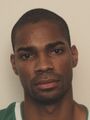
 Laurence Ekperigin

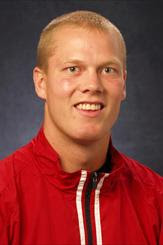
 Nik Raivio
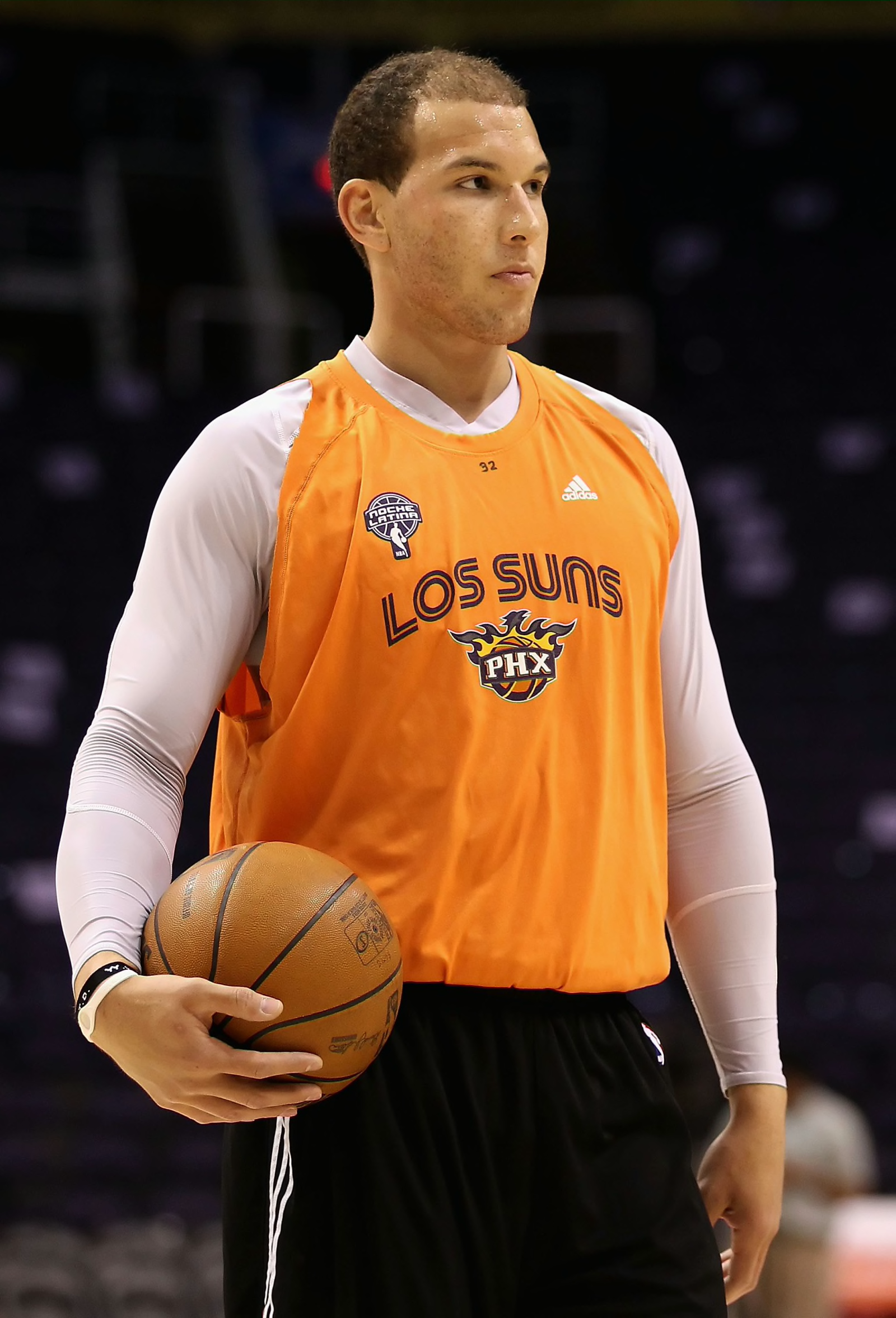
 Matt Janning
 Brandon Johnson
 Marcus Johnson
 Tyler Sanborn

 Michael Roll
 Tremaine Townsend
 Jeremy Wise
 Jeremy Lin
 Moussa Seck
 Eric Tramiel


 Marquis Gilstrap
 Tyren Johnson








 Ryan Brooks
 Vernon Goodridge
 Jason Love


 Viacheslav Kravtsov
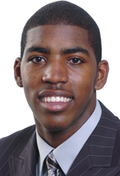
 Ryan Wittman
 Thomas Heurtel
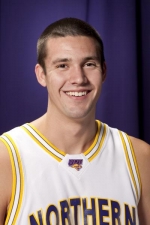 Adam Koch
 Chris Kramer
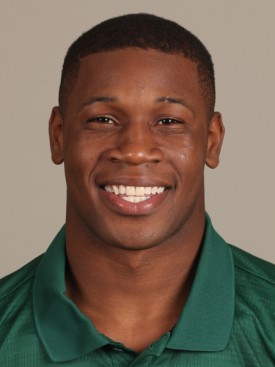
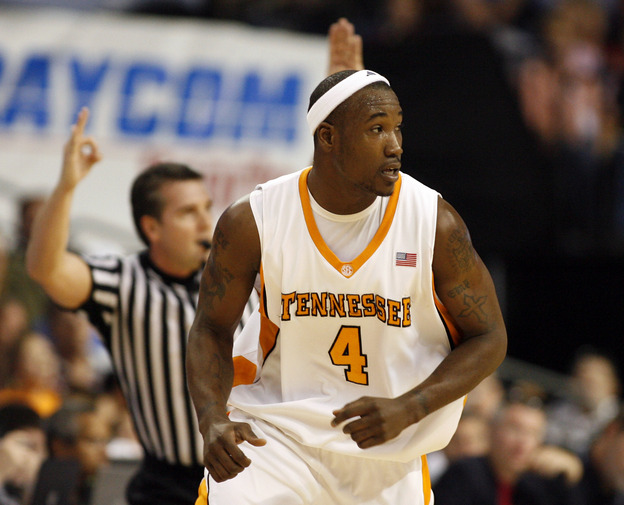
 Jakim Donaldson

 James Peters


 Armon Bassett
 Carlos Wheeler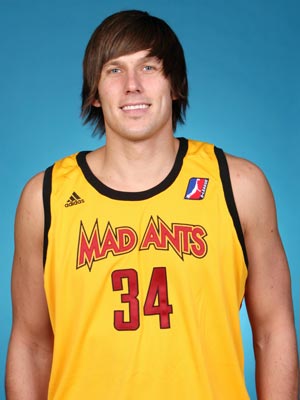
 Dominic Waters