Due to the length of this post, I have included links so that you can skip to specific picks, if you want. Of course, you may want to read all of it. Or….none of it.
The following people will not be second round steals: Sherron Collins.
Pick 31: Atlanta get at least five minutes to make the 31st pick, although it’s nearer fifteen minutes by the time deputy commissioner Adam Silver makes it out. When he does, Silver is greeted to the biggest cheer of the night, and takes it well with a wave and a big grin. The man who looks like a freshly-goosed Henry Abbott then announces that Atlanta, who obtained the 31st pick from New Jersey in the Damion James/Jordan Crawford swap, use it to draft German big man Tibor Pleiss.
Pleiss takes almost the full two minutes just to make it to the podium. He waits twenty seconds before even standing to acknowledge his selection, and then is forcefully dragged to the stage by an angry-looking official that kind of looks like Dale Davis. Before he’s even got to the stage, Pleiss has been sold; the Hawks have decided to sell his draft rights to the Oklahoma City Thunder. Fittingly, the Thunder (in their Sonics guise) were the team that drafted Peter Fehse back in 2002.
Pleiss should be an obvious draft-and-stash candidate. He is underdeveloped, both physically and skill-wise. Now that he has “drafted in the NBA” on his CV, Pleiss should be able to score a move to a better non-NBA league; the Spanish ACB, for example, should be easily able to toughen him up a bit. His highlight montage involves only six clips from the same game, two of which are uncontested routine dunks with no defensive players in the paint. Must Improve: Highlight video.
There are only 51 seconds on the clock before the next pick when Pleiss finally gets to the podium to receive his drain-unblocking handshake from Silver. This doesn’t bode well for his chances of keeping up with the speed of the NBA game.
Pick 32: Speaking of players unable to keep up with the pace of the NBA game, the Miami Heat pick Dexter Pittman with the 32nd pick, and instantly all the talk is about his weight loss. Pittman once weighed over 400lbs, and is now down to about 300; as is always the case with people who used to be fat, it’s the first thing you have to mention. They’re the rules.
(Do people who lost a ton of weight deserve more credit than people who never ballooned to 400lbs in the first place?)
Overlooked in all the talk about Pittman’s weight is his abilities. They just aren’t that good. Losing weight will help Pittman cope with the speed of the game, run the court, and finish around the basket against NBA defences, but it won’t help him cope with a double team. Nor will it stop him getting stripped all the time. Nor will it develop him a jump shot or any perimeter game. The counter argument goes that if Glen Davis can do it then Dexter Pittman could do it too, and that counter argument may be valid. But Glen Davis became a useful (and amusing) backup when he developed a mid-range jump shot, a baseline reverse and the ability to get open without the ball. Pittman does not have these things yet. It’s perfectly fine to pick a project at #32, and particularly fine if that project produces the kind of per-minute numbers that Pittman did. But it’s important that we acknowledge he is one.
Two minutes between second rounders seems too long. Fire this bad boy up. Make is 14 seconds. Additionally, I hereby vote that the “_______ is not here” catchphrase be done for every pick in the second. Even the 60th. Make them squirm.
After the Pittman pick, ESPN cut to something completely different; an interview with new Nets coach Avery Johnson. Johnson speaks excitedly of his new player Derrick Fayfurs, lauds the job done by Nets President Ride Thawn (twice), and finally commends Brook Lowpass. This must be what Eric Cartman will sound like when he’s gone through puberty.
The awkward interview ends even more weirdly when Avery says “I miss you guys” with way more sincerity than any of us were expecting, before offering Jon Barry and Jeff Van Gundy assistant coaching jobs. Barry deflects the issue and tries to make a joke about tickets; curiously, Van Gundy says nothing. This leads to a “JEFF VAN GUN-DY!! *clap* *clap* *clap-clap-clap*” chant from the Madison Square Garden crowd. Van Gundy stays quiet.
If there was a third round, who would present it? And how many rounds would we have to do before Joey Crawford did one?
Pick 33: Sacramento drafts Hassan Whiteside from Marshall, a man who would have been a sure-fire first rounder had he not loafed through workouts and done nothing to dissuade the aura of his supposed immaturity. Question marks aside, it’s a decent pick for the Kings, potentially getting them the next Keon Clark.
Whiteside’s draft caption is a swift kick in the nuts to any onlooker; “Must improve: Maturity.” Ouch. Marshall doesn’t help himself by loafing up to the podium like a petulant schoolboy and then trying to greet Adam Silver with a homie shake. But Silver takes it well, turns it into the business shake, and acts as if all is well. If Hassan can find that much guidance and patience throughout his career, he might be just fine.
The quote about Marshall’s maturity also overlooks the holes in his skill set, particularly his offensive game. How often does an extremely athletic big man with little offensive game ever develop the kind of offensive game teams envision when they draft them? Not often. Stromile Swift didn’t. Jamal Sampson didn’t. Cheikh Samb didn’t. Pape Sow didn’t. Et cetera. It works out sometimes – Andray Blatche is one such example – but the miss rate is far greater than the hit rate. And having owned both Clark and Justin Williams in recent years, Sacramento know what it’s like.
Between Whiteside and DeMarcus Cousins, Sacramento’s big man coach will get no day’s of holiday over the next two years.
Still, at #33, the risk is justified. Even if he needs to develop any kind of consistent offence and touch around the basket, while putting on 40lbs of muscle, learning how to keep possession when blocking a shot and growing up, it’s a pick worth making. But just so that we don’t forget it, Jay Bilas cements our awareness of his bust potential with the timeless quote, “He could be Patrick O’Bryant.” Nut punch of the year right there.
The camera cuts to a shot of many Kings fans looking very happy with the pick. The Maryland dancer of before manages to sneak into the background of the shot, milking some more airtime. Amazingly, John Calipari does not.
Pick 34: Adam Silver is quickly becoming a cult hero, for reasons I hope are obvious enough that I don’t need to explain them. The crowd agree, and they serenade his lovely self with a seminal chant of “A-DAM SIL-VER!!” *clap* *clap* *clap-clap-clap*. This briefly makes Adam giggle his cheeky giggle, but he recovers his composure enough to announce that Memphis have traded the rights to Dominique Jones to Dallas for cash. And cash only. If you thought that cash was referring to “Ca$h Money”, then start despairing, because it wasn’t. Oh well. With that money, Memphis can now cover the cost of Steven Hunter, whose deadweight salary they took on to get the pick. A good move wasted by a financially motivated one.
Silver then announces Portland’s selection of Armon Johnson from Nevada. It’s an interesting pick, because while Portland needs a backup point guard, Johnson isn’t really one. Nor is Jerryd Bayless, their other incumbent option. Nor is Patty Mills, who is a free agent anyway. Nor are Rudy Fernandez or Elliot Williams, their current backup two guard options. And nor is Petteri Koponen, who just re-signed in Italy for a year anyway. So unless Portland can begin tidying up, or know something that I don’t, they’re now fully overstocked at the guard positions, while still also needing a guard. It’s a strange position to be in.
(Of course, it’s perfectly possible that they know something that I don’t, for I don’t know anything. If this post had its own draft capsule, it’d say “Must Improve: Jokes and analysis.” And it’d be a good point well made.)
Pick 35: As Silver again slinks to the podium like a lizard, the crowd switches up the chant to something infinitely funnier; “SE-XY-SIL-VER” *clap* *clap* *clap-clap-clap*. Adam is again reeling, and this time is unable to recover his composure. He savages Nemanja Bjelica’s name mercilessly, resulting in a puerile concoction that resembled something like Pneumonia Beeyelleetsa. And because of Sexy Silver’s misstep, that poor man will now always be associated with abnormal fluid build-up and inflammation in the alveolar. Bad times, Sexy.
As evidenced in part one, I am not high on Nemanja Bjelica. It is not a baseless opinion; because of international commitments and the fact that he played for my favourite non-NBA team last year (Crvena Zvezda), I’ve seen Bjelica about 25 times. And he is not a young Toni Kukoc, not matter how much you hear that inevitable comparison batted around. (Well, he sort of is, but only because Toni Kukoc is now 41.) Bjelica is instead more like a young Robbie Hummel, and no one gets excited about Robbie Hummel. He’s a better pick than Loukas Mavrokefalidis was, and is acceptable at #35, but it is my opinion that you should temper your enthusiasm.
However, since I’m trying to be nice about prospects, I shall say no more about him. So instead of cynicism, here’s a clip of Australian children’s entertainment group, The Wiggles, performing the most seminal of all their smashes, “Hot Potato Hot Potato.”
I warn you now that it’s not a good idea to watch that just before going to bed. That will haunt your dreams and you will never sleep properly again.
Also, I don’t want to get too preachy or anything, but someone had better draft Solomon Alabi soon, or I’m going Hulk smash.
Pick 36: Stu Scott congratulates Sexyback on his pronunciation of Bjelica’s name, even though it was terrible, and Fran Fraschilla does his usual act of simultaneously heaping praise on the drafted player and the hierarchy that drafted him. Detroit then takes Terrico White with the 36th pick, which is a bizarre choice for them.
White made my steals list for a reason; he’s a good player. He’s a big two guard with NBA athleticism, and the ability to masquerade as an occasional point guard. White can shoot, create his own shot, and even post slightly, with the size and athleticism to defend his position. He is not exceptional at any facet of the game, but nor does he have any gaping flaws. A player like that was born to be drafted 36th.
But…why Detroit? The same team that really could use Solomon Alabi there. The same team that already has so much invested in Ben Gordon and Rip Hamilton at two guard. The same team that is already struggling to cope with the fact that Rodney Stuckey isn’t a point guard, and who also have Will Bynum, albeit as an unrestricted free agent. Detroit did not bring in White to play backup point guard, and as such, it is not immediately obvious why they brought him in. Especially since they need so much up front. Replacing Chucky Atkins should have been a ways down the priority list.
Nevertheless, it’s a solid pick, and particularly for a team that could use scoring from any source. It also gives me an outlet for the following amazing joke: U-G-L-Y! You ain’t got no Alabi! You ugly! You ugly!
(Please don’t stop reading.)
Pick 37: With the less-threatening Adam Silver chant back in effect, Sexy announces that the Bucks pick Darington Hobson at #37, an interesting choice for the team already with Baha Mootay, Carlos Delfino and Turk Nowitzki. Hobson is a good player, in many ways the entry level version of Evan Turner. He’s not the halfcourt creator that Turner is, and he is similarly lacking in elite athleticism and jump shot; that said, Hobson is a stat-stuffer and a talented passer that will rebound, drive and willingly move the ball. Europe might be better suited to Hobson’s talents, as might the Lakers, but the Bucks have something to work with here nonetheless.
Additionally, Stu Scott informs us that Hobson’s nickname is “Butta.” This partially assuages any doubts I may have had earlier about the player with two surnames, and it also makes Hobson the first NBA player since his current team mate John “Johnny Fish” Salmons to have a foodstuff in his nickname. Can’t be bad.
(“Big Snacks” Jerome James doesn’t count as a food. That’s a mealtime. Or a lifestyle choice.)
You will notice, of course, that it’s been pretty decent picks thus far in the second round. But things are about to get weird.
Pick 38: With their first pick in the draft, the Knicks make the draft’s first unbelievable pick, picking Syracuse guard Andy Rautins at #38. Desperately needing cheap NBA calibre players to round out a roster that doesn’t even have a core yet, the Knicks had a prime opportunity to get one, and yet they didn’t get an NBA-calibre player. And I say this as one of the world’s biggest Andy Rautins fans.
If he comes into the D’Antoni system, hits a few threes, and maybe cranks off a couple of 20 point nights, maybe it will look like the pick is a good thing. But that honestly won’t change much. There are a great many quality shooters in this world, if not a great many in this draft, and they need to be able to do more than just shoot. Rautins can’t.
Andy Rautins is small for a two guard, underwhelmingly athletic, can’t defend one on one, and does literally nothing in the lane. He shot only 56 two-pointers in 35 games, panics as soon as he gets into the paint (even on the break), and the only reason he got to the line 81 times was because he was often the team’s designated foul shooter down the stretch. All he can do is shoot threes, make some nice passes, and defend in the zone. And this guy is drafted ahead of Solomon Alabi? In fact, this guy is drafted at all? I love Rautins, truly and deeply, but this is not an NBA calibre player.
To make matters worse, Stu Scott mentions that Rautins and his dad Leo have matching tattoos. To make matters worse still, Stu Scott then says this is “very tight.” This was a low point of the draft, ladies and gentlemen. Let’s not talk about it.
Pick 39: The Knicks then immediately pick again, with another terrific opportunity to add either Alabi (run and gun teams need interior defence too) or Stanley Robinson (who struggles with the gunning part, but who would do an awesome impression of an entry-level Shawn Marion in the Knicks’ system). However, the Knicks again fail to deliver, drafting Landry Fields of Stanford about 12 places too high. The reception for Rautins was lukewarm, but the crowd’s reaction to Fields was simple bewilderment, as the director cut to shots of fans sprinting for the exits. Running. Sprinting. Couldn’t get out of there fast enough. A reaction previously thought impossible from a #39 pick.
This can only mean one thing; it’s time for more from The Wiggles.
Those who sprinted out of there missed Landry’s highlight video, the second clip of which involved Fields making a layup on a broken play that his bad pass had broken. The pick wasn’t as bad as the fan’s reaction made it seem, and the ever-positive Jay Bilas tried to satiate the wound with his analysis, but the boos rained down anyway.
With the crowd now much reduced in size, and the picks starting to get really weird, maybe I was wrong earlier. Maybe we don’t need a third round after all. Although we might need one if it’s the only way to get Alabi drafted.
The only saving grace was the drafting of back-to-back fauxhawks.
Pick 40: Indiana’s drafting of Lance Stephenson at #40 was missed due to a barrage of Michael Buble music, presumbably at the behest of Stu Scott, who really does love saying the word Buble. Lance Stephenson’s best case scenario is a 42-year-old Jason Richardson. Or a 14-year-old Jason Richardson, perhaps. His best career arc would be staying in the league for four years. He’s another man who should not be here.
The Stephenson pick leads to this exchange:
Stu Scott: “Jay, his nickname is ‘Born Ready.’ Is he ready?” Jay Bilas: “Well, he’s got a lot of ability.”
That’s a no, then. Bilas then follows this up with the comment that Stephenson “needs to learn how to play”, which, while true, is still a damning slant on any draftee. You can certainly continue to learn the game in the NBA, but you shouldn’t have to learn all of it.
Pick 41: After officially announcing the Martell Webster trade, Sexual Silver announces the Heat’s pick at #41; Mississippi State’s Jarvis Varnado. It’s a decent if not optimum pick that stabilises a draft that had wobbled slightly – if Hassan Whiteside doesn’t really develop much in his next two years, Varnado is what he will resemble.
Bilas says that Varnado needs to learn how to shoot, and get stronger. They are both valid criticisms. But 95% of NBA players do both of those things once they get here, and so while Varnado will never be big, he should also be a contributor.
Jeff Van Gundy hasn’t said a word for about an hour now.
Jarvis Varnado is the NCAA’s all-time blocks leader. Don’t think Andy Rautins is an all time anything. Except maybe an all time J.E. Skeets lookalike. Or all-time thin nose champion.
Pick 42: To follow up the Varnado pick, Miami makes another safe and sensible pick of a four-year college player out of a good program when they choose Da’Sean Butler of West Virginia. Immediately, Bilas jumps in with the confusing analysis “he’s not a good shooter, but he makes shots.” I think I can see what he’s getting at. For example, I’m not a good blogger, but I make blogs.
Butler is a good pick. He is not exceptional at any one thing, but he is smart, versatile, and has no discernible weaknesses. He can shoot, drive, pass, defend players similar to he, chip in with the rebounding, will do his best, do his duty to God and to the Queen, help other people, and keep the Cub Scout Law. Maybe he can do what the comparable Kasib Powell never did, and stick in the NBA for more than an hour. (Perhaps fittingly, Powell’s only NBA minutes have come with the Heat.)
Tom Penn, the only man quieter than Jeff Van Gundy, is brought in to talk about the impact of second-round draft picks on a team’s salary cap number. He ends up recapping the exact same speech that he made before the drafting of Tibor Pleiss about 4,000 words ago. For those who weren’t listening – twice – unsigned second-round picks do not have cap holds. But unsigned first rounders do. This only matters if you have cap space aspirations, but since the Heat do, this is why they traded down from 18 to 32 last week, shifting the 32% shooting Daequan Cook in the process.
To compliment Penn’s speech, ESPN flashes up a graphic detailing the amount of cap space teams will have heading into this offseason. A more detailed and accurate version of said graphic will appear on this website tomorrow. Or Monday. Or Tuesday.
Stu Scott proposes whether a Dwyane Wade/LeBron James/Chris Bosh trio, which Penn alluded may be possible, would be successful in Miami. You could actually see Jeff Van Gundy suddenly bolt upright and grab the initiative before either of the JB’s could steal his thunder from him. The man is in his element right here. This is why he’s here. Watch and learn, everybody.
By the way, we’re currently in an era that features Jon Barry as a lead analyst in both NBA Finals games and the NBA draft. That’s all I can say about that without having to resort to another Wiggles video. Beauty mate!
Pick 43: Still not quite recovered from his bout of Pneumonia, Sexy Silver announces that Atlanta has traded Damion Jones to New Jersey, not Damion James. He then announces that the L.A. Lakers have picked Butler’s WVU teammate, Devin Ebanks.
Ebanks can’t dribble or shoot, and thus will always need the benefit of a good system if he is to shine. However, he is a good and versatile defender, who can and will run the court, score from within 15 feet, and pass reasonably well. The Lakers and the triangle are a good fit for him in this regard, just as they were for Ariza and Shannon Brown before him. Unfortunately, his highlight montage includes a clip of him being called for a foul on Tyler’s brother Ben Hansbrough, but never mind.
Silver also announces, as expected, that the Hawks have traded the rights to Tibor Pleiss to Oklahoma City for “financial considerations.” The word “considerations” seems unnecessary there. Makes it sound like they’ll think about paying them in the future. And that’s not how it works.
In his first half an hour in the NBA, T-Bone has already been on three teams.
Pick 44 and 45: The next two picks were missed due to a commercial break. I don’t know what you saw in America during that break, but here in England, we watched a montage of Australian people fighting. True story.
At #44, Milwaukee picked Jerome Jordan of Tulsa, who has a similar body type to Dan Gadzuric but who plays in the opposite fashion. Milwaukee later trades this pick to the New York Knicks, who don’t seem to care that their centre rotation for next season, as things stand, reads Jerome Jordan and Earl Barron. There’s scoring, size and shooting there, but they might need some physical play in there somewhere. Speaking of physical play, the Timberwolves addressed a need there by drafting Brazilian big man Paulao Prestes, who has all the athletic ability of a stubborn bunion, but who can flat out rebound the ball. Fran Fraschilla praises Prestes relentlessly – specifically his feet, for some reason – but avoids waxing too lyrical about the people that drafted him. He would, of course, but he already did it when the Timberwolves caught Pneumonia.
There are ways to make Prestes look much better than his highlight montage, which just showed a series of very grounded lay-ups. But he can play. He’s a rebounder. A very good one. And the league always needs those.
Stu Scott ruins the moment by calling Leandro Barbosa “Leonardo.” He instantly realises his mistake, pauses, but doesn’t correct it. I think he wants to go home. He’s said more words tonight than I’ve written.
Pick 46: Steve Kerr is a good drafter, and he makes one more sensible pick before leaving the Suns. Gani Lawal is a talented player and great value at #46, a player who fell about seven places too far due to the crazy nature of this second round. His athletic style suits the Suns, and he doesn’t need to be a polished offensive player to run the court, get open, and dunk with authority. (Which is lucky, because he isn’t.)
The Suns would also have benefited from drafting Stanley Robinson, who, as mentioned earlier, was born to run. In fact, if the draft gets the walk-up music it so badly needs, that must be Stanley’s tune. And everyone else’s must be The Final Countdown. Maybe we could actually book Europe for the night.
There’s also Solomon Alabi left standing, of course. I cannot believe Solomon Alabi has not been drafted yet. He might be dead. San Antonio are up soon, however, and they have a tendency to get things right in the draft. It will be lauded as a great pick if the Spurs pick him, but it won’t be. Well, it will, but it’ll be more down to the 17 bad picks before it.
Rachel Nichols gets her second airing of the day, where she interviews Mike D’Antoni and unfurls a propensity to nod religiously, and ever so slightly patronisingly. She also smiles constantly, laughs excessively, flicks her hair, and ends the interview with a cheeky wink. I know what she tried to do there, and I know it worked.
In other news, the German basketball league has a “Most Likeable Player” award, which is maybe the best idea I’ve ever heard.
Pick 47: The Milwaukee Bucks draft Tiny Gallon from Oklahoma, which is bizarre for hundreds of reasons. Well, just three reasons.
1) Tiny Gallon got drafted?
2) Tiny Gallon got drafted by the team coached by Scott Skiles?
3) Tiny Gallon is here?
Gallon is an overweight 6’9, yet fancies himself as a jump shooter. He is not a polished post-up player, not a good defender, nor a good shooter, and he manages to turn it over an incredible amount for a guy who does not dribble. He can rebound the bejeezus out of the ball when he so chooses, but that isn’t always. And he won’t have a 100lb size advantage nightly in the NBA. James Lang needed more than just his weight, and so will Tiny Gallon. In fact, it would help Gallon if he played more like Lang. At least Clubber knew not to take jump shots.
Just by being at the draft, however, Tiny Gallon gets to hear his name turned into a chant by a room full of strangers. See, this is why you have to go. Even if you run the risk of humiliation by not being drafted, it’s worth it.
Stu Scott announces that Gallon has a tattoo on his neck that says “misunderstood.” Maybe so. But the fact that it’s on his neck suggests that saying Gallon is a questionable decision maker is entirely factually accurate.
I guess Adam Silver’s not getting called Sexy any more, then.
Pick 48: Never one for doing much with the D-League before now, the Miami Heat switch things up as they draft Latavious Williams from the Tulsa 66ers. With this pick, Williams makes history as the first player drafted exclusively out of the D-League. (Mike Taylor was previously drafted after playing in the D-League; however, he had previously played at Iowa State. Badly.)
Williams is a prospect, but he’s one that developed quickly. He is not much more than an athlete and a rebounder right now, but as long as he does not make too many mistakes, that could well be enough. If he improves his finishing around the basket, and maybe adds a bit of a jump shot, he could be the next Donnell Harvey. This is a compliment.
The selection of Williams creates a problem for the panel. They have Bilas as an NCAA expert, and Fran Fraschilla as an international expert, but they have no one to talk about the D-League. To be fair, they haven’t needed one before. The task of describing Williams to the audience arbitrarily befalls Bilas, who talks about Williams’s rebounding, athleticism, underdeveloped offence and movement without the ball. He basically just recapped the highlight montage, but it’s accurate, and order is ensured.
Solomon Alabi is still on the board, and San Antonio is up next. DraftExpress reports that the reason Alabi is plummeting is due to a medical red flag; after the draft, we later find out that this is due to him having hepatitis B. Nasty, and definitely significant. However, as I understand it, his case of hepatitis is entirely treatable (albeit not curable), and should not present a problem in his basketball career. If this is accurate, therefore, then Alabi’s plummeting stock seems unfair.
To put it into contrast, Da’Sean Butler (drafted six picks ago) is recovering from a severe knee injury at the worst possible time, and will be out of action for a good while yet. But if it did affect his draft stock, then it did so negligibly, because he still was drafted in a position befitting of his talent by a team not prone to rash decisions. However, Alabi’s stock is freefalling like an overfed paraplegic pachyderm in a nasty skydiving accident, when he has an illness that is unusual yet which should not present a problem. It is the fault of neither party, and yet it seems ludicrously unfair that one suffers so much more.
But that’s just how it is. People fear what they don’t understand. And they always will.
Still needing drafting; Alabi, Stanley Robinson, Alexey Shved, Hamady N’Diaye, Willie Warren and The Skillz Train, Luke Harangody. And about a dozen others. Maybe a third round really would be a good idea.
Pick 49: Rather than go down their best-player-available route, the Spurs chose their other tack and decided to draft and stash a random athletic foreigner. This particular random athletic foreigner happens to be an Englishman, Ryan Richards.
This is another reason why all potential draftees should be forced to attend the draft. Had they done so, Richards could have danced bracingly to the stage and saluted Adam Silver, all whilst wearing sunglasses, to remind the world than the Sun never sets on the British Empire. Rule Britannia.
(Once a year, we get together and sing about how brilliant we are. There’s nothing wrong with it whatsoever. At least we don’t do it two thirds of the way through every baseball game. And at least this wasn’t a Wiggles video.)
Richards is highly underdeveloped, but he’s in the Gran Canaria youth system. And as evidenced by his countryman and fellow draftee Joel Freeland before him, that’s a fine place for any young player to develop. Lefty Richards can’t do much at this point outside of his athleticism, but he has a good jump shot, and sports NBA athleticism in a school of fundamentals. It’s a pleasing combination for the future, and even if his NBA career is ultimately only equal to that of Ian Mahinmi, is that so bad from a 49th pick?
Naturally, Fran Fraschilla loves the pick, and loves the person who made it. Fran also uses Richards’s selection to take the night’s second unprovoked pot-shot at O’Bryant, claiming that Richards “is not Patrick Ewing, but he’s also not Patrick O’Bryant.” Two punches to the scrote in such quick succession. POB is down.
As a fellow Englishman, expect to hear lots more about this man down the road.
Picks 50 and 51: Off-camera, Alabi is finally drafted, going to the Dallas Mavericks. Almost as quickly, my sources (i.e. Twitter) say that Alabi is being trading to the Toronto Raptors. This is a very good pickup for Toronto. Even if Alabi flakes out in the NBA, or goes the other way and never joins it, he is the right kind of player for Toronto at a very good price. With the drafting of Alabi and Ed Davis, Toronto have identified their biggest flaw and taken steps to rectify it. Neither will provide any significant short term help, but if Toronto are to rebuild – and they should do – then short-term help doesn’t really matter. Regardless of what else they do, it’s a step in the right direction.
Sexilver also announces that Oklahoma City have drafted Magnum Rolle, an athletic forward out of Louisiana Tech, with the 51st pick. Rolle is OK, but many better players exist in this draft pool, including most of the names I have already mentioned. Rather than taking one of them, though, Oklahoma City have taken a fifth-year senior whom the aforementioned Latavious Williams will resemble if he doesn’t develop for the next four years. It’s a strange choice.
Magnum Rolle is quite obviously the best name of the draft, if not the best name of the decade. Unlike previous years, there’s not enough ammunition for an all-porno-name starting five this season, but with a name like Magnum Rolle in the mix, one is no longer needed. I just wish UCLA’s Michael Roll was more athletic, so that he could be here too.
Additionally, Ryan Thompson had better be drafted tonight so that I can use my “Ryan Thompson is an anagram of horny postman” gag.
Pick 52: Boston drafts The Skillz Train, Luke Harangody. Why am I determinedly calling Luke Harangody, The Skillz Train? Well, because, you know. Just look at him.
That man is certainly skilled, but he sure doesn’t look like he should be.
The Skillz Train plays a lot like Glen Davis. This would be good for his NBA prospects, were he not on the team that already has Glen Davis. Gody never really posted up a great deal at Notre Dame; instead, he knew how to float to get open, and could make shots around the basket with those cack-handed hook shots of his, and hit some outside shots with that cack-handed jumper. He is no slasher and as of right now is no three-point shooter; then again, neither was Matt Bonner back in the day. If Skillz Train takes that career arc instead, it might not be a bad thing.
Who’s he going to defend in the NBA? Simple. No one. He’ll just have to score enough for that not to matter. And if he can’t, then he just won’t stick.
Harangody being drafted by somebody was inevitable, given the magnitude of his numbers in such a big conference over the years. But there was nothing inevitable about this next pick.
Pick 53: Atlanta drafts Pape Sy, a player that literally nobody has heard of. And when I say “literally nobody”, I do mean literally nobody. There was not a draft board in the land that this guy was on. This is much more of an obscure pick than Christian Eyenga. Sy is just your average, every day, run-of-the-mill French league backup. And now this.
Strange times. Really strange times. But therein lies the fun. So let’s learn.
22-year-old Sy has spent his entire career with French team Le Havre, who this year finished 13th out of 16 teams in the French ProA with a 10-20 record. Sy played in all 30 games backing up former Texas A&M guard Bernard King – not THE Bernard King – and averaged 14.2 minutes, 5.2 points, 1.7 rebounds, 1.3 assists, 1.9 fouls and 0.6 steals per game. Sy shot 55% from two-point range, 42% from three-point range and 71% from the foul line. and he shot 69 free throws to 93 total field goals. He clearly has no problem getting to the line, and the three-point percentage also came on a healthy 29 attempts. He didn’t play much, and he played only in a league with particularly bad defence, but he scored efficiently nonetheless, with 155 points on 93 shots as a 6’6 shooting guard.
However, there’s no pedigree here. The French league is not a great league, and yet Sy was a mere backup in it. He played briefly with the French Under-20 national team, yet averaged only 2 points per game in the 2007 U-20 championship for a disappointing French team. (For comparison’s sake, Nando De Colo averaged 17.9 ppg in the same tournament). Sy has played significant minutes in only one professional season, and that was this past one. He is 22 years old, has not cracked 6 ppg in the French league, and has not exactly got a storied history of tearing up draft camps for many years like so many other draft picks with limited professional experience have done in the past. Pape Sy’s draft selection has literally come from nowhere. And it could only have come from Rick Sund, a man who just loves to take flyers on international players.
The only person who seemed to know that Sy would be drafted was Pape himself, because he’s here, along with the four people he brought with him. Pape spends so long hugging them that it takes almost the full two minutes to even get to Silver. It would be good comedy, were it not truly awkward.
Is this the world’s biggest steal, or the world’s biggest reach? It’ll take some kind of turnaround to be the former. But it’s definitely not the latter, because in four picks time, an even weirder pick is made. Read on, dear viewer.
(Pape Sy is pronounced, by Sexy Silver at least, to sound like “Pepsi.” The endorsement opportunities are obvious.)
(Wait, who went 1st overall again?)
Picks 54 and 55: A more familiar name is drafted 54th, as the Clippers select Willie Warren from Oklahoma. Jay Bilas is again called upon to put the necessary work in. With all these familiar names from the NCAA falling so far down the draft, Bilas is having to stay on his grind. He probably thought he could knock off early. Not so.
It’s a pretty terrible year for Warren to be declaring, as the Sooners put on quite a fail this season. They lost Blake and Taylor Griffin to the NBA, and Austin Johnson due to graduation, yet they scored two big name recruits in All-Americans Tiny Gallon (already drafted) and Tommy Mason-Griffin (who was never going to be; hey Tommy; if Willie Warren can barely get drafted, you had no chance.) But both left after one season, one of them dragging a tasty scandal behind him. With the Sooners additionally losing seniors Tony Crocker and Ryan Wright (who couldn’t really play anyway, but who represented some size at least), as well as backup guard Ray Willis transferring out of the program and backup centre Orlando Allen leaving the team to start a family, the program was left with but the barest of bones. At one point this year, Oklahoma were down to four scholarship players. And that’s partly why Warren is here tonight.
In amidst all the turnover, the Sooners failed on and off the court as well. Gallon’s scandal was preceded by the arrests of Willis, freshman guard Steven Pledger and freshman big Andrew Fitzgerald. Warren himself is no stranger to scandal, being arrested just after the season finished, and creating locker room turmoil in the final few weeks of his freshman season by knocking off teammate Austin Johnson’s missus. (….allegedly.) Warren, Mason-Griffin and fellow guard Cade Davis took it in turns to not pass to each other, and Warren didn’t improve his play in this time. Not helped by injuries, Warren shot the jump shot worse than last year, turned it over at a high rate, made no improvements defensively, didn’t show any signs of wanting to play any D, took more terrible shots, and didn’t have a growth spurt. So he’s a shot-happy undersized two guard with bad defence, a fear of spiders (hat tip to Stu Scott’s trivia sheet), a poor jump shot, and a chequered past. Good to know.
Nevertheless, this is a man once considered to be a top-10 pick we’re talking about here, and so Warren was always going to be drafted. For all his faults, he’s a good slasher and an athlete, who can get to the basket and finish, and who is also a good passer when he wants to be. Warren regressed badly last year, but he wasn’t as wild and inefficient in 2008-09, when surrounded by better players and a far stronger team. The Clippers perhaps aren’t the best team for him right now in that regard, but they, like every NBA team, have many players better than Warren. They also have Warren’s former teammate Blake Griffin, which might not have been a coincidence. (And which, if Blake is still mad at Willie for ruining their Big 12 Tournament run, may not have been a great idea.) If Willie can play more like he did in his freshman season, when he was surprisingly well-grounded in spite of his reputation as a chucker, then perhaps he can begin to live up to the as-yet-unfulfilled potential that has seen him this far.
But there’s red flags there.
Jay Bilas talks so much about Willie Warren that the Jazz’s drafting of Jeremy Evans of Western Kentucky with the 55th pick is completely missed. It’s not even mentioned. Evans averaged only 27 minutes per game as a senior in the not-very-good Sun Belt Conference, and averaged only 10 points, 7 rebounds and 2 blocks. Because of this, a player of Evans’s calibre would normally not be on the radar, yet apparently Utah saw enough athleticism in him to overlook the fact that he can’t dribble, shoot, or weigh over 200lbs. Maybe they too wanted Latavious Williams and decided to draft a replica.
This is what I don’t get, though; if you want a 6’9 athletic forward, why would you take Jeremy Evans and not Stanley “AAAAAAAAAAARGGGGGGGHHHHHHH” Robinson? (So nicknamed because he can’t help but do this on every dunk:)
(….And I do mean every dunk.)
(Every.)
Pick 56: With their 14th pick of the night, Minnesota (picking for Washington) select Hamady N’Diaye from Rutgers.
I like this pick. N’Diaye shares more than a nationality and an apostrophe with Boniface N’Dong. He defends around the basket, rebounds sufficiently, blocks shots, is athletic, has a huge wingspan (as Jay Bilas naturally saw fit to mention), run the court, has some rudimentary post-up offence and can also run the pick-and-roll. Washington has a made a good late pick here; even though N’Diaye is still raw and about to turn 24, he could potentially be an NBA player.
The Timberwolves/Wizards trade now reads Trevor Booker and Hamady N’Diaye for Lazar Hayward and Nemanja Bjelica. I would rather have the former duo.
Pick 57: This second round has seen a few weird picks, not least among which have been Rautins, Fields and Sy. However, this is where it has its weirdest one of all. For reasons known only unto themselves, the Indiana Pacers – as we find out later, acting on behalf of the Oklahoma City Thunder – draft Ryan Reid out of Florida State.
Reid is a “little things” player. He sets screens, he occasionally rebounds, he can score if you double off of him, and he’ll push you back if you push him in the post. But that’s about it. And there is no point in being a little things player if you can’t do the big things. Reid’s nickname is “Big Ticket”, but that ends the list of anything big about him. Despite Stu Scott calling him a freshman, Reid is a freshly graduated senior, and yet he just averaged 7/4 in 23 minutes per game in his senior season. He is a strong but undersized power forward with average athleticism, no NBA calibre offensive talents and a bad rebounding rate. He also manages to turn it over amazingly often for a man who should not be getting touches. Put simply, the drafting of Ryan Reid makes no sense. And it makes particularly no sense when you have other bigs such as Artsiom Parakhouski, Brian Zoubek, Stanley Robinson, Mac Koshwal, Omar Samhan and Samardo Samuels on board. Even Wayne Chism would have sufficed here. Or Deon Thompson. Or me.
Jay Bilas tries to complimentary about the Reid pick, congratulating on him on achieving the unexpected, but he can’t mask his shock and notably states that he didn’t have Reid in his “top 90”. You could probably prefix that number with a 1 and it would still ring true. Ryan Reid’s best case scenario is Udonis Haslem, but Ryan Reid’s worst case scenario is the Czech Republic second division. There’s a hell of a lot of middle ground in between those two extremes, and somewhere within it, you will find Ryan Reid. I would not be surprised if Reid goes to the D-League next year and performs similarly to how Raymond Sykes of Clemson did; however, I would also not be impressed.
What an amazingly strange pick. The strangest of the decade. Of the millennium. Stranger than Pape Sy, even.
Pick 58: The L.A. Lakers pick Derrick Caracter, the player with the most apt surname since Byron Eaton. The Denver Nuggets have been said to covet Caracter very much, and given the Lakers’ aversion to young players, it is assumed that Caracter’s rights will be sold to the Nuggets. But for whatever reason, they are not, and Derrick Caracter is now a Laker.
This seems strange, because Derrick Caracter really doesn’t have the usual profile you’d expect in a Laker. He is, by all accounts, a prospect, a man told to leave Louisville because of his lack of dedication, weight problems, bad attitude, underwhelming play and off-court troubles. Even when he begged to stay and vowed to change, Rick Pitino would have none of it, and banished Caracter forever.
(About twenty thousand people have already made the “Caracter issues” pun, so that’s that out of the way. Ho hum.)
To his credit, Caracter has done only good things since. He transferred to UTEP, where he played by the rules and played rather well. He took too many jump shots and turned it over an unbelievable amount of times, but Caracter stayed out of trouble, lost some weight, and was arguably the most important player on the best team in the decent Conference USA. Caracter is big, athletic, and can finish around the basket with both finesse and brute force; if he was two inches taller, was coming straight out of high school, used to be a gymnast and was available in a draft where Jerry Krause was present, he might have gone top five. (That’s an Eddy Curry reference.)
However, Caracter is far from ready to contribute, and especially to the two-time defending champion Lakers. He’s a better draft pick than Chinemelu Elonu was, but Caracter has considerable ways to go before he is an NBA player. He has come a long way in the last 18 months, but it’s not nearly far enough yet.
He also has a fauxhawk. Good second round for the fauxhawk.
We’re nearly done now.
Pick 59: Orlando are lucky enough to pick at #59 the man they should really have picked at 29, as they draft Stanley Robinson from UConn and stop the freefall.
Great pick. Robinson could be the draft’s best steal. About 35 picks too low. An extremely obvious pick, of course, but everyone else managed to overlook him and Orlando could easily have done the same. Robinson runs the court, rebounds, dunks, blocks, can play terrific and versatile perimeter defence, and post up a touch. He is not much of a ball-handler, shooter or creator, but even though those skills are kind of fundamental, you can easily contribute without having them. And as Matt Barnes himself has proved, jump shots can always be learnt.
Robinson improved considerably last season when he learned to stop shooting his jump shots on the way down. Imagine when LeBron James learns to do the same.
Had Stanley been here, I’m sure he would have yelled.
Pick 60: After four and a half hours and about 20,000 words, it’s finally time for the final pick. Sexgod closes affairs with the announcement that the Suns pick Dwayne Collins out of Miami, a man who, if his arms shrink and he forgets how to catch, could provide a decent replication of Brian Skinner for a few years. The drafting of Collins completes the second round, and ensures that it is bookended by sensible picks.
But man, did it get weird in between.
–
Thus ends another NBA Draft Night, perhaps not as big-trade laden as others before it, but just as exciting in its own special way. With an unprecedentedly awesome free agency period upon us, it would perhaps have been selfish to expect an all-time calibre draft night as well.
The real winner in this draft was the fauxhawk. The real loser was Patrick O’Bryant. And the word Xavier. And the Knicks. To use the quick grade-style format that would have meant you didn’t need to read all of that bobbins above….
Atlanta – C (Crawford’s OK, but Sy’s just weird, and why did you sell Pleiss? Would have been a B had they used the #31 wisely.)
Boston – B (Skillz Train doesn’t make a huge amount of sense considering the roster make-up, but Bradley was the right pick.)
Charlotte – DNP
Chicago – A (Maybe I’m biased, but the sheer unexpectedness of that Hinrich trade cannot be overstressed.)
Cleveland – DNP
Dallas – A- (Buying Jones as a long-term role player was sensible in every sense of the word, although keeping Alabi would have been too.)
Denver – DNP
Detroit – B (Good players for good value.)
Golden State – B- (Big fan of Ekpe Udoh, but that might have been too high.)
Houston – B+ (The right player at the right draft spot.)
Indiana – B (Not seeing the logic behind the Stephenson pick, but George represented the best remaining chance at stardom at #10, and that’s what Indiana sorely need.)
L.A. Clippers – B- (It’s not the most fundamentally friendly team they’re building there.)
L.A. Lakers – B- (Ebanks was right, Caracter will be meaningless.)
Memphis – C (Marked down severely for selling the #25. A team that self-prescribes building through the draft turns down the chance to build through the draft. It just doesn’t compute.)
Miami – B (Should have kept Latavious, but a decent selection of second-round picks.)
Milwaukee – B (Keeping Gallon and trading Jordan seems like it’s the wrong way around, but Sanders suits.)
Minnesota – D (Took the wrong guy on five separate occasions, which is hard to do, and made a really terrible trade that serves no obvious purpose.)
New Jersey – B- (Is Damion James the most value you can get from the 27th and 31st picks in a draft? Probably not.)
New Orleans – B (Would have been nice to have kept Cole Aldrich, but they bettered their team, saved money, and may have filled a long-term hole. The only downside is that the other really big hole was neglected.)
New York – D (Picks in the thirties should be much, much more valuable than this.)
Oklahoma City – C+ (In keeping with tradition, Presti acquires assets better than he later utilises them. The pick of Aldrich was correct, but the trade to get him effectively ends their offseason. The Clippers’ first-round pick may prove useful, or it may prove uneventful. And the Ryan Reid thing was ridiculous.)
Orlando – B (Right guys, wrong way around….close enough.)
Philadelphia – A (Largely arbitrary grade awarded for doing absolutely nothing wrong. Then again, it wasn’t hard to do anything wrong when the only pick you have is the #2 in a two-person draft.)
Phoenix – B (A couple of decent second-rounders, although I still insist Stanley Robinson was right at #46.)
Portland – B- (Won the Minnesota trade by a long way, and will win it by even more if they don’t waive Gomes. Their other picks, however, are a touch underwhelming.)
Sacramento – A- (Great value for their picks, but the reason those picks were possible were because of the significant implosion possibilities. Risks worth taking, however.)
San Antonio – B+ (Right player in the first round, right nationality in the second.)
Toronto – A (Couldn’t have done more.)
Utah – C (Love Hayward, but its a reach until further notice.)
Washington – C (Wall pick, self evidently good. Trade with Minnesota, good. Trade with Chicago, incredibly bad. Worst move of the night. The only blessing is that it won’t cost them too much in the long run.)
The undrafted free agent class from this draft is simply unbelievable. Even when forgetting overseas players, the list is a stunner; in no particular order, we have Jerome Dyson, Sherron Collins, Gavin Edwards, Artsiom Parakhouski, Mac Koshwal, Samardo Samuels, Jerome Randle, A.J. Slaughter, Charles Garcia, Jeremy Wise, A.J. Ogilvy, Mikhail Torrance, Jon Scheyer, Matt Bouldin, Tyler Smith, Omar Samhan, Jeremy Lin, Scottie Reynolds and Deon Thompson. There’s the ambitious entries, such as Tommy Mason-Griffin and Courtney Fortson, who also didn’t get picked. Miroslav Raduljica didn’t want to get drafted, and by my troth, he did not. Nor did Alexey Shved. And that’s before we even get to the “seniors who didn’t really have a chance, but I like them anyway” list, a list featuring big names such as Tweety Carter, Obi Muonelo and Ish Smith.
Can you not see at least five of those players cranking out a couple of years on an NBA bench? Can you see Pape Sy doing that?
That’s one of the best undrafted classes of recent years. And to think Stanley Robinson was almost on it. This simply unbelievable second round perhaps provides a fitting climax to this frankly weird season NBA season. In a year featuring the world’s weirdest NCAA bracket, more basketball player penis pictures than in every other year of the sport’s history combined, and Adam Morrison winning his second championship ring, the drafting of Andy Rautins at #38 starts to make sense. As Kevin Garnett once annoyingly said; Anything is possible.
Over the course of the last nine months, I have watched somewhere in the region of 700 NCAA games. I have done this partly because of a deep-rooted affinity for Jay Bilas, but also in anticipation of the NBA Draft. Draft Night ranks somewhere near Christmas Day and Metanoia Day1 as the best day of the year, and the only thing that can rival Draft Night for excitement is Draft Day. If you’re a basketball nerd, you will know why this is the most exciting thing ever. And if you’re not a basketball nerd, you should stop reading right now, because it only gets worse from here.
Included in that 700 games are about 140 different teams. For reasons that perhaps a psychotherapist is better equipped to explain, it is my life’s pursuit to know about every player in male professional basketball.2 This is of course an impossible task, but if you can pigeon hole them early while they’re still amateurs, then you can get somewhere close to it. This, therefore, is where the NCAA proves invaluable. And given that you never know where the quality is going to come from, I tried to watch everyone.
(Lafayette versus Lehigh was a particularly low point, as were the two Morgan State versus South Carolina State games. I think one would have sufficed there. And while I still have Yale vs Princeton stored up and ready to watch, I’m not sure I can manage it.)
The reason I was able to watch all these games is because of the way ESPN have risen to power in the world of British basketball. For several months, ESPN was nothing but a competitively-priced amateur basketball cow. Multiple games a day, I imbibed that milk.
Past drafts, and therefore past draft diaries, have not seen me armed with the same level of full-frontal nerdity. There’s something innocent, affable and charming about heading into the draft with no knowledge of who or what you were about to see; it was a simpler and no less exciting of a time, for it presented an opportunity to learn. (And judge.) This year, however, with bookmarks and scribbled notes all over the show, the draft night began to move in new directions. Weirder directions at that.
One of the weirder directions was the late twist that saw me commentating on the event at Ball Don’t Lie’s live draft night blog thing. A transcript of that can be found here; however, since the remainder of this post is going to be based around everything I wrote in there, don’t read it just to see my comments. Keep it right here.3
There follows a ridiculously long-winded recap of the event. All jokes and thoughts are intended to be my own; if any appear duplicated from other sources, then this is a coincidence. (This includes not stealing from the BDL chat. I’m not THAT guy.) The piece is written largely in real time for some reason.
Pick 1: At 7pm ET, and 12am BST, the draft coverage gets underway. ESPN give themselves a generous half an hour to try and create tension in the first few picks. Will John Wall be taken number one? Will Evan Turner be taken second? And will the Nets go big with Derrick Favors at number three? The answers are yes, yes and yes, and anyone who can create a Twitter account or read an RSS feed knows it. The whole thing is more predictable than a film where Will Smith plays the good guy with an attitude, and more tepid than a three-week old coffee in a Norwegian fish factory. But we’re all here playing the game anyway.
Inevitably, the Wizards will be drafting John Wall. You know it, I know it, John Wall knows it, Sally Gunnell knows it. Nonetheless, the build-up continues in earnest. Tonight’s television line-up features ESPN’s go-to presenter Stu Scott, their go-to analyst Jon Barry, the genuinely amusing Jeff Van Gundy and the genuinely attractive Jay Bilas. In the interview section, and in line to quite frankly do a much better job than Stephen A. Smith for the second straight year, is Mark Jones. And taking the role of green room reporter is Heather Cox, who takes over from Lisa Salters (who wasn’t very good at it), who took over from Doris Burke (who was). Apparently there’s a squad rotation system in place. It’s not the best haired line-up in the world; Cox is sort of ginger, Scott and Jones have closely cropped hair, Barry has a closely shaven head for obvious reasons, Jay Bilas is just about clinging on to the remnants of a once-defiant hairline, and Van Gundy lost a similar battle about three decades ago. Nevertheless, they should suffice.
It takes a while, with proceedings held up somewhat by David Stern encouraging the crowd to boo at the mere mention of the word “Celtics.” The Wizards are being given five minutes to decide something they decided weeks ago, but the thin veneer of drama that draft night carries decrees that we must pretend an extra five minutes will help them make this bollock-breaking decision. We also have to wait as Stu Scott asks the panel whether John Wall is nervous, which he clearly isn’t, because he too has known this was going to happen for over a month. Time is filled by a breakdown of Wall’s game by Jay Bilas (who claims that Wall will benefit greatly “when he learns how to defend”, which is never the most soothing sentence to hear in a description of a #1 pick), and we are also treated a video clip of Kwame Brown being drafted first by the Wizards back in 2001, (a clip which is just too soon, and which will always be too soon to the team.) But no amount of procrastination can change the fact that eventually, Wall is picked.
Wall should pair up fairly well with Gilbert Arenas, and the Wizards should be a good full court team. Neither player is a great point guard in the half court, but in that regard they can help each other, and Wall should help Arenas rebuild his value (so that he may then be dealt.) Wall’s jump shot is not all there, but the form is solid, and thus it should be something he can easily develop. And while he has the tendency to drift defensively and doesn’t do a particularly good job of keeping opposing slashers out of the lane, he has the athleticism to make up for it and win possessions. His flaws are fixable, and his strengths are strong indeed.
Unfortunately, Washington made news earlier in the day as well by agreeing to acquire Kirk Hinrich and the Bulls’ first-rounder (17th overall) in exchange for essentially nothing at all. Washington will have lots of cap space this summer, and an unspoken understanding that no elite free agents will want to use it, so they’ve decided to use it via trade. It’s a decent strategy, but unfortunately, it’s not a decent trade. Kirk Hinrich might be worth his money to a competitive team looking for a final piece at guard (and with bad salary to send out in return), but Washington takes only the negatives of his deal with nothing more than a non-lottery first for compensation. Consider for a moment that Miami traded the #18 and Daequan Cook for the #32 only this week, and this trade pales in comparison. Hinrich is a much-loved individual, described in more depth here, but he’s not good enough to justify this.
It doesn’t change the Wall pick, but it does kill the jubilation. When you’ve got Kirk Hinrich, do you need John Wall any longer? Yes. Yes you do. More than ever, in fact.
(In describing the Cook trade during the build-up, Barry calls Cook a “good young player,” making him the first good young player to have shot 32% for a season since 1955.)
Rumours also abound via Greek media that Washington are about to sign Josh Childress to an offer sheet. If true, the Wizards’ cap room is now largely burned on a backcourt/wing squadron of Wall, Arenas, Hinrich, Childress and Nick Young, with no room left for Mike Miller and no need any more for Randy Foye, Shaun Livingston or Earl Boykins. (NB; I had assumed that Van Gundy would say “the big thing is what will they do with Earl Boykins” after Wall’s selection, without a hint of irony. Alas, he did not.) This isn’t a bad setup, but it means the majority of their cap room is now gone, and the frontcourt still barely exists. Hinrich can defend and thus fills a need, but he doesn’t fill it enough to justify his salary; the guy will be a backup earning over $8 million. Ernie Grunfeld simply just overvalued him.
Jon Barry wonders aloud whether Gilbert Arenas can guard opposing shooting guards. That’s an easy one, Jon: no he can’t. But he couldn’t guard opposing point guards either. More importantly, this is the #1 pick; your task is to get the best player in the draft, for now and for forever. You can work the rest out later. (And besides, they’re getting Kurt. He’s defended two guards for seven years.)
Wall walks up to the podium wearing Wizards colours, almost as if he knew this moment might happen. Mercifully, he does not do his patented dance; regrettably, nor does David Stern. Had he done so, I think we’d have to retire draft night.
A cut to a shot of the Wizards war room shows a host of officials who look strangely relieved that Wall fell to them. (More comedy needed in war room shots. Maybe stage a fight. Or have dancing elephants in the background.) A cut back to the studio sees John Wall’s first NBA interview involves a Ron Mercer name drop within the first sentence. Can’t bode well. Later, an on-screen caption requesting fan’s opinions on the trade shows a small percentage of fans spitefully gave the move an F grade. Money well spent on the vote there, lads.
Kentucky head coach John Calipari got his first airtime of the night and was booed lustily. It will not be his last appearance.
Yahoo’s Adrian Wojnarowski, whose tweets announced everything that was going to happen in the draft about 90 seconds before it did, reports that the Nets are trying to trade Yi Jianlian in package deals, but are not having much luck. Given the choice between trading for Yi Jianlian and not trading for Yi Jianlian, I too would probably chose not trading for Yi Jianlian.
Pick 2: Stern returns to the podium reasonably quickly to a hefty chorus of boos. He announces that the Sixers have done the equally obvious and taken Evan Turner.
There was some speculation that because of their roster set-up, the Sixers would not draft Turner. But that brief speculation overlooked the fact that Turner is the clear-cut second-best player in the draft. Without athleticism or a three-point jump shot, Turner is a half-court wizard, consistently able to break down half defences even when they are focused solely on him. Turner can find seams, pick gaps and dance slowly through defences that didn’t even look flawed, with a combination of body control and elite vision, just like an aging Scottie Pippen used to do. He can also play good defence on the perimeter even against players faster that he, be a primary ball-handler, rebound, and run halfcourt offence for others. Just like an aging Scottie Pippen used to do. Turner is not comparable to the prime Scottie Pippen, for prime Scottie Pippen was an incomparable player. However, Turner stacks up favourably. For this reason, he was the obvious and correct pick.
(Philadelphia’s only other draft candidate, if it was allowed, would have been Blazers GM Kevin Pritchard. It was leaked on draft day afternoon that Portland was firing him after the draft, giving him one last opportunity to do what he does best before pushing him out for someone they like more. In essence, it’s the ultimate Pritchslap.)
How Philadelphia balance their roster from here is not immediately obvious. Even with this huge infusion of talent, the situation is a mess. Andre Iguodala has been used as their primary half-court creator over the last two seasons, but really isn’t that good at it; unfortunately, he plays the same position as Turner. So too does Thaddeus Young, a man who would be an ideal backup combo forward in the role that Turk Nowitzki fits for Milwaukee (and that Jeff Green should do for Oklahoma City), but who has to share time there with equally effective backup Marreese Speights and the remains of Elton Brand. Bad trades have also seen the team stuck with Andres Nocioni and Jason Kapono as unnecessary small forward options; meanwhile, the only quality guards are Jrue Holiday and Louis Williams, neither of whom are really point guards, but whom also cannot really play together. It’s an unbalanced team further penalised by a bad salary situation, a lack of proper two guards, and a centre rotation of Spencer Hawes and Jason Smith that has all the defensive intensity of a playground punch-up.
They’ve caught an enormous break here, though.
Jay Bilas says that Turner, who used to go by the nickname Evan Turnover for this reason, needs to improve his turnovers. Does this mean that he needs to make less of them, or that he needs to be making them in more spectacular ways?
The best past is that Turner is now a member of the team that just hired Doug Collins. The man who has spent the last five years excitedly shouting Kevin Harlan’s first name now gets to coach a player called Evan. This should be good.
Why does Mark Jones have an old school Batman phone next to him during these interviews?
Pick 3: New Jersey picks Derrick Favors from Georgia Tech with the third pick, in another predictable and correct pick. Nobody on the panel calls Favors “Sexual” any point, which is a shame. And David Stern doesn’t do it either. But he does campily wave at someone from the podium before announcing the pick. David’s getting more relaxed in his old age.
New Jersey just picked the best power forward after a season featuring the worst power forward rotation of all time. I can’t prove that hyperbolic statement, of course, but it feels right. Kris Humphries was the team’s best power forward last year. Favours provides athleticism, size, potential, rebounding, and prolific shot-blocking. His jump shot is weak, his post skills unrefined, his turnovers huge and his free throw stroke poor. But the same was all true of a young Shawn Kemp. Did I just go there? I did. And Favors is only 18 still, the youngest American player in the draft, so you can’t tell me I’m wrong yet. (Yet.)
Favors was also undermined in college by a Georgia Tech team with talent, but with no balance, no point guard play, and some terrible coaching decisions. Playing alongside Gani Lawal, another post player with seniority on his side (and the perks that that brings anyone in the college game), Favors was often found to be trying to feed Lawal from the high post. This was patently ridiculous; Favors is not a perimeter player and should never be encouraged to be. But it happened. Let’s hope no such grave misuse befalls his NBA career.
Quote from Jon Barry: “I love Favors.” See, this is why we need to be calling him Sexual. “This draft just got more Sexual.” “David Stern with the Sexual handshake.” “Sexual with the facial.” “Sexual penetrates to the rim.” It writes itself, if you have the mind of a 16-year-old.
Barry also is keen to prove to us that he knows what he’s talking about when he says Favors should play some small forward; “I’m from Atlanta, I go to their games.” Well, I’m from England, and I watch the telly. And I disagree with you entirely. Favors probably is athletic enough to defend all small forwards in the NBA, or at least, have the physical tools to do so. But why would you want this? Why would you want to take his biggest advantage and nullify it like that?
Pick 4: With their first of five picks tonight, Minnesota selects Wesley Johnson from Syracuse. Stu Scott is straight in there with a painfully poignant fact; Johnson is five years older than Favors. Ouch.
Johnson produces the first bad shirt of the night, a yellow number with a white collar and cuffs. He also yields trousers made from an old lady’s picnic mat, and the whole ensemble has to be seen to believed.
What has been seen, cannot be unseen.
Johnson is a strange pick for the Timberwolves. They need a shooting guard – in fairness, there is not an elite one in this draft – and they need a big man to replace Al Jefferson upon his increasingly inevitable departure. But Johnson is neither of these things. He is a small forward, and the point is not really debatable. He has a fine jump shot and is athletic enough even at 6’7 to defend many two guards. But Johnson simply can’t dribble. The limit of his dribbling is uncontested dribbles on the fast break, or dribbling in one step to turn a three-pointer into a long two. Jay Bilas compares Johnson to Shawn Marion, but it’s only true if Shawn Marion played like Anthony Morrow on offence. And he obviously doesn’t. Johnson’s athleticism and help defence tendencies make him an intriguing defender and rebounder, but even there, he was prone to switching off and can be beaten off the dribble. He was a fine player for Syracuse – I’m from England, and I watch the telly – but he’s not a number four pick.
After last year’s draft, it’s refreshing to see David Kahn choose somebody who can’t dribble. It’s not advisable in a man slated to play guard, though. If Corey Brewer can play shooting guard full time, Johnson slides in nicely as a rebounder and athlete who is able to create his own (jump)shot; however, in spite of all his improvements last year, Brewer can’t really do this. And even if he could, it’s not optimal. And even if he could, do you really need him twice?
After the four-point guard draft and the Al Jefferson/Kevin Love quandary comes this, the two-small forward problem. Minnesota’s line-up remains woefully unbalanced.
On an unrelated note, has anyone ever done less to earn more than Keith Van Horn? Lots of guys got big contracts they didn’t really deserve, but Van Horn did it twice. He even did it once when retired. Now that’s commitment. Johnson’s numbers made me think of this, but I’m not saying they’re comparable.
Pick 5: Now armed with a centre in Sam Dalembert, the Kings further bolster their front court by picking DeMarcus Cousins, also out of Kentucky. Cousins reacts to the news with a huge hug for his mother, and John Calipari is quickly in there to get one of his own. That man can find a camera, let me tell you.
Gotta say the trend for prefixing normal names with “De-” still doesn’t bore me. It particularly works with DeGreg Monroe and DeDarington Hobson.
Cousins bounds to the stage nattily attired in Kings colours – it’s almost like HE knew, too – and then proceeds to give the worst interview in the history of draft nights. Openly, brazenly and ill-advisedly, Cousins says “they think I’m a monster [but] I’m just a kid who likes to have fun.” We don’t think you’re a monster, DeMarcus. We just don’t think you’re very mature. And I think you just proved it.
(We can all equate. I was hideously immature at that age, too, and the jokes about Sexual Favors’s name above suggest that maybe I’m not quite there yet either. But if you’re in the NBA at that age, you have to mature incredibly fast. And if you can’t do that, you’re simply got to hide it. DeMarcus doesn’t.)
In vaguely related trivia, Cousins was the victim of my favourite dunk from last season, by Georgia wingman Travis Leslie;
Good dunks are all about the dismount. And that was a fine dismount.
Cousins is the right pick for Sacramento, for they needed a big man. There were of course a multitude of other big man options in this size-laden draft, but Cousins represents the best chance of stardom. He is better than Favors right now. He has NBA size, great strength, athleticism as well, soft hands, a deft touch, footwork, and the ability to score in the post going either left or right. Moreover, he is a prolific rebounder, who grabbed as-near-as-is 10 rebounds per game list year in only 23 minutes. That’s an unbelievably good rebounding rate, particularly in view of the 35-second shot clock that sees less possessions per game. Cousins ranked 28th in the nation in defensive rebounding percentage last season, and ranked second offensively: the only player with significant minutes in the NBA last season to come close to Cousins’s 19.1% ORB% is the man he may replace in Sacramento, Jon Brockman (18.2%). DeJuan Blair (16.0%) is comparatively a mile behind.
(If you didn’t click that first link about defensive rebounding percentage, click it this time, and see first hand quite how unbelievable Kenneth Faried’s numbers are. He only plays in the Ohio Valley Conference, but look for him in next year’s draft, and expect to see that number again. 36.2% of defensive rebounds? The entire Warriors team barely gets that many.)
However, while he has the most star potential, Cousins also has the most bust potential. He backchats, sulks and argues with coaches, and can be brash and abrasive on the court. People around him seem to love him, but coaches – particularly the staid ways of NBA coaches – might not. Cousins has been subject to criticisms about his work ethic, laziness and maturity, and they are why he resides behind Favors on the draft board, even though he’s better than him right now.
Rebounding translates, as does size. Cousins is built like a cruise liner and has more than enough of both, and he could be a 20-point scorer as well. But to realise his potential, he’ll need to stop the sulking and the petulance. Almost everyone matures at some point in their playing career; Sacramento surely drafts him knowing that the leash must be short, yet the patience must be long. It won’t be especially smooth, but Cousins has the skill level to justify it.
Jay Bilas chimes in and states “Only DeMarcus can stop DeMarcus.” It’s a more succinct way of saying the same thing, but it negligently overlooks the very real threat of chrondomalacia. Easily the most underrated disease featuring an NBA player’s name.
Is Sexual Cousins a legally acceptable nickname?
John Calipari gets what he was looking for; significant airtime by way of an interview with Heather Cox. In that interview, Calipari claims that all criticisms of Cousins (specifically the ones above) are unfounded, before making an utterly ridiculous statement; “this is the biggest day in the history of Kentucky.” This is the same program that has the best winning percentage of all time (.760), was the first team to 2,000 wins against Drexel earlier this year, and that has won seven national championships, second only to UCLA’s 11. I guess what I’m really trying to say here is, stop it, John Calipari.
By the way, why are both Kentucky, Villanova, Northwestern and Arizona all allowed to be known as the Wildcats? One of them must be forced their name to the Thundercats. Or the Lolcats.
Carl Landry gets a shoutout from Barry, who calls him “underrated”. Carl Landry is awesome, so no cynicism here. However, he has about 18 months before he goes from being underrated to overrated. It’s an unfortunate necessity that this happens to all genuinely underrated players. You can only say it so much, and for Carl Landry, it is said entirely too often.
Pick 6: Speaking of the Warriors, they are up next, and draft Ekpe Udoh out of Baylor. Udoh is now on the same team as Anthony Randolph – for now, at least – which is somewhat interesting. If Randolph didn’t have such insane athleticism or the ability to explosively decompress, Udoh would be a valid comparison for him.
Udoh blocked more than four shots a game last year, but he is not just a blocks specialist. He is also a face-up power forward with offensive ability. Bilas quickly calls him a “rim protector” – which, yes – but there is more to Udoh than that. He scores, rebounds, runs, passes, defends the post, scores from the post, can drive the ball, and even has something of an outside jump shot (which the Warriors will surely hone in short order). And he does all this at 6’10.
Ekpe also demonstrates range on his hug, extending his arms out fully (to the presumed delight of Jay Bilas), in readiness for a belly-busting hug with David Stern. It is my undying wish that, one day, when an overexcited player goes to hug Stern, he rises to the challenge and goes to the bro-hug back. Maybe one day we will be able to create a scene at the NBA Draft that is as drizzled in latent homosexuality as when Rocky hugged Apollo for no reason in Rocky III. Maybe.
Stu Scott announces that Udoh’s middle name is “Friday,” and a mid-interview caption says that this is why he wears the number 13. As an aside, Ime Udoka’s middle name is Sunday. You know what to do, Golden State.
Udoh’s interview only lasts one bland question; apparently Mark Jones has somewhere to be tonight. Or maybe that completely unnecessary phone rang. I really wish they did post-pick interviews all the way down to #60. I also wish they had nine rounds.
Pick 7: Needing front court help, and thankfully knowing it, the Pistons draft Greg Monroe out of Georgetown. Which might mean that Bumpy Jonas isn’t starting at power forward next year.
Monroe isn’t a freshman like Sexual Favors or Sexual Cousins; he’s a junior who almost went back for more. He doesn’t have their production either; Monroe is an average rebounder for someone of his physical tools, does not like to post up, can’t do it particularly well when he does (unwilling and unable to use his right hand), doesn’t take it strong to the rim, and is without much of a jump shot. And while his assist numbers are extremely high, so are the turnover numbers. He’s good, though.
Monroe’s face-up athletic driving and passing game in a 6’11 frame offends purists, but it’s fine in the modern NBA. To succeed, though, he’ll have to develop the complimentary jump shot. And if he does this, he’d best not fall in love with it. Monroe’s career arc could go one of two ways; he could be the next Lamar Odom, or the next Troy Murphy. The Odom route is likely, and the Murphy route is unwise. He also has to develop a right hand, which the other two did not do. As of right now, Monroe does not have one either. At all.
(Don’t pick me up on the dodgy wording in the phrasing there. You get the idea. Monroe can’t make shots with his right, and he avoids trying to do so accordingly. It won’t help.)
In his interview with Mark Jones, Greg Monroe has no eyes.
(Eagle-eyed viewers may have noticed the large Russian caption in the top right hand corner of the screen. I watched the draft live on British television, and then later watched a Russian language re-run for the purposes of writing this post. Turns out it was quite an interesting experience; during the drafting of Derrick Favors, I learnt that the Russian phrase for “possible franchise player” was “possible franchise player.” True story. Also, the Russian broadcast did not cut away to outside VT, so when the original ESPN broadcast did, we instead just got visions of Stu Scott staring at the camera in silence for a minutes at a time. Possibly the most unsettling moment of my life to date.)
Before the next pick is made, Stu Scott interviews Flip Saunders, and directly asks of him “What does Gilbert have to do to get back in the team’s good graces?” If he remains untradeable, that might be all he needs.
It’s nice to not to be hearing as much of Stu Scott’s breathing this year.
Pick 8: The Clippers draft Al-Farouq Aminu out of Wake Forest. A BDL commenter immediately christens him “Manesh.”
There’s your next Shawn Marion, Jay Bilas. Not DeWesley Johnson. Manesh is hugely athletic and hugely “long”, with terrific defensive ability and versatility, and prolific rebounding. Nothing about his offensive game is polished or ever seems to be done on purpose, but his athleticism and hustle create him looks that he’s not too bad at finishing. And his poor jump shot only heightens the Marion comparison.
(Speaking of, how did Marion’s jump shot get so bad? It was never good, but the man who once hit 141 three-pointers in a season has hit only 13 in the last two years, over a span of 144 games, 4,855 minutes, and three franchises. It can’t all be because of his departure from Phoenix, because he started to lose it while he was still there. So how do we explain this?)
Manesh takes to the stage in a pair of glasses best described as….turble.
Things then brighten up immeasurably when Stu Scott informs us that “Al-Farouq” translates as “the chief has arrived.” And then in his interview with Mark Jones, Aminu refers to his incumbent Clippers team mates as “smart dudes.” In terms of peripheral draft night frivolity, Aminu has been the pick of the night so far. But by the same token, he’s also been the most questionable pick. If Aminu can find some ways to score and become more like Josh Smith, it might be all right, yet if he doesn’t, the Clippers might have just picked the next Anthony Bonner in the top ten. So here’s to a relentlessly good work ethic.
If that sounded harsh, consider that Jay Bilas was far blunter when he said Aminu “needs to improve his skill level.” That’s always a ball punch of a comment.
I get excited when I see Ric Bucher. Partly because of the hair, and partly because it means news. Well, it normally does. In this instance, however, Ric just talks about how Blake Griffin’s knee is getting healthier, and then shows a clip of Blake bouncing a tennis ball and shooting a foul shot. Still, some air time for Ric Bucher there, as well as for Fred Vinson, who was rebounding for Blake. Charge your glasses.
Pick 9: The first significant reach of the draft is made, as Utah drafts Gordon Hayward of Butler with the 9th pick. Gordon gets up, puts on a Jazz cap (all caps tonight have unbroken beaks for no reason at all), and kisses a hot blonde who looks about seven years his senior. And by that, I mean she looks about 20.
This presents an opportunity for the night’s first lookalike; Gordon Hayward in 30 years (when he’ll be 38 years old), and the guy who fell asleep at the wheel causing the Selby rail crash disaster, Gary Hart:
Hayward at #9 is a reach, but it’s not a baseless one. Adam Morrison is a comparison often batted around for Hayward, yet it’s a grossly unfair and highly inaccurate one. Hayward is a good athlete, not one of the calibre of Aminu, but a good one nonetheless. He can handle the ball and create off the dribble, finish around the basket and from mid-range, knows how to use screens (as does every Butler player), and has never received a technical foul for cowardice in the face of the enemy, unlike Morrison. Hayward is physical if not strong, athletic if not explosive, and experienced if still pre-pubescent. He is also a considerably better shooter than his 29% from three-point range last season indicates, and I implore you to trust me on that.
He’s not strong, and he’s only an average athlete. But on the team that rocked Matt Harpring for so long, this should be fine. If Harpring could help Gordon bulk up, even better.
Hayward was an avid tennis player in his youth, actually giving up basketball for a time to pursue the game, and his twin sister is also a keen tennis player. In the pre-game show, Stu Scott stated “If he kept up his tennis career, imagine where [Hayward] would be right now.” I’ll hazard a guess: it’s late June, so how about Wimbledon?
In his interview, Hayward talks about watching Jerry Sloan while growing up. You haven’t grown up, Gordon. Hayward’s hat also debuts the new Jazz logo, which is pretty sweet.
You know, I’d really like to hear Stern’s opinions on the picks as he’s making them.
Pick 10: Problematically, due to too much white hot Morgan State action, I never managed to get a Fresno State game, and thus know little about Indiana’s draft pick at #10, Paul George. (In my defence, I thought Morgan State was the name of a girl or something.) But what I do know about him is that:
a) Jay Bilas sees fit to crack off tonight’s first use of the phrase “upside potential” to describe him (good),
b) he plays the same position as Danny Granger (bad).
The rest, we must figure out later. Hopefully John and Ringo will get drafted later, too.
In his interview, Mark Jones asks Paul George one hell of a loaded question; “One scout reportedly said that in five years, you’ll be the best player in this draft class. Why do you think he said that?” Careful, Mark Jones. You’re very good at what you do, but that chair you’re sitting in has turnover numbers like Derrick Favors. Don’t take liberties.
Pick 11: New Orleans are on the clock, but not for long. A few minutes after they draft Cole Aldrich, and seconds after he finishes an interview in which he wears a Hornets hat and describes how nice it will be to play with Chris Paul, Ric Bucher comes on and announces that Aldrich is being traded, along with the dead weight salary of Morris Peterson, in exchange for the 21st and 26th picks in the draft. This means the Hornets can add two young pieces to better their team in both the short and long term, which also dodging the luxury tax, which will prevent them from having to gut their team any further. It’s ugly that it came to this, and Aldrich would have been particularly nice on the team that gave up the worst field goal percentage at the rim last year; however, in a vacuum, this is not a bad trade.
Mo Peterson is absolutely dead salary. He was a good defender and role player in his Toronto days, but he has been a complete washout for New Orleans. Now hurtling towards 33, Peterson’s athleticism has left him, taking much of his defensive ability with it, and his decent-but-not-great jump shot is all that exists of his offensive game. He is no longer a rotation-calibre player in the NBA, rightfully losing his starting spot to Marcus Thornton last season, and yet he’s being paid $6.2 million next season just to sit. After a trade kicker, this will mean the Thunder will be paying Peterson $6,665,000 next year to do nothing at all. That’s more than I earn in three years.
This is highly significant for Oklahoma City, too. Partly because they add a defensive big man and shot-blocker with actual centre size – although Serge Ibaka is great, he doesn’t have that – but also because they just burned up all their cap room to get it. If anyone harboured any belief that Oklahoma City could be in play for someone like David Lee, then you can pretty much write that dream off, barring a very difficult sign and trade. This was it for them. Unless I’m missing something, most of their offseason work was just done.
Was it worth it for Cole Aldrich? Probably. If Marcus Camby ever loses his athleticism – and despite his age and the decade of injuries, it seems he’ll always have some of it left – Aldrich would be his achromic equivalent. He is slow to react offensively, doesn’t like to post, and can only really do it if he’s turning into a right-handed hook shot. Yet in spite of his slowness offensively, Aldrich is quick defensively. He reads the game well, has the athleticism to get to the right spot, and is big enough to take any matchup. He can throw the outlet pass, too, and even make some jump shots in that really weird way of his (just like Camby does.) Nick Collison can play help defence, but is sometimes simply overmatched down low, and Nenad Krstic is overmatched even more so. With Aldrich in the fold, Oklahoma City scratches an itch.
It doesn’t look it, but it’s a good trade for New Orleans too. Even in spite of all their salary saving deals in recent season, they were destined to be quite a long way over the tax this year, with an insane amount of money tied up in not-very-good players. They’re not cheap; they spend a competitive amount of money. They just don’t spend it very well. In this deal, though, the Hornets just dodged the tax and gained assets in the process. That’s a first. Normally, it’s just the former. In that respect, it should be a good deal.
Right as Stu Scott says that Aldrich has never replaced a tooth that was knocked out when he was playing as it made him look tougher, Cole flashes a big toothy grin revealing a replacement gnasher right where Stu says there wasn’t one. Spending his rookie contract early and wisely.
The last two picks have seen a player with two first names drafted, followed by a man with two surnames. Two first names can work – Brandon Roy, Chris Paul, Mike James, etc – but what about two surnames? The precedent is not great, peaking at Anderson Varejao and dipping at Coleman Collins. What I’m really saying here is I’m worried about Darington Hobson. But not Cole Aldrich. He’ll be fine.
The brim on Aldrich’s hat is freaking enormous. And straighter than a Mafioso’s set square.
Pick 12: One pick later, Memphis picks the first two guard of the draft when they select Xavier Henry. Henry is also the best two guard in the draft, and the pick is a wise one; there was no point in reaching for a point guard when the best player available is the best at his position. That’s what they did last year with Hasheem Thabeet at #2 over Ricky Rubio, and it simply wasn’t defendable. Even more agonising is the fact that Henry would be a brilliant pairing alongside Rubio. Never mind now, though.
The moves seem to predicate, if not necessitate, O.J. Mayo moving to part-time point guard. I am not convinced of Mayo’s ability to do this, but it should at least be a defensive improvement; Henry is a good defensive player, and Mayo should benefit from a size advantage rather than a disadvantage. However, the pairing doesn’t figure to do much for Memphis’s lack of discipline on the court; the team has plenty of offensive firepower, but just don’t play that smart, due in large part to mediocre point guard play. Mayo does not look to be the controlled half-court unselfish and effective point guard that the team needs.
(Like Rubio.)
Stu Scott openly speculates “guess Rudy Gay’s not going back”, but I’d rather believe that he is, and that Henry will slide in next to him at two guard. If it does not happen, however, Henry and Sam Young will be a reasonably effective small forward combination. But if it does not happen, Memphis will soon be back in the high lottery.
Xavier Henry’s biggest weakness as a player is that he pronounces his first name Sharveeyay, which is just inaccurate. Xavier Henry’s biggest weakness as a draftee is in trying to match a blue Grizzlies hat with an apple green shirt, a combination that simply doesn’t work. He does give a good interview, though, and after the first couple of mumbled and unintelligible interviews (punctuated by Cousins’s faux pas), things have perked in that regard. Aldrich in particular was buoyant and interesting, although his comparison of Sherron Collins to Chris Paul was an unforgivable slip.
We might as well call Cole Aldrich “Old Ridge,” since DeKevin Harlan is destined to call him nothing else.
Recently fired Blazers executive Tom Penn is on hand tonight to provide salary cap insight. His eyebrows are dreamy, but unfortunately, his voice is sleepy. What Penn says is accurate and reasonably digestible to the average fan, yet not all of it is strictly necessary. For example, Penn is currently here to confirm that OKC isn’t trading for Morris Peterson the player, but for Mo Peterson the contract. I think that was assumed.
Pick 13: Needing to change their entire roster, their entire philosophy and their entire future, the Raptors make a start by picking Ed Davis out of North Carolina.
It’s a good pick. Davis hasn’t really done anything yet, which is why drafting him in the top 10 would have been excessive. However, once he slipped out of it, Davis became a desirable pick. He needs to bulk up and develop counter-moves in the post, as well as a mid-range jumper, but he rebounds and he blocks shots, exactly what Toronto’s non-existent interior defence needs. It’ll be a while before Ed Davis becomes a starter, but he will do one day.
Mark Davis quote: “Raptors looking to rebound…from a rough year.” Yeah, I see what you did there.
Bye Bosh.
Pick 14: Well, Carl Landry was easily replaced. Houston picks Patrick Patterson out of Kentucky, an extremely efficient face-up power forward and sure-fire Reggie Cleveland All-Star.
Patterson showed a three-point jump shot last season after not needing to own one before then. This will benefit him greatly. He is not a slasher or a ball-handler, but with efficient offence, good rebounding, post-up play, a strong right hand, a mid-range jumper, some developing range and sufficient defence at both forward spots, Houston might have just scored the next Donyell Marshall. At #14, that can only be good.
John Calipari is sure to get in the way of the camera, but he doesn’t obscure the highlight video of Patterson rocking a fine afro. This needs to come back.
Someone should cite some Wordsworth on a post-pick interview, just to see if the time/space continuum is shattered.
Jon Barry is disgusted at the lack of point guards drafted so far. Didn’t watch last year’s draft then, Jon?
Pick 15: Perhaps unexpectedly, but not baselessly, Milwaukee chooses Larry Sanders of VCU with the 15th pick. Sanders is largely unproven, for VCU played very little quality opposition in his time there. But he certainly has NBA height and athleticism. And he has a massive wingspan, which Jay Bilas is quick to mention.
Jay also says “Theo Ratliff” as a comparison. I’d go for Chris Andersen with more footwork or Keon Clark with less vodka, but the point is taken.
Larry isn’t here tonight. Of course he isn’t. He’s got a show to do.
Pick 16: Things get weird when Minnesota draft Luke Babbitt from Nevada with the 16th pick. The pick itself is not bad – a Luke Jackson-style player is fine in this range. But it’s another small forward for Minnesota, and that remains true even after Ric Bucher comes on to announce that Babbitt is being traded to Portland, along with Ryan Gomes, in exchange for Martell Webster.
You can’t draft someone at #16 better than Martell Webster? I bet I could. And is Martell Webster the best use for Ryan Gomes’s partially guaranteed salary? Surely not.
Babbitt chews gum throughout his interview and wears a blue shirt with a white collar. Inauspicious debut.
Jon Barry starts talking about what the Bulls need here in the draft with a pick we’ve already learnt that they’re going to be trading. Stu Scott even reminds him of this, but Barry is dogged.
Pick 17: When the pick is finally made, Stern is heard to say “listen to this” on his way to the podium, knowing full well that he’s going to whiff on the pronunciation. He does just that, announcing that Chicago (on behalf of Washington) have drafted Keveeeeen Sair Rarfarn.
The pick is booed lustily by the Madison Square Garden crowd, far more so than anything that has gone before. “I’ve never heard of you! BOOOOOOOOO!!!!!” Trust me, though. Seraphin can play. He’s a big strong old boy, and athletic to boot, who knows to stay in the post. He’s not quite as good as Ed Davis, which is why he was picked behind him, yet he is a highly comparable player. I’m English, and I’ve got a telly, so I can promise you this.
Jon Barry speculates as to whether Seraphin will come over straight away. Washington just took on the $19 million of Hinrich just to get him, Jon. He’d better bloody come straight over.
The next addition to that list is Eric Bledsoe, giving Oklahoma City two backup point guards called Eric. It seems like at least one too many.
Jay Bilas inevitably mentions Bledsoe’s wingspan, and calls him “shifty”. He raves about his finishing ability and defence, and tries to downplay Bledsoe’s average jump shot. (Last year, Bledsoe managed to prove that it’s possible to shoot 37% from three-point range without being a good shooter). But while Jay is concerned about Bledsoe’s point guard skill – and mercifully, the caption agrees with him – no one mentions that Bledsoe had more turnovers than assists last season. He didn’t play much point guard with the presence of Wall, who played almost all game every game, but in the NBA, Bledsoe going to have to play point guard whether he likes it or not. And he won’t.
Bledsoe doesn’t appear to be here, so the cameraman spends the airtime that would have been used on him on Kevin Durant instead. Durant downplays the affair by clearly spending much of that time texting, but behind him, John Calipari is literally throwing himself over a chair to get more air time. Depressingly, I am not making this up.
Ric Bucher chimes in with news of the trade between Minnesota and Portland, while simultaneously calling Stu Scott “Sue.” [The trade was not announced before, and Babbitt was assumed to be Minnesotese until now. But for the purposes of this recap, we went non-sequitur above.] It’s a baffling trade for Minnesota. Ryan Gomes is better than Martell Webster, but they have included the #16 as well. Furthermore, while I’m purely speculating here, Portland could turn Gomes’s favourable contract into Michael Beasley. That would mean Portland got Beasley and #16, when Minnesota got Martell Webster. Or they could just waive Gomes and have Luke Babbitt for much cheaper than Martell Webster. Either way, it makes no sense. Minnesota have really struggled since Fred Hoiberg left.
Pick 19: The Celtics are up next, and the panel are discussing everything they can think of Celtics related. Stu Scott prefixes this debate by asking Jeff Van Gundy which way he leans, which is funny if you’re six. Meanwhile, Jon Barry is catering to his own strengths, and has reverted to form by pointing out really obvious things about old NBA players. Did you know that Kevin Garnett will never be as good as he used to be? Jon Barry does.
Conversation then turns to Boston’s coach, Doc Rivers, who is considering retirement rather than re-signing. Does it not strike you as a bit odd that Doc Rivers, the longest-tenured Eastern Conference coach and one of the league’s best coaches, currently in charge of the team that came within 48 minutes of an NBA title, with one ring already to his name and a Coach of the Year award to boot, really is considering retirement at the age of 49 so that he can watch his children play sports?
As Bilas talks over David Stern’s announcement of the pick, the Celtics select Avery Bradley from Texas. The fact that Bradley is best as a point guard and yet averaged two assists per game is less than ideal; however, it’s still a good pick. Bradley is a legitimate defensive player, even of those both quicker and bigger than him, and is somewhat Kirk Hinrich-like in that regard. His set shot is also good for a player of his age, and has developed quickly. He can’t really do a whole lot off the dribble, nor create in the half-court, but on a team with Paul Pierce, this should be fine.
That said, I do have one question: does anyone need both Avery Bradley andTony Allen?
Bradley’s highlight montage shows him playing stifling defence on Arkansas’s Courtney Fortson. Fortson, too, is in this draft, yet he is destined to go undrafted. Would you draft a 5’11 point guard who shot 35% from the field and committed 5.1 turnovers per game? I probably would not. But he’s unrelentingly confident, as evident by the fact that he’s in the draft. So he’s got that going for him.
Bradley’s ‘Must Improve’ caption claims that he must improve his “shooting.” If you respect my opinion at any point, trust me when I say to you that Jay Bilas is more right than the caption guy. Stu Scott then tells a story about how Bradley learnt “time management” from Kevin Durant, which begs the question of why you never see “time management” on a draftee’s Must-Improve caption.
Pick 20: The San Antonio Spurs pick next, and Woj chimes in with the news that, were he healthy, Nemanja Bjelica would be their pick. Bjelica is one of the most overrated players in the draft. #20 is about 30 places too high. And besides, he just signed with Benetton Treviso for three years. (Although since the Spurs are renowned for their draft-and-stash tendencies, that probably doesn’t matter.)
More teams should play the long game with international players, but they don’t. While first-rounder’s contracts are bound by the terms of the rookie salary scale, the rules states that if a player does not sign in the NBA for over three years after being drafted in the first round, then they are no longer bound by the scale. Everyone knows this rule, but no one does anything about it, which is why we see players like Tiago Splitter and Nikola Pekovic fall so far every year. But the Spurs, who picked Splitter, have the self-confidence to work with the rule in mind. Most executives are on short-term contracts, which is why they make short-sighted moves; they’re trying to keep their jobs. But R.C. Buford of the Spurs surely knows of his job security, and drafts accordingly. And it’s for that reason, plus a healthy dollop of common sense, that the Spurs are able to draft so well. It’s a simple formula that so few others follow.
Anyway, sans Bjelica, the Spurs pick James Anderson, a swingman from Oklahoma State and inconsistent frontline seamer for the English cricket team. Anderson’s highlight montage is mainly of jump shots, as Bilas talks about how he’s “possibly the best shooter in the draft”, but while Jay speaks of Anderson’s considerable improvements at creating his own shot, Anderson’s caption says he “Must Improve: Creating own shot.” Must Improve: Caption synergy.
It probably benefits James Anderson to go to a place that will encourage him to turn into Bruce Bowen early, because being a defensive role player with a good jump shot seems like Anderson’s destiny. Anderson could get to the rim and the line in college, but only because of an athletic advantage he won’t now have in the NBA. He is not an offensive creator, he is not a ball-handler, and he can only drive right. Anderson tries defensively and has the athleticism to be irritating (which is about as good of a characteristic as any man can have defensively), but barring significant further improvements in his handle, he won’t be a big time scorer.
He should, however, be better than Keith Bogans. In fact, he must be better than Keith Bogans.
Ric Bucher announces that Eric Bledsoe’s draft rights are being traded to the L.A. Clippers for a future first-round draft pick. Now that Oklahoma City has managed to get a future top five pick for Bledsoe, the pick makes sense.
Jon Barry talks about what it’s like to be traded, and then Jay Bilas talks about what it’s like to be waived out of training camp. Barry didn’t look happy that Bilas stole his comedy moment. All of Jon Barry’s comments lead to the same conclusion: Jon Barry seems to think the league needs more Jon Barry-type players. I’m not convinced.
Pick 21: With one of the picks they got in exchange for Morris Peterson, New Orleans drafts Craig Brackins from Iowa State. Congratulations must immediately be extended to Brackins, who just got drafted ten places lower than he would have been if he’d stayed in last year’s draft.
The pick is greeted with boos, but right on cue Stu saves the booing with the news that Brackins is an avid skateboarder. Stu should sell that trivia sheet of his on eBay. I could probably stump up £50 for that.
The real loser in the draft so far is Kansas State’s Curtis Kelly, who seems to be getting scored on in every highlight montage shown so far. If you only saw him tonight, you’d might think he sucked. He doesn’t, though, and look for him in next year’s draft.
Solomon Alabi should have been picked ahead of Brackins. Especially since it was the Hornets. If it’s possible to be a worse rebounding face-up power forward than David West, than Brackins might be it, and while I agree that Brackins at 21 represents decent value, we are talking about the team that gave up the league’s worst field goal percentage at the rim last year. When you have a problem like that, and with an undersized and unathletic frontcourt duo of David West and Emeka Okafor, you don’t need to draft a guy that Jay Bilas accurately describes as being “soft” and with “a questionable motor.”
Jeff Van Gundy has taken a few plays off. He might be dead.
Pick 22: Portland picks next, and Stu Scott can’t help but remind us that Kevin Pritchard is being fired after this. In fact, the firing is manipulated by Scott’s scriptwriter into making Pritchard seem like a victim, a martyr, a man who did no wrong and who merely cops the flack for the failings of others. But who was it that released the story of the firing early, so that it was out in time for the broadcast and overshadowed what Portland did? Paul Allen or Kevin Pritchard? I vote B. And frankly, we knew this was coming for about two months anyway. It’s not business, Sonny, it’s strictly personal.
In his last significant act, Pritchard drafts Elliot Williams. Rudy Fernandez just sulked some more, because his role as the athletic back-up two just got marginalised.
The Williams pick gives Jay Bilas the opportunity for another monologue. If all the on-camera personalities tonight are paid by the word, Jay need never work again. Additionally, in a change of operational procedure from the way draft night usually unfolds, tonight’s broadcast is being daubed with a series of long, slow camera zooms onto the draft board. In the case of Elliot Williams, we also get to see the fingers of the man whose job it is to put those things in. I wonder what he does the rest of the year.
For some reason, Aminu’s board is different to everybody else’s. It later turns out that this is because the one previously designated to his brother, Alade, which went unused in the 2009 draft, got recycled. No idea if the same happened with Sean, Shawne, Shelden, Scott and Shammond Williams.
Norm Nixon just got a sidebar shout-out.
Van Gundy returns from beyond the grave to express his bewilderment at the Trail Blazers’ upheaval, firing Pritchard and Penn, and changing their assistant coaching staff. Barry concurs with Jeff, stating that he doesn’t understand what more Portland wanted Pritchard to do, and Jay Bilas brings the discussion to a rousing defiant agreement. Here’s my question; why are the pair deliberately overlooking the fact that Pritchard and Penn were fired not for poor results, but because of a dissolution in the backroom politics? Is it because they:
a) do not know about it?
b) have been told not to mention it?, or
c) are choosing not to mention it because it would be a little bit weird to do when Penn is ostensibly their co-worker tonight?
Just another reason why I don’t think Tom Penn should have been here tonight. Draft night seems like a weird place to debut a new panellist.
Also, if you had to take Greg Oden instead of Kevin Durant when you already had Brandon Roy, as Jon Barry states, can we not use the same logic and say that the Bulls had to take Tyrus Thomas instead of Roy in 2006 because they already had Ben Gordon and Luol Deng, and just came off a season where P.J. Brown and Malik Allen shared the power forward minutes? Drafting for need in the top five picks does not make sense. If you have a top two overall pick, you are charged with the task of coming out with one of the best two players in the draft. The rest you can worry about later; that is your immediate aim. If you don’t do that, you have failed. Because of all Oden’s injuries, Portland seems to be being granted a mulligan for passing on the second-best young player of his generation. And while Oden’s injuries are of course a hugely significant factor in how badly things have worked out there, they also give the media a reason to deflect Kevin Pritchard criticism. They like that.
No one on the panel mentioned Greg Oden’s junk. Probably best.
Pick 23: Well, scratch Trevor Booker from my second-round steals list. Minnesota just took him at #23, to the dismay of the lone Timberwolves fan in the building, and much to the delight of Stu Scott, who gets to rave about the overdue (to him) drafting of a senior.
You can justify drafting Booker at #23. It’s a touch high, but his measurements don’t appear to have held back his draft stock as much as first thought, and although he is genuinely small for the power forward position, he produces. Booker is a finisher, and athlete, a post-up player and an improving face-up player, who defends with intensity (if not size) and rebounds enough. Jason Maxiell does fine in this league with much the same physical tools, and Booker should be OK too. But he could use some of Maxiell’s intensity.
For whatever reason, Booker didn’t have to suffer the indignity of a “Must Improve” caption. I guess the caption guy’s boss vetoed the obvious choice; “Must Improve: Height.”
Jon Barry talks of whether the Hawks can “reshine Joe Johnson.” It’s true, JJ did rather lose his shine in the playoffs. Barry then correctly points out that the Hawks played far too much isolation basketball, but he believes the cure for his is a post-up threat. For me, the cure is a new playbook. The Hawks didn’t NEED to play so much one on one basketball; Mike Woodson just made them do it. Get rid of that, and their offence should improve by default. Less switches on defence should help too.
Pick 24: Although Barry wants a post-up player, Atlanta take Damion James, an athletic combo forward who will resemble Josh Smith in six years. By which I mean, when Josh Smith is 31 years old, he will resemble the Damion James of now. James is not a small forward, even at 6’7, but he produces. And he’s athletic enough to keep doing so in the NBA. He free roams on defence, which is both a blessing and a curse, but he runs the court, rebounds prolifically, can drive the ball, and his jump shot doesn’t have terrible form. Doesn’t go in much, but it might do one day.
He also has a beard like a Mii character. And what I mean by that is that, for no obvious reason, there’s a gap between his hair and his beard adjacent to his ear. Whether he shaves it in or whether it just does not grow there, I do not know. But I do know that it does not work.
Jay Bilas gets through only half a sentence before talking about James’s wingspan.
Andy Katz chimes in with the news that Booker will not be staying with the Timberwolves. The Timberwolves will be trading his rights and the #56 pick to Washington for the #30 and #35; or, to put it in Andy Katz’s exact words, “the thirtieth and thirty five, Minnesota receives.” It’s probably a better move for Minnesota than it is for Washington, particularly in light of the fact that Booker was picked 23rd already, but we’re sure that David Kahn knows the maximum roster size, right?
Thinking about it, if I’d watched Sasha Pavlovic and Damian Wilkins try to be designated jump shooters for a year, I’d probably overpay for Martell Webster too.
Pick 25: Memphis drafts Dominique Jones, their second shooting guard of the draft. Orange Juice Mayonnaise really is moving to point guard, then. The pick is consummated by a camera shot of a Grizzlies fan, who shrugs like Nostradamus and openly mouths to the camera “I don’t know who that is.” Good times. I’ve felt that pain, brother.
Always willing to pass along some biological field notes, Bilas remarks that Jones is “not a run and jump athlete”, but can “get into your body, absorb a bump, and still score.” Oh, and he also points out his good wingspan.
Better still, “His father Norman is a plumber” is a sentence that hasn’t been used on an NBA Draft night broadcast since 1964.
A caption flashes up that lists New York’s current line-up as being Chris Duhon, Tracy McGrady, Wilson Chandler, Danilo Gallinari and David Lee. This is why predicting anything, ever, is pointless. Somewhere in heaven, Nostradamus is pulling a resigned shrug.
Pick 26: New Orleans gets this pick as the final part of the Cole Aldrich trade, and they nail this one. They choose Quincy Pondexter from Washington, a player who doesn’t help with the interior defence problem, but who does instantly become the team’s best small forward.
The small forward spot has been nothing but fail for the Hornets for years. The Peja Stojakovic signing was dreadful. James Posey woefully underperformed. Mo Peterson, even more so. Julian Wright has not done much. And the Bonzi Wells rental was unsuccessful. But with Pondexter on board, New Orleans may well have one position sorted out down the road. Now they need to take Peja’s expiring and properly, seriously, genuinely, truthfully, sincerely do something about the big men spots. And that means doing more than just trying to paper over the cracks with Sean Marks.4
New Orleans’s absolutely fantastic 2009 draft night salvaged many years of bad decision making. Their 2010 draft night might have done the same, but it won’t be because of Brackins.
In his draft capsule, Quincy Pondexter has a neck wider than his head.
After the Pondexter pick, the camera immediately cuts to Kevin Durant, who tried to pretend it wasn’t on him and showed no emotion at Pondexter’s selection. Kevin clearly has been able to remember and compute the information that the ESPN director has forgotten; this pick is being traded by the Thunder to the Hornets. But even with this visual reminder, the director still doesn’t remember the trade, and sends Heather Cox down there to interview Kevin. Heather seems to remember – rather than asking Durant anything about Pondexter, she speaks in more general terms about the Thunder’s movements, and ends on a Cole Aldrich question. Cox adds much-needed stability to an occasionally wild production team. It’s just unfortunate that such a lady has such a surname.
And really, ESPN. At some point, you’ve got to point out that Oklahoma City trading for Aldrich meant giving up on all their cap room. This is very significant, and don’t let the Presti love (which will soon compare to the Pritchard love) change that. I’m not saying that it’s a bad thing, but I am saying that it’s important. Far more important than all these draft board shots.
Speaking of, the draft boards shots seem to be intrinsically linked to Jeff Van Gundy’s airtime. When he’s talking, the camera cuts.
Jon Barry calls this the “NBA Positioning and Manouevering Draft.” A normal draft, then.
Pick 27: Alongside a caption that optimistically calls Josh Boone a “key reserve,” and fresh off of Keith Van Horn’s second shout-out of the night, the Nets draft Jordan Crawford out of Xavier. This gives David Stern yet another way to pronounce Xavier, apparently under the belief that there’s a silent E at the front. Big night for the word Xavier.
However, Andy Katz is immediately brought in to announce that Jordan is not staying. He is being traded to Atlanta, along with the 31st pick, for the rights to Damion James. This unites Jordan and Jamal Crawford, on a team still reeling from from the Josh Smith/Joe Smith dichotomy of last season, but it’s good value for Atlanta, who get a young and cheap replication of Jamal with a highly useful #31 pick to book. It’s a bit strange for the Nets, however, who need as much outside shooting, half-court creating and backcourt scoring as they can get. And while they are also in dire need of halfway-decent forward play, James isn’t entirely dissimilar to Terrence Williams, neither in playing style nor overall talent. I rate James, but this isn’t the best place for him.
Pick 28: Memphis has the Lakers’ pick here, as a part of the Pau Gasol trade. You know of the Pau Gasol trade, right? It was the trade that looked far worse than it was when it first happened, then began to show its true value once Marc Gasol came over and starred, but then looked really bad again when Pau made noticeable improvements after the age of 28. Anyway, Memphis finally got their last asset from the deal by choosing Greivis Vasquez.
Jon Barry called the Vasquez pick a few seconds before it happened, which stuns Stu Scott, who interrogates Barry for how he knew that. Stu either didn’t know, or pretended he didn’t see, that Adrian Wojnarowski tweeted the news just before Barry spoke of it. And Barry also has an earpiece in. We’re onto you, Jon Barry.
Unlike most of the players immediately preceding him, Vasquez is at the draft, and celebrates enthusiastically. He starts with an air punch and a yell, hugs everybody within 40 feet, bounds up the stage with a merry jig, and then gives David Stern a rib-rattling bear-hug. The whole scene is punctuated by the dance of the night from this random Maryland fan.
Vasquez then joins Mark Jones – who thought he was done interviewing for the night, and who can be seen still chewing on the remains of a pasty – and then proceeds to laud the strength of the Grizzlies roster; “Rudy Gay, O.J. Mayo, the guy who just got drafted.” I really hope he meant himself. He then thanks God repeatedly, for apparently this was largely God’s work. Come on now, Greivis. Give yourself more credit.
All the hats tonight have a Jerry West logo inserted halfway in the team name. This is particularly unfortunate in the case of Vasquez, who is now wearing a hat that says “Griz lies.”
Memphis have now drafted three guards in the first round. I think this means Jamaal Tinsley isn’t going back.
The purple blobs under Vasquez’s eyes look like unwashed pizza wheels. And when he’s playing, they grow like asexually-reproducing pizza wheels. That’s all I have to say about that. It’s also more than Jay Bilas had to say; he didn’t even mention Greivis’s wingspan. Ouch.
Only two picks now remain until Adam Silver, the world’s worst handshaker, embarks on a handshaking spree. At that point, things will really kick into high gear.
Pick 29: Orlando picks next, and Stu Scott is clearly informed that the pick is ready to be made a full minute before David Stern appears on the podium. This leaves Stu hanging, and he has to think fast to fill the gap, stringing together rambling sentences such as “they’re there, they’re not quite there, but they’re almost there.” Fittingly, the Magic then draft someone who is not quite there when they select Daniel Orton, who will mirror Adonal Foyle’s production next season. (Foyle, Orlando’s third-string centre last year, missed the whole campaign with injury.)
It shouldn’t be news that the big man that averaged 3/3 almost fell to the second round. He’s not bad, but he’s not good yet either. The fact that his highlight montage showed a clip of a toe-on-the-line jump shot is indicative of the point; Orton just doesn’t have the body of work behind him. He improved throughout his freshman season, but all he has right now is size and potential. For that reason, on a team on the cusp of the ultimate prize, the pick is a baffling one. Surely Stanley Robinson is a better pick, and a logical and cheap replacement for Matt Barnes?
Daniel Orton’s caption states “Must Improve: Conditioning.” And points averages. And rebounds averages.
Pick 30: Before the draft, Timberwolves GM David Kahn stated “I don’t think I can really screw this one up.” Ever the contrarian, he then makes his second bad move of the night by using the pick obtained from Washington to draft Lazar Hayward, a 6’6 small forward from Marquette who has spent the last years playing centre, even though he’s shorter than 6’6. (Damn you, Buzz Williams.) Hayward is not a bad player, but he will be only the third-best rookie in 2010 named Hayward, behind Gordon and Jason Alias. He could be the next Adrian Griffin, but he is not a first-round talent.
More importantly, he’s not the right player for the Timberwolves. You’ve just drafted Wesley Johnson, you’ve just traded for Martell Webster, and you’ve already got Corey Brewer. Do you really need another small forward? Brewer is the best half-court creator and playmaker of those four, and that’s not an endorsement of Corey Brewer. Last year was the point guard draft; this year is the small forward draft. We can only hope that next year, Kahn finally realises the huge shooting guard hole. Either that, or he’s as big of a Wayne Ellington fan as I am. (Despite the overwhelming evidence to the contrary, I maintain that he is the next Voshon Lenard. And I base that on absolutely nothing.)
The first round ends on an interview with Stan Van Gundy, who looks incredibly surly and barely masks his contempt at the Orton pick. The crowd boo him on general principle, and Stan would probably join them and boo the pick given the chance. Stu Scott then pitches Stan against his brother Jeff, which produces the most awkward moment of the draft by about a hundred jillion miles. They don’t look alike, they don’t get on, they have no idea of what the other one is about to say….yeah, they’re not brothers. They’re not even friends. (I’m sure they are and it’s a bit. But still.)
The end of the first round also marks the end of this post. There will be a similar recap of the second round to follow. Of course.
1 – Metanoia Day is the first day after winter that the sun comes out, as do all the beautiful women, who seemingly are all solar powered. It’s a wonderful day.
2 – Do you brag about how great you are when you write a CV? Well, that’s what I’m doing here.
3 – This, rather arrogantly, assumes that you considered doing that. Sorry.
4 – Possibly the worst nickname I’ve ever devised. Still, wait until we get to pick #52.
– Not everyone changes teams in the summer. It seems like they do, but some stay on where they are. Those who have signed extensions with their current clubs include Slovakian scoring machine Radoslav Rancik, who has signed a two-year deal with Galatasaray, and ex-San Diego State forward Mohamed Abukar, who signed a two-year deal of his own with the Swiss champion Lugano Tigers. Dimitris Diamantidis snuffed out the <1% possibility of him ever joining the NBA as he signed a three-year extension with Panathinaikos, and Mengke Bateer has re-signed with Xinjiang, staving off his retirement (and inevitable subsequent move into full-time acting) for at least one more year. Ex-Raptors draft pick Roko Ukic took a buyout from Milwaukee part way through last season to join Turkish team Fenerbahce, and he’s just signed for two extra years there. And another Raptors draft pick, Giorgis Printezis, has taken a pay cut in signing a two-year extension with Unicaja Malaga.
– Speaking of Malaga; in contrast to previously reported news, it transpires that they did not actually retain the services of Omar Cook after all. Cook is a quality point guard in Europe, and he shouldn’t have problems finding new work. Additionally, as initially reported, David Logan has joined Caja Laboral on a three year deal. He replaces Carl English, who has left the team. And Le Mans quickly found a replacement for Marc Salyers, bringing in former Detroit Mercy forward Ryvon Covile. Ryvon averaged 9.4 points and 4.8 rebounds for Entente Orleans last season.
– But the big news here is that of ex-Rider big man, Steve Castleberry, who has moved from Czech Republican team Podebrady to Czech Republican team Basketball Brno. Last year for Podebrady, Castleberry was seventh in the league in scoring, second in rebounds and sixth in blocks, but Podebrady finished only tenth out of twelve teams. One place behind them was Brno, who has the dubious honour of not coming last, but only because the team behind them went 3-41. Maybe now, with the pedigree of Castleberry on board, they can begin to fly up the table.
You don’t get this kind of news elsewhere. You should, but apparently most other sites find LeBron James’s free agency more interesting. The simple-minded fools.
Former NBA guard just joined the Montenegrin national team
June 19th, 2010
They’re coming thick and fast; yet another American in Europe has picked up a passport of a minor European team in order to further their career ambitions. But unlike some of those that have gone before him, this one has multiple years of NBA experience. And that’s because he was a first-rounder.
The country is Montengro, and here’s a clue as to who the player is. Answer after the jump.
Per Eurobasket.com, Montenegro have announced their latest national team squad. In it is the new guy. It would appear that unlike some of his predecessors, the new guy is going to actually play for the nation that sold him the passport. It’s the noble thing to do.
The list is not a bad list. Montenegro aren’t factors in the world of sport generally, but they can play basketball. They can particularly produce big men. NBA draft picks Nikola Pekovic and Slavko Vranes are listed there, as are Peja Drobnjak (who churned in a few memorable seasons of NBA time) and Vladimir Dasic (who might be drafted this year). Former NBA draft picks no longer involved in the national team setup, but who once were, include Zarko Cabarkapa and Mladen Sekularac. There’s also Dante and Galante favourite Vladimir Golubovic, as well as Milko Bjelica, a quality player with a name like a pudding. And there’s always Sasha Pavlovic, which is cool.
However, they’ve struggled to find as much guard quality. Montenegro have a couple of decent guards placed in strong European leagues – Vlado Scepanovic with Murcia in Spain, Goran Jeretin with Aliaga in Turkey – but their guard production does not have the pedigree of their big man production. To counter that, two years ago, the team recruited ex-St John’s point guard Omar Cook, who has played the position for the national team ever since.
Douby started last year with the Toronto Raptors on a 25% guaranteed contract. He was waived early in the season and went to Turkey to play for Darussafaka, where he led the Turkish league in scoring by almost five points per game and was named a TBL All-Star, despite not playing a full season and being on the last-placed team. He already had American and Dominican Republic nationality, but had played for neither national side. Now, he’s going to be joining the Montenegrins.
More importantly, the passport will greatly facilitate his European career. He’s probably not coming back to the NBA again, and so he might as well do this. It’s mutually beneficial. Douby is trying to step up from a lower-calibre Turkish team to a higher-level EuroLeague side, and while A.J. Milano have already passed on signing him, his new Montenegrin citizenship will add to his attractiveness.
– In Italy, Bucks draft pick Szymon Szewczyk signed a two-year extension with Air Avellino. He ranked second the team in rebounds last year behind Chevon Troutman, was second in points behind Dee Brown, and also managed not to get arrested in a drunken car wreck unlike the other two. Another NBA draft pick signed in Italy, Petteri Koponen, is to remain in Bologna for at least one more season. And ex-NBA player Jumaine Jones is staying with Pepsi Caserta for at least one more season, which really crippled this otherwise infallible post.
– Another ex-NBA draft pick to have signed in Italy is Milovan Rakovic, whose rights are owned by the Magic. Rakovic was one of the best players in the Russian Superleague last year, averaging 15.2 points and 6.4 rebounds in 25 minutes per game for Spartak St Petersburg. He’s cashing in on that and moving to Italy to play for Italian powerhouse Montepaschi Siena. There’s lots of upheaval in Russia at the moment; the Superleague teams have all signed a pact vowing to break away from the current governing body, with whom they are thoroughly disenfranchised, and to begin running operations on their own. Amidst this upheaval, many players have left; Spartak also released James White (14.8/3.7) and Goran Suton (played 94 minutes all season). Additionally, UNICS Kazan have released veteran Lithuanian jump shooter Saulius Štombergas, and Lokomotiv Kuban have released their imports James Gist, Andre Owens and Gerald Green. It’s probably fair to say that Green will not be returning to the Dallas Mavericks.
– Not everyone is suffering, though. Khimki have taken advantage of the situation by signing ex-Blazers forward Sergei Monia from cash-strapped rivals Dynamo Moscow, and have also signed ex-Nets guard Zoran Planinic from the other Moscow team, CSKA. CSKA can probably afford to spare Planinic; they have made eight consecutive EuroLeague Final Fours, and danced their way to a Russian Superleague title, going unbeaten throughout the postseason (beating Khimki in the final). It is not immediately official who the two replace in Khimky, but one of the team’s Spanish national team point guards (Raul Lopez and Carlos Cabezas) figures to go, and it will probably be Cabezas.
The amount of cap room teams will actually have, updated
June 19th, 2010
This is an update of the earlier post that detailed the amount of cap room teams will have. It is updated to reflect the Kings/Sixers trade that was just completed (Andres Nocioni and Spencer Hawes for Sam Dalembert), to reflect some exercised options, and to edit the fact that I typoed a bit in the Timberwolves entry.
It’s a carbon copy of the initial post, save for those tweaks.
If Atlanta renounce (or lose) Joe Johnson, renounce Josh Childress, renounce their four remaining free agents (Joe Smith, Mario West, Jason Collins and Randolph Morris), and sell or renounce their first-round draft pick (#24, cap hold of $963,600), they will have a cap number of $49,524,640 (the committed salary plus four minimum salary roster charges of $473,604 for having less than 12 things on the cap). Barring trades, that’s as low as they can get. And yet it’s not enough for cap room; if you add on the value of the Bi-Annual Exception ($2.08 million) and the Mid-Level Exception (not yet known exactly, but will be about $5.7 million), the Hawks are over the cap.
If Paul Pierce opts out, and if he and Ray Allen are both not re-signed, it’s possible for the Celtics to have cap room. But it is too farfetched and nonsensical.
If Chandler opted out, Charlotte’s committed salary would drop to $47,189,925, almost $9 million below the salary cap. However, to utilise that cap room, Charlotte would have to renounce Thomas (whose cap hold will be the four year veteran’s maximum salary) and Felton (cap hold of $11,002,392), as well as renouncing Tyson himself, Larry Hughes, Othella Harrington, Stephen Graham, Theo Ratliff, Alan Anderson, Derek Anderson and Lonny Baxter. Most of the other players are irrelevant, but do you give up those first three for what amounts to basically 150% of the MLE? No.
b) Chris Richard and Rob Kurz – both with unguaranteed salaries of $854,389 – are waived.
The Bulls own the #17 pick, which has a cap hold of $1,302,600. That, plus the Bulls committed salary listed above, minus the salaries of Kurz and Richard, plus five roster charges for only having seven things on the cap ($473,604 * 5), give a total cap number of $35,521,596, equating to $20,578,404 in cap room.
Note: “things on the cap” constitute players under contract, free agents not under contract who have cap holds, and the cap holds of unsigned first-round picks. Unsigned second-round picks do not have cap holds and thus do not count for anything.
Even before the cap holds for desirable restricted free agents such as C.J. Watson and Anthony Morrow are taken into account, the 6th overall pick (cap hold of $2,554,200) puts paid to any Warriors cap room dreams. If Vladimir Radmanovic foolishly opts out, however, we can revisit this.
Houston’s committed salary could drop down as low as $33,099,779 without making any trades. If Yao Ming and Jared Jeffries opt out, if the team option on Chuck Hayes is declined, and if Mike Harris and Alexander Johnson (both unguaranteed) are waived. However, Jeffries is a certainty not to opt out, and Hayes’s team option is for so little that it’s not going to be declined. So even if Yao opts out – and if he does so, he’s probably doing so only to re-sign – the Rockets will not have a significant amount of cap room. The only way in which they do is if Yao opts out and is renounced/signs elsewhere, and if they also renounce/lose Luis Scola. But these won’t both happen. In fact, it’s unlikely either happens.
Two years after last having cap space – and buggering it up – the Clippers are back in the mix. Their upcoming free agents are to be Steve Blake, Rasual Butler, Travis Outlaw, Mardy Collins, Drew Gooden, Craig Smith, Steve Novak, Bobby Brown and Brian Skinner – there are some nice role players in there, but no one worth jeopardising possible cap room for. If and when all those are renounced, the Clippers salary situation then looks like this:
Additionally, Jordan’s salary is unguaranteed; waiving him opens up another $380,785 in cap room after being charged another cap hold. That would boost their amount of cap room to $17,974,712. That’s probably overkill, but it’s something to consider.
It is always assumed by fans that Memphis has cap room. However, this year, they don’t. The cap holds from their three first-round draft picks add $3,472,400 to that figure on their own; therefore, even if Memphis let Rudy Gay and Ronnie Brewer leave via free agency, they will still not have cap room. And they’re not going to let them leave like that anyway.
As speculated in the original post, the team option on Mario Chalmers has now been exercised. So now, with the following assumptions:
1) Wade and Anthony opt out
2) The team option on Kenny Hasbrouck is declined
3) James Jones is not traded, and is waived by the Heat
5) None of Michael Beasley, Daequan Cook or their first-round draft pick are traded away
6) Everyone else is renounced, even Anthony and the beloved Haslem.
That then leaves the Heat in this position:
Dwyane Wade – $16,568,908 (cap hold; this is also the maximum he can re-sign for)
Michael Beasley – $4,962,240
Daequan Cook – $2,169,857
James Jones – $1,856,000 (waived)
#18 pick – $1,237,500
Mario Chalmers – $854,389
Seven roster charges = $3,315,228
Michael Redd and John Salmons have ETO’s this summer, and Salmons might use his. Additionally, the Bucks also have three unguaranteed salaries; Cucumber A Moute ($854,389, fully unguaranteed), Darnell Jackson ($854,389, fully unguaranteed) and Carlos Delfino ($3,500,000, $500,000 guaranteed). But Mbah A Moute is too important to the team to be waived for such a minimal saving, and Salmons’s opt-out alone is not enough to create cap space. And even if it was, they’d rather like to use it on re-signing him. They’ll have cap room only if Redd opts out, but he’s not going to do that, for reasons which are hopefully obvious. Might as well wait until 2011, the year when Redd and Dan Gadzuric’s contracts finally expire.
Included in that $35,932,400 figure are the unguaranteed salaries of Greg Stiemsma ($762,195, fully unguaranteed) and Ryan Gomes. Gomes’s contract is structured in the same way as James Jones’s above; only the amount differs. He is slated to earn $4,260,000, $4,627,500 and $4,995,000 over the next three seasons, but of that, only $1 million, $1 million and $750,000 respectively is guaranteed. Therefore, Minnesota can maximize their cap room by waiving the two, which gives them the following:
New Jersey’s free agents this offseason are Tony Battie, Bobby Simmons, Trenton Hassell, Chris Quinn, Josh Boone and Jarvis Hayes. They can go. Kris Humphries have a player option for $3.2 million that he’s probably going to be exercising, and the Nets have a team option for the minimum salary on Chris Douglas-Roberts that they’re said to be conflicted over, but which they will probably exercise. The 3rd overall pick has a cap hold of $3,444,400, the 27th pick has one of $868,600, and only $500,000 of Keyon Dooling’s $3,828,000 is guaranteed. Therefore, the Nets’ cap room figures to play out like this:
As was the case with DeAndre Jordan above, waiving Walker would open up a further $380,785 in cap room. However, that too seems like overkill. You’ve got $34 million in store, why waste a decent young shooter for less than $400k more?
The Thunder only have three free agents; Etan Thomas, Kevin Ollie and Mustafa Shakur. They have two first-round draft picks (21st and 26th), and have the unguaranteed salary of Kyle Weaver ($935,484, fully unguaranteed). If Weaver is not waived, the team will have a cap number of $41,978,871 – the above committed salary plus the cap holds for the first rounders – providing cap room of $14,121,129. Additionally, because the team has 11 other players under contract with two first rounders, waiving Weaver doesn’t mean adding another cap hold; therefore, the Thunder can open up an additional $935,484 in cap room for a total maximum of $15,056,613. However, the above figure assumes that Weaver is kept.
Projected cap space: None, still. And although the trade did save them some short term salary and free up some wriggle room under the luxury tax, was there really no better way to do it than by taking on Nocioni’s deadweight salary? He can now battle with Jason Kapono for the role of fourth string small forward, which should be highly useful. Oh and incidentally, had the Kapono/Reggie Evans trade not happened, the luxury tax wouldn’t be an issue this season.
Amar’e Stoudemire ($17,686,100) and Channing Frye ($2,149,200) have options to become free agents that total $19,835,300. If both opt out – and it’s possible – Phoenix’s committed salary drops to $44,739,404. If they lose or renounce both, while simultaneously renouncing Jarron Collins and Louis Amundson, and waiving the unguaranteed contracts of Dwayne Jones and Taylor Griffin, Phoenix could have a maximum cap room amount of $11,221,055. For maths fans, that’s 56,100,000 – (64,574,704 – 17,686,100 – 2,149,200 – 762,195 – 992,680) + (473,604 * 4). However, the Suns are wanting to retain Stoudemire, Frye and Amundson, not lose them. If Amar’e walks in free agency, the possibility of Suns cap room becomes real; until that time, however, it is nothing but a fallback option.
The trade for Dalembert takes a smidgen out of the Kings 2010 cap room, because Dalembert was paid more this season ($12,025,694) than Hawes and Nocioni combined ($9,832,800). Dalembert also had a 15% trade kicker – see the full trade kicker list – which boosts his cap hit further.
However, note that this marks one of the few times ever whereby a player does actually waive a part of their trade kicker to make a trade work. It rarely happens, but it did here. Had Dalembert received his full 15% trade kicker, the trade would not have worked.
With this season now completed, only Dalembert’s salary for next season ($12,912,823) is classified as remaining. That amount includes some incentives currently listed as “likely” – in the calculation of trade kickers, only the “base” (i.e. incentiveless) outstanding compensation is used. And in Dalembert’s case, his base compensation for next season is $12,884,489
15% of that is $1,932,673.35, which therefore would be Dalembert’s maximum trade kicker. Splitting that evenly over the remaining seasons of the contract would mean an added cap hit of $966,337 onto each season. (Note: confusingly, while remaining salary is pro-rated between the 170 days of the regular season, “remaining seasons on the contract” includes this one, which technically isn’t over until July 1st. Bear with me on that.)
Adding $966,337 to Dalembert’s 2009/10 salary cap number of $12,025,694 would put him at $12,992,031. However, 125% + $100,000 of $9,832,800 (Nocioni and Hawes’s combined outgoing salary) is $12,391,000, so that’s the maximum incoming salary they could receive. Therefore, Dalembert has to waive a portion of his trade kicker so that his 2009/10 salary only goes up to that amount. Therefore, Dalembert’s contract now stands as such:
2009-10 = $12,391,000
2010-11 = $13,278,129
Whereby $365,306 is added to both season’s cap numbers.
That amount boosts the Kings’ 2010/11 committed salary to $36,500,829. When including the cap hold for the number 5 pick ($2,812,200), and assuming a qualifying offer is extended to Jon Brockman, the Kings cap space then stands like this:
Committed salary (8 players) = $36,500,829
#5 pick = $2,812,200
Brockman’s QO (also his cap hold) = $937,195
Two roster charges = $947,208
Echoing the situations of teams further up the list, the Raptors might just be in the cap space running if Chris Bosh opts out. Bosh’s player option is for $17,149,243, and declining it drops Toronto’s total committed salary down to $48,370,514. It drops further if they waive the unguaranteed contracts of Joey Dorsey and Sonny Weems (who almost achieved the almost-impossible last year when his field goal percentage of .511% almost mirrored his eFG% of .513%. Almost.) However, it would still take another move. Renouncing/losing Bosh, Weems, Dorsey, Amir Johnson, Antoine Wright, Rasho Nesterovic, Patrick O’Bryant, Uros Slokar and Pape Sow, and adding a cap hold of $1,599,300 for the 13th pick and three roster charges brings the Raptors up to $49,681,848, $6,418,152 in cap space. Ever so slightly more than the MLE. An irrelevantly small amount above the MLE.
The above committed salary includes the $11,835,000 team option on Josh Howard, which the Wizards will not be exercising. There’s also a $1,146,337 player option on Quinton Ross, the future of which is less clear. With Ross’s option exercised and Howard’s not, the Wizards committed salary drops to $29,183,100. Washington also has the first and last picks in the first round of the upcoming draft, accounting for cap holds of $4,286,900 and $850,800 respectively. Of their free agents, only Randy Foye and Mike Miller are significant; the rest either won’t be invited back, or can be retained for the minimum. They shouldn’t let either of Foye or Miller (backup calibre players) jeopardise their free agency chances. The Wizards therefore should look like this:
The South Korean basketball league [KBL] is a relatively new league, only thirteen years in existence, that unashamedly focuses on Korean national players. Part of that means heavily restricting the amount of imports that so heavily permeate all the other leagues around the world. Teams are allowed only two imports, and unlike in some other countries, dual citizenship is very hard to come by.
It also has some quirky rules. Each team is allowed two foreign players, but in the second and third quarter of all games, only one import is allowed to play at any one time. Additionally, a few years ago, the KBL had a rule that barred any players standing 6’8 and above. What the intended purpose of that was, I don’t know, but presumably they quickly figured out how damaging that rule was to their basketball product, because they have now done away with it. Now, tall foreign dudes are allowed, and they’re kind of prevalent. A combination of that, and the 54-game schedules that teams play, make the KBL highly intriguing to the hardened nerds amongst us.
Every summer, the KBL holds a draft of foreign players who want to play in their league that year. The players that are drafted are mostly tall guys, as Korea doesn’t produce much talented size of their own. (Ha Seung-Jin excepted.) The criteria for entry in the draft, though, is pretty weird. Players pay a $100 fee to be entered into the pre-draft list camp, and that list of players is culled down to a manageable amount of invitees by the KBL. The surviving list then go through one more cull, and the surviving few proceed (if they still want to) to the KBL pre-draft camp, which takes place in Las Vegas. And from there, the draft choices are made.
However, there are strict regulations on who is and isn’t draft eligible. Even though the 6’8 rule is long since abolished, there remain some strangely Draconian ones. (Or rather, there were in 2009; I can’t find a list of the 2010 regulations. I assume they are much the same, though.) This list of regulations includes two rather strange ones:
3. Have not had a contract with teams in Europe Division I (Spain, Germany, Turkey, Italy, Israel, France, Russia, Greece) Club for the most recent consecutive two (2) years
4. Have not had a contract with teams in NBA for the most recent consecutive three (3) years
Rule three seems to no longer be in force, or is at least now slightly modified. For example, in direct contravention of the rule, Antywane Robinson has spent the last two years playing in France, as has David Noel. Nevertheless, the non-NBA rule seems to be in force; none of the ex-NBA players listed here have played a game in it recently (training camp contracts are exempt).
It’s not a coincidence that most of those players are big men. In South Korea, the imports are almost always big men. This was evident in last year’s draft, where big guys ruled the day. The overwhelming majority of the players in this list will not play in the KBL – there are only 20 import spots, and most of these players will land better gigs than this. In fact, some are already signing elsewhere; as reported in this post, Marcus Campbell and David Noel have signed in France for next season.
It is, however, a hugely entertaining list. Not only because it features so many names of marginal players that you’ve heard of – if you don’t understand why this is fun, then you’re on the wrong website – but also because it’s an insight into various player’s careers. For example, Otis George and Charles Rhodes did not play professionally last season. Were they injured? Were they retired? Were they dead? And were they coming back at all? Yes they were. We’ll know that for sure when they attended the KBL pre-draft camp in Las Vegas next month. They and 200 others like them.
– David Noel, who was mentioned in the previous post as leaving French team Roanne, has landed another gig in the same country. He has signed with Paris-Levallois.
– In other French league news, Le Mans have released Marc Salyers, who had an uncharacteristically average season. Salyers averaged only 11.7 points and 4.5 rebounds per game in the French league – good numbers, but not the star they assumed they were getting. The team also released Zack Wright, the best rebounding 6’2 guard you ever saw (26.9 mpg, 8.9 ppg, 5.6 rpg, 4.4 apg) while choosing to sign former Gonzaga big man J.P. Batista (13.4 ppg, 5.2 rpg) to a two-year extension. And fellow Pro A side Vichy signed Villanova forward Curtis Sumpter, who had previously been with Belgian team Dexia Mons-Hainaut.
– The man Sumpter replaces in Vichy is Brent Petway, the athletic Michigan alum who has spent time around the NBA in summer leagues, training camps, the D-League and the like. He’s taking the strange step of moving down a level, going to French second division side Clermont for next season. Not many decent players play in the Pro B, but another one who will be is Marcus Campbell, the ex-Mississippi State big man and training camp veteran who has spent almost all of his career in the American minor leagues, and who has had NBA training camp contracts from the Rockets and Bobcats.
– Rather than going to France, Mouhamed Sene is leaving it. Sene led the French league in both rebounds and blocks season and was named a joint winner of the Defensive Player of the Year award, but he’s making a lateral move to Belgium to play for Charleroi. Sene was playing in Belgium before his NBA career began, and hopefully he can improve upon the 4/5 averages that were deemed enough to get him picked tenth overall in 2006. Also in Belgium, Xavier guard Stanley Burrell has switched teams, moving from Sene’s former team Verviers-Pepinster to Generali Okapi Aalstar. He averaged 10.8 points and 4.6 assists last season.
– In Cyprus, North Carolina State streak shooter Courtney Fells has switched teams, going from AEL Limassol to Keravnos. Hopefully next season, statistics from Cyprus will be available. Israeli team Bnei Hasharon have signed Dan Grunfeld – one-time Knick and Ernie’s Romanian son – to pair up alongside former Alabama guard Ron Steele and former Duquesne forward Shawn James, the latter of whom led Israel in blocked shots by quite a long way. And Polish EuroLeague team Prokom Gydnia elected to keep former NBA guard Daniel Ewing, helping to offset the loss of David Logan, whom they could not retain. Logan is reportedly about to sign with Caja Laboral; if he does, it’ll be a pretty lucrative gig, as Caja Laboral just won the ACB.
One of the things we like to do here is monitor the ever-changing nationalities of players. Acquiring various passports can be highly useful for a professional basketball player, as they can be used to bypass various regulations regarding numbers of imports that most leagues enforce upon their teams. This often leads to the always-amusing sight of various players (often American) scoring passports from nations they have no connection with, purely because they can buy them. Only a fortnight ago, Taurean Green and Quinton Hosley did exactly the same thing.
Another addition can now be made to that list. Former Utah State forward and two-time Jazz signee Spencer Nelson has broken new ground, acquiring not one of the standard Macedonian or Georgian passports, but an Azerbaijani one. This makes him the only Azerbaijani basketball player you’ve ever heard of. And unless you’re Polish and incredibly up to date on your PLK knowledge – Turow just signed an Azerbaijani centre called Alex Rindin – then he’s also the only Azerbaijani player you’ve ever going to hear of.
Nelson took seven years to use up his four years of academic eligibility at Utah State. This is partly because he tore his knee up in his sophomore season and took a medical redshirt, but also because Nelson took two years out to go on a Mormon mission. Nelson is a member of the Church of Jesus Christ of Latter-day Saints. He is presumably now the only such member to also be an Azerbaijani passport holder.
You couldn’t make it up. Well, you could, but you don’t have to.
More than one person has asked me in the past for a definition of how basketball works in Europe. Those persons are always American. They see words like “domestic competition,” “EuroLeague” and “Cup,” and they panic. All of those are concepts alien to the NBA, an incestuous league that only plays with itself, and they are not understood by the majority of American NBA fans. (Or, if not the majority, at least some.)
So I’ll try to explain.
All countries in Europe have their own domestic leagues. There’s the strong ones (Turkey, Spain, and a much weakened Italy), the top-heavy ones (Greece, Russia, etc), the ones slightly below that (Germany, France, etc), all the way down to the insignificant and/or terrible leagues (such as those in Moldova, Azerbaijan and Britain). Those leagues are by and large just like the NBA; over the course of several months, everybody plays everybody, with regular seasons and playoff structures. And at the end of it all, the best team wins. All these leagues are different in their own way; the French league is notorious for bad defence, and the Greek league is more physical than many of the others. (It’s also infamous for the salary payments being hideously inconsistent, something not helped by the current general Greek economic turmoil. For example, Maroussi – Greece’s third best team – have recently agreed to a two year repayment structure for their players who did not get paid last year, and may have to merge with a team from Crete just to stay solvent. It happens all across Europe at various times, but it happens a lot more in Greece.) However, they play fundamentally the same format. I have never seen a basketball league that does not have playoffs.
For the most part, European teams are not built in the same way as their American counterparts. Whereas American teams are part of a “franchise” culture – where local ties are comparatively tenuous, and the team exists as fundamentally a business that can and will be moved if necessary – the European model sees teams developed from the ground up over long periods of time, born out of a community and as successful as the local market/current ownership allows. If a team is not financially able to compete at the level that they once did, they don’t move; they shrink. European leagues (mostly) have multiple divisions, and clubs are promoted and relegated between them. If a tiny team has a brilliant year and gets promoted to join the big boys, good for them. It’s a feel-good story. Similarly, if a big market team gets mismanaged and falls off the map, they can get relegated, and they have to earn their way back. In this format, no years are wasted by tanking.
Relegation is a beautiful thing. If your team isn’t good enough to compete for the title, you can’t just mail in the season, or you might get relegated. Relegation for the following season means a big decrease in standard, competition, and (most importantly) revenue. If you get relegated, your team is not just out of the running for a championship; it becomes devalued. No longer do you try to lose if losing can wipe $100m off the value of your team. Oh no. You can play to win, and you play to survive. For this very reason, relegation battles are often more fun than championships battles.
(American sports need a relegation system. It’s immeasurably better for the game, for any game. The lottery system in basketball is not nearly a sufficient enough deterrent to prevent so many games being wasted down the stretch of the season, and neither is having more than 50% of the league going into the playoff format. There’s too many pointless games between teams who have nothing to achieve, and who know it. And worse still, there’s some games that teams deliberately try to lose. With the exception of the occasional dire mid-table snoozer, a promotion/relegation system would rectify that. Of course, it will never get one. That much we can be sure of. Anyway, I’ve drifted off-message. Back to the point.)
All European countries have their own leagues, where every team plays every other team twice, both home and away [European for ‘on the road’] and the best man wins. Most leagues also have a “Cup,” a separate competition with a knock-out format that is as simple as it sounds. These aren’t held in the same regard as the domestic leagues, but they’re still fun, and give teams out of the championship running something else to play for.
We do other stuff too, though. The thing with us European countries is that, apart from the occasional world war, we tend to tolerate each other, and we’re all very close together geographically. Because of that, it’s both feasible and profitable to have competitions within our own continent. And this isn’t the same kind of “intercontinental” competition that the WWF needlessly forced upon the world for so many years. It’s much more fun than that; the best teams from all the European domestic leagues get together and duke it out for title of best club team in the continent, in a competition known as the EuroLeague.
(Note: “EuroLeague” is not to be confused with “Eurobasket”; EuroLeague is the competition for club teams, and Eurobasket is the competition for national teams.)
The standard of the EuroLeague (and of good European leagues) is highly comparable, if entirely different, to that of the NBA. There’s less one on one basketball, less physical interior play, and a much slower pace. Statistically, assists are far harder to come by (so if someone averages four assists per game in a European league, that’s a damn good amount), and there’s a lot less post play on offence. There are about 876 pick-and-rolls a game, though, and the pick-and-roll is a beautiful and clinically effective part of the game. The fundamental fundamental. If you think it’s boring to see a game where 80% of possessions are based around it, trust me that it isn’t.
Below the EuroLeague are two other continent-wide club competitions, for teams not good enough to be in the EuroLeague but still good enough to merit their own European competition. The second tier of cross-continental competition is the EuroCup (which used to be called the ULEB Cup), and the third tier is the EuroChallenge (which, highly confusingly, used to be called the EuroCup). The three tournaments are of a progressively lesser pedigree, but nonetheless, they are all good quality competitions and highly entertaining.
Further to that, there are some other competitions in Europe that transcend multiple countries. The most noteworthy of these is the Adriatic League (also known as the NLB League due to sponsorship), which features club teams from the countries of the former Yugoslavia; Serbia, Croatia, Slovenia, Bosnia and Montenegro. Its current incarnation features 14 teams, most of which are from Serbia and Croatia, and the basketball is of an extremely high calibre. The former Yugoslavian nations are machines when it comes to producing young talent, and while they don’t have the finances to be able to keep these players around in their prime, many elite players all over Europe and the NBA can have their career origins traced back to these teams and their prodigious youth movements. The EuroLeague is the best standard club competition outside of the NBA, and the Adriatic League is arguably third. If it’s not third, it’s fourth behind the Spanish ACB. It falls no further than that.
Another league in a similar style to the Adriatic League is the Baltic League, a competition contested by the elite teams of the three Baltic nations; Lithuania, Latvia and Estonia. The Lithuanian teams dominate this competition – in fact, the same two teams have gotten to the final in all six years of the competition’s history. Zalgiris Kaunas have won it three times, and Lietuvos Rytas have won it three times, each beating the other in the final. The Baltic League also has a smaller competition for the not-so-good Baltic teams, called the Challenge Cup, which the last two seasons also featured a Swedish team (Norkopping Dolphins) for reasons I am not aware of. (The Dolphins actually won the Challenge Cup this season, led by George Gervin’s son, also called George Gervin. Bonus trivia for you there.) There’s also the Balkan League (featuring teams from Bulgaria, Macedonia, Montenegro, Romania, and Serbian teams not good enough for the Adriatic League) and the VTB United League (a new and more general Eastern European league, which this season featured teams from all the Baltic Leagues, plus Russia and the Ukraine. Like the Adriatic League, the VTB United League is of a high standard.)
Teams play in these competitions – Adriatic League, Baltic League , VTB United League, EuroLeague, EuroCup, EuroChallenge – in addition to their own country’s leagues. Some teams play in more than one; for example, Zalgiris Kaunsas played in all four of the Lithuanian League, the EuroLeague, the Baltic League and the VTB United League. They also had a Lithuanian Cup to play for in there somewhere. It was a busy season with much to play for.
Chicago’s Last Resort Offseason Plan That Still Manages To Avoid Signing Joe Johnson
June 14th, 2010
Almost to a man, Bulls fans are shockingly reticent about the great opportunities that might befall them this offseason. They have maximum cap room, they have the man widely regarded as the league’s hottest head coaching prospect, they have the league’s best young point guard, and the league’s second-best young centre.1 They have a sold-out arena, the league’s best profit margins, and a young and athletic defensive-minded rebound-heavy team with scores of potential and a modicum of short-term success, lacking only a superstar and a couple of Anthony Morrow types away from ranking amongst the league’s very best.
“Lacking only a superstar” would be a ridiculous statement were they not ideally set up to get one right now. In this precedent-free summer, an unbelievable number of superstars could or will be available via free agency, ranging from the best player in the world (LeBron James) to some of the game’s very best big men (Chris Bosh, Amar’e Stoudemire, Primoz Brezec, Carlos Boozer, even Yao Ming), all the way down to the superstar hometown boy (Dwyane Wade). There’s also David Lee, one of the most maligned players in the NBA today, as well as Joe Johnson, who is guaranteed to be the next Jalen Rose for whoever signs him.2 We almost nearly had Kobe and Manu in the mix as well. These are not normal times we live in.
Yet perhaps still healing from vicious scars – the Tracy McGrady signing that became the Ron Mercer signing, the Tim Duncan signing that became the Brad Miller signing, the Pau Gasol trade that nearly happened, Jay Williams crashing into a lamp post because he was revving his engine at traffic lights while still in second gear – a large quota of knowledgeable Chicago Bulls fans are sceptic almost to the point of parody about the team’s chances of landing the necessary superstar. They are confident of the team’s superiority over their rival’s chances in the same market,3 but still not confident of landing the biggest names. We continue to brace ourselves for a Lee/Morrow summer, convincing ourselves that landing that particular All-Star forward and that particular elite shooter, along with a defensive mastermind coach, is a summer of significant upgrades with which we should be more than contented.4 It’s an exercise in damage limitation; we’ve analysed the market time and again, realised our place in the grand scheme of things, and yet are assuming that all the big names will re-sign. If you expect the worst, you can’t be too saddened when it happens. So this is what we do.
(Or maybe I just only fraternise with Bulls fans that claim unfounded intellectual superiority. Could be either of these things.)
Like my peers, I too am unfazed about the Bulls’ potential this summer. This is partly because I’m an overly cynical bastard, but also because I’m English. And this is what English people do. We moan. A lot. We crave disappointment and find it in everything. We don’t do outrage or positivity; we do sighing. It is our national identity. We expect to be disappointed, and are disappointed when we are.5 We revel in disappointment, but it’s not really uptightness; it’s more of an apathy, a dismissive attitude towards everything, constantly disappointed, where nothing’s as good as it was. It’s not snobbishness, just futility. If this seems like an unhealthy lifestyle approach, trust me when I tell you it isn’t. It’s actually a great attitude, because nothing is ever too bad, and nothing can ever be too unfunny. If we expect disappointment and laugh when we inevitably get it, how bad can anything be? We’re convinced that everything in our lives is rubbish, but we’re also convinced it’s even worse for everyone else. In this Darwinesque fight for survival in the upcoming 2010 free agency period, this attitude might prove kind of liberating.
I am expecting James, Wade and Stoudemire to re-sign with their current teams; in my view, those of us with cap space aspirations are fighting for the remainder. These are just predictions, of course, yet despite the endless behind-the-scenes power struggle that will soon become front of stage material – a battle that current forecasts suggest is going the Bulls’ way – I’m not expecting the Bulls to land LeBron. I want them to land him, regardless of my own views on him,6 but I don’t expect anyone but Cleveland to do so.
As such, I have been exploring the back-up plans available to the team. If LeBron re-signs, if Wade re-signs, if Steve Kerr determines Amar’e is worth the max,7 and if Bosh lands somewhere other than Chicago, we could always go the David Lee route. But what if that’s not possible either? Assuming all the big names sign elsewhere, die, or retire to serve in the Albanian Cadets or something, what do the Bulls do then? They can’t hold over the cap space until 2011, not unless they want to lose Joakim Noah.8 They either spend it and lose it, or lose it without spending it. They’ve got to do something this summer, then, to significantly upgrade their team.
And so here is my blueprint for a last-resort “something.”9
Most Bulls offseason plans out there involve finding ways to trade Luol Deng and Kirk Hinrich. The duo have been with the Bulls for a combined 13 years – it’s hard to get your head around that sometimes – and yet part of the reason why they’re still here are their contracts. The duo are good players, good citizens and decent young veterans,10 yet they’re also overpaid relative to production. Walding’s contract, directly negotiated by Jerry Reinsdorf, is a year too long and about $3 million annually too much. He’s a fine player, averaging 18/7 with good and versatile defence at the age of only 2511 – however, he’s paid to be a second option when he’s really a third one, a non-athlete without much of a dribble and a tendency to miss games due to injury. So despite his talents and deferred salary, he’s still slightly overpaid. We understand that.
Meanwhile, Kurt is further overpaid. His five-year, $47.5 million extension that he signed back in October 2006 was always ambitious, but while it initially looked pretty good after a career year in 2006-07, it’s only gotten worse after that. Hinrich was paid to be a starting point guard, and now he isn’t one. Now, he’s a backup point guard pretending to be a shooting guard. And his price does not reflect this.
Here’s the thing, though. Due to the passage of time, Kirk Hinrich’s contract has only two years left to run. And no two year contract can ever be that bad. If a guy is overpaid, but has only two years remaining, you’re only a year away from them being a highly useful expiring contract. There is no such thing as a disastrous two-year contract. Some are better than others, obviously, but none are beyond reproach. Even Rashard Lewis will become tolerable once that day comes.12
Furthermore, Kirk is more than just a contract; he is useful as a player to boot. We moan about him because of his salary, but we also understand his strengths, as should you. He is being paid $9 million to do $5 million’s worth of work, but the defence is legitimately good, and the jump shot is good too. Kirk’s a ball-dominant point guard who has been forced to try to adapt as an off-the-ball scorer with the introduction of Derrick Rose, and it’s been difficult for him to do – it’s not helped that he’s lost about 30% of his athleticism, never could make layups, and is about as useful in the clutch as a chip pan in a forest fire.13 But he can play. It is not a dead weight contract. And with his “gritty” “tenacious” “hustling” “leadership”, it’s a contract that won’t overly deter teams. It certainly hasn’t deterred the Bulls, who have declined trade offers for him on a couple of occasions because of his perceived worth to them on the court.14
Therefore, in this scenario of mine, we’re keeping Deng and trading Hinrich.
= $19,816,834 in a cap room to a hypothetical $56.1 million cap (the latest estimated figure).
If you take away Richard’s and Kurz’s salaries, for they are unguaranteed, you have to add two more rookie minimum cap holds ($473,604 each). So waiving him means $36,283,166 – $854,389 – $854,389 + $473,604 + $473,604 = $35,521,596 = cap room of $20,578,404 for a $56.1 mil cap.
The maximum starting salaries for various aforementioned players are as follows:16
LeBron James = $16,568,908 Dwyane Wade = $16,568,908 Chris Bosh = $16,568,908 David Lee = $13,520,500 Joe Johnson = $16,224,600 Dirk Nowitzki = $20,785,500 Amar’e Stoudemire = $17,197,241 Carlos Boozer = $16,224,600
It’s clear to see, then, that the Bulls can afford anyone there except for Dirk.17 But of course, as outlined earlier in this post, we’re not going that route here. Even though the Bulls’ highly aggressive tactic to open up cap space was done to target the biggest names,18 we’re hedging our bets here in this post and looking lower down the list. More specifically, we’re using the cap room mostly by trade.
Even more specifically, the biggest part of this plan involves trading Kirk Hinrich to Utah, along with Taj Gibson and the Bobcats’ future first rounder outstanding from the Tyrus Thomas trade, in exchange for Paul Millsap and Mehmet Okur.
The obvious counterpoint to that prospective trade is that Utah are giving away the two best players in it. It’s true, they are. And for that reason, it’s not going to be an easy thing to sell. But I’ll try anyway.
Mehmut Okur is not the player he used to be. He has a had a strong career and is only 31 years old, but it’s an old 31. Okur has declined for a couple of years, and his value has dropped off accordingly. It is probably not a coincidence that Utah drafted Goran Suton in the second round last season, a man who bears strong similarities to Okur at the same age, and that they have been drafting big men for a few years now (Kyrylo Fesenko, Kosta Koufos, Ante Tomic).
Unfortunately for Utah, two things have happened in the last 12 months that have crippled his value. First, Mehmet got a two-year maximum extension, turning him from a player on a wonderfully market value contract in an overpaid and declining average starter on the wrong side of 30. And then secondly, in game one of the playoffs, Okur tore his Achilles tendon. He was always slow, but he’ll be really slow now. And this will accelerate his decline.
Overpaid? Declining? Kind of surplus to requirements, even though they’re still useful to the team? It sounds just like Kirk’s situation on the Bulls. And usefully, with Okur’s extension, the two’s contracts now expire at the same time. If you tell me you’d rather have Mehmet Okur for the next two years at $20.8 million, rather than Kirk Hinrich for the next two years at $17 million, then I’ll believe you. But even when they’re healthy, there’s not much in it.19
In contrast, Paul Millsap for the next three seasons at just over $24 million is a very fair value contract. Very fair indeed. An argument exists that Millsap is a top ten power forward, and that might well be true.20 For that reason, a contract that averages out at $8 million during the prime seasons of his career is a great value deal indeed. But Utah already has one of the top ten power forwards with Carlos Boozer. And while it’s vaguely possible for Boozer and Millsap to get away with playing together in the majority of defensive matchups, it’s not optimal. They’re too similar. So if it’s not optimal, why do it? Take advantage of the luxury of riches they have at the power forward position, and trade away Millsap while his value is high.21
In the returning package, Utah gets Kirk Hinrich, an incredibly Jerry Sloan-friendly player. Hinrich rarely makes mistakes, plays tough defence (using all the tricks of the trade in the process), is a good citizen, quiet but authoritative, confident without having embarrassing swag, and tries to kill anyone who pushes him over. He can shoot, defend and run the pick-and-roll, and he even hit some clutch jump shots last year, which was unexpected and thoroughly welcome. There are not many better backup point guards in the league.22 They also get Taj Gibson, one of the better draft steals of the 21st century, a strong interior defensive player with a good quality mid-range jump shot that we weren’t aware he had before. Gibson is a pest defensively, undersized for the bigger players at his position but a man who can win possessions with his shot-blocking and endless deflections, a sub-par defensive rebounder but a strong offensive rebounder, a man who can’t consistently catch but a man who can finish around the basket.
In formulating that trade idea, my idea for Utah’s wider offseason involved something like this;
If they want to bring back Kyle Korver, that works too. Or perhaps they could instead acquire the Bulls’s 2010 pick instead of the Bobcats one and use it for another big man, using it on Solomon Alabi, or maybe Devin Ebanks if they want an extra forward (a man who should be able to churn out a decent career as a Lakers-era version of Trevor Ariza. He even looks like him, a bit.)
The specifics of how they balance the roster are not important here, though. The point is whether they can maintain their current level of play, improve it slightly, and increase their future prospects, without ballsing up their salary structure in the process. And I believe they can.
The prize to the deal for Utah, moreso than Hinrich, is Gibson. This is not like including Ian Mahinmi or Oleksiy Pecherov in a deal, because Taj can play. He’s slender and short, but he can defend those both bigger and quicker than him to good effect, and has some touch both around and away from the rim as well. Millsap is better than him, and by enough for the Bulls to want to swap the two; however, since we’re talking about backups here, the gap is not significant enough to matter for Utah. More importantly, Boozer (warts and all) is better than both. In addition, Hinrich fills a need for the team, a defensive-minded combo guard with a jump shot and more point guard skills than Price, and superior to any backup point guard the Jazz have had in the Deron Williams era (including Derek Fisher and the insatiable Milt Palacio). Thanks to Isiah Thomas, Utah will have a mid-lottery pick for a high-calibre playoff team, and they’ll also have Memphis’s pick from the Ronnie Brewer trade to use in the 2011 draft, the Bobcats pick in 2012,24 plus the #47 pick this year. Maybe the moves described above are lateral at best this season, but the team’s future is improved. And that is not insignificant.
I do not believe that that prospective Jazz team is any worse than their current one, but I do believe that it has a better financial outlook. Re-signing Boozer will not be cheap, and taking on a $9 million backup point guard doesn’t help in that regard, yet moving Okur’s expensive salary does, as does trading Millsap for the piddling contract of Gibson. If they need to salary-dump Ronnie Price, that’s easily done; his minimal role on the team is nothing that Hinrich and Sundiata Gaines haven’t got covered already. Moreover, Kirilenko’s slightly enormous deal expires next summer, giving the Jazz the breathing room they sorely needed to avoid a repeat of this year’s tax- paying season. And when Hinrich expires in 2012, only Williams, Boozer and Aldrich will be under contract. If my hypothetical deals go down, if Boozer re-signs for a starting salary of $13 million and Matthews for $2.08 million (two numbers I just fashioned out of my arse),25 then Utah’s salary forecast will look like this (click to expand);
That team is a team that is on course to exceed the luxury tax threshold….but only just. If they want to avoid the tax altogether, they could just let Boozer walk. But then you get absolutely nothing for your second-best player. This way, they get to keep the better player, and get value for his backup. And they shift a ropey contract, gain a potentially lucrative future pick and free up their future salary prospects in the process.26
Besides, as Utah demonstrated this season, salary can always be trimmed. If it came to it, Oklahoma City may want to re-visit a trade for Miles (it was they who signed him to an offer sheet in the first place); if they decide they’d like an extra quality swingman, they have the cap space to absorb his deal, maybe giving up D.J. White and/or Kyle Weaver in the process. They could probably relieve Price’s salary for a small cost; in fact, the Bulls would probably take him in return.27 Koufos should be equally tradeable if it came to it, and hometown-discounting Matthews could save even more.28
If Utah can find a better deal for Millsap and/or Okur than that one, then that’s another thing entirely. But gaining a good and cheap young player in Gibson, a future first-round pick for a franchise with no long term prospects and short-term mediocrity, and both long- and short-term salary relief…..it’s not a bad deal. It might not be the best deal available, but it’s not the best deal available for the Bulls either. We’re playing fall-back options here, let’s not forget.
Speaking of the Bulls, the move cuts into their cap space, but they retain a good chunk. The move for Millsap and Okur helps alleviate their shooting concerns – Millsap is a pick-and-roll/pop player with a very strong mid-range jump shot, and Okur is one of the best floor-stretching big men around. The Bulls fill their power forward and backup centre holes, and while the move further weakened an already weak back court, they still have the money to rectify that.
Problematically, this year’s free agents do not yield a great guard crop. The most urgent need for the Bulls at shooting guard is a high calibre outside shooter, preferably one who excels at getting himself free off the ball for shots. Yet this year’s free agency crop doesn’t offer much of that. Instead, it offers players like Tony Allen, Marquis Daniels and Keith Bogans, players whose jump shots are about as much use as a handbrake on a donkey.29 Wes Matthews is committed to Utah, and Utah to him. Randy Foye thinks he’s Derrick Rose, but is worse in every facet of the game than him. Larry Hughes is about as welcome in Chicago as Robert Mugabe is at the Marylebone Cricket Club. Ronald Murray wasn’t too bad in his time here, but he doesn’t qualify as a “shooter”. Pairing Chris Douglas-Roberts with Rose would be fun for both of them on a personal level, but would also result in Luol Deng becoming the team’s primary three point shooter. Josh Howard’s knee will probably take about 6 years to heal, if his ankle history is anything to go by. John Salmons didn’t burn any bridges here, but it’d be too weird to comprehend. And even if Mo Evans opts out, his main offensive strength is not turning the ball over. Chicago needs more than that.
That leaves a market with few shooters on it. And those that are good shooters are either unsuitable or unavailable. Mike Miller’s days of being able to defend opposing guards are pretty much over. Kyle Korver can’t really do it either. I wouldn’t want Quentin Richardson to attempt it. Anthony Morrow is desirable, but is not easy to get.30J.J. Redick is also desirable, but he’s restricted, and owned by a team who has spent extremely generously in the last two years. Roger Mason is OK, but he’s no starter.31 And then there’s Ray Allen, who, while an absolutely perfect fit for Chicago’s roster, is setting records for Boston in the NBA Finals. He should be considered unavailable until further notice.32
So again, the need to trade exists. It’s either that, or wildly overpaying Morrow. (Or both, I suppose.) So in lieu of that, prospective trade number 2: the Bulls’ 2010 first-round pick to Portland for rainy face Rudy Fernandez.
Rudy had a great rookie year, showing terrific athleticism, a fine outside jump shot, and uncanny chemistry with fellow Spaniard Sergio Rodriguez. He became one of the most desired backups in the league, and thus became overrated by fans and the Blazers alike.33
Unfortunately for them, Rudy had a bad sophomore year. He suffered from a couple of injuries to his back and quadriceps, which did not help, but he also did little but cast up bad shots and added nothing notable to his game. He’s still an awesome athlete and spot-up shooter with good passing vision, but Fernandez drove the ball even less than before, defended with whatever the opposite of aplomb is, shot 38%, and managed to turn it over quite an impressive amount for a man who rarely dribbles against traffic. Worse still, Rudy sulked his way through the season, complaining about his minutes constantly, missing Rodriguez openly, and further remonstrating his sulking through his apathetic play. It was not a good year, and the “at this point we’re only trading Rudy for a star” brigade soon turned into a “just let him go back to Spain, he’s not an NBA player” clamour within a few short months.
That said, he’s still a big athletic two with a fine jump shot. So he’s still exactly what the Bulls need.
After trading away Steve Blake, the Blazers need a point guard. Andre Miller is a decent veteran – albeit a truly awkward fit with Brandon Roy – but there’s no obvious backup there. Jerry D. Bayless is not a point guard, no matter how much we pretend he isn’t, and Patty Mills is not under contract. The free agency crop at point guard this not strong – Raymond Felton is the best player in it, and Luke Ridnour is arguably second.34 Failing that, the Blazers are looking at trying to buy restricted free agents Kyle Lowry (who is awesome but probably unavailable), Will Bynum or Mario Chalmers, and if that doesn’t work out, then they’re going to have to sign Blake again. And that’s just a bit too weird to be allowed.
With Hinrich now in Utah being cradled by Sloan, the Bulls only means of getting Portland a point guard is with their35 first-round draft pick. And while last year’s draft class was overwhelmingly stacked with point guards, this year’s point guard class is very sparse. In fact, the only point guard that should be realistically available at the Bulls’ selection at #17 is Kentucky’s Eric Bledsoe; that is, unless Portland thinks they have a chance at turning Avery Bradley or Willie Warren into NBA calibre point guards.36
Nonetheless, Bledsoe fits a need for the Blazers while relieving them of a headache. Trading away Fernandez opens up time behind Roy, time which Bayless can use to play his natural position, or which Nicolas Batum might be able to fill. If the Blazers are amenable to signing another swingman anyway, then they now have the minutes with which to do so; Mike Miller makes a lot of sense, and Nate McMillan’s love for Ime Udoka is duly noted. With this trade, the Blazers fill a need while barely opening one, gain an asset for a burden, and free themselves of a moody Spaniard in the process.
Meanwhile, the Bulls get a much-needed shooter, who might even get the opportunity to start, if not necessarily play the most minutes. Happy face Rudy Fernandez!
By this time, the Bulls have the following depth chart:
PG – Derrick Rose SG – Rudy Fernandez SF – Luol Deng, James Johnson PF – Paul Millsap C – Joakim Noah, Mehmet Okur
With a total committed salary of $40,524,976, and almost $12.3 million remaining in cap room after roster charges. That’s six-and-a-half parts of a strong nine-man rotation, signed cheaply, with depth at every position, improved shooting, and the pick-and-roll/pop options that Rose sorely lacked last year. The defensive personnel has been downgraded with the Utah trade, but we’ll come to that later. More importantly, now it needs some guard depth.
The breakdown of the shooting guard crop above suggested few free agent options worth pursuing for the Bulls. The point guard crop isn’t much better, either. Yet the Bulls needed a starting shooting guard even before I traded Hinrich to Utah, where he’s now being suckled by Jerry Sloan like a newborn foal on a winter morning.37 To get one requires another trade, which should be easily doable with all the cap space the Bulls retain.
And therefore, prospective trade number 3: the Bulls trade the rights to Mario Austin to Phoenix,38 for the rights to Leandro Barbosa and Phoenix’s 2012 first-round draft pick.39
Barbosa’s style of plan is easy to explain; it’s all offence and no defence. This does not fit with the Bulls philosophy of defence first; then again, nor did Eddy Curry. Nor Michael Sweetney. Nor Ben Gordon. Nor Andres Nocioni. Nor Drew Gooden. And yet all were made into acceptable defenders in their time here, except Gooden.40
His time in Phoenix might be drawing to an end, for two reasons; Barbosa’s perpetually terrible playoff production, and the continued emergence of Goran Dragic. A three-guard rotation of Steve Nash, Jason Richardson and Dragic is no worse than a three-guard rotation of Nash, Richardson and Barbosa – therefore, the $7.1 million being spent on Barbosa is being spent unnecessarily. Barbosa is a good player with value to any team, but to Phoenix, his value is marginalised by the play of others. Keeping him around is a luxury more than a necessity, and there’s a tax in the NBA to fight against such luxuries.
The perennially tax-paying Suns need that money. Regardless of what happens with Amar’e Stoudemire, the Suns need to maintain their depth if they are to maintain competitive.41 To that end, free agents Channing Frye and Louis Amundson need to be brought back. With Ben Wallace’s deadweight contract expiring, the Suns might just have the wiggle room to do this without being taxpayers: however, they’ve surely had enough of fighting with that enemy over the years, no doubt still haunted by the memories of the assets it has cost them over the years. If they weren’t paying $7.1 million for a third-string guard who could readily be a fourth-string guard, they’d have the money to retain their good players and maybe add more. Who knows; with an MLE to spend for a change, maybe they could even add Anthony Morrow. A bench unit of Dragic, Morrow, Amundson, Frye and Jared Dudley is a damn fine bench unit.42
For the Bulls, they get backcourt scoring help and some backcourt shooting. (Barbosa’s mediocre three-point percentage of last season was an aberration.) As long as it’s not playoff time, they get a second backcourt scoring option (every team needs two), a player who fits into the high-tempo game they should be looking to play, more outside shooting, and simply another good quality player. They’re always in the market for those.
For frontcourt depth, prospective trade #3 works in much the same way; taking the cap hit of a tax-threatened team, and getting some long-term rewards in the bargain. Specifically, the deal involves trading a top 55 protected 2013 second-round draft pick43 to the Hornets in exchange for Morris Peterson, and the Hornets’ 2011 first-round draft pick.
The Hornets are in the process of being sold. George Shinn is selling his majority stake in the team to Gary Chouest, a current minority owner and local businessman with (supposedly) deep pockets. Shinn was never the spendthrift owner he has recently been made out to be, but the Hornets’ problem was not an unwillingness to spend. Instead, their problem has been has been an inability to spend well. Handicapped by Peja Stojakovic’s spectacular salary and the overpayment of backups such as Peterson and James Posey, the Hornets have been making their team worse in a bid to avoid the luxury tax. They just about managed this last year, but only by taking on the salary of Darius Songaila in a rousing crescendo of fail.
In dodging the luxury tax, the Hornets have had to gift away players. Last season alone, Rasual Butler, Hilton Armstrong, Bobby Brown and Devin Brown were given away, with the best returning player being overweight ex-Bull Aaron Gray.44 None of those players are very good, and their departure should be viewed as nothing more than the trimming of expendable fat. Yet the bigger problem than the departure of those players has been the lack of improvement on the rest of the roster. The Hornets aren’t cutting salary in order to spend more; they’re cutting salary because they already spent too much. New Orleans’s fantastic (really fantastic) 2009 draft night was nought but the saving grace in a three-year cycle of stagnation that has seen their win totals taper off, the coach get fired, and the team wind up in the late lottery. It started with Cedric Simmons, and hopefully it’ll now end with Aaron Gray.
It can’t end yet, though, because New Orleans are once again set up to be tax payers. Their current payroll for next season already stands at $71,756,545 for only ten players, even before including this year’s lottery pick, which figures to be approximately $4 million over the as-yet-undetermined luxury tax threshold. And if last year is anything to go by, the team will need to fight hard to get their way under it. Wanting (needing) to be under it is not simply a sign of ownership cheapness; why pay the tax for a non-competitive team, when going over it isn’t the way back to competing? To that end, dead salary must be trimmed.
Mo Peterson is absolutely dead salary. He was a good defender and role player in his Toronto days, but he has been a washout for New Orleans. Now hurtling towards 33, Peterson’s athleticism has left him, taking much of his defensive ability with it, and his decent-but-not-great jump shot is all that exists of his offensive game. He is no longer a rotation-calibre player in the NBA, rightfully losing his starting spot to Marcus Thornton last season, and yet he’s being paid $6.2 million next season.45
The Hornets’ 2011 pick seems like adequate compensation. They should (might) be out of the lottery by that time, with Chris Paul’s return to full health and a good offseason of transactions ahead of them. If the Hornets do this trade, they retain a good rotation of Paul/Thornton/Darren Collison at guard, with Peja and Posey at small forward whether they like it or not. Up front, the unsuccessful pairing of David West and Emeka Okafor can be complimented in the draft with Ekpe Udoh rather than Sean Marks (the Hornets gave up a league-worst field goal percentage at the rim last season; that frontcourt is just too small and unathletic; Okafor is not the defensive anchor as advertised, and never really was). More importantly, their salary structure will become this:
Filling out the remaining spots on that roster will again put the team back into tax territory. But things are manageable by then. Darius Songaila could always be pawned off for a slightly smaller expiring salary, or for a longer one of a decent player. The same is true of Peja; now that he’s finally expiring, he’s finally an asset and not a burden. He could even be used in a big trade, if New Orleans decides they’re ready to now go that route (which they should be). And if we adhere to the earlier rule of how no two-year contract can ever be too bad, James Posey is also now tradeable, particularly because of his perceived value to contending teams. For example, would the Lakers give up Sasha Vujacic for him? They could do, and that move represents both long-term and short-term salary savings for the loss of only another backup. Or what about Cleveland trading Delonte West and Danny Green for them, if they can’t get a better deal with the asset that is Delonte’s deal? Could happen. Depends on whether the James Posey Aura circa-2008 Finals is still on life support. (Neither of those trades should happen, but they might. Executives looooooove James Posey. Or at least, they used to.)
Either way, this Peterson trade gets them close to salary salvation.46 And with most of the rest of the dead salary expiring this summer, the Hornets are finally freed of their own mismanagement, with some good young players, an all-time calibre point guard, and a shiny new owner. Not a bad place to be, and all for the mere cost of a mid-first-round pick.
The Bulls would now have a depth chart of:
PG – Rose, Barbosa
SG – Fernandez, Barbosa, Peterson
SF – Deng, Johnson, Peterson
PF – Millsap, Noah, Deng
C – Noah, Okur
And a salary structure of:
Because of Peterson’s 7.5% trade kicker – which makes his salary even worse – the Bulls are now out of cap space without much depth to show for it.47 To that end, I don’t have Peterson and the Hornets pick staying long, trading them immediately to Sacramento for Francisco Garcia and a 2011 second-round draft pick.
Sacramento have cut so much salary in recent times that they don’t “need” to cut more. With the trades of Kevin Martin and John Salmons at the last two deadlines,48 Sacramento have opened up enough short-term money to not only stay solvent, but also to open up maximum cap room. To that end, the reasonable salary of Francisco Garcia (four years and $23.8 million remaining) is not an urgent problem from Sacramento.
However, it might one day become so. Sacramento’s salary forecast is very good at the moment, but there are soon players that are going to need big pay days. Tyreke Evans’sPenny Hardaway impression will not come cheaply. Carl Landry, as mentioned in footnote number 20, is a high-calibre power forward about to enter unrestricted free agency. And at the same moment that happens, the polarising figure of Spencer Hawes will enter restricted free agency. The team won’t get anywhere if they let those guys walk for free; cheap young role players Donte Greene, Jason Thompson and Omri Casspi won’t be cheap forever either.
In Garcia, Nocioni and Beno Udrih, the Kings have $65 million ($52 million guaranteed) committed to three role players. These are the kinds of contracts that can clog up a team’s salary structure and cripple their roster flexibility,49 and carrying three is probably not healthy. Therefore, if they have the opportunity to cash in on one, they should. It might help offset the burden of the Nocioni situation.
Garcia is coming off a career-worst season, but it wasn’t his fault. A freak accident with an exploding medicine ball took him out in preseason, and Garcia returned only for the final few games, with some inevitable rust to burn off. This deal assumes that Garcia is back at full health with no long term repercussions – if this is not the case, I don’t want him. At full health, however, he is a good player on both ends, a good second or third ball-handler and playmaker with a much-improved jump shot, good size and decent athleticism, who is able to play good and versatile defence when he puts his mind to it (which isn’t always). Does that sound like good eighth man material to you? It should.
Of course, Garcia fills the same need for the Kings. The need there, however, is smaller. Even after the departures of Martin and Salmons, Sacramento are doing just fine on the wings. Casspi and Greene (who surprised the bejeezus out of me last year by not being terrible) are holding it down at small forward, with the possibility of Ime Udoka or Dominic McGuire returning should they need more help there. Meanwhile, Udrih and Evans paired extremely well last season, which solves the starting guard spots for the foreseeable future. Sacramento has little to back them up with right now, but this doesn’t necessitate keeping Garcia, comparatively expensive for such a reduced role. And besides, the only thing better than being in the free agency mix is being in it twice. By removing Garcia’s 2011-12 salary, this becomes possible.
The Kings are picking fifth in the draft, and they should really pick whichever one of DeMarcus Cousins or Derrick Favors falls to them. If they don’t get that lucky, however, the best player available might be either Syracuse’s Wesley Johnson or Wake Forest’s Al-Farouq Aminu. Johnson cannot dribble whatsoever, which could be problematic for playing the guard spot; however, between him and his fellow Syracusian Greene, the backup shooting guard minutes should be filled. The same is true of Aminu, who isn’t a guard and never will be, but whose arrival still negates the need for Garcia at small forward, where Garcia is best. If Sacramento doesn’t land either of Favors or Cousins, Brendan Haywood is a candidate in free agency; aside from some second- and third-string guard depth, the Kings roster is then deep at every position, with plenty of room for future internal growth, all future assets intact, and the extra Hornets pick thrown into the bargain.
And who knows – Mo Peterson might help with the guard depth. (That is, if he’s not instantly waived.)
The inclusion of the first-round pick from the Bulls perspective is done for a few reasons;
1) The pick should be non-lottery, and if it isn’t, then they can and should make it so.
2) The returning Kings second-round pick should be fairly high, thus effectively meaning what looks like a traded first rounder is more of a trade-down of 15-20 places.
3) Despite being perhaps marginally overpaid, 28 years old and coming off serious injury, Garcia is still a good all around player who fills a need; the Bulls probably aren’t going to be drafting anyone better than him that far down in the draft. (Nor are the Kings; however, they don’t need do. Their reasons for doing it extend beyond the pick to include the salary relief.)
A further bonus for the Bulls perspective is that Garcia’s 2010/11 salary is slightly smaller than Peterson’s. This opens up a small amount of cap room with which to sign a backup point guard, the remaining hole on the depth chart. After all of the above, the Bulls salary situation stands thusly:
For argument’s sake, lets call that $1.5 million, which should be enough to land Keyon Dooling. Dooling is an athletic point guard, strong defensively and in transition, whose jump shot is streakier than a naked Tim Thomas but who contributes offensively anyway. Dooling is signed with the Nets through 2010/11; however, only $500,000 of his contract is guaranteed. New Jersey deliberately signed him like that so that they could waive him for 2010 free agency, and now that we’re here, that’s exactly what they are going to do.
(If $1.5 million for two years is not enough to land Keyon Dooling, which is entirely possible, then Jordan Farmar is another option. Failing that…….Bo McCalebb?)
With the addition of Dooling, the Bulls are now here before minimum salary additions;
PG – Rose, Dooling SG – Fernandez, Barbosa, Garcia SF – Deng, Garcia, Johnson PF – Millsap, Noah, Deng C – Noah, Okur
It’a a defined nine-man rotation50 that should have no problem in transition, and with much-improved shooting in the half court. The backcourt defence is compromised by the loss of Hinrich, but the frontcourt defence remains much the same with the arrival of Millsap (who is in several ways the uber-Taj). Using cap space on Francisco Garcia isn’t quiiiiiiiiiiiite as nice as using cap space on LeBron James, but at least they play the same position. In fact, they’re pretty similar players. There’s just a slight talent gap in between them.
Backup power forward is the obvious hole – however, there’s a defensive matchup available to the Bulls there for every style of opposing player. Luol Deng can play a lot more power forward than he does, for there just aren’t the amount of back-to-the-basket power forwards that there used to be. And despair not, dear viewer, for depth options at this position are forthcoming.51
(Note that Omer Asik is not being brought over yet. Not ready.)
As for how to round out the roster with minimum salaries, there are multiple options available to them here.
Third string point guards:
Shaun Livingston – Livingston returned to the NBA for his third comeback attempt last season with the Oklahoma City Thunder, but was waived even with a guaranteed contract when the Thunder needed a roster spot for the already-retired Matt Harpring. In a previous comeback attempt with the Heat, Livingston made the team and was playing, but had to be salary-dumped when training camp signee Jason Richards tore his knee in training camp, thereby guaranteeing his contract and sending the team into luxury tax territory; the unguaranteed Livingston therefore became the fall guy. Shaun just can’t catch a break. However, he saw out the season with the Wizards, and played well, averaging 9.2 points and 4.4 assists with a 14.6 PER. Livingston will be looking for a full-time backup spot rather than signing somewhere as a third-stringer, and he might get it. However, if he doesn’t, he’s one to consider.
Jason Williams – Whit Eboy is out of retirement and back into the public consciousness, long since divorced from the tearaway miscreant of his youth and in full control of his own discipline. Williams is now a capable and sensible player, still able to set teams up while in possession of a good jump shot of his own. Like Livingston, he will probably look for a spot as a full-time backup; however, like Livingston, he’s a good signing for the Bulls if he doesn’t get one. And unlike Livingston, he is not likely to get one.
Travis Diener – Diener is not just a jump shooter. The three-pointer is pretty much the sum total of his own offence, but Diener can also run a good pick-and-roll and has a terrific assist/turnover ratio (more than 4.3 to 1 for his career, and more than 5:1 over the last three years). Diener is 28 years old, with five years of experience and 179 NBA games with three NBA teams to his name, and while his defence is open season, he’s more offensively capable than most minimum salary third-string point guard options. Failing that, he could always opt to go star in Israel.
Jannero Pargo – Whether we like him or not doesn’t matter. The fact is, the Bulls do. Pargo’s jump shot was so bad last year that we cringed whenever he entered the game, but he still has one, is still athletic enough to contribute defensively, and still occasionally runs the point reasonably well. If you abide by the theory that third-stringers should only play if one of the two players ahead of you has mange or TB or something intensely tropical, then Pargo is an acceptable option here. Let’s just make sure it’s for the minimum next time.
Defensive shooting guards
Raja Bell – Bell is 33, and his best days are behind him. He didn’t even finish last season on an NBA roster, being waived by the Warriors due to his wrist injury, and playing only six games all season. However, when healthy, Bell can still play. He is probably outside of the Bulls’ price range, no doubt able to get a bigger role and a better payday elsewhere. But if for some bizarre reason he should become available like this, the Bulls should snap him up.
Trenton Hassell – Hassell’s six-year contract – given to him by Lord of the Contract, Kevin McHale – has finally expired. And throughout its life span, Hassell was pretty poor. The always-terrible offence only got worse, and now aged 31, Hassell’s defence is starting to slip too. Nevertheless, if it’s at the minimum salary, he still has something to contribute. And he might be able to help out with some post-up offence. (I only half-meant that.)
Luther Head – I have wanted to get Head for a long term now,52 being a huge fan of Head.53 If Chicago got Head,54 they’d have a good jump shooter and defender, who’s slightly undersized yet capable of defending both guard positions. No one likes to see a dribbling Head,55 but Head can shoot,56 and Head can prevent penetration to the rim.57 Get Head a job.58
Keith Bogans – This season, San Antonio wanted Keith Bogans to be a wing defender/shooter, in the mould of Bruce Bowen and Ime Udoka before him. Truth be told, even with 50 starts, he wasn’t very good at it. He wouldn’t be very good at it in Chicago, either; however, he remains a better-than-nothing option. I just don’t think 50 starts is getting it done.
Antoine Wright – Wright is much like Bogans, even down to the occasional delusions of offensive grandeur that the Bobcats-era Bogans often succumbed to. Wright is bigger than Bogans, but more of a forward, without the handle or jump shot befitting of a two guard. This wouldn’t be a problem if he was aware of it. But he’s not.
Romain Sato – Sato never played in the NBA after being drafted by the Spurs back in 2004, and has spent his time since then playing for Italian dynasty Montepaschi Siena. However, Sato might leave Siena in the summer; the team is facing budget cuts at the most inopportune time, coincident with the expiration of contracts to many key players. If Sato does leave, he could command big money on the continent as a star player, whose offence has caught up to his defence. Sato shot 43% from three-point range last year in addition to his Mr Tickle-like wingspan, and if he wants to give the NBA one last chance while in the height of his prime like this, then I’d happily accommodate him. As long as he takes the minimum.
Quinton Ross – Ross has a player option for the minimum salary with the Washington Wizards. If he declines it and becomes a free agent, he fits the team in the Raja Bell mode, only without the three-point range. That is, unless he returns to shooting it like he did in 2008-09 with Memphis.
Extra wing shooters
Jarvis Hayes – Hayes was in an unfavourable position last year, the designated three-point shooter on a Nets team with absolutely awful outside shooting. He missed the first half of the year with injuries, and when he returned, he shot his worst three-point percentage since his rookie year. That said, he’s normally a good shooter, defends adequately, and provides a slightly bigger alternative to the guys in the previous category.
Jawad Williams – Williams developed his game in the Developmental League, becoming a versatile and polished offensive player with NBA size and athleticism. It’s a bit generous for me to list him as a “shooter” when his jump shot is in fact rather average, but you can understand why I didn’t think Jawad Williams deserved his own category.
Ime Udoka – A late bloomer – or rather, a late arrival to the NBA – Udoka plays decent defence and has the corner three-pointer down pat. He has proven to be a contributing role player to winning teams, and call me an optimist if you must, but I think even this last-resort Bulls team could win 50.
Marcus E. Williams Williams should be in the NBA, and would be, had he not turned down a 10-day contract from the Indiana Pacers. He has been developing his game since leaving Arizona, becoming more of a tall point forward in the Kasib Powell mold. And like Powell, Williams is a fringe NBA talent. The Spurs probably don’t even have the room to continue their tryst with him now, either.
Tarence Kinsey – Kinsey filled Jawad Williams’s role with the Cavs before Jawad Williams, the 12th man who can make shots but who would benefit from understanding that not every shot is his. His three-point range has improved over time, so it’s not just the dreaded 20-footers any more.
Von Wafer – Wafer flaked out with Olympiacos, because Greece just doesn’t suit him. The NBA does, though, and if you need some athleticism and jump shooting with no other statistical production, then Vaekeaton is your man.
Jeremy Richardson – An athlete with a jump shot who has an outside chance of playing for every team in the league before he dies. The Bulls have not yet been one of them. Let’s make it happen.
Combo forwards
Rob Kurz – Kurz was waived way back in paragraph 16, but not because he’s awful. It was purely for the financial benefits of doing so. And once those other financial factors are accounted for, there is no problem with Kurz once again propping up the inactive list. He can play.
Linton Johnson – Linton Johnson hasn’t played for the Bulls in over a year. That’s just too long.
James Singleton – Singleton has long been a favourite of mine, an effective combo forward who fell out of the NBA when he never should have done. He can’t dribble against pressure, but he can shoot, defend, hustle and rebound, providing the same sort of mismatches that he similarly fails to alleviate. Every team needs a player like James Singleton. This is how Devean George gets so much work.
Jumaine Jones – OK, maybe not. But you get the idea.
Power forward options in lieu of having a full-time backup
Anthony Tolliver – If the Bulls are still not convinced that they have satisfactorily alleviated their outside shooting concerns, then help does not necessarily have to be found solely in the backcourt. Tolliver was an undersized rebounding centre in college who knew he needed to develop the outside shot to make it at the next level, and now that he’s done so, it’s the vast majority of what he does offensively. He’s not a bad defender, either, and if Golden State opts to keep him, Chicago could always turn to…….
Joe Smith – Smith can still stick the jump shot and hit turnaround lefty hook shots. He will probably continue to smile about it, too.
Pops Mensah-Bonsu The Englishman can grab rebounds, run the floor unbelievably well for a man of his size, and turn it over with staggering consistency while trying to isolate on the left wing. So, something for everyone there.
Josh Powell – Much like Singleton, Powell will hustle on the interior to overcome his lack of size, grab some rebounds, and stick 15-footers. He also brings championship experience – more specifically, he brings the experience of what it’s like to win a championship ring while doing nothing to help. Good work if you can get it.
Brian Skinner – It has never really mattered that Brian Skinner is undersized, because he collects rebounds and blocks anyway. He may have all the catching ability of a lettuce and a soft dexterous touch akin to being groped by Captain Hook, but defence is defence.
Richard Hendrix – The Warriors never gave Hendrix a fair chance, waiving him within a month despite all the guaranteed money they had given him. Unfazed, Hendrix went to Spain and continued to rebound the snot out of the ball. His offence is still rudimentary, but rebounds is rebounds.
Centre depth
Adonal Foyle – Regardless of everything, Adonal Foyle can still defend the post. He is 35 years old and may well retire, particularly after knee injuries have limited him to only ten games played in the last two seasons. But if he can still play, he is a candidate. The Bulls’ line-up listed is lacking one more interior defender.
Shelden Williams – Williams was a pleasant early season surprise for the Celtics before tapering off. He was last seen hitting the rim in the lay-up line before game five of the NBA Finals. Lay-ups never were his thing. Nor was offence in general. But Williams can board.
Joel Anthony – This is the only time I will ever campaign for the signing of a 28-year-old seven-footer who can neither score nor rebound. Joel Anthony is an effective interior defender who blocks and changes shots in ways best not measured. There is not much else about his game to like, but as a third stringer, there doesn’t need to be either.
Didier Ilunga-Mbenga – See above, except with more rebounding, and an occasional desire to shoot on every possession, which can be highly amusing in garbage time and highly destructive in actually important moments.
Jamaal Magloire – The days of Jamaal Magloire the capable offensive player are looooooooooooooong gone. He has lost all his offence, and it’s not coming back. But one thing he hasn’t lost is his rebounding. Total rebounding percentages of 19.8% are hard to come by, and it helps you live with the 36% free throw shooting.
Theo Ratliff – The 37-year-old Ratliff is still capable of blocking shots, and is no less capable of getting through a season than he ever was. Kind of a backhanded compliment, admittedly.
Josh Boone – Boone did not improve during the duration of his rookie contract; in fact, after Marcus Williams left, Boone only got worse. This decline is evident in his free throw percentage, which achieved the unusual feat of going downwards for four consecutive seasons (54%, 46%, 38%, 33%). Nonetheless, Boone is occasionally useful for some pick-and-roll offence, and grabs enough rebounds to matter.
Projected second rounders which it’d be quite nice to buy
Artsiom Parakhouski – The big Belarusian is somewhat unproven, despite his huge college numbers, because they mostly came in the Big South Conference. But his size is legitimate, and there is no reason why rebounding numbers would not translate. The heyday of the big clunking backup centre is behind us – for now – yet the league always needs rebounders.
Trevor Booker – Booker would be the next Paul Millsap, were he not even smaller. Unfortunately, Booker measured out at only 6′ 7.5″ in shoes, small forward’s size in a power forward’s game. That said, if he can develop a Craig Smith-like understanding of how to get open, Booker should be able to contribute as a bench scorer and occasional rebounder, even with his lack of size.
Latavious Williams – Williams is something of a project, but he’s one that is developing quickly, and has the athleticism and rebounding to contribute in the NBA. Even if it’s only as the next Darvin Ham.
Samardo Samuels – I’m not entirely sure why Samuels declared, but I do know that he intrigues me. Samuels looks like a fat Michael Redd, and yet plays about as differently from Redd as is imaginable. His game is that of a centre while his height is that of a small forward; nevertheless, he can score in the post, and does very little wrong defensively on the interior. Well, except for defensive rebounding.
Jerome Randle – Randle is undersized and is more of a scorer than a playmaker, but he can win games single-handedly. His lack of size will mean he does even less in the paint than he did in the weakened Pac-26, and will struggle more defensively against the NBA’s size; nevertheless, the little guy has a lot of ball skills and shotmaking talent.
Andy Rautins – He doesn’t have NBA talent and should not get drafted, but I felt like the shout-out anyway.
Finally, after 11,000 words, the Bulls will finally wind up with something like this;
PG – Derrick Rose, Keyon Dooling, Travis Diener SG – Rudy Fernandez, Leandro Barbosa, Francisco Garcia SF – Luol Deng, Francisco Garcia, James Johnson, James Singleton PF – Paul Millsap, Joakim Noah, Luol Deng, James Singleton, Dick Hendrix C – Joakim Noah, Mehmet Okur, Joel Anthony, Brian Skinner
Your 2010-11 Joe Johnson-free Chicago Bulls, everybody. Charge your glasses.
Of course, there are far greater versions of prospective Bulls offseasons, ranging from the ludicrously ambitious (“get LeBron, Wade AND Bosh, and call it an offseason!”) to the ludicrously ambitious (“trade Luol Deng to the L.A. Clippers, sign Wade, David Lee and Rudy Gay, and trade up for Evan Turner!”). In no way am I saying that this is the best course of action for the Bulls. They should target the best player available with everything they have got. And they should also target the second-best player available with everything they’ve got. And the third. And the fourth. And they should do their best to acquire all four. The possibility of the most successful offseason of all time exists, no matter how slim that possibility is. It even exists for New York.
There are also many variables in dealing with so many other teams. If Utah decides they can’t (or won’t) re-sign Boozer, Millsap is now unavailable, as is Okur if they can’t find adequate players to retool with in the draft. Rudy Fernandez is reportedly in talks (however informal they may be) to return to Spain to play for Real Madrid; if he really wants that, then no way does any NBA team give up a first-round pick for him. Those are but two possible drawbacks to these scenarios, just as there are drawbacks to any. Therefore, the paramount objective must always be to aim as high as possible.
It probably won’t happen, though. So let’s aim low. Target LeBron first, Wade or Bosh second, the other one third, Amar’e fourth. Work your way down through the likes of Lee, Boozer, Dirk and Scola, and even players at already filled positions like Rudy Gay and Joel Przybilla. Explore every possible method of improving the team, and start with the best players first. If nothing else is working out, maybe the names circulated in this post will mean something.
But if it comes down to a choice between this far-fetched scenario, or giving Joe Johnson $75 million, give me this one every time.
3 – Particularly true in the case of New York, with whom we’ve had a slight feud for a while now. At the risk of being “that guy”, Danilo Gallinari and Wilson Chandler are not free agent lures. Gallinari is pretty good, but the harsh reality is that his numbers at age 21 are almost identical to those of Mike Miller at the same age. Gallinari might be two inches taller, and the slightly better defender, but those ultimately don’t change a whole lot. (Moreover, Miller is the vastly superior ballhandler and playmaker, which cancels Danilo’s advantages out. Gallinari can pass and post, but if he doesn’t do them much, then they’re not worth a lot.) And the other harsh reality is that, in three seasons, Wilson Chandler’s highest PER in any season is 13.7, a significant margin below average. Those are role players. So is Toney Douglas. Decent young role players, but role players nonetheless. New York will come out of this offseason better than they went into it, but not as well as they’ve planned for. This is my prediction.
4 – That’s all true, too. Those would all be significant upgrades to the team and should not be dismissed. But inevitably, they will be. And in the light of all the LeBron drama, I can’t really fault that when it happens. In purely relative terms, that’s something of a failure.
5 – The alternative is to be passionate about things, and that generally leads to wars. By the way, this attitude is really helping with the World Cup.
8 – There’s also the lockout/significantly different CBA factor, which might prove hugely significant and which is not worth risking.
9 – I would rather this all happened than signing Joe Johnson. Joe Johnson is going to get overpaid really badly, and I hope to God that it won’t be by Chicago. Looks like it might be, though. Not cool. Wait, am I just being overly cynical again?
10 – That made sense, didn’t it? I guess I’m trying to say that they’re not Lindsey Hunter.
11 – …..but with a 57-year-old man’s structural integrity……..
12 – Case in point – Zach Randolph to Memphis. You can take that kind of a risk when there’s only two years left and you give up absolutely no basketball assets to do so.
13 – I think the metaphor’s improve later on. I think.
15 – No great assumption, since their contracts are the reason why almost all of them are here.
16 – In some cases, such as those of Joe Johnson and David Lee, the amount listed is based on a percentage of a modified salary cap, and that changes every year, so the exact figures will not be known until the end of the July moratorium.
17 – There’s the reason why the Cliff Notes version of earlier did not contain any details of Dirk’s hypothetical salary.
18 – Speaking of; you know how after the Knicks completed the McGrady/picks trade, a report came out speculating that they’d gone this far because they’d received inside information about the summer and were heavily advised to do, on the understanding that it was worth it for the rewards the extra cap room would reap? Well, can we not speculate the same thing about the Bulls’ aggressive shopping of John Salmons? If this is truly going to be the summer of the sign-and-trade, as it appears it might be, then what better sign-and-trade piece can there be than Salmons? Had he opted in, there’s a good quality one-year rental at a highly competitive price; had he opted out, there’s a quality player looking for a good home that plugs a gap found on any team in this league. So did the Bulls give up two second-rounders, trade down two spots in the draft and downgrade their 2009-10 roster for the final two months, when all of that was unnecessary? Or did they do it because they knew something us fans didn’t? I’m believing the latter. And I base that on absolutely nothing.
19 – By the way, while I can’t prove it, I can damn near guarantee you that the Bulls would not trade Hinrich for Okur straight up. There’s just too much love there.
20 – In no particular order: Bosh, Lee, Amar’e, Dirk, Boozer, Duncan, Pau…..and then it gets less clear. There’s not a lot of separation between the tier of players that includes Troy Murphy, Antawn Jamison, Josh Smith, what’s left of Kevin Garnett, Zach Randolph, LaMarcus Aldridge, Luis Scola, Carl Landry and Millsap. And the common link between those names is that they’re paid far more than Millsap. Except for Scola, who might be soon. And Landry, who should be.
21 – And what better way to trade high than by trading him for an overpaid backup point guard who is kicking 30’s door down! (Oh no, wait, I’m supposed to be selling this idea, aren’t I?)
22 – Imagine Derek Fisher without the clutch jump-shooting. Much like that.
23 – Trust me like you would your grandmother when I tell you that it is a complete coincidence that the players I have Utah acquiring there are all white. Because I know you’re thinking it was deliberate, and yet it really, really wasn’t. I happen to believe Aldrich is a perfect fit next to Boozer. And as for Kirk, I’ve explained that as best I can already.
24 – The protection on that pick: top 14 protected in 2012, top 12 in 2013, top 10 in 2014, top 8 in 2015 and unprotected in 2016. If Charlotte reverts to her old ways like the unpredictable thing that she is, that pick might turn out to be much like the Knicks’ one they got this year. And that’s not insignificant.
25 – I have used the value of the Bi-Annual Exception for Matthews, which seems fair. And should Carlos Boozer really get more than that? I mean, he might and probably will on the open market…..but should he?
26 – Of course, this is all very dependent on the idea that Boozer can be signed for a starting salary of $13 mil, which just isn’t likely. If he goes for $15 mil instead, things get tighter. But it’s all still doable at a negligible cost to their 2010-11 record. By now, I’m pretty sure I’ve made an infallible argument that is totally beyond reproach.
27 – The Bulls would most definitely take back C.J. Miles, too, and I tried to work through this trade in such a way that they could acquire him as well. Unfortunately, because Miles is a good player on a good contract, they don’t have the assets to get it done. Shame.
28 – He started 47 games as a rookie and was a very nice undrafted steal, but this is still a mediocre offensive player of backup calibre. He starts in Utah in that Bruce Bowen/Thabo Sefolosha role due to their roster makeup, and is good at it……but he’s still a mediocre talent. What I’m trying to say here is that Utah really mustn’t overpay him.
29 – …..nope, apparently the metaphors got no better.
30 – Although he might become available if the Warriors follow through on their plan to draft Xavier Henry at #6. Why would you do that, Golden State?
31 – It probably also significantly counts against him that the Bulls once traded him for Rick Brunson. Doesn’t get much more kickintheballsy than that.
33 – Sam Smith maintains here that the Blazers management still do this. Naturally, we’re not listening.
34 – Lost amid Brandon Jennings’s headline stealing rookie season last year was quite how good Ridnour was backing him up. 10.4 points and 4.0 assists in 21 minutes per game, on 48% shooting, and with a A/TO ratio of better than 3:1. Top stuff. Scott Skiles – transforming the careers of mistake-free point guards since 1999.
36 – It really is quite a terrible crop for point guards; even Antoine Diot pulled out. This is why Bledsoe’s decision to declare, even though he’s entirely not ready, makes some sense. By the way, Bradley alongside Roy might work rather well. And a rant about Alabama’s Mikhail Torrance will follow shortly.
37 – I guess what I’m trying to say here is that I think Jerry Sloan will like Kirk Hinrich.
38 – Whereby “the rights to Mario Austin” is meant here to signify “nothing at all.”
39 – I considered for a while whether the trade merited some compensation for the Bulls from Phoenix, to entice them for bailing them out with the complete salary dump. Almost worked in Earl Clark for that reason. I was torn, though; Barbosa is far from a bad player, in the regular season at least, and acquiring his services on an acceptable contract will be far from a burden for the Bulls. But then I remembered that taking on Kurt Thomas in almost identical circumstances landed Oklahoma City the rights to the awesome Serge Ibaka and an additional first rounder in this year’s draft. And at that point, I thought the inclusion of the 2012 pick was justified. This should be the last salary dump Phoenix should ever have to do – after this deal, they can become buyers again. And they can even buy their way into the draft.
40 – It is wildly underappreciated how sporadic defensively Andres Nocioni is. He runs after the ball constantly, and can cripple a team as a result. And now that he’s lost his athleticism and refuses to acknowledge there’s an offensive playbook, he’s one of the worst players in the league. It’s upsetting how he’s gotten, because he’s awesome. If that makes sense.
41 – ……which is why, in this very trade, I have them gutting their guard depth. Wow I’m good.
42 – This is why the inclusion of the pick, outlined in #40, seems important. Without it, why wouldn’t the Bulls also just go for Morrow instead with the cap space? The counter-argument is that drafting is a definite strength of Kerr’s. Fair enough. Play along, though.
43 – Again used to signify nothing at all. Teams have to give up something in a trade, however lame, and with no more unwanted draft rights to give away, this will suffice.
44 – After Gray was traded away, Sam Smith – who now works for Bulls.com and thus has become a team spokesman of sorts – broke the story that Gray was actually a diva, with Bill Walton-esque beliefs about his own ability and a terribly selfish attitude. What he wrote may have been accurate, inaccurate, or exaggerated. But whichever it is, does it really matter? It’s funnier this way. Personally, I’m running with it.
47 – Don’t forget that three cap holds of $473,604 must still be charged to that cap number, leaving the Bulls with less than a rookie minimum’s amount of cap room. A useless amount. It’d have to be minimums from here on out, unless something could be done.
48 – The Salmons trade was one of the most underrated moves of the century. How did they shift Nocioni’s contract AND get the best two players in the deal? God bless you, Drew Gooden, for the one piece of good news you brought us other than that singing video.
49 – This is EXACTLY what has happened to New Orleans.
50 – …..that doesn’t have James Johnson in it. James Johnson is a hard one to figure out. In his rookie season, he demonstrated quite a few tools – including surprisingly good help defence around the basket – yet he also showed no ability to consistently put them together. We’re supposed to have gotten the next Rodney Rogers, but instead, we got the next Rodney White. Johnson is out of the nightly rotation in my scenario, but he has every opportunity to win his way back into it. After all, these ideas are just stopgaps for the next attempt to land a second star. This depth chart is not a static exhibit.
51 – That’s right, this post still isn’t finished! Congratulations to all six of you who are still reading! You win nothing.
Lots of people and lots of places are claiming knowledge of the cap space of various NBA team in anticipation of this summer’s free agency bonanza. Most, if not all, have done so misleadingly inaccurately.
Without wanting to sound too douchebaggy (sorry), let’s try to get this right. 100% accuracy is not guaranteed, but 99.7% accuracy is. All salary information is taken from this website’s own salary pages.
NOTE: All cap space amounts are calculated to an estimated salary cap of $56.1 million. This inexact figure is the most recent (and thus accurate) projection released yet, and will have to suffice for now. When the actual amount is calculated/announced, the sums below will be altered accordingly.
If Atlanta renounce (or lose) Joe Johnson, renounce Josh Childress, renounce their four remaining free agents (Joe Smith, Mario West, Jason Collins and Randolph Morris), and sell or renounce their first-round draft pick (#24, cap hold of $963,600), they will have a cap number of $49,524,640 (the committed salary plus four minimum salary roster charges of $473,604 for having less than 12 things on the cap). Barring trades, that’s as low as they can get. And yet it’s not enough for cap room; if you add on the value of the Bi-Annual Exception ($2.08 million) and the Mid-Level Exception (not yet known exactly, but will be about $5.7 million), the Hawks are over the cap.
If Paul Pierce opts out, and if he and Ray Allen are both not re-signed, it’s possible for the Celtics to have cap room. But it is too farfetched and nonsensical.
If Chandler opted out, Charlotte’s committed salary would drop to $47,189,925, almost $9 million below the salary cap. However, to utilise that cap room, Charlotte would have to renounce Thomas (whose cap hold will be the four year veteran’s maximum salary) and Felton (cap hold of $11,002,392), as well as renouncing Tyson himself, Larry Hughes, Othella Harrington, Stephen Graham, Theo Ratliff, Alan Anderson, Derek Anderson and Lonny Baxter. Most of the other players are irrelevant, but do you give up those first three for what amounts to basically 150% of the MLE? No.
b) Chris Richard and Rob Kurz – both with unguaranteed salaries of $854,389 – are waived.
The Bulls own the #17 pick, which has a cap hold of $1,302,600. That, plus the Bulls committed salary listed above, minus the salaries of Kurz and Richard, plus five roster charges for only having seven things on the cap ($473,604 * 5), give a total cap number of $35,521,596, equating to $20,578,404 in cap room.
Note: “things on the cap” constitute players under contract, free agents not under contract who have cap holds, and the cap holds of unsigned first-round picks. Unsigned second-round picks do not have cap holds and thus do not count for anything.
Even before the cap holds for desirable restricted free agents such as C.J. Watson and Anthony Morrow are taken into account, the 6th overall pick (cap hold of $2,554,200) puts paid to any Warriors cap room dreams. If Vladimir Radmanovic foolishly opts out, however, we can revisit this.
Houston’s committed salary could drop down as low as $33,099,779 without making any trades. If Yao Ming and Jared Jeffries opt out, if the team option on Chuck Hayes is declined, and if Mike Harris and Alexander Johnson (both unguaranteed) are waived. However, Jeffries is a certainty not to opt out, and Hayes’s team option is for so little that it’s not going to be declined. So even if Yao opts out – and if he does so, he’s probably doing so only to re-sign – the Rockets will not have a significant amount of cap room. The only way in which they do is if Yao opts out and is renounced/signs elsewhere, and if they also renounce/lose Luis Scola. But these won’t both happen. In fact, it’s unlikely either happens.
Two years after last having cap space – and buggering it up – the Clippers are back in the mix. Their upcoming free agents are to be Steve Blake, Rasual Butler, Travis Outlaw, Mardy Collins, Drew Gooden, Craig Smith, Steve Novak, Bobby Brown and Brian Skinner – there are some nice role players in there, but no one worth jeopardising possible cap room for. If and when all those are renounced, the Clippers salary situation then looks like this:
Additionally, Jordan’s salary is unguaranteed; waiving him opens up another $380,785 in cap room after being charged another cap hold. That would boost their amount of cap room to $17,974,712. That’s probably overkill, but it’s something to consider.
It is always assumed by fans that Memphis has cap room. However, this year, they don’t. The cap holds from their three first-round draft picks add $3,472,400 to that figure on their own; therefore, even if Memphis let Rudy Gay and Ronnie Brewer leave via free agency, they will still not have cap room. And they’re not going to let them leave like that anyway.
Jones’s incredibly bizarre contract calls for salaries of $4,650,000, $4,970,000 and $5,290,000 (ETO) over the next three seasons. However, if Jones is waived on or before June 30th, the team will be liable for only $1,856,000, $1,984,000 and $2,112,000 over the next three seasons. Miami will try to trade Jones so as to avoid having that $1,856,000 cutting into ther 2010 cap room, but that might be hard to do, for Jones has a trade kicker.
With so many variables involved, there are too many possible connotations for a Miami offseason to be listed here. But for argument’s sake, let’s assume the following;
1) Wade and Anthony opt out
2) The team option on Chalmers is exercised
3) The team option on Hasbrouck is declined
4) Jones is not traded, and is waived by the Heat
5) None of Beasley, Cook or their first-round draft pick are traded away
6) Everyone else is renounced, even Anthony and the beloved Haslem. (They would also be renouncing Alonzo Mourning, Shandon Anderson, Christian Laettner, Gary Payton, Bimbo Coles, Wang Zhi Zhi, John Wallace and Steve Smith, all of whom are long since done with the NBA but whom retain cap holds anyway.)
That then leaves the Heat in this position:
Dwyane Wade – $16,568,908 (cap hold; this is also the maximum he can re-sign for)
Michael Beasley – $4,962,240
Daequan Cook – $2,169,857
James Jones – $1,856,000 (waived)
#18 pick – $1,237,500
Mario Chalmers – $854,389
Seven roster charges = $3,315,228
Total = $30,964,122 = $25,135,878 in cap room.
If they can dump Cook, that number is increased. Same if they dump Jones. Same if they dump Beasley. And same if they sell the pick. For each spot they open up, another $473,604 roster charge is added, but that amount is somewhat negligible in the grand scheme of things. You almost never see teams completely gut their roster at once and have essentially $0 in committed salary, yet the Heat are coming extremely close.
Michael Redd and John Salmons have ETO’s this summer, and Salmons might use his. Additionally, the Bucks also have three unguaranteed salaries; Cucumber A Moute ($854,389, fully unguaranteed), Darnell Jackson ($854,389, fully unguaranteed) and Carlos Delfino ($3,500,000, $500,000 guaranteed). But Mbah A Moute is too important to the team to be waived for such a minimal saving, and Salmons’s opt-out alone is not enough to create cap space. And even if it was, they’d rather like to use it on re-signing him. They’ll have cap room only if Redd opts out, but he’s not going to do that, for reasons which are hopefully obvious. Might as well wait until 2011, the year when Redd and Dan Gadzuric’s contracts finally expire.
Included in that $35,932,400 figure are the unguaranteed salaries of Greg Stiemsma ($762,195, fully unguaranteed) and Ryan Gomes. Gomes’s contract is structured in the same way as James Jones’s above; only the amount differs. He is slated to earn $4,260,000, $4,627,500 and $4,995,000 over the next three seasons, but of that, only $1 million, $1 million and $750,000 respectively is guaranteed. Therefore, Minnesota can maximize their cap room by waiving the two, which gives them the following:
New Jersey’s free agents this offseason are Tony Battie, Bobby Simmons, Trenton Hassell, Chris Quinn, Josh Boone and Jarvis Hayes. They can go. Kris Humphries have a player option for $3.2 million that he’s probably going to be exercising, and the Nets have a team option for the minimum salary on Chris Douglas-Roberts that they’re said to be conflicted over, but which they will probably exercise. The 3rd overall pick has a cap hold of $3,444,400, the 27th pick has one of $868,600, and only $500,000 of Keyon Dooling’s $3,828,000 is guaranteed. Therefore, the Nets’ cap room figures to play out like this:
As was the case with DeAndre Jordan above, waiving Walker would open up a further $380,785 in cap room. However, that too seems like overkill. You’ve got $34 million in store, why waste a decent young shooter for less than $400k more?
The Thunder only have three free agents; Etan Thomas, Kevin Ollie and Mustafa Shakur. They have two first-round draft picks (21st and 26th), and have the unguaranteed salary of Kyle Weaver ($935,484, fully unguaranteed). If Weaver is not waived, the team will have a cap number of $41,978,871 – the above committed salary plus the cap holds for the first rounders – providing cap room of $14,121,129. Additionally, because the team has 11 other players under contract with two first rounders, waiving Weaver doesn’t mean adding another cap hold; therefore, the Thunder can open up an additional $935,484 in cap room for a total maximum of $15,056,613. However, the above figure assumes that Weaver is kept.
Amar’e Stoudemire ($17,686,100) and Channing Frye ($2,149,200) have options to become free agents that total $19,835,300. If both opt out – and it’s possible – Phoenix’s committed salary drops to $44,739,404. If they lose or renounce both, while simultaneously renouncing Jarron Collins and Louis Amundson, and waiving the unguaranteed contracts of Dwayne Jones and Taylor Griffin, Phoenix could have a maximum cap room amount of $11,221,055. For maths fans, that’s 56,100,000 – (64,574,704 – 17,686,100 – 2,149,200 – 762,195 – 992,680) + (473,604 * 4). However, the Suns are wanting to retain Stoudemire, Frye and Amundson, not lose them. If Amar’e walks in free agency, the possibility of Suns cap room becomes real; until that time, however, it is nothing but a fallback option.
The 5th overall pick has a cap hold of $2,812,200. Free agents Ime Udoka, Sean May and Dominic McGuire can easily be renounced, and while Jon Brockman is also a free agent, his cap hold of $937,195 barely changes things. If Sacramento retain Brockman while renouncing the other three, Sacramento will have cap room of $18,829,981, and that’s before they’ve even dealt with Andres Nocioni. Depending on what they do with it, all three teams might have won the Kevin Martin/Tracy McGrady trade.
Echoing the situations of teams further up the list, the Raptors might just be in the cap space running if Chris Bosh opts out. Bosh’s player option is for $17,149,243, and declining it drops Toronto’s total committed salary down to $48,370,514. It drops further if they waive the unguaranteed contracts of Joey Dorsey and Sonny Weems (who almost achieved the almost-impossible last year when his field goal percentage of .511% almost mirrored his eFG% of .513%. Almost.) However, it would still take another move. Renouncing/losing Bosh, Weems, Dorsey, Amir Johnson, Antoine Wright, Rasho Nesterovic, Patrick O’Bryant, Uros Slokar and Pape Sow, and adding a cap hold of $1,599,300 for the 13th pick and three roster charges brings the Raptors up to $49,681,848, $6,418,152 in cap space. Ever so slightly more than the MLE. An irrelevantly small amount above the MLE.
The above committed salary includes the $11,835,000 team option on Josh Howard, which the Wizards will not be exercising. There’s also a $1,146,337 player option on Quinton Ross, the future of which is less clear. With Ross’s option exercised and Howard’s not, the Wizards committed salary drops to $29,183,100. Washington also has the first and last picks in the first round of the upcoming draft, accounting for cap holds of $4,286,900 and $850,800 respectively. Of their free agents, only Randy Foye and Mike Miller are significant; the rest either won’t be invited back, or can be retained for the minimum. They shouldn’t let either of Foye or Miller (backup calibre players) jeopardise their free agency chances. The Wizards therefore should look like this:
Total = $36,215,216 = $19,884,784 in cap space. Or $20,557,517 if Ross opts out.
Of course, all of these numbers are speculative. That is all they can be at this stage, for you never know what is going to happen. We don’t know what figure the salary cap is going to be yet, nor what teams will do with certain players. For all we know, Jared Jeffries might opt out, and Washington might choose to keep Fabricio Oberto. Teams can make trades to open up further cap room, and many teams will try this. Some may even succeed. And many current valid contracts contain incentive clauses, which can affect their value in future years. (This happens a lot and is the hardest part of the NBA salary game. Nothing is ever stagnant.) There are a good many variables involved, and always will be.
However, these numbers are as accurate as is possible at the moment, and the interpretation of team’s personnel decisions is hopefully somewhat based in fact. In-depth numbers for all this pap can be found at the respective salary pages, where salary numbers for all players under contract, and cap holds for both players and picks, are listed. With those numbers, and the knowledge that roster charges are applied to any spot under 12 on a team’s salary number that isn’t filled by a “thing,” you can work through all the possible connotations yourself. You can calculate how Sacramento’s cap space plan is affected by their (hypothetical) decision to give Sean May a full MLE deal, or how much cap space the Pacers would have if they (hypothetically) traded Danny Granger for Erick Dampier and speed up their rebuilding process in an entirely senseless way. (Could happen. Shouldn’t, but could.) The interpretation of the numbers can only be, has always been, and will always be, kind of subjective.
Trade kickers are a salary mechanism that increase a player’s salary when they are traded. They are both important and difficult to accommodate when formulating trade scenarios, and thus it’s useful for them to be known. Kickers – technically known as trade bonuses, but colloquially as kickers, which we’ll stick with here – can only be bothersome to teams and emphatically benefit a player. As such, they’re far from commonplace. But there’s enough of them out there, and it helps to know about them.
Contrary to some belief, trade kickers can not be waived. Not recreationally, at least. A player cannot waive a trade kicker just to make their contract look more desirable. Only in one specific circumstance can a trade kicker (or part of one) be waived; when a player has to waive some money to make a particular trade connotation meet the rules of trade finances. This rarely happens, because it obviously requires the player’s permission, although it did happen just this year after Devin Brown vetoed a trade to Minnesota when he refused to waive his. Doesn’t happen much, though.
You only get one trade kicker per contract; that is to say, if you sign a contract with a trade kicker in it, the trade kicker is only applied to the first trade that contract is in and not to any subsequent contracts. (The exception is with sign and trades, where the first trade – the sign and trade – is ignored, and the trade kicker is applied to the next subsequent trade. This is why Peja is listed above.)
Because of that, there are a good many players whose current contracts featured trade kickers that have already been invoked. Here they are now, along with the value of their kicker. Note: only currently-being-paid contracts are listed, and the player doesn’t necessarily have to be on an NBA roster any more.
All but three of the players in that second list are either out of the league, or expiring this summer. Of the three, Salmons and Jeffries both have ETO’s, and Garnett is the rare example of the traded star. A common theme amongst players with trade kickers is that they’re either very good players, or badly paid. And the trade kicker is often part of the reason why they are badly paid.
I wrote an example of how trade kickers were calculated in this post from last offseason. For fun, though, here’s a second example.
Not contented with how big Hedo Turkoglu’s contract already was, Raptors GM Bryan Colangelo decided to make it bigger by adding a 15% trade kicker. Turk was already being overpaid for a man on the wrong side of 30 with rather average talent; however, after getting his $52.8 million contract, Hedo then put up a poor first season with the Raptors and made it worse. To compound the fail, he and the team have fallen out over Hedo’s (allegedly) overactive night life – things are so divisive at the moment that Turkoglu went home to Turkey in a sulk and stated that he wasn’t going to return to the team. The pair now have a choice; either
a) hugging the thing out, or
b) accommodating Hedo’s trade request.
(b) is going to be damn near impossible, though, and the trade kicker is partly why. Without the trade kicker, Turkoglu has four years and $43.8 million remaining on his contract, but with it that amount rises to $50,370,000, an average of over $12.5 million a season. This for a man with a below-average PER, only one and a bit good seasons in his career, and a 32nd birthday card already in the post.
Hedo’s remaining contract currently looks like this:
Normally, salary owed to players in option years is not included in the definition of “remaining salary.” This means that the percentage of remaining salary (which is what a trade kicker is normally dependent upon, as seen above) normally does not include the salary found in option years. However, ETO years are counted, and therefore all of the $43.8 million left on Turkoglu’s contract is classified as “remaining.” 15% of $43.8 million is $6.57 million, and so that is the size of Hedo’s trade kicker.
The cap hit of the trade kicker is divided equally between non-option years of the contract. There are three such years in Hedo’s contract, so each year gets $2.19 million added to it. If traded, therefore, Hedo’s contract will look like this:
The trade kicker would thus turn Turkoglu’s contract from being one of the worst in the league, to almost certainly the worst. (Elton Brand’s is a year shorter, which is not insignificant.) It’s going to be hard enough to find a taker Hedo, with his advancing age, increasing salary and decreasing play. The trade kicker only makes things worse.
– Maccabi Tel-Aviv declined their contract option on former Warriors draft pick Stephane Lasme. The Raptors are said to have been scouting him, alongside his Maccabi frontcourt teammate D’Or Fischer. Granted, the Israeli press are notorious for making things up, and the now-27-year- old Lasme is coming off a bad year and has hardly added the missing dimensions to his somewhat one-dimensional game. But then again, Amir Johnson becomes an unrestricted free agent in three weeks time. Coincidence? Maybe. Maybe not.
– Other guys not being invited back include Steve Burtt Jr, who will not stay with Ukrainian team Ferro-ZNTU. French club Roanne are not retaining ex-Bucks draft pick David Noel, and another ex-Bucks player Jiri Welsch is leaving Unicaja Malaga after four seasons. Malaga simultaneously exercised a contract option on Omar Cook, which was always going to happen.
– Two players who left their clubs midway through last season, only to return, have now left them again. Australian international Brad Newley left Besiktas towards the end of last year as the team had fallen more than the allowable amount behind on his payment schedule – it is customary for teams to be allowed to fall a certain amount behind on payments before a player is allowed to break the contract with all obligations, both future and outstanding, still owed to them. Newley did this once the team had fallen several thousand dollars behind on his pay, and agreed to sign with AJ Milano for the remainder of the Serie A season. However, due to paperwork errors, FIBA blocked the transfer and Newley had to return to Besiktas for the remainder of the season. With it now over for good, Newley has left the team again and signed in Lithuania for Lietuvos Rytas (who, incidentally, elected to keep Milko Bjelica for next year as well). Additionally, the wolf man Vuk Radivojevic has left the destitute Crvena Zvezda for good this team. He was said to have left the team towards the end of last season, but returned to play the remainder of the season, presumably doing so unpaid. He really has gone this time, though, signing with Turkish team Trabzonspor for next season.
– In Germany, Rickey Paulding of EWE Basketa Oldenburg and Torrell Martin of Bremehaven both signed extensions with their teams. Paulding re-signs for his fourth year with the team; last year he took six three-pointers a game and hit only 33% of them, but must have done something right if they wanted him back. Meanwhile, in his first Bundesliga season, Martin averaged 11.3 points and 5.3 rebounds per game, helping Bremerhaven reach the semi-final stages, where they lost 3-2 to Frankfurt. Martin scored only four points in 39 minutes of the elimination game, which Frankfurt won 56-52. Sounds like it was bloody fascinating.
Oldenburg have also brought in German national forward Robin Smeulders, who just finished his collegiate career at Portland. Someone tell Kevin Pelton.
Summer is here, and players are a-moving. The NBA free agency period has not yet begun – and should be pretty epic once it does – but this hasn’t stopped players moving the world over. Here are some of the transactions that may interest you.
– Teams in Australia’s NBL tend to sort out their rosters nice and early, and so even though we’re several months away from the 2010-11 season tipping off, many rosters are all but complete already. Despite him winning the NBL MVP trophy last season, the Townsville Crocodiles have released Corey “Homicide” Williams, and have not named a replacement import, although they have brought in former St. Mary’s big man Ben Allen (who is also currently trying out for the Australian national team.) The Melbourne Tigers have brought home from America another big Aussie centre (Luke Nevill), and have signed Eric Devendorf to score from them after his hugely successful offseason in New Zealand (at least, basketball-wise; Devendorf managed to get arrested for breach of the peace in there). And the Sydney Kings are returning to the NBL after a season out due to financial difficulties, bringing with them Taj McCullough, who had previously been in Latvia with VEF Riga.
– Arvydas Macijauskas, the star Lithuania shooting guard whose NBA career was a short-lived failure, has retired aged only 30. Macijauskas was an All-EuroLeague first teamer in 2004-05 while playing for Tau Ceramica, which led to a big money three-year contract with the New Orleans Hornets; however, he was barely used, and when he was used, it was only as a third string point. Since that time, Macijauskas has spent the last two seasons on the shelf, rehabilitating an assortment of injuries including left Achilles and calf injuries, as well as a spinal hernia. Macijauskas has also been embroiled in an unpretty contract dispute with Olympiacos that lasted over a year and was only resolved last Autumn. He says he may move into coaching.
– Speaking of Olympiacos, their annual summer turnover has begun. They have announced that they will not bring back backup centre Nikola Vujcic, as well as American point guard Scoonie Penn. Vujcic performed well when given minutes in the twilight of his career, 7.4 points, 2.7 rebounds and 1.7 assists in the EuroLeague, and 6.8/2.3/1 in the Greek A1. However, Penn, also in the twilight of his career, struggled mightily for the team. Despite the presence of Milos Teodosic and Theo Papaloukas in front of him, and with NBA draft Patrick Beverley and hot prospect Kostas Sloukas also fighting for point guard minutes, Penn was in the rotation whole year and even got the start in the EuroLeague Final against Barcelona. God knows why; Penn averaged all of 1.6 points and 0.6 assists in 17 minutes per game in the EuroLeague, alongside 3.9 points and 1.7 assists in 21 minutes per game in the Greek league. For PER fans, that’s 14.8 in Greece (due to his 45% 3PT FG), and 2.6 in the EuroLeague (due to his 16% 2PT FG). The Scoonie Penn of Olympiacos 2010 was not the Scoonie Penn of Olympiacos 2007; he wasn’t even a fifth of him.
– Ex-NBA guard Orien Greene was suspended for two years (with one year considered already served) after trying to avoid a doping test by using a team mate’s urine at the end of the 2008/09 season. (Don’t know the ins and outs of how he did this, nor do I want to know.) The team mate, Teddy Gipson, was also suspended for six months. The team they were both playing for, ABC Amsterdam, have not yet been sanctioned but may be soon. Both players had long since left the team; Jannero Pargo’s friend Gipson averaged 16.2 points and 5.3 assists to lead fallen French giant Pau Orthez back to the Pro A, and Greene spent the year in the D-League with the Utah Flash before going to Venezuela for some summer money. He’ll have to make that D-League salary stretch quite a long way now.
– After a bad season, ASVEL Villeurbanne are cutting salary. To celebrate their first EuroLeague campaign for five years, the team spent Tony Parker’s money bringing in reinforcements with pedigree – Curtis Borchardt, Rawle Marshall, Mindaugas Lukauskis. Unfortunately, they never made it out of the group stage, and they didn’t even break .500 in the Pro A either, finishing in ninth place with a 14-16 record. Therefore, Borchardt and Marshall have been released, Victor Samnick has moved to Nancy, and Ali Traore might soon leave the team as well. ASVEL have already brought in replacements; Clemson guard Cliff Hammonds comes over from Peristeri in Greece, and draft prospect Edwin Jackson has returned from two years on loan, fresh with a new cut fastball that breaks late away from the right hander. But there is no replacement size yet.
– Good news, Oklahoma City Thunder fans! Former Sonics draft pick Paccelis “Patch” Morlende is back in basketball after a year and a half out due to injury. Patch resumed training in the new year, attending practice with Dijon, the team with whom he began his career. And although Dijon did not sign him at any point – probably because they were too busy getting relegated – Hyeres-Toulon have just done so, giving Patch his first playing gig since an unsuccessful run in Russia in December 2008. With Kevin Ollie’s impending retirement, this news could not come at a better time.
The Chinese Basketball Association is an area of particular focus on this website, because it’s fun. Every season, the CBA plays host to many former NBA players, and plays them for the vast majority of their 48-minute games, resulting in huge statistics and thereby being more fun over leagues such as Italy’s Serie A, where teams employ 11-man rotations, nobody plays more than 25mpg, and everyone averages about 9/4. They are better standards of league for this reason, but they’re just not as fun as the CBA. In the CBA, imports rule.
The Baloncesto Superior Nacional, Puerto Rico’s premier basketball league, is much the same. The games are 40 minutes, and the season is shorter, but the import talent is highly comparable (often identical), and the homegrown talent is vastly superior.
Puerto Rico has a strong basketball pedigree, and a history of turning out high-calibre international players. Those players are mostly guards, which is why I think a merger with Senegal, which exclusively produces quality big men, would change the international basketball game beyond all recognition. Nonetheless, there’s always ability coming out of there, and also some NBA-calibre talent. Puerto Rican players in the NBA right now include Carlos Arroyo, Jose Barea and Carmelo Anthony. And Carmelo’s backup, Renaldo Balkman, might soon be joining that list.
Apart from those select few, almost all of the good Puerto Rican players play in the Puerto Rican BSN. Even if they’ve been playing in other leagues, players generally go to play in the BSN once those other commitments have been fulfilled. NBA players do not go, of course, but the Puerto Rican players dotted around the clubs of the world usually return for some hot BSN action, bringing with them many of the ex-NBA imports that had previously been partaking in the CBA. This is because the BSN – by design – takes place during most other league’s offseasons. Starting in March and ending in June, the BSN provides a place for good quality journeyman to earn some summer money, to stay in shape and work on their CV’s while being paid for the privilege. It is a win-win situation; the players get paid, the BSN gets some quality players, and us hardened geeks get some stats to dribble over.
The ex-NBA players to have played in Puerto Rico in previous seasons are too plentiful to mention. Just bear in mind that, for many of the players below, this is not their first time at doing this. There follows a list of the statistics of all import players in the BSN this season, along with those of Puerto Rican players that you may want to have heard of. Teams listed by order of their final regular season standings; as you can see, import turnover is quite high.
As you have probably already heard about, Robert Traylor owes a lot of money to the IRS. And he has a repayment plan to adhere to to give it back. But this has proven difficult. Traylor was the Turkish league All-Star Game MVP in 2008/09, averaging 14.3 ppg, 8.4 rpg, 2.1 apg and 1.6 bpg per game for Kepez BLD Antalya. Yet this summer’s move to the better standard (and better paid) Serie A did not work out. This is because Traylor joined Napoli, and, as regular readers will know by now, Napoli had the worst season in the history of sports. The bankrupt team weren’t exactly the ideal match for the indebted Traylor, who left after seven games without being paid. He then tried to get a playing gig in China, but this was vetoed by the league due to his tax problems. Those problems culminated in February; behind on his pre-determined repayment schedule due to his inability to find elite paying gigs, Traylor was sentenced to a 60-day jail term last season, which had earlier been suspended so that he could go and play for Napoli. That sentence is suspended until June 1st; in the mean time, Traylor is playing in Puerto Rico. He was named to the All-Star team last month, and is allowed to keep playing for Bayamon until their season ends, whenever that may be. But once it does end, Traylor must report to jail.
(If he needs money, maybe he could sell that watch.)
Shannon is an athletic 6’7 forward whose career has mostly consisted of China, the USBL, the D-League, the (American) CBA, Venezuela, the Dominican Republic, and the like. He also got a training camp contract with the Pistons back in 2005. In his two D-League seasons, Shannon averaged 14.4 points and 5.1 rebounds, but was held back by his lack of a jump shot. He’s developed one over the years, and hasn’t lost much of the athleticism, as evidenced by this big time dunk over Shaun Pruitt:
(video removed by uploader)
Steyn is the first of many in this list to have done the China/Puerto Rico combo this season. Unfortunately, as evidenced by those numbers, he’s also been one of the least successful at doing so. Steyn was released after only two games by the team and replaced by Traylor.
DeMarco Johnson – not to be confused with DerMarr Johnson – is a former NBA player as well. It was a long time ago now, coming way back in the 1999-00 season, but he played 37 minutes in 5 games with the New York Knicks, grabbing 6 points and 7 rebounds. (We’ll ignore the 0.5 PER for now.) Johnson, formerly of NC-Charlotte, had a strong career up until 2006, when he featured heavily in Serie A and the ACB and had a variety of stops at EuroLeague calibre teams. However, now 34 years of age, he has begun to travel to places such as Argentina, Cyprus and Slovenia for his work, spending this season in Israel where he averaged 8.7 ppg and 3.8 rpg for Ironi Nahariya. This is his first time in Puerto Rico, and even if he doesn’t come with the NBA resume that some others on this list do, Johnson has two Italian league All-Star berths to his name. No mean feat.
Mojica, Lee and Dalmau are all members of the Puerto Rican national team. Mojica was fleetingly mentioned here as a part of an analysis of Belgian club BC Oostende’s demograph; he is a good three-point shooter and former Polish league All-Star out of the mighty Central Connecticut State. The 6’7 versatile defender Lee spent one year with Florida back in 1995-96 before three seasons with Long Beach State, and has spent much of his career in or around Puerto Rico, but has also played in places such as Israel and South Korea, and played a couple of games in Cyprus earlier this season. And Dalmau is the middle of the three sons of Raymond Dalmau, a Puerto Rican legend and holder of basically every BSN scoring record going. He has played in the EuroLeague with Prokom Sopot, and also briefly played in the D-League; however, for the most part, he stays in the BSN. And why not? As was the case with his dad, Dalmau owns it. Even at the age of 34, he’s scoring 20+ points per game.
Arecibo have been busy this year. In the offseason – which was around about Christmas time for them – they took part in the Liga Americas tournament. It was for this that they signed ex-NBA wingman Wells; after Arecibo were eliminated in the first group stage after only three games, Wells left the team and didn’t play again. The same is somewhat true of Hodge, who played in the Liga Americans and six PBL games only – for that duo, only their Liga Americas stats are shown.
For everyone else, it gets confusing. For reasons I am not fully aware of, Arecibo decided to play in two competitions this season. In addition to playing in the BSN, the Captains also played in the Premier Basketball League, a league started by disgruntled members of the comical American Basketball Association aimed to full the gaping void in the American minor league system opened up by the demise of the CBA (and doing a fairly good job of it at that). Arecibo did not complete a full 20-game PBL schedule as they were suspended for a game for “blatant disregard of PBL rules” (including, but not necessarily limited to, leaving hotel bills unpaid and a refusal to travel to a game even when chartered a plane especially); however, after some arse-kissing and threatened lawsuits, they returned to complete their PBL schedule and made the postseason with a 14-5 record, before being knocked out in the first round by the Rochester RazorSharks.
Johnson, a 6’7 forward out of an NAIA school called Pikeville who can’t shoot foul shots, only played with Arecibo in PBL games. His statistics therefore come only from those games. For everyone else, statistics are taken from the BSN regular season, except for those of Guillermo Diaz, whose playoff statistics are listed because he didn’t play in the regular season, as he was still in Italy playing for Angelico Biella. Hope that clarifies things.
Former USC guard Ayuso is a Puerto Rican national team staple and a bit of a hero over there. This is his 14th BSN season, which is no mean feat; he was playing in the BSN even before he started his college career, and hasn’t missed one since. He shoots and scores very well and does little else; however, so good has he been at that on the international stage over the years that he has drawn multiple NBA looks over the years, including a training camp contract from the Mavericks. Ayuso was in the D-League in 2008-09 between BSN stints, and averaged 13.2 ppg for the Iowa Energy.
Ex-Bucks and Suns centre Santiago is another Puerto Rican national team member, with 122 games of NBA experience between 2000 and 2005. He is a pretty poor rebounder for his size, and he could not stop fouling at the NBA level; however, he’s a decent scorer and defender around the basket. Like Ayuso, Santiago started playing in the BSN back in 1996, although due to contractual commitments to other teams he has missed a few in between now and then. He is coming off a disjointed season with the dysfunctional Turkish team Efes Pilsen; Santiago played pretty well when he played, averaging 5.7 points and 2.5 rebounds in only 10 minutes per game in the EuroLeague, but didn’t play much, and only played in the team’s EuroLeague games. He turns 34 later this month, however, so perhaps that’s wise.
The other Puerto Rican national teamer with an NBA history playing for Arecibo is Reyes, who came THIS CLOSE *holds two fingers very close together* to signing a contract with the Bucks in 2007. However, for whatever reason, he did not. And now the 28-year-old with a lengthy knee history shares his court time with elder statesman Jefferson Aubry.
Bonzi Wells is currently using Twitter to claim that he’s “damn near retired”. I guess he didn’t enjoy his time with the Captains.
Ex-Clippers draft pick Diaz, nicknamed “Superman” because of his athleticism, signed with Serie A stronghold Angelico Biella as an injury replacement for former lottery pick Fred Jones (who spent almost the whole year suffering from various injuries). He stayed with the team for several months, but played only three games for them and didn’t play them very well, averaging only 7.7 points in 27 minutes and missing a load of time due to a groin injury. Considering that Diaz was a 16.7 ppg scorer in the same league in 2008-09, it was a bit of a nothing year for him.
Sims has been in and out of the NBA for a while after tearing up the D-League in 2008-09 to the tune of 22/11. He hadn’t really been a serious NBA prospect before then, after being decent but not great in his four-year career at Michigan. This year, Sims has been around the houses, starting with the Hawks in training camp, then moving to Russia to sign with the fabled CSKA Moscow, but being released after only one game and replaced with Pops Mensah-Bonsu. He then returned to his former stomping ground when he joined the Iowa Energy of the D-League, but wasn’t as good there as he has been in the past, averaging only 12.4 points, 6.6 rebounds and 3.1 fouls in 19 minutes of 14 games. Sims left the D-League in March to play for the Capitanes; while there, Courtney’s name was erroneously listed on latinbasket.com as something extremely NSFW, which was amusing. (Guess.) After being released, Sims finished up his season in Belgium, averaging 8.8 points and 6.1 rebounds for Charleroi.
Pickett is a former Hornets draft pick[ett] out of Florida State, whose official draft night board name slate thing can be all yours for only $7.20. He has absolutely torn it up in China these last couple of seasons, averaging over 39 points per game in 2008-09 and an equally healthy 29.8 ppg, 6.4 rpg, 4.0 apg and 2.6 spg this season for Shaanxi Dongshen. He was brought to Arecibo to replace Sims, but he himself was replaced by Darius Rice. Rice joined Arecibo after spending a season in Hungary with a team called Szolnoki Olajbanyasz, averaging 17.4 points per game, but left after they were knocked out of the playoffs. There will be no further analysis of the Hungarian playoffs.
Like Traylor, Jones started the season with Napoli. He played in nine games for the team, averaging 13.3 points per game. The self-proclaimed best shooter in the world took 42 two-pointers, 71 three-pointers and 0 foul shots in those nine games, also managing to record only six personal fouls in 325 minutes. Complete avoidance of physical contact? That’s our Damon. Jones left the team when it all got silly, and now finds himself here in Puerto Rico trying to earn some summer paychecks. It’s a far cry from that $4 million salary he used to get.
Former Wizards centre Ramos is the best big man Puerto Rico have, which is reflected in the numbers above. He didn’t do anything in the NBA; despite signing a four-year contract with three years guaranteed, after being drafted as high as #33 in 2004, Ramos played only six games and 20 minutes in the big league, which was not a great return. In the years since then, Ramos has spent every summer back home in the BSN, while also playing in Spain and China, and wherever he’s gone, he’s rebounded. A lot. As if to make that point, this season for the Zheijiang Lions, Ramos averaged 17.5 points and 13.0 rebounds in only 30.7 minutes per game, grabbing less than 10 rebounds only once in 38 tries (and that was a nine-rebound performance). He was a rumoured target of the Houston Rockets last summer, and, even though his offensive game hasn’t expanded a great deal, he’s still a 7’1 rebounding machine. NBA teams like that, and quite rightly so. So it would not be a surprise if Ramos gets more NBA looks this summer.
In November, I wrote this about C.J. Bruton:
With the exception of a brief trip to Venezuela in 2001 for some summer money, a brief CBA stint in late 2000, a training camp stint with the Blazers in 2002 (who bought his draft rights from the Grizzlies), and two years at Indian Hill Community College between 1995 and 1997, C.J. Bruton has spent his entire basketball life in Australia. He was there even before he was drafted, and he’s still there to this day. This season for the New Zealand Breakers – who play in the Australian NBL, despite the name – Bruton averages 16.3 points (eighth in the league) and 4.1 assists (fourth). He has also been a member of the Australian national team for pretty much the entire stretch, and you may have seen him in the Olympics as a result.
It is unusual, then, that Bruton has come to Puerto Rico this summer. Perhaps it has something to do with the presence of Redhage, a former Arizona State role player who has gone on to star in Australia. With the exception of two Puerto Rican stints, Redhage has spent his whole career in Australia’s NBL, with three All-Star games and one championship to his name. Indeed, Redhage has spent so long in Australia that he became eligible for citizenship through residency, which he acquired in 2008, going on to join Bruton (another guy who has Australian citizenship due to residency) on the national team. Redhage averaged a healthy 15.1 points, 5.4 rebounds and 1.8 assists per game last year, but has averaged as much as 21/8/5 in prior NBL seasons.
(By the way, Bruton’s 7.4 apg was a league high, and by quite a long way too. No one else came within 1.6 apg of that average.)
Ex-NBA forward Nailon averaged 21.5 points per game in the BSN last season for the Ponce Lions, good for second in the league, so it probably seemed like quite the coup when he joined Quebradillas to start this year (he did not play in between the two BSN seasons). However, Nailon left the team after only eight games, the team deciding they needed a guard (Jones) more than Nailon’s scoring. More on Nailon later.
Walker Russell – whose name was often listed as Russell Walker in Puerto Rican media, at least in the early going – led the D-League in assists in 2008-09, firmly planting himself on the NBA’s radar. However, this follow-up season has not gone too well. After two-and-a-half-years of D-League paychecks, Russell started out on his own this year, but managed only a brief stint in Bulgaria (13.7 points and 5.5 assists for Lukoil Akademik), and only three weeks with Quebradillas, before he and Nailon were dropped for Redhage and Jones. Russell turns 28 this offseason, so if he’s going to start getting paid, this is the time.
Greg Stevenson is the younger and smaller brother of Jarod Stevenson. Jared has turned out a long European career as a sharpshooter, while Greg has plied his trade as more of an all-around player, spending quite a lot of time in Asia. This year, Greg played for the LG Sakers in South Korea, and averaged 21.5 points, 8.4 rebounds and 3.2 assists per game.
Ian Lockhart is a former NBA player, with a career PER of 76.3. He went undrafted out of Tennessee, and later signed a short term contract with the Suns, appeared in two minutes of one game, and scoring four points. But when did all this take place? All the way back in 1991; Ian Lockhart turns 43 years old later this month. He has played in the BSN in most seasons since 1997, and while it used to be a supplement to his European career (which took place mostly in France), it’s now the only place he plays at. But to still be playing at the age of 42, even if not very well, is a significant achievement. So here’s to you, Ian Lockhart. Jesus loves you more than you will know. Woah woah woahhhhh.
Ponce have had more import turnover than most teams. They’ve had quality players, but not much piece of mind. The Lions started the year with Collins and Johnson, one a former NBA #6 pick, and one a former highly touted prospect who couldn’t stay out of trouble for long enough to crack the big league. Both players had spent the majority of this year in China, but neither for very long. Johnson played in the first ten games for Jiangsu, and was remarkably inconsistent; after a 43-point debut and a 29-point 13-rebound second game, he totalled only 40 points over the next three games, recovered a bit, then had a five-point outing in his penultimate game before leaving the team.
Meanwhile, Collins led the CBA with a 15.4 rebounds per game average, and his 2.8 blocks per game ranked fourth. He was with Jilin only briefly, signing as an injury replacement, but poured in the big man stats in his time there as well. Collins never attended college, declaring for the draft out of Inglewood High School back in 2002, but going undrafted due to his rawness, lack of offensive talent, and chequered off-court life that featured a six-month stay in juvenile hall for felonious assault (amongst dozens of other incidents). He’s had some NBA looks over the years, most notably of which were from the Raptors, who signed him in 2002, but none amounted to any regular season time. Most of his professional career has been spent doing the Dan Langhi Tour (explained later), although there was a brief D-League stint in there as well. Both Collins and Johnson were released after seven games, the scapegoats for Ponce’s underwhelming start.
The man Collins was covering for in China was, fittingly, the man who replaced him at Ponce; Leon Rodgers. Rodgers has been touring the minor leagues for the best part of a decade, putting up heeeeeeyoooooge scoring numbers wherever he goes. He has never played in the highest standard leagues – ACB, Adriatic, Serie A, etc – which helps with that prolificness. Yet his 35 ppg average in China in 2008-09 was enough to get a workout (and later a training camp contract) from the Memphis Grizzlies. And the 29/9/4 that he averaged in China this year was equally as impressive.
While Rodgers replaced Johnson on the wing, NBA journeyman Brown was all set to replace Collins up front. Brown too had spent the majority of the year in China, averaging as-near-as-is 20 points and 12 rebounds a game. However, Ponce gave him only one game (in which he underperformed) before releasing him and replacing him with Nailon. As mentioned before, Nailon had averaged big statistics for Ponce in the previous season, and when Quebradillas let him go, they snapped him up. Nailon again poured in the big points, as was always Nailon’s strength, but once again he did it in the classic Lee Nailon way; no three-pointers, few free throws, just a lot of two-pointers and little defence. Nailon can shoot and post, but his usage rates have never been great; he needs his touches, and while he contributes big numbers, he often only contributes big numbers. Such is the Lee Nailon experience. Always has been. He has his uses, though.
Nailon got injured a fortnight ago and missed five games at the most inopportune time, but Ponce quickly countered by bringing in another former NBA player of some pedigree when they signed Rodney White. This is Rodney’s third consecutive summer in the BSN, more excitingly, it’s also the third consecutive season in which he’s pulled the China/Puerto Rico double ender. You have to love that. You also have to love it when a player averages 27.5 points, 8.9 rebounds and 3.8 assists per game, as Rodney did in the CBA this season. (Incidentally, upon Nailon’s return, Ponce deactivated Rodgers and have used White and Nailon as their two import players in the playoffs.)
Apodaca is a Puerto Rican national team mainstay, an athletic two guard formerly of Hofstra who was once a signee with the Orlando Magic. He spends his summers back home and his winters in Europe; this season, for Scafati in Italy’s LegaDue, Apodaca averaged 15.3 points and 4.2 rebounds. Unfortunately, Apodaca likes his weed; it was speculated that he would have been drafted out of Hofstra back in 2003 had he not been suspended for half his senior season for a positive test, and Apodaca was also kicked off of Italian team Carife Ferrara in January 2009 for another positive test. It is him who is pictured above. Grrrrrr, rugged.
Ponce’s season is over. In a close-fought first round playoff series against the next team on this list, Ponce were losing the series decider at home by 14 points with only a few seconds left when the crowd began to pelt the court with missiles. The game was called, and Ponce have been fined and banned from their home arena for their first five games. Guess this means it’s being played in the car park.
Bizarrely, Santurce are only allowed one import, whereas the other teams are allowed two. This is because of a sanction imposed by the BSN, not because of any illicit behaviour, but because Santurce used to win every bloody year, so the league restricted them to one import to level the playing field. It seems a slightly communist ruling, because although Santurce won the league four consecutive times between 1998 and 2001, they have only won it twice since then, in 2003 and 2007. They finished 11th in the regular season standings only two years ago, and considering that the current incarnation of the BSN has only ten teams, it’s easy to see that the heyday of a few years ago is no longer here. Yet the one import rule applies anyway. Strange times.
Initially, that import was Marqis Gainous, a 6’10 lefty with three point range and a willingness to rebound who pleasantly reminds the soul of a blacker Troy Murphy. (Although balder. And smaller.) Gainous is a 33-year-old formerly of TCU – that stands for Texas Christian University, and not Terrible Cowboy University as I had first assumed (although to be fair most cowboys are terrible Christians too). Terrible Cowboy University is also Lee Nailon’s alma mater, and the two were teammates together in 1998-99. Gainous’s professional career has some of the usual stops (Puerto Rico, France, Turkey, CBA) and some unusual ones (Kosovo, Chile, Uruguay, Cyprus, whatever the Carolinas Basketball League is); the BSN represented his best gig for a while. Unfortunately, Gainous got injured after only a few games, and while he returned to play in late March/early April, the team deemed him to not be playing well enough.
For the three games Gainous missed, the team brought in Chris Daniels as his replacement. Daniels is a centre out of Texas A&M-Corpus Christi, which is not the same as plain old Texas A&M. He went undrafted in 2008, but not before getting looks from multiple NBA teams, including the Magic, Kings and Rockets (with whom he spent summer league that season). Daniels has spent both seasons of his professional career in South Korea, averaging 22/9 in year one and 21/9 in year two. He appeared to play well in his three games for Santurce, so it’s a bit of a mystery why the team returned immediately to Gainous once he had returned to full health. Whatever their reasons for it were, though, Gainous did not stay for much longer before being replaced with a former NBA talent.
Michael Sweetney’s career since leaving the NBA – or lack of it – has been a subject long of focus on this website, covered in places such as here, here, here and here. The picture above is pretty solid evidence of that fact that his post-NBA career has been…..sporadic. That said, Sweetney’s ability has never been called into question. There’s tons of it, and it shouldn’t be a surprise that Sweetney has been one of the BSN’s best players this season. He even hit a three. But as ever, Mike needs to lose 60 lbs. In fact, he needs to lose 60lbs just to get back to his draft night size. And even at that size, critics were saying he needed to lose weight. There’s still a long way to go here, and no obvious progress being made. Although at least things have stopped getting worse.
Sanchez is a Puerto Rican international, drafted initially by the Blazers on the Nuggets behalf, and whose rights were later traded to the Sixers. He has spent his career in Latin America, and plays in the BSN every season, although it hasn’t always been without incident. Sanchez is a big athletic forward with a good jump shot, who was drafted on the pretense that he might go on to develop his game outside of his athleticism and jump shot combination. Unfortunately, he hasn’t; Sanchez is shooting a very healthy 43% from three-point range, but only 33% from two-point range. Nevertheless, the Sixers could use a player of his type, so the slim chance remains. And even though he was drafted back in 2005, Sanchez is still only 22.
Hodge briefly appeared earlier in the list, and may be known to American audiences as a former backup guard for the Florida Gators. He’s quick, athletic and persistent on defence, with a jump shot and occasionally successful wild flails at the rim, although he’s also a small two guard. More important than his style of play, though, is this haircut that he once rocked out. I’m not sure where I stand on the shaving-mantras-into-the-hair thing.
Richard Chaney not only has a fantastic name, but also a fantastic rebounding rate for a 6’5 guard. He’s an American/Puerto Rican national that played three years at Utah (the University, not the Jazz), before transferring to Troy for his senior season. Chaney’s Puerto Rican heritage allows him to bypass the BSN’s import regulations, which is particularly welcome for Santurce, given their sanctions. They are similarly blessed with ex-Western Illinois swingman Christopher Gonzalez and one time touted Syracuse prospect Mark Konecny. My God, I love the BSN.
San German only had two players play more than 26 games of a 32-game season. Nine played less than ten, and the team used 20 players in total, including six imports. The team started with Wilson and Walker as their imports – former Seton Hall guard Copeland, former Northwestern State centre Alphone Dyer, former Texas A&M swingman Luis Rosa-Clemente and two guys called Carlos Strong and Bryant Lassiter have also appeared.
Wilson is a 37-year-old Tennessee State graduate with a career CV that is too long to type. He has spent his time since 2005 touring middle and South America, playing in Puerto Rico, Mexico, Argentina, Venezuela, and rather a large amount of time in Columbia. He’s scored big in all of them, but San German gave him only three games to win them over. And when he didn’t (see his field goal percentage), they released him in favour of Leroy Hickerson.
Hickerson is nine years younger and is well on his way to having the same career as Wilson, averaging 22.3 points and 5.3 rebounds in the Mexican LNBP before the BSN season started. Perhaps the most noticeable thing about Hickerson is that he never stops playing; he played 52 games in the LNBP with Pionheros between September and March, then moved immediately to San German when the LNBP finished to play 23 of 32 games there. Now that San German’s season is finished, Hickerson has again moved, this time to the Philippines to play for Air21 Express in the Fiesta Conference. He’s certainly putting work in.
Walker is a 6’5 former Portland State swingman without much of an outside jump shot, but who keeps taking them anyway. The BSN represents the best gig of his career so far, but after only eight games, he left to go play in Mexico. After 27 games in 11 weeks with Fuerza Guinda Nogales in the LNBP, Walker came back to San German to play in their playoff series against Quebradillas. His averages of 17 points and 9 rebounds didn’t stop them being swept, however.
Hickerson left on May 19th, and the first couple of games were filled by Rod Benson, about whom you already know. Benson had been playing in the Dominican Republic for some summer money and figured to be one of the best players in the BSN; however, for whatever reason, he wasn’t. As the numbers above show, he did little, and was replaced by the returning Walker.
Austin was replaced after the team’s first playoff game, a game in which P.J. Ramos (above) had torched him for 30 points and 20 rebounds. Believing they needed the kind of size to combat Ramos that Austin just didn’t have, the team brought in ex-NBA big man Ernest Brown. Brown had been in China this year averaging 20.4 points and 11.6 rebounds per game for Shanghai, where he had matched up with Ramos several times, and he held him to only 28 and 20 combined over the next two games. But San German lost both anyway.
Guaynano’s first imports, Fizer and Walker, signed early. They did so to some fanfare, not so much for Fizer (who was playing his third consecutive BSN season), but definitely for Antoine, who was the most storied player to ever play in the country. The expectations, and his pay packet, were high. But it didn’t go well. It didn’t go particularly well for Fizer, either, especially when you consider that this man averaged 30/12 in the BSN only two short summers ago.
Antoine survived only nine games before being cut, and was immediately replaced by Glen McGowan. McGowan is a former Pepperdine forward and D-League veteran who scored big for the Mets, inside and out, before a leg injury ruled him out after only six games. Fizer played in eight of the team’s first games with the team before he too was injured, and for one game the team was down to only one import (McGowan). They soon filled the hole, though, with another former NBA talent, Sean Williams.
Williams was in the NBA to begin this season, but only because his salary was guaranteed. He played in only 20 games and 227 minutes with the Nets before being waived when they needed a roster spot for someone they didn’t even want (Sean’s namesake, Shawne Williams). Considering Sean came into the NBA needing to improve many facets of his game – particularly anything resembling consistent offensive contribution – it was perhaps disconcerting that he got produced less year on year, rather than more, After being cut, he did what many athletic ex-NBA big men do when they don’t have an NBA contract, and went to China – playing for Fujian, Williams averaged 16.4 points, 11.1 rebounds and 4.2 blocks in 32 minutes per game, shooting 55% from the field and 64% from the line. And after leaving China, he did what many athletic ex-NBA big men do when they leave China; he came to Puerto Rico. (From the Nets to the Mets in only one year.) However, he lasted only three games; despite grabbing 20 rebounds in his last game for the team, they saw fit to replace him with Andre Emmett.
Emmett isn’t a big man, but he too has done the China/Puerto Rico combo, and has done it to great effect. He led the notoriously high-scoring league with a 32.0 points per game average, and set a new CBA single game scoring record with a 71-point effort on March 7th that included 28-34 shooting from two-point range. Emmett also averaged 7.5 rebounds, 3.4 assists and 2.4 steals per game; if there’s a stat that can be put up, he’ll explore it. He did much the same in Puerto Rico with his 20/8; however, Emmett played only seven games before being changed out for Kurt Looby. Unlike Emmett, Looby really can’t score, as evidenced by his 6.8 ppg in 30 minutes for the Albuquerque Thunderbirds in the offence-friendly D-League this year. And this apparently was a problem for Guaynabo, who released Looby after the last eight games of the regular season in which he scored a point every six minutes. He was replaced by journeyman ex-Rockets big man Torraye Braggs, a superior scorer.
McGowan was released for the returning Fizer, who was then released himself for Vanderbilt’s Matt Freije. Freije, now a Lebanese national team member, makes a career out of gigs like this now, and he and Braggs (whose career has been like this for a long time) were Guaynabo’s imports for the playoffs. It didn’t stop them from being swept, however. Seventh out of ten in the regular season and a comparatively easy first-round sweep was not what they had in mind when they signed Antoine Walker.
Also on the Guaynabo roster is Luis Colon, an offensively limited but hard-working big man who started for Kansas State all this season. Colon is a marginal talent, as reflected by his numbers, but it’s cool for the Puerto Rican native to be playing in his home nation’s premier league. Colon’s Kansas State team mate Denis Clemente was the first overall pick in the 2010 BSN Home Players draft, but, because he has NBA draft aspirations, he did not play in the 2010 BSN season.
Isabela Cocks is a terrible name for a girl, and not a great name for a basketball team either. The team did not have a great year, finishing third-last in the regular season standings; however, due to the slightly insane structure of the current incarnation of the BSN, third-last was good enough for a playoff spot. (Note to the organisers; if you have a ten-team league, don’t have eight playoff places. I realise it’s a money spinner, but it cheapens the achievement, and really cheapens the regular seasons. Maybe top out at four in the future.)
The team had two high-quality local players in Puerto Rican international Filiberto Rivera (a one-time signing of the Cleveland Cavaliers) and Venezuelan international Rafael Perez (not to be confused with the once-awesome Cleveland Indians left hander, nor to the corrupt police officer somehow linked to the shooting of Tupac.) Rivera was probably the team’s best player, ranking fourth in the BSN in assists while also pouring in 16.3 ppg; Perez formed the other half of the high-scoring backcourt with his 16.8 ppg average. The team also had some big domestic help from former Virginia Tech swingman A.D. Vassallo, a man with NBA aspirations and a great talent level who averaged 18.3 points for the team. However, Vassallo played only the team’s three playoff games, with his prior commitments in the French league preventing him from playing in the regular season.
Isabela Cocks started the season with a double team of Pruitt and Green. (Filthy girl.) Green was playing well early, but injured his knee after four games, and missed a couple of games. He returned, but his performance tailed off, and he was released three games later, replaced by Alando Tucker. Tucker was fresh out of the NBA after being waived by the Minnesota Timberwolves, and after a pretty terrible debut (16 points on 21 shots), he started to play well for the team. However, his performance also began to tail off, totalling only 15 points and 2 rebounds in his final two games with the team, and he was released at the All-Star break after only six games. (He was indirectly replaced by his former Wisconsin team mate Greg Stiemsma. The two are pictured above with some lucky girl who needs new jeans.)
(By the way, speaking of; in the BSN, the All-Star game consists of Natives versus Imports. The natives won, 109-95. Larry Ayuso top scored, and Carmelo Lee was named the MVP. A box score can be found here. Note how the league discerned between the Puerto Rican passport holders that were “natives”, and those that were “imports” (Mojica, Rivera, etc.) It seems a touch arbitrary.)
Tucker was replaced by CBA staple, Lee Benson, an elder statesmen with comparatively little higher-level basketball experience due to the fact that he spent almost all of his 20’s in prison. Nevertheless, he was a valid NBA draft candidate in 2002 at the age of 28, after only one season of junior college; this speaks to his talent level. He’s been demonstrating that talent in China lately, averaging 34.1 ppg, 18.8 rpg, 5.6 apg and 2.0 bpg in the CBA in the 2008/09 season, and playing there again this year. However, even though prison was supposed to teach him discipline, it didn’t seem to; Benson and Pruitt were both released in early May for disciplinary reasons, even though they were two of the team’s only five good players at the time, and the two best rebounders in the entire league. For more on that, read here.
Isabella doesn’t take it lying down, though, and another CBA veteran (LaSalle forward Reggie Okosa) and another NBA training camper (Jared Reiner) were quickly brought into her fold. (Giggidies all round.) The duo played the last seven games of the regular season, putting up the solid but unspectacular numbers outlined above – the only thing of note was that Reiner, who had not hit a single three-pointer in either his college or professional career (a span of ten years and several hundred games) suddenly started to reform himself into a three-point shooter. He attempted sixteen of them in eight games, making four, and somehow managed to attempt only three free throws to 107 total field goals. Maybe the now-28-year-old Reiner has begun to subscribe to the Paul Shirley school of thought, whereby he’ll only continue the slog of professional basketball if he can do what’s fun for him, i.e. jump shots. I’m not sure that it’s helping him in the short term.
However, around came the playoffs. The eighth-seeded Cocks were matched up against the mighty Bayamon, and it didn’t go well. Isabela was run ragged in their opening game, losing by a whopping 40 points and somehow giving up 114 points in a 40 minute game. Instant changes were made; Reiner and Okosa were released, NBA veteran Sam Clancy was brought in, and, bizarrely, Pruitt returned for the team’s last two games. But it made no difference. The depthless Cocks were firmly screwed by the mighty Cowboys (who presumably then ate pudding), and the sweep was wrapped up with relative ease.
9) Caciques de Humacao (Humacao Caciques. A cacique is a type of tribal chief.)
Humacao were the first of the only two BSN teams to not make the playoffs. If the BSN had a draft lottery like the NBA’s, it’d be quite a dull event. They started the year with Mays and Wingate as imports, but, as you can see, Wingate didn’t last long. The former Tennessee player arrived after a decent part-season in the D-League with the Springfield Armor, and put up 10/10 in 37 minutes on debut, but then he almost fouled out in only 15 minutes in game two and was released. Meanwhile, Mays put up his usual good numbers across the board, but his scoring efficiency was poor all season. This is mainly because Mays, who has never been a good three-point shooter, took five of them a game, attempting one in at least every game he played. And since he played 25 out of the team’s 29 games and stayed the whole season, this amounted to 115 three-pointers in total in only two months. That’s a lot for a man who shot only 51 in total in four years at Clemson.
Wingate’s initial replacement was John Millsap, Paul’s older and slightly smaller brother. John doesn’t have the NBA talent of his brother, but has begun to craft himself a good Central American career nonetheless. He went to college at Texas San-Antonio and floundered for a few years in the American minor leagues, spending time in the CBA (the American one) and USBL before playing a full season at the back end of the Utah Flash’s rotation in 2007-08, then moving to the ABA to star in the 2008-09 season. That marked the beginning of his breakout; this season, playing in the Mexican LNBP for Campeche, Millsap averaged a league leading 25.4 points per game, alongside 7.7 rebounds, getting to the line a ton and rarely passing on his way to huge scoring numbers. The Mexican LNBP is not of the same standard as the CBA or the BSN, which is why there’s no 15,000 word biopic here about it, but it’s not bad nonetheless. And by starring there this year, Millsap should have bought some job security in the region for a while.
(I’m guessing this is about a different John Millsap.)
Millsap lasted the majority of the season before being released due to injury. In his place, Humacao scored a quality signing when they landed Antonio Anderson, the former Memphis guard whose first professional season involved multiple NBA looks (and even a few regular season minutes with the Thunder.) Anderson formed an unlikely pairing with Ali Berdiel, Humacao’s best domestic player and a guard who resembles Anderson quite a lot. Like Anderson, Valparaiso product Berdiel is a tall guard with a point guard’s instincts and defensive versatility; unlike Anderson, however, Berdiel can shoot. He’s had a look in the NBA with the Knicks before now, and has had a few cracks in the D-League, but he’s also got his backup plan should the basketball thing not work out. Berdiel is an aspiring music artist, and has released a variety of his works at this website. Here’s a video of one of them. NOTE: Video contains an eclectic mix of Spanish rapping and English cuss words.
(video removed by uploader)
Ali, I advise you to do away with the vocalisers, but wish you the best of luck.
Mays missed a game on May 15th, and ex-NBA big man Jermareo Davidson was brought in to replace him. And when Mays returned in time for the next game, Davidson took the place of Anderson, who did not play for the team again. However, Davidson underperformed, and another ex-NBA player from this past CBA season, Corsley Edwards, filled his role. Edwards averaged 29.3 points, 8.3 points and 2.7 assists in 39 minutes per game in China, shooting 55% from the field, 69% from three-point range (somehow) and 78% from the line, leaving only when he broke a finger. Included in there was a 50-point outing and a 47-point outing, and in 15 games he never scored less than 20. He might have done something similar in Puerto Rico had he had more than two games to work with.
Nevertheless, despite the NBA pedigree in their imports, Humacao just didn’t have enough domestic help. It was Berdiel, and very little else.
Finally…
10) Indios de Mayaguez (Mayaquez Indians)
James Maye – 25 games, 34.8 mpg, 19.0 ppg, 5.6 rpg, 3.0 apg, 2.4 fpg, 0.6 spg, 0.6 bpg, 53% FG, 50% 3PT, 86% FT
Mayaguez started the season with Gale and Ofoegbu as imports. Gale is a 27-year-old off-guard who spent four years as a role player at Centenary, an athletic defender who struggles to shoot. Ofoegbu is a 6’9 forward, formerly of Southern Methodist (he’s the son of a minister), who can shoot but who was missing his shot with Mayaguez. Gale lasted only the first three games, and Ofoegbu only four, before the Indians decided they need more shooting. For this reason, they replaced Gale with Maye, a NC-Greensboro graduate who has had NBA looks with the Spurs, amongst others. As his statistics above show, Maye could not have shot the ball much better; he hit that three-point percentage while attempting almost six a game, and was a BSN All-Star for the second consecutive season.
In Maye’s first game with the team, Mayaguez attempted 41 three pointers. (That’s more than one a minute in a 40 minute game, maths fans.) They only hit 13; Maye accounted for six of those makes. By pairing Gale in the backcourt with with Alejandro Carmona – Puerto Rican national team mainstay and one time Piston, who scores heavily, but who scores inside the arc – the Indians hadn’t given themselves enough outside shooting. Back-up guard Paul Graham (formerly of Florida Atlantic) shot only 25% on three-pointers for the season, and forwards Keenan Jourdan (6’8, Boston College, 31%) and Alex Galindo (6’6, Florida International, 32%) weren’t much better. And while Ofoegbu was supposed to help with this, he didn’t.
With that in mind, Mayaguez changed Ofoegbu for Dan Langhi, the ex-NBA forward who now takes his tall jump-shooty ways all around central America and Asia, hustling for a buck. (Note: Langhi was signed before the season, but was still playing in Mexico for the LNBP runners-up, Halcones Rojos, when the BSN season began.) Langhi contributed with his usual good shooting, and added some good rebounding help, but Mayaguez were still firmly rooted to the bottom of the table.
Another side-effect of the Carmona/Maye/random-other-person backcourt was that it lacked for quality of point guard play. Mayaguez tried to address this by bringing in former NBA player and D-League stalwart Maurice Baker. It wasn’t easy – FIBA initially vetoed the move, citing a conflict of interests due to Baker’s supposed commitments to another team. But the transaction finally went through, and Baker joined the team for their final ten games. Mayaguez still lost seven of them. They had little point guard play, only one good shooter, few big men worth a damn, and just not enough overall talent. Maye and Carmona was great, but the wonkily-built team just didn’t have enough support.
Taurean Green and Quinton Hosley are both now Georgian citizens, apparently
June 3rd, 2010
On this website is a list of player nationalities. It’s a pretty useful tool, partly for reason of trivia, but also because it lists some of the more bizarre citizenships that high-level basketball players have accrued in recent years.
Two new additions can now be made to that list. Former Florida guard Taurean Green and former Fresno State forward Quinton Hosley, according to Greek website gazzetta.gr, now have Georgian passports. Inevitable crude translation follows:
The American guard the Union acquired a passport from Georgia, so most will be able to negotiate better terms in the next transcription. The third best scorer in the Greek league with 15.2 points average points will no longer be deemed as a Community and the only relationship that will from now on with IMG, is the pursuit of money due.
Along with Greene became the Georgian citizenship and Quintas Choslei former player including Real Madrid. The decision on who gets the nomination the only natouralize entitled each country uses will be made this summer. The American who struggled so far in the national agriculture is Samont Williams Malaga.
The news comes from a Greek website because Green has been playing there. This season, for AEK Athens, he has averaged 15.1 points and 3.6 assists per game, particularly impressive totals when you consider that he was essentially doing this for free (AEK, like so many Greek teams, have fallen way behind on his payments.) Hosley, meanwhile, has been in Turkey, averaging 18.1 points, 8.0 rebounds, 4.0 assists and 2.6 steals per game. Both are beginning what should be good and lengthy careers in European basketball; therefore, the addition of these passports, which will allow them to bypass certain laws on non-EU import quotas that most leagues have, will help no end.
Teams are only allowed to field two nationalised players in this fashion, and were only allowed one at the recent EuroBasket tournament. However, the duo’s addition should significantly help the Georgian national team, which sorely lacks guard and perimeter play.
Of course, that’s only true if they choose to play for it.
Ex-Timberwolves guard Wright got off to a late start this year, not signing anywhere until January. He eventually hooked up with Belgian team Oostende, and averaged 12.8 points and 1.6 assists per game. However, Oostende were knocked out of the Belgian playoffs at the semi-finals stages by Courtney Sims’s Charleroi, and so Bracey’s season is over.
Wright is American, which makes his presence in Belgium seem entirely normal; for a lengthier breakdown of the demographs of Belgian basketball, and specifically that of BC Oostende, click here. In the end, Belgians played only 251 out of a possible 7,200 minutes in Oostende games this season. Also, former NBA guard Eddie Gill, another member of the Oostende backcourt, ended the season in a 3-37 shooting slump (also known as an Iverson, or a fortnight of Dioner Navarro) and shot only 28% on the season. He was in the NBA in 2008-09. This was a bit of a wasted year for him.
After a lengthy and well-paid NBA career came to an end in the summer, Wright went for try-outs for multiple teams in China. However, he was unable to secure a contract offer, and stayed on the shelf. In January, Wright was signed by Syrian team Al Jalaa to replace another ex-NBA big, Zendon Hamilton, who had suffered an injury. However, Wright never made it to Syria on time due to a car accident; it is unclear (to me at least) whether he ever played for the team, but he certainly wasn’t with them during the recent Asian Club Championships.
Wright’s other newsworthy contribution recently was when he sold his house in Memphis to Warriors guard Monta Ellis, fuelling speculation that the Grizzlies might be lining up a deal for him. The Grizzlies subsequently denied this, although if I were them, I wouldn’t rule it out completely. Although it would sure be nice to have Marko Jaric’s expiring contract right now.
Former Pacers draft pick Wright spent a second year in Germany, playing for ALBA Berlin. There, he formed a starting three-guard backcourt with Julius Jenkins and Immy McElroy, with Derrick Byars and Steffen Hamaan off the bench, although it’s hard to tell Jenkins and Wright apart because they’ve both got long dreads now. Wright averaged 9.8 points and 3.1 assists per game in the German league, 8.8/2.7 in the EuroCup, and 8.0/3.5 in ALBA’s very short EuroLeague campaign.
Young started this season in the Italian second division, where he averaged 14.0 points and 0.5 assists per game for Scafati Basket. He then moved to Hungary, but not for very long, and in February he moved to Greece to play for A1 team Trikalla. This was probably the best career move Young has made since being drafted, as he went on to average 20.5 points per game, leading the league in scoring. He got to the line nine times a game and hit 85% of them, and while he shot only 41% overall due to his ever-sketchy outside jump shot, Young’s points per game totals were still impressive. It wasn’t enough to save Trikalla from relegation, but it’s good for Young’s CV.
If you view Ray Young’s profile, you will found out who he is, where he came from, why he’s here, and also why there is absolutely nothing to say about him. So, because there’s absolutely nothing new to say about Ray Young, here’s a monkey on a pushbike.
Former Northwestern guard Jitim Young has been in the Israeli second division. Playing for Elitzur Ramla, Young has averaged 17.9 ppg, 4.3 rpg, 3.0 apg and 1.9 spg, shooting 69% from two-point range and 29% from three. For some reason, he is known there as Zetin, due to a translation issue.
Zetin’s Wikipedia page has clearly been edited repeatedly by a friend or loved one of his; in its history are things such as the misspelt name of his wife and kid that someone keeps putting in there, and which Wikipedia keeps taking out. Currently in there is the news that Jitim is writing an autobiography entitled “Monologues of a Good Man”. I see no reason to doubt its honesty, so we’ll run with that as your Jitim Young news. Alternatively, if you’d rather see more hot monkey pushbike action…
You would probably have expected Sun Yue to have gone back to China once he left the NBA. Chinese players only ever really play in two places – China and America – and if Yue was in the NBA or the D-League, you would surely have known about it.
However, it turns out that neither of those things were true. Not quite. Instead of the NBA, CBA or D-League, Sun took his NBA pay checks and his championship ring back to the place he started from before he was drafted; the ABA. Yue rejoined the Beijing Aoshen Olympians, the former CBA (Chinese) team that had joined the American ABA after being kicked out of the CBA back in 2004. Maybe Sun felt he owed them something, for he was the reason they were kicked out – Beijing (hereafter, Aoshen) were suspended from the CBA for not releasing Sun to go and play for the Under-20 national team. Aoshen were initially going to rejoin the CBA after a year-long suspension, but when the time came, they changed their minds about returning and hooked on with the American minor league instead. (The team that replaced them in the CBA, the Yunnan Bulls, are now defunct. The CBA ran with only 17 teams last year. There is a place available for an Aoshen return. In theory, at least.)
Aoshen no longer play in the ABA full time, which makes them like most other ABA teams, most of whom are lucky to see off the first month. Last year they played in the WCBL, a spring-time league, and while they don’t seem to be in the WCBL any more, they’ve spent the year playing exhibitions around the world. Statistics are unavailable.
Former Nuggets draft pick Xue was picked 57th overall seven years ago, and simply never worked out. He is a seven-foot jump shooter who does little else, and who is the worst rebounding seven-footer you ever did see, as evidenced by his stats; 5.6 points, 1.5 rebounds and 1.7 fouls in 13 minutes per game. His season totals include 482 minutes, 51 two-pointers, 120 three-pointers, 19 foul shots, 53 rebounds, 9 assists, 62 fouls and 4 blocks, numbers about as one dimensional as there can be.
But the best part of Xue’s season has been his inconsistency. On nights when he’s shooting well, he plays the majority of the game; on nights when he isn’t, he plays single figure minutes. It’s a clear-cut coaching strategy, if nothing else. Xue’s points output from game to game reads 3, 28, 0, 32, 9, 16, 26, 0, 5, 0, 7, 6, 9, 0, 0, 3, 7, 4, 13, 0, 1, 3, 5, 2, 0, 0, 0, 3, 9, 3, 0, 6, 0, 0, 0 and 2, with three DNP-CD’s in there. He scored eight total points in Xinjiang’s 11 playoff games, going scoreless four times and DNP-CDing four more times. It does not get more inconsistent than that.
Denver retains Xue’s draft rights, but only as a mere technicality. Maybe they should have traded these ones to Houston for James White, rather than Axel Hervelle’s. Not that Houston would want them.
The player Xue was supposed to become, Wang has been back with the Chinese army team Bayi since leaving the NBA four years ago. He’s also the best Chinese player in China. Competition for that award is not too hot, but Wang puts up huge numbers nonetheless, to the tune of 25.8 ppg, 10.2 rpg, 1.6 apg and 2.1 bpg, shooting 47% from the field and 39% from three.
According to Wang’s NBA.com profile, he:
[e]njoys listening to pop music and lists Britney Spears, Backstreet Boys and *NSYNC among his favorite artists.
I don’t care that it was written in 2002. That’s not acceptable.
Former Mississippi State guard Derrick Zimmerman averaged 11.6 points, 3.8 rebounds, 4.0 assists and a league-leading 2.4 steals per game for Budivelnyk Kiev in 2008/09, winning the Ukrainian Superleague Defensive Player of the Year award. It was the only time in his whole career, including four years of college, that he has ever averaged double-digits in points. And this is a former draftee we’re talking about here. That’s how good the defence is – it matters not that he can’t regularly score. Not really.
Zimmerman stayed there for a second season this year, but he saw his numbers drop down to 7.2 points, 2.8 rebounds, 2.8 assists and 1.4 steals, as he had to share court time with Khalid El-Amin (20.5 ppg, 5.1 apg). Zimmerman also has never managed to master the jump shot; in 37 games this year, he hit only two three-pointers. They came in the same game.
Zukauskas was a draft pick of the Sonics back in 1995, and Seattle immediately traded his draft rights to Milwaukee along with a future second-rounder for those of Eric Snow. Milwaukee lost that trade; E-Zooks never joined the NBA, and while he churned out a good career in Europe doing a decent impression of an entry-level Arvydas Sabonis, Zukauskas retired at the end of last season. He is now a stay-at-home dad with coaching aspirations.
According to Google Translate, “Zukauskas” means “Sharkey”, which is pretty awesome. It also warrants a mention that Zukauskas bears more than a passing resemblance to slightly-Japanese ex-NBA big man, Robert Swift.
It might be a coincidence that two former 7’1 ginger Sonics draft picks happen to look about 85% identical. But is it? Is it really? No.
[Yes.]
This series of posts concludes here and will not return next season. Not like this, at least.
Donell Williams was a training camp signing of the Clippers in 2007, who hasn’t played anywhere of note before or since.
A 6’3 guard, Williams spent his first two collegiate years at West Los Angeles Community College, before transferring to Fayetteville State for his final two years. He averaged 15.7 points and 6.0 rebounds in his senior year, 2004-05. D-Will then went back to school for the 2005-06 season to complete his degree, even though he wasn’t eligible to play for the basketball team. The following season, his basketball career finally started, with Williams now aged 26. Williams played in the 2006 JBL Pro-Am League, a largely unheard-of American minor league that takes place between April and May, in which he averaged 27 ppg, 16 rpg and 5 apg. It appears he then did not play for the next 16 months between May 2006 and October 2007. And then he was signed by the Clippers.
After not making the team, Williams went to the D-League, totalled 38 points and 21 rebounds in 18 games with the Bakersfield Jam in the D-League, and was waived in January 2008. He hasn’t played anywhere since.
Of all the random training camp signings we’ve had over the years, I think this one is the most random. Until the day that I’m hired as a General Manager, I will never understand how or why these signings happen. Where is the resumé? I mean, good for Williams for getting the gig; he got to live a dream and got paid for doing it, something we should all be envious of. He’s surely done something right. But the NBA isn’t an adult dreams factory. What was the Clippers reasoning? An extra man for practice, maybe….but why THAT one?
Eric Williams’s last bit of NBA news was when he was traded by the Spurs to the Bobcats at the 2007 trade deadline for Melvin Ely. The Bobcats kept Williams around for a while, but then waived him for Alan Anderson in March, and he did not play again after that. Williams now has a variety of business interests (see below), including real estate and a software company.
Eric Williams fact: Eric Williams’s ex-wife is currently a compelling protagonist on that TV show, Basketball Wives. I haven’t seen any of it and never will, but supposedly, it does neither of them any favours.
Another Eric Williams fact: Eric Williams owns (or owned) a clothing label thing cleverly called Eric Williams Apparel. A few years ago, EWA started stocking clothes celebrating the heritage of the Negro Basketball League, featuring its team logos and such. Unfortunately for Eric, the Negro Basketball League never existed.
Georgia guard Williams played in the D-League in 2008-09, averaging 10 points per game for the Austin Toros. However he has not played this season. Williams had microfracture knee surgery in the 2007 offseason, missed the whole subsequent season, and has seen his career stagnate since.
Former NBA first-round draft pick Frank Williams was also in the D-League in 2008-09, where he was busy reinventing himself as a three-point shooter. If you remember Frank’s backboard-defying jump shot from back in the day, you might question that as a career move, but it was necessitated. Frank’s speed and athleticism, the things which got him drafted that high, no longer exist like they once did. He cast up seven three-pointers a game last season and passed for 3.6 apg in 37 minutes; as such, he became a three-point shooting specialist that didn’t shoot threes very well (32%).
In the summer, Frank got arrested for possession, originally with intent to deliver. Frank was arrested along with his brother with 78 grams of marijuana and a digital scale in his flat, which looks pretty ominous, but the intent to deliver charge was avoided in a plea agreement. He spent this season in Argentina with Union de Sunchales, but averaged only 7.0 points and 1.2 assists before moving to another Argentinian team, Ciclista Olimpico de La Banda. There, he averaged 15.5 points and 3.5 assists per game, again shooting seven three-pointers a game, but hitting a better 37% of them this year.
Jay Williams played some pick-up ball in China in the summer, and had some offers for CBA teams. But he didn’t take them, opting to continue his college basketball TV work for ESPN. A longer breakdown of his post-accident life can be found here.
JYD is yet another player to have done a dollop of acting in his time. He appeared in two episodes of “Sue Thomas, F.B.Eye” in 2004, a show about a dead lipreading FBI agent, back when his basketball career was still in full flight. Here’s the titles to that seminal smash.
When not acting in cancelled Canadian detective serials, Williams works for his beloved Toronto Raptors as a community ambassador. He also runs his own broadband network, JYD TV, has a custom car shop, and appeared in the film “Harold & Kumar Visit White Castle”. Don’t know what role he played, but I’m not watching it to find out.
Ex-King Justin Williams has not played in two years. In the autumn of 2008, he had training camp contracts with the Warriors and the Bobcats, as well as tryouts in China and Turkey. However, he didn’t make the roster of any team, and nor has he played in the 18 months since.
Arizona forward Marcus E. Williams has mostly spent his career bouncing between the Spurs and their self-owned D-League affiliate, the Austin Toros. The Spurs drafted Williams high in the second round in 2007, and waived him out of training camp; however, this did not mean they were done with him. They brought him back for about a week around about Christmas time just to get him a few extra dollars – admittedly, they needed some wing depth at the time too – and they were closely monitoring Williams’s development in the D-League. It was at this time that Williams began his transition into more of a full-time playmaker, and he did so to pretty good effect, averaging 19.2 points, 6.9 rebounds and 3.1 assists in his first professional season.
Even though the Spurs were trying to effectively keep Williams stashed in their organisation, the L.A. Clippers interfered when they called up Williams for the last three weeks of the 2007-08 season. Williams played only 34 minutes for the Clippers; nevertheless, they extended a qualifying offer to him anyway, only to later retract it. Into the breach stepped the Bobcats, who signed Williams for 2008-09 preseason – however, they too let him go, and Williams was free to return to the Toros. In 45 games down there in the 2008-09 season, Williams’s new point guard-esque play took another step forward as he averaged 23.0 points, 7.0 rebounds, 5.3 assists, 1.7 steals and 0.6 blocks per game. The turnover numbers were high at 4.0 per game, but the 6’7 Williams was arguably the best player in the D-League that season.
Once again, Williams got called up to the NBA for the last two weeks of the season; this time, it was with the Spurs. They signed him for the last week of the year, in doing so paying him more than an entire season in the D-League had done, and also signed him through the 2009-10 season with a $25,000 guarantee. Williams lost out on a roster spot this past October to Malik Hairston (whom the Spurs have treated in a very similar way to Williams, as documented elsewhere), yet the $25,000 parachute payment reminded Williams of who loved him.
Rather than spending a third year in the D-League, Williams went to China and starred, averaging 26.1 points, 8.2 rebounds, 4.0 assists and 2.1 steals per game for the Zhejiang Wanma Cyclones, while also shooting 47% from three-point range. Upon the completion of the CBA season, Williams returned to the Toros for the completion of their season, averaging 24.3/5.4/4.8 over their last eight games. It was at this time that the Indiana Pacers decided to break their D-League cherry, and reportedly offered Williams a ten-day contract. Williams turned it down.
In retirement, Scott Williams has become a TV guy. He started with the Cavaliers, moved to the Bucks, and is now the colour announcer for the Suns’ TV broadcasts.
Sean Williams started the year with the Nets, fresh in the knowledge that they had declined his fourth-year team option. Unless he started to show something, and quickly, it looked like it might be the last season of his NBA career.
As it turns out, Sean didn’t even get that far. The Nets made a midseason trade to possibly open up more 2010 money when they traded Eduardo Najera’s contract to Dallas in exchange for Kris Humphries and Shawne Williams; with the team rocking a full roster of 15, someone had to be waived to accommodate Shawne Williams, and his namesake Sean was the one who bit the dust. (That must be a first in the NBA, surely. Waiving Sean Williams for Shawne Williams? Mind you, it could have happened twice, had Memphis waived Marcus D. Williams to open up a roster spot for Marcus E. Williams. There was no mention of such a thing ever possibly happening, but had Marcus E. been willing, perhaps it should have done. By the way, Shawne Williams didn’t even last a week.)
Now out of the NBA, Williams did what a lot of athletic ex-NBA big men do; he went to China. Playing for Fujian, Williams averaged 16.4 points, 11.1 rebounds and 4.2 blocks in 32 minutes per game, shooting 55% from the field and 64% from the line. He then did what most athletic ex-NBA big men in China do; he went to Puerto Rico. In two games for Guaynabo, Williams has totalled 20 points, 33 rebounds and 1 block.
Michael Jackson’s personal favourite, Shammond started the year on a short-term contract with Unicaja Malaga, averaging 6.2 points and 2.5 assists in ACB play for them. When that contract expired, he moved to fellow ACB team CB Murcia, to try and help out Milos Vujanic with his turnover problem. Williams averaged 12.1 points and 5.0 assists in eight games, but it wasn’t enough to prevent Murcia from coming last in the ACB, and he bailed at the start of May. Williams then hooked up with Montepaschi Siena for the rest of the season, providing them some depth and insurance should they need it; however, so far, they haven’t. Williams has received nothing but DNP-CD’s so far. The combination of Terrell McIntyre, Nikos Zisis, David Hawkins and Henry Domercant got them this far, and hasn’t needed to be changed.
As mentioned in the previous post, Williams fell out of the league in January. Dallas knew they had made a mistake in trading for him, and knew they’d compounded that by exercising his fourth-year team option without doing their homework on his play and personality; rather than compound that mistake by waiving Williams to open up a roster spot for Jake Voskuhl, they kept him on the roster (but away for the team) until they could find somewhere to salary-dump him. New Jersey became that team, and the Najera/Humphries/Williams trade saved Dallas about $3 million in luxury tax payments. Rather that than Jake Voskuhl.
Williams didn’t play for either the Mavericks or the Nets, and did not sign elsewhere after being waived. On January 13th, Williams turned himself onto authorities to face four charges of possession of a controlled substance with intent to manufacture/deliver/sell, and four charges of conspiracy to manufacture/deliver/sell a controlled substance (specifically, codeine). As far as I can tell from online court records, Williams was sentenced to a diversionary program. Nonetheless, his NBA career is almost certainly over, and four years in, he still doesn’t have a basketball career to call his own. It’s been nothing but bad stuff so far.
Williams last played in 2002-03, when he spent a year playing power forward for the Dallas Mavericks. In the seven years hence, he served as a postgame analyst for Wizards games on Comcast Sportsnet for a couple of years, and is now a sideline interviewer for Maryland games.
Williamson retired in September 2007 when he still had something left in the tank, which you don’t often see. He became an assistant coach at Arkansas Baptist College for three years, and recently made his first big step up the coaching ranks when he was named the head coach at the University of Central Arkansas (better known as Scottie Pippen’s alma mater.)
Willis is 48 years old and is probably retired for good this time. He now runs Willis & Walker, a clothing company still awaiting a website that sells custom jeans to athletes.
Ex-Indiana swingman Wilmont spent the year in the D-League, playing 48 games with the Fort Wayne Mad Ants and averaging 9.7 points and 3.7 rebounds per game. However, he shot only 36% from the field, 32% from three and 71% from the line, and took 450 shots to score his 464 points. Nevertheless, Wilmont is best defensively, and the stats don’t (can’t) reflect this.
Former Troy forward Lamayn[e] Wilson has had an eight-year professional career that’s encompassed all the usual haunts; France, Italy, China, Germany, etc. This year, he played with Turk Telekom (guess the country), averaging 15.6 points, 5.0 rebounds and 50% three-point shooting in the EuroCup, alongside 12.8/5.7 in the Turkish TBL. If your team needs Jumaine Jones, but can’t afford to get Jumaine Jones, Lamayn Wilson is your backup plan. But bear in mind that the three-pointers will be cast up, whether they go in or not.
Former Alabama scorer Kennedy Winston moved to Lottomatica Roma this season, after spending last year on the benches of Turk Telekom and Real Madrid. He was one of Roma’s best players, averaging 14.3 ppg and 3.2 rpg in the EuroLeague, alongside 13.4 ppg and 3.9 rpg in Serie A play.
In 2008-09, Wood played for Benetton Treviso, and struggled offensively while trying to define himself as strictly a pass-first point guard. He averaged 6.9 points and 2.9 assists in 25 minutes per game, but did not play this year due to an operation to remove a bone spur from his right knee.
Ex-NBA big man Woods has taken his forehead halfway around the world, spending this season with Mahram in Iran. He has been in and out of the team a few times – at least, that’s what I can gather from my unbelievably limited knowledge of Persian – but he was there for the Asian Club Championships that concluded two nights ago. Full statistics are unavailable, but Mahram won the tournament, and Woods recorded 15 points and 14 rebounds in the finale. Jackson Vroman top scored with 21.
In the seventh-place playoff game between Philippines enigma Smart Gilas and Saudi Arabian team Al Hilal – yes, they have a seventh place playoff game in the Asian Club Championships – ex-NBA guard DerMarr Johnson put up 37 points, 9 rebounds, 8 assists and 6 steals for the Saudis. They lost anyway.
His NBA legacy isn’t pretty; too much pot, too much legal trouble, too much dogfighting, and too little realised potential. But since leaving the NBA, Qyntel Woods has managed to established a strong career for himself. Woods has played a season and a half for Polish powerhouse Prokom Gdynia, and while the Polish league isn’t amongst the best in Europe – although it’s not bad – Gdynia are a perennial EuroLeague team. If you’re in the EuroLeague, you’ve got a good gig, and if you do well in the EuroLeague, then you’ll get noticed. Woods has done especially well there this year, averaging 16.9 points, 6.2 rebounds and 2.5 assists per game, ranking third in the competition in points and seventh in rebounds. He has also averaged 14.5 points, 6.6 rebounds and 2.5 assists in only 25 minutes per game in the Polish league, and even though he’s not a particularly good three-point shooter, he’s improved, cranking up five a game and hitting them at 35%.
Woods will not return to Prokom next season and will be a free agent. He has been linked to Real Madrid, but even in spite of his NBA improvements, an NBA return is not likely.
Without the size or athleticism for the NBA, Woodside was always destined for Europe, where his style of play is tailor-made. He has begun his professional career in France, and this season for Gravelines-Dunkirque, Woodside has averaged 14.5 points and 4.7 assists per game in the French league, alongside 12.5 points and 3.2 assists per game in the EuroChallenge. And he has a blog that details some of his adventures along the way.
After about two years off the scene, Whaley re-appeared on it again in March…..but in a bad way. For a longer breakdown of the life and times of the Fail Whale, click here.
Former Cal-State Northridge guard White was once signed by the Suns, which is why his progress continues to be monitored. He spent much of this year on the shelf, but at the start of last month he signed with Mexican team Mineros de Cananea (with whom White also played in 2006 and 2008). Cananea play in the CIBACOPA, the “other” Mexican league that starts upon the completion of the superior LNBP. Nonetheless, even though the league is not of a high standard, White made up for it by starring quite nicely, averaging 22.6 points and 4.8 assists per game before getting injured.
Former teammates White and Whitney are both now retired, and have gone into business together. They have started an employment agency called Staffing Across America, which aims to staff across America, and the duo are trying to take their staffing business global, with the aim of staffing around the world. Whitney has also done some TV work Comcast Sportsnet, and bizarrely, White has done some acting, playing the role of an alien in a made-for-TV move called “Showdown At Area 51”. White is listed as playing a character called “Kronan” – a quick Google search reveals that Kronan is an alien character within the 3.6/10 rated film. There follows a screen cap of an alien character in the movie.
Is that really Jahidi White? God, I hope so.
IMDB carries a trailer of said film; if you pause it at the 12 second mark, you will clearly see through the grippingly realistic costume that whoever is playing the masked alien freak is black. And if you pause it at the 11 second mark, you can see whoever it is is roughly the same height as the 80-inch Land Rover Defender that is approaching them. [Editor’s note: yes, I have put way too much time into this.] With all this in mind, therefore, is it still possible for two 6’9 foot black men called Jahidi White to exist, and that it’s the non-NBA 6’9 Jahidi White that featured in this low-budget alien movie?
God, I hope not.
(Additionally, I don’t think the actual Area 51 was based in a junkyard.)
Two bonus Jahidi White facts: Jahidi White worked as a coach at the recent Portsmouth Invitational tournament, and he also worked at AOL as a “research assistant” during the 1999 NBA lockout. If you come away from this post either indifferent or dismissive towards Jahidi White, then there’s something wrong with you.
White was under contract to the Rockets to start this season after being signed through 2010 at the end of last year. However, with no chance of making the Rockets roster, he was traded to Denver for the draft rights to Axel Hervelle – essentially, nothing at all, since it’s unlikely Hervelle ever comes over. White didn’t make the team there either, though, and moved to Russia to play for Spartak St. Petersburg. He averaged 16.0 ppg in the EuroCup and 14.8 ppg in the Russian Superleague, and was also a participant in the Russian Slam Dunk Contest. (Obviously. I mean, he’s James White.) He went up against Gerald Green, another renowned dunker, and here’s the video of their little tête-a-tête.
Needs a little Damon Jones, maybe, but it was much better than the NBA’s one.
Happily, Rodney White has spent three straight seasons doing the China-in-the-winter/Puerto Rico-in-the-summer combination. In his third season with the Zhejiang Guangsha Lions, White averaged 27.5 points, 8.9 rebounds, 3.8 assists and 1.6 steals per game, and for the Leones de Ponce he’s at 21.3 points, 6.5 rebounds and 2.5 assists per game.
Former Wisconsin forward Mike Wilkinson joined his fellow Macedonian international Darius Washington at Galatasaray this offseason. (Not making that up, by the way – both have played for the Macedonian national team. In some parts of Europe, a few grand can hook you up with a variety of passports. Not saying that’s specifically what happened here, but it’s been known to happen in the past. In theory, it’s a win-win.) After being a role player for Khimky last season, Wilkinson got the chance to be one of Galatasaray’s focal points this season, and responded well. He averaged 17.5 points and 6.5 points per game in the EuroCup, and 13.8/6.8 in the Turkish TBL. Galatasaray weren’t very good this year, but it wasn’t Wilkinson’s fault.
After playing four games for Oklahoma City this season – totalling 16 points and 4 assists in 59 minutes – Mike Wilks can now rightfully claim to have nine years of NBA experience. Better still, he’s played only 233 games in that time for nine different franchises (Atlanta, Houston, Minnesota, Denver, Washington, San Antonio, Seattle, Oklahoma City, Cleveland), and has been on the rosters of five more (Chicago, Milwaukee, Orlando, Memphis, Sacramento). So, apart from one season in the D-League (2001-02), and one fortnight with Montepaschi Siena (March 2008), Wilks has spent his entire career in the NBA….where he’s barely played and signed about 46 different contracts.
One of the best journeyman careers of a generation. And that is said with appreciation. When people keep coming back this much, you’re doing something right.
The Clippers waived A-Train back in March 2008 so that they could sign his namesake, Marcus E. Williams. This moment marked the end of Aaron’s basketball career.
Williams was cut by the Hawks in 2005 preseason, which was his last basketball activity. He retired aged 28 and became the President of the Jamaican Basketball Association. Ajani recently made news by announcing Samardo Samuels’s declaration for the draft, which no one was expecting him to. And if it wasn’t for an impending lockout, Samardo probably wouldn’t have done it either. But such is the environment right now.
Alvin Williams was assumed to be retired in early 2004, when his troublesome ankle finally gave up the ghost and prevented him from playing any more. But as it turns out, that wasn’t quite it; Williams missed the whole 2004-05 season, but managed to get 10 minutes of one game in November 2005 with the Raptors (who then bought him out, unable to get an injury exemption), and Williams also played two games on a 10-day contract with the Clippers the following season. That really was it after that, though, and Williams never played again. He is now an assistant coach with the Raptors.
Virginia’s Chris Williams has spent his Korea in Australia, Germany, South Korea, Turkey, the Philippines and China, albeit not necessarily in that order. Those are all decent places to play, but by not being elite, they give Williams a chance to put up huge numbers. And this year he did just that when he averaged 23.9 points, 9.1 rebounds, 3.5 assists and 3.8 steals per game for Qingdao Double Star in China’s CBA.
Of all the people covered in this list – which is not far short of 800 in total – Williams is the only one to have recorded a quadruple-double this year. He did this on Christmas Day, putting up 15 points, 11 rebounds, 11 assists and 11 steals in a Qingdao win over DongGuan. Regular readers will know that things are a little bit different, but regardless, a quadruple-double is a quadruple-double.
Corey “Homicide” Williams – so named because he murders people on the court – spent a third consecutive season with the Townsville Crocodiles in Australia. He averaged 18.8 points, 4.6 rebounds and 3.9 assists per game, ranking second in the league in scoring only to Kirk Penney’s 23.2 ppg, and winning the NBL MVP award. However, Townsville have already announced that they won’t be asking Corey back for next season, giving no real explanation as to why they are allowing an MVP to leave. They’ve already brought in former St Mary’s big man Ben Allen for next season, but it’s just not the same.
Macedonian sensation Darius Washington stayed close to his homeland this season when he signed with Turkish team Galatasaray. He averaged 21.6 points (third-best in the league) and 4.5 assists (eighth-best) per game in the EuroCup, alongside 15.4 points and 3.0 assists per game in the Turkish league. Last month, with Galatasaray out of the running in the Turkish league, Washington moved to Italy to join Lottomatica Roma for the last few games of the Serie A regular season, but didn’t play as much, and averaged only 5.0 ppg as Roma were swept 3-0 by Caserta.
Washington was drafted by the Pistons with the penultimate pick in the 2008 draft, and signed in 2009. Detroit then waived him before the season started in a move that made absolutely no sense on the surface. Washington subsequently went to the D-League – you can afford to do that when an NBA team is cutting you a $250,000 check – and was drafted third overall in the D-League draft by the L.A. D-Fenders. Only eight games later, though, Washington was traded to the Tulsa 66ers for backup big man Keith Clark; in 49 combined games between the two teams, Washington averaged 11.1 points, 4.5 rebounds and 1.9 assists in 26 minutes per game. He also shot only 30% from three point range, and also committed 1.9 turnovers per game, a high amount of turnovers for a man who doesn’t really dribble.
This was basically a gap year for Darryl Watkins. He started it in camp with the Cavaliers, and was one of their last cuts before moving to the D-League and being assigned to the Iowa Energy; however, he started to suffer from plantar fasciitis before the season began and never played a game for the team. He never played for any team, in fact, and has missed the entire season.
Darryl Watkins fact: Darryl Watkins’s middle name is Finesse. That’s pretty awesome.
Veteran Watkins has spent quite a lot of his career in Asia, and spent another year there this time around. He played for Jiangsu in China, and averaged 15.6 points and 9.6 rebounds in only 29 minutes per game. He has not played since the CBA season concluded, however; despite playing in Puerto Rico last summer, Watkins has not done the same this time. Not yet, at least.
Since leaving Virginia in 2003, Watson has never made the NBA in any capacity beyond summer league. He’s had a decent European career, though, mostly in Italy and Greece. This year, Watson moved to Lithuania to play for Zalgiris, and that move led to his finest achievement yet; he led the EuroLeague in rebounds. Watson averaged 10.6 points and 9.5 rebounds in only 24 minutes per game, beating Aleks Maric into second place at only 8.4 rpg. The rest of the top ten is rounded out by former NBA players or former NBA draft picks; Lawrence Roberts, Linas Kleiza, Robertas Javtokas, Viktor Khryapa, Qyntel Woods, Mario Kasun, Mike Batiste and Antonis Fotsis. Watson also averaged 14.2/8.3 in the Baltic league, 7.0/5.8 in the Lithuanian league and 12.8/10.2 in the VTB United League, and is pretty much good for a double-double whichever European league he’s playing in. In fact, he kind of resembles a slightly taller…
Weatherspoon was waived by the Rockets in training camp 2005, which marked the end of a 13-year career. In retirement, he’s created a record label, 35*35 Entertainment. And unlike most other labels started by former NBA players, some of Clarence’s artists have Wikipedia pages. Because that’s when you know you’ve made it; when you have a Wikipedia page. That’s my aim, at least. It also unfortunately only has two Facebook fans, but who uses Facebook these days anyway?
Webber retired from basketball in March 2008 after an unsuccessful short stint with the Warriors. He now works as an analyst for NBA TV, along with the occasional TNT appearance. Webber’s restaurant outside the ARCO Arena in Sacramento abruptly closed in November, but he’s supposedly writing a book, and he’s also active in business, owning both Maktub LLC (which builds things) and Full Bloom Marketing (which markets things). He also released an album back in 1999. I would love to know what that’s like.
Weis is into the twilight of his career now. In much the same way that salmon return to their place of birth before they die, European basketball players often go back to their first team to finish their careers. This is what Weis has done. He played with French team Limoges between 1995 and 2000 (and was there when he was drafted in the NBA in 1999); now, after nine years in Spain, Weis has returned to Limoges to end his career.
Limoges are not a strong French team any more; they went bankrupt in 2000 (a precursor to Weis’s departure), were relegated because of it, and even though they won promotion back to the ProA almost immediately, they got relegated again in 2004 and simultaneously went bankrupt again, this time resulting in demotion all the way down to the N1 (which is essentially division three). They are now back into the ProB, though, and with a little help from Weis, finished second only to the fallen giant Pau Orthez. In the playoffs, they are currently 1-0 up over Nanterre in the semi-final stages, with a Limgoes/Pau match-up looking inevitable.
However, to give you an example of what has become of Weis, he received a DNP-CD in game one, and has averaged only 4.1 points and 5.6 rebounds on the season while backing up journeyman John Ford. Weis is only 32, but it’s an old 32, and he never developed an offensive game. The Rockets still own his draft rights, and could use a big defensive centre, but I don’t think Weis will be it.
If things were different, Bonzi Wells would be under contract in the NBA for about $8 million right now. As it is, he’s out of basketball.
Wells last played in the NBA in the 2007-08 season. He started the year with the Rockets in the second season of the two year, $5 million deal he signed with the team in summer 2006, the best offer he could get after declining a five year, $38.5 million extension from the Kings a few weeks earlier. (Whoops.) He was traded to the Hornets at the 2008 deadline, in a move that had far greater ramifications for the Hornets than is perhaps realised – for a two month rental of Wells, New Orleans traded Adam Haluska, Marcus Vinicius, a 2008 second-round draft pick and Bobby Jackson, receiving Bonzi and Mike James in return. Haluska, Vinicius and the pick (later used on Maarty Leunen) were irrelevant, but the inclusions of Jackson and James were very significant. Put simply, Jackson was expiring in 2009 and James wasn’t.
The addition of James’s contract to Nawlins’s already hefty salary bill was the precursor to the Hornets’ recent series of salary-cutting moves. Whereas Jackson’s expiring contract would have put them under the tax, James’s non-expiring put them back into it. Over the course of the last 12 months, the Hornets have had to make a series of moves to gift away players, just to stay under the tax. The Hornets have had to move Rasual Butler, Hilton Armstrong, Bobby Brown and Devin Brown to save money; none of those players are very good, and are not rotation calibre (Butler excepted), yet it is representative of the problematic fact that the Hornets can’t afford to improve, and as such, they’ve gotten worse. (Even their big moves, such as Tyson Chandler for Emeka Okafor, saved short-term money. This was not a coincidence.)
The Hornets already had a fragile salary structure after their novelty oversized contracts to Peja Stojakovic, James Posey and Morris Peterson. They knew they didn’t have much to spend, yet they took on Mike James’s contract knowing that it would inhibit their ability to spend any more. James himself was turned into Antonio Daniels, which didn’t really change anything as his salary was almost identical; however, Daniels too had to be traded to save money, and was dealt in the offseason for Darius Songaila and Bobby Brown. That trade saved New Orleans about $1.2 million this season and provided another valuable step to avoiding the luxury tax, which they eventually did – however, Songaila’s contract was a year longer than Daniels’s. This means that two years have now been added to Bobby Jackson’s initial contract. This will mean a third straight season of frenetic luxury tax dodging, thrifty spending, Sean Marks and minimal depth. They’ll be bailed out soon when Peja expires, but until that time, it’ll be more of the same.
And they got themselves into this hole purely for Bonzi Wells, who played 34 games for them.
Anyway. Moving on.
Since falling out of the NBA in the 2008 offseason, Wells has played in China and Puerto Rico only. He averaged a whopping 34.3 ppg, 8.9 rpg, 4.1 apg and 3.8 spg in 14 Chinese league games before a premature release (giggidy), and playing in only three games for Capitanes de Arecibo in the Liga Americas tournament, averaging 19.7 ppg. He is now claiming to be, in his own words on his Twitter bio, “damn near retired.” The lesson, as always; negotiate hard, but don’t lose perspective on what your true market value is. Doing so has cost Bonzi over $30 million.
Welsch left the NBA four years ago and has been with Unicaja Malaga ever since. This year, he averaged 6.9 points and 3.3 rebounds per game in the EuroLeague, and is averaging 6.1 points and 2.4 rebounds per game in the ACB. His minutes went down however when Malaga picked up Gary Neal for the stretch run; in game two of their semi-final playoff series against Barcelona yesterday, Welsch played only two minutes. Malaga lost and are now 2-0 down.
Wesley fell out of the NBA in October 2007. His non-guaranteed contract was traded twice; first by the Cavaliers to the Hornets for Cedric Simmons, and then onto the Nets for Bernard Robinson and Mile Ilic. The Nets then waived Wesley; in fact, all four players are out of the league now.
In late 2008, Wesley returned to Baylor to complete the degree he was just short of completing back in 1992. He simultaneously worked as a student manager. Wesley completed his degree a year ago, and apart from the continuing efforts of his foundation, news is scarce.
Nikola Vujcic is into his second season with Olympiacos. His minutes were way down this year, averaging only 13.9 minutes per game in the EuroLeague and 12.0 in the Greek league. But this didn’t stop him producing; Vujcic averaged 7.4 points, 2.7 rebounds and 1.7 assists in the EuroLeague, and 6.8/2.3/1.3 in the Greek A1. Those are more like a small forward’s numbers than those of a 6’11 post player, but that’s Nikola Vujcic for you.
Vujcic’s minutes took such a hit partly because he’s into his 30’s now, but also because of how deep Olympiacos are up front. With Giannis Bourousis and Sofoklis Schortsanitis getting the bulk of the starts up front, Linas Kleiza getting a dollop of power forward minutes, and with Greek internationals Andreas Glyniadakis and Loukas Mavrokefalidis also in the big man mix, Vujcic had to share time with the rest of the talent (not helped by the fact he’s Croatian; Greek teams can only have a maximum amount of six non-Greeks per game, hence the roles for Glyniadakis, Mavrokefalidis and the baffling Pangiotis Vasilopoulos). Olympiacos’s front court depth is in fact so deep that even Bourousis is moaning about his minutes. And he’s the best of the bunch.
San Diego State product Wade’s first professional season has seen him rack up the air miles. He started the season with Kavala/Panorama in Greece, but was released due to poor performance after only three games. Wade had averaged 10.7 points, 2.7 rebounds and 1.0 blocks in those three games, but apparently it wasn’t enough. He then went to the Philippines to play for the San Miguel Beerman, although I’m not sure if he ever did, because almost immediately after that news came out, Wade was also announced as signing in Mexico. There, for the Rayos de Hermosillo in the CIBACOPA, Wade put up 97 points in his first three games, but got injured after one minute of the fourth and didn’t play again. He then returned to the Philippines to play for the Derby Ace Llamados, and averaged 25.2 points and 12.8 rebounds in five games – remember, no one over 6’6 is allowed – but was again released to poor performance, specifically defensively. That’s the thing with second- and third-tier professional leagues; big expectations.
Wafer started out as Vujcic’s team mate in Olympiacos, but was released early due to his performances. Wafer averaged 7.7 points in his three EuroLeague games, but only 3.0 ppg in his three Greek league games, and the team decided they preferred Patrick Beverley. Wafer returned to America and played a ten-day contract with the Mavericks, but has not played this year other than that.
In 2000-01, Dajuan Wagner averaged 42.5 points per game in his final year of high school. He then went to the University of Memphis, and averaged a whopping 21.1 ppg as a freshman. This was enough to get him drafted sixth overall by the Cavaliers in the 2002 NBA Draft.
Since then, it’s been all bad. Wagner averaged 13.4 points and 2.8 assists per game as a freshman, but took 605 shots to score those 629 points, and played in only 47 games due to torn right knee cartilage. Worse still, that was the most games he played in any season of his career. Wagner played in only 44 games the following year, and his scoring halved to only 6.5 ppg on similar efficiency. Wagner needed further surgery on his right knee, but he couldn’t get it until inflammation to his liver and pancreas had calmed down; what we didn’t initially know was that that internal inflammation was more serious, and would lead to chronic and irreversible health problems.
Wagner played only 11 games the following year, averaging 4.0 ppg, a shell of his former self. The knee had improved, but his intestines had now swollen up, and he was hospitalised with ulcerative colitis in January 2005. The colitis was severe, not responsive to medication, and became life-threatening; supposedly, Wagner lost roughly 75lbs. Eventually, Wagner had to have his entire colon removed. He missed the whole 2005-06 season.
In a feel-good story, Wagner got as healthy as he could and into the best shape that he could, and returned to the NBA in 2006-07 with the Golden State Warriors. In his first game for the team, on November 11th 2006, Wagner entered the game for the final few minutes of a Warriors 32-point blowout win over Detroit. Entering those final few minutes of the game, Wagner took his first and only shot, a corner three-pointer. He made it, and smiled broadly. Wagner knew that protocol dictates that you should always act like you’ve been there, but after everything that had happened, he didn’t want to. So he didn’t. It was a good moment and remains a good memory.
Unfortunately, it was also his only basket of the season. Wagner played only one game for Golden State before they bought him out in late November. Ostensibly, it’s because Wagner wasn’t going to get any playing time, but in reality, Wagner wasn’t ready. He hadn’t had a chance to develop his skills as a player, and, with the injuries and illnesses stealing the athleticism that defined his game, there wasn’t a whole lot left for Wagner to contribute. He has not played in the NBA since. In fact, he’s played only one since then, when he signed for Polish team Prokom Sopot in the 2007-08 season. In six EuroLeague games, Wagner averaged 8.2 ppg, but was released due to a bad ankle. He has not played since.
Dajuan Wagner news since that time is impossible to find. It’s been over two years since he left Poland, and when a rumoured move to Maccabi Tel-Aviv failed to materialise, that ended Dajuan Wagner basketball news. He worked out for a while with Tim Grover, but now appears to be done with the game, and is back living in his native Camden, New Jersey. Rumour has it that he owns a restaurant there, but this cannot be substantiated.
In recent times, Samaki Walker has ‘done’ Asia. Since being released by the Bucks in training camp 2007, he has gone to a new continent, splitting his time between Syria, China, Lebanon and Korea. This year, for the South Korean team Seoul Knights, Samaki averaged 14.1 points and 9.0 rebounds in 26 minutes per game and 34 contests, before being released due to “poor performance.” They must have had lofty expectations for him; then again, since Samaki Walker is a nine-year NBA veteran.
Samaki Walker fact: Samaki Walker’s full name, Samaki Ijuma Walker, is Swahili. It translated as “Beautiful river of fish.” (….Walker.)
While we’re at it, a bonus Drew Gooden fact that I found out while Googling Dajuan Wagner information: Drew Gooden has a Finnish mother, and thus is eligible to play for the Finnish national team. In fact, he enquired about the possibility of doing so a few years ago, but eventually declined because he didn’t want to jeopardise any chance of joining Team USA in the future.
Gooden played for the US Under-21 national team back in the day, but I don’t think this is sufficient enough to prevent him from playing for Finland. Therefore, I am officially on the “Drew Gooden for Team Finland” bandwagon. With former Hawks forward Hanno Mottola coming out of retirement this season, Finland could put together a semi-decent line-up. Teemu Rannikko, Petteri Koponen, Shawn Huff, Hanno Mottola, Drew Gooden…..you know, I’ve seen worse international line-ups out there. They could beat Wales.
Former South Carolina forward and one-time Celtic Brandon Wallace started the year in Israel with Hapoel Holon. He struggled offensively, however, and averaged only 5.8 points and 7.5 rebounds in 23 minutes per game, leaving after only six weeks to join Turow Zgorzelec in Poland. There, Wallace has averaged 6.8 points, 7.2 rebounds, 1.1 assists, 1.4 blocks and 0.7 steals per game, doing his usual thing in filling up the stat sheet. However, he still doesn’t have a shot profile to call his own beyond the dunk.
Judson “C.J.” Wallace spent another year with Benetton Treviso, where he tried to show Donatas Bumpyjunas how to rebound. He averaged 9.1 points and 7.3 rebounds in 24 minutes per game in Serie A play, alongside 9.6 points and 5.7 rebounds in the EuroCup. However, after a three game sweep by Montepaschi Siena in round one of the Serie A playoffs, Benetton’s season is now over.
Matt Walsh started the year with Union Olimpija Ljubljana in Slovenia, and for a while he led the EuroLeague in scoring. This is doubly impressive since he was playing for a team that wasn’t paying him. With Ljubljana’s departure from the EuroLeague came Walsh’s departure from Ljubljana, and he moved to Greece to join David Blatt’s new-look Aris Thessaloniki. His numbers in the Greek league are kind of surprising – 13.8 points and 2.9 assists per game, but with a slightly huge 7.8 rebounds per game.
Offensively, Matt Walsh can do pretty much anything. You just wish he was more athletic.
Travis Walton was the starting shooting guard for the losers in last year’s NCAA Championship game, Michigan State. Tom Izzo loved him, and Walton was certainly the kind of role player that big college basketball programs worship. Despite his marginal talents, Walton explored the possibility of a professional career, first getting a summer league spot with the Detroit Pistons due to his local ties before moving to Switzerland to play for the Lugano Tigers (who are also possibly the only Swiss team you’ve heard of, and who won the Swiss title again this season). In 13 games for the team, Walton averaged 8.9 points and 4.9 assists, before leaving the team in December. Walton returned to Michigan State to work as a student assistant while finishing up his degree, and plans to recommence his playing career next season.
Charlie Ward retired in 2004, and briefly became an assistant coach with the Rockets. However, he left that gig, and has instead found a place and a job that caters to his three biggest passions in life; basketball, American football and Christianity. Ward is now the head football coach at Westbury Christian School in Houston, Texas, as well as an assistant coach on the basketball team.
Question: if you were to ask Charlie Ward whether he regrets turning down an NFL career for his decent if not stand-out NBA career, what would he say? Genuinely intrigued by that.
Warren – the former South Carolina wingman, not the Mississippi point guard – moved to Spain this year to play for Bilbao. He averaged 8.1 points per game in the ACB, and 9.3ppg in the EuroCup.
Since their season ended, Bilbao have made a lot of changes. They have released Paco Vazquez, Renaldas Seibutis, Jerome Moiso (again) and Damir Markota. Warren, however, has made the cut. Bilbao have since chased Matt Nielsen of Valencia, but Nielsen turned them down because he knows he can get better offers elsewhere. After all, he was one of the best players on this year’s EuroCup champion.
Novica Velickovic did what all good Partian youngsters do eventually; he left. Partizan are forever churning out quality youth, but they haven’t the budget to keep them long term, and so Velickovic, Milenko Tepic and Uros Tripkovic all left last summer. (It didn’t hold back Partizan, who found enough good quality pick-ups to make the EuroLeague Final Four this season.)
Velickovic moved to Real Madrid, and had a decent year. He averaged 7.9 points, 4.1 rebounds and 1.8 assists per game in the EuroLeague, shooting 42% from three-point range, and is averaging 9.8 points, 4.8 rebounds and 1.0 assists per game in the ACB. Real Madrid beat Cajasol Sevilla 2-1 in the first round of the ACB playoffs, and now face Caja Laboral in the semi-finals.
Wizards draft pick Veremeenko has spent another year with Unics Kazan, still doing his impression of an entry-level Linas Kleiza. His numbers were slightly down this year on a deeper Kazan team, averaging 8.5ppg/4.2rpg in the VTB United League, 8.5/5.3 in the EuroCup and 7.6/4.1 in the Russian Superleague.
He is the only Belarusian player we will be covering.
Bulgarian international Videnov – who once played for Western Kentucky, something I hadn’t initially realised – started the year with Crvena Zvezda in Serbia. He averaged 8.9 points and 2.7 rebounds per game in the EuroCup, and 13.9 points and 3.2 rebounds in the Adriatic League; however, like almost all of Crvena Zvezda’s veterans, Videnov left when the money ran out. He moved to another Serbian team, Zeleznik, for whom he has averaged 13.1 points, 5.1 rebounds and 3.3 assists per game in the Serbian league.
He is the only actual Bulgarian person we will be covering. Mike Batiste and Ibrahim Jaaber don’t count.
Former Hornets forward Vinicius went back to his native Brazil for a couple of years after falling out of the NBA, and last year ranked second in the NBB with a 22.8 ppg scoring average. This year, he’s returned to the big time and played for Sigma Montegranaro in Serie A, for whom he has averaged 11.1 points and 3.2 rebounds per game (numbers which would be better had Vinicius not gone scoreless in three straight games to end the season). Vinicius has shot 60-152 from two-point range, and 61-152 from three-point range; if you were not aware of his style of play before now, then those stats are a good indication.
Vinicius averaged 13 points and 3 rebounds in Montegranaro’s first round playoff series against A.J. Milano (and his wife Alyssa), but his team were swept anyway.
Journeyman shooter Vinson grafted his way through a 13-year minor league career that took him to places such as Poland, China, Dominican Republic, France, Italy, and Paul Shirley’s book. Some of his career was spent in the voguish American minor leagues of the day – the CBA and the ABA – as Fred worked to get the occasional NBA gig. In fact, he cracked the big league twice in that time, playing 27 minutes for Atlanta in November 1994, and a further 40 minutes for Seattle in the 1999/2000 season. Vinson last made the NBA in 2005, when, aged, 34 and with only an hour of NBA experience under his belt, the Clippers signed him for training camp. With hindsight, we can see an ulterior motive here; when Vinson finally gave up his playing career two years later, the Clippers hired him as a shooting coach.
Despite retiring from regular playing in 2007, Vinson still dusts off the cobwebs every summer to play in the IBL. The IBL is a very minor league with no coverage here, other than the exploits of one team; the Los Angeles Lightning. Last summer [the IBL plays in the summer], the Lightning churned out a veritably stacked roster of people you’ve heard of; Lamond MurrayJamal Sampson, Bryon Russell, Toby Bailey, Juaquin Hawkins, Adam Parada, California State senator Tony Strickland, and Darrick Martin. Some of those, such as Vinson, were retired players (or politicians) just looking to scratch their playing itch; some (Parada, Sampson, Murray) were still playing professional careers and just wanted a little summer gig. Either way, the team was stacked, and the Lightning breezed to the IBL title.
This year’s Lightning aren’t quite as stacked, but some of those names remain. Russell, Vinson, Hawkins and Strickland are still there, and the 6-0 Lightning are still winning. In their last game, Vinson totalled 33 points and 8 assists; Russell had 23 points, 9 rebounds and 5 assists; Hawkins had 10 points and 8 rebounds; Strickland had a three trillion. The Lightning won by 15.
Ex-Wake Forest centre Kyle Visser has spent his whole professional career in Germany, a league that suits his style of play (i.e. grounded). He moved from New Yorker Phantoms Braunschweig in the summer to join EnBW Ludwigsburg, and averaged 10.7 points and 4.9 rebounds, shooting 59% from the field and 55% from the line. Visser also averaged 3.4 fouls in only 24 minutes per game, so no change there.
Despite his 0.7 PER for Toronto last year, Dallas brought in Voskuhl for training camp, and reportedly really liked him, so much so that they considered opening up a roster spot for him. They didn’t succeed in this aim – getting only as far as trading Nathan Jawai to Minnesota before deciding to keep Shawne Williams solely for his expiring contract – and Voskuhl has not signed elsewhere since. Even when Dallas traded Williams and Kris Humphries to New Jersey for Eduardo Najera, thereby opening up that coveted roster spot, Voskuhl didn’t get it; the Mavericks signed Von Wafer instead, and then filled the spot later with their trade with the Wizards. Voskuhl has thus remained unsigned all season. The Nuggets considered him, but went elsewhere.
Former St. Louis centre Vougioukas left Olympiacos this summer, and struck out on his own. It’s gone fairly well. Playing across the city for Panellinios, Vougioukas averaged 11.2 points, 3.8 rebounds and 1.0 blocks per game in the EuroCup, alongside 13.3 points, 5.9 rebounds and 1.5 blocks per game in the Greek league. He shot 63% from the floor and 76% from the line in Greece, showing the skilled offensive play that had gotten Olympiacos interested in the first place. And he ranked fourth in the nation in PER at 27.0.
Ian Vougioukas fact: Ian Vougioukas was born in London – the English one, not the Canadian one. Unfortunately, we can’t have him, for he has played for the Greek national team at U-16, U-18, U-20 and U-21 level. And that’s a pity. Andy Betts and Robert Archibald won’t be around forever.
It has been mentioned several times in this series of posts about the fairytale run that Partizan Belgrade have had this summer. In fact, it was mentioned to start this post. But here it is again. Despite an extended refit over the summer that saw them lose many senior players – whom, in the cases of Uros Tripkovic, Milenko Tepic and Novica Velickovic, had been homegrown talents – Partizan didn’t have the budget to keep them, so they had to continue the cycle of letting them go and retooling from within. Nevertheless, they found sufficient talent in their young players and under-the-radar signings to make it all the way to the EuroLeague Final Four this season, a phenomenal achievement for such a comparatively small market team.
Slavko Vranes was one half of Partizan’s centre tandem. Backing up Aleks Maric – who had a fantastic year – Vranes averaged 4.0 points, 4.6 rebounds and 1.5 blocks per game in the EuroLeague, 4.5/5.7/1.4 in the Adriatic League, and 5.5/3.9/1.4 in the Serbian league. Now 27, Vranes never developed much of an offensive game, and nor did he get the necessary 37 times faster to thrive in the NBA. But he’s still 7’5, and capable enough to play in the rotation for one of Europe’s better teams. Not a bad career, all told, albeit not quite enough to justify being picked 39th overall in 2003.
Despite being a key component of the trade for Luol Deng, Vroman’s NBA career didn’t last very long. He played only 87 games over two seasons with the Suns and Hornets, putting up a PER of 8.2, before being waived in March 2006 and never returning. Following his NBA career came a year and a half in Spain, a few months in Lithuania, and then two years in Iran, where he remains to this day. Vroman has played for Mahram in a multitude of competitions, and has averaged 26 points per game for them in the preliminary round of the Asian Club Championships.
The future of the Knicks, Milos Vujanic, led Spain in turnovers this year. Spending the season with C.B. Murcia, Vujanic averaged 17.7 points, 2.4 assists and 3.9 turnovers per game, and was unable to prevent them from being relegated to the LEB Gold for next season. But this probably has more to do with the fact that the team had no other double-digit scorers than it did with Vujanic’s turnover problem.
If the Knicks come out of this summer still needing a point guard, the Suns will probably renounce Vujanic’s draft rights if you ask nicely.
A while ago, I wrote about Anthony Morrow’s impending free agency, breaking down how much he could sign for and why. If you have not read it, please do so, and I won’t stab this puppy.
Morrow’s situation is not unique, for his is a situation that arises every offseason. Lots of players’s first contracts are two-year minimum salary deals, and those who manage to make it to the end of them are usually worthy of new contracts at that time. Others in Morrow’s situation this season include Jawad Williams, Will Bynum, Bobby Brown and Nathan Jawai – I mentioned Morrow specifically only because he is the one deemed most likely to get the largest contract offer this summer, and therefore his is the one that gets asked about most.
A similar situation to those of Morrow et al is to be found in the situations of those who signed one-year minimum salary deals, and who will be restricted free agents to a team with only non-Bird rights on them. It’s a situation that will apply this offseason to Mario West, Anthony Tolliver, Chris Hunter, Mustafa Shakur, Patrick Mills, Jon Brockman, Cedric Jackson and Cartier Martin; however, the most intriguing player to whom it applies is free agent Jazz swingman, Wes Matthews, for the simple reason that he’s the most likely of the bunch to command more than the minimum salary.
Young players don’t usually sign one-year minimum salary deals. Instead, veterans almost always do, because teams have financial incentive to do so. Teams who sign players with more than two years of experience to one-year minimum salary deals are billed only the amount of a twoyear veteran; for example, when Chicago signed Lindsey Hunter to a one-year minimum salary deal this past offseason, they were billed only $825,497 for his services. The minimum salary for a ten-year or more veteran is actually $1,306,455, and Hunter got all that; however, only $825,497 is charged to the Bulls cap, and the league refunds the difference between the two sums to the Bulls during the following offseason. This is largely why most older players only sign one-year minimum deals, and, on the rare occasions that they don’t – Eric Piatkowski with Phoenix, Devin Brown with New Orleans, Calvin Booth with Philadelphia – it’s usually a mistake.
Of course, this does not apply to the young. Teams like to sign them to two-year minimum salary deals (often steeped in conditional guarantees), so that if they get good, they’re tied in cheap. For their own draft picks, teams increasingly often like to crack off three- or four-year minimums using a chunk of their MLE or cap space; players to whom this has applied recently include A.J. Price, Bill Walker, Jermaine Taylor, Chase Budinger, Monta Ellis and DeAndre Jordan.
However, last offseason, several rookies did sign only one-year deals. You will note that drafted rookies usually did not; the only ones who did were Goran Suton (who was not expected to make the team, and didn’t), Jack McClinton (same, twice), Jon Brockman (whose deal was fully guaranteed, unusually) and Patrick Mills (who signed his tender offer of a one-year unguaranteed minimum salary long after training camp, which gives us the distinct if unsubstantiated belief that the Blazers weren’t expecting him to do it). The rest, however, were undrafted. West, Tolliver, Martin, Jackson, Shakur and Hunter were midseason pickups, and while the overwhelming majority of rookie training camp pick-ups signed only one-year deals, only three of them made their respective teams; Trey Gilder (quickly waived by Memphis), Marcus Landry (who almost made it the full year before being waived by Boston last month) and the eponymous Wesley Matthews.
The reason Matthews is still here, the reason he made it beyond any guarantee dates and into the fire of his impending restricted free agency, is because he’s quite good. Matthews has been in the rotation for the Jazz ever since preseason, and was flopping his way into charging fouls up to and including the Jazz playoff run, which ended last week with defeat to the L.A. Lakers. Due to his usage and ability, Matthews is expected to command some money above the minimum salary this summer. The question is how much he can get.
Firstly, the Gilbert Arenas rule, mentioned in the Morrow post, also applies to the situations of Matthews et al. A lengthier explanation of the rule can be found there; to briefly summarise, a player with two years or less experience can’t be signed to a deal that starts at more than the full value of the first year of the Mid-Level Exception, for reasons explained elsewhere. But as was the case with Morrow, the rule will not apply here, because no one’s giving Wesley Matthews more than the MLE.
Secondly, Matthews is what is known colloquially as a non-Bird free agent (known officially by the slightly unerotic term “non-qualifying veteran free agent”). This is very significant, for it limits the amount the Jazz can give him. For a team to have full Bird rights on a player – i.e. for he or she to be a “qualifying veteran free agent” – that player must have played three years without changing teams as a free agent. For a team to have early Bird rights on a player – “early qualifying free agent” – that must have played two years without changing teams as a free agent; this is the case with Morrow. However, Matthews will have played only one. And that’s a problem.
Like full and early Bird rights, Non-Bird rights ARE a cap exception. You can use it to sign those qualifying players, without needing to use another exception (such as the Mid-Level Exception or Bi-Annual Exception) to do it. Yet the problem with the non-Bird exception is that it’s a bit…tame. The limitations on the exception are quite severe; contracts can be for as little as two years in length (not including options years) or for as long as five years, but the raises in the contract can only be for a maximum of 8%.
More importantly, the starting salary is severely limited; it can only be for the largest one of these three things.
(a) 120% of Matthews’s salary for the previous season
(b) 120% of what Matthews’s minimum salary would be for next season, or
(c) the amount of Matthews’s qualifying offer.
As always, you can make free agents with three years or less experience into restricted free agents, whether they like it or not, by extending a qualifying offer. [The only exception to this is with players who were on a rookie scale contract but who had an option declined; this clearly does not apply here, for Matthews wanted drafted at all, let alone in the first round two years ago.] If he were to get one – and he will – Matthews’s qualifying offer this summer will be for $937,195. This is equal to what his minimum salary for next year would be as a second-year player/one year veteran ($762,195), plus $175,000. Furthermore, Matthews’s salary this season was only for the rookie minimum of $457,488. 120% of that is only $549,106, not enough to surpass even the second-year player minimum of $762,195. And 120% of the $762,195 minimum is $914,634.
Therefore, the amount of Matthews’s qualifying offer is the most Utah can sign him for using the non-Bird exception. Over a highly unrealistic maximum length of five years, with maximum raises of 8%, that is a contract of:
Of course, Utah is not forced to re-sign Matthews with only the non-Bird exception. They can use their BAE and MLE instead; indeed, because of the inadequate nature of the non-Bird exception, they might well have to. It’d be lovely if they didn’t need to, and if they could get him to re-sign to the one year qualifying offer (a move which would incidentally give him a right to veto any trades), but it might not happen. Particularly if they end up having to match an offer sheet from another team. (For a longer explanation of the options available to a RFA, view the Morrow post.)
It is possible, sensible and inevitable for Golden State to re-sign Morrow without cracking open their MLE. But it will be far harder for Utah to do the same with Wesley. They will have their full MLE this offseason, as well as their BAE, and it looks like they might have to go that route.
As a general manager, at times like this, you wish you’d tacked on that second season. As an agent, at times like this, you’re glad you didn’t let them.








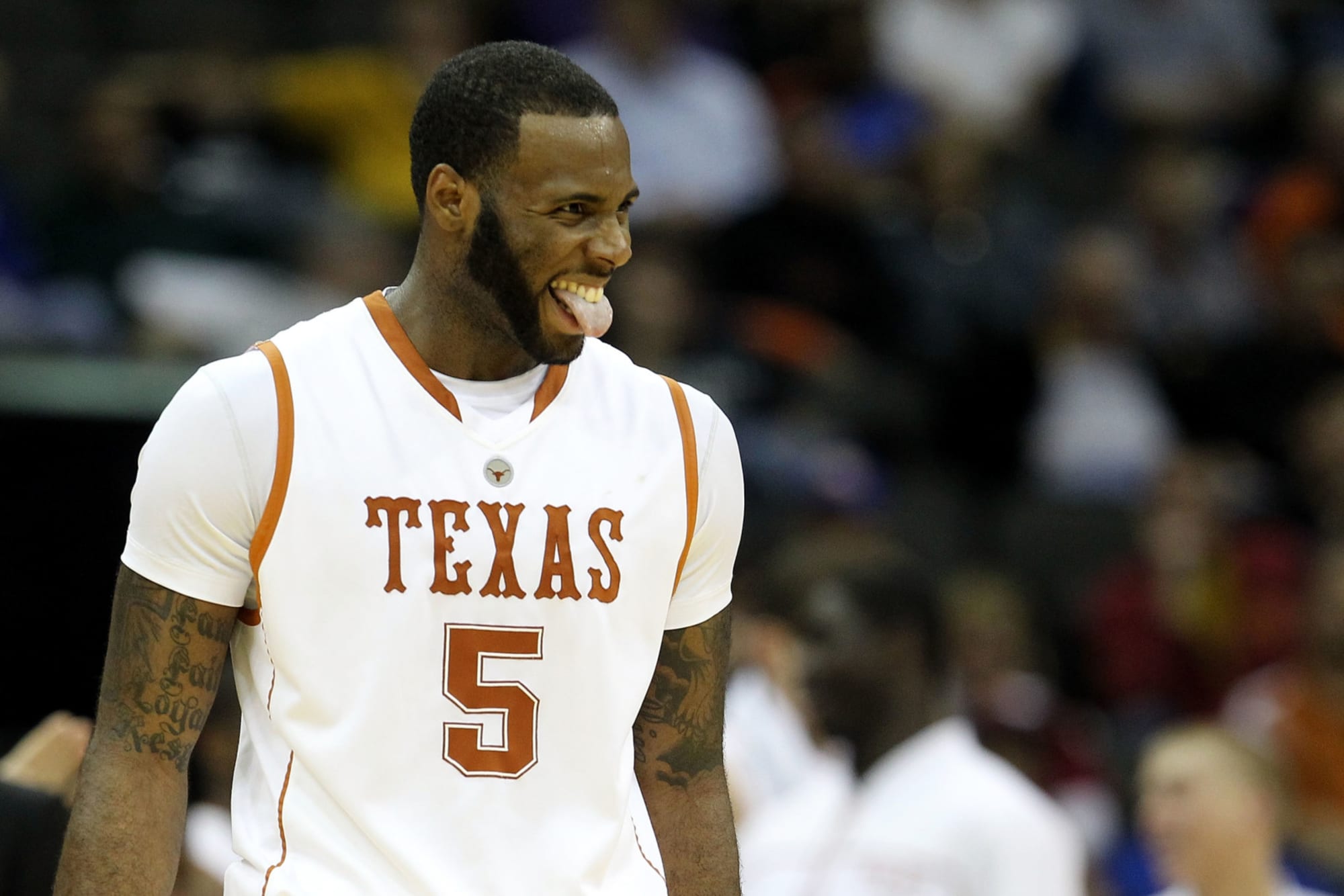



































 –
–  –
– 
 –
–  –
–  –
–  –
– 
 –
–  –
–  –
–  –
–  –
–  –
– 
 –
–