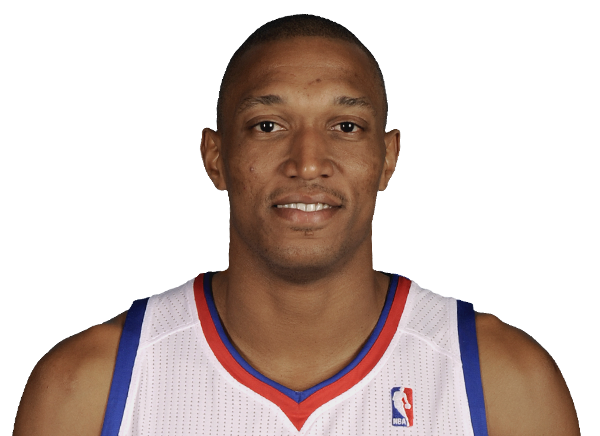
Signed a six-year, $80,273,731 extension with Boston Celtics. Included early termination option after 2006/07 season.
17th July 2006
NBA
Signed a three-year, $59,387,136 extension with Boston Celtics. Included early termination option after 2009/10 season. Concurrent to the extension, Pierce declined his 2007/08 early termination option.
29th June 2010
NBA
Exercised early termination option.
9th July 2010
NBA
Re-signed by Boston Celtics to a partially guaranteed four-year, $61,333,334 contract.
[...] The lure of first-round picks is in what they can yield, not what they always do. It is well established, of course, that many first-round picks are failures relative to expectation, and this is truer the lower they are. However, first-rounders can yield star talent, star talent that has no choice but to sign with you. It can yield quality role players for basement prices, and it can yield contributors in any form you choose. Most importantly, however, first-rounders are always young and cheap. Bad teams need this to get good, and good teams need this to stay good when the market forces and punitive luxury taxes designed to break them up necessitate they cut costs. Talent is talent, but cheap, young talent is the best type of talent.
Back at the start of the summer, Utah took on a whopping $25 million in salary that it didn't want in the forms of Andris Biedrins, Richard Jefferson and Brandon Rush, purely to acquire two first-round picks and three second-round picks from the Golden State Warriors. The Jazz did this because it was more beneficial to their long-term rebuilding goal to target first-round picks, and that amount of money is now the cost of acquiring them. Or at least, it should be. First-round picks should be a valued commodity, much more than they were. Now, it seems as though they finally are.
A cursory look at the market indicates this change in philosophy. The last few deals to have included first-round picks include:
- Washington trading a pick (top-12 protected in 2014, top-10 protected through 2019, thereafter unprotected) along with Emeka Okafor in exchange for Marcin Gortat.
- Indiana trading a pick (lottery protected through 2019, thereafter unprotected) along with Miles Plumlee and Gerald Green in exchange for Luis Scola
- Boston acquiring first-rounders in all of 2014, 2016 and 2018 as a part of the Paul Pierce and Kevin Garnett deal
- New Orleans acquiring Jrue Holiday and Pierre Jackson in exchange for the rights to Nerlens Noel and a 2014 first-round pick
- Toronto acquiring a 2016 first-round pick from New York -- along with two second-round picks, Steve Novak and Marcus Camby -- in exchange for Andrea Bargnani
In that list, we mostly see first-rounders traded for quality. Hall of Fame players like Pierce and Garnett, fringe All-Stars like Holiday or non-lottery picks for a legitimate starting center in Gortat. The ones where we don't see that -- the deals for Scola and Bargnani -- therefore stand out as bad deals for that reason. The inclusion of the first-round picks in each instance leaves the recipient team drastically overpaying for backup-caliber forwards. And if he's not re-signed or extended, the Gortat deal might join them.
[...] The All-Star game itself was not half bad, either. The first and thus far only All-Star game to go to double overtime, it saw 300 total points scored, an in-his-prime Allen Iverson doing what an in-his-prime Allen Iverson did at All-Star games, and an in-his-prime Kevin Garnett dominate proceedings on his way to the MVP trophy. Shaq faced off with Brad Miller for the first significant time since Shaq tried to kill him, an amusing in-game report spoke of Antoine Walker and Paul Pierce’s outrages at playing so few minutes, Yao Ming looked woefully out of place on his way to two points and two rebounds, and the close finish saw the game’s very best turn up the intensity and play at something resembling their very hardest. It was good fun to watch, right down to the Zydrunas Ilgauskas experience. Even the 52 turnovers were aesthetically pleasing.
In re-signing for four years and $80 million with the Dallas Mavericks, Dirk Nowitzki was able to secure himself only the second no-trade clause in the league. The other one belongs to Kobe Bryant. Not many players are eligible for no-trade clauses; to be eligible, a player has to have 8 years of NBA experience, at least four years of which have to have been with the team he's signing with (albeit not necessarily consecutive years). Other eligible players such as Paul Pierce and Tim Duncan could have had them worked into their most recent contracts, but didn't; then again, they didn't really need to. They're not being traded. Not now, not ever.





/cdn.vox-cdn.com/uploads/chorus_image/image/60509895/72306671.jpg.0.jpg)