– Phoenix are going to run with 13 players, because they always run with 13 players. And they already had 13 players before training camp started, so the prospects of their signings were slim to none before they even started. Regardless, the Suns brought in three more, just in case; Carlos Powell, Dan Dickau and Raymond Sykes.
Dickau joins one of the few teams that he hadn’t previously on. For those counting, he’s now up to 10; Kings (drafted by, but never signed), Hawks, Blazers, Warriors, Mavericks, Hornets, Celtics, Blazers again, Knicks, Clippers, Warriors again, and now the Suns. It’s not bad going, that. Last year he was in Germany, averaging 17.6 points in only five games for Brose Baskets Bamberg, doing the Dickau thing of shooting jump shots and not much else. The story’s been told on him by now; he is what he is, and what he is is perpetually on the cusp. Well, except for that time Danny Ainge gave him $7.5 million.
Carlos Powell has put up very big numbers in far smaller leagues, including one frankly awesome season in the D-League when he put up 22.5 points, 6.4 rebounds and 4.8 assists per game for the Dakota Wizards. Last year was similar, when he put up 25.6 points, 6.6 rebounds and 4.2 assists per game for Black Slamer in South Korea. He also led Australia’s NBL in scoring back in 2007, averaging 28.2 points per game. Those numbers are big, regardless of the context, and Powell’s scoring talent speaks for itself. He drives, shoots off the dribble, exploits the mid-range game, and his three-point range has gotten a bit better over the years. However, there’s also a reason for them; Powell completely and totally dominates the ball, in a way which is great for his own numbers, but not always beneficial to the team. He’s a ball-stopper, who’s very good at being the guy on minor league teams, but who can’t (or won’t) do much movement without the ball. And since this is the NBA we’re talking about here, somewhere where he’d only ever be a role player, he needs to change that. But he hasn’t, and so the fringes are where he remains.
I only got to watch one Clemson game last year, which is a shame, because I wanted to watch more. Partly because I liked the novelty of the press, but also because I think Trevor Booker is the next Paul Millsap (with less rebounding, obviously). Raymond Sykes was in the game, but he wasn’t exactly impressive. He looked for his offence more than he should have, looked more keen than skilled, and didn’t have NBA size. His numbers weren’t great either, averaging 7.9 points, 5.1 rebounds, 1.9 turnovers and 1.0 blocks in 21.7 minutes per game. There’s nothing NBAish there, aside from some good athleticism. More importantly, you can tell that he’s viewed as a ‘hustle’ player, because he has big hair. Why are all players with big frizzy hard considered hard workers? Do we just think that they are because their hair is so bouncy and vibrant, and it confuses our tiny minds? Or are they actually all hard workers? Because they do all seem to be. Sykes, Joakim Noah, Anderson Varejao, Mikki Moore….had it not just ended, the list would have been endless. (NB: Robin Lopez should shave his head so as to not confuse the issue.)
Prediction: None of them. Money talks, and even if we can’t explain whyTaylor Griffin has been signed to a $175,000 guaranteed contract, we just know that he has. So he’s here until at least Christmas.
Udoka has spent the last two years with the Spurs, playing the Bruce Bowen role behind Bruce Bowen himself. However, even though it should have been a perfect fit, Udoka didn’t play very well for San Antonio. This was particularly true last year when he didn’t shoot the ball well, shooting only 38% from the floor and 33% from three-point range. Considering that the man’s job on offence is largely limited to catching and shooting, that level of inefficiency is pretty poor, and Udoka needs to catch a second wind to get back into the NBA. He’s not been in it for especially long, with only three full seasons under his belt, but at aged 32 this might be his last chance for a contract.
Howard looked all kinds of done in the 2007-08 season, flumping round the court like a damp box of new born puppies and playing the worst defence since Stallone in Rocky II. He sported a white hot PER of 4.4, had more fouls than points, and only just had more rebounds than that. Last year saw a slight redux, though, as Howard had a slightly better season for the Bobcats. He found some touch on the midrange jump shot again, and even though his 171 total points came on an inefficient 145 shots, that was good enough for the highest single-season true shooting percentage of his career at .534%. However, Howard’s rebounding, always bad, was worse than ever last year, grabbing only 7.2 per 48 minutes, and his 0.1 blocks per game was right on line with his career average of 0.2. He was only ever really a scorer, and not a very efficient one at that, and now that he’s hurtled past 36 and 1,000 games played, he’s basically done.
Taylor is a good sized combo guard who plays good defence. He’s fairly athletic and fairly strong, and he has quick hands to go with that. However, on offence, he’s more awkward than your granddad’s skidmarks, permanently stricken with massive limitations on that end. Taylor can’t consistently create for himself or for others at this level, and all forays to the rim when facing any kind of traffic often result in some kind of turnover. He’s also not a good outside shooter, and that carries over to the free throw line. Taylor can finish at the rim, but since he can’t get there too readily unless it’s in transition, that’s not worth a whole lot.
Jarron is the lesser known of the Collins twins, but he might be better than Jason. He’s spent the last 8 years with the Jazz, despite the fan’s patience with him running out five years ago, and his last three years have been utterly forgettable. He suffers from many of the same flaws that Jason has; Jarron is not a scorer, who takes only easy shots, yet still manages to score inefficiently (a career eFg of .459%). He also rebounds badly, averaging less than 9 rebounds per 48 minutes for his career. If you rebound badly and score worse, you’d better be a good defender to make it this long, and Jarron’s all right at it. But even at that end, Collins mimics his twin brother quite strongly. He takes plenty of charges, can stay in front of similarly slow face-up orientated big men, and does a reasonable job in the low post, but he’s not a shot blocker, fouls a ton, is not quick or athletic, and not especially strong. If it sounds harsh to say that he’s disadvantaged in some way in every facet of the game, then I apologise, but he’s had 8 years to disprove that notion and has not done so.
Hosley started last year with Real Madrid before being released and replaced by Kennedy Winston. He’s hardly the most unique player in the world, being a classic example of the collegiate power forward who has to try and make the transition to small forward to make it at the next level because he’s too small for the pros. Unfortunately, Hosley’s never done a great job of developing these perimeter skills; he’s still turnover-prone and not a great ball-handler, and the jump shot is still under par, even though he uses it as often as ever. He didn’t have a great year last year, but in his defence, Hosley did average a huge 22.9 points and 11.7 rebounds per game in the Turkish TBL in 2007/08, and after being released by Real Madrid he went back to Turkey, averaging a further 15.9 points and 5.2 rebounds per game for Galatasaray. For a guy whose major strength may be his defensive versatility, those are good numbers, and he covers ground.
Prediction: Udoka is the better player than Collins, and in a way he fills a need for the Blazers. They could use the extra defender, and you can never have too much shooting. Unfortunately, the depth chart is totally against him. The Blazers already have Travis Outlaw, Martell Webster and Nicolas Batum at the small forward position, the latter of whom ranks somewhere between the next Scottie Pippen and the next Michael Curry. Meanwhile, they only have Ghostface Przybilla and Greg Oden at centre, and even though those two will swallow all the rotation minutes, they could use a third option for insurance. This tips matters into Collins’ favour. (Note: I’m also assuming that Howard is a lock to make the team, and that seems to be a safe assumption considering that it’s one the Blazers themselves have essentially publicly stated. Hosley and Taylor have already been waived.)
Since the inclusion of the occasional picture breaks up the otherwise monotonous drone of all this text, here’s a picture of former Raptors forward Uros Slokar throwing up a thumb:
I saw a lot of Jerrells for Baylor last year, and I have to say that if he’s making it in the NBA, it may be as a specialist shooter. That’s not to say that other aspects of his game are bad, because they’re not. He’s pretty solid in the pick-and-roll. But he’s also going to struggle to get to spots against NBA defenses, and his size at 6’1 isn’t helping his cause any. The jump shot is a good one, though, even when he’s not fast enough to get by.
Hairston and the Spurs couldn’t decide how they thought of each other last year. The Spurs traded the rights to Goran Dragic for him, and then they waived in training camp. Then they brought him back again midseason. Then they waived him again at the end of the season. And then they signed him again at the start of this offseason to a minimum salary contract with a $50,000 guarantee. Strange. In the times Hairston wasn’t on the Spurs roster, he was on their D-League affiliate, the Toros, scoring a crazily-efficient 23.7 points per game. He can shoot and he can score, and he’s of the size that makes those skills worthwhile. But until the Spurs can decide what they think of him, I’m not sure that any of us can.
Williams is another Spurs second rounder that they can’t quite decide on. They drafted him high in the second round in 2007, signed him, then cut him in training camp. Then they brought him back midseason. Then they cut him again. Williams went to the Clippers for a bit, then attended training camp last year with the Bobcats, but was waived and went to the D-League. Inevitably assigned to the Spurs-owned affiliate, the Austin Toros, Williams put up massive numbers; 23.1 points, 7.0 rebounds and 5.3 assists per game in 45 games. This as a 22-year-old in the NBA’s premier minor league. Not bad. The Spurs brought him back in April and signed him through 2010, where he’ll compete with Hairston for a camp spot. Who will win? Will it be Williams? Will it be Hairston? Or will it be Keith Bogans?
Dwayne Jones is a personal favourite, who rebounds and blocks shots at a good rate wherever he goes, but whose offence is a bit spotty and borne out of opportunity. Last year shows this as well as any: Jones averaged 17.2 points and 13.5 rebounds for the Austin Toros, plus 14.3/10.3 for the Idaho Stampede, and also spent some time with the Bobcats (six games) Efes Pilsen (two games) and the Iowa Energy (one game). He’s well travelled and keeps on rebounding, but not so much developing.
Prediction: There’s not enough room for Jones, and after the signing of Bogans, the Spurs wing positions just got full as well. Jerrells might be the least skilled of the bunch, but the depth chart is most in his favour, so I vote for him.
– Sacramento were set to bring in Jermareo Davidson to camp, but he bailed at the last minute to go and sign in Turkey. In his place, the Kings brought in former Hornet Melvin Ely, as well as D-League player Lanny Smith.
Ely is has been overrated by NBA fans for years, but the fact that he’s been reduced to signing unguaranteed training camp contracts now reflects that the league has him finally pegged him about right. Ely was genuinely decent for one year, but the other six have been poor. He’s not a scorer, he’s not a rebounder, he’s not a shot-blocker, he’s not really centre sized…so what is he? An inefficient foul-prone 31-year-old wannabe-scorer. It’s up to you if you want that.
As for Lanny Smith, I knew nothing about him, so I asked. Here are the thoughts of Scott Schroeder, the Dakota Wizards’ director of public relations:
…..pass first point guard… can knock down open jumpers… one man press break… good size as a point.. very good in open court and passes well on the move… solid size defensively… competes……I’m pretty good friends with him, also, so that’s probably too nice. He’s planning on playing in Idaho again this season.
It’s good that he has a contingency plan, because Smith isn’t going to be playing in the NBA this season. He is in camp with the Kings as a Rashad Jones-Jennings-esque depth move, perhaps mainly because the head coach of last year’s Idaho Stampede (Bryan Gates) was hired by the Kings as an assistant this summer. Smith played for the Stampede, on a team that also featured former fringe NBA players Jamaal Tatum and Kevin Burleson, and he averaged only 6.0 points and 3.0 assists per game, shooting 40% from the field and 31% from three-point range alongside 1.9 turnovers a contest. Smith used to be a decent scorer and solid prospect from the University of Houston, but he badly broke his foot in 2006, and hasn’t been the same player since. As evidence of this, he averaged 14.7 points and 4.2 assists per game in his sophomore season of college, numbers which capitulated to 5.5 points and 3.7 assists per game (on 31% shooting) in his senior season. That must have been a bad old break.
Prediction: The two have signed with the same franchise that gifted away John Salmons and took on the long-term commitment of Andres Nocioni, just to be able to save some money on Brad Miller’s salary this year. They could have had eight figures worth of cap room this summer, but they let it all sit there instead, signing only Sean May for the minimum and trading for Sergio Rodriguez on draft day. That’s how fearsomely committed they are (or have to be) to saving short-term money right now. As a result, neither player will make the team, as the Kings are already carrying the minimum of 13 players.
– Toronto didn’t sign anybody for training camp, and that’s not cool. They rarely play the training camp game – last year’s offering of Jamal Sampson was a mere token gesture equal to that of Dallas’ signing of Jake Voskuhl this year, and 2007 saw only a camp battle between Luke Jackson and Jamario Moon, a battle that wasn’t even close. But those two underwhelming years were still better than this year, when they brought in nobody at all. They didn’t even bring in anybody to battle for Quincy Douby’s roster spot. A team staring down an inactive list line-up of Douby, Marcus Banks and Sonny Weems can’t claim that it has no way of improving the roster, so there’s no real excuse here. I’m not angry, I’m just disappointed.
– In contrast, Utah played along suitably, bringing in Ronald Dupree, Wesley Matthews, Alexander Johnson and Paul Harris, as well as bringing back their camp signing from 2005, Utahian legend Spencer Nelson. They also signed their second-round draft pick Goran Suton earlier this month to an unguaranteed contract, from whence he will have to fight to make it on a team already kitted out with lots of foreign size.
Matthews is a virtual lock to make the team. I wouldn’t have said this had I written this post on time, but it’s become obvious that Jerry Sloan wants Matthews. He even started the preseason game versus the Bulls, and while it isn’t unlike Jerry Sloan to start a third-stringer over a second stringer when a regular starter is out, there was also no reason why he couldn’t have started Dupree or Ronnie Price instead (especially since Jannero Pargo started at two guard for the Bulls). That counts for something. What also counts for something is Matthews’s solid all-around game. He excels at nothing, and he isn’t the best athlete, but he’s athletic enough, big enough and skilled enough. The jump shot’s solid, too, and if he ramps it up a bit, he could make it for several years as a specialist shooter.
Had the Matthews situation not transpired as it did, I would have picked Doop to make the team. He has NBA-calibre defence, and always has, and even though he seems to leave his scoring ability behind in the D-League on every call-up, he does enough on that end to cover for all the missed six-footers. With Matt Harpring inevitably retiring, C.J. Miles out with a thumb injury and Kyle Korver always afflicted with something or other these days, the Jazz could use an extra wing defender. I thought Doop was going to be it. But now, it doesn’t look like it. Matthews is a better shooter, younger, and – perhaps most importantly – cheaper.
Nelson starred during a four-year career at Utah State between 1998 and 2005 (I’ll explain later), and made the Jazz’s summer league and camp rosters in 2005 as a result of that. After being waived from there, he’s spent one year in Germany, two in Italy, and then last year in Greece, where he averaged 9.4 points, 7.3 rebounds and 3.0 fouls in 27 minutes per game for Aris Thessaloniki. The rebounding’s good, but Nelson remains a 6’8 and 230lb power forward without a complimentary good three-point shot. He posts up and faces up OK and can hit from mid-range, but it’s not easy to be a 6’8 post-up offensive player in the NBA. He’s not Tyler Hansbrough, sadly.
Johnson has played two years in the NBA. The first was with the Memphis Grizzlies, for whom he averaged 4.4 points, 3.1 rebounds and a whopping 2.1 fouls in only 12.8 minutes of 59 games, including 19 starts. The Grizzlies then waived him before his second season became guaranteed (which is never a glowing endorsement), and Johnson went on to join the God-awful 2007-08 Miami Heat, playing in 43 more games and averaging only 1.9 fouls in the exact same amount of minutes. So that’s an improvement. Less of an improvement was the fact that the points and rebounds dropped as well, to 4.2 and 2.2 respectively, with the rebounding being particularly bad. Johnson spent last year in Germany, where he averaged 11.5 points and 6.2 rebounds in only 23 minutes per game, but the reason he only played 23 minutes per game was he once again couldn’t stop fouling (3.4 per game, and they foul out with five over there). He’s now 26, and still hasn’t remedied the problem that has plagued him for his entire collegiate and professional careers. Until he does so, he’s on the outs.
I’ve covered Harris a lot recently and won’t do it again. He’s like Dupree, only five years younger, four inches shorter and with a shorter history of success. And a worse shooter.
Suton’s a personal favourite, but only because I favour people with big noses. (I’d explain why, but it’s too close to home.) He’s a tad short for a centre and isn’t a leaper, but he’s quicker than he looks, is strong, plays good post defence, can shoot the jump shot and rebounds fairly well. I can’t tell if the fact that he’s a bit like other players the Jazz already own works for him or against him; it might mean that they see some potential in him (which would explain why they drafted him), yet it might also mean that they’ll see him as superfluous and let him go (in which case, why draft him?) But as the only real size in camp, he has a chance.
Prediction: The Jazz are on for their biggest ever payroll by miles. If Harpring retires and they waive him, that cuts them down to twelve players, meaning there’s a maximum of three spots up for grabs. But it also means there’s a minimum of one, and given the size of their payroll, I wouldn’t be shocked if one is what they went with. If it’s only one, I vote for Matthews. If it’s two, I vote for Matthews and Suton. If it’s three, I vote for Matthews, Suton and Dupree. If it’s none, shame.
– Finally, Washington’s painfully quiet offseason triumphed into a rousing crescendo when they made two training camp signings; former Clippers big man Paul Davis, as well as Vincent Grier, who’s tried out for assorted NBA teams and who got some guaranteed money from the Heat back in 2006.
Davis re-signed with the Clippers last offseason for his third season with the team, but was waived before his contract was to become guaranteed. He averaged a highly inefficient 4.0 points and 2.5 rebounds in 12 minutes per game before his waiving, which isn’t great. Davis only does three things; shoot mid range jump shots, offensive rebound and foul. The first two are positive virtues, no doubt, but they’re not enough. Davis’ defensive rebounding is poor, his defence is soft and clumsy, and his scoring is highly inefficient, as evidenced by his career eFG of .400%. (See earlier discussion about the mid -ange jump shot. A man’s got to do more.) Davis has had three years in the NBA and done little with them, so his time may be up by now.
Grier is a 6’4 slasher out of Minnesota (the university, not the T-Wolves) who shoots about as badly as a 6’4 player can. Like Ron Howard from earlier, Grier not only doesn’t shoot threes; he simply can’t. Evidence of this can be found all over the show, but for example, last year in France, Grier played in 45 games for Cholet and hit only two three -pointers all season. Grier can slash for days, will happily rebound and racks up the steals, but the lack of a jump shot is a crippler, and the measurements aren’t great either.
Prediction: Neither. The Wizards already have 14 players and are in the tax, so taking on extra players for the inactive list won’t be done unless they’re hit by their usual injury bug.
As you all know, first prize is a Cadillac El Dorado
October 4th, 2009
Training camp. Love it.
Ever since I grew up with a mild addiction to the Championship Manager series of computer games, I have nurtured a mild fascination for transactions in sports. I know it’s not healthy, but I also know I’m not alone. It might be harsh on the players involved, but it’s always fun to us hardened losers when players change teams. It gives us something to think about, something to analyse, and something to find important. Judging the people that are competing at the highest standard in a profession we could only dream of competing in is strangely fun, hence the existence of this website and the presence of your eyes on these words. We love it. Maybe we’re crazy. Oh well.
– Atlanta have well and truly played the training camp game. Teams are allowed a maximum of 20 players under contract in the offseason, and as of last week, Atlanta had only 12. Yet now they have the full compliment of 20, re-signing two of their own free agents (Mario West and Othello Hunter) and bringing in six more (Aaron Miles, Mike Wilks, Juan Dixon, Frank Robinson, Garrett Siler and Courtney Sims), playing the game in the spirit it deserves.
The first four of those latter six are guards, which isn’t a coincidence given the Hawks’ lack of depth there. Miles and Wilks are journeyman point guards with NBA experience, and Dixon can pretend to be one on occasion; in case you missed it, the Hawks are openly in the market for a third point guard. Robinson is an undersized shooting guard who was also with the Hawks in training camp last year, and Siler and Sims represent two decent offensive centre prospects.
The eight are fighting for a maximum of three spots, but with the Hawks’ offseason addition of Jason Collins and Joe Smith (and with Randolph Morris cradling his guaranteed contract like the sole surviving Fabergé egg), the Hawks frontcourt is already six deep, so there’s not much room for Sims, Siler or Hunter. Hunter did little last year to justify a second contract, and he doesn’t have the size of the others, so his prospects look particularly bleak. Siler has intriguing potential from his sheer size and his startlingly efficient scoring, and Sims has been in and out of the NBA for two years, so if he doesn’t catch on here, he’ll catch on somewhere else at some point.
West has been with the Hawks for two years now, which may give him the inside track on a roster spot, but at some point Atlanta are going to have to realise his tiny single-possession role does not merit a spot, and maybe the time is now.
Dixon has by far the biggest NBA resumé of the guard candidates, but he’s a largely one-dimensional scorer who scores inefficiently, something which no team with Jamal Crawford needs duplicated.
Wilks is probably the best of the point guard crop; however, he missed all of last year with a knee injury, and if he’s not back at 100% then he’s of no use to an NBA team. He’s a fringe NBA player even then.
Miles has had brief NBA experience with the Warriors, and is a perennial summer league/training camp candidate. However, he still has the same flaw he had coming out of out college – his jump shot, which is basically non-existent. Shooting less than 20% from three-point range in Greece last year isn’t helping anybody,
Prediction of who’ll make the team, that may be held against me later: Dixon, Wilks, Siler. Or any two from three.
– Boston’s only two signings were their lone draft pick, Lester Hudson, and Mike Sweetney, who gets his first professional basketball employment after two and a half years away from the game.
Hudson gives the Celtics a third point guard, and considering that one of the other two is the unsuitable Eddie House, that’s kind of welcome. (House can get away with being a point guard with Paul Pierce, Ray Allen, Marquis Daniels or any wing player that can do an above-average share of the ball-handling, and he can defend the point guard, hence his value to the Celtics. But if called on to do more offensively than shoot, he’s struggling.) Hudson isn’t exactly the veteran option that may be befitting of a team still convinced of its title window, and his only experience against non-crappy competition came in his three summer league games. But the veteran backup point guard market is pretty bland, and if I had to choose between Lester Hudson or Brevin Knight (or whoever), then I’d choose Lester too.
Sweetney claims to have lost 40lbs, but if he did, it’s only because he put 60 more on in his time off, because he’s as big as ever. He’s plenty skilled enough to be in the NBA, and always has been. But as long as he’s over 300lbs, he’s not going to be in it. He may be comparable to what Glen Davis was like at his fattest, but Davis was still mobile, and Sweetney isn’t. Even if he showed something, there is probably not a spot available for him, as Shelden Williams’s guaranteed money makes him basically a lock to masquerade as the Celtic’s third string centre.
Prediction: Hudson, for now at least.
– Seemingly unaware that Alexis Ajinca is currently their only backup power forward option (can’t WAIT to see more Vladmanovic there!), Charlotte signed only a combo guard and a perimeter forward; Memphis graduate Antonio Anderson, and journeyman Stephen Graham, who spent the last two years with the Pacers.
Anderson was supposed to go to summer league with the Spurs, but didn’t play for them. He worked out for the Grizzlies at one point – as did pretty much everyone – but he went undrafted anyway, and didn’t really come close to being drafted. Anderson is a big guard who can play some point on occasion, who plays good defence and passes well, but whose jump shot is far below average. He’s the latest in a long line of defensive guard candidates that the Bobcats have brought in recently. And when I say “long line,” I mean basically four; he, Dontell Jefferson, Shannon Brown and Donell Taylor. Taylor and Brown are long gone, but Jefferson is under contract through 2010 after spending some time with the team last year, and he’s a very similar player to Anderson. Therefore, it seems logical that the two are fighting each other for one spot. But given that the signing of Ronald Murray means there won’t be a single guard minute available all season, it wouldn’t be surprising if both players lost out.
Graham is a versatile but unspectacular forward, who has developed more perimeter skills than his brother Joey (remember; it’s mandatory to compare brothers, and doubly mandatory for twins). He’s played for about 17 different NBA teams, and has spent the last two years with the Pacers, appearing in almost as many games last year as in the rest of his NBA career combined. Graham’s a fringe NBA player, who has had to make his trade in the NBA as a catch-and-shoot player, something that he’s not very good at. He’s also set to star in an as-yet-untitled This Is England spin-off; having worked in references to both Joey Graham and the actor Stephen Graham in this Stephen Graham-themed segment, I can now leave this here.
Charlotte also intended to bring over Amara Sy, an athletic French forward hurtling towards 30, but were prevented from doing so because of a visa issue. They also were supposed to have interest in Florent Pietrus, another athletic French forward hurtling towards 30. Maybe they want to keep Ajinca happy. Or maybe they still don’t recognise their need for a power forward. Couldn’t say.
A longer description of the Bulls signees can be found here. Hill and Stinson have been waived since that was written, and third string centre Aaron Gray has gone down with a stress fracture, which may improve Richard’s chances. But I stand by the prediction made previously; it’s Byars or no one.
– The Cavaliers are good sports, who love to rock a 15-man roster and bring in 20 for camp, even when they have no reason to do so. Last year they brought in six camp invitees, and one of them (Jawad Williams) ended up sticking with the club for almost the whole year. He played only 20 minutes in that time, ten of which came in the final regular season game, but still; the Cavs always give themselves options and bring in many players, which is good for the game and great for this post. Their six signings this year are Andre Barrett, Coby Karl, Rob Kurz, Luke Nevill, Russell Robinson and Darryl Watkins. (Additionally, Williams and Darnell Jackson have unguaranteed contracts, and Danny Green is only $140,000 guaranteed, so they too are in competition for their spots. It’s any three from nine. Gotta love that.)
Barrett is an NBA veteran with sleepy eyebrows and the gift of the gab, who spent many years on the cusp of the NBA before spending last year in Spain. Andre signed with the powerhouse that is Barcelona, but he was only the third string point guard behind Jaka Lakovic and Victor Sada. And even though European coaches always employ three point guards in twice-weekly 40-minute games (we’ve seriously got to get a European coach in the NBA someday, if only for the dissention it’d cause on Sports Reporters), Barrett still didn’t play much, averaging only 2.8 points and 1.3 assists in ACB games. Barrett’s career probably peaked in the 2006 preseason, when he starred for the Bulls and hit multiple game-winners, before spending the rest of the season on the inactive list. He’s a highly talented ball-handler and solid passer, and the Cavs needed an extra ball-handler even before the depressing Delonte West saga. So he has a chance of making the team. Counting against him is the fact that he’s a fairly slow 5’10 with a mediocre jump shot.
I was convinced Karl was going to the Nuggets, since there’s nothing wrong with a bit of nepotism. As it is, he’s found a decent place for himself on the Cavaliers, who could use the ball-handling help. You can also never have too many shooters, too, and Karl is an excellent one. He is a bit slow and a bit short, and he’s already 26 years old, but since we’re only talking about inactive players, Karl will be fine if the Cavs decide to keep him.
Kurz joined Cleveland after nearly joining the Nuggets, and is a pretty good fit for the Cavaliers, filling the profile they needed; a combo forward who plays decent defence and hits open outside shots. It’s the same need that made me try to convince Cavs fans last season that Andres Nocioni would be a great acquisition for them, to no avail. Kurz’s problems are obvious; he can’t make it if it’s not a set shot, he fouls a lot, and he’s not very athletic. But he might still make the team.
Luke Nevill, however, won’t make the team. He’s extremely big, measuring in at 7’2, and he’s a capable scorer in the low post. He’s also responsible for one of the funnier headshot pictures that you’ll ever see. Unfortunately, he’s also really, really, really slow. This hampers his NBA prospects for any team, but it kills them for the Cavaliers, who really need some athleticism in their frontcourt after already owning the slowest centre combo in world history of Zydrunas Ilgauskas and Shaquille O’Neal. Even relative to those two, Nevill is slow.
Robinson went undrafted out of Kansas in 2008, even though he was the starting point guard on the national champion Jayhawks and had just made his third straight All-Defensive team. This was largely because he was a bit small, and was not a very good shooter. After a year in the D-League, Robinson is still small, as the D-League doesn’t pay well enough for one of those leg-stretching operations that wannabe stewardesses have. This still counts against him at the NBA level, and it doesn’t do much for his stewardessing prospects either. But Robinson did demonstrate better offence last season, scoring nearly 13 points in less than 30 minutes per game last year and shooting 37% from three-point range. If he keeps that up, he’ll get a shot somewhere, if not here and now.
Watkins is the other centre candidate along with Nevill. He spent last year in China, which isn’t exactly a proving ground or a great place to examine someone’s flaws, as evidenced by the 20 three-pointers that Watkins took in China after shooting none whatsoever in his college and pro careers before then. American players are allowed to pretty much do whatever the want in China, racking up huge numbers in the process but not exactly improving themselves as players against such weak competition. Nevertheless, the numbers were suitably huge; Watkins averaged 20.2 points, 14.0 and 3.5 assists per game in 43 contests for TianJin Rongcheng. Watkins is tall and athletic, and was considered a project even after his four years at Syracuse, but he hasn’t got particularly far since then, and remains on the fringes (this is his third straight training camp appearance, and he even played in nine regular season games with the Kings back in 2007). He’s big, athletic and strong, and has developed some fledgling offence around the basket, but he’s soon to be 25 and still hasn’t done anything of note yet. (China doesn’t count.)
Prediction: Jackson gets cut, Williams and Green survive, Karl and Kurz make the team.
– Dallas’ offseason was pretty much over with by July, as they’d already assembled 17 players by that time. One of them – Greg Buckner – has since been waived, but that still sees them one over the maximum, and with all contracts except Drew Gooden guaranteed. And given that Drew had already been announced as the starting centre (and was signed specifically to be a trade chip), then there’s no way he was being waived. There was no point, then, in bringing in any training camp players, not even any randoms like Jared Newson.
They did bring in one when they signed journeyman centre Jake Voskuhl, who spent last year with the Raptors. Clearly recognising their dire need for a centre (see earlier comment about Gooden starting there), the Mavs brought in what may be the best remaining veteran option on the market. Yet that statement says more about the market than it does Voskuhl, because while Jake used to be decent, those days have long gone. If you don’t believe me, check out last year’s PER. Jake’s sole remaining quality on an NBA court is to give hard fouls around the basket, and while some old timers might think of that as an asset, it isn’t. There’s physical play, and then there’s counter-productivity. Jake gives you both, sadly, and no matter how down the Mavericks might be on Nathan Jawai, he wins the battle over Voskuhl in every conceivable way; age, skill, potential,
Prediction: As you were. No Jake. As for the other cut, I’m assuming it will be Shawne Williams.
– Denver were linked to basically every remaining halfway-decent free agent in the last fortnight, names such as Ronald Murray, Rashad McCants and Wally Szczerbiak. However, they’ve come away with none of them, and have had to plunder the D-League instead. Their signings come in the form of Joey Graham, Dontaye Draper, Keith Brumbaugh and Kurt Looby, only one of whom has played an NBA game before. That one is Graham, and all he’s shown in four years is jarring inconsistency and a Drew Gooden-like understanding of defensive philosophy. His main contributions to the world of basketball have been his resemblance to Panthro out of Thundercats, and also this slightly brilliant picture:
Nonetheless, he’s the best depth signing of the bunch, even if small forward isn’t really the position the Nuggets need help at.
Draper is a blindingly-quick scoring guard who puts up big numbers everywhere he goes, but who has never gotten a shot in the NBA before because he’s only 5’11 tall. Last year he had a hefty increase in his assist numbers, passing for 5.1 apg in the French league and 4.6 apg in the Belgian league, both times in less than 30 mpg. Considering that he averaged barely 3 apg in college, this is quite the improvement, and it’s enough to have gotten him into the league. Unfortunately, the Nuggets already have two backup point guards, one of whom has just signed his rookie contract (Ty Lawson), and one of whom has about 80 years of NBA experience as well as George Karl’s undying love (Anthony Carter). So he’s struggling for a spot before he even begins.
Brumbaugh didn’t even start in the D-League last year, which isn’t ever a glowing endorsement of someone. If you know anything about his story, you’ll know that talent was never the issue, not when compared to his lengthy arrest record and lack of professional background. It’s why he didn’t play in the NCAA, and why he subsequently did not get drafted. Last year’s D-League stint represented his first steady basketball stint at a decent standard of play, and while he did all right, he did nothing outstanding. As highly touted as he is (or was), Brumbaugh is also now 24, and has done nothing so far. It’s a hell of a reach by the Nuggets.
Looby is a defensive centre with scant little offensive ability, who didn’t play much in his two years at Iowa, and who was barely playing in the D-League either, until he was forced to due to a huge hole appearing in the Energy’s frontcourt. He responded well, though, and posted season averages of 2.5 blocks and 8.4 rebounds in only 25 minutes a game. (I deliberately didn’t list the points.) He’d be a good project were he not already 25, but those numbers are impressive enough to warrant a look.
The Nuggets also traded for the unguaranteed contract of James White, who’ll get a look in at the wing positions, where the Nuggets really do need some depth. Unfortunately, all the candidates are disadvantaged by the fact that the Nuggets are about $5 million over the tax already, and with no obvious means of getting under it, thus making any salary they take on count for double. The Nuggets have only 12 players at the moment, and thus will more than likely have to keep one of them, but it’ll probably only be one.
Prediction: Only White, but if the Nuggets get Szczerbiak in the end, then none of them.
– Detroit’s first 14 players were set a while ago, and it was publicly stated (somewhere) that they had no intention of filling the fifteenth spot. They brought in two players for camp anyway – veterans Maceo Baston and Chucky Atkins – and were rumoured to have signed Curtis Jerrells at one time. Jerrells, though, went to the Spurs.
The only hole on the Pistons depth chart (and I’m speaking purely in depth chart terms here; I’m not saying they’re flawless) is a third string point guard. Rodney Stuckey is the starter, and Will Bynum is the freshly-broken-out backup, but after that there’s nothing. It’s conceivable that Ben Gordon could play there at times, as long as Tayshaun Prince is there to help handle the ball, but some insurance wouldn’t hurt. And even though Chucky Atkins is 35 years old and fresh from the worst two years of his career, it was as recently as 2006-07 that he put up career numbers for the Grizzlies. In that year, Atkins put up a PER of 17.4, a true shooting percentage of .580%, took more foul shots than three-pointers for the first and only time in his career, and was generally a highly-effective little scoring guard. He chucked a bit to do so, but that was to be expected. Just look at his name. If Chucky gets a second wind from somewhere, he has more to give.
Baston’s NBA redux over the last three years has seen him not play a whole lot, but he did do quite well in the time that he did get. Like Atkins, Baston is 34, and like Atkins, Baston is coming off of his worst season. Yet Baston’s worst season was also pretty good; he averaged 2.5/2 in 8 minutes per game, and his PER was 12.3. His career PER is 14.4, too, which makes you wonder why he’s only played 831 NBA minutes in three and a bit seasons. In theory, even at this age, Baston still has something to give. But Detroit probably isn’t the best place to have chosen, considering that they already had six big men under contract.
Prediction: Probably neither, unless Atkins shows there’s still a spark on the fire. If there is, he needs to throw a log on it.
– The Warriors waived Richard Hendrix partway through last season, and have since spent their lives pursuing good rebounding forwards that would do a worst job of it than Dick. They’ve brought in former St Mary’s forward Diamon Simpson and former Iliinois big man Shaun Pruitt for training camp, both of whom are perhaps too short for their position, which should help them blend right in.
Simpson is a prolific rebounder, who unfortunately is stuck with the tweener label. He plays his offensive game around the rim, where he’s very adept at getting to the foul line, only to split the resulting free throws. He measures in at 6’7, which isn’t ideal for a man who plays solely around the rim, and he hasn’t the perimeter skills for the small forward spot. His jump shot is uglier than Al Trautwig’s teeth, and his free throw stroke is about as comforting as an Ed Gein postcard. Yet in four college years, he never remedied these. And because of that, he’s not NBA material.
Pruitt led the Czech Republic league in rebounds last year, which is about as meaningful as being Britain’s most dedicated NBA blogger; in the grand scheme, it counts for little. He also spent some time in China, averaging over 12 rebounds per game, so you’re getting the idea about what his major strength is. He’s also a lot bigger than Simpson, measuring 6’10 and 245lbs, although that’s not really the required size for an NBA centre. Pruitt is also disadvantaged by his size, being kind of slow and unathletic, and he doesn’t have much offensive skill to make up for it. It’s nice to know that the Warriors understand that rebounding is a problem for them, but maybe they should have thought of it before they signed Mikki Moore.
Prediction: Neither. The Warriors already have a 15-man roster.
– Stuck in transition, the Rockets have heaped their roster with young athletes, and are sorting through the pieces. They have 15 guaranteed contracts already, yet they’ve brought in four players (Pops Mensah-Bonsu, Romel Beck, Will Conroy and Garrett Temple) to fight for a spot anyway. This is because even though they have 15 guaranteed contracts, the Rockets don’t have 15 players. Brent Barry won’t be with the team next year (either salary-dumped somewhere or just simply waived), Yao Ming is out for the year, and Tracy McGrady is not healthy enough yet to start a comeback that will only lead to another breakdown anyway. Brian Cook is also only on the roster because he was the collateral damage for obtaining Kyle Lowry, and since his contract is now expiring, it wouldn’t be too painful to eat it. (Of course, word out of Houston is that Cook has revitalised himself, stopped hawking up threes and dedicated himself to an all-around game. The fluff piece/contract year combo is a beautiful thing.)
Regardless of how biased I may be about it all, Pops Mensah-Bonsu can play. He makes things happen, in good ways and bad. He’ll run the floor, finish powerfully, go after rebounds and get them; he’ll also put way too much trust in a jump shot that he doesn’t have, plough over people that got to the spot three weeks before him, and isolate way too much for a man with little dribble. If he knew his role, he’d be awesome; as it is, he’s pretty decent. In a league where bigs such as Jake Voskuhl are being signed in spite of their lack of production, just because they’re big, the virtues of a player who at least makes things happen shouldn’t be underestimated. Although why Pops couldn’t get any more money than this (fully unguaranteed minimum salary, became $50,000 guaranteed last week, becomes fully guaranteed on December 22nd) is beyond me.
If Shane Battier was smaller, a lesser defender, and a far less efficient scorer, he’d be a bit like Garret Temple. Temple was a terribly inefficient scorer in college, doing so while taking few shots, and that can’t ever be good. He’s a good “little things” player, and is a solid defender on the wing, but his shortcomings are very short. Daryl Morey loves him. so maybe advanced statistics are way more flattering towards Temple than the basic ones, but our eyes can tell us this; Temple does not have much offensive skill at all.
Conroy put up big numbers last year; 26.5 points, 8.0 assists, 4.8 rebounds and 2.0 steals per game, shooting 48% from the field, and scoring 1,300 points on 915 shots for a peachy .582 true shooting percentage. Of course, playing 45 minutes a game helped with that, and those numbers did come alongside 4.2 turnovers a contest. But, still. You can’t really argue with numbers that big from the D-League. If it was that easy, then everyone would be doing it. Conroy’s jump shot has improved a bit over the years, and although it’s still not great, it’s sufficiently complimentary to his fast-paced transition game. He still turns it over too much and isn’t a half-court guard, but if he was flawless, he wouldn’t be on this list.
Beck is one of the most selfish players on the court that you’ll ever see. It can be an advantage to have a scorer’s mindset at times, but it can also make people dislike you, and Beck was recently kicked off of the Mexico team for being too selfish, even though he was leading them in scoring at the time. Beck is at least a talented scorer, with a good jump shot, the ability to get to the rim, great height for a shooting guard (6’8) and athleticism, but the selfishness is a killer. He also doesn’t do a lot outside of scoring, playing mediocre defence and not rebounding. But if you want a thin 6’8 scoring guard, if only for novelty’s sake, then he’s your man.
Prediction: Barry waived, Pops makes the team. The obvious flaw is that it leaves the Rockets with only two point guards, and it would make more sense to waive Cook as well and keep Conroy. They should probably do that. But for some reason, I don’t think they will.
– Already with a boatload of guards, the Pacers brought in three forwards to balance out the roster, all with at least a shred of NBA experience; Rod Benson, Lawrence Roberts and Demetris Nichols.
Benson was a bad rebounder in college, who has somehow made himself into a rebounding specialist in the last three years. He’s been in camp with the New Jersey Nets before, but has not played in an NBA game. You might know him best as a blogger, for his Too Much Rod Benson blog that has appeared in various places around the web, but Benson has said (or been told) that he’ll no longer be blogging for as long as he has an NBA contract. Even the archives have disappeared. This probably isn’t representative of Benson’s chances of making the team, but it is a tad upsetting that it had to happen. Ah well.
The oft-misspelt Demetris Nichols probably has the best chance of the three, being a wing player on a team with not a whole lot of wing options. Danny Granger is great, obviously, and Dahntay Jones just got a four-year contract that they’ll soon regret, but there’s not a lot else behind them. Mike Dunleavy is the forgotten man, who had broken out (lest we forget) before suffering a serious knee injury that will keep him out for a while longer yet. Luther Head is a personal favourite, but even though he can’t dribble or pass, he’s still better suited as a point guard alongside a star wing player, something which the Pacers have. Brandon Rush is…..average, and outside of those three, the Pacers will be having to turn to Travis Diener (or Earl Watson) at the two or Josh McRoberts at the three to fill some time. That’s not really a great plan, so there might be a spot for Nichols, who plays decent defence to go along with a good outside shot
Prediction: None of them will make it, because the Pacers already have 15 contracts, 13 of which are guaranteed. Larry Bird truly loves Head, so his $250,000 guaranteed salary is probably here to stay. If any of them make it, it’ll be Nichols, but to do so he’ll have to beat out A.J. Price, who has a $175,000 guaranteed salary for next season. And even though the Pacers don’t need Price – what with T.J. Ford, Watson and Diener all playing point guard ahead of him, and Head, who could do – they have a weird habit of carrying four point guards, dating back to the timeless Eddie Gill days. So the odds are against Nichols.
– The Clippers could use some depth pretty much everywhere except centre, and they obliged with a few signings. They brought back Steve Novak ($1,030,000) and Brian Skinner (minimum) on guaranteed one year deals, and brought in Anthony Roberson, Taj Gray, Kareem Rush and Jerel McNeal. Strangely, despite having the worst small forward rotation since the 2003 Nuggets, that’s the one position they didn’t address.
Taj Gray is a former Oklahoma power forward who went undrafted three years ago and has been in France ever since. Last year he broke the hell out, and averaged 19.5 points and 7.3 rebounds in the French league, by far his best ever scoring output (and way up on the 10 ppg of the year before). He even shot some three-pointers, attempting more than two a game and hitting 38% of them, which is a new wrinkle for him. This new offensive output, when coupled with the aggressive defence that he’s always had, make him interesting.
About 85 times in the past, I’ve banged on about Rush’s inefficiency, and he obliged my concerns last year with his most inefficient year ever. Rush will be 29 later this month, so if he’s not corrected it by now then he’s not going to. He’s had some good moments in the NBA, but he’s never been that good of a role player, and it’s not going to start now.
McNeal is fresh out of Marquette, where he had a great senior year, averaging as-near-as-is 20 points per game. This is especially impressive considering that he’s probably better as a defender. Unfortunately, being a 6’3 shooting guard is not an easy sell in the NBA, particularly when you’re not very fast and have a pretty average outside shot. McNeal shot very well from three-point range last year, way better than ever before, but it’s very much the outlier, so doing it again somewhere would be a big help.
Roberson is like Eddie House, but worse. Does this need fleshing out?
Prediction: I’d like McNeal to make the team, but suspect that Rush will.
– The Lakers brought in some big men in Michael Fey, Tony Gaffney and David Monds, along with two wing players in Mickael Gelabale and Thomas Kelati. They didn’t bring in a point guard, which is a bit odd, but considering that none of the five are likely to make the team anyway, it’s no great loss.
Some players are signed for training camp, not with a slight chance of making the team, but with literally no chance whatsoever. They are signed as practice bodies, and disposed of accordingly. Michael Fey is one such player, a former UCLA big man who (I’m informed) was bad for them. In lieu of knowing what form that badness took, here’s some numbers; Fey’s best season in college was his junior year, in which he averaged 8.6 ppg and 4.8 rpg in 23 minutes shooting 55% from the field. He then averaged less than 2 points and 2 rebounds in his senior season, for reasons unknown (it can’t all been because of Ryan Hollins). Since leaving school in 2006, he has played in only low standard leagues; namely China, Poland, and Jordan’s Excellent League (which sounds more like cagey softcore porn, but which is a real league). Last year, Fey was in the powerhouse United Arab Emirates league; believe me when I tell you that I did try to find some numbers for that. Didn’t find any. (At the very least, though, I learnt where the UAE are.) Fey also recently tried out for the seminal KBL Draft, which may well be where the Lakers saw him. I’d like to believe that they scout the UAE league, but my heart’s not really in that.
David Monds did a great Malik Allen impression during summer league, and even though the only shot less efficient than the 20-footer is the 21-footer, it’s nice to see a power forward consistently hit a shot of any kind. Monds averaged 35 points per 48 minutes in summer league, which is pretty brilliant; we’ll ignore the 0 blocked shots and 1 assist for now. Monds was solid if unspectacular in the D-League last season, averaging roughly 13/10 for the Albuquerque Thunderbirds, but he doesn’t have much of an NBA CV outside of the summer league performance. He’s also 26 next week, which doesn’t help his cause.
Gaffney came out of nowhere last season to rank third in the NCAA in shot-blocking (3.8 bpg, alongside 11.5 ppg and 10.5 rpg). In his senior season, Gaffney had averaged only 3.2 points, 4.8 rebounds and 1.7 blocks per game, and this was as a 23-year-old in the Atlantic Ten (a mid major conference with a deceptive 14 members). So that’s quite the unprecedented breakout there. He had signed in Israel a couple of months ago with Galil Gilboa, but clearly that is negotiable, if he just walks off and leaves them for another team. Gaffney measures in at only 6’8 and 205lbs, which is small forward size in an exclusively interior player, but his “motor” (God I hate that phrase) makes up for a lot of his size deficiency. He’s gritty and undersized, so he’s clearly a gamer who goes home with a dirty uniform every day and who knows how to play the game. I turned into Rick Sutcliffe a bit at the end there, but you get the gist.
Gelabale had started to break out for the Sonics before suffering a bad knee injury approximately 18 months ago that he’s been recovering from ever since. His only game action since then was six games down the stretch of the D-League season for the D-Fenders, but he did all right in them, averaging 16 points per game. Gelabale had a slight moment of drama this summer, when he agreed to sign for Lucentum Alicante in Spain’s ACB, only to find that the agreed salary had been changed without his knowledge when he turn up to sign the contract; he then left without signing and fired his agent, which seems reasonable. When healthy, Gelabale is a decent two-way player who had really started to develop a jump shot; it all depends on whether he is healthy. I talked to him before the game, and he said “Sham, I’m ready. Whenever coach calls on me, I’ll be ready to go.” And that’s just the kind of player he is….no, wait, I’ve turned into Rick Sutcliffe again. Sorry about that.
Kelati at this level is a one-dimensional shooter, who fortunately chose to exploit the one dimension that he’s very good at. He’s of average size for an NBA shooting guard, measuring 6’5, but there’s not a lot else to his game. Like Gelabale and Gaffney before him, Kelati too had signed somewhere this summer, joining Greek giants Olympiacos back in July. However, they later released him after he failed a physical, and plumped for former Laker Von Wafer instead. Kelati is an American citizen by birth, an Eritrean citizen by heritage, and a Polish citizen by marriage, which makes him one eclectic mix. He’s also the only professional Eritrean basketball player in the world, which has got to make a man feel good. Dustin Pedroia Dustin Pedroia Dustin Pedroia Dustin Pedroia Dustin Pedroia Dustin Pedroia Dustin Pedroia Dustin Pedroia. Billy Murray!
Prediction: If Gelabale proves his health, he will make the team. If he does not, none of them will.
– Needing some guard depth, Memphis brought in two reasonable candidates to make the team; former Clipper Mike Taylor and former Hawk Thomas Gardner. They also brought in 29-year-old European journeyman Leon Rodgers, whose presence in the NBA is truly heart-warming if you’re a fan of everything the Chinese Basketball Association represents. Earlier, they had brought in Trey Gilder on a $25,000 guaranteed, giving them four so-called “camp” signings.
Taylor was waived by the Clippers last month before his contract became guaranteed, a move made curious by the fact they’ve since signed Jerel McNeal. I guess McNeal on a rookie minimum is more valuable than Taylor on a second-year minimum, to the Clippers if not to the Grizzlies. Taylor showed some flashes last season, including a 35-point outing against the Knicks, but the defence wasn’t epic that night. He wasn’t particularly good most of the time, though, sporting a true shooting percentage of .477% and turning it over 1.5 times in only 15 minutes per game. Mind you, considering that this is the same Mike Taylor that shot 37% and averaged 5.4 turnovers per game in his only college season, those are actually improvements.
Gardner spent all last year with the Hawks, where he boosted his career PER to a healthy 2.4. He’s very big for a shooting guard, measuring 6’5 and 225lbs, and he has a decent outside shot, but he’s not very athletic and doesn’t do much other than shoot jump shots. After two seasons in the NBA, he still hasn’t done anything; a third might be a bit generous.
Rodgers has been a scoring sensation everywhere he’s been. He averaged 21.3 ppg in his final college season for Northern Illinois. He averaged 19.4 ppg for Brandt Hagen in Germany. He averaged 20.8 ppg for Orleans in France. He averaged 19.9 ppg for Eiffel Towers Nijmegen in Holland, and 21.8 ppg the season after for Eiffel Towers Den Bosch. (Not the same team. It’s a long story.) He averaged 22.6 ppg the year after than, again with Den Bosch. He averaged 13.1 ppg for Quakenbrueck in Germany in 2007/08, and then last year was his crowning glory, averaging 35.0 ppg, 8.5 rpg and 3.3 apg for Jilin in China. His point totals from his last three games: 38, 66, 63. In the 66-point outing, he went 15-26 from three point range. (Chinese basketball – it’s faaaaaantastic!) But what’s the common theme amongst all of these teams and all of these leagues? It’s that they aren’t top tier. This gig with the Grizzlies represents by far the best standard of play Rodgers has ever encountered. Let’s see how well it transfers.
Prediction: One slight problem is that the Grizzlies already had 14 players under contract, and all were guaranteed, save for Marcus Williams’ as-yet unfulfilled weight clause things.Steven Hunter is one of those 15, and having not played all of last season and nearly retiring, he is not expected to play much if at all this year, but if the Grizzlies want to get insurance payouts on his contract then he needs to stay on the roster. (I think. Correct that if it’s wrong.) The other player who might lose his spot is Marko Jaric, whom the Grizzlies have told not to report and allowed to seek a trade. However, they’re not going to get a trade, because no one is taking on that Jaric contract. A buyout, therefore, seems inevitable. But such a buyout might take some time, which might mean that the Grizzlies will keep all 14 current incumbents. If they do, I predict Gilder will make it; if they open a second spot, I predict Gilder and Taylor make it.
Alade Aminu isn’t the good one; that’s his brother, Al-Farouq Aminu. This is no real surprise; whenever you get two basketball playing brothers, the younger one is almost always better (for those wondering; yes, Robin Lopez came out the womb first). Aminu says he can be a Chris Andersen type of player, and he might be right; he’s not hugely offensively capable, scoring inefficiently and turning it over a lot, but he’s an athletic 6’10 with a 7’3 wingspan and excels at blocking shots. Then again, there’s a lot of Chris Andersen type of players out there, and you don’t hear from many of them. On a completely unrelated note, I wonder how Ken Johnson’s doing.
Brown is getting his customary training camp contract; that’s four straight years now, and five out of the last six. Good effort sir. Brown is an offensively-inclined power forward who’s also one of the worst free throw shooters that you’ll ever see; if you think that it’s rare to see both of those things, then you’re right, because Andre is one in a million. Brown also rebounds well, but his defence is pretty much limited to fouling, and a 6’9 post player with David Monds-like assist and block numbers isn’t wowing anybody.
Randolph won a spot in training camp last year with the Blazers fair and square, particularly with a 19/10 in 19 minutes performance against the Hawks in which he shot 9/9 from the field. He’s long since been stuck with the “soft” label, but after four straight years in the NBA, Shavlik seems to have had the last laugh. As if to prove his rugged hardness, here’s his views on homosexuality. You alpha-male, you! Grrrrrr!!!
Anthony Tolliver learnt how to shoot three-pointers about two years ago, and hasn’t stopped doing it since. His rebounding has suffered accordingly, and he seems destined to turn himself into a man without a position, which seems like an odd career decision. Tolliver has been in and out of the NBA for the last two years, with the Heat being his fourth NBA team, but he hasn’t stuck yet. If he’s that determined to turn himself into Brian Cook, though, then he may yet stick somewhere like Cookie did.
Lucas spent some time on the Thunder’s roster last year, but didn’t play in a regular season game for them. He spent the rest of the year in the D-League, where he averaged a solid but spectacular 15.1/4.4. Lucas is a very small scoring point guard, who doesn’t turn the ball over much, and who has good range on his shot. But his size has always hurt him in the NBA’s eyes, and it’s been over three years since his last big league game. He’s also 27 next month, so the door is almost firmly shut. This might be his last real chance to make a team. Then again, with only two point guards in front of him, one of whom is Chris Quinn, it’s definitely a real chance.
Prediction: One small problem for all of the candidates is that the Heat are already over the tax, even with only 13 players. And while it would be great for the Heat to start splashing come cash in a bid to improve their short-term fortunes and convince Dwyane Wade that they’re serious about winning, it takes only one look at their offseason to know that that’s not the case. All they’ve done is re-sign Joel Anthony and Jamaaal Magloire, lose Jamario Moon and buy Patrick Beverley. That’s not getting it done. So on that basis, I’m predicting none of the five to make it; however, if any of them do, I vote Lucas, Randolph, Tolliver, Aminu and Brown, in that order.
We await with baited breath on the accuracy of these predictions. Part 2 later.
Almost all of this year’s NBA free agents crop has now been signed. Of the few that remain, most have already finalised which training camp they’re going to, and training camp contracts have already begun to be signed. However, these are far from being the only players in the world. A shedload of remaining NBA-calibre players remain unsigned, as rosters across the whole of FIBA are being trimmed and cheapened due to the current economic thing that you may have heard about.
At the moment, including qualifying offers that are as-yet pending, there are 421 players in the NBA, out of a potential maximum of 450. That total does not include people who have committed to sign but that haven’t done it yet (Garrett Temple, Rodney Carney, Curtis Jerrells, Russell Robinson, etc). Assuming (wrongly) that all of those 421 are here to stay, there are a maximum of 29 places left in the NBA; however, considering that many teams will run with 13- or 14-man rosters this year, and we’re already averaging 14 players per team, the real amount is even less than that. As such, there’s nothing but a scant few places available in the world’s strongest basketball league, and several jillion candidates fighting for them. But this shouldn’t stop them from fighting, and nor will it stop me from listing.
There now follows a list of the best of what’s left of this year’s free agency market. Listed in no particular order.
Point Guards
– Raymond Felton: The only guards who shot a worse percentage on inside shots than Raymond Felton last year were Derek Fisher, Luke Ridnour and Sebastian Telfair. The fact that Felton shot only 29% from three-point range doesn’t help, either. But despite Felton’s perpetually inefficient scoring, the market for Felton shouldn’t have been as slow as it has been. It’s been non-existent, in fact. The only suitor, it appears, is the Bobcats. A report came out the other day, presumably based out of whispers from Felton’s camp, that said a deal in the $7 million a year range would get it done. It probably would. But it’s also too much. Felton looks like an inevitable candidate to re-sign for his one-year qualifying offer, being as it is for a sizeable (and apt) $5.5 million.
– Nate Robinson: Robinson, too, looks like he’s inevitably re-signing to a on-year deal. For those unsure of quite how annoying the Knicks 2010 plan is, let me tell you that it’s really, really annoying. And if it works out, it will be even more annoying. Not because of jealousy (although that will factor), but because this is no way to manage an NBA team. If you want to make salary-cutting moves such as Jamal Crawford for Al Harrington, then feel free to do so. Good move, that one. And if you want to attach an asset to a bad contract just to shift it for more cap space, then that’s fine too. But don’t do nothing at all. That’s not good for the game. And it’s also really boring.
– Jamaal Tinsley: Tinsley sat out all of last year (without wanting to) and played only 39 games the season before. He is now 31 years old, and hardly viewed upon in favour by an NBA world that hasn’t seen him for God knows how long. But despite all that, despite his startling inconsistency, despite his tendency to be around while crimes are being committed, despite his self-admitted penchant for cheeseburgers and despite his jarring scoring inefficiency, Jamaal Tinsley is very talented. Not many people can pass and handle like he can, and not many point guards can rebound and disrupt like him, when he puts his mind to it. He can defend pretty well, too. Of course, it doesn’t help that Tinsley himself only plays like Jamaal Tinsley can once a week, but there’s really a lot of talent there. This is a man who posted a 23-assist game in his rookie year. That one outing may have been eight years ago, but it was also only 18 months ago that Tinsley was averaging 8.4 assists per game. That, too, is a lot of assists. Miami were said to be interested, but other teams should be too.
– Tyronn Lue: Reports came out that said that Tyronn Lue had signed in Greece. Then reports came out that said that Lue had turned down the offer from Greece. Now, a new wave of reports have come out saying that Lue has signed in Greece. I don’t know where we stand on that right now. Either way, the team that’s trying to sign him (PAOK) only just staved off bankruptcy two months ago, so this doesn’t seem like a long term solution. Boston were said to have been chasing Lue at one point, but that broke down, which is a shame because they could use him.
(EDIT: It’s now been said, again, that the PAOK transfer fell through because Lue asked for too much money. PAOK have now signed William Avery instead. Slight difference.)
– Carlos Arroyo: Arroyo has been the compelling protagonist in a lot of made-up rumours about him this summer. From Chicago to Milwaukee, via the Clippers and the Sixers, lots of teams were said to have been interested in his services, sometimes with seemingly no truth to it whatsoever. So, always keen to get in on trends, I’ll play along; according to an unnamed Western Conference executive, Arroyo is set to sign a three-year deal with the expansion North Texas Fresh of the ABA. You heard it here first. You heard it here only. Because it’s not true.
– Chucky Atkins: Atkins is not a free agent, yet. But he will be. Currently, Minnesota holds his unguaranteed contract, which has only $760,000 of $3,480,000 guaranteed. They’ll probably hold onto it for a while – they essentially have a free player until December – trying to use him as a trade asset. There’s lots of teams that need to save money this year more than Minnesota does. But wherever he ends up, Atkins will be a free agent at some point in the next three months, adding another veteran point guard to a market quite heavy in them. The difference is that this one can shoot.
– Earl Boykins: Boykins’ year in Italy didn’t go too well. At all. He was almost released at Christmas time for going home without permission. Nevertheless, he saw out the season with La Fortezza Bologna, but I don’t think they’re friends enough for a redux. This puts Boykins back on the market for an NBA team, should they so choose. If you need a mi-drange jump shot-shooting offence-first player with no three-point shot and permanent defensive disadvantages, then this is the guy for you.
– Dan Dickau: The Celtics have apparently invited Dickau to training camp, which ones again dumps on my stupid theory that no one ever goes to the German league and comes back to the NBA. I don’t know why I say these things sometimes.
– Brevin Knight: Knight had a good bounce-back season last year, after a few years of steady decline. Oh wait, no he didn’t; he boasted a career low PER of 9.3. Never mind then.
– Mike Wilks: Perhaps against my better judgement, I have long advocated the virtues of Mike Wilks. He’s only 5’10, which is reason enough to be concerned (in fact, as far as I can remember, the only guaranteed contract he ever had was when he was signed and traded to the Bulls; he was waived before playing a game). But he’s not bad. He’s been in the NBA for bit parts of six years because he’s all right. The question now is whether his knee – which he badly tore last October, causing him to miss all of last season – is good to go yet. If it is, then I advocate him as a signing.
– Eddie Gill: Eddie Gill was in the NBA last year. You might have missed this, because it was quiet. But it happened. Gill was first in the NBA way back in 2000, and he’s still going, because there are still Scott Skiles’s out there who lobby for veteran point guards. Fun Eddie Gill fact: Eddie Gill scored the six millionth point in NBA history. So he’ll always have a legacy.
– Jacque Vaughn: Vaughn is now 34, and hasn’t been good since he was 26. Last year was particularly bleak. It doesn’t look as though there’s anything left; your front office may disagree, however. You can’t put a price on old point guards, apparently.
– Stephon Marbury: I don’t think he’s in the right place for this currently.
– Sean Singletary: True to their policy of not spending a single dollar this offseason, the Bobcats declined Single Terry’s team option and left him unrestricted. He has since remained unsigned. Terry played in summer league with the Pistons team, started every game, and did all right, but the Pistons have decided to sign Curtis Jerrells of Baylor to audition for the third point guard spot instead. This can’t be good for Singletary’s chances.
– Jason Hart:Memphis worked him out at one point; indeed, Memphis worked out every free agent guard at one point. They didn’t sign him, though, instead deciding upon the infinitely more talented duo of Allen Iverson and Marcus Williams. The Nuggets ended last season with both Hart and Anthony Carter on the roster (presumably making Hart the shooter of the two), but they’ve decided they don’t need both now, which is probably best. Hart was genuinely decent for the Bobcats back in 2004/05, but that was a while ago now.
Shooting Guards
– Ronald Murray: Murray has gone from overrated to underrated. He became overrated after his scoring explosion as a Sonic back in 2003/04; now, he’s underrated after a fine season of sixth man scoring for the Hawks. The Hawks had signed Murray to only a one year, $1.5 million contract in the first place, and got great returns for their money, yet now they’d rather pay Jamal Crawford $20 million to do what Murray did last year. It makes some sense, but what makes less sense is how few other suitors Murray has had. Memphis gave him a workout, but that’s about it. And this isn’t right. You mean to tell me that the Sixers can’t crank off $2 million for one year of their untouched MLE to obtain a decent and sorely-needed backcourt scorer? He’s not the best shooter in the world, but he’s better than Willie Green. At everything. He doesn’t even have to affect your pretty desperate 2010 situation. This doesn’t seem right. If someone signs Ronald Murray for the minimum this year, they’ll be stoked with their returns.
– Rashad McCants: McCants has been for workouts with the Nuggets and Cavaliers, and has a camp invite for unguaranteed money from the Heat that he hasn’t accepted yet. It’s quite the fall for a man who was the second-leading scorer on the Timberwolves two years ago on not-terrible efficiency. Last year, though, was a complete brain fart: McCants, always a chucker, chucked more than ever, and his efficiency tumbled off the charts. His defence still consists solely of fouling, and he’s less and less interested in offensive continuity. If he calmed down and embraced a role similar to J.R. Smith’s on the Nuggets, he might be all right. But it hasn’t happened yet.
– Luther Head: A personal favourite of mine, Head would be ideally suited to a team with a superstar swing man, a team that needs a complimentary shooter and defender at the point guard spot, someone who doesn’t have to do much dribbling or playmaking. Think of him as kind of a younger Derek Fisher, with less ball-handling. Someone’s got to need this, surely? Boston? Cleveland? No? Damn.
– Thomas Gardner: Gardner has a career PER of 2.4. However, he averages only 7.2 minutes per game for his career, so per 36 minutes that’s a PER of 12.0. Which is better. [That was a joke.]
– Salim Stoudamire: The Bucks mercifully waived Salim about six weeks ago, and he hasn’t been heard from since. Salim is another personal favourite of mine, but the thing with undersized shooting guards is that there’s loads of them, and so even the good ones usually only have an NBA shelf life of about three years. Salim’s had three years and then some, so I don’t know where this puts him.
– DerMarr Johnson: DerMarr barely played last season, spending eight games in the D-League in March and 11 games in Puerto Rico in May. That was it. He’s now 29 years old, hasn’t corrected the flaws he came into the league with, and is unsigned.
– Coby Karl: I’m telling you. Nuggets. This isn’t a scoop; it’s just an inevitability. Has your dad ever tried to get you a job at his company? Mine has. He even wanted me to take over his company for a while. It’s the done thing. George Karl will do the same. Watch and learn.
– Greg Buckner: Like Chucky Atkins, Buckner is not a free agent. Yet. The Mavericks currently have a 17-player roster, and Buckner’s contract is less than 25% guaranteed. This makes him an obvious cut should it come to that; however, there’s no doubt that the Mavericks are whoring out this unguaranteed contract as a trade chip, along with those of Drew Gooden and Shawne Williams. If they can’t get a deal done (meaning, if they can’t get Philly to accept Matt Carroll in a deal for Sam Dalembert), then Buckner will be cut, at which point he is free to join pastures new. If he can find them.
– Kirk Snyder: Snyder was on this list last year. That’s the only reason why he’s on this one. Latest Kirk Snyder news: after months of being force fed his food and medication, Snyder has been found competent to stand trial. His bond was reduced from $500,000 to $25,000, and his lawyer said they could pay it, so presumably Snyder is now out of jail/hospital. If he is, he is to be fitted with a monitoring device and ordered to stay out of Warren County. No trial date yet.
– Morris Almond: Almond was with the Knicks for summer league, and scored quite highly. Then again, scoring was never his problem. It was expected that the Knicks would bring him in for training camp, but they’ve already started their training camp signings, and Almond wasn’t one of them. So this remains up in the air.
– Juan Dixon: Dixon’s days of masquerading as a scoring specialist look pretty much numbered. Last year he did his usual thing, and totalled 261 points on 259 shots. He’s all right, but if your team is looking for a shooting specialist at guard, wouldn’t they be better off with a player with a true three-point shot?
– Bobby Jackson: Jackson’s been slowing down for a few years, but he’s not done yet. He can’t get up and down like he once could, but he can still score the ball off the bench. He sounds like a good fit for Boston, even if they don’t really know it yet.
– Kareem Rush: For years, Kareem Rush has been signed to be a shooter. But this year, it hasn’t happened. Has the league finally cottoned on?
– Mario West: West is supposed to be going back to the Hawks for training camp. Clearly Atlanta thinks he’s going to show something that that he’s kept craftily hidden for the last two seasons. I know he’s really a decent defensive player and all, but West does extremely little on offence. At what point does that cancel out the defence?
– Damon Jones: Jones has always been a good shooter, despite all the flaws in his game and his excessive swag. The league always needs catch-and-shoot players, and Jones is one of the best ones left. So why is no one signing him? Well, because they have no reason to. Just know that he’s there if you want him.
– Anthony Roberson: The Bulls did the inevitable and waived Roberson in mid-July, after Gar Forman had spent summer league cussing him out for how bad he was. Good times. Roberson is unsigned and unheard of, although Jack McClinton called him “A-Robe” in a Tweet the other day, which was fun.
Small Forwards
– Sasha Pavlovic: Any day now, Pavlovic will be waived. And when that happens, he’ll probably get a new contract fairly quickly. This is because he has a good reputation, and not because he has a huge degree of skill. I don’t want this piece to be too PER-centric – and it kind of gets like that near the bottom – but Pavlovic’s career PER is 9.0, and his highest in any season is 12.1. The man may have wanted a six year, $35 million contract back in the day, but he’s worth roughly the minimum. Let’s hope no one outbids themselves for him.
– Desmond Mason: Mason was one of those “if only he can develop a jump shot” players for a long time, but those days are long gone. Mason never did develop a jump shot, and has lost whatever fledgling one he had. He’s now a bit-part player, a defensive specialist with occasional post offence, whether he wants to be or not. Larry Harris’s decision two years ago to give him a two-year, $10.3 million contract after back to back seasons of 10 PER was pretty ambitious at the time, yet now that the contract has expired, Desmond can’t even get the minimum. The Thunder have ruled out re-signing him. Tough times.
– Wally Szczerbiak: The days of Wally Szczerbiak being able to play as a big guard are probably over; he was always slow for the position, and he’s not gotten any faster. But Wally is still good at the one thing he was always good at – shooting – and that’s not going to change either. He should catch on somewhere, even if Denver decide against him.
– Gerald Green: Green didn’t do anything last year to change his reputation. He jumped a lot, scored a bit, and gave back more at the other end. That said, as flawed as he still is, he’s also still good enough to be in the NBA, and he’s still only 23. It’s surprising that someone hasn’t taken a chance on him yet. As reclamation projects go, you could do worse.
– Ime Udoka: There’s a rumour that Udoka is to return to the Blazers as a training camp invitee. If he does, then things are looking pretty bleak for him, because the Blazers already have Martell Webster, Travis Outlaw and Nicolas Batum at the small forward position. Udoka is 32, so he’s old, but not THAT old, and while he didn’t have a very good season last year, his comparatively short NBA career might be good news for his longevity. I’m reaching here, but you can see my point. Probably because I’m not wearing any trousers.
– Ronald Dupree: Dupree is going to go to camp with the Utah Jazz, rightly deserving of his place in the NBA once again. It might not last long, though, because the Jazz are on for their biggest ever payroll by miles. And they won’t want to spend on a 15th man unless they have to.
– Rob Kurz: Who was it who wrote that article about Rob Kurz potentially being the Cavaliers missing piece? Yeah. No. He might not even join them, reputedly now favouring the Nuggets instead.
– Bonzi Wells: Wells wants to join the Heat, but no one has said if the Heat want Wells to join them. Every year, Miami seems to obtain a small forward, someone to further guarantee that Dorell Wright never sees the court. This year, they’ve already gotten Quentin Richardson, and so they don’t really need another. They didn’t even need Quentin. But must that stop them? (Also, how bad has the Heat’s offseason been? If you want to convince Dwyane Wade to stay, don’t just rest all your Stan Laurels in the 2010 basket. Do something. Spend some tax. Get some players. Richardson doesn’t count. Do what Toronto did. Try and do it better than they did, obviously, but follow their lead. Be proactive, not reactive. You’re not holding the cards right now.)
– Linton Johnson: Johnson is to go to camp with Orlando, who have built themselves a nice veteran bench. However, there’s not much in it for Lint; Orlando doesn’t really need him, because they already have Matt Barnes. And they don’t even really need Matt Barnes. So before the ink is dry, someone could still swoop in and give Linton a better option. Probably.
– Patrick Ewing Jr: The Knicks still haven’t signed him, and they’re carrying a very full roster now. Can’t be good news for Pat.
– Sun Yue: The Knicks are reportedly going to be signing Sun Yue. Don’t worry, though. You didn’t miss out on Yue. He’ll be a free agent again six weeks time. He’s all yours then.
– Joey Graham: After four years of up-and-down play, the sum total of which was mediocrity, Graham is now out of a job. Speaking of….
– Ryan Bowen: Look at it this way. Bowen never had any NBA offensive skill. So he can’t have lost any, can he?
Power Forward
– David Lee: Lee is either seconds away from re-signing to a one-year deal, or he isn’t. It depends on who you read. Either way, in a different market, this guy’s rocking a five-year contract from someone right now. If this was last year, he might have gotten $65 million. It’s been a bad year.
– Stromile Swift: Stromile Swift is a far better player, on both ends, than many people seem to give him credit for being. He may not be the most adept at learning the playbook, and he’s not able to boast the world’s most svelte back-to-the-basket game. But he makes good things happen. He has a career PER of 16.1, and even though last year was a nothing year for him, he’s not even 30 yet. It’s not like he’s lost it all. It was as recently as the 2007/08 season that Swift was a useful scorer and shot-blocker off the bench. And it was only 18 short months ago that he had one of the more underrated dunks of the decade:
Someone should sign him. Unless Swift really did fall off that much at age 29, they’ll be grateful that they did.
(Tyrus still bites on all fakes, by the way.)
– Darius Miles: On the power forward list for the simple reason that he’s not the athlete that he was, Darius remains unsigned, which seems both fitting and awkward considering the furore that surrounded his signings last year. Memphis achieved their goal and stiffed Portland, and Darius achieved his goal and got paid. Everyone’s a winner, except Portland. And except Darius, who got done for DUI.
– Mike Sweetney: After summer league, we know he’s still alive, and we know he had a bag of skills back in the day. Do we really need any more than that? (Note: don’t say yes. Even though the answer’s yes, don’t say yes. I don’t want to hear it.)
– Donyell Marshall:Charlie Villanueva told me that he’d keep me posted on Donyell Marshall’s situation. True story. I’m not sure I believe him, but he said it anyway. Marshall is apparently considering multiple offers, but the fact that he remains unsigned so late in the day would suggest that none of the offers are particularly brilliant.
– Andre Brown: Isn’t it about that time that Andre Brown appeared on someone’s training camp roster? I’ve never been entirely sure of what he’s done to deserve it, but it’s become an annual thing, so let’s not be disappointed here. Someone make it happen. In four out of the last five years, Brown has at least a training camp roster, and dammit I want more. No man should have to fight so hard for a meagre 599 NBA minutes.
– Ruben Patterson: The last full year that Ruben Patterson played in the NBA was his best. As a member of the 2006/07 Bucks, Patterson set career highs in points per game, rebounds per game, assists per game and field goal percentage, scoring 14.7 points a night on 55% shooting and putting up a PER of 18.5. Since then, though, his NBA career has seen only 20 more games and one unguaranteed minimum salary contract. This isn’t befitting of a man of his talent and playing resumé. But then again, he is a 34-year-old convicted rapist. So it’s swings and roundabouts.
– Paul Davis: Davis claimed on Millionaire Matchmaker that his next contract would be for five years and $35 million. If by that, he really meant “I’ll be getting a workout with the Heat next offseason,” then he was right.
– Shavlik Randolph: Randolph has worked out for the Heat, as they continue to search for the piece that will keep Wade there in 2010. That sounds like his best bet right now, if not his only bet. Even though Portland unrenounced him after Paul Millsap’s QO was signed, there’s no room for him there after Jeff Pendergraph and Dante Cunningham were brought in.
– Othello Hunter: Hunter played on the Warriors’ summer league team, but only because the Hawks didn’t have one. He is expected to return to the team, even though they don’t really need any more. Hunter has a long way to go before he lives up to any Brandon Bass comparisons, but he’s all right.
– Malik Rose: Rose’s PER has gone downwards for seven consecutive seasons, as his salary increased for seven straight seasons. The Spurs got this one a bit wrong back in 2002.
– Melvin Ely: After his one good year in Charlotte, Ely got an unfounded reputation as a good young post player, and…..no. He doesn’t rebound, is a highly inefficient scorer, and is already 31 years of age. He’s unsigned for a reason. Even the Hornets, who have struggled for frontcourt depth all season long, realise this now. He looks the part, but the production has never consistently been there. Apart from that one anomalous year.
– Michael Ruffin: Like Rybo, Ruffin never had anything to give, so he can’t exactly have lost it. After sitting needlessly on the Bulls’ cap sheet for most of last season, he was traded to Portland as necessary filler in the highly worthwhile John Salmons deal, where he actually played a bit. Portland then decided to draft and sign two power forwards, which kind of ended that. Ruffin is unsigned, and Ruffin is going to stay unsigned, because the Bulls don’t need him any more.
– Maceo Baston: Baston will reportedly go to camp with the Pistons, but maybe he shouldn’t. Because if he does, he’ll lose. The Pistons don’t need him, and he doesn’t need the Pistons. It’s not a good fit at all. Baston’s three-year NBA redux has been quiet; he’s appeared in only 89 games over those three seasons, for a total of 725 minutes. But even at age 34, he’s still got some talent and some athleticism left. And going to the Pistons just to be waived in deference to Jonas Jerebko doesn’t seem like the best use of it. Could Charlotte not ask?
Centres
– Courtney Sims: Sims is one of the better American centres not currently in the NBA, if not the best. I haven’t heard about him signing anywhere for training camp, but he has done in each of these last two years, and he really ought to. If your team signs him, he may well make your regular season roster.
– Chris Mihm: The centre crop can’t be very strong when Chris Mihm is the second available free agent centre that I could think of. Mihm used to be good, but he has spent several years recovering from a severely injured ankle. He’s still suffering from it, too; Mihm featured in scrub minutes of 16 games for the Lakers last season, after missing all of the 2006/07 season and playing only 23 times in 2007/08, but after being salary-dumped onto the Grizzlies, he underwent yet another ankle surgery. Mihm is done until further notice, and seems like an inevitable candidate for a training camp spot and accompanying fluff pieces in October 2012.
– Jermareo Davidson: The Warriors waived Davidson, and later signed Mikki Moore. I have no idea why they did this. Then again, I have no idea why they do most things. Davidson is about to turn 25 and has made no obvious improvements, but he’s on the fringes of the NBA nonetheless, so a return to the D-League looks inevitable.
– Brian Skinner: Brian Skinner is an overlooked player. He has the worst hands in showbusiness and all the polish of a dart player’s scrotum, but he gets things done on the defensive end. Last year was no different; he averaged 4.0 rebounds and 1.0 blocks in only 16 minutes per game. His offence has always been limited, and always will be, but he’ll block shots and rebound. Teams need this. Teams need Brian Skinner. But no team has Brian Skinner. And Brian Skinner is probably regretting opting out of a guaranteed $1.2 million right now.
– Aaron Gray: Gray looks like a certainty to re-sign with the Bulls for their guaranteed $1,000,497 qualifying offer, but he and his agent continue to search for a two-year deal. Good luck with that.
– Calvin Booth: Calvin Booth played 1,206 minutes in 2003/04, and has played a total of 1,341 minutes since. He sported a PER of 39.8 with the Timberwolves last year, but that’s what one minute sample sizes can do to a man. Booth is now 33, and has not done anything since that 17-minute, 2-point, 0-rebound, 10-block outing back in January 2004.
– Jarron Collins: Jarron Collins is no worse than Jason Collins. In fact, I’d even say he was slightly better. But Jarron hasn’t got the reputation that Jason has, back from when Jason was good. And that’s why Jarron is looking for work. Jarron recently worked out for the Cavaliers, but they’re already three deep at centre, and they’re supposed to be bringing in Darryl Watkins for training camp. So there might not be room there.
– Dwayne Jones: Jones is in and out of the NBA, appearing in six games for the Bobcats last year. Teams always need defensive centres, and Jones will probably get picked up again at some point. But maybe not for very long.
– Jackie Butler: Remember this guy? He hasn’t played for two years; not just in the NBA, but anywhere at all. After being waived by the Rockets in 2007 training camp, despite having a $2.3 million guaranteed contract, Butler has not signed anywhere in the world. His last game played was two and a half years ago. It’s weird in a way, because Butler is only 24, and proved he could score the ball at the NBA level in his short time here. But he hasn’t made it back. Not sure why.
– Mouhamed Sene: The Knicks have brought in a load of draft busts this summer, including Nikoloz Tskitishvili and Yaroslav Korolev. But they couldn’t bring it upon themselves to keep Sene, who they waived. That’s not a glowing endorsement of the man, and nor was his summer league output, where he once again demonstrated that all he can do on an NBA court is block shots.
– Robert Swift: Swift used to be a reasonable athlete, believe it or not. He was far from fast, and far from what his surname would have you believe, but he didn’t move too badly. That was three years ago, though. And the three years hence have been full of injuries and rehabbing. Swift is now as mobile as a back-alley Spanish Peugeot, and where his career goes from here, I wouldn’t like to guess. Not even Danny Ainge wants him right now.
– Jake Voskuhl: The Raptors were so short on size last year that they signed Voskuhl, who promptly demonstrated he has nothing left and put up a PER of 0.4. So that didn’t really work out. Voskuhl will probably now join the long line of aging seven-footers who remain unsigned while waiting for the Batphone to ring once again; these players usually slowly dribble out of our hearts and minds, and into the world of real estate, without so much as a press release. Shame.
– Mark Madsen: Mark Madsen’s Twitter says he doesn’t know whether to play, coach, or go into media. Considering his PER’s these last two years have been 0.2 and -0.1, I’d probably rule out the playing. It’s not coming back to you.
– Lorenzen Wright: Wright’s PERs the last three years have almost been as Madsen’s; 6.6, 2.5, 4.0. It was a slightly staggering -11.7 in his time with the Kings. I don’t want to know how much lower it can get.
There are others that could make this list, including some who have had NBA workouts this summer. John Lucas III, for example, or the long-awaited return of Greg Ostertag. If you really want to push it, there’s luminaries like Mountain Man Steven Hill and Austin Croshere still out there. Even J.R. Rider is supposed to be lining up a Dickerson-style return for some reason. And players such as Keith Brumbaugh (Nuggets) and David Monds (Lakers) are said to have been offered training camp spots already. But considering how few available spots we’re talking about here, this list seems long enough already.
For those who missed my Tweets on the subject, I wrote a guest post at the San Antonio Spurs blog 48 Minutes Of Hell, talking about the Spurs finances and Brian Cook and stuff like that. Please go and read it. Also, if you own a good team-specific blog and want me to do the same for your team, be really quite sickeningly nice towards me and you might have a chance. Might.
The following is a round-up of the life, times and afterlives of the entire 1996 NBA Draft. Note: in the event that a player is still in the NBA, I’ll assume that you know that and will talk about something else.
1st pick: Allen Iverson(Philadelphia) – Everyone has made the same comment about Iverson potentially joining the Memphis Grizzlies. Everyone in the land has made some comment to the effect of “there’s only one ball,” “who’s going to pass,” “how could you pair him up with Zach Randolph and Rudy Gay,” “how is it going to work long term” etc. And the answer to that is simple; it’s not going to work long term. But it’s not supposed to, either. Randolph has only two years left on his contract, and Iverson will be signing a one-year deal. They’re only supposed to be short-term improvements, for a team trying to improve whilst unable/unwilling to take on long term commitments. It would be bloody lovely if they could have gotten Paul Millsap and Nate Robinson instead, but that was never realistic. When you’re at the bottom with no money to spend, you have to live off the draft, minimum salary steals and retreads. That’s how it has to be, and that’s what Iverson represents. As retreads go, though, may I point out that Iverson was averaging 28 points and 8 assists per game just 18 short months ago. Yes, it’s worth the risk. Jason Hart might be more willing to pass the ball, but he also has about an 85th of the talent.
– 2nd pick: Marcus Camby(Toronto) – If pushed, how often would you guess Marcus Camby has made the All-Star team? I’d say two, maybe one. But the answer’s actually none. Does this mean that he’s a bust as a #2 pick, despite having a Defensive Player of the Year award to his name? Considering the strength of the draft behind him, I say yes. Tough but fair.
– 3rd pick: Shareef Abdur-Rahim(Vancouver) – Abdur-Rahim is retired and now working as an assistant coach for the Kings. Here’s something to consider, though: when the New Jersey Nets tried to make a sign -and-trade deal for Abdur-Rahim in August 2005, Shareef failed his physical because of his knee, despite having never missed a game in his NBA career because of knee trouble. The Nets were roundly mocked for this. But I guess they were right, because Shareef had only one year left in him. Shareef signed with Sacramento to a five-year deal after the Nets trade fell through, but the Kings only got one decent year, one mediocre year, and one non-existent year out of Shareef, and now he’s had to retire with two seasons left on his contract. The trained professionals saw coming what we the public couldn’t, and we held that against them. Whoops. The world owes you an apology, medical examiners.
Also note:Steven Hunter’s trade to New Orleans in February 2006 was cancelled due to concerns about his knee, which wasn’t keeping him out of action at the time, but which the Hornet doctors didn’t like the prognosis of. They vetoed the trade, much to the annoyance of the 76ers, and traded for Aaron Williams instead. Hunter is now a Grizzly, and probably won’t play this year due to his knee injury. He didn’t play at all last year, nearly retired because of the injury, and managed only 120 minutes on it in 2007/2008. More vindication that you won’t ever hear enough about. Tyson Chandler had better be contemplating Buddhism right now.
– 4th pick: Stephon Marbury(Milwaukee) – I haven’t written about the Marbury uStream yet, because I’ve not wanted to. It’s depressing. But here goes; I watched about 15 seconds of it, total. I had avoided it for a long time, because I hate seeing people fall apart, but I was encouraged to watch it by someone who swears that Khalid El-Amin was bodypopping to the camera at that very moment. There was no way I was missing an opportunity to see Khalid El-Amin bobypop, so I fired up the stream to check it out. What I saw instead was Stephon Marbury crying for absolutely no reason whatsoever. So I turned it off again. Bad times. Seriously. I have no idea if Marbury is legitimately unwell, on some kind of brain-altering chemical, or just naturally one of the biggest attention seekers you’ll ever see. It’s not our place to speculate on that. But whichever it is, it’s unhealthy behaviour. And so we’re wrong if we encourage it.
– 5th pick: Ray Allen(Minnesota) – Allen is 261 three-point makes behind Reggie Miller for the all-time lead. He’s shooting .398 from downtown for his career, whereas Miller shot .395. It’s up to you as to which of them is the best three-point shooter of all time, but if/when Allen overtakes Miller, and if he cracks the 40% mark for his career, then it’ll be hard to argue against him. Especially since he’s also reclaimed the single season record from Quentin Richardson (a man who doesn’t enter into the ‘best three-point shooter of all time’ discussion). Also note: Jason Williams is 37th on that list, only seven more makes away from 35th. Strange list.
– 6th pick: Antoine Walker(Boston) – Antoine Walker was arrested earlier this year for passing dud cheques in a Vegas casino. You probably already know that. You also probably know about Antoine’s career-long reputation of free spending, of the way he’d live paycheck to paycheck, spending the money as fast as he got it, and having a hell of a fun time for as long as he had a career. If you did, it’s probably no surprise that the money went when the career did.
But you may not have known this; in January this year, Walker was sued by former agent Mark Bartelstein for unpaid agents fees. Bartelstein had negotiated Walker’s excessive six-year, $52 million contract with the Heat back in October 2004, and was to take his usual 4% from all of Walker’s pay checks, but with an awkward caveat that stated “at Player’s discretion. Player may reduce the fee to no less than 3%.” Walker paid Bartelstein 4% through the 2007/08 season, but started to fall behind with payments. Walker then fired Bartelstein in July 2008 and stopped paying him altogether. Bartelstein invoiced Walker for all the outstanding money and for his share of the money that Walker would earn in the 2008/09 season, and when Walker refused to pay him the 4% instead of 3%, Bartelstein filed a grievance. He won, and the judge ruled that Walker owed Bartelstein $458,366.45 in previously unpaid fees, as well as 4% of the rest of Walker’s paychecks for the 2008/09 season ($213,006.36), for a total of $671,372.81. Fun fact that almost makes you want to stop high stakes gambling.
– 7th pick: Lorenzen Wright(L.A. Clippers) – Lorenzen Wright was statistically the worst player in the NBA in the 2007/08 season, but this didn’t stop the Cavaliers bringing him in for the 2008/09 season. There, he was equally ineffective, and provided little on-court help. He’s had a good career, but the skills and mobility have gone now. He is currently unsigned and probably always will be.
– 8th pick: Kerry Kittles(New Jersey) – Kerry Kittles’ career went a long time ago, cut short by injuries, eventually retiring after the 2005 season. He has since gone back to Villanova and is pursuing an MBA at their school of business. He also works here, whatever this is, and he was a part-time scout for the Nets at one point. But I’m not sure if he still does that.
– 9th pick: Samaki Walker(Dallas) – Samaki Walker’s last NBA stint was a training camp spot with the Bucks in 2007. Since then, he’s taken his high-flying show on the road, specifically eastwards. In the last two years he has played in Syria, the Lebanon and China, where he did the usual Chinese thing and put up huge numbers (26.5 ppg, 17.1 rpg). Most recently, Walker was drafted in the KBL draft, which pretty much guarantees that he’ll be in South Korea next year, unless they’ve changed their rules.
– 10th pick: Erick Dampier(Indiana) – This will be Erick Dampier’s final year as a Maverick. He is under contract for next season a hefty $13,078,000, but it’s also fully unguaranteed. And if you don’t think the Mavericks are going to ring everyone in the land in a bid to change that, then you’re very much mistaken.
– 11th pick: Todd Fuller(Golden State) – You know how the Warriors copped so much flak for picking Fuller over Kobe? Well, why did the Mavericks get let off comparatively easily for the Walker pick? Samaki may have a ring, but it’s the guy he was backing up that was responsible for that, so I don’t think we can credit him too much for that. Anyway, to Fuller.
Fuller’s NBA career totalled 225 games and five teams, with career averages of 3.7 points and 3.0 rebounds. (Aaron Gray’s NBA career is going to be much the same, but at least he was picked ahead of Renaldas Seibutis instead of Kobe. That’s easier to take.) It ended in 2001 training camp with the Magic, at which point Fuller went overseas. He spent the next three years in Spain (with a couple of months in Poland thrown in there somewhere), before signing in Greece for the 2004/05 season. However, Fuller was released by his Greek team after only three games and returned to Spain, where he stayed for two more years. His last stint came in Australia; Fuller signed with the Melbourne South Dragons in Australia’s NBL for the 2006/07 season, a team coached by Mark Price. However, the South Dragons got out to an 0-5 start before Price was fired, and Fuller was sent away with him. It wasn’t Todd’s fault; he’d averaged 16.8 points and 8.2 rebounds in his five games. But I guess they just wanted a full body cleanse. (Star player Shane Heal then took over as player/coach, and Price claims that Heal undermined his position, pretending to be hurt in the season’s opening games to get Price fired so that he could then get the head coaching job. Scandal!)
Fuller is now a busy little bee, with a variety of things going on. His number was retired by North Carolina State in 2007, and he sponsors the “Todd Fuller Maths Competition” at a North Carolina high school. He tours the globe participating in voluntary basketball camps, and he serves on the Airport Advisory Committee for Charlotte-Douglas International Airport. (Fuller is a FAA certified pilot in the Charlotte area, so that figures.) He also teaches applied mathematics at Charlotte Christian School. Here’s his LinkedIn.
– 12th pick: Vitaly Potapenko(Cleveland) – Potapenko’s NBA career ended in the 2006/07 season, when he started the season with the Sonics and was traded to the Kings partway through the year. For both teams, though, he was poor. His lone basketball stint after that came the following December, when he played a few games for Estudiantes Madrid in the ACB, averaging 5.3 points and 2.7 rebounds. He hasn’t been heard from since. (Note: it’s far harder to find out stuff about the European players, for reasons that I hope are obvious.)
– 13th pick: Kobe Bryant(Charlotte Hornets) – Kobe has now won more rings without Shaq than Jordan won without Pippen. Just saying.
– 14th pick: Predrag Stojakovic(Sacramento) – Peja is still going, although he’s not far away from being Postdrag. He owes it all to the pretty tremendous contract that Jeff Bower gave him, one which calls for two more years and $27.6 million for a player with a PER of 12.5 last year. Nice. Their other shocking contract of that offseason – Bobby Jackson – has finally expired, but not before the Hornets traded it for a longer one (Mike James, later Antonio Daniels) just to get a two-month Bonzi Wells cameo. They made a “go for it” trade, missed, and are still suffering from the repercussions, having to dump players to avoid the tax. Nasty.
– 15th pick: Steve Nash(Phoenix) – Nash’s two-year extension is for exactly $22 million, with $6 million in deferred compensation. He will count against the cap as $10,310,938 in 2010/11 and $11,689,062 in 2011/12, but will receive $3 million less than that in actual pay over those two years while Robert Sarver waits for the housing market to resuscitate. Fun fact.
– 17th pick: Jermaine O’Neal(Portland) – Bryan Colangelo inherited a 27-win Toronto Raptors team with Chris Bosh, Jose Calderon, max cap room and the #1 overall pick. He didn’t earn those things; he already had them when he got there. Three years later, the Raptors had Chris Bosh, Jose Calderon, their balls grazed against the tax threshold…..and all of 33 wins. That is not much more. They won the Atlantic division title the year before, but there’s a reason they went so far backwards, and that reason was their 2008 offseason. Little happened to improve the already-weak wing positions (Hassan Adams doesn’t count); instead, the Raptors took every trade chip he had (T.J. Ford, their first-rounder, the combined $11 million expiring of Rasho Nesterovic and Macy O’Baston) and used it to acquire O’Neal, a man who had the second-biggest contract in the NBA, who had declined for three straight years and who had played more than 51 games only once in the previous four seasons. Unsurprisingly, O’Neal got injured and agitated, the Raptors imploded, and Colangelo had to use two more assets (Jamario Moon and another first-round pick) and take one one more liability (Marcus Banks) just to get rid of him. That’s how bad the initial deal was. The Raptors either didn’t do his homework (which isn’t likely, considering how easy it is to do; it took all of about 30 seconds to Google all that information, and it’s not hard to see the size of that knee brace), or didn’t value it enough (more likely).
Colangelo has had a good offseason this year. Not a great one (we’ll come to that later), but a good one. They’re a 45 to 48 win team again. Yet let’s not forget quite how unsuccessful the O’Neal deal was.
– 18th pick: John Wallace(New York) – Wallace was kind of underwhelming in the NBA after averaging 22/9 in his senior season at Syracuse, but there’s no denying that he was fun. He played seven seasons in the NBA, the last of which was with the 2003/04 Miami Heat, and retired with NBA career averages of 7.6 points and 2.8 rebounds, which isn’t bad. He played one more season, in 2004/05 with Snaidero Udine in Italy’s Serie A, before retiring. There’s scant little information about what he’s done since then; all I know is that he lives in Rochester and served as an assistant coach at the 2008 AAU 15-and-under National Championships. Bonus info: His godson is Javon McCrea, a high school star who has given a verbal commitment to Georgetown.
– 19th pick: Walter McCarty(New York) – McCarty’s last stint in the NBA came with the 2005-06 Clippers, where he didn’t do much. Since then, he has worked his way up through the coaching ranks, and he’s now an assistant coach to Rick Pitino at Louisville.
– 20th pick: Zydrunas Ilgauskas(Cleveland) – Let’s reminisce; remember when Zydrunas Ilgauskas was a terrible health risk, and it looked as though his career was over? That’s how bad his foot injury was; he played only five games in the 1998/99 season, missed all of the 1999/2000 season, played only 24 games in 2000/01, and managed only two-thirds of the 2001/02 season while backing up Chris Mihm. That’s a total of 91 games played, out of a possible 296. Not good. But since then, his games played have read thusly; 81, 81, 78, 78, 78, 73, 65, a total of 534 games played out of a possible 574. Much better. God bless modern medical science. Also, did you know that Zydrunas Ilgauskas averages only 29 minutes per game for his career? Me neither. This makes his career offensive rebounding average of 3.1 per game look pretty damn good.
– 21st pick: Dontae’ [sic] Jones(New York) – Jones’ NBA career was short but not sweet, totalling a mere 15 games and 91 minutes with the Boston Celtics in the 1997/98 season. Since then, he’s done a world tour of the minor leagues, one that’s still going on today. With stops in Greece, Italy, the CBA, Venezuela and the ABA to his name, amongst others, Jones played last year in China. Did he put up huge numbers? Did he ever. Maybe even the biggest of the bunch; Jones averaged 31.6 points, 14.6 rebounds, 2.8 assists and 2.7 steals per game. If we were to nitpick, we could point out that those 1487 points came on 1356 shots, which is pretty poor efficiency, not helped by Jones taking 11 three-pointers per game and making only 29% of them. But for a 34-year-old to post 32/15 at any level of professional basketball is pretty damn impressive. Here’s to another year.
Quick trivia question; what common bond do three of the previous four players share between them, along with Dennis Rodman? Answer to follow.
– 22nd pick: Roy Rogers(Vancouver) – Rogers’ NBA career peaked pretty early. He played in all 82 games his rookie season, including 50 starts, but only played in 55 more NBA games in his lifetime. He was in and out of the NBA until 2002, making stops with the Grizzlies, Bulls, Cavaliers, Rockets, Kings and Nuggets along the way, with a couple of stints in Europe (Russia, Slovenia, Italy) thrown in. He can also claim to have once been traded for Scottie Pippen, which is quite the boast. Rogers’ last playing stint came in Poland in November 2003, before he went into coaching. He has now worked his way up the ranks to become an assistant for the New Jersey Nets.
– 23rd pick: Efthimios Rentzias(Denver) – Rentizas was covered back in April. Remember, I take requests. Fun fact: the two second-round picks that the Sixers gave up in 2002 to acquire Rentizas’s rights were the 37th pick in 2004, and the 42nd pick in 2006; those two picks were later used on Royal Ivey and Daniel Gibson. Whoops. Still, at least Ivey is a Sixer himself now. That numbs the pain. (Wait, no it doesn’t.)
– 24th pick: Derek Fisher(L.A. Lakers) – Still going strong. If things were different, Fisher would be being paid $7,354,500 this season by the Jazz to back up Deron Williams. As it is, though, he’ll be earning $5,048,000 to backup no one at all for the Lakers. I wonder if this will be his last year.
– 25th pick: Martin Muursepp(Utah) – Muursepp is still the only Estonian to have ever played in the NBA. He played two years and 83 games in the NBA, putting up a PER of 14.9, which is pretty good going. He left the NBA in 1998 after playing with European clubs during the NBA’s lockout while still under contract to the Suns, and he’s not been back. He was still playing as of the start of last season, when he signed back in his native Estonia with BC Kalev/Cramo Tallinn, but he didn’t play a game for them. This Estonian article breaks the news that Muursepp is about to become a father, and also boasts an up-to-date picture of him; the article’s title, when run through Google Translate, comes out as “That’s true! Martin is the father of Müürsepp!”
– 26th pick: Jerome Williams(Detroit) – Williams retired prematurely in 2006 and went back to his beloved Raptors to work as a community liaison assistant person thing. I’m assuming he was still there, or is at least a Raptor in some capacity, because unless Gene Keady has crapped in his kitchen or something, nothing is breaking Jerome’s undying love for that franchise. This is a man who wore Raptors shorts under his Bulls shorts while a member of Chicago, because he was so upset at being traded away.
– 27th pick: Brian Evans(Orlando) – Evans’ NBA career lasted for three years and three teams, culminating in a stint with the Timberwolves in 1998/99. He signed with Fenerbahce in Turkey in April 1999, but left after only one week “because of the situation in Kosovo.” (Not sure how that works. It’s not my quote.) Evans then spent four years in Italy and two years in Japan, before retiring in 2005. He then joined the real world, and used to be a senior vice president for Mesirow Financial, where his job was to drum up business for the insurance unit; however, he’s been removed from the company’s website, which presumably means he has left them. (This is a genius observation on my part.) Before that, Evans worked in insurance and real estate. He’s also done lots of things associated with Indiana University, from talking to the players to helping out at a camp to hosting some tournament draw or something. Exciting stuff.
– 28th pick: Priest Lauderdale(Atlanta) – Priest Lauderdale is still going, because 7’4 is still a commodity in the professional basketball world. In addition to being the worst player in the history of the NBA Live series of computer games, Lauderdale is also a minor league veteran, whose professional career has read thusly; Greece, Hawks, Nuggets, Bulls, CBA, CBA, Spain, Venezuela, China, Blazers, Cyprus, Philippines, Bulgaria, Bulgaria, Bulgaria, Saudi Arabia, United Arab Emirates, Saudi Arabia, Saudi Arabia, China, and finally Iran, where he is signed up to play next year with last year’s champions Saba Mehr. Gotta catch them all.
Priest Lauderdale fact: In his Philippines stint, Lauderdale was ejected from the league for being “too tall”; a pointless rule stipulated that teams could bring in two imports, but they couldn’t average more than 6’8 in height, and the team’s other import (Jermaine Walker) was 6’4. Strange times.
Another fun Priest Lauderdale fact; as you can see above, Lauderdale played three years in Bulgaria, and he was subsequently awarded Bulgarian citizenship in 2004. This nationalisation also saw him become – and I’m not joking – “Bulgaria’s Tallest Man.” That’s a life well led right there.
– 29th pick: Travis Knight(Chicago) – Travis Knight never played professionally outside of the NBA, which is a real rarity. He didn’t need to, considering the highly ambitious seven-year contract that the Celtics gave him back in 1997. He played seven years in the bigs before being waived by the Knicks in October 2003, after which he’s never played again. He now runs a charter fishing service in Nicaragua. True story. Here’s what he’s done to his appearance:
Knight still holds the record for the quickest foul-out in a playoff game, fouling out in six minutes in a 1999 Western Conference Finals game. He is also still the only person that I know of drafted in the first round whose draft rights were renounced by the team that drafted him because they didn’t think he was worth of the salary of a 29th pick. That’s quite the kick in the junk there.
(Trivia question answer: John Wallace, Walter McCarty, Dontae’ Jones and Dennis Rodman were all named as compelling protagonists in a “Free Sex For Famous Athletes” scandal that didn’t rock the world a few months ago. Doesn’t seem like too big of a news story, really. But there it is anyway.)
– 30th pick: Othella Harrington(Houston) – Harrington was let go by the Bobcats last summer, and sat out most of the following season. Then, bizarrely, he went to the D-League in late March, and played three games with the Los Angeles D-Fenders. However, he was poor in them, and was soon released. He is currently unsigned, and, given that he hasn’t been any good for four years, he’s probably done. He might not know it, though, and still speaks of a comeback. Good luck with that. [I think I use too many commas.]
– 31st pick: Mark Hendrickson(Philadelphia) – Hendrickson was a bit-part player in the NBA for four seasons, playing 114 games and rocking a career PER of 10.6. After that, he gave up basketball and went to play baseball, where he’s played for a variety of major league teams, perhaps most notably including my Tampa Bay Devil Rays [as were]. He is now a reliever for the Baltimore Orioles, where he throws average pitches to average effect. At least we managed to get one season of All Star-calibre freakishly-lucky singles-hitting out of Dioner Navarro as a result of our Hendrickson trade, which was something.
– 32nd pick: Ryan Minor(Philadelphia) – Minor is another baseball player, who never played professional basketball despite his draft position. He must have really liked baseball, because he was picked with the second pick in the second round of the NBA draft, went in the 33rd round of the MLB draft, and yet still favoured the baseball. Minor only barely cracked the majors, hitting .177 in his big league career with five home runs and a slightly severe strikeout problem. He retired in 2006 and is now a minor league hitting coach with the Orioles.
– 33rd pick: Moochie Norris(Milwaukee) – Mooch was last in the NBA in July 2006, when the Hornets waived him for his unguaranteed contract. That wasn’t the end of his basketball journey; he spent two seasons back in his old stomping ground, the Continental Basketball Association, and led it in assists. There was also a brief stint in Italy in there somewhere. But he didn’t play anywhere last season, and even though I’m pretty certain he’s going to have gone into coaching at some point, I can’t seem to find anything that confirms where he might be. Sorry about that.
– 34th pick: Shawn Harvey(Dallas) – Harvey’s professional career was not successful. He never played in the NBA, being waived in his first training camp, and his ensuing tryouts in the American minor leagues were not especially successful. He spent most of the next five years in the CBA, with small sojourns into the IBA, IBL, USBL and Italy thrown in. He was last heard of in 2001, when he tried to make the Roanoke Dazzle’s D-League roster. He failed. The internet is literally devoid of more Shawn Harvey information, but I’m 99.99999% sure that this is his Facebook account. So if you want to find out what he’s doing, there’s your starting point.
– 35th pick: Joseph Blair(Seattle) – Joseph Blair used to be so cool that he had two websites. Now, he has no websites. Blair didn’t sign in the NBA until the Bulls signed him for training camp in 2007. (The fact that Scott Skiles and Joseph Blair have the same agent couldn’t be connected to this, could it?) He appeared in a couple of preseason games for the Bulls, and missed a shedload of fourth quarter free throws, so that was fun. In the 11 years between those two NBA flurries, Blair has been a minor league and European journeyman, mainly in Italy, Turkey and Russia. And it’s Russia where he spent last year, playing in a few games for Spartak St Petersburg and averaging 8/8. His most notable contribution to last season was initiating a 16-man brawl in an October Russian Cup game that saw so many players ejected that the game eventually ended as a 3-3 affair. Blair was not one of the players ejected. That’s veteran savvy, that is. Here’s the face of one of the victims.
– 36th pick: Doron Sheffer(L.A. Clippers) – Sheffer never played in the NBA, but his rights were traded five years after he was drafted in exchange for Will Perdue. And that’s got to make any man feel good. Sheffer has spent his whole professional career in his native Israel, where he was one of the better players in the country from 1996 through until 2000, winning four consecutive national championships. Suddenly, he retired out of the blue, and embarked on a world tour. It turns out he had cancer, which he successfully beat. He returned in 2003, and saw out the rest of the 2002/03 season with Maccabi. Then he joined Hapoel Jerusalem for two years, and signed with Hapoel Tel-Aviv in October 2005, only to retire again, claiming that basketball was a “waste of time.” Again he came back, with this retirement lasting only two months; he rejoined Tel-Aviv for the remainder of the season, but managed only five games before breaking his hand. This prompted him to retire again, something he was increasingly familiar with doing. Equally familiar with unretirement, Sheffer unretired once more in summer 2007 for one final go-around (we think), spending the season with Hapoel Galil Elyon and averaging a meagre 4/2. He says he is now retired for the fourth time. Fair enough, but can we believe him?
– 37th pick: Jeff McInnis(Denver) – McInnis’s wildly inconsistent NBA career trundled to a stop in February 2008 when the Bobcats waived him. Since then, I have absolutely no idea what he’s been doing. Believe me, I’ve looked, but it’s hard to find basketball player Jeff McInnis information when there’s a TV chef of the same name who seems to have about 45 times more press coverage these days. But I do know that a few days ago, he played in a North Carolina alumni game thing. So we know he’s not dead, at least.
– 38th pick: Steve Hamer(Boston) – Hamer’s professional basketball career was brief. Like, really brief. He played 35 games with a weak Celtics team in 1996/97, and that’s literally all I’ve got. If he played anywhere else in the world, then I don’t know about it. Hamer is now an assistant coach for the girl’s team at Apostolic Christian School in Knoxville, something which he presumably does in conjunction with a day job. I would have looked harder for information about him, but once I found myself reading an online tribute to his dead mother-in-law, I realised quite how weird and excessive what I’m doing here is. And so I stopped with Steve Hamer and moved onto Russ Millard.
– 39th pick: Russ Millard(Phoenix) – Millard never played in the NBA, or anywhere really. He split the 1996/97 season between Italy and the CBA, spent the next couple of summers in Puerto Rico, had one more go around in the CBA, then found himself in the French second division in 1999/2000. And then that was it. It’s really hard to find a single thing about Russ Millard, but he did go to a special food giveaway held by Ryan Bowen last July, and he was inducted into the Iowa High School Athletic Association’s Basketball Hall of Fame back in March. He is now a gym instructor. This is a picture of him and his hairline, freaking out of a kid that is not his own. Hot socks.
– 40th pick: Marcus Mann(Golden State) – Mann’s story is pretty unique. He signed with the Warriors for the 1996/97 season, but he didn’t play a game for them, leaving the team at the end of training camp. And then he left basketball. Seriously. He just got up and left it behind. Forever. Well, sort of forever; he came back in late 1998 to play for the La Crosse Bobcats in the CBA, but injured his knee in only his second game. THEN he walked away for good, ne’er to return. As good as he was as basketball, he didn’t want to play it as much as he wanted to help kids, so he gave up the game and went to work as a chaplain at a correctional facility for 13-20 year olds. And if you don’t believe me, read this.
– 41st pick: Jason Sasser(Sacramento) – Sasser played only 14 games in the NBA, eight in the 1996/97 season split between the Spurs and Mavericks, and six in the 1998/99 season with the Vancouver Grizzlies. He’s still playing, showing up as recently as this January with the awesomely-named Pusan KTF Magic Wings in the [South] Korean Basketball League. Sasser averaged 15.2 points and 6.5 rebounds in 11 games. He’s clearly still got it.
Jeryl Sasser information [his brother] will appear in the 2002 roundup, which we’ll hopefully get to within the next eight months.
– 42nd pick: Randy Livingston(Houston) – Randy Livingston was 95% sure that he was going to retire in the summer of 2006. But he didn’t. Not even close, really; he played two more years in the D-League with the Idaho Stampede, averaging 12.3 points, 4.7 rebounds and 10.6 assists per game in 2006/07, and improving to 16.5 points, 4.2 rebounds and 10.5 assists per game in 2007/08. He even got called up to the Sonics for four games in April 2007, just to complete the comeback. Only after the 2008 season did he retire and go into coaching, like he had threatened to do a long time before. He spent last year as an assistant coach for the Stampede, and has now moved to the expansion Maine Red Claws to be an assistant there instead. He’ll be a head coach one day, and probably an NBA head coach one day at that.
– 43rd pick: Ben Davis(Phoenix) – Davis turns 37 on Boxing Day, but he’s not done with yet. He played 40 games over four NBA seasons, and has spent the rest of his time since then doing the minor league tour. His stops have included the CBA, Puerto Rico, Spain, CBA again, Puerto Rico again, Greece, CBA again, ABA, Venezuela, Dominican Republic, Spain again, Philippines, Italy, USBL, France, Dominican Republic again, Portugal, Uruguay, Venezuela again, Syria, Costa Rica, and finally Mexico, where he played last season and averaged six rebounds per game. Davis also signed up for a number of training camp spots in that time, including with the Rockets in 2003 at the ripe old age of 30. He’s put work in, definitely.
– 44th pick: Malik Rose(Charlotte Hornets) – Rose was in the NBA up to and including last season, where the Thunder weirdly traded Chris Wilcox for him. Even if you don’t want Chris Wilcox and have no intention of bringing him back, do you really want/need to trade him for Malik Rose? Didn’t get that. But it’s all inconsequential anyway. Rose is unsigned, and I haven’t seen anything about a single team being interested in him.
– 45th pick: Joe Vogel(Seattle) – The Sonics had given up the 28th pick in this draft (Lauderdale) in exchange for the 45th and 47th picks, but they got nothing with the 45th one. Vogel never made the Sonics roster, or even the NBA in general; he spent the years between 1996 and 2000 in other leagues, starting with Turkey and moving onto Japan, Saudi Arabia and the Lebanon. In 2000, he signed with the Clippers for training camp, but didn’t make the team, so he went to the CBA, and then back to Lebanon for another year. In 2002 Vogel tried again for the NBA, signing with the Jazz for training camp, but again he didn’t make the team. He split the 2002/03 season between China and Puerto Rico, then moved back to the Lebanon for the 2003/04 season, where he’s been ever since.
Counting fans will have noticed that that’s eight total years he’s spent in the Lebanon, and it’s more than enough to have earned him a Lebanese passport. But the passport isn’t just a token gesture to Vogel; he’s been the Lebanese national starting centre for many years. Last year he averaged 10.7 points and 7.0 rebounds per game, numbers quite dramatically down on the previous year’s averages. But he’s 36 next week, so that’s probably a reasonable thing to expect.
– 46th pick: Marcus Brown(Portland) – Brown is still going as well, signed through 2010 with the remnants of the once-great Lithuanian team, Zalgiris Kaunas. His NBA career lasted only 27 games, 21 in 1996/97 with Portland and six in 1999/00 with the Pistons, but the rest-of-the-world career has been pretty biblical. He’s won the French league twice (1998, 2000), the Spanish ACB once (2006), the Russian Superleague title twice (2004, 2005), the Turkish league championships (2002), the Lithuanian league (2008) and the Israeli league (2009). You’ll notice that that’s one for almost every year right there; in fact, the only two non-NBA seasons for Brown in which he DIDN’T win the domestic league were 2001 (when he was injured and missed several weeks), 2003 (when his team finished a dreadful, awful, humiliating second) and 2007 (in which his team, Unicaja Malaga, still managed to make the EuroLeague semi-finals.) Even last season, at the ripe old age of 35, Brown was still able to average 12 points per game in the EuroLeague. Marcus Brown makes teams win. Zalgiris are lucky to have him.
– 47th pick: Ron Riley(Seattle) – Zalgiris would be less lucky to have Ron Riley, who has never really done anything as a professional player. Riley never played in the NBA, which means that between him and Vogel, Seattle traded Priest Lauderdale for literally nothing. And whatever you may think of the world’s tallest Bulgarian, he’s better than nothing.
Riley spent a few years doing the rounds, but never did anything to stand out in high-calibre leagues; his only big year came in 2000/2001, when he averaged 23 points per game, but unfortunately that was in Austria. Riley played a few games in the D-League in 2003, averaging 4.5 points per game for the now-defunct Huntsville Flight, and then he went to Syria. His last professional outing came in the ABA with the Las Vegas Rattlers, for whom he played one game in November 2004. And then that was it.
After giving up the game, Riley went back to school to complete his psychology degree at the University of Great Falls; while he was there, he took a job as an assistant coach for the basketball team. The head coach at Great Falls was the equipment manager at Arizona State University at the same time that Riley was the team’s star player, so that’s an interesting switchaloomba they’ve got going on there. (He also doubles as the golf coach, which says something about the NAIA.)
Ron Riley fact: Ron Riley’s cousin is NBA point guard, Marcus Banks. It’s all good information.
– 48th pick: Jamie Feick(Philadelphia) – Feick was a baller, who could flat-out rebound if not much else, but his body didn’t want to know. His last NBA game came in early 2001, before he had to retire prematurely with a heel injury. He stayed on the roster for two more years due to the injury exception rule thing, but there was no more basketball left in him. He’s now a professional bass fisherman, of all things. Do you want his Facebook? Course you do.
– 49th pick: Amal McCaskill(Orlando) – Amal McCaskill is still playing. It’s been four years since he made a training camp roster, but he’s still trying. Last year he played for Igokea in Bosnia, and before that he’s played in the Philippines, the UAE, what’s left of the CBA, the Lebanon…..all the big names. He was recently drafted in the KBL Draft, which should mean he’s got at least one more year coming.
– 50th pick: Terrell Bell(Houston) – Despite four training camp appearances, Bell never played in the NBA. He spent most of his career in the CBA, venturing out to Spain, Turkey and Poland at various times. He finished his career in Argentina in January 2005, where he played five games and averaged 1.0 points per game. That wasn’t a typo. I can’t find any information about his post-playing career, mainly because there’s a Virginia Tech guard called Terrell Bell who also came from Georgia, and it’s damn-near impossible to filter through all the information about him. They broke me on this one.
– 51st pick: Chris Robinson(Vancouver) – Robinson appeared in 76 NBA games between 1996 and 1998 with a career eFG of .467%. The rest of his career was unexciting; some CBA here, some ABA there, one small stint in Italy and a short turn in the early days of the D-League. Robinson’s last gig was in the ABA in the 2004/05 season, where he averaged 10.1 points per game for the Carolina Thunder. (A great name for a team, but a greater name for a girl.)
– 53rd pick: Jeff Nordgaard(Milwaukee) – Nordgaard, too, was briefly touched upon not so long ago. He raised his scoring average by 0.1 of a point since that post was written, to a scintillating 0.5 points per game. That’s two made field goals in a season, folks. Nordgaard has spent the last four years in Poland, and…he’s clearly run out of juice now. This is probably it, unless he has a third wind in there somewhere. It might do him good to get out of Poland.
– 54th pick: Shandon Anderson(Utah) – The Knicks finally moved Shanderson in 2004, over three years after the Patrick Ewing trade that brought him in in the first place. Shandon then spent two years with the Heat, and managed to win a ring in that time, albeit through little work of his own. I can’t find anything that Shandon has done in the three years hence, but considering all the money he earned in the NBA, he has no real reason to get out of bed these days, so I wouldn’t be surprised or disheartened if he just didn’t bother.
– 55th pick: Ronnie Henderson(Washington) – Henderson went from being a blazing hot recruit to being barely a professional player. He was drafted near to last in the draft, never played in the NBA, walked out of his only NBA training camp, and played only three professional seasons before jacking it all in. Henderson played in an LSU alumni game in February, so he’s not dead, but he sure is quiet. Apparently he now works with a housekeeping firm in his native Gulfport. It took me 45 minutes to find the material for that last sentence. I’m wasting my life.
– 56th pick: Reggie Geary(Cleveland) – Geary played 39 NBA games with the Cavaliers in 1996/97, played 62 games with the Spurs in 1997/98, and posted a combined PER of 7.3 between the two. After that, he did the usuals (CBA, USBL, etc) and was briefly a Harlem Globetrotter. He wound up his career in Ukraine in 2003. After that, he went back to school to complete his degree, and then went behind the scenes, working as a director of basketball operations for Arizona University in 2005/06, later moving to the Anaheim Arsenal to work as an assistant coach. He then became the head coach of the Arse, but moved back to Arizona for the 2008/09 season to be an assistant there. Geary is now an assistant coach at Southern Methodist University.
– 57th pick: Drew Barry(Seattle) – The Barry brother that no one knew about, Barry played in the CBA in the 1996/97 season, then squeaked out the next three years as a bit-part player in the NBA. Germany, Italy, Poland and China followed, before Barry’s basketball career dribbled to a stop in 2004. He is now a commentator on ESPNU.
– 58th pick: Darnell Robinson(Dallas) – Robinson never played in the NBA, and his professional career lasted only four years. He managed to visit all of France, Italy, Puerto Rico, Greece and Israel in that time, which is not bad going, but he was also released once for disciplinary problems (he failed to attend the All-Star game) and battled weight issues and subsequent foot injuries for his entire career. Robinson was once thought of as a hot prospect, but it never amounted to anything significant, and he remains one of the bigger busts in McDonalds All-American history. (I’ve just realised how little sense that last sentence makes to people who don’t know what it references.) He now lives in Oakland.
Where Are They Now: 2009 NBA Summer League Teams Part 3
September 3rd, 2009
It’s been roughly two months since summer league started, and most of the players involved have been rehomed now. The following is a list of where everybody currently is, or where they might be going.
This list gets a bit long, so if you want to just skip to your favoured team, you can do so. I’ll allow that.
– Morris Almond: Almond is unsigned. I haven’t heard anything about him agreeing to a training camp invite anywhere, but I wouldn’t be surprised if he did. And I wouldn’t be surprised if it was with the Knicks.
– Joe Crawford: Crawford is, and always was, under contract through 2010. So he’s going to camp.
– Toney Douglas: Douglas shot badly in summer league, but passed for an impressive seven assists per game. If he’s going to try and reinvent himself as a playmaking guard in the up-tempo system, then that’s a pretty good start. However, the entire team shot less than 39% for the tournament, which is less complimentary of Douglas’s offence-running skills.
– Patrick Ewing Jr: Ewing missed summer league with injuries. He is unsigned, and sounds like a training camp candidate.
– Jordan Hill: Jordan Hill may well prove to be the second-best big man in this draft. This says more about the draft than Jordan Hill.
– Yaroslav Korolev: For the Knicks to have thought they could have gotten anything out of Yaroslav Korolev was ambitious. Although not nearly as ambitious as the Clippers drafting him in the first place. I can’t find anything that either confirms or denies that Korolev will be with Dynamo Moscow again next year, but assume that he is until further notice.
– David Noel: Noel agreed to sign in France with Roanne back in June, and was still playing in the Philippines playoffs when summer league was going on. As a result, he never played for the Knicks.
– Mouhamed Sene: Sene was waived by the Knicks after summer league ended. He blocked eight shots in 35 minutes of SL play, but, as ever, showed little else. He remains unsigned. Answer me this: who was the last player drafted in the lottery with no background success in the professional game before he was drafted, that went on to be actually be at least decent in the NBA? It wasn’t Sene. It wasn’t Korolev. And it wasn’t the guy whose entry is two below this one, either. It’s been a while.
– Rashaad Singleton: Singleton is unsigned. The ABA looks inevitable.
– Nikoloz Tskitishvili: Skita played well in summer league, blocking shots and shooting the good three-pointer that he now lives by. With the recent proliferation of draft bust articles, it’s hard to find any good Skita news. But as far as I know, he’s unsigned.
– Tony Durant: Durant also doesn’t appear to be signed anywhere, but his Twitter makes it sound like he’s having great fun anyway hanging around his brother’s mates and meeting girls. Which is fair enough.
– Moses Ehambe: Ehambe is also unsigned and looks like a decent candidate to return to the D-League.
– James Harden: Will I stop saying “giggidy” after every mention of this man’s name? Hopefully.
– DeVon Hardin: Will I stop saying “giggidy” after every mention of this man’s name? Probably not. Hardin had a decent summer league, outplaying the guy he was backing up (B.J. Mullens), but he’s unsigned as of right now.
– Kyle Hines: Hines is to spend a second season with Prima Veroli in Italy’s LegaDue.
– Serge Ibaka: Ibaka signed with the Thunder, to a contract absolutely identical to that of Mullens. Such is the way of the rookie salary scale.
– Shaun Livingston: After waiving Earl Watson and trading Chucky Atkins, Livingston is now set to be OKC’s primary backup point guard. Considering this man was being salary-dumped seven months ago, and couldn’t play basketball two years ago, this is a hell of a result. Unless Kevin Ollie steals it from him.
– Keith McLeod: McLeod is unsigned. If he’s looking for another NBA training camp invite, he’s optimistic.
– B.J. Mullens: As if determined to make me stop saying “giggidy,” B.J. wants to be known as Byron from now on. I refuse to co-operate.
– Richard Roby: In two summer leagues with the Thunder, Roby played all of 12 minutes. Thanks for all the travelling, Rick. He remains unsigned.
– Doug Thomas: Thomas played all of one minute more than Roby. (Again, thanks for your patience.) He too is unsigned, and if you want to know if he’ll return to the mighty Sweden, then this is the website that will bring you that news. Eventually.
– Robert Vaden: Despite having “drafted in the NBA” on his resumé, the best Vaden could manage this summer was a spot in Italy’s LegaDue with Aget Imola.
– Kyle Weaver: Weaver turned it over quite a ridiculous amount in summer league, but played fairly well otherwise. By the way, is it just me, or does he look like Eddie Robinson?
– Russell Westbrook: Westbrook had a very good Orlando summer pro league. He continues to impress, sort of.
– D.J. White: Same goes for White, who might not welcome Ibaka’s presence, but who has played well at every level so far. The difference in strength between the 2009 and 2008 drafts is pretty spectacular, when you think about it.
– Maurice Ager: After three bad years, Ager is out of the NBA, and has signed with Cajasol Sevilla in Spain.
– Lance Allred: Allred has signed in Italy’s Serie A with NSB Original Marines Napoli, a team that was last year known as Solsonica Rieti and which weren’t in Napoli. That list will happen, I promise thee. We’ll add it to the site’s to-do list, which currently features 55 things. (True story.)
– Ryan Anderson: A good addition. A good summer for Orlando, all told.
– Brian Chase: Chase has signed with C.B. Valladolid in Spain’s ACB.
– Ronald Dupree: Dupree never played with the Magic after all. See Nuggets entry.
– Richard Hendrix: See Nuggets entry. By the way, Orlando and Denver played in different summer leagues, which explains all this duplication between the two rosters.
– Stevan Milosevic: Milsoevic turned it over seven times in 16 minutes of summer league action, which is not bad going. As far as I can tell, he is unsigned.
– Kasib Powell: Powell is playing with Tyrell Biggs and A.J. Abrams with Trikalla in Greece. He says he’s pretty much given up hope of making the NBA. But he’s good enough to be in it, whether the league knows this or not.
– Milovan Rakovic: I’m not certain if Rakovic will return to Spartak St Petersburg to partner Fields, but it looks like he will.
– Jeremy Richardson: Richardson has signed with Aris Thessaloniki in Greece.
– Russell Robinson: Robinson is unsigned, and another year in the D-League makes sense, since he did actually develop there. And that’s what it’s for, after all.
– Darian Townes: See Jason Ellis, Nets/Sixers entry.
– Kaspars Berzins: Berzins has signed with Fuenlabrada Madrid for next year.
– Josh Carter: Carter has signed with EWE Baskets Oldenburg in Germany.
– Earl Clark: Should he have gone ahead of former Louisville team mate Terrence Williams in the draft? Short answer: yep. Especially since the Nets spent all of last summer acquiring mediocre forwards. Don’t see why they needed another one this year.
– Geary Claxton: Claxton is unsigned and looking for all the world like a D-League veteran in the making.
– Lee Cummard: Cummard is signed with ALBA Berlin in Germany.
– Zabian Dowdell: Dowdell impressed in summer league, and is looking for an NBA offer. If he doesn’t get one, he has a standing offer from Italy, but it’s in LegaDue. And Dowdell is above that.
– Micah Downs: Downs is the other American signed with KK Zadar in Croatia, alongside Trent Plaisted.
– Goran Dragic: Dragic’s last two months of his rookie season weren’t bad. His first four were awful, but there’s always going to be an adjustment period. His summer league performance was pretty good, too, so maybe we can pretend his bad start didn’t happen. But now would not be the time for a sophomore slump.
– Taylor Griffin: Griffin has signed with the Suns; a two-year minimum contract with $250,000 guaranteed in the first year, and a completely unguaranteed second year that becomes $200,000 guaranteed if he makes the 2010/11 opening day roster. It looks like he really is going to play in the NBA after all.
– Jiri Hubalek: Hubalek is signed with Banco di Sardegna Sassari in Itaky’s LegaDue.
– Takuya Kawamura: Kawamura went back to Japan and Tochigi Brex. He had his four minutes of NBA PT, what more does he want?
– Deji Akindele: Akindele is signed with Xacobeo BluSens Obradoiro in Spain’s ACB.
– Jerryd Bayless: Welcome to the deepest part of the bench, Jerryd Bayless. Don’t worry, the whole league still rates you as some kind of future superstar, so you’ll be fine in the long run. By the way, Bayless turned it over more than six times a game in summer league.
– Dante Cunningham: Signed to a two-year fully guaranteed minimum salary deal. You heard it here first. Well, OK, you heard it here second, because you heard it here first. But I had a hand in that too. I’m a mover and shaker, don’t you know. Got my hand in everything.
– Uche Echefu: Unsigned.
– Matt Freije: Freije, a newly Christened Lebanese national, just signed in his homeland with Al Riyadi.
– Thomas Gardner: Unsigned, and it doesn’t look like the Hawks want him back.
– Pooh Jeter: Jeter is unsigned, as evidenced by his Twitter. His sister Carmelita won a bronze at the 2009 World Athletics Championships last month, and she also has the finest name in the world. Carmelita Jeter. Good stuff.
– Bobby Jones: Jones is signed with Banca Tercas Teramo in Italy.
– Joe Krabbenhoft: Krabbenhoft is unsigned. His Twitter suggests a lot of holidaying and some succinct world views.
– Patrick Mills: Mills is unsigned. He probably wouldn’t have been, but he broke his foot early in the summer. He may still sign.
– Dwayne Mitchell: Mitchell is signed with Hapoel Holon in Israel.
– David Moss: Moss is signed with La Fortezza Bologna in Italy.
– Drew Neitzel: Neitzel is signed with ES Chalon-Sur-Saone in France.
– David Padgett: Padgett is signed with U.B. La Palma in Spain’s LEB Gold (second division).
– Jeff Pendergraph: Pendergraph has not yet signed with the Blazers, but he will do soon.
– Robert Battle: Battle’s surprise NBA sojourn is over with. Last year he was one of the best big men in the LEB Gold with Valladolid, helping them win promotion tot he ACB; he’s gone back there for this season to consolidate his success.
– Jon Brockman: Brockman has not yet signed with the Kings, which, considering how high they picked him and how much rebounding help they need, seems a little strange. He figures to sign later.
– John Bryant: Unsigned. An 80-year-old man of the same name recently went missing, which makes John Bryant news hard to find.
– Pat Calathes: Calathes is to spend a second season with Costa Cafe Marousi in Greece.
– Omri Casspi: Signed with the Kings; as soon as he sets foot on the floor in a regular season game, he’ll be the first Israeli to play in the NBA. Although don’t you go thinking that Yotam Halperin and Lior Eliyahu couldn’t do it.
– Tyreke Evans: It has already been announced that Evans will start at point guard for the Kings. Thank Christ for that.
– Donte Greene: Greene was less selfish in this year’s summer league than last year’s, which is like saying that Pol Pot felt slightly less genocidal than usual at Christmas. Greene also shot less than 30%, so maybe some more passing was in order.
– Spencer Hawes: In case you missed it, Hawes didn’t turn up to summer league, and didn’t tell the Kings that he was doing this. Bad times.
– Marcus Landry: Unsigned, but had a good summer league. Training camp contract? Maybe.
– Wesley Matthews: Same as Landry, although he didn’t do quite as well.
– Jerel McNeal: Also unsigned. Played fairly well in summer league, too, but didn’t have as much opportunity.
– Brian Roberts: Roberts is signed with Brose Baskets Bamberg in Germany.
– Victor Stowes: Stowes signed in Venezuela with Espartanos de Margarita, a team that just took a seven-year hiatus for reasons I don’t know.
– Jason Thompson: Thompson didn’t play in summer league, either. Did he need to?
– Ryan Toolson: Toolson is signed with Pinar Karsiyaka SK Izmir in Turkey.
– Romel Beck: Beck is unsigned, and only yesterday was kicked off of the Mexican national team for reportedly being “too selfish”. He was leading them in scoring at the time, so he must have been REALLY selfish.
– DeJuan Blair: Signed a four-year contract, the first two years fully guaranteed, the final two years fully unguaranteed with guarantee dates to come.
– Eric Dawson: Dawson is signed with the Mitsubishi Diamond Dolphins in Japan.
– Nando De Colo: Coco De Colo is signed with Valencia in the ACB.
– Alonzo Gee: Unsigned. That reminds me, I’ve still got to watch Alabama versus Auburn from like six months ago.
– Stephane Lasme: Lasme is signed with Maccabi Tel-Aviv in Israel.
– Ian Mahinmi: Now is the time to show something. I appreciate that injuries killed his year last year, but Mahinmi still hasn’t done a damn thing yet, and the Spurs don’t have money to waste.
– Jack McClinton: McClinton shot terribly in summer league, but might go to camp anyway. But if he does, it’s unlikely he makes the team.
– Paul Davis: The sexually immature Davis is unsigned, and hasn’t got the full MLE contract that he predicted.
– DeMar Derozan: He’ll be somewhere in the Raptors rotation at some point, but Bryan Colangelo needs to remember that you can have indeed too much depth. So don’t bring in any more twos now, Bryan.
– David Doblas: Doblas is committed to a third year at Lagun Aro, the ACB team that used to be a LEB Gold team named Bruesa-Guipuzcoa. Confusing, really.
– Quincy Douby: Douby is still with the Raptors, despite everyone around him being culled. He’s currently the 15th man on a 15-man roster, but that’s also all he needs.
– Carl English: English is signed with Caja Laboral Vitoria in the ACB.
– Ekene Ibekwe: Ekenechukwu is signed with Kepez Bld Antalya in Turkey.
– Demetris Nichols: Having been both a member of the Bulls and Knicks last year, and having been a member of Raptors summer league, and having had a workout with the Pacers earlier this summer, it’s fair to say that Nichols is on the cusp of the NBA. As a result, he’ll probably go back to the D-League. He may even get a camp invite.
– Patrick O’Bryant: O’Bryant’s now-guaranteed contract seems to ensure that he’ll be a Raptor next year, if only an inactive list Raptor.
– Brent Petway: Petway is signed with Ilysiakos Athens in Greece.
– Shawn Taggart: Taggart is unsigned. Should have stayed in school, really.
– Roko Ukic: Ukic is now a Buck, just one of their many largely pointless acquisitions this summer. You can probably tell that I’m less than enthralled by their summer.
– Jimmy Baron: Baron shot the ball well for Jazz, although in fairness all he did was shoot the ball. He did enough to win a spot with Mersin in Turkey, which is why he didn’t need to play any more summer league (see below).
– Cedric Bozeman: The Boze Man is unsigned and looks like a logical candidate to return to the D-League, what with all the progress he made there last year.
– Derrick Brown: Brown has signed with Charlotte to a two-year minimum salary contract. First year is fully guaranteed, second year is $100,000 with multiple guarantee dates.
– Josh Duncan: Duncan’s summer league exploits (57 points on 29 shots) landed him a spot with Liege Basket in Belgium.
– Andre Ingram: Ingram is unsigned. A third straight season with the Flash (AAA-AAAHHHHHHHH!!!!!) looks to be in order.
– Kosta Koufos: Koufos played useful minutes on a contending team. The Jazz have great big man depth, and he’s partly why.
– Kevin Kruger: Kruger is signed with Original Marines Napoli in Italy.
– Kevin Lyde: Lyde is signed with Eisbaeren Bremerhaven in Germany, thus sparing Jazz fans the inevitability of him coming to training camp again.
– Eric Maynor: Question for Jazz fans: does Maynor play ahead of Ronnie Price next year, or behind him? And if it’s behind, why?
– Goran Suton: Suton has not yet signed, be it with the Jazz or with anyone. If he signs with the Jazz, he’ll be very lucky to make the team, so he’s best served using his Bosnian passport to land a nice European gig somewhere. I’ve heard that Italy is nice.
– Dar Tucker: Unsigned. Dar Tucker fact: Dar Tucker’s name “Dar” is short for “Darquavis”, which is one of the most unique names you’ll ever hear.
– Larry Turner: The people’s champion is signed in Spain with Fundacion Adepal Alcazar. But they’re not in the ACB. Nor are they inthe LEB Gold. They’re in the LEB Silver, the third tier of Spanish basketball.
– Gary Wilkinson: Wilkinson was taken in the KBL draft and will play for Dongbu Promy next year.
– Ryan Ayers: Unsigned. Good start to the list, this.
– Jimmy Baron: Baron didn’t play for the Wizards; see above.
– Andray Blatche: Blatche put the three-pointer to bed in this summer league. Maybe he’s figuring it out. He’s also changed his number to #7 for no obvious reason.
– Javaris Crittenton: With Gilbert Arenas returning, Randy Foye and Mike Miller arriving, DeShawn Stevenson and Nick Young returning, and Mike James hanging around whether the Wizards like it or not, where is Crittenton going to play next year? Considering they just gave up a first-round draft pick to get him (admittedly only returning a heavily-protected one), they’re surely going to have to find somewhere.
– John Edwards: Edwards has signed abroad for only the second time in his professional career, going to join Kolossos Rhodes in the Greek league. He’s now 28, and essentially the same player as he was when he was 22, so maybe he’s conceded the NBA dream is over and is now looking for pay checks.
– Josh Heytvelt: Heytvelt played in every Wizards summer league game, even starting one, but he didn’t do a lot. He has since signed in Turkey with Oyak Renault Bursa, alongside Wink Adams and a guy called Ufuk Kacar. Good names all.
– Dominic McGuire: D-Mac remains on the Wizards roster. His contract is fully unguaranteed and has no guarantee date, so it costs the Wizards nothing to keep him around until training camp. But to stay beyond that, he’ll have to show something. The 5.5 points and 3.5 turnovers per game on 20% shooting that he totalled in summer league isn’t getting it done.
– Tywain McKee: McKee signed in what’s left of the Australian league today with the Wollogong Hawks. It probably didn’t help that he shot 9% in summer league.
– Tyrese Rice: Rice is signed with Greece with Panionios, where he’ll pair up in the backcourt with B.J. Elder. Considering that the two are pretty similar, it doesn’t sound like a great idea.
– Jason Rich: Rich turned a blistering 21% shooting performance in summer league into a nice little contract with Maccabi Haifa in Israel. Maccabi Haifa have probably made more news this summer for their signing of Jeremy Tyler, but it’s still a good placement for Rich.
– Alex Ruoff: Ruoff didn’t play with the Wizards in summer league. He didn’t need to, because he signed with Belgacom Liege quite a while ago.
– Diamon Simpson: The highly likeable Simpson never actually made the Wizards summer league team; he, along with Anderson, Ayers and Lang were the cuts made from a mini-camp the Wizards held before summer league play started. Simpson remains unsigned.
– Kyle Spain: Spain is not signed in Spain, annoyingly, but is instead signed with the Passe-Partout Leuven Bears in Belgium. Hell of a name, that.
– Brandon Wallace: Wallace is unsigned, but he’s not going back to Poland.
– Nick Young: If Washington starts Foye at shooting guard, like they should do and like they’ve threatened to, then how do Stevenson and Young divvy up the back-up minutes? Will Young beat out Stevenson? He should do, considering Stevenson has the offensive ability of Mother Teresa on a particularly charitable day. But I’m not yet convinced that he will.
Where Are They Now: 2009 Summer League Teams Part 2
September 2nd, 2009
It’s been roughly two months since summer league started, and most of the players involved have been rehomed now. The following is a list of where everybody currently is, or where they might be going.
This list gets a bit long, so if you want to just skip to your favoured team, you can do so. I’ll allow that.
– Will Blalock: Blalock is unsigned. But he averaged more points (6.2) and assists (2.8) in summer league than he did last season in Germany (4.2 & 2.1). So he’s got that going for him.
– Roy Hibbert: I said it before, but I’ll say it again; Hibbert is better than you thought he was going to be.
– Jared Homan: The Ho-Man signed in Greece with Costa Cafe Marousi to replace Andreas Glyniadakis, who signed with Olympiacos.
– Aaron Jackson: Jackson may or may not have signed in Turkey.
– Trey Johnson: Johnson didn’t pick the best summer league team to be on. He might have made an NBA team with a better showing and a better opportunity. As it is, he’s now signed in France with BCM Gravelines Dunkerque Grand Littoral, a team that really needs to truncate its name.
– Josh McRoberts: Despite having a fully guaranteed $1,000,497 qualifying offer, McRoberts re-signed for a guaranteed minimum of $825,497, with $250,000 guaranteed for the following season. I guess he just wanted to get out of restricted free agency as soon as possible.
– A.J. Price: Price hasn’t signed with the Pacers, but now that they’ve bought out Jamaal Tinsley, he must have a chance. The Pacers don’t especially need four point guards, but this doesn’t usually stop them.
– Brandon Rush: Rush played in only one summer league game, and shot 4-19. Let’s pretend it didn’t happen.
– Anthony Smith: Smith is unsigned.
– Scott VanderMeer: Vandermeer is signed along with Travis Walton with the Lugano Tigers in Switzerland. That team is going to be fierce next year. Also on that team are Mohammed Abukar and Derek Stockalper. You might know about Abukar from his Florida days, his San Diego State days or his Austin Toros days, and you might know Derek Stockalper if you watched Britain vs Switzerland two years ago. He’s the one who pirouetted on every three point attempt. I liked him.
– Corie Belser: A very late addition to summer league, Belser has played the last three years in Greece with Larisa, and has now moved to Aris Thessaloniki.
– Nik Caner-Medley: Caner-Medley is back in the ACB, despite being kicked off of Cajasol Sevilla at the end of last season for drunkenly fighting a team mate. He is now with MMT Estudiantes Madrid.
– Dionte Christmas: Watched a Temple game recently. Just wanted to say that. The Sixers have offered Christmas a training camp spot, but he’s still looking at European opportunities.
– Eric Gordon: With him and the next guy, the Clippers have a good young core. I only hope they know this.
– Blake Griffin: Got in trouble a while ago for saying that I’d rather have Blake Griffin than Derrick Rose. Still standing by it.
– DeAndre Jordan: Lots of players are regarded as being all athleticism and no skills, but rarely is this more true at the NBA level than of DeAndre Jordan. Even on that night he put up 20/10 versus the Lakers, he let Andrew Bynum score 42. I’m not a fan right now.
– Marcelus Kemp: Kemp has gone back to the Italian second division and is now with Banco di Sardegna Sassari.
– Kyle McAlarney: McAlarney is unsigned. He shot well for the Clippers – he always shoots well – but the 1:1 assist/turnover ratio and the two free throw attempts in five games are emblematic of his flaws.
– Kevinn Pinkney: Pinkney didn’t take a three in summer league, which is an improvement, but he also shot only 20% and rebounded to his usual substandard. He is currently unsigned.
– Mike Taylor: Taylor was waived by the Clippers before his contract became guaranteed. The team that needs all the scoring and guard help that it could get decided not to play Mike Taylor the minimum, even after trading what turned out to be the #33 pick (Dante Cunningham) for him. Whoops. Taylor has since worked out for the Grizzlies, but is unsigned.
– Alan Anderson: Anderson signed with Maccabi Tel-Aviv before summer league even started. Which makes you wonder why he turned up at all.
– Aron Baynes: Similarly, Baynes signed with Lietuvos Rytas in Lithuania before summer league started. He played poorly in summer league, so that was probably a blessing.
– Dominique Coleman: Coleman is signed with Dexia Mons-Hainaut in Belgium.
– Chinemelu Elonu: Elonu is unsigned. I’m not sure if he’s planning on going to camp with the Lakers this year, but if he is, he’ll probably lose.
– Tony Gaffney: Gaffney is signed with Altshuler Saham Galil Gilboa in Israel.
– Terrel Harris: Harris is signed with IG Strasbourg in France.
– Justin Hawkins: Unsigned. And it’s hard to find out news about him because of the unwelcome presence of the highly annoying ex-Darkness frontman of the same name. He’s releasing a World Cup song, apparently. Yeehaw.
– Ben McCauley: McCauley’s taken his passive yet smooth scoring ways to France, where he’ll blend in nicely as Harris’s Strasbourg teammate. He also had a pretty damn impressive summer league all told, which might buy him a repeat performance next year.
– David Monds: Monds averaged 14 points off the bench in summer league, which is a pretty special feat. He took a boatload of mid-range jump shots to do it, a wildly overrated style of field goal attempt loved by purists and denounced by SABRmetricians, but at least they went in. He is unsigned, which may or may not mean anything.
– Adam Morrison: Morrison scored heavily and often in summer league, just like he used to. This season might represent his last chance, but it can’t be any worse than the last two years have been, If he’s finally healthy, he’ll have a role to play, even if it’s not on the Lakers. (Is a salary dump onto Memphis too unfeasible?)
– Taylor Rochestie: Rotch is signed with MEG Goettingen in Germany.
– Luke Schenscher: Schenscher didn’t play with the Lakers due to a back injury. He returned to Australia to work out with his former team, the Adelaide 36ers, but he’s not going to be signing in Australia. He remains unsigned.
– Jeff Adrien: Adrien has signed in the Spanish second division with Leche Rio Breogan Lugo. You’ll notice that I go out of my way to point out when someone has signed in a second division, and that this doesn’t happen very often. It’s generally not a good thing when it does. Spain’s second division is different, though. It’s deep down there.
– Darrell Arthur: Good news! Darrell Arthur won’t be starting at power forward next year. Bad news! Zach Randolph will be.
– DeMarre Carroll: Do you think that if the Grizzlies knew that Sam Young would fall to #36 that they would have picked Wayne Ellington instead? I do.
– Erik Daniels: Daniels hasn’t yet been able to turn his season of magnanimity into a contract anywhere. He’s unsigned and looks like a candidate to return to the D-League. That is, unless he moves to Italy.
– Daniel Ewing: Ewing re-signed with Prokom Sopot, the Polish EuroLeague team.
– Trey Gilder: Gilder was signed by the Grizzlies just last week, since they’re still apparently looking for athletic forward help. I think they’ve got enough now, though.
– Hamed Haddadi: Haddadi is under contract to the Grizzlies for two more years. He’s not very happy about this. You know what was disappointing about that story? Not a single news outlet went with the headline “Grizzlies’ Haddadi unhapappy.” Do I have to do all the work here?
– Kenny Hasbrouck: Hasbrouck didn’t play for the Grizzlies in the end, and remains unsigned. But he did get a post-SL workout from the Heat.
– Longar Longar: Longar Longar is unsigned, and if he doesn’t go back to the D-League, then I’ll be more confused than I was when I watched Cleaner and didn’t initially realise that the character of Rose was NOT Samuel L. Jackson’s wife, but his daughter. (Oh sure, it’s easy in hindsight. But they snuggled, man. They snuggled. That’s just weird.)
– Brion Rush: Rush has signed with Triumph in Russia.
– Donta Smith: Smith remains unsigned, and he’s probably still not allowed in Puerto Rico.
– Greg Stiemsma: Stiemsma was picked in the KBL Draft last month, and is over there now doing their initiation thing.
– Hasheem Thabeet: I’ve publicly stated in the past that I would have picked Ricky Rubio, and I still kind of stand by that, joyously ignorant as I am of the meticulous nature of his buyout. But even if they didn’t want Rubio, what was wrong with Tyreke Evans? He’s a better player than Thabeet with a much better upside, and even if he’s not a great fit with O.J. Mayo, that’s no reason not to pick him. It’s the number two pick. Pick the second best player in the draft. Work the rest out later. This is what I’d do. I’m just saying.
– Marcus Williams: Williams played very well for the Grizzlies in summer league and has since earned a funky contract. I’m happy to announce that I sort of predicted this. Sort of. (Meaning that I didn’t really.)
– Sam Young: Young signed a three-year contract, which is a tad odd, but beneficial to both parties. It pays $824,200 in the first year, $886,000 in the second, and there’s a third team option year at $947,800. That is the equal of the 100% scale amount that the 30th pick in the draft would receive, except without the fourth season. Not sure why they did this. But it’s good news for Sam Young, decent news for Memphis, and not such good news for Christian Eyenga. And it’s definitely creative financing.
– Joe Alexander: Richard Jefferson is gone, but Scott Skiles is still there, and the unheralded Ersan Ilyasova is back. I still don’t predict good things for Alexander and would love to be wrong about that.
– Paul Delaney: Delaney is signed with Hapoel Holon in Israel. What does Hapoel mean?
– Dominic James: James didn’t play on the Bucks summer league team due to another injury. He is unsigned, and the D-League makes a lot of sense for him right now.
– Brandon Jennings: Jennings played very well in summer league, and yet I’ve been saying that I don’t rate him for quite a while now. It’s a topic that needs fleshing out, I think. And it’s a topic that’ll get fleshed out once Ramon Sessions’s future is finally decided.
– Amir Johnson: It was a pointless trade for the Bucks to acquire Johnson in the first place. It was an even more pointless one to then move him on to Toronto. This, too, will be fleshed out soon, in a post about the Bucks that might not be entirely favourable.
– Luc Richard Mbah A Moute: This guy’s great, though. They struck a winner with this one. If him, Skiles and Chris Duhon release a mixtape at some point in the near future, don’t be shocked.
– Will McDonald: McDonald asked Tau Ceramica nicely if they’d led him play in summer league. They permitted it, and McDonald averaged 5.3/4.7 in three games. He then signed a three-year contract with C.B. Gran Canaria. Is this a summer league success story? I’m not sure. In fact, I’m not sure of why any of this took place. But well done to him anyway.
– Jodie Meeks: Signed for three years in one of the few good bits of business than the Bucks have done this year.
– Juan Palacios: Palacios played 46 of the most incosequential minutes you’ll ever see in summer league. 3 points, 3 rebounds, 3 fouls, 10% shooting. Thanks for playing. He is on loan for next year to U.B. La Palma in Spain’s LEB Gold (second division) from Gran Canaria (in the ACB, or first division).
– Chris Richard: With not a huge amount of centre size on the Bucks SL roster, Richard had a chance to impress here. He didn’t, totalling 17 fouls in 51 minutes. He looks like a candidate fur the D-League once again.
– Salim Stoudamire: No offence to Salim, since everyone knows I’m a big fan, but there was no reason for the Bucks to bring in Salim in the first place. This was made doubly true by the drafting of Meeks. They’ve now finally cut Salim, who remains unsigned.
– Szymon Szewczyk: Szewczyk is an established European presence whose body type, skillset, hairline and and athleticism are more suited to the European game. He has no reason to give that up. So he hasn’t; he’s signed with Air Avellino in Italy for next year.
– Mohammed Tangara: If you want to know what Mohammed Tangara is up to, why not email him?
– Lorrenzo Wade: Wade has signed with Kavala/Panorama in Greece. The forward slash is their work, not my typo.
– Corey Brewer: Brewer is finally healthy, and competition at the Timberwolves’ wing positions is far from strong. Before he got hurt, Brewer had started to get somewhere. If he picks up where he left off, we’ll pretend his rookie year never happened.
– Bobby Brown: If anyone stood to benefit from the Rubio saga (other than Barcelona) it was Bobby Brown. Brown was a summer league success last year, which is how he came to earn a two-year guaranteed contract from the Kings. But when draft night came around, and the Wolves picked four point guards, it didn’t look good for Bobby. Nevertheless, after trading away Nick Calathes, Ty Lawson and Sebastian Telfair, and with Rubio not signing, Brown is now the primary backup. It’s all coming up Milhouse.
– Pat Carroll: Don’t know if I mentioned this before, but for Tenerife last year, Pat Carroll averaged 3.4 rebounds, 1 assist and 1 steal per 48 minutes, shooting seven three-pointers for every free throw attempted, and with 75% of his FG attempts being from three-point range. It doesn’t get much more one-dimensional than that. Pat is unsigned, and having spent the last three years in playing various calibre of Spanish basketball, he’s a good bet to go back there again.
– Devin Green: Wikipedia says he’s signed with the Spurs, which is pretty much why you should never trust Wikipedia for anything basketball related. Green is unsigned, but he usually gets a training camp spot somewhere, so one more wouldn’t be a great surprise.
– Paul Harris: Unsigned, with whispers of a standing training camp offer from the Wolves.
– Gerald Henderson: Signed, but with the Bobcats. Obviously. While letting Henderson play with another team was pretty cool, it would be even better if Charlotte would just pony up and enter a team of their own. If you’re short of money, don’t trade for Nazr Mohammed and DeSagana Diop.
– Steven Hill: Hill didn’t go to the Wolves summer league, for reasons I’m not sure of. He’s now unsigned, for reasons I’m fully aware of.
– Adam Parada: Parada was a very late addition to the summer league roster, after Hill didn’t appear. He is unsigned, but he’s a savvy minor league veteran, so he’ll find something. Fun Adam Parada fact: about three years ago, one of Adam Parada’s friends asked me to post a video of Adam Parada being punched by Robert Whaley, so that he could use it to laugh at Adam Parada. Now that’s outreach.
– Oleksiy Pecherov: Every time there’s a glimmer of hope for some Pecherov PT – such as when the Wolves traded away Craig Smith and Mark Madsen – they go and ruin it by acquiring another big (Ryan Hollins). It’s Pecherov’s own fault, really, for not being a great player. Still, if my genius trade idea goes through (Chucky Atkins and Darius Songaila for Antonio Daniels and Devin Brown), then that gives Petch one last hope.
– Garret Siler: The ever-efficient Siler shot a Garret Siler-like 78% in summer league. He has since earned an invite to Hawks training camp. However, the Hawks are paying Randolph Morris a guaranteed contract. Siler will have to shoot 88% to make them overlook that.
– Ben Woodside: Woodside is signed with Gravelines in France.
– Blake Ahearn: With literally nothing left to prove in the D-League, Ahearn has decided it’s time to start getting paid, and has gone to the ACB to sign with MMT Estudiantes Madrid.
– Jason Ellis: Ellis is signed with GasTerra Flames Groningen in Holland, one of seven Americans on the team. One of the others is Darian Townes.
– Gary Forbes: Forbes is still building an NBA resumé and is now in Italy’s Serie A with Vanoli Cremona, who last year were in LegaDue and were known as Vanoli Soresina. Confusing, isn’t it? OK OK OK, I’ll make the name changes list…
– Jrue Holiday: Don’t understand this pick. Not with Darren Collison and Ty Lawson still on board. Even Jeff Teague and Eric Maynor may be better, although I don’t know a lot about those two. (Also, if you’ve just picked Jrue Holiday, don’t then re-sign Royal Ivey. Ivey is barely an NBA player to begin with, but when you really need shooting and actual point guard play on offence, don’t bring in a second defensive specialist. Come on now.)
– Chris Johnson: Johnson has signed with Turkish team, Aliaga Petkim.
– Marreese Speights: Sixers fans asking if a Speights for Kirk Hinrich deal is in some way plausible; nope. You don’t have the suitable salaries, and even if you did, the Bulls love Hinrich and are prioritising defence. Trading Hinrich for Speights makes our defence even worse. And it’s not good to begin with.
– Terrence Williams: Williams’ future offensive problems in the NBA showed themselves early in his summer league run. He turned it over four times a game, and shot percentages of 33%/28%/46%. That’s really bad, and it’s a shame that his good passing skills are going to go to waste in the NBA.
– Earl Calloway: Calloway had already signed with Khimki in Russia before summer league started, and has since moved to Cajasol Sevilla, so he’s not unsigned.
– Jaycee Carroll: Carroll is signed with C.B. Gran Canaria. Did you know he was 26 already? Me neither.
– Brian Cusworth: Cusworth was one of the better players in Spain’s LEB Gold last year, and now he’s made the step up to the ACB, signing with Basquet Manresa.
– Terry Martin: Martin averaged 5/2 last year for LSU, which was somehow enough to get a summer league spot. Normality has now been restored, however, as Martin has joined the perfectly-named Oberwart Gunners in the seminal Austrian league. (No offence meant by any of that, Terry Martin. It’s just that this is an NBA website and so we judge players by NBA standards. You know what I mean?)
– Luke Nevill: Nevill is unsigned. Australia have some pretty good big men, though, don’t they? Shame that Patty Mills and Brad Newley are all the NBA guard help they can offer.
– Marc Salyers: Salyers is signed with Le Mans Sarthe Basket in France. I’m still not sure why this 30-year-old forward came over to summer league, four years after he last stuck his nose into the NBA (which, not coincidentally, was with the 2005 Hornets summer league team). I guess he just wanted to know what could have been. Salyers is a big-time scorer on the continent, and should probably stay there.
– Courtney Sims: Sims didn’t play for the Hornets and is unsigned. He looks like a logical candidate for a training camp spot somewhere.
– Marcus Thornton: Thornton is signed to a two-year guaranteed minimum salary contract.
– Anthony Tolliver: Same as Sims, except the bit about him not playing for the Hornets.
– Quinton Watkins: Watkins didn’t play for San Diego State. He didn’t play for the Hornets in summer league. So what are the chances that a European team will have signed him? Here’s a clue; they haven’t.
– Julian Wright: A lot of people have suggested that the Hornets’ trade of Rasual Butler will open up an opportunity for Wright to start doing something. But I’m more of the school of thought which says that the player to benefit most from the deal is Mo Peterson. Peterson fell off fast, and I wholeheartedly believe that there’s a second wind in there somewhere. I’m not sure why I believe this, but I do. Also, it’s about time they got something from the heavy investment they made in him.
Where Are They Now: 2009 NBA Summer League Teams Part 1
September 2nd, 2009
It’s been roughly two months since summer league started, and most of the players involved have been rehomed now. The following is a list of where everybody currently is, or where they might be going.
This list gets a bit long, so if you want to just skip to your favoured team, you can do so. I’ll allow that.
– Nick Fazekas: Fazekas has signed in Europe for next year, with Dijon of France. The longer this goes on, the more it looks like Fazekas is never going to get back into the NBA. Even though he led this Celtics summer league team in points and rebounds, the NBA doesn’t seem to want to know. If that continues to happen, it’ll be…..well, it’ll be strange.
– J.R. Giddens: Giddens is still with the Celtics, as Boston tried valiantly to convince Indiana that they wanted him as a part of a Marquis Daniels sign and trade. The Pacers refused.
– Lester Hudson: Hudson hasn’t signed with the Celtics yet, but it’s likely that he will do. The Celtics really should try and find a veteran backup option first, even if the pickings are pretty slim now. But if they were going to do that, they probably would have done it already.
– Coby Karl: Karl remains unsigned. He also played on the Nuggets’ summer league team. The Nuggets are publicly in the market for a good-shooting two guard. Coby Karl is a good-shooting two guard. The Nuggets’ head coach is George Karl. George Karl is Coby Karl’s dad. It’s going to write itself. You can just feel it.
– Bryan Mullins: Southern Illinois’s very own Bryan Mullins has signed with JL Bourg Basket, a team in France’s second division. Going from the French second division to the NBA is only really possible if you’re an athletic 18-year-old French forward, so we may not hear from him again. PS: It turns out that Mullins has an Irish passport. This will help his European career greatly.
– Gabe Pruitt: The Celtics waived Pruitt last month, in spite of their need for a point guard, which isn’t a glowing endorsement of Gabe’s worth. He later worked out for the Grizzlies, but they decided on Marcus Williams instead, which also isn’t a glowing endorsement of Pruitt.
– Kevin Rogers: Rogers has signed with Panionios in Greece. Quite a lot of players in this post have gone to Greece, you’ll notice. It’s the new CBA.
– Mike Sweetney: As genuinely overexcited as I was about Sweetney’s return from two years out of the game, it kind of sucked. Sweetney may have lost 40lbs, but that’s only because he weighed 60 in the first place. He’s still heavier than Colin Farrell’s eyebrows, and played only one game before coming down with the classic Sweetney injury of “strained hamstring,” not playing again. It’s a start, at least, but it’s not been a very good one. I still believe, however, and hope he finds peace.
– Robert Swift: Swift had more fouls than rebounds in summer league. He still hasn’t done anything for three years, and the mobility has badly, badly gone wrong. Even Danny Ainge doesn’t seem to want him any more. Swift is unsigned, and really needs to go to the D-League and start again.
– Bryce Taylor: Taylor has gone from Italy to Germany, signing with Telekom Baskets Bonn for this season.
– Bill Walker: Walker is still with the Celtics. He might have been with the Pacers right now, but Indiana decided that obtaining Bill Walker isn’t worth taking on Tony Allen, J.R. Giddens, or both.
– Darius Washington: Macedonian passport in hand, Washington is back in Europe, playing for Galatasaray in Turkey.
– James Augustine: Despite playing well for the Bulls, Augustine is staying in Spain to play a second season for Gran Canaria.
– Tyrell Biggs: Biggs signed in Greece with AS Trikalla, as have a couple of other people on this list that we’ll get to later.
– Brandon Costner: Costner has signed in Belgium with Dexia Mons-Hainaut. There are nine Americans on the team, which is a bit strange, although due to the wonders of nationalisation, at least three of them have European passports. (Including Kent State’s very own Nate Reinking, one of Britain’s best guards. Which is like being one of Operation Barbarossa’s best tacticians.)
– Chris Davis: I have absolutely nothing to report. Partly because he hasn’t signed anywhere that I can find, and partly because it’s hard to Google information on someone with such a common name.
– Taj Gibson: Gibson is signed with the Bulls for next year, ready to wow us all. The last time a Bulls fanbase was so unanimously down on a draft pick, that player was Kirk Hinrich. And that worked out all right. Also, I recently watched USC versus Boston College, when Gibson passed like Vlade Divac and didn’t miss a shot in a 24-point outing. He makes good decisions. I feel a bit better about him now.
– Taurean Green: Green has signed with AEK Athens in Greece. However, the team is said to be close to bankruptcy, so he might not stay long.
– Julius Hodge: Remains unsigned. Julius Hodge fact: Julius Hodge was named by his older brother after Julius Erving. It’s kind of got that Denis Law/Dennis Bergkamp thing going on. Except in that example, BOTH of them were legends.
– James Johnson: So far in his time with the Bulls, Johnson has added to his kickboxing prowess with an awesome dancing ability. If he turns out to be any good at basketball as well, we’ll have ourselves a number to retire.
– Linton Johnson: Johnson was under contract to the Bulls during summer league, signing unguaranteed through 2010 towards the end of last season. He was waived after summer league, though, and remains unsigned. The Sixers were said to be interested, but nothing has come of that. However, despite the Bulls waiving him three weeks prior, Linton still represented the Bulls at a recent charity golf outing. Nice man. I’d gladly take him back, if things were different. We just ran out of money and minutes.
– Nick Lewis: Lewis has spent the last two and a half years in the D-League. He’s done well, but the D-League pays badly, so he’s had to go to France to get this dollar and put work in. He’s signed with Roanne to replace Taj Gray.
– Lorenzo Mata-Real: Unsigned. Here’s a great quote about, though:
Even if he grew up in California, Lorenzo feels himself 100% Mexican.
If that’s not worth a giggidy, then nothing is.
– Bryan Mullins: See Boston entry.
– DeMarcus Nelson: The Bulls waived Nelson when they waived Johnson, and he has since caught on with Air Avellino in Italy.
– Anthony Roberson: Roberson was a third player signed unguaranteed through 2010 who was waived after summer league concluded. My mate Doug reports the amusing story of how new Bulls GM Gar Forman was so visibly offended at how bad Roberson was in summer league, that he couldn’t help but swear publicly about it. Good times.
– Josh Shipp: Shipp is signed in Turkey with Bornova Bld, alongside Kedrick Brown and Frank Elegar. They’ll probably have fun highlight reels.
– A.D. Vassallo: Vassallo didn’t play with the Bulls summer league team in the end as he’d sign in France with Paris-Levallois. This hasn’t changed.
– Luke Zeller: Zeller has signed in Japan with a team called the Shiga Lakestars in the BJ League. If you’re wondering if signing in Japan is like signing in China or Korea, it isn’t.
– Christian Eyenga: Eyenga signed a three year extension with DKV Joventut Badalona, so we won’t be seeing him in the NBA for a good long time yet. Would the Cavs prefer Dante Cunningham or DeJuan Blair or Jermaine Taylor with that pick right now? I’m going to go ahead and say yes.
– Jamont Gordon: Gordon has signed with Cibona Zagreb in Croatia.
– Danny Green: It took a while, but Green has now signed with the Cavaliers. Two-year minimum salary contract; first year $140,000 guaranteed, second year $125,000 guaranteed becoming fully guaranteed if he makes the 2010/2011 opening day roster. You heard it all here first.
– David Harrison: Harrison is unsigned and I haven’t heard a single rumour about a single team wanting him.
– Robert Hite: Hite is signed in Italy with the team formerly known as Premiata Montegranaro. They’re now known as Sigma Coatings Montegranaro. Somewhere on the web, someone should make a list of the history of team’s names, to help stave off the confusion. And inevitably, that person’s going to end up being me, isn’t it?
– Darnell Jackson: Jackson is still on the Cavs roster, but his contract is completely guaranteed. He might be all right, though, because the Cavs have only 14 under contract, even when you include him and Jawad Williams. It’s not like they’re having a particularly dynamic offseason and need all the roster spots they can get.
– Tarence Kinsey: Unlike Jackson and Williams, Kinsey DID get waived, probably because he had a contract guarantee date. He has since signed in Turkey with Fenerbahce; Kinsey signed a two year deal with a third option season, which might be the death knell for his NBA career.
– Leo Lyons: Lyons has signed with Hapoel Migdal Jerusalem, the Israeli team that has fallen from grace ever since Mario Austin left them. And Lyons is no Mario Austin.
– Maureece Rice: A man whose inability to spell his own first name is somewhat justified, Rice is unsigned, and might be a reasonable expectation to return to the D-League next year. To be honest, I’ve been meaning to look into how the D-League offseason works, but haven’t done so yet. Anyone willing to assist can email me at the usual address.
– Alfred Aboya: Aboya is unsigned, and Dallas probably won’t be bringing him to camp after a 40-minute, 3-point, 5-rebound, 7-turnover, 9-foul summer league performance.
– Rodrigue Beaubois: In the early going – so early that we haven’t played a game yet – Beaubois looks like being a steal in the late first round. Dallas hasn’t had one of these for a while (in fact, their recent draft record overall is really quite poor), but the last time they did get a steal, it was Josh Howard, the last first-round pick in 2003. So when they hit, they really hit.
– Andre Brown: If Brown hasn’t spent his whole summer at the free throw line, he’s gotten his priorities wrong. He has some offensive talent, which is why he keeps getting back into the league, but his FT% is always roughly equal to his FG%. And the 18% from the line that he shot in summer league would suggest that nothing’s changed. He remains unsigned.
– Nick Calathes: Calathes signed with Panathinaikos even before he was drafted, so there’s no real news to report here.
– Henry Dugat: Dugat is unsigned. Not a whisper. Didn’t even play for the Mavericks in summer league, after all that. Maybe he’s dead. (NB: He’s not dead.)
– Shan Foster: Foster is unsigned. He shot the ball well in summer league, and he’s a specialist shooter, so maybe he’ll come to camp with the Mavericks. But they’re out of room, with 17 players under contract already. So he probably shouldn’t.
– Mickael Gelabale: Gelabale was involved in a little rum-do last month. He agreed to sign with Alicante Lucentum in Spain’s ACB for 400,000 Euros, but when he turned up to sign the contract, it is said that he found that the agreement was for 50,000 Euros less than what he’d agreed to. So he refused to sign, fired his agent, and is now looking for an NBA gig. He has ruled out rejoining the D-League, apparently.
– Herbert Hill: Hill has parlayed a decent summer league outing into nothing at all. He remains unsigned.
– Quinton Hosley: Unknown. I’ll report it when it happens.
– Luke Jackson: Jackson started every game for the Mavericks in summer league, but played badly, still not being able to shoot at the NBA level for no obvious reason. He has since signed with Carife Ferrara in Italy. Does that mark the end of Luke Jackson’s NBA career. Probably.
– Nathan Jawai: Jawai is still with the Mavericks, but he’s one of 17. He has the comparative insurance of a guaranteed contract, but the Mavericks have swallowed bigger ones than that before. The Mavericks need a centre, and Jawai is that, but other candidates to be cut (Greg Buckner, Shawne Williams, Kris Humphries) may all have their uses as trade assets. If a team out there wants to trade a good eight-figure salaried player to sale a hell of a lot of money, Dallas can be right there with a package of Buckner, Williams and Drew Gooden. That’s what they’re banking on, it looks like. If such a deal happens, Jawai might be all right. If it doesn’t, he’s probably cut.
– Curtis Jerrells: Jerrells has agreed to sign with the Pistons, but hasn’t done it yet.
– Bryson McKenzie: Dear Bryson McKenzie’s agent; I am really sorry that you don’t think I was nice enough about your client the first time around. I’m sorry. Really. And I can’t WAIT until he tears up the IBL again.
– Aaron Miles: Unsigned. No stupid follow-up comment, either. Unless that one counts.
– Ahmad Nivins: Nivins is signed with Basquet Manresa in Spain, alongside Hawks draftee Sergiy Gladyr. Basquet Manresa used to be known as Ricoh Manresa. Add them to the name change list. (Also, I like the -qu instead of the -k. We might have to make that mandatory.)
– K.C. Rivers: Rivers, who didn’t play for the Mavs, has signed with Associazione Basket Latina, an Italian second division team that I’ve never heard of.
– Damjan Rudez: Rudez was named as a very late addition to the Mavericks summer league roster, and apparently no one told him, because he didn’t play a minute for them. He is signed for next year with Cedevita Zagreb, alongside nobody that you’ve heard of. Unless you’ve heard of Elzie Bibbs. (Former Washington General, apparently. That lucky man.)
– Moussa Seck: I have no news on Moussa Seck, who presumably is going back to the Montegranaro system for about eight more years of development. But the Mavericks apparently really fell in love with him, so much so that they gave him four minutes of PT. Then again, this is the team that gave up a first-round draft pick for Pavel Podkolzin. There’s something about that 7’3 barrier that gets them going. By the way, that surrendered first-rounder later became Linas Kleiza. Whoops.
– Trent Strickland: Strickland will be playing basquetball next season for AEK Larnacas in Cyprus. Presumably, Cyprus pays well.
– Derrick Byars: Byars is unsigned, and looks to be a candidate for a return to the D-League, after being one of the better players in it last year. Might even get a training camp spot.
– Ronald Dupree: In his six-year professional career, Ronald Dupree has never played outside of America. Seattle was as close as he got. This hasn’t changed; he’s not signed in Europe for next year, and looks like an inevitable training camp/D-League shoe-in. Good luck Doop.
– C.J. Giles: Giles has signed for next season with Smart Gilas in the Philippines. Smart Gilas are a weird team that aren’t even really a club; check this for the details. As a part of the move, Giles will soon receive a Philippines passport.
– Richard Hendrix: Hendrix had a decent summer league for Denver, and a very good one for Orlando. Yet despite producing everywhere he’s been, Hendrix is not in the NBA. Instead he’s in Spain with CB Granada. Shame.
– Coby Karl: I’m telling you. It’s happening. The Nuggets reportedly really want Wally Szczerbiak, and Rashad McCants is having a workout with them later this week, but it’s just a smokescreen. It’s going to be Coby. It has to be. What’s the point of having a dad as a coach if he can’t get you the gig? My dad does my car insurance, after all. It’s the way of the world.
– Tywon Lawson: I’m willing to back down a bit on my stance that Lawson is greatly superior to Jonny Flynn. But only a bit. Lawson’s still good.
– Kareem Rush: After scoring 54 points on 58 shots last year, even worse than his career ratio of 1.012 points per shot, the league may have finally figured out that Rush isn’t actually a good shooting role player after all. He remains unsigned.
– Cedric Simmons: Simmons is out of the NBA. He is signed with Peristeri in Greece, a team that just got promoted to the first division.
– Sonny Weems: Weems has been traded twice this summer; first from Denver to Milwaukee, and then from Milwaukee to Toronto, where he will replace Joey Graham. (And in more ways than one, too; Weems looks more like Joey Graham than Stephen Graham does.) His contract guarantee date has now passed, so he’ll be sticking around somewhere.
– Michael Bramos: Bramos did exactly what a fringe NBA player with a Greek passport should do; he went to Greece. He signed a two-year deal with DASH Peristeri Athens, just like Simmons above.
– Will Bynum: The Pistons have lots of faith in Will Bynum, so much so that they’re probably not going to sign a third point guard (unless Curtis Jerrells shows something quickly). That might not seem like a big deal, but if you’ve seen Ben Gordon play point guard, it is.
– Austin Daye: Daye is signed, and actually signed waaaaaaaay before the press conference which said that he’d signed. It happens like that sometimes.
– Marquise Gray: Gray was a very late addition to the Pistons squad, getting the gig probably because he was from Michigan State (for whom he averaged a hot and spicy 3/3 last year). He had 7 points and 6 fouls in his one summer league game, and is currently unsigned. Apparently he had offers from Israel, France and Germany, but nothing has come of any of them yet.
– Ibrahim Jaaber: Jaabar was a surprise inclusion on the Pistons summer league roster. Given his successful European career recently, he didn’t seem to need to be here. Apparently he realised this as well, because he didn’t play, and he’ll stay with Lottomatica Roma for at least one more season.
– Jonas Jerebko: Jerebko is signed with the Pistons, to a two-year minimum salary contract. First year guaranteed, second year 50% guaranteed.
– Dwayne Jones: Jones is unsigned. He often is around this time of year, and it’s usually because he has a training camp gig lined up somewhere. But I haven’t heard anything about that this time.
– Andre Owens: Bulgarian international Owens is signed in Turkey with Turk Telekom Ankara. Hurtling towards 30 and now owning a European passport, Owens’ NBA career may be over with.
– Jeremy Pargo: Jeremy is signed with Altshuler Saham Galil Gilboa in Israel.
– Trent Plaisted: It was initially reported that Plaisted had signed with Reggio Emilia in Italy’s second division, but he didn’t. Instead, Plaisted is one of only two non-Croats signed next season with KK Zadar in Croatia. The other one….we’ll get to him later.
– Walter Sharpe: Sharpe is currently a member of the Bucks, after being salary-dumped onto Denver and then forwarded on as a part of the unnecessary Malik Allen trade. But his stay in Milwaukee might not last too long. While his guaranteed contract works in his favour, the depth chart is against him; Milwaukee already has Ersan Ilyasova, Joe Alexander, Cucumber A Moute and Hakim Warrick in the forward rotation, with others such as Carlos Delfino and Francisco Elson able to help out if necessary. Sharpe also played badly last year, which won’t help his case. And the Bucks also have 16 players under contract right now. Walter’s probably 16th.
– Sean Singletary: Singletary was a very late addition to the Pistons summer league roster. Will Bynum didn’t play and Jaaber reportedly didn’t even attend, so Singletary started all five games. He must have felt that he had the inside track on the Pistons’ third point guard spot. But now it appears that he’s lost out to Curtis Jerrells, who wasn’t even with the Pistons SL team. Tough break. Singletary is unsigned.
– Dajuan Summers: Summers has also signed with the Pistons for the minimum. First year guaranteed, second year $500,000 guaranteed. Since $500,000 represents the majority of his second-year salary, expect him to be around for both years.
– Clay Tucker: Tucker is signed with DKV Joventut Badalona. Ricky Rubio out, Clay Tucker in. A roughly equal trade-off there.
– Travis Walton: Like Gray, Walton was a late addition to the team off of his Michigan State experience. Unlike Gray, he didn’t play at all. Walton has now signed in the basketball haven of Switzerland with the Lugano Tigers.
– Deron Washington: 2008 second-rounder Washington has signed with the team, too, to a $250,000 guaranteed rookie minimum contract. He should be there until at least the deadline, and probably beyond.
– Connor Atchley: Atchley totalled 25 points, 14 rebounds, 2 blocks and 17 fouls in four summer league games, which isn’t a very Connor Atchley-type of performance. He is currently unsigned. He sure won’t be a Warrior.
– Stephen Curry: I watched Davidson versus Butler last week. You know, the ESPN-televised game in which a still-gimpy Curry went about 6 for 48. I just thought I’d mention this in lieu of saying anything interesting. (By the way, Gordon Hayward = brilliant.)
– Jermareo Davidson: The Warriors waived Jermareo Davidson last month. The Warriors signed Mikki Moore last night. The two play relatively similarly. So why not have the younger guy? Is having Devean George and Mikki Moore really better than having Jermareo Davidson and Marco Belinelli? Well, OK. If you say so. Davidson is currently unsigned, by the way.
– Othello Hunter: Hunter has agreed to return to the Hawks for training camp this year. There’s a good chance he makes it beyond then, too.
– Lawrence Hill: Did you watch the Warriors in summer league and get endlessly confused between Lawrence Hill and Quan Prowell? Me too. If you did, Hill is the one that wanted to be remembered as a shooter. He is currently unsigned.
– Joe Ingles: Ingles has left Australia and signed with CB Granada in Spain.
– Jared Jordan: Jordan signed with Telekom Baskets Bonn in Germany. I read an interview somewhere where he said the NBA remained a dream, but he needs to start earning in the mean time. If that was just a more tactful way of saying “I’m probably not taking the optimal route to the NBA right here,” he’s right.
– Acie Law: There’s 82 games left in Acie Law’s NBA career. 55 of them may well be spent on the inactive list. This may well be it. Give them hell, Ace. For a change.
– Cartier Martin: Martin signed in Italy with Benetton Treviso last month.
– Anthony Morrow: Morrow averaged 25 points per game in summer league, second-best in the entire competition. Strangely, it was also the second-best on his team. There’s absolutely no doubt that Morrow will be in the NBA, not only for this year but for a while yet; the only question is what kind of contract he gets next year.
– Quan Prowell: Prowell is signed with Paris-Levallois in France for next year.
– Anthony Randolph: There are plenty of people who write plenty of pieces talking about the plenty of examples of the Warriors’ mismanagement these last two years. Here’s just one example for the hell of it; Don Nelson told Anthony Randolph to seek a trade last year. Apparently the fact that he’s everything the franchise needs was lost on Nellie.
– Jamal Sampson: Sampson outplayed Atchley and Davidson in summer league, which sounds more impressive than the 3/4 he averaged. If he ever had a chance – and he probably didn’t – then Mikki Moore just took it.
– Hassan Adams: Adams is unsigned. He also recently didn’t turn up to an Arizona vs Arizona State charity game that he had committed to attend. He may have had an excuse, but we’ll just assume he’s evil.
– Rodrique Benson: Benson is also unsigned, but he is working on a mixtape right now. So that’s a solid excuse.
– Chase Budinger: Budinger signed a four-year, $3,332,457 contract with the Rocquettes, the first two years of which are fully guaranteed, and the final two years of which are fully unguaranteed. Why the tax-threatened Rockets gave him such a big pay hike above the minimum in the first year is a little strange, considering Budinger’s lack of leverage in the situation. I guess they’re just nice.
– Will Conroy: Conroy is unsigned after his 26.5ppg/8.0apg season last year. He may be angling to go back to the D-League again. If he is, then I don’t get why, because he’s spent the best part of four years there. He needs to start getting paid. Maybe he has a camp invite out there somewhere. Or maybe he just likes it.
– Marcus Cousin: Cousin was on the roster because he’s a University of Houston grad. He didn’t play in a game for the Rockets and is now signed with Mersin in Turkey.
– Joey Dorsey: Dorsey showed something in summer league, averaging a prime Ben Wallace-like 14.8 rebounds and 2.6 blocks in only 31 minutes a game. The turnover and foul numbers were very high, but it’s a start. There’s plenty of minutes available for Dorsey this year, if he can earn them.
– Mike Green: Green won David Thorpe’s heart in summer league, but not a training camp spot. He’s now in Belgium with Belgacom Liege.
– Maarty Leunen: Leunen’s never going to make the Rockets team, and I hope he knows that. This won’t stop him from a good European career, though, and Leunen is signed with NGC Cantu for next year.
– Brad Newley: See above, pretty much, except Newley is in Turkey with Besiktas.
– Jermaine Taylor: See Budinger. Taylor signed exactly the same deal. Although that’s more standard when you’re picked 32nd than when you’re picked 44th.
– Garrett Temple: The Rockets freaking love Temple, even in spite of his chronic inability to shoot over 40% (an inability that showed itself once again in summer league). Temple is unsigned, and if the Rockets brought him into training camp, I wouldn’t be entirely surprised. But if he then makes the team, I’ll be the most surprised I’ve been since Salma Hayek turned into a monster halfway through From Dusk Till Dawn. (It was a good film until that happened. And then it turned awful.)
– James White: White is signed through next year, and has been for ages, but that doesn’t really mean a whole lot. Essentially, he just signed for training camp really really early. The arrivals of Budinger and Taylor may have cost him a spot, although the Rockets are looking to salary-dump Brent Barry, which should give White one more chance.
Here’s a longer list of things that were not included in the original Creative Financing post, either because I forgot to include them, or (in one instance) because the sweet prince who called our hotline with the information had not yet come forward. Remember; all calls are anonymous and you could receive a cash reward for information.
(Wait, no you couldn’t. That’s the slogan they use on Crimewatch. Ignore that.)
– As a part of the new scheme of turning this website’s salary information from a static exhibit into a working reconstruction of life in First World War France, there now exists a page that lists all remaining salary cap exceptions for every NBA team. Of note on this list is the curious case of Channing Frye, the former Blazers and Knicks forward whose transformation from the next Dirk Nowitzki to the next Malik Allen is almost complete. The Suns signed Frye last month to a two-year, $4,139,200 contract; not coincidentally, that is the same amount as the full value of the Bi-Annual Exception. However, the Suns didn’t actually use their Bi-Annual Exception to sign him. Knowing that they wouldn’t be using the full MLE to sign somebody due to their payroll concerns, the Suns cleverly (and creatively) used an equivalent chunk of their Mid-Level Exception instead. As the name would suggest, you get to use the Bi-Annual Exception a maximum of once every two years, so if the Suns used it this year, they wouldn’t get it next year. But if they roll it over, they do. It’s pretty shrewd, when you think about it.
(Teams that should have done this but didn’t include Washington – who used their BAE on Fabricio Oberto, and who won’t use their MLE – and Chicago – who used their BAE on Jannero Pargo and who also won’t use their MLE; however, if their plan for 2010 cap space comes off, it won’t matter.)
– Less shrewd is the fact that the Suns appear to have used most of the rest of their MLE on re-signing Grant Hill. The fact that he got only an 8% raise in the second year of his contract backs this up. Why would the Suns do this? They had Early Bird rights on him, meaning that they could re-sign him to a contract beginning at the value of the Mid-Level Exception, without using the actual Mid-Level Exception to do so. They would also have been able to give Hill a 10.5% increase from the first year to the second. But, as I’ve said above, they didn’t. Indeed, it appears they used their MLE to re-sign him. So either the document I’m looking at is wrong, the Suns renounced Hill at some point for no reason whatsoever, or the Suns just used their MLE when they didn’t need to.
If you’re a Suns executive, feel free to set me straight on this.
[EDIT: A Suns executive did set me straight. The reason for using the MLE rather than Bird rights is because of the second year being an option year. Were he signed as an Early Bird, this wouldn’t have been possible. Thanks!]
– The Blazers’ offer sheet to restricted Jazz free agent Paul Millsap was often described as “toxic”. The four-year offer sheet started at $7,692,932 – which represents every last dollar that Portland had under the salary cap – before dipping to an even $7,600,000 in the second year. The final two years were for $8,103,435 and $8,603,633 respectively, bringing the contract’s total worth to an even $32 million.
Furthermore, the Blazers did something fairly rare when they included a maximum 17.5% signing bonus into the contract; put simply, this means that Millsap receives 17.5% ($5.6 million) of the entire value of the contract up front. They did this so that it might deter the Jazz (pressed financially this season) not to match it. But ballsily, they did so. And doing so will work in their favour in the long run; for the next three seasons of his deal, whichever team owns Millsap will have $1.4 million less in obligations to pay him than his listed salary will indicate. If ever they decide to trade him, this will be a welcome reprieve for the recipient team.
You probably knew all that, but there it is again anyway.
– What you may not have known is a strange thing that happened afterwards. The Blazers had to go on a hell of a renouncing binge in order to be able to make that offer sheet, and they purged some of the game’s allitime greats from their salary cap in order to do so. Finally cleansed from Portland’s page of the salary report were the seminal names of Chris Dudley, Channing Frye, Raef LaFrentz, Voshon Lenard, Shavlik Randolph, Michael Ruffin, Luke Schenscher and Detlef Schrempf, some of whom had been out of the league for years, and none of whom meant anything to the Blazers going forward.
However, after the Jazz matched the offer sheet, the Blazers unrenounced Shavlik Randolph. [You’re allowed to unrenounce people in only one circumstance; when you renounced them in order to sign a RFA to an offer sheet, which then gets matched.] This meant that Randolph was now put back onto their salary figure, once again available to be signed and traded, but most significantly eating into their cap space.
Why is this important? It probably isn’t. It might have been had it meant that they couldn’t then afford to sign Andre Miller, but they could, and thus the Randolph unrenouncement made no impact on anything. All it means is that, if they decide to re-sign Randolph, they now have non-Bird rights on him as opposed to no rights at all. This means next to nothing, though, since Non-Bird rights are about as much use as a paper condom. Randolph’s previous salary was the minimum salary, and all the non-Bird rights allow is for the Blazers to re-sign him for 120% of next year’s minimum salary, something which they aren’t going to do. If they’re going to bring back Randolph, it’s going to be for the minimum, and since the internet currently contains unsubstantiated rumours which state that the Blazers will be bringing Juwan Howard to training camp this year, it doesn’t sound like they’re even going to bring Shavlik back for that.
So then, why did they do it? Well, why not, I say. I got a blog post out of it. Everyone’s a winner.
– Would you like an example of how trade bonuses (kickers) work? Hope so, because you’re about to get one. Feel free to skip it if you’re easily bored.
The following is how John Salmons’ trade bonus was calculated after his trade from Sacramento to Chicago back in February.
Salmons’ 2008/09 salary before the trade was for $5,104,000, followed by $5,456,000 in 2009/10, and finally an extra season in 2011/12 for $5,808,000 that Salmons had an early termination option on. He was traded on February 18th, the 114th day of the season. Including the day of the trade, there were 57 days remaining in the season.
There are 170 days in an NBA regular season. If you don’t believe me, count them yourself; since this is dull and boring to do, I implore you to believe me. As 113 days of the season had gone, so had 113/170ths of Salmons’ salary for that season; therefore, only 57/170ths of that season’s salary was still “remaining”.
Therefore, the amount of Salmons’ remaining salary (including the option year) was for $12,975,341. That total breaks down as following:
Remaining salary, 2010/11 – $5,808,000
Remaining salary, 2009/10 – $5,456,000
Remaining salary, 2008/09 – $1,711,341 ($5,104,000 divided by 170, times 57)
(Note: salary that falls under option years is not normally to be included in “remaining salary” when calculating trade bonuses; however, Early Termination Option years are the exception.)
Salmons had a 15% trade kicker, the maximum allowed under the CBA. This means that, in the event that he was traded, he’d get an extra 15% of his remaining salary as a bonus, in order to ease the pain of having to move from one luxury privileged job to another. 15% of his remaining salary was $1,946,301; this was the amount of his trade kicker.
That trade bonus is spread across the cap evenly amongst the remaining amount of guaranteed years of the contract. Option years are NOT included, and the trade kicker is NOT prorated like the amount of remaining salary was above. Therefore, Salmons’ $1,946,301 bonus was to be split evenly between the two remaining guaranteed non-option seasons of his contract; 2008/09 and 2009/10; $973,151 for each season. (The money in the post-ETO is counted as “remaining”, yet that season does not count for the purposes of determining which years get their cap number changed. Seems counter-intuitive, but so it is.)
As a result, Salmons’ new salary numbers became $6,077,151 (2008/09), $6,429,151 (2009/10) and $5,808,000 (2010/11, ETO).
Just trust me that that was more boring to type than it was to read.
– Eddy Curry does not have conditional guarantees in his contract relating to his weight. Nor does Glen Davis. Nor does Jerome James. But perhaps they all should do, because it’s entirely possible. Two such contracts have been signed this summer; the Grizzlies’ contract of Marcus Williams is for the minimum salary of $855,189 ($825,497 on the Grizz’s cap), with guaranteed compensation of $500,000. The remaining $355,189 becomes guaranteed in 15 different stages; on 15 separate dates throughout the season, Williams has to turn up weighing equal to or less than 207 pounds, and with a body fat amount of less than 10%. Each time he does so, he’s guaranteed an extra $23,679. Similarly, the Kings signed Sean May to a one-year minimum salary contract of $884,881 ($825,497 on their cap); however, only $784,881 of it is guaranteed. The other $100,000 becomes guaranteed if May weighs equal to or less than 265 pounds on September 30th OR October 27th.
(The word “or” is an interesting qualifier there. It’s not mine.)
– Ever since Kiki Vanderweghe cemented Denver’s future with the Kenyon Martin contract, his replacement Mark Warkentein has had to work very hard to avoid the luxury tax. When you commit a near-nine figure contract to a guy worth about half of it, cap management becomes all the more important, particularly when you have a genuine max player to pay as well, and an owner who owns a brilliant football team, but who isn’t too keen on the idea of tax.
Warkentein didn’t start well, paying Nene $60 million that he hadn’t earned on the premise that he might do one day, and giving Reggie Evans a five-year contract to be the backup to the backup. But since then, he and the Nuggets have turned it around. Nene has lived up to his presumptuous salary, and Denver was able to take advantage of the always-generous Billy King when they dumped off Evans’s salary for that of Steven Hunter, a slightly smaller one that was also one year shorter. They’ve since been able to move that deal onto the Grizzlies, for the cost of some cash and a first-round pick, completely absolving themselves of the deal. They made a similar deal towards the deadline last year, when they were able to move Chucky Atkins’ salary to Oklahoma City in exchange for Johan Petro’s smaller deal. They gave up a first-round pick to do so, but they received a second-round pick in the deal too. (The first rounder they gave up was the 26th pick in last year’s draft, and the pick they got back was the 34th; let it be known that I’d rather have an unsigned Sergio Llull than a signed Taj Gibson.) Warkentein also managed to create the fine Allen Iverson deal, where the Nuggets got the better player and saved a boatload of short term salary in doing so. The Nuggets have managed the rare but special feat of being able to save money and improve their basketball product at the same time, not letting the bad Martin deal cripple their short- and long-term improvements. We should look up to that.
Unfortunately, they’re going to struggle to dodge the tax again. Even after the Hunter dump, the Nuggets are still awkwardly in the tax territory and with less than a full roster to speak of. It’s already cost them Linas Kleiza, and they don’t have any more basketball assets that they can really lose. As such, they’ve had to get creative. And that’s where Ty Lawson comes in.
It’s never really mentioned, because it’s never really important, but most rookie scale contracts contain performance incentives. So widespread is it, in fact, that every first-rounder signed this season has them except for Tyreke Evans, Jonny Flynn, Austin Daye, Eric Maynor, Darren Collison and Wayne Ellington. (Yes, even Blake Griffin has them.) Lawson has them, too, and his case gives us a fine example of quite what these incentives can be. To earn the full 120% of his rookie contract that he signed for, Lawson has got to make five promotional appearances for the Nuggets, play in summer league, play in another two-week summer skills and conditioning program, and play 900 minutes next season. As well as do all that suitcase-carrying and doughnut-fetching that’s considered mandatory for a rookie in the NBA. (Although the contract doesn’t stipulate the suitcase and doughnuts bit.)
In signing Lawson to a deal like this, the Nuggets may have given themselves a small saving this season, which gets them one step closer to breaking even. Since all money saved by the Nuggets is all money that can potentially be spent by Arsenal, I’m all for this.
– And finally, another example of how not to creatively finance. Does it involve Otis Smith? Yes it does.
In the weeks leading up to the start of last season, the Magic decided they needed a third string point guard. They were right, they did. They only had two – one injury to Jameer Nelson, and Ol’ Fatneck Anthony Johnson would suddenly become their only option.
They hunted around, and eventually pick a good one. They decide upon signing Mike Wilks, a career journeyman who puts the journeyman into journeyman, in the nicest possible way. Since leaving Rice University in 2001, Wilks has spent various amounts of time with the Kings, Bucks, Hawks, Timberwolves, Rockets, Bulls, Spurs, Cavaliers, Sonics, Nuggets and the Wizards. He has appeared in 229 games over parts of six seasons, and there’s a reason he’s been getting all these look-ins; he’s all right. Wilks will always be disadvantaged by his 5’10 frame, but he’s not bad.
With that in mind, the Magic signed Wilks to an unguaranteed contract for training camp, somewhat expecting him to make the team but absolving themselves of all liability if something better came along. However, during a preseason game on October 16th, Wilks tore his knee up. Badly. He completely tore his ACL, slightly tore his MCL, and badly sprained his meniscus, knocking him out for the season. Because he was under contract to the Magic at the time, the Magic were now liable for his salary until he returned to full health. (That’s the rule. Same as any job, really.) And this meant his contract became guaranteed.
This is why the Magic kept Wilks on the roster for half a season, despite him not playing any games; they were stuck with paying him anyway, so they might as well keep him around. They only shifted him from the roster when they were able to include him as salary-filler in the Alston trade, sending him to the Grizzlies, with whom he stayed on the roster until the end of the year. That was Mike Wilks’s year in a nutshell – two teams, seven months, three injuries, zero minutes played, over a million dollars earned. Could have been worse, I suppose.
The same thing happened to the Heat. Always willing to play the training camp game, Miami obliged us once again last year by bringing in the full compliment of 20, even when most of the extra signings (Omar Barlett, Tre Kelley, Eddie Basden, Matt Walsh, David Padgett) had no real chance of making the team. Along with Padgett, they signed former Davidson point guard Jason Richards right after summer league, to a contract that had only $50,000 guaranteed. However, Richards too blew out his knee, and so the Heat were liable for his salary until the day he recovered. And that saw them have to pay him for the full season.
The worst part about it all was that Richards’s now-guaranteed salary meant that the Heat were now going to be taxpayers, when previously they’d budgeted to be just under it. As a result, they had to salary-dump Shaun Livingston, now the Thunder’s premier backup. Bad times.
The lesson here; if you’re a decent basketball player, but of only a fringe NBA talent, do your damnedest to get a training camp gig somewhere. Accept $0 guaranteed money if you have to. Just sign the contract. And then take a dive. It’s a particularly good idea if you’re broke. Antoine Walker, take note.
(This isn’t an excuse to take cheap shots at Orlando, by the way. Wilks was a good signing, an NBA-calibre third string point guard, with whom they just happened to get highly unlucky. They did nothing wrong; these things just happen sometimes. It is, however, an eye opener. These are things that you don’t really consider a possibility until they happen. Dallas had better find an Erick Dampier-sized straight jacket next summer.)
If you Google the term “creative financing otis smith”, you’ll find quite a few hits. It’s long been a favoured phrase for Orlando Magic general manager Otis Smith, and his most famous usage of the phrase came in the run-up to the 2007 offseason. Smith used the term “creative financing” to describe how the Magic were going to handle having maximum cap room, juggling signing other team’s free agents with retaining Darko Milicic. It was a fairly generic term that said something without really saying anything. And it only gained its resonance after Smith used all his money to give Rashard Lewis a massive, massive contract
You’ll also, slightly depressingly, find this website fourth in those search results. There’s a reason for that. “Creative financing” is something that I’ve harped on about for a while. The financial side of the NBA gives me a jolly; watching and learning how the NBA teams manage (or mismanage) their salary cap space, the luxury tax threshold and all their exceptions gets me going in ways that it really shouldn’t. I don’t know why it’s fun, I only know that it is. I think you agree.
Therefore, there follows a list of some of the better examples of creative financing in the NBA today, some of the ways in which executives and cap experts have manipulated the system, staved off the shackles of oppression, and beaten the terrorists.
– The Bulls set a precedent by signing four players to descending deals at the same time. At one point, the contracts of all four of Kirk Hinrich, Andres Nocioni, Smiling Joe and Sulking Ben had contracts that shrunk on a year-by-year basis. The idea of this was to maintain future salary flexibility to allow them to retain Ben Gordon, Luol Deng and Tyrus Thomas down the road as well. It didn’t work, though; even though they paid them backwards, the Bulls did not get enough from all four, then overpaid Deng as well, and those combined with a powerful fear of the luxury tax unbecoming of a team with such hefty profits (and an irrational hatred of the man) led to Gordon leaving as an unrestricted free agent this summer. Still, it could be worse – they may well have maximum cap room in 2010. (Because cap space went so well last time.)
– The Hawks are currently trying something similar. In the last six weeks, they’ve re-signed all three of Marvin Williams, Mike Bibby and Zaza Pachulia, all to pretty decent value contracts. All three also have contracts that dip in value in the 2010/11 season, a crucial offseason for the Hawks if they are to be able to pay to keep their star player, Joe Johnson. Knowing this to be true, GM Rick Sund has tried to set himself up to be able to pay all four players without going into the luxury tax. It’s a good idea, in a way. But the downside of it is that this means the Hawks are going to be grazing their balls against the powerful stone grinding wheel that is the luxury tax threshold, and all they’ll have done is retaining a good yet inadequate core. Of course, they would have had some financial flexibility, but they decided to use it all on Jamal Crawford, instead of re-signing the thoroughly comparable Ronald Murray for a third of the price.
– Quite a few players have taken second-year dips in multi year contracts. The Magic (the creative financing leaders that they are) once did it with Tony Battie, a move which enabled them to give Lewis even more money than before. The Raptors have also done it with Jarrett Jack, as they’ll be struggling to stay under the tax next season. Others to have signed contracts that either descend or that have the occasional dip in them include Kris Humphries, Devin Harris, Speedy Claxton, Jarron Collins and Marcus Camby. But it’s not common.
– Contract guarantees can be fun, too. There’s way more leeway to them than there is often considered to be. Most unguaranteed or partially guaranteed contracts are guaranteed against lack of skill; that is to say, ‘if we don’t think you’re good enough, we’re cutting you.’ Furthermore, many of those include dates on which the contract will become guaranteed if the player is still on the roster. But you can get way more creative than that if you want to. One such example is that of Matt Harpring; the Jazz re-signed Harpring to an oversized four-year, $25 million contract, but one with conditional guarantees on the fourth year. Harpring was to only be guaranteed $4.5 million of his final year if he either:
a) missed 47 games combined during the 2006-07, 2007-08 and 2008-09 seasons due to injuries to his right knee, or
b) missed 35 games in the 2008-09 season only due to injuries to his right knee.
Neither of these happened. Harpring gutted out the injury, as well as a concurrent serious injury to his ankle, and saw through all three seasons. It came at a cost, though; he’s now about to retire.
– Leon Powe had something similar but different going on with his first contract from the Boston Celtics. Powe signed a three-year minimum salary deal with the first year guaranteed, but with performance-related guarantees on the other two years. His second year salary became guaranteed if Powe either made the 2006/07 rookie team, or if his point, rebound and assist averages added together to total more than 14.0 in more than 41 games played. His third year had a similar guarantee, but with the threshold raised to 16.0. It turns out that this was quite a good idea, as Powe became a valued contributor while playing for the cheapest possible price. Shame about the latest knee injury.
– There’s not much flexibility for creativity with rookie scale contracts. They follow a strict formula – two guaranteed years, two option years – and even though players and teams can negotiate the contract’s value to between 80% and 120% of the scale amount, almost everyone gets the 120%. (The only ones I can think of that haven’t are Ian Mahinmi, George Hill and Sergio Rodriguez.) However, this season, the Indiana Pacers found a new way to make things interesting. When signing Tyler Hansbrough, they gave him the customary 120%, but with an interesting caveat; all four seasons of the contract are only 80% guaranteed. (Note: that’s all that rookie scale contracts have to be guaranteed.) The purpose of this isn’t entirely obvious; if Hansbrough sucks or dies or something, the option years won’t be exercised anyway, so having a partial guarantee on them doesn’t make much of a difference. But it’s interesting because it’s creative. And, dammit, that’s what we’re after.
– It might be the Mavericks, not the Magic, that are the kings of creative financing. Particular favourites of Donnie Nelson and friends include conditional guarantees based on championship wins (given to Jerry Stackhouse and Greg Buckner) and team-based performance incentives (see this). Having unguaranteed final seasons in contracts is a good ploy of theirs, too; Erick Dampier has an unguaranteed eight-figure final season in 2010/11, with conditions that he’s never going to meet, giving the Mavericks a massive trade chip to play with. Buckner’s contract – which they initially signed, then gave away, but have now brought back – has only a small percentage of his final two years guaranteed as well. You probably already know about the last year of Stackhouse’s deal, and the uses that had. And you may also have known that the last year of Jason Terry’s contract is only $5 million guaranteed
But the Mavericks have saved their best unguaranteed contract trick for last. After the Magic matched the offer sheet that Dallas gave to Marcin Gortat, the Mavericks found themselves with a full MLE again. Rather than use on an MLE calibre player, they instead decided to spend $4.5 million of it on Drew Gooden, a player with among the worst defence in the NBA and a disjointed understanding of offensive continuity, albeit not without some offensive polish to his game. The contract, though, has a caveat; only $1.9 million of the $4.5 million is guaranteed. And there’s no guarantee date.
It’s fairly normal for players to sign partially guaranteed one-year contracts. If it wasn’t common practice, training camp would suck. But it’s rare for players earning more than the minimum to do it, and it’s the first time I’ve ever seen it on a contract this size. It’s actually quite a clever ploy, because it gives the Mavericks quite a trade chip. In a year when so many teams are over the tax, and so many teams need to make instant salary savings, unguaranteed contracts have to be considered even hotter than usual. And by signing Gooden to one, the Mavericks give themselves a pretty mean trade chip between December 15th (the first date Drew can be traded) and January 10th (the date all contracts become guaranteed). He was, without a shadow of a doubt, signed with this intent in mind. So expect it to happen.
As for what’s in it for Gooden….well, not a lot. $2 million for three months work is never bad, but for this to have been the best he could get, his other offers must have sucked.
– And finally, here’s an example of how not to creatively finance. Naturally, it involves Otis Smith. And it also involves the man in the opening picture, James Augustine.
Augustine was drafted by the Magic in the 2006 Draft, and signed a two-year rookie minimum contract with the team. He stayed with the team for the whole two years, barely playing, and became a restricted free agent. The second year of his first contract was only 25% guaranteed until July 30th, and the rule with qualifying offers is that they have to contain at least the same amount of guaranteed money – and the same guarantee dates – as the final season of the previous contract. So when Orlando tendered him a qualifying offer, Augustine accepted it immediately, and was thus under contract for the 2008/09 season for $972,581 (the amount of the QO = minimum salary + $175,000), of which $243,145 (25%) was guaranteed, with a guarantee date of July 30th 2008. Orlando then waived him before that date, meaning that they essentially paid Augustine a quarter of a million dollars to have him under contract for two weeks in mid-July.
It’s definitely financing, no question about it. And it’s definitely creative. But it was also rather silly.
Otis Smith’s job became far easier and far more secure when the Magic’s NBA Finals appearance prompted the aptly-named Rich DeVos to start stumping up luxury tax dollars. Imagine what would have happened, though, if that hadn’t happened. There’d be no Marcin Gortat. There’d be no Brandon Bass. There might not have been any Vince Carter trade, and there might not have been any Matt Barnes signing. The Magic would be relying on the man who coined the term “creative financing” to do that exact thing.
I commend the Magic’s offseason. They’ve done pretty much everything right. Even the little things, such as the inclusion of Ryan Anderson into the Carter trade, were done correctly. Otis Smith has had a good summer. But Magic fans should be very, very grateful to ownership. Spending is easier without a budget.
Former Bull Jay Williams plays again, for the first time in two and a half years.
Former NBA point guard Jay Williams is aiming to relaunch his career through the Chinese Basketball Association (CBA).
Williams, the second overall pick by the Chicago Bulls in the 2002 NBA draft – behind Yao Ming, almost lost his life in a motorcycle accident a year later and his promising career appeared to be over.
(more at the link)
Since his accident in June 2003, Jay’s basketball journey has taken many forms. Williams spent three and a half months in hospital, recovering from the multiple torn ligaments, broken pelvis and nerve damage that almost saw him lose his leg (but not his life, contrary to the article’s verbiage). His rehab had only begun in earnest; it would be three more years before he returned to the court.
During the early stages of his rehab, Williams kept a blog on NBA.com, which still survives to this day (as long as you can tolerate five and a half years of dust). The optimistic tone of the blog made it sound like a comeback would be possible, if a long way off. And this proved to be kind of true, as Williams did eventually sign another NBA contract. But he never played another regular season NBA game.
In October 2006, more than three years after the accident, Williams signed a training camp contract with the New Jersey Nets. The contract was not guaranteed, and both Williams and the Nets signed it knowing that his chances of making the team were about as small as a tadpole’s corset. Nevertheless, however unlikely of a gesture it may have been, the signing was symbolic; Jay had made it back from the brink.
Unfortunately, he struggled mightily. And that ruined the fairytale. Although understandably extremely rusty, Williams played in five preseason games, totalling only 19 points, 3 assists and 13 turnovers, shooting 37% from the field and fouling every six minutes. He was waived by the Nets a week before the season started, and never threatened the NBA again. Williams’ only other basketball stint came with the Austin Toros of the D-League the following month, when he averaged 6.0 ppg, 2.7 rpg and 5.3 apg in 3 games, before being waived due to a nagging groin injury. And that was that.
Until now, of course.
Between being waived by the Toros in December 2006 and the present day, Williams has been involved in all sorts of basketball related activities. In addition to his rehab, his abortive comeback attempts and his NBA.com blog, Jay has worked as a commentator for CBS and an analyst for ESPN, as well as an abortive attempt to become an agent. (Seriously, that’s a great read.)
Jay has always been adamant, though, that another playing comeback has not been on the cards. When this erronous story came out in November 2007, reporting Jay’s impending move to Italy to continue his comeback, Jay shot it down, claiming that he was happy with his new pursuits. (The story was nearly right, but they got the wrong ex-Bull point guard with that surname; it was actually Frank Williams who signed there.)
A comeback never looked on. Perhaps a small hint lay in this piece from last September, where Jay alludes to a small desire to return, if not a great deal of intent to make it happen. But nothing happened to suggest that it would happen; Jay never signed anywhere, never seemed to try to, and looked natural with his full-time job as an ESPN analyst, exuding delicious chemistry with Hubert Davis and his sultry vowel sounds.
Until now, of course.
What the future holds for Williams is impossible to predict. The Chinese Basketball Association features a lot of ex-NBA players – notables from last year include Bonzi Wells, Kirk Snyder and Rodney White – but also a low standard of domestic talent. For example, Wells and Snyder both averaged over 30 points per game, and former Magic centre Olumide Oyedeji averaged 20/20. No, really. He did.
If Jay sticks around and plays the next CBA season, he’ll get a good deal of exposure (that I can guarantee him), and plenty of court time. If he’s healthy enough to play, he’ll no doubt get some good statistics for his resumé, and at age 27, he might be able to rebuild a playing career before it’s too late. The CBA is a good stepping stone for anyone looking to put themselves back into the public eye, particularly to any open-minded executives.
Basketball in South Korea has some interesting rules
August 12th, 2009
The South Korean basketball league [KBL] has some quirky rules. It’s a relatively new league, only ten years in existence, that unashamedly focuses on Korean national players. Part of that means heavily restricting the amount of Big Foreign Americans™ that so heavily permeate all the other leagues around the world.
A few years ago, the KBL had a rule that barred any players standing 6’8 and above. What the intended purpose of that was, I don’t know, but presumably they quickly figured out how damaging that rule was to their basketball product, because they have now done away with it. Now, tall foreign dudes are allowed. And they’re prevalent.
Every summer, the KBL holds a draft of foreign players who want to play in their league that year. The players that are drafted are mostly tall guys, as apparently Korea doesn’t produce much talented size of their own. (Ha Seung-Jin excepted, of course.) The criteria for entry in the draft, though, is pretty weird. The following is looted without permission from the Korean Basketball League website:
[The] Korean Basketball League (KBL) Pre-Draft Tryout Camp for Foreign Players will be held from July 22nd (Wed) to 24th (Fri), 2009 at Bishop Gorman High School in Las Vegas, NV, U.S.A.
The players who are interested in playing in Korea for the 2009~2010 season, which will start from the middle of October 2009 to the end of April 2010, and meet the qualifications below are asked to fill out the application form and send via a fax or by e-mail the required documents to KBL office by May 22nd, 2009.
A: Qualifications:
1. Must have at least a high school diploma 2. Must be at least 18 years of age 3. Have not had a contract with teams in Europe Division I (Spain, Germany, Turkey, Italy, Israel, France, Russia, Greece) Club for the most recent consecutive two (2) years 4. Have not had a contract with teams in NBA for the most recent consecutive three (3) years
B: Required Documents
1. KBL Tryout Application Form (must be signed by a player) 2. Resume (with a recent photo) 3. Personal data (stats must be official game stats) 4. A copy of university / college / high school diploma 5. Letter of Clearance from previous team (optional) 6. Letter of Recommendation (optional) 7. Character Reference from 3 non-family members (optional)
By ruling out anyone to have played in any of the world’s significant leagues in the past two or three years, the KBL essentially guarantees itself a line-up of nothing but cast-offs, has-beens and never-weres who did not cut it on the biggest stage, but who still want the dosh that comes with being halfway-decent. This leaves the KBL running with the very real prospect of paying non-NBA players like they are players.
(It’s also nice to know that character references are optional.)
It kind of works, though. 730 players applied for the pre-draft camp, of which 212 were invited. That 212 was later reduced down to a list of 143, and I’ll reproduce that list in an awkwardly small font for you now.
Chris Alexander
Demetrius Alexander
Marcus Allen
Menelik Barbary
Robert Battle
Rashad Bell
Brandon Bender
Mario Bennett
Tyrell Biggs
Jason Blair
Tyrelle Blair
Odartey Blankson
Luke Bonner
Dreike Bouldin
Craig Bradshaw
Bruce Brown
Damone Brown
Jamaal Brown
Antoine Broxsie
John Bryant
Melvin Buckley
Babacar Camara
Marquin Chandler
Gyasi Cline-Heard
Brandon Cole
Daniel Coleman
Robert (T.J) Cummings
Dwayne Curtis
Brian Cusworth
Joe Dabbert
Adeola Dagunduro
Chris Daniels
Robert (Chris) Daniels
Quincy Davis
Eric Dawson
Christopher Devine
Anthony Dill
Nigel Dixon
Seth Doliboa
Jakim Donaldson
Robert Dozier
Johnny Dukes
Duane Erwin
Marquis Estill
Peter Ezugwu
Thomas Fairley
Desmond Ferguson
Michael Fey
Alton Ford
Jean Francois
Gabriel Freeman
Elbert Fuqua
Christopher Garnett
Travis Garrison
Brandon Gary
Reginald George
Johnnie Gilbert
Simeon Haley
Hernol Hall
Lamont Hamilton
Brian Harper
Darrell Harris
Aaron Haynes
Adrian Hill
Herbert Hill
Jamal Holden
Daniel Horace
Justin Howard
Gabriel Hughes
Ryan Humphrey
Chris Hunter
Gerald Inman
Cedric Jackson
Anthony Johnson
Ivan Johnson
Jasper Johnson
Kevin Johnson
Jonathan Jones
Bradley Kanis
Joe Kennerly
Darnell Kirkwood
Gordon Klaiber
Joe Krabbenhoft
Abdullahi Kuso
Sean Lampley
Dan Langhi
Donald Little
Art Long
Longar Longar
Corey Louis
Kevin Martin
Bryant Mathews
Amal McCaskill
Glen Mcgowan
Bryson McKenzie
Alex McLean
Jarred Merrill
Corey Minnifield
Marcel Momplaisir
Sylvester Morgan
Scott Morrison
Faheem Nelson
Ahmad Nivins
Yemi Ogunoye
Bambale Osby
Omari Peterkin
James Peters
Brent Petway
Marvin Phillips
Kevin Pittsnogle
Ricardo Powell
Shaun Pruitt
Shawn Redhage
Darius Rice
Dewayne Richardson
Jason Robinson
Kevin Rogers
Jeremiah Russell
Soumaila Samake
Kahiem Seawright
Andre Smith
Frans Steyn
Greg Stiemsma
Joseph Taylor
Charles Thomas
Harvey Thomas
Victor Thomas
Garnett Thompson
Darian Townes
Mack Tuck
Larry Turner
Cory Underwood
Tiras Wade
Jermaine Walker
Samaki Walker
Gary Ware
Reginald Warren
Tyrone Washington
DeSean White
Gary Wilkinson
James Williams
Tarvis Williams
Waki Williams
It’s a great list for name-spotters. On it are recent NBA second-round draft picks Robert Dozier and Ahmad Nivins, who applied before they knew they were going to be drafted this summer, as well some undrafted favourites of my own such as Cedric Jackson, Tyrell Biggs, Gary Wilkinson and Joe Krabbenhoft. (Inspired stuff to hold the camp in Vegas, by the way. Really drives up the attendance.)
There’s also a welcome signing of former West Virginia star and middle school teacher Kevin Pittsnogle, whose agent clearly thought his client was worth the $100 bucks just to get his name in such esteemed company. And also on the list is a man named Chris Hunter. Whether it’s THE Chris Hunter, the one who is currently under contract to the New York Knicks, is not explicitly clear. But since I know of no other Chris Hunter in the world of professional basketball, I’m going to have to assume that it is.
That was the pre-draft camp list. It’s quite the who’s-who. All the veterans of the Asian tour, such as Dixon and Langhi, are still going strong, and it’s a thrill to see it if you’re easily pleased. We all like our Amal McCaskill news, after all.
They’ve since held the draft. Like the camp, it was held in Las Vegas, despite Las Vegas being several thousand miles away from South Korea. (I still support this decision.) Like the NBA draft, it’s full of all the pomp and ceremony that should accompany such an event. Unlike the NBA Draft, though, it has an interesting caveat – after a player is selected, they have five minutes to sign a contract with the team, and five minutes only. If they don’t get it done, then that’s it; they’re out. This frankly brilliant rule should be enforced in the NBA, and would be if I had any say in it. Just saying.
(By the way, due to the nature of the South Korean Won – the name of their currency – teams have a salary cap of 1.8 billion. That’s just a pretty number to say. Everyone’s a millionaire.)
The draft went as follows.
Round 1
1st – Daegu Orions – Herbert Hill
2nd – Busan KT Magic Wings – Greg Stiemsma
3rd – Seoul SK Knights – Samaki Walker
4th – Anyang KT&G Kites – Nigel Dixon
5th – Incheon ET Land Black Slamer – Chris Daniels
6th – Changwon LG Sakers – Chris Alexander
7th – Wongju Dongbu Promy – Marquin Chandler
Note: Mobis Phoebus, KCC Egis and Samsung Tigers forfeited their first-round picks, instead re-signing their foreign players from last year; namely, Bryant Dunston, Micah Brand and Terrence Leather.
Round 2
11th – Wongju Dongbu Promy – Gary Wilkinson
12th – Changwon LG Sakers – Craig Bradshaw
13th – Incheon ET Land Black Slamer – Amal McCaskill
14th – Anyang NT&G Kites – Rashad Bell
15th – Seoul SK Knights – Joe Dabbert
16th – Busan KT Magic Wings – Jasper Johnson
17th – Daegu Orions – Kevin Martin
18th – Ulsan Mobis Phoebus – Abdullahi Kuso
19th – Jeonju KCC Egis – Mack Tuck
20th – Seoul Samsung Thunders – Bryant Matthews
It may still seem pretty weird that so many people battle for so few spots. KBL teams are only allowed to field two foreign players on their roster, and, as of next year, they’re only going to be allowed to have one on the court at any given moment. Furthermore, there’s only ten teams, which leads the whole non-Korean world battling for all of 20 roster spots. And when 730 people are wanting those 20 spots, the odds aren’t good.
But there are reasons why it’s the case.
Firstly, the KBL play a 54-game schedule. Not many leagues play more than that (for those unfamiliar with basketball outside of the USA, the NBA’s 82-game schedule is a glaring anomaly, and farrrrrrrr from the norm), and players like to play in games. Thus, it’s attractive to them to play in a league that features a large amount of games, even if they have to tolerate two-a-days on all off-days and inflammatory head coaches willing to chew the ass of anyone too stupid to hide.
But mainly, the motivations are financial. The following is also looted, without permission, from the KBL website;
The terms of the players contract is from September 1st, 2009 to March 31st, 2010(7 months contract). Each player will receive the net amount of US $25,000 per month during the regular season. Players will additionally receive a net winning bonus of US $300 for every win.
2. In the playoffs, players will be compensated for his extended services on a pro rata basis with the monthly payment of the net amount of US$25,000. The players will additionally get paid a playoffs incentive bonus.
3. The clubs shall provide a dormitory room, meals during the season, and a round trip of airfare (business class)
4. A player once can invite one of his relatives during the season. The clubs shall provide a round trip of air fare and lodging for up to 7-Days.
For $25,000 a month, I’d play wherever the hell you wanted me to.
The Assassination Of Devean George By The Coward Donnie Nelson
August 2nd, 2009
February 13th, 2008. Wednesday. Raining.
The Dallas Mavericks are tootling along with a 34-17 record. They’re pretty good, and perhaps they know it, because they’re suddenly overwhelmed with the urge to do something drastic.
A veteran team with only one good young player decides on a plan to get older. The Mavericks decide that Jason Kidd is a significant upgrade over Devin Harris, and work out a variety of scenarios that see them trade Devin and two future first-round draft picks for Kidd. They’re probably wrong, but they work hard at it anyway, determined to obtain a player that two years ago would have been a steal. But not so much now.
Eventually, they stumble upon a scenario that both they and the Nets can agree upon. Dallas agrees to trade Harris, the picks, cash, DeSagana Diop, Maurice Ager, Jerry Stackhouse and Devean George to the Nets in exchange for Kidd and Malik Allen. The fillers are largely meaningless; outside of Harris, only Diop is a significant player for the Mavericks. The core of the deal is Harris for Kidd, and both teams seem pretty happy with that. The fundamental pieces are together, peripherals of the long-awaited deal are finally in place, and everyone’s a winner.
Things then get a bit weird. Through a hitherto little-known technicality, one of the lesser components of the deal – backup forward George – has the power to veto the trade. George re-signed with the Mavericks in the previous offseason to a one-year contract, and Dallas will have early Bird rights on him when his contract expires. However, if George gets traded, the recipient team will lose his Bird rights if they trade for him, which reduces George’s chances of getting handily paid next season. [Let’s pretend for a minute that such chances existed.] I don’t really understand the purpose of the rule, but it exists, and it applies to Devean. As a result, players on one-year contracts who will have early or full Bird rights at the season’s end are given the right to veto any trades that they may be in, so that they aren’t powerless to prevent having their Bird rights taken away from them. And that’s the power George wields.
The rule wasn’t really written for situations like this. I’m not really sure who it does apply to, really, but it definitely wasn’t for this reason. Yet it applies anyway, and therefore, to a chorus of anger and giggles, George exercises his right to veto the trade and emphatically pisses on Mark Cuban’s strawberries for at least 72 hours.
Vetoing the trade doesn’t endear George to the Mavericks fans. They boo him lustily, already aggrieved by his club’s weird affection for him. It also doesn’t help that he plays 33 minutes later that same night, and scores 0 points on 11 shots. But technically and morally, he did no wrong. He did what he had to do, and looked after himself. He merely made some people look bad while doing it.
(It also doesn’t really hold up the Mavericks, who rework the trade later in the week anyway, substituting Stackhouse and George for Keith Van Horn and Trenton Hassell. With Antoine Wright also coming back in the reworked version, it’s a better deal anyway. But I digress.)
Fast forward to this month.
George saw out the season with the Mavericks, and struggled, yet re-signed with the team for two more guaranteed years anyway. The inexplicable love that Donnie Nelson and Devean George feel for each other can never be topped, or properly understood. But it’s about to change when Nelson tries to trade George again. And this time, he succeeds.
Two weeks ago, George was traded to the Raptors as a peripheral part of the Shawn Marion deal. Along with Wright, he went to Toronto as the afterthought back-ups to the also-acquired Hidayet Turkoglu, a move which showed the Raptors putting on a fine demonstration of creative financing, if not a good idea of how to build a team. However, as far as Devean George was concerned, there was another caveat.
Now, it’s possible that they are not vengeance-driven bastards. It’s possible that they just did this without considering the possible side effects down the road. But here’s the thing; when re-signing George this past summer to a two-year, $3.2 million contract that paid $1.6 million in both seasons, Nelson and Cuban added a somewhat rare clause to the contract that called for George to get a $200,000 bonus if his team wins a certain number of games this season. I don’t know what the threshold was, but I’m guessing it was 50 wins, since that’s what they won last season (such predictions are calculated during the moratorium using the team’s record from the previous season as the basis). Since the Mavericks can be realistically expected to achieve that next year, George had himself a $200,000 bonus.
But then he was traded to the Raptors. They didn’t win 50 games last year, and thus the CBA cannot consider them likely to do it this year either. As a result, George loses $200,000. And though he’s subsequently been traded to the Golden State Warriors in a deal for Marco Belinelli, the same applies; George has lost his bonus.
Revenge.
Of course, the fact that the Mavericks had given George a combined $5,943,370 to play with them over the last three seasons means the last laugh is still firmly on them. Their fact that they were paying to retain a man with the scoring efficiency of Willie Green, the rebounding of Jason Collins and the oft-misrepresented defence of Andres Nocioni means that they’re the real victims here, the victims of their own loyalty. But, still. Vengeance is sweet.
(EDIT: It’s been brought to my attention that they above is too confusing. Fair enough. Here’s the gist of it, reworded; based on last year’s win total, the Mavericks were expected to win 50 games. As a result, George’s bonus was considered “likely”, and his cap number was raised to $1.8 million. Now that he’s a Warrior, who did not win 50 last season, it’s been reconsidered as “unlikely”, and his cap number knocked down to $1.6 million again. George was only going to be paid $1.6 million UNTIL the 50 wins happened, at which point he’d get the bonus; the immediate change is in the cap number only, which is reconsidered at the time of the trade. The basic point remains, though; by not now being a Mav, George loses $200,000. That is all.)
The only bits of the 2009 Summer Signings post series worth saving
August 1st, 2009
– Darius Rice has left the immortally named Purefoods Tender Juicy Giants from the Phillipines, and is about to sign with Montegranaro in Italy. I think that translates as “Bread Mountain”. I hope it does, anyway.
– A previous blog post talked about how Ivan Radenovic had had his contract with Akasvayu Girona extended. That news is now bunkum, for Girona have gone bankrupt, and are not playing this upcoming season. This leaves Radenovic now unsigned, unattached and undervalued.
– The “points per shot” fans amongst us were extremely happy to hear that the Philadelphia 76ers have signed shooting guard Kareem Rush to form an incisive and efficient off-guard partnership with the incumbent Willie Green. These two players have a role to play for the Sixers, in that they are the only two guards currently under contract who can actually hit a three-point shot. This is a positive. But the negative side-effect is that both of these players are otherwise lacking, and for score-first players, they are not efficient. The pair are both deemed “one-dimensional scorers”, but neither is doing it optimally. Green last season scored 921 points on 870 shots, for a bad 1.06 points per shot, a number that still somehow managed to raise his career average to a heady 1.02. Rush was worse, though, scoring 588 points on 569 shots last year for a 1.03 PPS average, against a far below par career average of 1.01.
For the sake of a point of reference, free agent Sixers backup point guard Kevin Ollie has a career points per shot average of a modest 1.21. That from a man who has nine made career three-pointers. Technically, on paper alone, if you need someone to hit a shot, you are better served going to Kevin Ollie than Kareem Rush or Willie Green. All while that statement lacks important context (shot difficulty, creation, etc), it’s something to think about. Supposed “scorers” do not shiine at scoring, and it’s not difficult to see this.
– Speaking of the Bulls, after re-signing Luol Deng, they also then waived guard JamesOn Curry, leading to a round of “JamesOff The Team” jokes from people who should probably know better. Curry’s salary was only $100,000, thus waiving him saved the Bulls $169,403 (Curry’s $711,517 salary, minus the $100,000 amount of his guarantee, and the $442,114 cost of his rookie replacement, something which I have just assumed will happen.) This is the kind of purse-string dalliance that the Bulls will be regularly flirting with now, determined as they are to not pay the luxury tax. Cedric Simmons, don’t even bother unpacking.
– Good news: Bobby Jones was claimed off of waivers. Bad news: Miami did it. Why is this bad news? Because Bobby Jones has already spent time with Miami, and going back to a team that he has already been with doesn’t help Jones’s quest to have briefly been on the roster of every NBA franchise before the start of the 2010 season. So far, in two seasons in the NBA – and if we rather generously include the 2006 draft, as Jones’s rights were traded that night – Bobby has spent times with the Minnesota Timberwolves, the Philadelphia 76ers, the Denver Nuggets, the Memphis Grizzlies, the Houston Rockets, the Heat, the San Antonio Spurs, Denver again, the New York Knicks, and now Miami again. That’s eight franchises in 24 months, a rate that not even an in-his-heyday Josh Davis could match. So, Miami – do us a favour and trade him to Atlanta for his namesake Solomon Jones or something. Don’t be selfish.
That trade owns for Houston. It’s a risk, for it is a risk whenever someone acquires Ron Artest. But it’s a risk worth taking. Artest is on an expiring contract, and if things don’t work out, it need only be a one-year investment. With Tracy McGrady starting to show signs of age, Houston’s championship window is pretty small, but this move demonstrates that they clearly understand that and will give it a shot while they can.
The defence that the new Rockets line-up can put together is awesome. The Rockets now have two of the most versatile and skilled defenders in the league at the forward spots in Artest and Shane Battier, and McGrady is not bad either. Rafer Alston tries hard, even if he sometimes doesn’t seem to know what he’s doing, and Yao Ming intimidates just by being there. Off the bench, the Rockets boast more good defensive forwards in Mike Harris, Carl Landry and Joey Dorsey (maybe), while Luther Head doesn’t do all that badly defending players that are often bigger than him. The Rockets also boast an underrated defensive head coach in Rick Adelman.
Offensively, the Rockets still have questions. The guards either can’t shoot or don’t know when they’re supposed to, and while the Rockets continue to look for shooters, the only player consistently able to create shots for others is McGrady. However, Artest will help the Rockets on the offensive end too; even though he has little concept of offensive continuity, he can power through for a few.
It’s not too bad for the Kings, either. Not going anywhere fast, they’ve managed to get a promising young player, a draft pick, and an expiring contract that doesn’t interfere with their salary situation. Greene may be one of the biggest chuckers in professional basketball right now, but he has offensive skills, and maybe one day he’ll either learn to shoot like Kobe Bryant (which would somewhat justify his shot selection), or realise that he can’t and stop trying to. They can also pretend that Jackson will play like he did during his first stint in Sacramento. And they might even get Ewing and Singletary back.
I think we’ve found a trade that makes sense.
– Walter Herrmann re-signed with the Detroit Pistons. Good move. I had assumed, without any real evidence, that Detroit’s decision to not tender Herrmann a qualifying offer would mean that Herrmann would have gone back to the beautiful continent of Europe, from whence he came. But it would appear that their decision not to do so was solely one of financial motivations – Herrmann has re-signed with the Pistons on a one-year deal that pays a significant amount less than the fully guaranteed qualifying offer would have done. So it works out better for Detroit this way. More importantly, they now have a bench player who can score and shoot from the outside. They could still use a guard with a jump shot – the back-up guard rotation of Rodney Stuckey, Will Bynum, Arron Afflalo and probably Lindsey Hunter will hit about 39 threes between them, and you can guarantee that I’m going to bump this post if that number proves to be anywhere close to accurate. Yet Herrmann gives them a shooter and a perimeter scorer off the bench that they had previously lacked. Plus, he’s Walter Herrmann. That’s a positive in itself.
Oklahoma City gets two decent players and $10 million in expirings for what essentially constitutes, for them, nothing at all. Cleveland gets the best player in the deal for two rather redundant expiring contracts. Meanwhile, Milwaukee trades the best player, arguably the third best player, and receives a sack of salary in return.
Hmmm.
I know why they did it. I think we all do – the pairing of Maurice Williams and Michael Redd wasn’t working out, never foreseeably could, and needed splitting up. I get that much. But, if you’ve just traded the contract of Bobby Simmons for an in-his-prime Richard Jefferson, does this not signify that:
a) You’d quite like to win now?
b) You’re probably not going for the ol’ 2010 plan?
So when why you dump one of your better players (and a decent back-up in Mason) for another back-up and some filler, just to save some money? It’s not like Ridnour is even expiring, and if the Bucks perceive that he has some vital usage for them on the court, they’re optimistic on that.
By all means trade Williams. Break up the worst defensive backcourt in basketball. Open the way for Ramon Sessions. Save a few quid. But at least get a decent player in return. May I suggest a power forward as a decent starting point.
Was this really the best deal out there, and they couldn’t get back a player better than Luke Ridnour for a 17/6 scoring guard? One whom they just tied in to a market value long term contract? I hope that it was. I also hope that it wasn’t.
– Devean George has agreed to sign with the Dallas Mavericks for the third time, after almost doing them a favour when he voided the first Jason Kidd trade back in February. It’s also been announced that the Mavs don’t plan on extending Kidd, which doesn’t seem like a bad idea given how quick Kidd’s decline has become. However, the side effect of that is that the Mavericks are now in grave danger of having traded Devin Harris and two first-round draft picks in what amounts to little more than a salary dump and Antoine Wright. That won’t be pretty if it happens. Trading Kidd’s mahoosive expiring at some point this year might not be a bad idea.
– The Cavaliers still haven’t re-signed Delonte West, and reportedly they aren’t offering more than the $4 million+ per year that they just gave to Daniel Gibson. West, as is seemingly everyone, is also reportedly considering European offers, which seems odd, given that $4 million a year seems like the perfect ballpark for both him and the team. It’s a strange market we’re living in.
– Hey Bulls fans! Do you remember back when we had P.J. Brown’s expiring contract, and were trying to use it as the main ingredient in a trade for Pau Gasol, but the deal was doomed to fail when outgoing Grizzlies General Manager Chris Wallace decided that he wanted every decent young player in the Western world in exchange for Pau, rather than the salary savings offered up by Brown’s contract? Do you remember how bitter we were when this didn’t go down? Do you remember how much that bitterness was reaffirmed when, twelve months later, the Grizzlies changed their minds and traded Pau to the Lakers for what was, primarily, salary relief? Do you remember how we lambasted the Bulls’ General Manager John Paxson for not turning Brown’s contract into at least someone useful? Do you remember how we particularly rued not trading for Donyell Marshall and Shareef Abdur-Rahim? Well, a quick update. Donyell was just waived by Oklahoma City with a year of his contract remaining, and he is basically done. Shareef is even more done – he has two (count ’em!) seasons remaining on his contract, coming off of a season in which he had six games, 10 points and 9 fouls total, and the cost of him not playing well will be $12.8 million over those two years. In hindsight, maybe now we can see why the Bulls were right not to deal P.J’s expiring salary for any old offer, and were right to just let it expire and use the salary saving themselves. This rings particularly true when you consider how, right now, we’re trying to tightrope the luxury tax while re-signing Ben Gordon. Food for thought there. (Also: the New Jersey Nets copped a lot of stick when they voided their agreement to trade for Shareef because of knee trouble found in his medical, despite Shareef having only missed I think one game the previous season with a knee problem. In hindsight….it looks like they were right.)
– From Donyell to Dorell: Dorell Wright re-signed with the Heat for a certain amount of money over a certain amount of years. For a few years now, Pat Riley and company have excitedly spoken excitedly about how excited they are about their new, athletic and exciting line-up, just to then resort to form and use veterans such as Alonzo Mourning, Antoine Walkerand Jason Williams to win either the lottery or the NBA Championship. It was a cute act which got Smush Parker some guaranteed money. However, since most of the old guard has gone now, their vision of an athletic line-up is about to come to fruition, whether they like it or not. As things stand, the Heat’s non-golfing front nine are to be Mario Chalmers, Daequan Cook, Dwayne Wade, James Jones, Wright, Michael Beasley, Shawn Marion, Udonis Haslem and Mark Blount, and apart from Haslem and Blount, that’s a line-up of all good jumpers, if not all good jump shots. And even Blount moves pretty good for a centre. Deeper down the bench, there are yet more good athletes to be found, with players such as Yakhouba Diawara, Marcus Banks, Joel Anthony and Stephane Lasme. The Heat have finally found an identity. Good for them.
– While we’re on the subject of Bobcat centres, their former (and perhaps future) training camp fodder Deji Akindele has signed with Scavolini in Italy. For fun, here’s a Babelfish translation of the Italian press’s coverage of Akindele’s performances for the Toronto Raptors summer league team.
We have gone to analyze the figures of new pivot biancorosso the Deji Akindele. Along of the Spar Digging, in first left with the mesh of Toronto Raptors, it has left in quintet, and in the defeat against the Kings in 22 minuteren it has put to sign 13 heads, with 4 at 8 from 2, and 5 at 5 to the free ones, flavored from 7 bounces. In the challenge lost against Denver, in the 12 minuteren in Akindele field it has totaled 3 points, with 1 on 2 from 2, and 3 bounces. Against Philadelphia, the pivot nigeriano in 17 minuteren it has put 8 points, and recovered 7 bounces.
It is now my mission to accommodate “flavoured from 7 bounces” and “signed 13 heads” into day-to-day NBA verbiage.
NBA journeyman Amal McCaskill has signed in the Phillipines, with a team named the Magnolia Beveragemasters. The standard of basketball might be lower over there, but the money’s good, and the team names are faaaaaaaaantastic.
– Three months after drafting him, and many weeks after pretty much all other first rounders were signed, the San Antonio Spurs finally took care of business and signed George Hill. More importantly, however, they also signed Salim Stoudamire. I’m sort of happy about this. Salim’s a good player and a good fit for the Spurs, but he’s now one of 18 players on a 15-man roster, and one of only a few without a guaranteed contract. Also, if San Antonio decides to keep an extra shooter – and they should – then the odds favour Desmon Farmer, a man coming off a blazing-hot season down in the D-League, and no less of a fringe NBA talent than Salim. Desmon’s advantage over Stoudamire is that he is of a normal shooting guard’s height. With Hill now signed, Tony Parker as the lifelong starter and Jacque Vaughn here whether they like it or not, the Spurs probably won’t want four guards that are 6’2 or under. And that’s a damn shame.
– Yuta Tabuse has decided to enhance his NBA dream by leaving America. After three years of barely playing in the D-League, Tabuse has gone home to Japan, to play for a team by the wonderful name of Tochigi Brex. Tabuse will be the highest-paid player in Japan, and his contract contains an NBA escape clause, for he believes this move to be an important step in his long-awaited return to the NBA.
This decision might surprise some people, but there is one thing I can say for certain: I have not changed my mind on taking on the challenge of playing in the NBA.
Good luck with that.
– Josh Childress has balls of steel. Depending on who you believe, it’s all but a done deal that Childress is going to sign with Olympiacos in Greece, in what is either the biggest deal ever signed by a European team, or close to it.
There are people scattered all around the internet who can write, will write, and who are writing considerably longer articles about what this move will mean for the long term future of the NBA, and particularly the perils and pitfalls of restricted free agency, something which I personally hope dies a miserable death. (Through a combination of the draft, restricted free agency, and being traded, some NBA players can go their whole careers without ever being able to choose their place of employment. How is that fair, even with the massive salaries that they get?) I won’t. But I will commend Childress for his fortitude – trapped in a situation without any real leverage, he managed to find some, a victory for humanity and oppression everywhere. And for Europe, obviously. (By the way, for those who love to say things like “Childress won’t fit in in Europe because he’s not a very good shooter”…..there’s more to European basketball than shooting, you know.)
– Nets forward Bostjan Nachbar has also gone to Europe, signing with Dynamo Moscow (that’s in Moscow) for three years. The weird pile-on effect from the Childress move is the subsequent over-analysis of the decision for every player who signs in Europe, such as Nachbar and Carlos Delfino. Suddenly, every European signing is symbolic of the demise of the strength of the dollar, or of a systematic failure of the NBA machine. But caught up in that overexuberance are two key oversights:
1) Nachbar and Delfino both started out in European leagues, so going back there isn’t all that alien of a concept.
2) They are average NBA players at best. Average-to-fringe NBA players have occasionally signed in Europe for a while now. It is a direct by-product of the NBA teams signing and drafting so much European talent for themselves – there are only 450 spots in the NBA for about 600 deemed to be worthwhile players, and so some people are going to lose out.
Things are changing, but Bostjan Nachbar isn’t a symptom.
– The Cavaliers finally re-signed Delonte West to a fair deal, completing a pretty good offseason. They’ve re-signed West and Daniel Gibson for decent value, traded peripheral bits for a starter and scorer in Maurice Williams, made two good draft picks in J.J. Hickson and Darnell Jackson to reinforce their weakest position, and made a good depth signing with Tarence Kinsey. They still signed Lorenzen Wright (if you need a veteran third string centre, fine, but Wright was really poor last year), but it mostly went well. If they find a way to turn Wally Szczerbiak’s expiring into a talented player, they might get over the hump that they’ve been painfully short of lately.
– A post from the dark ages informed you that Thunder draft pick DeVon Hardin had signed in Turkey. However, I’m now here to inform you that he’s no longer signed in Turkey, for the team let him go due to a stress fracture in his right foot. That’s what they do in the continent – they release you if you hurt yourself. Seems harsh.
– Gabe Muoneke was also released, by ASVEL Villeurbanne in France, but not because of injury. Apparently he didn’t “fit” the team’s “profile”. So it would appear that ASVEL think they have room to be choosy when it comes to signing fringe NBA players.
– In spite of the fact that this is ostensibly a list of ‘signings’, the last two entries were the opposite of that, and this one makes three straight. More than once (i.e. twice), I have made reference to the ongoing Jumaine Jones saga. For those uninformed, Jones somehow managed to sign with two teams at the same time, causing a legal battle. This saga has now been resolved – Jones has been suspended by FIBA for a year, and since FIBA and the NBA respect each other’s contracts and suspensions, this means that Jones is now out of basketball for a year, a worrisome proposition for a 29-year-old with NBA aspirations.
– In a bizarre move, the Suns and the Rockets swapped young guards D.J. Strawberry and Sean Singletary. This move is interesting (if you’re a nerd) because it’s a move that could save both teams money. The Rockets are trying to save money to be able to re-sign Carl Landry and Dikembe Mutombo without paying the luxury tax too much, if at all, and the Suns are trying to save money because they’re the Suns. So in this deal, they may have both found what they were looking for. With the minimum of 13 players under contract once Goran Dragic officially signs his deal, the Suns’ depth chart is pretty much done, and Strawberry figured to be the last man on it again. However, as a second-year player, he was to earn the minimum of $711,517, whereas a rookie on the minimum would earn only $442,114. Therefore, swapping Strawberry and Singletary saves the Suns the difference between those two sums ($269,403), doubled for tax ($538,806), and yet they lose nothing on the court, because neither player is going to take it. (Note: Singletary’s salary is only partially guaranteed, but he’ll make the team anyway, because if he doesn’t, they’ll have to pay someone else as well.) The Rockets meanwhile take on the more expensive player, but Strawberry’s contract is not guaranteed, and so they save the whole of Singletary’s salary, while also losing nothing on the court. It’s all very interesting stuff if you’re the kind of person that will forego a social life in order to reinvest that time into calculating Greg Buckner’s trade kicker.
(Note: If the Rockets keep Strawberry, then forget I said anything.)
– Some things happen really quietly in the NBA. So quietly, in fact, that they aren’t actually announced at all. In the last six weeks or so, the Bulls have signed two players without telling anyone: restricted free agent Demetris Nichols accepted his unguaranteed qualifying offer, obviously aware that it’s for more than he will get elsewhere, and #1 overall pick Derrick Rose signed his rookie contract back in early July. For some reason, there was no press conference on this – one can only assume that they held off deliberately so that they can announce his signing at a later date in conjunction with the signings of, say, Luol Deng and Ben Gordon. That way, they can do one of those “Meet The Next Generation” type of press conferences, and maybe even get Jonathan Frakes as a guest speaker. However, as Ben Gordon has decided to court the market on his contract situation (more on this later), that plan hasn’t really worked out. Nevertheless, Rose has signed, so all you conspiracy theorists….disperse.
– The New Orleans Hornets re-signed Ryan Bowen. Their bench now reads thusly: Mike James, Rasual Butler, James Posey, Bowen, Hilton Armstrong, Julian Wright, and Melvin Ely. Who out of that lot do they expect to be a sixth man, exactly? They appear to have moved on from Pargo and Bonzi Wells, two players always willing to fashion a shot, even if they’re not always a good idea. So who’s going to provide the bench offence here? I’m aware that Chris Paul is basically Jesus who could get even me an easy basket, but the real Jesus had a few days off, too. (He got his carpentry NVQ at a young age. Good plan. It’s always a good idea to have a fall-back option.) So the Hornets could really use someone that can find, take and make a shot off the bench. Mike James isn’t getting it done, and Ryan Bowen really isn’t getting it done.
– The Josh Smith played itself out thusly: Atlanta refused to budge from their lowball of a five year, $45 million offer; Smith looked elsewhere; Smith signed a five year, $58 million offer sheet from Memphis; Atlanta quickly matched. So that’s pretty sensible all around. The news that Memphis isn’t entirely against the idea of spending their cap room comes as a welcome relief, though.
– Speaking of the Warriors, they’ve been the busiest team in the NBA this offseason, but in one fell swoop, they pretty much finished up their business. After Kelenna Azubuike signed an offer sheet with the L.A. Clippers last week, the Warriors began negotiating with Orlando free agent guard, Maurice Evans, with whom they agreed a three-year contract. However, Evans then changed his mind, and held out for more money. Golden State, not willing to wait, countered by matching Azubuike’s offer sheet, something which they weren’t originally going to do. They then tidied up A.O.B. by trading for Marcus Williams to fill the back-up point guard spot (this actually happened beforehand, but play along), re-signed Monta Ellis to a big money long-term deal, and signed second-round draft pick Richard Hendrix. A good couple of days for the Warriors then. Their only remaining drama on an otherwise-completed roster is the re-signing of Andris Biedrins, which hasn’t happened yet, but will.
– Speaking of the Clippers, a few hours before losing out on Azubuike, they made the sort of the trade that I absolutely love when they dealt Brevin Knight to Utah for their own former starlet, Jason Hart. I LOVE trades like this. Love them. How can you not?
I’ve always wondered who initiates trades like this. Who picks up the phone first? Did they ring each other at the same time? What roster holes do the teams think they are filling? Did Utah, recognising their need for improved perimeter shooting, mistakenly identify Brevin Knight as the solution, inadvertently obtaining one of the only point guards in the league that shoots worse from the perimeter than Jason Hart? Or were both teams just in “let’s look busy, the boss is coming in this afternoon” mode? Plus, if you’re a Bobcats fan, there’s the added bonus of the two players involved once forming a two-headed Bobcat point guard monster, and now they’re being traded for each other. Good times all around. Stupid, but fun.
Also, speaking of the Clippers, if you take my salary figures as being entirely correct – a dangerous proposition at any time – then this is how the current Clippers salary situation looks:
That, against a salary cap of $58,680,000, leaves the Clippers with just under $3.5 million to finish up their roster. It’s not an exact figure, because Baron Davis’s salary is not guaranteed accurate (it’s within $100,000 of that, at least.) It is, however, near enough to make my point.
The reason I mention this is that, if it were for slightly better cap management, they could have even more cap space. I shall explain.
As you probably know, the salaries for first-round draft picks are set by the rookie salary scale, a scale of pre-determined numbers that dictate the salary for each first-round draft slot, for every year of the current CBA. There does remain a bit of room for negotiation, though – players can sign for up to 120% of the amount outlined by the scale, or for as little as 80%. It is standard for all teams to sign their players to the full 120% of the scale: it is very rare for anyone to take anything differently. (The only two players in recent years to do otherwise were Sergio Rodriguez, who took 100%, and Ian Mahinmi, who took 80% in the first year of his rookie deal to help the Spurs avoid the luxury tax. Whether he did this magnanimously, or because the Spurs wouldn’t offer differently, is unclear.) Eric Gordon, as is the custom, signed for the full 120%.
However, in the window between drafting a first-rounder and signing them, the draftees have a cap hold for 100% of the rookie scale only. Thus, by signing him to the 120% of the scale while still under the cap, the Clippers just lost $437,200 in cap room. ($437,200 is the difference between 120% and 100% of the rookie salary scale for the 2008 #7 pick.)
This may seem inconsequential, but it might not be. If you take that $437,200, add it to the $484,000 difference between the salaries of Jason Hart and Brevin Knight, add that to the $854,957 cap hold of the unguaranteed salary of Powell that could easily be done without, add that to the $884,228 that could have been saved by not signing Taylor and Jordan already (unsigned second-round picks do not have a cap hold), add that to the $886,517 that would have been opened up had Nick Fazekas been renounced, add the $3,496,458 of cap room from the maths outlined above, and subtract $1,768,456 for the four roster charges that would be charged for only having right players under contract….
…..and you get $5,274,904. That’s the cap room that the Clippers COULD have right now.
As mentioned above, it’s not an exact figure, but the point it demonstrates remains valid. Right now, the Clippers have just a fraction less than $3.5 million in cap room remaining, but if they’d jiggled it a bit more, they could have nearly $5.3 million. It wouldn’t have cost them a significant player, either: Gordon, Jordan and Taylor would still have been signed, but just a bit later. And the idea that Fazekas and Powell would have been snapped up in the mean time – or the idea that it would have mattered in any significant way if that had happened – is far-fetched.
The Clippers could have one and a half times their current cap space. The difference between $3.5 million and $5.3 million in cap space over the span of a five year contract is $10.44 million dollars. A contract starting at $3 million over five years with maximum raises totals $20.3 million, and a contract starting at $5.2 million with maximum raises totals $30.74 million.
But, alas, it’s too late. They can still renounce Fazekas and waive Powell, but it won’t be optimum. The Clippers could have traded for Marcus Camby, signed Baron Davis, and still have had as-near-as-is an MLE left over. But they won’t now.
– The L.A. Clippers signed Jason Williams, thus pretty much concluding their business for the offseason. At times in these posts, I have slated the Clippers for what I deem to be some cap mismanagement. (I stand by it, although it has been pointed out to me that the Eric Gordon signing was probably necessitated by the common practice that dictates that rookies won’t play in summer camps without a contract. I sort of knew that already, but I’m willing to concede the point anyway.) However, they deserve due credit: this summer, they have signed Baron Davis, Ricky Davis, Brian Skinner and Williams as free agents, while also taking on the market value contract of Marcus Camby while giving up nothing. That right there is a succession of moves that sees decent-to-fine players obtained for good value – Baron Davis signed for far less than the maximum, Ricky Davis signed cheaply for one year, Skinner taking the minimum, Williams may as well have done, and Camby is tied in for two years at an extremely good price for an elite centre. For this, the Clippers deserve their due. I still worry about their long term future, or lack thereof (although they do have something of a 2010 plan on the go), and they aren’t going to win much other than a playoff spot in the immediate future. But that’s not necessarily a bad thing, and signing good players for good prices never is.
– Andris Biedrins re-signed with the Golden State Warriors for six years and $63 million. This is not a bad price for Biedrins, a rare commodity as a 22-year-old centre who doesn’t suck. The Warriors may suck at rebounding and defence, but it’s not his fault. It’s the fault of everyone other than him.
The move rounds out Golden State’s roster, one which could be worse, but which remains inherently flawed. Who, for example, is to be the primary ball-handler? By default, it has to be Monta Ellis, but he’s never shown the ability to consistently do this. Who in the backcourt can shoot from outside? Ellis can’t. Marcus Williams is OK. Corey Maggette has been a poor shooter for his entire career except last year, and I am labelling last year as the outlier until further notice. Marco Belinelli can, but he’s the only “pure” shooter. Ellis also figures to be the team’s second-best rebounder, which can’t be good.
It’s a weirdly constructed team with massive question marks. Don Nelson tends to do better with weirdly constructed teams than most, but that doesn’t make it advisable to build flawed roster. If Ellis can learn to bring the ball up against pressure, perhaps they’ll be fine. However, given that every point Andris Biedrins has scored in his lifetime has come from the pick-and-roll, he may never score again in his life.
– Nenad Krstic is the latest player that you have heard of to sign in Europe, signing for Triumph in Russia, the same team as J.R. Bremer above. This move makes a lot of sense – Krstic has value to almost any NBA team, but his value is low due to his poor season last year, brought about by a severe knee injury. With this move – a move that allows him to return after only one season – Krstic will be able to prove his health, get his standard of play back to where it should be, earn a lot of money in doing so, before being able to leave and rejoin the NBA should he so wish. See, this is the problem I have with people denouncing the recent trend of players signing in Europe for competitive money – there’s nothing wrong with it. Stop saying that there is.
– And finally, what you’ve been waiting for – recently cut Nugget (so to speak) Taurean Green is about to sign with some team in some country in Europe. And I forgot to write down who and where. What you’ve just witnessed, ladies and gentleman, is the work of an amateur. Be proud. Give generously.
As you might presently yourself fully be aware of, one of the specialist areas that this website focuses on is on the life, times, careers and skillsets of players on the fringes of the NBA. (The other specialisms are; the NBA salaries and all the technical aspects that go along with them, references to English things that you don’t really understand, overly complicated wordplay, and stealing jokes from Family Guy. So, something for everyone there.) The spectrum of the site runs broader than that, and tries to encapsulate everything NBA related, but those are the areas of particular focus. I try to bring you things that you can’t get elsewhere in the online NBA world, and ne’er more so is this true than in the scrub tracking.
It’s something that I love to do in life. Some men go to sleep at night holding their loved ones; I go to bed at night holding import player’s rebounding statistics from the last Chinese Basketball Association season. (Not really. But you get the idea.) Following the fringe is pretty much all I do, so much so that I had to visit Google to remind me of what the word “loved one” means. Oh and believe me, the internet carries that information.
Maybe it’s because of my nation’s jingoistic identity as a perennial lover of the underdog, but since day one of my NBA fandom, something has always drawn me to the players nearer the end of the bench more than the good ones. My “favourite NBA players of all time” list includes Rick Brunson, Fred Hoiberg, Chris Jefferies and Marcus Fizer, for God’s sake. I even have Fizer’s name on a jersey somewhere. Perhaps I should sell it back to him.
One of the most grating aspects of this devotion, though, is the fanboys. Every player, no matter how insignificant they are to the NBA landscape, has their fanboys.
Sometimes they’re hired help. They could be their business managers, agents, or friends who passed the bar exam that pretend to be agents. Sometimes they’re family members. Sometimes they’re just the guy’s road meat. But whatever form they take, every player has their fanboys, their defenders, their online entourage, people who take it upon themselves to tell you everything that player has ever achieved, everything they’re ever going to achieve, and usually (if you’ve been somewhat derogatory) how much of an uninformed twat you are.
It’s rarely fun, but it’s usually daily.
To be constantly told that you don’t know anything when you’re trying your best to know everything is deflating, but perhaps to be expected. It’s relatively easy to know everything relevant about somebody, and it’s impossible to know everything about everybody. But if you don’t, someone will bite their thumb at you, denounce your opinions and besmirch your family. They know more than you, and they need you to know that. And because they know more than you, you know nothing. No matter how hard you try.
Which brings me sluggishly to my point.
None of us really know anything. Us NBA fans, we have our opinions, and we shout about them to anyone who’ll listen. We’re convinced that we’re right, and we opine about this in arrogant, often condescending ways. We think we are right in what we think about all players, and we think that if we don’t know someone, they’re not worth knowing. And boy, are we confident.
But the reality of it is is that we don’t really know anything. We know a fraction of a percentage of the bits that we think are interesting, and we denounce the bits that we don’t. Rather than know everything, we know the bits that we want to know, and then tell the people who don’t care for the bits that we do that they are wrong.
This would be normal and tolerable if we were nice about it. But for some reason, sports discussions are only able to exist if one or all parties involved hold views and delivery that are suitably close-minded and authoritative. Regardless of the fact that we are passing judgement on a group of elite athletes having the kind of career that a microscopic minority of human beings can achieve, we are somehow the ones in the right. It would be like Ime Udoka and Ronnie Price denouncing your abilities as a lumberjack; it’s not their place to say anything.
In short, we’re all annoyingly self-assured in our own ignorance. And so I for one am going to start being a whole lot nicer about that.
2009 NBA Summer League round-up: Washington Wizards
July 26th, 2009
– Alade Aminu: I’ve not yet seen Aminu, to be honest with you. But his stats from last year go like this; 11.9 points, 8.0 rebounds and 1.8 blocks in 27 minutes per game. Solid. So is the 6’10 230lb size with a 7’3 wingspan. However, the points came somewhat inefficiently, he turned it over a lot, and he fouled quite a lot too. And he could use some muscle gain. But he’s also only 21, despite having just played his senior season, and that’s got to bode well.
– Dwayne Anderson: In all the times I watched Villanova last year, I didn’t realise Dwayne Anderson was a senior. He didn’t have a bad senior year, but he’s a forward in a guard’s body, with not much of a jump shot and little dribbling ability, who rebounds well and who could be a good defender, but who kind of isn’t. This is probably his only ever NBA sniff.
– Ryan Ayers: Ryan Ayers is here for three reasons. The first is because he has great size for the NBA at 6’7. The second is because he has a fine set jump shot that already has NBA three-point range. And the third is because he’s the son of recent Wizards assistant coach Randy Ayers. To be 6’7 and a fine shooter sounds like a good start, but here’s the thing with Ayers; he does little else. He only catches and shoots. He’s fairly athletic and his defence is all right, but he will only ever catch and shoot. Even at the college level with 6’2 prospective morticians matched up on him, all he did was catch and shoot. That’s not going to get it done, even if he is extremely good at shooting and with a good NBA physique.
– Andray Blatche: Andray Blatche, there’s a reason you’re still doing summer league after five years in the league. It’s because you still haven’t figured out that you’re not Kobe Bryant. I tell you this in the hope that it may help. Go to the post and stay there.
– Javaris Crittenton: In August 2007, the Grizzlies traded a heavily-protected first rounder to the Wizards for the rights to Juan Carlos Navarro. The pick was at least top 12 protected until 2012, at which point if it still hadn’t been conveyed, it became a second-round pick and cash instead. However, the Navarro move went a bit wrong, and the Grizzlies got all of one year out of him because he sloped off back to Spain, ne’er to return. They then traded Crittenton to the Wizards in December last year to get the pick back, in spite of all its protection. To be honest, I’d rather have Crittenton.
– John Edwards: Edwards is 28 in about a week, but he never stops trying. Aside from one stint in the Ukraine, he’s never played outside of America; he’s either in the NBA, or in a minor league trying to get back there. Unfortunately, it’s no longer happening for him. Last year in the D-League, he averaged 9.3 points, 6.9 rebounds and 3.6 fouls for the Sioux Falls Skyforce. That’s not getting it done.
– Josh Heytvelt: Heytvelt had a good college career, if you ignore the whole recreational drugs thing, but that doesn’t mean he’ll have an NBA career. His inside-outside offensive game is fun to watch. However, if you’re 6’11 and not a defender or a rebounder, you’d better be a bloody efficient scorer. And Heytvelt isn’t.
– James Lang: Lang is a former Wizard, and the owner of his own theory. He played 11 games with the team in 2006-07, showing little in very little opportunity. He’s done little since then, too, averaging only 6/4 in the D-League last year. Lang is still freaking huge, so the NBA still continues to monitor him. But he’s never developed.
– Tits McGee: The bad news for McGee is that Brendan Haywood is back this year. The good news for McGee is that the Wizards will no longer have to feel like they’re obliged to play Darius Songaila. Even at centre.
– Dominic McGuire: McGuire’s contract for next year is fully unguaranteed. He’s the 15th man on the roster, on a team that figures to be a heavy tax payer next season. Somehow, Dominic McGuire is going to have to show that he’s worth the $1.65 million it’ll cost to keep him. And I don’t think the 21% shooting he managed in summer league is getting it done.
– Tywain McKee: None of us watched a Coppin State game last year, so let’s not kid ourselves. So here’s some numbers; McKee averaged 18.4 points, 5.7 rebounds, 4.1 assists, 2.8 steals and 3.0 turnovers per game, shooting 40% from the field, 36% from three-point range and 81% from the foul line. Those are the numbers. This is the fluff piece.
– Tyrese Rice: Rice averaged 21/5 in his junior season, but that dropped to 17/5 in his senior season. Maybe he was trying to reinvent himself as more of a pass-first player – which wouldn’t be a bad idea as a 6’0 guard with not a great jump shot – but either way it was a downwards trend. And that’s why he went undrafted. I do love the Boston College uniforms, though.
– Jason Rich: Rich got a pre-draft workout with the Wizards last summer, but went undrafted out of FSU. He then spent the year in Italy, averaging 9.8 points and 3.1 rebounds for NGC Cantu in Serie A. He shot 39% from three-point range, which shows improvement, but he still doesn’t have obvious NBA talent.
– Alex Ruoff: Ruoff has signed in Belgium next year for Belgacom Liege. I feel this is all the Alex Ruoff news and views that you need.
– Diamon Simpson: Simpson is an athlete and a great rebounder but a poor shooter, and not much of an offensive player in general. His points come from running, rolling, hustle and scrappiness around the rim; he got to the line over seven times a game last year, just to shoot 58% from there. His size at 6’7 230lbs isn’t really getting it done at the top level, either. And as is mentioned in the McGuire section, the Wizards are already carrying 17. Apart from the four already with contracts, none of these boys really have a chance. Still, Simpson will play as a pro somewhere.
– Kyle Spain: A shooter out of San Diego State. (Sorry. I can just see the end in sight, finally.)
– Brandon Wallace: Last season in Poland, Wallace averaged 7.8 points and 5.6 rebounds. His usual high defensive numbers weren’t really there, averaging less than a block per game. He shot 38% from three-point range, which is a good sign, but it came in limited attempts. If the Wizards decide they can replace McGuire with an inferior but cheaper version, then Wallace could be a candidate. But that doesn’t seem as likely as just not going with either of them.
– Nick Young: Fun Nick Young fact: Nick Young’s career PER in the playoffs is 1.3. That is all.
2009 NBA Summer League round-up: San Antonio Spurs
July 25th, 2009
– Antonio Anderson: Anderson was Tyreke Evans’s ill-fitting backcourt team mate last season. Like Evans, Anderson is 6’6, athletic, and a good passer and playmaker for that height. Like Evans, he’s not ideally suited for guarding the point and has no significant jump shot. But unlike Evans, Anderson is not carving up defences off the dribble. And unlike Evans, Anderson is 24. The dribbling and shooting flaws haven’t gone away yet, and time is running out for it to happen.
– Romel Beck: Beck is a 27-year-old former UNLV grad whose four-year professional career has included his native Mexico, the CBA, the D-League, Puerto Rico, Venezuela, Italy and Croatia. Last year in 16 games for the Dakota Wizards, Beck scored a blindingly efficient 15.9 points in 27 minutes per game, on percentages of 50.9%/49.2%/90.2%. Beck pretty much only scores; he doesn’t much rebound, make plays for others, or play much defence. But even though he’s thin, he’s very tall for a shooting guard. And he’s definitely got the scoring talent. Here’s a video of him crossing over Kobe Bryant before making a step-back four-oint play;
(Note: that really is him. His full name is Romel Roberto Beck Castro.)
– Eric Dawson: Dawson is a 25-year-old big man who’s only had one season of note. He attended Midwestern State, a Division II school that you’ve probably never heard of, and since leaving has spent two years with the Austin Toros of the D-League. Last year he averaged 10.4 points, 6.6 rebounds and 3.2 fouls in 24 minutes per game. They’re not bad numbers, certainly, but in the D-League, but he’s also 25, which limits his upside. Still, he’s come far.
– Nando De Colo: I’m not going to pretend that I know much about Nando De Colo, so here’s some numbers; last year, he averaged 14.7 points, 3.6 rebounds and 3.3 assists in the French league for Cholet, the team that houses the immortal Steeve Ho You Fat. De Colo has signed in Spain for next year already, and he didn’t play in summer league due to his commitments with the French national team. Here’s his performance from this very night. It’s also nice to see Joakim Noah working to develop a three-point shot. It’s totally his main area for concern right now.
– Alonzo Gee: Gee averaged 15.0 points and 7.2 rebounds for Alabama last year, but it wasn’t a very efficient 15 points, coming on 12.4 shots per game. The chances of him playing for the Austin Toros next season are about one jillion percent.
– James Gist: Gist was taken by the Spurs at the very end of the 2008 draft. The Spurs traditionally have lots of success at the arse end of the draft, and Gist hasn’t let the side down; last year for Angellico Biella, Gist averaged 13.0 points and 6.0 rebounds, shooting 54% from the field and 51% from three on a relevant 96 three-point attempts. He could contribute in the NBA one day.
– Malik Hairston: The Spurs also have a fine history of success when drafting foreigners in the second round, and they did that in 2008 as well when they took Goran Dragic. However, they then immediately traded him for Hairston, who they then waived in training camp. Then they brought him back again midseason. Then they waived him again at the end of the season. And then they signed him again at the start of the month. In the times Hairston wasn’t on the Spurs roster, he was on their D-League affiliate, the Toros, scoring a crazily-efficient 23.7 points per game. It’s a real explosive relationship they’ve got going on. Even when they’re apart, it’s just a trial separation, and then it’s back on. But then soon enough, it’s off again. They’re so good together, and yet they can’t coexist. It tears me up to see this.
– George Hill: The Spurs tried their best to sell this pick on draft day 2008, going as far as sending a mass email to all teams asking them to bid for the pick. In the end, they got no good offers, ended up keeping the pick, drafted someone you’ve never heard of from a school you had to Google, dragged out contract negotiations with him, and eventually made him sign for less than the scale maximum for his draft position. And boy, did it ever work out for all involved.
– Carldell ‘Squeaky’ Johnson: Johnson was also on the Toros last year, averaging 8.7 points and 5.1 assists in two separate stints with the team. He’s 26, etc. Note to all NBA teams; buy your own D-League team. It’s way more fun that way. Forget the financial drain for a minute.
– Stephane Lasme: Lasme has already signed with Maccabi Tel-Aviv, and is putting together a decent European career. He’s still not really NBA suitable, though.
– Ian Mahinmi: Mahinmi was drafted four years ago. We’re still waiting for him to do something. During those four years, he’s been in the NBA for the last two, and has played all of six games in that time. Last year, he played in 0, and played in one D-League game, totalling 2 points, 1 rebound and 4 turnovers. He was injured, to be fair, but he could really, really do with making some progress soon. Especially since this might well be the last year of his contract.
– Jack McClinton: Every team needs a shooter, even a team with Roger Mason Junior on it. As such, McClinton should have a slight chance to make the Spurs roster this year. But it might now be a smaller chance since he shot 22% in summer league. Whoops.
– Donell Taylor: Last year for BC Egaleo in the Greek first division, Donell Taylor averaged 12.9 points and 4.2 rebounds per contest. Last year for AEL Limassol in the Cypriot first division, his twin brother Ronell Taylor averaged 13.7 points and 4.8 rebounds. Does Donell not have enough lure to pull a Kevin/Tony Durant type of situation here? No? Damn.
– Marcus Vinicius: Vinicius went back to his native Brazil this year, and scored big, averaging 22.8 points on 46% shooting. He’s a very polished scorer from all over. But he still doesn’t rebound too well, he still doesn’t give forth all that much effort on defence, and as such, he’s still not in the NBA. Least of all on the Spurs, who right now could use a defence and rebound-minded small forward with only Richard Jefferson and Michael Finley there right now.
– Jimmy Baron: Jay Bilas lookalike Baron just played four years at Rhode Island, where his coach was his dad. I’ve always wondered why players think this is a good thing, but anyhoo. Baron set the school record for made three-pointers in a season in his sophomore season, then broke it in his junior season, then broke it again in his senior season. He made 118 of those bad boys last year in only 34 games. So you get the idea of how he plays. 6’3 shooting specialists have to have something extra to make the NBA, and Baron doesn’t, but no matter; he has already signed for Mersin in Turkey next season, presumably as Chris Lofton’s replacement.
– Cedric Bozeman: I’m a big fan of Cedric Bozeman and I don’t know why. As such, it buoyed me to see him play well last year, to the tune of 19.4 points, 6.7 rebounds and 4.3 assists per game. Even the jump shot is getting there, shooting 35% from three-point range last season. This encourages me. Here’s hoping he’s doing enough for one more go-around.
– Derrick Brown: Brown is a second-round draft pick of the Bobcats who has signed with the team for two years, who played on the Jazz summer league team because his own team was too cheap to run one. Typically, he led the team in scoring, which probably makes the Jazz feel a little weird about their hospitality. Especially since their own second-round draft pick this year, Goran Suton, played pretty badly.
– Josh Duncan: Duncan barely played last year, going to France briefly to play for the struggling Pau Orthez but suffering an injury and playing in only 18 games. He had a pretty crazy summer league for the Jazz, shooting 72% from the field, 78% from three-point range and 73% from the foul line, but grabbing only 2.2 rebounds per game and fouling 20 times in 83 minutes. Either way, it’s irrelevant, as he has already signed with Belgacom Liege for next year. You can guess which country they play in.
– Andre Ingram: Ingram is perhaps not good enough to be here. He had three decent but not great seasons at American University – not a big program – and one poor season. Since then, he’s spent two years in the D-League, averaging 6.1 points per game in his first season, and 10.0 points/3.3 rebounds in his second year. He can shoot, but the real reason he’s here is because the D-League team that he was with was the Utah Flash.
– Kosta Koufos: It may have been a good idea for Koufos to leave Ohio State after one year, or it may not. But considering that he was a first-round pick, and ended up being a useful contributor on a playoff calibre team at the tender age of 19, he can’t feel too bad about it.
– Kevin Kruger: Kruger started last year with Lukoil Akademik in Bulgaria, a team sponsored by a trainee petrol pump attendant’s night school. He averaged 12.0 points and 7.5 assists in two games, before being released when the team was knocked out of the EuroCup and waived all its American players. Kruger then returned to America, and joined the D-League with the Utah Flash (NOW it makes sense). He averaged 13.0 points, 2.7 rebounds and 4.8 assists per game, and led the D-League with a 51% three-point shooting percentage. But, as is the case with all 26 year olds in summer league, I am obliged to tell you that he is 26 years old. It counts for something, whether we want it to or not.
– Kevin Lyde: This is the third straight season that Kevin Lyde has appeared on the Jazz summer league roster. I am not sure what they see in him. Last year, he even got a training camp roster and the opportunity to play in some preseason games. At least they’ve finally started getting his measurements vaguely closer to the truth, changing his originally listed 6’10 260lbs to a more apt 6’9 294lbs. Dude’s got some podge, you may have noticed.
– Eric Maynor: I’m not sure how, but a VCU game just came on my telly. And I’m all love for Eric Maynor. I love me some floaters, despite the statistically-proven inefficiency of the shot. I’m also REALLY all over Larry Sanders, who has it all. The athleticism, the length, the name, everything.
– Goran Suton: If I was court ordered to give a comparison for Goran Suton, I’d probably choose Paul Davis. Such a court order would be frivolous and wasteful, but if it happened, that’s where I’d take it. And yes, the facts that they’re both white and from Michigan State factor in heavily.
– Dar Tucker: Tucker’s first name is short for Darquavis, and not Darth as you may have hoped. He just left DePaul early, a decision which might not have been a great idea. DePaul struggled last year pretty damn badly, but so did Tucker. He took 6.4 three-point shots per game, and shot only 28% from out there. He scored big (18.5 points per game), but they came on a poor true shooting percentage of 49%. And since he’s a one-dimensional scorer, you can see the problems with this. Stay in school and wait for backup, or transfer to somewhere that might help you more, but don’t declare after a bad year like that.
– The People’s Champion Larry Turner: Turner is a 26-year-old big man who played little at Oklahoma, transferred to Tennessee State, and did not do much there either. Nevertheless, he’s an athletic big, and thus he got a summer league spot in 2007 with the Lakers, which even more amazingly led to a training camp spot. But the normality kicked in and he was waived. Since then, he’s played 47 games in the D-League, played in some NBA minicamps, and also played in the Dominican Republic, Venezuela, Korea and the PBL. I only have numbers for the D-League stint in 2007-8 = 7.8 ppg, 6. 5rpg, 1.1 bpg, 49.2% FG 54.8% FT. His summer league numbers were less efficient – 27% shooting, 18 fouls and 10 turnovers in 63 minutes.
– Gary Wilkinson: Wilkinson’s story is unconventional. Last year, he took Utah State to the NCAA tournament, averaging 17.1 points and 6.8 rebounds, on the efficient numbers of 58%/31%/83%. Not bad at all from a 6’10 big man. However, he’s also 26. And the reason he was 26 years old and in college was because he spent a lot of time not doing much. Wilkinson didn’t play high school basketball because he fell out with the coach, who kicked him off the team for his bad attitude. Wilkinson then left high school before graduating, and spent time by his own admission kicking about aimless, drinking, partying, and doing drugs. Then he found Jesus, straightened himself out, and went on a two-year mission to Canada. He came back, put in two years at Salt Lake Community College, and then went to Utah State for two years, where the story culminated with the NCAA Tournament birth and now Wilkinson’s spot on the Jazz summer league team. It’s a lovely story. But he’s not Josh Hamilton.
– Paul Davis: Davis was waived by the Clippers to save some money, after being brought back for no obvious reason. Strangely, he didn’t sign anywhere after that, but he did appear on Millionaire Matchmaker, where it was determined that he showed an “immature” attitude towards sex. But he did win the heart of one spectacularly energetic pseudo-blonde:
– DeMar Derozan: The Raptors wings last season had all the athleticism of a grilled perch, so at least they addressed that. But I can’t say I’m overwhelmed with the pick. No word on what DeRozan’s attitudes towards sex are, or what he deems to be an “upscale” bowling alley.
– David Doblas: Doblas is a soon-to-be 28-year -old Spaniard with the usual Spanish problems with hair. (This is one thing I noticed when I holidayed there earlier this year; everyone has black hair, and they all bald at 30. Without exceptions. Good luck, David.) Last year for Bruesa-Gipuzcoa BC – the ACB team that you’ve totally heard of – Doblas averaged 9.2 points and 4.4 rebounds.
– Quincy Douby: I don’t know Quincy Douby’s amount of guaranteed salary, so stop asking. (Although I’m fairly sure it’s $0, that’s only an educated guess.) There’s not much reason for him to make the team, or even for him to be in the NBA; Douby may well be a versatile scorer with the ball in his hands, but he’s undersized, does not rebound or create for others, is not efficient, and is not a good-enough shooter to be ideal as a catch-and-shoot specialist. Go to Europe and start starring, Quincy. It’ll be easy for you.
– Carl English: Despite the name, English is Canadian, which is why Raptors fans have had a long-standing thing for him. But even though he finally got a chance to play on the Raptors team, he inevitably didn’t, as he signed a lucrative contract with Tau Ceramica before summer league began. The opportunity to be a key contributor on a big team, and to embrace the unenviable task of replacing Igor Rakocevic, seemed more inviting to English than the prospect of trying to beat out Quincy Douby for a spot on the inactive list. And I can’t say I blame him. (This is the reason why I think you should move to Europe, Quincy.)
– Ekene Ibekwe: Ibekwe (whose full name is Ekenechukwu Brian Ibekwe, which is pretty brilliant) is a former Maryland shot-blocker who developed some offence from last season. Last year in Turkey, Ibekwe averaged 18.6 points, 8.2 rebounds, 1.8 blocks and 1.8 steals per game, shooting 61% from two-point range, 38% from three-point range, and 57% from the foul line. He was never more than an 11 ppg scorer in college, so the breakout was quite unexpected. It’s certainly made him more interesting.
– Nathan Jawai: Jawai didn’t play for the Raptors in summer league, for the simple and obvious reason that they traded him to Dallas in the Shawn Marion deal. He might not make their team, though, because Dallas now has 16 under contract, with exceptions they still want to spend. Dallas still needs a centre, and there’s no denying that Jawai is one, but Ryan Hollins is better. If Dallas is able to make something out of the Shawne Williams/Greg Buckner/whatever else package, then maybe Jawai has a chance. But if not, maybe Colangelo can get his boy back.
– Demetris Nichols: Nichols was a member of the Bulls for over a year and $750,000, and in that time he did precisely zip. After that, he went to the D-League, and averaged 21 points per game for the Idaho Stampede, before getting a call-up back to the team that so raved about him for a bit, the Knicks. Nothing much happened there either, though, and after a workout for the Indiana Pacers, this is where he’s ended up. The Raptors probably don’t have a roster spot for him, unless they do the right thing and put Devean George to sleep.
– Patrick O’Bryant: The Raptors just agreed to bring back Rasho Nesterovic, and that’s a good thing. Had they not, Patrick O’Bryant would have been next year’s backup centre. And that’s not helping anybody. Three years in now, and O’Bryant still hasn’t gotten far in his development. He still fouls at an alarming rate, is increasingly sure of his own jump shot (which, admittedly, is getting better), is no stronger than before and is still mistake-ridden. He could use a dose of Smush Parker’s swag, more than anything.
– Smush Parker: Parker split last year between the D-League and China, and it’s the same old story. Plenty of athleticism and a decent scorer, but no good defensive effort, no lead guard abilities, criminal recklessness at times and too much swagger. Here’s a fun fact, though; Smush Parker and Tony Parker both really have the first name “William.” Good trivia. Write it down.
– Shawn Taggart: Taggart was brought in late as Jawai’s replacement. He decided to forego his senior season this year due to the vague possibility of him getting drafted. He may have had a case, since Robert Dozier got drafted (albeit with the last pick), and it’s not like there’s much between them. But it didn’t happen, and so now Taggart is on the outside, looking in, where he’ll probably always be. If things go badly, he’ll always have his long-running detective series to fall back on.
– Roko Ukic: In the interest of speeding these things up a bit, yet also due to the powerful validity of the statement, I would like to sum up the life and times of Roko Ukic with the following quickfire repartee: Roko Ukic is not an NBA player. That is all.
2009 NBA Summer League round-up: Portland Trail Blazers
July 24th, 2009
– Deji Akindele: By being in this list, Akindele shows himself to once again be on the fringes of the minds of NBA executives, somewhere where he’s been for about five years now. Last year in Italy, Akindele averaged 11.1 points, 6.7 rebounds, 2.1 steals and 1.6 blocks. He even hit a three. The offence gets slightly better every year. However, the age keeps creeping up too.
– Jerryd Bayless: Rumour has it that my Bulls are pursuing – if not insistent upon – Bayless’ inclusion in any potential three-way trade that also sees them acquire Carlos Boozer. Not entirely sure of why, to be honest. Isn’t the team with Derrick Rose the last team that needs to be looking to acquire a player whose strength is slashing to the rim, but who has a weak jump shot, can’t defend off-guards and who isn’t really a pass-first player? The two can’t easily pair up, and there aren’t going to be many minutes behind Rose. So I’m not sure I understand this insistence. (Portland fans will probably speculate that trying to trade for Bayless means the Bulls can now trade Rose, since Jerryd will be better. They’re like that.)
– Dante Cunningham: Cunningham once tried out for the British national team, but hasn’t been heard from since; presumably, he didn’t get a passport in the end. I have no idea what his claim on one was anyway, since he was born in Maryland to American parents, but it’s a shame if he’s never going to join us. Pops Mensah-Bonsu needs a backup, after all. Cunningham demonstrated a fine mid-range jump shot last season out of roughly nowhere, which is what turned him from an undrafted talent into a high 30s pick. It serves as a nice compliment to the rest of his game, which is solid if not spectacular. He’ll probably make the team after Portland’s pursuit of Paul Millsap went awry, but even if he does, I can’t imagine he’ll play much next year.
– Uche Echefu: A player who rebounds and defends fairly well, but whose offence is unspecific. I realise that this is a really dumb criticism to levy against a player, and thus I should explain; by “unspecific”, I mean “I never quite figured out where he was best at. He’d sometimes play in the paint, sometimes from the mid-range and sometimes shoot some threes, yet wasn’t a stand-out at any of the three.”
– Matt Freije: Last season, Matt Freije played in the Lebanon for about two weeks, in China for about two months, and in Puerto Rico for two more. He averaged 20/8 in China, and 20/7 in Puerto Rico. Yet strangely it was the stop in the Lebanon that made the biggest impression, as last month Freije received a Lebanese passport and agreed to join their national team. ShamSports.com – news that matters.
– Thomas Gardner: Many of my fellow Bulls fans fell in love Thomas Gardner after a garbage-time outing that saw him jack up outside shots relentlessly, shooting 6-16 overall for a sweltering 14 points. My fellow Bulls fans are an easily-led bunch
– Pooh Jeter: Jeter played four years at the University of Portland, and his hometown ties probably factor in his appearance here. Of course, the 16.3 points that he averaged in Spain last year will also help. Jeter is clearly beasting it up in Europe and will probably do so for quite some time. But he’s also small even for a point guard, and once the NBA tars you with that brush (often correctly), you’re never getting rid of it. So he should probably stay in Europe. It’s not a bad continent, after all. As long as you stay out of France.
– Bobby Jones: In a 14-month period from September 2007 to October 2008, Bobby Jones moved ten times between NBA franchises, including two of them three times. Since then, though, he’s not made one single stop. And he’s not going to do so this summer, either, having already agreed to sign with Banca Teramo in Italy for next season. Has his whistle-stop tour stopped so soon? That would be a shame. Especially since Quentin Richardson’s about to break his record.
– Joe Krabbenhoft: Krabbenhoft is ideally suited to the NCAA game. He doesn’t score much, and is only about 6’7, which is undersized for the scrappy paint game that he plays, but he’s strong, physical, likes to elbow people in the face and punch them in the balls. He’s a decent rebounder and good passer, but with little offensive talent, size concerns and mediocre athleticism. In the NCAA, you can start at centre for four years with that, and have yourself a lot of fun and playing time in doing so. But you need more than that for the NBA.
– Patrick Mills: Mills broke his foot in his first day with the team, after falling about 15 places too far down the draft. It’s not been a good month for him. I’d like to say that he’s going to make the Portland team, but Christ knows what their roster’s going to look like come opening night. If Kevin Pritchard gets his way, it won’t be anything like this one.
– Dwayne Mitchell: Mitchell signed with the L.A. Lakers last training camp, didn’t make the team, went to the D-League, and was assigned to the Lakers’ affiliate, the L.A. D-Fenders. There, he averaged 18.6 points, 6.9 rebounds and 4.3 assists per game, shooting 51% from the field, and upping his assist/turnover ratio from 1:1.37 to 1.58:1. He still can’t shoot consistently from outside, though, shooting only 23% from three-point range and 68% from the line. The turnover numbers are better, so he’s getting there. Unfortunately, he’s 27 next month.
– David Moss: Moss is a former Indiana State player player who rebounds very well for a 6’5 guy and who has a solid all-around game, but no other stand-out characteristics. In the Lakers post, when I mentioned that David Monds had already signed elsewhere….he hadn’t. I was thinking of David Moss instead, who has already landed a plush gig with last year’s Serie A champions Montepaschi Siena. He signed for three years, too, which means he’ll be nearly 29 before he’s back on the market again. So that’s probably the end of his NBA dream.
– Drew Neitzel: Neitzel is still trying to rework himself into a pass-first guard, and it’s going fairly well. But he also only averaged 5/3 in Germany last year. And that’s not a lot.
– Robert Battle: Battle’s great. Every time he takes contact, he yells. And considering that he nails himself to the basket at both ends and never leaves the paint, that happens quite a lot. Good times. Battle averaged 12.9 points, 8.8 rebounds and 2.0 blocks in the Spanish LEB Gold last season, good enough numbers to get his team (Valladolid) promoted. But he’s not ever going to have NBA size, no matter how much he shouts (which he does on every contested lay-up attempt).
– Jon Brockman: All Brockman did in college was rebound, take charges and break his nose. He’s not a scorer, he can’t play away from the basket, and he doesn’t block any shots whatsoever. However, of all the abilities that translate from the college game to the NBA, rebounding, charge-taking and nose-breaking are arguably the three most transferrable, especially for the bad-rebounding Kings. So he should be OK, even if he was picked too high.
– John Bryant: Bryant’s numbers in his senior season for Santa Clara were big: 18.1 points, 14.2 rebounds and 2.5 blocks in only 31 minutes per game. He also has the size for the job, being listed at 6’11 and 275. But he wasn’t drafted anyway, despite how little size there was in the last draft. Why is that? I’m not sure, having not seen him, but being stabbed in the back three times during an off-campus assault probably didn’t help.
– Pat Calathes: Like his brother Nick, Calathes has a Greek passport, and like his brother Nick, Pat has already signed there for next year. He was there last year, too, where he averaged a sensational 3.7 points and 1.8 rebounds per game for Marousi.
– Tyreke Evans: Please play him at point guard full time please play him at point guard full time please play him at point guard full time please play him at point guard full time please play him at point guard full time. I realise that we have no real reason to doubt that this will happen, but I need to be sure.
– Donte Greene: Greene is one of the most selfish players I’ve ever seen on a basketball court. His shot selection is as garish as Timmy Mallet’s wardrobe, and he plays with all the grace and poise of a clown fight. He’s extremely athletic and quite skilled, but STOP SHOOTING CONTESTED STEP-BACK 20 FOOTERS. Less is more.
– Spencer Hawes: Hawes didn’t turn up to summer league. He was supposed to, but he arrived late, still intending to play, before changing his mind at the last minute. Geoff Petrie wasn’t happy. He was even less happy considering that Hawes reportedly never told him directly, instead using go-betweens to deliver the news. Whispers of Hawes’s apathy towards the game and/or his ever-inflating ego will have been bolstered by this little exchange. Good times, unless you like the Kings.
– Marcus Landry: Landry was disadvantaged at Wisconsin by having to spent so much time on the interior, defending bigger players and then trying to score over them at the other end. He did rather well at it, considering his big size disadvantage for a centre (even in the NCAA), but it didn’t let him show his strengths. Landry doesn’t rebound especially well, but he’s a decent interior scorer for his size, and has developed a jump shot to go with it. He’s not a bad defender, either, despite the size disadvantages. He’s also married with three kids, which feels really weird to say about someone younger than me.
– Wesley Matthews: Matthews is a solid all-around player with no particularly standoutish attributes, who, because he’s a solid all-around player with no standoutish attributes, did not get drafted. Sam Young has much the same thing going on, but he’s a little bit bigger, so he went at 36. Them’s the rules, Wes.
– Jerel McNeal: I’ve said this a lot, but it’s worth one more mention; Jerel McNeal should well have been drafted. Of course, there’s a lot of undersized scoring guards in the world, and McNeal doesn’t hugely stand out from the rest of them. But he’s a good slasher, good shooter, and not a bad defender. Luther Head was a first-round draft pick, and he can’t dribble against pressure. How much worse is McNeal? There can’t be much in it, I reckon. Oh well. God bless Emir Preldzic.
– Brian Roberts: Roberts was with the Lakers summer league team last year, but didn’t play much. He spent last year in Israel, averaging 15.5 points and 2.4 assists per game with 32% three-point shooting. As you can no doubt tell, he’s a score-first guard, despite his height, who is normally a fine three-point shooter. Last year was the exception. He has already signed for next year with Brose Baskets Bamberg in Germany.
– Victor Stowes: To say that information on Victor Stowes is hard to come by is an understatement. All I’ve got is that he’s a 6’2, 215 pound guard who played two years at Reinhardt College in the NAIA, after spending one year as a wide receiver at North Carolina State. Stowes averaged 16.3 points, 6.1 rebounds and 4.0 assists per game in his senior season, all team highs, and he spent part of last year with an ABA team called the Atlanta Vision, who played 6 games and went 1-5. Slick website, though, as long as you can handle how out of date it is. Most notably, he is Terrell Owens’ brother, which I guess explains why he’s here. The Kings seem to be having a brothers theme to their team this year.
– Jason Thompson: The fan vote on the Jason Thompson pick during last year’s draft pick was an “F”. On reflection, maybe a “B” would be better suited. I don’t like the pairing of him and Hawes in the long term, but, for now, screw the long term. It’s all progress.
– Ryan Toolson: Toolson averaged 23.8 points, 3.8 rebounds and 3.1 assists per game for Utah Valley State last year, on percentages of 46%/39%/93%. In fact, the 93% from the line was his lowest output in four years; he shot 456 for 472 from the foul line for his whole college career, a 97% success rate. Last year, Toolson had a 63-point, 12-rebound and 6-assist performances, the highest output in Division I since Eddie House’s 61. He also spent two years on a mission to Guatemala, so he’s now 24 and a half. That forms one of the reasons why he wasn’t drafted; the other more pressing reason is that’s he’s a not-very-athletic 6’4. He’s already signed in Turkey for next season, where he’ll no doubt score freely and spread the word of our Lord Jesus Christ to an avid audience of Muslims.
– Kaspars Berzins: Kaspars is a tall Latvian, but he’s not Andris Biedrins. He’s a fine outside shooter for a seven-footer, but he’s not Dirk Nowitzki. And he’s a good athlete, but he’s not Chris Andersen. Mainly, he’s a tall jump shooter who avoids contact and doesn’t play much defence. In the fine tradition of teams drafting tall foreigners in the second round despite their unsuitability for the physical NBA game, being 7’3 would probably have gotten Berzins drafted. But a mere seven-foot? Pah.
– Josh Carter: Carter is a decently-sized wingman out of Texas A&M, who is primarily a jump shooter. He’s a good jump shooter at that. But he’s not a really good jump shooter. And that’s why he wasn’t drafted. (Even then, being a really good jump shooter is not a guarantee you’ll be drafted. Anthony Morrow wasn’t, after all. But it worked out all right for him in the end. If Carter gets his jump shot to that standard, he’ll have a chance as well.)
– Earl Clark: I saw a lot of Louisville last year, because they played in a lot of games, because they were good. And Earl Clark is a large part of why that was. He should have been taken ahead of Terrence Williams, given that he’s younger, bigger, and won’t struggle to score as much. But he will struggle a bit; the jump shot’s not good and nor is the free throw stroke, he’s not much use off the ball at the moment, and he barely posts up. Still, a lot of this was true of Boris Diaw once, and he turned out all right. I’ll push this comparison for a while yet.
– Geary Claxton: Claxton is one of those rare beasts, a 6’5 man with forward skills in a guard’s body. He’s versatile, has an inkling of a jump shot, rebounds well and defends better, but can’t hit a foul shot to save his life (or a basketball game, depending on which comes first). Claxton put up four big seasons at Penn State, but tore his ACL before the draft. Last year he spent a couple of months with the Erie BayHawks, yet averaged only 3 and 3 in limited minutes before being released. I’m guessing his knee wasn’t fully rehabbed yet.
– Lee Cummard: Cummard just spent four years at BYU, and before that spent a year serving a mission for The Church of Jesus Christ of Latter-day Saints in Nashville. He’s an under-athletic wing man with a fine shot and plenty of offensive skill, but every athletic disadvantage under the sun when measured at this level. And spending a year on that mission won’t have helped his upside.
– Zabian Dowdell: Dowdell averaged 19.5 points, 3.9 rebounds, 2.7 assists and 2.2 steals in Italy last year, numbers pretty much identical to his senior year at Virginia Tech. Unfortunately, they were in the LegaDue, which makes them a bit less impressive.
– Micah Downs: Downs is tall, thin, athletic, a good shooter and better dunker. He’s also well travelled, having gone to seven high schools in three states and transferring from Kansas to Gonzaga after one year. He left Kansas because he didn’t get on with the coach, he left some of the high schools for the same reason, and also reportedly for not getting on with the players. He also used to run his own Micah Downs-orientated offence, and refused to join weight programs. Supposedly he’s figured it all out now, but it’s come a bit too late for him to get drafted.
– Goran Dragic: Dragic was really, really REALLY bad for the first half of last season, before his jump shot turned up for the last three months and saved him. Should we blame all this on everyone else? Yeah, screw it, why not. Goran, you get a mulligan. Ball-handlers almost always need one adjustment season.
– Taylor Griffin: What’s Taylor Griffin’s skillset like? Not great – a sub-par jump shot, no significant interior offence, an aggressive and smart and physical defender but undersized for the NBA, and a bad rebounder. What’s his upside like? With few plus NBA skills and an unassailable height disadvantage, not much. What’s his hairline like? Better than Blake’s. Why was he drafted? Not sure. Will it matter? Probably not.
– Jiri Hubalek: Former Iowa State big man Hubalek was with the Suns summer league team last year, too, and it was reported that he was going to get a training camp contract. He didn’t get one in the end, but it didn’t hold him back; he went to Italy instead, and signed with Lottomatica Roma, averaging 8.3 points and 5.0 rebounds for a very good team. He put up much the same for the Suns in summer league, too. Hubalek is probably too slow for the NBA game, but he’s not talentless.
– Takuya Kawamura: Kawamura was a late and ultimately unnecessary addition to the Suns roster, who led the Japanese JBL in scoring last year. The JBL is one of two Japanese leagues that are kind of at war with each other, the other being the brilliantly-named BJ League. Haven’t figured out how that unalliance works yet. Either way, Kawamura played in one game for the Suns, did nothing, and is now back in Japan for another year, perhaps forever. Nice knowing you.
– Robin Lopez: Robin Lopez was awful last year. Really quite bloody awful. As his brother Brook went on to be one of the ten best centres in the game in only his rookie season, Robin struggled so badly that the Suns had to bring in Stromile Swift. But I still believe. And it’s hard not to believe in a man that’s dating Michelle Wie. Surely he can achieve anything now. Imagine the genes those two could put together.
– Carlos Powell: Powell puts up huge, huge numbers wherever he goes, basically because he never lets go of the ball. Australia, Portugal, Ukraine, anywhere; the numbers are big. Perhaps his most notable achievement was leading the D-League in scoring in the 2007/08 season (along with a far-from-shabby 6.4 rpg and 4.8 apg) that came immediately after a training camp contract from the Golden State Warriors. His career went a bit weird last season, though, as Powell spent the year in South Korea for some reason. He averaged typical Carlos Powell numbers (56 games, 32 mpg, 25.6 ppg, 6.6 rpg, 4.2 apg), but when you’re on the cusp of cracking the NBA, why do you go to Korea? That’s for after you’ve fallen out of it, not just before you go in.
– Chris Rodgers: Rogers left Arizona in 2006 in not very good standing. Since then, he spent the 2006/07 season in the D-League, the 2007/08 season in Belgium, and last season in the holy trinity of Bosnia, Finland and Hungary. Now THAT’S a career move. Take note, Carlos Powell. Rodgers’ Arizona connections seem to be his reason for visiting the Suns team, because his resume isn’t strong. But it is kind of funny. And so is this.
– Alando Tucker: Fun if slightly pathetic fact – on a plane flight a few months ago, I was sitting on my own, bored out of my mind. I hadn’t brought a book due to an unfortunate hand luggage situation, and it was a dirty cheap flight so there was no on-board entertainment to keep me sane. Needless to say, I was struggling for things to do. After spending a good twenty minutes in the toilet, struggling valiantly to make the tap work before eventually complaining to a crew member that it was broken (apparently it wasn’t), I sat back in my seat and tried to sleep. But I was surrounded by too many kids, and no shut-eye was forthcoming. So to pass the time, I decided to try and recite every person on an NBA roster at that time, for no reason other than to stay sane. (Also, the chicks love that sort of thing. Love it.) A few minutes later I opened my eyes, list completed, and proceeded to double check it. And Alando Tucker was one of the two people I forgot. Sorry, Alando.
The other person that I forgot was Rashard Lewis, of all people. Not sure how that happened. Chris Mihm? Got him. Othello Hunter? No problem. Jeremy Richardson? A doddle. But Rashard Lewis, the most novelty oversized contract in the world today, somehow slipped my mind. Must have had deep vein thrombosis or something.
– Maurice Ager: The highlight of Maurice Ager’s NBA career was when he cried on draft night after being taken at the very end of the first round. That was touching. Since then…not much. In three years with two teams, Ager has shot 33% from the field, put up more fouls than rebounds, and recorded more turnovers than assists. He’s a scoring specialist, yet he’s never shown the ability to score on an NBA court. He’s never demonstrated NBA three-point range on his jump shot, gets wild in his aggression, and chucks in the few opportunities he gets. You can say, rightly, that he’s never had an extended run in the NBA. Yet he’s also been in it for three years now, seemingly healthy, yet still never seeing rotation time. He wasn’t even good on his D-League assignment. At some point, you’re just not suitable.
– Lance Allred: Allred is now 28, but he’s only been on the NBA radar for two years after averaging a double-double with the Idaho Stampede in 2007/08. That landed him a brief stint with the Cavaliers down the stretch of the season, who waived him last October. Allred then returned to the Stampede and averaged 15.6 points and 9.2 rebounds per game last year; more importantly, he took his new found fame and fortune, and wrote a book about his professional basketball career. Longshot: The Adventures of a Deaf Fundamentalist Mormon Kid and His Journey to the NBA is the title of Allred’s book, and it’s available from all good book stores, or by clicking the link there.
– Ryan Anderson: Yes, I saw how Anderson did in summer league. Yes, it was very good. Yes, he’s probably a lottery selection had he been drafted in 2009 instead of 2008. Yes, I know that his rookie year PER was a solid 13.6. And yes, he’s more than a throw-in to the Vince Carter deal. But he also had plenty of opportunities in his rookie year, starting 30 games and playing over 1200 minutes, just to shoot under 40% and rebound badly. He should be a nice player for the Magic, and a good fit for the system. But he’s also not really a starter. Not yet.
– Brian Chase: Chase is a 5’8 score-first guard. You don’t need me to tell you that it’s hard to make the NBA as such a player. Nevertheless, Chase is good, and scores everywhere he goes. Last year was no different; Chase averaged 12.2 points and 2.5 assists for Le Mans in France, before moving to Dynamo Moscow to act as Jannero Pargo’s replacement, where he passed more and averaged 10.7 ppg/3.7 rpg/2.9 apg. The Magic could use a third point guard after trading away Rafer Alston, and Chase has at least a shred of NBA experience. But they’d rather have a second-stringer and kick Anthony Johnson further down the bench. And even if they can’t get C.J. Watson or whoever to do that, then Tyronn Lue is still a better option. Magic fans may now disagree with that.
– Ronald Dupree: He’s like Courtney Lee, except he’s a lesser jump shooter, quite a bit bigger, shoots every layup like Lee’s game two effort, and has a bigger head. Doop is one of the better D-League players not to be in the NBA, and last year was the first year of his professional career that he wasn’t in it for at least a bit. Hopefully we can buck that trend before it becomes a trend.
– Courtney Fells: If you watched Courtney Fells in summer league, you’ll have gotten the idea of what he’s like. He’s a decently-sized highly athletic two guard who shoots a lot, but sometimes erratically. He’s streakier than an old man’s nappy after a fulfilling fry-up, and he has far from a complete all-around game. He can get white hot against any defence, but for all his athleticism and occasionally brilliant shooting, he’s never averaged more than 11.3 points per game in college. Why is that?
(Note: feel free to send in any “streakier than a…..” similes. I’m starting to run out.)
– Levance Fields: Fields is brilliant, if you like undersized point guards with little scoring talent. Good passer, though. The NBA probably isn’t on the horizon, with maybe a few seasons on the fringes, but his European career has already begun; Fields has signed for Spartak St Petersburg, which is in Russia (not Florida).
– C.J. Giles: Giles was covered here. He played one game for the Magic’s summer league team, playing 4 minutes and 36 seconds, scoring 2 points, grabbing 3 rebounds and recording 2 steals. A pretty solid 4 minutes and 36 seconds.
– Stevan Milosevic: Stevan Milosevic (often confusingly listed as Stefan) is a big old Serbian centre who plays in Germany. Last year for the Koeln 66ers, he averaged 9.2 points and 4.9 rebounds per game. I realise that he’s a big 23-year-old seven-footer who’s showing a modicum of offensive talent, and that such things are always highly regarded (as evidenced by Hamed Haddadi getting a contract similar to that of a late lottery selection last year), but it’s not much of a resumé to this point. (By the way, in summer league play, Milosevic channelled his inner Chandler and totalled 7 fouls and 7 turnovers in 16 total minutes. Pretty hard to do.)
– Jeremy Pargo: Pargo is nothing like his brother Jannero, which is somewhat rare to find in brothers. He’s bigger and more athletic, for two. Yet being in a draft so heavy on point guards didn’t help Jeremy, just like it didn’t help Fields, Dominic James and the rest. At this point, Jeremy isn’t a good shooter or a consistently good decision-maker, and Jannero can at least do the first one.
– Kasib Powell: It’s purely circumstances that have prevented Kasib Powell from having a solid five-season NBA career so far. Ronald Dupree did, after all, and he’s highly comparable to Kasib. He has the talent and a solid-all around game, and has had a couple of looks. But the only NBA playing time he’s ever gotten was in eleven games down the stretch for the abhorrently-tanking Miami Heat team of 2007/08, and that’s not fair on anyone. Nonetheless, Powell has a chance here, because despite of Orlando’s solid moves this summer, they could use some cheap wing depth. And personally, I’m rooting for him.
– Milovan Rakovic: Rakovic was the last pick in the 2007 draft that the Magic bought off of the Mavericks. He hasn’t really much anything since, averaging 8.7 points and 2.7 rebounds in the Russian league last year for Spartak St Petersburg, rebounding badly for a 6’10 player and blocking only two shots in 26 games. For all the power in his frame, he’s a finesse roll scorer, not a muscly big. However, next year, he’ll have Levance Fields passing to him. So that should cheer him up.
– Jeremy Richardson: Richardson was with the Magic all of last season, despite them waiving him at one time. He barely played, though, appearing in spot minutes of 13 games and shooting 28% (including a 2-14 outing), and the Magic didn’t extend a QO. His time in Orlando is especially over now that they’ve agreed to terms with Matt Barnes. Richardson might catch on with another NBA team next year, but that would mean he’s been in the NBA for four straight years, and I’m not sure he’s quite made that case. He’s all right, though.
– Russell Robinson: Robinson wasn’t drafted in 2008, despite being the starting point guard on the national champion Kansas Jayhawks and after earning his third straight trip to the Big 12 All-Defensive team. Instead, he went to the D-League, and averaged 12.3 points, 4.4 assists and 2.1 steals for the Reno Bighorns. He shot 45% from the field and 36% from the three-point line, and had a far better second half to the season than the first one. If his offence keeps trending upwards and the defence doesn’t waver, he might get a chance one day.
– Darian Townes: Townes started last in Poland, went off to the D-League, played there until the season finished, then went to Puerto Rico. He has already signed in Holland for next year. The most important thing here is that he won’t be playing for the Orlando Magic next season.
2009 NBA Summer League round-up: Oklahoma City Thunder
July 22nd, 2009
– DeAngelo Alexander: Last year, DeAngelo Alexander averaged 6.2 points and 2.9 rebounds in the German league, shooting 16% from three. Before that, he was in Romania. If he does something significant from an NBA stand point one day, we’ll come back to it.
– Marcus Dove: Dove is a former four-year player at Oklahoma State, who went undrafted in 2008 and went off to Belgium. There, he averaged 10.8 points and 6.0 rebounds per game, shooting 7.7% from three-point range and 56% from the foul line. Dove is an unashamed defensive specialist, but you can’t be a non-factor from the perimeter and still make it as a small forward in the NBA. Not unless you’re RyBo.
– Tony Durant: The “relations of stars who got summer league spots because their star cousin/brother/uncle asked the team to bring them along” list gets a new addition. It’s a great list, that over the years has featured William Pippen (Scottie’s nephew), Joel Bosh (Chris’s brother), John Millsap (Paul’s brother), Zach Marbury (Stephon’s brother), Daniel Artest (Ron’s brother), Romeo Travis (LeBron James’s high school mate) and Rodney Billups (Chauncey’s brother). The common theme with these players is that they have no NBA calibre resumé outside of that, and Tony Durant is no different. Last year for Towson, he averaged 3.4 points and 2.0 rebounds. Towson is not a big school, in a not big conference, and those are not big numbers. At all. But the bloodline is enough.
Speaking of Joel Bosh, here’s Joel Bosh being awkward.
– Moses Ehambe: Ehambe was in the D-League last year, functioning as a three point specialist for the Tulsa 66ers. He averaged 10.3 points and 1.7 rebounds in 18 minutes per game, shooting 41% from both the field and the three-point line. Here’s a story.
Looks a bit like Kevin Garnett, no? Only a bit less intense. Obviously he’s less intense. No one is more intense than Kevin Garnett. If you don’t believe me, ask him yourself. Ohhhh, he’ll be sure to tell you.
– James Harden: Earlier, I compared James Harden to John Salmons. I just want to reaffirm here that I mean tthe 17 ppg version of John Salmons, not the awkward version of Salmons from his Philadelphia days. And hopefully Harden is a bit less awkward that Salmons is.
– DeVon Hardin: Harden played in only 11 games last year due to injury, averaging 6.3 points, 6.3 rebounds and 1.5 blocks per game for Egaleo in Greece. The 1.5 blocks was enough to lead the Greek league, though, which maybe says more about how Greek centres play than it does about DeVon Hardin. Given that Hardin and Harden are now owned by the same team, you can probably see where my childish mind is going with this; I am now openly campaigning the Oklahoma City Thunder to draft Erik Harder from Groene, Ayron Hardy from Jacksonville and Dick Hardman from Arkansas-Little Rock. Yes, I spent a very long time looking those up.
– Kyle Hines: Kyle Hines puts up numbers wherever he goes, and last year was no different. Last year, for Prima Veroli in Italy’s LegaDue, Hines averaged 16.9 points, 8.6 rebounds, 3.0 steals and 1.8 blocks per game. While it is admittedly only the Italian second division, those are huge defensive numbers. Prima Veroli also won promotion to Serie A on the back of Hines’ play, and he has re-signed with the team for next season. So now he’ll be taking his game to a bigger stage. We’ll see how it translates.
– Serge Ibaka: Ibaka has already signed with the Thunder for next season, after turning himself into hot property (not hot garbage) in Spain last year. He didn’t play huge minutes last year, but he did play well in them, averaging 7.1 points, 4.5 rebounds and 1.0 blocks in only 16 minutes per game for Ricoh Manresa in the ACB. 19-year-olds barely see any playing time in the ACB unless they’re really good, so bear that in mind. Here’s a picture of Ibaka’s naked torso:
– Shaun Livingston: Earl Watson has been waived, and Chucky Atkins soon will be, so it’s looking good here for Livingston to win a roster spot. He looks to be properly healthy now, if no better than he was pre-injuries (which is to be expected)
– Keith McLeod: Keith McLeod hasn’t been in the NBA at all for the last two years, after managing to stick around for the previous four. Dallas almost ruined that by signing him strangely early last July, but McLeod never made it out of training camp. Instead, he spent the season in the D-League, scoring 14 points per game on 40% shooting along with 4.4 assists for the Albuquerque Thunderbirds. He’ll also be 30 in November.
– B.J. Mullens: In keeping with a fine tradition of players who changed their names once making their big time, through fear of their former name being a perceived as childish (a list that off the top of my head consists only of Jamie Shields), B.J. Mullens wants to be known as Byron from now on. Fine. Nick Collison’s contract expires next summer, and Nenad Krstic’s contract the summer after that; in theory, as those two move on to pastures anew, Mullens’ role will grow accordingly. But in practice, he will have to get better first.
– Richard Roby: Roby wasn’t drafted in the 2008 Draft, despite averaging 17/7 in his senior season as a wingman. He spent last year in Israel, averaging 9.8 points and 2.6 rebounds per game in the Israeli league for Bnei Hasharon. He shot only 30% from three-point range, though, so his inconsistent shooting is still a concern.
– Doug Thomas: Thomas is a weird one. He’s never done much at high levels; he was a bench player for two years at Iowa, he’s played in Switzerland, he’s not got NBA size, he’s not especially skilled, and he spent last year in Sweden of all places. And even then he couldn’t average 10 points per game The only thing of note in his career was a 10/6 season with the Iowa Energy back in 2007/08. Yet somehow, the 25-year-old Thomas keeps getting NBA looks, even signing with the Suns once. I guess athleticism is enough.
– Robert Vaden: As alluded to here and here, my opinions of Robert Vaden aren’t very well-rounded.
– Kyle Weaver: Towards the end of last season, Weaver had finally beaten out Damien Wilkins for shooting guard minutes. And it’s about time somebody did. Weaver’s all-around game is a bit unconventional, focused on defence and passing first, but he almost managed to show more of a jump shot that I think we all expected, shooting 34% from three-point range. Not great, but not a bad start. Weaver is under contract for three more years due to a weird deal that Sam Presti gave him, so he’ll be back to back up Harden.
– Russell Westbrook: Last year, Westbrook led the NBA in turnovers, shot under 40% from the field, and shot under 28% from the three-point line. He was pretty much worse than Jay Williams’ rookie year, but without the Bill Cartwright version of the triangle offence to blame it on. Yet everyone will tell you that he was pretty good last year and a lot better than we all thought he was going to be. And they’re kind of right.
– D.J. White: White played in only seven games in his rookie year due to injury. He had surgery to remove a benign growth on his jaw, then had another follow-up surgery to remove another growth that also involved taking a bone graft from his hip. Tough break. When he did play, though, he was good, averaging 8.9 points and 4.6 rebounds in 18 minutes per game, shooting 52% from the field and 77% from the foul line. All things considered, that’s a pretty good rookie year.
2009 NBA Summer League round-up: New Orleans Hornets
July 15th, 2009
– Earl Barron: Barron had played three straight seasons with the Miami Heat from 2005-2008, but his luck with that ran out last offseason. He next signed with Upim Bologna in Italu, but got injured before the season started and never played for the team. Barron didn’t reappear until March, when he was acquired by the L.A. D-Fenders of the D-League. He averaged 28 minutes, 9.9 points, 7.2 rebounds, 2.4 assists, 0.7 blocks and 3.5 fouls per game, shooting 41% from the field and scoring 128 points on 131 shots. For a seven-footer in the D-League, that’s pretty inefficient, and Barron is a finesse long-twos merchant. Still, if the Hornets decide not to re-sign Sean Marks, then Barron has a chance.
– Earl Calloway: Calloway went undrafted in 2007, but instantly put up a blistering season in the D-League, averaging 19/5/6 on 49% shooting (40% 3pt, 88% FT). He still didn’t make the big league, and signed in Croatia with Cibona Zagreb, for whom he averaged 12.7 points, 3.4 rebounds and 2.8 assists. Counting against Calloway’s NBA prospects is the fact that he’ll be 26 by the time next season starts, and that he has only a couple of good seasons under his belt. The numbers are good, though, and he keeps landing these gigs. Why he’s chosen the Hornets is a valid question; as thin and skint as the team is, small guards are the last thing they need. Then again, it shouldn’t really matter to Calloway, who has already signed for Khimki next season as the replacement for Milt Palacio.
– Jaycee Carroll: Carroll was a spectacularly efficient scorer for Utah State, leading the WAC in his senior season with a 22.4 points per game scoring average on percentages of 53%/50%/92%. His NBA prospects suffer from the fact that he’s 26, and that he’s also a 6’2 shooting guard that’s not particularly quick, who is an out-and-out scorer and not a point guard. But this doesn’t stop him in Europe, and last year Carroll scored 15.9 points and 4.6 rebounds per game, shooting 51% overall, 47% from three and 83% from the line for Banca Teramo in Italy.
Same problem as Calloway, though; why here?
– Darren Collison: Big fan of Collison. He’s like Chris Duhon except with a mid-range game and the ability to recognise when to shoot. And Chris Duhon with those things added to his game would be a fine player. The Hornets now need only three backups before they’re ready. Oh, and one more starter.
– Brian Cusworth: Cusworth is an occasionally-bearded 7’0 centre, Harvard graduate, all-Ivy League second team member in 2005, former winner of the Estonian National Championships and former Estonian league MVP. He won those awards in 2007/08 and was able to turn it into a prolific gig in the Spanish second division, with a team called Leche Rio Breogan Lugo. Cusworth averaged 27 minutes per game, totalling averages of 15.9 points, 7.1 rebounds, 1.3 blocks and 1.4 steals per game. He’s succeeded everywhere that he’s played. But that’s partly because he’s never played at a standard this good before.
– Terry Martin: Martin averaged 4.6 points and 3.2 rebounds for LSU in his senior season, shooting 36% from the floor. I don’t know how he got here.
– Luke Nevill: Luke Nevill continues a fine pedigree of Australian centres that we’ve seen in recent years, from Andrew Bogut to Chris Anstey to Luke Schenscher to A.J. Ogilvy. For some reason they seem to be better at producing centres than guards, Patty Mills excepted. Nevill just played five years at the University of Utah, averaging 16.8 points, 9.0 rebounds and 2.7 blocks per game on 61% FG and 79% FT. However, in the weak draft for centres that we just witnessed – so weak that Goran Suton, Chinemelu Elonu and Robert Dozier managed to get picked – Nevill still didn’t get taken. Nevertheless, as with Barron earlier, no team needs big man help more than the Hornets. And if that help comes at the rookie minimum salary, they’d be quite content with that.
– Larry Owens: Larry Owens has just played two consecutive seasons in Belgium. Last year, for Belgacom Liege, Owens averaged 12.8 points and 4.2 rebounds. One in every three of his field goal attempts was a three-pointer. But he shot only 16% from three-point range. The Hornets aren’t THAT desperate for a small forward.
– Marc Salyers: Salyers is an odd choice to get a summer league invite. Summer league is usually for team’s recent draftees, undrafted seniors and one- or two-year pros. But Salyers is a 30-year-old Samford graduate who has been a professional since 2001. He was a Hornets summer league participant four years ago, too, so clearly they’re checking back in. In his career, Salyers has played in Poland, Italy, France and Germany, before spending last year in the Ukraine. He averaged 11.8 points and 4.5 in the Ukrainian league as the starting small forward for Azovmash, the team that won the Superleague title. His chances of making the team in Ryan Bowen’s place have got to be higher than those of Larry Owens.
– Courtney Sims: Sims was a training camp signee of the Hornets last year, but didn’t make the team. He then spent some time with the Suns and Knicks, while averaging MVP-calibre numbers in the D-League (22.8 points, 11.0 rebounds, 2.0 blocks, 61% shooting). Of all the unsigned players in all the summer leagues who are looking to make an NBA roster, the hooking up of Courtney Sims and the New Orleans Hornets looks to be a match made in heaven. But then again, the same was true of last year.
– Marcus Thornton: Thornton has already signed, thereby closing the door on Calloway and Carroll’s chances. He also presumably is at least partly the reason that his former teammate, Terry Martin, is on this team. The Hornets correctly seem to have realised how staggeringly bad their depth was last year, and obtaining Collison and Thornton in the draft is a good start to correcting that. But Christ do they need some big man depth. Speaking of…..
– Anthony Tolliver: Tolliver played with the Hornets last year on a ten-day contract. Well, I say that; he didn’t actually play in any of their games. He just hung around for a bit. Tolliver also guest-starred (if that’s the term) with the Spurs, who gave him plenty of air time. In that time, all Tolliver really demonstrated was an increased love for his recently discovered jump shot. He shot 22% from three-point range. Maybe put it to bed for a bit, Anthony.
Tolliver also played in the D-League, splitting his time between the Iowa Energy and the Austin Toros (while on assignment from the Spurs) and averaging roughly 14/8 between them. He left the D-League to sign with Galatasaray for the end of the Turkish season, and averaged 12.9 points and 6.5 rebounds in the final 15 games of their season. He, like Sims, has to have a chance of a moving reconciliation with the Hornets, considering how thin they are up front.
– Quinton Watkins: Watkins shouldn’t be here. He should be in college. But it went wrong, quickly, and twice. Watkins was recruited by Illinois and supposed to play there, but he didn’t make it due to academic ineligibility. He later moved to San Diego State, practiced with the team for a few months and expected to play there….but again, he didn’t, leaving in April 2008 due to “personal reasons”. He hasn’t been heard from since, until now. Watkins was once a highly sought-after shooting guard prospect out of high school, but you don’t go from that to an NBA roster without something in between. And Watkins has nothing in between.
– Julian Wright: Julian Wright has had ample opportunity to prove that he can play in an NBA rotation, and has failed at every one of them. I expect him to do it again. What exactly is his role?
– Wink Adams: Adams just graduated from UNLV, where his senior season numbers were down across the board. He averaged 14.3 points, 4.1 rebounds and 2.8 assists, shooting only 37% from the field. As a general rule, 6’0 guards that shoot 37% don’t make it in the NBA, but Wink clearly has something to show.
– Alex Acker: Acker started last year with the Pistons, who salary-dumped him onto the Clippers. He scored 63 points on 65 shots in the NBA last year, which isn’t good efficiency. He also spent four games on assignment to the Fort Wayne Mad Ants, averaging 18.0 points and 5.3 rebounds, but the Clippers declined his team option and didn’t make him a restricted free agent. That’s not a glowing endorsement.
– Blake Ahearn: Ahearn was covered here. If he can show some rudimentary point guard skills suited to the Knicks’ high octane offence, then he has a chance. But the Knicks are damn short of roster spots. They have 16 under contract already, and that’s before a single free agency move. This presents a problem for Ahearn.
– Morris Almond: Utah are so tax concerned right now that they had to decline Almond’s third year option, even though it was very cheap and he didn’t really do anything wrong. Almond doesn’t have a complete all-around game – he’s pretty much only a scorer. But even though he barely played in the NBA, and didn’t do much in his time in it, he was drafted to be a scorer, and score he did. He averaged 25.6 points per game in the D-League in 2007/08, and last year averaged 22.4 points in 29.8 minutes. Of course, Almond didn’t pass at all to score that many, averaging 1.1 assists per game. But he scored a lot, and he scored it efficiently. It’s only Matt Harpring’s deadweight salary keeping him out right now.
– Warren Carter: Former Illinois forward Carter played his first professional season in Turkey, then split last year between Spain and Latvia. Carter averaged 11.8 points and 5.0 rebounds in the Spanish ACB for Cajasol Sevilla, and then moved to the joyfully-named BC Ventspils, where he led the Latvian league in rebounds (9.1 rpg) and also came second in blocks (1.4 bpg), to go along with 13.0 points. Carter played on the Mavericks summer league team in 2007, but didn’t make the big league roster. He’s not making this one, either.
– Joe Crawford: Crawford was drafted by the Lakers at the very end of the 2008 draft, and was a late season pickup by the Knicks, signed through 2010 (but for no longer, as is the Knicks’ way). He played in two games for the Knicks last season, and totalled 9 points and 4 rebounds. Before that, he was in the D-League, where he averaged 20.8 points and 4.6 rebounds for the L.A. D-Fenders. The retired Cuttino Mobley is probably going to be taking up Crawford’s roster spot, and the drafting of Douglas also spells bad times for him. But he should be in training camp at least.
– Toney Douglas: Douglas is a very good scorer, who pretty much only scores. He averaged 21.5 points, 3.9 rebounds and 2.9 assists in his senior season for Florida State, an out-and-out scorer despite his height. However, since he’s with the Knicks, he could probably handle playing at point guard, such is the nature of their offence. Leandro Barbosa managed it for a time, after all.
– Patrick Ewing Jr: Last year, Sacramento drafted Ewing 42nd overall. He was then traded twice before his rookie season even began; once to the Rockets as a part of the Ron Artest deal, and then salary-dumped to the Knicks in exchange for the completely arbitrary rights to Frederic Weis. This got everyone excited, given the good times that his father brought to the team, and the idea that Ewing would thrive in a higher-paced offence made people want to watch. But no one took enough note of the fact that Ewing lacked for ball skills. He was a sixth man in college, and averaged only 6.1 points and 4.2 rebounds as a senior (and that includes sitting out a season to transfer). Then in summer league for the Kings, Ewing played in three games – all starts – and totalled 45 minutes, 2 points, 7 rebounds and 12 fouls. That’s really quite poor, and the Knicks cut him in the end, shattering the dreams of dozens. The only time Ewing has ever played well in significant minutes was last year in the D-League, when he averaged 16.8 points, 8.9 rebounds and 3.1 assists in the D-League for the Reno Bighorns. But even then, he was a sixth man. And he’s 25 now. The rawness excuses run out eventually.
– Jordan Hill: The third-best big man in the draft, apparently. Hill averaged 18.3 rebounds and 11.0 rebounds last year for Arizona, but was made to look pretty average when the NCAA Tournament rolled around. Knicks fans dislike Hill already purely because he’s not Stephen Curry; whether an imitation of Chris Wilcox by Hill this summer league would win them over or not remains to be seen.
– Ron Howard: Howard was a Buck once, although only for about two weeks. He transferred from Marquette after his freshman season and went on to put up three decent but unspectacular seasons at Valparaiso. He then travelled to Holland and Mexico, before spending the last two years in the D-League (with his short Bucks stint in between the two). Last year, in 48 games and 1,711 minutes for the Fort Wayne Mad Ants, Howard managed to boast the frankly impressive statistic of 0 made three pointers for the entire year, in ten tries. This is pretty hard to do as a team’s 6’5 high-scoring two guard with an 18.7 points per game scoring average. It should give you some idea of how he plays. There is plenty of defence and mid-range stuff, though.
– Yaroslav Korolev: Korolev was a complete and total washout in the NBA, drafted by the Clippers way too high for a man with no history of ever playing well and with no obvious standout skills to project. The fact that Danny Granger was taken after him doesn’t help anybody. The Clippers waived him for good in 2007 training camp, and Korolev slunk off back to his native Russia. Last year, for Dynamo Moscow, Korolev averaged 1.5 points and 1.0 rebounds in ten Russian Superleague games. He is now 22, and is no further along than when he was 17. He still can’t play high-level basketball. But, good luck with this.
– David Noel: Noel also did little in the NBA, playing only one and a half years for the Bucks before being waived. He spent last year in the D-League, putting up huge numbers; he started with the Albquerque Thunderbirds, averaging 17.8 points, 5.9 rebounds, 4.4 assists and 2.3 steals in 30 games, before moving to the Reno Bighorns and averaging 19.1 points, 5.8 rebounds and 6.7 assists in 18 games. When the D-League season ended, Noel moved to the Philippines for a summer job, averaging 20.5 points, 12.9 rebounds and 5.4 assists for the Barangay Ginebra Kings, a team with a name not nearly as awesome as it should be for a Philippines team. His team plays in the potential title-winning game tonight. And that’s why he’s not playing for the Knicks. Also, Noel has already agreed to sign with Roanne in the French ProA league next season. So you can cross him off your list.
– Mouhamed Sene: Like Crawford, Sene was a late-season pick-up that signed through 2010t. Like Crawford, he was waived by an NBA team earlier in the year, this time by the Thunder. Like Crawford, he’s probably going to training camp. But, like Crawford, the Knicks’ draft night moves (in this instance, Darko Milicic) probably just took his roster spot.
– Rashaad Singleton: In his junior season with Georgia, Singleton (whose first name is really Donald) averaged 2.7 points, 3.3 rebounds and 1.7 blocks. Apparently 136 minutes of playing time wasn’t enough for him, as Singleton transferred to Florida Southern down in Division II, a team that boast the great nickname of “The Moccasins.” It didn’t really change much, though, because the 7’0 Singleton (whose weight I’ve seen listed between 220lbs and 280lbs) played in 35 games but started only 10 times, averaging 15.1 minutes per game. His averages overall were 6.1 points, 4.4 rebounds, 3.3 blocks and 0.5 assists. Furthermore, he shot 24-92 from the free throw line, a sizzling 26%. That’s pretty brilliant. Less brilliant are Singleton’s NBA chances, but rest assured, the man can block shots.
– Nikoloz Tskitishvili: Skeeter also busted spectacularly in the NBA, out of it before he was ever in it. The Knicks actually had him under contract back in October 2010, but he didn’t make the regular season roster. Last year he was in Spain, playing for Fuenlabrada, averaging 8.3 points and 4.1 rebounds acting as a spot-up shooter for the team. While the averages aren’t good, he shot 44% from three-point range, which is very good. Tskitishvili had a try-out (or two) with the Grizzlies recently, before this Knicks gig came to pass. I admire their entrepreneurial spirit.


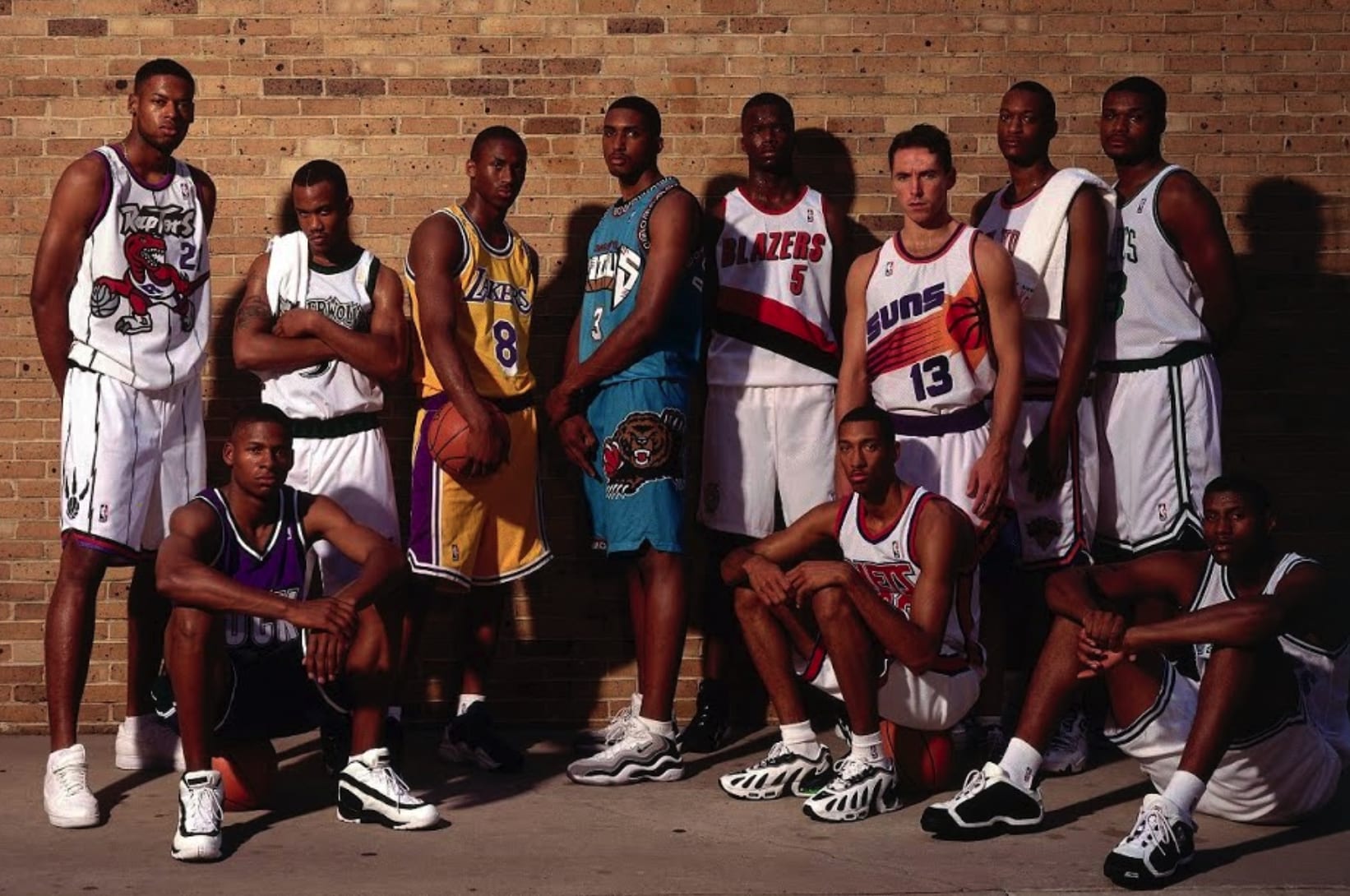



 NBA journeyman