I was going to write a separate post to describe ways that the Hornets can avoid the luxury tax without trading away David West or anyone important, but I’ve decided that I won’t. Here’s a shorthand version:
1) On trade deadline day, trade Hilton Armstrong and $1.1 million in cash ($922,748 to cover his remaining salary, the rest as an incentive) to the Clippers in exchange for changing the protection on their 2016 second-rounder – already owed to the Hornets from the Rasual Butler deal – from top 55 to top 50. The Clippers gain a free player who may or may not see the court, whilst more importantly earning some cash for their troubles and giving up quite literally the least significant thing imaginable. Meanwhile, the Hornets dump the $2.8 million salary of a player that managed to lose an unloseable backup centre spot to Darius Songaila. That can’t ever be a bad loss.
2) Also on trade deadline day, trade Ike Diogu and $400,000 to the Hawks for the rights to Alain Digbeu. $271,928 of that covers Diogu’s remaining salary; the rest is the Hawks incentive to use an inactive list spot on a player that’s out for the season. And all they lose is a 34-year-old Frenchman. If not the Hawks, Diogu could also be sent to the Grizzlies, Kings, Pistons or Sixers. Whichever.
Trading two surplus players and $1.5 million will save them about $9 million, once tax payments are substituted and rebates added. And you can do so without moving one of your only good players or taking on future salary. If those two deals happen, or ones very similar to them, then expect misplaced bravado.
Failing that, someone competitive will think too much of James Posey, just like the Hornets once did themselves. Ask Dallas. Even if they won’t give you Drew Gooden’s unguaranteed deal, there doesn’t seem to be a whole lot coming between a Shawne Williams and Kris Humphries package. The Lakers might want to know, too, at which point your foundation for a deal is Adam Morrison. Maybe San Antonio bites, using some of their expirings. Either way, you get the idea; the tax is highly dodgable without giving away one of the only three good veterans to do it. Devin Brown’s unnecessary trade kicker need not be a sticking point.
Banic is a Croatian big man playing in Spain. He scores really really ridiculously efficiently, has great touch around the basket, and can hit a jump shot, yet is often out of shape, is a bad rebounder, is not physical and is a poor defensive player. But even though I just made him sound like it, Banic is not really like Eddy Curry. Curry is big, athletic and more awkward. Whereas Banic is short, grounded and smooth.
Playing for Bilbao, Banic is averaging 27.5 minutes, 17.5 points, 4.3 rebounds and 72% shooting in the EuroCup, and 26.0 minutes, 14.3 points, 5.0 rebounds and 67% shooting in the ACB. He doesn’t just do it on layups, either.
Banks spent last season in Turkey, signed with Darussafaka. He averaged 13.0 points, 4.9 rebounds and 2.0 assists per game, which are good all-around numbers, but he also shot 21% from three-point range. This wouldn’t have been too bad had three-pointers not accounted for a third of all his shot attempts.
This season, Banks has not played anywhere. He signed in Jordan a couple of weeks ago to play with a team called Zain, who seem to be pursuing lots of former NBA talents this year (more on that later). However, Banks was released soon afterwards as he needed another month to recover from an injury. I don’t know what injury.
Nothing seems to have materialised about Banks’ chances of playing for the British national team. Banks’ father was born in England and still lives there, which entitles him to apply for a British passport, something which he expressed an interest in doing 18 months ago. However, as far as I can tell, he either still hasn’t done it, or it didn’t work out. It would be great if it did.
Barac, whose rights are owned by the Pacers, is playing for Caja Laboral in Spain’s ACB. They’re the team that used to be known as Tau Ceramica. Barac tends to get a wriggle on in the ACB; in only 11.8 minutes a game, he averages 7.9 points, 4.3 rebounds and 2.5 fouls per game, slowing to a more sedate 5.6 points, 3.9 rebounds and 2.1 fouls in 14.8 minutes per game in the EuroLeague. The number of minutes played isn’t ideal, but when you’ve got Tiago Splitter in front of you, it makes sense.
Stanko Barac’s nickname should be Spanky. Stanko “Spanky” Barac. I like that. Admittedly I like Spanky as a nickname for pretty much everyone – Pau “Spanky” Gasol and Rajon “Spanky” Rondo in particular seem to work will – yet it works particularly well with Barac. In unrelated news, I feel this website is more desirable when it’s a worldwide basketball news aggregator and a not a crap comedy vehicle.
Barber, who turns 30 in 10 days time, is playing in Mexico. For the Libertadores de Queretaro (which translates as “the Liberators of Queretaro,” I think), Barber averages 14.8 points and 2.7 assists. He takes nine three-pointers a game and hits only 29% of them. Sounds like a bad idea.
The general rule is that we don’t cover 30-year-old 5’10 shoot-first journeyman point guards from the Southland Conference. But Steven Barber appeared on the Knicks training camp roster of 2005. This has obligated me to follow him ever since. It’s a one-off thing.
Barlett is signed in Cyprus with a team called Achilleas Kaimakliou. This means there are no statistics for him, because there aren’t any from Cyprus that I can find. I also don’t really know much about Omar Barlett, which kind of craps on any possible trivia ideas. So here’s his back story instead.
Barlett went to college at Jacksonville State, making him possibly the only Jacksonville State player that you’ve ever heard of. He transferred there from junior college, and averaged 15/7 in his senior season. After graduating, he spent two years in Portugal, and three years in Poland, before somehow winding up on the Heat’s 2008 training camp roster. Inevitably, Barlett did not make the team, and he went back to Poland, where last year he averaged only 5 points and 4 rebounds per game. So an NBA redux does not look likely.
How did a 28-year-old 6’8 forward with no NBA-calibre history of success of strength in his CV go from averaging 12/7 in the Polish league to being briefly on an big league roster? I don’t know. But, as both Barlett and Barber have shown, these things can happen. (It’s particularly weird in Barlett’s case, as he wasn’t on any summer league roster, for the Heat nor anyone. Barber was, however, which explains his presence somewhat. Therein lies the advantage of summer league; even if no money is involved, a good performance can get a client to a training camp. And when you’ve got “NBA training camp” on your resumé, you’re going to do better in your non-NBA career. Or, in the case of Omar Barlett, you’re going to go to Cyprus.)
Here is Omar Barlett in a Polish three-point shootout in an arena that didn’t have any available ball racks.
Rhode Island product Baron took his one major skill – jump shooting – and brought it to a Turkish audience. Baron is Mersin’s designated American shooter this season, taking over from Chris Lofton. That’s not an easy thing to do, because Lofton was awesome in that role last year, averaging 20.2 points per game with both 47 and 61-point outings (shooting a combined 30-42 from three-point range across those two games). However, Baron has been pretty damn good at it himself, averaging 18.8 points and 3.3 rebounds per game in the Turkish league. Baron is shooting 48% from three-point range while taking ten and a half of them a game, and while he’s had no massive Lofton-like explosions (with a season high of only 29), he has shot consistently well. He always does. He probably always will.
Barrett was back in the NBA this autumn when he joined the Cleveland Cavaliers for training camp. He then lost the role of inactive list ball-handler to Coby Karl, and could have lost it to Russell Robinson as well. After being released from there, Barrett has not signed elsewhere. It was rumoured that he might go to Napoli in Italy, but…well, that’s not happening any more. More on that Napoli story later.
Does Americans call Autumn “the fall” because of the way “the” leaves “fall” from the trees? If so, oh.
Barron is in the D-League, waiting for an NBA call-up. He almost got one from the Blazers the other day, and will probably be heard from again at some point. For the Iowa Energy, Barron is averaging 15.1 points and 10.3 rebounds in only 32 minutes per game, with particularly good rebounding numbers for a man who’s always been a bit average at that.
His rebounding numbers may be helped a bit by the Energy’s lack of size, as, despite their team being pretty stacked, their second-biggest player is perimeter orientated Cartier Martin. The starting point guard, Curtis Stinson, is second on the team in rebounds with 6.1 a game. Nevertheless, the Energy also have a rebounding differential of +3, so it’s not a Biedrins-like situation. Barron is shooting only .434% from the field, and was suspended this week for hitting Jared Reiner in the face, but the NBA can probably overlook that second indiscretion.
Jon Barry retired after the 2006 season. He now works as a commentator for ESPN.
The last time I heard Jon Barry commentate was during the Hawks’ blowout of the Bulls about a month ago. Barry tried to convince the audience that Luol Deng had not realised his superstar potential, while simultaneously highlighting his inability to take anybody off the dribble. Apparently the dislogic between the two things did not hit home. He was also convinced that the reason for the Bulls’ struggles is a lack of post-up offence, seemingly because someone told him this three years ago. “You’ll never get anywhere as a jump shooting team,” says former jump shooting specialist Jon Barry, as Joe Johnson stretches the lead to 32 with a three-point jump shot. Ho hum.
(For the record, you can get absolutely everywhere as a jump-shooting team. You just need to a) be good at jump-shooting, and b) play good defence. The Bulls are only point B intermittently, and they’re woefully short on point A. So there’s your real problems, Jon Barry.)
Basden played last year in Turkey for Mersin, averaging 8.1 points, 4.7 points, 2.1 assists and 2.6 steals per game. The all-around numbers are pretty good, but Basden shot only 24% from three-point range, taking three threes a game. He took 174 two-pointers, 84 three-pointers and 56 foul shots, and ended up totalling 244 points on 258 shots. That’s not good. But then, he always was defense-first.
This year, he waited until December before joining the D-League, acquired by the Austin Toros. The result have been much the same, however; through three games, Basden has averaged 8.0 points, 4.3 rebounds, 2.3 assists and 1.3 steals, but is shooting only 35% from the field, with 24 points on 26 shots. That’s pretty much how he rolls. He has his uses defensively, but offensively, he doesn’t have many at all.
Baston’s NBA redux over the last three years saw him not play a whole lot, but he did do quite well in the time that he did get. Last season was his worst season, yet even Baston’s worst season was pretty good; he averaged 2.5 points and 2.0 rebounds in 8 minutes per game, and his PER was 12.3. His career PER is 14.4, too, which makes you wonder why he’s only played 831 NBA minutes in three and a bit seasons.
Baston went to camp with the Pistons, but did not make the team. The Pistons decided they wanted both Chucky Atkins and an empty roster spot more than both him and Deron Washington, regardless of how many early season injuries they had. The Pistons are about $11 million short of the luxury tax, have a roster spot open, have had many injuries and need more depth, yet they won’t actually sign anyone to help. They even waived Washington when keeping him cost them nothing until tomorrow. I just…….don’t see the logic.
After being waived by the Pistons, Baston has not signed elsewhere, although there’s rumours of a possible move to Aris in Greece.
Finally, our first of many Chinese Basketball Association updates.
For the most part, the astronomical statistics put up in the CBA are by the import players, almost always American (and almost always black; of the 33 CBA imports this year, only one, Frans Steyn, is white.) The Chinese players don’t really do much; most of them can’t compete in the athletic and physical brand of NBA-style ball that the CBA is trying to recreate. Chinese players largely dominate the point guard spot, but when it comes to scoring and rebounding, they’re almost all overmatched physically.
Bateer is one of the few exceptions; he ranks as one of the few native players that can compete with the import’s statistical domination. Last year for Xinjiang, Bateer averaged 15.5 points, 10.2 rebounds and 4.1 assists; this year, he’s averaging 41.2 minutes, 9.8 points, 11.0 rebounds and 5.0 assists. Three-pointers make up half the shots he takes, and he’s not shooting them well so far this year (24%), but those passing numbers are pretty awesome. Just this very night, Bateer did a Kidd and totalled 7 points, 9 rebounds and 9 assists, and that’s while weighing 300lbs. Bateer was never an NBA talent because he was so damn slow, but he was pretty cool.
Mengke Bateer fact: despite me calling him a native right there, Bateer kind of isn’t. He’s actually an ethnic Mongol, which is why his name doesn’t play by the Chinese rules of naming. This is also why you’ll sometimes see Sun Yue referred to as the first Chinese player to win a championship, even though Mengke was a member of the 2003 Spurs.
Another Mengke Bateer fact; Mengke Bateer has used his immense size to launch a second career in the film industry. The following YouTube clip is a trailer for a film called “Bodyguards and Assassins,” a huge budget film starring many big time Chinese and Hong Kongish stars. In it, Bateer plays a bloody enormous monk.
For what it’s worth, the Marko Jaric buyout was completed very quietly on Christmas Eve, and he’s now a fully fledged member of Real Madrid. He put up 12/8/5 on debut, playing 41 minutes. In a 40 minute game. Not bad.
Remember Brandon Armstrong? So do I, just about. (He was a great pickup in NBA Live 2004.) Armstrong is from Pepperdine, and left school as its 21st all-time leading scorer after playing only two years there. In his final season, he averaged 22.1 points and 1.6 assists per game, which kind of hints at his style of play. He was drafted by the Rockets with the 23rd pick in the 2001 Draft, and then was the “other guy” traded along with Jason Collins and Richard Jefferson to the Nets in exchange for Eddie Griffin. (The more hindsight you use, the more terrible of a trade that looks. RIP Eddie.)
Armstrong played three years with the Nets…or rather, he didn’t play three years with the Nets. Armstrong was on the roster for three years, but spent most of that time on the injured list with pseudo injuries (unless of course he really did have four lower back strains in five months). He played in only 108 games and 699 minutes in those three seasons, totalling 239 points on 280 shots with 24 total assists, a true shooting percentage of .404%, and a PER of 4.9. He signed with the Warriors for training camp in 2004, but did not make the team, and has never come back to the NBA.
He’s not very well known any more, as evidenced by a quick Google of his name, which reveals the second hit of “Brandon Armstrong – murder victim.” This is another Brandon Armstrong; the Brandon Armstrong of New Jersey Nets and Pepperdine University fame is, as far as I know, not dead. He also doesn’t appear to playing anywhere at the moment; he split last year between the Ukraine and Venezuela, but has been out of the game since then.
Brandon Armstrong fact: the power forward on his high school team was C.C. Sabathia.
Another Brandon Armstrong fact: Brandon Armstrong’s middle name is “Simone.”
Bulls draft pick Asik is still with Fenerbahce, and this year he’s not got a torn knee ligament. On the season, he’s averaging 8.9 points, 6.0 rebounds and 1.4 blocks per game in the EuroLeague, alongside 10.8 points, 6.2 rebounds and 1.6 blocks in the Turkish league. His free throw stroke is still pretty biblically terrible, however; Asik is shooting 36% from there in the EuroLeague and 43% in the Turkish league (and even that’s only salvaged by the 6-6 performance in his last game; he started 8 for 31). But apart from that tiny flaw, he’s producing.
The general rule is that if you can perform in the EuroLeague, you can perform in the NBA. But to do that, Asik will have to stop getting injured. He’s out for at least another six weeks now after fracturing his collarbone during a game on December 14th. Considering that he’s missed much of the last two seasons with knee injuries, this does not bode well.
Augmon last played in the NBA in the 2005-06 season, when he played 36 games rather badly for the Orlando Magic. It was his second year with the team, and, given that his middle name is Orlando, it seemed quite apt. He then spent a year out of the game before randomly signing with the Nuggets in training camp 2007. About that signing, Nuggets coach George Karl said:
“I wouldn’t waste Stacey’s time if I didn’t think there was a chance of him making our team.”
Yet about Brad Stricker, who also signed for the Nuggets in 2007 training camp, Karl said:
“He’s got as much of a chance as Bret Bearup.”
Point taken. Sorry Brad.
A month after not making the Nuggets team, Augmon became a player development coach for them. He’s still there.
James Augustine was in summer league this year with both the Jazz and the Bulls. He played well for both, yet he stayed on in Spain to play a second season with Gran Canaria. Augustine is averaging 9.0 points and 8.5 rebounds in 23 minutes per game in the EuroCup, alongside 7.5 points and 6.4 rebounds per game in the ACB. The slight downside is that he’s shooting less than 1 free throw a game.
Gran Canaria have only one Spanish player in their rotation. Going from most to least minutes in the ACB their roster reads Jaycee Carroll (American), Sitapha Savane (has a Spanish passport due to residency but is Senegalese), Augustine (American), Marcus Norris (American and Croatian), Jim Moran (American and Irish), Melvin Sanders (American and Georgian), Will McDonald (American), Josh Fisher (has a Spanish passport due to residency but is American), Tomas Bellas (actually Spanish!) and Daniel Kickert (Australian and Dutch). Even their deep bench has foreigners; Ryan Richards is English, born and raised in the eternally average place of Sittingbourne in Kent, and Ewoud Kloos is Dutch. Gran Canaria have played 15 games so far, which means there have been 3,000 minutes of playing time up for grabs, yet true Spaniards have filled only 242 of them. And 229 of those were for Bellas.
All those dual passports and nationalisations allow Gran Canaria to play within the rules. But they’re hardly keeping to the spirit of them.
Austin, the Bulls’ other unsigned draft pick, is also in Spain, signed with Lucentum Alicante in the ACB this summer after splitting last year between Turkey and China. His transformation from post-up threat to perennial jump-shooter is almost complete; on the season he averages 11.6 points, 4.0 rebounds, 0.1 blocks and 21.8 minutes, all while shooting more three-pointers than free throws.
At various times during the six years since he was drafted, Bulls fans have wondered if Austin could be an option to help them out with some post-up offence. The answer would appear to be no, not any more. He never could defend, he never would box out, and now he doesn’t even score much inside either. He still produces pretty well, but not in a style that suits any NBA aspirations. If you want Mario Austin, you might as well have Anthony Tolliver.
Ayers played last year for Notre Dame, where he was awesomely average. At 6’7, Ayers had good size for a wing player, and he was also athletic. He also had a pretty sweet jump shot out to three-point range, and could defend. Yet all he did was take jump shots; there was no desire to put the ball on the floor, nor any success when he did. You have to love role players like that.
After going undrafted, Ayers went to the Wizards for summer league, but didn’t make it through the tryout phase. He reappeared in the D-League, allocated to the Fort Wayne Mad Ants, for whom he has started 10 of 13 games. Not much has changed in his style of play; Ayers averages 7.8 points, 2.8 rebounds, 0.9 assists, 1.2 steals and 0.5 blocks in 26 minutes per game, shooting 44% from the field, 44% from three-point range and 100% from the line. He has taken 41 three-pointers in 13 games compared to six foul shots. He does what he does, and that’s why I like him.
The Puerto Rican league runs in the summer time, during almost every other league’s offseason. It’s for that reason that they’re able to get so much talent there. Ayuso, a Puerto Rican native, played in the Puerto Rican league last summer with Cangrejeros de Santurce, averaging a very Brandon Armstrong-like 21.4 points and 1.6 assists. And even though the Puerto Rican league doesn’t start for ages, Ayuso has already signed there once more, moving to the Capitanes de Arecibo. This is because Arecibo are (or were) in the Liga Americas, the 16 team cross-continental club tournament for all countries South American and Latinish. Arecibo went 1-2 in their three group games last month, failing to qualify; Ayuso averaged 11.7 points along the way.
Malick Badiane was in the D-League last year with the Anaheim Arsenal, and averaged 4.9 points, 5.4 rebounds, 2.0 fouls and 0.4 blocks per game. However, the Anaheim Arsenal no longer exist, and nor does Malick Badiane’s D-League career. He has moved from there to the relative lowlights of the French second division, signing with Nanterre on December 15th. Badiane has not yet played a game for the team, as their December 19th game was postponed until January 12th.
Drafted by the Rockets way back in 2003, and thrown in in a trade to the Grizzlies in 2008, Badiane was drafted while incredibly young based on his combination of size, athleticism and defensive instincts. But it hasn’t worked out.
Having Bulls draft picks featured so prominently in this post is a coincidence, but when it involves Dalibor Bagaric, it’s a happy one. The now-29-year-old Bagaric was said to have signed a guaranteed contract with the Hawks last summer, but he didn’t; instead, he returned to Bologna and barely played all year. This summer, Dali returned to his native Croatia when he signed with Cibona Zagreb, but this hasn’t resulted in much of an increase in PT. In four EuroLeague games, Bagaric is averaging 2.8 points, 3.5 rebounds and 1.3 fouls; in eight Adriatic League games, that rises only to 3.6 points, 4.3 rebounds and 2.0 fouls.
I don’t know how many flagrants he’s committed, but I’d like to.
Drove past one of these lorries the other day. I laughed.
Santa Clara’s Bailey is entering his fourth season in Germany, and his first with Ludwigsburg. In 30 mpg of 17 games, Bailey is averaging 9.0 points, 4.1 rebounds and 2.6 assists per game, but is shooting only 9-49 (18%) from three point range.
Here’s a video of some of those points. He’s #11 in yellow.
In accordance with prophecy, Ludwigsburg have a rotation featuring eight Americans and only one German. That one German is called David McCray. It’s not THE most German name in the world, is it?
Baker was mentioned in the 1993 draft roundup from only last month. I didn’t have much to say, though. Here it is again.
Vin Baker was still playing up to and including last season. The NBA fell by the wayside back in 2006 when he was released by the Timberwolves after the first six games of the season, but he’s signed elsewhere twice since then, both last season. Baker signed with Liaoning in China last November, and then signed with Marinos in Venezuela this June.
Both times, he was released without playing a game due to being out of shape.
Maker’s non-basketball life hasn’t been going too well, either. In June 2007, the recovering alcoholic was arrested for drink driving after leaving a casino. (He later pleaded guilty to a lesser charge of reckless driving.) In February 2008, his seafood restaurant was foreclosed after racking up roughly $900,000 in unpaid loans. And in June 2008, his home was also foreclosed.
He hasn’t been in the headlines for a while, and as they say, no news is good news. So it would be great if he’s rectified his problems and straightened out his affairs. But given that the last time we heard from him was when he was deemed to be an unfit replacement for Horacio Llamas……well. That’s worrisome.
Veteran Baker joined the Dakota Wizards in 2006, and played three full years there. It’s unusual for someone to stay in the D-League that long, because it doesn’t pay very well. And it’s also very unusual for a man of that age to be there that long. But Baker did it anyway, and only this summer did he leave, signing in Cyprus for AEK Limassol alongside fellow D-Leaguer Trent Strickland. However, Baker spent barely any time at all in Cyprus, returning to the D-League as as one of the Wizards’ returning players. Now into his fourth season there, Baker is averaging 12.7 points, 4.3 rebounds, 4.3 assists and 2.2 steals per game, shooting 49% from the field and 43% from three-point range.
Cypresian statistics are basically impossible to find. But if Google translate is right, Baker scored 9 points in 2 games. Don’t know about the rest.
Anderson has not played since the 2005-06 season. His NBA career ended the year before, when he split the 2004/05 season between the Hawks and the Clippers, and after being waived by L.A. in March 2005, a ten-month wait ensued. Anderson then joined legendary Lithuanian team Zalgiris Kaunas for the rest of the season, the first and only non-NBA gig of his professional career. Chibbs averaged 2.4 points and 1.6 assists in the EuroLeague alongside 5.9 points and 2.8 assists in the Lithuanian league, and then that was the end of his playing career.
In between those last two playing gigs, he was declared bankrupt.
The last time we checked in on Anderson, he had been named the head coach of the CBA’s Atlanta Krunk. It was all supposed to be brilliant; for the 2007-08 season, the team hired Anderson as head coach, hired Kenny Smith’s brother Vincent as the general manager, signed Grayson Boucher (And-1’s “The Professor”) and minor league superhero Zach Marbury (Stephon’s brother) as a backcourt, announced Freedom Williams of C&C Music Factory fame as the majority owner, brought on Stephon’s clothing company to be the team’s uniform designers, and started shooting a reality TV show about the team. It was all supposed to be awesome. And then it wasn’t. In their only CBA season, the Krunk went 9-41, a loss total which included nine forfeits. Players were not being paid – at one point, the team was down to as few as five players as everyone kept bailing on them due to the lack of salaries. Their home arena was deemed unsuitable, so they had to play all their games down the stretch of the season on the road, and they also had no uniforms. To say it went a bit tits up sells it a bit short. I’m surprised they saw through the season.
The team was resold to new owners, moved to the PBL for the 2008-09 season, and changed its name and location to the Augusta Groove. They played one more average season, finishing 10-10, but had more financial troubles and folded. Anderson was there only for year one.
After it all went south, Anderson joined a clinic run by the NBA for retired players looking to begin coaching careers. At some point, he was also the coach of a SlamBall team. He is currently studying (not coaching) at St. Thomas’s University in Miami, and is hireable for both speaking engagements and running workouts.
Shandon Anderson was covered in the 1996 draft round-up thing that was written back in September. Or rather, he wasn’t covered at all, because there was nothing to say. In amongst all the talk about Travis Knight’s hair and penis, I wrote this:
The Knicks finally got rid of Shanderson in 2004, over three years after the pointless Ewing trade that brought him in in the first place. Shandon then spent two years with the Heat for no real reason, and managed to win a ring in that time through almost no work of his own. I can’t find anything that Shandon has done in the three years hence, but considering all the money he earned in the NBA, he has no real reason to get out of bed these days, so I wouldn’t be surprised or disheartened if he just didn’t bother.
We can do a little better than that now; in 2007, eleven years after leaving it unfinished, Anderson returned to the University of Georgia to complete his degree. He is now something of an entrepreneur; his foundation, the aptly-named Shandon Anderson Foundation, is designed to serve as a mentoring thing for kids, as well as giving out multiple scholarships to impoverished kids in the Georgia area. He also owns a salon and spa facility in Atlanta, as well as a vegetable restaurant and wine bar.
Most importantly, Shanderson is a proud wearer of skirts. And that’s a true story. If you don’t believe me, here’s a picture of Shandon Anderson in a skirt and a flat cap:
This. This is why you come here. God bless you Shandon for your complete lack of fear. I can respect that. And you’re right, skirts ARE comfy. They’re just a bit weird looking, is all.
Connecticut guard Rashad Anderson was the second-leading scorer in Italy’s Serie A last year, averaging 18.2 points per game for Udine. Serie A is the third-strongest league in the world, behind only the NBA and the ACB. Yet despite being one of the best scorers in one of the best leagues in the world, Anderson this season finds himself on the bench for a D-League team. Seems like a backwards step, really.
For the Iowa Energy, Anderson is averaging 10.5 points, 3.5 rebounds and 0.6 American assists in 20.3 minutes per game off the bench. The Energy are pretty stacked and have a 10-1 record, but if Anderson came back to the D-League for lesser money thinking it would be the next step to cracking the NBA, then he probably wasn’t expecting to be coming off the bench behind Cartier Martin and Pat Carroll.
Antonio Anderson is also in the D-League. After going undrafted out of Memphis this summer, he went to camp with the Bobcats, but he never really had a chance of making the team. He was then taken 12th in the D-League draft by the Rio Grande Valley Vipers, three places after Rashad was. For the Vipers, Anderson is averaging 41.9 minutes, 17.5 points, 6.9 assists, 4.4 rebounds, 1.3 steals and 0.7 blocks per game, shooting 46% from the floor and 30% from three-point range, all while starting at was is essentially the small forward position. (Decide for yourself whether it’s him or Garrett Temple that’s technically the shooting guard. Can’t say it matters much.)
The Vipers are the D-League affiliate of the Houston Rockets, and Rockets big man Joey Dorsey is on assignment there. He’s putting up numbers, too. In 29.4 minutes of 10 games, Dorsey is averaging 14.4 points, 13.6 rebounds, 2.1 assists, 1.3 steal and 1.4 blocks per game, shooting 64% from the field. It looks good, doesn’t it? But somehow, in only those 29 minutes per game, Dorsey is also averaging 4.0 fouls and an alarmingly high 4.0 turnovers. How do you turn it over four times a game in 30 minutes when you don’t touch the ball on offence very often? How many moving screens can one man set? Baffling times. Things to work on.
As I’ve said about 23 times in the past, Andriuskevicius is somewhat symptomatic of part of the flaw in NBA thinking. He is 7’3 tall and fairly agile for that size; it’s that combination that got him drafted and two years of guaranteed money. (It certainly wasn’t because of an extremely accomplished skillset or a history of solid production. Maty was raw.) But the flaw there is with the 7’3 measurement. It may well be accurate, but Marty is only as tall as he is due to an abnormally long neck. Were it not for that, he’d be only a normal seven-footer, if such a height can ever be considered normal. What advantage is he to gain from having a longer neck than his peers? Not a lot. Maybe he can see the play unfolding slightly better than his matchup can. But if he hasn’t the skills to do anything about it, where’s the advantage? Measurements can lie, and while they do matter, they can also be blinkered. They’re important, but not THAT important. Ask the Western Conference playoff team currently starting a 6’6 centre how much it’s holding them back.
Anyway, that’s just an ill-informed rant, not a circumstances update. As for how he’s doing these days, Andriuskevicius is into his third season with Alicante Lucentum in Spain. On the ACB season, he is averaging 8.6 points and 4.1 rebounds, numbers both down from last season. He also averages 2.6 fouls in only 17 minutes per game, in a league where you foul out when you reach five. But he does have 120 points on only 71 shots, which is pretty fantastic.
Araujo is back in his native Brazil, signed with Paulistano. Put a space in the right place, and that becomes a believable name for a hitman. Brazilian statistics are a bit difficult to find, and it doesn’t help that he seems to now exclusively be known as “Baby.” But as far as I can tell, he was averaging 13.5 rebounds and 8.7 rebounds per game. (If anyone can read Portuguese, feel free to construct a better translation.) At the very least, here’s a recent shot chart of his. He’s red number 55.
Araujo was never THAT bad. Below average, yes, and a bad draft pick at #8. But he has NBA talent, if only as a twelth man. This is about as much balance redressing as I can muster. He’s 29 years old now.
Robert Archibald and his hybrid accent are to be found in the same place that they’re always found – Spain. Playing for Unicaja Malaga, Arch is having a pretty empty year, averaging only 5.2 points, 2.9 rebounds and 3.2 fouls per game in the ACB, although improving to 8.2 points, 4.2 rebounds and 2.8 fouls per game in the EuroLeague. Nevertheless, his teammate there this year is fellow Brit and Aldershot’s finest, Joel Freeland; others you will have heard of include Omar Cook, Shammond Williams, Nedzad Sinanovic, Taquan Dean and Gorgeous Giorgos Printezis. And this is why the ACB is the best league outside of the NBA. Even the middle-of-the-road teams are stacked.
Archibong played in the EuroLeague last year when he was a member of Polish team, Prokom Sopot. He was pretty bad in it, though, averaging only 2.8 points, 3.5 rebounds and 3.1 fouls. This year, he’s moved to Germany and joined the Dusseldorf Giants. (I don’t have an umlaut thing on my keyboard, and I’ll be damned if I’m bothering to find one in charmap.) On the season, Archibong is averaging 14.1 points and 6.7 rebounds, leading the team in both categories.
In keeping with the unofficial German league rules, Dusseldorf have almost no German players in their rotation. In fact, they have only one; the backup point guard, Gordon Geib. But they do have a German coach, a man named Achim Kuzcmann. And he has one of the finest moustaches that you will ever see in the basketball world.
That is imperious, messianic, divine, and truly, truly uber. Well played Mr Kuzcmann.
Armstrong last played in the 2007-08 season with the Nets, playing in 50 games as a back-up. He tried out for the Suns partway through last season, but did not make the team. He is now retired, if not officially, and is an assistant coach with the Mavericks.
Akingbala came out of nowhere to be a decent rebounder and defender for Clemson in his senior season, and was a training camp invite of the Celtics in 2006 as a result. After that he went to the D-League for a bit, and has spent the last three years touring Europe. He is currently with Nancy in France (pronounced Noncy, which is even funnier), averaging 11.1 points, 7.4 rebounds and 1.7 blocks per game in the French league. Akingbala exclusively does “big man things”, as evidenced by his 47% FT shooting and 2 assists all year. But as athletic interior players go, you could do worse. The King Baller also put up a 9 points, 7 rebounds, 8 blocks stat line earlier this month, which is not bad going.
After at least seven years there, Akyol finally left Efes Pilsen in his native Turkey this summer, and moved to Italy to join Air Avellino. He missed six weeks due to injury, and has appeared in only six of 11 Serie A games for the team, but he’s averaging 7.0 points and 2.2 steals in 21 minutes per game. The 17% three-point shooting is not a great start, and nor is the five total assists, but Akyol is still young. He’s only 22. Feels like he shouldn’t be by now.
D-League veteran and occasional NBA flirt Alexander has ditched both of those on-off girlfriends in favour of going to South Korea. Playing for the LG Sakers, Alexander averages 14.4 points, 9.8 rebounds and 1.2 blocks in 28 minutes per game, shooting 65% from the field and 61% from the foul line. The South Korean league plays a huge, NBA-like amount of games; opening night was on October 17th, and LG have already played 30 games in those two mere months. All that court time and all those statistics are part of the reason why fringe and former NBA players like to go there; a longer breakdown of the South Korean Experience can be found by clicking the words South Korean Experience.
Alexander fell out of the NBA in 2001 after bouncing between Denver, San Antonio and Orlando for a few years, but he didn’t hitch on straight away with the first six-figure European contract that he could get. Instead, he sat out the 2001/02 season, and then went to the D-League for a year, where he starred as a veteran amongst whippersnappers and built himself a new CV. Alexander DID sign in Italy with Lottomatica Roma for the 2003/04 season, and performed pretty well for a EuroLeague-calibre team, but the D-League came first for Alexander (and also afterwards; he went back there for the 2004/05 season too). Seemingly it worked, because Alexander did then get back into the NBA, playing a few games for the expansion Bobcats as Brevin Knight’s mentor (maybe). This Bobcats gig was also Alexander’s last, and he now works as a radio announcer for University of Virginia games.
Of all the people I’ve tried to find out about, Courtney Alexander has been the hardest. He hasn’t played in the NBA since the 2nd May 2003, and he never played outside of it. He spent the whole 2003/04 season on the injured list, and although he signed with the Kings in October 2004 and made the team for three weeks, he spent all that time again on the injured list and never played for them. Alexander’s only other NBA contract was a training camp invite to the Nuggets in 2006, where he did not make the team. He has not played since, nor has he been found since. And I’ve done a lot of looking.
Finally found him, though; he and his wife has set up a foundation called “CA Press”, a foundation seemingly set on both academic and spiritual excellence. The foundation is advertised as being “non-profit”, but given that his wife seems to have given up a career in order to help run it (according to the About page), clearly they’re turning some kind of trade from it.
Shagari Alleyne started this season in Norway. I told you about this at the time, but no one would fault you for not noticing. He left the team (Tromso) before playing a game, and came back to America, where he signed with the D-League and was taken in the fifth round of the draft by the Albuquerque Thunderbirds. The Thunderbirds released him before the season started, and a couple of weeks ago, Alleyne signed with the Halifax Rainmen in Canada, who play in the Premier Basketball League. You’ll notice we don’t cover Norway and the Premier Basketball League on here as a rule.
In his first game with the Rainmen, Alleyne put up 5 points, 6 rebounds and 3 blocks in 16 minutes. In his second game the following night, Alleyne put up 3 points and 0 rebounds in 8 minutes. In the third game, he perked up a bit, totalling 8 points, 14 rebounds and 6 blocks in 19 minutes off the bench, in a PBL game against the Vermont Frost Heaves that the Rainmen won by 45 points. What’s a Frost Heave?
Teammates of his that you may have heard of include former Blazer Desmond Ferguson, former NBA draft pick and middle aged man Gordon Malone, as well as D-League veterans John Strickland and Gary Ervin. But lest it needs to be said, PBL basketball is relatively new and not yet strong. (Nor is Norwegian league basketball.) The intent of the PBL is to surpass the ABA, and they’re doing fairly well at that, mainly because they have infinitely more sensible expansion credentials. But it’s still not significant to the NBA landscape, which is what this website is supposed to focus on.
Allred, a D-League veteran, turned down the D-League this year to try and get some money. He initially signed with Napoli in Italy, but got out of there just in time. (More on their downfall later.) Allred then signed with Scavolini Pesaro for two months, another Serie A team, but in four games he totalled only 42 minutes, 21 points (on 22 shots), 16 rebounds, 2 steals, 0 blocks, 0 assists and 9 fouls, shooting 46% from the field and 20% from the foul line. He last played on November 1st, and left in late November when his 60-day contract expired.
I still haven’t bought his book, but you still should. He’s writing another one, although this time it’s a work of historical fiction. There’s also apparently a book of poems on the way.
Almond went to camp with the Magic, a team who at least understand that you can never have too much jump shooting. Us bandwagon Bulls fans have made quite a song and dance this year about how bad our three-point shooting has been; so would you if you replace Ben Gordon’s soothingly sensual buttery touch with the claw-like scratchings of John Salmons. But they are only actually tied for 26th in the league in three-point percentage with Memphis, and three teams (New Jersey, Detroit and Minnesota) are somehow even worse. There are also nine teams in the league shooting .318% or worse from three-point range this season. Why is this the case? It needn’t be. The world of basketball did not run out of shooters. The NBA just stopped getting them.
Anyway, the Magic didn’t keep Almond, because a taxpaying team already with J.J. Redick doesn’t need him. So Almond went back to the D-League with the Springfield Armor, for whom he is averaging 28.2 points, 4.0 rebounds, 1.8 assists and 2.8 turnovers. Sounds about right.
After going undrafted, Aminu was picked up by the Miami Heat for training camp, but he never really had a chance of making the team and was an early cut. He then went to the D-League and was picked tenth overall by the Fort Wayne Mad Ants, who then immediately traded him to the Erie BayHawks in exchange for Rob Kurz. At Erie, Aminu is averaging 10.3 points, 4.8 rebounds and 0.6 blocks in 24 minutes a game.
Anderson signed with Maccabi Tel Aviv fantastically early on this summer, and he’s still there. In the EuroLeague, Anderson is averaging 13.1 points, 3.3 fouls, 3.4 rebounds, 2.0 assists and 1.5 steals in 25 minutes per game, and in the Israeli league he’s averaging 10.4 points, 2.6 rebounds and 2.0 assists in 18 minutes a game. There have been rumours a-flying about Maccabi potentially getting rid of him, but rumours like that have accompanied many Maccabi players this year, especially Maciej Lampe. And neither has left yet.
Speaking of Maccabi, if anyone was wondering if Derrick Sharp went back there for a 14th consecutive season, the answer is yes.
Anderson’s last basketball employment was with the Bobcats back in 2007. He has not signed anywhere since, and nor has he been linked to anyone. Anderson recently signed up to join a program at the University of Kentucky that helps former players complete their degrees, as has Ron Mercer.
The Where Are They Now series of posts started out by accident, yet they’ve become the most enjoyable part of the website. They seem to be fun for you to read, and they’re definitely fun for me to write, so now that Christmas time has passed and new seasons have begun around the world, we begin a list anew.
Abdul-Wahad was covered last month in the 1993 Draft Round-up. I shall reproduce it here.
Tariq played in only 67 games this entire decade. He played 29 games in 2000-01, 24 games in 2001-02 and 14 games in 2002-03. His last NBA game was April 14th 2003, and he never played outside of the NBA. He had a try-out with Climamio Bologna in the 2006 preseason, but he did not make the team, and that was it. Nevertheless, he got paid huge amounts of money during that time in exchange for services not rendered, and he’s been investing it into the entertainment industry. Abdul-Wahad owns a French TV channel called 3A Telesud, is a partner in whatever this is, and is a partner in this clothing company.
Like Abdul-Wahad, Abdur-Rahim was recently covered in the 1996 draft thing. To discover whether or not he is currently working as an assistant coach for the Sacramento Kings, read it. (CLUE: Yes.)
In the pipeline is a piece called “A History Of Failed Physicals,” one which I’m currently researching to see if it has the legs I think it might. Shareef will play a pivotal role in its success.
After going undrafted, Texas multi-record holder A.J. Abrams is playing in Greece, where, due to their funky alphabet, he is known as A.J. Eimnpamz. For Trikalla in the Greek A1 League, Eimnpamz averages 17.3 points, 1.6 rebounds and 1.0 assists in 35 minutes per game. It doesn’t look as though he has any aspirations to expand the distributing aspect of his game, although nor does it look like his size is holding him back from scoring too much on the continent.
Trikalla are 12th out of 14 teams in the A1, armed with only a 2-6 record, and it’s not been a good season. Their three imports are Abrams, Kasib Powell and former Pittsburgh forward Tyrell Biggs, but it’s not really helped the team, and Biggs in particular has been ineffective. Trikalla recently brought in Mark Dickel, which might have spelled the end for Biggs, and which gives Abrams one more player not to pass to.
Abukar was in the D-League last season with both the Austin Toros and the Idaho Stampede, and after the D-League season ended he went to Switzerland to sign with the Lugano Tigers. While there, he averaged 19.1 points and 5.9 rebounds in the final seven games of the year, and has stayed there this season, averaging 16.2 points (second on the team) and 6.4 rebounds per game (third).
Swiss basketball is certainly not Europe’s strongest, which is why we don’t often talk about players being there. To give you a yardstick on that, the current leading scorer in Switzerland is a small guard named Kenny Thomas (not THAT Kenny Thomas), who averages 21 points per game for Lausanne. But last year, Thomas was playing for Radford, a Big South Conference team that made it to the first round of the NCAA Tournament, only to lose to North Carolina by 43 points. Thomas averaged 14 ppg last year on 41% shooting for Radford; he’s doing better in Switzerland than he was in the Big South.
The Lugano Tigers employ a ten-man rotation that features only one real Swiss player. Four players have Swiss passports, but, as their names might suggest (Derek Stockalper, Dusan Mladjan, Slavisa Pantic), three of them are naturalised. Even the real Swiss homegrown, Luka Vertel, has mixed Croatian heritage. The Tigers roster is made up of five Americans (Abukar; Stockalper, who plays for the Swiss national team on the side; former North Carolina bench player Byron Sanders; former Pacers summer leaguer Scott Vandermeer; D-League veteran Mike Efevberha), one Brazilian (Gustavo Lo Leggio), one Croatian-Slovenian (Martin Mihajlovic), Vertel (part Croatian), Pantic (naturalised Bosnian) and Mladjan (naturalised Serbian, although he’s been in Switzerland for the best part of a decade). And that list does not include former Michigan State guard Travis Walton, who went home last week. Switzerland isn’t turning out a great amount of homegrown international basketball talent, and the Lugano Tigers definitely aren’t.
But, although it was via Italy, Switzerland DID produce Thabo Sefolosha. So it’s not all bad.
Acker started last season with the Pistons, and got traded to the Clippers in a trade that I totally predicted. (Apologies for being self-aggrandising.) He then went to summer league with the Knicks, and then left the NBA. He signed with A.J. Milano in Italy, and appeared in the league’s first eight Italian league games (averaging 10.0 points and 4.3 rebounds) and their first four EuroLeague games (8.8 and 2.8). However, he hasn’t played since November 12th due to injury. I don’t know what the injury is exactly, but a quick Google translate reveals that it’s a “torn muscle.” Don’t know which.
Adams has not played anywhere this season. Not sure why. Last year, the Raptors signed him to a fully guaranteed $711,517 salary incredibly early in the offseason, watched Hassan turn up out of shape, and had to dump the contract on the Clippers (in the same way as Acker above), who then waived him. Adams then signed in Serbia for Vojvodina, but appeared in only two games before being waived in early March. He has not played anywhere since.
Adrien is in Spain, averaging 12.8 points and 7.7 rebounds for Leche Rio Breogan Lugo. Those are good numbers, but they come from the second division, the LEB Gold. And even though the Spanish league is the strongest league in the world outside of the NBA, the second division isn’t particularly great. (It’s better than Switzerland, though.) Adrien has also managed to total only five assists in 15 games, which is quite hard to do.
Ager is also in Spain, in the ACB (first division) with Cajasol Sevilla. Unfortunately, his stat line there this season is unnervingly similar to his NBA stat lines of the last three seasons; that is to say, he’s still struggling. In eight games, Ager is averaging 2.4 points, 1.3 rebounds and 0.3 assists, shooting 22% from the field, 20% from three-point range and 67% from the line. He has gone scoreless four times in those eight outings, has fouled in seven of them, and has played in only about half of the team’s games. Cajasol are having a decent season, ranked sixth overall in the ACB with an 8-6 record, but they’re doing so with a seven-man rotation. They could use Ager’s help, particularly now that Domen Lorbek has left. But they’re not getting it. It also won’t help that Cajasol just made a big move in acquiring Ivan Radenovic, who, despite not playing Ager’s position, gobbles up some of his available minutes.
Blake Ahearn was in Spain as well until this week, when he was released by Estudiantes Madrid. In the last two years in the D-League, Ahearn has boasted true shooting percentages of .670% (in 2007-08) and .629% (in 2008-09), which is absolutely ridiculously good from a 6’2 guard. This year with Estudiantes was not really any different; Ahearn shot 41% from three-point range (36-87), and a typically Blake Ahearn-like 98% from the foul line (57-58), on his way to averaging 14.2 points per game. However, he only shot 29% from two-point range (10-34), and he also averaged only 0.8 assists a game to go with that. As shooting specialists go, you can’t be much more effective than that, but a specialist is as much as he was.
EDIT – Estudiantes signed Chris Lofton today, another specialist shooter.
In keeping with the theme in this post, Akindele WAS in Spain, and is not any more. Akindele signed with Xacobeo BluSens Obradoiro in the ACB in the summer, but he never played for the team after failing his physical due to a meniscus injury. He has not signed elsewhere since. Xacobeo replaced him with Mike Higgins, who is 43 years old in two months time, yet who is apparently more able to play that Deji is right now. Tough break, but he’ll be fine.
Speaking of Mike Higgins; he played in the NBA once. That was 19 years ago now, in the 1990-91 season with the Sacramento Kings. This season he’s totalled 10 points, 19 rebounds, 17 fouls, 1 assists and 0 blocks. It’s been an epic career, but it’s winding down now.
Thunder acquire Eric Maynor and Matt Harpring for PETER FEHSE
December 23rd, 2009
I have only 48 things to say about this deal.
1) As his profile suggests, I have long regarded Peter Fehse as a yardstick for a person’s NBA knowledge. If a fan knows who Peter Fehse is, they are hardcore and deserve your respect.
Short story short, Peter Fehse is a lanky German with lots of hair, who was drafted in the second round in 2002 as an absolute longshot based on his combination of height and athleticism. He never amounted to anything NBA-calibre, partly because he never had NBA calibre to begin with, but also because of constant injuries.
It has been over seven years since Peter Fehse was last heard of in NBA circles; indeed, he’s barely even heard in German basketball circles either. Fehse has not played this season, played in only two games last season, and did not play in 2007/08, all of which is due to injury. As long shot projects go, he was about as long-shotty as a 49th pick can be, and is even more of a throw-in than Andy Betts was when he was traded for Peja Stojakovic in July 2006. Gotta love that.
2) Oklahoma City were able to make this trade because they had roughly $9 million’s worth of cap room. As documented here, Oklahoma City had about as much cap room as anyone this summer, and could have bid on a number of quality players that filled a need (including Utah’s very own Paul Millsap, whose new contract is ironically the reason for the need to salary-dump in the first place.) They didn’t do this, though, instead choosing to sign two of the most marginal players to have ever had ten or more year careers; Kevin Ollie and Ryan Bowen. Reasons like this are partly why; they maintain their cap flexibility for next summer, while using their untouched space to acquire talent during the season. Just like Memphis did in 2008/09. But more on that later.
It’s interesting that they moved so early, too. With so many teams destined to be tax payers this year (14, at last count), you would think it’d be inevitable that, come trade deadline time, teams would be bending over in front of the Thunder, offering up loved ones or whatever Sam Presti wanted if it meant that they could use some of the Thunder’s cap space to save some of their excess salary. Yet instead of waiting for the deadline, Presti has acted two months early, and used it up on a projected backup. Maybe that was the best deal they can get. Maybe they have further plans for Harpring’s expiring, and needed to get it while they still could. But it seems unlikely that Maynor and Harpring would have been the best available assets had they waited it out.
I guess they just really like Maynor. Perhaps a little too much so. We’ll see how this works out come deadline day.
3) Fans of NBA teams never like salary dumps. They don’t like seeing good basketball assets – particularly in the form of young players – being traded purely to save money, money that has been otherwise misspent in previous bad personnel moves. And that’s good. They shouldn’t.
But sometimes, it’s the right thing to do. And this seems to be one such moment. With a payroll of $82,180,677 against a luxury tax figure of $69,920,000, the Jazz were on the hook for about $94.5 million in salary this season, their highest amount ever by over $20 million. Naturally, they’re not cool with that idea, especially since they’re not off to the greatest start this season. So by dumping these two guaranteed salaries for no returning salary, the Jazz save oodles of cash.
(This does not work it out exactly, but take away Harpring’s salary and Maynor’s salary from Utah’s cap number, then take it away again in saved tax dollars, then add back on the replacement cost of the 13th player Utah is going to have to sign, and add back on whatever portion of Harpring’s contract Utah was able to save on in insurance. That’s your total saving. It’s in the eight-figures range. And for eight-figures, you can buy multiple replacement Maynors.
(By the way, this move brings the Jazz down to roughly $74 million in salary for this season. One more salary-dumping move – potentially one involving Kyle Korver – and the Jazz might yet get under the tax threshold. If they do, then, once tax rebates are included, their payroll will be nearer $64 million than $94 million. Are you really going to pay $30 million for two backup guards when you don’t have to?)
(Don’t ask who’s going to take on Kyle Korver for no outgoing salary. Details, details.)
4) When Sam Presti uses cap space to acquire Eric Maynor for essentially nothing, he’s deemed (in the early going) to be a genius. When Ed Stefanski uses a trade exception to get Rodney Carney and Jason Smith for essentially nothing, no one says anything. When Chris Wallace uses cap space to get Sam Young for essentially nothing, he’s an idiot. It’s all a matter of your perspective, I guess. (Or rather; it’s all about what other people told you to think. Since Sam Presti is currently regarded as the hottest of hot shots, then that’s going to be the popular viewpoint of this deal. Which is fine. But so were the others, and yet no one listened then.)
5) The Thunder had to waive two players to accommodate the two incomers, and inevitably they settled upon Mike Wilks and Shaun Livingston. It’s another setback for Livingston, who was playing reasonably well now that he’s finally healthy again, but he should be able to get more work soon, particularly when 10-day contracts become available in a couple of weeks times.
Wilks is kind of used to this, but it must suck for him too.
6) The Jazz have only 12 players after this deal, so they have to sign someone. You can only have 12 players for two weeks at a time. They also now need a point guard. How about Shaun Livingston or Mike Wilks?
Jared Reiner, Eddie Basden, Marcus Campbell all join the D-League
December 19th, 2009
The D-League has bagged itself some more former NBA talent.
In five of the last six years, Iowa centre Jared Reiner has appeared in an NBA training camp. In 2004 it was the Bulls; in 2005 it was both the Clippers and the Suns; in 2006 it was the Spurs; in 2008 it was the Sixers; this past summer, it was the Timberwolves. In that time, Reiner has only played in 46 NBA games, 27 of which came with the unlisted Bucks down the stretch of the 2006/07 season. But that’s no reason to stop trying, and, seemingly unable to get a tasty European deal, Reiner has opted for the NBA exposure offered up by the D-League. If things go well, he could make it six of seven.
Eddie Basden is another ex-Bull, who was quickly snapped up by the team after going undrafted in 2005, and about whom much excitement was generated by the Bulls’ PR Machine. We didn’t have a draft pick that year, so we pretended Basden was it, and took some great solace from predicting his greatness. However, Basden appeared in only shreds of 19 games, and all he showed was a desire to gamble on defence and an inability to consistently shoot. We felt let down somehow.
Apart from the Bulls, Basden has had training camp stints with the Cavaliers in 2006 (being traded for Martynas Andriuskevicius in one of the best pointless trades of all time) and the Miami Heat in 2008, but he didn’t make the team either time. He spent last season in Turkey, averaging 7.9 ppg and 4.6 rpg for Mersin, but on the unhealthy percentages of 37% FG, 23% 3PT FG% and 61% FT. This is a defensive specialist we’re talking about, by the way.
Marcus Campbell has never played an NBA game, but he’s had training camp stints with the Rockets, Bobcats and Thunder. He is a D-League veteran, with 145 D-League games played in four previous seasons, and career averages of 10.3 points and 7.0 rebounds per game.
Basden joins the Austin Toros, Reiner joins the Fort Wayne Mad Ants, and Campbell goes to the Springfield Armor. On their respective debuts, Basden put up 6 points and 6 rebounds on 2-9 shooting, while Campbell put up 8 points and 6 rebounds on 0-6 shooting to give the Armor their first win of the year. It came against Reiner’s Mad Ants, and Reiner’s 8 points, 3 rebounds and 5 fouls in 15 minutes didn’t seem to help.
Additionally, the L.A. D-Fenders traded Deron Washington to Tulsa in exchange for Keith Clark. Washington had lost his minutes with the D-Fenders to Dar Tucker, Gabe Pruitt and Diamon Simpson, and he had become expendable. Tulsa also waived Thunder draft pick DeVon Hardin due to injury, but they cancelled that out by acquiring Zabian Dowdell, a man who was staring down the barrel of an NBA training camp invite or two this summer before getting injured.
To make room for Campbell, the Armor waived former NBA guard Adam Harrington. And that’s a shame.
As always, Chinese Basketball Association transactions are extremely hard to verify. There is no English language version of the CBA’s website, and crude Google translations aren’t really that helpful. Tryouts are often reported as signings, signings often aren’t reported at all, and lots of things go unreported. From these tatty shreds, we have to piece together the workings of an entire league. And it’s not easy.
However, one thing that’s perfectly clear is that former Bulls and Knicks big big big man Michael Sweetney has joined the legion of ex-NBA big men making their way over to the Chinese Basketball Association. The story was first reported by Adrian Wojnarowski over six weeks ago, and became official yesterday.
Sweetney turned down the offer of a workout with the Memphis Grizzlies to go to China, fully aware of the fact that he’s not able to play in the NBA right now. The reason why he’s not able to play in the NBA right now is obvious; put simply, he’s larger than ever. Can’t play in the NBA if you can’t get off the spot.
Sweetney is not a guarantee to have made the Shanxi roster; Chinese teams can only carry two non-Chinese players, and Shanxi currently rock all four of Sweetney, Maurice Taylor, Lee Benson and Donta Smith. (At least, as far as I can tell. There’s also a team called Shaanxi, which makes this all very confusing.) Nevertheless, this is the right move for him. China pays well, and the CBA tends to play more games than comparable leagues (although apparently they’re down to only 32 regular season games per team this season). The games are 48 minutes in length and not 40, and the import players will play huge minutes (as opposed to in Europe, where teams will employ 11-man rotations in 40 minutes games wherever possible.) The stint in China will get Sweetney money, court time, exposure, and enormous statistics; if he stays healthy and drops some weight, this could be the launchpad for his NBA comeback.
So that’s good. Here’s hoping it goes well.
In other Chinese news, ex-Maccabi, Spurs and Bucks big man Charles Gaines has also joined the league, as has former NBA player Alexander Johnson. Lorenzen Wright was cut and has returned to America, and Will Conroy did not make the cut for the Dongguan New Century Leopards, losing out to Johnson and Dajuan Tate. And while American courts had allowed Kirk Snyder to travel to China to play in the CBA, the CBA decided that they didn’t want him.
Also, Olumide Oyedeji has signed with Liaoning for next season, which is particularly awesome news considering the reported defamatory comments he made about the CBA, ones which the CBA may yet sue over. Good times.
In non-Chinese news:
– Former Erie BayHawks guard Maureece Rice has signed in Azovmash in the Ukraine, where he pairs up again with his teammate from last year, Erik Daniels. Azovmash have had a bad year and recently made widespread sweeping changes – Daniels was one of the few to survive – and Rice is a part of the new infusion, trying to elevate Azovmash from their currently underwhelming ninth position in the Ukranian Superleague.
Azovmash are also in trouble regarding a contract dispute over ex-Raptors draft pick, Remon Van de Hare. RVDH signed with the team last summer to a three-year contract, but the team released him only partway through last season. He sued to get the money for the full three years of the contract, and FIBA have ruled that Azovmash have until the 21st of this month to pay it. If they don’t, they might be kicked out of the EuroCup.
– Another ex-D-Leaguer, Malick Badiane, has signed for the first time this season, joining Nanterre in France.
– Former NBA player Nikoloz Tskitishvili walked away from his contract with his Greek team Panionios, and ended up giving them money so that he could join Spanish league team Fuenlabrada instead.
– Hapoel Holon Israel released Brandon Wallace for no known reason, who then joined up in Poland with Turow, where he replaces Willie Deane, who was not having a good season.
– Ex-Timberwolf Rick Rickert has moved from the New Zealand Breakers to the Harbour Heat. Both teams are based in New Zealand, but the Breakers play in Australia’s NBL, and the Heat don’t. That’s quite the downgrade.
– Nigel Dixon changes South Korean teams, moving from Anyang to Sonic Boom. It’s an upgrade in team name, if nothing else.
– Lokomotiv Kuban started the year without any Americans, and then added two last week; Gerald Green and James Gist. There’s some NBA calibre right there, which has to be a welcome midseason infusion.
– Michael Ruffin’s short-term contract with Manresa expired, and was not renewed.
– Olympiacos released Von Wafer, who had disappointed greatly. Wafer had started the year in the rotation, but had worked his way down to being on the inactive list. Greek teams are allowed a maximum of only three Americans and six non-Greeks for Greek league games, and Olympiacos have seven. And while Yotam Halperin started the year as the inactive player, he played his way into contention, as did Patrick Beverley. Wafer, meanwhile, played his way out of it. And now Olympiacos has decided to save the money and cut him. Wafer is now a candidate to join the Memphis Grizzlies, who could use an extra bench scorer. They’re currently having to pretend that Sam Old is a backup two. And it’s not really working.
I like to think that I keep my ear pretty close to the ground. If you’re going to know about such perfectly useless things as Kevin Burleson signing in Romania, then you kind of have to. Yet I had absolutely no idea that the Knicks were considering signing Jonathan Bender, nor that they were even able to. Quite literally shocked to see that headline today.
Bender retired in February 2006 after being assumed to have been retired for a long while prior. He had begun to break out in the 2001-02 season when he averaged 7.4 points in 78 games for the Pacers, but not only was that the best he’d ever play, it was also the most he’d ever play. Bender’s games played total plummeted from there on out; from 78 in 2001/02, to 46 in 2002/03, to 21 in 2003/04, to 7 in 2004/05, to only 2 in 2005/06. He suffered from a degenerative knee condition that caused chronic pain due to the destruction of the knee’s cartilage, and there was no way back from that, forcing his retirement. There still isn’t, really, which is why I wrote this when we last covered Bender back in January:
Jonathan Bender is still retired, and probably always will be.
Apparently that was not true, though. Bender is now back, joining up with the general manager that traded for him and gave him the $28 million with which he built his business empire. The league once again has a seven-foot shooting guard, and not the Primoz Brezec type of seven-foot shooting guard.
In his time away from the game, Bender has become a successful entrepreneur. He owns a charitable organisation – the Jonathan Bender foundation – as well as Jonathan Bender Enterprises, a real estate development and property management company. Both of those organisations are based in New Orleans, helping to restore the city’s infrastructure. Bender also owns an Italian wine company, a record label, an island in the Caribbean, multiple real estate holdings (including Kingdom Homes, a company that buys and restores flood-damaged properties in disadvantaged New Orleans neighbourhoods), and is trying to patent a fitness device called “Bender Bands.” As someone of comparable age but completely incomparable success, I am jealous of this.
The last time someone returned from a career-ending injury to play in the NBA was last year, with the whole Darius Miles thing. That saga did not go particularly well – particularly not for Portland – due to all the shenanigans surrounding it. Miles played fairly well in his comeback, which was a plus, but it was all secondary to the drama, and it was not an enviable situation for any of the neutral parties. It finally ended this past summer when the Grizzlies let Miles walk unchallenged, unsatisfied as they were with his performance off the court. (As if to prove them right, Miles then got arrested.)
The last time it happened with the Knicks was with Allan Houston, who made two abortive comebacks in training camps 2007 and 2008 after succumbing to knee injuries in 2005. He never played another NBA game.
However, Bender is only 28 years old. There is no disgrace to be found here. If he can go, he should, and if he can’t, then it costs nothing significant to find out.
What the Knicks stand to gain here is not particularly obvious; Bender stands to be the 15th man in an eight-man rotation, and, given the aforementioned strength of his non-basketball career, he doesn’t appear to need the money. The ignominy of being on the inactive list alongside Cuttino Mobley doesn’t seem like any more of a proud way to go than the original medical retirement, and the risk for the Knicks is that, if he gets hurt again, they’re stuck with paying him.
Continuing the whereabouts round-ups of all recent NBA drafts, this is the fifth installment of the series. The non-canonical first four: 1994, 1995, 1996, 1997.
As always, this is really long. Feel free to skip bits.
Webber retired from basketball in March 2008 after an unsuccessful short stint with the Warriors. He now works as an analyst for NBA TV, along with the occasional TNT appearance. Webber’s restaurant outside the ARCO Arena in Sacramento abruptly closed last month, but he’s supposedly writing a book, and he’s also active in business, owning both Maktub LLC (which builds things) and Full Bloom Marketing (which markets things). He also released an album back in 1999. I would love to know what that’s like.
Chris Webber fact; on draft night 1993, Webber’s rights were traded by the Magic (who picked first) to the Warriors, in exchange for the rights to Penny Hardaway (picked third), as well as first-round draft picks in 1996, 1998 and 2000. That is a hell of a lot to give up just to move up two places in the draft, and it could have been especially painful considering that the Warriors sucked between 1997 and 2002. However, it could have been worse than it was. I’ve tried to piece back together what became of those picks, and here’s what I’ve found:
1996: The Warriors traded Webber after only one season to the Bullets in exchange for Tom Gugliotta, as well as for three first-round picks in the same years as the initial deal (96, 98, 00). However, the 1996 pick that Golden State received from the Bullets was in fact their own – Orlando had traded it to Washington in the summer of 1994 in a salary dump of Scott Skiles. The pick was #11 and was later used by the Warriors on Todd Fuller. (It could have been used on Kobe, of course.)
1998: The Warriors dodged another bullet here; they didn’t trade their own 1998 pick to the Magic, but tradeda 1998 pick to the Magic. After acquiring the Bullets’ first rounder in the aforementioned Gugliotta deal, they sent that one instead. The pick was #13 overall and was used to take Keon Clark; the Warriors own pick – which they mercifully kept – was #5 overall and was used to draft Vince Carter (who they then turned into Antawn Jamison).
2000: Orlando got the Warriors own pick here, #5 overall, and used it on Mike Miller.
This trade nearly saw all four of Anfernee Hardaway, Kobe Bryant, Vince Carter and Mike Miller traded for Chris Webber. Chris Webber was damn good, but no one’s that good. The Warriors got away with one here, just.
Bradley retired in 2005 after eight and a half years with the Mavericks. He now works in a school.
As we all already know, Bradley was kind of a bust in the league. He was always good, but never great, and he aged fast. However, pre-Space Jam, Shawn Bradley was a hell of a prospect. Look me in the nostrils and tell me that if there was a 7’6 player in this year’s draft that was capable of doing the following, that you wouldn’t pick him second overall:
Hardaway last played with the Heat in the early part of the 2007/08 season, back when Pat Riley thought it would be a good idea to assemble a backcourt of him and Smush Parker. He spoke of attempting one more comeback up to and including last summer, but it never came to pass, and it’s never now going to. Hardaway wasn’t very good in his time with the Heat, due to the old age and all the injuries, and he wouldn’t be any better now that he’s 38.
In retirement, Hardaway has recently launched his own tournament, and he appears at a lot of Memphis Tiger games. He also turns up at a lot of charity events, as well as the opening of this golf course. No word on what he does for money these days, but given the amount he earned in his NBA career, there doesn’t really need to be anything.
Like the top three, Mashburn’s good NBA career dribbled to a stop due to injury. Note to all current NBA players; this will happen to you too one of these days. It’s a tedious inevitability.
Mashburn played in only 19 games in the 2003-04 season, then missed all of the 2004-05 and 2005-06 campaigns. The Hornets traded him to the Sixers in that time despite his injury, which must have been quite the indignity, and Philly eventually waived him in February 2006. Mashburn now works as a TV analyst for ESPN, something that he’s very good at, choosing not to try to force a personality onto the viewers like so many of his peers and being entirely inoffensive in his speech. He also co-owns Ol Memorial Stables – formerly known as Celtic Pride Stables – alongside Rick Pitino and some other people.
Isaiah Rider is still playing, and if you don’t believe me, here he is.
Rider had been out of basketball since the Nuggets waived him partway through the 2001-02 season (the reason cited being perpetual lateness), and spent the ensuing eight years doing very little. He was arrested a lot, smoked a lot of pot, did some coke, and did a three and a half month stretch in prison in 2006 for cocaine possession and evading a police officer. (Is it easier or more difficult to evade the police if you’re coked up? The judgement will be gone, but surely so will the pain threshold, which opens up more possibilities for escape? It’s hard to say. Someone should do a study.) After getting out, he was arrested three more times in three months and saw three properties foreclosed. And then he started going to church.
He now claims to be drug-free, and is attempting a basketball comeback with the North Texas Fresh of the ABA. Rider recorded 18 points, 7 rebounds and 6 assists on debut, numbers slightly warped by the ABA’s style of play (the Fresh score 163 points in the game), albeit decent nonetheless. It was also reported that Rider might have landed a training camp contract with the New Jersey Nets this summer, which, while it would have meant an absolute 0% chance of making the roster, would have been something good to put on the CV if ever China became interested. That didn’t happen, however, because Isaiah pissed it up, getting arrested two weeks before camp started.
Cheaney last played in the NBA in the 2005-06 season. In the three years hence, he didn’t do a whole lot, although he hung around the University of Indiana and Golden State’s basketball programs a lot. That inevitably led to a more official role, and Cheaney was hired by the Warriors this summer as a “special assistant.”
Would you like to see Calbert Cheaney in a very 90’s music video? Of course you would.
Hurley’s NBA career was neither lengthy nor prodigious, largely due to a car accident that nearly killed him only six weeks into his rookie season. He had averaged 7.1 points and 6.1 assists in his first 19 NBA games before the crash, but never reached those numbers again, ending up with career averages of 3.8 points and 3.3 assists in 269 games, shooting 35%.
After giving up the game, Hurley developed a 134-acre breeding and training facility for racehorses in Florida (Devil Eleven Stable), and in 2003 went to work as a scout for the Philadelphia 76ers.
Vin Baker was still playing up to and including last season. The NBA fell by the wayside back in 2006 when he was released by the Timberwolves after the first six games of the season, but he’s signed elsewhere twice since then, both last season. Baker signed with Liaoning in China last November, and then signed with Marinos in Venezuela this June.
Both times, he was released without playing a game due to being out of shape.
Baker’s non-basketball life hasn’t been going too well, either. In June 2007, the recovering alcoholic was arrested for drink driving after leaving a casino. (He later pleaded guilty to a lesser charge of reckless driving.) In February 2008, his seafood restaurant was foreclosed after racking up roughly $900,000 in unpaid loans. And in June 2008, his home was also foreclosed.
He hasn’t been in the headlines for a while, and as they say, no news is good news. So it would be great if he’s rectified his problems and straightened out his affairs. But given that the last time we heard from him was when he was deemed to be an unfit replacement for Horacio Llamas……well. That’s worrisome.
Rogers last played in the NBA in the 2004-05 season. He was traded along with Mashburn from the Hornets to the Sixers, and averaged 6.0 points and 3.7 rebounds with the Sixers in his final 28 games. He never played professional basketball again.
Upon retirement, Rogers started working as a heavy machinery operator in Durham, purely because he liked doing it, and got promoted to supervisor within short order. He was also doing some voluntary coaching for a girl’s team, and has established a computer laboratory in a public housing complex. There’s something endearingly pure about that, particularly the line from his agent Butch Williams that says “he loves big trucks.” It seems almost childlike in its innocence, and that’s jarringly beautiful in an industry as seedy and corrupt as the NBA can often be.
Yet that affability just makes it all the more depressing that this happened:
Rogers is paralysed from the neck down after a dirt bike accident. That really, really sucks. More so than only two ‘reallys’ can convey.
SPOILER ALERT: Lindsey Hunter is only player in this entire list to still be playing in the NBA. But perhaps he shouldn’t be.
He’s been a member of the Bulls for two straight seasons, ostensibly to act as a mentor for young point guard Derrick Rose. The idea is that because Rose is a bad shooter and worse defensive player, Hunter will be able to mentor him into improving these skills, as well as helping to develop an understanding of the nuances of the point guard position. However, lost in that dreamlike scenario are a few overlooked facts:
1) Lindsey Hunter stopped being a good defender four years ago.
2) Lindsey Hunter stopped being a good shooter eight years ago.
3) Lindsey Hunter was never truly a point guard.
At this stage of his career, Lindsey Hunter has little to give on the court. He can’t defend, can’t shoot, can’t get separation to drive, can’t run, and can’t run an offence. His sole positive attribute of not turning the ball over comes only as a result of never doing anything proactive with the ball. And also because he usually manages to get one last pass off before the 24 second violation is called. Everything he provides is off the court.
The Bulls love point guards like that, though. And so that’s why they’ll willingly use up one of their 13 roster spots on a player who’s best as a player when he’s not playing, to a guaranteed contract, placing their jewels firmly in the path of the luxury tax angle grinder purely to retain his services, when there were seemingly no other bidders for them. But hey, if he’s worth it….
Houston was never the compelling protagonist of his own amnesty clause, as was erroneously expected by a large contingent of the mainstream media. This is because he didn’t need to be; the Knicks knew that they could get a retirement exemption thing on Houston’s salary eventually, and they finally did so in October 2005.
Houston wasn’t done, however; he launched two comeback attempts, both with the Knicks, who signed him for training camp in both 2007 and 2008. However, Houston made neither roster, and the comeback attempts appeared to be more in hope than expectation. (If he really wanted to get back in the NBA, he wouldn’t have signed with the Knicks, where the roster situation was always against him. Loyalties were a big factor.) It was, however, a more noble way to go out than before. Houston is now working for the Knicks as an assistant to team president, Donnie Walsh.
Lynch last played in the 2004-05 season, averaging 3.7 points, 4.0 rebounds and 2.0 assists for the Hornets. They waived him as one of the last cuts in 2005 training camp, even though they owed him $3.2 million from an ambitious one-year extension that they gave him in 2003. Whoops. Lynch became administrative assistant and graduate manager at Southern Methodist University in December 2006, and due to a lack of evidence to the contrary, I’ll presume he’s still there.
Dehere played six NBA seasons, the best of which was his third. Playing all 82 games but getting only 10 starts, he averaged 12.4 points and 4.3 assists per game, posting a PER of 16.7 and an awesome true shooting percentage of .612%. And that’s as a point guard. After falling out of the league in 1999, Dehere spent one year in Germany, 18 months out of the game and then three months with the North Charleston Lowgators of the D-League, before retiring in 2002.
Dehere now owns a place called the Sanai Restaurant & Lounge in Jersey City, but this landed him in trouble recently. Also in Jersey City, Dehere is the chairman of the Jersey City Community Housing Corporation, and he’s also moved into politics, running for an At-Large Council seat at the Jersey City municipal election of 2001 (whatever that means), and also being elected to the Jersey City Board of Education, where he currently serves on the Legal and Affirmative Action Committees and is the Urban Affairs Alternate Delegate. As you can probably tell, Jersey City is his home town. As you can also probably tell, I have no idea what any of that political stuff means.
Terry Dehere fact: Terry Dehere’s full name is Lennox Dominique Dehere. No idea how you get Terry out of Lennox Dominique, but he’s got to be the only person in the world with that name.
Despite being a 14th pick, Scott Haskin’s NBA career consisted of 27 games, 186 minutes, 55 points, 55 rebounds and 33 fouls. That was due to injuries, injuries which also prevented him from having a basketball career outside of the NBA. Haskin now sells insurance in Portland, Oregon. Here’s some stuff, and here’s what I think is his Facebook. To be honest, there aren’t enough Scott Haskin pictures on the internet to make a comparison.
Edwards played in only 85 NBA games over three seasons, averaging 2.4 points and 1.8 rebounds and riddled by injuries throughout. There exists a big gap between 1997 and 2005, a gap in which I can’t seem to find any Doug Edwards news. But in 2005, he reappeared at his alma mater Florida State, doing a social sciences degree. And then in September 2008, Edwards was named as the director of student-athlete development at Kansas State University. If you’re wondering what that role involves, as I was, then the following quote is taken directly from the school’s own website:
Edwards is responsible for a variety of areas including basketball-related matters, handling special projects for the coaching staff and assisting with personnel development and recruiting. In addition, he is involved in monitoring student-athlete’s academic development and their degree completion process. He is also influential in the Life Skills program and counseling student-athletes in career planning and goal setting.
Sounds like a glue guy. Does all the little things to help his program win.
Walters managed a much better NBA career than the previous two, sticking in the league from 1993 until 2000. He didn’t play a whole lot in that time, and retired with career averages of only 4.6 points and 1.7 rebounds, but the longevity’s decent. Walters left the NBA after an unsuccessful training camp stint with the Pacers in 2000, and spent the next two years split between Spain and the ABA before retiring. Since then, Walters has worked his way up the coaching ranks; he started in 2002-03 as an assistant with Blue Valley Northwest High School, then spent two years as an assistant at Valparaiso. In April 2005 he left Valpy to work as an assistant as Florida Atlantic for a year, then spent the next two years as head coach. And then before the start of the 2008 season, Walters was named the head coach of San Francisco.
Graham was traded to the Sixers for Hersey Hawkins before his rookie season started, and spent two and a half years in Philadelphia. Then he was traded to the Nets in a deal that also included Shawn Bradley (#2 above) and Rex Walters (#16), playing half a season in New Jersey. He then was traded to the Sonics for Vincent Askew and spent a year there, before being traded twice in the 1997 offseason; first to the Nuggets as a part of the deal for Dale Ellis, then to the Cavaliers as a part of the deal for Sherman Douglas. There’s some fine shooters in that list, albeit not Askew or Douglas. (Or Bradley.)
Graham then started the 1997/98 season with the Cavaliers, but was waived in December and never returned to the NBA. He spent a year in the CBA and a year in Sweden before retiring. He is now the head coach at Warren County High School in Indiana, which not coincidentally was Graham’s own former high school. Before that, he was head coach at the Indiana Alley Cats, a now-defunct team in the now-defunct CBA.
Rather then tell you Luther Wright’s story, I’ll link you to two people who have already done it: Matthew Futterman of the Deseret News in June 2007, and Tim Povtak of NBA Fanhouse last month. Long story short – he’s spent a lot of time in mental hospitals and on the streets, took a lot of drugs, and is missing some toes and some teeth. Not good. But he’s bouncing back.
Earl played 193 NBA games over four seasons with the Celtics, Raptors and Bucks, recording career averages of 5.1 points, 2.7 rebounds and 1.8 fouls per game. Upon leaving the NBA for good in October 1997, he spent a year in France, a year in Australia, a summer in China, another fortnight in Australia, two years in Turkey, a year in Russia, a year split between Turkey and Poland, and a year split between all three of Austria, Serbia and Kosovo. In October 2004, Earl signed in Canada in a league that folded about twenty minutes after he joined it, then signed with KK Zadar in Croatia for preseason, but he did not make the team after tearing his Achilles tendon. And then that was that.
After that, Earl did the usual thing for players on these lists and became a coach. He started with the Tijuana Dragons (now defunct) of the ABA, moving for the 2005-06 season to the Rockford Lightning (now defunct) of the CBA (now defunct), then becoming the head coach and VP of basketball operations for the Quad City Riverhawks (now defunct) of the ABA and the PBL, then became the head coach of the Cleveland Majic (now defunct) of the World Basketball Association. While there, he drafted Chuck Hayes fourth overall in the 2006 WBA Draft. If you need a yardstick for how relevant that drafting is, how’s this: LeBron James was picked 18th overall in the 2003 USBL draft by the mighty Brevard Blue Ducks. No, I don’t know why lowbrow American minor leagues do this either.
Earl now works in real estate for Sellers and Seekers Real Estate Company in Iowa, and is the head coach at Solon High School (NOT defunct).
Burrell managed an eight-year NBA career which ended with a four-game stint with the Hornets in 2000/01. After that, he played in the NBDL, China, the Philippines, the CBA, Spain and Japan, where he last played in the 2005-06 season. Burrell then went to work as an assistant for the Colorado 14ers (now defunct) of the D-League, and has spent the last three years as an assistant coach at Quinnipiac University in Connecticut alongside former UConn assistant Tom Moore. Quinnipiac play in the Northeast Conference. I had to look that up.
Robinson played in 205 games over his first three seasons for the Blazers before being traded to Minnesota as a part of the deal for J.R. Rider, spending a year there. He then signed with the Clippers for two seasons, but was released in March 1999, partway through year two. Robinson signed two ten-day contracts with the Timberwolves to end that season, and then spent the 1999-00 season with Olympiacos in Greece. He returned to the NBA in October 2000 signing a training camp contract with the Sonics, and although he did not make the team, this led to two ten-day contracts with the Magic in January 2001. There followed a season in Russia, a season in Italy and then one more season in Russia, before a six-week stint with the Las Vegas Rattlers of the ABA that ended in December 2004. That was Robinson’s last stop.
In retirement, Robinson has one of the most awesome mixes of career choices the world has ever known. He’s the CEO of a Casino/Indoor Waterpark Resort in Mississippi that doesn’t quite exist yet, owns a record label called Da Dirty South Records, and he also owns a women’s lingerie shop in Las Vegas. How fantastic is that trio?
In his first four seasons in the NBA, Mills played 399 games. He played 79 in his rookie year, and then 80 games for each of the the next three seasons. He played 11,063 minutes in that time for an average of 34.7 minutes per game, and scored 4,006 points for an average of 12.6 ppg. This all came with the Cavaliers.
After his fourth season concluded, Mills signed a swanky new seven-year, $33.6 million contract with the Boston Celtics in August, who then unusually traded him to the New York Knicks two months later before he ever played a game for them because the incoming Rick Pitino didn’t think he would fit in a running game. Mills managed 80 games in the first season of his new contract, but he never played more than 66 games again, and appeared in only 169 games over the last six years of his contract, earning $30.6 million over that time. For maths fans, that’s $181,065 dollars a game.
Mills was traded by the Knicks to the Warriors after only one season as a part of the Latrell Sprewell deal, and it was they who had to put up with paying him all that money just to miss most of the next five seasons due to injury. In the last year of his contract, however, Mills’s expiring $6.6 million salary became a valuable commodity, and the Warriors traded him in the 2003 offseason as a part of the Antawn Jamison deal. The Mavericks traded him to the Celtics later that offseason as a part of the Raef LaFrentz deal, and the Celtics traded him to the Hawks at the deadline as necessary salary filler in the three-way Rasheed Wallace deal. Mills didn’t play that year nor ever again.
In retirement, Mills co-owns a high profile car custom shop called 310 Motoring, who are sufficiently famous to have their own Wikipedia entry and shoe collection.
Chris Mills fact that you might have already known but which I didn’t: when Kentucky attempted to recruit Mills over 20 years ago, a package sent to Mills’ father by then-assistant Dwane Casey spilled open in transit, revealing $1,000 illicit dollars that shouldn’t have been there. It doesn’t get much more fail than that.
Another Chris Mills fact: one day when Mills left his PDA lying around, his then-Warriors rookie teammate Gilbert Arenas sent an email to the address of everyone contained on it, pretending to be Mills announcing his homosexuality. For a rookie, that’s confidence.
Ervin Johnson never professionally played outside of the NBA, because he never had to. Johnson managed a 13-year NBA career between 1993 and 2006 before finally succumbing to the inevitable aged 39.
This is particularly impressive considering that we are talking about a man with marginal basketball talent. I say that with affection, of course, but it’s true, as evidenced by how Johnson averaged more fouls than points per game for each of the last six seasons of his NBA career. That’s pretty marginal, and yet he stuck around anyway. Of course, this durability owes a lot to the seven-year contract that he signed in the summer of 1997, onto which was tacked an unnecessary and ambitious two-year extension by the Bucks in October 2001 (even though the previous season was the first of the fouls/points dilemma.) Yet Ervin stuck around nonetheless, and ended up appearing in a massive 845 NBA games with four teams, retiring with career averages of 4.1 points and 6.1 rebounds per game. (As well as 2.9 fouls.)
Ervin Johnson fact: Ervin Johnson was not drafted until he was almost 26 years old. Indeed, he did not start college until he was nearly 22. Johnson did not play high school basketball and worked in a supermarket for two and a half years before eventually committing to New Orleans in 1989. This might explain the lack of refinement in his offensive skills. But since that didn’t hold him back career wise, there ain’t nothing wrong with it.
Johnson now works as a community ambassador for the Denver Nuggets, one of his former teams.
Cassell’s playing career existed up to and including last season, when he spent half of the year on the Celtics inactive list, and then about right minutes with the Kings after Boston salary dumped him. He never played in a game with either team. Moving quickly, within about three months of the Kings waiving him, Cassell was named as an assistant on Flip Saunders’ new staff at the Washington Wizards.
After falling out of the NBA in the 2004 offseason, Blount’s only other basketball stint came with a training camp contract with the Lakers in 2006. He never played again, and, seemingly enjoying the good life, he took up another high paying profession; selling dope. How much? This much:
Blount’s impressively bow-tied attorney claimed that that amount was all for personal use, yet perhaps unsurprisingly, the judge didn’t buy it. (The excuse, nor the stash.) Below is a video of Blount’s sentencing, one slightly tarnished by the way it was filmed by Shaky Jake.
Presumably, Corie is still in prison. Hopefully, it was a one-off.
Corie Blount fact: On Christmas Eve 1999, Blount was pulled over for having tinted windows and no front number (license) plate. The police also seized the cash that Blount had on him – an impressive amount of $19,435 – and handed it to the DEA, after a K-9 unit smelled “drug residue” on it. Blount claimed that the money came from the sale of a car, and had to sue to get it back. No drugs were found on Blount or in the car, and he was not arrested or charged with anything. But in hindsight, it doesn’t look great.
Hammink signed with Cantu in Italy’s Serie A soon after being drafted, and returned to the NBA in April to play the last game of his rookie season. He spent the 1994-95 season on the injured list, appearing in only one game, and was finally waived by the Magic after three more games in December 1995. Two and a half years spent with the team…and five games played. Sweet. After a couple of months in the CBA, the Warriors signed Hammink for two ten-day contracts later that season, where he appeared in three more games and 10 more minutes, but that was the last of his NBA experience. The sum total; three seasons, eight games, 27 minutes, 14 points, 7 rebounds. Career PER of 14.0, though.
After falling out of the NBA, Geert split the next eight seasons between Germany and Greece, spending a year in Greece, then three years in Germany, then two more years in Greece, and finally two more years in Germany. He retired in 2004 and is now the Vice President and CEO of the massively huge Court Side Agency.
Mackey spent only one year in the NBA, playing 22 games with the Suns after being drafted and being waived in 1994’s training camp. He had training camp contracts with the Mavericks in 1997 and the Kings in 1999, but never made it back to the NBA. Outside of the NBA, Malcolm Malik Mackey played in the following places in the following order: CBA, France, Turkey, Spain, CBA, Puerto Rico, Spain, Spain (failed a drugs test at this point), Greece, CBA, Puerto Rico, Italy, France, China, France, France, France, Spain, Poland and Kosovo. His last stint came in the ABA with a team called the Chattanooga Steamers. However, the team ran into financial difficulty and quickly folded. (Shame. They should have moved to Cleveland.)
As of May, Mackey was working as a sales consultant at a General Motors dealership in Georgia. However, given recent events, that might not be the best industry to be in right now. If you want to know what he’s doing these days, here’s his Facebook.
Malcolm Mackey went to high school at a place called Brainerd. What a great name for a school.
Harris’ last basketball season was in 2004-05, when the Cavs ambitiously signed him to be the shooter that LeBron needed. They signed him to an elaborate contract that contained incentives based on team performance and Harris’s own minutes played, but they then waived him after one season making all of those conditions irrelevant. Harris wound up playing 12 years and 800 games in the NBA, a very impressive amount, but possibly a tad excessive for a scoring role player with a career true shooting percentage of .507% (shooting under that amount in nine of his 12 seasons).
In the four years hence, I’ve had a few attempts at finding Lucious Harris, but have struck out swinging on all of them. This one is no exception. He’s just not here. If you know something that the internet doesn’t, call in.
Mills never played in the NBA. He didn’t make the Timberwolves out of training camp in 1993, and while he went back for another camp stint in 1996, he didn’t make it then either. Mills’ non-NBA career featured two years in France, one in Italy, two in Turkey and two in Spain, picking up a Turkish passport along the way and going by the Turkish name “Senol Sertan Milli.” He broke his leg in August 2000 and never played professionally again, despite being an ACB All-Star the previous season.
A Google search for “Sherron Mills, lesbian nurse practitioner” reveals a surprisingly high number of results. So does “Sherron Mills, sperm bank.” Best of all is “Sherron Mills, reproductive pioneer.” That’s the nickname I want. [It’s a different Sherron Mills, but, still.]
Muresan played only 30 games in 1999-00, his final NBA season. He was a good player for a while, winning the 1996 Most Improved Player Award along the way, but, as is inevitable for a man of his height, his career was not a very long one. One more season followed in 2000-01, playing 16 games in the French league for Pau Orthez, and then that was that.
Muresan appeared in a couple of exhibitions for the Maryland Nighthawks in March 2006 and March 2007, the latter of which was a shameless attempt to get into the Guinness Book Of Records for being the tallest line-up in history. Muresan, at 7’7 being the joint tallest player in NBA history, was only the second tallest on this occasion behind 7’9 Sun Ming-Ming. (The others: Ayo Adigun (7′1), Deng D’Awol (7’0) and Barry Mitchell (6′8).)
Finding what Muresan has done in his time outside of basketball is hard to do, but he accompanied Wizards representatives to China this summer as a part of their commemoration of the Bullets’ pioneering trip to the country 30 years prior, and he’s also playing the bad guy in a film called “Serial Buddies,” set to be released next year. He lives in Potomac, Maryland, was formerly head coach of the Romanian national team, and owns a company called “Giant Basketball Academy” which teaches Greco-Roman wrestling to kids. (No, sorry, not Greco-Roman wrestling. Basketball. They teach basketball.)
There follows a Gheorghe Muresan Snickers commercial, under the pretence of being a Gheorghe Muresan Cologne commercial:
Burns played only one season in the NBA, appearing in 22 games for the Kings and recording 55 points with 33 fouls. After the NBA he went to Italy, Greece, the CBA, Spain, Turkey, Australia, Uruguay, Argentina, Poland and the IBL, with his career culminating in late 1999. Burns either is or was an assistant coach at Suitland High School in Maryland.
Everything I’m about to write it completely true. Indeed, to the best of my knowledge, everything in this entire post is true, save for the bit about Greco-Roman wrestling. However, I wish to stress that this bit in particular is true, because it might not seem like it. It’s pretty remarkable stuff.
Alphonso Ford played only 11 games in the NBA. His first team was the Sonics, for whom he played six games on two ten-day contracts at the end of the 1993/94 season, and, after an unsuccessful training camp stint with the Clippers in 1994, Ford played five more games (and 98 minutes) on a ten-day contract from the Sixers in March 1995. He never played in the NBA again.
In between those two sets of ten-day contracts, Ford played in the CBA, which at the time was the premier minor league in America. It is like the D-League is today; if you were nearly in the big leagues, and really really REALLY wanted to get there, you sacrificed some money and went there for the exposure instead of going to Europe for the money. As Ford showed in his two seasons with the Tri-City Chinook, it could work; he scored 23 points per game in the first season, and 24 points per game in the second, becoming a CBA All-Star both times. However, after two years of this CBA/NBA dichotomy, Ford abandoned America and went to Europe.
In the 1995/96 season, Ford averaged 24.9ppg, 3.9rpg and 3.3apg for Huesca in Spain’s ACB. Nonetheless, Huesca were relegated, and so Ford moved on to Greece where he spent a year with Papagou. Ford signed a two-year deal and averaged 24.6 points per game in his first year, but in the 1997 offseason he was diagnosed with leukaemia, forcing him to miss the whole of the 1997-98 season.
The following season, however, Ford returned to action. And he didn’t just return to action as a shell of his former self; instead, he came back and absolutely wrecked fools. Ford spent a year with Sporting Athenes, and then signed with Peristeri for two seasons in the 1999 offseason. Once there, he averaged 22.5 ppg, 4.1 rpg and 2.8 apg in his first season, and followed it up with 23.7 ppg, 4.2 rpg and 3.0 apg the following year. The 2000-01 season also saw Ford play in the EuroLeague for the first time, where he averaged a whopping 26.0 points, 4.1 rebounds and 2.7 assists per game.
If you understand European basketball, you’ll understand how difficult that is to do. For comparison’s sake, the current scoring leaders in this year’s EuroLeague are Matt Walsh (23 ppg in four games), followed by Linas Kleiza (18.3 ppg in six games). Ford averaged his 24.8 points through 20 games, not six. And while Matt Walsh and Linas Kleiza are both outstanding shooters, neither of them has leukaemia to deal with. Those numbers are freaking enormous, and the context in which they were created makes them other-worldly.
In the 2001-02 season, now a member of Olympiacos, Ford continued to pour it on. He averaged 24.8 points, 4.8 rebounds and 3.2 assists in the EuroLeague, as well as 21.6 points, 4.4 rebounds and 3.6 assists in Greek league play. He left Greece after the 2002 season due to budget cuts, and signed with Siena in Italy, where his numbers dropped slightly. Yet he still averaged 19.1 ppg in the Italian league and 17.9 ppg in the EuroLeague. And he also still had leukaemia.
The 2003-04 season was his last, as by this time, Ford’s leukaemia was at an advanced stage. Did it slow him down, though? Did it hell. Despite being ravaged by the disease that would eventually kill him, Ford signed with Scavolini Pesaro and averaged 22.2 points per game in the Italian league. Because of him, Scavolini finished in fourth place in Serie A. Because of him, they were runners-up in the Italian Cup. And because of him, Scavolini qualified for the EuroLeague for only the second time in their history. They owed all that to a man playing with advanced leukaemia.
After making Scavolini’s season for them, Ford retired in August 2004. He died less than three weeks later.
Eric Riley was in and out of the NBA between 1993 and 2002. His rights were traded to the Rockets in exchange for those of Popeye Jones, and the Rockets had Riley as a player from October 1993 to December 1994, when they waived him. Riley finished out the 1994-95 season with the Clippers, then spent the 1995-96 season with the Timberwolves. He went to Greece for the 1996-97 season, returned to the NBA with the Mavericks in December 1997, spent the rest of the 1997-98 season there, and signed with the Celtics for the 1998-99 season. Riley didn’t play in the NBA after that; he signed two ten-day contracts with the Timberwolves in January 2000, yet didn’t play in any games, and unsuccessfully went to the Spurs training camp in 2002. He finished with career averages of 3.1 points and 2.6 rebounds in 186 games.
After the NBA, Riley played a bit in the CBA and the ABA, before then moving to Italy for a year. There followed a year in China and then a year in Cyprus, where he finished up in 2003-04. What he does now is unclear – as always, if it’s on the internet, then I can probably find it, but if it’s not, then I got nothing. But at the very least, he either is or was pursing an M.B.A. at the University of Phoenix, and he owns this foundation. Eric Riley also has a Twitter account, one which reveals remarkably little about him or his life.
Mee’s rights were traded to the Nuggets in exchange for those of Josh Grant (#43 below) and a 1994 second-round pick (which became Anthony ‘Pig’ Miller). He spent almost two years with the Nuggets, appearing in 40 games and totalling 76 points, and his non-NBA career was still alive up until a few short months ago. Mee has spent almost all of the last 14 years in Australia; he spent the 1995-96 season in the CBA, the 1996-97 and 2002-03 campaigns in France, as well as the 2001-02 season in Germany, but the rest of the time has all been spent down under. Mee has also become more of a pass-first point guard over time, too, and last year for the Cairns Taipans he averaged 7.9 points, 3.5 rebounds and 3.8 assists per game. Of course, he also shot 36% from the floor and 19% from the three point line, but still.
Mee’s numbers have declined over the last few years, which is kind of to be expected since he turns 38 in two months time. He is currently unsigned, which is especially painful as he’s now a naturalised Australian citizen (and former national team member), thus signing him would bypass any quotas on foreign players. I can’t find anything that says he’s officially retired, but, all things considered (the age, the decline, the unemployment, the fact that he’s missed so much of the last two seasons), this is probably it.
Stokes never signed with the Heat. He spent his first two seasons after being drafted in Greece and Italy, before his rights were traded to the Bullets in the 1995 offseason – along with the rights to Jeff Webster – in exchange for Terrence Rencher and Rex Chapman. Stokes joined up with the Bullets in December 1995, but lasted only two weeks, and saw out that season back in Greece. He went to camp with the Nuggets in 1996, but didn’t make the team, and then went to Italy, where he finished up the season with Lottomatica Roma and averaged more rebounds (9.9) than points (8.8).
Later, Stokes went to camp with the Sonics in 1996, and after being waived by them, he was immediately picked up with the Raptors. It was with Toronto that Stokes played in the only four games of his NBA career, recording 4 rebounds, 4 fouls and 3 points in 17 minutes. After being waived in December, Stokes went back to Italy for the year, and then missed most of the next two years due to injury. In 2000-01 he returned to action, signing with Libertad De Sunchales in Argentina (where he ironically replaced Webster), and then moving on to Porto in Portugal. His final season was in 2001-02, where he started in France and ended up in the Italian second division.
Stokes is now a health insurance consultant at Farmers Insurance in Scottsdale, Arizona. Before that, he was the manager at a beauty mall.
Best never played in the NBA. He signed training camp contracts with the Nets in both 1993 and 1995, but was unsuccessful both times. Best’s non-NBA basketball career ran until 2007 and went as follows; France, Spain, Philippines, Puerto Rico, France, Switzerland, Philippines, France, Philippines, Switzerland, Philippines, Philippines, Germany, Germany, Germany, Germany, China, France, France, France. He is now the CEO of an online radio station called The Best Jams.
Van Exel last played in the NBA in the 2005-06 season with the Spurs. He was largely past it by that time, averaging only 5.5 points and 1.9 assists in that season, but his career averages of 14.4 points and 6.6 assists in 880 career games destroy most of the rest of this list. He is now an assistant coach at Texas Southern.
McRae never played in the NBA, although it wasn’t for a lack of trying. His rights were traded a couple of months after being drafted to the Minnesota Timberwolves in exchange for those of Tim Burroughs, but as far as I can tell, McRae never signed with them. Over the next six years, he embarked on a European career that featured Turkey, France, Turkey, Italy, Greece and Turkey, before returning to the NBA partway towards the end of the 1998-99 season when he signed a ten-day contract with the Nuggets. However, McRae never played a game for the team, and the contract was terminated early after McRae fainted before a game. It was discovered that he had heart arrhythmia.
It was a bad omen. A very, very bad omen. McRae spent the 1999-00 season in Italy, and returned to American to play in summer league for Orlando Magic. He wanted another shot at trying to make the NBA, something which he still hadn’t done by this point. However, on July 10th 2000, McRae collapsed with a heart attack while running wind sprints in a Magic practice, and died in the hospital later that day.
Hill is another that never played in the NBA. He went to camp with the Pacers in 1993, the Kings in 1994 and the Blazers in 1995, but none of them amounted to anything. He spent two seasons in the CBA, then went to Finland for the 1995-96 season where he averaged 31/7/4. After short stints in the USBL and Australia, plus a couple of turns on the Mavericks summer league roster, Hill’s playing career ended. He now owns a computer company in Texas, and here’s his Facebook. Rather pleasingly, he’s a Facebook fan of Conrad McRae’s tribute page.
Hill is perhaps best known for crying after Christian Laettner’s famous 1992 NCAA title winner. Here it is again:
Like Stokes, it took Manning a while to get to the NBA, but he eventually did. He failed to make the Hawks team out of training camp in 1993, so he spent the year in the CBA, where he did…..very little, to be honest. Another camp try-out with the Jazz in 1994 was unsuccessful, yet better times ensued when Manning signed with the Vancouver Grizzlies in 1995 and made the team. He lasted only until the end of November before he was waived, but the Grizzlies brought him back in January, and this time he saw out the season. They also brought him back for the 1996-97 season, this time keeping him at least until January, and after they waived him the Clippers picked him up for the remainder of the season. Between those two years, Manning appeared in 55 NBA games and had career averages of 3.3 points and 1.7 rebounds per game.
After leaving the NBA in 1997, Manning spent one more year in the CBA, then two years in Turkey, and one year in Lebanon, where he last played in 2001. He is officially impossible to find after that.
– Anthony Reed is equally impossible to find, and he didn’t have the luxury of playing in the NBA. He had camp stints with the Bulls in 1993 and the Magic in 1994, yet neither worked out. Outside of that, he played in Turkey, Slovenia, Croatia, Italy, Venezuela and the CBA, before finding himself in Japan in 1998 where his career ended. This 18-year-old guy has the same name, the same hometown and the same face, so I’m guessing he might be Anthony Reed’s son. But that’s all I got.
How could any man with the name Adonis Jordan be bad at basketball? They can’t, and he certainly wasn’t.
Jordan played in 10 NBA games in two stints five years apart. He didn’t make the Sonics out of his first training camp, but after they waived him, the Nuggets picked him up almost immediately. He only lasted two weeks with the Nuggets before being cut in early December, yet they signed him back up in the new year and he played six games with the team. Jordan didn’t trouble the NBA again for a few years, going instead to places such as Israel, the CBA, Australia, Korea, Hong Kong and Venezuela, while averaging more than 21 ppg/5 apg at each of those stops. (This tour included a 39 ppg stint during the 1998-99 NBA strike, which is quite an epic number. Then again, he was playing in Belarus.)
He re-emerged in the big leagues with the Bucks, who signed him for training camp in January 1999. They eventually waived him, but like the Nuggets before him, they brought him back on a 10-day contract later in the year. In his 10 combined NBA games between these two stints, Jordan recorded 97 minutes, 21 points and 22 assists. After the NBA, Jordan spent a year in Finland, a year in Germany, a year split between France and Belgium, and his final year (2002-03) back in Australia. He is now affiliated with National Talent Search USA in ways that I don’t quite understand.
Adonis Jordan fact: A Google image search for his name reveals WAY TOO MUCH GAY PORN. How much is too much? Try it and find out.
In keeping with the fine tradition of Utah natives who leave college when they’re about 42 – a list that includes Gary Wilkinson and Spencer Nelson – Josh Grant was 26 years old when drafted. As mentioned above, his rights were traded to the Warriors, for whom he played 53 games in his rookie year, averaging 3.0 points and 1.7 rebounds. They were the only 53 games of his NBA career, and his only NBA contract. Outside of the NBA, Grant started with two years in Spain, then three years in France, a year and a bit in Greece, a bit of a year in France again, before culminating his career in Italy in the 2001-02 season.
Upon retiring, Grant went back to school and earned a Masters in teaching. He then became a history teacher at two different schools, and is now a credit manager for Gonnella Banking Company in Chicago.
Holcombe never played in the NBA. He never signed in it, either. He played between 1993 and 2001 in the unusual haunts; in order, Spain, CBA, Puerto Rico, Argentina, CBA, Spain, Belgium, Dominican Republic, Poland, Japan, Poland, IBL, China and Venezuela. Here’s his Facebook.
Russell last played in the NBA in the 2005-06 season. The Nuggets re-signed him for the year, but he appeared in only one game for them, and was later traded as salary filler in the multi-player Earl Watson (etc) trade. Seattle promptly waived him.
Russell has not stopped playing elsewhere, though, splitting his time in the last four years between the ABA, the WCBL and the IBL. If there’s a minor league that’s not on your radar, then Bryon Russell will be sure to play in it. This past summer he was with the Los Angeles Lightning of the IBL on a stacked team of ex-NBA residents that also included Juaquin Hawkins, Derrick Murray, Fred Vinson, Jamal Sampson, Adam Parada, Toby Bailey and Lamond Murray. As insignificant minor leagues go, that’s some depth right there.
Petruska might be the most famous dual-nationalitied Slovakian-Italian 6’10 man called Richard in UCLA’s history. He enjoyed a lengthy 22-game NBA career with the Rockets, recording 92 minutes, 53 points, 31 rebounds and 15 turnovers in his only NBA season. After that, Petruska spent four years with Varese in Italy, then one year with Galatasaray in Turkey, then two years with Malaga in Spain, then one month with Tau in Spain, and ended up splitting 2002-03 (his final season) between Italy and Spain. He now works in sales for this lot. Do you want a link to a Facebook account that you’ll never look at again? Alrighty.
Whitney last played in the NBA in the 2003-04 season back with the Wizards, appearing in 16 games but shooting only 38% from the field. There were reports that he re-signed with the Wizards in early 2008, but those weren’t true. (I think ESPN typoed, and the rest of the internet then copied it.) Whitney finished his career with career averages of 6.5 points and 2.8 assists in 579 games, with zero All-Star appearances and not many MVP awards.
Now in retirement, Whitney and former teammate Jahidi White have since gone into business together, starting an employment agency called Staffing Across America, which aims to staff across America. He’s also done some TV work for Comcast Sportsnet, and is trying to take their staffing business global, with the aim of staffing around the world. Furthermore, Whitney has a Facebook account, as does everyone. It’s also pretty awesome that the only information that he allows the public to see is “gender; male.” As if there was any doubt.
The only other two Whitney’s in NBA history were called Hank and Hawkeye. Now those are some names.
Thompson’s NBA career stats total 14 games, 13 points, 13 rebounds and 11 fouls, all achieved in his only NBA season of 1993-94. His non-NBA career was lengthy and included only high-quality stops; Thompson started with three years in Italy, then moved onto two years in Turkey, followed that with two more years in Italy, then one more year in Turkey, and then playing his last years in Spain where he retired in 2008. Thompson was pretty much a consistent double-double guy along the way, and was the Turkish league MVP in 1998, as well as being an Italian league All-Star in 1997.
Very, very, very little information exists on the internet about Mark Buford’s basketball career. What is known for certain is that he never played in the NBA, and that he played in Italy and Germany in his first two years after being drafted. He also played in Uruguay in the 1998-99 season, and signed with both the Cavs and Suns at some point in 1994. But that’s seemingly it. There’s a lot of gaps there, and yet nothing to fill them.
Considering how hard it is to find information about his basketball life, it’s obviously impossible to find information about his post-basketball life, and I got nothing.
Mark Buford fact: Mark Buford was Alphonso Ford’s teammate (#33 above) at Mississippi Valley State. They got drafted in the same second round together. Yet their professional careers couldn’t have been much more different.
Marcelo Nicola is way easier to find information about, because he became a star. After being drafted, Nicola spent three more years with Pau, then signed with Panathinaikos for a year, only to miss that whole season with injury. He then played with Barcelona for a year before spending the next six seasons at Benetton Treviso in Italy, where he did his best work, winning two league titles and making two All-Star games. In 2004-05, Nicola moved to the Ukraine for a year, and then came back to Italy for the following year, playing one more game in the 2006-07 season before retiring. Nicola is now back with Benetton as an assistant coach, and has been for three years. He also was an assistant coach on this year’s Spurs summer league roster for some reason.
Nicola never signed in the NBA, which meant that his draft rights were kept this whole time, although they were traded from the Rockets to the Blazers in 1995 as a part of the deal that sent Clyde Drexler the other way. Now that he’s retired, Portland should have lost them. But as far as I can tell, they haven’t. Any official answer on this dilemma would be welcomed.
Like Adonis Jordan, how can you fail as a basketball player with this name? You can’t. And Dunkley didn’t.
Dunkley never played in the NBA, yet he nonetheless enjoyed a lengthy career outside of it. He started with the USBL, and then went from there. Long list coming up; USBL, Israel, Russia, Belgium, CBA, Spain, France, Italy, Spain, Switzerland, Italy, Poland, Italy, Portugal, Israel, England. He is now the head coach at Appoquinimink High school, and owns this.
Dunkley is English, which explains the last stop on that list, and it also explains why he’s extremely cool. And you know what else makes Spencer Dunkley extremely cool? He has a son called Slam. Slam Dunkley. It does not get better than that.
Peplowski played in 55 games with the Kings in his rookie season, totalling 667 minutes, 176 points, 169 rebounds and 131 fouls. For per-36 minute fans, that’s averages of 9.5/9.1/7.1. He played in 13 games over the next two seasons between the Pistons, the Bullets and the Bucks, two years which were also the last of his NBA career. Peplowski played for Barcelona after that, but his basketball career was not very long due to chronic knee trouble, and he soon retired and moved into finance. From 1998 to 2001, Peplowski was the mortgage sales manager for Independent Bank in South Michigan, then left there to become business manager for WILX TV10. Until recently, Pep was the Chief Operating Officer for the Boji Group, a property management group in Lansing, Michigan. But he left there to set up Sixty North L.L.C, another real estate venture co-owned by Peplowski along with former Bulls draft pick Matt Steigenga.
It doesn’t take much Googling to find this man’s home address, email address and telephone number. The internet is more than a little bit creepy.
– The Clippers waived White out of his first training camp in 1993, so White packed his bags and did the rounds. His lengthy and confusing career went as follows; three years of assorted CBA teams, short stint in France, about seven minutes in Australia, another five years in the CBA, half a year in the Philippines, another year in the CBA, short stints in South Korea and Saudi Arabia, a couple of months in the USBL, another short stint in the Philippines, another season in the CBA, a summer in Venezuela, one last season in the CBA, and a summer in the IBL. That takes us up to summer 2007, which is when Leonard White was last heard of.
– Byron Wilson was a professional basketball player up until this May. He is currently unsigned, but it was only seven short months ago that he was averaging 15.8 points per game in the Argentinian league. In fact, apart from one season in the CBA, one in Spain, one summer in Puerto Rico and one in Venezuela, Wilson has been nowhere but Argentina for the last 14 years. He has won two league titles there, made three All-Star games, and is now a naturalised Argentinian citizen. Just goes to show that maybe not all Utah graduates have the same career arc after all.
—
This will probably be the last one of these posts. This is for a few reasons.
Firstly, the earlier you go back, the harder it gets. These lists are only compilable because of the internet age, and so if a guy’s info is not on the internet, I can’t find it. And the further back we go, the harder it is to find anything on the internet.
Secondly, the further back we go, the fewer active players we get. In this list, the only three men still playing professional basketball are Lindsey Hunter, Bryon Russell and Isaiah Rider. (And they probably shouldn’t be.)
Thirdly, going forward from 1998 onwards is too redundant to be interesting, and most of the players from then on will be covered in the WATN series starting later this month anyway.
And fourthly, these takes way way way WAY too long to do.
Most importantly of all, though, there’s just too many people with bad stories. In this list, for example, we’ve had two dead guys, one paraplegic, an alcoholic, a recovering crack addict with some digits missing, a reproduction pioneer, and at least one guy in jail. That’s just not fun. That’s not what I want to know about. Believe it or not, beneath all these pithy comments and acerbic opinions lies a kind-hearted soul who just wants to see the best in people. But what we’re seeing instead is multiple stories of hardship, tragedy and struggle. Some people might like that, but not me.
Current NBA players; start planning for your futures. Now. Because it appears to be quite easy to fail.
The deal was made to help Houston dodge the luxury tax. And it worked, because they did. By dumping Francis’s $2,634,480 salary onto the Grizzlies, the Rockets saved themselves that much again in luxury tax savings, as well as picking up a $2,911,756 rebate from not being a luxury tax payer. The amount of money they saved was more than enough to justify giving the Grizzlies the cash to pay Francis’s remaining salary for the remainder of the season, and by returning the Grizzlies’s 2009 pick to them – one which they had previous acquired in the draft night 2008 three-way trade that saw Memphis move up for Darrell Arthur – the Rockets found sufficient incentive for the Grizzlies to help them. For the Grizzlies, they were essentially given a free pick; they were given a player that they didn’t want, but also enough money to pay his salary without him ever turning up, and they got a 30s pick for their troubles. All they had to do was sacrifice some cap space that they weren’t going to use anyway.
(The 2011 pick is irrelevant; it is top 55 protected, and only for that season. So if Memphis finish in the bottom 25 of the NBA that year, which they will, then Houston gets nothing. The pick was only included because Memphis had to give up at least something, however arbitrary. Also, the pick Houston gave to Memphis to save this $5.6 million was the #36, which Memphis then used to draft Sam Young. Houston later bought the #32 from Washington for $2.5 million. So in a way, they traded a player on their inactive list in exchange for moving up four spots and gaining $3.1 million. Not bad work.)
I’m hereby suggesting something very similar for this season. Once again, Memphis finds itself without its second-round draft pick, and once again, the team that owns it is in the luxury tax territory. This time it’s the L.A. Lakers, who first received the pick in the much-underrated Pau Gasol deal. Also, after the Allen Iverson buyout, Memphis once again has the cap room to do something about that.
So here’s the deal; L.A. Lakers trade Adam Morrison and the Grizzlies’ 2010 seconder rounder to Memphis in exchange for Steven Hunter.
Both players in the deal are on expiring salaries; Morrison at $5,257,229, Hunter at $3,696,000. The Lakers currently have a a payroll of $91,341,066. It’s the highest in the league, and they don’t want it to be. After tax payments, that’s a payroll of basically $112 million. And even if you’re the defending world champions, favourites to repeat and totally not skint from all that revenue, $112 million is still a lot of money. They want the payroll to come down, and are offering up their entire Odom-less bench as a result. This deal helps with that; the Lakers would save on the difference in luxury tax payments between Hunter and Morrison’s salaries (approximately $1.6 million) as well as the difference between their remaining salaries this season (which gets smaller after every payday, but which is still over $1 million). All it would cost them is a young player that they probably wouldn’t use anyway, since they have no real room for young players at the moment. And they might even get some usage out of Hunter.
Similarly, Memphis’ MO is to build through the draft. That’s why they traded Pau for Marc and two first-round picks – which essentially became three after the follow-up Javaris Crittenton deal – and it’s why they used their cap space to acquire picks last year. They can’t compete financially in free agency, so they don’t try to; instead, they survive on draft picks and retreads, so any means for obtaining a decent draft pick has to be considered. And if swapping Steven Hunter for Adam Morrison could be a mechanism for getting someone like James Anderson next year, then that can’t be bad.
How much cash would L.A. include? Don’t know. It probably depends on Memphis’ opinion of Morrison. It might also depend on when the deal is made (the later it happens, the less L.A. saves). It might even be none. But the basic framework for a deal is there. Both teams get what they want while losing nothing they can really use. As a man doing an impression of Arnold Schwarzenegger once said, it writes itself.
This isn’t a prediction. This is an idea. But if it’s an idea that happens, expect this last stanza to be deleted.
Swift played high school basketball in Bakersfield, hence this desire, and he got his wish when he was allocated to the Jam last month, becoming their starting centre. (He also got a haircut.) However, in keeping with the recent theme of Swift’s career, it didn’t go too well. Swift played in only two games for the team – totalling 4 points, 12 rebounds, 3 blocks, 6 fouls and 6 turnovers – and was today waived due to “personal reasons.” The reason cited was due to a family matter back in Seattle.
Now, I have no reason to dispute the validity of that reason, and don’t wish to make it sound like I do. There’s no incentive to lie or reason to disbelieve it. But it does reinforce a worrying fact; Robert Swift’s career isn’t going too well at all. Swift has essentially missed all of the last three seasons, and played only 1,500 minutes and 97 games in a five-year NBA career. He’s still only 24, but he has almost nothing to show for five years. Even his sophomore season, in which he played 987 of those minutes, was not really that impressive.
Here’s what gets me; a cynic would say that Robert Swift should quit playing basketball. I know this to be true because one such cynic said it to me. It’s not true, of course, because even though Swift’s last five years have been unsuccessful (and even though he was never as good as Danny Ainge thought he was in the first place), Swift isn’t a bad player when he’s healthy. And even if he was, you can make a living as a professional basketball player just by being 7’1. You don’t have to be hugely skilled as well, just willing to muddle it up.
But, worse case scenario, what if Robert Swift did have to quit? What if his oft-repaired knee was put out of whack once and for all, and he could no longer get up and down the court at all? What if he had to retire in his mid-20’s and find a new calling in life? What does he do if he no longer wants to do this?
Also, in other news, Australian centre Luke Nevill was released by the Utah Flash due to visa problems. Nevill had played in the season’s opener, totalling 11 points and 9 rebounds, and was pencilled in to be the Flash’s starting centre for the year. (Particularly true after James Lang was released and Garret Siler signed in China.) However, that’s now been put on hiatus due to the visa issue. It’s presumably only a temporary blip, and being released by a D-League team isn’t nearly as big of a deal as it sounds, yet it’s still a page-turner.
As mentioned in the 1997 NBA Draft Where Are They Now Round-up Recap Thing, IG Strasbourg are a French team that’s not doing very well. They’re currently joint-15th in the 16-team French ProA league with a 2-7 record and a three-game losing streak. They’re currently in the EuroChallenge (the third-tier continent-wide club tournament), and they lead this group, but that won’t count for a whole lot unless they reverse their French league fortunes. So they’ve made some changes, signed Wen Mukubu (to replace the injured Alain Digbeu), and waived Terrel Harris.
Harris, pictured here receiving mid-game attention from an unnamed Texas Longhorn with different-sized ears, was signed in the summer to try and provide some of that scoring help. He averaged 13.9 ppg for the Oklahoma State Cowboys last season, focusing on scoring and shooting impromptu threes, and rebounding a little bit. He’s only been doing half to that for Strasbourg this season, though, averaging only 6.8 points, 1.9 rebounds and 2.6 fouls per game. He shot the three well, scoring over 48% from outside, but he offered little else outside of that, and the team are now looking elswhere.
EDIT: Strasbourg have also signed former NBA guard Anthony Roberson, who replaces Harris. Mukubu replaces Digbeu.
David Monds replaces John Edwards at Kolossos Rhodes
December 2nd, 2009
John Edwards spent two years in the NBA. He signed as an undrafted free agent out of Kent State with the Pacers in 2004, played spot minutes in 25 games, and the Hawks signed him to a two-year, $2.08 million contract in the summer of 2005. After one year with Atlanta – in which he totalled 70 points, 48 rebounds and 76 fouls – the Hawks traded him back to the Pacers as filler in the Al Harrington deal. The Pacers then waived him, and after a training camp contract with the Timberwolves in 2007, that was it for John Edwards in the NBA.
Edwards has spent two of the last three years in the D-League, seemingly aware that the knock on him is his “rawness.” Last year for the Sioux Falls Skyforce, he averaged 9.3 points and 6.9 rebounds in 21 minutes per game, fairly sedate numbers for a centre-starved league. Those numbers are particularly sedate when you consider that Edwards is now 28 years old. You can’t be raw forever.
He did not return to the D-League this year, instead signing with Kolossos Rhodes in Greek’s AI League. In theory, he was going to provide an NBA-calibre frontcourt along with recent Heat draft pick, Robert Dozier. In practice, though, he’s not been a stand-out. Edwards has played only 36 minutes on the entire season, totalling 12 points, 5 rebounds and 8 fouls. Now entering his physical prime, Edwards has never been able to stop fouling, has never dragged up his rebounding rate, and even though he’s offensively inclined, he still can’t score without a size advantage.
Therefore, Kolossos have released him in favour of recent Lakers camp invite and another D-League veteran, David Monds. Monds doesn’t have Edwards’ height, but he has strength, athleticism and poise. Poise counts for a lot.
By the way, I looked it up; David Monds does have two brothers, but they’re called DeAndra and Trenton. Not Alfred and Diane, as you might have hoped.
Last year, former Kansas State forward Cartier Martin started out in the D-League before earning an early call-up to the Charlotte Bobcats. He didn’t play a whole lot, and when he did it’s mainly because Larry Brown was using him as a defensive specialist (including occasionally guarding the point guard before Dontell Jefferson arrived), yet he spent the entire season with the team anyway.
This summer, he signed with Benetton Treviso in Italy, a team that started the year in the EuroLeague. His teammates there include sure-fire lottery pick Donatas Motiejunas, as well as Gary Neal, Judson Wallace, Sandro Nicevic and Daniel Hackett. It was a decent team. However, from day one, Cartier Martin seemed unhappy. And he chose to document that unhappiness on Twitter.
Despite his account having the tag line of “I’m out here grindin and workin hard,” Cartier never settled in Italy, and seemed to hate the place. He documented that hate with tweets such as:
“Not as good as I thought.”
“Chilliin in this terrible hotel somewhere in Italy! How are we one of the top teams in Italy and we stay in hotels like this…TERRIBLE!”
“Man it’s time to just say f*** it and shoot that bitch every time I touch it.”
“it look like it’s trashy out here”
“Man some things just aren’t for certain ppl. That’s how I’m feelin right now!”
“Man I can’t even tell you how I really feel bout it on here. I need to be there tho.”
“I’m not passing it all when I touch it…I’m putting it up everytime.”
“I ain’t doin nothing out here tho…I barely even play sometimes. Its cool tho..long as I get that bread.”
“In weak ass Naples, Italy! I’m so ready to…..”
…….as well as other, slightly more woe-is-me ones that seem to have been deleted. Probably best.
Perhaps mercifully, Martin left Benetton this week and returned to America. He is now a likely candidate to return to the D-League and look for another NBA call-up. Despite the pay decrease and the inferior standard of basketball on offer, Martin seems to really, really, REALLY want to play more games and less practices in accordance with American style, seemingly unfamiliar and uncomfortable with the European style of basketball that could mean only 25 minutes of playing time in an entire week. He’d rather be happy than rich.
Slovenian international swingman Domen Lorbek has signed back in his native country with Helios on a one-month contract.
Until last week, Lorbek was with Cajasol Sevilla in Spain’s ACB, averaging only 2.9 points in eight games. He signed there only on a two-month contract and it was not renewed when it expired, which doesn’t seem surprising with that scoring average. Last year for Benetton Treviso, Lorbek averaged 8.8 points per game in the EuroCup and 6.0 ppg in SerieA, but he was replaced for this season by Cartier Martin. More on that in a moment, though.
Lorbek now signs with Helios to stay in shape and earn some money while he looks for a more lucrative gig. It’s a win-win situation, because he becomes Helios’ best player by some way, and they need some help. Helios are currently second last in the Adriatic League with a 3-7 record, and are only fifth in the Slovenian league with a 4-3 record. So any reinforcement would be welcome right now.
Domen Lorbek is the young brother of former Pacers draft pick, Erazem Lorbek. The two are nothing alike in their style of play, though. Erazem is a scoring big man, with a post game, a mid-range jump shot and the ability to drive the ball, and one of the better big men scorers on the continent. Domen is a decently-sized wing player who is best as a catch-and-shoot specialist.
Spencer Nelson and Gary Wilkinson sign with Peristeri, who release two others
December 2nd, 2009
Despite a solid 3-2 start to the season, Greek A1 team Peristeri Athens announced that they were releasing former Illinois big man and Golden State Warriors camp invite Shaun Pruitt, as well as Rhode Island forward Will Daniels, to be replaced by Utah natives Spencer Nelson and Gary Wilkinson.
Nelson has not signed anywhere this season after being released by the Utah Jazz in training camp. It was rumoured that he was to sign with an unnamed Belgian team as of only last week, yet that’s not going to happen now. Nelson played in Greece last year with Aris Thessaloniki, and averaged 9.4 points and 7.3 rebounds on the season. He’s a tweener forward without any distinct position, but wherever he goes he rebounds, passes, and scores a bit with an inside/outside game.
This is Wilkinson’s first professional season at the ripe old age of 27. (The reason for that is described here.) He had spent the season to date in the South Korean KBL, after being made the 11th overall pick in their draft this summer. He was averaging 9.2 points and 4.1 rebounds in 16 minutes per game for Dongbu Promy, splitting court time with their other American import, Marquin Chandler. (A silly KBL rule says that each team can have only two Americans, but the two can’t play on the court at the same time.)
Peristeri haven’t had much luck with their imports this year. They first signed Cedric Simmons, but had to release him in preseason after deciding he was not up to par. Three of their other four American players – Jamie Arnold, Marcus Faison and Michael Bramos – all hold European passports (Israeli, Belgian and Greek respectively), which absolves them of being counted as Americans. And the fourth (Cliff Hammonds) is doing OK, averaging 12.6 points and 3.4 assists on the season. (Greek teams are allowed a maximum of three American players, yet any American with an additional European passport does not count as one of them.)
By releasing Pruitt, Peristeri ridded themselves of their only real size inside, so clearly they think the two incoming forwards are skilled enough to be worth it. Pruitt and Daniels were both said to have been released for poor performance; Daniels had averaged 6.0 points, 3.2 rebounds and 3.0 fouls per game, and Pruitt had totalled 5 points and 8 rebounds in only 24 minutes on the season.
Both Nelson and Wilkinson are Utah State graduates and practising Mormons. They share an agent, Ben Pensack. That’s probably not going to be a coincidence, really.
Last year, we focused at length on the joy that is the Chinese Basketball Association. It’s a quirky beast; the standard of China’s own domestic players is poor in the grand scheme of things, with the exception of the occasional halfway-decent (or truly fantastic) big man. Knowing this, the CBA have decided to try and replicate a more American style of play in order to improve their national team product. They’ve changed some rules and structure to match the NBA’s – for example, playing 48 minutes a game, and playing far more games than most leagues – and they’ve tried to increase the physical nature of the play. And a large part of doing that is attracting top tier American imports.
They’re able to do this for the simple reason that they can compete financially. With salaries ranging from about $25-40 thousand a month – and sometimes more – CBA teams are able to sign fringe, former and future NBA talent where other leagues are unable to do so. If you were a fringe NBA player, would you rather earn $32,200 for an entire D-League season, or earn that for one month in China? It’s clearly the latter, and that’s how China is able to land such relatively premium talent consistently.
The exposure isn’t bad, either, as Leon Rodgers demonstrated by getting a training camp contract with the Grizzlies based on his work in China last year. American players playing in the CBA are essentially guaranteed mahoosive statistics – as Rodgers demonstrated with his 35 ppg scoring average last season – and mahoosive statistics tend to talk, no matter what the competition. So it befits them to go there. Having all these imports is not met with universal applause from the Chinese fans, many of who object to the often-selfish stat-stuffing play of many of the imports, and of their team’s pampering to their import’s every statistical need. But for us NBA fans mildly obsessed with the players on the fringes of our league, it’s awesome.
Last year’s Chinese holiday makers include players such Olumide Oyedeji, Bonzi Wells, David Harrison and Smush Parker. Hundreds of games of NBA experience were on show, and to a man, they all put up staggeringly huge numbers. (That is, except for Cory Underwood. But, as I’ve since learnt, he had a torn-up knee, which would explain it all.) However, Chinese Basketball Association transactions are amazingly hard to verify. There’s no English version of the CBA’s website, nor is there an English language fan site worth a damn. What news we can get of the transactions comes from either asia-basket.com, player agents, crude translations, forum posters, Tweets, and the like. It’s not an exact science, and therefore, it’s really hard to know who’s going where for next season.
However, after a few hours with Google translate, there follows the most accurate depiction of next year’s CBA imports that I can compile. Nothing is guaranteed to be accurate, but this is the best I can do. Hope it works.
(Note: each franchise is allowed a maximum of two imports, so if more than two are listed, there’s clearly a battle going on. Teams listed based on their finishing position last year.)
(The 17th-placed team from last year, Yunnan, have folded. Also, Frank Robinson and Mario West tried out for multiple Chinese teams, but I can’t tell for whom.)
As mention earlier, the above is not guaranteed to be accurate. Far from it, in fact. Try-outs are often reported as signings, some reports are false, and many moves just aren’t reported at all. Piecing it together is a tough ask, and only once the players take the court will we really know who’s there and who isn’t.
But at the very least, those are your names in contention.
As always, if the player in question is still in the NBA, I’ll probably write some rant that in some way relates to them in some way. Don’t think too much of that. They’re not what this post is about. This post is about Chris Crawford’s stables business and the like. Let’s get to it.
First round
– 1st pick: Tim Duncan(San Antonio) – Tim Duncan is still with the same team that drafted him. Only two players have been with their current teams longer than Duncan has been with the Spurs; Kobe Bryant and Zydrunas Ilgauskas. If e’er there was such a thing as a lifer in the NBA these days, then Tim Duncan is that man. He’s slowing down these days, and the question of how many years he has left is a valid one. But the question of whether he was a power forward or a centre? That was not a valid question. It wasn’t interesting or productive. Let’s pretend it never happened.
– 2nd pick: Keith Van Horn(Philadelphia) – Van Horn has not appeared in an NBA game since game five of the 2006 finals. He’s been in the league since then, what with that whole Jason Kidd sign-and-trade thing, but he didn’t play a game amid that semi-comeback and he never really intended to ever embark on. (It was briefly reported that he would work out with the Nets, but that was probably a lie. Remember, this is a man who retired because he wanted to be with his family, not because no one wanted him.)
– 3rd pick: Chauncey Billups(Boston) – As it’s turned out, Chauncey Billups is entirely befitting of being drafted third overall. It took six years, but the point guard with the uncanny knack for getting to the free throw line eventually rounded himself into a strong all-around player, and didn’t bust after all. However, Billups still had to suffer the indignity of being traded during his rookie season, the first time in 19 years that that had happened. Good trivia. (Note: it has since happened to Drew Gooden as well, and maybe some others.)
– 4th pick: Antonio Daniels(Vancouver) – After 11 years, Daniels is now out of the league and looking for work after the Timberwolves bought him out of his contract during training camp. They did so for a saving of $736,420, which, not coincidentally, is the same amount as Nathan Jawai is getting paid this year. Daniels was rumoured to be a target for the Cavaliers, but Cleveland decided against that. And it’s not a glowing endorsement of Daniels that when his former team the Washington Wizards needed an emergency point guard, they went for Earl Boykins instead.
– 5th pick: Tony Battie(Denver) – Battie is currently a member of the 0-16 Nets, having been included as an important expiring contract in the Vince Carter deal. He has not played this year due to a knee injury, and missed all of the 2007-08 season with rotator cuff surgery, but he is supposed to return next week.
Did you know that Tony Battie is the one who saved Paul Pierce’s life after Pierce’s near-fatal stabbing back in 2000? You probably did. I didn’t, though. Battie was the one who drove Pierce to the hospital as he lay in the back bleeding copiously. That’s pretty intense stuff. Not sure how I didn’t know this.
At this point, you might well be thinking “how were Antonio Daniels and Tony Battie the fourth and fifth picks in the same draft?” Well, they were. And here’s a little fact; in a combined 1,624 regular season NBA games, the highest that either of the duo has ever scored in a game is 30, totalled by Daniels back in 2004. It’s not all about offence, of course, but it’s still a cool fact. Particularly since one of the guys that’s about to be mentioned used to average more than that in a season.
– 6th pick: Ron Mercer(Boston) – Ron Mercer did not play after being the Nets’ amnesty clausian in August 2005. He was only 29 at the time, yet that was the end of his career. His main contribution to the news after that was being involved in an assault at a strip club in August 2007; after an argument with one of the girls, Mercer’s friend stabbed a bouncer that told them to leave, and Mercer then punched him. (Mercer pleaded guilty and received probation.) At the behest of new Kentucky head coach John Calipari, Mercer has signed up to join a program at the university that helps former players complete their degrees. More on this in a minute.
– 7th pick: Tim Thomas(New Jersey) – Bought out by the Bulls earlier this summer for a $1.6 million saving – incidentally, we’ll overlook for the moment quite how badly they need a floor-spacing big man – Thomas later signed with the Mavericks for the minimum. He lost about $300,000 in salary from making that swap, but he joined a team that wants him and plays him, so it’s not all bad. Also, in taking that buyout, Thomas also became the first player to ever be bought out twice by the same team after having been acquired twice from the same team. This will quite possibly never happen again.
– 8th pick: Adonal Foyle(Golden State) – Foyle is back with the Magic, re-signing this summer to a one-year minimum salary deal. If I were to guess, I’d guess that this is probably his last season. This isn’t too outlandish of a prediction, though, since
a) Last year was rumoured to be his last season as well, and
b) Foyle has not played this year due to arthroscopic knee surgery.
This season almost marks the last year that the Warriors will have to pay him any salary.
– 9th pick: Tracy McGrady(Toronto) – Rumour has it that the Rockets intend to leave McGrady inactive and claim he’s still injured so that they can pick up the insurance payments on his mahoosive contract. But since McGrady claims to be healthy – and since the Rockets haven’t done a great job of disguising the news that they just flat don’t want him any more – that looks like a plan destined to end up with one hell of a grievance. As for his list of potential suitors, how about the Bulls? Find a way to construct a deal that sees the Bulls give out Brad Miller and Jerome James, while also taking on no more than $500,000 in salary for this season and no salary for next season, and you might have the workings of a solid idea.
– 10th pick: Danny Fortson(Milwaukee) – Fortson has not played since his final 14-game stint for the Sonics back in 2006-07, where he totalled 40 points, 43 rebounds and 38 fouls in 158 minutes. He played in only 440 games in ten full NBA seasons, a testament to how injured (or suspended) he always seemed to be, and he averaged only 2 0mpg for his career due to all the fouls. Since his contract ended, Fortson has been about as quiet as you can be, although he did commit to attending a “fantasy camp” held by Bob Huggins this past summer.
Danny Fortson fact: in the 2004-05 season, Danny Fortson averaged 7.5 points, 5.6 rebounds, 0.1 assists, 1.5 turnovers and 4.3 fouls in only 16.9 minutes per game. For per-36 minutes fans, that’s 15.9 points, 12.0 rebounds, 0.3 assists, 3.1 turnovers and 9.1 fouls. Even more impressively, Fortson shot more foul shots (258) than field goals (225), which almost never happens. And most impressively of all, Fortson shot 88% from the foul line for that season, totalling a ridiculous true shooting percentage of .682 in 62 games.
Only Danny Fortson could do that.
– 11th pick: Tariq Abdul-Wahad(Sacramento) – Tariq played in only 67 games this entire decade. He played 29 games in 2000-01, 24 games in 2001-02 and 14 games in 2002-03. His last NBA game was April 14th 2003, and he never played outside of the NBA. He had a tryout with Climamio Bologna in the 2006 preseason, but he did not make the team, and that was it. Nevertheless, he got paid huge amounts of money during that time in exchange for services not rendered, and he’s been investing it into the entertainment industry. Abdul-Wahad owns a French TV channel called 3A Telesud, is a partner in whatever this is, and is a partner in this clothing company.
– 12th pick: Austin Croshere(Indiana) – Justin Frazier was in the NBA last year with three different teams; first re-signing with the Pacers for training camp, then being claimed off of waivers by the Bucks, and finally signing a ten-day contract with the Spurs. He didn’t play especially well at any of the three, though, and did not sign anywhere anew this offseason. He now does TV work for the Pacers, and is presumably retired.
– 13th pick: Derek Anderson(Cleveland) – Anderson’s last basketball employment was with the Bobcats back in 2007. He has not signed anywhere since, and nor has he been linked to anyone. Anderson recently signed up to the same University of Kentucky program as Ron Mercer did above, and will return to school to finish his degree.
– 14th pick: Maurice Taylor(L.A. Clippers) – Taylor fell out of the NBA in January 2007, after the Kings waived him in order to bring back Justin Williams, whom they had originally waived to open up room for Taylor. (Taylor played poorly in between those two transactions.) Maurice then spent two years out of basketball, and it appeared that he had retired, but then he resurfaced last January. Freshly armed with an Italian passport – courtesy of his grandmother’s Italian roots – Taylor signed with Armani Jeans Milano, a strong Italian team, and played 21 games with the team. He had originally been signed only to play in EuroLeague games, but he played in only four (totalling 15 points, 13 rebounds and 9 fouls in 54 minutes) before Milano were knocked out of the competition. After that, Taylor played in 17 Serie A games with the team, averaging 8.5 points and 3.6 rebounds and shooting 42% from three-point range, but his option for this season was declined during the summer. This very morning, however, it was announced that Taylor has signed with Shanxi in the Chinese league for the upcoming season, roughly the 12th ex-NBA player to have done so thus far. [Chinese league transactions are seriously difficult to verify.] This can only mean one thing – numbers, numbers, numbers. We’ll bring them to you in a couple of months.
– 15th pick: Kelvin Cato(Dallas) – Cato has not played professionally since his 22-point, 31-rebound, 0-assist 2006-07 season with the New York Knicks. He fell off outrageously quickly between the ages of 31 and 33 and hasn’t been seen since. I have scoured t’internet for any post-2007 Kelvin Cato news, but, apart from a 24-year-old Tulsa resident of the same name, I’ve found nothing. So, in lieu of any Kelvin Cato news, here’s a clip of Kelvin Cato shopping for hats.
Did you know that Kelvin Cato has written at least two children’s books in his time? Me neither. You can buy one of them here, for only $39.99.
– 16th pick: Brevin Knight(Cleveland) – Knight was a part of one of the most joyfully pointless trades of all time last summer, when the Clippers traded him to the Jazz for Jason Hart straight up. Gotta love it. Knight spent the year in Utah, but wasn’t at his best, and he didn’t get signed anywhere for this season. He is out there still, waiting for the phone to ring. It may yet still do.
– 17th pick: Johnny Taylor(Orlando) – Taylor played in only 59 games in the NBA over three years, totalling a PER of 8.6. He signed in training camps with the Bulls in 2000 and the Blazers in 2001, but made neither team. His post-NBA career has been lengthy, incorporating stops in Japan, Spain, Korea, Israel, Belgium, Russia, Philippines, Lebanon and Italy, and he’s still going. Newman is signed for a second season with Al Ahli Manama in the Bahrain league, where last year he averaged the slightly astronomical numbers of 22.3 ppg and 19.7 rpg. That’s Bahrain for you.
– 18th pick: Chris Anstey(Dallas) – Anstey played three years in the NBA; two for the Mavericks and one for the Bulls. He was pretty good in his one year for the Bulls, performing decently amongst a destitute team of fail, yet he never again came back to the NBA. Of the ten years hence, Anstey spent three in Russia with UNICS Kazan (as documented in Paul Shirley’s book), and has spent the other seven back in his native Australia, where he has superstarred. Anstey averaged 18.6 points, 10.5 rebounds, 2.1 assists, 1.4 steals and 1.7 blocks for the Melbourne Tigers last year, with the blocks and rebounds averages ranking second in the league. He is signed there for this year as well, but has not played through the first 11 games of the season due to hip surgery.
– 19th pick: Scot Pollard(Detroit) – Pollard last played in the NBA with the championship-winning 2007-08 Celtics. He didn’t play in the postseason and barely played during the regular season, but he got a ring and a million for sitting around and putting up with a year of ankle pain, so it’s not all bad. He now works for NBA TV, where he’s already created one of the more awkward moments in television history.
– 20th pick: Paul Grant(Minnesota) – Despite being a first-round draft pick, Grant played only 16 games in the NBA. He spent the whole of his first season on the injured list with a fake injury (those were the days), and played in only 13 minutes of six games in his second season. Grant was then traded to the Bucks and waived, and began a training camp cycle that included the Grizzlies (2000), the Nets (2001) and the Jazz (2002 and 2003). He didn’t make the team on any of those occasions, but the Jazz brought him back for two ten-day contracts in January 2004, during which time Grant played spot minutes of ten games. (He did however suffer the indignity of being waived early from his ten-day contract. That almost never happens. Can’t feel good.) Grant had played in the CBA, ABA, NBDL and Yugoslavia amongst his continued efforts to get back into the NBA, but those two ten-dayers with the Jazz represented his last basketball employment. He is now an assistant coach for the MIT men’s basketball team. Not sure how well an assistant coaching job at a Division III school pays. Maybe he’s doing a concurrent degree there. That’s just a guess, though.
– 21st pick: Anthony Parker(New Jersey) – As you no doubt already know, Parker did little during his first NBA gig, and went to Europe for a few years. Any repeat viewer to these lists will know that that’s not unusual. But it’s kind of unusual for an NBA dropout to go to Europe and star, and of the few that do, it’s very rare that they then come back to the NBA. Yet Parker is one of the few that did, and he’s now in year four of his NBA redux, starting for the Cleveland Cavaliers. He’s fallen off a bit over these four years, but given that he’s now 34, that was to be expected.
– 22nd pick: Ed Gray(Atlanta) – Gray played two seasons for the Hawks, 30 games in each. He put up a PER of 13.0 in his rookie year, and a PER of 4.8 in his sophomore season. In that time he was arrested for DUI and drug possession, and twice suspended for missing medical appointments. He was also late for team functions six times in one year, which is not bad going. After flopping out of the NBA, Gray played in the CBA for two years, then became a Globetrotter. Then he joined the London Towers, but left before playing a game. That was back in 2003. He hasn’t been heard of since.
– 23rd pick: Bobby Jackson(Seattle) – Jackson announced his retirement last month after 12 years. He has since become an ambassador for the Kings, his last and foremost NBA team.
– 24th pick: Rodrick Rhodes(Houston) – Rhodes played 58 games in his rookie season, yet only 14 more after that. He was traded halfway through his second season and then again in the offseason before being waived by the Magic. The Sixers immediately picked him up for 1999 training camp, but he didn’t make the team, and he was later picked up for the last game of the season by the Mavericks. That was the last game of his NBA career, as training camp gigs with the Blazers in 2000 and the Cavaliers in 2001 proved unsuccessful. Rhodes also played in Cyprus, Greece, Philippines, France and Puerto Rico in his career, and finished up with the USBL’s Brooklyn Kings in 2003. Upon retiring, he went back to school at USC, and then went into coaching. He started as an assistant at St. Edward’s University in Texas, then moved on Idaho State for a year. Then he spent a year as assistant to the head coach and director of player personnel coach at the University of Massachusetts. Then he spent a year as an administrative assistant coach at Seton Hall. And now he’s spending at least one year as an assistant coach at the University of Texas-Pan American.
(That was the most boringly normal story there can be. It’s like a template for basically every other story on these lists. How formulaic. Not that there’s anything wrong with that, though. It’s good to have structure.)
– 25th pick: John Thomas(New York) – Thomas played 148 games in his first three years, for both the Celtics and the Raptors. He was traded by the Knicks to the Celtics midway during his first-ever training camp, and then traded again to Toronto at his first-ever trade deadline, neither of which seems consistent with the Billups trivia above. Thomas spent two-and-a-half years with the Raptors before his contract expired, and then he disappeared from the NBA. Between the years 2000 and 2004, Thomas played in the Dominican Republic, the CBA (China), the other CBA (America) and Spain, with at least one gap year in amongst that somewhere.
Thomas then strangely reappeared in the NBA for the 2004-05 season, signing with the size-starved Timberwolves and averaging 2.5 points and 2.2 rebounds in 44 games. He spent the 2005-06 season with three NBA teams – the Nets, the Grizzlies and the Hawks – appearing in 16 total games and rocking a PER of 3.4. After that, he didn’t play in the 2006-07 season, spent the 2007-08 season in the D-League (which is rare for a 32-year-old) and spent last season in Syria.
He’s still playing, too, signing for Hapoel Holon in Israel this summer. On the season so far, Thomas is averaging the highly laudable numbers of 12.0 points and 10.6 rebounds in 29 minutes. Those rebounding numbers particularly stand out on a man who averaged 6.9 rebounds per 36 minutes for his NBA career.
– 26th pick: Charles Smith(Miami) – Charles Smith’s career is basically the mirror image of John Thomas’s above, except a bit more stop-starty. Smith was in the NBA for two years, then out of it for two years, then back in it for two years, then out of it for two years, then back in it for one, then out of it for four. He last played in the NBA in the 2005-06 season, playing 22 games with the Blazers and playing one game with the Nuggets after a midseason trade.
In between all the stops in the NBA, Smith has played most of his time in Italy, and has been a huge scorer over there. He led Serie A in scoring on two occasions, and was also a 20 ppg scorer in the EuroLeague at one time. Nonetheless, Smith kept turning down European stardom for NBA minimum salary contracts, trying to stick in America in preference to being one of Europe’s better scorers. It never really worked out, as the multi-year contract always eluded him, but playing bit-parts of five NBA seasons is no mean feat.
Smith spent two seasons between 2006 and 2008 with Real Madrid, and then joined Turkish powerhouse Efes Pilsen. He’s still there, currently averaging 13.0 points per game in the Turkish league (and 10.8 points per game in the EuroLeague) for a rather strangely constructed team. Efes have plenty of talent, but a starting line-up that features all three of Smith, Igor Rakocevic and Bostjan Nachbar has potential ball-sharing problems. Efes have seven players that average more than eight points per game, which is somewhat of a good thing, but even with all that talent they’re only 2-3 in the EuroLeague.
– 27th pick: Jacque Vaughn(Utah) – Vaughn is unsigned and looking. After spending the last two years with the Spurs, he was jettisoned in favour of…well, no one really. The Spurs decided to keep only two point guards, filling the rest of the roster with wingmen and bigs. Vaughn is about to turn 35 and has been declining for about eight years, but he oozes heady veteranness, and teams like heady veteranness.
Jacque Vaughn fact; Jacque Vaughn started the 2001-02 season in an 0-26 shooting slump, which is almost Duhon-like. Strangely, that ended up being the best shooting season of his career; Vaughn finished the season shooting 47%/44%/83%, with a true shooting parentage of .547%. He hit 24 three-pointers that season. He’s hit 22 in the seven seasons since.
– 28th pick: Keith Booth(Chicago) – Keith Booth’s playing career mimicked the teams he played on. For the title-winning 1997/98 Chicago Bulls, Booth played only six games and 17 minutes; for the God awful 1998/99 Bulls, Booth played 39 games (out of 50) and 432 minutes. Those were the only two seasons of his NBA career, and any more news of his playing career is hard to come by (although he did attend an NBDL tryout camp in 2001). His playing career did not last long, and Booth returned to Maryland in 2003 to finish up his almost-completed criminal justice degree. Booth briefly worked as a baseball coach at a Baltimore middle school, and then became an assistant coach at Maryland in July 2004. He’s still there. Here’s his Twitter.
– 29th pick: There was no 29th pick. And here’s why.
The team that were originally scheduled to pick 17th – the Washington Bullets, as were – were made to forfeit their first-round pick as a part of the move to re-sign Juwan Howard to a $100 million deal in the summer of 1996. Howard had opted out of the six-year contract that he signed upon entering the league after only year two, and signed a seven-year, $98 million contract with the Miami Heat. However, that contract was vetoed by the league, for they deemed that it had violated the rules of the salary cap; the Heat ruled that Miami already had an agreement with Alonzo Mourning, and, since verbal agreements are binding, this left Miami without enough room under the salary cap to sign Howard as well. (According to the NBA, at least.) Also, the league ruled that performance bonuses for both Tim Hardaway and P.J. Brown should have been counted against the salary cap, yet weren’t.
The Heat protested both charges, and Pat Riley was not a happy bunny. After the Heat’s contract was voided, Howard re-signed with the Bullets for a few million more than the Heat had tried to give him, and that made Riley an even less contented leporine. The league had the right to impose severe penalties if they deemed Miami to have deliberately flouted the salary cap rules – namely, a $5 million fine and a year’s suspension for Pat Riley – and they maintained that they had proof of Mourning’s commitment. Similarly, Riley and the Heat maintained that there was no agreement with Mourning and that they had not done their sums wrong, and so they sought a reinstatement of the contract Juwan had signed with them. They’d spent a long time clearing out cap room to be able to sign him in the first place, after all, and so they really wanted this to go down.
(By the way, while all this was going on, Washington had renounced Howard and used the opened-up cap space to sign Tracy Murray and Lorenzo Williams, and trade for Rod Strickland and Gary Grant. More on this later.)
The case was set to go to arbitration for a ruling as to whether the Heat’s initial contract was valid. The Heat wanted the deal reinstated and Washington punished, the league wanted the Heat’s contract voided, and Washington just really wanted to overpay Howard. However, it never got that far, as a settlement was reached before the hearing. Juwan’s contract with the Heat was indeed voided, yet no further sanctions were levied against the Heat. (This did not pacify Riley, who was extremely upset after having traded all of Kevin Willis, Billy Owens, Bimbo Coles, Glen Rice and Matt Geiger in the previous year, just to try to get a shot at Howard.) Howard’s new contract with the Wizards was allowed to stand, and amazingly they were also allowed to keep the four aforementioned players that they had acquired to replace him with the money his departure had opened up. However, they could only do so if they forfeited their first-round draft pick the following year.
And so that’s why there were only 28 first-round draft picks in the 1997 NBA draft.
With the benefit of hindsight, we can now safely conclude the following:
1) Miami dodged a bullet (totally intended that pun).
2) Having Scot Pollard for three years and $2.8 million is WAY more preferable to having Juwan Howard for $100 million and no first-round pick.
(One further extremely nerdy note: when the 17th pick was vetoed, all players picked in the second round stayed where they were, thus officially listed as being drafted in the positions listed above. For instance, the 30th pick below was only the 29th player chosen, yet was still listed as being the 30th pick, with the vetoed pick counted as #29. The same happened in 2001 and 2002, when the Minnesota Timberwolves were forced to forfeit their first rounders in the Joe Smith fiasco. But in the year of the Wolves’ other forfeited first rounder – 2004 – the second rounders were all bumped up one spot. With 30 teams in the league at that point, the first pick of the second round (Anderson Varejao) became the 30th pick, and the last pick in the second round (Rashad Wright) became the 59th. This fascinatingly important detail came in direct contravention to the trend set by the previous three vetoes. And why? To make your BRAIN EXPLODE, that’s why.)
Second round
– 30th pick: Serge Zwikker(Houston) – Zwikker’s professional career essentially did not exist. After his reasonably successful four year career at UNC, he signed with the Rockets and stayed with the team for a whole year, but didn’t play a single game. The following year he played seven games for Tau Vitoria, but was released quickly due to being out of shape. He saw out that season in Italy, was loaned back to Spain the following year (averaging a pedestrian 4.1 ppg and 3 rpg), and then signed back in his native Holland for the 2000/01 season. Playing for a club named Conesco Den Helder, Zwikker went scoreless in three games, and then announced his retirement that October, citing a lack of motivation. He has since worked in IT, and is currently the senior manager of IT infrastructure at Salix Pharmaceuticals in Raleigh, North Carolina. Party on, Serge! Party on, Wayne!
– 31st pick: Mark Sanford(Miami) – Sanford never played in the NBA. He signed with the Heat for training camp 1997, but didn’t make the team. He spent the next two years playing in Belgium, the CBA and for the Globetrotters (going by the name “Airplane”), before signing with the Kings for training camp 2009. Bizarrely, he was known as Tywan Sanford at that time; Tywan is his middle name, and Mark is short for “Eumarkjah.” No, I’m not making that up.
Between 1999 and 2002, Sanford – now known as Mark again – played in France, Denmark, the ABA and Japan, before signing one last time in training camp with the New Jersey Nets in 2002. After failing to make that team as well, Sanford hit the road again, and has since played in Israel, Dominican Republic, Venezuela, Spain, Philippines, Australia, Philippines, Lebanon, CBA, Dominican Republic, Venezuela, Korea, and finally Chile, where his one-month contract expired two weeks ago. Sanford has scored big at basically all of these last places; he averaged 15.0 ppg in the CBA, 20.6 ppg in Chile, 16.7 ppg in Australia, 24.6 ppg and 28.8 ppg in the Philippines, 30.2 ppg in the Dominican Repubic…etc. Now aged 33, Sanford is still playing and still scoring big, and has probably racked up some air miles in his time.
Mark’s a cool name. Don’t be ashamed.
– 32nd pick: Charles O’Bannon(Detroit) – O’Bannon is still playing as well, but mercifully his career is far easier to describe. He played two years with the Pistons, playing in 48 games and putting up a PER of 11.7, before being waived halfway through his second season. Outside of a training camp contract with the Blazers in 1999, he never troubled the NBA again. O’Bannon spent the 1999-00 season in Poland, and then went to Japan in 2000 to play for a team called Toyota Alvark. He has been there ever since, with his only departure being a 12-game stint with Benetton Treviso in early 2003. To have stuck with the same foreign team for a decade is extremely rare for an American (EXTREMELY rare), and it’s been made possible by O’Bannon’s star-like numbers. This season, he’s averaging 15.8 points and 5.3 rebounds in only 17.1 minutes per game. The standard in Japan is not great, but for a man who turns 35 in two months, that’s still some fine production.
– 33rd pick: James Cotton(Denver) – Cotton is more Zwikker than Sanford. He spent his first two professional seasons in the NBA with the Sonics (see below), but appeared in only 19 games and 92 minutes. The Sonics then traded him to the Bulls in the 1999 offseason along with Hersey Hawkins for Brent Barry, and the Bulls waived him. Cotton never again appeared in the NBA, and his whole basketball career lasted only two more seasons. He spent the 1999-00 season in the CBA, then split the 2000-01 season between Poland, the IBA and Australia, and then retired. Cotton returned to Long Beach State the following year to complete his communications degree, and is now a real estate agent for Pro Max Real Estate in Long Beach.
James Cotton fact; Cotton’s rights were traded by the Nuggets to the Sonics on draft night, along with a 1998 second-round pick, for the rights to Bobby Jackson (#23 above). That 1998 second-round pick turned out to be Rashard Lewis. Therefore, Seattle can accurately claim that James Cotton was an essential vehicle in them acquiring both Lewis and Barry.
– 34th pick: Marko Milic(Philadelphia) – Milic was traded by the Sixers one month into his rookie season to the Suns in exchange for Tom Chambers. At this point, you should probably go ahead and ignore that earlier Billups trivia. Milic played 44 games over two years with the Suns, putting up a PER of 14.9 and a career field goal percentage of 56%, numbers both warped by the 216-minute sample size. After leaving the NBA in 1999, ne’er to return, Milic has spent the last decade in Europe. Apart for brief sojourns in Spain and Turkey, he has spent of his time either in his native Slovenia with Olimpija Ljubljana, or in Italy with Scavolini Pesaro and the Bologna teams. Most recently, Milic was in France playing for Entente Orleans, a team that’s in the EuroLeague this year. However, he left the team earlier this month by “mutual consent,” after Orleans decided he wasn’t the type of player that they were looking for. How they managed to not know the type of player that Milic was after 10+ years in the European limelight, I don’t know.
– 35th pick: Bubba Wells(Dallas) – Wells spent one year in the NBA, appearing in 39 games for the Mavericks, the most notable of which was the game in which he fouled out in three minutes while deliberately fouling Dennis Rodman. In the 1998 close season, Wells was a throw-in in the trade that took Steve Nash to Dallas, and then later on was a throw-in in the trade that took Luc Longley to the Suns. The Bulls then waived him, and Wells spent one year in the CBA, one in the ABA, two in the Philippines and two with the Globetrotters before quitting. He is now an assistant coach at his alma mater, Austin Peay.
– 36th pick: Kebu Stewart(Philadelphia) – Stewart played one year for the Sixers, appearing in 15 games and posting a PER of 14.0. If only PER existed in the public’s conscience in the late 1990’s. He went to training camp in 1998 with the Hawks (a training camp with actually took place in January 1999), and then went to training camp in 1999 with the Mavericks, but he played in no more NBA games. The rest of the stops in his career has been as follows: CBA, Puerto Rico, CBA, Puerto Rico, Israel, Russia, Poland, Spain, Serbia, Italy, South Korea, and finally Latvia, where he last played in November 2007. I don’t know what he’s done since then.
– 37th pick: James Collins(Philadelphia) – The Sixers traded Collins’ draft rights to the Clippers in exchange for a 1998 second-rounder (Jelani McCoy), and Collins played one year with the Clips. He put up a PER of 15.1 in 23 games. That’s pretty good, you know. Nonetheless, the Clippers didn’t re-sign him, and a few more training camp stints with the Suns (1998), the Wizards (1999) and the Grizzlies (2001) didn’t amount to anything. Collins spent a few years in the CBA, and made brief trips to France, Spain and Venezuela, before spending the last five years of his career in Italy. His last stint came in the 2006-07 season with a team called Indesit Fabriano in Italy’s LegaDue (the second division). From personal experience, let me assure you that Indesit washing machines are amazingly unreliable. Or at least they were in the late 90’s. Or at least, the one in my old house was.
James Collins fact: James Collins was once arrested for misdemeanour stalking, which hopefully sounds worse than it was. Cannot find what became of the charges.
– 38th pick: Marc Jackson(Golden State) – Marc Jackson enjoyed a seven-year NBA career and many millions of dollars, but unusually that career did not start until the 2000/01 season. (His rookie season was his best season by miles. That doesn’t happen often.) Of the three years between drafting and signing in NBA, Jackson spent two in Turkey and one in Spain, and in the three seasons since falling out of the NBA, Jackson has played in Greece, Russia and Spain again. This season, for Xacobeo Blusens in the ACB, Jackson is averaging 15.3 points, 6.9 rebounds and 2.4 assists per game, scoring 122 points on 82 shots, but Blusens are still second-last in the ACB with a 3-7 record.
– 39th pick: Jerald Honeycutt(Milwaukee) – Honeycutt signed with the Bucks for two seasons, playing 38 games in his rookie season and three in his second, before being traded to the Sixers at the 1999 trade deadline. He played 13 games for the Sixers, shot 26%, and never played in the NBA again. (Honeycutt did get a camp invite to the Blazers in 2003, but it didn’t amount to anything.) When not in the NBA, Honeycutt has played in the CBA, Puerto Rico, the ABA, Russia, Greece, the Philippines, Venezuela, Korea, the Lebanon and Japan, where he has spent the last five seasons. This year for the Panasonic Trians (what’s a Trian?), Honeycutt is averaging 15.3 points and 6.5 rebounds in 19.7 minutes per game.
– 40th pick: Anthony Johnson(Sacramento) – Johnson is currently the third-string point guard for Orlando Magic, and is having a pretty ordinary season, save for one awesome night against the Hawks. Here’s the thing; how unlikely is it for the Magic to play J.J. Redick and Vince Carter together when Jason Williams is out of the game, with Carter doing the lion’s share of the ball-handling and the playmaking with Redick guarding the point guard? Is that not possible? I reckon it would work.
– 41st pick: Edner Elisma(Seattle) – Elisma didn’t sign an NBA contract until training camp 2000, when he failed to make the team. The Sonics brought him back for training camp 2001, but he didn’t make the team then either. His last NBA attempt was with the Celtics back in training camp 2003, yet he missed out there too, and never played in an NBA game. He has played professionally the whole time, though, and is still going to this day. Since leaving Georgia Tech, his career has involved the following stops: Israel, Italy, Belgium, Sonics, ABA, Dominican Republic, Venezuela, Puerto Rico, Sonics, Israel, Puerto Rico, Dominican Republic, NBDL, Puerto Rico, Dominican Republic, Celtics, China, Puerto Rico, Philippines, China, Philippines, Dominican Republic, Iran, Kuwait, Dominican Republic, Puerto Rico, Iran, Dominican Republic, Venezuela, Dominican Republic, and finally Mexico, where he signed last month and currently averages 10.0 points and 7.5 rebounds. I feel I should point out at this moment that Ednar Elisma is a Dominican Republic passport holder.
– 42nd pick: Jason Lawson(Denver) – The Nuggets traded Lawson’s rights to the Magic in exchange for a pick that we’re yet to get to and a 1999 second-rounder (Kris Clack). Lawson played only 80 minutes for the Magic, though, in his only season in the NBA. He had training camp stints with the Hawks in ’98, the Wizards in ’99 and the Clippers in 2000, but he failed to make any of the teams. Lawson’s worldwide basketball showcase incorporated all manner of places, ranging from France and Greece to the NBDL and the CBA. He last played in Mexico in the 2006 season. (A tryout in Jordan in January 2008 did not result in a contract.)
– 43rd pick: Stephen Jackson(Phoenix) – Well, now. I think you know where Stephen Jackson is.
It took a while for his NBA career to get started; Jackson never made the Suns roster, and while the Grizzlies signed him for 1999 training camp, he didn’t make their roster either. In the years between his being drafted and finally getting into the NBA in 2000 with the Nets, Jackson played in the CBA, Israel, Venezuela and the Dominican Republic. He then ground out a season in the Nets’ rotation, getting 40 starts and averaging 8.2 ppg, and was picked up by the Spurs for the 2001-02 season. He barely played for them in his first season, appearing in only 227 minutes of action, but then on November 20th 2002 he hit eight three-pointers in a game against the Lakers. And the rest is not quite history.
– 44th pick: Gordon Malone(Minnesota) – Malone never played in the NBA. The Timberwolves brought him to 1997’s training camp, waived him, and that was that. He’s not stopped playing, however, and in the last 12 years has played in the following places; CBA, Poland, Puerto Rico, Argentina, USBL, Greece, CBA, IBL, IBA, Dominican Republic, Argentina, ABA, USBL, China, XBA (whatever that is), EBA, USBL, Globetrotters, USBL, ABA, CBA, Chile, and the ABA. He’s currently signed in Canada with the Halifax Rainmen. No one other than Ivan Chiriaev ever plays in Canada, but, with the demise of the CBA and the purposelessness of the ABA, I guess Canada now counts as one of America’s premier minor leagues. (No offence.)
– 45th pick: Cedric Henderson(Cleveland) – Henderson played five seasons in the NBA from 1998 to 2002; four with the Cavaliers and one with the Warriors. His output got steadily worse throughout those five seasons, dropping from 10.1 points and 4.0 rebounds in his rookie year down to 3.0 points and 0.3 rebounds in his last year. Training camp stints with the Bucks in 2002 and the Jazz in 2004 followed, but Henderson did not get back into the NBA. Once out of it, he played in the Lebanon, Ukraine, the NBDL and South Korea, before finally winding up in Cyprus. He played seven games in the Cypriot league in October 2007 before being released. Aside from some charity and guest-speaking appearances, I cannot find him since.
Fun fact – the Cavaliers had four players on the 1997 All-Rookie first and second teams. Brevin Knight (#16) and Zydrunas Ilgauskas (#20, 1996) made the first team (Z had missed the whole 1996/97 season with his broken foot), while Derek Anderson (#13) and Henderson (#45) made the second team. This has not happened before or since.
– 46th pick: God Shammgod(Washington Bullets) – The man who opened so many joke opportunities for my internet nickname, Shammgod played one year in the NBA before embarking on a minor league career that still occasionally splutters into life. Shammgod played in 20 games for the Wizards in his rookie season, and was brought back for 1998 training camp, but did not make the team again. He has since played in a variety of places ranging from Croatia to the CBA, most notably spending five years in China. He is currently unsigned, but this summer he spent time with two IBL teams – the Portland Chinooks and the Oregon Wave. Nope, me neither.
– 47th pick: Eric Washington(Orlando) – Washington was the player that was traded for Jason Lawson (#42 above). He played 104 games in two seasons for the Nuggets, averaging 6.9 points per game, and then fell out of the NBA. After that came a year in Greece, two years in Italy, a gap year, another training camp spot with the Nuggets, a year in Israel, two years in the CBA, and then the last four years in Finland. The Finnish basketball league is insignificant on the world stage and does not pay well, yet Washington must be having some kind of fun there (many people do) if he keeps going back. So far this year he’s averaging 22.4 points and 8.3 rebounds.
– 48th pick: Alvin Williams(Portland) – Williams was assumed to be retired in early 2004, when his troublesome ankle finally gave up the ghost and prevented him from playing any more. But that wasn’t quite it; Williams missed the whole 2004-05 season, but managed to get 10 minutes of one game in November 2005 with the Raptors (who then bought him out, unable to get an injury exemption), and Williams played two games on a 10-day contract with the Clippers the following season. That really was it, though, and Williams never played again. He is now an assistant coach with the Raptors.
Alvin Williams will always have a special place in my heart because of the 2003 offseason. I drafted Alvin Williams with one of the last picks of my fantasy league’s draft, and traded him before the season started straight up for Antawn Jamison. Then at the deadline, I was able to trade Jamison straight up for Shaq using a highly convincing argument about free throw percentage. Alvin Williams averaged 9/4 that season in only 56 games, while Shaq averaged 22/12. I prefer to brag about this good bit of business rather than acknowledge the epic fail of my current fantasy league team. A few too many Nets on it, really.
– 49th pick: Predrag Drobnjak(Washington Bullets) – Drobnjak last played in the NBA in the 2004-05 season with the Atlanta Hawks. He left the NBA to sign a lucrative three-year deal with Tau Ceramica, but played badly in season one and left the team. He then played in Serbia in the 2006/07 season, Spain in 2007/08, and was a member of Efes Pilsen in Turkey last season, though he played only 31 minutes all year. This season, Drobs is with PAOK Thessaloniki in Greece, where he’s enjoying a slight second wind, averaging 12.4 points on the season. But he’s still not rebounding.
– 50th pick: Alain Digbeu(Atlanta) – Digbeu never signed in the NBA, and therefore Atlanta still technically owns his draft rights. Apart from the first half of last season, which is spent in Greece, Digbeu has spent all of the last 18 years in Italy, Spain or his native France. (Mostly France.) He’s currently with IG Strasbourg alongside Terrel Harris and Ben McCauley, averaging 11.1 points per game on a team with a 2-7 record.
a) He worked out for the Nets in 2006.
b) He lives in Galesburg, Michigan.
c) He owns a company called “Slam Dunk Stables,” a thoroughbred racing stable that either is or was part-owned by Donald Sterling.
d) An overhead shot of his house (which, obviously, I’m not reproducing.)
The internet – it’s faaaaaaantastic. Now if you’ll excuse me, I’m off to also get arrested for stalking.
– 52nd pick: Dejuan Wheat(L.A. Lakers) – Wheat – middle name “Shontez” – is still playing. He managed only two years in the NBA, playing 34 games in his rookie season with the Timberwolves (after the Lakers waived him), and then being in the Vancouver Grizzlies rotation for the whole following season, but he didn’t play in the NBA after 1999. (He signed training camp contracts with the Suns in 2000 and the Blazers in 2001, but made neither team.) Wheat’s career since then has mainly been in central America, and he’s been with Soles de Mexicali in Mexico since 2005. Now 36, Wheat’s averages had dropped to 10.4 points per game this season, but let’s cut to what’s important; here’s a video of Dejuan Wheat taping his ankle.
As the slogan says; NBA news that doesn’t really matter.
– 53rd pick: C.J. Bruton(Vancouver) – With the exception of a brief trip to Venezuela in 2001 for some summer money, a brief CBA stint in late 2000, a training camp stint with the Blazers in 2002 (who bought his draft rights from the Grizzlies), and two years at Indian Hill Community College between 1995 and 1997, C.J. Bruton has spent his entire basketball life in Australia. He was there even before he was drafted, and he’s still there to this day. This season for the New Zealand Breakers – who play in the Australian NBL, despite the name – Bruton averages 16.3 points (eighth in the league) and 4.1 assists (eighth). He has also been a member of the Australian national team for pretty much the entire stretch, and you may have seen him in the Olympics as a result. If any Australian readers have any extremely interesting C.J. Bruton trivia, then chip in.
– 54th pick: Paul Rogers(L.A. Lakers) – Paul Rogers’ story is basically the same as Bruton’s. He too never played in the NBA – although he did spend the strike-shortened 1998/99 on the Raptors injured list – and he has spent pretty much his whole working life in Australia. Rogers played in Spain between 2003 and 2005, but apart from that it’s been Australia all the way, mainly with his current team, the Perth Wildcats. Rogers has played only 19 minutes this year, and has lost his captaincy role, but it’s entirely ordinary for a 36-year-old to get a bit worse over time. It hasn’t detracted from Rogers’s strong Australian career, which featured two trips to the Olympics and an NBL MVP award. And, as with Bruton; if there’s any good trivia out there, then bring the noise.
– 55th pick: Mark Blount(Seattle) – Blount continues to flounder on the Timberwolves’ inactive list. The team gave him permission to seek a trade, but Blount couldn’t find one, and while Minnesota would like to agree a buyout with him, Blount won’t take one because no team will sign him as a free agent. So this situation will probably drag on until at least the deadline, at which point Minnesota will either find a taker for his huge expiring salary, or release him. Blount has almost certainly played his last NBA game.
– 56th pick: Ben Pepper(Boston) – Making it three Australians in four picks, Ben Pepper is another NBL lifer. He never signed in the NBA, and apart from a very strange trip to the ABA in 2002, Pepper played in the NBL between 1996 and 2008. My Aussie mate Geordie insists that The Sultan played for the New Zealand Breakers last season, but I can’t find anything that corroborates that, so I’m going to go ahead and assume that Geordie is insane.
– 57th pick: Nate Erdmann(Utah) – Erdmann never played in the NBA, not making it out of his first ever training camp. After spending the 1997-98 season in the CBA, Erdmann spent five straight years in Italy, and then spent the 2003-04 season in France. Following that was a year in Spain, then two years in Poland, and then retirement.
– 58th pick: Roberto Duenas(Chicago) – Duenas never played in the NBA, and is now retired. His career was very simple – Barcelona from 1994 to 2005, then Akasvayu Girona from 2005 to 2007, and then retirement. However, his draft rights were traded twice, first from the Bulls to the Hornets in exchange for a 2001 second-rounder (Sean Lampley), and then as a completely arbitrary inclusion in the biggest trade in league history that sent Rasual Butler and Kirk Snyder to the Hornets in 2005. The Hornets’ role in the deal was to take on those two salaries, and they didn’t want to give up a player, so they gave up the most inconsequential thing they had. For that reason alone, Duenas has had more impact on the NBA landscape than almost all of the 1997 NBA Draft second round combined.
Of the 58 players in the 1997 NBA draft, 10 are still in the NBA. Foyle, Battie, McGrady and Blount may not have played a game between them this year, but dammit, they’re here. Of the 58 players in the 1996 draft, there are nine. And of the 1995 draft, there are seven. We’re slowly trending upwards.
2009 NBA Summer League rosters whereabouts updated, again, needlessly
November 19th, 2009
For no reason other than an itching craving to scratch my own Where Are They Now itch – I can’t really start the 2009 series of posts until all leagues are underway, which will be about another six weeks – I have decided to revisit the whereabouts of all players on summer league rosters this past summer.
Eagle eyed viewers will have noticed that I’ve already done this once before, in a series of three posts back in September. This list is designed to update that list.
Everyone whose circumstances have changed since the last update is listed, as are those few who are still unsigned. Part of me hopes that this list might in some way help those players get some gainful basketball employment. Then the other part of me remembers that the only people who read this website are Chilean teenagers and my uncle Peter. Can’t win them all.
– Coby Karl: Strangely, Karl made the Cavaliers roster this summer. He has racked up three whole minutes on the season, and will probably rack up about seven more before the contract guarantee date gets here. I don’t know why a luxury tax team like Cleveland is so keen on carrying 15 men all the time. But they are, and this is good news for Karl.
– Chris Lofton: Lofton was signed with with Caja Laboral in Spain – formerly known as Tau Ceramica – but he left he team last week when his contract expired. The team brought in Sean Singletary instead, seemingly wanting a different kind of player.
– Gabe Pruitt: Pruitt went to camp with the Knicks, but was an early cut. He then signed with the D-League and was allocated to the Los Angeles D-Fenders, but he was waived today due to injury.
– Mike Sweetney: Sweetney went to camp with the Celtics, and didn’t make the team. He was bigger than ever, and if it weren’t for Sofoklis Schortsanitis’s showings at the start of last season and that fella from the And-1 tour, Sweetney would have been the fattest professional basketball player that I’ve ever seen. Adrian Wojnarowski reports that Sweetney turned down a workout from the Grizzlies, and is going to sign in China. This is a good move. The money’s solid, he needs the work, and the stats will be massive. If he can shed 50 pounds in the process, we’re back in business.
– Robert Swift: Swift signed in the D-League and was allocated to the Bakersfield Jam. Reportedly, he has bulked up. For a man with a debilitating knee problem, I’m not sure that that’s a good thing. But here’s to a better run of health.
– Chris Davis: Davis was in the D-League draft pool, but he did not get drafted.
– Julius Hodge: Hodge went back to Australia, despite the acrimonious circumstances surrounding his departure last season. He’s only played one game so far, but already he’s the best player in the country once again, putting up 22 points, 9 rebounds, 7 assists, 3 blocks and 3 steals on debut.
– Linton Johnson: Johnson signed with the Magic for training camp, and made the team, for all of about three days. Considering that Brandon Bass and Ryan Anderson both then got injured, and with Rashard Lewis starting with his ten-game suspension, maybe they could have kept him a bit longer. He could surely have helped against Cleveland.
– Lorenzo Mata-Real: As far as I can tell, Mata-Real is still unsigned, but it can sometimes take about six years for Mexican league signings to filter through. And as a Mexican native, Mata-Real seems like a logical candidate to be back there soon, if not already.
– Anthony Roberson: Roberson went to camp with the Clippers for absolutely no guaranteed money, lost out to Kareem Rush, and is currently unsigned.
– David Harrison: Chinese Basketball Association transactions are extremely hard to verify, but as far as I know, Harrison has re-signed in China for another year. The Chinese season is still six weeks away.
– Maureece Rice: Rice is unsigned, and did not return to the Erie BayHawks after all. I have no further information on him.
– Alfred Aboya: At the time of the original list, Aboya was unsigned, but it’s all been happening for him since. Aboya originally signed with Gravelines, a French first division team, signing a one-year contract with a three week “test period”; however, he lasted only one week before being cut. He then joined up with French second division team Antibes, but the signing was voided as it put Antibes over the salary cap. After Antibes did whatever it was that they needed to do to accommodate him, Aboya rejoined the team, and has since played three games with them, totalling 35 points, 17 rebounds and 11 fouls.
– Andre Brown: Brown joined the Heat for training camp, but lost out to Shavlik Randolph. He remains unsigned, but is one of many players rumoured to be heading to China. Covering the Chinese league is great fun, so if he does sign there, you’ll know when I do.
– Henry Dugat: Dugat signed with the D-League and made the Rio Grande Valley Vipers roster as a local tryout player. The Vipers made their first round of cuts today, and Dugat survived, but they still have two cuts to go so he’s not guaranteed a spot yet.
– Shan Foster: Foster was unsigned the last time we covered him, but he has since signed with Kepez Bld Antalya in Turkey. By the way Shan, if you’re reading this, change your Twitter password. Your account is sending out spam messages.
– Mickael Gelabale: Gelabale is still unsigned, and still refuses to rejoin the D-League.
– Herbert Hill: Hill is signed with the Daegu Orions in Korea. Korean basketball is about as much fun to cover as the Chinese league.
– Quinton Hosley: Hosley has been one of the better players in Turkey over the last two years, and last month he went back there, signing with Aliaga Petkim.
– Nathan Jawai: Jawai was traded to Minnesota, which made more sense for everybody. He’s been something of a bright spot early for the otherwise-terrible Timberwolves.
– Curtis Jerrells: Jerrells agreed to sign with the Pistons, but then didn’t, joining the San Antonio Spurs instead. The Spurs gave him $75,000 of guaranteed money to do this, even though Jerrells didn’t have much chance of making the team. They did that so that they’d get him instead of Detroit, thus ensuring that, when Jerrells went to the D-League, he’d be allocated to the Spurs owned affiliate, the Austin Toros. And that’s exactly what happened.
– Bryson McKenzie: Bryson McKenzie is also in the D-League, drafted in the seventh round by the Iowa Energy. Iowa haven’t announced their first round of cuts yet, but seventh-rounders rarely make it to the opening day roster.
– Aaron Miles: Miles returned to Greece, joining Aris.
– Moussa Seck: Can’t find Moussa Seck, but I’d suspect he’s back with Montegranaro’s feeder team. Unfortunately, that team is so far down the Italian league structure that it’s not possible for me to find.
– Trent Strickland: Strickland will be playing basquetball next season for AEK Larnacas in Cyprus. Presumably, Cyprus pays well.
– Derrick Byars: Byars went to camp with the Bulls, played well, won loads of fanboys, got paid a few quid, then got waived, and is now signed in Germany with ALBA Berlin.
– Dontaye Draper: Draper went to camp with the Nuggets, didn’t make the team, and then signed in Italy for Prima Veroli.
– Ronald Dupree: Dupree is signed in Germany for Telekom Baskets Bonn, but is only on a short-term contract as injury cover for Vincent Yarbrough.
– C.J. Giles: Giles was released this week by Smart Gilas, the quirky Philippines team that’s trying to supplant the entire Philippines league in ways that I don’t really understand. Reportedly, Giles would turn up practice hungover, tested positive for marijuana, and punched his brother in the face. The team are looking at Jamal Sampson, Earl Barron and Shaun Pruitt as Giles’ possible replacements.
– Kareem Rush: Rush went to camp with the Clippers, and made the team. He currently has 9 points on 11 shots this season, which sounds about right.
– Cedric Simmons: Simmons was released by his Greek team, Peristeri, before the season started. He is unsigned.
– Marquise Gray: Gray has signed with Gelisim Koleji in Turkey’s second division. Turkey’s second division isn’t like those in Spain or Italy. It’s weaker.
– Dwayne Jones: Jones signed with Crvena Zvezda in Serbia last month, but he was released after only three days. The reasons as to why are shrouded in mystery; the official story is “personal problems,” whereas the unofficial one is that they just didn’t like him for whatever reason. The team then tried to sign Mile Ilic as his replacement, but Ilic failed his physical. Either way, Jones went back to the D-League and has rejoined the Austin Toros.
– Walter Sharpe: As expected, Sharpe was waived by the Bucks, and is unsigned.
– Sean Singletary: Singletary went to camp with the Sixers, didn’t make it, and has now joined Caja Laboral in Spain’s ACB.
– Deron Washington: Washington was waived, weirdly. He joined the D-League draft pool and was picked third overall by the Los Angeles D-Fenders.
– Connor Atchley: Atchley is signed with Darussafaka in Turkey. They’re currently last in the Turkish TBL, but they picked up a former NBA player this week, which should help mightily. If you want to know who that player was, read on. If you can’t want until then, here’s a clue; it rhymes with “Quincy Douby.”
– Jermareo Davidson: Davidson is Atchley’s teammate at Darussafaka. More accurately, Atchley is Davidson’s backup at Darussafaka.
– Lawrence Hill: Hill signed with Mexico with a team called Halcones Rojos de Veracruz.
– Acie Law: Law was traded to the Bobcats in the Stephen Jackson deal, and there’s not a lot of minutes in Charlotte’s guard rotation for him.
– Lawrence Roberts: Despite having no chance of making the roster, Roberts went to camp with the Pacers, where he inevitably failed to make the roster. Roberts then signed in Serbia with Partizan Belgrade.
– Jamal Sampson: See above, re; C.J. Giles. Sampson is currently unsigned.
– Hassan Adams: Adams is still unsigned. I do not know why.
– Rod Benson: Like Lawrence Roberts, Benson went to camp with the Pacers and failed. After that, he signed in D-League once more, and will return to the Reno Bighorns.
– Will Conroy: Conroy went to camp with the Rockets, did not make the team, and has since signed in China with the DongGuan New Century Leopards. Pretty great name.
– Joey Dorsey: Dorsey was the first D-League assignee of the season when the Rockets sent him to Rio Grande Valley last week. He’s a year older than Andrew Bogut, and almost two years older than Darko Milicic. That just doesn’t feel right.
– Charles Gaines: Gaines went to camp with the Bucks, did not make the team, and is unsigned.
– Mike Green: Green won David Thorpe’s heart in summer league, but not a training camp spot. He’s now in Belgium with Belgacom Liege.
– Garrett Temple: Temple also went to camp with the Rockets, but didn’t make it either, and is now a member of the Rio Grande Valley Vipers. The Rockets own that affiliate. This is not a coincidence.
– Darryl Watkins: Watkins went to camp with the Cavaliers. He didn’t make it, and is another one of the whispered names vying for a spot in China next year. Nothing official yet though.
– James White: White was traded to the Nuggets, didn’t make their team, and was waived. He has since signed in Russia with Spartak St Petersburg.
– Will Blalock: Blalock went to camp with the Nets, did not make the team, signed with the D-League, and was allocated to the expansion Maine Red Claws.
– Corie Belser: Belser had originally signed with Aris Thessaloniki in Greece, but then for whatever reason, he left. He is now signed in the basketball powerhouse of Finland, playing for the immortally-titled Honka Espoo Playboys.
– Dionte Christmas: Christmas went to camp with the Sixers, but lost out because of the finances of the situation. The day after he was released, Christmas was pulled over for driving erratically, then arrested and charged for driving without a license and for carrying a loaded weapon. Both the car and the gun were registered to Marreese Speights.
– Kyle McAlarney: McAlarney initially signed in Israel with Ironi Nahariya, but he opted to come home before the season started because he “wasn’t having any fun.” He is now in the D-League with the Fort Wayne Mad Ants.
– Kevinn Pinkney: Pinkney has signed with Hapoel Jerusalem in Israel.
– Mike Taylor: Taylor went to camp with the Grizzlies, was waived, and is unsigned.
– Chinemelu Elonu: Elonu has signed with Zaragoza in Spain. I went there a few months ago. Tiny, tiny, tiny airport, one strangely populated by fighter jets. Felt like being in your nan’s house at wartime.
– Tony Gaffney: At the time of the last update, Gaffney was signed with Altshuler Saham Galil Gilboa in Israel. He then left to come back to the Lakers to play in training camp. Gaffney didn’t make the team – although he nearly did – and subsequently returned to Gilboa. It was nice of them to let him try to live his dream like that, though.
– Justin Hawkins: Remains unsigned.
– David Monds: Monds went to camp with the Lakers too, yet he also didn’t make the team. He is unsigned, and doesn’t appear to be returning to the D-League this year.
– Luke Schenscher: Even though I wrote last time that Schensch is “not going to be signing in Australia,” he did, signing with the Perth Wildcats. In my defence, though, I was only recycling his own words.
– Mustafa Shakur: Shakur went to camp with the Timberwolves, lost out to Jason Hart, and is now in the D-League with the Tulsa 66ers.
– Reggie Williams: Williams is also in the D-League with the Sioux Falls Skyforce.
– Erik Daniels: Daniels signed in the Ukraine with Azovmash.
– Trey Gilder: Gilder had a $25,000 guaranteed contract, and because of that, he was free to keep for a week. But once that week was up, Gilder was waived. He is currently unsigned. If he goes back to the D-League, he’ll earn about the same for the entire D-League season as he did to be Memphis’s twelfth man for five games. Just some perspective there.
– Kenny Hasbrouck: Hasbrouck is unsigned and is currently rehabbing from a foot injury
– Longar Longar: Longar went back to the D-League with the Los Angeles D-Fenders.
– Greg Stiemsma: Stiemsma was picked in the KBL Draft, but he never played there, so apparently their rules must have changed since 2007 (when you had only a matter of minutes after being drafted to sign a contract). He’s gone back to the Sioux Falls Skyforce.
– Paul Delaney: Delaney was originally signed with Hapoel Holon in Israel, but was released in favour of Titus Ivory. However, he stayed in Israel and is now signed with Ironi Nahariya.
– Dominic James: Even though he missed summer league due to injury, James cashed in on his hometown ties and signed with the Bucks for training camp. He was quickly released, partly because he had little chance to make the team, but also because he got a good offer in Turkey. He now plays for Mersin.
– Chris Richard: Richard went to camp with the Bulls, and was poor in preseason, except for one game, in which he was absolutely brilliant. He is currently unsigned, but the Grizzlies were mentioned as a possible destination recently.
– Szymon Szewczyk: Szewczyk is an established European presence whose body type, skillset, hairline and and athleticism are more suited to the European game. He has no reason to give that up. So he hasn’t; he’s signed with Air Avellino in Italy for next year.
– Mohammed Tangara: Not a clue. Neither where he is or who he is.
– Bobby Brown: Brown was traded to the New Orleans Hornets late in the offseason, and started the year in the Hornets rotation. He’s pretty much the reason why Byron Scott got fired.
– Pat Carroll: Carroll is back in the D-League, drafted in the second round by the Iowa Energy.
– Devin Green: Green went to camp with the Wolves, which I didn’t expect, but he failed to make the roster, which I did. He’s since gone to Greece with Olympia Larissa.
– Paul Harris: Harris went to camp with the Jazz, but missed preseason with an injury, and got inevitably waived. He’s now in the D-League with the expansion Maine Red Claws.
– Steven Hill: Hill went to camp with the Bulls, and lasted for all of about eight minutes. He is back with the Tulsa 66ers.
– Rob Kurz: Kurz signed with the Cavaliers for training camp, but lost out on a spot to Darnell Jackson. He too is in the D-League, with the Fort Wayne Mad Ants, acquired from the Erie BayHawks.
– Adam Parada: Parada is in his native Mexico playing for Halcones UV Xalapa.
– Garret Siler: Siler went to camp with the Hawks, but the Hawks then decided to carry only 13 players, which makes you wonder why they brought in 20. Like so many other camp signees, he is now in the D-League, playing for the Utah Flash.
– Earl Barron: Barron went to camp with the Hornets and is now in the D-League with the Iowa Energy, but if Smart Gilas come a-calling then that might not last for much longer.
– Terry Martin: Martin was originally with the wonderfully-named Oberwart Gunners in Austria, but he was only there on a tryout. He was later drafted in the fifth round of the D-League draft by the Reno Bighorns. He has not been cut yet.
– Luke Nevill: Nevill went to camp with the Cavaliers, one of many to do so, yet he didn’t make it. He’s now also in the D-League with the Utah Flash.
– Larry Owens: Owens is another D-Leaguer, having been allocated to the Tulsa 66ers. He came to camp with the Hornets like Barron did, but he also failed to make it like Barron did.
– Courtney Sims: Sims went to camp with the Hawks, but didn’t make the team. Nor any team, for that matter. He is currently in China on a tryout.
– Anthony Tolliver: Tolliver, another camp cut (this time the Heat), is in the D-League with the Idaho Stampede. He was traded by the Iowa Energy in exchange for Earl Barron. If Barron now leaves for the Philippines, that will suck.
– Quinton Watkins: Not a clue. But based on his Twitter name MillionDollaKid, he’s doing all right for money.
– Alex Acker: Almost as soon as he was back in it, Acker is out of the NBA again. He is signed with Armani Jeans Milano in Italy.
– Morris Almond: Almond went to camp with the Magic, but did not make the team, and is unsigned.
– Warren Carter: Carter did enough to get to camp with the Knicks, but did not make the cut either. He has since signed with Ilysiakos in Greece.
– Joe Crawford: Crawford was waived out of training camp, despite the Knicks having an open roster spot and Crawford having $50,000 in guaranteed money. He has returned to the L.A. D-Fenders.
– Patrick Ewing Jr: Ewing missed summer league with injuries, and is still unsigned, so maybe he’s still injured. Ajani Williams is trying to get him to play for Jamaica. Fun fact.
– Ron Howard: Howard was another Knick campee, and he has returned to the D-League with the Fort Wayne Mad Ants.
– Yaroslav Korolev: Awesomely, Korolev was in the D-League draft, which was entirely unexpected. Somewhat more depressingly, he wasn’t picked until the last pick of the fourth round, by which time luminaries such as Booker Woodfox and Derrick Mercer had been picked ahead of him. But no matter; Korolev is now a member of the Albuquerque Thunderbirds and is back in American basketball.
– Mouhamed Sene: Sene signed in France with Hyeres-Toulon. He’s doing pretty brilliantly there, too. But we’ll talk about that more in three month’s time.
– Rashaad Singleton: Singleton is in Japan, signing in the BJ League for the Oita Heat Devils. Since he won’t be in the WATN series, I’ll add some numbers; Singleton is currently averaging 9.4 points, 12.1 rebounds and 4.7 blocks in 33 minutes per game. He’s shooting 47% from the foul line, a dramatic improvement on last year’s 26%.
– DeAngelo Alexander: Alexander was drafted by the Rio Grande Valley Vipers in the eighth round of the D-League draft, but was waived today due to injury.
– Marcus Dove: Dove was picked in the third round by the Dakota Wizards, and has not been waived.
– Tony Durant: Durant is unsigned and yet has more followers than me on Twitter. I think I need to improve my people skills. All he Tweets about are women and sex, though, so I can see why that would be more fun.
– Moses Ehambe: Ehambe has gone back to the Tulsa 66ers.
– DeVon Hardin: Hardin spent some time in a secondary Chinese league this summer, which I did not know about until recently. He is currently unsigned; maybe the premier Chinese league awaits.
– Keith McLeod: McLeod is back in the D-League with the Albuquerque Thunderbirds.
– Richard Roby: Roby has signed with Maccabi Haifa in Israel.
– Doug Thomas: Thomas is in the D-League, drafted in the second round by the Dakota Wizards.
– Lance Allred: Allred has changed Italian teams, going from Napoli to Scavolini Pesaro.
– Courtney Fells: Fells has signed with with AEL Limassol in Cyprus, oh mighty mighty Cyprus. Others that signed in Cyprus this summer included former NBA players Maurice Baker and JamesOn Curry. But they came straight back.
– Stevan Milosevic: Milsoevic had a tryout with Panionios in Greece, but I don’t think he made the team.
– Russell Robinson: Robinson signed with the Cavs for training camp but did not make the team. He has since returned to the D-League with the Reno Bighorns.
– Darian Townes: Townes was signed with GasTerra Groningen until about four days ago, when he was replaced by Matt Haryasz.
– Lee Cummard: Cummard started the season with ALBA Berlin in Germany, but quickly came home and was allocated to the Utah Flash of the D-League.
– Zabian Dowdell: Dowdell is unsigned, which, considering that he was supposedly close to a training camp contract at one point, means he’s probably injured. The fact that he missed summer league with injuries may also factor. But I can’t find anything to confirm this.
– Carlos Powell: Powell went to camp with the Suns, did not make the team, and was then the #1 overall pick in the D-League draft by the Albuquerque Thunderbirds.
– Chris Rodgers: Rodgers has signed with EclipseJet-MyGuide Amsterdam, a team that really needs to stop selling sponsorship of its name.
– Deji Akindele: Akindele was signed with Xacobeo BluSens Obradoiro in Spain’s ACB, but has been released and is now unsigned.
– Uche Echefu: Still unsigned.
– Thomas Gardner: Gardner went to camp with the Grizzlies, but was cut and is now unsigned. I hope these aren’t getting a bit samey.
– Pooh Jeter: Jeter is signed with Unicaja Malaga, but his contract expires next week.
– Joe Krabbenhoft: Krabbenhoft was allocated to the Sioux Falls Skyforce, where he joins up once again with Greg Stiemsma. We should let Brian Butch know.
– Patrick Mills: In a highly unusual move, Mills signed with the Blazers towards the end of training camp. I still suspect that he accepted their tender offer without them wanting him to, yet I still have no evidence of that.
– Jeff Pendergraph: Since the original post was written, Pendergraph has signed with the Blazers.
– Jon Brockman: Same as Pendergraph; Brockman has now signed with the Kings.
– John Bryant: Bryant is in the D-League, a good place for a reasonably talented seven-footer to go, since they’ll get the opportunity to put up huge stats and get noticed. He is with the Erie BayHawks.
– Marcus Landry: Landry signed with the Kings for training camp, and, in direct contravention of the precedent set out by the rest of this post, he made the roster. Hallelujah.
– Wesley Matthews: Matthews made a team, too; the Utah Jazz. He even starts for them right now. Good times.
– Jerel McNeal: Things return to normality with McNeal, who made the Clippers training camp roster, but who then got waived. He is currently unsigned.
– Victor Stowes: As last check, Stowes had just signed in Venezuela, but he’s since been released.
– Antonio Anderson: Anderson signed with the Bobcats for training camp, got waived, and has since joined the Rio Grande Valley Vipers.
– Romel Beck: Beck made the Rockets camp roster, but was also waived, and has returned to the Dakota Wizards. Romel, you too need to change your Twitter password. I’ve gotten four spam messages from you.
– Alonzo Gee: Gee was signed and waived by the Timberwolves in camp, and was later picked sixth overall in the D-League draft by the Austin Toros. In case I haven’t made this clear; in the D-League, players don’t sign with individual teams. They sign with the league itself and are then distributed via various means – allocation, local tryouts, the draft, etc. So if a player was drafted, they are already signed in the D-League. This is also why players get waived due to injury; the player loses nothing from it, and the team gains a roster spot.
– James Gist: Still unsigned, strangely. Maybe he’s injured. Or maybe he’s dead.
– Jack McClinton: Things went a bit strange for McClinton; he silently signed with the Spurs on September 14th for training camp, but requested his release nine days later on the assumption that he wouldn’t make the team and therefore would like to try for another one. He caught on with the Timberwolves, but didn’t make it there either, and is now signed in Turkey with Aliaga.
– Donell Taylor: Taylor went to camp with the Blazers, did not make it, and was later made the second pick of the D-League Draft by the Erie BayHawks.
– Paul Davis: Davis went to camp with the Wizards and made the team briefly while they waited for Antawn Jamison to recover from injury. However, the Wizards then had a load of injuries to their guards, so Davis was dumped for Earl Boykins. Davis is now unsigned.
– Quincy Douby: Douby was cut by the Raptors last week to avoid a guarantee date in his contract. He then immediately signed with Darussafaka in Turkey.
– Demetris Nichols: Nichols went to camp with the Pacers, did not make the team, and is unsigned once again.
– Smush Parker: Parker has re-signed for another year with Guandong in China.
– Shawn Taggart: Taggart is signed in Israel with Ironi Nahariya.
– Cedric Bozeman: Bozeman has signed in China with Beijing.
– Andre Ingram: Ingram has returned to the Utah Flash.
– Goran Suton: Suton signed with the Jazz for camp, did not make the roster, and has since signed a long-term contract with Spartak St Petersburg in Russia. Then again, Russian “long-term” contracts have not always meant a whole lot.
– Dar Tucker: Darquavis was picked in the second round of the D-League draft by the Idaho Stampede, and was traded to the L.A. D-Fenders.
– Alade Aminu: Aminu was drafted tenth overall in the D-League Draft by the Fort Wayne Mad Ants, then was traded to the Erie BayHawks for Rob Kurz.
– Dwayne Anderson: Anderson is signed with MEG Goettingen in Germany.
– Ryan Ayers: Ayers signed with the D-League and was allocated to the Mad Ants.
– James Lang: Lang returned to the D-League with the Utah Flash, but was waived yesterday due to injury.
– Diamon Simpson: Simpson went to camp with the Warriors, but did not make the roster. He was later allocated to the L.A. D-Fenders.
– Brandon Wallace: Wallace has signed with Hapoel Holon in Israel.
Of the 352 players that made it onto NBA summer league rosters – including those that didn’t turn up – all bar about 43 are now under contract somewhere. Those locations can all now be found in this list, or in the three that proceeded it. Why have I done all this? For the same reason that a 78-installment Where Are They Now series commences next month; because I like it.
The NBA’s luxury tax first came into existence in 2001, the year in which the league’s new escrow system debuted. The escrow system, in layman’s terms, is a system that withholds a certain amount of player’s salaries and puts it into a separate account until the end of the following season’s moratorium. At that point, when the league’s annual audit is done (that’s what the moratorium is for; calculating the numbers), then if the league-wide player salaries exceed a certain percentage of the league’s overall revenue, that account is divvied up amongst the owners and the players never see it. Similarly, if the league-wide salaries do not exceed that percentage, the players get it back. Essentially, it’s a failsafe measure to prevent players from getting paid too much. Luxury tax is an extension of the escrow system, designed to put more money back into the owner’s pockets if they feel the players are getting too much of it.
If that sounds like something that might excite you, a longer description with all the relevant numbers and stuff was written by the seminal Larry Coon, and can be found here:
As you might presently yourself fully be aware of, the luxury tax is an owner-friendly system also designed to prevent rich teams from simply outspending the rest of the competition. It is calculated by using a projection of the following year’s Basketball Related Income (roughly 61% of it; a more detailed description of the calculation can be found here), and the idea behind it is simple – you can have a payroll of as much as you like, but if you cross that tax threshold, it starts costing you more. It’s designed to be a deterrent, and to emphasise parity amongst the league’s payrolls, thus tying in nicely with David Stern’s slightly socialist idea of all teams having a chance to compete.
Does it work? Let’s find out.
The escrow system and luxury tax have now been around for eight years, from 2001/02 through to the present day. In that eight-year period, there has been a luxury tax in six seasons. During the previous collective bargaining agreement (from 1999 to 2005), the luxury tax was not applicable in every season; the tax was only initiated in seasons where league-wide salaries and benefits exceeded 61.1% (recurring) of the actual BRI that year, and not projected BRI. Since that didn’t always happen – salary spending in 2001/02 was only 59.8% of all BRI, thus there was no tax that year, nor was there one in 2004/05 when it totalled only 60.4% of BRI – in the years when there was no tax, teams could spend as much on payroll as they wanted without fear of additional reprisal.
Of course, they didn’t know that at the time. Since the actual BRI was not calculated until the moratorium following the season’s end, teams didn’t actually know where the tax threshold was going to be until it was too late. They could project it, of course, but they had to make their roster moves around that projection, and that was never going to be an exact science. As such, teams would sometimes be caught out by their own guesswork, and become taxpayers when they didn’t want to be.
The 2005 extension of the CBA changed that system to a more sensible one, where the tax threshold was calculated before the season’s start based on a projection of that year’s BRI. The tax was also no longer implemented based on whether a percentage of BRI was exceeded; from 2005 onwards, it become enforced every year, regardless of what happened with the escrow system.
Those changes gave us the system that we have now, where the salary cap and luxury tax are projected for the following year based on projected BRI, minus benefits, adjusted slightly for the accuracy of the previous season’s projections, and finally divided by the number of teams in the league. The salary cap is calculated at 51% of that projected amount, and the luxury tax threshold is set at 61% of it; for this season, that leads to figures of $57,700,000 and $69,920,000 respectively.
(Again, all of the above save for the Wu-Tang references can be found at Larry Coon’s CBA FAQ. It’s a great resource for those of us really into forgoing social lives in pursuit of a finite understanding of the NBA’s finances. For those more into full frontal nerdity, try the actual CBA itself, and see how long you can tolerate its verbiage for before you are tempted to experiment with carbon monoxide. My record is about seven minutes.)
As mentioned earlier, there has been a luxury tax enforced in six out of the last eight seasons. There follows the amounts paid league-wide each season, and the teams that did it.
(Note: for the most part, calculating a team’s tax figure is essentially just looking at their team salary figure, and comparing it to the tax threshold. But there are a few subtle differences, the details of which can be found here. The most relevant one is the one that says “For players who signed as free agents (i.e. not draft picks), and make less than the two-year minimum salary, the minimum salary for a two-year veteran is used in place of their actual salary,” a stipulation that affects Marcus Landry, Coby Karl, and others on this list. Also, the suspensions for Rashard Lewis and Jamaal Magloire have to be accounted for; teams are billed for only 50% of the money players lose when suspended by the league. God bless that Mr Coon.)
The most obvious thing that will stand out there is the sheer number of teams paying it. It’s an unprecedented amount of them, and the tough economic climate is the reason why. League revenues were supposed to go up, taking the cap and tax thresholds with them, and teams had budgeted accordingly in previous years. But then the credit crunch hit, revenues went down, and so did the cap. As a result, a lot of teams that weren’t expecting to be taxpayers now are. And that’s why that list is so long.
Of course, this list is still subject to change. For tax calculations, a team’s salary figure from the last day of the regular season is used, and there will be a lot of changes before then. Some players will be traded, others signed, several more cut, and some players will have this year’s salary number retroactively altered if they meet (or miss) their performance bonuses. Since all this is in the future and hasn’t yet happened, an accurate figure is incredibly hard to predict, and therefore an accurate assessment cannot be made until the season’s end.
But as things stand, that’s where we are. It’s still pretty impressive.
Were the above numbers to be a static exhibit, the amount of tax that would be paid is the staggering $144,365,846, and it won’t go down a huge amount. There’s many a month left until the trade deadline, and even though there aren’t a huge number of cost-cutting options available for over-the-tax teams out there, the few that there are will almost certainly be utilised. Nevertheless, any inroads that can be made into that figure will be comparatively small. There just simply aren’t the means to cut much salary right now.
The teams below the tax stand to gain a tidy rebate this year. Teams that do not pay the tax are eligible for a payment of 1/30th of all the money collected as tax, whereas the teams that pay it get none. The rest of the money collected is reserved by the league for “league purposes”; that could mean many things, but a lot of it goes to the league’s revenue assistance plan.
In the 2008/09 season, $87,352,665 was paid in luxury tax (see the breakdown above). 23 teams did not pay it, and seven teams did. Each non-taxpaying team was therefore eligible for a rebate of $2,911,756 – one thirtieth of the overall tax kitty – and the league kept the remaining undistributed $20,382,277 – seven thirtieths of the overall tax kitty, i.e. the shares of the taxpaying teams that won’t get it – for themselves.
This year, as you can see from all the tax that’s projected to be paid, that rebate’s going to be a lot higher. If the $144,365,846 figure above is all paid as tax, that will mean each non-taxpaying team is eligible for a significant rebate of $4,812,195. And no matter how rich you are, $5 million is quite a lot of money. That rebate, plus the rebate teams get from the escrow system, can go some ways to offsetting a team’s salary commitment.
For example, last year, the New Orleans Hornets had a payroll of $66,858,141; to offset that, they gained a $2,911,756 luxury tax rebate, as well as a $6,467,847 escrow rebate (the players got none of their escrow back due to league wide salaries being so far in excess of the designated BRI percentage for them, so it was returned to the owners). That combined $9,379,603 made for a tidy 14% refund on their player salary expenses, and lessened their overall net salary commitment to $57,478,528.
In contrast, the Dallas Mavericks had a player payroll of $94,646,833 last year. That meant a luxury tax payment of $23,611,661 (when things such as Dirk Nowitzki’s one-game suspension and Devean George’s retroactive bonus were included), boosting their overall salary commitment to $118,258,494. As a taxpayer, they didn’t get a luxury tax rebate, and the escrow rebate brought their overall payroll commitment down to only $111,790,647, roughly double what the Hornets paid.
Such is the advantage of not being a taxpayer.
So, if you want to team to cross over into tax territory in order to make your desired transaction, ask yourself if it’s worth both the extra tax payments and the loss of that rebate to the owners. It might not be.
At the start of the month, over the course of three posts united by the overused theme of Alec Baldwin’s monologue from Glengarry Glen Ross, I attempted to analyse and predict the training camp rosters of every team in the NBA.
For the hell of it, here’s the monologue again:
Preseason is now over, and rosters have been set. Here are my predictions again, along with a depressing look at their whimpering inaccuracy and some half-baked excuses for my own failings as a person.
Predicted to make it: “Dixon, Wilks, Siler. Or any two from three.”
Actually made it: Hunter only.
Excuses: The Hawks needed an extra guard, hence why they signed four of them. So expecting them to sign at least one of them seemed logical; I guess they decided Dixon hasn’t enough left. As for the Siler/Sims thing, it never did make a whole lot of sense for the team with Randolph Morris at fourth string centre to be bringing in two more for training camp, but Siler and Sims represent two of the best American centre prospects not currently in the NBA, so I figured one of them had a chance. Guess not.
Excuses: Reports came out that stated that the Celtics really liked Sweetney, and tried to find a way to keep him on the roster, but they eventually decided that he wasn’t worth eating someone else’s guaranteed money for. And they’re probably right. If ever Sweetney gets it together, loses all the weight and finds a mentor that gets him to dedicate himself to the game, some team will have themselves a fringe starter/quality backup, the kind of player that shouldn’t be readily available. But it’s not happened yet.
Excuses: When I said “neither,” I was referring to Anderson and Graham, and hadn’t factored in Jefferson. I should have done, really, especially after the Bobcats signed Ronald Murray. Why they want Stephen Graham, I don’t know; they already have enough small forward options, and Graham will do no better of a job masquerading as a power forward than the rest of them. But at the very least, he’s the most talented of the bunch.
Excuses: Byars made it briefly, but was waived on opening day. He still hasn’t appeared in an NBA game. He did as much as he could do in preseason, and played well enough to win the spot, but the finances of the situation got the getter of him. And they were always going to, in fairness.
Predicted to make it: “Jackson gets cut, Williams and Green survive, Karl and Kurz make the team.”
Actually made it: Williams, Green, Jackson, Karl.
Excuses: Three for four’s not bad, but the Cavaliers decided to keep Jackson over the rangier power forward Kurz. I’m not sure they should have done, since Kurz fills a role that the Cavs don’t otherwise have, while Jackson somewhat replicates a slower J.J. Hickson. But since they’re vying for the 14th-man spot, it’s probably not important anyway.
If Antonio Daniels joins the Cavs, though, it doesn’t look good for Karl.
Excuses: Dallas apparently wanted to keep Voskuhl, and tried to open a roster spot for him. They got halfway there when they traded Nathan Jawai to the Timberwolves, but they didn’t complete a trade/buyout of Shawne Williams’s contract in time, so Voskuhl lost out. He’s rumoured to be headed to the Kings.
Excuses: The Nuggets need an extra shooter, and Graham is a poor one. White isn’t much of one either, but he’s nonetheless comfortably better at it than Graham, and would have cost the same. Graham also doesn’t really bring anything different to what Renaldo Balkman does, and so that’s why I didn’t fancy his chances. But then the story came out about how the Nuggets were at one time willing to trade Linas Kleiza for Graham. And at that point, it was over.
Predicted to make it: “Probably neither, unless Atkins shows there’s still a spark on the fire. If there is, he needs to throw a log on it.”
Actually made it: Atkins did, Washington didn’t.
Excuses: As described here, Washington shouldn’t have been a candidate to be waived. But he was, as Atkins apparently showed there was still a spark in the fire, enough of one for Washington to be needlessly waived.
Excuses: This one was a bit obvious. The Warriors’ only non-guaranteed contract is that of Anthony Morrow, and not even the Warriors could get that one wrong. By the way, have you noticed that their four acquisitions via trade and free agency this summer were Mikki Moore, Devean George, Acie Law and Speedy Claxton?
Predicted to make it: “[Brent] Barry waived, Pops makes the team.”
Actually made it: Barry was waived, Pops made the team.
Excuses: The downside to this, as mentioned, was that it leaves the Rockets with only two point guards, and none of the players on the roster can really masquerade as one. Shane Battier did it a tiny bit in his rookie year, but that was a long time ago, and it wasn’t a good idea even then. Nonetheless, that’s not a need until it’s actually a need. And since the Rockets are a team made up of glue guys with few offensive creators anyway, what good would keeping an inactive list point guard do for that?
Predicted to make it: “None of them will make it, because the Pacers already have 15 contracts.”
Actually made it: None of them made it, because the Pacers already had 15 contracts.
Excuses: The only possible way in for the camp invites was if they could outplay Luther Head and/or A.J. Price, whose contracts are not fully guaranteed. But a slew of injuries at the guard spots saw those two play big minutes in preseason, and they played them rather well. So even though Benson did well in his audition, the numbers were against him once again.
Predicted to make it: “I’d like McNeal to make the team, but suspect that Rush will.”
Actually made it: Rush.
Excuses: Rush didn’t shoot the ball well in preseason – then again, he doesn’t often shoot the ball well – yet seemingly he was tall enough to win a roster spot. Can’t compete with that.
Predicted to make it: “If Gelabale proves his health, he will make the team. If he does not, none of them will.”
Actually made it: None of them.
Excuses: Tony Gaffney put on a damn good charge for the spot, but unfortunately, his minimum salary was deemed to be too much. Here’s the thing, though; the Lakers stated their intentions early to have only a 13-man roster this season, due to them currently having the biggest payroll in the league. As such, the camp invites never really a had a chance. Why, then, did they bring so many in? Even when someone (Gaffney) won you over enough to want to keep him as a player, you still couldn’t do it, because the finances dictated the situation. So then why bring in players like Fey, who have no chance of making the roster, since all they can do is get injured and hamstring your finances? Don’t get this.
I also don’t get why a team that absolves itself of all youth chooses to own its own D-League affiliate; the Lakers currently have no players eligible for assignment down there.
Predicted to make it: “If they [do not buyout Marko Jaric], I predict Gilder will make it; if they open a second spot, I predict Gilder and Taylor make it.”
Actually made it: They didn’t buyout Jaric, thus keeping only one; Gilder.
Excuses: Sorry about completely missing out on news of the Thomas Gardner waiving for the best part of three weeks. I’m not as good at this as I was in my youth, and am just simply not eighteen years old any more.
Also, it appears that Steven Hunter is actually healthy to play, appearing in multiple preseason games and playing nine minutes on debut tonight. He hasn’t played well at all yet, but he’s playing, thus making me responsible for yet more misinformation. Sorry about this as well.
Predicted to make it: “I’m predicting none of the five to make it; however, if any of them do, I vote Lucas, Randolph, Tolliver, Aminu and Brown, in that order.”
Excuses: I chose that order pretty much solely on the basis of the Heat’s depth chart; they needed help at the point guard and power forward spots, and while Randolph was the best power forward option, Lucas was the only point guard option. The Heat clearly saw that too, and surprised us all by bringing in Arroyo partway through preseason. Didn’t see it coming. A good move, though.
Excuses: Cheated slightly here, since all of them had already been waived before I wrote my prediction. But I’m claiming it anyway, because I need all the success I can get.
Predicted to make it: “If and when the buyouts with [Antonio] Daniels and Mark Blount are finalised, the Wolves will have two roster spots. At that point, they’ll need a point guard, which bodes well for Hart. Releasing Blount will leave the Timberwolves with only five big men, two of whom are Brian Cardinal and Oleksiy Pecherov (whom, since they’re expiring, are also slim possibilities for being released, as is Damien Wilkins). So that gives Reiner a chance. I’m predicting him and Hart.”
Excuses: Apparently I can’t count; they needed only to release Daniels to open two spots, which they did. A buyout of Blount wasn’t finalised in time, but my logic was at least right; Minnesota opted to keep a point guard and a big. They kept Hart, but decided to bring in Jawai over Reiner. Hadn’t considered that a possibility at the time. But it’s probably best.
Excuses: The Nets didn’t have any roster space, they won’t spend any money this year, and none of the three has obvious NBA talent. They liked Hamilton, in the same way that all teams love defensive-minded athletic forwards, but they didn’t have any roster space. So this one was self-explanatory.
Predicted to make it: “The Hornets could use someone with centre size, particularly if they’re going to pawn [Hilton] Armstrong off to the Clippers as I’m predicting they’ll do between now and February. As such, they could use Barron, and any and all frontcourt offence is welcome. But despite all their cost-cutting moves this summer, the Hornets are still over the tax (hence the Armstrong suggestion). So even if they freed up a roster spot by salary-dumping Devin Brown or whoever, any additional signing would then cost them double. And is Earl Barron worth that? No. So for that reason, he’s out. (Owens is out too, and I guarantee I’ll be right about him this time. Hopefully.)” [A long-winded way of saying ‘neither of them.’]
Actually made it: Neither of them.
Excuses: Same as the Nets; the Hornets have no roster space and no money.
Excuses: Strangely, the free-spending Knicks opted to keep a roster spot open instead of keeping an unguaranteed 15th man. This was kind of unexpected. Also unexpected was Marcus Landry’s blazing-hot three-point stroke; he first demonstrated one in summer league, but after a four-year career of only decent shooting on few attempts at Wisconsin (with the shorter three-point line), him being such a fine shooter is perhaps unexpected. But it’s what’s kept him around.
Predicted to make it: “It should be just Harris, but for some I suspect it’ll be just Ruffin. Maybe I’m too cynical.”
Actually made it: Bowen only.
Excuses: Not cynical enough, apparently. I respect Ryan Bowen, because any man who can keep getting jobs in an athletic field where he’s athletically underqualified is clearly doing something so very very right. But why he keeps getting these gigs, and why NBA executives are so enamoured with players who understand the nuances of defence in lieu of having any offensive talent, I will never understand. Good luck to him, though.
Predicted to make it: “I’m going to go ahead and say they’ll keep them, even though they probably won’t. (If that makes sense.)”
Actually made it: Neither of them.
Excuses: No idea what I just said here, but apparently Orlando isn’t willing to spend any more on luxuries after all. And why should they? They’ve got enough talent right now to win the NBA title. A strong inactive list will change nothing.
Predicted to make it: “In spite of needing a shooter more urgently, they’ve got to keep Swift. It matters not that they have [Primoz] Brezec, Marreese Speights and the returning Jason Smith: you can never have too much frontcourt depth. And even if he didn’t show it for the Suns, Stromile is great frontcourt depth. This is more of a plea than a prediction.”
Actually made it: No one.
Excuses: Stromile was injured in preseason, which will have factored, but seemingly the Sixers don’t rate him as much as I do. Apparently not many people do. Has he really fallen off this much between the ages of 28 and 29? I find it hard to believe. We’ll wait and see, though.
Actually made it: None of them initially, but then they picked up Jarron Collins off of waivers.
Excuses: All brothers jokes aside, I don’t understand the need for Jarron Collins. Robin Lopez is injured, and the Suns are short of quality size, but they need more than that.
Actually made it: None of them, as Patrick Mills was unexpectedly signed towards the end of preseason.
Excuses: Nate McMillan wanted to keep Udoka really badly, and if the Blazers had been able to foresee Nicolas Batum’s injury, then maybe Udoka would have stayed. As it is, Mills gets a spot, despite currently being injured and having no short-term role on the team. (I still think it’s possible that Mills accepted his tender offer without the Blazers wanting him to, as this would explain the very weird timing of the signing. If this is true, or even if it’s not true, please let me know.)
Predicted to make it: “As a result, neither player will make the team, as the Kings are already carrying the minimum of 13 players. It also doesn’t help that neither is NBA calibre.”
Actually made it: Neither of them.
Excuses: Once again, I can’t count; the Kings had 14 players at the time, and still do. Desmond Mason made the team even in spite of his unguaranteed contract, and although he joins a stacked small forward rotation (weakened a bit by Francisco Garcia’s freak physio-ball injury), he always had the talent to make it.
Predicted to make it: “There’s not enough room for Jones, and after the signing of [Keith] Bogans, the Spurs’ wing positions just got full as well. Jerrells might be the least dynamic of the bunch, but the depth chart is most in his favour, so I vote for him.”
Actually made it: Hairston.
Excuses: Jerrells’ position and amount of guaranteed money certainly made his chances look promising. Instead, though, it seems he’s going to join Hairston and Williams in the Spurs’ juggling act between the big league team and the Austin Toros, getting pay checks here and there as incentive to hang around with the Toros and essentially extend the Spurs’ roster to 18 players. It’s sneaky, but it’s totally legitimate. This, Lakers, is how you’re supposed to use an affiliate.
Predicted to make it: “If [there’s] only one [spot available], I vote for Matthews. If it’s two, I vote for Matthews and Suton. If it’s three, I vote for Matthews, Suton and Dupree. If it’s none, shame.”
Actually made it: It was one, and it was Matthews.
Excuses: Utah had the same sort of thing going on as the Lakers – open roster spots, but a huge payroll, and not a whole lot of incentive to keep someone on. However, unlike the Lakers, the Jazz had injuries; Matt Harpring will almost certainly never play again, and C.J. Miles is out for a while after thumb surgery. As such, they needed an extra player, which is where all the auditions came in. And Matthews did enough of everything
It’s going to look like I’m just saying this because he’s made the team, so please trust me that I’m not; I always thought Matthews was underrated at Marquette last year. Maybe he does nothing exceptional, but he does everything pretty well, and he doesn’t look as athletically disadvantaged as advertised. There should always be a place for players who are solid at everything. There should be less places for players who are only good at the defensive “little things.”
Predicted to make it: “Neither. The Wizards already have 14 players and are in the tax, so taking on extra players for the inactive list won’t be done unless they’re hit by their usual injury bug.”
Actually made it: Davis only.
Excuses:Antawn Jamison got injured again, and I’m fully prepared to count that as being “hit by their usual injury bug.” It suits me to do so.
The Purpose Of Waiving Deron Washington Was….I Don’t Know.
October 27th, 2009
Yesterday, the Detroit Pistons waived 2008 second-round draft pick and flopper extraordinaire, Deron Washington. They had initially signed him back in August to be their 14th and last man, giving him a two-year minimum salary deal with $250,000 guaranteed in the first season. Yet after bringing in Chucky Atkins on an unguaranteed one-year deal for training camp (a move that they won’t have foreseen prior to the Washington signing), the Pistons began to feel that Atkins was more deserving of the 14th man spot, and so they waived Washington to allow them to keep Chucky.
That’s the official line, at least. It doesn’t really make a lot of sense though.
Disregarding the respective talent levels and fits on the roster of the two players, the finances of the situation seemed to dictate that Deron stayed on. Washington’s large amount of guaranteed money (over 50% of his overall contract for this year) meant that the Pistons could have kept him on until the league-wide contract guarantee date of January 10th, without having to pay him a single extra penny outside of meal stipends. Waive him yesterday, and he’ll cost $250,000; waive him on January 6th, and he’ll still only cost $250,000.
Therefore, why waive him?
The Pistons aren’t pressed for cash – after a summer of cap room, they rock a payroll of only $58,597,137, 25th in the league. They’ve run out of cap room and exceptions, hence the need for all the minimum salary deals, but they’ll spend what they can anyway. They can afford to swallow Washington without any repercussions coming from it; they’ll lose very little from it. They’ve lost a player that wasn’t in the rotation, and no extra money than what they had already committed, but they’ll also gain absolutely nothing from it. Even if Washington only played about 14 minutes between now and the guarantee date, it’s 14 minutes more than an empty roster spot will fill.
Yet for some reason, they really want that extra spot.
Detroit said from the start, even before bringing in Atkins, that they only wanted to keep 14 players on the roster this year. They signed Washington with that in mind, and signed Atkins more in hope than expectation. Yet after Atkins showed that he had enough left in the tank at age 35 to be a more worthwhile investment than the 23-year-old athletic project, they switched the two while sticking to that plan of keeping 14.
Why they’re so staunch about keeping the fifteenth spot clear remains a mystery; even if they’re planning to accommodate a midseason pick-up at some point, they don’t need the spot until they need it, and they don’t need it right now. (They don’t need Washington, either. But he’s a free player. How bad can that be?) So what they’ve done is open a roster spot for a possible move that isn’t even scheduled, without saving any money in doing so.
I don’t see it. Even if you really need Chucky Atkins – and they don’t – why not keep Washington as well?
The only risk to keeping Washington would be if he were to get seriously injured, at which point Detroit is bound to keep paying him until he’s healthy again. This annoying if justified stipulation caught out Miami and Orlando last year, who became stuck with paying fully guaranteed contracts to Jason Richards and Mike Wilks respectively after they both suffered bad knee injuries in training camp. But that risk is minimal, and it’s even smaller if you consider that Washington was only scheduled to be an inactive list talent.
Now, since Washington has been waived, he can’t be traded. He can’t play for the team. They no longer have any rights on him of any sort. And they still have to pay him $250,000.
Maybe this could be a similar situation to the one that the San Antonio Spurs have going on with Malik Hairston and Marcus E. Williams. Maybe it’s a precursor to a two-for-one trade in the next few days, as unlikely as that seems. Maybe Washington asked for his release for some reason, and the Pistons were feeling remarkably generous. Or maybe it’s just not something that’s been thought through.
Detroit used a draft pick on Washington, stashed him for a year, let him develop, then gave him some guaranteed money, yet now they’ve cut him before they see a single minute’s return on that. They’ve not cut him for a salary saving, and they’ve not even cut him for Chucky Atkins; they’ve cut him for a roster spot that they don’t need yet, and may never need.
It may have only been a 59th pick and $250,000, but it’s all now gone to waste. And it needn’t have done. Just think of what Deron Washington could achieved between now and early January.
(As always, if there’s some logic or crucial information point here that I’ve missed, do please let me know. But if there is, I don’t see it right now.)
Sam Presti’s Survival Strategy In A Post-Apocalpytic Dystopian Nightmare
October 26th, 2009
Simple question: Did the tough economic climate affect NBA team’s spending plans as much as MSM scaremongers would have you believe?
Not-so-simple answer: Kind of.
This summer saw a team that could have had nearly eight figures of cap room opt not to use any of it. The Oklahoma City Thunder did pretty much nothing with their offseason once draft day was completed, and having won a total of 23 games last year, it’s justifiable to ask why that was. There follows some exploratory maths, which get a bit dull and confusing.
If the Thunder had completed their buyout of Earl Watson (saving them $3.125 million; for argument’s sake, let’s assume that it could have been done earlier than July 17th), not signed James Harden, B.J. Mullens and Serge Ibaka until their cap space had been used, renounced all these guys that they don’t want, not bothered to trade for Etan Thomas, and kept Chucky Atkins and waived him, they would have had the following payroll:
To that total, add the cap holds of $3,336,800 for Harden and $933,500 for both Mullens and Ibaka, take away all the cap holds linked to above (which at the start of the offseason also included cap holds for unwanted players such as Desmond Mason and Mickael Gelabale) and the Thunder would have had themselves a total team salary of $41,845,259. Against a salary cap of $57,700,000, that would have meant cap room of $15,854,741. And that’s pretty much the max.
(If bits of that don’t make sense to you, such as the talk of cap holds for draft picks and free agents, don’t worry about that for now.)
Had they done this, the Thunder would have the second-biggest free agent player this past offseason, second only to the Pistons. However, the Thunder didn’t use their eight figures of possible cap room. They didn’t use any of it, in fact. They didn’t make a single move this offseason that required any cap space, which is why they continue to rock massive cap holds on such seminal names as Danny Fortson and Malik Rose (over $21 million added to the cap in those two alone).
What they did instead was trade Wilkins and Atkins to Minnesota for Etan Thomas, taking on an extra $3,846,088 of salary this season just for getting future second-round picks. They then followed tradition by signing their three first-rounders to 120% of the scale, boosting those earlier figures of $3,336,800 and $933,500 to $4,004,160 and $1,120,200 respectively. Finally, they made their only two free agency signings of the summer: Kevin Ollie and Ryan Bowen.
Ollie and Bowen as free agencies signings. Right. They could have had as-near-as-is max cap room, yet instead, they got two of the least offensively-talented players in the league today. No offence, in both sense of the word. (They tried to make it three when they also signed Michael Ruffin, but roster numbers got the better of him. Sadly.)
The Thunder still have the lowest payroll in the league, a modest $48,383,101, and could have nearly $9.5 million in cap room tomorrow if they can bear to parted from Fortson and friends. But they still haven’t done so. They’ve shown no intention of doing so all summer. And until over-the-tax teams starting waggling cash and picks incentives towards the Thunder for them to take on their bad contracts when the trade deadline comes around – just like teams did with Memphis all of last year – then they’re not going to use their cap room any time soon either.
The obvious question is why. Why would the Thunder not use this massive potential asset? Why would they turn down the opportunity to be one of the few buyers in such a seller’s market? Why weren’t they in there soliciting players like David Lee, Paul Millsap and Ben Gordon, using this prime opportunity to add one more significant piece to an already impressive young core? Did they whiff on an opportunity? Were they mismanaged?
No, I don’t think so. As far as I see it, it was a combination of two things;
1. Truly quite a poor free agency class. The three aforementioned players were probably the pickings of the market, and two of them were restricted, which would have made the Thunder heavily overpay to get them. They also would have had to bid outrageously to outbid the Pistons for Gordon, since Detroit themselves overpaid him, and while there’s no real evidence to suggest that Oklahoma City attempted to get Gordon, there’s also no real evidence that they should have done.
2. They don’t have a whole lot of money. Having cap space and having money are not really the same thing.
Oklahoma City aren’t a big-budgeted franchise. As mentioned above, they have the league’s smallest payroll, and spent all of last year trimming the remnants of Seattle’s payroll. Attendance for the new franchise has been impressive in the early going, but the $75 million that it cost to move the team – combined with the $325 million that it cost to buy it – seems to have stymied the Thunder’s spending on players. They’ve signed Nenad Krstic for three years and unsuccessfully tried to trade for Tyson Chandler’s big contract, but that’s been about it. And it isn’t long until they’re going to have to pony up for Kevin Durant’s max contract. (That is, unless they trade him before then. Although that might be hard to do, since apparently he’s difficult to give way for free.)
But is this unwillingness to spend limited to the Thunder only? Quite what is the difference between spending during this summer’s recession and during last summer’s honeymoon period? Let’s look at some more numbers.
Listed below are the future salary commitments for all NBA teams, including this season, but not including luxury tax payments. Note: for the purposes of consistency, all options and partially guaranteed contracts are assumed to be being paid in full. Even those that won’t be.
Total = $5,565,152,517. Or, to put it in words: five billion, five hundred and sixty five million, one hundred and fifty two thousand, five hundred and seventeen dollars.
(Makes you feel a bit weird to see it all totalled up like that, doesn’t it?)
And now, the same statistic, but from this time last year. The following is the future salary commitments for all NBA teams as of October 26th 2008;
Difference between 2008/09 and 2009/10: $825,069,298
[Note: none of these figures are guaranteed to be 100% accurate, because I’ve reverse-engineered them, but at worst it’s 98.5%. Also note: the $158,312,000’s worth of extensions given to Danny Granger, Jason Maxiell, Martell Webster and Andrew Bynum were signed after October 26th 2008, and therefore weren’t counted towards their team’s totals above. Nor is the $18 million that reappeared on Portland’s cap for Darius Miles. Similarly, LaMarcus Aldridge’s extension from last week is not included, because I don’t know what it is yet.]
$825 million is a lot of freaking money, even when split over 30 big-money franchises. That figure alone highlights the difference in spending between this year and last. But here’s another way of looking at it.
This summer, $1,275,302,921 of new player salary was given out. That total includes minimum salary deals, rookie scale contract, extensions……everything.
Last summer, however, $1,885,122,482 of new player salary was given out. That’s an decrease of $609,819,561 in new expenditure from one summer to the next. And that’s a lot.
Of course, there are mitigating factors for that. The poor 2006 Draft class has had something to do with it; as I mentioned here, only three players have gotten extensions from that draft class, and only a couple more have a chance of getting one. The 2010 free agency market is another huge factor (one that you may not have heard of, due to the minimal press coverage its received), and many teams are trying to avoid clogging their cap in eager anticipation of the impending free agency anti-climax coming up next offseason. When that day comes, spending should ramp up again, and the current contingency plans for it may well explain some of the decline in salary expenditure.
But more than anything, it appears that the economy’s affect on player spending has not been overstated. Working purely on averages, NBA teams have $20 million less on players this summer than they did last summer, a large amount of money regardless of the number of years that it is spread over. Times are tough, and we’re all having to make small sacrifices right now. (Personally, I’m forgoing all haircuts. They’re too expensive anyway.) The NBA is no different; as we’ve now seen, it’s stopped spending like it used to as well.
And so that might explain why the Thunder picked Ryan Bowen over Paul Millsap.
– Milwaukee played the training camp game in the spirit that it deserves…..briefly. They initially announced three signings; former Marquette point guard Domimic James, D-League big man Marcus Hubbard and former Temple guard Mark Tyndale, and they later added veteran big man Charles Gaines to that line-up. However, all four have already been waived, because I took too long to write this. Still, for the sake of consistency, we’ll give a cheeky round-up anyway.
James is an undersized guard with a sub-par jump shot and the worst free throw stroke on a point guard since Vernon Hamilton, who would have been a first-rounder two years ago, but who eventually went undrafted due to a string of injuries (and a lack of improvement). He’s quick, “dynamic” and great in transition, but being unable to shoot doesn’t do much for his half-court game, as any Kevin Ollie fan could tell you. James doesn’t turn it over a lot, but when you’re undersized AND a bad shooter, that’s not a great combination for the NBA. (He has signed with Mersin in Turkey for next year, alongside Jimmy Baron and Richie Frahm. So at least he’ll have shooters around him.)
Hubbard was in training camp with the Hawks last year, thus making this his second consecutive NBA contract. Yet it’s not immediately clear as to why. Hubbard is an athletic big man, but he’s not a good rebounder or a shot blocker, and his offence is based around a mid range jump shot. All the athleticism seems to do for him is prevent his jump shots from getting blocked. And that’s not that big of a deal, really. He wasn’t a standout in the D-League last year, averaging 8.2 points and 4.1 rebounds split between two teams with a true shooting percentage of only .520%, and he was worse in summer league, averaging 4.6 points and 4.2 rebounds in 21 minutes per game and shooting 31% from the field. He’s also 26 next month, which can cripple a man’s potential. So what it is that the NBA sees in him, I’m not sure.
Tyndale went undrafted out of Temple in 2008, despite averaging the hearty numbers of 15.9 ppg, 7.2 rpg and 4.3 apg on 48% shooting in his senior season. He then went to Australia, where apparently he was “really bad.” (That’s a direct quote from an Australian, backed up by others.) If he was really bad, then it didn’t show in the numbers, because he averaged a solid 13.3 ppg, 7.0 rpg, 3.9 apg and 2.0 spg in 10 games. After being released, he came back to the D-League, and averaged 11.3 ppg and 4.9 rpg in 16 games for the Iowa Energy. Tyndale is 6’5, which should put those rebounding numbers into some sort of context, but he’s not really a shooting guard even if he’s the right height for one. His shot is poor, his free throw stroke poorer, and he doesn’t handle the ball in traffic all that well despite regular efforts. Defensively, things improve; the rebounding numbers speak for themselves, and Tyndale’s combination of athleticism and 6’11 wingspan make him a fine perimeter defender. But it’s damn hard to make the NBA at an offensively challenged 6’5. 6’8? Easy. 6’5? Nope.
Charles Gaines’ first NBA contract was last year, when the Spurs brought him in just after camp started. He’s 28 later this month, so by this time he is what he is, yet what he is is all right. Gaines is a very athletic 6’9 forward, who rebounds well and scores around the rim and in transition, although he fouls a lot and blocks remarkably few shots for a man of his athleticism. He’s a fairly late bloomer, who’s played in many of the big European leagues (Israel, Spain, Turkey) only a few short years after being undrafted out of the powerhouse Southwest Missouri State. The older he gets, the closer he gets to the NBA, but even after spending the majority of last season in the D-League (despite having big European offers; he eventually moved to Maccabi Tel-Aviv down the stretch), the NBA still doesn’t beckon. Well, it did beckon a bit, hence the camp signing with the Bucks. But as he’s already been waived, it didn’t beckon enough.
Prediction of who will make it that you can hold against me at a later date: None of them will make the team. That’s my theory, you choose your own.
Hart split last year between the Clippers (who pulled off one of the finest insignificant trades of a lifetime when they traded him for Brevin Knight last offseason) and the Nuggets (with whom he signed after the Clippers waived him). He averaged a combined 2.0 points and 1.2 assists per game, shooting 32% from the field, not making a three-pointer all year, and rocking a PER of 6.4. Hart used to be a genuinely decent back-up, who would rarely turn the ball over and run an offence to a decent standard, and his career PER is a healthy 12.2. He also had his one big year for the Bobcats, when about 95% of the offence ran through the point guard spot and both he and Knight (then teammates) had big years. But the last two years for Hart have been bad, and he needs a second wind.
Mustafa Shakur is the other point guard invited to camp. The Timberwolves are right to have brought two point guards to camp, because even after their offseason full of acquiring them, they only have three. And one of those three – veteran Antonio Daniels – has been told to leave, as he was wanted only for his contract. So there’s an opening for another point guard, in spite of all the jokes that that will bring. Shakur isn’t exactly a point guard in the traditional sense; he had more turnovers than assists last year in both the ACB and the EuroCup, which might explain why Tau let him sign in Greece partway through the season. But he has good size for one at 6’5, and he can get to the rim and finish against virtually anybody. This is his second turn in the NBA; he got a camp contract and a $20,000 guarantee from the Kings back in 2007, but after making the opening night roster, he was then waived for Orien Greene, who was then waived for Beno Udrih. Tough break.
Gee is a good-sized wing player from Alabama who is pretty athletic, a good exponent of the mid-range game and who rebounds well, but who doesn’t shoot well from further outside, and who is worse from the foul line. Despite what supposed “purists” would like you to believe, the mid-range game is a pretty inefficient place to be, unless you can compliment it with a decent three-point shot or an impressive number of free throw attempts. And Gee doesn’t. Gee gets to the line reasonably well, but since he shoots roughly 60% from there, that doesn’t count for a whole lot, and he’s not much of a three-point shooter.
Reiner has been in and around the NBA since the Bulls discovered him back in 2004, but he’s been way more “around” than “in” recently. This is his sixth straight season with a training camp signing, as last year he went to camp with the Sixers before being the final cut. After that he went to Germany, and averaged 12.1 points and 7.7 rebounds in the German league for Bremerhaven. Six straight training camps is a pretty outstanding feat, especially for a man with four career NBA free throws made (I realise the randomness in citing that statistic), but seven’s going to be the difficult one. Now aged 27, Reiner’s time is running out.
Devin Green is working on a decent streak of his own; this is his fifth straight training camp signing. One more for the Reiner. He played in 27 games with the Lakers back in 2005/06, but they were highly forgettable games, and if you haven’t already forgotten about them then Green might want you to, because he only shot 21%. Green is an athletic 6’7 wing player, who’s even capable of playing point guard on occasion. His size and versatility is what keeps getting him looks; if he could shoot better, he might have stuck.
McClinton was signed by the Spurs on September 14th, and spent all of nine days with the team that drafted him before being released at his request. McClinton requested his release after the Spurs signed Keith Bogans to a guaranteed contract, at which point McClinton saw there was no place for him on the roster any more. It’s an unusual turn of events, but it’s probably correct for all involved. McClinton is a shooting specialist, and you can never have too many outside shooters, particularly when none of your point guards are very good at it.
Prediction: If and when the buyouts with Daniels and Mark Blount are finalised, the Wolves will have two roster spots. At that point, they’ll need a point guard, which bodes well for Hart. Releasing Blount will leave the Timberwolves with only five big men, two of whom are Brian Cardinal and Oleksiy Pecherov (whom, since they’re expiring, are also slim possibilities for being released, as is Damien Wilkins). So that gives Reiner a chance. I’m predicting him and Hart.
– New Jersey had basically the quietest offseason ever. They traded away Vince Carter on draft day, drafted Terrence Williams, signed him…..and then did nothing for months. (Player wise, at least. There was that whole being-sold-to-a-Russian-billionaire thing to consider.) This seems strange, considering that they lost both $60 million and 48 games last year; then again, dumping that Eduardo Najera contract was never going to be simple. (That remains one of the worst contracts of last year; four years of mostly guaranteed money to a 32-year-old backup. Particularly on a team that had acquired Bobby Simmons, Yi Jianlian, Ryan Anderson, Jarvis Hayes and Trenton Hassell in the same offseason. Just didn’t think this one through.) This means that the Nets still have the 15-man roster that they entered July with, and all 15 are guaranteed. So the camp signings they made – Will Blalock, Brian Hamilton and Bennet Davis – are basically arbitrary. Still, the arbitrary ones are the best ones.
Blalock is a former draftee of the Pistons, who played one year in the NBA. He averaged 12 minutes per game in 14 contests, and did nothing significant, averaging only 1.8 points and 1.2 assists on 30% shooting. That was two years ago. He spent the 2007/08 season mainly in the D-League (with a brief Israeli flirtation in there somewhere), and then he spent last year in Germany, where he averaged 4/2 for Quackenbrueck. That means he’s gone from 4/2 in the German league to a spot on an NBA roster. Someone buy the movie rights. Blalock is truly a pass-first guard, which is a rare and special thing, but he’s also small and a poor shooter, which isn’t getting it done.
Hamilton was with the Nets in camp last year as well, and was particularly impressive in their game in London versus the Heat. He’s an athletic wing player, who rebounds, picks up tons of steals, hustles, and plays very effective defence on the perimeter. Unfortunately, he’s also 27 years old with no jump shot at all, or indeed no offence outside of obvious ones. Furthermore, for some reason, as best as can be ascertained, in the four years since he left Louisiana-Lafayette, Hamilton’s sole professional experience has been his two stints with the Nets, the 2007-08 season with the Utah Flash, and one month last season in the Philippines. If he’s played anywhere other than that, particularly in the two years between 2005-2007, then I can’t find it. This seems odd for a man on the cusp of the NBA.
Bennet Davis, however, isn’t on the cusp of the NBA. He’s in it at the moment, but only technically. He’s the ultimate camp fodder signing, another ex-Flash player who averaged 6.1 points, 3.5 rebounds and 1.0 blocks in 18 minutes per game last year. He’s athletic, yet is that getting it done?
Prediction: None of them.
– The Hornets have done a fair job of retooling their frontcourt last season. This is the same team that aspired for greatness, yet which gave Hilton Armstrong starts in the playoffs due to a lack of depth (and because of yet another spectacular playoff drop-off by Tyson Chandler). They’ve brought in Ike Diogu for the minimum, turned Chandler into the superior Emeka Okafor, and obtained a decent backup power forward in Darius Songaila in a move which also saved them short-term money (and boy did they need both of those). They even brought back Sean Marks, whose career has been the ultimate case study for fringe NBA big men. (This will be his tenth NBA year, if you can believe that.) To cap it all, they’ve capped it all in one more big man for training camp – former Heat centre Earl Barron – as well as Larry Owens, who played for them in summer league. How capital.
Barron didn’t have the best year last year. He initially signed with Upim Bologna for a lot of money, but he never played a game for them after an ankle injury, and only started playing in March when he signed in the D-League with the Los Angeles D-Fenders. He didn’t do especially well for the D-Fenders, totalling 129 points on 130 shots, but that probably had something to do with the injury (and he definitely got better as time went on). Barron is a capable offensive player with a particularly effective pick-and-roll/pop game, which will come in handy for the Hornets, and he’s definitely big enough at 7’0. He could with being about 40 times more physical, though.
In the Hornets summer league round-up, I inferred that it was impossible that Larry Owens would ever make the Hornets roster. I’d like to retract that statement as being the mindless ramblings of a childish fool who doesn’t know anything about anything, and who should not give any predictions again ever.
Prediction: The Hornets could use someone with centre size, particularly if they’re going to pawn Armstrong off to the Clippers as I’m predicting they’ll do between now and February. As such, they could use Barron, and any and all frontcourt offence is welcome. But despite all their cost-cutting moves this summer, the Hornets are still over the tax (hence the Armstrong suggestion). So even if they freed up a roster spot by salary-dumping Devin Brown or whoever, any additional signing would then cost them double. And is Earl Barron worth that? No. So for that reason, he’s out. (Owens is out too, and I guarantee I’ll be right about him this time. Hopefully.)
Crawford is a former Lakers draft pick who didn’t make the Lakers team last summer, got waived, and went to the D-League with the Lakers affiliate, the D-Fenders. There, he scored a highly efficient 21 points per game, and got called up to the Knicks late in the season, appearing in two games. He’s kind of undersized for a two guard, measuring only 6’4 (despite all officially listed measurements saying otherwise; officially listed measurements normally lie), but he can score the ball from pretty much anywhere. He’d really help himself if he started doing more of the other things as well.
Hunter, who was only a bit-part player in his four years at Michigan, broke out as a scorer last year, averaging as-near-as-is 20 points in only 32 minutes per game for the Fort Wayne Mad Ants in the D-League. He got injured towards the end of the year, though, and was out for the rest of the season even before the Knicks signed him on the last day of the season. (Really strange times. It will now cost them $736,420 to keep Hunter for this season, rather than $457,588, because that one day on the inactive list counts as a year of experience.) Hunter not only scored big, but he scored efficiently, shooting 55% from the field and 81% from the field line, and even though he’s not really a defender or a shot-blocker, he rebounds well enough and measures in at 6’11, which is easily enough. Chris Hunter fact; his former Michigan teammate Courtney Sims was the man who Hunter replaced on the Knicks roster. Another Chris Hunter fact; his name makes for a great spoonerism.
To the Wisconsin fan to whom I said that Marcus Landry was not an NBA player; you were right, and I was wrong. Sorry about that. He looks a lot better when he’s not forced to play centre. Marcus is a bit like Carl, except he’s shorter and more perimeter-based. He has a decent outside shot, which he didn’t get to demonstrate much at Wisconsin, where he was forced to play centre most of them despite having the game of a perimeter forward. He’s not a good rebounder, and shoots inexplicably badly from the free throw line, but he did have a fine summer league with the Kings, averaging 9.4 points in 22 minutes per game. He boasted a blazingly hot three-point shot in that tournament, too, something he’d only hinted at as Wisconsin. If he keeps that up, he’ll be around for a while.
Howard spent last year as Hunter’s teammate with the Mad Ants, his second-straight year with the team. He scored 18.7 points per game in 48 games, to go along with 11.2 points per game in 47 games the year before. Yet in those 95 games, 3,078 minutes and 1,421 points, Howard hit precisely one three-pointer. This wouldn’t be as big of a deal if he wasn’t a 6’5 wing, but he is. Howard is an effective and intelligent slasher (clearly) who scores big on merit and who competes defensively, but he doesn’t much rebound, run offence, shoot from outside, or any of that jazz. That’s a bit too samey to make it in the NBA.
Carter was a member of the Knicks summer league team, and turned in a solid two weeks, averaging 5.6 points and 4.2 rebounds in only 18 minutes per game. He’s a late bloomer, but his only season of a comparable standard to this was last year in Spain’s ACB, where Carter averaged 11.6 points, 5.0 rebounds and 3.3 fouls in 29 minutes per game. And that ain’t great.
Gabe Pruitt has been a Celtic for two years, but has been a bust as a 32nd pick thus far. His career PER is 7.7, his career eFG is .382%, his career assists per 36 minutes is only 4.1…..etc. He keeps the turnovers down, but that’s about it. Pruitt is only 23, and may benefit from being on a team that’s less star-heavy and allows him to handle the ball more (and play less as a spot-up shooter), but his story is a lesson to us all – if you’re a fringe NBA player on an unguaranteed contract, don’t get arrested for DUI. You haven’t the leverage to get away with it professionally.
Sun Yue doesn’t have it.
Prediction: Unless the Knicks waive Cuttino Mobley – who is still on their roster, remember – those seven are competing for a maximum of two spots. Crawford and Hunter got there first, signing at the end of last year, but that doesn’t necessarily mean anything. (Mouhamed Sene was also signed at the end of last year through 2010, and he’s already gone.) Assuming that they don’t waive Mobley, my tips for the top are Crawford and Pruitt.
– Oklahoma City’s training camp signings are, err, strange. Already armed with Kevin Ollie, the Thunder have clearly decided that they need some more grit, heart and minimal talent, so they brought in old timers Michael Ruffin and Ryan Bowen to do whatever it is those two are supposed to bring to a team. They also brought in former RocketMike Harris (who’s kind of like a better RyBo) as well as point guard Tre Kelley.
Bowen has now been in the NBA for nine seasons, and I don’t mean to be rude when I say that I don’t know why that is. His 6’7 and 215-pound size is decent enough for a small forward, but Bowen is disadvantaged athletically in pretty much every other way. He’s not quick, he’s not explosive, he’s not strong and he’s not exactly dexterous. More to the point, he also can’t make a shot; while he does keep it decidedly real with the old-school one-handed set shot, it doesn’t do him any favours, and there’s a reason he averages 2.6 points per game for his career. His hustle and defensive effort and rotations and stuff are great and all, but they don’t equate to much rebounding (an average of 5.9 rebounds per 36 minutes for his career), and his athletic disadvantages hold him back there as well. He means well, and that’s nice, and it’s doubly nice to be good at all the little things. But he can’t do the big things.
Muffin also can’t do the big things, being – in my opinion, with a shred of statistical support – the worst scorer in league history. His sole offensive attribute is his offensive rebounding, something he’s very good at, but the scoring ability does not exist. Like Bowen, he too is athletically disadvantaged in every way, and his physical and heady play doesn’t make up for his lack of poise, talent or guile. Don’t take it the wrong way, though. I love players like RyBo, Muffin and Ollie. They probably shouldn’t be in the league, but they are, despite the hundreds of other more talented candidates. I have maximum respect for this. So, it seems, do the Thunder.
Mike Harris is a former Rocket forward who spent last year in China and Qatar. The Rockets waived him last training camp, so he joined up with DongGuan New Century Leopards and did the usual Chinese thing: 31.1 ppg, 14.0 rpg, 2.4 apg. He later averaged 21.0 points and 11.7 rebounds in the Asian Club Championships for his Qatarian team, Al Qadsia, making him something of a Qatar hero. (Yep, proud of this.) Harris has always been disadvantaged by his lack of height, measuring only 6’6 for a player who prefers to play around the rim, but he’s strong and athletic enough to compensate. His jump shot continues to improve, too, and his highly efficient scoring and consistently good rebounding always give him a chance of making the NBA.
– Kelley was with the Heat in training camp last year, but he lost out on a spot to Shaun Livingston. And he’s about to lose out to him again. As an undersized point guard with a mediocre-to-poor jump shot, Kelley will always face long odds to make the NBA, and even though he’s a decent playmaker and finisher, that’s not enough.
Prediction: It should be just Harris, but for some I suspect it’ll be just Ruffin. Maybe I’m too cynical.
– The Magic’s busy offseason continued with two more signings for training camp; former Jazz guard Morris Almond and journeyman forward Linton Johnson. The Magic don’t exactly need either player; J.J. Redick renders Almond redundant, and Matt Barnes does for the Magic anything that Johnson could do (and they don’t even really need Barnes either). Nevertheless, since they could, they did. And that’s how it should be.
Almond didn’t play much in his two years with the Jazz, appearing in only 34 games and scoring only 105 points. He spent most of his time in the D-League, playing 48 games down there in two seasons and averaging a massive 25.1 points in 35 minutes per game. He scored really well down there, including a D-League-record 53 points in one game (since tied by Will Conroy). Unfortunately, he only scored really well down there, sporting an awful 1:2 assist/turnover ratio, playing little defence, and not really contributing in any way that didn’t involve the ball in his hands. For that reason – and because of them being stuck with Matt Harpring’s contract – Utah saw fit to let him go, despite all the scoring and despite the very cheap price that his third-year option would have had. Almond has therefore suffered the indignity of being one of only five players in history to have had their third-year options declined. (The others being Yaroslav Korolev, Julius Hodge, Shannon Brown and Patrick O’Bryant. Even Mo Ager’s and Cedric Simmons’ were exercised.)
In accordance with prophecy, Johnson spent time on three NBA teams last year. He went to camp with the Wizards, got waived, signed almost immediately with the Bobcats, played in two games, got waived again, sat around until March, and then rejoined his first NBA team, the mighty Chicago Bulls. Johnson signed with the Bulls through 2010 as playoff cover for the injured Luol Deng, and played in eight games down the stretch of the season, plus the first three playoff games of his life. As always, Johnson is a good depth signing, a fine 13th man who’s gotten better with age. But now aged 29, this is also all he’s ever going to be.
Prediction: It depends on how much Orlando is willing to spend on luxuries. They’ve compiled their biggest-ever payroll, as well as the NBA’s biggest by miles, and so if they don’t want to carry the maximum of 15 then you could understand it. (Then again, having spent as much as they have this offseason, why stop now?) These two signings push the Magic up to 15 players, so they don’t need to make any cuts to keep this two, and for that reason I’m going to go ahead any say they’ll keep them, even though they probably won’t. (If that makes sense.)
(Heh, that bells-of-holly/Christmas thing wasn’t even on purpose.)
Swift is a great signing, a rotation-calibre NBA player who has gone amazingly overlooked this summer. He has his faults – including, but not limited to, knowing the playbook – and he’s the same player that he ever was. But the player that he was is a good player, on both ends of the court. And that’s often forgotten. Swift isn’t even 30 yet, either, and if he’s lost any athleticism then it’s not a hugely noticeable amount.
Jones-Jennings is the epitome of a training camp signing, a player without NBA offensive talent who’s never sniffed the big league before, who gets a camp contract in a mutually beneficial way that might not mean as much to either party as it does to me. By signing for training camp, even for not a cent of guaranteed money, Jones-Jennings gets to put “signed NBA” on his CV, which will brighten up his European prospects no end. And the Sixers get a practice body, a specialist rebounder who will at least fill out the line-ups in intrasquad scrimmages, without them having to pay him later. Jones-Jennings isn’t NBA calibre; he’s a prolific rebounder, grabbing 13 per game in college and 10 per game last year in the German league. But it’s also perfectly standard behaviour for him to shoot 40% from the field, 50% from the line, and to get less points than rebounds. And at only 6’8 and 230lbs, he doesn’t have NBA size either. He’s not the Sixers replacement for Reggie Evans. (If you still need proof of that, how’s this; he’s already been waived.)
Christmas is a shooter, a good shooter, with a jump shot technique and body type not entirely dissimilar to that of Jamal Crawford. Unfortunately, the rest of Christmas’s game is similarly limited, and without Jamal’s great ball-handling ability. Christmas can and does cast up shots at a prolific rate, which is both a good and a bad thing, and the Sixers absolutely need a three-point shooter. They ranked last in three-point percentage in the league year, and adding Jason Kapono and Primoz Brezec isn’t going to change that much. But the rest of Christmas’ game is below average, and even though he supposedly measures 6’6 with a 6’9 wingspan, the shot alone might not be enough to get him in. (He’s not even a great shooter, really. Just a good one.)
Bowman has been in camp before, with the Nets back in 2006. It’s weird to see him back here after three years, but he’s done well in the last couple of years, averaging 14.6 points and 5.5 rebounds per game in the German league last year and averaging 19/8/3 with the Bakersfield Jam in 2007/08. He’s still a decent three-point shot away from being NBA calibre, but he did shoot 36% from three-point range last season on 137 attempts, which is an improvement (although that was from the shorter three-point line).
Singletary was on four teams in his rookie season, which is not bad going. He was drafted and signed by the Kings, then was traded before the season started to the Rockets as a part of the Ron Artest deal. The Rockets didn’t want him, and needed to clear his salary, so they traded him to Phoenix (again before the season started) for the unguaranteed contract of D.J. Strawberry. Phoenix then kept him around for four months, even extending him the common decency of letting him play in 13 games, before they too traded him as salary filler in the Jason Richardson deal. Singletary saw out the season with the Bobcats, playing in 24 more games, before the team declined his team option and left him unrestricted this summer. He hasn’t exactly chosen the best team to sign with, because even though they don’t have a pure point guard, the Sixers already have Louis Williams, Jrue Holiday and Royal Ivey at the position, and needs much greater than a fourth point guard. Sean didn’t help himself by having more turnovers than assists as a Bobcat and shooting 33% from the field.
Prediction: In spite of needing a shooter more urgently, they’ve got to keep Swift. It matters not that they have Brezec, Marreese Speights and the returning Jason Smith: you can never have too much frontcourt depth. And even if he didn’t show it for the Suns, Stromile is great frontcourt depth. This is more of a plea than a prediction.


 –
–  –
– 





 – 18th pick: Luther Wright (
 – 26th pick: Geert Hammink (
 – 27th pick: Malcolm Mackey (
 – 29th pick: Sherron Mills (
 – 31st pick: Evers Burns (
 – 32nd pick:
  – 33rd pick: Eric Riley (
 – 36th pick: John Best (
 – 38th pick: Conrad McRae (
 – 39th pick: Thomas Hill (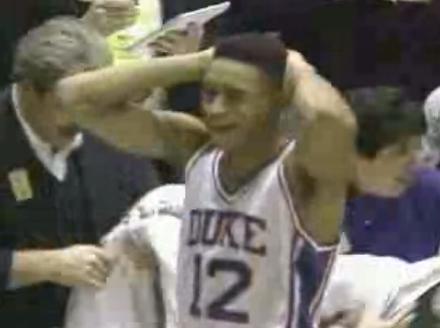
 – 40th pick: Rich Manning (
 – 41st pick: Anthony Reed (
 – 42nd pick: Adonis Jordan (
 – 43rd pick: Josh Grant (
 – 44th pick: Alex Holcombe (
 – 46th pick: Richard Petruska (
 – 48th pick: Kevin Thompson (
 – 49th pick: Mark Buford (
 – 51st pick: Spencer Dunkley (
 – 52nd pick: Mike Peplowski (
 – 53rd pick: Leonard White (
 – 54th pick: Byron Wilson (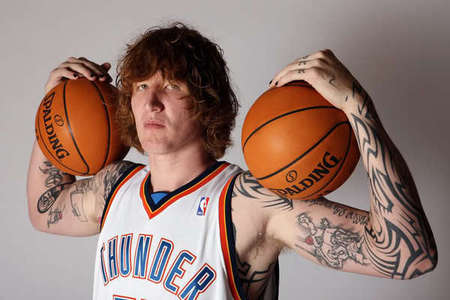
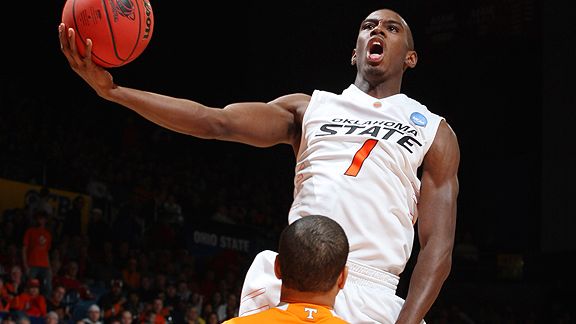


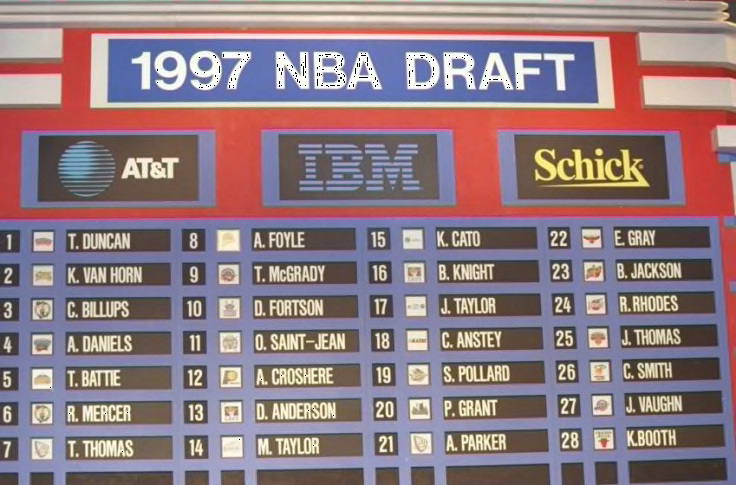
 – 50th pick:
  – 53rd pick: C.J. Bruton (
 – 56th pick:
  – 58th pick: