An established and productive forward in the EuroLeague these last couple of years – if kind of disliked by certain sections of the European audience who abhor athleticism when it comes at the expenses of pick-and-roll defence – Haislip left Unicaja Malaga this summer after two seasons to return to the NBA to play for the Spurs for the minimum salary. This represented about a 75% paycut for Haislip, yet he did it anyway, because American citizens like playing in America. It didn’t work out for him, though – in three months with the team, Haislip played all of 10 games and 44 minutes. Then in early January, Panathinaikos came in for him, looking for a short-term injury reinforcement. Haislip negotiated a buyout with San Antonio (which wasn’t difficult; “you can forget what you owe me if you let me leave”) and signed with Pana, for whom he is averaging 11.0 points and 5.0 rebounds in the Greek league.
Former Wizards forward Hall is with Armani Jeans Milano, a team based in Milano that are sponsored by Armani Jeans. He is averaging 8.5 points and 6.7 rebounds per game in Serie A, alongside 6.6 points and 5.0 rebounds per game in the EuroLeague, shooting 29% from three-point range between the two. He had a nice game-winning dunk in a EuroLeague game recently, but YouTube doesn’t seem to carry it. Or if it does, it’s in Italian.
Sonics/Thunder draft pick Halperin is a member of Olympiacos, averaging 7.4 points and 1.8 assists per game in the Greek league, alongside 7.0 points and 1.1 assists per game in the EuroLeague. His minutes have been inconsistent, as have those of all Olympiacos players, but perhaps more so than the others. Halperin didn’t play in Greek league games to begin the season, as Greek league games allow for only six non-Greeks per team per game, and Olympiacos had 7. But he soon played his way onto the team – or rather, Von Wafer played his way off it – and he’s been in the Greek league game rotation ever since.
Olympiacos later released Wafer, dropping down to six non-Greeks again, but then they picked up Scoonie Penn, putting them back at seven again. Since then, Heat draft pick Patrick Beverley has been the one to sit; he hasn’t played a Greek league game since January 3rd. He’s also only played 33 EuroLeague minutes in 2010, despite him playing well in the few that he’s had.
Former Hornets draft pick Adam Haluska barely played last year for Hapoel Jerusalem, averaging only 3.4 ppg and playing 141 minutes all season. And this year, he hasn’t played anywhere at all. In fact, he might have quit.
Hamilton is noted – by me, at least – for having a very limited professional career. Despite having two training camp contracts with the Nets in the last two years, and winning them over greatly, Hamilton’s professional basketball career has been very short and very limited. Nonetheless, he’s found ready employment this year in the D-League with the Utah Flash, for whom he is averaging 7.1 points, 3.4 rebounds and 1.2 steals per game.
Rockets draft pick Venson Hamilton’s five-year stint with Real Madrid came to an end this summer with the start of the Ettore Messina era. He barely even played last year, though, so it wasn’t an important loss to the team. Hamilton has not played elsewhere this year and is currently unsigned, although he’s reported to be training with Rincon Axarquia, a team in Spain’s LEB Gold that kind of serve as Unicaja Malaga’s reserves.
Former Clemson guard and Cavaliers camp signee Hamilton started the year in Switzerland, where he averaged 19.0 points and 2.9 assists for SAM Basket Massagno before being released in November due to injury. He later signed in Ukraine with MBC Mykolaiv and averaged a further 6.7 points per game before being released again. Between the two, he shot 60% from the foul line.
Perennial journeyman Zendon Hamilton is still going, although his best days are behind him now since he’s turning 35 next month. He signed with Al Jalaa Aleppo in December, a team in the mighty basketball powerhouse of Syria, but no statistics are available. He got injured in January and may have been released.
Former Jazz big man retired in 2006 after a season with Barcelona. He now owns and runs BBA Properties, a construction firm based in Charlotte. I first tweeted that back on November 28th, and then it curiously appeared in the Deseret News two days later. Sneaky dawgs.
Hansen left Dynamo Moscow in the summer when the team ran out of money and released all their foreigners. It didn’t hurt him, though, as he quickly moved to Real Madrid. Hansen averages 7.3 points and 2.5 points per game in the ACB, alongside 4.7 points per game in the EuroLeague, shooting a combined 40% from three-point range.
After being drafted by the Atlanta Hawks this summer, Gladyr left the Ukraine for the first time and moved to the ACB to play with Suzuki Manresa (formerly known as Ricoh Manresa). Manresa have an 11-13 record on the season, yet they’re comfortably in the middle of the table, currently placing 10th out of 18 ACB teams. Gladyr is third on the team in scoring with a 9.9 ppg average, alongside 2.1 rebounds, 3.6 fouls and no other significant statistics per game. For a purported shooter, though, he’s not shooting too well, shooting only 32% from three-point range. And given that he has attempted 135 three-pointers compared to only 35 two-pointers, that’s not ideal. It is not the best first season in Spain for Gladyr, then; that said, for a 20-year-old in the ACB, it’s pretty good. Young players don’t normally play much there.
Glover played briefly on the 2004-2005 Spurs team that won the NBA Championship, but found himself having to go to summer league that year in order to get more employment. After averaging 19/5/5 for the Rockets team, he got a contract from Houston and made the team, but was waived in December of that year without playing a game. He never played in the NBA again.
Glover split the 2006-07 season between Lebanon and the D-League, and later played for a couple of Dominican Republic teams. He last played in March 2008 with a Venezuelan team called Gaiteros de Zulia, for whom he totalled 8 points in his only appearance. As for what he’s done since then, here’s Dion telling you himself.
Also note the accuracy of his prediction there. Well, half of it.
Ex-Pistons draft pick Glyniadakis is Olympiacos’ 15th and cheapest man. Olympiacos bought him from Marousi in the summer (along with former Minnesota pick Loukas Mavrokefalidis) in order to fill their quota of Greeks, and the two now spend a lot of time on the bench together, waiting for Olympiacos to build up a lead so big that they can take out Giannis Bourousis, Sofoklis Schortsanitis, Nikola Vujcic and Linas Kleiza. Glyniadakis has played 103 minutes all season, totalling 33 points, 22 rebounds and 28 fouls. This means he must have made contact with an opposing player at least 28 times. I’m not sure I believe that.
NBA journeyman Anthony Goldwire made an unexpected appearance in the Spanish fourth division last season at the age of 37, playing for the remnants of Girona, a former ACB team who imploded due to bankruptcy a couple of years ago. He averaged 10.4 points, 2.5 rebounds and 1.6 assists at that incredibly low standard of basketball, and has since called it quits. He now assists Lifetime Fitness in establishing their basketball league program. Goldwire was also on hand to help manage the Bakersfield Jam’s open tryout back in March, which seems odd in that he appears to hold no formal position with the team.
This seems like a good moment to post a picture of Anthony Goldwire modelling an ill-fitting coat.
Gomes is an athletic Portuguese forward who was an NBA draft candidate back in 2007. He is playing with Breogan in Spain’s LEB Gold, and is averaging 11.7 points and 5.4 rebounds per game. Gomes was not drafted and is not very interesting, so let’s move on to Jamon Gordon.
Gordon was one of the replacements Marousi brought in this summer as they tooled up for their debut EuroLeague season. It was a good season at that; they were still in the competition up until yesterday, when unfortunately their already-eliminated Greek rivals Panathinaikos beat them by three points and eliminated them. Gordon had 10 points, 5 rebounds and 4 assists in the game.
On the season, Gordon leads the team in assists in both the EuroLeague and Greek leagues, a feat not insignificant considering that Marousi play a two point guard line-up with Gordon and Billy Keys. Gordon averages 10.5 points, 3.4 rebounds and 3.1 assists in the EuroLeague, alongside 8.9/3.1/4.1 in the Greek league. He has shot a combined 17/71 from three-point range.
He is known as Jamon Lucas in Greece, even having that on the back of his jersey. I do not know why this is.
The confusingly similarly-named Jamont Gordon is also in the EuroLeague, playing for Cibona Zagreb. Like Marousi, Cibona just got knocked out of the EuroLeague at the Top 16 stage; like Jamon, Jamont leads his team in assists. He averaged 13.9 points, 4.9 rebounds and 3.8 assists per game in EuroLeague play, including ranking first overall in scoring in the Last 16 group stage (20 ppg) and fifth in rebounds. Gordon also averages 13.1 points, 4.0 rebounds and 4.5 assists per game in the Adriatic League.
Jamon Gordon is the lefty out of Virginia Tech. Jamont Gordon is the lefty out of Mississippi State. They’re both big strong athletic point guards with jump shot concerns, whom both just got knocked out of the EuroLeague. It’s not in the least bit confusing.
As you probably already know, Brian Grant recently went public with his struggle against early onset Parkinson’s. That struggle continues; sadly, that struggle will always continue, because a cure does not yet exist. This article by Ken Berger describes Grant’s daily battle with the disease, what it’s cost him, and of what it’s going to cost him. I found it very upsetting and I believe you will too. God bless you, Brian Grant. He definitely owes you one.
Since leaving Oklahoma in 2006, Gray has spent four years in France. He started with Chalon, averaging 16.1 ppg, 6.1 rpg, and 1.3 bpg, before moving to Paris-Levallois for the 2007/08 season and averaging 10.4/5.0/1.3. Last year playing for Roanne, those numbers shot up to 19.5/7.3/1.1, which was enough to get him a training camp contract with the L.A. Clippers. He didn’t make the team, though, and thus went back to France to rejoin Chalon, for whom he is averaging 17.0 points, 6.0 rebounds and 0.7 blocks per game in the French league, alongside 14.4/5.9/2.0 in the EuroChallenge.
Caleb Green, one of Division I’s elusive 2000/1000 club, is still in Belgium. Last year, he averaged 15/6 for Dexia Mons-Hainaut, and this season he’s averaging 12.0 points and 5.1 rebounds per game for Oostende.
After going 9-29 from three-point range in his four-year college career – as opposed to his 812-1495 from two-point range – Green is now turning himself into a three-point shooter. He has 78 three-point attempts in 21 games this year, compared with 101 two-pointers and 88 free throws. He’s good at them, too, making 34 of those 78 for a 43.6% success rate. Reinventing himself rather well, it appears.
His teammates there include Eddie Gill and Bracey Wright, and Oostende also feature two other Americans in Matt Lojeski and former Padres closer Trevor Huffman. The rest of Oostende’s rotation features a Cameroonian (Stephane Pelle), a Slovenian (Dragisa Drobnjak), a Nigerian (Leigh Enobakhare, henceforth known as “Emo back hair”) and a Bosnian Serb (Veselin Petrovic). Other players to have left Oostende during the season include Ivan Paunic (Serbian international; moved to Aris), Vladan Vukosavljevic (another Serbian; moved to Aliaga in Turkey), and Javier Mojica (American/Puerto Rican; now playing for Bayamon in Puerto Rico). Because of those 12 foreigners, Belgian players for Oostende have played only 176 minutes all season, split between three players; Quentin Serron (166), Jean Salumu (7) and Yacine Baeri (3). That’s 176 out of a possible 4,200 minutes; therefore, only 4.19% of Oostende’s PT has been shared amongst Belgian players. For comparison’s sake, Americans have a 53.62% share.
Green made his way to his fifth consecutive NBA training camp when he signed with the Minnesota Timberwolves this summer. He did not make the team, though, as he and every other signee lost out on a spot to Jason Hart, who played all of five minutes for the Wolves and who is now out of the league. Green then moved to Greece and joined Olimpia Larissa, leading them in scoring with a 14.3 ppg average to go along with 4.1 rebounds and 2.2 assists per game. However, he left the team in January, reportedly because of a pay dispute. (Note: when American players leave Greek teams midseason, it is usually because of a pay dispute.) Green has joined the annual Puerto Rican exodus, signing with Galitos de Isabela. In his two games for the team so far, Green put up 38 points and 13 rebounds.
Green squirmed out four years in the NBA, but never came close to realising the potential that a man with his combination of athleticism and jump shooting has by default. He last played with the Mavericks; however, at the Nerdjerkfest Conference Thing last week (or whatever it was called; said with affection, by the way), Mark Cuban famously and amusingly stated that Green “just doesn’t understand the game of basketball.” Quite the burn there from a man who spent a year signing his paychecks, but after four years of experimenting, the whole NBA seems to have bought into it.
Green is now in Russia playing for Lokomotiv Kuban. He is averaging 15.6 points and 3.4 rebounds per game.
Mengke Bateer Is A Coconut Wielding Homicidal Badass
March 10th, 2010
Everyone remembers their first Mengke Bateer experience. Mine came in the 2000 Olympics. In a game against the USA in which Yao Ming beasted from three point range (true story), and in which Wang Zhizhi picked up four first half fouls, Mengke came in and hit some mid range jump shots, in that way that he does. It was kind of fun, if ultimately kind of forgettable.
Bateer went on to enjoy a few years in the NBA. He started out as a training camp signee of the Denver Nuggets in 2002, yet was waived before the season started. He thus went back to China and averaged 24.3 points and 14.2 rebounds per game for Beijing, before returning to the Nuggets in February 2002 to see out the season with them. Bateer played in 27 games for that God awful Nuggets team and even squeezed out 10 starts, averaging 5.1 points, 3.6 rebounds and 3.5 fouls in 15 minutes per game. You’ll no doubt have noticed that that’s a lot of fouls.
That offseason, Bateer – who had been signed through 2003 – was a throw-in by Denver in the trade with Detroit that saw him, Don Reid and a first-round pick swapped for Rodney White. That pick was later traded to Atlanta (who used it on Josh Smith) as the centrepiece of the Rasheed Wallace deal; in a way, therefore, Mengke Bateer was an integral part of building the 2003-04 NBA champion Detroit Pistons. An underrated bad Kiki Vanderweghe trade, that one. (It was perhaps overshadowed by the fact that it came in the same offseason as the drafting of Nikoloz Tskitishvili, a move you may have heard about.)
Nevertheless, despite how much Bateer had brought to the franchise, Detroit moved him on without him playing a game for them. He was traded to San Antonio just after camp opened in exchange for a 2003 second-round draft pick, one which the Pistons then used on Andreas Glyniadakis. Bateer spent the whole year with the Spurs, but played only 46 minutes in 12 games, racking up another 14 fouls in that time and posting a PER of -8.4. His most significant contribution to that season was coming in and shooting two free throws in a game as an injury replacement, selected by whoever the opposing team was, presumably after they took one look at him and assumed he was terrible at foul shots (which he isn’t; far from it, in fact). Bateer obliged them and missed them both. They were his only foul shots all season.
Despite it all, Bateer won an NBA championship ring that season, the first Chinese player to ever do so. The only other one to have done has been Sun Yue. It’s hard to say who was more important to their teams respective titles, but the stats give the edge to Mengke; his -8.4 PER for the Spurs in 2003 practically destroys Yue’s -8.6 PER for the Lakers in 2009. Represent.
The Spurs let Bateer go that offseason, even though he’d helped them win a title. At that point came Toronto, who signed him to a two year minimum salary contract, clearly identifying a player who had now been an integral part of two NBA championship teams (even though this was still 2003 and one of them hadn’t happened yet). But Mengke played in only 7 games for the Raptors – totalling 40 minutes and 7 fouls – before being moved on again when he was traded to Orlando for Robert Archibald. Toronto also gave up the rights to Remon Van De Hare in that deal, as well as the right to swap 2005 second-round picks, a right which was exercised when Orlando moved up from 41st (Roko Ukic) to 38th (Travis Diener). You have to love deals like that, and not just because it has a hairy chested Scotsman in it.
Orlando waived Bateer almost immediately after trading for him, and he never played in the NBA again. Bateer saw out that season in the D-League, went to training camp in 2004 with the Knicks and in 2005 with the Cavaliers, but he never again saw an NBA court. This is mainly because he never got any faster, and thus never stopped fouling. His NBA career ended with totals of 46 games, 494 minutes, 156 points, 114 rebounds and 118 fouls; for per-36 fans, that’s 11.4/8.3/8.6. Almost a triple double. Except with fouls.
Bateer has been been back in China ever since, averaging 13.8 points, 9.6 rebounds, 3.9 assists and 3.0 fouls this season for Xinjiang. Recent posts on this website about Mengke Bateer have featured this picture of him;
That is Bateer dressed as a bloody enormous monk, not because of some fetish of his, but because of his side career as an actor. And that’s another true story.
In addition to continuing his basketball career, Bateer has also begun a move towards whatever the Hong Kong equivalent of Hollywood is called. He first appeared in a film called “The Blue Xanadu” back in 2005, and the above monk photo comes from a film called “Bodyguards And Assassins.”
Body & Ass is reputedly one of the most eagerly anticipated and expensive films to come out of Hong Kong cinema in a generation, with a hype fuelled in no small part by repeated delays in its release. The trailer certainly makes it look slick, and better still, Bateer’s part is no small cameo. In the film, he plays an outcast monk (obviously), going by the slightly awesome name of Wang Fuming, who moonlights as a tofu vendor. There are not enough films these days written about 6’11 monk salesmen, but Bateer pulls the part off with remarkable aplomb, as you can see in this clip where he kills dudes with coconuts and proves to be nigh-on impossible to kill.
(video removed by uploader)
Apparently being stabbed 150 times by a swarth of hate-driven stampeding hitmen armed with stabby things is not a certain death in this alternate reality. Not compared to, say, a coconut in the face. Nevertheless, despite the artistic license taken with the realism in the action scenes, the film does look kind of awesome. And any help as to what the caption above Bateer’s strewn corpse says would be most welcome.
Bateer is set to appear in another film, Arrival of Fortune God, which has finished filming and which is due to be released later this year. A quick Google reveals no English language information about the film, or about Mengke’s role within it, but it does reveal this picture;
The Chinese Basketball Association and its compelling protagonists have a particular level of focus on this website, for the simple reason that they’re awesome. Any league that saw Olumide Oyedeji average nearly 20/20 can peak the interest of any of us.
Fringe NBA players like playing in China; the exposure isn’t huge and the standard isn’t great, but the CBA pays very well, and it is unashamed in copying the NBA model of basketball not much imitated around the globe. They’ve changed their style to match up to the NBA game; games are 48 minutes long (like the NBA, and unlike basically every other league in the world), and there’s about three of them a week (unlike most other domestic leagues, which have one). This playing of lots of games with less emphasis on practice is a lure to players; after all, as that great philosopher of our time Nate Dogg once said, “playas play on, play on, keep playing on.” Words to live by.
Furthermore, aside from the imports, the standard of play is kind of weak, which leads to amusingly lopsided statistics that they could put on their CV. For example, Tim Pickett will now always be able to boast that he was a 39.4 ppg scorer at one point in his career, something which paid dividends when he received a workout with the Memphis Grizzlies back in May. It’s nice to know they’re checking out China. So do I.
Each CBA team is allowed to play two import players at any one time. “Import players” are defined as anyone that isn’t Chinese, or otherwise Asian. In practice, however, these players are almost always American. Better still, these players are also almost always players that you’ve heard of. And that makes it even more fun.
There follows a selection of Chinese Basketball Association statistics. Said selection includes all import players statistics, the stats of the Chinese players you may have heard of, and some of the Chinese players that none of us have heard of who are doing OK. Teams listed in order of their current standings, i.e. from first to worst.
Harrison is averaging a number of minutes that is tiny in comparison to those of everyone else, mainly because he can’t stay out of foul trouble. Foul problems were the downfall of his NBA career, as was his lack of development over a four-year period, and a love of pot; despite the feel-good tone of this piece about his rebuilding of his career, Harrison is not having a particularly good season this year, with numbers down across the board. His strength is a mismatch in a good way, but his slow feet are a mismatch in a bad way.
NBA journeyman Parker has flirted with a triple-double on several occasions this year, including a 21p/12a/9r outing on February 7th and an 18p/9/a/12r outing on January 22nd, but hasn’t made one yet. He is third in the league in steals per game, but strangely WAY behind the first two (more on this later), and he’s shot more three-pointers than twos. Which, considering the 34% success rate, has not really worked out for him.
Nevertheless, despite these two relatively underwhelming import players, Guangdong top the league with a 26-2 record. They’re doing this because they have far more support from the domestic players than most other teams, with four double-digit Chinese scorers on their books; Du Feng (11.2 ppg, 4.3 rpg), Zhou Peng (12.5 ppg, 3.5 rpg), Zhu Fangyu (16.1 ppg, 3.9 rpg) and Wang Shipeng (16.2 ppg, 4.2 rpg). Zhou Peng is only 20 years old and one for the future; the other three are established Chinese national team members. As CBA teams go, Guangdong are pretty stacked, which counterbalances – and partly explains – the slightly sub-par performances of the two imports. (It’s all relative, of course, for those are still big numbers. But as you’ll see when we get further down this list, yes, the stat lines for those two are rather underwhelming.)
2nd: Xinjiang Flying Tigers
– Charles Gaines: 39.0mpg, 30.7ppg, 11.0rpg, 1.5apg, 2.9fpg, 2.1 spg, 1.0bpg, 64% FG, 25% 3PT (1-4) 73% FT
Xinjiang are second in the league with a 24-4 record, and knocked off the first place Guangdong only yesterday. They’re doing this largely because of Gaines, whose 30.7 ppg average ranks second in the league. (His rebounds per game, which would lead any other significant non-NBA league in the world, rank only tenth in China. God bless this league.) Gaines has only scored less than 20 twice in 28 games, has three 40+ point outings (including 41 in the win over Guangdong) and has 19 double doubles. And while I’m no mathematician, I do believe that’s a true shooting percentage of .664%. Handy.
Allen is playing his second season in China after an underwhelming CV before then. He is a 30-year-old 5’11 scoring guard who played only 8 games of Division I basketball with North Dakota, a fairly small school (for basketball at least) that play in the Great West Conference, a conference which contains schools from literally all over despite the name. He was suspended due to a dispute about his eligibility; before attending North Dakota in 2003, Allen had played at community college and junior college, and appeared in an IBA game, thereby invalidating his eligibility. Between 2003 and 2008, Allen played in the USBL, ABA, WBA, Mexico and Israel, and averaged 10.6 ppg in the 2005-06 D-League season for the Arkansas Rimrockers. There’s not a huge amount of pedigree there, but then last year out of nowhere, he averaged 22/6/7 for Xinjiang. Strange times. Allen is shooting 59% from two-point range and only 34% from three point-range, yet takes almost as many threes as twos. Such is the life of a 5’11 guard.
Ex-NBA journeyman Bateer has only played in three places in his life; the NBA, the NBDL and China. Since flumping out of the NBDL in 2005, Bateer has been back in China, which far more suits his really really really slow foot speed. Despite being 6’11 and 300lbs, Bateer’s 3.9 apg rank 14th in the league, a league in which only two players average more than 5.4 apg. (Allen’s 4.7 apg rank tied for fifth.) He was covered in more depth here. And yes, the picture above is of him starring as a bloody enormous monk. Check previous link for details.
Former Nuggets draft pick Xue was picked 57th overall seven years ago and simply never worked out. He is a seven-foot jump shooter who does little else, and who is the worst rebounding seven-footer you ever did see, as evidenced by those stats. His season totals include 376 minutes, 37 two-pointers, 96 three-pointers, 15 foul shots, 32 rebounds, 8 assists, 43 fouls and three blocks, numbers about as one-dimensional as there can be. But the best part of Xue’s season has been his inconsistency. On nights when he’s shooting well, he plays the majority of the game; on nights when he isn’t, he plays single figure minutes. It’s a clear-cut coaching strategy, if nothing else. Xue’s points output from game to game reads 3, 28, 0, 32, 9, 16, 26, 0, 5, 0, 7, 6, 9, 0, 0, 3, 7, 4, 13, 0, 1, 3, 5, 2 and 0, with three DNP-CD’s in there. And yet somehow, despite three DNP-CD’s and ten games featuring single-digit minutes, Xue is sixth on the team in minutes played. It does not get more inconsistent than that.
(Denver retains Xue’s draft rights, but only as a mere technicality.)
Xinjiang’s only other contributor is Xu GuoChong (13.0ppg, 3.0rpg), a 6’6 28-year-old shooting specialist. You will soon see that the lack of domestic support teams have becomes a trend.
3rd: Zhejiang Guangsha Lions
– Peter John Ramos: 28.8mpg, 16.5ppg, 12.9rpg, 1.4apg, 3.9fpg, 0.3spg, 1.2bpg, 69% FG, 0% 3PT, 66% FT
The Lions are, clearly, heavily dependent on their imports for rebounding. The next highest rebounders on the team are starting power forward Bo Wang (10.5 ppg, 4.4 rpg), then Taiwanese starting shooting guard Chih-Chieh Lin (11.8ppg, 4.2 rpg, 3.1apg), and a couple more guys off the bench who grab as-near-as-is 4 rpg. But that’s pretty much it; the Lions (so termed here so as to not to confuse them with the other Zhejiang team) play basically a seven-man rotation, and the two imports average more rebounds together than the other five guys combined. This hasn’t stopped them from compiling a 23-5 record, though, and Ramos’s rebounding ranks third in the league. It’s particularly impressive considering it comes in only 29 mpg.
(Note; Ramos has already committed to signing back in his native Puerto Rico for their league, which takes place in the summer and which started yesterday. However, he won’t join until his CBA commitments are over.)
White, one of the players with the shortest careers to ever record a triple-double in NBA history, has not recorded one yet in the CBA this season, despite getting close a number of times. He does however have 12 double-doubles in 28 games, and has a season low scoring output of 19, achieved only once. His PPG total ranks tied for fourth in the league, and his APG rank 12th.
As far as I know, Rodney has not vomited on the court at any point this year.
4th: Shanghai Dongfang Sharks
– John Lucas: 40.5mpg, 26.9ppg, 4.0rpg, 4.6apg, 1.3fpg, 1.4spg, 0.0bpg, 48% FG, 45% 3PT, 87% FT
Lucas’s points per game average ranks seventh in the CBA, as does his assist per game average. A somewhat late addition to the team, he has nevertheless stepped right in and found it easy to star in his first-ever CBA season. He’s been remarkably consistent, peaking with a couple of back-to-back 40+ point performances in late February, and his three-point shot is there as ever. He’s no longer being paid by the Rockets, although Shanghai’s owner is Yao Ming, so he’s still being paid by a Rocket.
The picture above is of a punch-up he got involved in during preseason.
Siler’s first professional season out of Division II Augusta State hasn’t started brilliantly. His per-minute numbers are obviously substantial, and the field goal shooting as ridiculously freaking efficient as ever, but unfortunately Siler can’t stay on the court. After putting up 13 points, 14 rebounds, 7 blocks and 6 fouls on 32 minutes on debut, Siler’s PT since then has been inconsistent due to his foul problems. Only three times has he played more than 30 minutes per game, and he once fouled out in only 10. His last game featured a 31-point, 12-rebound, 1-foul 28-minute performance in a win over Shanxi, so he can perform Tim Westwood-style big things when given the opportunity. But to be given the opportunity, he has to stop fouling. It’s a solid start, though.
Siler’s struggles actually work to Lucas’s advantage. The rule in the CBA this year is that a team’s imports can only played 72 minutes a game between them, excluding overtimes; therefore, Lucas and Siler play big minutes on the same team, yet they do not play them all together. So when Siler has to sit with foul trouble, Lucas gets to play more. The same is true of all pairings on this list, and it’s why there’s very few 35 mpg+ players on here this year. It’s all a part of improving the domestic Chinese product, as opposed to past years, where the two imports would dominate the ball and the game, being as selfish as they chose to be. It’s not been especially successful as a rule, but I suppose it can’t have hurt.
A Dongfang is a great name for a shark, by the way. Got the two most important body parts all sorted.
Jiangsu started the year with Johnson, who played in their first ten games before being replaced by Harvey for the next 18. Johnson was remarkably inconsistent; after a 43-point debut and a 29-point 13-rebound second game, he totalled only 40 points over the next three games, recovered a bit, then had a 5-point outing in his penultimate game before leaving the team. He is now signed in Puerto Rico. His replacement Harvey has been incredibly consistent and highly productive, tied for fourth in the league in rebounds per game and only just placing outside the top 10 in points as well. Harvey has 14 double-doubles in his 18 games, and while his numbers are down on the 30/15 he averaged for Jiangsu last year, they’re still pretty damn good.
(The above video is of Johnson rapping under the name “Boss Slim,” in a song whose lyrics seem designed to convey the fundamental principles of driving. Changing lanes? All good information.)
Watkins has been with the team all year, and has spent much of his 10-year professional career in Asia, so this is nothing new to him. His numbers are solid if unspectacular, although he did miss some time due to injury. Watkins, who first started at Georgetown way back in 1995, turns 33 this summer. But the Asian basketball market tends to stay open for longer than many others, so this need not be his swansong.
This would be Buddy Holly’s favourite CBA team, I’m pretty sure.
– Li Xiaoxu: 28.5mpg, 15.5ppg, 9.2rpg, 1.1apg, 3.7fpg, 0.9spg, 1.8bpg, 59% FG, 0% 3PT, 64% FT
As mentioned in my unnecessary intro, Oyedeji averaged as-near-as-is 20/20 last year; specifically, he averaged 20.3 ppg, 19.8 rpg, 2.9 apg, 2.1 spg and 1.8 bpg. He then went to Puerto Rico in the summer where those averages dropped to 8/9. Puerto Rico has a CBA kind of thing going on whereby it attracts a whole host of fringe NBA talents, but it’s a league that runs in the summertime, so players go there for some extra offseason cash as well. Nonetheless, regardless of the similarities, that steep decline in his numbers is evidence of quite how not very good the standard of the CBA is. Particularly last year. (A breakdown of last year in Puerto Rico can be found here; one of those for this year is forthcoming.)
Brandon Robinson has had a weird year. His performance has been inconsistent, and he had a very meh start to the season (averaging 10/4 through December), but while Liaoning have spent the whole year trying to replace him, they haven’t done so yet. The Hunters brought in Sean Banks for a trial in January, but he was still recovering from injury, which gave Brandon a stay of execution. And although Liaoning this past week bought Carlos Powell out of his D-League contract and signed him, Robinson is still there, playing as recently as today (recording 22 points and 4 rebounds). Powell is due to start playing next week, so seemingly Robinson’s time is coming to a close, but it’s been an interesting story of willpower. (Robinson played for Shaanxi last year and averaged 25/10/3/3; like O-Oy before him, he’s another example of the CBA’s improvements this year. Slight improvements.)
Zhang is the second-highest scoring Chinese player in China. He’s a 28-year-old jump shooting specialist (more threes than twos, just) who has spent his whole career with Liaoning. This is his best season to date, for not only is he scoring big, he’s also 11th in the league in assists per game. Nonetheless, despite the numbers, 28-year-old 6’3 shooters are not usually NBA relevant.
But one Liaoning player who might get some NBA looks is Li Xiaoxu. Despite previously appearing as a 4’2 inch schoolgirl in the seminal Tekken series of computer games, Li is now a 6’10 big man already producing some damn fine numbers. He’s listed as 19-years-old and has (as far as I can tell) no controversy surrounding his birthdate, so his production for quite such a young age is noteworthy. His height, also, is not ideal but sufficient to garner some attention. 19-year-old 6’10 producers in any semi-respectable league have to be evaluated – after all, Xue Yuyang was drafted once. And Li’s done far more already than he ever did. Then again, Xue was seven-foot tall. And Li isn’t. That’ll factor. Still, it’s nice to see some new Chinese blood, for there’s not been a great amount of that in the last couple of years.
(By the way, Sun Yue is not in the CBA. Instead, he’s back with the Beijing Olympians, the ABA team he was with before he was drafted. They’ve moved to join the WCBL, which is a spring time league, and have been playing in a series of exhibitions before the WCBL’s season begins. From the NBA Champion Lakers to the WCBL. It does not often happen this way.)
7th: Fujian SBS XunXin
– Chris Porter: 32.3mpg, 19.4ppg, 10.3rpg, 2.2apg, 3.5fpg, 2.2spg, 0.3bpg, 54% FG, 32% 3PT, 73% FT
This is Porter’s fifth season with Fujian. He’d probably be eligible for a Chinese passport if the Chinese government recognised the viability, legality and sense of dual citizenship. Porter averaged 25/12 two years and 26/13 last year, so his numbers are slightly down, but for an American import to have spent five consecutive years with any one team is extremely rare. And for a CBA team, I think it’s pioneering.
Fujian’s other import to begin the season was Jelani McCoy, but he left/was released after 19 games for reasons I am not sure of. Maybe it was the free throw shooting. Sean Williams has played in the ten games since McCoy’s departure, and with 4.8 blocks per game, it’s not a surprise that he leads the CBA in blocks. Williams is the same player he ever was; athletic, foul prone, tremendous shot-blocker with no significant offence. He hasn’t developed in his time in the NBA, which is why he’s not in it any more. Nevertheless, in China, he’ll get a lot of PT in addition to his big pay checks. So maybe that will help kick start his development.
Unusually, Fujian’s leading scorer isn’t an import, but instead is 28-year-old 6’5 Chinese swingman SongLin Gong. Gong is a former Chinese national team member, and – spoiler alert – he’s one of only two Chinese players to lead their CBA team in scoring. The other guy has a pretty good excuse, as we’ll see later.
8th: Shandong Flaming Bulls
– Andre Emmett: 33.4mpg, 31.0ppg, 7.6rpg, 3.5apg, 1.3fpg, 2.5spg, 0.3bpg, 53% FG, 39% 3PT, 78% FT
Emmett was covered earlier this year, his numbers dropping only slightly since his gaudy start. His 31 ppg average is tops in the whole CBA, and would be better still if it weren’t for an anomalous 4-point 2-rebound outing on 13th February. In more urgent news, however, a Google image search for his name reveals the fifth most popular result to be a picture of Shania Twain in a Lakers’ jersey. That needs work.
Swift’s first non-NBA gig of his professional career started kind of slowly, and a combined 19 points and 10 rebounds in the last two games hasn’t helped either. Yet immediately proceeding those two games came a six game stretch in which Swift averaged 32.5 points and 15.8 rebounds per game. His 12.1 rebounds per game ranks sixth in the CBA, and the 3.0 bpg ranks third; when he’s good, he’s very good. And so are those numbers.
9th: Zhejiang Wanma Cyclones
– Marcus E. Williams: 34.0mpg, 25.5ppg, 8.1rpg, 4.0apg, 2.1fpg, 2.0spg, 0.5bpg, 48% FG, 48% 3PT, 85% FT
– Andre Brown: 35.6mpg, 20.1ppg, 11.7rpg, 1.0apg, 3.2fpg, 1.8spg, 0.4bpg, 58% FG, 16% 3PT, 55% FT
The Cyclones are almost completely reliant on their two imports; their only other significant contributor is 19-year-old 6’9 big man Ding Jinhui, who, in addition to being the two-time UK Snooker Champion, also averages 12.7 points and 6.3 rebounds. No one else contributes much, save for some decent jump-shooting.
Yet there’s nothing wrong with depending on those two, for they appear to be more than equal to it. Those numbers are huge. Williams, a man with NBA talent who should really be in it right now, is putting up huge numbers across the board; his points per game are 11th in the league, his assists 13th, his rebounds extremely high for a wing player, his three-point shooting dialled in. Brown too is a nightly double-double candidate, with 16 of them in 26 games, and with a 24-rebound game to his name. Zhejiang might only be in eighth place, but without these two, they’d be last. Very last.
NOTE: Previous writings about Andre Brown, including this one, have spoken glowingly of the huge transformations he had seemed to make in his game over this year. They spoke at length about the player he had been compared to the player he was, and how impossible this turnaround was in such a short space of time. However, what I hadn’t realised at the time was that those numbers were not those of Andre Brown, but of Marcus Williams. I had the pair’s statistics the wrong way around. Sorry about that.
The lesson, as always; learn to speak Mandarin. As Stephon Marbury once said, it’s going to be THE language.
10th: Bayi Fubang
– Wang Zhizhi: 39.6mpg, 25.6ppg, 10.1rpg, 1.6apg, 1.8fpg, 1.3spg, 2.1bpg, 46% FG, 39% 3PT, 76% FT
Bayi don’t have any imports. They didn’t have any last year either, and they never will, for this is the team owned, operated and staffed by the Chinese Army. But they do have former NBA player Wang Zhizhi, the best Chinese player in China, and quite possibly the second-best Chinese player in the world. Make Yao play on his broken foot, and Wang might even be first, depending on your opinion of Yi. Wang is the only domestic player to rank in the top 10 in scoring, and one of only two to rank in the top 10 in blocks; the other is his teammate, Xu Zhonghao, a 19-year-old 7’0 centre averaging 9.8 points, 7.2 rebounds, 3.9 fouls and 2.2 blocks per game. Instantly, along with Li Xiaoxu above, he’s one of the best Chinese big man prospects alive.
11th: DongGuan New Century Leopards
– Tre Kelley: 29.8mpg, 24.2ppg, 2.8rpg, 4.3apg, 1.5fpg, 1.6spg, 0.1bpg, 53% FG, 35% 3PT, 82% FT
Unusually, DongGuan (not to be confused with Guangdong) have spent half of this season playing with only one import. They started the season with Johnson and Tate, but Johnson played in only one game before leaving (subsequently joining the D-League), and Cedric Simmons didn’t arrive until 16 games later. Tate left after 16 to be replaced by Kelley, and the Simmons and Kelley duo is what Dongguan have now.
Simmons started the year with Peristeri in Greece, but was released in preseason. He then came back to America and the D-League, but played in only 13 games for the Idaho Stampede (14.8 ppg, 7.1 rpg, 3.6 fpg, 2.9 bpg) before getting the call-up to China. Doesn’t matter what league he plays in, though; he’s not a good rebounder. One defensive rebounder every seven minutes in China? That’ll have to go up.
Kelley may have joined late, but it didn’t take him long to get started, putting up 31/9 on debut. He has 387 points in only 477 minutes, living the Lee Nailon dream, and even though his highest scoring output of the season (53) was followed immediately by his lowest (3), Kelley’s point production has been all there.
Tate, whom Kelley replaced, is another junior college player who had achieved nothing of any great note until he went to China in 2003. Tate played for two junior colleges, then went to the NAIA, and then began his professional career in the ABA. After scoring 13 ppg in his one season there, that was somehow parlayed into a trip to China, where he has spent the last three years. Scoring 26 ppg in his first season there, Tate (a 6’5 swingman) got a tryout with the Nuggets, and then returned to China to average 23/7 last year. However, after a highly inconsistent start this year (point totals of 34, 23, 6, 14, 8, 35, 9, 4, 24, 0, 14 and 2), Tate was replaced by Kelley.
Kai is one of the best Chinese players alive, and signed a training camp contract with the Kings in 2008. That may seem unlikely, and it was definitely forgettable, but it really happened.
12th: Jilin Northeast Tigers
– Leon Rodgers: 36.6mpg, 27.9ppg, 8.4rpg, 3.8apg, 3.8fpg, 1.4spg, 0.3bpg, 49% FG, 35% 3PT, 77% FT
Rodgers was one of the most incredibly prolific scorers in the CBA last year; indeed, he’s been an incredibly prolific scorer in his whole professional career. Rodgers have never played in a higher-standard league, which helps that prolificness, yet his 35 ppg average last year was enough to get a workout (and later a training camp contract) from the Memphis Grizzlies. And as you can see in the numbers above, he’s clearly at it again. (As mentioned in the intro, he wasn’t the only CBA player last year to get one. Good to see NBA teams paying attention to China. Gotta love the CBA.)
Carr was the guard to Ahmad Nivins’s centre at Saint Joseph’s last year, where he averaged 14/5/4 as a fifth-year senior. He started this season with Ironi Nahariya in Israel and averaged 7.2 points, 3.1 rebounds and 2.0 assists per game before being released and replaced by Lamarr Greer. His 4.3 assists per game rank tied for ninth in the league.
Collins was brought in to replace Rodgers when Leon missed a month due to injury. And as one-month replacements go, you can’t do much better. His 15.4 rebounds per game leads the CBA, and his 2.8 blocks per game rank fourth. Collins never attended college, declaring for the draft out of Inglewood High School back in 2002, but going undrafted due to his rawness, lack of offensive talent, and chequered off-court life that featured a six-month stay in juvenile hall for felonious assault (amongst dozens of other incidents). He’s had some NBA looks over the years, most notably of which were from the Raptors, who signed him in 2002, but none amounted to anything. Most of his professional career has been spent doing the Dan Langhi Tour (i.e. around Asia and Central America), although there was a brief D-League stint in there as well. When Rodgers returned from injury a fortnight ago, Collins moved on and signed with Puerto Rican team, Leones de Ponce.
Samake started the season as the second import alongside Rodgers, but was replaced by Carr after only six games. He had averaged 18/13 with Jilin last season, and had also spent the previous four years in China with the Zhejiang Cyclones. He has since moved to Montenegro to play for Mornar Basket, which is about as different to China as you can get. As the numbers suggest, he’s the same old Soumalia Samake that he ever was. Although the free throw stroke has come on over the years.
Lamizana is an athletic former Rutgers forward, a search for whose name reveals this website as the third result. (Hi Herve.) He left Rutgers in 2004 after averaging 13/8/3 blocks, and used his French passport (he is Malian) to spend a season split between Turkey and Israel. He was then signed by the Sixers for training camp in 2005, but did not make the team, and then split the next three years between Israel, South Korea and China. Last year was split between the United Arab Emirates and Egypt, basketball powerhouses not usually covered on this website for reasons that are hopefully obvious. (I did provide a Twitter accompaniment to a rerun of a Senegal vs Egypt game from the FIBA 2007 African Championships yesterday morning, but it was a one-off.) Now back in China, Lamizana is dominating the stat lines; his points per game rank eighth in the league, his rebounds not far behind, his points per minute simply amazing, and his blocked shots rank second only to DeAngelo Collins who’s not here any more. Lamizana also put up one of the best stat lines you’ll ever see; on February 10th against Fujian, Lamizana played 49 minutes and recorded 38 points, 19 rebounds, 13 blocks, 6 assists and 3 steals. It’s not the best CBA stat line of the season – we’ll get to that later – but it’s sure as hell a beautiful one. That’s a man’s way to get a triple-double, that one.
Crump is a former Tennessee graduate doing his own version of the Langhi tour, having been in either China, Kuwait or South Korea since graduating in 2005. He wasn’t a very good rebounder in college, but, as is perhaps obvious by this time, it’s relatively easy to be a good rebounder in China. Crump also appears to have completely lost his free throw stroke, although the 51% above represents an improvement on last year’s 42%.
Nonetheless, despite the help of those two and Lebanese guard Rony Fahed (14.3ppg, 4.4 apg (8th in league), 4.1rpg), Tianjian rank a lame 12th in the league, because they have absolutely no depth. As for why Lebanese players do not count as imports, I’m not sure.
It is Rony Fahed in the picture, by the way.
14th: Shanxi Zhongyu
– Maurice Taylor: 30.2mpg, 19.0ppg, 6.8rpg, 1.7apg, 3.5fpg, 0.8spg, 0.6bpg, 51% FG, 41% 3PT, 66% FT
– Lee Benson: 26.2mpg, 16.0ppg, 10.4rpg, 1.4apg, 1.6fpg, 1.2spg, 0.8bpg, 39% FG, 7% 3PT, 45% FT (may have left)
As you can tell from the sheer number of them, Shanxi have had a lot of trouble with their imports this year. They tried out about ten in the offseason, eventually settling upon three; Smith, Taylor and Michael Sweetney. The team had wanted to bring back Lee Benson, who was a star for them last year, but they refused to yield to his contract demands. Taylor has been with the team the whole season, but the rest has been a juggling act. Even though he played well, Smith was replaced after seven games by Adeleke, who got injured in his second game and was replaced for a short time by Benson, seemingly having yielded some on his contract demands. Benson was then replaced after five games by Marbury, which you probably already knew. (Sweetney never played a game for them, by the way.)
While all this was going on, Shanxi kept on losing. At the time of Marbury’s first game, Shanxi were 4-13 and in last place in the CBA. They then lost the first three games he played in, falling to 4-16. Since then, however, they’ve won five of their last nine. And Marbury has been why.
I had my doubts about whether Marbury would be any good in the CBA, about whether he had anything left to give. But those doubts were misplaced, very misplaced. Marbury is the best player in China. His first couple of games were somewhat sedate as he blew off the rust, but since then he’s been on a tear, averaging 25.0 ppg, 9.5 apg and 6.5 rpg over his last ten games. He even flirted with a quadruple-double at one point, totalling 26 points, 12 rebounds, 13 assists and 7 steals in a win over Liaoning last month. Marbury’s 9.8 apg leads the entire CBA, and it’s not even close; second place is Fujian’s Lu Xiaoming with 7.0 per game, and Smush Parker is third with his 5.4. Only one other player has more than 5. Marbury’s steals per game are also fourth in the league, and his scoring and rebounding totals are self-evidently huge.
Asked to be a role player in Boston last year, Marbury was bad at it. He was worse offensively than Brian Scalabrine, and when the two played together (as Doc Rivers seemed to like doing), it was game over. However, given a chance to be Starbury again, Stephon is shining. He’s had to drop down several rungs of the basketball ladder to do it, but it’s worked.
By the way, Shanxi are coached by former Sonics head coach Bob Weiss. Just some trivia there. Oh and even though he’s not been rebounding, Maurice Taylor went 10-16 from three-point range in Shanxi’s last game. That’s the same Maurice Taylor as before, the one who hit five three-pointers in his whole NBA career.
– James Mays: 33.1mpg, 26.0ppg, 13.2rpg, 1.9apg, 4.1fpg, 2.1spg, 0.8bpg, 54% FG, 44% 3PT, 52% FT (left)
– Ernest Brown: 34.3mpg, 21.7ppg, 8.3rpg, 3.6apg, 2.4fpg, 2.4spg, 1.6bpg, 49% FG, 27% 3PT, 67% FT
– Sun Ming Ming: 8.3mpg, 1.3ppg, 1.8rpg, 0.1apg, 1.1fpg, 0.0spg, 0.2bpg, 54% FG, 0% 3PT, 50% FT
Mays started brilliantly, as you can see, but then left for undisclosed reasons and is currently unsigned. Bozeman has already been covered, and so in the interests of time, I won’t do it again. Also covered was Melvin Ely; he’s not listed above, for he has not played a game for the Ducks, yet he almost did, and he may have done kind of maybe once sort of.
Ex-NBA player Brown definitely has played, though, and is averaging almost 20/10. He started this season in Bulgaria with Lukoil Akademik, for whom he averaged 12.5 points and 8.0 rebounds in 11 games before leaving for China. Since being drafted by the Heat in the second round of the 2000 draft, Brown’s professional career has read as follows; ABA, IBL, ABA, Globetrotters, Miami Heat, D-League, San Antonio Spurs, China, D-League, Boston Celtics, Greece, China, D-League, Puerto Rico, Turkey, Israel, Poland, China, Puerto Rico, China, Greece, Philippines, Mexico, Cyprus, Bulgaria, and now China again. Note to fringe NBA players everywhere; if you really want a ten-year professional basketball career, it’s not going to come easy.
7’9 Sun Ming Ming still can’t play. He never will be able to play. He’s one of those incredibly rare players that is just too tall for basketball.
16th: Qingdao Double Star
– Chris Williams: 36.4mpg, 25.1ppg, 9.8rpg, 3.7apg, 2.8fpg, 4.1spg, 0.9bpg, 54% FG, 33% 3PT, 65% FT
– Frans Steyn: 30.9mpg, 15.1ppg, 10.2rpg, 0.3apg, 4.5fpg, 1.2spg, 2.2bpg, 64% FG, 0% 3PT, 37% FT (left)
Okosa is a 29-year-old Nigerian forward who played two years at VCU and one at LaSalle, whose professional career thus far has been mainly in Asia. He’s also played in the USBL, Germany and Argentina, and perhaps his best credential is his real first name, Chukwunike. Chukwunike Okosa. I like it.
Williams is an ex-Virginia forward who has been on the Langhi for several years. This is his second year for Qingdao, and his totally insanely good numbers this year are almost as good as last year’s. Williams leads the team in all categories except rebounds (second to Okosa) and three point shooting (second to Anan Zhao’s 35.7%). This all comes as a 6’7 forward, and his 4.1 steals per game leads the CBA; the only played within 1.3 steals of it is Hu Xuefeng of Jiangsu (3.9).
More importantly, while others such as Marbury and Lamizana threatened quadruple-doubles this year, Williams actually did it. In only his second game of the year, on Christmas Day, Williams had 15 points, 11 rebounds, 11 assists and 11 steals in a win over Dongguan. He took 21 shots and four free throws for his 15 points, but that’s not what’s important.
Williams and Okosa (who replaced Steyn after 13 games; Steyn is now in Puerto Rico) are basically a two-man band for Qingdao. Only one other player averages more than 2.4 rpg (Chen Kai, 4.2), there is no strong guard play, and no one can shoot. They are completely reliant upon the duo, and Williams especially. And while Williams is often coming through for them, it’s not enough.
– Tim Pickett: 35.8mpg, 28.5ppg, 6.3rpg, 4.3apg, 2.5fpg, 2.5spg, 0.6bpg, 64% FG, 68% 3PT, 87% FT (left)
Both Edwards and Pickett are former NBA draft picks; Edwards was the last pick in 2002 by Sacramento, and Pickett was picked one place after Trevor Ariza by the Pistons (44th) in 2004. Edwards was third in the league in scoring with his 29.5 ppg average, but he left the team in late January after breaking his finger and returned to America.
As mentioned in the intro, Pickett scored 39.4 ppg in China last year; while he’s been 11 points per game below it this year, it’s not through lack of efficiency. Pickett’s ridiculously high percentages are no fluke; that 68% three-point shooting percentage comes on 120 attempts (81 makes). He did more than score; his APG totalled tied for tenth in the league, and his SPG came fifth. But it’s the scoring (also fifth) that was the obvious highlight, and the three-point percentage is especially ridiculous.
However, like Edwards, Pickett is also no longer playing for Shaanxi (putting up 40 points, 15 rebounds, 7 assists and 6 steals in his last game). And it’s been open season without him. They are adrift at the bottom of the table with a 4-25 record, and they lost their last game by 56 points. With no imports remaining, Shaanxi are left with having to rely on their domestic talent, and the fact that they compiled only a 4-25 record while at one stage boasting both the third and fifth leading scorers in the league is a testament to the fact that they don’t have much of it. They can no longer rely on Pickett to try to win games single-handedly, and without him they can’t compete. Precisely because of that, they serve as a case study for why the value of these imports should not be underestimated.
Players who tried out for places in the CBA this season but who failed to win spots included Will Conroy, Frank Robinson, Courtney Sims, Lorenzen Wright, Mario West, Melvin Ely and Jamal Sampson. It’s perhaps odd that these players would lose out to the Reggie Okosa and Brandon Crump types of this world, but all the more power to Reggie Okosa and Brandon Crump. You’ve landed yourself a plush gig.
Expect to see Jerome James in this post next year.
Brazilian guard Garcia has toured the world over the years, including a couple of stints in the NBA. He is now back in his native Brazil, playing for Universo/BRB Brasilia, a team seemingly sponsored by a l33t speak manufacturer. Brazilian league statistics are hard to come by, but Garcia must be doing well, as he was an All-Star this season. As far as I can tell from the NBB website, Garcia averages 18 layettes (presumed to be points) and 3.6 assistances (presumed to not be rebounds) per game. A layette would be a great name for a hooker.
Gardner spent his third consecutive October in his NBA training camp when he signed with the Memphis Grizzlies, but he was an early and quiet cut. He then moved to Belgium in January where he is playing for the Antwerp Giants. Gardner hasn’t shot well in his first three Belgian league games, averaging 9.7 points on 35% shooting, but in five EuroChallenge games he is averaging a much healthier 14.2 points on 46% shooting.
I did not mention any other statistics of his because, true to form, there are very few of them. The guy is a shooting specialist.
Garrity retired from basketball after the 2007-08 season. Now in retirement, he is pursuing a business MBA at Duke’s Fuqua Business School. He also worked for Credit Suisse during the summer, a financial services company.
Gee went undrafted out of Alabama, and made his way to the Spurs summer league roster. From there he made his way to the Timberwolves training camp roster, and after being waived he was the sixth overall pick in the D-League Draft by the Austin Toros. This cheers me up because in July, I wrote:
On the season, Gee is averaging 20.6 points and 6.7 rebounds per game, and one of the D-League’s best players. He still does not have strong three-point range – Gee is shooting 38% from down there, but on about 1.5 attempts per game – yet he’s scoring well anyway. And he certainly has the size for the role. So another training camp placement seems inevitable.
Gelabale was another training camper this year, although he wasn’t supposed to be. He missed most of last season recovering from his March 2008 knee surgery, returning only for the last six games of the D-League season. He played fairly well there and went to the Mavericks summer league roster, but did not make the team, and instead went to Spain.
Once there, Gelabale found himself in a Johnny Kerr-style bruhaha when he agreed to sign for Lucentum Alicante in Spain’s ACB, only to find that the agreed salary had been changed without his knowledge when he turned up to sign the contract. He left without signing the deal and fired his agent. And then came the trip to the Lakers’ training camp.
A few weeks later, Gelabale joined Cholet, the French team he started his professional career with. In five EuroCup games for them, Gelabale averaged 7.6 points and 4.2 rebounds, alongside 9.6 points and 3.9 rebounds per game in the French league.
Former Louisville big man Otis George’s career was highlighted by a training camp contract with the Knicks in 2005. Since then he’s spent one year with the Tulsa 66ers in the D-League, and then three straight years in the Italian second division. Last year he averaged 12.5 points, 8.1 rebounds, 3.5 fouls and 2.0 steals per game for Umana Reyer, taking an unusual three three-pointers a game and making 35% of them. This season, however, he is is unsigned.
Gilder signed with the Grizzlies in training camp to a $25,000 guaranteed contract, and stuck around for a couple of weeks before being waived. He appeared in two games, and as a result he is now tied for the league lead in true shooting percentage (1.000%, along with Ryan Bowen) and is fourth in PER (31.2; behind Paul Davis, Bowen and LeBron James, in that order). It’s not much of a boast in a five minute sample size, but I’d totally claim it.
Back in the D-League, Gilder is averaging 14.3 layettes and 5.6 rebounds for the Maine Red Claws, numbers almost identical to last year’s.
Former Lakers camp invite Giles started this year as Smart Gilas’ import player. Smart Gilas are a Philippines team that aren’t like normal club teams; even though they play in the domestic Philippines league, they were founded to be the next Philippines national team. A selection of amateur and college standouts were chosen to form the basis for this new team, along with one import player, training religiously with a veteran Serbian coach (Rajko Toroman) in order to create a competitive team in time for the 2012 Olympics. It’s a unique plan, and the fact that Smart Gilas are competing in the Filipino PBA league makes it all rather strange, but the intent makes sense.
The initial import player – someone who would receive a Philippines passport as a part of the deal – was initially Jamal Sampson. He left in the summer, and Smart Gilas tabbed C.J. Giles as his replacement, perhaps on account of his surname. However, Giles was released by the team for disciplinary reasons, reasons which (allegedly) include an intense nightlife, unashamed marijuana consumption, an uncooperative attitude and a punch-up with his brother. Giles played in two PBA games with the team and totalled 27 minutes, 12 points, 8 rebounds and 6 fouls before his release.
(EDIT – it was actually the other way around. Sampson replaced Giles. Sorry about that.)
Giles has since moved to Lebanon, where he is averaging 16.4 points, 11.1 rebounds and 3.0 blocks in 26 minutes per game for Al Riyadi. In a previous entry, I said that Matt Freije also played for Al Riyadi, but this is not strictly true; Freije is under contract to Al Riyadi but will only play in certain tournaments; specifically, the Hariri Tournament, the Aleppo Tournament, the Dubai Tournament, the Waba Championship and the Asian Club Championships. He will only play Lebanese league games once the playoffs start. No, I don’t know why either.
Eddie Gill was in the NBA last year, albeit briefly. He signed with the Nets for training camp and also later signed two ten-day contracts with the Bucks, spending the rest of his year in the D-League. Gill is now in Belgium, which is quite the departure from that, and he’s struggling a bit. His averages of 9.1 points, 4.2 rebounds, 4.3 assists and 2.7 steals per game are all pretty good, but Gill is shooting only 32% from the floor in 11 games. He’s getting to the foul line a lot (75 FGA to 49 FTA), and the 34% from three-point range is OK, but shooting 30% from two-point range isn’t getting it done.
Kendall Gill is an analyst for Comcast SportsNet’s coverage of Bulls games. He hasn’t boxed since November 2005 – professionally, at least – and given that he turns 42 in a couple of months, I think we can rule out a playing return.
Tony Gipson is a former LSU graduate that probably not even some LSU fans will have heard of. He totalled (not averaged; totalled) 2 points and 2 rebounds in his senior season with the team, and then went to Holland. He has also played in Austria, Iran, the PBL and Poland (for three days). None of these are especially relevant places. So why is he here? Well, he averaged 13/4 down the stretch of the 2007-08 D-League season with the Dakota Wizards. And I jumped the gun a bit.
Giricek is signed in Turkey with Fenerbahce Ulker. He is averaging 8.2 points and 2.9 rebounds in the EuroLeague, alongside 7.3 points and 2.2 rebounds in the Turkish league.
Fenerbahce are currently second in the Turkish league with a 16-3 record, just behind the 17-2 Efes Pilsen. However, Efes are imploding a bit, because their star signings haven’t really worked out. Bostjan Nachbar has made some rumblings about being dissatisfied there, and star guard acquisition Igor Rakocevic and the coach hate each other. So Fenerbahce are very much in the hunt.
Giricek was originally drafted by the Mavericks in 1999, but was traded twice before he arrived in America. First, his rights were traded to San Antonio along with those of Chris Carrawell for the rights to Leon Smith, and then three years later the Spurs traded them to the Grizzlies for a 2004 second-rounder (which the Spurs used on Romain Sato, who never played a game in the NBA, but definitely could have done.) I think Jerry West’s tenure in Memphis was a bit overrated, but this was a good under-the-radar move.
(By the way, the Memphis GM at the time of the trade that brought in Pau Gasol was Billy Knight, whose next job was in Atlanta where he was charged with the task of cleaning up the mess that Gasol trade had made. That must have been weird.)
Spurs draft pick Gist is signed in Russia. Playing for Lokomotiv Kuban, he is averaging 10.5 points, 4.2 rebounds and 1.5 blocks per game in the Russian Superleague. We’ll have a more famous teammate of his in the next post.
Domincan Republic native Flores has moved to the coldest climate of his career. Playing for Samara in Russia, Flores is averaging 13.8 points, 4.2 rebounds and 2.2 assists per game in the Russian Superleague, alongside 19.5/4.5/1.9 in the EuroChallenge. His backcourt teammate is Bosnian national team member, J.R. Bremer. It’s not the tallest backcourt in the world.
Forbes started the season in Serie A, and averaged 13.3 points per game for Vanoli Cremona. He left the team last month, and hooked on with Ironi Kfar Hamaccabia Ramat Gan (better known as Ramat Gan) in the Israeli league last week. Ramat Gan were last in the Israeli league when Forbes joined, but Forbes scored 28 points in his first and only game for them so far to lead them to a victory over Ironi Nahariya. And now Ironi Nahariya are in last place.
28-year-old ex-NBA player Alton Ford was in the D-League last year after being out of the game between November 2005 and December 2007. He wasn’t perfect there, averaging 10/7/4 for two different teams, where the “4” represents his fouls per game. Ford didn’t start this year with anyone, but last month he caught on with Bourg in the French second division. In four games, he has totalled 13 points, 13 rebounds, 11 fouls and 1 block.
Ford started the season in Russia, averaging 7.8 points and 6.0 rebounds in 24 minutes per game for Spartak St Petersburg. He left in November (i.e. before the team fell to 1-11 and last place), and signed in January with Carife Ferrara in Serie A. There, Ford averages 11.6 points and 7.2 rebounds in 25 minutes per game. He had 0 blocks in 92 minutes in Russia; he has 15 in 126 minutes in Italy.
Ex-Celtic and Sonic guard Forte averaged 24.5 points per game for Bologna to begin last season, yet they let him go anyway. He then moved to Snaidero Udine (another Serie A team), where he averaged a further 12.0 ppg, 3.4 rpg, 3.5 apg and 2.4 spg, but Udine got relegated and Forte was let go at the season’s end. Like Udine, Forte now finds himself in LegaDue, averaging 21.1 points and 4.0 assists for Edimes Pavia.
Note; even though LegaDue is a second division, it’s still a better league than some country’s first divisions. LegaDue, for example, is a better standard of play than the Belgian league, and roughly comparable with the French league. Just a barometer for you there.
Danny Fortson last played in the NBA in 2007, where he racked up 40 points, 43 rebounds and 38 fouls in 14 games for the Sonics. He did not play anywhere after that. Fortson now lives in Newport, Ohio, where he apparently enjoys an active nightlife.
Shan Foster is signed in Turkey with Kepez Bld Antalya. He’s averaging 9.1 points and 2.9 rebounds per game, shooting three three-pointers for every free throw, and with more threes than twos. He hasn’t expanded his game much, although he also hasn’t lost his jump shot, shooting 39% from three-point range.
Foster is back in America receiving treatment for an injury. He could be seen in the crowd at the Vanderbilt-Tennessee game last month, sporting gold face paint. Nice of him to play along.
Despite the spelling, Shan is pronounce Shane. The same is not true of Sham, though.
Minor league journeyman Tremaine Fowlkes last played with the Fresno Rebels in late 2008. The Fresno Rebels were an ABA team, so you know without even looking that they no longer exist. (Sad, but true. They merged with the Washington Raptors after only three months, and are now known as only that.) I’m not sure what he does now, but unless there’s two guys in California with that name, this might be him.
Fowlkes has more NBA rings than the rest of this list combined.
Fotsis is with Panathinaikos for his second straight season and seventh in total. On the stacked defending EuroLeague champions roster, he is averaging 6.5 points and 5.4 rebounds in 24 minutes per game in the EuroLeague, alongside 6.5 points and 4.8 rebounds in 20 minutes per game in the Greek league. He also still holds the EuroLeague record for rebounds in a single game with 24.
Fotsis didn’t work out in his one NBA season – by which I mean, it didn’t go too well, and not that he refused to practice – but he’s nonetheless a straight baller.
Another straight baller is Richie Frahm, who has not lost his jump shot any in his 30s. Frahm is in Turkey, signed with Mersin to be the shooting specialist that replaces Chris Lofton. It was an unenviable task considering how freaking amazingly well Lofton shot the ball for Mersin last year – including hitting 17 threes in a single game – but Frahm gave it a go. On the season, Frahm averaged 8.4 points and 3.7 rebounds in seven games; however, he was released last month in favour of Vincent Grier. And the slashing Vincent Grier, by contrast, can’t shoot. Guess they wanted a different look.
Francis last played in the NBA in December 2007. After Portland waived him immediately after acquiring him in the Zach Randolph deal – they decided they would rather have paid Steve $28 million to go away than to have Zach Randolph – Francis signed a two-year deal for slightly over $5 million with the Houston Rockets. He played in only 10 games for the team, however, and shot only 33%. He was then salary-dumped onto Memphis partway through his second season (in turn gaining Memphis the pick later used to draft Sam Young), and was waived, ne’er to return. The last reports come from last summer, which said that Francis was working hard at the IMG Academy, trying to get right for one last go around. But the athletic skills have gone, leaving Francis having to rely on smarts and skills. And, harsh as it sounds, he never had a lot of those.
Former Illinois guard Chester Frazier has not yet begun the coaching career believed to be inevitable, and is instead proceeding with a professional playing career. Playing for Goettingen in Germany, Frazier averages 5.6 points, 3.4 rebounds and 1.3 assists in 21 minutes per game in the German league (shooting 33% from three-point range and 53% from the line), alongside 3.9 points, 3.4 rebounds and 2.5 assists in 24 minutes per game in the EuroChallenge (shooting 11% from three-point range and 88% from the foul line).
In other former Illinois player news, Trent Meacham is averaging 15.3 points per game in the Austrian league, Calvin Brock is averaging 15.5/6.8/3.4 in the German second division, and Brian Randle averages 12.6 points, 6.5 rebounds and 1.7 blocks per game in Israel.
And in current Illinois player news, Demetri McCamey has really figured it out, hasn’t he? Could be a late second-rounder now.
Despite coming from the unpleasant town of Aldershot, Joel Freeland has turned into a fine player. Still in Spain, Freeland has moved from Gran Canaria to Unicaja Malaga, lured by the promise of EuroLeague ball. Freeland is averaging 9.9 points and 5.0 rebounds in 19 minutes per game in the EuroLeague, alongside 11.5/4.5 in 20mpg in the ACB.
It’s not just my national bias talking – although that inevitably factors – but Joel Freeland is awesome. He has size, athleticism and skill; decent offence, decent rebounding and decent defence. He’s not a star player, but he’s a rotation-calibre NBA player and all around superhero. Taking him 30th in 2006 was an Eyenga-level gamble by the Blazers, but it’s worked, and while his selection is not enough to justify trading down from third to sixth in 2005 (thus going from Chris Paul to Martell Webster), it certainly helps.
Freije is playing in his family’s homeland, Lebanon. Despite being born in Bismarck, North Dakota, Freije has ties to Lebanon in his heritage and now represents them at international level. I have absolutely no numbers for Freije’s play with the Lebanese club Sporting Al Riyadi, but at the Asian Championships this summer, Freije averaged 15.7 points and 4.6 rebounds. He also likes to spend his summers in Puerto Rico, where he averaged 20.3 points and 6.8 rebounds in 30 games last year.
Freije has a Canadian/Lebanese teammate called Omar El Turk, who sounds more like an Anchorman character.
Russian international swingman Vitaly Fridzon is into his fifth season with Khimky, averaging 9.6 points, 3.0 rebounds and 2.6 assists per game in the Russian league, 9.4/3.0/2.8 in the VTB United League, and 6.5/2.4/2.0 in the EuroLeague.
So, that’s where he is now. If you were wondering.
Ex-Fresno State forward Hiram Fuller is now a Libyan national, via means entirely different to those of Matt Freije. Fuller represented Libya at the 2009 African Championships under the name of Hesham Ali Salem; amongst his teammates was ex-Bulls forward Randy Holcomb, known then as Raed Farid Elhamali. I don’t think I want to know how this happened.
For his domestic basketball, Fuller has gone to Mexico, where he averages 14.5 points and 6.8 rebounds for Fuerza Regia Monterrey.
Gadson is in the D-League, playing for the Dakota Wizards. He is averaging 9.9 points and 3.7 assists per game.
Gadson is also one of the few people covered on this website that used to play in the British Basketball League. (And by “few”, I mean very few. It’s him, Andy Betts, and that might be about it. Not even Joel Freeland did that.) For the Brighton Bears in late 2005, Gadson averaged 21/5/5 on a team that featured Luol Deng’s brother, Ajou. The head coach and owner of that team was Nick Nurse, who now coaches the Iowa Energy; Nurse wanted to move the Bears to the D-League, but the move didn’t come off, so he went back to the States without them.
The Brighton Bears then folded and no longer exist.
Even before he signed with the L.A. Lakers for training camp, Massachusetts graduate Gaffney had signed with Galil Gilboa in Israel. The team let him come back to America for camp, and he rejoined them after the Lakers waived him. However, Gaffney played in only one game for the team before breaking his foot. He was released from his contract and is now back in America rehabbing.
Deng Gai is a tough one to find. Between 2001 and 2005 he played for Fairfield in the MAAC, and averaged 13.9 points, 8.5 rebounds and 5.5 blocks per game as a senior. He went undrafted, but caught on with the Philadelphia 76ers in training camp and made the regular season roster. Gai survived five weeks being being waived, appearing in two games and posting five trillion. That was his only NBA soirée.
Gai then moved to the USBL for the rest of that season with the Dodge City Legend, and spent the 2006-07 season with the Wilmington Sea Dawgs in the ABA. (Spelling it wrong will make it appeal to youngsters!) He spent another summer in the USBL in 2007 with the Albany Patroons, then moved to Poland for the 2007-08 season, where he averaged 4.8 points, 2.9 rebounds and 1.7 blocks per game in the Polish league for ASCO Slask Wroclaw.
All four of those teams have now moved on or gone under. Slask Wroclaw went bankrupt; their second team became their first team, and they play in a faraway Polish lower league, out of sight and mind. The Sea Doggies moved to the ABA to the PBL in 2007, and have moved again this year to the Continental Basketball League, an upstart league born out of the ashes of the old Continental Basketball Association that currently features four teams and will begin its first ever season shortly. The Patroons returned to the CBA in time for its final season, but died when the CBA did. And the entire USBL no longer exists, although there are small whispers of a rebirth after two years out of the rotation. Nothing to reinforce it, though.
Similarly, since leaving Poland, Deng Gai has disappeared from the basketball map. The only thing I can find about him is his Facebook page. And his name is more common than you might think, which makes Googling info on him harder than you might think.
Deng Gai fact: The aforementioned Ajou Deng is Luol Deng’s brother, and Deng Gai is Luol’s cousin. The clue was in the name, I think.
Charles Gaines is currently eighth in China in rebounds, and second in scoring. Loyal readers will know already that that means big numbers, and Gaines’ line doesn’t disappoint; 38.8 mpg, 29.6 ppg, 11.2 rpg, 1.5 apg, 1.1 bpg, 2.1 spg, 63% FG, 71% FT. Only a few short hours ago, he shot 14-17 en route to 33 points and 8 rebounds in a win over Stephon Marbury’s Shaanxi team. Got to love Chinese basketball.
After three years in Italy, Gaines has taken the unusual step of joining the D-League this season. It’s unusual because he’s 29 years old and not on the verge of a call-up, so there doesn’t seem to be a lot of reason for the big pay cut. Playing for the Bakersfield Jam, Gaines is averaging 13.5 points, 4.0 assists and 2.7 rebounds in 33 minutes per game, shooting 48% from the field and 40% from three-point range. Solid all-around numbers, but only solid.
Reece Gaines fact: Reece Gaines’s first name is Clifton. That is all.
Gansey has not had a great professional career. After going undrafted out of West Virginia in 2006, he signed with the Miami Heat after summer league, but did not make the team after nearly dying of MRSA. He missed that season, and while he returned in the 2007-08 season, he posted only 10 ppg in the Italian second division. This was perhaps expected given the whole near-death thing, and definitely fair, but nonetheless a slow start. Last season saw only an 8.7 ppg average in the German league, and he returned to America this season with his three-year professional career still not exactly underway.
In the D-League draft, Gansey was picked with the second pick of the sixth round by the Idaho Stampede, inauspiciously ranked behind such luminaries as Derrick Mercer of American and backup Duke forward David McClure. He played in 11 games for the Stampede, and averaged only 9.6 points and 4.2 rebounds, still not quite cooking on the gas he was at West Virginia. But then in January, Idaho traded him to the Erie BayHawks for Donell Taylor, and that was what finally opened the floodgates. In 14 games for Erie, Gansey’s averages have shot up to 18.3 points and 8.7 rebounds per game, way more like his glory days. Erie are making him put work in; he averages 44.1 minutes per game and has played all 48 minutes in six of 14 games, and played 52 of 53 in another. But after missing so much of the early part of his career, that’s probably a welcome proposition.
Garbajosa played for Khimky last season, alongside Vitaly Fridzon. Khimky made the final of the EuroCup as favourites before losing to Chuck Eidson’s Lieutuvos Rytas team, after which Garbajosa left Russia after only one season and returned to his native Spain, joining up with Real Madrid. He is averaging 7.4 points and 3.7 rebounds per game in the ACB, alongside 8.5 points and 4.1 rebounds per game in the EuroLeague.
In the last week, more than 10% of the NBA was rehomed. 17 teams conspired to make 13 trades, and 43 players in the league were traded (along with one that isn’t in it). A possible 14 draft picks changed hands, too, along with enough cash to support Iceland for a week. Three players were waived to accommodate incoming players (Chris Richard, Ricky Davis, Kenny Thomas), and one just wasn’t asked back (Garrett Temple; re-signed since this intro was written). Trades ranged from the hugely significant (Kevin Martin) to the underwhelming (Theo Ratliff). To use a phrase I use way too much, there truly was something for everyone. Unless you’re a Heat fan.
(Drew Gooden and Larry Hughes also managed to achieve the dubious honour of being traded at three consecutive trade deadlines, with Gooden compounding his misery by compiling four trades in that time. It also seems reasonably inevitable that Gooden will be bought out by his new team (the L.A. Clippers), making him possibly the first player ever to be salary dumped at the deadline, only to be bought out and sign with a contender, in consecutive seasons. Congratulations, I think.)
While I was personally a bit gutted that my Adam Morrison and Memphis’ second rounder for Steven Hunter trade idea did not go down, I was nonetheless stoked about this fine series of events, as I’m sure you were too. Deadline day is second only to draft night in its badassity; there’s something soothingly pathetic/pathetically soothing about cancelling all engagements, sitting indoors and mashing refresh until your eyes catch fire. I know you understand this, or else you wouldn’t be reading this website.
As is usual around this time of year, many (if not most) of the completed trades were made primarily with financial motivations. This isn’t news, for it happens this way every year, yet it gained added importance this year due to the awkward combination of a tough economic climate and the impending free agency crop. Teams were falling over themselves to both get under the luxury tax and open up as much summer cap room as was possible, trying to put themselves into a “flexible” financial situation that will allowed them to bid on this summer’s highly prized free agents such as Chris Bosh, Acie Law and Cuttino Mobley. Some even managed it.
The salary information is now updated, aware as I am that it’s the first thing people look at. Of particular note are the team salaries for both this season and next. Through moves earlier this season, the New Orleans Hornets managed to wriggle their way under the tax axe, albeit while losing contributors Rasual Butler, Bobby Brown, Hilton Armstrong and Devin Brown in the process. [Grant me some slightly liberal usage of the word “contributors”, if you would be so kind. It’s all relative. Relative to the contributions of, say, Ike Diogu.] Other teams were active at the deadline in trying to do the same, most notably the Utah Jazz, who managed to aggravate their superstar in the process. But more on that later.
Most obviously salary-dumping were the Washington Wizards. If they could find a way of consistently getting the ball over half-court, the five that they traded away (Antawn Jamison, Caron Butler, Brendan Haywood, Dominic McGuire, DeShawn Stevenson) would own the five they received (Zydrunas Ilgauskas, James Singleton, Quinton Ross, Al Thornton, Josh Howard) so badly that it would need a book written about it. The Wizards traded away the three best players amongst those ten and basically removed their own frontcourt; with buyouts of Ilgauskas and Fabricio Oberto looking inevitable, the Wizards will have only Singleton, Andray Blatche and JaVale McGee in the front court. This isn’t good. (At least it will mean Flip Saunders has to play McGee, something he’s basically avoided all season for no obvious reason.)
This implosion of talent, though, does not make them bad moves. All that talent had led to the Wizards winning only a third of their games, and when combined with the Wizards’ mismanaged salary situation and the ongoing Gilbert Arenas drama, an implosion was inevitable. And overdue. Even though the Wizards gave away the best players for expirings – which always stings really really REALLY badly from the fans point of view – they have managed to obtain almost $50 million in expiring contracts in doing so. Between Howard’s team option, Ilgauskas’s $12 million expiring (after a trade kicker), the incumbent big expirings of Mike James and Mike Miller, plus the smaller ones of Oberto, Singleton, Randy Foye and Javaris Crittenton, the Wizards now have only 6 players under contract for next season;
Gilbert Arenas – $17,730,693
Andray Blatche – $3,260,331
Al Thornton – $2,814,196 Nick Young – $2,630,503
JaVale McGee – $1,601,040
Quinton Ross – $1,146,337 (player option)
Total = $29,183,000 (a pleasingly round number)
When factoring cap holds of roughly $4.5 million for their own first-round pick and for the one they obtained from Cleveland in exchange for Jamison, plus cap charges for having too small of a roster, the Wizards will have roughly maximum cap room available next season. They won’t be using it to sign LeBron James or anything, but it’s a start. If you’re going to be a bad team, you might as well be one with as little future committed salary as possible.
They’ve also managed to dodge the luxury tax this season, too. Via a combination of the Butler trade with the Mavericks, the Jamison trade with the Cavaliers, the cheeky dump of McGuire onto the Kings, and aided in no small part by the Arenas and Crittenton suspensions, the Wizards have managed to avoid a luxury tax threshold that they were almost $10 million over to begin the season. The outgoing 2009/10 salary in the Dallas deal ($19,664,899) was more than the incoming ($17,534,266), as was the case with the Cleveland deal. Moving McGuire’s $825,497 for no incoming salary was similarly beneficial, and the money saved from Arenas and Crittenton’s suspensions is enough to just get the Wizards under the tax.
When a player is suspended by the league, the team is credited half of the salary lost during suspension for the purposes of luxury tax calculations. So if a player loses $500,000 due to a suspension, the team gets to knock $250,000 off of its tax number. A player is docked 1/110th of his annual salary for every game missed due to suspension; Arenas is suspended for 50 games, and Crittenton for 38. Therefore, Arenas loses $7,360,036 (which is his $16,192,079 salary, divided by 110, times by 50), Crittenton loses $510,554, and the Wizards get to dock $3,935,295 from their payroll for tax number calculation purposes. Their payroll currently stands at $73,513,218 after their deadline day deals, and with the luxury tax set at $69,920,000, you can probably see where this is going. Congratulations, I guess.
None of this would have been necessary, however, were it not for the mismanagement that put the team into the situation. Forgetting for a moment the slightly amazing decision to give $110 million to a man who will play in only 47 out of 246 games in three seasons, let’s take a second look at the Wizards’ past draft.
Regardless of what you think of Ricky Rubio – and for the record, you should think a LOT of Ricky Rubio – you must accept that having him is better than having a combination of Randy Foye and Mike Miller. Miller was always destined to be a one-year rental, and Foye was not equal in calibre to a top-five draft pick, even in a bad draft. He, too, may not come back. As a basketball decision, the Wizards appeared to decide that one year of Mike and Randy was better than four years of cheap production from a quality young player. As a basketball decision, it was wrong.
(Oh and let’s also overlook the decision to trade a first rounder to Memphis for Crittenton in the first place. No matter how protected the pick was, it was still a first-rounder for a player who barely played when he was healthy, did not play well when he was healthy, has missed all of this season due to injury, who is suspended for the remainder of the year, whose fourth-year option they did not exercise due to his poor performance, and who will be out of contract – and perhaps the league – this summer. And that’s without mentioning the surplus guard depth they already had anyway.)
What that Rubio trade really did was shift the non-expiring contract of Darius Songaila. That was the prize, the purpose if you will, the reason why the best returning player for a #5 pick was only Randy Foye. In much the same way that double-double machine (and ShamSports.com fantasy league mainstay) Brendan Haywood was just gifted away purely to facilitate getting out from under DeShawn Stevenson’s final season of guaranteed money, the subtle switching of Darius, Etan Thomas and Stewie for Foye and Miller relieved the Wizards of Songaila’s $4,818,000 salary for next season. Combine that with the fact that a combination of Foye and Miller cost $13,356,718, whereas keeping the three traded players would have cost $13,426,140 (assuming the #5 pick had not been signed), and you can see what they did there. They saved money. Congratulations, I guess.
Washington also decided to save money in the second round when they sold the #32 overall pick to Houston for a record $2.5 million. That’s an awful lot of money for a second-rounder, particularly in these more conservative times, and so even though it cost them a shot at possible contributors such as DeJuan Blair, Sam Young, Chase Budinger, Jonas Jerebko or Marcus Thornton, the move made some sense. And I say that as a big Sergio Llull fan.
But what didn’t make sense is what the Wizards did with that saved money; a few short weeks after cashing it in, the Wizards signed Fabricio Oberto for the full amount of the Bi-Annual Exception, $1.99 million. Knowing that they were already over the tax threshold, and knowing that they already had four capable big men in place, the Wizards committed what looked to be as-near-as-is $4 million to one year of a player who had averaged slightly less than 3/3/2 the previous season. (The 2 is for fouls per game.) Oberto has responded by totalling 38 points, 49 rebounds and 70 fouls this season, numbers inferior to every member of the draft’s second round, even those who haven’t played in the NBA. A bad decision both financially and basketball wise.
The bad moves have gone on for a while. Signing Stevenson for that much instead of the superior Roger Mason Jr, for one. The Arenas deal, for another. Giving Darius Songaila a five-year contract. Matching Larry Harris’ ambitious offer sheet for Etan Thomas. Et cetera. Only now are they beginning to bite. If they’d bitten earlier, the Wizards could have been a good up-and-coming team by now. As it is, they’ve just begun the dismantling. The three deadline trades this season are, in a vacuum, fairly solid moves. Yet the fact that the “future” is represented only by JaVale McGee and Andray Blatche at the moment is evidence that perhaps this should have begun a bit sooner.
As for the Mavs, it’s pretty self-evident. Butler is a lot better than Howard, and Haywood is a lot better than Gooden. If you can spend, you should spend. They spent, and thus they won. And as for the Cavaliers, it’s a good move as long as they have budgeted to accommodate paying a 35-year-old Antawn Jamison $15 million in two years time. If they can cope with that without simultaneously handicapping themselves, they’ve done well.
The other extremely active team at the deadline was the Knicks, who completed three trades of their own. One of them was the brilliantly pointless Darko Milicic for Brian Cardinal deal; Cardinal has already been waived, and Darko has already said he’s going back to Europe once this season is over, which makes the logic behind the deal beautifully pointless (and inevitably, financially motivated; Cardinal’s smaller cap number means less tax for the Knicks, and the cash New York gave up makes Milicic cheaper than Cardinal for Minnesota. Or at least the same cost.) On top of that, they traded Nate Robinson and Marcus Landry to the Celtics in exchange for the three expiring/unguaranteed deals of Eddie House, J.R. Giddens and Bill Walker. That deal saves the Knicks a little money, but will cost quite a bit for the Celtics who will have to pay Nate’s $1 million playoff bonus (previously listed as unlikely), and then pay it again for tax. It’s worth it, however, for the significant upgrade from House to he. (For that reason, it’s kind of baffling why the Knicks did it. But none of it will matter anyway.)
The Knicks were also the most compelling protagonist in the deadline’s biggest deal. Ever shameless in their pursuit of enough cap space to sign both Dwyane Wade AND Joe Smith, the Knicks craved Tracy McGrady’s contract so freaking much that they gave up pretty much everything they have for it. Having already given their 2006 and 2007 firsts to Chicago (thanks!), and with their 2010 first owed unprotected to Utah, the Knicks continued on a theme by trading the product of their 2009 first (Jordan Hill) and their 2012 pick (top five protected for four years) to Houston, along with giving up the right to swap 2011 picks with only top one protection. That’s a pretty ridiculous amount of stuff just to get rid of the $9,553,320 that Hill and Jared Jeffries were owed next summer, but at least they’re committed to a direction. That’s….something.
The Knicks now have $18,637,294 committed next season, assuming that Eddy Curry exercises his $11,276,863 player option, which is about as likely as me using the phrase “congratulations, I guess” later on in this post. They have no cap hold for their first-round pick, since they don’t have one. Therefore, if we assume that they renounce all of their free agents – which they won’t do instantly, but will do if they have good reason for it – then this is their cap situation for next year:
Eddy Curry – $11,276,863 Danilo Gallinari – $3,304,560 Wilson Chandler – $2,130,482 Toney Douglas – $1,071,000
Bill Walker – $854,389
Roster charges for not having 12 players – $3,315,228 (which is seven times the rookie minimum of $473,604)
Total = $21,952,522
Walker’s salary is unguaranteed if waived before July 8th. Remove him, and that puts the Knicks at $21,571,737.
A maximum contract for the trio of LeBron James, Dwyane Wade and Chris Bosh starts at $16,568,908. Regardless of what the salary cap does, a player’s maximum possible salary is never less than 105% of their previous salary, regardless of which team they are signing with. Therefore, to afford two of them outright, the Knicks would need the cap to be at least $54.71 million next year, something which it is not likely to be. However, this does not mean that they cannot afford two maximum contract players; if they really needed to open up those last couple of quid, Wilson Chandler would be easy to pawn off, considering the cheap price for his league-average production. And the possibility of a sign-and-trade of David Lee is very much alive and kicking. So, financially at least, the Knicks are standing in good stead. They’d better be, considering all that they sacrificed to get here.
(Do they do that trade if they hadn’t made the Hill pick in the first place? Probably not.)
Meanwhile, the Rockets gave up whatever cap space aspirations they made have had with this trade. By taking on the $20,153,325 earned by the Martin/Jeffries/Hill trio, the Rockets are not now 2010 players, but by taking on Kevin Martin, they also don’t now need to be. The talent infusion was so substantial that whatever they may have wanted to do with that 2010 money – which was probably very little considering that the plan was to trade McGrady from day one – is now not significant. And the picks as well? Bonus. THIS, Miami, is what you do with a $23 million expiring contract. Watch and learn.
Sacramento’s end of the deal is Carl Landry. Presumably given the option of dumping a bad salary or obtaining a quality player, they chose the quality player, as well they should have done. Landry is roughly Martin’s equal and at a position of greater need; the fillers in the deal are relevant only for their expirings.
Landry is under contract for only $3 million next season, a veritable steal for a man of such great production. (It still makes no sense that the only offer sheet he could get was for three years and $9 million. We should have campaigned hard for more.) At the end of that, Landry will be an unrestricted free agent, but if they decline his team option this summer, he can be a restricted free agent with full Bird rights. It seems unlikely that Sacramento goes that route, considering that;
a) they may lose him anyway,
b) teams spend their whole lives trying to underpay people and they shouldn’t throw it away once they finally achieve it, and
c) the new CBA kicks in in 2011, which will inevitably favour the teams.
Nonetheless, declining his option and locking him up for a few years with the benefit of a qualifying offer on their side remains a possibility until it isn’t. If they don’t take the risk, they’ll have to pay up in 18 months time, or else lose him. And while I like Jason Thompson, Carl Landry is better.
It would be best for all concerned if Larry Hughes never suits up for them.
(Also not exactly sure they need McGuire, just another forward who won’t play. But never mind. The pick that they traded to get him is top 41 protected, and thus irrelevant. And the cash will come in handy.)
The Bulls and Bucks both did two trades, including one with each other. Chicago was determined to find some more 2010 free agency money, as well they should be, so they dumped two average players for four mediocre ones to ensure it. They first traded John Salmons to the Bucks for the expiring contracts of Hakim Warrick and Joe Alexander, and later they followed that up by trading Tyrus Thomas to Charlotte for Ronald Murray, Acie Law and a future first-round draft pick. One that won’t convey until at least 2012 due to the outstanding first that Charlotte already owes Minnesota (Ty Lawson deal) via Denver (Alexis Ajinca deal).
In both instances, the outgoing Bulls player was the best player in the deal. And you never like to see that. Yet both of those players were only average; fringe starters and quality backups, useful but far from integral, and not the kind of player you jeopardise the possibility of a big free agency run for. Salmons would probably have opted into his contract next season, which would have been debilitating to the Bulls free agency hopes. So for the cost of two second-rounders (the pick swap will not be relevant), the Bulls removed this risk. Thomas was going to be a free agent anyway, who would inevitably have to have been renounced; his stay in Chicago was well and truly worn out.
(They were also pretty determined to shift Kirk Hinrich, but found that there wasn’t much of a market for a 29-year-old backup guard with no obvious position, earning $9.5 million to shoot 38% in the worst season of his career. This is perhaps unsurprising. But Kurt is awesome, so we’ll be fine with keep him for a bit longer.)
The Bulls now have the following contract situation next summer;
Lou Walding – $11,345,000
Kurt Hinrich – $9,000,000
Derrick Rose – $5,546,160
Joakim Noah – $3,128,536
James Johnson – $1,713,600
Taj Gibson – $1,117,680
Cap hold for first-round draft pick (here assumed to be 17th) – $1,302,600
Five roster holds – $2,368,020
Total = $35,521,596
It’s not as much cap space as the Knicks, but it’s enough for Joe Johnson’s inevitable max contract. There may also be renewed interest surrounding Hinrich around draft night, which could open up some more money. And the Bulls have two epic young pieces in Rose and Noah that should count for something. (And a statue.)
The two trades do mean a slightly worse team for the remainder of this season. It’s a necessary evil, unfortunately. At the very least, however, the Bulls have gained some guard depth. Chicago opened the year with absolutely none of that; their only shooting guard options were Salmons (ideally a small forward), Hinrich (ideally a point guard) and Jannero Pargo (ideally in Russia). After this move and the Aaron Gray/Devin Brown swap that proceeded it, they now have plenty of guard depth on the bench; Murray, Law, Pargo, Brown and Lindsey Hunter. But I think I preferred it when they didn’t have any.
Milwaukee made another trade late in the day when they traded recent second-round draft pick Jodie Meeks along with big man Francisco Elson to Philadelphia in exchange for Primoz Brezec, Royal Ivey and an unprotected 2010 second-round pick. They did this because in acquiring Salmons to go along with Jerry Stackhouse, Carlos Delfino and Charlie Bell, the Bucks had already acquired four potential shooting guard options to take any minute that Meeks might see. I don’t know why any team needs all four of those somewhat similar players at that one position, but Milwaukee decided that they do, which spelled the end for Meeks’ opportunities. So a second-rounder, trade exception and slight salary reduction is ample compensation.
Perhaps more importantly, they did the deal to get out from under Meeks’ contract next season. He will only be earning the minimum salary, but it is guaranteed, and there’s no point guaranteeing the future salary of a player to whom you can’t guarantee a single minute of playing time. I would rather have Meeks than the second-rounder, but with that depth chart, you can understand it. It’s a good pick-up for the Sixers, albeit the only pick-up for the Sixers. Which is problematic.
The inclusion of Brezec, Ivey and Elson in the Meeks trade is so dull that I can think of nothing interesting to say about it, so instead, here’s a monkey on a pushbike.
Two other trades had significant financial ramifications, one of which was the deal that saw Ronnie Brewer going to Memphis for a 2011 first-round pick (top protected), which was as close as Utah could get to dodging the luxury tax this year. They failed, by about $3 million, and roundly irked Deron Williams in the process. (Brewer then tore his hamstring in his Memphis debut, which is unfortunate.)
Of the other teams, only the Clippers made any significant future financial changes with their deals. After previously gifting away Marcus Camby to the Blazers for a back-up point guard, an injured guy who can’t play, no long term basketball assets and $3 million, the Clippers followed it up with a better move when they got in on the Jamison deal, traded Al Thornton to the Wizards and Sebastian Telfair to the Cavaliers, and received Drew Gooden’s expiring in the process. This move opens up $5,514,196 in cap room for the Clippers next season, and expunges the last remaining salary from their initial Zach Randolph trade. It gives the Clippers the following salary situation in the summer;
Baron Davis – $13,000,000 Chris Kaman – $11,300,000 Blake Griffin – $5,357,280 Eric Gordon – $3,016,680 DeAndre Jordan – $854,389 (unguaranteed until August 1st)
Roster hold for first-round draft pick (here assumed to be 10th) – $1,865,300
Six roster spot cap hold things – $2,841,624
Total = $38,235,273
It’s not quite max cap room, but it’s nothing that can’t be worked around. Then again, since this is still the kind of team that will occasionally trade starting-calibre centres for $3 million without a luxury tax to fear, you can never be too sure of their intent.
As an aside, Gooden is now onto his ninth team in eight years, having played for seven (soon to be eight). He is putting on a solid run for the Most NBA Teams Played For record, currently joined owned at 12 by Tony Massenburg, Chucky Brown and Jim Jackson. If only he’d played a minute for the Wizards.
(The second deal opened up a roster spot, thereby allowing them to re-sign Ricky Davis. Let’s see if they do so!)
There remain many taxpaying teams this year. As covered earlier this year, 14 teams were scheduled to be taxpayers earlier in the 2009/10 season, and it’s still a high number.
The Lakers had no hope or no intention of getting under it, and retain the league’s largest payroll, unable or unwilling to make any deals to shred a small amount off of it. (Not even my Morrison for Hunter special. Boooo.) The Knicks cleared future payroll but did nothing to change this year’s, and Dallas, Boston and Cleveland took more 2009/10 salary on. Denver couldn’t dump salary without jeopardising their current team, and rightly decided it wasn’t worth it. San Antonio tried to dump salary, but couldn’t shift anything other than Theo Ratliff’s minimum contract (receiving a top 55 protected 2016 pick in the process; i.e. nothing at all). And while Orlando didn’t seem to try, they’ll have the added benefit of a reduction on Jameer Nelson’s salary, as his $500,000 All Star bonus, previously listed as likely, will now no longer be applicable.
(Others with All-Star bonuses include Gerald Wallace, who will now cost $500,000 more with his earned incentive. Danny Granger did not make the team this year, so he will be listed as $200,000 cheaper next season. And Zach Randolph will be paid $333,333 for finally making the team, as well as shedding the burdensome label of being the highest paid no-time-All Star of all time. That “honour” now goes to Damon Stoudamire, Zach’s former teammate and current assistant coach at Memphis.)
But some teams did make it. As described earlier, Washington have joined New Orleans in making it under after their three deals, and they are joined by Houston. The Rockets were taxpayers until this week after spending their two MLE’s worth of dough over the summer, and although the insurance payments on Yao Ming’s contract numb the pain a bit, it was still less than ideal. However, one further bonus for the Rockets in the Kevin Martin trade was the $4 million payroll drop this season alone, even with Jared Jeffries’s trade kicker. Therefore, with that one move, they’ve acquired a star player, a useful youngster, a first-round draft pick, a right to swap that may prove hugely beneficial, and about $10 million this season in saved salary and rebates. All for the cost of an inactive list player, a small amount of cap space they weren’t intending to use anyway, and their backup power forward.
Congratulations, I guess. [There it is.]
The big winners of the trade deadline were Dallas, Houston, Portland and Cleveland. The teams that did pretty good to fairly well were Philadelphia, Milwaukee, Charlotte, Memphis, Boston and the Clippers. The team who did either brilliantly or catastrophically were the Knicks; hindsight will tell that story soon enough. Teams that didn’t do as badly as it might appear were Washington, Phoenix and Chicago. Those that lost were San Antonio, Utah, Miami, Mark Blount and Detroit.
Not coincidentally, the four winning teams were the three teams that took on and gave out money. Cash rules everything around us.
Desmon Farmer is in the D-League, trying to find one more NBA call-up from somewhere. In 29 games for the Reno Bighorns, Farmer is averaging 41 minutes, 24.4 points, 5.0 rebounds and 4.3 assists per game, so those numbers certainly support his candidacy. However, his manner of doing so is less so; Farmer tends to dominate the ball, is not especially efficient at it (3.7 turnovers per game), shoots too much (42%) and has been seen to pout when he doesn’t. In trying to prove that he’s more than just a catch-and-shoot player, he has inadvertently proved that he’s mainly a catch-and-shoot player.
Nick Fazekas is signed with Dijon in France, where he has averaged 12.3 points and 7.8 rebounds in 25 minutes per game for Dijon. However, he has not played since the end of November due to injury. Sports24.com has more:
Coup dur pour Dijon. Touché à une cheville, Nick Fazekas est out pour trois mois. L’intérieur américain va devoir passer sur la table d’opération. Ancien de Dallas et des Clippers en NBA (26 matches, 4,1 pts), Nick Fazekas est arrivé cet été en Bourgogne. La JDA s’est mise en quête d’un pigiste médical pour pallier son absence.
A lot of people didn’t know who Sonics draft pick Peter Fehse was a couple of months ago. However, they soon learnt after his draft rights were traded for Matt Harpring and Eric Maynor. At the time, this website’s player page for Peter Fehse appeared second in a Google search for Fehse’s name, and, given that it was one of the few that’s actually been written, people wanting to learn about Peter Fehse used it as a means of doing so. Because of this, Peter Fehse became the most viewed profile page on this website. Good times.
(It’s now second to Sarunas Jasikevicius. I’ve been meaning to find out why that is.)
Fehse’s season last year was, inevitably, cut short by injury. He has battled injuries since the day he was drafted, and they are the reason he never developed as a prospect. In fact, he’s been set so far back in recent years that he’s now with a club in the German third division; the BSW Sixers. BSW, coached by recently retired former Mississippi State guard Chuck Evans, are 7-7 in the Regionaliga North, which ranks two rungs below the Bundesliga. Stats are unavailable, but he scored 13 points in their last game.
Noel Felix, now 28, is much the same player he was when he was 24. He is currently plying his athletic trade in the D-League, where he averages 9.2 points, 5.8 rebounds, 3.2 fouls and 0.9 blocks in 21 minutes per game for the Maine Red Claws. He has not taken a three all season, but he still runs like hell.
NC State’s Courtney Fells went to summer league with the Orlando Magic, where he shot 14% and committed eight turnovers in 53 minutes. He then moved to Cyprus, where he is signed with Proteas EKA AEL Limassol. If you’ve been following this series of posts you will know that there’s no Cyprish statistics available – as well as the fact that I’m trying to avoid using the word Cypriot for no reason whatsoever – but we do have Fells’ EuroChallenge numbers. In nine games there, Fells is averaging 9.9 points and 2.2 rebounds, with 89 points scored on 94 shots.
Bucks draft pick Andrei Fetisov is retired from basketball. He was last time we covered. And the time before that. He’s been retired since February 2007. We probably won’t cover him again.
After leaving UCLA in 2006, Michael Fey has spent two years in China and one in Jordan. Before that, in 2006, he appeared on the Lakers summer league roster. He must have left some kind of lasting impression, because three years later, the Lakers brought him into training camp to (ostensibly) fight for a roster spot. He didn’t make it – he was never going to make it – but Fey’s return to America and subsequent trip to the D-League are quite the departure from a man previously doing the Samaki Walker Tour Of The Far East. Assigned to the Lakers’ affiliate, the D-Fenders, Fey is averaging 12.1 points and 6.2 rebounds in 24 minutes per game.
Nebraska product Kimani Ffriend is signed in Cyprus, and, as described earlier, there are no statistics available for Cyprianic basketball. All I can tell you is that Ffriend has scored 36 points in Apollon’s last two games. And that when you translate his name into Greek and back again, it comes out as “Fred.”
Pittsburgh graduate Levance Fields went undrafted, despite his decent Khalid El-Amin impression to end last season. After pairing up with Fells at Orlando’s summer league, he moved to Russia, where he signed with Spartak St Petersburg. There, he averages 13.7 points and 3.9 assists per game (6th in the league) in the Russian league, alongside 8.9 points and 4.5 assists (8th) in the EuroCup. Fields exploded for a 36-point outing in the Russian league on December 11th, shooting 13-16 in only 35 minutes, but he’s scored only 15 points on 30 shots in the four games since.
By the way, Khalid El-Amin currently leads the Ukraine in assists.
West Virginia graduate and former Bobcat D’Or Fischer is spending a second season with Maccabi Tel-Aviv. Maccabi fans are a fickle bunch sometimes, and they (or at least, those that I know) seem to be clamouring for Fischer’s release. His numbers are down from last year, which isn’t helping. But his numbers aren’t bad; 6.0 points, 5.8 rebounds, 1.7 assists and 2.0 blocks in 20 minutes per game in the Israeli league, alongside 6.3/4.5/1.3/1.5 in 18 mpg in the EuroLeague. I think the fan’s problem is more to do with the fact that he’s American.
Gerald Fitch led the Turkish league in scoring last season, and by quite a long way as well. He averaged 28.2 points per game (albeit in only half the season) and has since left Turkey to go to Spain. Playing for Fuenlebrada, Fitch is averaging 20.4 points in only 28.8 minutes per game, alongside 4.8 assists and 2.7 rebounds. The 20.4 ppg leads the league, which means that Fitch has now led both the Turkish and Spanish leagues in scoring in consecutive seasons. Even if he has to chuck a bit to do it, how much more can a man do?
Marcus Fizer was a member of Maccabi Tel-Aviv in the 2007-08 season, but popped his knee out (again) before the season ended. He was under contract to Maccabi for the 2008-09 season as well, but missed the start of the season recovering from the knee injury and was waived in January as a part of the regime change. He played in only two games. Fizer then spent last summer in Puerto Rico, where he averaged 16 points and 5 rebounds. He hasn’t played anywhere since then, but last week he signed in Puerto Rico for their next upcoming season, joining Guaynabo. His team mate there will be Antoine Walker.
Antoine Walker and Marcus Fizer on the same team. That’s a team that just got interesting.
Chris Ellis, featured in the last update, has moved from the Ukraine to Romania. Here’s a couple of updates on people already covered;
1) Keon Clark has continued his weekly reviews in front of a drug court….or rather, he hasn’t. At his January 27th hearing, Clark turned up but received a “bad report”, and while I don’t know what that entails, I do know that it meant serving two weeks in PSB (which I believe to mean “prison,” as in “public safety building.”) Clark then didn’t turn up to his February 3rd hearing, and nor did he turn up to prison. I don’t know how a man doesn’t turn up to prison, but Keon didn’t. He is now MIA and an arrest warrant has been issued. (He also managed to get done for both speeding and driving with a suspended license, AGAIN, since the last update was issued. STOP DRIVING, KEON.)
2) The reason Vin Baker is not playing is that he is now an assistant coach at Texas Southern University. So is Nick Van Exel. Texas Southern are playing live on British TV next week. We’ve come a long way.
(There are about 4 times more NCAA games than NBA games shown over here now, presumably because they’re cheaper. It’s good, though. And it would be better if the Lakers weren’t in 80% of the NBA games shown. That figure is only slightly exaggerated.)
Lakers draft pick Elonu is in Spain, playing for Zaragoza. He is averaging 6.5 points, 6.1 rebounds and 1.4 blocks in only 19 minutes per game, shooting 60% from the field. That’s the good news.
But why’s he only playing 19 minutes per game? It’s not because there’s a more talented player in front of him, for Zaragoza are in the Spanish second division. Instead, it’s because he’s fouling 3.6 times per game, in a league where only 5 fouls are allowed in 40 minute games. Elonu has fouled out six times in 21 games, and has played no more than 27 minutes in any game (which, not coincidentally, is also the only game he had less than three fouls in). Elonu declared for the draft after his junior season, despite still not being ready; given that he turns 23 in six weeks and can’t play half of Spanish second division games, he’s got a ways to go yet.
Ely joined the Kings for training camp, but did not make the team. Despite a shortage of size, the Kings felt that the rarely-active Sean May, Kenny Thomas’ expiring contract and the 5’11 Jon Brockman would suffice as backup big man options, and felt they didn’t need Ely. Ely then went to China for some try-outs, at least one of which was with the Beijing Ducks. Ely may even have played a game with the team, and if he did, he totalled 14 points and 9 rebounds. It’s almost impossible to tell, however, because Chinese information (in English) is almost impossible to come across, and running Chinese websites through Google Translate tends to translate the player names as well, which isn’t helping anybody.
What we know for sure is this; Beijing started the year with Cedric Bozeman and James Mays as imports. Bozeman is still there and beasting, but Mays has left after posting roughly 30/11 for a couple of months. Mays was replaced by former Heat big man Ernest Brown, but an anonymous import played in a game a couple of weeks before Mays’ departure. Was that man Ernest Brown, or was that man Melvin Ely, since Melvin was on trial there at the time? I do not know. And that’s all the Melvin Ely news I have for you.
Here’s one thing we do know for sure about the Beijing Ducks, though; 7’9 Sun Ming Ming is playing for them. He has 12 points, 18 rebounds, 2 blocks and 12 fouls in 83 minutes on the season. And he’s still living proof that you can be too big for basketball.
Melvin Ely fact: Melvin Ely has more rings than Karl Malone.
Emmett is also in China, but there’s no ambivalence in his season so far. Playing for Shandong, he is leading the league with a 32.6 points per game average, alongside 8.2 rebounds, 3.4 assists and 2.7 steals. Emmett scored 151 points in his first three games, and never looked back, not even after a new year slump that saw him average a relatively-terrible 23 ppg in five early January games.
In the last two years, Emmett has averaged 33 ppg in China, 24 ppg in France, 26 ppg in Venezuela and 24 ppg in Belgium. He’s carefully avoided Italy and Spain, and didn’t work out in his couple of NBA seasons, but he’s putting up the numbers. And presumably, he’s stacking paper.
English, who is Canadian, is spending his third season in Spain. In the summer he moved from Gran Canaria to Caja Laboral Vitoria, where he had the unenviable task of trying to replace Igor Rakocevic. After a bad start, English has perked up a bit, but he has struggled a bit against the elite competition – he averages 11.6 points and 3.6 rebounds per game in ACB competition, alongside 8.7 points and 2.4 rebounds per game in the EuroLeague, playing 23 mpg in each. He is also shooting a combined 44% from three-point range between the two. However, English has eight single-figure performances in 12 EuroLeague games, compared to just six in 21 ACB games. The ACB is good, but the EuroLeague is better, and while Carl English’s three-point shot is working well for him in both competitions, he gets more one dimensional the further up the ladder you go.
Olympiacos retooled a large proportion of their roster this offseason, as they are wont to do, and this meant they no longer had room for Zoran Erceg. It took a while, and included an abortive move to Maroussi (when the two teams agreed to terms before Erceg refused to go), but they eventually found a place to loan him to; Erceg is still in Greece, now with Panionios, and is averaging 17.8 points and 6.6 rebounds per game, leading the league in scoring and ranking sixth in rebounds.
When Olympiacos played Panionios back in December, Zoran totalled 16 points in Panionios’ 96-94 overtime victory, one of Olympiacos’s only two Greek league defeats this season. (The other was to Maroussi, yesterday.) Given that the Greek league is a complete two-horse race between Olympiacos and Panathinaikos – which is why their matchups mean so much – that loss was extremely painful. And so, needless to say, Zoran Erceg had the last laugh.
Celtics draft pick Erden is into his fifth season with Fenerbahce, and he’s rebounding better this year. He’s averaging 6.6 points and 5.1 rebounds in 19 minutes per game in the EuroLeague, alongside 21/9.4/6.2 in the Turkish league. Since I have no trivia about Semih Erden, interesting or otherwise, let’s move on to Ebi Ere.
Ere is a Tulsa native and former Oklahoma graduate who has had a good professional career after a bad senior season. He’s a good all-around scorer who lacks that little something to be an NBA player, and by “that little something” I mean “above average size, above average athleticism, and/or above average jump shot.” One of the three would help, a combination even more so, but it’s not to be. This doesn’t stop Ere from beasting all around the world, though, and after beasting in Australia this last two seasons (as well as in Puerto Rico last summer), Ere now finds himself in Italy. Playing for Pepsi JuveCaserta, who currently rank third in the league, Ere averages 15.9 points (6th in Serie A), 4.5 rebounds and 2.1 steals per game.
Eschmeyer retired almost five and a half years ago due to chronic knee problems, and last played almost seven years ago. He briefly went back to Northwestern to complete a law/business double degree, founded an online recruiting agency, and now works in the renewable energy business. Don’t really understand his job, though.
Ewing – who played in 127 NBA games, only 26 less than Eschmeyer, despite having a career three years shorter – is signed with Prokom Gdynia in Poland. Gdynia are a EuroLeague team, and Ewing is averaging 11.8 points and 2.8 assists per game in that competition, alongside 10.0/4.6 in the Polish league. His team mates include Qyntel Woods, Junior Harrington, Ratko Varda, Jan Jagla and David Logan, so we’ll revisit Gydnia a few more times yet.
Patrick Ewing Jr has not played in a game since last March due to injury. Last year he averaged 16.3 points, 8.9 rebounds, 1.3 blocks and 1.4 steals per game for the Reno Bighorns, but was waived with an MCL “sprain” that also kept him out of playing in the Knicks’ summer league campaign. One year on, and that injury is keeping him out of action. I’m guessing it was a tear instead of a sprain.
Cavaliers draft pick Eyenga has moved from DKV Joventut’s feeder team in the Spanish third division, all the way to the giddying heights of the first team. His first taste of ACB basketball has been fairly successful; in 11.4 minutes of 16 games, Eyenga is averaging 3.7 points, 2.1 rebounds, 0.8 blocks and 0.6 steals per game, shooting 54% from the field and 40% from three point range. For a very raw 20-year-old in a league where kids generally don’t play much, that’s pretty good.
Still waiting for his name to appear on the draft board, though.
For a few years there, Nigerian-Canadian cut-and-shut job Famutimi was on the cusp of the NBA. He signed back-to-back training camp contracts with the Sixers in 2005 and the Spurs in 2006, and was once touted as being the first player to go straight from a Canadian high school to the first round of the NBA draft. (This didn’t happen, though.) Now well into a European career, Famutimi is signed in Turkey and averaging 16.6 points, 4.7 rebounds and 1.9 steals per game for Oyak Renault Bursa. That’s easily the best offensive season of his career, and shooting 41% from three-point range is a large part of that (and a big improvement from a man who went 6-29 from there in 92 D-League games.)
24) Patrick Ewing, Michael Jordan and Chris Mullin
25) One of many Michael Jordan ones
26) Bill Walton
27) The 1999-2000 Golden State Warriors, advertising……themselves.
28) Larry Johnson, obviously
29) Gheorghe Muresan
30) Kenny Anderson
31) Scottie Pippen
(video removed by uploader)
32) Tayshaun Prince
(Is it just me, or does he say “I can do that because I’m a pro; Wallside can do that because they’re defective”? Doesn’t sound like a glowing endorsement.)
33) Richard Hamilton
34) Ben Gordon making a better effort of it than Rip did
35) Chris Andersen again
36) Darryl Dawkins
37) Jalen Rose and Kenyon Martin
38) Larry Bird, Michael Jordan, and Michael Jordan’s shirt
45) Predrag Drobnjak (wasn’t a real commercial, but we’ll run with it)
46) Predrag Drobnjak, again, with a little bit of Jerome James thrown in
47) Predrag Drobnjak, again, again
48) Vladmanovic, from the same vein as the Drobnjak ones
49) Dikembe Mutombo back when he was ever so slightly decipherable
50) Juwan Howard, Scottie Pippen and Grant Hill (who must have demanded to be paid by the word)
51) David Robinson and Tim Duncan
52) Pau Gasol
53) Scottie Pippen (bonus points to anybody who can decipher the first line)
54) Vin Baker
(video removed by uploader)
55) Dan Majerle headlines a lot of guys talking about hustle
(video removed by uploader)
56) Michael Jordan…..turning around.
(video removed by uploader)
57) Larry Bird and Grant Hill
58) Karl Malone hunting for little American chickens, with a slightly hilarious voiceover artist as his backup
59) Carmelo Anthony
(video removed by uploader)
60) Several guys, but mainly let’s just laugh at Larry Bird, this time as he raps badly and oscillates irritatingly
61) Christian Laettner and Rick Pitino
(video removed by uploader)
62) Emeka Okafor
63) More Gheorghe Muresan
(video removed by uploader)
64) And more (Muresan ones are not particularly cheesy, but they are fun)
(video removed by uploader)
65) Brent Barry
66) Brent Barry, Tim Duncan and Bruce Bowen
67) Tim Duncan, Bruce Bowen and Manu Ginobili
68) Brent Barry, Tim Duncan, Bruce Bowen and Manu Ginobili again. Yes, we’re doing the whole H.E.B range.
69) Tim Duncan, Bruce Bowen and Manu Ginobili
70) Tim Duncan, Bruce Bowen and Manu Ginobili
71) Tim Duncan
72) Brent Barry, Tim Duncan, Bruce Bowen and Manu Ginobili
73) Tim Duncan, Bruce Bowen and Manu Ginobili
74) Tim Duncan, Manu Ginobili and Tony Parker for a change
75) Tim Duncan, Manu Ginobili and Tony Parker
76) Brent Barry, Bruce Bowen and Manu Ginobili
(No more of those five now, I promise)
77) Brian Butch
78) Latrell Sprewell
79) Grant Hill and Jerome Williams
80) Bob Knight, Mike Shasheffski, Rick Pitino and Roy Williams
81) John Stockton
(video removed by uploader)
82) Magic Johnson hitting a note he’ll never hit again
83) Rip Hamilton again
(video removed by uploader)
84) Audible Chocolate, Jay Bilas
(video removed by uploader)
85) Marko Jaric with a good looking woman that is not his own
(video removed by uploader)
86) Jared Dudley and Sam Vincent
87) Steve Francis
(video removed by uploader)
88) Adam Morrison talking about how he’s going to make people cry in the NBA
(video removed by uploader)
89) Joakim Noah, Derrick Rose, Tyrus Thomas, Aaron Gray, Kirk Hinrich, Lou Wolding and Stacey King (it’s a fake advert, but I’d totally buy this)
(video removed by uploader)
90) Dirk Nowitzki throwing a self alley-oop which is in some way supposed to make German kids stop snorting coke
91) Martell Webster
92) Lamar Odom with a very strange cameo in a Fashion TV advert
93) Robert Horry
(video removed by uploader)
94) Julius Irving
95) A few commercials based around the allegation that Muggsy Bogues is kind of small, one of which has an inexplicably tenuous link to the mighty Hyundai Accent:
96) Wilt Chamberlain advertising the raw throbbing power of the gutsy Volkswagen Rabbit
97) LaMarcus Aldridge
98) Jason Williams
(video removed by uploader)
99) Another fake commercial, this time featuring Pat Burke, Steve Nash, James Jones, Alvin Gentry and Leandro Barbosa:
And finally, the most terrible commercial of all time to have ever featured an NBA player…..
Eaton went undrafted out of Oklahoma State because he didn’t have NBA talent. He joined the D-League and was assigned to the Tulsa 66ers, but he played in only 2 games, totalling 1 point, 1 assists and 5 turnovers. Tulsa then released him in December. The fact that he’s 5’10 and 260lbs might be why.
Former Timberwolves draft pick Ebi spent last year in Italy’s Serie A, but this year downgraded to Lega Due, the division below. (Why Lega Due is not called Serie B, I do not know.) The obvious benefit there is to Ebi’s numbers, and he’s responded with averages of 16.1 points, 13.4 rebounds, 3.1 steals, 1.4 blocks and 1.3 assists per game. He leads Rimini in rebounds (with no one else having more than 4.5), steals and blocks, and is second in points only to Carlton Myers.
Carlton Myers used to be one of the best scorers in Italy, averaging over 20ppg in Serie A for about 26 years. Myers has played all but 7 games of his 19 year career in Italy and turns 39 in late March, so he’s a long way out of his prime, but even at this ripe old age he is scoring a very efficient 17 ppg at a decent standard of basketball. This is not comparable to his best, though, for Carlton Myers once scored 87 points in a Serie A game. This occurred as recently as 1995, and here’s a, uh, really awkward video of some of it.
Carlton Myers is pretty much an Italian, despite the name, being born to an Italian mother and spending basically his whole life there. However, he was born in London, as was Ndudi Ebi. Rimini also boast another Englishman, Mike Bernard, a former South Florida bench player and English international. Because of this trio, Basket Crabs Rimini are my favourite Italian second division team. Also factoring into that decision is the fact that their name is Crabs Rimini.
Former Sacramento Kings draft pick Corsley Edwards is in China….or he was, until he broke his finger this week and returned home. On the season, Edwards is averaging 29.3 points, 8.3 points and 2.7 assists in 39 minutes per game, shooting 55% from the field, 69% from three-point range (somehow) and 78% from the line. Included in there was a 50 point outing and a 47 point outing, and in 15 games he never scored less than 20. Pretty good, Corsley. Pretty good.
John Edwards spent two years in the NBA. He signed as an undrafted free agent out of Kent State with the Pacers in 2004, played spot minutes in 25 games, and then the Hawks signed him to a two year, $2.08 million contract in the summer of 2005. After one year with Atlanta – in which he totalled 70 points, 48 rebounds and 76 fouls – the Hawks traded him back to the Pacers as filler in the Al Harrington deal. The Pacers then waived him, and after a training camp contract with the Timberwolves in 2007, that was it for John Edwards in the NBA.
Edwards has spent two of the last three years in the D-League, seemingly aware that the knock on him is his “rawness.” Last year for the Sioux Falls Skyforce, he averaged 9.3 and 6.9 rebounds in 21 minutes per game, solid if sedate numbers for a centre-starved league. Those numbers are particularly sedate though when you consider that Edwards is now 28 years old. You can’t be raw forever.
He did not initially return to the D-League this year, instead signing with Kolossos Rhodes in Greek’s A1 League. In theory, he was going to provide an NBA-calibre frontcourt along with recent Heat draft pick, Robert Ntoziep. In practice, though, he was not very successful. Edwards played only 36 minutes on the entire season, totalling 12 points, 5 rebounds and 8 fouls. Kolossos then waived him and signed David Monds as his replacement.
This was only the second time in his career that John Edwards has signed outside of America, and after his release he returned to what he knows best, joining the Bakersfield Jam of the D-League. In five games, Edwards is averaging 7.2 points, 4.4 rebounds, 4.0 fouls and 1.8 turnovers per game. He’s the same player that he ever was. And therein lies the problem.
After being sufficiently incredible enough to win the EuroCup single-handedly (kind of) for Lietuvos Rytas last season, Eidson went where the money was and signed for Maccabi Tel-Aviv. In the Israeli league, he is averaging 10.2 points, 3.7 rebounds and 3.5 assists per game, alongside 13.1 points, 4.5 rebounds and 2.8 assists per game in the EuroLeague. Maccabi fans kind of hate him at times, but then again, Maccabi fans kind of hate everything at times.
This time last year, Eisley was working for the Nets for free as a “coaching associate”, which is basically a player development coach. Having no evidence to the contrary, I am going to assume that he’s still there.
Former Maryland and Atlanta Hawks big man Ekezie last played in April 2007. In February 2008 he established a new online venture called ZeepTravel, with the aims of being Nigeria’s primary travel portal. Here is Ekezie talking about it.
Drexel offshoot Elegar, who made his name with a strong showing at the Portsmouth Invitational in 2008, is signed in Turkey. Playing for Bornova, The Elegarnce averages 12.5 points, 7.1 rebounds and 1.5 blocks per game.
Elegar has a teammate called Ihsan Yalcin Azizmahmutogullari. An anagram of that is oh shut up.
Before Omri Casspi came Lior Eliyahu. Yahoo, an athletic Israeli forward whose rights are owned by the Houston Rockets, left his native Israel this summer and joined Caja Laboral in Spain. The side effect of that has been a dramatic decline in playing time; Eliyahu averages 17.9 minutes per game in the EuroLeague, but only 12.8 minutes per game in the ACB. He averages 7.1/3.6 in the EuroLeague and 4.4/1.8 in the ACB.
George Washington product Elliott spent the first two years of his previous career with the Sioux Falls Skyforce and Fort Wayne Mad Ants of the D-League. This summer, however, he gave it all up and moved abroad, to the basketball hotbed that is Finland. I’m not up to date on the salary structure of Finnish basketball, nor am I even out of date with it, but I can’t imagine it pays a whole lot better than the D-League. And the standard isn’t better.
Elliott is playing for the deliciously named Honka Playboys, the team better known for producing Petteri Koponen. He is averaging 17.9 points, 4.4 rebounds, 2.8 assists and 2.7 steals per game, shooting 50% from the field and 26% from three point range.
Another Skyforce ex, Ellis started the year in Uruguay playing for a team called Union Atletica, where he paired up with former NBA player Art Long. Ellis averaged 11.7 points and 8.6 rebounds in seven games; Long is averaging 15.4/9.9 through 14. Ellis has since moved to the Ukraine, which is about as far away from Uruguay as you can get geographically, if not alphabetically. He has played one game for his new team, Dnipro, totalling 2 points, 6 rebounds and 3 turnovers.
Tyrone Ellis, Southern Nazarene’s finest, is spending his third season with Cajasol Sevilla in Spain’s ACB. He is averaging 11.3 points and not much else on the season, shooting 42% from the field and 40% from three point range. Ellis takes six three-pointers a game, which gives you some idea of his role on the team.
Ellis holds a Georgian passport, one obtained through those hitherto unexplained means that sometimes seem to befall decent American players in Europe. [Georgia is a country, by the way. Zaza Pachulia plays for them.] Another American-Georgian passport holder is Shammond Williams; both Ellis and Williams have had the common decency to at play for the national team of the country whose generous gift of a passport greatly enhanced their basketball careers. That’s the way it should be, Dan Dickau.
Dowell is signed in Israel, putting up numbers quite impressively similar to those of his senior season in college. He’s playing for Altshuler Saham Galil Gilboa – a team that really needs to settle upon one name only – and is averaging 9.6 points, 4.8 rebounds, 0.5 assists, 1.4 blocks and 1.5 steals per game.
There are two types of players in Israel; Israelis and Americans. That’s basically it. Despite Israel being kind of in Europe, there are only a handful of non-Israeli European players in the league. And by “a handful,” I mean “two.” The breakdown of the nationalities of players on Israeli league rosters, according to Eurobasket.com, goes like this;
– 60 Israelis
– 50 Americans
– 7 Americans with dual Israeli citizenship (Chris Watson, Jason Thomas, Jeron Roberts, Shawn Weinstein, David Bluthenthal, Derrick Sharp, and ex-NBA player Cory Carr)
– 1 Australian (Julian Khazzouh)
– 1 player born in Belarus, but who has lived in Israel since childhood, goes by an Israeli name, and who holds a dual Israeli passport (Vladimir Yiermish/Vladi Ermichin)
– 1 Welshman who has played in Israeli since he was a teenager and who holds an Israeli passport (Tal Michael Dunne)
– 1 hybrid who was born in Sarajevo to Serbian and Bosnian parents, whose family fled to Israel during the war, and who then moved to America, but who considers himself Israeli (Robert Rothbart; read his quite amazing story here)
– ……and 1 Serbian (Sasa Bratic)
I don’t know if it’s all just a big coincidence, politically motivated, or because of some instilled belief that American players bring a level of flair that other countries can’t match (a belief which does exist in portions of the continent). But whatever it is, it’s a pretty jarring conclusion. 123 of the 126 players in the Israeli league hold either an American or an Israeli passport. If it’s diversity they want, it’s diversity they did not get.
Heat draft pick Robert Dozier is American, but he’s not in Israel. Instead, he’s signed in Greece, which means he has to spell his name weirdly due to the Greek alphabet that I don’t understand. (This is primarily because I have made no attempt to.) Known in Greece by what reads on the back of his jersey as being a bit like “Robert Ntoziep”, Dozier is playing for Kolossos Rhodes, and averaging 9.4 points and 6.2 rebounds per game. That’s “R” as in “Robert Ntoziep,” “O” as in “Oh my God, it’s Robert Ntoziep”……..et cetera.
Until recently, Jazz draft pick Tadija Dragicevic was a member of Crvena Zvezda in Serbia, and the team he’s been with for his whole life. A team captain, Dragicevic left the team during the summer, but returned just before the season’s start, and was once again the team’s best player. He averaged 13.8 points and 2.8 rebounds per game in the EuroCup, alongside 12.6 points and 4.5 rebounds per game in the Adriatic League.
However, Dragicevic left Red Star last week. And this time, he actually did it. Like the rest of the team, Dragicevic wasn’t being paid, so he left the team and signed with Lottomatica Roma in Italy. In doing so, Dragicevic agreed to forego the 120,000 Euros that Red Star still owed him. That was pretty magnanimous of him.
It was my very great pleasure to watch Dragicevic a few times at Crvena Zvezda this year. He is a very polished offensive player. He can drive, shoot and post, to great effect and with poise, grace, charm, penache and refinement. However, he can’t defend anybody. And he never could.
Despite signing with the Denver Nuggets for training camp – which would boost any man’s CV – Draper finds himself in only the Italian second division this season. Playing for Prima Veroli, Draper averages 15.8 points, 3.0 rebounds, 3.1 assists and 2.8 steals per game, shooting 50% from the field, 43% from three-point range and 79% from the line. Draper signed as a replacement for Dawan Robinson, who got hurt in October and who still hasn’t returned. Yet despite those statistics, Robinson doesn’t lead the team in a single category. Not even steals. We’ll find out more when we get to H.
Former Nets draft pick Drejer signed a three-year deal with Lottomatica Roma in August 2007, but played only six games with the team before retiring due to chronic ankle problems. He was aged only 25 and has been out of the game since. Earlier this month, Drejer started a comeback when he rejoined SISU, the team he played for before he went to Florida. However, Drejer announced this comeback in the same week that SISU announced that they were perilously close to bankruptcy and stated letting players leave. So it’s too early to say if it’s been a success.
Drobnjak was in Turkey last year, where he played four EuroLeague games for Efes Pilsen but didn’t appear in a single Turkish league game. Since playing about 20 minutes all season didn’t really do much for him, Drobnjak moved to Greece and signed with PAOK Thessaloniki. On the season, he is averaging 8.8 points and 4.1 rebounds in 21 minutes per game, albeit shooting only 21% from three-point range.
I am currently compiling a list of 100 Cheesy And/Or Terrible Commericals Featuring NBA Players. Submit any you may have. The following advert doesn’t really fit the criteria, given that it’s not a real advert. But here it is anyway.
When Peja Drobnjak agreed to do an advert that featured him saying the phrase “spray me with the water,” he knew the Sonics wanted him to do it just so that we could laugh at him, right? Hopefully. If he did, I’m happy to laugh along with him. If he didn’t, I’ll just feel bad.
Alabama product Dudley is spending his fifth season with Turk Telekom, and he’s been there so long that he now goes by the name Ersin Dagli. On the season, Dagli is averaging 11.3 points and 5.6 rebounds per game in the Turkish league, alongside 13.2 points and 8.0 rebounds in the EuroCup. Impressively, Dudley has shot 150 field goals in the Turkish league compared to only 19 foul shots, which is Malik Allen like in its one-sidedness. He shoots more jump shots now, as you can probably tell.
Duenas retired in 2007, aged 32. He now works for Barcelona in some capacity, but my Spanish isn’t very good so I can’t tell you what it is. I could tell you what the Spanish for “milk wench” is, but Roberto Duenas is not a milk wench. Not yet.
In researching that underwhelming stanza, I was alerted to the presence of the Spanish word “desquitarse.” Easily my favourite Spanish word of all time.
After a summer that I’ve already talked about way too much, Duncan moved to Belgium and joined Liege. He is averaging 11.8 points, 4.7 rebounds and 3.3 fouls per game in the Belgian league, as well 6.2 points, 3.3 rebounds and 3.3 fouls in the EuroChallenge.
Dunston is spending his second season in Korea, where he’s so much stronger than most other players that his comparative lack of height and athleticism for a post man doesn’t really matter. He is averaging 14.8 points, 8.0 rebounds and 2.2 blocks in 25 minutes per game for Mobis Phoebus.
Korean league rules allow each team to have only two imports, and the two can’t play together at the same time. This means that Dunston has to share the court time with Phoebus’s other import, Aaron Haynes, another 6’7 forward who averages 12.3 points and 4.8 rebounds in 21 minutes per game. This makes Dunston’s minutes rather inconsistent, and are the reason why he plays only half the game despite his excellent per minute numbers. Import players go to Korea anyway, though, because of the great pay and the many many games.
Dupree went to an NBA training camp this year, marking the seventh straight year he has been in a training camp. He lost out on a spot on the Jazz team to Wesley Matthews, and after that he moved to Germany. In the German league, Doop averages 11.7 points and 4.6 rebounds per game, while in the EuroCup he averages 9.4 points, 3.8 rebounds and 3.4 fouls. He’s shooting 41% from three-point range in the German league, and 17% in the EuroCup.
An Israeli league-style breakdown of the German league’s diversity will follow another day, regardless of whether you want it or not.
It’s days like yesterday that remind me of why I spent a good three weeks of my life making the anagram feature. Greg Oden’s anagram is “engorged,” and by Jove did that turn out to be fitting. In amongst the two hundred and seventy jillion jokes made about Oden’s goods the other day, none seemed more apt than that.
The day Tayshaun Prince/Raunchy Panties comes out as a lingerie model is the day I start worrying if those things are actually premonitions.
Dickau signed with the Suns for preseason, instead of signing with the Celtics as was first thought. He played in five preseason games, totalling 14 points and 7 assists in 39 minutes, but did not make the team. He was never going to, really, because even though the Suns had open roster spots to play for, they’re the Suns. Since being waived by Phoenix, Dickau has not signed elsewhere, which seems strange for a 31-year-old man whose career will be on the downslope soon. Perhaps he’s injured.
Dickens is in France, averaging 9.3 points and 3.8 rebounds per game for Nancy. However, he has been unbelievably inconsistent with his scoring. In 12 games, he’s scored in double figures only four times, with three of those games being 22 points or more, and with with six other games of scoring 4 points or lower. His scoring totals on the season read 8, 6, 24, 4, 0, 28, 3, 1, 11, 2, 22, 2. Can’t get much more up and downy than that. That’s like a hummingbird’s heart monitor.
Dickerson made a surprising return to basketball in training camp 2008 when he signed with the Cavaliers after five years out of the game. He did not make the team – he was never going to – and then he sat out the rest of the year. I think I read somewhere that he went back to touring the world, which is what he’d been doing since his initial retirement.
Dickerson then tried again this summer when he tried out with the Memphis Grizzlies. Another training camp offer was not forthcoming, but this time Dickerson took his game elsewhere when he signed in the Spanish second division in early December, joining a team called Palencia. He has played four contests for the team, playing in professional games for the first time since March 2003; in those four games, Dickerson has totalled 87 minutes, 47 points, 12 rebounds and 0 assists. The Spanish second division is quite a ways below the standard he used to play at, but it’s still a gig. And as a 34-year-old man coming back from seven years out of action after retiring due to injury, it’s a pretty good start.
After a decade split between Italy, Greece and Spain, Digbeu returned to his native France this past summer. He signed with Strasbourg and averaged 11.1 points, 2.5 rebounds and 2.3 assists per game in eight contests, but Strasbourg got off to a terrible start, and Digbeu was one of many players released in a bid to shake things up. (His replacement, Anthony Roberson, is currently second in the French league in scoring. So it worked.) Digbeu remains unsigned, and was injured at the time of his release.
A while ago, I touted the idea of the New Orleans Hornets trading Hilton Armstrong to the Clippers and Ike Diogu to the Hawks (in exchange for Digbeu’s rights) to get under the tax. The Hornets didn’t quite do this; they salary-dumped Armstrong, but onto the Kings (whom I hadn’t previously considered candidates for reasons I’m not sure of), and moved Bobby Brown to the Clippers, as was their prerogative. I don’t think they gave up any cash in the Brown deal, which would explain its advantages over salary dumping Diogu, but that in itself is a rather damning slant on their finances; they’d rather trade a healthy player at a position where they need depth, rather than pay a few quid to dump an injured player whose salary is keeping them in the tax territory and who will not play for them this season.
It’s also not a glowing endorsement of Bobby Brown, really.
This time last year, when we checked in on Vlade Divac, he was trying to become the President of the Serbian Olympic Committee. A few weeks after that post, he did just that, signing a four-year commitment to the role.
Dixon was one of the Hawks’ eight training camp signings, and later one of their seven cuts. He later moved to Greece and signed with Aris Thessaloniki, where he formed a backcourt with Keydren Clark, the former two-time NCAA scoring leader. After a few weeks of those two not passing to each other, Aris changed things up and released Dixon, who had averaged 11.6 ppg and who then went on to sign with Unicaja Malaga a couple of weeks ago. Dixon is off to a blazing hot start with Malaga, scoring 17 points in his first EuroLeague game with the team, and averaging 23 ppg in his first two ACB games.
Did you know Juan Dixon’s parents were both heroin addicts who died of AIDS when Juan was 16? I did not know that. What a horrible thing that is. Good for Juan to have become what he’s become.
Florida State/Western Kentucky product Dixon is signed with South Korea, and has split the season between two teams. He started with the Anyang KT&G Kites, for whom he averaged 17.5 points and 8.1 rebounds in only 20 minutes per game, and then he moved to Sonic Boom KT, where he remains and for whom he is averaging 8.7 points and 4.6 rebounds in 24 minutes per game. The first one of those is a lot better than the other.
Between the two teams, Dixon is shooting 62% from the field and 43% from the foul line. Those are both very Nigel Dixon-like numbers.
Doleac has retired from basketball and now studies at the University of Utah. He initially planned to study medicine, but changed his mind after becoming a father, and instead returned to do a master’s degree in physics. Doleac is now also training to be a teacher, and serves as the graduate manager there for the university’s basketball team.
Domercant is into his second season with Montepaschi Siena, who lead Italy’s Serie A with a 15-0 record. Siena last year got to the quarter finals of the EuroLeague (losing to eventual champions Panathinaikos), went 29-1 in Serie A’s regular season, and later won the championship. So they’re pretty good. Domercant, a scoring machine and holder of a dubious Bosnian passport, averages 9.8 points in the EuroLeague and 9.1 points in Serie A.
On Sunday, the 15-0 Montepaschi Siena are due to meet the 0-15 Martos Napoli, who have lost their last four games by a combined 324 points. This can only end well.
As mentioned in an earlier post, Douby currently leads the Turkish league in scoring. He signed with the Toronto Raptors towards the end of last season, signing through 2010 with conditional guarantees along the way, but he was waived in November to avoid one of these guarantees, and did not play a game for the team this season. Douby is instead now a member of the last-placed 1-15 Turkish team Darussafaka, where he averages 21.9 points per game and yet is unable to stave off the losing. At the weekend, for example, Douby put up 23 points in 28 minutes – along with a very un-Doubyike 3 steals and 3 blocks – yet Darussafaka still lost by 26. The team’s second-highest scorer in that game was Jermareo Davidson. And no team should look to Jermareo Davidson to be the second-leading scorer. The domestic players for Faka are not really contributing a damn thing, and that’s why they are where they are.
Providence graduate and former Lakers draft pick Douthit signed in Russia to start this month, but has not played much, nor has he played well. In four games for Krasnie Krilya Samara, split between the Russian Superleague and the EuroChallenge, Douthit has totalled 47 minutes, 16 points, 14 rebounds and 10 fouls, shooting 38% from the field and 66% from the foul line.
Dowdell spent last year in the Italian second division, which was perhaps an odd place for him to be given that he is capable of more than that. Dowdell got injured in the summer, which kept him out of action for a few months, and then last month he joined up with the Tulsa 66ers of the D-League. He averaged 12.9 points, 3.0 rebounds and 3.7 assists per games for the team, but only lasted for 10 games before moving on to Unicaja Malaga to pair up with Juan Dixon above. In 23 minutes of two games for Malaga, Dowdell has totalled 5 points, 2 rebounds and 1 assist.
When I came in from bowling last night, many messages awaited me asking me for my views on the news that Devin Brown had joined the Bulls. You know how sometimes you get an irrational like for a fringe NBA player, a staunch loyalty that reaches far in excess of that player’s talent level, and you yearn for them to join your team if only for them to play badly so that you can break that bond? That guy is Devin Brown for me, and such a kinship made my name synonymous with that of Devin Brown to at least one person. This can only end well. Or rather; well, this can only end. Good times.
Of course, acquiring Brown means nothing more than acquiring a minimum-salary backup. I don’t think anyone is deluded into thinking otherwise, even those of us with inexplicable love for Downtown Devin Brown. His three-point shooting this season is an anomaly until further notice, and he’s still the same player he’s always been; a replacement-level one. But Brown doesn’t have to be a good shooter or a good player to be a worthwhile player for the Bulls. He just has to be competent. Competent will do. Competent is fine. Competent is better than what they had before.
Also, Jerome James is about ready to make his return from injury and apathy, and trading away Aaron Gray now makes James the only garbage time centre option. Isn’t it better for the world that we let that happen?
A great trade all around. Genuinely very happy about this.
Spurs draft pick Nando De Colo left France in the summer and moved to Valencia in the ACB in order to play against better competition. In the ACB he is averaging 12.1 points, 3.2 rebounds and 2.5 assists per game, alongside 14.5 points, 4.0 rebounds and 2.2 assists per game in the EuroCup. The points per game leads the team in the ACB, but it’s only second in the team’s EuroCup campaign behind Spanish guard Rafa Martinez’s 13.8 points per game. Rafa Martinez is a 27-year-old slightly undersized off-guard with an automatic jump shot, defensive hustle strong hairline and not much else. You’re better off worrying about Nando.
A few weeks ago, I lost my wallet at Finsbury Park train station when trying to catch the train. I rushed for the train, just made it on before the door shut, then checked my pockets as the train pulled away and realised I had lost my wallet sprinting up the stairs. I sulked about this for a good three days, but on the fourth day, an anonymous package arrived at my door. Someone – using deliberately anonymous handwriting so as to avoid being traced, and cheekily using the stamps I had in my wallet to cover the cost – had returned my driving license and Nando’s (the chicken restaurant) loyalty card. They kept the wallet itself, but they returned the Nando’s loyalty card. I don’t know what this says about society. Or about Nando’s.
Dean started the year with Unicaja Malaga, averaging 11.7 points in the EuroLeague and 9.3 points in the ACB. He took a lot of three-pointers to get those numbers, hit only about 35% of them, and did not really endear himself to the fans. (Ask a Malaga fan about Dean and gauge their reaction. They’re generally a trifle brusque about it.) Malaga released Dean earlier this month, as mentioned in an earlier post, and yesterday he signed a one-month contract with rival Spanish team Caja Laboral (the artists formally known as Tau Ceramica).
Deane started last season with Zalgiris in Lithuania, and then moved to Lukoil Akademik in Bulgaria. He averaged 21/5 to finish the season there, and moved to Poland this summer to play for PGE Turow Zgorzelec. Turow released him after 11 Polish league games in which Deane averaged 9.4 points, 4.4 rebounds and 3.7 assists per game. He returned to Lukoil Akademik this month to replace Walker Russell, and totalled 12 points and 10 rebounds in his only game for them so far.
DeClercq’s last NBA season was in 2004/05, and the Magic showed no interest in him after the season. He wasn’t very good anyway, and he also had a bad knee. Nonetheless, DeClercq rehabbed the knee for 18 months, and tried a comeback in 2006 preseason, working out for the Bulls, in the summer that saw them try out every big man alive. But no contract came his way, and he gave up trying after that. DeClercq doesn’t really do much with his time these days, other than working with kids basketball camps and being a stay at home dad. He also contributed $2,300 to Todd Long’s election campaign, whoever that is.
We can add to that now: DeClercq is now an assistant coach at Montverde Academy in Florida, which is Luc Richard Mbah A Moute’s former high school. He is also the owner of two real estate ventures; New Creation Properties and ATD Properties. And he’s also on the board of Vision360. Vision360’s website doesn’t work at the moment, but a quick search reveals that:
Vision360 is an evangelical, multi-denominational ministry that seeks to serve church planters and church planting agencies.
UAB product Delaney is in Israel. He started the year with Hapoel Holon, but was replaced before the season started, and moved to Ironi Nahariya. I don’t think Ironi means the same thing in Israel that it does in England. Delaney averages 14.0 points, 4.1 rebounds, 3.7 assists and 1.7 steals per game for the team, although he’s shooting 33% from three-point range and only 68% from the foul line.
Mario Delas is an upcoming draft prospect who was pretty excellent at the World U-19 Championships this summer. His post footwork was mercurial for such a young age, and even though being a slender and unathletic 6’10 doesn’t bode well for any potential NBA career, he was great fun to watch. Until recently, Delas had played his whole life with KK Split in his native Croatia, and even though he turned 20 only last week, that was still at least five years he’d spent there. This year he was averaging 9.9 points, 3.7 rebounds and 3.6 fouls for Split in 24 minutes per game, but earlier this month he set off for pastures new when he joined Zalgiris Kaunas, a team looking to reload on future talent to rebuild a once-prestigious program. In his one Lithuanian league game for Zalgiris so far, Delas totalled 11 points and 5 rebounds.
Delk was also covered only recently, this time in the 1996 NBA Draft Round-Up Thing. If you have a good hour to spare, I implore you to read those things. Here’s the Delk bit:
The last time we checked in on Delk, he was a technical advisor in Puerto Rico. Well, he’s not any more. Nowadays, along with Scott Padgett, he is working with John Calipari at Kentucky as a “coach in training.”
Eric Devendorf declared for the draft after his junior season as he received some advice that it might have been a good idea. It wasn’t. Devendorf went undrafted, not coming close to being drafted, and has barely played since then. He spoke of offers from various countries, and it was reported in early November that he was going to go play in Israel. But he didn’t, instead returning to America and joining the D-League. He was picked up by the Reno Bighorns in late December, played three games for the team, totalled 38 minutes and 14 points, and then was released again. He now sits in the D-League’s available players pool, getting paid a small amount of money for his troubles, but not playing any professional basketball.
For all of Devendorf’s excessive overconfidence in himself, lack of NBA talent, and established mouthiness (or call it what you may), he’s better than a good many players in the D-League. It shouldn’t have gone THIS badly for him. Someone in the D-League should pick him up because they’ll get a good infusion of talent if they do.
Dial spent all of last season in the D-League. I’m not sure why exactly, because the D-League is not really designed for 33-year-old journeyman point guards. Yet he played in 47 out of 50 games anyway, and averaged 13.3 points, 5.1 rebounds and 3.3 assists per game for the Tulsa 66ers. Dial is unsigned this year.
Diamantidis is still with Panathinaikos because he has no reason to ever leave. He averages 10.6 points, 5.0 rebounds and 3.8 assists in 25 minutes per game in the Greek league, alongside 8.7 points, 2.6 rebounds and 3.3 assists per game in the EuroLeague. I don’t see any reason to think that he won’t win the EuroLeague’s DPOY award this year. He’s won every single one there’s ever been to date, and he hasn’t lost any ability yet.
Diaz was fourth in the Italian league in scoring last season, and spent the summer playing for the Puerto Rican national team. However, despite all of that pedigree, he is not currently signed anywhere.
Cummings was drafted by the Idaho Stampede in the fourth round of this year’s D-League Draft, but was released before the season started without so much as a line on the D-League’s transactions page. (They’ve got to tighten this up, really. It happens a lot, and makes it hard for those of us who try to keep tabs on D-League transactions.) He was later picked up by the Springfield Armor, for whom he averages a tidy 14.7 points and 9.1 rebounds per game.
T.J. stands for Terry Junior, for Cummings is the son of former NBA player Terry Cummings. That said, T.J’s name is actually Robert, so the ‘Junior’ label is kind of speculative. But you can see why a man wouldn’t want to be called Bob Cummings. Particularly if he used to watch The Fast Show.
When this website started, Curry had just left the Indiana Pacers, the third team in three years to start Curry for the “defensive tone” that his offence-free ways supposedly set. In the time since then, Curry has been the NBA’s Vice-President of Player Development, named as an assistant coach for the Detroit Pistons, named as the head coach for the Detroit Pistons, and fired as the head coach of the Detroit Pistons. All this elapsed time can make a man feel old.
Neither is Antonio Daniels. Daniels was traded by the Hornets to the Timberwolves this offseason in exchange for Darius Songaila and Bobby Brown, purely because his contract was one year shorter than Songaila’s. Consider for a minute that the cost of trading Randy Foye and Mike Miller for Ricky Rubio was taking on Songaila’s salary, then consider how easy it was to get rid of it, and essentially it cost Randy Foye and Bobby Brown to get Ricky Rubio. Hmmm. Seems one-sided.
The Timberwolves then bought out Daniels for $736,420 less than what his contract initially called for; not coincidentally, that’s the same amount Nathan Jawai is getting this season. Daniels clearly thought there was a chance he’d get a minimum-salary deal elsewhere, but like the rest of the veteran point guards on the market (Brevin Knight, Steve Francis, etc), he’s had to stand by and watch while teams call up the Sundiata Gaines and Cedric Jackson types of this world. Daniels remains unsigned.
Daniels did a noble job of pretending to be a centre in the D-League last year, averaging 21/10 in the process. He’s gone to Ukraine this season, playing with Azovmash. Daniels was initially fighting for one spot with Demetris Nichols, won the race, and has been a key player for the team all season. He averages 14.8 points, 6.0 rebounds and 3.4 European assists per game in the VTB United League, 17/6/3 in the Ukrainian league, and 21/10/3 in the EuroCup. Azovmash have had quite a lot of turmoil this season, turning over basically their entire roster over the last few weeks. Yet Daniels has been one of the few constants.
Davidson was waived by the Warriors in the summer, yet still picks up $75,000 from them this season for his troubles. He has since moved to Turkey to play for Darussafaka. On the season he averages 14.7 points per game (albeit inefficiently), 9.6 rebounds, 1.1 steals and 1.1 blocks per game. The rebounds per game lead the Turkish league, and Darussafaka also have the leading scorer in the nation in Quincy Douby (21.6 points per game).
However, despite having the best scorer and best rebounder in the country, they are last in the league with a 1-15 record.
Davis was a camp signee of the Nets this season. The Nets’ three training camp signings were Davis (a back-up in the D-League), Will Blalock (recovering from a stroke) and Brian Hamilton (a defensive-minded forward on a roster that already had Trenton Hassell, Terrence Williams, Eduardo Najera, Bobby Simmons, and about twelve other forwards). Considering the run the Nets are putting on for the title of the worst three-point shooting team of all time, their offensive struggles in general, and the problems they’re having with their big men not named Brook Lopez, I think they could have found some more apt pieces for camp, even if they wouldn’t have made the team anyway. At least they mercifully didn’t sign Isaiah Rider.
Davis returned to the Utah Flash for this season, where his numbers and minutes have improved slightly. In 26 minutes per game he is averaging 11.2 points and 6.8 rebounds, but shooting only 45% from the floor and 68% from the foul line. His shot-blocking is down to 0.8 per game, and he still comes off the bench behind Carlos Wheeler. He also turns 26 next year, which doesn’t do much for his NBA prospects. Nevertheless, he’s a decent D-Leaguer and an athlete.
It was only a few short years ago that Josh Davis was putting a run on the most-NBA-teams-played for record, currently jointly held by Jim Jackson, Tony Massenburg and Chucky Brown with 12. However, it’s also been a few years since Josh Davis played in the NBA, and a season of good play in the D-League last year did not lead to any new NBA contracts. Therefore, Davis went off to Europe, where he’s playing for Panellinios in Greece. Davis averages 8.8 points and 4.0 rebounds per game in the Greek league, and I watched him last night. He shot well.
[F]ormer Golden State Warriors training camp invitee Justin Davis is out of basketball, and has been since a brief trial in Germany back in November 2006. Therefore, as was the case with Chris Crawford, I am hereby announcing that I can’t bring you Justin Davis news any more, since there isn’t any. (Readers note: Bizarrely, when I said that about Crawford, someone e-mailed me and told me that, somewhat out of spite, they were going to single-handedly track him down and get an update from him on his life. If someone wants to do the same with Justin David [sic], then be my guest. You could form a merry band of freedom fighters, fighting for what’s right in the world; peace, saving the rainforests, the downfall of terrorism and Chris Crawford updates. I could be your leader. You can be like my droogs or something. Except we won’t be as annoying as the real droogs.)
Despite the offer oozing with generosity, no one took me up on it, so I’ve had to do it myself. However, I’ve failed once again. Justin Davis hasn’t played since 2006, and any off-the-court stuff is proving to be hard to find given the common nature of his name.
Kyle Davis started last year in Cyprus, averaged about 7/7/3, came home, joined the D-League, averaged about 4/4/2, was released last February due to injury, and has not played since. This probably only means something to you if you know who Kyle Davis is. If you don’t, but would like to, here’s his Myspace page. He looks to be off the market, though. Sorry ladies.
Paul Davis went to camp with the Wizards, had little chance of making the team, and then made it anyway as injury cover for Antawn Jamison. He played in two games, totalling 4 points, 3 assists and a block, and got paid roughly $90,000 for his troubles.
Another Wizards big man signing this offseason, Fabricio Oberto, is being paid $1.99 million in a season that has seen him total 34 points, 43 rebounds and 57 fouls. Those two players represent $4.1 million in salary for the Wizards this season once luxury tax calculations are included, which is about $100,000 a point give or take. If the post-Arenas incident Wizards believe that they are now able to get under the luxury tax and save about $30 million this season once all rebates are included, they will soon find that this would have been far easier to achieve had they not unnecessarily signed Fabricio Oberto. Ah well.
Davis has remained unsigned since the Wizards waived him, with only an unsuccessful tryout in China since that time. No word on whether he remains naive about sex.
One final note on Keon Clark: despite what I said earlier about Clark’s mandatory weekly court appearances being “almost universally described as good”, Clark failed a drug test as recently as late November. So maybe it’s not all coming up Milhouse after all.
Windpipe is still with Valencia, his hometown team and the team he’s been with since he was 15. He’s averaging 11.5 points, 6.0 rebounds and 2.0 assists per game in the EuroCup, alongside 9.4 points, 5.2 rebounds and 1.5 assists in the ACB. Good numbers all, and good defense, with only one drawback; Claver is shooting a combined 26 of 87 from three-point range between the two competitions, which is 29.8%.
After spending last year in the D-League, Mateen Cleaves is currently unsigned. This would appear to be by choice, as his Twitter reveals a new career direction. Cleaves has teamed up with some guy named Jon Connor (not the one of Terminator fame) to launch Varsity Records, a record label that appears to have one client (Connor) and one manager (Cleaves). This would appear to be a full-time venture for Cleaves now, so he is perhaps done with basketball at the age of 32. I’m speculating about that, of course, but only because of Cleaves’s apparent dedication to this new endeavour.
Is Jon Connor any good? You be the judge.
Hard to tell, really. That’s just noise on that video. But the crowd seem to be enjoying it.
For the 2007-08 season, a 31-year-old Closs joined the Tulsa 66ers of the D-League, and spent the entire year there. It represented the best job security that Closs had had since his NBA career floundered almost a decade ago, and an article (which I now can’t find) spoke of his comeback from the apathy and alcoholism that had plagued him until that point. It was a nice story.
Since that season ended, though, Closs’s career has been back to its previous stop-start ways. Closs started last year in China, averaging 14.2 points, 9.9 rebounds and a league-best 4.5 blocks in 18 games for the now-defunct Yunnan Running Bulls. After putting up a triple-double (13/13/11) in his final game with the team in late December, he moved to rival team Liaoning for a try-out, but did not make the team, and then this summer he was a part of the stacked IBL team, the Los Angeles Lightning.
What’s he doing now? Well, this very week, Closs was the first pick in the second round of the Universal Basketball Association draft by the seminally named GIE Morrow Disciples, a team that clearly read the Anthony Morrow Facts before choosing that name. The Universal Basketball Association is a minor league that you’ve probably never heard of; nor had I until I looked up Keith Closs’s recent career. The UBA is based in Texas and used to be known as the United Regions Basketball League. The MVP of the league last year was Atlanta Christian’s very own Jermaine Barnes, who averaged 41 points, 11 rebounds, 7 assists and 5 steals per game.
For Keith Closs to have been only the ninth pick, there must be 8 players in the UBA deemed to be better than him.
(By the way, Jermaine Barnes has never played to a standard above the ABA. But the advantage to that is huge statistics, and Barnes fully took advantage of that by averaging 48.2 points per game for an entire season in 2007-08. It was in the Japanese third division, but still. Buckets.)
Coleman made his name in the D-League last year, playing for the now-defunct Colorado 14ers. He averaged 15.1 ppg, 7.6 rpg, 4.8 apg and a league best 2.8 spg, numbers he hadn’t previously approached, not even in the Big 12. Coleman took this new CV to Belgium, where he joined Dexia Mons-Hainaut and awaited some hot EuroCup action. However, despite his 22 points and 9 steals in two games, Dexia were knocked out of the EuroCup (see also: Justin Cage’s entry), and Coleman moved to another EuroCup team in Angellico Biella. There, he averaged 4.8 points, 2.3 rebounds and 2.3 assists in the EuroCup, alongside 5.2 points, 2.0 rebounds and 1.2 assists in the Italian league, before being released. Coleman was only ever signed as injury cover for Fred Jones, and once Jones returned to health, Biella didn’t have room to keep Coleman. He is now unsigned.
Collins is in Germany, playing for ratiopharm Ulm. (The lack of capitalisation there is theirs, not mine.) Collins is averaging 11.8 points, 4.9 rebounds and 1.2 assists in 24 minutes per game, shooting 57% from the floor and 54% from the foul line.
It’s been a while, so let’s play Count The Germans: on a 15-man roster, Ulm have ten Americans (including two called Kevin Martin and John Bryant), one Dane (going by the very un-Danish name of Darko Jukic), one Bosnian and five Germans. Three of those Germans are in the regular playing rotation, including national team forward Robin Benzing.
I think that’s the most successful game of Count The Germans we’ve had so far.
Apart from very short stints in the NBA and Italy, Conroy has been in the D-League since leaving the University of Washington in 2005. This means he probably still has a mortgage, because the D-League does not pay well. Conroy has done this for the simple reason that he knows he’s on the cusp of the NBA, and the best way to get in it when you’re that close is to be in the D-League and wait for opportune 10-day deals. However, despite averaging 27/8/5/2 down there last year, Conroy still couldn’t get any guaranteed money in training camp this year, and went to the Rockets camp in October on a completely unguaranteed deal. Then, in spite of the Rockets having only two point guards, Conroy lost out on a roster spot to Brian Cook, because Cook’s expiring salary can’t be traded if he’s not on the roster. And trading that remains a possibility, however small. So it was no joy for Will.
The guards to have been called up from the D-League to the NBA so far this season are Sundiata Gaines, Mario West, Cedric Jackson and JamesOn Curry. While Gaines’s story has been quite cool, what else does Conroy have to do? No one in the NBA really needs Conroy right now, not even the Rockets, but he’s being passed over for lesser players and has been for a while. If teams need a point guard to call up as injury cover, Conroy is ready and waiting, but they’re not doing so. Worse still for Conroy; he just turned 27, and the window is closing.
Conroy went to China to start this season, but lost out in the crush that saw basically every former NBA player vying for spots there. He has since rejoined the D-League and is averaging 14.3 points, 8.4 assists and 4.1 rebounds per game for the Rio Grande Valley Vipers.
Montenegrin national team starter Omar Cook is one of the best point guards in Europe. His team Unicaja Malaga have turned over their backcourt recently, replacing Taquan Dean and Shammond Williams with Juan Dixon and Zabian Dowdell, but Cook remains a mainstay and one of the best passers on the continent. He averages 9.3 points and 5.7 assists per game in 25 minutes per game in the ACB, alongside 8.9 points and 6.0 assists per game in the EuroLeague. If those assists numbers don’t look like much, consider:
a) the minutes played.
b) the fact that assists are far harder to get in Europe; double the number and subtract a bit for their NBA equivalents.
c) the fact that the EuroLeague and the ACB represent the second and third-best standards of basketball in the world, and Cook is second in them both in assists per game.
Maybe now you’ll understand why he is badass.
Also note; in 19 ACB games this year, Cook has only scored in double figures six times. One of the, however, was a 35 point explosion.
NC State product Costner was Coleman’s teammate at Hainaut before getting hurt in late October. He was replaced by Curtis Sumpter, but rejoined the team in early December, and is averaging 10.6 points and 4.0 rebounds on the Belgian league season. He was doing a lot better before the injury.
From what I’ve seen of him there this year, Costner has forsaken any remaining impulses to pretend he’s a post-based power forward any more.
Detroit Mercy product Covile is playing his second season with Orleans in France, with this year having an added bonus; Orleans are (or rather, were) a EuroLeague team. In that competition, The Detergent averaged 9.2 points, 3.7 rebounds and 3.3 fouls, alongside 10.1 points, 5.0 rebounds and 2.1 fouls per game in the French league. Covile’s rebounding was his staple in college, yet he’s not proving to be much of a rebounder now that he’s undersized in the pros. However, his offensive output has increased over the years, which makes up for it.
As regular readers will know, Crawford has been a particular point of interest over the years due to his complete disappearance a few years ago. That issue was addressed at length here, and an impassioned two-person internet campaign to find Chris Crawford produced the following results:
1) He lives in Galesburg, Michigan.
2) He owns a company called “Slam Dunk Stables,” a thoroughbred racing stable that either is or was part-owned by Clippers owner Donald Sterling.
Crawford was in camp with the Knicks, yet despite having the guaranteed money advantage over Marcus Landry, Landry beat him to the 14th roster spot. And the Knicks didn’t keep fifteen out of training camp, for as we later learned, they were keeping #15 for Jonathan Bender. Crawford rejoined the D-League – where he will earn about half of the $50,000 the Knicks are paying him not to play – where he was assigned to the L.A. D-Fenders. He is averaging 17.7 points and 3.8 assists per game.
Despite playing for three NBA teams last year – the Pacers, the Bucks and the Spurs – Croshere has not played for any this year. It doesn’t look like he’s going to, either, as he now does television and occasional radio work for the Pacers.
Chalmers is signed in the Russian Superleague, or what’s left of it. Russian basketball, like all Eastern European teams, has had a bit of a financial crisis this year, and the Superleague has only 9 teams left in it. Nevertheless, they’re nine pretty good teams, so it’s not a bad gig. Playing for Enisey Krasnoyarsk, Chalmers is averaging 17.0 points, 4.1 rebounds, 3.3 assists and 1.8 steals in 33 minutes per game. The scoring is sixth in the league, the assists eighth and the steals seventh, but Chalmers’ numbers are also down across the board; last year, he led the Superleague in scoring with a 21.0 ppg average, and ranked second in assists with 5.6 apg. That scoring title was a particularly impressive feat considering that he did it while shooting 57% from the free throw line as a 6’0 point guard.
Chase was Jannero Pargo’s replacement at Dynamo Moscow for the end of last season, after Pargo moved to Olympiacos. He averaged 18 ppg in the EuroCup and 11 ppg in the Russian league, but Dynamo got rid of all their imports this year to save money. [See Sergei Bykov’s entry, part 11.] Chase is instead spending this season in Spain, where he’s signed with Valladolid of the ACB. He is averaging 13.0 points and 1.7 assists, shooting 39% from both the field and the three-point line.
Despite being a 5’8 score-first backup point guard who averaged only 7 ppg in his final college season, Brian Chase has played in the NBA. Andre Young, pay attention.
I wasn’t into college basketball at the time, so I don’t know why it’s the case, but everyone seemed to hate Eric Chenowith because of his college days. This is the impression that I got throughout his professional career, at least. He kind of had that Laettner thing going on. If any of what I’m saying sounds plausible, please tell me why it was the case, because I don’t know.
Chenowith’s professional career involved a few years in the D-League, stints in France, Puerto Rico and the Philippines, as well as a year in the CBA in which he led the league in rebounds. Yet despite being drafted 43rd overall by the Knicks in the 2001 draft (who in an unusual move renounced him several months later before he ever signed with the team ), and despite signing NBA contracts with the Kings, Sonics, Clippers, Lakers, Nuggets, Bulls and Hornets at various points, Chenowith never played in the NBA.
Chenowith retired early into the 2008/09 season, aged only 29, and is now trying to establish a coaching career. He is currently coaching at his old high school team, subsidizing that income by working as a foreman for a construction firm.
As well you know, Childress is signed with Olympiacos in Greece. He wasn’t very good there last year, really, unable to do much in the European half-court game and not getting many fast break opportunities. But this year he’s doing quite a lot better. Childress is averaging 16.0 points, 4.9 rebounds, 1.6 assists, 1.4 steals and 0.7 blocks per game in the Greek league, alongside 15.1 points, 3.3 rebounds, 2.0 assists, 0.8 steals and 0.6 blocks per game in the EuroLeague. He’s even hit a few threes, going a combined 15-43 (35%) between the two competitions.
Childress is still a restricted free agent of the Atlanta Hawks, who retain full Bird rights on him. Given that the Bulls’ PR Machine has already set the wheels in motion for what now looks like an inevitable drastic overpayment for Joe Johnson this summer, the Hawks are probably going to need them.
Christie now runs Christie Sports Management/Athletes Training Firm. Details of that, and of other things in Doug and Jackie’s post-basketball lives, can be found here.
I can’t find records of a single client of theirs, however.
Christmas went undrafted this summer and later signed with the Sixers for training camp. Yet despite the Sixers’ obvious need for a shooter, they decided they’d rather save the money and run with a 13-man roster than they would pay the rookie minimum to Dionte Christmas. That must have stung. What will have stung more was Christmas getting arrested the very next day while driving Marreese Speights’ car, which contained an unloaded gun, also registered to Speights. Not a good day’s fishing.
After a few weeks on the shelf – in which time he was rumoured to be moving to Germany, although he then didn’t – Christmas signed with Hapoel Holon in Israel at the start of this month. He’s played in one game for the team, totalling 12 points and 5 assists, shooting 3-10 from the field and 1-7 from outside.
Last year at this time, I wrote this about Adam Chubb:
Adam Chubb will literally never leave Germany.
Unlike all of my offseason predictions about Marcin Gortat, I might have actually been right about something here. Chubb is still in Germany, now into his fifth consecutive season there, and he also just signed an extension that keeps him there until 2012. For ALBA Berlin, Chubb is averaging 10.4 points and 3.7 rebounds per game in the German league, 10.2 points and 3.2 rebounds per game in the EuroLeague, and previously averaged 12.0 points and 5.3 rebounds in the EuroLeague. Adam Chubb as a double-digit scorer in the second-highest calibre of club basketball competition in the universe? It happened.
Remember Ousmane Cisse? The shot-blocking starlet who averaged 12 blocks per game in high school, was drafted 47th overall in 2001 by the Denver Nuggets, but who never played in the NBA and who, in his own words, “should have went to college?” Well, he’s still going. Cisse is signed in Cyprus with APOEL Nicosia, where he’s one half of a two-headed centre monster alongside former Jazz player Alex Radojevic. Good times.
Unfortunately, as is always the case with Cypriot basketball, there are no domestic league statistics available. Someone out there should really rectify that, because there’s a good number of interesting players that play over there and we need to know about how they’re doing. But on the plus side, APOEL were in the EuroCup to begin this year, and after failing to beat Bancas Teramo in the preliminary round, they went in the EuroChallenge instead. So we at least have the statistics for those games. In the EuroCup, Cisse totalled 12 points, 16 rebounds, 6 fouls, 3 blocks and 2 steals in 49 minutes of two games, and in six EuroChallenge games he’s averaging 2.7 points, 3.0 rebounds, 1.7 fouls and 1.2 blocks per game.
For the record, in the same six EuroChallenge games, Radojevic is averaging 6.3 points and 6.0 rebounds in 19 minutes per game.
Clancy was second in the Russian Superleague in rebounds per game last season, and has followed that up this year by being fifth in the Israeli league in rebounding. For Bnei Hasharon, Clancy is averaging 10.0 points, 8.1 rebounds and 1.9 assists per game, playing only 24 minutes a night. Hasharon also have the third-best rebounder in the league, Shawn James, who averages a further 8.7 more in 28 minutes a night. Between the two, they’re not missing many.
Another guy on the Bnei Hasharon team is Ron Steele, the former Alabama guard who was off to a flying start in his college career until his knee stopped working. Steele is having a pretty good career resurgence, averaging 11.9 points and 2.3 assists in 23 minutes per game, shooting 54% from the field and 52% from three-point range. After the injury to his knee essentially cost him the last three seasons, it’s good to see his bouncebackability in full effect. By the way, whoever invented that word should be shot, as should everyone who uses it.
Here’s what Keon Clark’s been up to recently. Or rather; here’s Keon Clark’s criminal record.
So, um, you might want to start scrolling down.
25th November 1991: Arrested for shoplifting. Was all of 16 at the time. Sentenced to a year’s supervision, completed without incident.
28th March 1994: Arrested for a “misrepresentation of age” violation. Pleaded guilty, fined $100 three years later. Not sure what the wait was for.
28th March 1994: Arraigned for driving without insurance. Charge dropped two days later.
31st March 1997: Cited for speeding. Fined $75.
8th September 1998: Cited for not wearing a seatbelt. Fined $55.
1998: Suspended by UNLV after testing positive for marijuana.
20th May 1999: Cited for possession of cannabis. A year later, sentenced to six months supervision and fined $250 plus costs. In the same incident, was arrested for driving with a suspended license, but that charge was dropped almost two years later.
6th July 2000: Cited for driving the wrong way up a one way street. Fined $75.
11th June 2001: Arrested for driving with a suspended license. Charge later amended to driving on an expired driving license; fined $139.
11th June 2001: Arrested for domestic battery. Pleaded not guilty, but later changed to guilty in a plea agreement. Fined $200 plus costs, and placed on one year’s conditional discharge.
29th June 2001: Cited again for driving without insurance. Later dropped.
31st July 2001: Cited for speeding. Fined $95.
29th July 2002: Arrested for reckless driving. Had to forfeit his driving license, but the case was dropped a few months later.
30th July 2002: From presumably the same incident, cited for whatever “failure to reduce speed” is. Sentenced to a year’s court supervision in January, and fined $660. The fines are getting bigger. Also cited for driving without insurance, again, yet it was dropped, again.
September 2003: Appeared in court charged with a different case of misdemeanour domestic violence. Pleaded not guilty. Unsure of the outcome.
22nd December 2003: Cited for speeding. Fined $95. At least he made it past the year’s supervision.
15th March 2004: Again cited for failure to reduce speed. Pleaded guilty, fined $235.
10th May 2004: Cited for speeding. Fined $75. You’re getting the idea by now.
21st June 2004: Fined another $75 for another speeding offence. Cited again six weeks later for failure to pay it, then paid it in full.
16th February 2005; Again cited for driving without insurance. This time, Clark misses a court date, and an arrest warrant is issued in May.
4th April 2005: Cited for driving on a suspended license. By pleading guilty to the above charge of DWI, this one was dropped. Fined $500 and sentenced to a year’s court supervision.
7th September 2005: Pulled over for erratic driving, and found to be in possession of cannabis, cocaine and a firearm without proper identification. Charged with two counts on the coke possession, two counts on the gun possession, one for the marijuana possession, one for driving on a suspended license, and two counts of DUI. Released after posting $2,500 bond. In accordance with local drug forfeiture laws, his car was confiscated, and later sold on eBay.
28th December 2005: Clark changes lawyers.
3rd May 2006: Arrested for a myriad of things, including DUI (again), property damage, improper lane usage, driving with no insurance, driving without wearing a seatbelt and driving without a license. Pleaded not guilty to everything. DUI charge later amended to “Driving Under The Combined Influence Of Alcohol & Drugs.” A charge of “driving using cocaine” was added.
21st September 2006: Scratches found in Clark’s formerly confiscated Mercedes (see 7th September 2005 incident).
7th March 2007: Arraigned in Vermilion County court on a felony charge of criminal damage, as well as aggravated driving on a suspended license. Supposedly, after seeing his former car (now owned by a city worker) parked on the other side of town, Clark decided to damage the paintwork.
April 2007: Released from jail on battery and domestic violence charges after posting bond.
17th May 2007: Arrested for two outstanding warrants in Champaign County, both for failure to appear in court, one on a misdemeanour charge of criminal trespassing and the other on a felony charge of driving with a suspended license. Simultaneously arrested for driving under the influence after being found to be three times over the legal limit, and with a bottle of gin in his pocket.
May, 2007: In a plea agreement, pleaded guilty to the firearm and coke possession charges from the 7th September 2005 incident in exchange for the DUI and suspended license charges being dropped.
20th September 2007: Sentenced in Champaign County court to 30 months for the other driving with a suspended license charge. Sentenced in absentia; arrest warrant issued.
10th October 2007: Sentenced in Vermilion County court to 30 months in prison on the firearms charge, 24 months on the coke possession charge, and one year for the driving under the influence charge, all to be served concurrently. The possession of marijuana charge was dismissed. Sentenced in absentia, as neither Clark nor an attorney showed up. Another arrest warrant issued.
18th October 2007: Arrested on a bus in Houston on the aforementioned outstanding warrants. Clark had been in Houston attending alcohol rehab, which is why he did not attend his previous court hearings.
15th December 2007: Appeared in court to appeal the Vermilion County court charges above. Admitted in the hearing to being an alcoholic for almost a decade.
21st December 2007: Won his appeal for a new hearing on the firearm, cocaine possession and DUI charges. New hearing scheduled for March.
29th December 2007: Began serving his 30 month sentence for driving with a suspended license.
29th February 2008: Pleaded guilty to the DUI charge from the 3rd May 2006 incident. The rest of the charges were dismissed. Sentenced to two months probation and 180 days in jail, to be served concurrently with the rest of his jail time. Also fined $2,900.
18th June 2008: Charges from 10th October 2007 hearing in Vermilion County court overturned, due to Clark not having an attorney present at the hearing, a right that he had not waived. Clark’s guilty plea was vacated, and a new hearing scheduled.
Early July 2008: Released from prison on the suspended license charge after serving six and a half months.
28th July 2008: Arrested for violating the probation that he received in the domestic violence case. Sentenced to 180 days for the violation. Don’t know what he did to violate it.
1st August 2008: Missed the new court hearing for the 7th September 2005 charges because he was in prison at the time on the probation violation. Another new hearing sentenced.
12th December 2008: Resentenced in Vermilion County court on the 7th September 2005 charges that had been sentenced on 10th October 2007 and overturned on 18th June 2008. This time, in a plea agreement, Clark was sentenced to 30 months probation, a drug treatment program, 100 hours of community service and 12 months of weekend imprisonment (with 260 days credited time served) on the cocaine possession charge. The firearms, DUI and driving on a suspended license charges were dismissed, due to Clark’s time spent in rehab, which the judge interpreted as a good start for getting through all of this, if also the cause of those arrest warrants.
(All of that took a couple of days to decipher using online and freely available court records. I am not formally educated in the art of reading these documents – and it IS an art, because those things are bloody confusing – so therefore I may have screwed up somewhere. However, a hell of a lot of care has been taken to try and get it right, so if it’s not all right then it’s at least all close. In fact, there’s even more stuff that could go on here that I haven’t listed, such as a conviction and sentencing for resisting arrest in early 2007 from an August 2006 incident.)
(In somewhat related news, Clark’s father is currently serving a 65-year sentence after killing a man in a fight over a bicycle. A bicycle.)
Clark, who describes himself as “non-conformist”, disappeared from basketball in the summer of 2004. He had offers of work coming in, but he just didn’t want to take them. For whatever reason, he’d had enough. This seemed weird at the time, but the reason for it may have been revealed three years later in a courtroom, when Clark admitted that he was an alcoholic.
The good news is that, as far as I can tell, Clark has had no problems since we last checked in on him. Clark attends weekly drug court hearings to check on his progress, with the next one scheduled to occur about two hours after this story was written, and his attendance and progress in those hearings are almost universally described as “good.” He has done this since the December 2008 date of his latest conviction, and, even though it got as far as it has and necessitated the enforcement of the courts, Clark is getting help for his addiction and serving the punishment for his misdeeds. That’s good. He used a lot of rope over the span of two decades – a LOT of rope – but he appears to be finally demonstrating some bouncebackability. If he’s clean, sober, and learns how to drive safely, there is hope.
But the self-explanatory bad news is that, whenever the subject of Keon Clark is brought up, we automatically think of his substance and legal problems. Not the player that he used to be.
If that looks like a character assassination, it is not meant to be. It is thorough – obsessively thorough, even – but it is not meant to defame Clark’s name. Clark’s name is already pretty defamed through no doing of my own, and I find that a shame. I knew him as a basketball player first, way before I ever knew of him as a criminal and an addict. And I’ve always preferred to think of him as a basketball player.
So, in the interests of entertainment, here is Keon Clark defaming Shawn Bradley. For old’s times sake.
Tennessee Tech graduate and former Knicks training camp invitee Milone Clark is currently a Harlem Globetrotter, known as “The Spark.” Here’s his new hair:
One thing they taught me on my creative writing course is that you can never end on a crescendo. There always has to be a slight lull after the climax in order to restore and wrap up proceedings. So it’s that, plus the time-honoured principle of alphabetical order, which has seen Milone Clark’s story end this piece.
Still, this doesn’t feel like much of an ending after all the Keon stuff, does it?
After going undrafted despite working out for basically every NBA team at some point (and going to summer league with the Memphis Grizzlies, where he barely played), Butch split his first professional season between Spain, China and Germany. He spent most of it in Germany, averaging 10.6 points and 5.5 rebounds per game for Noerdlingen, and this summer he signed in Greece for Ilysiakos. In three games, Butch put up 42 points and 16 rebounds in only 49 minutes, with 10 three-pointers, and led the team in points and rebounds despite not playing half the game. But Ilysiakos released him anyway for reasons I’m unable to Google, and Butch has returned to America and joined the D-League. For the Bakersfield Jam – a team who announced they were folding after last season yet who seem to have found a stay of execution from somewhere – Butch averages 17.1 points, 8.5 rebounds, 1.5 assists and 1.1 blocks in 31 minutes per game. He’d play more if it wasn’t for the four fouls per game.
Here is Brian Butch scantily clad in scanty cladding.
Despite being far older than the age of player that the league was really designed for, ex-NBA player Carlisle spent last year in the D-League playing for the Anaheim Arsenal. He played only a month for the team, averaging 8.9 ppg in 18 games, before being waived last January due to injury, and has been unsigned ever since. It’s not entirely unprecedented for Carlisle to be out of the game for a year, as he did the same between early 2007 and early 2008 as well. But since he turns 34 this year and was last heard of being waived due to injury, it doesn’t bode well.
Carmona appears to have established a rhythm method, playing in his native Puerto Rico during the summer months and in Mexico during the winter. Since it’s currently the winter – for me, at least; God knows what it’s like over there – Carmona is in Mexico playing for Fuerza Regia Monterrey. He is averaging 17.2 points and 0.7 assists per game in the LNBP, but hasn’t been entirely consistent in doing so; his scoring outputs in his last seven games before Christmas read 11, 8, 2, 43, 40, 12 and 14.
Carmona was a member of the Pistons training camp roster in 2005 after strong showings with the Puerto Rican national team. This is why you are to be interested in him.
Carroll is in Spain, moving from Italy, where he spent last year with Bancas Teramo. He is playing for Gran Canaria and averaging 17.9 points per game, good enough for third in the ACB. Considering that the ACB is the second-strongest basketball league in the world, and that those points per game rank even higher than luminaries such as Juan Carlos Navarro, that is no mean feat.
He totalled 18 points, 7 rebounds and 4 assists in a EuroCup game from last month that I’m about to watch. This could well bias me for life.
Much like Carlisle did last year, Carroll has decided to spend this year in the D-League, despite kicking 30’s door down. Carroll has played and started in all 22 games for the Iowa Energy this season, and is averaging 9.7 points and 3.0 rebounds on the season, shooting 44% from the field and 36% from three-point range.
Pat Carroll does not appear on the first page of Google results for his own name. People who do appear in a search for Pat Carroll include an actress from The Little Mermaid, an online running coach, a fitness specialist, a respiratory therapist and the original Cinderella sountrack. But no Pat Carroll the basketball player. Tough break, man.
Ex-Texas A&M swingman Carter went undrafted this summer, and couldn’t get an NBA contract even after a summer league gig with the Suns. Subsequently, he moved to Germany to play with EWE Baskets Oldenburg, a team that was in the EuroLeague this season. Oldenburg were one of the worst teams in the EuroLeague this season (no offence), and were knocked out in the group stage with a 1-9 record (joint worst with Orleans), but the EuroLeague is still the EuroLeague, and so Carter’s gig has some pedigree. Carter didn’t play especially well in the EuroLeague, averaging 7.8 points and 2.5 rebounds on 35% shooting, but he’s doing a little better in the German league where he averages 9.3 points and 2.3 rebounds in 21 minutes per game, shooting 44% from the field and 41% from three-point range.
Reports that Maurice Carter came out of a three-and-a-half year basketball hiatus last year to play for the Rio Grande Valley Vipers of the D-League last January were greatly exaggerated. They were actually more than exaggerated; they were wrong. That was a different Maurice Carter. The Maurice Carter we’re referring to here – the former LSU graduate, minor league veteran, and fleeting member of both the L.A. Lakers and Nawlins Hornets – has not played since 2005. I have no other information on that.
Notre Dame graduate Carter hasn’t been a hugely successful pro career so far. His first year was spent mostly in the Italian second division, and last year he averaged only 8.6 points and 3.3 rebounds in the French league. Interspersed in there have been a few stops in the D-League, and it is there where Carter finds himself right now as a member of the Austin Toros. However, that too isn’t going very well; in 15 games with the team Carter is averaging only 5.9 points and 2.5 rebounds per game, shooting 38% from the field, 19% from three-point range and 55% from the foul line, with a 1:3 assist/turnover ratio (not 3:1). He started the year as a starter for the team, but now is out of the rotation, and has not played since January 8th.
Carter spent most of his summer months with the Knicks, joining up with them for summer league and doing well enough to earn a training camp spot. After being waived, Carter went to Greece, where he signed with Ilysiakos as Brian Butch’s replacement. It all ties in nicely. Carter is averaging 12.3 points and 6.9 rebounds on the season, highlighted by a 17-point 14-rebound performance in which he also shot five threes. Only hit one, though.
Warren Carter is Josh Carter’s older brother. I didn’t know this until just now. It all ties in even more nicely.
Rider product Castleberry is spending his second season with Podebrady in the Czech Republic. Castleberry’s numbers are up across the board from last year, and on the season he is averaging 13.6 points, 9.0 rebounds, 1.0 steals and 1.1 blocks, shooting 62% from both the field and the foul line.
Steve Castleberry used to be a member of the Philadelphia 76ers. I wonder if they let him keep his jersey.
He has a Twitter, but it’s set to private. What don’t you want us to know about you, Steve Castleberry?
Kelvin Cato is absent, last playing with the New York Knicks in the 2006/07 season and avoiding being heard from since. Although the one piece of post-2007 Kelvin Cato that the internet DOES provide is that apparently he sweats heavily at bad moments.
Calling it early; Miami will trade Dorell Wright along with New Orleans’ 2010 second-rounder to the Grizzlies in exchange for changing the protection on the Grizzlies 2012 second-rounder – already owed to the Heat from last year’s Shaun Livingston deal – from top 55 to top 50. (That is to say, in exchange for as little as possible.)
That’s a prediction, not a story, but it makes sense; Miami gets under the tax with this deal, and Memphis gains a free decent player and a 40-something pick to replace their own, which is owed to the Lakers as a part of the Pau Gasol deal. It’s the kind of deal a lot of teams have done lately, not least of all Memphis, who spent much of last year taking on either people’s unwanted cap hits in exchange for future picks and cash. It’s a solid way to do business, and, post-Iverson buyout, they can afford to do it again. Add this to my list of predicted trades, which previously featured one other; Hilton Armstrong to the Clippers, who’s now gone to the Kings instead. Don’t know why I was so hung up on it being the Clippers. Thought too much about TPE’s and forgot about cap space.
Also, what I said earlier about Mikki Moore was wrong. Golden State does not pay him more now that they’ve waived him; for some reason, the rebate thing applies once a player has been paid more than the two-year minimum, regardless of whether he’s on the roster not. Thus, Golden State will still only pay $825,495 to Moore after all. The confusion/misinformation stemmed from the case of Austin Croshere, who last season signed a one-year minimum salary contract with Indiana (later claimed off waivers by Milwaukee) but who didn’t make it beyond the guarantee date; Croshere got paid $543,026 by the Bucks for his two months of work, which was 73 days’ worth of the ten or more year veteran’s salary for that season ($1,262,275), but apparently that wouldn’t have applied if his contract was guaranteed. This makes it even weirder than the Bucks waived him, since it cost them $543,026 for 73 days work and would have only cost $254,555 for another 97 more. But anyway.
Byars is American, so he’s obviously in the German league. He’s with ALBA Berlin, yet he’s averaging only 6.4 points and 2.0 rebounds in the German league, along with 5.7 points and 2.0 rebounds in the EuroCup, shooting only 26% from three point range in the Bundesliga and 33% in the EuroCup. Nevertheless, Bulls fans still haven’t stopped talking about him.
Dynamo Moscow lost all their good import players over the last year because they ran out of money. This means that Bykov – who last year was buried as the third point guard behind Hollis Price, Brian Chase and Jannero Pargo, and behind Travis Hansen at shooting guard – now gets to star. His numbers are up across the board, averaging 18.0 points, 2.6 rebounds and 2.9 assists per game in the EuroCup, in conjunction with 22.9/2.9/4.4 in the Russian Superleague. He leads the Superleague in points per game, and is third in assists per game as well. Yet Dynamo have only a 3-5 record anyway because they have no imports to support him with.
Rashid Byrd appears to be unsigned. I say “appears to be,” because someone purporting to be his cousin said on this site’s Facebook page that Rashid had been reacquired by the Rio Grande Valley Vipers, the D-League team with which he finished up last season. However, no source of D-League news seems to agree with her. So either it’s a premonition, something that’s going to happen soon, a misunderstanding, or a lie. The last one seems unlikely. The middle one seems most likely.
In lieu of Rashid Byrd news, here’s a video of him and Ron Artest discussing life, women and condoms.
Zarko Cabarkapa was out of the game for three years, from early 2006 to early 2009, due to the chronic injuries that hampered his NBA career. He reappeared last January with his former team, Buducnost in Montenegro, for whom he played four games. He totalled 25 minutes, 11 points, 5 rebounds and 7 fouls, before not playing again after February after having yet another surgery. Cabarkapa is now 28 years old, still unsigned and still recuperating, but he hasn’t given up yet.
Cage is with Dexia Mons-Hainaut, a Belgian team not keen to admit that they’re actually Belgian. The team has a ten-man rotation, and yet employs only one Belgian; youth player Alexandre Libert. (Former Idaho State forward Jim Potter is into his fifteenth season in Belgium, so I guess he counts too.) Dexia recently lost their American head coach – Chris Finch – to the Rio Grande Valley Vipers of the D-League, and replaced him with an Israeli head coach and a Dutch assistant. It’s a very international affair, just as long as that nation is not Belgium.
On the year, Cage is averaging 7.6 points and 3.8 rebounds per game in the Belgian league, alongside 7.3 points and 2.5 rebounds in the EuroChallenge. He also totalled 10 points in his only EuroCup game of the year, but I watched that game, and it wasn’t his best. (Although his accidentally-banked-in three was kind of cool.) Indeed, the whole Dexia Mons-Hainaut team sucked in that game; after beating Valencia in the first leg by 15 points, all Dexia had to do was either win again, or lose by no more than 14 points. This should have been easy, even on the road, and Dexia actually led by double digits at one point. But then they threw it all away in the second half, lost by 18, and were knocked out of the competition.
Calathes is playing for Panathinaikos, where his Greek passport helps the team bypass rules in non-Greek players. He played quite a lot to begin the year backing up Vassilis Spanoulis, but has seen less time since Sarunas Jasikevicius returned from injury. On the season, Calathes (or Kalathis to the Greeks) averages 6.2 points, 1.9 rebounds and 1.8 assists per game in the Greek league, along with 4.3 points, 2.0 rebounds and 2.1 assists per game in the EuroLeague. Those numbers might not look too good, but as the third string point guard on one of the world’s best and deepest teams, they’re pretty solid.
Nick’s brother Pat is also in Greece and playing for Maroussi, another EuroLeague team. He is averaging 5.7 points and 2.5 rebounds per game in the Greek league, along with 2.8 points and 1.3 rebounds per game in the EuroLeague.
Calloway was announced as a signee of Khimki to start the summer, but apparently that was a lie. Instead, after doing fairly well for the New Orleans Hornets in summer league, he went to Spain and joined Cajasol Sevilla. Calloway is putting up his usual all-around numbers, averaging 10.2 points, 2.5 rebounds, 4.4 assists and 1.4 steals in 28 minutes per game, shooting 41% from the field and 40% from three point range.
Also on that team is Maurice Ager, who we’ve already covered in part one. I thought you might like to know that he has raised his shooting percentage since part one was written, from 22% to 26%.
I can’t find Elden Campbell. And believe me, I’ve looked. It wouldn’t be a surprise if the man named the “Big Easy” is taking it Big Easy in his 40s, but it’d also be useful to find something. So if you know something, phone in.
D-League veteran Campbell has gone back there, rejoining his last team, the Anaheim Arsenal, who are now known as the Springfield Armor. (Arse to Arm.) The Armor aren’t good this year, sporting only a 3-14 record, and part of the reason for that is their lack of size. It’s not Campbell’s fault, as he averages 9.6 points and 6.8 rebounds in only 20 minutes of 10 games. But the other main centre option, former Tennessee big man Major Wingate, manages to turn it over three times a game in only 28 minutes. Not easy to do when you’re not a big man scorer.
Caner-Medley was with Calloway’s team Cajasol Sevilla last season, but it didn’t end well. Reportedly, Caner-Medley drunkenly punched a team mate in the face at the club’s end of season party, and was kicked out, ne’er to return. He’s gone back to Spain anyway, joining up with Estudiantes Madrid and averaging 11.3 points and 7.6 rebounds per game.
Also on that team is British prospect Dan Clark. Clark won his fame as a prospect in NBA circles back in 2005, but he’s not exploded since, toiling on loan in the Spanish minor leagues while Estudiantes held onto his rights. However, this season marks the first time he’s gotten regular ACB time, and he’s doing rather well with it. In 10 games this year Clark is averaging 4.9 points, 2.0 rebounds and 0.9 assists per game, shooting 50% from the field and 50% from three point range. As a 21-year-old in the ACB, that’s not bad.
Capel was briefly a member of the Bobcats back in 2005, thanks in no small part to the fact that his dad Jeff was an assistant there at the time. Capel was only there for training camp, though, and did not make the regular season roster. Indeed, his career only lasted two more years total before Capel had to retired with chronic back problems aged only 26. He then rejoined the Bobcats as a radio announcer, later switching to becoming an announcer for ACC games, and then followed family tradition by becoming a coach. He is currently an assistant coach at Appalachian State.
The last time we checked in on Eric Daniel Brunson, he was the director of men’s basketball operations at the University of Virginia. He’s moved now, however. After Virginia head coach Dave Leitao resigned last April, Brunson took over the head coaching role until his replacement was announced, a role that didn’t involve a huge amount of coaching as their season had already finished. Once the handover was completed, Brunson left the program and became an assistant coach at Hartford, where he remains.
Bryant went undrafted out of Santa Clara on the basis that he was too slow for the NBA. He went to the Kings for summer league, but played only eight minutes, even after Spencer Hawes decided not to turn up; Bryant then went to the D-League, where he averages 13.7 points, 10.9 rebounds and 1.5 blocks per game for the Erie BayHawks. The rebounds rank fourth in the league, and two of the three ahead of him are NBA assignees (Joey Dorsey and D.J. White). However, he also averages four fouls in only 34 minutes.
Buckner was waived by the Mavericks in training camp and has not signed elsewhere since. His unguaranteed salary would have been a pretty awesome trade chip at the deadline, but the Mavericks – already with Erick Dampier’s unguaranteed contract for next year, Josh Howard’s team option, Drew Gooden’s expiring/unguaranteed and Shawne Williams’s expiring – figured they had enough trade chips already. To be honest, I think they should have kept Buckner’s unguaranteed over Williams’s expiring, as the value of that unguaranteed would have been magnified in this economy. But I guess even the Mavericks have a budget limit, which is fair enough.
Remember the LoveMayo trade on draft night 2008? Eight players were involved; Love and Mayo (obviously), Brian Cardinal, Mike Miller, Jason Collins, Antoine Walker, Marko Jaric and Buckner. Minnesota took the opportunity to get a good contributor in Miller (which, it later turned out, was also a big part of getting Ricky Rubio), while Memphis traded up for the player they wanted more, taking the opportunity to open up $6 million in 2008/09 cap room in the process. All things considered, a win-win situation, if you look at the deal independent of the prospects. But the four players Minnesota received (Love, Cardinal, Collins and Miller) are still in the league, while three of Memphis’ four acquisitions are out of it already (Jaric, Walker, Buckner).
I just thought that was interesting. It probably isn’t.
Rodney Buford has been around the houses lately, touring the Far East last year, and spending at least parts of the last three seasons in Ukraine. This year he’s gone to Germany, playing for Eisbaeren Bremerhaven, where Buford averages 31 minutes, 17.5 points and 4.1 rebounds per game, shooting 48% from three-point range.
Bullock is into his sixth season with Real Madrid. He’s averaging 10.4 points per game in the EuroLeague and 11.1 points per game in the Spanish league, although he’s shooting only 86% from the line. I say “only” because this man never seems to dip under 92%. On the flip side, he has 83 points on 47 EuroLeague shots and 187 ACB points on 113 shots, with a combined true shooting percentage between the two of .682%. As shooting/scoring specialists go, that’s kind of handy.
Pat Burke is unsigned. Last year in the EuroLeague, he averaged 10.7 points, 6.9 rebounds for Prokom Sopot of Poland, but they did not bring him back this summer.
Pat Burke is also 36, so he may be unsigned from here on out. I’m assuming he’s retired, but the only thing online I can find that suggests that is an old Bebo profile.. And I don’t think the seminal sentence “Pat Burke announced his retirement from pro baskeball dis summer!!” is quite the authentication that I’m looking for. But it’s a hint, at least.
Burks is still recuperating after being the victim of a near-fatal shooting last summer. He was a spectator at an illicit backyard dice game that he probably shouldn’t have been at, when two teenagers tried to rob the game. One of them, 18 year old Darquan Swift, shot Burks in the abdomen and fled the scene. Burks almost died from his injuries, spent several months in hospital (much of which was spent on a ventilator), and had to survive multiple life-saving operations; he has only recently gotten out of a wheelchair and into the crutches phase. Swift was arrested after an anonymous tip-off and was charged with first degree murder; the case is ongoing.
The news doesn’t really get any better for Burks, though. Not only does he have to face extensive rehab from his injuries, but he also has some criminal proceedings to go through. Burks turned himself into the authorities only a couple of days after appearing in court to identify Swift, the warrants against him being for unpaid child support, driving without a seatbelt and driving with a suspended license. Burks claims he was unable to pay the child support (which happened before the shooting) because he was suspended from playing basketball, which is also true; he was suspended by FIBA for a year in November 2007 after walking out on his previous team, Crvena Zvezda, in April. Crvena Zvezda hadn’t paid him for a month, yet apparently that wasn’t deemed valid enough of a reason to leave, and Burks was forced to miss the whole 2007-08 season. And while he was able to play in 2008-09, splitting the season between Bulgaria and Poland, he didn’t play especially well and probably didn’t earn a huge amount in the process. And then the shooting incident happens.
Former Bobcats guard Burleson is in Romania, playing for Ploiesti. The Romanian league is…..well, it’s weak in the grand scheme of things. But Ploiesti are a EuroChallenge team, which gives the gig a small degree of pedigree. Burleson averages 11.2 points, 3.9 rebounds and 2.3 assists per game in the Romanian league, alongside 12.3/3.4/1.8 in the EuroChallenge.
Burrell is in Belgium and putting up by far the best assists numbers of his young life. In 27.7 minutes per game for Verviers-Pepinster, he is averaging 9.7 points, 5.2 assists, 1.9 rebounds and 1.0 steals per game, shooting 48% from the field (albeit with only a 60% free throw percentage). After never averaging more than 3.8 assists per game in his college career, and only 2.0 last year in the D-League, Burrell this year has only three games in which he had less than five. And those are continental assists, which are harder to get. The 5.2 assists also leads the whole Belgian league; it officially is Hammer Time there right now.
Steve Burtt went to Cyprus this summer. I don’t know why such a large amount of semi-decent players went to Cyprus this year compared to usual – we’ve already had a couple in this series, and there’s more to come. But what I do know is that there’s no Cyprolesian statistics available, and that Steve Burtt was released soon after arriving. He has not signed elsewhere since. And he also shut down his Twitter account.
Jackie Butler has disappeared off the map. It was two and a half years ago that the Rockets released him in preseason despite his guaranteed contract, and he has not signed anywhere else since. His only scheduled appearance was at the Vegas Summer League in 2008 with the Charlotte Bobcats, but he did not appear. Butler was rumoured as a candidate for a spot in the Chinese Basketball Association this season, but I don’t think it ever got beyond the whispers stage, and he is not there now.
Ohio State guard Jamar Butler is in Greece, playing for Gymnastikos Olympia Larissas. (Larissa is the place, not a thing. It’s not “the Olympia Larissas” as in “the Charlotte Bobcats”. If you must put it in that way, it’s more like the Larissa Gymnasts.) For the Gymnasts, Butler averages 13.3 points and 3.1 assists per game, shooting 45% from the field and 41% from three-point range.
After going undrafted out of Miami Ohio, Bramos played for the Pistons in summer league, and played pretty well. He then used his Greek heritage and Greek passport to go to Greece, where he is signed with Peristeri. Unfortunately, his first professional season is not going too well; Bramos averages only 5.1 points, 1.7 rebounds, 1.1 assists and 2.7 fouls in 21 minutes per game, shooting 34% from the field. Peristeri have had some turnover with their imports this year, and it doesn’t help that those documented here haven’t played well either. But more on that later.
Earl is in Russia this year, played for Samara. He’s averaging 11.8 points, 5.8 assists and 3.1 rebounds per game in the Russian league, alongside 4.8 points, 6.3 assists and 3.3 rebounds per game in the EuroChallenge. However, he hasn’t brought his jump shot with him to Russia; Bremer is shooting only 30% from three in the Russian league, and only 12% in the EuroChallenge, which explains his low scoring output there. Did you realise it was seven years ago that he was a starter for the Celtics? Me neither. Makes a man feel old.
J.R. Bremer fact: J.R. Bremer has a Bosnian passport. Is he actually Bosnian? No. Does he have any Bosnian heritage? Not that I know of. Has he ever been there before? Actually, yes; Bremer played in Sarajevo for three months in early 2007, and won the Bosnian regular season title. Apparently that was enough.
After two years out of the game, Brewer has returned to play professionally in Brazil. As far as I can tell, Brewer has played one game for his team Pinheiros, totalling 30 minutes, 17 points, 4 rebounds, 1 assist, 0 tocos, 0 enterradas and 2 errors. I’m guessing those latter three mean steals, blocks and turnovers. God bless Google translate.
If Jamison Brewer, Jamison Brewer’s agent, Jamison Brewer’s representatives or Jamison Brewer’s family members are reading this, please contact me by email, because someone wants me to help them return some personal artefacts to him.
Tierre Brown is unsigned, and last played in January when he was playing for the Anaheim Arsenal. Brown was averaging 15.8 points, 5.2 assists and 3.7 turnovers per game for Anaheim, shooting 53% from the field and 20% from three-point range, before The Arse waived him due to injury. He hasn’t been heard from since.
P.J. Brown fact: P.J. Brown finished ahead of Kobe Bryant in the MVP voting in the 2004-05 season. That was the season that Kobe Bryant shared a backcourt with Tierre Brown. Kobe averaged 28/6/6 that year and didn’t receive a single MVP vote; no one felt he was one of the most five valuable players in the league that year. Yet someone felt that P.J. Brown and Shawn Marion were. All right.
Brown was out of the game for the best part of three years between 2004 and 2007, but spent the last two years before this one in the D-League with the Anaheim Arsenal. Last year he averaged 17.9 points, 6.7 rebounds and 2.7 assists, and this year he’s moved to Turkey to play for Bornova. He is averaging 16.9 points, 5.8 rebounds, 2.8 assists, 1.5 steals and 0.7 blocks per game, shooting 62% from two-point range, 63% from the free throw line, and 29% from three-point range. For some reason he’s known as Albert Brown over there.
Like Tierre Brown, Damone Brown was in the D-League last year, but is not anywhere now. He started the season with the Reno Bighorns, the first player ever acquired by the expansion franchise, and averaged 15.8 points and 7.3 rebounds in 29 games for the team. However, he was released by the team in February after being arrested and charged with money laundering, after a safety deposit box that he was leasing was found to be being used to stash the proceeds of a local drug lord. Here’s some kind of official document about his arrest. As I can find no evidence either way that he was acquitted, convicted, or anything of that nature, then I will assume that the case is still ongoing until proven otherwise.
Brown has not signed anywhere after being released, and while he did attend the Korean Basketball League’s pre-draft camp in Vegas in the summer, he was not drafted by any Korean team.
Like T-Air and Damone above, Denham played in the D-League last season. He started the year with the Dakota Wizards, averaging 12.9 points, 3.8 rebounds and 2.8 assists in 31 minutes per game, but scoring only 103 points on 98 shots. He was then waived due to injury and reappeared three months later with the Iowa Energy, where he did a bit better, averaging 14.6 points and 4.9 rebounds in 30 minutes per game. He has not signed anywhere this season until this point, but this week he travelled to Venezuela to sign with a team called Marinos. The Venezuelan league does not start for another two months, however.
Brown is in Italy and he’s having a strong year. On the season he is averaging 18.0 points, 4.9 assists, 2.7 rebounds and 1.6 steals in 30.4 minutes per game, for an Air Avellino team with a 7-5 record. Avellino tried out someone called Jimmy Bartolotta this October, a graduate of MIT who play in NCAA’s Division III. This isn’t related to Dee Brown, really, but it would have made an interesting story had it worked out. I can’t think of anyone else who went from Division III straight to Serie A. Very very very few go from Division III to the NBA, either.
Brown didn’t have a good year last year. After tearing up the D-League in 2007-08, Brown signed with the Chicago Bulls for 2008 training camp, but then performed poorly in preseason and was released. (Not that it would have mattered; Darius Washington had an awesome preseason, yet he was waived too in favour of Michael Ruffin, who had missed all preseason with an ankle injury and who never played for the team.) Brown then went to Maccabi Tel-Aviv, yet he fell victim to the same regime change as Esteban Batista did, and barely played for the team. Things perked up at the end of the season though when Brown joined up with Brose Baskets Bamberg in Germany, and he’s still there, averaging 9.1 points and 5.6 rebounds this season.
Count The Germans; Two. In an eleven man rotation.
Andre Brown is in China, playing for the Zhejiang Wanma Cyclones. This season he is averaging the gaudy numbers of 28.5 points, 8.8 rebounds, 4.8 assists, 2.5 steals and 0.1 blocks in 33 minutes per game, shooting 49% from the field, 46% from three point range and 89% from the foul line.
Those numbers are about as un-Andre Brown as you can get. Those are the numbers of an elite small forward, and Andre Brown is a power forward. He’s athletic, no doubt, but he’s never been a shooter. Brown is athletic, no doubt, but he’s never made a three-pointer before this season. Not in the D-League, not in the NBA, not in Italy, not in Turkey, not in the Adriatic league, nor in college. And now suddenly he’s 13-28 from there in eight games.
Even more impressive is the foul shooting; historically, Brown has been a pretty terrible free throw shooter. He never shot more than 55% in college, shoots 50% from there for his NBA career, is shooting 51% from there in his D-League career, shot 55% from there in Turkey last season, shot 40% from there in the Philippines in 2005….etc. Yet this season in China, he’s suddenly shooting 61-68. His free throw stats game by game read like this;
9-9
3-4
7-8
9-10
8-8
5-8
9-9
11-12
That couldn’t be much more jarringly different to the rest of his professional career. Nor could the steals (Brown has 21 in his 30-game D-League career, 14 in his 75-game D-League career, and grabbed all of 12 in Turkey last year, yet we’re now expected to believe that he can grab 20 in eight Chinese games) or the assists (36 all-time in the D-League, 11 in the NBA, 7 in his senior season at DePaul, 14 his junior year, 16 in Turkey, etc). Somehow, we’re supposed to buy that Brown has gone from an offensively-inclined-yet-bad-shooting rebounding power forward, into a do-it-all small forward superstar, in less than the length of a domestic pig’s gestation period.
There’s only one conclusion to draw here; it’s not actually Andre Brown, and someone’s pulled the old bait-and-switch on an unknowing Zhejiang. Has to be. Either that, or Andre Brown just corrected all his flaws in one offseason aged 28. This is pretty dumbfounding stuff.
Brumbaugh is spending a second season in the D-League. For the Sioux Falls Skyforce, he is averaging 14.9 points, 4.9 rebounds, 2.1 assists and 1.6 steals in 31 minutes per game, shooting 45% from the field and 32% from three-point range. However, he’s also turning it over 3.1 times a game in that time, and is still far from the finished article. The D-League is designed for players with potential that aren’t the finished article, but Brumbaugh’s window will shut soon if he’s not careful, as he’s already 24 years old. You can’t have potential forever.
Borchardt left Spain for the French league this summer, but he did so because the team he joined – ASVEL Villeurbanne – are a EuroLeague team this season. Unfortunately, the inevitable happened; after only one EuroLeague game and four French league games, Borchardt got injured. He broke his hand and will miss the remainder of the regular season.
In the one EuroLeague game, Borchardt totalled 20 points, 7 rebounds, 2 assists and 2 blocks. That’s good. But he also gets injured every year without fail. And that’s not good.
Boumtje Boumtje Boumtje Boumtje is also a EuroLeague centre this year, playing his second consecutive season with EWE Baskets Oldenburg. In the German league he’s averaging 6.6 points, 5.1 rebounds, 2.6 fouls and 1.4 blocks in 21 minutes per game, but he’s struggling in the higher standard EuroLeague, averaging only 4.6 points, 3.4 rebounds and 3.0 fouls in 17 minutes per game.
Since EWE Oldenburg are a Bundesliga team, let’s play Count The Germans. Oldenburg employ a nine-man rotation, and, as is often the case, there’s only one German in it; backup swingman Daniel Hain. The rest is made of Boom Boom, four Americans, two Serbians and a Croatian. This is pretty much the case for the whole league. I am increasingly convinced that the Germans should tighten up their import regulations somewhat.
Bourousis averages 10.3 points, 5.9 rebounds, 1.4 assists, 0.6 blocks and 0.8 steals per game in 20 minutes per game in the Greek league, alongside 9.6 points, 4.6 rebounds, 0.8 assists, 0.6 blocks and 0.7 steals in 16 minutes per game in the EuroLeague.
Some old farts are defiant in their belief that the 440-odd players in the NBA are the best players in the world, and that very very very few players from leagues outside of the NBA can compete. This myth is being slowly broken down over time, but some people cling to it, defiant as they are that D-League numbers are irrelevant and that European players haven’t the talent to succeed in the NBA. To those people, I ask the following; Bourousis is 7’0 tall, strong, athletic, quick, versatile, mobile and skilled. He can defend the interior and the perimeter, run the court, shoot, post up, rebound and finish with authority. And he just turned 26. Which part of that couldn’t translate to the NBA?
It is true that all of the world’s very best play in the NBA. But there’s many a player outside of it who could perform well in it. Bourousis is one of these, and it probably won’t be too long until he’s doing exactly that.
I have no idea how you spell his name in English, by the way. This is as close as I can get. It might he Ioannis. Who knows.
Bowen was signed by the Thunder this offseason in a move I’ve already talked about way too often. He made the roster ahead of Mike Harris, but was waived after a month to accommodate Mike Wilks. He has not signed elsewhere since, and nothing about his Twitter account suggests that he’s in a rush to do so again. But this is Ryan Bowen we’re talking about. In term of NBA staying power, this man is a pioneer.
After going undrafted out of Illinois-Chicago in 2006, Bowen spent two years in the D-League with the Austin Toros, where he was pretty decent. Last year he embarked on a world tour in pursuit of better money, starting in Australia (where he averaged 16.4 ppg and 7.4 rpg for the Gold Coast Blaze) and moving to Korea in February. There he played for two teams; Mobis Phoebus (10.6 ppg, 5.4 rpg) and Seoul Knights (14.0 ppg, 4.5 rpg), before returning to the Toros for the final two games of their season (6.0 ppg, 5.0 rpg). He’s stayed with the Toros this season, but his numbers across the board are down from two years ago; Bowen averages 9.0 points, 5.1 rebounds and 1.6 assists per game with only 135 points on 126 shots.
Bowen is in and out of the Toros starting lineup, depending on that week’s opinion of former Duke forward David McClure, who is averaging 4/4 in 18 minutes. Speaking of McClure, he’s grown his hair out, and here’s the result.
Bowman has moved from Germany to Turkey, where he’s playing for Tofas Bursa. On the season he is averaging 14.8 points, 7.4 rebounds, 2.1 assists, 1.0 steals and 0.9 blocks, shooting 48% from the field, 33% from three-point range and 58% from the foul line. The points, rebounds and blocks are all team-highs.
In between those two gigs, Bowman appeared on the Sixers’ training camp roster. In the last two years, the Sixers have brought in 11 players for training camp, and kept none of them. They’ve improved 11 CV’s without spending a single penny of salary cap. Is that magnanimous? I can’t tell.
Cedric Bozeman is signed in China with Beijing Ducks. Of all the animals to use as a basketball team’s nickname, I think “Ducks” has to pretty far down the list. I get what they’ve done with the ol’ food thing there, but a duck is a slow waddling animal with no discernible ball skills. It’s not the iconography you want in a basketball team. You may as well have called them the Lab Rats, the Chaffinches or the Beijing Hagfish.
Not many imports in the CBA are guards, although this year there’s more than usual. Bozeman is playing point guard and averaging 22.8 points, 7.0 rebounds, 4.0 steals and 2.6 steals per game, all team-highs except for the rebounds (which rank second). His offence has gotten better every year, and specifically so has the three-point jump shot. This has sort of continued; Bozeman is shooting 35.3% on three-pointers on the season, which sounds much more impressive than saying he’s 6-17 in eight games.
Michael Bradley retired after the 2007-08 season, which he played in Spain. He initially wanted to develop a broadcasting career, but instead he and his wife Ellen started a business called Moksha Yoga, which does yogaey stuff. He is also now both an NBA and FIBA certified agent, starting a company called Bradley Sports Management. Being a fledgling operation, they don’t have a whole host of clients yet, but two that they do have whom you may have heard of include Louisville graduate Andre McGee (who started his first professional season in Germany but who left last month), and Providence graduate Jonathan Kale (who is still in Germany; both he and McGee signed with Phoenix Hagen, a Bundesliga team).
As was recently covered in the 1993 Draft WATN roundup, Bradley is long since retired and now works in a school. Here is the same gif from that article, as it can never have too many airings;
Ex-Rockets forward Braggs has been on a hell of a world tour these last few years. He last played in the NBA down the stretch of the 2004-05 season, when the Rockets brought him back, and yet even though he signed six NBA contracts with five different teams in his time, Braggs wound up only ever playing 22 games and 178 minutes in the NBA.
Since 2005, Braggs has played in South Korea, the D-League, Russia, China, Israel, Latvia, Iran, Jordan, Mexico and Venezuela. He is currently in Uruguay, plsying for a team called Malvin
Gilbert Arenas was suspended indefinitely today, where “indefinitely” is implied to mean “for the rest of the season at least.” I don’t really have an opinion on that, apart from to state the obvious. Which I won’t do.
But here’s one thing to note; the financial repercussions of the suspension.
Disregarding the possible voiding of the contract for a moment – I’m not a lawyer and won’t profess to understand all the technicalities behind this – the suspension impacts the Wizards’ current salary situation too. As things stand, the Wizards are about $8 million over the luxury tax threshold, and with no obvious means of getting under it. The players they want to dump (Mike James, DeShawn Stevenson) are undumpable, and they have nine players earning $3 million or more, tied with Portland for second in the league (the Knicks have ten). But this suspension gives them a means with which they can get nearer to getting under it.
50% of money not received by players suspended by the league is deducted from the team’s number for tax calculations. If a player loses an even $1 million in salary through suspension, then a team can deduct $500,000 from their luxury tax calculations. So by being suspended, Arenas has inadvertently aided the Wizards in their previously futile quest to dodge the luxury tax.
One thing I don’t actually know is whether salary lost due to suspension is calculated based on games or days missed. It doesn’t make a huge amount of difference to the general point though. So far in the season, 71 days have passed (not including today), and the Wizards have played 32 games. Therefore, regardless of whether you use 32/82nds of Gilbert’s $16,192,079 salary ($6,318,860) or 71/170ths ($6,762,574), the fact remains that the suspension will cost Gilbert over $9 million if it is season long.
So if Arenas is indeed suspended for the remainder of the season, the Wizards will get about $4.5 million nearer to dodging the luxury tax. At that point, it becomes attainable.
How do the Wizards feel about this? Happy, surely. Must be. They needed to blow the team up because they built a bad one. They were losing, woefully underachieving, ill-fitting and WAY over budget. They mismanaged it badly, spending money badly and wasting basketball assets, compiling an inefficient roster of shooters and sulkers, and they were the most fail franchise in the NBA. Even more so than the 3-31 Nets, who at least had a plan and some youth. Now, they’ve gotten an out clause. The Lord had mercy. Not sure why.
Sucks for the fans, though. The fans always are the victims. Sorry, people. Maybe next year.
Betts is in Greece playing for Aris Thessaloniki. He is averaging 8.2 points, 5.8 rebounds and 1.8 assists per game in the EuroCup, alongside 10.8 points and 5.0 rebounds per game in the Greek league. At age 32, Betts is not the player he once was, but he’s still got a lot of love to give.
Heat draft pick Beverley is with Olympiacos. He started the year on the bench, played a bit, then moved to the inactive list as the team is only allowed to suit up six non-Greeks for every Greek league game. Beverley became the inactive list guy in late November, yet fought back to win the spot from Von Wafer, and ended up playing decent minutes for a couple of weeks. But then he was returned to the bench, as Olympiacos continue to have a rotation as consistent as Spencer Hawes. On the season, Beverley is averaging 4.8 points, 3.8 rebounds, 2.3 assists and 0.9 steals in 17 minutes per game in the Greek league, along with 3.5 points, 2.1 rebounds, 0.9 assists and 1.0 steals in 13 minutes per game in the EuroLeague.
Pittsburgh graduate Biggs is also in Greece, as a team mate of A.J. Abrams, Kasib Powell and the insatiable Mark Dickel at Trikalla. His season to date has been pretty poor, however, averaging only 6.2 points and 2.3 rebounds in 20 minutes per game and shooting 36% from the field. If you need a 36%-shooting power forward who grabs 4.6 rebounds per 40 minutes, then Biggs is your man, but you probably don’t need that. Biggs was great in high school, so much so that he was a member of the Under-18 USA National team. But since then, not a whole lot has gone right.
I’ve tried not to mention too many upcoming draft prospects in this list; if I was going to do them all, I would have spent a good 14,000 words or so declaring my undying love for Dogus Balbay already. But Nemanja Bjelica is one that I will cover, mainly because I don’t quite get it.
On the season, Bjelica is averaging 5.8 points, 4.1 rebounds, 3.1 fouls and 1.6 assists per game in the Adriatic League for Crvena Zvezda, alongside 6.0 points, 7.6 rebounds, 2.4 fouls and 1.2 assists in the EuroCup. I have seen two EuroCup games of his this season, as well as multiple times in international competition for Serbia. And either I’m only catching him on bad days, or this guy is not the next Toni Kukoc after all.
For all his supposed ball-handling skills in a 6’10 frame, Bjelica never actually does much ball-handling; more than anything, there’s lots of standing in the corner, and very few touches. He defers the ball-handling to the better ball-handlers, which is kind of noble, yet also worrisome, because there always are some. He’s not a very good shooter, is slender, and is offensively awkward. Can’t say I see the intrigue here, really. Not until he refines his skill to the point that he can actually be a mismatch.
Blair has not played since March 2009 when he left Spartak St Petersburg. In the season up until that point, he had averaged 8.2 ppg, 8.0 rpg and 1.5 apg in only 24 mpg, with the season’s major highlight being his initiating of a brawl that to 16 players being ejected. Somehow, Joseph was not one of the 16. Good times.
I don’t know whether he’s retired, injured, or just out of work. What I do know is that neither of his websites work any more; both blairplayers.com and josephblair.com now both redirect to a picture of this blonde:
Former Michigan standout and Raptors signee Blanchard is in the Ukraine playing for Khimik. He averages 17.6 points and 9.4 rebounds per game in the EuroChallenge, alongside 13.4 points and 5.5 rebounds per game in the Ukranian Superleague. I like the way some leagues like to prefix the word “league.” Gives it a slight dictatorial whimsy to it.
It’s hard to know for sure, but Corie Blount seems to have a Twitter account. On it are no Tweets, but there IS a picture of a man that looks decidedly like Corie Blount wearing a sombrero. Happy about that. But is it the best potentially-real NBA player Twitter account out there? No; that honour belongs to James Posey, whose only two tweets are pretty divine.
After two years out of the game, Bobbitt reappeared in the D-League this season. For the expansion Maine Red Claws, Bobbitt is averaging 8.4 points, 2.1 rebounds, 1.3 assists and 1.5 steals in 20 minutes per game, shooting 44% from the field, 46% from three-point range and 93% from the foul line.
Despite a jury’s recommendation that the man who killed Bobbitt’s mother in a premeditated murder should be given the death sentence, the judge overruled the decision and instead sentenced him to life without the possibility of parole. I’ve never written that before.
Bodiroga, who retired in 2007, was the general manager of Lottomatica Roma until recently. He left the team in June 2009 and is currently a candidate for the vacant role of President of the Basketball Federation of Serbia.
Booth spent last between Sacramento and Minnesota, for whom he put up a PER of 39.8. God bless one-minute sample sizes. He is now retired, if not officially, and is trying to get a post-playing basketball career going. Booth is in the NBA Players Association Coaching Program, and attended the Reebok Eurocamp on his own dollar, to enhance his knowledge base and his credentials as a scout. What all this crescendos to, we’ll wait and see.
Blalock is in the D-League, a teammate of Bobbitt’s at the Maine Red Claws. He got back into the NBA this October as a training camp invite of the Nets, but he never stood a chance of making the team due to the Nets’ contract situation, a contract situation which is also currently preventing them from trading Eduardo Najera’s 2010-unfriendly contract to the Mavericks. For the Red Claws, Blalock is averaging 6.3 points, 5.5 assists, 2.7 rebounds and 2.2 turnovers in 24 minutes per game, while struggling a bit with his weight.
But there is a reason for all of that.
In last year’s Where Are They Now series, I wrote the following:
Will Blalock averages a piddly 5.6 points, 2.4 rebounds and 2.0 assists for Artland Dragons Quakenbrueck.
In the summer, I wrote this:
……while Will Blalock is very much a point guard, I don’t think the answer to the Pacers’ point guard problem lies in a man who averaged 4.5 points and 2.1 assists in the German league last season.
And at the start of training camp, I wrote this:
He spent the 2007/08 season mainly in the D-League (with a brief Israeli flirtation in there somewhere), and then he spent last year in Germany, where he averaged 4/2 for Quakenbrueck. That means he’s gone from 4/2 in the German league to a spot on an NBA roster. Strange times.
What I was too busy being flippant to notice was that Will Blalock had a stroke in March 2008. I keep my ear pretty to the ground and have almost no life outside of basketball, yet somehow I did not know about this. It seems to have gotten MSM coverage at all, and while this article carries the story, it wasn’t written until over a year after the fact. Therefore, the news completely bypassed me until Jonathan Givony told me about it yesterday.
Sorry, Will Blalock. And congratulations on your comeback thus far.
Also, there’s some good news in there somewhere. Blalock is not what he was – yet – but he has returned from a stroke to play professional basketball to a pretty good standard. Another former NBA player to have had a stroke was Juaquin Hawkins, who suffered one in January 2008 while playing for the Gold Coast Blaze in Australia. He returned to play in Australia the following season, and also played in the IBL this summer. He was not as good as he was before the stroke, but that might well be explained by the way he just turned 36. The downward progression in his statistics is pretty normal for a man of that age.
This, therefore, should be good news to former Wizards and Hornets big man James Lang, who suffered a stroke only six weeks ago. Those two have returned to play the game coming back from the same ailment as he. And so for Lang, it’s not over either.
The Jazz signed Sundiata Gaines today. They needed an extra guard, and Sundiata was one of the best the D-League has to offer. For the Idaho Stampede this year, he was averaging 23.9 points, 6.9 assists, 4.7 rebounds and 2.3 steals, and no matter how much those numbers are inflated by the Stampede’s pace – and no matter how unflattering his measurements are to his score-first style – them’s is good numbers.
Also note; 10-day contracts became available today, and today marks the 14th day after the Matt Harpring/Eric Maynor trade, meaning today was the day that the Jazz had to sign someone. The timing of that trade was not a coincidence. By waiting as long as possible, they saved as much money as possible. Because of that, it wouldn’t be a surprise if Sundiata played out his ten days and then went back to the D-League. Good luck to him, though. If Wes Matthews can do a Wes Matthews, then so can Sundiata Gaines.
Far from being the minimum-salary steal that Celtics fans wanted him to be in the summer of 2007, Batista is out of the NBA and playing in Spain, after signing a three-year contract with Fuenlabrada this summer. On the season, he is being highly productive, averaging 16.2 points, 8.1 rebounds, 1.3 steals and 1.4 blocks per game, shooting 54% from the floor and 76% from the line. It’s quite a good comeback year for Batista, who last year had a bit of a shocker. He started out with Maccabi Tel-Aviv, for whom he played in the 2007-08 season, but Maccabi had a regime change, and the new regime didn’t want Batista. They let him go midseason and Batista signed with Triumph in Russia, but he then left there as well, claiming it was too cold. He saw out the season in Argentina, about whose temperature he didn’t seem to complain – now in a decent situation, where the minutes, money and humidity are all adequate, Batista is producing once again.
Remember Mike Batiste’s stint in the NBA with the Grizzlies? Nor do I, really. After going undrafted out of Arizona State in 1999, he spent a year injured, a year in Belgium and a year in Italy, signed with the Clippers for 2002 training camp, and was claimed off waivers by the Grizzlies in October. Batiste spent a year with the team and featured quite a bit, playing 1,248 minutes in 75 games, averaging 6.4 points, 3.4 rebounds and 0.9 turnovers a game. It was the only season of his NBA career.
At the time, Batiste was a 6’8 225lbs combo forward who played a fair amount of small forward, but who hadn’t quite figured out the position. The turnover numbers were high, as Batiste was not a ball-handler, and he shot only 22% on three-pointers on the season. After leaving the NBA, Batiste signed with Panathinaikos in Greece; impressively, he’s still there seven years later. In that time, he’s re-designed his game again, going from an athletic combo forward to a hugely strong post player. Batiste has beefed up, now known as “The Beast” not only for the rhyme but for his strength, and he’s a post-up option that most of Greece fails to stop. This season, Batiste is averaging 15.5 points and 4.5 rebounds in only 19 minutes per game in the EuroLeague, and 10.3 points and 4.7 rebounds in 19 minutes per game in the Greek league. (As for why he plays only half the game; Panathinaikos are twelve-deep. Everyone only plays half the game.)
He is aided in his European career by his Bulgarian passport, which allows him to quality as a European player. Given that he has never played or lived in Bulgaria and seems to have no Bulgarian heritage, this passport seems a touch odd. I guess someone who can pull strings wanted him to stick around.
Another forgotten Grizzlies player in the early part of the decade was Antonis Fotsis. Fotsis was picked by the Grizzlies in the 2001 second round, played one year, and left. He is now Batiste’s teammate at Pana. Billy Knight and Jerry West dug out some under-the-radar talent in those years, but it didn’t really do them any favours.
Edin Bavcic was drafted by the Raptors in 2006 and traded to the Sixers. He signed a two-year contract with Olimpija Ljubljana in Slovenia this summer, a EuroLeague team. On the season he is averaging 5.6 points, 4.0 rebounds and 3.1 fouls per game in the EuroLeague, alongside 4.9 points, 2.4 rebounds and 2.7 fouls per game in the Adriatic league.
Baxter’s having a better season than usual, averaging 18.4 points and 6.0 rebounds in 27 minutes per game in the Turkish league while playing for Besiktas. He also averages 12.0 points and 4.0 rebounds in the EuroCup, although that involved scoring 58 points in his first three games and 26 in the last four. Besiktas are third in the Turkish league, partly because of Baxter, but largely because of 6’2 guard Mire Chatman. In 36 minutes per game (out of 40), Chatman is averaging 17.8 points, 6.3 assists, 6.0 rebounds and 2.8 steals per game. And those are Turkish assists, which are a rarer species than American ones. The 60% foul shooting for a 6’2 guard is poor, but everything else is Kidd-like. (Albeit in Turkey.)
Washington State graduate Baynes had an awful summer league with the L.A. Lakers. In 57 minutes of five games, he totalled 10 points, 14 rebounds, 22 fouls and 7 turnovers, while shooting 5-22 from the field and 0-2 from the foul line. Something went well, though, as he went on to join Lithuanian team Lietuvos Rytas. There’s no money in Lithuanian basketball right now, and Lietuvos are no exception even after winning the EuroCup last season, but they’re a EuroLeague team this year, so the exposure is self-evident.
However, the exposure is not helping; Baynes continues to struggle in the higher-level parts of his first professional season. In the Baltic league, he’s averaging a good 11.1 points, 5.9 rebounds and 1.3 blocks in 17 mpg; in the Lithuanian league, he’s averaging 10.2 points, 5.3 rebounds and 0.7 blocks in 15 mpg; in the EuroLeague, he’s averaging 5.6 points, 3.3 rebounds and 1.0 blocks in 13 mpg. Yet he is also averaging 3.1 fouls in 15 Lithuania league minutes per game, 3.3 fouls in 17 Baltic league minutes per game, and a whopping 4.1 fouls in 13 EuroLeague minutes per game. All three of those competitions have 40-minute games and only five fouls before a foul-out, and it’s not a coincidence that the league with the highest standard of play is the one in which he does the least. Baynes has fouled out seven times this year in a total of 28 games; his minutes played in those games were 19, 10, 20, 15, 12, 13 and 6. And he’s not Bubba Wellsing it up out there; he starts many games at centre, and Lietuvos rely on him as a big part of their rotation. But because of all the fouls, he can’t deliver.
That’s a lot of fouls. That’s too many fouls. He needs to foul less. This is my analysis. It’s profound.
The other Beasley drafted by the Heat, Jerome is spending his second season in Holland with the Eiffel Towers Den Bosch. (Yes, I know the Eiffel Tower is in France. Someone explained the logic of this team name to me once, but I forgot what it was. All I remember is that it wasn’t very logical.) On the season, Beasley is averaging 12.9 and 8.8 rebounds in the Dutch league, and 13.6 points and 8.2 rebounds in the EuroChallenge. The EuroChallenge is like an entry-level EuroCup, which itself is like an entry level EuroLeague. Full explanation later.
Jerome Beasley fact: Jerome Beasley was drafted with the 33rd pick in the 2003 Draft whilst coming out of NCAA Division II. That’s extremely rare.
Another Jerome Beasley fact: Jerome Beasley was suspended by FIBA for three months last January after testing positive for marijuana. It’s a Beasley thing.
Becirovic is Bavcic’s teammate at Ljubljana. Like Bavcic, Becirovic is also a former NBA draftee, being picked 46th overall by the Nuggets back in 2003. And like Bavcic, Becirovic won’t play in the NBA now. But unlike Bavcic, it’s not because he can’t. Despite a slightly worrisome injury history, Becirovic has been a good player for over a decade, and still is. He is averaging 12.9 points and 3.9 assists per game in the Adriatic league, and almost exactly the same (12.9/3.3) in the EuroLeague. As it happens, though, there’s a player from Ljubljana whose play is blowing both of those two out of the water. We’ll come to him later.
Beck is in the D-League, down there trying to prove to the NBA that he deserves at least ten days in it. The largely one-dimensional scoring-centric Beck is with the Dakota Wizards, averaging 16.2 points, 3.9 rebounds, 2.7 turnovers and 1.8 assists. The rebounding numbers are unusually high for a man who normally gets about 2 a game, so we’ll see if that continues.
Mirza Begic went undrafted in 2007. That’s kind of amazing, because he’s 7’3, and pretty much all 6’11 Eastern European guys who get a few minutes on the benches of Adriatic League teams get picked in the second round somewhere. (It’s true. Ask Edin Bavcic.) Maybe Begic should have been drafted, however, as he’s now a decent EuroLeague centre. Begic’s averages are listed below in a different form to usual.
1) 20.9 minutes, 7.6 points, 4.1 rebounds, 2.6 fouls, 1.1 blocks per game = EuroLeague (the club competition that sees the best teams from across the whole of Europe competing)
2) 16.3 minutes, 5.3 points, 3.3 rebounds, 2.3 fouls, 0.8 blocks per game = VTB United League (the club competition that sees the best teams from only Eastern Europe competing)
3) 17.3 minutes, 8.9 points, 4.8 rebounds, 1.9 fouls, 1.4 blocks per game = Baltic League (the club competition that sees the best teams from only Estonia, Latvia and Lithuania competing)
4) 14.0 minutes, 5.4 points, 3.7 rebounds, 2.4 fouls, 1.4 blocks per game = Lithuanian League (the Lithuanian league).
A bit confusing, really. A post explaining stuff like that to non-Europeans was requested a while ago, and is nearly finished.
Troy Bell is spending his second season with Vanoli in Italy. Last year he helped them get promoted from LegaDue to Serie A, averaging 21 points, 4 rebounds and 3 assists on the way. This year he’s not found it as easy, with his numbers dropping to 14.7 points, 3.2 rebounds, 1.0 assists and 1.8 steals per game. That’s still pretty good, though. Bell plays the shooting guard position in Italy alongside point guard E.J. Rowland, another man with a debatable Bulgarian passport. It’s easier to start a 6’2/6’1 backcourt in Italy than it is in the NBA.
As ever, Rod Benson is in the D-League, waiting for a call-up. I wonder how much money he’s earned from his non-basketball endeavours over the last three years, because he sure won’t have made much by playing in the D-League three times. This season, Benson is averaging 14.2 points, 7.8 rebounds, 1.9 assists, 2.2 steals and 1.8 blocks per game, whilst ranking in the 100th percentile in post defence according to Synergy Sports. It would help his NBA chances if his free throw percentage (.542%) wasn’t so close to his field goal percentage (.528%), but the other numbers in only 32 minutes per game are hard to fault.
Benson was in China last year, and of all the people to put up outrageous statistics there, his might have been the best; 34.1 ppg, 18.8 rpg, 5.6 apg, 2.0 bpg. As 36-year-old athletic shot-heavy former prisoners go, Benson is pretty good. He looked like he was going to re-sign in China this year too, but, as far as my crude Google translations can tell, Shanxi passed up on re-signing him due to his astronomical wage demands. Any man with those statistics can ask for a big payday, but Shanxi didn’t appear to be happy with the way that he got them. You have to dominate the ball pretty much to put up numbers like those, and to shoot seven-three pointers a game at only 30% isn’t the best idea either. Still, it’s great fun for us spectators.
I was very happy about that “Too Much” gag, by the way.
Best signed this season with Martos Napoli, a Serie A team that came into being this summer when former team Solsonica Rieti changed both their city and their sponsor. He joined fellow Americans Kevin Kruger, Damon Jones and Robert Traylor there, increasing the ex-NBA lilt that was designed to make them interesting. It kind of worked. Even Lance Allred was there for a while. But none of it seemed to help on the court, as Napoli trickled out to an 0-10 start. Despite the big-name midseason acquisitions of Best and Jones, they kept on losing. And the players weren’t getting paid either.
At 0-10, things managed to get worse. The club officially ran out of money, and players started to leave, Kruger amongst them. Another loss followed before Christmas, at which point all the first team players went home to their families. They never came back. In their first game after Christmas, on Sunday evening, Napoli could only fielded their youth team players, inexperienced and undertalented 17-year-olds going against one of the better teams in one of the world’s best leagues. They played Angellico Biella in that game, and lost 124-54. That’s not a typo; they lost by 70 points in a Serie A game. A 40-minute Serie A game. Nothing has been resolved in the mean time; no new sponsors have come in, no new money has been found, and no players have come back. If they’re able to do business next Sunday, they’re up against Lottomatica Roma, and things should go much the same way as the 70-point annihilation. Even if they somehow do the impossible, stave off a winding-up order and play out the season, they’re screwed.


 –
– 


 –
–  –
–  –
–  –
–  In the last week, more than 10% of the NBA was rehomed. 17 teams conspired to make 13 trades, and 43 players in the league were traded (along with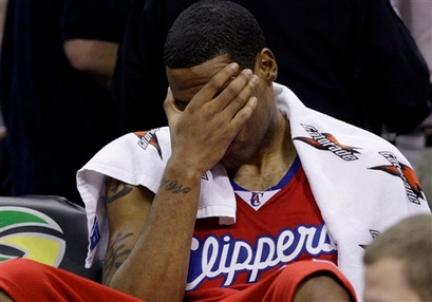
 –
–  –
–  –
–  –
–  –
–  –
–  –
–  –
–  –
–  –
–  –
–  –
–  –
–  –
–  –
–  –
–  –
–  –
–  –
– 

 –
–  –
–  –
–  –
–  –
–  –
– 

 –
– 
 –
–