As always, these names are completely genuine. If you don’t believe it, Google it.
(1) Grienntys Chief Kickingstallionsims v (1) Gang Wang
Journeys so far:
(1) Grienntys Chief Kickingstallionsims
First round: Won 359-40 v (16) Indiana Faithfull
Second round: Won 125-39 v (8) God’sgift Achiuwa
Sweet Sixteen: Won 85-37 v (5) Solomon HorseChief
Elite Eight: Won 40-34 v (3) Typhoon Dusk Nurse
The previously unassailable Chief finally hit trouble in the form of Nurse. He won anyway, but the pre-tournament favourite is fallible.
(1) Gang Wang
First round: Won 237-59 v (16) Storm Clonch
Second round: Won 104-41 v (8) Hunter Dick
Sweet Sixteen: Won 59-39 v (5) Chubby Cox
Elite Eight: Won 38-31 v (2) Ebenezer Noonoo
First round: Won 289-51 v (16) Jose Antonio Alcoholado
Second round: Won 121-32 v (8) Gregor Fucka
Sweet Sixteen: Won 83-22 v (5) Lior Lipshits
Elite Eight: Won 50-20 v (10) Stanley Titsworth
Doubts as to the legitimacy of Steeve’s name continue to come in, despite him being a professional player in France for many years. Maybe this assuages it some.
(10) Scientific Mapp
First round: Won 178-134 v (7) God Shammgod
Second round: Won 107-37 v (2) B.J. Banjo
Sweet Sixteen: Won 65-35 v (3) Spongy Benjamin
Elite Eight: Won 55-17 v (1) Just-in-Love Smith
As the bracket’s creator, I take some pride in having had three number one seeds make the final four. That shows, I hope, a reasonable level of perception as to what humour is and from where it comes. However, not only has Scientific Mapp proven to be chronically underseeded, but the truth is, I nearly didn’t put him in at all. In the penultimate seedings draft, he was left out altogether in favour of Courtney van Beest, whose name I liked basically because it had the worst Beest in it. It’s a lesson learned, of course. And that’s why we’re here. To learn. To laugh. To live.
Steeve Ho You Fat or Scientific Mapp?
Voting closes at a ridiculously late hour on Saturday night.
Due to an administrative error whereby I accidentally set the Sweet Sixteen polls to run for a week longer than they were supposed to, the 2014 Ridiculous Basketball Player Names Tournament is still going on, having lost all its previous momentum. Nevertheless, we are down to the Elite Eight. Here are the matchups!
As always, these names are completely genuine. If you don’t believe it, Google it.
THE “WHAT THE HELL?” REGIONAL
(1) Grienntys Chief Kickingstallionsims v (3) Typhoon Dusk Nurse
Journeys so far:
(1) Grienntys Chief Kickingstallionsims
First round: Won 359-40 v (16) Indiana Faithfull
Second round: Won 125-39 v (8) God’sgift Achiuwa
Sweet Sixteen: Won 85-37 v (5) Solomon HorseChief
The Chief has not even flinched in his run to the Elite Eight thus far, not even batting an eyelid in the expected-classic Chief v HorseChief Sweet Sixteen matchup he ultimately won comfortably. This is a shame for Solomon HorseChief fans everywhere, including myself, and frankly I’m starting to wish I had fixed it.
(3) Typhoon Dusk Nurse
First round: Won 257-83 v (14) Drake U’u
Second round: Won 118-33 v (6) D’Awvalo Turnipseed
Sweet Sixteen: Won 77-39 v (7) Ruben Boumtje-Boumtje
Boumtje-Boumtje was something of a people’s favourite, yet he was no match for TDN, one of three remaining non-US competitors.
Grienntys Chief Kickingstallionsims or Typhoon Dusk Nurse?
THE “SURNAMES THAT HAD NO CHANCE AT LIFE” REGIONAL
(1) Steeve Ho You Fat v (10) Stanley Titsworth
Journeys so far:
(1) Steeve Ho You Fat
First round: Won 289-51 v (16) Jose Antonio Alcoholado
Second round: Won 121-32 v (8) Gregor Fucka
Sweet Sixteen: Won 83-22 v (5) Lior Lipshits
Ho You Fat is this bracket’s equivalent of Florida. Indisputably a number one, and performing like it. Not only is she a ho, but she is fat. With this two pronged insult spread over three words, and some bonus [sic] action in the forename, Steeve Ho You Fat has the most balanced attack in the tournament.
(10) Stanley Titsworth
First round: Won 235-82 v (7) Kara Bonenberger
Second round: Won 91-54 v (2) Chris Porn
Sweet Sixteen: Won 70-32 v (6) Moran Shitrit
Titsworth’s Cinderella run, one of two number ten seeds to make the Elite Eight, is similarly multi-faceted. Not only does the always pleasing Stanley set up the perfect mammary pay-off, but he also sounds like a 1950’s cricketer.
Steeve Ho You Fat or Stanley Titsworth?
THE “BRILLIANT FIRST NAME CHOICES” REGIONAL
(1) Justin-in’Love Smith v (10) Scientific Mapp
Journeys so far:
(1) Just’in-Love Smith
First round: Won 236-82 v (16) Austen Powers
Second round: Won 78-55 v (9) Fabulous Flournoy
Sweet Sixteen: Won 63-39 v (12) Semen Antonov
All four number one seeds have made it through unscathed, yet Smith has had the most uncertain run thus far, barely surviving last flourishes by both Fabulous and Semen. Incidentally, I did a quick Google, and that’s the first time that sentence has been said in human history.
(10) Scientific Mapp
First round: Won 178-134 v (7) God Shammgod
Second round: Won 107-37 v (2) B.J. Banjo
Sweet Sixteen: Won 65-35 v (3) Spongy Benjamin
Mapp has triumped over the toughest run anyone has faced thus far, and has retro chic on his side. The upset potential here is genuine.
Justin-in’Love Smith or Scientific Mapp?
THE “COMPOUNDING THE PROBLEM” REGIONAL
(1) Gang Wang v (2) Ebenezer Noonoo
Journeys so far:
(1) Gang Wang
First round: Won 237-59 v (16) Storm Clonch
Second round: Won 104-41 v (8) Hunter Dick
Sweet Sixteen: Won 59-39 v (5) Chubby Cox
The winner of back to back penis matchups, Gang Wang is the people’s phallic champion, and yet now he must go up against his logical nemesis – a noonoo.
(2) Ebenezer Noonoo
First round: Won 220-67 v (15) Randy Duck
Second round: Won 79-66 v (7) Dick Packer
Sweet Sixteen: 57-43 v (3) Karolina Puss
Noonoo has had to come back in two matchups thus far, yet this level of resilience and sticktoitiveness is the hallmark of a future champion.
Gang Wang or Ebenezer Noonoo?
VOTE NOW! Polling closes in 49 hours. Really, this time.
Tomorrow, the Sacramento Kings will sign former LSU Celtics, Blazers, Hornets and Timberwolves big man Chris Johnson. It is not known at this time whether it will be for the remainder of the season, multiple seasons, or a 10 day deal.
Johnson has spent this season in China, averaging 20.0 points, 11.2 rebounds and 2.0 blocks in 29 games for Zhejiang Guangsha Lions. The 28 year old is known for his length, athleticism and shot-blocking.
With a roster spot already open after the waiving of Jimmer Fredette, and with Orlando Johnson’s 10 day contract having expired, Sacramento has only 14 players under contract and will not need to make a move to accommodate Johnson.
EDIT, THE FOLLOWING DAY – Johnson’s signing was cancelled the following day for unknown reasons. The Kings signed Willie Reed instead.
(1) Grienntys Chief Kickingstallionsims v (5) Solomon HorseChief:
Vote wisely. Vote HorseChief.
Grienntys Chief Kickingstallionsims or Solomon HorseChief?
(3) Typhoon Dusk Nurse v (7) Ruben Boumtje Boumtje:
Should Nurse lose points on account of his decision to mostly go by “Ty Nurse”, instead of the full glory that is his name? And with that in mind, does Ruben earn points for embracing the double boom?
Typhoon Dusk Nurse or Ruben Boumtje Boumtje?
THE “SURNAMES THAT HAD NO CHANCE AT LIFE” REGIONAL
(1) Steeve Ho You Fat v (5) Lior Lipshits:
Ho You Fat seems unassaible here……
Steeve Ho You Fat or Lior Lipshits?
(6) Moran Shitrit v (10) Stanley Titsworth:
…..and if someone is going to upset Steeve in this regional, it might have to be the upstart Titsworth, who I underseeded on account of other’s stark insistence that it wasn’t funny, despite knowing full well that it was.
Moran Shitrit or Stanley Titsworth?
THE “BRILLIANT FIRST NAME CHOICES” REGIONAL
(1) Justin-in’Love Smith v (12) Semen Antonov:
Big battle here between Love and Semen, a choice no one should ever have to face.
Justin-in’Love Smith or Semen Antonov?
(3) Spongy Benjamin v (10) Scientific Mapp:
Confession time – Mapp nearly didn’t make the bracket at all. Consider it a lesson learned.
Spongy Benjamin or Scientific Mapp?
THE “COMPOUNDING THE PROBLEM” REGIONAL
(1) Gang Wang v (5) Chubby Cox:
Again, a choice no one should ever have to face.
Gang Wang or Chubby Cox?
(3) Karolina Puss v (2) Ebenezer Noonoo:
If you were at any point wondering what Noonoo has gotten up to in his professional life since the collegiate playing days from whence his name was sourced, the answer is, a fair bit.
In accordance with prophecy, the number one seeds made it through unscathed, Grienntys Chief Kickingstallionsims and Steeve Ho You Fat putting up dominating performances in securing 85%+ of the votes in their matchups. However, the same can not be said of the #2 seeds, where a 2 v 15 upset went down. It was nearly two – in the Compounding The Problem Regional, the underseeded and underrated Staats Battle almost overcame B.J. Banjo, leading for much of the way before a late rally saw Banjo win in a captivating 50%/49% split of the vote (no word on where the missing percent went), while Galal Cancer comfortably handed it to fellow number #2 seed Patrick Willybiro, a name that Americans presumably do not see the funny side of due to transatlantic slang differences, in the What The Hell? Regional. If transatlantic humour divides lead to upsets, this might be a good thing.
With the exception of the Compounding The Problem Regional, where all top eight seeds made it through, there were upsets all throughout the bracket. There were four in the Brilliant First Name Choices Regional alone, not least of which was the comprehensive win of Semen Antonov over Jordair Jett, a man seeded as high as he was due only to the internet’s insistence that his name was really, really great. Once again, then, it is proven that people love Semen. SirValiant Brown was similarly comprehensive in his 4 v 13 upset of the always overrated Deuce Bello, whose close association to a man called Bummy was rightly not overvalued by the voters. And in what to many was the choice tie of the first round, the immortal God Shammgod was beaten by a dogged and determined Scientific Mapp, who would have taken on the similarly upstart Battle were it not for the rousing late comeback by Banjo.
Some matchups oscillated quite significantly. For example, Qavotstaraj Waddell made a late charge on D’Awvalo Turnipseed’s once unassailable lead and lost by only a mere handful of votes, while Cathy Cockrum – once down 70-30 in the vote – made a similarly late run and squeaked a tiny four-vote victory over the once dominant Brianne Boner. Between that battle, the aforementioned Battle/Banjo thriller, and the steady but compelling Fat Lever/Fabulous Flournoy matchup, three of the votes were decided by only five votes or less, which is pretty remarkable. Exree Hipp and Vonteego Cummings, meanwhile, shared a remarkably close vote for the first six days, often times separated by one or two votes only and at one point embroiled deeply in a tie, before a late surge for Vonteego, tallying about 50 extra votes in the final day, blew it open late. I hope somewhere a “Vote Vonteego” movement was created to make this happen. This would be a nice thing to have happen.
With the polls now closed, it’s time for more polls. Here are some more polls.
THE “WHAT THE HELL?” REGIONAL
(1) Grienntys Chief Kickingstallionsims v (8) God’sgift Achiuwa:
God’sgift started strong and ran well from inside position in his opening game, and has the religious vote on his side. Unfortunately for him, the Chief has the Indian vote, was dominant in the opening round, and has lived up to his preseason billing as a contender for the title. However, given the damage his presence is inflicting to the ability to fit the picture of this bracket on one page, I could do without him.
Grienntys Chief Kickingstallionsims or God’sgift Achiuwa?
(5) Solomon HorseChief v (13) Vonteego Cummings:
Not to influence the vote or anything, but if the higher seed wins both of these matchups, it’s a Chief v Chief in the Sweet 16. So, there’s that.
Solomon HorseChief or Vonteego Cummings?
(6) D’Awvalo Turnipseed v (3) Typhoon Dusk Nurse:
Turnipseed survived a late surge from Qavotstaraj Waddell, but faces stiff competition from Nurse, for whom unrelenting absurdity is a potent weapon.
D’Awvalo Turnipseed or Typhoon Dusk Nurse?
(7) Ruben Boumtje Boumtje v (15) Galal Cancer:
Most men would like to be known as Boom Boom. No man would like to be known as Mr Cancer. But remember, this is a battle of ridiculousness and awesomeness, not of desirability.
Ruben Boumtje Boumtje or Galal Cancer?
THE “SURNAMES THAT HAD NO CHANCE AT LIFE” REGIONAL
(1) Steeve Ho You Fat v (8) Gregor Fucka:
Two titans of the European ridiculous name game go head to head, one playing the timeless “there’s a swear word in my name” card, one opting for the “dual derogatory terms” approach.
Steeve Ho You Fat or Gregor Fucka?
(5) Lior Lipshits v (13) Cathy Cockrum:
This is back to back alliterative opponents for Cockrum, but having only a body part might struggle against the classic-body-part-plus-excrement-reference pincer movement Lior employs. Nevertheless, Cockrum has at least some the popular vote, even having a slogan now.
Lior Lipshits or Cathy Cockrum?
(6) Moran Shitrit v (3) Ghyslain Fanny:
If it helps, look up what “fanny” means in my country. It is not the same as in America.
Moran Shitrit or Ghyslain Fanny?
(10) Stanley Titsworth v (2) Chris Porn:
Can you have a Titsworth of Porn? Probably. In fact, definitely.
Stanley Titsworth or Chris Porn?
THE “BRILLIANT FIRST NAME CHOICES” REGIONAL
(1) Just-in’Love Smith v (9) Fabulous Flournoy:
It counts heavily in Flournoy’s favour here that his name is not a nickname, but a given name. The upset possibility is on the cards, unless Smith changes his surname to Bagpuss or something, when it’s game over the other way.
Just’in-Love Smith or Fabulous Flournoy?
(12) Semen Antonov v (13) SirValiant Brown:
A battle of two upsets here. But let’s not forget that the people love Semen.
Semen Antonov or SirValiant Brown?
(6) Dominitrix Johnson v (3) Spongy Benjamin:
A Google search to ascertain quite how the parents of these two arrived at the names that they did revealed nothing.
Dominitrix Johnson or Spongy Benjamin?
(10) Scientific Mapp v (2) B.J. Banjo:
With two huge scalps to their name in the forms of God Shammgod and the seemingly criminally underseeded #15 Staats Battle, this is probably the tie of the round. Incidentally, the fact that someone with Science in their name took on a man called God was completely accidental.
Scientific Mapp or B.J. Banjo?
THE “COMPOUNDING THE PROBLEM” REGIONAL
(1) Gang Wang v (8) Hunter Dick:
A lot of penis stuff going on in this one.
Gang Wang or Hunter Dick?
(5) Chubby Cox v (4) Lady Comfort:
Some more penis stuff here, interspersed with some feminine hygiene. Something for everyone there.
Chubby Cox or Lady Comfort?
(6) Cookie Belcher v (3) Karolina Puss:
Bit more femininity here. Also some belching.
Cookie Belcher or Karolina Puss?
(7) Dick Packer v (2) Ebenezer Noonoo:
A Karolina Puss v Ebenzer Noonoo matchup is on the cards here. Don’t let it down.
In compiling a scouting database, hopefully to be launched in June time, I have spent a lot of time rooting through rosters of basketball teams all around the globe. And while this website and the subsequent database are to be completely serious – this website is one man’s CV, after all – I would be lying if I denied that all this trawling had uncovered some awesome player names along the way,
Funny names are funny, and the idea of bracketing a bunch of them is not new. The Name of the Year competition started back in 1983, before the author of this bracket was even a sperm, and that baton has been passed to new ownership, who last year awarded Leo Moses Spornstarr the 2013 winner of the world’s ultimate accolade. Inspired by, and in homage to, this decades long legacy of doing God’s work, there hereby follows the first definitely-not-going-to-be-annual Ridiculous Basketball Player Names Tournament Bracket, featuring basketball players of different sizes and calibre, of players both current and retired, male and female, and professional and amateur, from all around the globe.
As can be seen above, the bracket accords with the March Madness tournament bracket style, except arguably with less arbitrary divisions for the regionals. Things of note:
* No consideration is given to a player’s current status. Some are long since retired, and some never even went pro. Yet it matters not – if you were a basketball player to an organised standard (e.g. college, its equivalents, and above), whose existence, career and name can be found, you count.
* All names are verifiably true via other internet resources, and links to such are given where necessary. In one instance, there exists only one reference to the person on the entire internet. But it will do. Play along.
* Names considered but which ultimately did not make the cut include Bak Bak, Courtney Van Beest, Duany Duany, Duke Crews, Dustin Dibble, Fab Melo, Four McGlynn, Isaac Butts, Jordan Noblitt, Marc and Myles Loving, Matt Haryasz, O.J. Mayo, Scooter Gillette, Tommy Gunn and Wanaah Bail.
* Seedings are somewhat arbitrary and open to much conjecture, as is unavoidable, but were created via consultation with others (who I supposed you could term a selection committee). Some of this consultation came with my girlfriend, who, if she had her own way, would anoint Ebenezer Noonoo as the winner without any need for a competition and have done with it. She laughed at that name for about four hours. Additionally, The Starter’s Trey Kerby helped formulate the final selections, for he is the sole arbiter of comedy.
To the matchups!
THE “WHAT THE HELL?” REGIONAL
(1) Grienntys Chief Kickingstallionsims v (16) Indiana Faithfull:
In what’s expected to be a typically landslidey 1 v 16 matchup, former Alabama State centre Kickingstallionsims – currently playing professionally in Saudi Arabia – matches up against current Wofford backup shooting guard Faithfull. Faithfull might win some votes from Hoosier fans, yet the outstanding novelty value and unrelenting length of the Chief’s fearsomely long name surely reigns supreme.
Grienntys Chief Kickingstallionsims or Indiana Faithfull?
(8) God’sgift Achiuwa v (9) Hippolyte Tsafack:
Backup St. John’s big man Achiuwa faces down backup Memphis big Tsafack in a delicate battle of two college basketball players only their own team’s fans have ever heard of. Achiuwa comes from Nigeria, a country so densely populated with people who understand a brilliant name when they see it that they had the temerity to vote for a president named Goodluck Jonathan, while Tsafack, a Cammeroonian, has a first name that basically means “queen with a magic girdle”. Achiuwa wins the higher seeding on account of the arbitrary and redundant use of the apostrophe in his name.
God’sgift Achiuwa or Hippolyte Tsafack?
(5) Solomon HorseChief v (12) Urule Igbavboa:
HorseChief, a one time guard for Pacific University, wins points for both the absurdity of his surname and the random capital letter employed halfway through it. Igbavboa, a Valparaiso graduate currently playing in Germany’s top division, wins points for the sheer magnanimity of his first name. You rule too, Iggy.
Solomon HorseChief or Urule Igbavboa?
(4) Exree Hipp v (13) Vonteego Cummings:
Longtime NBA guard Vonteego Cummings and his unique name will be known to most of us, yet the insaneness of it is not to be forgotten. As if his ejaculatory surname was not sufficient, “Vonteego” was (genuinely) created as a portmanteau of two cars, a Volkswagen and a Montego, surely the only such person on this list to be named after a mode of transport. However, Hipp’s name, which is pronounced exactly as it looks like it is, might scratch an even rarer itch. The one time Maryland forward and long time Globetrotter must surely be the only player alive whose full name is a medical procedure.
Exree Hipp or Vonteego Cummings?
(6) D’Awvalo Turnipseed v (11) Qavotstaraj Waddell:
D’Awvalo, a former guard for Division 3 Huntingdon College, is in fact only one of a number of Turnipseeds in basketball today. A quick search reveals fellow ballplaying Turnipseeds Justin, Willis, Will, Brock, Dmitri, Thad, Dante, Taylor. Keith, Lee, Brittney and Monet, all of whom sound a bit like farmers in a kids TV show. Meanwhile, former Chattanooga, Maryland and multiple time ABA centre Waddell had parents who clearly did not know where to stop. Nor, apparently, where to begin.
D’Awvalo Turnipseed or Qavotstaraj Waddell?
(3) Typhoon Dusk Nurse v (14) Drake U’u:
Former Texas Tech guard and Canadian national team member Nurse boasts the results of the hitherto little used “stick three random nouns together and see what happens” approach to child naming, which is to be lauded at all times. Meanwhile, Perth Wildcats guard U’u channels God’sgift Achiuwa’s random apostrophe usage, and in the end creates a surname that an Eric Cartman exclamation.
Typhoon Dusk Nurse or Drake U’u?
(7) Ruben Boumtje Boumtje v (10) Lazabian Jackson:
Boom Boom, a well known NBA veteran, beat out Bak Bak and Duany Duany for the honorary so-good-they-named-him-twice place on the list, mostly on account of that obvious and perfect nickname that it spawns. Arkansas Pine-Bluff guard Jackson should probably always go by “Laz.”
Ruben Boumtje Boumtje or Lazabian Jackson?
(2) Patrick Willybiro v (15) Galal Cancer:
Willybiro, a one time Prairie View guard, spent a few seasons playing semi-professionally in France, where it is unclear how many citizens were aware his name was an amalgamation of a genital and a writing implement. Whereas Cornell guard Cancer is no doubt fully aware that everyone sees the problem with his.
Patrick Willybiro or Galal Cancer?
THE “SURNAMES THAT HAD NO CHANCE AT LIFE” REGIONAL
(1) Steeve Ho You Fat v (16) Jose Antonio Alcoholado:
The infamous Ho You Fat, for whom no explanation of his name has ever been uncovered, continues to play his trade in his native France, where not nearly enough people will recognise why his name is hilarious. Meanwhile, Alcoholado, a bit part player in the fourth division of Spanish basketball, has a two pronged pincer movement of a surname – in addition to the obvious alcohol reference it offers, his name “Alcoholado” translates from Spanish as “a cow with skin darker around the eyes than on the rest of its body.”
Steeve Ho You Fat or Jose Antonio Alcoholado?
(8) Gregor Fucka v (9) Dennis Fuckner:
An important if entirely NSFW showdown here between long time veteran Fucka and little known German minor league backup guard Fuckner, for the ultimate F*ck battle. Fucka might lose a couple of points on account of the issue-dodging that went on during his proposed move to the NBA roughly a decade ago, when executives and media alike scrambled to find a way to avoid the obvious cuss word. Just say it how it should be said, there is no alternative. Remember Danny Shittu.
Gregor Fucka or Dennis Fuckner?
(5) Lior Lipshits v (12) Rudy Gay:
The funny nature of Gay’s name should not be forgotten just because of how famous it is. We run the risk of using it so often that we forget the potential it offers, and how, should he ever join Minnesota, the timeless Gay-Love pairing would be created. However, Gay may struggle here in a matchup with Israeli national team point guard Lipshits, whose name is sometimes spelt Lipschitz, but not always.
Lior Lipshits or Rudy Gay?
(4) Brianne Boner v (13) Cathy Cockrum:
Two female players with male genitalia in their names go head to head here, and yes that head pun was deliberate.
There is remarkably little information about Fanny, whose name is sourced from this 2008 blog post about the struggles of the Mauritius men’s national team. [The level of research for this post can best be described as “emphatic.”] Slightly more is known about 21 year old Swedish guard Minges, a former national u-18 team member who furthers his chances by playing for a team called Hogsbo.
Ghyslain Fanny or Jonas Minges?
(7) Kara Bonenberger v (10) Stanley Titsworth:
A former Missouri Southern guard, Titsworth’s name is simple in its delivery and effective in its humour. Yet it struggles to compete with Bonenberger, a current Pennsylvania forward, whose full name sounds like the ideal service offered by your local car breakdown cover company.
Powers, a former Seattle graduate with six years of professional experience around the globe, was born in 1987 before the comedy character of the same name, yet ought not be penalised for this. Even then, he will struggle to pull the upset on former Siena guard Smith, whose impeccably contrived forename wins his parents bonus points for sheer temerity.
Just-in’Love Smith or Austen Powers?
(8) Fat Lever v (9) Fabulous Flournoy:
Lever’s given name here is merely a nickname derived from the constant mispronunciation of his given name Lafayette, yet creates a snappy two-word phrase that could plausibly pass off as a necessary piece of equipment for anyone so overweight they need to be shoehorned out of a car seat. Flournoy, well known to us Brits as the long time player-coach of the Newcastle Eagles, has no need for such fakery.
Fat Lever or Fabulous Flournoy?
(5) Jordair Jett v (12) Semen Antonov:
His surname is already a fantastic surname that is hard to misfire with, yet in naming their son Jordair, Jett’s parents have created the ultimate in basketball player names. Conversely, Semen Antonov’s parents did not create the ultimate in basketball player names. They created Semen jokes.
Jordair Jett or Semen Antonov?
(4) Deuce Bello v (13) SirValiant Brown:
Brown was a huge name at the turn of the century, partly after being ranked second in the country in scoring as a freshman, and partly because his name was SirValiant Brown. Current Missouri guard Bello is in no danger of leading the country in scoring, yet his name offers multiple reasons for kinship – “Deuce” is an oddly chosen nickname, masking his real name of Quddus Tosin, a name given to him by his mother, Bummy Bello. No, really. Bummy Bello.
The former Volklingen Baskets guard’s name describes both an action and its after-effects, while the former Marist forward was presumably particularly water absorbent in his childhood.
Spongy Benjamin or Soren Wanke?
(7) God Shammgod v (10) Scientific Mapp:
The legendarily named Shammgod faces a legit upset chance in the form of Mapp, the former Florida A&M guard who, along with his brother Majestic Mapp, brought the funny name game to a new level in the late 1990’s. There is literally no justification for either of these names, and that’s from where the fun comes.
God Shammgod or Scientific Mapp?
(2) B.J. Banjo v (15) Staats Battle:
Most names with B.J. in are funny, for reasons you should definitely ask your grandparents about the next time you see them in person. Yet B.J. Banjo, a former ETSU guard, takes the issue to a whole new level with her name by combining those initials with the name Banjo. Something for everyone there, or everything for someone if that someone is Steve Martin. NC State guard Staats Battle, meanwhile, gives hope to ballhogs everywhere – his name is their way of being.
Incidentally, there is a third player called B.J. Battle, a guard currently at Columbus State, who merits more than a passing mention here. Unfortunately he will have to be content with a passing mention.
B.J. Banjo or Staats Battle?
THE “COMPOUNDING THE PROBLEM” REGIONAL
(1) Gang Wang v (16) Storm Clonch:
Clonch is a weird name which on its own sounds somewhere between onomatopoeic and vaginal, and adding Storm to it compounds any bizarreness. However, Chinese Basketball Association veteran Gang Wang will be tough to beat in this regional. Wang is a very common Chinese name, despite its alternative meaning in American English, yet to pair it with Gang in this way is first class.
Gang Wang or Storm Clonch?
(8) Hunter Dick v (9) Sharkeysha Midgette:
Midgette, a former player at UNC-Pembroke, may try to pronounce her name to rhyme with Jimmer Fredette or Penn Gillette, but naturally we’re not listening to that possibility and are deciding she is called Sharky Midget. The fact that Hunter Dick is only good for an eighth seed here shows the tremendous strength of this stacked regional.
Hunter Dick or Sharkeysha Midgette?
(5) Chubby Cox v (12) Girts Puke:
The long since retired former NBA player Cox has the born name John, yet opted to play via the name Chubby, which should earn all of our respects. Meanwhile, according to the Urban Dictionary, “girt” means either big or sexy, neither of which is doing Latvian minor leaguer Mr Puke any favours here.
Chubby Cox or Girts Puke?
(4) Lady Comfort v (13) Deverin Muff:
It is hereby hoped that “Deverin” is pronounced the same way as “diva in,” and the very possibility that it might be serves as a reminder to all Mr and Mrs Muffs out there not to name your children anything that ends in the syllable “in.” However, great of a name that he has, Eastern Kentucky forward Muff stands little chance against the powerhouse name of former Temple centre Lady Comfort, whose name sounds like a sanitary product.
Lady Comfort or Deverin Muff?
(6) Cookie Belcher v (11) Chop Tang:
Long time pro Belcher spurned his given names Segado Cortez in favour of Cookie, apparently preferring to ply his trade under the guise of a dyspeptic Sesame Street character. Meanwhile, former North Mexico Highlands big man Tang has decided to compound the sexual imagery of his surname with violent overtones. Or, if you’d prefer, a nice pork dinner. Tang is currently in prison on bank robbery charges, so we’re worried about which it is.
Cookie Belcher or Chop Tang?
(3) Karolina Puss v (14) Conrad Sexe:
Division 3 St John’s Minnesota big man Sexe manages to combine a funny surname with a powerful first name that implies the level of manliness you can only hope his surname delivers. However, his chance is surely a long one against Polish professional player Karolina Puss, whose name sounds like a Petey Pablo album.
Karolina Puss or Conrad Sexe?
(7) Dick Packer v (10) Dallas Ennema:
Packer, the President of the American Basketball Association and brother of the much more well known Billy Packer, is a former Lehigh guard whose name probably doesn’t need explaining. As for University of Albany guard Dallas, no name is going to do much to change the fact you are Mr Ennema, but wouldn’t as inconspicuous as possible be the aim here?
Dick Packer or Dallas Ennema?
(2) Ebenezer Noonoo v (15) Randy Duck:
In my country, a country in which Randy Duck played several professional seasons, “randy” means “horny.” A randy duck is thus a duck who wishes to do adult duck stuff to other adult ducks, which is both a fun image and a great name. However, underappreciated though he is, Duck will have a hard time against Noonoo, a former Illinois-Chicago guard whose first name is an MDMA reference and whose surname is either a vacuum cleaner or a girly part. Even without the references and standing solely on its audible merits, Ebenzer Noonoo is a brilliant name, and perhaps the greatest number two seed in the history of anything ever bracketed.
A google search reveals that the phrase “Duck will have a hard time against Noonoo” has never been typed before in internet history. This is the fun we are having.
The ten highest individual team luxury tax payments of all time:
1) 2013/14 Brooklyn Nets: $89,582,458 (assuming that Jason Collins signs for the remainder of the season on 4th March, his first allowable opportunity)
2) 2002/03 Portland Trail Blazers: $51,971,000 (rounded only to the nearest $1,000)
3) 2006/07 New York Knicks: $45,142,002
4) 2003/04 New York Knicks: $39,867,214
5) 2005/06 New York Knicks: $37,248,752
6) 2012/13 L.A. Lakers: $29,259,739
7) 2003/04 Portland Trail Blazers: $28,846,436
8) 2003/04 Dallas Mavericks: $25,031,932
9) 2002/03 New York Knicks: $24,371,000 (rounded only to the nearest $1,000)
10) 2008/09 New York Knicks: $23,736,207
The records of those respective teams:
1) 2013/14 Brooklyn Nets: 26-29
2) 2002/03 Portland Trail Blazers: 50-32
3) 2006/07 New York Knicks: 33-49
4) 2003/04 New York Knicks: 39-43
5) 2005/06 New York Knicks: 23-59
6) 2012/13 L.A. Lakers: 45-37
7) 2003/04 Portland Trail Blazers: 41-41
8) 2003/04 Dallas Mavericks: 52-30
9) 2002/03 New York Knicks: 37-45
10) 2008/09 New York Knicks: 32-50
There follows a post that was in the process of being edited ready for posting on SBNation.com which talked about the Spencer Hawes to Cleveland deal and how it did – or rather, didn’t – affect the Sixers’s proximity to the salary cap floor. However, Adrian Wojnarowski’s latest tweet, which states that Danny Granger is to be traded to the Sixers, makes it irrelevant now. It is hereby posted here anyway on account of the fact that, one day, it might serve as a good point of reference for the minutiae described within.
Much has been made of the Philadelphia 76ers’ payroll this year, or rather, the lack of it. It is so unique of a situation that it merits and attracts constant comment, something to which we have all been susceptible. I covered the situation a few months ago, trying above all to convey one important point: it doesn’t really matter.
Five months on and it still doesn’t, mostly. However, in keeping with every CBA provision you have ever heard about, the idea of a minimum team salary is more complicated than it first appears.
As of Wednesday morning, the Sixers had a 2013/14 team salary of $47,678,819, $11 million short of the salary cap, and slightly over $5 million short of $52,811,100, the amount equal to 90 percent of the salary cap that represents a team’s minimum payroll requirement. Media and fans alike have been wondering how Philadelphia intended to fill that void midseason, and with the reported trade of Spencer Hawes’s $6.6 million contract for Earl Clark’s $4.25 million one and two second-round picks, it seems that all the Sixers have actually done is get further away from it.
However, the issue is clouded as ever by the unintentional confusion of language that so often accompanies CBA discussions in the public realm. While we never really specify them as being different because we never really need to, there is in fact a difference between “team salary” and “team payroll.”
A team salary is the amount of money charged to a team’s salary cap. This is what we almost universally deal in when we refer to salaries. When we talk about player’s “salaries,” we are talking about their cap numbers, i.e. how much they count against the cap. The term is used interchangably with the idea of actual moneys paid for the same reason no one sees fit to differentiate between “Netherlands” and “Holland,” or “United Kingdom” and “Great Britain:” we all know what is meant, and nobody wants to be that guy. In this specific instance, however, the difference might actually matter. In contrast, a team’s payroll is how much that team actually pays out in salary that year. For the most part, it correlates exactly to team salary. However, the correlation is not 100 percent. There are a few ways in which a team’s payroll can deviate from its team salary, yet the most obvious one is when players are traded midseason. Trading Hawes’s $6,600,000 salary for Clark’s $4,250,000 does not mean the Sixers are now $2,350,000 further beneath the salary floor. Due to the proration of contracts as they are paid out during the season, the amounts paid and outstanding are not that clearcut. 113 days into a 170 day season, the Sixers have already paid a big chunk of Hawes’s contract, an unspecifiable amount rendered further confusing by the presence of an advance payment clause (for an unknown amount) in Hawes’s contract. They could have paid him close to $5 million already. No such advance payment clause exists in Clark’s contract, who is therefore owed $1.4 million for the remainder of the season. Thus, from a team payroll point of view, the trade is likely close to a wash for Philadelphia.
It is not a wash in terms of cap number. However, when calculating a team’s proximity to the minimum salary threshold, it is payroll that is used, not team salary.
A further important deviation between the two can be found in the salaries of waived players, particularly those signed under the previous CBA. These often do not affect team salary in the way they affect team payroll.
Under the previous CBA, when players were waived or bought out, their remaining team salary hit was spread out proportionally over the guaranteed seasons of the terminated contract, yet how the actual money was paid out was a matter of individual negotiation. This led to some long-term agreements being devised. For example, until quite recently, the Blazers were still paying Shawn Kemp despite him not having been a Blazer since about 1973. For the purposes of calculating a team’s cap number, however, this did not matter. Under the new CBA, teams have the opportunity to modify the cap hit slightly. Using the stretch provision, the cap hits for waived players can either follow the same procedure as the old CBA or be spread out evenly, over a period of time equal to twice the amount of remaining seasons of the contract, plus one extra. This provision has been used by Memphis on Fab Melo, for example, whose $1,311,240 owed salary has been stretched to a three year annual $437,080 cap hit. In terms of payroll, however, the money owed to waived players signed under the new CBA follows this double-plus-one formula and is no longer negotiable.
It is possible, then, that the Sixers are still paying the long-since amnestied Elton Brand, if a revised payment schedule had been agreed upon his waiving. If they are – and it was not an uncommon practice to do so, particularly in deals as large as Brand’s was – his unknown amount is still being charged to the Sixers’ team payroll, pushing them much closer to the minimum payroll floor, or perhaps even over it. Attempts to confirm the exact circumstances of Brand’s payment schedule have thus far been unsuccessful, yet the chance is a real one.
Whether Brand counts or not, though, we ultimately need not worry. In the event that a team does NOT meet the minimum team salary, Article VII section 2(b) of the Collective Bargaining Agreement specifies only thus:
In the event that a Team’s Team Salary for a Salary Cap Year as of the start of the Team’s last Regular Season game of that Salary Cap Year is less than the applicable Minimum Team Salary for that Salary Cap Year, the NBA shall cause such Team to make payments equal to the shortfall (to be disbursed to the players on such Team pro rata or in accordance with such other formula as may be reasonably determined by the Players Association). The Players Association shall provide the NBA with its proposed distribution of any such shortfall within thirty (30) days after the completion of the Audit Report for such Salary Cap Year. The NBA shall cause the Team to make the required payments, less all amounts required to be withheld be any governmental authority, within ten (10) business days after receipt of the proposed distribution from the Players Association in accordance with the preceding sentence.
So basically, the penalty for not meeting the minimum team salary is……meeting the minimum team salary. Meaning that the players they already have will get a bit more money. Which serves to please both them and their agents.
Oh. Well, then. That’s not so bad.
On a basketball level, Philadelphia had no incentive to keep Hawes, a player sufficiently good so as to affect their plans to be bad, sufficiently old so as to not be a part of the future going forward (turning 26 in April, Hawes is almost pension age by the Sixers standards), and suitably expiring of a contract to require trading now for whatever can be gotten, rather than letting him walk without recompense in the summertime. Two second-round picks and the useful but very sporadic Clark is seemingly the best they could do, an emphatic proof of something else discussed here a few months ago – the fact that first-round picks are now held in such high regard league wide that they can hardly be pried away from teams now. Even if it was only for a short term rental – which Cleveland are surely hoping it will not be – Hawes is a 25 year old 7 foot inside/outside highly skilled breakout centre averaging 13.0 points, 8.5 rebounds and 3.3 assists per game with 40% three point shooting, yet he still could not command a first. Welcome to the new risk-averse NBA.
Indeed, of all the teams to be risk averse about such matters, Cleveland must rank quite highly. The Luol Deng trade has gone so badly that they are said to have been looking into re-trading him immediately, despite being only six weeks removed from trading a protected first rounder, two second rounders and a right to swap first-round draft picks for him. The Cavaliers traded this package for Deng on the assumption (or hope) that they could extend or re-sign him, yet with that chance already looking extremely unlikely, they put him back on the market. They weren’t making that mistake again.
The problem with re-signing Deng stems from the apparent toxicity that the Cavaliers franchise is currently dealing with, and it isn’t something the addition of Spencer Hawes will rectify. Nevertheless, Cleveland lands a starting calibre centre for the cost of two second-round picks, which isn’t easy to do. Second round picks are also being deemed increasingly valuable, yet if they land you players of this sort of quality, that value is trumped. More importantly than trading for him for two months of mostly meaningless play, Cleveland also trades for Hawes’s Bird rights, allowing them to pay any amount they like to re-sign him.
In keeping with what is becoming an annual tradition, there follows a very, very lengthy look at all the retired players this site has, for whatever reason, kept tabs on before. (Some of them are a bit niche. But when you’re in, you’re in for life.) This list is mostly of recent NBA players and an update of the 2013 edition of the same list. The cut-offs are somewhat arbitrary, but they have to be somewhere.
Most sites, when they charge themselves with the task of writing a “where are they now?” post about someone, don’t actually fulfill that mandate. Instead, they talk about “where have they been?” and give career retrospectives hitherto. And they’ll do so one person at a time. That is not the intent of this post. The intent of this post is, what do these people do with their lives now, and/or what is the last piece of news we have on them. It’s better this way.
There’s quite a lot of there, so settle in.
Tariq Abdul-Wahad – Varsity coach at Lincoln High School in San Jose.
Others on this list have tried analogous things, as will be seen. Evan Eschmeyer was one, but there are multiple others. None, I would say, have really worked out. So good luck to Malik.
Connor Atchley – The former Texas big man and Kings signee is now a market analyst at Stream Realty Partners.
Chucky Atkins – Last year, Atkins began coaching at his alma mater, Evans High School in Orlando. In June of last year, it was reported that he would leave Evans to join his other alma mater, USF, in a student manager role working for Stan Heath while he worked to complete the undergraduate degree that would allow to him take a full time NCAA assistant coach’s role. However, Atkins ultimately turned down the offer to stay at Evans, where he remains.
Maceo Baston – Runs a cupcake store in Detroit. And if you don’t believe me, here it is from the horse’s mouth.
I enjoy the bit where he compares the level of fame of the NBA to the level of fame of cupcake shop ownership. I want to see that. I also enjoy the generosity he bestows to the interviewee. The lesson, as always – take a camera into the street, film people’s chests, then sit back and reap the rewards.
Tony Battie – Works as a TV analyst for the Magic.
Raja Bell – His ugly and unsuccessful Jazz stint having finally come to an end, Bell gave it once last chance with the Knicks in the summer, but his body had nothing left to give, and he has now retired to spend time with his family.
Mark Blount – Hitherto untraceable in every other attempted update on him thus far, Blount has finally surfaced in the following press release.
Lancaster, Pa. (September 27, 2013) – Auntie Anne’s, the world’s largest hand-rolled soft pretzel franchise, recently announced retired NBA star Mark Blount as its newest franchise partner. Blount will team up with Auntie Anne’s to introduce its famous soft pretzels at both CityPlace and the Palm Beach Outlets, two premier shopping destinations in West Palm Beach, Florida. The locations are expected to open in November 2013 and February 2014, respectively.
Blount was first introduced to the Auntie Anne’s team at a Professional Basketball Alumni Association (PBAA) event. After months of back-and-forth communication, he determined that partnering with the brand made sense as his next business move.
“I was actively looking to break into the franchise industry, but I wanted to find a company that was a good fit for me,” said Blount. “I really felt that the Auntie Anne’s brand provided what I was looking for. After getting to know Mr. Dunn and the Executive Team intimately over the past few months, I am excited to officially join the company as a franchise partner.”
Dejan Bodiroga – At last update, Bodiroga was the president of the Serbian Basketball Federation and rumoured to be in contention to take over as president of FIBA. This has not happened – instead, in December, it was reported that Bodiroga will take over next season as the president of Partizan Belgrade.
Jason Bohannon – Investment Adviser Representative for Primerica.
Calvin Booth – At last update a scout for the as-were Hornets, Booth moved this summer to become a director of player programs and scout for the Timberwolves.
Torraye Braggs – Seems to have finished his fantastically persistent tour of the basketball leagues of the Americas, got married, and taken up coaching.
Damone Brown – Brown pleaded guilty in a plea deal to his money laundering charges and avoided jail time. He briefly resumed a basketball career, playing in the ABA, PBL, Mexican and Venezuelan leagues, and now coaches. Very well, too, by the sounds of it:
Worth every minute and every penny. I taught my son all I could and was looking for a personal coach. I then found Damone through CoachUp and I am glad I did. After only a few sessions with Damone my son’s game has seen significant improvements.
Jeremy (CoachUp confirmed client)
In additional to private clients and his AAU work, Brown also coaches at a high school, and has long since run Get Fresh Productions, a company that produces an annual fashion show.
Keith Brumbaugh – Number of arrests in the 11 months since the last update: two.
Rick Brunson – At last update, Brunson was an assistant coach under Mike Dunlap in Charlotte, but was let go when Dunlap was fired, and currently seems to be out of work.
Greg Buckner – Still an assistant coach for player development with the Rockets.
Antonio Burks – Now runs Antonio Burks Star Maintenance and Lawn Services.
Jackie Butler – Numerous attempts to update on Butler, now spanning six years, have been unsuccessful. He has not played since his unsuccessful Spurs era.
Zarko Cabarkapa – Cabarkapa’s comeback attempt started and ended five years ago, and he had not been heard from since. However, he recently reappeared at a Spartak St. Petersburg game, working as what Google Translate describes as a “delegate.”
Elden Campbell – Campbell, who retired nine years ago, has made no news since that time.
Jason Capel – Still the head coach at Appalachian State, but is only 7-16 on the season.
Brian Cardinal – An assistant director of the John Purdue Club.
Geno Carlisle – Spoke in the summer about his intent to make a comeback, despite not having played since 2009. It does not seem to have happened.
Calbert Cheaney – Left his job as director of operations at Indiana University to become a full time assistant coach at Saint Louis.
Eric Chenowith – Life and disability insurance producer for Parq Advisors in Beverley Hills.
Doug Christie – Joined the Rodman North Korea tour. Here’s a brief clip of him speaking about it.
Searches for updates on his previously documented ventures – namely, his athlete training company and his entry into the world of porn – returned nothing.
This game seems like it would have been fun to watch. In hindsight, both those teams were flawed.
Ousmane Cisse – Has not played since 2010. Got married, had kids, and moved to Arlington, Virginia.
Austin Croshere – College and Pacers analyst for Fox Sports.
Michael Curry – After many years as Doug Collins’s right hand man, Curry interviewed for the head coaching job upon his departure, but lost out and was let go by the incoming Brett Brown. He has been quiet ever since.
Brian Cusworth – After a lengthy European career, Cusworth took a shot at the NBA with the Celtics, but had not recovered sufficiently from his serious injury. He went to the D-League, still hadn’t recovered, went to Germany with ratiopharm Ulm, still hadn’t recovered, and decided to retire. He is now back at Harvard medical school.
A professional athlete should be structured as a corporation. Most professional athletes make more money than the average small business. PPH maximizes a pro player’s earning potential by setting up a corporate structure and it is within this corporate structure that the client will make most of his expenditures where they will be tax deductible.
Justin Davis – Program manager at the Kapor Center for Social Impact in Oakland.
Kyle Davis – Auburn’s shot blocking specialist’s career ended a few years ago after multiple knee surgeries and meniscus tears. Now lives in Birmingham, Alabama.
Keyon Dooling – Dooling’s comeback last season was feel-good, but unsuccessful. He is now a life coach contracted to the NBA, and is writing a book.
Christian Drejer – A ‘workspace director’ at a company called Gemaco Interiors, a commerical interiors company based in Dubai. His wife is the vice chairman.
Predrag Drobnjak – Seems to often be in the news as a talking heard on Serbian and Montenegrin basketball matters, and can be seen here doing a spot of coaching.
Roberto Duenas – Retired several years ago due to endless back problems, and works as a youth manager and coach for Barcelona.
Roberto Duenas fact: in 2006, Duenas was the victim of a burglary in which the burglars handcuffed him. He freed himself and rang the police.
Tyrone Ellis – At the time of the last update, Ellis was an assistant coach for the Tulsa 66ers. He is now an assistant at the Reno Bighorns instead, whilst also running a company called Court Vision Consulting, and the Chief Communications Officer at Pride Performance, a strength and conditioning company.
Evan Eschmeyer – Director of Corporate Development at Atlas Tower Companies, and an attorney.
Peter Fehse – Coaches the junior team of German club MBC.
Andrei Fetisov – Recently elected to the executive committee of the Russian Basketball Federation.
Kimani Ffriend – In November 2012, Ffriend agreed to leave his Serbian team Metalac to sign a deal in Spain. But late on the 2nd November, before leaving, Ffriend, allegedly drunk, knocked down and killed a pedestrian, Nevena Dragutinović. He spent 10 months in custody in Serbia awaiting trial, only recently released with an electronic bracelet. Ffriend’s trial has been postponed on multiple occasions, and was most recently due to start on January 21st, but was once again postponed when a new witness came forward. Ffriend pleads not guilty.
Michael Finley – President and CEO of Follow Through Productions, a film production company. Also a special assistant to Mark Cuban, and runs a foundation.
Richie Frahm – Here’s a long article about Frahm that talks about his transitional period after retirement, his struggles with coaching and running camps, before finding something to immerse himself in: cycling.
Dan Gadzuric – Listed here due to claims he retired, despite contradictory evidence. After being waived out of camp this year by the Lakers, Gadzuric retired, save for keeping open the possibility of playing in Puerto Rico one day. He then changed his mind and is about to sign with Iranian team, Petrochimi.
Reece Gaines – At last update, Gaines was an assistant coach at Division II Bellarmine, but only in a volunteering role. He is now in the role full time.
Mike Gansey – Director of Development League Operations with the Cavaliers.
Jorge Garbajosa – Works for the Spanish Basketball Federation, and is currently touring Spain with “Road Show 14” in which he teaches a basketball clinic. Here’s a clip from it.
Spanish architecture is just better.
Pat Garrity – At last update, Garrity was an associate client advisor at Bridgewaters Associates, dealing with hedge funds. You can now drop the word “associate” from that, as it seems Pat got a promotion.
Devean George – Now working in property development in Minneapolis, working currently on a 45-unit affordable housing project that he says will be fly.
Eddie Gill – Trainer. For more information, turn your sound off and watch this.
Kendall Gill – A long time analyst for CSN Chicago, Gill was let go at the end of last season after punching a colleague. He said he was to be starting a new show alongside Stephen Bardo, although it is not clear if this has started yet.
Gordan Giricek – Attending a music academy to further his guitar playing hobby. Also attending dance school. This isn’t a joke update, by the way. None of them are. He really is.
Kyle Goldcamp – D-League veteran and one time Cavaliers big man Goldcamp retired this summer, despite a career best campaign last year, and is now the youth minister at St Bede Catholic Church in Pittsburgh.
Anthony Goldwire – At the last update, Anthony Goldwire was an assistant coach for the Bucks, but did not have his contract renewed in the summer. He is seemingly involved in youth tryouts, in some capacity, although it’s not clear how. He also played again in a rec league last spring, aged 42.
Jurica Golemac – His long European career coming to an end this summer, Golemac is now an assistant coach with Cibona Zagreb.
Brian Grant – Runs the Brian Grant Foundation that vows to aid the suffering of Parkinson’s syndrome, rather than find a cause. Here’s a video on how he is doing. And yes, he’s shaking noticeably – don’t watch it if you don’t want to see that.
Jeff Horner – Head coach at West Des Moines Valley.
Robert Horry – Lakers studio analyst for Time Warner Cable SportsNet, and ambassador for HearStrong.
Eddie House – Recently started doing pre-game and post-game work for the Suns. Has all the tools to be really good at it, so we’ll see how this goes.
Allan Houston – Knicks assistant general manager, and also general manager for their affiliate, Erie BayHawks.
Juwan Howard – Assistant coach for player development with the Heat.
Troy Hudson – Seems to have returned to music, doing so with a Christian message as a part of the collective “Sswag [sic] Movement.” (The “Sswag” stands for “Stop Satan’s work against God.”) Here is some of it.
Federico Kammerichs – Former Blazers draft pick Kammerichs retired this past summer. He somewhat retracted this last month when he committed to playing at the local level, but that qualifies as a retirement by my arbitrary metrics, and thus he is included here.
Kerry Kittles – At last update, Kittles was on Wall Street, working for Ledgemont Capital Group LLC. However, Ledgemont went into liquidation last year, so Kittles set up IQ Sports Solutions, an analytics company.
Adam Koch – Has gone to Creighton dentistry school.
Joe Krabbenhoft – Left Wisconsin to become an assistant coach at South Dakota State.
Kevin Kruger – Retired this past summer and became a graduate assistant at Oklahoma.
Toni Kukoc – Plays a lot of golf, and was even the Croatian Amateur National Champion at it. True story. Somewhat unfortunately, however, this is his most newsworthy moment this season.
Charles Lee – After retiring, worked two years as an equity trader for Merrill Lynch, but then returned to basketball to be an assistant coach for his alma mater, Bucknell, where he remains.
Voshon Lenard – Owns several Wingstop restaurants in Detroit.
Going through and creating this list, and seeing names such as Macijauskas, Kutluay and others (even those such as Antoine Rigaudeau), evoke memories of the European flood that came into the game ten years ago, and some of the eggs it through up. In the last ten years, both NBA scouting and the mutual appreciation between the European and NBA games has improved greatly. There are never really painfully forced marriages like the one between Macijauskas and New Orleans any more. And that’s refreshing.
Tito Maddox – Still nothing. That makes one update in 11 years.
Mark Madsen – In May, Madsen left his assistant coaching gig at Stanford to become the head coach at the L.A. D-Fenders. However, after two months and zero games, Madsen returned to the parent club and became an assistant coach for the Lakers after vacanies opened up.
Corey Maggette – Retired after training camp and hasn’t had time to be heard from again, it appears.
Jamaal Magloire – Player development coach and community ambassador for the Raptors.
Terrell McIntyre – Staged a charity golf tournament, left a “substantial” donation to Clemson, and is working on investments.
Aaron McKie – Lost his job as an assistant with the 76ers when Brett Brown took over. Took an analyst job with Comcast Sportsnet instead. On the plus side, got the following compliment from Allen Iverson:
“I talk about the mistakes that I made in my career. I made a million of them, but if it weren’t for Aaron McKie I would have made two million of them.”
In lieu of news, then, here’s some clips from The Perfect Score, the 2004 film in which Miles starred alongside Scarlett Johansson. Darius can be seen in this clip in a quiet, understated role, letting you know he’s there without the need to draw attention to it while simultaneously commanding the respect of the room.
And in this scene, where he shares screen time with Scarlett, Miles contributes a key plot point to a group scene, and even has lines and everything.
After spending more than 14 years in the NBA, Brad Miller is excited to be focusing all his time and energy on the next chapter in life his passion for hunting lifestyle as a good ol’ country boy. He’s worked hard for his toys, and now he’s ready to play!
Even after the glitz and glam of being an NBA superstar, Brad has stayed true to his roots as a small town Indiana country boy. Now with 900 acres of his own farmland, Brad has the resources to live out his dream of hunting, fishing, and enjoying the great outdoors.
Now in entering his fourth season as the host of Country Boy Outdoors, Brad is well adjusted to the pressure of getting the kill. After a successful three seasons with Jon Brunson, Brad is ready to branch out on his own to take his all-star friends and hometown buddies on the adventure of a lifetime.
Tune in to the Sportsman Channel to join Brad as he travels the world doing what he loves: Whackin’ and Stackin’ baby!
Mobley has in the last year made rumblings about a comeback at age 38, and worked out for some teams in the offseason. Coincident with, but certainly not coincidental to this, Mobley’s other documented ventures on here have seemingly been closed down for now, or at least lowered in profile. Mobley, it should be remembered, was investing in medicinal marijuana clinics.
Jerome Moiso – Announced his retirement only last month.
Ira Newble – At last update, Newble was an assistant coach for the Austin Toros. He now is not, and other Ira Newble news is not so good. His foundation is listed as “dissolved,” and, though it cannot be said for certain, this and this might be the same Ira R. Newble II. According to this, Newble is now back in Detroit rehabbing and coaching, although it does not say in what capacity this coaching comes.
There’s a song called Ira Newble. I quite like it.
Drew Nicholas – Now a studio analyst for Total College Sports and ESPN3.
Matt Nielsen – Works as a big man “adviser” with the Perth Wildcats.
Moochie Norris – The website for moochienorrisbasketballacademy.com no longer works, but the Houston based company is still in business.
Zack Novak – Novak played one professional season and averages 17.8 points per game for Dutch side Zwolle. Then, this. He now works at a consulting firm.
Shaquille O’Neal – Part owner of the Kings. Analyst for TNT. Doesn’t seem to come in non-drowsy form.
Fabricio Oberto – At last update, Oberto, who initially retired in 2010 due to a heart condition, had actually unretired to play in his native Argentina with Atenas. He averaged 9.2 points, 5.1 rebounds and 2.5 assists in 13 games for them, re-retired, and now is a TV presenter interviewing basketball and music stars. He also owns a winery.
Lukasz Obrzut – Can’t be sure, but his Twitter suggests he is back at Kentucky doing a PhD.
Ben Pepper – Has worked, played and coached with the Geraldton Basketball Association in Western Australia for the last few years, but it is unclear if he is still there.
Wesley Person – The last update on Person featured two arrests and a firing. I would like to bring better news this time, but I have only a lost lawsuit.
Marijonas Petravicius – Petarivicius’s career ended in the summer of 2012 due to lung disease. He promptly earned a MSc in European Basketball Coaching Science from the University of Worcester (don’t ask how such a basketball-weak nation as mine has produced such a valued resource as this because I don’t know), and is looking for coaching opportunities.
Kevin Pittsnogle – Has left behind his education career and is now a sales representative for a car dealership in Martinsburg, West Virginia.
Scot Pollard – Continues to star in B movies, the latest of which is under the eyecatching title, “Destination Planet Negro.” How does it shape up? Well, here’s a blurb…..
In 1939, leaders of the Black community in America come up with a secret solution to the problems of racism and discrimination — leave the planet! They launch a rocketship with three astronauts — the intrepid Professor Avery; his beautiful and intelligent daughter Beneatha; and crack test pilot “Race”Johnson — to claim the planet Mars. Will these brave explorers make it to “Planet Negro”? What lies on the other side of the wormhole they fall into on the way? Find out, in this new black (and Black!) comedy from Kevin Willmott (CSA: The Confederate States of America, The Only Good Indian).
……and here’s a video.
Scot Pollard doesn’t appear in that trailer, it seems, but IMDB says he plays a character called “The Coyote.” Sounds PRESTIGIOUS.
The director of Destination Planet Negro, Kevin Willmott, is also soon to release a film about Kansas basketball called Jaywalkers.
Willmott’s KU basketball film, Jayhawkers, is set for Spring 2014. Through the eyes of Wilt Chamberlain and Forrest ‘Phog’ Allen, Jayhawkers takes a unique look at racism,college sports and the changing tide of opportunities throughout the Midwest in 1950s America.
Pollard is credited with both a screen credit and an associate producer’s spot on Jaywalkers.
Olden Polynice – Claims to have a few things going on – “Ambassador at Large Haiti, Radio Host, Coach and DJ”, per his Twitter. Like Pollard, he too will soon appear in a film, hosts a radio show called The O Zone, really wanted a job with the Clippers, owns a coaching service called Next Star Basketball, works as an ambassador for the National Basketball Retired Players Association and an ambassador at large for Haiti (others with the same title include Sean Penn and Petra Nemcova), and used to be a colour commentator for the now-defunct Sacramento Monarchs of the WNBA. Can’t seem to find a clip of him as a DJ, though.
James Posey – Was supposedly up for consideration for a coaching spot with the Celtics, but instead begins his coaching career this season with the Canton Charge of the D-League.
Vitaly Potapenko – Moved up last summer in the way Posey surely soon intends to, becoming assistant director of player development for the Cavaliers.
Leon Powe – Pursuing unspecified business interests.
Don Reid, former Detroit Pistons power forward, spends much of his time working with mentally disabled adults as a job coach and gym teacher at the Troy Center for Transition.
[…] After retiring, Reid spent time managing custom car shops in Florida and Michigan, and then began volunteering at the Royal Oak Boys and Girls Club. It was his time there that led to his position at the Troy Center for Transition.
Reid created the “Odd Ball Olympics” while in Royal Oak. The events included pole balancing, Eskimo kick and ping-pong tap, which allowed kids with less athletic ability to feel more confident stepping out of their comfort zone.
Jared Reiner – Also works in sales for Stryker Instruments, who clearly have a good Iowa connection somewhere.
Nate Reinking – As was somewhat predictable, Reinking is now an assistant coach for the GB national team.
Maureece Rice – The Philly high school legend is hereby assumed retired on account of the long time he has spent out of the game, although he did average 26.2 points per in a recent Pro Am league. Also held a youth camp.
Jason Richards – Previously a graduate manager at Pittsburgh while working on an MBA, Richards is now a video coordinator and director of analytics there.
Norm Richardson – At last update, Richardson was coaching a youth team in Germany, but appears not to be any more.
Cliff Robinson – Robinson was a member of Rodman’s North Korea tour, which was quite impressive at age 47. It was reported in the offseason that he would join the Springfield Armor as an assistant coach, but he did not – instead, Robinson will appear on the latest series of Survivor.
Eddie Robinson – Robinson actually made a comeback recently – after four and a half seasons out of the game, Robinson returned to play for the Halifax Rainmen in the NBL Canada, averaging 9.7 points and 2.1 steals per game before being released. He has not played again and is assumed to have returned to Houston, where he has a family.
Glenn Robinson – Glenn Robinson news is hard to come by, due in no small part to the emergence of his sons, Glenn Robinson III (a legitimate draft candidate out of Michigan) and Gelen (who just committed to playing football at Purdue).
Joey Rodriguez – VCU guard Rodriguez was named as an assistant video co-ordinator at UCF in September 2012, yet this was not the end of his professional career. He returned for one final season in Puerto Rico, his third with Atleticos San German, and averaged career highs of 7.9 points and 3.3 assists per game. However, he was dismissed from the team for a tirade in practice, was subsequently traded to Humacao, played only spot minutes in 12 games, then was released in May. That was the true end of his professional career (at least for now), and Rodriguez has since been named as an assistant at Benedictine College Prep.
Rodney Rogers – Rogers and his wife run his foundation, and also a transport company, Jazzie’s Trucking LLC.
Jalen Rose – Works for ABC and ESPN as an analysis, does a weekly podcast called the Rose Report, has written a book due out soon, and has founded a high school, the Jalen Rose Leadership Academy in Detroit.
Kareem Rush – Rush tried to make a comeback this season with the L.A. D-Fenders, and averaged 9.8 points in 12 games, but re-retired from the D–League last month due to injury. He remains with the D-Fenders for now in a loose, unofficial coaching-style role, although there remains hope for one last comeback as a player.
Bryon Russell – Looking for coaching opportunities, but seems not to have yet found one.
Jon Scheyer – Back with Duke as a special assistant coach.
Mladen Sekularac – After four years of being unable to trace Mladen Sekularac, he’s been found. He qualified last year as an accredited coach from the Russian College of Sports and Health. There we go.
Jabari Smith – Made a comeback in 2012/13 with the Cincinnati Slam of the UBA, averaging 17.7 points and 7.7 rebounds in 9 games, shooting 43% from three. It was his first action since 2010. Managed the impressive feat of scoring between 15 and 19 in every game, which is quite the consistency level. Has since disappeared again and cannot be traced.
Joe Smith – Pursuing his music career under the name Joe Beast. Here’s some of his songs in partnership with an artist called Kyss Major – as a duo, they are known as “Sexy The Beast.” Googling “sexythebeast” also reveals adult chat websites.
How about a 52 minute combined interview/gig?
(video removed by uploader, sadly)
Joe does have a great speaking voice, it can’t be denied.
Tyler Smith – His lengthy Japanese career having seemingly drawn to a close, Smith (the Penn State one) now works as a colour analyst, and runs ProPlayerVideo, although the website is currently suspended.
Eric Snow – Sources differ on whether Snow is the director of player development at Southern Methodist University, or an assistant coach. Maybe he’s both and the former is just a rewording of the latter. Either way, he is still there, working under Larry Brown, who is the head coach. Rumours that he would leave to join the NBA this past summer did not come to pass.
Jerry Stackhouse – Works as an analyst for Pistons and ACC games.
Vladimir Stepania – At the last update, ran a speciality food importer. However, the website no longer works. Now works on the advisory board to the Georgian Ministry of Youth Affairs and Sports, and runs a medical business.
Awvee Storey – Player Personnel Manager for the Washington Mystics of the WNBA.
Damon Stoudamire – Left his gig as an assistant at the University of Memphis to take the same position at Arizona.
Brad Stricker – Business development manager and regional sales manager at Nuverra Enviromental Solutions in Texas.
Erick Strickland – Has taken up coaching as an assistant at New Mexico Highlands University (division 2), working for a few months prior to this as a high school assistant with Bellevue West High. Worked for the 18 months prior to that as a salesman at an Acura dealership, and trained as a minister. There appears to be no surviving evidence of his one time business idea, Luxury Boys Toys, an online sales portal for very expensive stuff.
Rod Strickland – Special assistant to John Calipari at Kentucky. Nearly left there last spring to go to DePaul, yet it did not happen. Also helps fellow Kentucky assistant Orlando Antigua coach the Dominican Republic national team.
Trent Strickland – Strickland joined the NBL Canada to start the 2012/13 season, but tore his knee and retired from the game. He subsequently went back to school and got a job at Enterprise.
Curtis Sumpter – Sumpter retired in 2012 and returned to Villanova as a director of student-athlete development, then left this autumn to join the Philadelphia 76ers as a video co-ordinator and player development coach.
Robert Swift – I would love to tell you there has been uplifting developments to the story of Robert Swift, who was last heard of for this. There haven’t.
Maurice Taylor – According to LinkedIn, a partner in a firm called Luxury Asset Lending.
Billy Thomas – Head coach at Barstow School in Kansas City, Missouri. Recently returned to Kansas to graduate in African American Studies.
Etan Thomas – An author and a speaker, about fatherhood, mentoring, politics, and the like.
Kenny Thomas – Runs golf tournaments and sells “super oxygenated” bottled water. If you’re wondering how he can do both, go to his website. And if you’re wondering what Kenny Thomas looks like with a bottle of super oxygenated water, here’s a picture.
Milos Vujanic – Having retired due to injury, Vujanic tried out coaching with Partizan Belgrade, didn’t like it, and now owns a physiotherapy clinic.
Nikola Vujcic – Now a team manager and assistant coach with Maccabi Tel-Aviv.
Dajuan Wagner – After six years of reading about Wagner’s desire to make a comeback, he finally made one, in a summer league called Heritage Hoops.
Antoine Walker – Has made a documentary about himself, and wants a coaching gig. Also plans to write a book. Antoine Walker really wants to tell Antoine Walker’s side of the Antoine Walker story.
Travis Walton – Walton squeaked out three professional seasons – one in Switzerland, one in Germany, and one in the D-League. He is now a personal trainer.
Charlie Ward – Same as the last update. Ward has been the head football coach at Westbury Christian high school in Texas for several years, and is also a part of the school’s development team.
Michael Washington – Despite several signings and near signings, Arkansas big man Washington has never played a professional game, it appears, and is untraceable.
Bonzi Wells – The only Bonzi Wells news of late was his summer time participation in the NBA Legends tour of Asia, and this lawsuit.
David Wesley – Coached for a bit, then moved into broadcasting, and is now the colour commentator for the Pelicans.
Robert Whaley – Untraceable since his release from prison, which is better than at least one alternative update.
Jahidi White – In 2007, White set up a music production company, Cuzzo NoiZ. It is unclear what has become of it.
Chris Whitney – Still the director of player development with the Bobcats.
Mike Wilks – At the last update, Mike Wilks had just been hired as a scout by the Thunder, and remains there today. Wilks also serves as a board member and development consultant for the To God Be The Glory Sports youth development program.
Aaron Williams – Williams cannot be traced since a very brief assistant coaching stint at Xavier.
Ajani Williams – Williams’s long tenure as the president of the Jamaican Basketball Association ended at the end of last month.
Alvin Williams – Williams was working as a scout for the Raptors at the last update, but was fired as a part of Tim Leiweke’s clearout. He subsequently was an assistant coach for the Celtics in summer league and later helped out with the Canadian national team, and now is the director of an academy, the Academy of Hoops.
Donell Williams – In the last update, it was reported that Williams was working as a personal trainer. However, it has proven impossible to verify if this is still the case.
Jason Williams – Still plays in exhibitions, and can still handle and pass like crazy, as evidenced by this gem on the summertime NBA Legends tour of Asia:
Jay Williams – Still an NCAA analyst. He is also a managing partner in a marketing firm, Leverage Agency, and recently did a segment with Bryant Gumble where he talks about quite how damaged his knee was, is, and will always be.
His comeback only got him to a D-League standard, a sub-par D-League standard at that, but that in itself seems pretty phenomenal considering what he says here.
Jerome Williams – At powerhouse high school Findlay Prep, a place where many future NBA players pass through, Williams started out as director of operations, then became assistant coach, and then this summer became the head coach.
Scott Williams – Last time we checked, Williams was an assistant coach with the Idaho Stampede, but this summer he moved to take up the same role with the Milwaukee Bucks.
Shammond Williams – Last time we checked, Williams was an assistant coach at Furman, but this summer he moved to take up the same role at Tulane.
Corliss Williamson – Last time we checked in on him, Williamson was a head coach at Central Arkansas, but he left last summer to become an assistant with the Sacramento Kings.
Tre’Von Willis – Willis never played professionally after leaving UNLV due to knee troubles. It is not clear what he now does.
Ryan Wittman – At the last update, Wittman had recently left basketball to work in the financial services sector with Morgan Stanley. He has since changed his mind again and returned to basketball as a graduate assistant with Boston College.
Jitim Young – Northwestern alum Young has a lot going on, much of it involving alma maters. Rather than copy it all across, find it all here.
Ray Young – Former UCLA guard Young works for former team mate Matt Barnes’s company, Matt Barnes Enterprises, in what he describes as a Strategic Branding Development. He is also launching a fashion line.
Brian Zoubek – At the last update, Zoubek had just closed his pastry shop to take up real estate. Specifically, he now works as a broker for Cushman & Wakefield. He is also studying for a masters in real estate at New York University.
Eurelijus Zukauskas – Owns a construction company. Still plays amateur ball and has done some camps.
How do you solve a problem like Taj Gibson? A follow-up.
February 9th, 2014
Despite it running in the initial instance with a rather significant error in it – I spent a lot of time breaking down how the Bulls had arrived at, and would extricate themselves from, a luxury tax position that they weren’t actually at – the previous post entitled How Do You Solve A Problem Like Taj Gibson? received a remarkably hearty welcome. So, thank you for that.
However, as is always the way with pieces that deal with salary minutiae and machinations, and appraisals of team’s proximities to the salary cap and luxury tax thresholds, there has been some misunderstanding of what was said and meant. This considerably briefer follow-up will hopefully clarify these issues.
1) The fact that Taj Gibson has these unlikely bonuses that the Bulls may find necessary to alleviate via a trade does NOT mean that Taj will be the one traded. This seems to be a conclusion that a lot of readers have drawn, and it is one with which I couldn’t disagree more. Taj is neither the problem nor the solution here – indeed, there isn’t really a problem, and even if there was, it is one much more easily solved via trades of others. Mike Dunleavy Jr, say, or Kirk Hinrich. Or even Tornike Shengelia again. This is not to say that Taj cannot or will not be traded – he might. He is coveted and sought after, and competitively priced. However, if he is traded, this isn’t why.
2) I agree that the bonuses are not all that likely to be met, and particularly the all-defensive first team one. The Bulls presumably know that too. But they have to operate on the basis that it might, on the basis that it might.
3) The fact that the Bulls can pay the luxury tax does not mean that they should. Firstly, what is it about this season that merits paying the luxury tax? And second, which available player is suitably luxurious to measure paying a luxury tax for them? What is cheap about not paying a fairly exhorbitant cost for a thirteenth man?
4) The concern here is not really the repeater tax. With genuine cap space plans for the upcoming summer, the Bulls are under no threat of the repeater tax, and even if they were, it’s not too impactful at the lower tax levels anyway. The repeater tax is a problem to competitive teams with stacked payrolls who can continue to pay over the odds to retain and reinforce their team, not for teams with limited windows of competitiveness who need to make a push for the title in said window. The Bulls haven’t got such a window available to them – this was supposed to be it, but it isn’t due to Derrick Rose’s repeated injuries, and thus they are reloading.
The issue of paying tax this year, then, is not to do with the repeater tax, but merely a general avoidance of tax. And it is entirely justified. Remember here that we are talking about paying luxury tax on mere roster filler.
Last year, the non-taxpaying teams received a $1,470,125 share of the luxury tax pool. That is not a large amount in the grand scheme of things, but it is a nice amount. Take that amount, add in the amount of salary it would cost to sign a player for the remainder of the season, and then add the amount paid in tax for that player. This would mean a roughly $2 million commitment to two months of a D-Leaguer.
Which D-Leaguer is worth paying that for today, rather than waiting a couple of weeks and paying almost nothing for them?
And so that is why the Bulls are scrimping with twelve players for as long as they can, just in case Gibson’s bonuses are met. It is not cheap. It is sensible. It’s just awkward.
Found this on the internet but couldn’t find anyone to credit, so…good work, random anonymous person.
Taj Gibson is bloody excellent. Long noted for his technically precise interior defence, he has managed the rare feat of developing his offensive game to the point that he is a versatile and viable offensive weapon (he now hits the mid-range jumpers he has always taken, and damn near dream-shook Greg Stiemsma the other day) without losing any of his defensive intensity or effectiveness in the process. On a team more capable of creating high percentage looks for each other, he might even crack a 53% true shooting percentage. There is a reason Carlos Boozer just did something very out of character for his usually highly professional sense and complained publicly about regularly being benched in the fourth quarters – it is because he is regularly benched in the fourth quarters. Because by this time, Taj Gibson is comfortably better. “Power forward of the future” claims are a bit ambitious considering Gibson turns 29 in June and Nikola Mirotic is waiting in the wings, but he’s certainly the power forward of the now.
However, as the Bulls have long since been aware of, the retention of talent costs money. Having retained everybody except Omer Asik and Kyle Korver, the Bulls still paid out so much that they went into the luxury tax last season, for the first time in their history, and were due to do so again this season before the Andrew Bynum and Luol Deng swap. That trade saw them pick up some future draft picks and squeak a few dollars under the luxury tax this season, and the subsequent trade of Marquis Teague opened up a little more wiggle room.
Chicago nevertheless remain extremely close to the luxury tax. They are only $678,595 under it, to be precise. And this amount is too small to be comfortable.
Understanding how small of an amount this is necessitates understanding how minimum salary contracts are handled in luxury tax calculations. Players on minimum salary contracts are paid 1/170th of the minimum salary for each day they are on the roster, including both part days and the 48 hours of waivers should they apply. Therefore, players signed to 10 day minimum salary contracts (in theory, 10 day contracts can be for any amount – in practice, they are always for the minimum salary, because, obviously) are signed to 10/170ths of the minimum salary. When Chicago signed Cartier Martin to two 10 day contracts, therefore, each one cost them $52,017, which is equal to 10/170ths of Martin’s minimum salary of $884,293.
The same applied to Mike James’s 10 day contract, which also cost $52,017. James has many more years of experience than Martin (James has 11 to Martin’s 5), yet they cost the same amount, due to the rule whereby players with more than two years of experience, when signed to minimum salary contracts of either one season or part-season in length, cost the team only an amount equal to the minimum salary of a two year veteran, with the league reimbursing the remainder.
Also needing consideration here is the oft-overlooked rule whereby rookies or sophomores signed to minimum salary contracts, who did NOT sign as draft picks (i.e. whose current contract is not the first one they signed after being drafted, and without having their draft rights renounced prior to signing it), are treated as two year veterans in luxury tax calculations. It matters not if they were traded whilst on that contract, as long as it is the same contract. This rule presents teams from saving on luxury tax by signing youngsters, thereby protecting veterans, which the NBPA is always keen on doing.
In tandem, those rules make players all pretty much cost the same. To put that confusing prose into real numbers: for ten day contracts, unless you are signing a hitherto unsigned draft pick to a 10 day contract (which would never happen in practice) all 10 day contracts will cost $52,017 this season in luxury tax calculations.
As for one season minimum salary contracts: the rookie minimum salary this season is $490,180, the sophomore salary is $788,872, and the third year player/two year veteran’s salary is $884,293. Because of the aforementioned rules, any rookies or sophomores who signed for the minimum salary for one season, but not as a draft pick, will count as $884,293 in luxury tax calculations. This reason is why Erik Murphy is actually pretty valuable to the Bulls right now – having signed as a draft pick, he costs only $490,180 in tax, whereas any random D-Leaguer or free agent with one or zero years of experience would count as $884,293. Chicago cannot therefore skirt this issue just by signing a rookie, because a rookie would have the same impact on their tax number as would, say, Kurt Thomas.
The same is true for prorated rest-of-the-season minimum salary contracts, which, if they are only for the rest of the season (thus having no additional years attached), are treated the same as the above, except prorated to the appropriate degree. As mentioned above, this proration comes in the form of how many 170ths of the season apply.
The number 170 is chosen because there are 170 days in an NBA regular season. Today is February 7th – the regular season started on October 29th and finishes on April 16th. Therefore, including today (part days count) and including every day up to and including April 16th, there are 69 days remaining this regular season. So any rest-of-the-season minimum salary signed today will cost 69/170ths of its full amount. In conclusion, due to the two rules above, any player Chicago signs that isn’t Mirotic or Vladimir Veremeenko (their only players with outstanding draft rights) will count for them in luxury tax calculations as $358,919 for the remainder of the season.
$358,919 is smaller than the $678,595 amount that Chicago are under the luxury tax by, so on the face of it, there isn’t a problem. Chicago has only 12 players under contract, one of which is the injured Derrick Rose, and teams must have 13 under contract, able to drop down to 12 for only two weeks at a time. Yet it appears they have enough wiggle room under the tax to afford this 13th player when they want them, or, with three roster spots open, enough wiggle room to give a few players 10 day auditions.
However, this is where the troublesome Taj Gibson situation comes in.
Because of how good Gibson has been playing, the Bulls are worried. Initially, after the Deng and Teague trades, they signed Martin and James to their ten day contracts to fill out the roster, content in the knowledge they now had some wriggle room under the tax with which to do so. However, it seems they have now had pause for thought. Standing pat with only 12 players now for a week, including Rose and the never used Murphy and Toko Shengelia, the Bulls really could use some extra bodies on the roster (and will be mandated to do so next week to meet the 13 player requirement), yet are abstaining from signing any for as long as possible.
This is a problem because of Gibson’s contract. Calling for a $7,550,000 salary this season, Gibson’s contract also provides for a $250,000 bonus if he makes the all-defensive second team, and a further $250,000 on top of that if he makes the all-defensive first team. These bonuses are currently regarded as unlikely – for cap calculations, bonuses are deemed likely or unlikely during the season based on whether they happened in the previous season, which it didn’t. Yet if they meet the bonus at season’s end, then an unlikely bonuses is applied retroactively, and thus if Taj does make the team this season, the Bulls must pay him an extra $500,000, an amount charged to both their cap and tax calculations.
Performance bonuses are fairly common in big contracts, and Chicago is no exception. Joakim Noah’s extension, for example, calls for him to receive a $500,000 bonus should his team win the NBA title with him being named Finals MVP. However, performance bonuses are not met more often than they are. There exist countless unmet incentives in the NBA today, many of which are amusingly unlikely.
Taj is an exception to this rule. The Bulls, it appears, really feel he may make second team all-defence or higher. Should that happen, this halves the amount of wiggle room Chicago has under the luxury tax, which is what seems to have stymied their current spending. And they evidence their worry through their actions.
This is where it gets confusing again. Working on the assumption that that $500,000 bonus will be met, the Bulls now have to juggle the signings that they are obligated to make to meet the 13 man roster limit whilst also staying under the tax.
Taking away the $500,000 from the $678,595 wiggle room than the Bulls have leaves them with only $178,595 in luxury tax room. Chicago will have to sign someone on February 14th due to the 13 player minimum roster requirement. Certainly, this player will be signed to a 10 day contract, which, as we see above, will cost $52,017. Take that and Gibson’s hypothetical $500,000 away from the $678,595 leaves the Bulls with only $126,578 under the tax with which to meet the 13 man roster for the remainder of the season.
Each day at the prorated $884,293 minimum salary all players would cost is $5,201.72 – therefore, the most days for which a player can sign that still fits under that amount is 24 (as 24 * $5,201.72 = $124,841.36). 24 days from the end of the season is the 24th of March. However, the 10 day contract signed on February 14th will run through February 23rd, meaning that Chicago will have to meet the 13 player requirement again on March 9th. Chicago then needs to sign someone again on that date, and they can’t sign that player for the remainder of the season without paying tax. The final 10 weeks of the season, then, are going to be an intricate and embarrassing balancing act of 10 day contracts and 12 man rosters. And while this seems cheap and skinflint from a team already beset by such an image, it nonetheless makes sense. You don’t pay the luxury tax for Cartier Martin and Mike James types unless you have to, and Chicago don’t have to. They very very nearly have to, but they don’t have to.
These problems can of course be solved via trade. So perhaps it is all just another reason why Mike Dunleavy Jr will likely be gone by the deadline. And Chicago must be very, very grateful right now that they used the stretch provision on Richard Hamilton – if they hadn’t, this issue would be almost unavoidable.
EDIT – This post initially ran with an error in the amount of room under the luxury tax that the Bulls had, and was rewritten accordingly.
EDIT II – A further edit to clarify any confusion and add further details.
Determining a team’s luxury tax number is not quite as simple as looking at their payroll and comparing it to the luxury tax threshold. This is about 98% of the job, of course, but there are a couple of other tweaks. For salary minutia fans like myself, these tweaks are important. The following list of adjustments is quoted from Larry Coon’s CBA FAQ, a page from which my entire career is sourced.
1) Cap holds and exceptions are ignored.
2) Any “unlikely bonuses” that were actually earned are added to the team salary.
3) Any “likely bonuses” that were not earned are subtracted from the team salary.
4) Any trade bonuses for players received in trade after the last regular season game are added to the team salary.
5) Any amounts from settlements of grievances are added to the team salary.
6) Players who signed as free agents (i.e., not draft picks) and make less than the two-year minimum salary are taxed at the minimum salary for a two-year veteran and not their actual salary.
For minimum salary players whose salary is partially paid by the league only the amount paid by the team (the two-year minimum salary) is taxed.
The salaries of players waived via the Amnesty provision are exempt from the luxury tax.
A team’s luxury tax number is taken from the last day of the regular season, then adjusted for the above criteria. We of course aren’t at the last day of the regular season yet, hence the title of this post, so points 2, 3 and 4 can be ignored for now. (Bonuses are adjusted with hindsight. For now, we can only work with what we know.) Point number 1 means removing the cap holds and unused exceptions that are charged to a team’s cap – these are relevant in the calculation of a team’s salary cap room, but not to its luxury tax situation. And point number 5 does not, I believe, apply to anybody currently.
This leaves point number 6, the bolded one, as the most relevant. Essentially, rookies and sophomores signed to the minimum salary, who weren’t signed as draft picks but as free agents, are charged the third year player’s minimum salary instead. The wording here is important – it matters not whether the player is with the team that drafted him or not, only what he signed as. For example, Robert Sacre was drafted by the Lakers, signed a one year minimum salary contract with them, then re-signed to a three year minimum salary contract, but even though he is now earning the $788,872 minimum salary with the team that drafted him, he nevertheless re-signed as a free agent, and thus counts for tax purposes as the third year minimum of $884,293. Additionally, Quincy Acy was drafted by Toronto, signed to a three year contract which paid the minimum in years two and three, and was recently traded to Sacramento. Yet even though he is now not with the team that drafted him, he signed as a draft pick, and thus counts only as the second year minimum against the Kings’s tax number.
This applies also to players on prorated contracts. Therefore, despite being waived sufficiently early so as to not have his minimum salary prorate beyond the $100,000 he was already guaranteed (by clearing waivers on the 34th day of the season, Harris earned 34/170ths of his $490,180 rookie minimum contract, equal to $98,036), Elias Harris will nevertheless count against the Lakers’s tax number as $176,859 (equal to 34/170ths of the third year minimum of $884,293). Also note that it applies to any contract paying below the two year veteran’s minimum salary, so Dwight Buycks’s $700,000 salary is not his $884,293 tax number.
With these things in mind, and with asterisks used to highlight players to whom point 6 applies, here is an examination of luxury tax situations league wide as things stand.
Committed salary for 2013/14: $56,851,695 (view full forecast) Proximity to luxury tax: $14,873,122 under
Al Horford – $12,000,000
Paul Millsap – $9,500,000
Jeff Teague – $8,000,000
Kyle Korver – $6,760,563
Lou Williams – $5,225,000
Elton Brand – $4,000,000
DeMarre Carroll – $2,557,545
Gustavo Ayon – $1,500,000
Dennis Schroeder – $1,348,200
John Jenkins – $1,258,800
Jared Cunningham – $1,208,400
Pero Antic – $1,200,000
Shelvin Mack – $884,293
Mike Scott – $788,872
Cartier Martin – $441,188
Jeremy Tyler – $100,000
James Nunnally* – $52,017
Adonis Thomas – $50,000
Committed salary for 2013/14: $71,251,219 (view full forecast) Proximity to luxury tax: $496,781 under
Derrick Rose – $17,632,688
Carlos Boozer – $15,300,000
Joakim Noah – $11,100,000
Taj Gibson – $7,550,000
Andrew Bynum – $6,000,000
Kirk Hinrich – $4,059,000
Mike Dunleavy Jr – $3,183,000
Tony Snell – $1,409,040
Jimmy Butler – $1,112,880
Marquis Teague – $1,074,720
Nazr Mohammed – $884,293
D.J. Augustin – $650,215
Erik Murphy – $490,180
Mike James – $419,852
Richard Hamilton – $333,334
Carter Martin – $52,017
Committed salary for 2013/14: $69,921,277 (view full forecast) Proximity to luxury tax: $1,826,723 under
Roy Hibbert – $14,283,844
Danny Granger – $14,021,788
David West – $12,000,000
George Hill – $8,000,000
Luis Scola – $4,508,504
Ian Mahinmi – $4,000,000
Paul George – $3,282,003
Chris Copeland – $3,000,000
C.J. Watson – $2,016,000
Solomon Hill – $1,246,680
Lance Stephenson – $1,005,000
Rasual Butler – $884,293
Donald Sloan – $884,293
Orlando Johnson – $788,872
Committed salary for 2013/14: $78,934,932 (view full forecast) Proximity to luxury tax: $7,425,445 over
Kobe Bryant – $30,453,805
Pau Gasol – $19,285,850
Steve Nash – $9,300,500
Steve Blake – $4,000,000
Jordan Hill – $3,500,000
Chris Kaman – $3,183,000
Jodie Meeks – $1,550,000
Chris Duhon – $1,500,000
Nick Young – $1,106,942
Jordan Farmar – $884,293
Xavier Henry – $884,293
Wesley Johnson – $884,293
Robert Sacre* – $884,293
Kendall Marshall* – $613,803
Ryan Kelly – $490,180
Shawne Williams – $475,334
Elias Harris* – $176,859
Committed salary for 2013/14: $70,957,948 (view full forecast) Proximity to luxury tax: $755,278 under
Zach Randolph – $18,238,333
Marc Gasol – $14,860,523
Mike Conley – $8,600,001
Tayshaun Prince – $7,235,955
Courtney Lee – $5,225,000
Tony Allen – $4,494,383
Ed Davis – $3,153,860
Kosta Koufos – $3,000,000
Quincy Pondexter – $2,225,479
Jon Leuer – $900,000
Mike Miller – $884,293
James Johnson – $634,610
Jamaal Franklin – $535,000
Nick Calathes – $490,180
Fab Melo – $437,080
Seth Curry* – $78,025
Committed salary for 2013/14: $83,528,143 (view full forecast) Proximity to luxury tax: $11,780,143 over
Chris Bosh – $19,067,500
LeBron James – $19,067,500
Dwyane Wade – $18,673,000
Udonis Haslem – $4,340,000
Mario Chalmers – $4,000,000
Joel Anthony – $3,800,000
Shane Battier – $3,270,000
Ray Allen – $3,229,050
James Jones – $1,500,000
Chris Andersen – $1,399,507
Rashard Lewis – $1,399,507
Norris Cole – $1,129,200
Michael Beasley – $884,293
Roger Mason – $884,293
Greg Oden – $884,293
Committed salary for 2013/14: $65,211,161 (view full forecast) Proximity to luxury tax: $6,402,007 under
Eric Gordon – $14,283,844
Tyreke Evans – $11,796,247
Jrue Holiday – $9,713,484
Ryan Anderson – $8,308,500
Anthony Davis – $5,375,760
Al-Farouq Aminu – $3,749,602
Greg Stiemsma – $2,676,000
Jason Smith – $2,500,000
Austin Rivers – $2,339,040
Anthony Morrow – $1,027,424
Brian Roberts* – $884,293
Darius Miller – $788,872
Alexis Ajinca – $635,680
Jeff Withey – $490,180
Louis Amundson – $362,917
Josh Childress – $237,292
Lance Thomas – $88,429
Arinze Onuaku* – $88,429
Committed salary for 2013/14: $64,368,261 (view full forecast) Proximity to luxury tax: $7,284,318 under
Tony Parker – $12,500,000
Tim Duncan – $10,361,446
Tiago Splitter – $10,000,000
Manu Ginobili – $7,500,000
Boris Diaw – $4,702,500
Matt Bonner – $3,945,000
Danny Green – $3,762,500
Marco Belinelli – $2,750,000
Kawhi Leonard – $1,887,840
Jeff Ayers – $1,750,000
Nando De Colo – $1,463,000
Patrick Mills – $1,133,850
Cory Joseph – $1,120,920
Aron Baynes* – $884,293
Malcolm Thomas – $702,233
Committed salary for 2013/14: $70,397,918 (view full forecast) Proximity to luxury tax: $1,350,082 under
Nene – $13,000,000
Trevor Ariza – $7,727,280
Marcin Gortat – $7,727,280
John Wall – $7,459,925
Martell Webster – $5,150,000
Bradley Beal – $4,319,280
Otto Porter – $4,278,000
Shannon Brown – $3,500,000
Jan Vesely – $3,348,920
Kevin Seraphin – $2,761,114
Trevor Booker – $2,350,820
Eric Maynor – $2,016,000
Kendall Marshall – $2,005,560
Chris Singleton – $1,618,680
Al Harrington – $884,293
Malcolm Lee – $884,293
Garrett Temple – $884,293
Glen Rice Jr – $490,180
The Instant Gratification Version:
1) Brooklyn: $30,463,009 over
2) New York: $17,845,877 over
3) Miami: $11,780,143 over
4) L.A. Lakers: $7,425,445 over
5) L.A. Clippers: $1,517,041 over
6) Chicago: $496,781 under
7) Memphis: $755,278 under
8) Washington: $1,350,082 under
9) Boston: $1,714,619 under
10) Indiana: $1,826,723 under
11) Oklahoma City: $2,288,589 under
12) Toronto: $3,258,583 under
13) Minnesota: $3,640,020 under
14) Dallas: $3,978,501 under
15) Golden State: $4,061,278 under
16) Denver: $4,423,599 under
17) New Orleans: $6,402,007 under
18) San Antonio: $7,284,318 under
19) Houston: $7,876,943 under
20) Cleveland: $8,144,010 under
21) Portland: $9,048,628 under
22) Sacramento: $9,388,210 under
23) Detroit: $9,850,747 under
24) Charlotte: $10,687,385 under
25) Atlanta: $14,873,122 under
26) Milwaukee: $14,924,332 under
27) Utah: $15,032,629 under
28) Phoenix: $18,337,494 under
29) Orlando: $18,653,584 under
30) Philadelphia: $22,995,513 under
This article was due to run on Monday on another site. However, it seems as though there can be no delay.
Andrew Bynum’s time in Cleveland is all but over. After a poor first few months on the court, in which he has looked awful at times in trying to recover from serious knee problems, a recent suspension for off-court behaviour has seen him essentially placed on gardening leave, while Cleveland tries to find a new home for him and his contract. And they likely will.
Cleveland signed Bynum for two reasons. Firstly, to potentially land themselves a quality player at a position of weakness – Bynum’s interior game on both ends once made him one of the best big men in the league, and based on age alone, he should still be short of his prime. And secondly, for the value – even at $24.6 million dollars over two years, Bynum nevertheless represented value if he didn’t work out on the court, based on the nature of his contract. Primarily, though, they wanted him to produce.
Bynum, however, has not been able to produce. Save for a couple of strong outings, he has mostly looked like a shadow of his former self, still playing in severe pain and looking just as painful as he is said to be feeling. His inability to play through the kind of severe pain that would lead to most of us taking several months work has unfortunately led to ugly (and apparently open season) speculation about his ‘love’ of the game, for it is always easier to blame someone for things, yet whatever we think of Bynum’s commitment to the game, one thing seems apparent by this time – the former Andrew Bynum, the second best centre in the league, is not coming back.
Few other offseason moves have worked out, either, and the Cavaliers have found themselves off to a disappointing 10-21 start. Most notably, #1 overall pick Anthony Bennett is off to a horrific start to his NBA career, shooting 28% from the field and looking utterly lost and overwhelmed. After his great climax to last season, Jarrett Jack has regressed to his career means with sedate averages of 10 and 4, whilst the other big summer signing, Earl Clark, has gone from being a player who could do a little bit of everything except shoot to a fairly one dimensional (albeit efficient) one dimensional shooter who no longer wishes to use his good passing skills. The efficient, capable, sweet-shooting Matthew Dellavedova has been a good third string point guard pick-up, and Henry Sims has pretty much outplayed Bennett in his limited minutes to date, but with draftees Sergei Karasev and Carrick Felix offering nothing so far, the Cavaliers’ offseason acquisitions have been mostly underwhelming. And because of this, the team has been underwhelming.
Karasev, Felix, Bennett and the others can be waited on. But not so Bynum. The nature of his contract essentially meant he was auditioning between the date of his signing and now, an audition he has failed, and so action may quickly be taken. In a unique contract, Bynum’s deal calls for a $12,250,000 salary this season, of which only $6 million is guaranteed. Next season’s salary of $12,540,000 is fully unguaranteed – therefore, a two year commitment was really a six month commitment. And the six months is up.
The contract is not exactly genius, for it calls for potentially huge liabilities for a player offering little, or worse had things gone badly. It does however give the Cavaliers options with Bynum – either to trade him to another team for significant financial savings, waive him themselves for those savings, or potentially even let his contract guarantee for this season and then use the 2014/15 unguaranteed salary as further trade bait between April and October. This latter option would cost Cleveland $6.25 million to do, but it would give them great leverage and a huge time frame in which to find the right pieces for their team. It is said that this is something they are prepared to do. Before then, however, they are shopping him aggressively before the January 10th guarantee deadline. And it seems they have gotten a bite.
It appears that a Bynum trade for Pau Gasol is in an advanced stage, and may be completed today. The ever-declining Gasol (who offensive production and efficiency has tailed away alarmingly over the last three seasons, as has his defence) gives Cleveland an aged, declining, healthy veteran on an expiring contract to replace the aged, declining, unhealthy veteran on a de facto expiring contract, so it is in that sense an upgrade, if not a huge one. But it does little to assuage Cleveland’s main positional weakness, the wing spots. With Miles’s mediocre production, Karasev’s slow start and Alonzo Gee’s offensive game having seemingly regressed beyond all recognition, Cleveland has only Clark and the talented if frustrating Dion Waiters on the wings, with very little at small forward. The Cavaliers need a capable two-way player, a finisher for Kyrie Irving to find and a defender for either spot with high IQ, low maintenance play. They need Luol Deng, basically. And supposedly, with this in mind, they offered Bynum for him.
Chicago, supposedly, said no to this core construct of a deal. I posit that they shouldn’t have.
The idea of a one-club man is a romanticised ideal in sports, yet one increasingly impossible to achieve in this heightened free agency era. Even Paul Pierce eventually got traded. However, it does occasionally happen, and Luol Deng is one of the few true veterans in this league to have spent his whole career with one team. Indeed, the only players to have been with their current teams longer than Deng has been with Chicago are Kobe Bryant, Dirk Nowitzki, Nick Collison, the Miami duo of Udonis Haslem and Dwyane Wade, and the Spurs trio of Parker, Ginobili and Duncan, while Jameer Nelson and Anderson Varejao are the only other 2004 draftees to have never left the team that first signed them. This kind of longevity, then, is rare – usually, one party is sufficiently disgruntled with the other by now to have moved on.
Things haven’t always been plain sailing between Deng and Chicago. The contract which is about to expire was only arrived at in the first place via an ugly and terse negotiations period, while injury-related strife – most notably the Bulls’s failure to diagnose a broken leg – has sullied the waters at times. Nevertheless, the Bulls declined this trade supposedly on account of their desire to re-sign Deng. They are said to really, really want that.
This desire to keep Deng is tough to reconcile alongside the news that extension talks are dead. Nonetheless, it seems genuine, if only because it is so logical. Deng is a quality player on the court, a player who makes the most of limited natural ability, and an absolute favourite of Tom Thibodeau on account of his reliability, defensive versatility and high IQ play. These are all things the Bulls prioritise more than most. They are right to want to keep him.
Despite this, they shouldn’t. This is a Bulls team in the midst of a mini-implosion. As of today, they are 14-18, with their best player about to miss his second consecutive season due to injury, a heavily strained coach/front office relationship, and an injury prone roster looking increasingly threadbare for depth. They will make the playoffs in this diluted Eastern conference, yet it will mean little – this is not a contender. Without advocating the tank – no team should ever play to lose – this is a team that needs, and can achieve, a quick reload.
As I have written about many times this season, getting good and staying good are two different facets of team building that are as important as each other. The Bulls got good, but due to injuries, have not been able to stay good – nonetheless, they are uniquely positioned to be able to get good again very quickly. In between Nikola Mirotic (arguably the best player in Europe), Jimmy Butler (a player whose poor start to this season belies his versatility and effectiveness), and the still outstanding first-round draft pick from the Charlotte Bobcats, the Bulls are already armed with an incredibly strong core for the future. Add to that the returning Rose (to some standard to be determined), Tony Snell, this year’s first-round pick and an apexing frontcourt duo of Taj Gibson and Joakim Noah, the Bulls can be a 55 win team again very soon, for less than the cost of the previous 55 win team, with more youth, and better health.
Trading Deng is a part of that process. If the Bulls re-sign Deng, they will retain a quality player, but for a significant price as he starts his decline. They will keep the rare one club man, the perfect citizen, the loved elite role player who survived multiple down times with the team and came out of them all stronger than before, but they might worsen their basketball product in the process. Deng can be traded for assets, assets helpful for much longer than he could ever be. This should be a priority now.
Cleveland is armed with future assets. They have all their draft picks in future years, plus a whopping seven owed to them by others – four second rounders (2014 Memphis; 2014 Orlando; 2015 and 2016 Portland) and three protected first rounders (2014 Sacramento; 2015 Miami; 2015 Memphis). They do not need all of these if only for the simple reason they will run out of roster space. What they need is to consolidate these assets into a quality player. If they traded Bynum, the Memphis first rounder, and another asset (perhaps Tyler Zeller) for Deng, and concurrently signed him to an extension in the $11-$12 million range that the Bulls supposedly won’t stretch to, the Cavaliers would get themselves a fringe All-Star locked in for years at a position where they have only backup calibre players, all for the cost of an otherwise waivable contract, a non-lottery first and a backup centre. Chicago, meanwhile, would dodge the tax (it ought be reiterated that Bynum is being traded for to be waived, not for his uses as a player), gain two young prospects, save themselves incalculable amounts of money, and, freed from the burden of Deng’s contract or cap hold, make themselves hugely significant players in next year’s free agent after an amnesty of Carlos Boozer. Even moreso with a surely possible Mike Dunleavy Jr trade.
A front five of Rose, Butler, Mirotic, Gibson and Noah is good both now and in the future. Arm it with maximum cap room, Zeller and Snell, perhaps another asset from Cleveland, all its own draft picks in all years, and two outstanding first rounders from others, and the reload is completed as quick as that. They likely won’t draft someone as good as Deng, they’d do well to sign someone as good as him, and the loss of Boozer should not be underappreciated. The need to stay good, however, advocates some cost-cutting and some youth.
They can re-sign Deng to get good again, or they can trade him to stay good. In doing so, they can dodge the tax and gain a basketball asset. PR wise, it is a tough sell. But basketball wise, it is far more digestable. They won’t do it, but for the right complimentary assets, they should.
As is my wont of an evening, I sometimes trawl through the rosters and box scores of the more obscure leagues of this world, looking for two things – players I’ve heard of (so as to see what they’re now up to), and any novelties I happen upon along the way. In doing so today, I found the following eyecatching player description.
According to the internet, the perfect basketball player exists. His EuroBasket.com profile describes him as follows:
An emotional leader on the court. A highflyer. Very talented player that can move easily from SG to SF and even some limited minutes at PG because of his GREAT court vision. Has great range on his shot and is a threat well beyond the 3 pt arc as he has worked to improve his accuracy beyond the line. Handles opposing pressure very well allowing team mates to score open easy buckets. He cannot be double teamed as he kills opposing teams with the right passes and athletic drives to the basket. Has the ability to take over a game when necessary at either end of the floor. A very athletic player he also has the ability to rebound with the best of them when necessary. Also a great defender will always be called upon to shut down the opposing teams’ best player. Very athletic with great body control allows him to take contact and finish strongly at the rim to consistently get the shot off. Will find a variety of ways to score and will make good shot selections with the shot clock running down.
That player sounds perfect. The perfect all around player, great offensively and defensively, unselfish, a perfect team mate, a perfect son in law, wonderful husband material, the works. This player seems like they’re destined for the very top. Who is this international man of mystery?
To be fair to Reggie, he is averaging 26.8 points per game in the Luxembourg league this year, so he clearly has some semblance of ability. However, that description never clarifies the difference between being LeBron James and being the LeBron James of Luxembourg. Agent’s sales pitches are the worst. You might as well have told us nothing.
The amount of cap room teams actually have, updated
July 25th, 2013
The previous post attempted to explain how much cap room all NBA teams would (or wouldn’t) actually have in this upcoming free agency period. It was a bit presumptuous. It had to be.
Now, we can be reflective. Here’s what’s left.
All salary information is taken from this website’s own salary pages. All figures taken from the day of publication – if subsequent trades/signings are made, then adjust accordingly.
No trades are assumed to be taking place here. Guesswork and speculation aren’t helpful.
It is vital – VITAL – that you understand what a “cap hold” is before you read this. An explanation can be found here.
This amount can be increased. Stevenson is unguaranteed with no guarantee date, as is Mack, and Scott can be waived for no cost before August 15th. Waive them three, renounce Johnson and Tolliver, and, after adding two roster charges, Atlanta now has cap space of $6,878,477. With a cap room MLE to spend after that.
Note, however, that DeMarre Carroll is to be factored in. His signing is agreed upon but not yet finalised, and when it happens, figures are to be adjusted accordingly.
However, this changes if Henderson leaves as a free agent, or is renounced. If that happens, and Adrien is waived, then subtracting their two cap numbers and adding two roster charges puts Charlotte at $52,456,392, for $6,222,408 in cap room.
In theory, waiving Miles (unguaranteed with no guarantee date) and readding a roster charge opens this amount up to a possible $2,244,836. It’s probably best spent on Miles, though.
It’s a trace amount, and, with all fifteen of the aforementioned contracts guaranteed, a likely irrelevant one. Nevertheless, for the purposes of uniformity and pedantry, it is listed.
Between giving out long term contracts to bring back their former players long after their potential burned out (Pachulia, Delfino and Ridnour, three of their four acquisitions, were all previously Bucks), and stockpiling a bizarre amount of second-round picks for no obvious reason, the Bucks have found themselves here:
Renouncing Daniels is simple enough and opens up $884,293 more in cap room. Waiving Ayon opens up a further $1,009,820, once a roster charge is re-added – these two subtractions are how the above figure was arrived at. However, waiving Ayon seems unnecessary. They also have only until close of business today (the 25th) to do it.
Philly haven’t signed a single free agent, lost several, and traded away their highest paid player, Jrue Holiday. They are cutting costs in emphatic fashion. So any projection of what they could spend isn’t particularly indicative of what they will. However…
In theory, renouncing Jenkins, Ivey and Wilkins – along with waiving the three unguaranteeds of Ohlbrecht, Anderson and Holiday – would, once two roster charges are added, result in a cap figure of $42,606,798 for $16,072,202 in cap space. This is how the above figure was arrived at. In reality, the three renouncements won’t be a problem, but the three waivings are less likely, particularly those of Anderson and Ohlbrecht, themselves only freshly claimed off waivers. Even with those three in the fold, however, there’s still cap space of $14,558,719. For whatever it’s worth.
If they waive McNeal, and renounce Tinsley, that leaves the Jazz with $54,491,476 in committed salary to twelve players. With no unsigned first-round picks, and no need for roster charges, that means $4,187,524 in cap space. With a cap room MLE to use afterwards.
It’s official – Keith Bogans will earn $5,058,198 next year. All guaranteed. Keith Bogans.
July 15th, 2013
Happy? You should be.
Keith Bogans has an uncanny knack for being in the right place at the right time. He has become throughout his NBA career the archetypal three-and-D wing role player, the kind of piece you want around star point guards or big men (or both), who’ll defend opposing stars for a few pesky minutes a night and not risk anything more offensively than taking some open threes. Yet despite not being significantly above average at either, and in no way any more of a stand-out talent in relation to the dozens of other suitable candidates for the role, Bogans’s medicority is nonetheless a sure thing, a known commodity, a risk-free contributor who’ll neither say nor do nothing confrontational. Teams like that, and, because of this, he has time and again landed starting roles, often on competitive teams. In a talent vacuum, he’s not worth this opportunity or luxury, yet by continuing to land these gigs, Bogans is doing something right.
Normally, of course, this role doesn’t earn very much. Keith has mostly been a minimum salary player throughout his career, only rarely exceeding it, and this reflect his minimal contributions. None of this is meant pejoratively – Bogans plays a role, plays it fairly well, and yet the role is small and replacable, so so is its salary.
This, however, is all change in light of Keith’s new contract.
The rebuilding Boston Celtics insisted upon Jason Terry (and, primarily, his salary) being included in the Paul Pierce/Kevin Garnett trade with the Nets. Either he or Courtney Lee. Brooklyn could afford it and were prepared to pay it, but, in light of all their recent roster turnover, they didn’t have the necessarily medium-size expiring contracts that are so useful in trade scenarios that would have facilitated it. In order to provide the necessary salary to match, then, they had to sign and trade someone.
Into the breach steps Bogans, who will now earn $5,058,198 in 2013-14. The salary is fully guaranteed, as the first year of a sign-and-trade always has to be, and even though the 2014-15 ($5,285,817) and 2015-16 ($5,285,838) salaries are fully unguaranteed with no guarantee date, the huge price hike for a man who would have done well to earn the veteran’s minimum of $1,399,507 this year is noteworthily enormous. The latter two years are largely token, and are only include because sign-and-trades require a contract of either three or four years in length, yet in a further bonus, they provide Boston with a similarly huge trade chip. As Brooklyn found out, you need contracts in the $3-$6 million range that are either expiring or unguaranteed in order to maximise your trade machination possibilities. And Boston now has one. It’ll cost them a few wasted million on a player not deserving of it, but this is a small price to pay. (Sort of.)
In dealing with this website’s self-imposed mandate for overevaluating salary minutiae, it is worth noting quite how this situation has come to pass.
You can only sign-and-trade your own free agents who were on your roster on the final day of the previous season, and you can only do so with some form of Bird rights. Non-Bird rights – the rather weak version of Bird rights afforded to any player who qualifies for them by not changing teams as a free agent for one season – suffice for this purpose, as non-Bird rights are still Bird rights. (This is confusing, and is a result of a mix-up between actual CBA terms and the colloquialisms and allegories widely used in their analysis. It suffices here, however.) Yet the non-Bird exception isn’t very useful. It only allows you to re-sign a player to a new salary that begins at either 120% of the player’s previous annual salary, or 120% of the minimum, whichever is greater. And considering that Keith earned the minimum last year, he could thus only sign under the non-Bird exception for $1,399,507 / 100 * 120 = $1,679,408. Not nearly enough.
More useful are early Bird and full Bird rights. With full Bird rights, which come from not changing teams as a free agent for three seasons, you can re-sign your own free agents to a contract starting at the maximum, and with early Bird rights, which come from not changing teams as a free agent for two seasons, you can re-sign your own free agents to a contract starting at the value of that season’s Mid-Level exception.
This latter point is what enriched Keith Bogans, and what saved the Pierce/Garnett deal. Via a technicality, or two, Bogans qualified for early Bird rights.
Bogans was signed to a guaranteed remainder-of-the-season minimum salary deal on February 1st 2012, yet he suffered a season-ending injury a week later, and was waived on February 14th. As we’ve seen in previous posts, partial seasons count as full seasons for Bird clock and years-of-experience purposes, so those thirteen days nonetheless count towards a Bird clock – nevertheless, the fact that he was waived would, you’d think, reset it again.
However, it doesn’t. Not necessarily. Without signing an NBA contract with anyone else in the interim, Bogans re-signed with the Nets on July 19th 2012, and played the full season with the Nets without being waived again. He therefore was able to complete two seasons (the partial one suffices as a whole one) without changing teams as a free agent, and thus was an Early Qualifying Veteran Free Agent, and was eligible for the non-Bird exception. It is true that Early Qualifying Veteran Free Agents must not have cleared waivers in order to be so eligible for early Bird rights, yet an extra caveat is that that only needs to be true of their most recent contract. Therefore, even though he was once waived, by completing his 2012/13 contract without ever being waived, and not signing with a different team in between the two, Bogans qualified for early Bird rights. And early Bird rights were the only thing allowing him to earn MLE money in a sign-and-trade.
Only by signing Keith Bogans for five meaningless games, then, were Brooklyn able to trade for Pierce and Garnett. We needn’t lie and pretend this was the plan; it’s more a fortituous happenstance. Yet whatever brought them here, this technicality has redefined the team.
The lesson, as always – no transaction is too trivial. There are team building ramifications to everything. So never stop looking for them.
Did Milwaukee pick up Gustavo Ayon’s option? Yes. Will they have to do so again in a week? Also yes.
July 15th, 2013
Gustavo Ayon, thinking of victims
A month ago, it was widely reported via all media outlets (though seemingly originating from Mexico) that the Bucks had picked up Gustavo Ayon’s team option for next season.
This week, the story’s doing the rounds that the Bucks need to pick up his option. This, on the surface, rather counters the former.
In reality, both are right. The confusion stems from the terminology used. Only one is actually an option – the other just functions much like one. An explanation follows.
As explain in a couple of blog posts, but firstly this one of 2010, no one really gives out team options any more. All rookie scale contracts have two of them, but very very few other contracts do – indeed, headed into this offseason, there were only six in total in the entire league (Francisco Garcia, Dante Cunningham, Jodie Meeks, Mario Chalmers, John Lucas III and Ayon). With all of those having been decided upon this summer, we see then that, unless only fresh ones were given out in this summer’s contracts – and none have as of yet – there will be no non-rookie scale team options in the league at all. That’s how rare they are.
Ayon, though, was one of the rare few to have one. Yet his case is itself a further exception.
You’d think that team options gave you a year. They do, pretty much – a team option is a decision at the team’s discretion as to whether they wish to extend the contract for one season at prearranged terms. And they can only ever be for one year – not two, nor three, or part of one, but for one whole year. In saying yes and exercising the team option, the team validates the year’s contract, and it becomes in force.
But while doing this extends the contract, it doesn’t guarantee it. You can exercise an option and still have your contract be unguaranteed.
It is true that this is never normally a problem – those prearranged terms almost always call for the option year salary to be fully guaranteed, because the decision to determine whether such salary is paid is already covered by the presence of the option. By its very nature, the team option itself is already a sufficient means of determining whether the player is worthy of the salary, and having some or all of the base salary be subject to a lack of skill unguarantee is thus not needed. Normally.
It is, however, possible. And this is what has happened with Ayon. Even though his team option was exercised, Ayon’s contract is still fully unguaranteed if he is waived on or before July 25th. And, in accordance with the oft-discussed confusion between TO’s and unguaranteed years which always, yet technically erroneously, sees the latter be referred to as the former, this guarantee date is being reported as a team option. Therein is how we’ve arrived at the point whereby one player seems to have had two team options on the same season in a month. He essentially has, but, via the rules of pedantry, such a scenario can only be understood via examining the particulars of the language and the contract.
This situation isn’t entirely unique – Toronto once did it with Jamario Moon. It is, however, very rare. So rare that this is only the second instance of it happening that I have ever heard of. And the first one to ever matter.
Since graduating from Bradley in 2007, Andrews spent four years touring the world’s lower leagues, then joined the reformed L.A. D-Fenders in 2011. He spent a full season with the team, averaging 8.4 points and 6.8 rebounds, then left last summer to go to Italy with Montegranaro. However, Andrews disappointed there, and was released after posting 6 points and 6 fouls in 28 minutes. He then returned to the D-Fenders and posted a further 7.0 points and 5.8 rebounds in the final 32 games of the season, Andrews has a good frame (6’9, 230lbs), hustles, and is athletic. But he’s not offensively skilled and defends via the foul. At 28, the D-League is the highest standard he has ever played to, save for the time in Italy, in which he looked highly overmatched. He’s a D-League role player, not an NBA one.
Butch remains just outside the NBA, and just did his fourth stint in the D-League, hoping to bridge the final gap. In 47 games with the Bakersfield Jam, he averaged 12.7 points and 10.9 rebounds in only 29.7mpg, shooting 44%, 33% and 68%. More importantly, he stayed healthy for the full season. It is true that he can’t be a stretch big of all that much effectiveness when scoring so inefficiently, but it’s also true that that’s one hell of a rebounding rate. He doesn’t need athleticism to do it in the D-League and he won’t need it to do it in the NBA either.
Nick Covington
27 year old Covington started his professional career in, of all places, Ireland. Having started at the absolute bottom of the pro basketball ladder, he slowly made his way up it, going via the ABA, Estonia and Romania to being a seventh round pick in the 2011 D-League draft by Bakersfield. He has since played for Iowa, Sioux Falls and, last year, Erie, for whom he averaged 9.4 points, 2.6 rebounds and 2.9 assists, shooting 39% from the field and 40% from three. Covington also earned himself some summer money by playing 12 games in Colombia after his D-League season ended, averaging 19.7 points and 3.9 rebounds per game for Bucaros. Not a great creator as a half court point guard, Covington is essentially a shooting specialist, but without the speed or moves to be one at the higher levels.
Turning 27 in two weeks, it’s high time that Gladness lost his project status. But has he? Not really. In a full season with Santa Cruz last season, Gladness averaged 6.2 points, 6.1 rebounds and 2.3 blocks per game, shooting 50% from the field and 54% from the line. He still retains the athleticism you can’t teach, but he also still doesn’t have many of the skills that you can.
Having won the D-League’s player of the year award in 2011-12, Hannah followed up his career season with a conflicted one in which he again won DPOY, but also shot 34% from the field and 30% from three. 6’1, and fairly quick, Hannah’s defensive likely translates to the NBA level. But not a half court point guard, elite ball handler, or good shooter from anywhere on the floor, he would offensively be a liability. The jump shot is normally better than that, admittedly, but even were it to revert to the norm, it’d still need to be better.
Jackson hasn’t been in the NBA for a few years, but is still trying. He start last year with the Reno Bighorns, went to China for 11 games (18.0 ppg, 9.9 rpg, 3.0 fpg), then finished up the season again with the Bighorns. Now 27 years old, the biggest mark against Jackson’s call-up candidacy is that he just doesn’t seem to have improved much.
Johnson got a couple of unexpected training camp looks with the Clippers and Magic as a three-and-D candidate, and then got a couple of even more unexpected ten day contracts with the Grizzlies at the turn of the year. The rest of the year was spent with the Rio Grande Valley Vipers, where he averaged a comparatively sedate 10.6 points, 4.2 rebounds and 1.4 steals per game. Those numbers look far too small for a call-up candidate – nevertheless, Johnson is an off-the-ball role player, no matter what league he is in, so it makes sense logically.
Millsap has now spent three seasons in the D-League, and although his numbers (17.4 ppg, 6.1 rpg, 3.6 apg, 2.0 spg) took a slight hit this year, he remains productive. The unspectacular Millsap is consistently effective both defensively and as a slasher, yet is undersized for the small forward position at which he would otherwise be best suited. At this point, too, being such a known commodity may start to count against him.
Millsap’s one-time team mate at UAB averaged 11.1 points, 4.2 rebounds and 2.8 assists in 33 minutes per game for the Austin Toros last season, shooting 46% from the floor and 37% from three. He is a perfect D-League role-playing off-guard. However, from the next level standpoint, there’s no one thing to hang the hat on. His shot is good but not great, and his defence, while solid, isn’t the calibre of the previous two players.
Sutton was covered in the Nets summer league round-up, as he played for them in Orlando. He totalled 5 points, 9 rebounds and 3 steals in 25 minutes across two games.
Weaver’s NBA candle is burning out. Now 27, he’s fresh from a D-League season in which he averaged 13.5 points, 5.5 rebounds and 4.3 assists per game for the Canton Charge. His rare skillset intrigues but he’s yet to excel at any level.
Complete History of Luxury Tax Payments, Updated for 2012/13
July 10th, 2013
This website and its sole proprietor keep a spreadsheet containing to-the-dollar information on all luxury tax paid to date. In the 12 seasons since the luxury tax was created, it has been applicable in ten seasons; in those ten seasons, 24 NBA franchises have paid over $920 million in payroll excess. The exact details can be found here.
(Sorted alphabetically – click to enhance.)
(Sorted by expenditure – click to enhance.)
Please use the spreadsheet freely for resource purposes, and feel equally free to suggest any improvements. However, please do not just take it, and if you do cite its data somewhere, please acknowledge its source. While the content is not my IP, I did spend a long time sourcing the relevant information, and in return, I seek only credit for that. Thank you.
True to the Wisconsin way, Berggren makes few mistakes on the court. Or at least, he does now. Throughout his career, Berggren significantly reduced his foul and turnover rates to the point that they’re now very strong suits of his. He also got bigger and tougher, turning himself into a sufficiently mediocre rebounder and much improved rim protector. Tougher, however, is not the same as tough. Berggren is frail, still too frail to play with NBA muscle on both ends. Recognising this and taking more jump shots to diversify his decent internal finishing would have been a successful move had he hit a good number of said shots. This didn’t happen, and thus Berggren projects best as a defender and finisher who can’t do such things as well against bigger opponents. Not an NBA combination. But he will make money in European leagues, such as the German and Belgian ones.
Clanton rather stagnated as an upperclassman, but still left UCF as the all-time leader in games, rebounds and blocks. Statistically, aside from some extra percent on his free throw and three point strokes, there is a lot to like. The mostly face-up power forward has decent if unspectacular size and athleticism, and a versatile skill set. Clanton can create in the post and finish with a turnaround jumper or with a hook with both hands, shoots reasonably well from mid-range (although he could stand to improve here, as well as shoot a bit quicker), can straight-line drive, and run the pick-and-roll. He rebounds well and can defend the basket even without overwhelming physical tools. However, it is this lack of physical tools that will surely prevent an NBA career of note. Like Berggren, he will make money in Europe, and may progress to the higher levels if he can play more under control, tidy up the mistakes, and work on his defence on ball screens.
Glen Dandridge
Dandridge, 28 next week, has been travelling the world. He is the only player covered in this history of this website to have played in Morocco – he’s also spent two seasons in the PBL, played briefly in the ABA (everyone only ever plays briefly in the ABA), and played even more briefly in Argentina. Last year was spent in Belgium with Charleroi, for whom he averaged 5.7 points in 11.7 minues per game on the way to winning the Belgian league title. Dandridge’s game is easy enough to pigeon hole – he’s a three point specialist. That’s it.
Matt Gatens
Gatens played in summer league last year for Phoenix, and averaged 6.3 points per game. He impressed suitably there and in his senior season with Iowa (15.7 ppg) that he was able to play his rookie season in the Spanish ACB with Murcia, which doesn’t happen often. Gatens played a prominent role, too, averaging 9.6 points in 24.7 minutes a contest. Playing exclusively off the ball, Gatens has size, IQ, a good jump shot, and decent defence. (Reasonably unathletic white guys can defend, despite perceptions.) He will be a good role player for many years. But not at the NBA level.
Harkless’s rookie season was a mixed bag. He showed that through physical tools alone, he could affect the game on both ends just by being in the right place, but he also showed that he needs to put in considerable work on knowing where the right place is. He demonstrated real defensive potential at times, Shawn Marion-esque, yet not without mistakes and also an uncertain and unclean offensive game. There’s a lot to like, but also a lot to do.
Once Harris was needlessly thrown away by Milwaukee, Orlando gave him open season to score as much as he wanted. And he did. In 27 games, Harris returned 17.3 points and 8.5 rebounds per game, shooting 45% from the field and an improved 31% from three. It wasn’t an especially efficient 17.3ppg, yet Harris has the sort of skills and polish that belie his 20 years of age, and he’s already putting them together. Scott Skiles’s concerns about his defence are valid, yet were never the reason to DNP-CD a younger with so much genuine promise. Between Harris and Harkless, the Magic have the forwards position pencilled in for a while.
With respect – honestly – Jones inexplicably made the Magic’s roster for the whole of last season. His athleticism and size are perfect for the NBA, yet Jones never demonstrated in his entire college career that he could dribble the ball, shoot the ball, score the ball, or even get open without it. He was a nothing player in college, a tantalising physical specimen who just didn’t get it, and yet somehow he made it into the NBA. Even started a bit. It was a fairy tale for him and a completely baffling turn of events for everyone else.
How did it go? Not great. Jones is sub-par at both the “three” and “D” parts of he three-and-D wing role player role. It looks like he should be able to play defence with his physical skills, but he hasn’t the nuances to do so and is no more effective than, say, Jerry Stackhouse. Additionally, whilst it looks like Jones should at least contribute on the bounds, he rebounds no better than Kyle Korver (both had a 7.4% total rebound percentage last season.)
It’s not Jones’s fault that he was overmatched and God bless him for living a dream. But I shouldn’t think there’ll be any more chapters to his NBA story. Well, except this.
Thrown into the J.J. Redick trade, Lamb didn’t get the opportunity Harris did to succeed. To be honest, as a rookie, Lamb mostly just fouled. To make it, Lamb needs to either prove he can consistently hit from three point range at high volume, or show he can regularly handle point guard duties. It is likely no coincidence that the only established point guard on the summer league roster is A.J. Slaughter, thus it follows that Lamb might get an opportunity to show both of these. Oladipo takes priority, however.
Shane Lawal
In each of the last two seasons, Shane Lawal (real name Olaseni) has averaged more rebounds than points. Last season, for Verona in LegaDue, Lawal led the league in both rebounds (13.6 rpg) and blocks (1.8bpg), alongside 10.7 ppg and 1.9 spg in 31 minutes per game to boot. A late bloomer, the 26 year old Lawal is self-evidently rawer than a bag of spanners on one end. And he’s never played anywhere near the NBA standard to prove he can regularly and effectively defend those bigger than him, either. Nevertheless, that rebound rate intrigues.
Speaking of rebounding rate, McGruder was one of the best rebounding guards in a major conference over the last few seasons, a testament to the aggressive way he plays. He combines this intensity with offensive skill, particularly from mid-range, where he has a pull-up jump shot, a floater, and the ability to get open without the ball. His dribble-drive game is less effective, and his three point shooter took a worrying dive as a senior, which is doubly problematic from a player already having to overcome being slightly smaller than ideal for his position. Nevertheless, effective defensively and sufficiently athletic, McGruder’s solid and proven all-around game has a chance of catching on in the NBA. He, too, could use a calling card.
Ramone Moore
Back to summer league after a stint with Chicago last year, Moore spent the interim season split between Italy, Israel and the D-League, somewhat underwhelming at all three. He is capable of more than the 9/2/2 he averaged as a D-Leaguer – Moore is a capable scorer off the dribble with a good mid-range game and solid three point range, with the speed, handles and body control to get to the rim to either kick out or finish, a solid handle and pick-and-roll management and a fundamentally sound, versatile guard game. However, undersized for the shooting guard position and spectacular at no one thing, the NBA game will elude him. More consistent jump shot range, more focused defensive effort and greater consistency overall will benefit him greatly.
Andrae Nelson
Nelson comes from Division II Morehouse, for whom he averaged 11.9 points, 8.1 rebounds and 1.4 blocks per game as a senior, shooting 50% from the field and 51% from the line. He is a hustling, defensive and fairly athletic 6’7 forward who can score in the post. This, however, is not an NBA combination, and Nelson appears to lack the ball skills or perimeter game more befitting of his size.
Nicholson scored the ball extremely well in his rookie season, showing terrific mid-range and post-up games for a rookie, and yet struggled so much on the other end that he almost fell out of the rotation at points after the trade deadline. Considering he lost these minutes to Tobias Harris, whose defensive problems have already been covered, this is a bit of a problem. Nicholson doesn’t have the size or athleticism to be dominant defensively, and even average will be a struggle. He needs to get both stronger and quicker, as he’s both outmuscled on the interior and blown past on the switch far too easily. His offensive efficiency, mid-range J, footwork and jump hooks will nonetheless keep him around for years, but don’t settle for Othella Harrington. Aim higher.
Oladipo will play point guard for Orlando, in accordance with their belief that he can become one down the road. This seems odd on paper. His body type and athletic profile is nigh on perfect for the two guard spot, a position for which he also already has the prerequisite skills and provenly effective defence. Perhaps, then, he is instead merely working on his ball dominance in a Paul George/Dwyane Wade fashion. It will be seen how far he has to go with this, as he had little opportunity at the bizarrely coached Indiana Hoosiers.
O’Quinn had an strong rookie campaign, often stuck behind Nicholson but frankly outperforming him. One of the best passers on the team, O’Quinn used his huge wingspan to also be one of the best rebounders in the league, and scored efficiently with a highly effective mid-range jumper and post finishing. O’Quinn might not be hugely athletic, but with the improvements in his jumper, he stands to be a very good role player with that, the vision, the IQ and the boards.
Osby makes things happen, good and bad. Normally, this is an underrated positive attribute in a player – genuine productivity is often overlooked by the risk-averse nature of basketball coaches and executives, and mistakes seem to linger in the memory moreso than positive play ever could. In Osby’s case, however, the mistakes are so plentiful, and other holes significant enough, that the reconciliation is difficult. Offensively, Osby provides a bit of everything – strong, and decently if not overly athletic, Osby is a runaway train in transition, can drive the ball, finish around the basket with some post-up play to boot, and is ever developing a jump shot with three point range. However, this bullishness and relentless aggressiveness is accompanied by extremely high turnover numbers – bad decision making, a limited passing game, and strength rather than nuanced body control, all combine to make Osby unreliable, no matter how valuable his scoring can be. Furthermore, Osby rather underwhelms on the glass, has demonstrated little out of pick-and-roll situations (although being in a situation with better guards to run it may change this), and only sporadically defends both the interior and perimeter. Osby’s offensive talents are intriguing, but the total package is frustrating.
Slaughter returns to summer league after three years away. In the time hence, Slaughter has played in Italy, Belgium and France, and has developed his game since his Western Kentucky days. Still primarily a scorer rather than a creator, Slaughter has nonetheless developed his point guard skills and effectiveness off the pick-and-roll, improved his defensive fundamentals, and last year showed a nice spike in his hitherto mediocre three point range. Slaughter has become a consistent, skilled and versatile lead guard with great size and decent speed, who has the talent to play in the NBA. The only problem now is his age. Turning 26 this summer, Slaughter certainly is not old, but given the choice between him at 26 and Ray McCallum at 22, the NBA will always take the McCallum types, and Slaughter, if better, is not better by enough to make up that difference. Nevertheless, he’s a nice player.
Eric Wise
Wise just finished his career at USC, where he played one year as a fifth year senior, averaging 11.9 points and 5.7 rebounds per game. He also shot 43% from three point range, although this was on suitably low usage (21 total makes) and so different to his previous three seasons of work (below 29% the previous two seasons) that it might be considered anomalous. Wise is a strong power forward with a small forward’s height, who has a decent feel for the game, the ability to hit from mid-range and get to the foul line, and always bringing the defensive tenacity. However, better suited to the power forward spot and without perimeter skills, the athleticism for the small forward spot, or indeed any elite skill to speak of, this level is about the top end of his ability at this point.
2013 Summer League rosters, Orlando Summer Pro League – Miami
July 9th, 2013
Jackie Carmichael
Carmichael would likely have been drafted were he from a bigger school. He scores around the paint with good touch, rebounds the ball, and protects the rim without fouling. He’s big enough, athletic enough, skilled enough, to make the NBA. But he just wasn’t seen enough.
Clark is this draft’s designated point guard shooter, an efficient one with sufficient size and wingspan to project as a capable defender of the position, even if he hasn’t the playmaking skills to ever be a “true” one. It is odd, then, that he was not drafted. The league always needs shooters, and it just passed on one. Just like the similarly overlooked Carmichael, then, Young has to make it in the hard way. And he might.
Council is a markedly poor shooter who takes a high number of shots. To be blunt, his shortcomings are really, really short. Council can’t shoot, but he does. He can pass, and will, but he can’t consistently run a halfcourt. He can steal the ball, but he can’t keep opponents out of the lane. And he can be dynamic in transition, yet it’s heavily undermined by his poor decision making in all facets. There are too many holes in Council’s game to justify him making it as an uptempo third point guard specialist. There are other candidates without them.
Dedmon is about to turn 24, and was seemingly too old to be drafted as a prospect. But a prospect, he is. Last year for USC, he averaged 6.7 points, 7.0 rebounds and 2.1 blocks in only 23 minutes per game. He’s old in relation to his level of development, a touch thin, and raw on the ball skills, but is he really any further behind the curve than Saer Sene was?
Dendy played for Washington in summer league last season, then went to Greece to play for Kolossos. He averaged 14.9 points and 5.6 rebounds in 27 minutes per game, then went to Turkey and averaged a further 18.8 points and 7.9 rebounds in 28 minutes per game there. Dendy shot a combined 59% between the two – he has hands, touch, the ability to get open off the pick-and-roll and cuts, good touch around the basket, and a decent jump shot. He’s smooth, polished and skilled. The question is his defence – without ever much being tested against elite opposition, and with average size, strength and athleticism, it remains a relative unknown.
Drew can handle the ball and is a very willing passer. But he is small, very small, too slender to get into the lane without being knocked about (thereby making it very difficult to penetrate and kick/drop off), and certainly too slender to prevent anyone doing the same to him. Moreover, he can neither consistently create nor make any kind of shot. He is not an NBA calibre player. And yes this was all once said about Ish Smith once.
Dunigan spent part of last year in Australia as an injury replacement on a short term contract with the Perth Wildcats, who are apparently considering bringing him back next year. He then finished the season in the Philippines, averaging 23.9 points, 15.4 rebounds, 3.3 assists and 2.4 blocks in 15 games for Air21 Express. Dunigan is an athlete, a finisher, a shot-blocker and a rebounder, who is penalised for being 6’10 with no range and little ability to create for himself, wildly overstated “question marks” surrounding his conditioning (now history) and an improper benefits scandal (for which he was never charged), and a tendency to foul. If he can cure the latter and demonstrate an ability to protect the lane and play man-to-man post defence, he’s more skilled then others – say, Chris Richard – to have recently made the NBA in this capacity.
The Heat traded a future second-round pick to get Ennis’s rights, a strong endorsement of their opinion of him. He struggles to create his own shot, but this is the Heat – he shouldn’t need to. If Ennis can just crash the glass, defend his position, move off the ball, finish with power in transition and off good looks from others, and hit his jump shots, he could stick around. The latter of these is the most pressing, but Ennis has improved this facet of his game year on year and should continue to do so.
Campbell graduate Griffin was in summer league with the Lakers last year, but barely played. He spent the season in Italy, playing for LegaDue team Fileni Jesi, and averaging 17.5 points, 7.1 rebounds and 1.3 blocks per game on 56% shooting. He did also however average 4.1 turnovers per game, a frankly huge amount that’s tough to reconcile. Griffin is long, lean, athletic and a ferocious dunker, but seems to be more Doug Thomas than Malcolm Thomas at this point.
It’s been five years since Giddens was drafted into the NBA, and three years since he last played in it. His career has had to go backwards to come forwards again – last year, he found himself down in Italy’s LegaDue, playing for Brescia. Giddens played well, though, averaging 16.3 points, 7.6 rebounds and 1.8 steals per game. His combination of size and athleticism still impacts a game, even if his ball skills are sub-par.
Hopson spent last season in Israel, averaging 17.7 ppg, 5.2 rpg and 3.0 apg for Hapoel Eilat. It was an efficient output, too, coming on 52% field goal shooting – such is the way of the tall athletic guard. However, Hopson was entrusted with a decent amount of ball handling and playmaking responsibility by the team, and he responded with 3.5 turnovers per game. As ever, he has talent and skills, but he’s never had the ability to use them right, a frustrating decision maker.
Jackson just played his second consecutive season with the New Zealand Breakers, who play in Australia’s NBL. He led the league in assists (6.9apg) and steals (2.8spg), added 14.6ppg and 5.9 rpg, won two titles and an MVP award, and was an all-star this season. Jackson’s size, athleticism and defence are NBA calibre, and although it’s been three years since he played in the NBA, he continues to improve. His passing vision and ability to run an offence are all there – Jackson drives and kicks, and, in theory, this is a good thing on a Heat roster lined with shooters. His own shot, however, continues to let him down. Indeed, his free throw stroke is getting worse – Jackson shot only 54% from the line this season.
Kabongo’s declaration for the draft, albeit not as ambitious as his cousin’s. He has talent, but probably should have given himself a full season of upperclassmanship to demonstrate them. As it is, his very shortened season wasn’t enough of a platform. Lack of jump shot and high turnover rates notwithstanding, Kabongo is unselfish and aggressive with a good handle, solid passing vision and a great knack for getting to the line, with enough size, wingspan and intensity to be a decent defender. But after such a washout season, this all got lost. The D-League might be a good place for him.
Kennedy was traded to the Grizzlies in a salary dump, waived, then brought back, waived again, and went to the D-League. In 49 games split between Erie (where he spent most of the season) and Rio Grande Valley (where he was traded for the final 14 games in exchange for Wesley Witherspoon and Terrel Harris), Kennedy averaged 16.6 points, 7.7 rebounds, 5.2 assists and 1.6 steals per game. Put simply, Kennedy is an NBA calibre player, who needs someone to recognise this. He’s close.
This is Nunnally’s second attempt at the training camp game, having spent last season with the Kings’s Vegas entry. In between, he spent a very brief time in Greece – most import player trips to Greece are short – before spending the rest of the season in the D-League with the Bakersfield Jam, with whom he averaged 10.3 points and 3.1 rebounds in only 20 minutes per game. Nunnally is a big points score and always has been – he was Orlando Johnson’s lone offensive sidekick on UCSB’s back-to-back Big West title winning teams, and this scoring has continued as a pro. Nunnally is a decent athlete with a fairly complete scoring game and solid defence, who shone whenever given a D-League opportunity, and who, if he can spend a full season back there with a prominent role not stuck behind Jerel McNeal and Damion James, could get himself on the cusp of a call-up.
Stephens has a terrific physical profile for a shooting guard, standing a solid 6’5 tall with a huge 7 foot wingspan, good strength, and record breakingly good leaping ability. Unfortunately, he’s not a shooting guard. He’s a power forward, and not one of those needs-to-work-on-his-handle-to-convert-to-the-wing-position forwards like Jae Crowder once was, but an actual power forward. He doesn’t have much offensive skill on any part of the floor, save for the looks such athleticism affords, yet he clearly guards the interior (2.6 blocks per game) much better than the perimeter. This is fine in college when you’re under 200 pounds, but not fine in the NBA. Stephens has an obvious impact any game he plays in with his disruptive athleticism, but it’ll take a real optimist to project that as sufficient at the NBA level. I would like to be wrong here.
Varnado is unguaranteed until opening night, and faces a roster crunch. The Heat have very few open roster spots – only Chris Andersen and Juwan Howard are free agents, and Andersen has already agreed to re-sign, giving the Heat 14 contracts. Varnado, then, may fall out of the league one more time due more to circumstances than his ability. His future might be determined by whether Mike Miller is amnestied or not. Or what happens to Ennis. Or both.
Criticisms of Carter-Williams include that he can’t shoot, and he can’t make contested shots at the basket either, as he’s too slender. He’s raw, he’s too turnover prone, he doesn’t use his left hand enough, and he makes poor decisions. All true enough, and all sound bad. But all can be worked at. What Carter-Williams does undeniably possess is size, a handle, the ability to score in isolation and in transition, a knack for getting to the rim more with guile than speed, passing skills and vision, and an innate skill for the penetrate-and-dish. If he needs to get bigger, tougher and smarter while developing a jump shot, that’s fine. So do most 21 year old guards.
Cooper couldn’t have done much more for Ohio than he did, leading them to multiple NCAA tournament appearances, including a Sweet 16, and averaging 14.1 points and 7.1 assists per game. He did so while averaging 42% shooting, a marked improvement on his 34% the year before, and upped his three point percentage to 36%. A better jump shot is essential to the sub-six footer, who, no matter how good his passing and handles, and how blazing his speed, needs to be able to make shots to make the league. He’s both smaller and slower than Patty Mills, for example, so he needs to compensate.
Eric was signed to a substantially guaranteed contract with the Cavaliers last season – over 60% of it, in fact – and then was waived before the season started anyway. He then went to the D-League, and, although he played pretty well (8.6 points, 7.5 rebounds and 1.7 blocks in 22 minutes per game), he was nonetheless outplayed by Arinze Onuaku. Eric has shot blocking instincts, size, and effort both defensively and on the glass, although the offensive game is a little short. Nevertheless, despite having no real moves, he can catch and finish, and very occasionally hits a jump shot. Further work in the D-League to develop offensive consistency, and at least an average free throw stroke, might see him make the NBA one day.
Signed very late in the season to a contract through 2015, Jrue’s brother could be that coveted three-and-D type that all teams seek in their non-star wings. He has improved year on year, particularly in the “three” part of that description, hitting 41% of them for the Idaho Stampede on his way to averages of 17.3 points, 5.2 rebounds, 2.5 assists, 2.4 steals and 1.2 blocks per game. This is very impressive from a player standing only 6’6, and Holiday is perhaps as ready as anyone for a Danny Green-like breakout to whoever affords him the opportunity. This isn’t Rodney Carney we’re talking about here – this is a potential high quality NBA role player. Give Holiday minutes and the loss of Dorell Wright is immediately offset.
Kazemi crashes the glass extremely well, defends both the perimeter and the interior fairly adeptly, has decent athleticism, and provides very little offence. It’s all cuts and transition, and even then it isn’t much. Nevertheless, Dominic McGuire has turned a multi-year career out of a similar skill set, and he has done so without even being that effective defensively, merely looking like he should be. So Kazemi has a chance.
Leslie was waived by the Clippers in preseason last year, and spent the season with Santa Cruz in the D-League, where he averaged 15.4 points, 6.9 rebounds and 1.7 steals per game. He scores through cuts and transition, rather than any real isolation ability – his strength is the defensive end, where, when tuned in, he can be truly disruptive. If he can truly plug in and take pride on that end, and gets lucky with an opportunity, he could have a career a bit like Tony Allen’s. But he needs to want that first.
More Ryan Hollins than DeAndre Jordan, Marshall is tall with a long wingspan, good athleticism, and shot blocking instincts. These are the knowns, the strengths, the calling cards. And everything else is disputable or insufficient. Marshall has put on a little muscle but not nearly enough, and it affects all facets of his game, particularly his man-to-man post defence, defensive rebounding and finishing with anything other than a dunk. The rebounding is perhaps the most pertinent – as Hollins has proven, if you’re 7’0, athletic and thin, you don’t really need to have much offensive skill, as long as you’re prepared to run and have good team mates. But Hollins has also proven that you need to be able to rebound. Hollins has somehow gotten away with this. Marshall won’t.
Mbakwe’s fourteen year college career has finally come to an end, somehow only playing 83 games in that time, for an average of just less than six games per season. Injuries and off-court issues are to blame, both of which are marks against him, thereby necessitating his play stand out even further. And while Mbakwe is certainly productive, he likely doesn’t overcome these hurdles. His rebounding rate is prolific, his athleticism and wingspan NBA calibre, and he gets his through aggression, hustle, and a degree of skill, but it comes with big turnover numbers, plenty of fouls, and some clumsiness. If he’s going to make it, he’ll make it as a hustle player, yet the argument will go – and I’m not saying it’s right – that you can get one with less baggage.
Motum is a tough one to gauge, a 6’9-6’10 forward with dreadful rebounding but big point totals stemming from a diverse inside/outside game. He can post, shoot with three point range, and float in between, all with decent touch and a solid handle. But Motum is in no way an athlete, nor is he nearly strong enough to handle other NBA power forwards. And despite the prevalence of the myth that the European game is softer, the same is true of there, where hard fouls against anyone in the paint are much more of the norm than shot block attempts. It’s not that he’s afraid to challenge, just that he’s ineffective when he does, and the same applies to his rebounding and defence. Nevertheless, Motum has a very high offensive IQ, which will make him rich.
There weren’t a whole lot of minutes available for Moultrie with the Sixers last year, partly due to his own poor conditioning, but in the 47 games he played in, he returned an efficient 3.7 points and 3.1 rebounds in 11.5 minutes per game. Rebounding, as is usually the case, translates, especially in one with NBA size and athleticism. Offensively, Moultrie can get open and finish with power, if not create, and commits very few turnovers – his issues going forward are defensive. He has the tools.
Southerland has a good if slender frame for a small forward, and a good if streaky jump shot. Those are his two clear-cut and defined strengths, and he’s not made a great deal of effort to expand beyond that. Southerland knows how to get open without the ball for his shot, and can spot-up, but doesn’t create much off the dribble. And when it does, it’s normally for the jump shot, from either three or mid range. Southerland’s decent athleticism and long wing span help him, as does his quick release, but to make it as a shooting specialist, he needs to be a better shooter. The 39.8% from three he shot from three is an outlier that needs to continue.
Williams is an almost perfect athletic specimen for the small forward position, who wasn’t doing an awful lot with these gifts until his junior season, when he broke out. He then completely stagnated if not regressed as a senior and was back to his intriguing yet frustrating norm. Williams averaged 10.1 points, 5.0 rebounds and 1.7 blocks per game last year for Minnesota, but is more Paul Harris than Justin Holiday. Put simply, he can’t dribble or shoot. If he gets to the rim, it’s in transition, straight-line drives, dive cuts or the occasional post-up – there’s no hesitation move, spin moves, tight handle, pull-up jumper, or any other nuanced facet of a driving game. Defensively, it’s almost all there, but he needs more.
Wyatt flat-out scores. He’s a natural at it and a real, real talent. Wyatt has good three point range (his 31% three point shooting as a senior is an outlier until further notice), and he draws an incredible amount of foul shots through aggression and guile. The most impressive part is how he does it with below par athleticism. Wyatt has moves, footwork, hesitations, control of both his body and the defence, and a good handle. He’s not really a point, and is undersized to go with his athleticism. But if C.J. Watson can make a career out of pull-ups around a screen and average playmaking ability, can Wyatt? Possibly, if he shows he can defend the spot.
Brooks has improved year on year and now finds himself playing a decent role for one of the best teams in a strong league. Playing for Cantu in Italy’s SerieA, Brooks averaged 7.8 points and 4.8 rebounds per game as one of the few non-shooters on a perimeter oriented team. His tremendous athleticism is a mismatch, particularly against the slower European forwards. When plugged in, Brooks can defend interior and perimeter forwards, take the slower ones off the dribble with a decent handle, fly out in transition and hit open mid range jump shots.
Buford’s first professional season was not a good one. He was able to land a spot in Spain’s ACB, very rare for an American rookie, but in 31 games for Obradoiro, Buford averaged only 3.5 points and 1.5 rebounds per game. He scored 108 points on 136 shots, shooting 34% from two and 25% from three, in what was frankly a nothing year for him. Perhaps this summer league stint can be a springboard from which to restart his career.
Utah have been searching very, very proactively for a point guard, a “proper” one of some calibre, since Deron Williams left. Figured that search would culminate with someone like Jose Calderon or Andre Miller. Trumped that and then some.
Burks stagnated a bit as a sophomore, although the signs of improved range are positive. The arrival of Burke should facilitate his offence from now on and improve his efficiency, and the apparent commitment to the youth movement means he shouldn’t lack for opportunity from here on out. You can’t commit to a youth movement if you’re DNP-CDing your lottery picks.
After (and because of) his summer league performance last year, Christmas signed a contract with the Celtics that had a 50% guarantee in year one. Nevertheless, he was waived anyway. He then signed with the powerhouse CSKA Moscow, struggled somewhat (though did shoot 56% from three in EuroLeague play), left partway through the season and joined fellow Italian powerhouse Montepaschi Siena for the final two months. Christmas played nine games with Siena and had chronological scoring outputs of 2, 7, 5, 30 (in 27 minutes on 13 shots), 2, 0, 0, 0 and 0. Make of that what you will.
Evans, the model by which all springy thin 6’9 power forwards are compared and ought aspire to, needs minutes. The man with a career PER of 19.3 played only 38 games last year in Utah’s stacked frontcourt. And while it’s true that he’s still very limited in terms of his skill set, thus perhaps destined only ever to be a limited minutes player unless he has an Amir Johnson-like development in his future, Evans is so effective at what he does that he simply has to be played anyway.
Gaffney hasn’t played in the NBA for three years, but continues to get these looks. He spent last year with Joventut Badalona in Spain, averaging 11.5 points, 5.9 rebounds, 1.6 steals and 1.3 blocks per game. Gaffney could play in the NBA in a role similar to Evans (though certainly not identical, given that very few do what Evans does), but it’d help his cause considerably to put away the jump shot, or at least be more selective with it. In trying to prove he could hit the outside shot last season, Gaffney only proved that he couldn’t, hitting 25% of his threes on more than three attempts per game.
Much is made of Gobert’s physical profile, as well it should be, because it’s immense. Standing 7’2 with a 7’8 wingspan and a 9’7 standing reach, Gobert can almost dunk without jumping, and could indeed jump without dunking if the basket support was broken and sagged slightly to a height of about 9’5. Compare this to, say, Malik Allen, who has a standing reach of only 9’1, and it’s readily apparent and indisputably true that Gobert is taller than Malik Allen. So, there’s that. Of course, he is also too thin and frail, and seems as though he always will be. And skill wise, he’s mostly limited to catching, finishing, and getting in the way (which is both a skill and a curse). Nevertheless, those things all translate. The upside might be that of Andris Biedrins. Or Alexis Ajinca. We’ll know in three years.
Gordon played with the Mavericks in summer league last year, and did fairly well, later converting his performances into a contract with Partizan Belgrade. He played fairly well and fairly consistently, averaging 9 points and 7 rebounds in both Adriatic and EuroLeague play, but left late in the season to join Italian side Sassari, averaging 11.6 points and 7.1 rebounds down the final 11 games of their season. Gordon will rebound at a fine rate for whoever he plays for, that much we know, and it’s a very translatable skill. But as he’s slightly undersized, without elite athleticism, without being a rim protector, without the offensive effiency or mobility of someone like Greg Smith, and without a jump shot as good as he clearly intends to have, his odds are long.
Green, a combo guard with shooting guard size, played mostly off the ball this past season for Italian LegaDue side Casale. He did so because the previously profiled Casper Ware (here) had the ball in his hands the vast majority of the time. Green, then, played often off the ball, and did so well for a man who still doesn’t shoot particularly well. He averaged 18.2 points, 4.1 rebounds and 2.0 steals in 32 minutes per game, shooting 48% from the field and 34% from three. Three turnovers per game and mediocre range notwithstanding, Green is probably best in this off-ball role – as fun as his post-ups from 30 feet away are, they are born out of necessity from having an exposable handle. Green’s athleticism and slashing game translate, but without a three point shot, they’ll be overlooked.
Jackson came back from Europe to spend last year in the D-League, putting up 10.8 points and 9.9 rebounds per game in only 25 mpg for the Austin Toros. The per-minute rebounding accords with what we know – Jackson gets boards, and always has done. The offence is still limited, greatly hindered by the 44% free throw shooting that makes him a liability; however, this one big flaw excepted, Jackson is solid.
James spent last year in LegaDue with Ferentino, and averaged 16.2 points, 6.1 rebounds, 2.1 assists, 2.3 steals and 1.1 blocks per game. He was the MVP of the All-Star game and a dominating defensive presence. James has the size and athleticism to be a similarly effective defensive presence at a higher standard of the game; he’s not demonstrated the discipline needed to be a lock-down defender, but, when truly plugged in, he can win possessions, both when freeroaming and on the glass. Offensively, James can get open without the ball, put the ball on the floor and utilise a spin move he probably shouldn’t utilise as often as he does, although he is a sub-par shooter and rather unrefined ballhandler. As ever, to make the big league, he’d need to satisfy the “three” part of the three-and-D stereotype in a way that doesn’t look feasible any time soon.
Mahalbasic went undrafted in 2012, partly due to having barely played outside of junior international tournaments. But last season, he finally got to play, and he played well. He averaged 9.1 points and 6.8 rebounds for Asseco Prokom in EuroLeague play, very solid from a rookie, and shot 58% from the field. Mahalbasic is an inside player who only leaves the post area if he’s running the pick-and-roll, screening, or taking an occasional midrange jump shot, and he has footwork and touch on the interior. He’s smart, skilled and poised, despite his relative lack of experience. But at a relatively unathletic and slender 6’9, he doesn’t project to defend neither the interior nor the perimeter well at this level.
Mays continues to want to join the NBA and turned away from his international career to take D-League paychecks last season. He started with the Springfield Armor (16.4ppg, 10.6rpg), went to the Maine Red Claws (12.4ppg, 9.6 rpg) and finished with the Sioux Falls Skyforce (14.4 ppg, 9.2 rpg). Mays is an athletic 6’9 and who impacts the game accordingly, but his shot-making and decision making skills have not progressed in his professional career, and his potential is burning out.
Amath M`Baye
M’Baye’s incredibly ambitious declaration for the draft didn’t really work out, in the sense that he wasn’t drafted, although it does mean he can begin earning professional basketball paychecks sooner. And earn paychecks, he will. Last year for Oklahoma, M’Baye averaged 10.1 points, 5.3 rebounds and 0.8 blocks per game, hitting some jumpers, defending some forwards, grabbing boards, whilst hardly handling or playmaking. Yet there was no one determinable calling card. A solid college player whose lure is his physical profile, M’Baye will be in the pro game for several years, but this is likely the closest he’ll get to the bigs.
To be fair, his career trajectory right now rathers mirrors that of the aforementioned Jeff Brooks. And yet it has worked out for Jeff. But not in the NBA.
The Jazz actually used part of their MLE late last season to sign McNeal to a contract through 2015. They might as well – it was due to expire anyway, and none of that money is actually guaranteed. McNeal has sniffed the fringes and had a couple of tasters in the NBA on account of his strong all-around game. From three pointers to perimeter defence, and everythng in between, McNeal does a bit of everything, scoring with and without the ball, driving to both score and pass, and maintaining good energy. But undersized for a two, definitely not a full time one, and lacking any elite dynamicism, keeps him only on the outskirts.
Murphy is surely not going to play for Utah here, given that he’s due to be dealt to Golden State as a part of the Andris Biedrins/Richard Jefferson salary dump.
Roberts has developed nicely in this three D-League seasons, making the Defensive Third Team this season whilst also pouring in 14.4 points, 4.2 rebounds and 2.3 assists. Very athletic, he conceivably would have a chance of making it in the NBA under that oft-cited “three and D” banner if he could up the “three” part of that from his usual low 30’s percentage. Unfortunately, dynamic though he be, it’s not enough without this. He is in much the same situation – and, save for the pseudo-point guard skills, much the same player – as the aforementioned Rodney Green. Both likely fall short.
Michael Stockton
In unashamed nepotism, here’s John’s son. For the second year.
Michael’s style of play is predictable and readily describable – it’s like daddy’s. He’s the table setter, the point guard, the shooter and the pick-and-roller. Last year, for Karlsruhe in Germany’s ProA, Stockton averaged 13.8 points, 3.9 rebounds and 3.5 assists – the last of these three can be timesed by 150%, in accordance with the usual Europe/NBA assist conversation ratio. Those are good numbers. But the ProA is the second tier of German basketball. The Bundesliga is a very different standard.




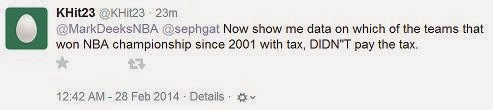
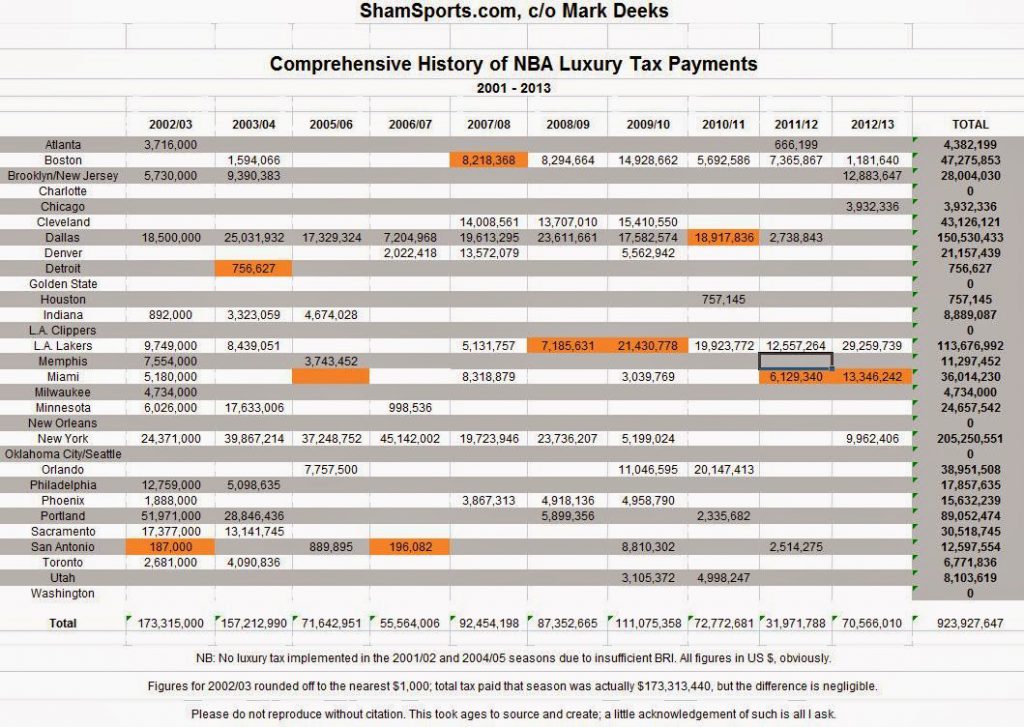
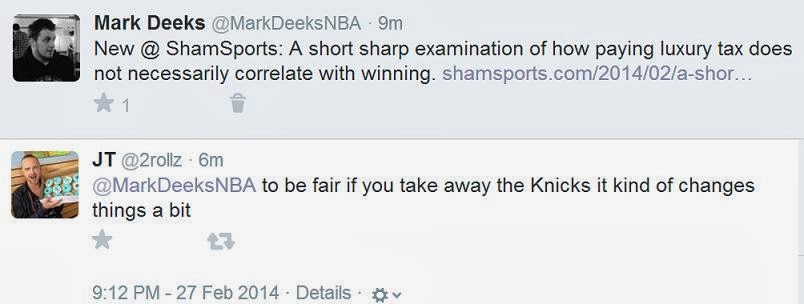





































 Matt Gatens
 Shane Lawal
 Ramone Moore





 Michael Stockton