Wildly Unnecessarily Lengthy 2014 NBA Draft Board, Part 2: NCAA Shooting Guards
June 17th, 2014
There follows the second in a series of posts that breaks down the players eligible, either automatically or by early entry, for the 2014 NBA Draft. This list is for the shooting guards.
As ever, the list is about 35 players longer than it needs to be, because one of these days, the NBA draft will be forty six rounds long. Just like it used to be. On that day, we shall rejoice.
Also as ever, some position assignments are slightly arbitrary, yet, because they matter not on the court, they should matter not in their classifications within this series either.
And, as ever, players are listed in no particular order other than the order they were thought of.
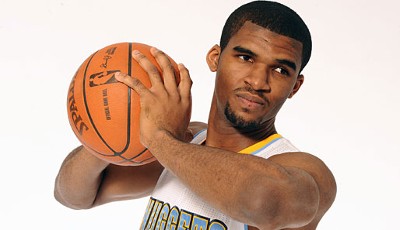
Young came into his freshman season with a great reputation, one partly born out of his supposed offensive instincts. But they weren’t on show. Players with offensive instincts should not look as lost and motionless as he did when off the ball. They should move, cut, get open, and not just stand there. Players with offensive instincts should not jump to pass several times a game like Young did. Players with offensive instincts shouldn’t drive into traffic relentlessly without knowing why they are doing it, without it being the percentage play, without there being any real chance of getting to the rim or drawing a foul because the defender got into position about half an hour before the drive even started. But Young did all these things all year young, showing only slight improvement by the year’s end. His fundamentals were weak, his IQ low, his passing vision and decision making poor. He rarely used screens or fakes, threw it away so often, and his shot creating abilities involved either the aforementioned drives to nowhere or just raising up and shooting.
Mind you, if drafted low enough, he can get away with it. Because the potential is there. Young is a big wing with fluid mobility and an extra gear at times, who could be an excellent shooter and an excellent defender. The jump shot form is decent enough, and the results mostly good – if he hones it further, improves his consistency, improves his selection and learns how to create better looks with fakes, jab steps and the like, he could be one of the league’s better shooters. And with his size and quick release, it will be tough to block. Young is confident, we’ll give him that, and is no shrinking violet which will help his shooting prowess. His handle is sloppy and he ought never be expected to be a regular slasher to the rim, but if he can better recognise his strengths and develops what is already a decent pull-up jump shot, that will give him some effectiveness inside the arc too. He can run the court and finish at the rim, which would suffice as an offensive package were he never to develop much of a slashing game or learn how effective dive cuts can be. The same package is true of his defensive projection, where his size, long arms and mobility bode well, although he needs to plug in all the time and want to attack the glass.
He is of course young and in a situation where he can develop, so there’s plenty of scope for improvement, and plenty of reason to expect it. But, meh. Long way to go. Long long way to go.
Must improve: undershirts.
Maurice Creek, George Washington, Senior, 6’5 195lbs
Creek’s good senior season redeemed what was a worryingly stagnated collegiate career. After serious injury as a freshman, Creek took a long, long time to rediscover the promise he had held before it, mostly because he kept getting injured. 12 very intriguing games as a freshman were followed by 18 hobbled ones as a sophomore, then a redshirt year, and 24 extremely ineffectual games as a 28.8% shooting junior. But as a senior, and after a transfer to George Washington, Creek finally got his health and his game back, playing more minutes in his final season than in the previous four combined.
The only shooter on the team besides 6’8 backup forward Nemanja Mikic, which means not much spacing and a lot of defensive attention, Creek is nonetheless a very good three point shooter and always has been. Nothing else about his game stands out – inefficient from two point range, rarely getting to the line, thin, not one to drive much or easily, not a good finisher at the rim, and beset with slightly high turnovers – and so Creek is all about the jumper and whatever else comes from it. He moves well and often off the ball, and despite being a tad undersized (and having lost some explosiveness due to the injuries), his quick release makes him always a threat to get a shot away. Creek will occasionally get into the lane and either kick out or shoot a running righty, but not often, and with limited defensive impact, he is fairly one dimensional as a shooter. It is thus very much of note that Creek can hit off the catch and the dribble (not that he dribbles much), can hit when both contested and open, can hit when set and when falling away, and can just rise up and shoot over defenders unabashedly. The injuries robbed him of none of this.
However, when an extremely young player suffers two season ending injuries in a row, then misses an entire third due to yet another injury, it is inevitable that his hardiness is the primary concern. Having fractured one kneecap, stress fractured the other, and torn an Achilles, Creek has a lot to prove. He’s off to a good start in this respect, and needs to put at least one more healthy and productive year together in a decent European league before moving up any levels. There was clearly some rust still (dribbling off his leg, throwing the ball away, etc) that needs to be worked out. Undersized for the position and probably smaller than his measurements, Creek will find it tough to make the very highest levels of the game, but shooters always garner attention, so he needs to keep at it and stay lucky.
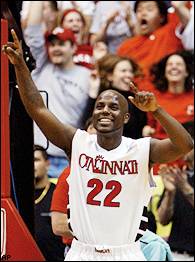
Sean Kilpatrick, pictured just after being told he was a “prompt & efficient payer, A+++++”.
Kilpatrick was the only scorer on a Cincinnati team who prided themselves on defence, because they had to, because they did not have any scorers. Besides Kilpatrick, the only other player to score more than seven points per game was power forward Justin Jackson (11.1), a man who pretty much needed setting up all the time. And there was no one to do such setting up – paltry as they may seem, Kilpatrick’s 2.5 assists per game were actually the team high. Kilpatrick, then, took a lot of shots because he had to. And while some of those shots were what we might otherwise consider ‘bad’, they had to be.
Mostly taking deep range jump shots – and sometimes VERY deep range jump shots – Kilpatrick always looks to score. With a quick release, he can single-handedly win games on the offensive end, and has all the hallmarks of a true microwave type. Diversifying his offensive game more as an upperclassman, Kilpatrick improved somewhat as a shooter off the dribble (although he is not especially good at this and is distinctly better off the catch still), and used this added threat to get to the rim and the foul line more driving off of screens. He doesn’t finish especially well at the rim, small for the position and not an elite athlete, and has never been much of a ball handler, but the knowledge that he can and will get to the rim anyway benefits his jump shot, as he has to be played for it. Kilpatrick mostly plays in the half court and doesn’t play much in transition, but this might change when he’s on a team that can do it as a unit – in theory, with decent speed and his always hunting for a shot, Kilpatrick could thrive in this aspect.
Defensively, Kilpatrick has historically paid little attention to this end of the court, but did pick up his intensity in that aspect as a senior. His amazingly low foul rates speak to his tendency to hide on this end, but when he wants to move his feet and stay in front, he can, combined with good strength. Kilpatrick’s talent and drive on the offensive end has never spilled over to defence, yet should it ever do so, there is a foundation to work with.
Having to go five on one isn’t good for anybody, and Kilpatrick did an admirable job in the circumstances. It is perhaps telling that he always had to try and score in such situations and could not create for others, but it’s not really the point. Kilpatrick is a shooter, and that’s fine. And now that he’s no longer chucking to meet quotas, he’s a very good one.
Roberto Nelson, shortly after being told he was an “excellent eBayer, A++++, would use again.”
Roberto Nelson has flourished into a very good scorer, and his offensive output is punctuated by an extremely high free throw rate. Taking 7.8 free throws per game as a senior, combined with the efficiency of his three point stroke, saw Nelson score 20.7 points per game on only 13.9 shots, a 59.5% true shooting percentage in a major conference. That makes people take notice. Nelson also led his team in assists, albeit alongside extremely high turnover numbers.
Nelson does all this without elite athleticism. He is not hugely quick, and not an explosive finisher. Rather, he is relentless and sneaky. Utilising a very strong mid-range pull-up, Nelson cuts, drives, and, although he doesn’t utilise the three pointer all that often, has NBA range on his shot. Eternally confident, Nelson is a gifted scorer who runs at every opportunity, can spot up off the ball, and who doesn’t seem to have much difficulty being contested by a bigger defender (of which there are many). He battles in amongst the trees, uses step-throughs and spins to get there, is unflinchingly confident, and has a swagger to his scoring game.
In addition to this, Nelson also spends some time on the ball, and demonstrates a willingness to pass on the move to cutters or big men around the basket. It should be said that Nelson tries to thread the needle in this way far too often and makes many a bad passing decision, but his willingness to pass is nonetheless admirable. Nelson is not a primary ball handler and can be pressured into mistakes and turnovers when charged with the task, but he is a capable enough secondary one.
What he must continue to work on is his defence. Quite strong but not laterally fast, Nelson isn’t big either, and at times has let himself get out of shape. Because of all this, and because of seemingly conserving energy for the offensive end, he is little defensive presence at all. Given that he will never be big or fast, he needs to counteract this with a great defensive motor, footwork, charge taking and good hands, but there’s little sign of this so far. He also needs to take a few less heat checks, especially as his competition level improves.
Nevertheless, Nelson has developed quietly (always missing the tourney will do that to you) but effectively into being a consistent nightly threat, and should pour in plenty of good professional years.
Brown plays and photographs with a permanent look of insouciance. He never ever smiles, save for one time after a game winner. It does not undermine his skill set, but it would have helped his draft credentials a bit better had he looked like he was enjoying himself.
Brown played alongside Earnest Ross on Missouri’s wings last season, where his role was not to chuck as much as Ross did. He is aggressive as a scorer, hunting his shot and taking plenty of them, but not an undue chucker, who will take some quick shots at times but not too egregiously. An excellent shooter who merits such looks. Brown shoots off the catch and off the dribble from both two and from three, shoots a pull-back, and can make jumpers off a spin move. His drives to the rim are a bit unceremonious at times, but they result in many fouls calls, as Brown is fully prepared to take the contact, and finds plenty of ways to create scoring opportunities for himself.
The downside unfortunately is that Brown cannot create for others at all – he only looks to score, and it is the only thing he is good at. Brown will occasionally throw a nice pass, but he does not feed the post, has little handle, and, on his rather wild forays to the rim, it is to shoot or get to the line, not to pass off. Brown is also a concern defensively – as evidenced by his exceedingly low foul rates, Brown does not always compete defensively, and lapses at times. And despite having a decent frame for the shooting guard position, Brown is not tall, long or elitely athletic, and thus has not the physical tools to make up for this coasting. He seeks only to score and can only be relied upon for such. It is fortunate then that the jump shot is good enough to cure these ills.
In a high-tempo game where he can push the ball (which he loves to do), shoot quick and shoot often, Brown thrives. He’s going to love summer league, then. After that? There is a small NBA chance.
Brown’s athleticism is as good as anybody’s. He is a cannon in transition, a seriously dynamic player who absolutely flies down the court and who isn’t afraid of contact. Brown runs the court at every opportunity and has learnt how to use this athleticism – by leaking out, cutting off the ball and playing defence, rather than by trying to do everything with the ball.
This is important, because in terms of ball skills, Brown is lacking. Despite all the athleticism, he doesn’t have the greatest first step when driving with the ball, in large part because his handle is not good enough to keep up with his feet. He lacks advanced ball handling skills in terms of hesitation dribbles, changes of direction and the like, and although he is developing in this area, Brown lacks the handle that a 6’3 guard would ideally have. At that size, one would expect a guard to be able to play some point, but Brown rarely does – forced into doing so in the absence of Marcus Smart, Brown was not especially reliable at getting the ball over half court, and showed little in the way of playmaking ability other than to start the endless series of perimeter passes.
Brown’s abilities and upside lie elsewhere. As a defensive player, he has every physical tool required; recovery speed, strength, long wingspan and, pleasingly, a penchant for blocks. These tools also allow him at times to be able to get to the basket without using a pick, and he has developed over the years an understanding of the timing and angles involved in when to make such attacks. He also has some projectable ability as a shooter. Utilising a good shot fake and with an incredibly high leap on his shot, Brown has improved his catch-and-shoot jumper to being perfectly adequate, and is already a good mid-range shooter. He rarely shoots off of curls or screens (despite often using both for getting to the basket), which if developed would be a new string to his bow.
At times, Brown drifts and gets lazy on defence, undermining his physical prowess. And at times, despite his increased offensive IQ and skills, he forgets the fact that he’s the kind of player who can split double teams, dive off the ball, attack the basket and finish through contact, and instead tries to shoot through everything. But on his game, Brown is an NBA player. And if he can develop the defence to an elite level, whilst also developing enough of a handle to fill in at point or enough of a shot to be a capable higher volume shooter – or both – he might stick around for a while. He hasn’t the ideal size for Tony Allen’s job, but then many of these same things were once said about Tony Allen, too. Allen learnt his role and embraced it. So must Brown.
Historically poor in his shot selection and defensive effort, Adams improved on both as a senior to get himself almost certainly in the first round. This past year, Adams took less mid-range jump shots and fewer quick long-range shots, instead getting to the line more often and welcoming contact. He also committed to his perimeter defence, as evidenced by the steals numbers, getting into better positions and working harder to stay in them, while using his good reach and timing to win possessions on that. With both of these things in mind, Adams laid forth the foundation of a strong three-and-D role player with the ability to do a little bit more off of the dribble than his peers in that role.
This is not to say that these concerns are fully alleviated, however. Adams is still prone to defensive lapses in particular, and when he makes them, he hasn’t the physical tools to get away with it. His wingspan is good and compensates for his slightly smaller overall frame, but Adams is not especially fast, neither in a straight line nor laterally, and so he has to have a constant motor to keep up. And he doesn’t, overly reaching and not always fighting to recover. He also still likes his jump shot that bit too much.
Nevertheless, Adams contributes on both ends and in multiple ways. Defensively, he anticipates well, has good hands, and does his turn on the glass, while offensively, he exhibits a bit of everything. An improved spot-up three point shooter always in motion off the ball, Adams also is an effective straight line driver and occasional post-up option, and although he shied away from the mid-range game so much last season, he has both a pull-up and a floater to go to when getting inside the arc off of curls.
Without being a creator, playmaker, ball-handler, knock-down shooting or lock-down defender, then, Adams contributes in many ways. But he will need to continue the progress he made last year. This means better jump shooting, better jump shot selection, better ball pressure on defence, and keeping the weight off. Being slightly undersized, slightly under-athletic and not an especially effective creator, the margins are not that big.
Johnson put up ridiculous numbers at the combine, which cemented his already fairly well cemented draft prospects. Yet for all those measurements, he doesn’t play in the overly athletic style of, say, Geron Johnson. Instead, Johnson picks his spots and uses more skill than physical tools, knowing they are in the back should he need them.
Johnson is a fairly complete player on both ends. Defensively, he plays tenaciously, using his foot speed to stay in front of opposing guards and blessed with the ability to clean strip it from them. He moves quickly to recover and rotate, and plays strong help from the guard spot, going down to double cleanly and quickly and yet being adept enough to recover back should he need to. Better than the help is the man to man defence, where Johnson shone as one of the better man to man perimeter defenders in the country at either guard spot.
Offensively, Johnson was also the Wildcats’ highest scorer, doing so in a variety of ways. He is best as a slasher, attacking the rim with craft and guile, and, should he need it, that extra level of explosiveness. Given a clear lane to drive, he can get up and finish – given an unclear lane to drive, he can contort through the defence, use fakes and find seams. Johnson also does a good job on drive and kick action, and racks up decent assists totals despite only very occasional point guard turns. Johnson can also be run off the ball to spot up for jump shots, and drive off of curls all the way to the rim, utilising a floater in the lane and finishing well for a smaller guy. He does not prioritise the jump shot, but can still create ones for himself on occasion with step-back and crossover moves. Not isolating much, not the best three point shooter and not big enough to shoot over anyone on the perimeter, Johnson nevertheless maximises his offensive talents with judicious shot selection and high IQ, low mistake play.
There are no big weaknesses to Johnson’s game, unless we were to nitpick and say his height. It is the ideal point guard’s body he plays in, but slightly too small for an NBA two. But let us not overevaluate that. Without ever really hitting dominant scoring stretches, and while not projecting quite so favourably on the defensive end at the NBA level due to said height, Johnson nonetheless just gets it done. And by “it” I mean a bit of everything. He’s just good.
If the ball wasn’t there, this would be quite the high ten.
Pepper transferred from West Virginia after two years and went to Temple, where he played just as little as a junior. But when the Owls entered last year with a jarring lack of depth, Pepper suddenly had as minutes as he could handle, as the leading scorer and primary perimeter option on a team that struggled on both ends of the floor, but most notably defensively.
He was not an exception to this. Pepper struggles on defence, mostly because he is quite easy to drive past, but also due to a low intensity level, heightened by a lack of foot speed. Pepper is very strong in the upper body, but the muscle he carries around doesn’t make him any faster, and it is very difficult for him to keep anyone in front of him. He demonstrates good anticipation at times, but also closes out slowly at others, and just does not look especially bothered on that end of the floor a lot of the time. Because of their severe lack of depth, Temple could not hold him especially accountable for this either.
Offensively, Pepper is a shooter. A good one, but not a great one. And he mostly limits himself to this facet of the game, creating very little off the dribble and rarely driving. For all that upper body strength, he rarely looks to drive the ball to the basket and take any contact, hardly ever getting to the line – limited to a few drives off of closeouts, Pepper can power his way through the lane in a strong if slow fashion, but hasn’t the foot speed or handle to do so in isolation, and is a below-the-rim finisher when he does get anywhere. Further to this, Pepper is notably inconsistent – from season to season, from game to game, from half to half. This is not the best quality to find in someone best defined as a ‘shooter’.
It might serve Pepper best to drop some of that muscle. It probably makes him look great at the beach, but considering how little he uses it as a player, it seems more of a hindrance. It likely slows him down, and he hasn’t much speed to lose. A slightly more spry Pepper is a very nice complimentary off-guard with good offensive instincts, a quality stroke, and some size for the position. If he keeps the beach body, he needs to use it to bump players on defence more, refine his handle so as to be more able to get into the line, and change his mindset to that of someone who wants to be there on defence.
A good but overlooked player at George Washington, Kromah transferred to Connecticut for his senior season to be the defensive specialist for a team already plenty stacked with scoring guards in Ryan Boatright and Shabazz Napier. This decision ultimately won him a national title, as he provided a very effective accompaniment to the dynamic duo.
Kromah really is an excellent defensive player, a good size wing with decent athleticism and length to go with relentless determination and motor. He denies, traps, helps, strips and hustles, an excellent defender and leader with strong intangibles on that end, and with the physical profile to defend multiple positions. With good hands, mobility and instincts, Kromah projects as a capable defender at every level if he keeps this up.
Offensively, Kromah is far less developed, but not useless. While he is a poor three point and free throw shooter, Kromah can hit a mid-range jump shot, and does some work off screens to create both these looks and some drives to the basket. A smart extra passer, Kromah moves the ball and himself to good effect, not an invisible player on the offensive end by any means. His handle is very limited and easily stripped, and his offensive game is pretty much solely running the court, curling a bit, flailing wildly at the rim on straight line drives and hitting open shots (it’s not going in if it’s contested). There is some value to all that, however.
There’s always said to be something more noble about being a strong defender with underdeveloped offence than a strong scorer with poor defence, and Lord knows coaches love it. To that end, Kromah should do all right for himself in his inevitable European career.
Crawford was the fourth guard in Memphis’s four guard line-up last season, and did a little bit of everything for the team. Best known as a shooting specialist, Crawford is a very good catch-and-shoot player who struggles much more when shooting off the bounce, but who can fill it up with the feet set. He also masquerades as an occasional point guard – Memphis were catered for in his position by Joe Jackson and Michael Dixon last season, but Crawford can fill in for possessions at a time, and was similarly relied upon for versatility defensively. Too often forced to guard bigger forwards and defend the paint, Crawford was never all that effective, given how easy his 6’4 frame was to shoot over, but he used his strength to body up as best he could, and win some occasional possessions with his anticipation.
However, all language used above to indicate intermittent effectiveness is deliberate, because there is nothing profoundly secure about Crawford’s production. His defence seems to be tied to his scoring output – when he’s shooting well, he defends well, attacking the boards and competing on D. But when he’s not, he will lazily reach, overplay the passing lanes, forgo the glass and close out slowly. Even when plugged in defensively, he is quite slow laterally, undersized and easily gotten around by opposing guards, so he needs maximum effort to compensate and it is not always there. This is not something that he phased out as an upperclassman, either – indeed, Crawford was arguably more liable to switch off and play soft as a senior than in any previous year. And he also seemed to get slightly stockier. On offence, Crawford’s mid-range jump shot is nice, but he won’t use it, and despite his decent athleticism and solid enough handle, it is a wonder why he so often refuses to use them on the drive. It is not an especially nuanced handle, and Crawford rarely gets beyond the first line of the defence, instead racking up his assets from a willingness to pass and moving it around the perimeter. He never gets to the foul line, is not a speedster, heat checks too often, and does not even work as much off the ball as you would want a shooter to do.
Crawford never improved a great deal in his time at Memphis. It is true that he didn’t have to improve much to be a contributor, but it is a big hindrance at this level. Crawford is an occasional shooter, occasional point, occasional ball handler and occasional defender who will be advertised as having defensive versatility, but he is also streaky, undersized, not hugely athletic and unassertive who never made himself all that reliable. It is not too late to start, but these ills will not be cured in or before summer league. Wayne Ellington has a similar physical profile and skill set, but Ellington competes and moves off the ball.
Fully prepared to meet the dress code requirements, at least.
Johnson was Crawford’s team mate at Memphis for the last two years, and played off the ball just as much as he did in an entirely different way. The hallmarks of his game are playing hard and playing athletically, and he thrives on all the things those things avail. He runs the court, is always pushing the ball, and can drive to the rim and finish explosively. He really is a dynamic full court player, a tremendous rebounder for a 6’3 guard, and, at times, a quality defensive presence. Johnson’s speed and hands make him a very capable defensive player of both guard positions when the tenacity is there – it normally is, but there are lulls. Strong with a long wingspan and a great leap, Johnson’s physical profile belies his lack of height for the two guard position, and yet he can also masquerade as a point, bringing the ball up when needed and a good extra passer, if not a defence collapser.
All good so far. Sounds like Chris Kramer if Kramer could do something with the ball, if he had longer arms, and if he was even more athletic. Indeed, Johnson shares Kramer’s poor shooting ability, struggling with any form of jump shot and yet not letting that stop him from trying them. The comparison goes further – Johnson struggles to create his jump shots or any offence of his own, cannot shoot off the dribble at all and struggles with poor touch around the rim, but is a good extra passer and has good hands and drives open lanes. Johnson can split a double team and drive baseline in ways Kramer can’t, but there are many similarities nonetheless. Yet what really separates them is Johnson’s knack for turnovers, stemming from forcing the issue, not being able to dribble at the same speed as he can run, throwing the ball away and making too many poor decisions. Johnson makes much happen when he is on the court, but when he’s on the ball, those things are all too often not good things.
This all lends itself terrifically to a workout setting, and Johnson might play himself into fringe NBA range in that period. But it may be as close as he gets.
“Wiiiiiiiise men saaaaay, only fooooools ruuuuuuuush iiiiiiiin………”
In light of Purdue’s struggles, as the upperclassman and one time four star recruit, Johnson by default had to shoulder a much larger offensive load than befits his talent. Playing alongside his younger brother Ronnie – who struggled with consistency and reliability himself – Johnson had to take the toughest defensive assignments AND be a focal point on the offence for all game every game, because no one else could do it.
Johnson, however, couldn’t either. His offensive game is too limited for the load he was asked to shoulder, and his poor efficiency is a testament to how it went. Never a particularly good shooter, Johnson catches and shoots fairly well but struggles to create jumpers or shoot off the dribble, and his free throw stroke is extremely poor for a wing. Inconsistency defined his offence, and inconsistency is not a good thing from the most relied-upon offensive player. And Johnson should never have been that because he just hasn’t the shot creation skills, not for himself or for his team mates, to be so. The lack of a consistent jump shot nullifies his driving game; Johnson is effective in the paint with a floater-y, hook-y thing, but it is hard to get there without dominant athleticism, a particularly tight handle, a jump shot to open up driving lanes and with so much defensive pressure against him. Set up to fail, Johnson pretty much did, taking some bad shots and missing plenty, and making too many passing errors.
What Johnson does do is defend and play hard. He hustles, moves his feet and plays with some determination, and he also rebounds very well for a guard. Johnson takes the toughest defensive assignments and is a savvy, solid defender, whose defensive consistency is far greater than that of his offensive consistency.
Given the right role, as a tertiary-at-best offensive option and defensive pest, Johnson should have a pro career somewhere. But to progress, he will need to develop the jump shot that hasn’t developed for four years.
Armand is an excellent role playing two guard. That role is mostly shooting, though not exclusively. Armand is a very good catch-and-shoot player, a player who moves well and often without the ball, and who plays a controlled, disciplined game. Indeed, if anything, he should shoot a bit more. Armand tries not to over-rely on his jump shot, and succeeds in doing so, but he’s such a good shooter that he could stand to shoot more.
Working off of curls and flare screens, as well as the occasional isolation, Armand is always a threat to catch and shoot, from any part of the court, with any amount of time left, at any time of the game. He is also much improved at taking advantage of the space and opportunities that this shot opens up for him. Armand can collapse a defence coming around a pick, cut into the lane and shoot a fall-away two pointer, and occasionally get to the basket. He also creates for team mates, a heady passer and part-time point guard who can run some pick-and-roll action, drive and dish to a shooter or drive and dump-off to a big man. Armand is better than his core numbers simply in how much better the offence is when he is a part of it. He can pass, he can shoot, and he is versatile, disciplined and smart.
It should be noted that Armand is not hugely athletic, and is historically not an especially good defender. He improved his footwork and motor as an upperclassman, but still does not stand out on that end of the court and can be blown past. He is also not especially big for a wing and has no advantages in his physical profile – he doesn’t even jump very high to shoot. But without being a star, Armand was a key player on a good quality Iona team. And wherever he goes, I should imagine he will be this again.
McDonald has always been a scorer, and yet he’s always been an inefficient one. A mediocre shooter with occasional hot streaks, McDonald doesn’t have poor shot selection necessarily – he’s just not the best shot maker. McDonald turns it over very rarely and knows his role, yet this is in part because he does not play on the ball much. Not creative, dynamic, nor good at creating looks for himself or others, McDonald’s role is mainly a defensive one. Not overly quick or athletic, McDonald nevertheless stays after his man, stays in front, and competes on defence. He does not have great hands but he also does not gamble much, using his strength and guile rather than any great physical tools.
However, offensively, while his unselfishness and understanding of his limitations is a virtue, his limitations themselves are a problem. McDonald is a shooter and was the only shooter really on this year’s incarnation of the Tar Heels, but he just isn’t that good of one, both inside or outside the arc (and especially from the foul line, where he rarely gets anyway). A poor finisher at the rim on the rare occasions that he gets there, McDonald cannot create his own, cannot create for others, plays off the ball but without being a particularly good shooter off the catch or the curl, and generally had to assume a bigger offensive role as an upperclassman that he was fit for. Considering this offensive role was not that big, this is something of a concern.
With a better jump shot and a higher volume, McDonald’s prognosis is different. But the time for that is now.
Like a few on this list, Heslip is a shooting specialist. This is self-evident from the stat line, and the 46.5% three point percentage is lovely. He gets open off the ball and shoots off of curls with ease. He spots up, throws subtle head fakes, and has been one of the best shooters in the nation. He succeeds in these things even when he is entirely game-planned for. There’s always a look in the halfcourt when Heslip is around, be it a back screen and baseline cut, or a pull-up in transition. The release is quick, and most importantly, the release is accurate.
However, there really is nothing else to report. Heslip never turns it over because he never handles the ball inside the arc, and barely outside of it. He is very small for a shooting guard, is weak, is not tough, is not fast, and is not athletic. He is not even pesky. He is extremely one dimensional offensively, too small to do much inside the arc and having no intent to get there, not even handling the ball in any screen action. He’s an option or a decoy, depending on how well he is defended. And speaking of defence, Heslip’s is poor. He is better than he was, but he was always going to be overmatched with those physical attributes, driven past and shot over as if he is not there. He also does not always compete, misses spots, keeps his hands down, has no knack for deflecting the ball, and generally provides no obstacle whatsoever. Heslip, then, is a shooter and only a shooter.
Mind you, it worked to the tune of 46.5% last year, so it works at the right level.
Drew Crawford immediately before being sent to bed with no dinner.
Northwestern being who they are, Crawford had to be a primary perimeter creator for them over the last few years. And it is just not who he is. At least, it is not who he should be – Crawford embraced the role of go-to guy and was more than happy to try, but he hasn’t the shot creation abilities befitting the role. Much as Crawford took on the challenge of trying to score in isolation, his ball handling abilities are far too limited to do so regularly, short of raising up or driving on overplays.
Nevertheless, Crawford assumed the role as he has some tools for it. A good athlete and dunker, Crawford doesn’t have to be a primary creator to have some offensive presence – a willing slasher with a nice bank shot, Crawford uses a floater, a banker and a turnaround jump shot to get shots away inside the arc. His three point stroke is merely decent, yet Crawford is a fairly good shooter off the dribble, and is best in transition, hard to keep up with when given the freedom to run (which isn’t often). With long arms and a good leap, Crawford can finish above a defence. However, Crawford’s slender frame make it tough for him to bump off any defender or take contact, and he lacks the nuanced handle, the changes of pace, the step-back jumper et cetera that would facilitate his driving game. He also takes some bad shots, especially jump shots, and for all those physical advantages, he has never been an especially disciplined defender. His best defensive attribute is his work on the defensive glass, but without applying much ball pressure at any point, Crawford’s defensive presence is a concern rather than a strength.
Perhaps when freed from Northwestern’s slightly inhibiting style, Crawford could flourish. From an NBA perspective, Crawford’s length, athleticism, transition and rebounding make for an intriguing combination. But the NBA looks for three-and-D role players, and although Crawford could develop those factors of his game, he is currently neither of those things.
Aside from his free throw stroke, which disappeared last year for no apparent reason and which will probably come straight back, Harris is almost as good of a shooter as there can be. Be it off of screens or the catch and shoot, Harris is always a threat to shoot, especially in light of his very good size for the wing position. Combining very high IQ (that means he knows where to be on the floor) with a good motor off the ball (that gets him there) and a quick release (that makes it all worthwhile), Harris is a threat in the half court whether or not he ever touches it.
At times, Virginia asked Harris to be a primary creator, and the results were mixed. Harris has always been more of a shot maker than a creator, and he hasn’t the handle to be a primary offensive focus or a man who plays a good amount on the ball. Not explosive nor effective in the paint, Harris is something of a straight line driver, not a good thing to say of a primary creator. Harris’s shot creation, such that it is, comes from his effective use of shot fakes, pull-ups and step-back jumpers, not from getting into the paint and making plays. Not being especially athletic also affects his projection on the defensive end – despite good footwork and being just as smart on this end as the offensive one, Harris’s sub-par foot speed could be exposable at the NBA level.
Nonetheless, with a good shooting stroke, a good basketball brain and the size to do something with it, Harris should get at least a couple of years tryout in the NBA. To stick, he will need to prove he can hold his own defensively, and be a little more selfish.
Gary Harris distracted by thoughts of his own mortality at the wrong moment.
Gary Harris, Michigan State, Sophomore, 6’4 210lbs
In accordance with what GMs want from their mid-first-round pick wing players, Harris oozes three-and-D potential. He is yet to hone the three point shot on high volume, but it surely won’t be long; already a good mid-range shooter and a decent long range one, Harris shoots off the catch and off the dribble, and also makes decent use of screen and curl plays. He projects as a plus shooter at the NBA level, a probable slow start notwithstanding. It’s not really in doubt, either.
Also not in doubt is Harris’s defensive intensity. Harris was always to be found hounding opponents defensively as a Spartan with an energy level that only some have. He is a smart defender who pressures those on the ball and willingly chases those off of it, both very translatable skills.
What is in doubt is Harris’s size. On the small side for a shooting guard, Harris will never be able to effortlessly shoot over NBA defenders, and is only a decent athlete to compensate for it. It’s not automatically going to undermine the above two facets of his game, but it will make them harder, and while Harris does not have to be an entirely two dimensional player, he has not done an awful lot other than this, even at the college level. Without much handle, strength or willingness to take contact, Harris is a poor finisher at the rim and lacks the handle to create. He is solid and dependable with the ball, but mostly only because he does little with it; aside from the occasional floater, a willingness to run and smart unselfish passing instincts, Harris hasn’t shown much beyond the three-and-D role.
It is to Harris’s great credit that he plays effectively without the ball, plays within his role, and plays both ends. He is a high IQ, high effort player with some skill. He does however need to progress beyond here, adding a bit of a slashing game outside of transition and improving both his jump shooting efficiency and ability to get looks. The one dribble pull-up two pont jumpers he currently employs need to be drives to the rim or two dribble quick passes to move the defence. And all of this is very doable.
Sunken dugouts might be a pretty good remedy to players leaving the bench during altercations, actually.
Stauskas will be a first-round pick. The only question is how high.
Probably the best shooter on this long list of good shooters, Stauskas combines an extremely good mid- and long-range jump shot with great shot selection and a tremendous shot off of screens. Many players can catch and shoot well, but few shoot as well all around as Stauskas does, an excellent shooter off the dribble and off of curls, as well as being someone who must be contested when spotting up in both transition and the half court. To boot, there is also a step-back jumper, and a strong understanding of what the defence is giving and when. It is these skills that separate him as a shooter from someone such as the otherwise comparable Jon Diebler.
Outside of the shot, Stauskas has developed considerably as an overall playmaker. Utilising hesitations, changes of pace, dipsy-dos and the like, Stauskas can take advantage of the defensive shifts created by his lovely shot off the dribble by getting to the rim, giving himself multiple options in all pick-and-roll action, including hitting the roll man. Stauskas separates himself from other shooters by being a scorer rather than a shooter, very smart, efficient and smooth, building on what his jump shot opens up. He is fluid, he has body control, and he knows where to get to. He doesn’t isolate well and nor will he likely ever, but nor should he.
Unfortunately, the defensive concerns are loud and valid. Without being an athlete, without being strong, without having a particularly good wingspan, there are not really any defensive matchups favourable for Stauskas. Quicker guys can get by him, longer guys aren’t troubled by him, and stronger guys can push through him. Even opponents with roughly the same physical profile on him are not too bothered by his defensive presence, as Stauskas does not work to overcome these deficiencies with a high motor or great defensive reads.
Stauskas is extremely effective above the break and loves a high ball screen. Adding a corner three to that shouldn’t be too hard, and he should be an excellent floor spacer in the NBA from the minute he enters it. But he’ll also be a defensive liability from that moment on, too. So he’s going to have to be good enough of an offensive player to produce more points than he’s giving away. This is possible.
Neither of them seems to be particularly enjoying this.
Wilcox is best as a shooter. The majority of his offence comes from the three point line, and although he’s an excellent shooter from the foul line, he rarely gets there. This is in spite of having a tempting combination of good size and great length. Wilcox absolutely has the frame and body type of an NBA wing, and he has the game to fit the oft-coveted three-and-D role.
Be it off the catch or off of screens, Wilcox is a good jump shooter, aided further by a decent pull-up shot when asked to create. He is not a primary or secondary offensive creator, lacking much in the way of a handle and distinctly better playing off the ball, and with the quick-release jump shot being his main tool. That said, Wilcox has developed slightly during his career as a Husky at driving to the basket, and finishing once he gets there. He still does not excel at either and still avoids contact at the rim, yet his finishing, which was once a distinct weakness, really improved as an upperclassman. Wilcox exhibits a decent left hand despite being right handed, preferring to both drive and finish that way, and has improved his ability to change direction and find gaps.
Questions lie around Wilcox’s ability to defend his position at the NBA level, and whether he can gain any separation for his shot. Despite the blocked shots numbers born out of his tremendous wingspan and decent motor, Wilcox has already had trouble keeping players in front on the perimeter, and for all his length, he is not especially quick nor athletic. That also affects his ability to get separation – outside of catches off of kick-outs and transition play, Wilcox does not consistently get himself open looks, hence the rather low scoring output in rather large minutes.
Wilcox shone as a role player through efficiency, discipline, playing within his limitations, contributing in multiple facets and excelling at one. This is precisely what the NBA needs him to do too. But it’s not an automatic transition.
LaVine is the best athlete on this list, and the best athlete on most lists. He is dynamic and spectacular, drizzled with potential. The production isn’t there yet, but the upside is real.
While his skills aren’t at the level of his athleticism, they are there. Notwithstanding a mediocre free throw percentage in his only collegiate season, LaVine is a decent shooter already, from both mid-range and long. He jab steps, shoots a pull-up and already has NBA range, showcasing plenty of shot making talent with more than a dollop of flair. He jumps high to shoot and also drives a bit in the half court, often using (perhaps overusing) a spin move and able to make tough, acrobatic finishes of all kinds. LaVine is right side dominant and needs to pass more rather than force the action, especially on the break, where he often goes for the hero play rather than the percentage one, but the scoring profile is a good one.
Some project LaVine as a point guard, but this is ambitious, and perhaps born out of his lack of true shooting guard size. LaVine has never demonstrated much in the way of time and score management in the time he has had at point, nor a good floor game. He does not make plays out of the pick-and-roll much, still drives mostly to score, and makes too many errors, both in passing and handling. There is scope there in the sense that LaVine could be a top point guard defender, an unstoppable ball handler in transition and a solid-enough handler in the half court, but it’s not optimum. LaVine should be let loose as a scorer, and while any point guard can be a scorer, it doesn’t fit all to be so.
At his best, LaVine is running the lane all day, cutting off the ball, spotting up and committing himself to a pesky defensive game. That is all more befitting of a two guard. Defensively, LaVine’s athleticism makes him projectable – his fundamentals, stance, footwork and effort all need work and consistency, but there is again something to work with. If he can defend the quickest opposing point guards, that’s an ancillary benefit.
Ultimately, LaVine needs some work in all facets of the game. He needs to be much more effective off of the ball as he does not currently do much without it, and if he is to play with it, he has a lot to work on. There are instincts there, but they are those of a two guard.
LaVine is not raw, just unfinished, and moreso than most. His career can go many different ways, and that is mostly a good thing. Whoever picks him will have something to develop, to sculpt, to hone. And even if he doesn’t develop as much as he might, he will have an impact on the court for as long as he has those physical gifts. It’s not a can’t-miss pick, but with the increased pace and space at the highest level, LaVine will be more NBA ready than he was college ready.
College coaches – this needs to stop. Immediately.
Marble is an unconventional guard, a 6’6 off guard with point guard tendencies who relies on IQ and versatility rather than any explosiveness. Save for a mediocre free throw stroke and a tendency to drift at times, he contributes a bit of everything and has no glaring weaknesses. A much improved long range shooter and defender, Marble is much more efficient than his 42% field goal shooting suggests due to the high volume of threes he takes (albeit at only 34%) and the high number of times he gets to the foul line. He has added range to his mid range jump shot and the ability to create spacing for the jumper with a step-back, jab steps and a pull-up, as well as shooting off curls.
Without the speed to collapse a defence on the regular, Marble finds seams using his body control and will take contact at the basket. He is not an especially good finisher at the rim, but he will get to the line as much as he can. Marble spends more of his time playing more away from the rim and using screens, either as the curler around them or when calling for ball screens when serving as the primary ballhandler, as he can occasionally do. When running the offence, Marble plays the pick-and-roll well and demonstrates solid vision and decision making – he will never be a lead guard at this level, but it helps. And defensively, while Marble is still prone to reaching in and gambling for steals rather than moving his feet, caught looking in help defence situations all too readily, he is improved in man to man defence and uses his size to deny passes.
This all sounds a bit like Matt Bouldin, admittedly. But he’s slightly bigger, slightly faster and slightly better. Which suffices.
As opposed to all the shooting specialists on this list, Patterson is instead a primary playmaking guard. With the body of a two guard and the game of a point forward, Patterson differs from pretty much the entire rest of the crop in this list by being a pass-first player. Or at least, he used to be. After a big scoring uptick as a senior, that distinction is now much harder to make.
Patterson’s offensive development has come mostly from a much improved jump shot, as well as much more willingness to use it. His decision making has always been a strength, but would never hunt his shot all that much. Now, though, Patterson has struck the balance between being a primary scoring option and a great playmaker.
A very high IQ player with vision, decision making and unselfishness, Patterson has also become a fine spot-up shooter from both mid and long range. Although he still somewhat lacks a pull-up jumper, Patterson can also be run off screens for jump shot looks, yet also uses these screens to sneak attack his way to the basket. Lacking explosiveness to get to the basket, Patterson gets there anyway through craftiness and hesitations, and finishes well considering he is a below-the-rim player.
Patterson can play on or off the ball, his versatility being a main virtue. While not a primary ball handler in getting the ball over half court – there’s no need for him to be, really – Patterson does a good amoount of ball handling once in the front court and makes plenty of plays out of the pick-and-roll. He doesn’t play in the full court much, his lack of elite athleticism somewhat hindering here, but his all-around game also translates to the defensive end, where his average athleticism is offset by a decent wingspan, toughness, good reads, a high effort level and quick hands. Patterson also crashes the glass well for a perimeter player, his guile and tenacity once again overcoming a lack of elite explosiveness.
From an NBA perspective, adding an efficient high volume jump shot has given Patterson a chance. His lack of elite athleticism might keep him on the fringes, but his high skill level and knowledge of what to do with it gets him to them.
Aside from playmaking and ballhandling, at which he does little, McRae does a bit of everything on the court. He plays off the ball, has NBA size for the wing positions, long arms and is a decent if not elite athlete. He was drawn up to play the two guard spot almost, and having improved year on year, he now plays it very well.
Primarily, McRae is a high scorer, and an efficient one. Not an especially efficient shooter from outside despite a large number of attempts, Fells nevertheless finds his overall efficiency through a high number of free throw attempts – a timely slasher, attacking seams, using fakes and accepting contact, McRae does a good job of taking contact when it is there, and creating it when it isn’t. His efficiency would be even higher with slightly better jump shot selection; nevertheless, with an ability to hit tough ones, step-backs, turnarounds and shots off of curls from both mid range and three point land, McRae is a very projectable if not elite shooter. McRae’s all-around game is also evidenced in his assist totals (where, despite not being a playmaker or ball handler often, he demonstrates an awareness and willingness to make extra passes and find the open man), and also on the defensive end. Without top tier physical tools, strength or length, he is a good perimeter who stays with it and plays hard defensively, utilising instinct and timing rather than physical dominance. This aspect of his game projects less well at the next level, as he lacks the size to provide much ball pressure against NBA wings, but a consistent focus combined with his instincts could make him a productive player here (as evidenced by his stocks numbers).
A 6’5-6’6 wing player and decent athlete who often if not always plays hard defensively, hunts his shot aggressively, and who can fill it up from outside? Sounds a bit like Courtney Fells. And he is. And look how close Courtney Fells has come to the NBA over the years. So McRae has a chance.
“Hey Andre, what’s your opinion on the controlled addition of fluoride to a public water supply?”
Dawkins is a shooting specialist, a very good shooting specialist, and little else. And it took until he was a senior to even be consistently aggressive in taking shots.
Off the ball, Dawkins puts in the work to get open. On the ball, he….well, he’s never on it, so it’s tough to say. Dawkins is very much a specialist – it’s all jump shots, and they’re all off of other people’s work. There is a floater in the lane every now and then, but it is rare, as are any two point field goals. And foul shots are rarer still. Dawkins passes little, and struggles to create his own shot, let alone for anyone else. On the defensive end, Dawkins has good size and has developed some strength (aided by having some extra pounds of fat that he shouldn’t), and chases around off the ball, but is ineffective at keeping anyone in front of him. He is, then, pretty much as one dimensional as can be. It is his mercy then that he is big enough and good enough of a shooter to compete at any level. And at least he plays within the confines of his role.
To be blunt, Dawkins benefits greatly from the name of the program from which he graduated. This is not to say his shot is not NBA calibre – it is. And he is just about big enough, if not overly athletic. But the NBA can afford to be picky, and must be considered highly likely to prioritise slightly lesser shooters with better defensive profiles to become their next three-and-D role players. The door is just about still open for Dawkins, but he might have to go through it the Troy Daniels way.
Sykes keeps his dribble low, so low that is is routinely out of shot.
Sykes is a quirky player who left UCF in pretty much every category, with one big drawback. A ball dominant lefty shooting guard, Sykes’s game is hindered by a lack of jump shot. He hits a few mid range shots, but takes much more than a few, and lacks three point range. Given his established lack of jump shot and proven driving game, he is always given the jump shot if he wants it, and he almost always takes it, with a long and slow release that doesn’t even disguise it. This does not work out. And it follows logically that he is also a poor foul shooter.
Sykes makes up for it elsewhere on offence by doing it all. He is always looking for the drive, and gets there with craft rather than explosion. He has a very solid handle of the ball for an off guard, can drive both ways (albeit always finishing left), shoots bankers, and makes enough contested ones from midrange. Sykes was asked to be UCF’s option every trip down, and while this slowed the game up and he was guilty of stopping the ball at times, he was also their best option in the halfcourt, demonstrating good vision whilst carrying much of the scoring load. He will make mistakes at times, and is not efficient because of the lack of shot, but he will push the ball and rebound the glass, going coast to coast at times. He consistently makes tough ones and he consistently had to. Defensively, he needs to improve his rotations and help defence, but with his size and decent athleticism he can keep an opponent out of the paint, as well as crash the glass.
Ultimately, the profile and projection is all hindered by the lack of a shot. With it, his inefficient game would be a lot more efficient. But even with it, Sykes is sufficiently ball dominant that it’s a mystery how he would fit alongside a point guard of some calibre. He can’t be the primary playmaker if the team is to be any good, for he is too inefficient and mistake prone. So it is tough to project a fit for Sykes.
Troy Huff dunked so viciously that a man in the background put on his coat and left.
Huff is always attacking, and as can be seen from his basic stats, does so all over the offensive end of the court. A very good rebounder for a two guard, Huff has a high motor and is always willing to use it.
This motor, though, is a bit hindered by his physical profile. Much as Huff likes to crash the glass and get out and run, his slender frame and lack of overall size makes him a limited finisher at the rim. Huff likes to go into the trees anyway, works off the ball a lot, cuts and runs, but despite being a good athlete when given room to get up, his small stature limits his effectiveness on both ends of the floor.
Nonetheless, Huff is snaky, in a good way. When he can’t drive in transition or semi-transition, he plays in the half court like he can anyway. Huff gets to the free throw line a lot on account of his relentless desire to drive. His drives come not because he is a particularly good isolation player or ball handler – he isn’t – but because he always looks to drive off of closeouts, screens and the like. Playing off the ball, Huff nonetheless uses up a large number of possessions with his high motor and tenacity, running at every opportunity and always prepared to try and make things happen if you need him to.
The limitations in his offensive game are, however, quite apparent. Huff almost always uses his right hand, and shows little passing awareness or interest. His shot is inconsistent and sporadic – quite a good pull-up two point shooter, Huff struggles more from three point range, and usually shoots in the low 60%s from the foul line save for this past year. And as much as Huff likes to get to the rim, he struggles somewhat to finish there, capable of incredibly difficult acrobatic finishes but also prone to making things much harder than they need to be, partly due to always seeming to want to shoot from behind his head for some reason. Huff can rip down a rebound, go coast to coast, catch lobs and barrel in given any slither of room, but he is little threat handling up top and never seems to want to go to the corner. He can make highlight plays, but he alwas wants to make them so
On defence, Huff was somewhat hidden due to his importance to his team on the offensive end. That said, he also did not compete nearly as much as he did on offence, and, as mentioned above, he hasn’t the size or length to get away with this. Huff gambles in the passing lanes and does so effectively, but when he gambles unsuccessfully, he does not show the fight to recover. This, then, is the frustration with Huff’s game. There’s quite a lot to like there, but Huff is only effective in a certain way, and needs freedom to do as he pleases. It will be seen how he copes when he goes to a professional team on which he is not the main man, which will inevitably happen.
This gesture works better on good three point shooters.
Despite the tattoo, Denson is not a creator for others on his team. He will occasionally handle the ball in a lead guard role, but he does so to score. And while he defends on the ball with the same heart as he scores, he tends to lapses off of it. He is instead a scorer, and an effective one, if highly limited.
Denson is actually very one dimensional. That one dimension is left handed layups. That one dimension is coming almost every trip down. And yet it works so very well for him. Denson is all about the runners and the bankers, and tries to drive into the basket to take them whenever he can. When he does drive, he always always always drives left. And when he drives left, he finishes left. He’s going left, and everyone knows it. And yet it works.
Small but quick, Denson is able to pull this off with good body control, agility, and great touch. He has runners, up-and-unders and a very high giant killer of a floater. His size should be a big problem around the rim, but Denson will go as high off the glass as he needs to. He has a mostly good handle in traffic, with step-overs and the splitting of double teams and the like, and although he can lose the handle at times, his turnover numbers are very acceptable for a 6’2 scorer and offensive focal point. The aggression is relentless, the heart big, the skills big.
Unfortunately, Denson really lacks for a jump shot. He really needs a pull-up in his driving game, but he hasn’t got one. He hasn’t a catch and shoot jump shot, a shot off the dribble, three point range, or two point range. It’s just not there, and while it doesn’t stop him scoring, it does stop him reaching his potential. As good as Denson is at what he does, he is still a scoring guard in a point guard’s body who can’t shoot.
Denson plays big, plays hard, plays tough, plays like he cares. Denson is very likeable. But he needs that shot.
Berry did it all for Weber State, and got them to last year’s NCAA tournament. It certainly wasn’t a single handed effort, and no self-respecting Kyle Tresnak fan could ever let that be said, yet when it came to half-court offence and end-game situations, Berry was the Wildcats’s primary if not only option.
One of the downsides to doing this much is a tendency to trying to do too much. Berry is guilty of this, getting out of control at times and taking some shots he shouldn’t, specifically being prone to forcing jump shots, especially fall-aways. Berry can of course hit these shots – indeed, he can hit pretty much any shot, and hits tough ones enough to bail the team out when they needed it. Not all of the poor attempts can be excused in this way, however.
Nonetheless, he is the main scorer for a reason. Berry’s 19.2 points per game come remarkably efficiently on only 11.3 shots per game, with more than eight free throw attempts per contest mixed in alongside. He does this while being slightly undersized and not hugely explosive, thereby reaffirming the quality of his offensive game. Efficient from everywhere, Berry uses his decent but not great athleticism to run the court, and has decent strength to take contact and finish. He may be somewhat small and not hugely explosive, but he is always attacking, and can shoot well off the dribble. This is the positive part of his slightly dubious shot selection, and Berry routinely finds open lanes without needing too much of a herky-jerky gait to create them. Berry runs the pick-and-roll, albeit rarely hitting the role man and instead preferring to score, and is particularly effective in transition.
But the drawback in Berry’s offensive game is the decision making, and not just in the shot selection. Berry jumps to pass far too often, and has a knack for finding trouble. Rather than the old adage ‘taking what the defence gives him’, Berry tries to finish what he was doing anyway, even if bumped off a drive, rather than reset or kick out. Berry is a decent passer off the dribble, especially to the bigs around the basket, but tends to premeditate the action rather than read and react, leading to high turnovers.
To his credit, Berry is a decent defensive player, albeit one between positions. Using timely hands and good effort level, Berry will chase around off the ball, and although he gets hung up on screens, he pursues the ball and continues to compete. In the right spot, he can be a Courtney Lee type of player, a flexible and multi-skilled piece to plug in from the bench and contribute a bit of everything. But Courtney Lee defined his game by becoming a much better shooter, especially from mid-range. Not one thing Berry does could be considered NBA calibre at this stage.
Could we convince players to wear Britney mics during game action? Could be an interesting experiment.
Marshall has a pretty ideal profile for a high quality European import off the ball player. Playing alongside Jahii Carson, Marshall was all the things Carson wasn’t – efficient, low usage, fairly big, playing off the ball. He could actually stand to do this last thing a little better, as he is a very good catch and shoot player, yet he does not put in as much movement off the ball as he ought. Nevertheless, he affected the game through his scoring without doing so because of excessive touches.
Marshall will occasionally be called upon to run a pick-and-roll play, but is mostly a jump shooter. His shot selection is fairly good, save for the occasional bad one, yet that was partly due to the nature of the team’s style. When slashing, he demonstrates a sneaky hesitation dribble and can finish with a floater, yet this is not a part of his game he favours. Rather than attack the basket or the shot-blocker, Marshall prefers to shoot, and the jump shot is the biggest part of his arsenal. Its efficiency is also currently a one year outlier, which is mildly uneasy. Nevertheless, Marshall showed last year that he can score, he will score, and he can be an effective and efficient weapon on medium usage. Defensively, Marshall plays hard and contests even when beaten, with long arms and anticipation and a consistent defensive effort, all of which overcome a lack of ideal size. He is not standing out in this facet of the game, but he is not sitting down either. And he’ll take a charge when he can.
At times, he gets wild, and there is no one amazingly strong facet of the game. But Marshall is versatile and efficient, doing a bit of everything. This is always marketable. NBA? Probably not. But certainly somewhere.
Henderson is famous for two things – the number of threes he takes and the stupid things he says. We’ll concern ourselves with only the first one here.
Shooting is the only thing Henderson does. Apart from play hard on the defensive end, an end on which he is physically overmatched with a lack of size and a lack of speed, Henderson is in the game only to cast up threes. He cannot and does not drive the ball, he cannot and does not create much off the dribble or in the pick-and-roll, and he is no point. What he does do is run endlessly off the ball to get open, and then shoots it on every catch whether or not the efforts to get open were successful.
34.2% shooting suggests he does not even do it very well. In Henderson’s defence, he has played on a team very starved of offence and outside shooting. Only point guard Jarvis Summers could otherwise make a shot, so Henderson becomes both the primary and tertiary offensive weapons by default. But if he had more judicious shot selection, he would have helped both himself and the team more. As it is, he took all the shots because he wanted to take all the shots.
Henderson’s release is extremely fast. He is quick to go around screens, and certainly puts the work into trying to get open. He can snake through them with good body control and does a good job of going straight up, and although he is probably better off screens, he can also shoot off the dribble and from spotting up. Henderson already has NBA range and uses fakes well to dupe the defence, and honestly would be a pretty good and efficient shooter if he stopped trying to do so when he wasn’t open.
A big part of the problem is that, being the size that he is, it is much more difficult for Henderson to shoot when contested. 6’2 at best with short arms and not much speed or leap, defences can tower over Henderson, and he cannot shoot over them. He has to either contort, rush the release, fade away, fade sideways, or take an extra step back, all of which hamper the shot. These things also hinder him on defence, where he is overmatched regardless of how much he runs around. And with drives to the basket off of screens being very rare, as are plays out of pick-and-roll sets, Henderson only really plays for this overmatchedness. He doesn’t even pass off screens that much.
Does that sound desirable? Probably not. But then there’ll be the occasional 7-12 three point shooting performance that changes the outcome of a game, and it all makes a bit of sense.
Preston Medlin briefly interrupts game action to do The Sprinkler.
Despite the assists and the assist/turnover ratio, Medlin is not a ‘classic’ point guard. He initialised some offence for Utah State, but played more of his time off the ball, in a dynamic-shooting three guard lineup.
Shooting is the best part of Medlin’s game. Very rarely does he get to the line, and nor does he look to get inside – rather, he is a shooter with excellent form, who can catch on the move and go straight up, and who is effective off of curls. Medlin gathers quickly and goes straight up, combining good balance with a consistent release point, a threat to pull up from three or run off the ball for a look from the wing. He is small for the two guard position, slender and with fairly short arms, and he struggles to finish at the rim, but none of this prevents the shot.
Outside of the jump shot, Medlin has some point guard awareness, a good understanding of time and score and a reliable hand in getting the ball into the front court. He also drives and kicks regularly to decent effect, and although he is a very limited finisher at the rim, he will drive open lanes and use crafty changes of pace to get there. Aside from jumping to pass too often, he makes very few mistakes, and benefits from (and is partly responsible for) Utah State’s very disciplined offensive environment. Medlin is nevertheless better off the ball as a shooting threat, where his greatest value lies.
On the defensive end, Medlin’s complete absence of stocks speaks to the difficulties he has here. He will step in and take a charge, but he provides little ball pressure and cannot keep anyone in front of him. With little lateral foot speed, little straight line speed, little core strength, no wingspan or strength, Medlin’s main defensive attribute is the flop, and the impassioned yell after a successful one. This isn’t much, though, and his physical profile rather condemns him to always being challenged defensively.
In a sense, Medlin reminds one of Jaycee Carroll. He plays like him, has a similar build, similar strengths and similar weaknesses. Carroll, though, is much better. It ought be remembered that Kendall Gill looked and played like Michael Jordan, even down to the way he ran. It didn’t mean Kendall Gill was Michael Jordan. Medlin was tailor-made for college basketball, but his shot (and his ability to create a foot or two of space for it) will need to take a leap to reach Carroll’s level. Moving the ball and hitting open shots is just the start.
Against Dwyane Wade, this would be a foul on number 20.
Calliste played three years at Detroit, then left when Ray McCallum did. In those three years, he was a good if temperamental scorer, but with the Ducks, Calliste was RIDICULOUS. So much so that I used capital letters to convey it when stats might be better.
His efficiency last season was simply staggering. The percentages are self-evidently impressive, but they become more so when the amount of each shot is taking into account. Calliste took only 6.4 shots per game, 3.8 of which were from three point range, alongside 4.8 foul shots a contest. His 12.7 points per game, then, is basically 2 points per shot, almost unheard or, especially from a tiny guard. It equates to a 74% true shooting percentage, which is just ridiculous.
It is, of course, an outlier until further notice. Calliste shot between 34% and 39% from three point range in the three previous seasons, which is good but not this. Nevertheless, it speaks to Calliste’s effectiveness as an off-ball role player. A point guard’s size, Calliste cannot play the position for anything more than spot possessions, yet he is not overly hindered by size. He does find it difficult to finish around the basket on forays to the rim, but he attacks the contact and will readily take the two foul shots instead (on which he unashamedly stole Gilbert Arenas’s routine). Similarly, while size could be a hindrance defensively, he plays hard and competes on that end, and has decent hands. Calliste shoots with confidence at any halfway decent opportunity, is fast if not lightning, shoots a step-back and will attack the rim even if he’s too small to do much at it.
There’s a lot to like about Calliste. Size and age (he is already 24) count slightly against him, but he has improved consistently in his four collegiate seasons and is very effective in his role. He is an excellent catch-and-shoot player who can attack off the closeouts, who sells fakes well, runs off the ball, uses his body and speed well, and to a small degree can create for others with solid passing vision and discipline (especially with drop-off passes off the dribble). He scores in bursts, has good hands, and is generally pretty excellent at the few things he does. At the right level, it’s a very effective package.
Beamon is a different type of shooting guard. He is not all that big, not all that athletic, and not all that good of a shooter. He handles the ball on the perimeter little, pretty much only creates for himself, and is not dynamic. But what he does do is move off the ball, looking to catch and drive or dive to open spots. Beamon is aggressive, always looking for the drive, and doing so more in motion and off screens than in isolation or calling for screens.
Slashing, then, is the focus of his game. Beamon is a steady and crafty driver using body control, spin moves, step-throughs, jump stops and the like. A fluid if not overly explosive athlete, Beamon is herky jerky and tough to keep in front, somewhat prone to losing his handle on the ball when under pressure but an unafraid, aggressive scorer who wants the shots down the stretch of a game. He finishes quite well around the rim, is not afraid to take the contact and get to the line (which he does a lot), will leak out in transition, and will occasionally will shoot a jump shot off the curl.
The jump shot is a weak part of his game, however – much improved as it is, it remains temperamental and Beamon is not adept at shooting off the dribble or at creating looks for himself. The shot needs to take another leap forward, and this will be tough to do until he improves his release. There is far too much going on with it right now. And there are other drawbacks with his offensive game. Beamon is not hugely big, and nor he is not the biggest athlete. Furthermore, for whatever reason, he rarely passes. If he drives, he drives to shoot, to get a look around the basket, and for himself. It is probably fortunate that he is good at this, but for the turnovers to come down and the efficiency to go up, Beamon needs to share the ball around more, and to know how collapsing the defence can create passing opportunities. If he could improve on kicking to the corner, shooting a pull-up and tightening up his handle, this would be a mighty fine offensive player.
Defensively, Beamon contests, and is a good on-the-ball defender. He can be a trifle slow to rotate, yet he is a net neutral on this end of the court, which suffices. Beamon also rebounds his position very well, as unafraid to mix up on the glass as he is when finishing around the basket. He is a tough player on both ends, and that’s a good characteristic to be defined by. There is still more skill development to do, though.
Smith’s original name was Lenzelle Buckeyes, so he chose the right (indeed, only) team to play for.
Smith is a streak shooter, capable of hot streaks but ultimately not as good of one as he would like to be. He is instead a better defender then perhaps he is known to be. Ths tenacity, plus his willingness to rebound, is the bulk of his game. But the hallmark of his game might be his inconsistency.
A lefty, Smith’s inconsistency in his results should not be confused with an inconsistency in his effort. He boards and defends, plays intensely and with toughness, and is not afraid. Yet in being limited in his ability to create shots, Smith was often ineffective with the large offensive responsibility passed to him by his team’s wider scoring struggles. Smith is a decent shot maker, not a decent shot creator; short of using a little up-fake to open up a drive, he does not create off the dribble, having little in the way of ball handling ability and not showing much movement off the ball. When presented with an open lane or an open jump shot, he will take on either (and sometimes also without the luxury of being open) but results are mixed, because the shot making talent is limited. Smith will hit some jump shots and take on any challenge, but sometimes, he shouldn’t.
Instead, his tenacity is what makes him. A good athlete and keen defender, Smith applies plenty of pressure and reads opponents well, and again takes on any challenge. Here, is more likely to succeed. Quick and feisty, Smith works to keep up with those both bigger and quicker than he, and attacks the defensive glass as well.
Lacking in a proven jump shot and with only average size and length, Smith’s NBA prospects are slim. He is a reliable, high IQ, high energy role player who can help any team, but without the jump shot taking a couple of steps forward, he is destined instead for Europe or the D-League. Or both.
Anderson is one of the best shooters in the class, but has been doing so under the radar. A much better shooter and player than someone like Marshall Henderson – who nonetheless gets all the attention because apparently he really wants it – Anderson has become an extremely capable off-the-ball role player, very efficient and with no great holes in his game.
The most obvious drawback for Anderson is his size. He is the size of a point guard without being a point guard. It counts against him in the obvious ways – he can easily be shot over, is not especially effective at the rim, and the like. Yet despite this, Anderson has developed as quite the off guard.
The best part of Anderson’s game is of course the shot. He shoots 46.3% from three point range on more than seven of those attempts per game, and that cannot be faked. He uses fakes to get spacing for the jump shot, and can catch white hot to the point that he seemingly cannot miss. He shoots off the catch, off the dribble, off the curl and off the step back, making contested shots even when his 6’2 frame is towered over. His shot selection is judicious, and he shoots better than the Travis Baders of this world despite having to take many more contested looks and shots off the dribble than they do. He can’t get open regularly off the ball like they do, admittedly, but he suffers not for this. Anderson gets his feet set quickly, gets good lift on the jump shot, shoots it with a pretty quick release, is strong for his size and fairly fast, and can put on dynamic shooting performances.
It’s the bulk of his game, admittedly. Although he will up-fake, use subtle hesitations and attack close-outs to get in there, Anderson can do little in the trees and often has to kick out (effectively, it should be added). His cuts aren’t the sharpest and he can’t overpower anyone. Nevertheless, Anderson will put in a lot of work off the ball, shoot when he has it, takes few passing risks and makes few passing mistakes without being a ball stopper. He uses his good quick hands to overcome the size disadvantage, pursues the ball, avoids fouling, and plays very smartly within physical limitations, certainly a better passer than his low assist totals suggest.
Anderson is efficient from the field, keeps the turnovers low, is versatile, high IQ, and even has the feel-good vibe going with his story of one-time homelessness. What’s not to like?
Gulley did a bit of everything for Missouri State without having much in the way of physical tools to do it. He also did so without having good three point range, without being especially good at creating his own shots (especially jump shots), without being able to make many plays for others, with making many plays out of the pick-and-roll, without collapsing or probing a defence to any great degree, and without being particularly good defensively. You cannot give the ball to Gulley and have him go to work – he hasn’t the speed, handle or shot to do that, and instead needs to catch the ball on the move or in some space. Yet despite it all, he led the team in points, rebounds and steals, and was the closest thing an offensively anaemic Bears team with a terrible playbook had to being a focal point.
Notwithstanding his offensive limitations, Gulley is an efficient scorer, mostly because he takes his shots from fairly close in. Thriving in the mid-range area and when driving the ball, Gulley has sufficient size to shoot his mid-range jump shots over the defence, as well as the wide shoulders, good frame and strength to get to the basket and finish. His range does not extend to three point range (yet), but Gulley has a knack for finding offence, even in a limited team offence that created very little in the way of efficient looks. He is a crafty slasher, with subtle use of fakes, good feet and body control, a floater and a spin move, and a will to always drive the ball. Rarely does he dump the ball off or kick it out – when he drives, he is normally driving to score. But he can do so.
It is a bit of a worry, though, that Gulley’s defensive effort is distinctly inconsistent. Gulley applies little ball pressure, and for all his strength, he makes little effort to keep in front, preventing to reach in (although he is good at this). There is a lack of urgency to his defensive game (and also sometimes to his offensive game) Mitigating this somewhat is the fact that Gulley played everywhere from shooting guard through to power forward for the Bears, and he shows more interest in the way of help defence. This ability to play the forward spots has also helped him diversify his offensive game – Gulley can be seen to pick and pop at times, as well as be the pick part of a pick-and-roll.
That’s all looking backward, though. Going forward, Gulley will need to find the right level at which his athleticism deficiency will not be a problem. A team with good spacing might be something to prioritise, too.
Don’t see a shooting guard with a ginger beard very often.
Madison is an extremely unconventional player. Slow and unathletic, Madison only just about has shooting guard size and has no physical tools in his favour. He produces like he does through skill and will.
A standard Stephen Madison possession involves loafing over half court without handling the ball, then catching it 20 feet from the rim, driving slowly in a defender who absolutely knew he was coming, jumping a little bit, and banking home the shot. Rinse and repeat, repeat to fade. Madison is all about the leaners and the bankers – he is unafraid, tough and aggressive, attacking defenders and shot-blockers, knowing full well that he can make the shot even when it is inevitably contested. The vast majority of these finishes are with the right hand, even when driving with the left, yet Madison can finish with both, an amazingly effective finisher around the basket for an entirely below-the-rim 6’5 off guard. He really is the lord of the righty banker and it seems to matter not how obvious it is that it is coming.
Using pump fakes, spin moves and the like, Madison is always finding ways to probe the lane. He has to do it in this way for he really is quite slow. These drives will almost always be with the right hand – when needing to go to the left, Madison will often pass the ball off and reset to have another go, unless the situation demands or is suitably easy for him to go that way. He has a controlled handle in traffic, even though he handles the ball very little on the perimeter, and willingly takes contact, taking a high number of foul shots per game. He doesn’t really use a rangy jump shot to open up this aspect of his game, and doesn’t really have one – the jump shot he does have has a quick but grounded release, and he rarely shoots off the dribble given that he rarely takes dribbles outside of the above catch-and-drives. But he will take mid-range jump shots quickly and confidently, use a floater, and also plays in the post on occasion, looking for yet more righty bankers.
Madison lead Idaho in every statistical category, even blocks and steals. It does not follow from here, however, that he is a quality all-around player. Indeed, on defence, Madison projects worryingly. Idaho often hid him on defence, feeling they had to considering how important he was for them on offence, and Madison as always assigned to whoever was the weakest link on the opposing offence. He doesn’t apply much ball pressure, deflect the ball, demonstrates little hustle on that end and has poor lateral quickness. It won’t have helped that Madison had to defend the post in college quite often, where he tried his best to front. But whereas he is slow yet poised on offence, he is merely slow on defence.
Unafraid and tough, Madison attacks defenders, and finishes well despite being a below the rim player. There are many leaners and bankers, putbacks and floaters, pump fakes and spins, and plenty of aggression without poor decision making. But his lack of athleticism will be a significant obstacle at higher levels than Idaho.
Ben Brust gets so angry that scared man in background blurs into surroundings just to hide from him.
Ben Brust is primarily a shooter, yet he has one of the weirdest jump shot release you’ll see in a player who can actually shoot. He pretty much shoots the ball before he jumps, and then jumps anyway. Obviously it’s not quite as egregious as that, but he does shoot the ball long before reaching the apex of his jump – in a player only standing 6’1, this makes for really quite a low release point.
When open and with his feet set, Brust is a knock down shooter. Most of his jump shots are open with the feet set and of the catch-and-shoot variety – always moving without the ball, Brust is particularly effective from the top of the arc and from above the break, rather than getting into the corners. He improved a bit in his time as a Badger at being able to create jump shot looks, both off the dribble and in moving off the ball, and uses shot fakes well to create that extra bit of space. He has also demonstrated NBA range, and can shoot off the dribble as well as off the catch.
What Brust is, though, is a 6’2 shooting guard without much athleticism. He is small with the aforementioned low release, thus needs a lot of space to get a shot away cleanly (which partly explains the NBA range). And at the professional level. Brust is tough, competes, an aggressive and energetic if physically underwhelming defender who never turns the ball over, who plays very astute and timely help defence, and who very rarely commits fouls. He is a smart and intense player who crashes the glass extremely well for one his size, fearlessly mixing it up when it looks as though he has no chance. But he’s too limited in what he does – rarely able to get to the rim and a poor finisher when he does, never getting to the foul line and not a point guard, his intensity can only mask so much.
There is always a place for this at the right level, though.
So as to not bury the lede, let us let be known immediately that Terrell is a chucker. He was given an opportunity to be a chucker this season on a USC team bereft of offensive ability, yet he was a chucker before then, and if he was anything like the scorer and shooter he played like he was, he would not have shot those percentages.
Terrell can score, as evidenced by the points per minute, and he is unfailingly confident. When driving the ball, Terrell has a herky-jerky way of snaking to the basket, using athleticism and body control rather than a particularly refined handle. He changes direction very well, has a long wingspan, good athletic ability and can finish athletically around the basket, as and when he can get there. Always prepared to run in transition, and always attacking in the half court, Terrell can on a good day provide instant offence, and USC very much needed this from him. Terrell also uses this speed on defence, where he applies a decent amount of ball pressure, the occasional passing lane gamble notwithstanding.
The problems come with his understanding of his limitations. Terrell goes for the flair play far too often, overcomplicates things, and routinely either loses the ball or throws it wildly at the rim. He is a poor three point shooter who takes a lot of them anyway, and specifically, he thinks he is a much better shooter off the dribble than he actually is. Terrell turns it over a huge amount due to his poor handle, reckless attacking and tendency to drive into trouble, combined with far too many quick pull-up jump shots when they aren’t necessary. USC struggled for offence, yes, but Terrell was part of the reason why, not the cure he sought to be.
Small, and not in the least bit a point guard, Terrell is thus in a bind. He is not as good as he thinks he is and as though he plays, with no obvious position or stand-out skill. If he was a bit more tempered, a bit more capable of playing point guard, and much better defensively, Terrell could perhaps be a microwave-type combo guard somewhere. But as it is, he is just unreliable.
Hancock is determined to make the NBA. He was an excellent collegiate role player who did multiple things on successful teams, who does a bit of everything.
Offensively, specifically as a scorer, Hancock mostly takes threes. He takes quite a lot of them, availed by the talent around him and Louisville’s fast pace, casting up 5.5 per game in only 23 minutes. He also however only hit 34.5% of them, down from 39% as a junior, and much more in keeping with the numbers he shot on much lower usage with George Mason. The 39% is the outlier, not the 34.5% – Hancock, then, is a good but not great shooter. He however did pick up his percentages throughout the year, finishing the season well after being down to 24% on threes at one point while struggling with the adjustment to a new shooting technique, a technique that when honed will give him a quicker release with more arc, so there is potential for the uptick to sustain, even if the 34.5% suggests not.
Elsewhere on offence, Hancock is an excellent passer, a very willing and a good entry passer who betters any offence he is in with heady, high IQ play. He is a crafty occasional right-side-heavy driver with a solid handle, endlessly throwing fakes that always seem to get bites, an efficient offensive player despite his near-40% three point shooting because of his high numbers of threes and foul shots. Without being all that explosive, Hancock can occasionally get up and is deceptively quick, and attacks the contact, even if he cannot finish through it. And defensively he plays well within the team concept and plays with effort, committing far too many fouls but not giving away anything for free.
The NBA is still a big ask, as there is no one stand out skill. But Garrett Temple and Antonio Anderson made similar skill sets work. And they couldn’t shoot at all.
Earnest Ross suddenly remembering how much he enjoyed the Lego movie.
Ross was one of the few genuine talents on a decimated Auburn team, but transferred last year to spend his senior season with a different kind of Tiger. In Missouri, however, he was symptomatic of the problems that led to a mere NIT season.
Very strong, with good height, a good frame, some muscle and some athleticism, Ross has all the physical tools to be a quality slashing two guard. And indeed, he can be. As long as he gets to take the first power dribble to his right hand side, Ross could get past any collegiate wing defender. And once he gets into the paint and around the basket, his strength becomes a virtue. It’s not polished, more sort of bullish, and he can lose the handle on the ball, but Ross can barrel in and finish through contact, an effective and decently efficient finisher with his right hand. He utilises the occasional hesitation dribble, and, when so minded, can get to where he wants in the paint.
However, I am saying he ‘can’ do this, rather than he ‘does’ do this, because the simple most identifying feature of Ross’s game is his excessive love for his jump shot. Ross takes way too many three point shots for a 31% three point shooter, to the point that it is predictable and highly frustrating, and yet no matter how predictable it is, he does not change. If he catches on the perimeter, his first and second intents are to shoot off of said catch, not even doing all that much to create space for the shot or use it as a decoy. Ross has physical tools and talent but just does not make the right decisions with it all.
It is easy for him to get into the paint when he wants to, but Ross just doesn’t want to, and it is not a trend that shows any sign of ending. You cannot even say that the jumper is a necessary thing to take in order to set up the drives, because the jumper wildly outnumbers the drives, and as a defensive unit, you’re pretty OK with him taking them that way around. Ross at least improved defensively during his career, improving his awareness and reads to an average level after playing with a similarly devil-may-style earlier in his career. He also rebounds well for a wing, using that same size and strength on the glass as he occasionally does on offence. The offence, however, suffers from the same flaw it always has done.
Some players need to learn to shoot. Ross needs to learn not to. At the very least, man, add a foul line pull-up.
Not handling the ball much alongside the potent dual ball-dominant offensive threats of Devon Saddler and Jarvis Threatt, Usher has nonetheless been quite the scorer for Delaware. The lefty is a very talented shotmaker, from both inside and out.
Usher is overly left hand dominant, and has a high dribble that makes it difficult to change direction. He is largely a straight line driver, does not create in isolation or drive with his feet set, does not look to pass much at all, does not shoot well off the dribble, and takes bad jump shots at times as if unaware of that. Nonetheless, Usher’s ability to hit shots should not be understressed. He is a very good finisher with his left hand around the basket, and can hit contested jump shots fairly regularly. His limitations in his offensive game do not prevent him being a quality offensive player.
With good length and speed, and a long first step, Usher gets to the rim off of curls and motion plays, and uses screens well. A good athlete, Usher likes to run and always pushes the ball, able to crash the glass and go coast to coast for a layup. There are the few bad shots along the way, but for the most part, Usher floats around, picks spots, attacks hard, and gets buckets.
Defensively, Usher has had to defend the post often at Delaware, which is ill-suited to his thin frame, and also spends a lot of time chasing around opposing wing shooters. Given a variety of tough assignments, then, Usher does quite well, competing, boxing out, and slapping/deflecting the ball to good effect. He is hardy and competitive, although he does get lost at times.
Having never had a good platform to show off his abilities – Delaware was the best team the much-travelled Usher has played on, and he spent only one tourney-less season there – Usher might have to start at lower standard European leagues and work his way up. But there is talent to be found here.
Famously, Bader set the record this year for the most made three pointers in NCAA history. He did this partly on account of taking about 336 of them every game, yet he also did so legitimately (as opposed to Marshall Hendersonly).
Bader is a very good shooter with a quick release, plenty of action off of screens, and the ability to go straight up, quickly. He is of course conscienceless from three, willing to take any look he is given, yet he does not take poor ones often, always willing until he has a little bit of space. And he only needs a little bit of space. Bader is a very hardy sole, playing almost every minutes of every game, and is in constant motion in that time, trying to get free. Should he not get entirely free, he can hit when contested, and can shoot off the move with a decent change of speed. Bader is not entirely limited to the three, either – he can step in for a two, step back for a tough two, and very occasionally barrel into the trees off a curl if the defence overplays for the jump shot.
Scoring, though, is all Bader does. He does not rebound, he rarely handles, and as much as he tries on defence, he is not big or fast and has no great gifts with his hands. He only gets to the line the decent amount that he does because he is the team’s designated foul shooter, so even the ridiculously good free throw percentage does not add much value as he rarely takes then. He looks to have little passing vision, and is not . He is in only to score, and even that is almost always a jump shot. Said jump shots come around screens and off catches, not off the bounce, and he is only as good as the looks he is given. If they are not there, nor is he. Bader, then, is very very one dimensional. He’s not Ethan Wragge out there, yet there’s not as much in it as you might hope. And Wragge is at least bigger.
Is it enough to get to the next level anyway? Yes, possibly. But this is not a Kyle Korver level of shooter right here. Not yet, at least.
Probably a layup, but I would prefer it if this was instead the world’s most casual rebounding technique.
Playing alongside his namesake Andre at Minnesota, Lionel’s son had to shoulder more of an offensive burden as a senior than perhaps best suited him. The Golden Gophers were suitably short of offence that Hollins’s 12.4 points per game actually led the team, yet being a leading scorer is not what Hollins is good at. Hollins does not create like a primary offensive creator, nor does he have the tools for being so. He has neither the explosive foot speed, nor the intricate handle, nor the jump shot to be so. What he is is a solid combo guard and role player.
Hollins is a good athlete with a long wingspan who is fairly consistent in his production and effort, but who lacks stand-out offensive skill. He can hit a few three pointers, but without the greatest natural rhythm or a high volume of looks, Hollins’s jump shot is only an occasional weapon, one shot better off the catch than off the dribble. Despite his decent wingspan and athleticism, Hollins is not much of a slasher, favouring the jump shot and never proving consistently able to get to the rim when defended man to man.
However, the fact that Hollins was never a go-to player should not discredit the value he brought as a role player. With decent tools, timely scoring, good extra passing, unselfishness and enough of a shot to be a threat, Hollins had subtle but key benefits to the Golden Gopher’s offence, and was also a decent and consistent defensive player, despite often having to defend wings much bigger than he. Hollins led the team to an NIT championship, the best all-around player on the team who always took on the challenge, even when he was ill-suited for it.
To make the higher levels of the European game, Hollins will have to improve some facet of his game so that it is a discernable strength, something on which he can hang his hat. That facet will likely be the shot. If he can up his percentages and also add more shooting outside of just catching and raising up, he could be a role player at a high standard of professional basketball.
Playing alongside Preston Medlin in a backcourt shooting duo prone to occasional extreme bursts of points, Butterfield was an unconventional but highly effective role player.
Rarely called upon to create, Butterfield plays very hard and has an uncanny knack for being in the right place, as evidenced by his rebounding numbers, thoroughly remarkable from an unathletic 6’3 shooting guard. Without being much of a slasher or creator, Butterfield is a high IQ player who creates for his team through good passing vision and unselfishness, plus the occasional bit of pick-and-roll action. He moves the ball around, never stopping it, plus he feeds the interior well and cuts off the ball for looks, also using screens effectively when coming off them for jump shots. Dribble drives are very rare and he is not the best ball handler – he played at off-guard for a reason. Nevertheless, toughness and a jump shot can cure a lot of ills.
Small and grounded, in a point guard’s body without having shown he is all that capable of playing the point, Butterfield’s options for professional play are a bit limited by the physical tools alone. However, efficiency, toughness, IQ and coachability are highly marketable skills. May I recommend Holland? It worked for Zack Novak.
Brown teamed up with Shayne Whittington to be pretty much the entirety of the Western Michigan offence. Whittington took care of the post and mid range areas, while Brown took care of the three point and foul lines. Brown takes a huge amount of both of those, taking 7.5 threes per game (24th in the nation) and 7.8 free throws per game (27th), and because of these, his 41% field goal shooting belies his 57% true shooting percentage.
Essentially playing like a possibly smaller (the measurements seen generous) and definitely less athletic Ben Gordon, Brown wants to shoot every time down. The team’s situation rather necessitated that he did, and his shot selection was not as egregious as the three point percentage might make it look – instead, Brown was the focal point of the offence, tough and aggressive, and the closest thing the team had to backcourt creativity. He is a bit streaky and turns the ball over a lot for a man who does not create for others, but he is also unafraid and can win games on the offensive end. In addition to the catch-and-shoot three, Brown can shoot pull-ups and jumpers off of curls, and also get to the rim off of said curls. He drives to the rim in isolation and off closeouts, and takes it into the shot-blockers, despite his size disadvantage. He can also be seen to post up to a fall-away on occasion. On defence, Brown gives forth good effort and tries to use his strong upper body to bump cutters
Brown has a bit of an injury history which counts against him, and he is not the most all-around skilled player. If in the game, he is in to score, a philosophy with the aforementioned drawbacks and weaknesses. But being so aggressive and persistent counts for a lot, as does someone capable of getting points in bunches like this. He is applying for a sixth season of eligibility, which, if he gets it, makes all this irrelevant. Yet if he gets it, with no Whittington in the fold, Brown will return having to shoulder an even bigger offensive burden.
In the three years prior to this, Giffey was billed as a shooter, and played as a shooter, without being all that consistent of one. From game to game, from half to half, from minute to minute, he was highly inconsistent, and it affected his confidence to the point he became a chronic overpasser. A shooter who wouldn’t shoot. An er.
This year, though, Giffey got all his confidence back and then some. His three point percentage that had oscillated from 32% as a freshman, 42% as a sophomore down to a mere 29% as a junior shot right up to 48.3%, amongst the nation’s leaders, and on a much higher volume of attempts. Attempting only slightly over one three pointer every twenty minutes of action last season, Giffey’s new found confidence more than doubled that ratio – suddenly a very awkward and frustrating player became a frighteningly efficient knock-down shooter.
That is about it for Giffey’s offensive game. He almost never handles the ball, either catching to shoot or catching it to move it on. Very rarely he will turn in for a right handed floater in the lane, but it is very rare. For the most part, Giffey catches and shoots. He is a lot better at this than he was catching and not shooting. Giffey has also much improved at knowing how to get open for looks, his movement off the ball much improved to include baseline weaves, double backs, and the like. Defensively, Giffey has good size for the wing positions, and plays tough. He is not hugely fast, but he plays hard and anticipates well, somewhat exposable in isolation situations but not through a lack of trying.
If you want a three and D player, then, here is a three and D player. However, the NBA requires a higher standard of athleticism, and a higher volume of scoring, in its three and D specialists. So Europe it is. Giffey is a logical fit back in his homeland of Germany, and he is plenty good enough for the Bundesliga. It seems like a logical unison.
Jackson bore a big responsibility on both ends for Southern Illinois, particularly offensively. On a team with little ability to create offence or make shots that averaged only 66.9 points per game, it was Jackson’s responsibility, as the best athlete, best player, stand-out talent and only future pro on the team, to shoulder a lot of the burden.
This was not something well suited to his skillset. Jackson is not a primary offensive creator – or should not be, at least – and his turnovers are evident of his limitations in this regard. Firstly, and clearly, Jackson lacks for three point range. He can make just enough that it is not a complete anomaly, and is slightly better when shooting jump shots from two point range, yet as a man who profiles otherwise quite well as a driver, he needs the jump shot to open up this game, and it does not. He cannot create separation on his jump shots, does not jump especially high on them, shoots them with quite a slow release, and yet takes them anyway.
Jackson does at least intersperse this with a slashing game, displaying good nuances of body control and fakes with little pivot moves, fakes, jinks and the like, alongside a nice floater. He is not the biggest or most athletic player that can just power through or rise over defence (which says a lot about the rest of the team if he was still the best athlete), and gets by more on aggressiveness than the tightness of his handle, but he can snake past opponents and get up to finish explosively when given a running start. Jackson further has a good change of speed, all of which is what sees him score and get to the line at a good rate, and occasionally demonstrates some passing vision. The knock on him often, however, is a tendency to be selfish offensively. Jackson tries to do too much, does not seem to trust his team mates, and goes for home run plays when he ought not, stops the ball around the perimeter and is all too reluctant to give it up when within or vaguely near the arc. He improved on this a tad as a senior, yet it is a question that still needs to be answered. So is his effort off the ball.
His effort and effectiveness on defence are more clear, as are his strengths and weaknesses. This is the better end of the court for Jackson. With long, skinny arms, Jackson is disruptive in the passing lanes with his reach and (normally) his energy, a combination of length, quickness and anticipation that sees him be a disruptive presence on the opponent’s offence. The idea that steals do not automatically equate to defence has long been dealt with, yet it is now so automatically rejected that it has become absurd, and all steals numbers are ignored outright. Steals can still be a sign of good defence, and for Jackson, they are. He is a better off-the-ball defender than he is on it – skinny, and liable to give up if beaten, Jackson’s instincts off the ball are better than his footwork fundamentals on it. Every now and then, he can also be caught coasting. Regardless of this, though, Jackson draws the toughest matchups, and will also fight to do his share on the defensive rebounding glass.
All of Jackson’s offensive problems, much like those of the team, could have been alleviated somewhat by having a quality point guard on the team. Jackson was brought in to the The Man, but he has not a The Man’s game, which rather set him up to fail on offence. A point guard who could get him the ball in better positions off of cuts and run the break more regularly (an area Jackson does well in), who could find him for open spot-ups, and who would give him the ball in good situations often enough that he would feel more likely to give it back, could have helped wonders. Nonetheless, he has at least proven his defensive effectiveness.
Mondy is known for achieving the unlikely and unique feat of leading three different conferences in steals. He led the Big East when with Providence as a sophomore, transferred to Oakland and led the Summit League in 2012-13 (leading the nation at the same time), and then led the Horizon League this year after the Golden Grizzlies moved there (ranking second in the nation behind only Briante Weber of VCU with 3.5). He is a deflections machine on defence with well timed gambles and pretty good discipline, as well as an uncanny knack for cleaning ripping the ball out of an opponent’s hands in a way just not often seen. Steals can be a misleading stat, as is well known, but Mondy’s defence at both guard positions is disciplined, timely, consistent and effective. He also boxes out on the glass and rebounds in traffic with a toughness not often seen in the guard positions.
None of those adjectives really fits his offence, though. In all facets of his offence, Mondy’s main problem is his own decision making. He wants to be a versatile, dynamic offensive starlet, and plays accordingly, yet he is not. The lesson, though, has not yet been learnt.
There are quite a few things Mondy can do on offence, but not as many as he seeks. He scores and racks up assists, and is an occasional point guard, but for the most part he is a secondary ball handler who struggles to play off the ball. Mondy’s scoring inefficiency is born out of two key problems – a mediocre jump shot and an excessive reliance upon it. Mondy can make a pull-up two point jump shot, but tries much too often to do so, much preferring this than taking the extra couple of dribbles and getting to the basket or the line. He can spot up to shoot, but with shooting form that seems to involve taking the ball quite a long way back behind his head, he sometimes struggles for consistency. He arguably should spot up more – he is fairly good at it, and it is still a more efficient to be doing than dribbling unnecessarily into a pull-up, but such is a part of the Duke Mondy experience. There are ill-advised threes with a hand in the face, quick shots, too much ball stopping, too many isolations, and too many isolations that end in jump shots.
When he does drive, Mondy utilises a spin move and good body control to find seams. He finishes around the basket well even when taking contact, with a good understanding of the angles of the backboard, and even posts up on occasion. But he just doesn’t this sort of thing it enough. He wants to be a shooter. But specifically, he wants to be a shooter off the dribble. Mondy does not do the work off the ball and around screens that a shooter ought do, and while this is in part due to pairing alongside Travis Bader (who gets all that action instead), it does not mean Mondy need loaf about without the ball. The same Travis Bader is also responsible for Mondy’s rather flattering assist numbers – Mondy has enough of a handle when playing point guard, but if it is not an option play for hitting Bader off a screen, Mondy will instead look to score, limited is he in pick-and-roll and penetrate-and-kick action. And then in any crunch time situation, Mondy will always back himself to make the home run play. He gets a point for being fearless and aggressive, and gets another point for occasionally making said home run plays, but loses three points for all the ones he doesn’t. Work the total out there yourself.
Letting Mondy make these offensive mistakes seems to be the trade-off for his defence. But as much as Duke Mondy plays as though the team should live and die with him, is that really a good idea? Mondy needs to decommit himself from so much self-assigned offensive responsibility and play to his strengths. If he can accept not being a star, he could be one hell of a role player somewhere. If not, he’ll be a less athletic and smaller Larry Hughes.
Wildly Unnecessarily Lengthy 2014 NBA Draft Board, Part 1: NCAA Centres
June 16th, 2014
There follows the first in a series of posts that breaks down the players eligible, either automatically or by early entry, for the 2014 NBA Draft. This list is for the NCAA centres, or centers if you’d prefer.
As ever, the list is about 35 players longer than it needs to be, because one of these days, the NBA draft will be forty six rounds long. Just like it used to be. On that day, we shall rejoice.
Also as ever, some position assignments are slightly arbitrary, yet, because they matter not on the court, they should matter not in their classifications within this series either. This arbitrariness is particularly relevant to the centres list, because if everyone was listed at the position at which they were likely best, the centres list would have about 12 people and the power forwards list would have about 84. So some slight liberties have been taken. All do, have or could play the centre position enough to get away with it.
And, as ever, players are listed in no particular order other than the order they were thought of.
Whenever people talk about Embiid, they like to mention Hakeem Olajuwon. They like to say things to the extent of, “while I’m not saying he’s the next Olajuwon – there will NEVER be another Olajuwon – Joel Embiid reminds me of Hakeem Olajuwon”, or words to that effect. The point is always to state that Embiid reminds us of Olajuwon without ever risking the blasphemy that automatically seems to accompany comparing anybody to a great one. It is pretty grating.
Someone should probably just come out and say that Embiid is going to be the next Olajuwon. There is plenty of reason to think it. Embiid looks to be simply one of the most natural players to have ever played the game. Someone so new to it should not be so good at it.
Obviously, there stands to be more seasoning, hence the foul and turnover numbers. But the skill level Embiid has gained when so young and so new to the sport is incredible. The touch on the hook shot, the positional sense, rotations, already decent jump shot, discipline so as to not bite on fakes (which could be seen to be improved upon throughout the year), jump shot form, the whole shaboodle. And his body type was almost designed for the purpose. With the size, frame, speed, footwork, body control, leaping ability, hands and touch, he has the perfect frame for an NBA team of strength and conditioning coaches to hone.
So let’s just go ahead and say it. Unless injuries prevent it, Embiid will pretty much be the next Olajuwon. The comparison doesn’t have to be perfect to be legitimate, and comparisons to the greats are not blasphemous when they have a basis. Hedging when you only have one year of information to go on is understandable, but it’s all we’re getting before the draft, and it’s been enough to show how good he already is. Let’s all hope Embiid’s frame holds up, because if it does, a special player awaits.
If not, then, well. We’re going to gain and lose a great one very quickly.
Note also: While it is acknowledged in the intro that the players in this are not listed in any order of ability, Embiid is, and the gap to the field is a big one.
McGary’s presence here is odd, and only the case due to a ridiculous set of circumstances. For starters, he should have declared last year, back when his value was high, back when he was a key and stand-out part of a team that made it all the way to the national title game. Then, after missing the majority of this season with a back condition (pretty much the most worrying condition a big man can have), he likely should have stayed in school so as to best prove his health and re-establish his credentials on what will again be a quality Wolverines team. And perhaps he would have done were it not for this really stupid state of affairs. (Part of the development young adults is not villifying them for mistakes. Excessive penalties for minor mistakes is not a means of teaching accountability. It’s a means of looking good. But hey ho, when did the NCAA ever put the man first?)
McGary will enter the NBA, then, with a bit to prove. Save for the eight games of non-conference play this year, the last we saw of McGary, we saw a determined, rugged and skilled player who was plenty effective enough but also had a bit to prove on the court. A tremendous offensive rebounder and opportunity scorer, McGary overcomes a slight size disadvantage with his motor and skill, a great complimentary player to any dynamic backcourt who flashes open, wins possessions and embodies a fighting spirit any team need adopt. He picks and rolls, he shoves on D, he attacks the ball, and he makes things happen. Yet he remains undersized, not a shooter, a wild player prone to rather forcing the issue at times and who projects unfavourably at any position. On the court, there is still a bit to overcome.
Let’s not pretend there are off-the-court issues to overcome, though. That’s just natural haughtiness shining through. Be more worried about the back. McGary’s game is built around his physicality. How can you be physical with a bad back?
Pulls this face a lot.
Alec Brown, Wisconsin-Green Bay, Senior, 7’1 235lbs
A few players on this list either are, could be, will be or should be stretch bigs, but Brown already is one. His stat line is amazingly, captivatingly rare – who blocks three shots a game AND shoots 40%+ from three point range? Raef LaFrentz? Manute Bol in a dream state? Eric Snow on Opposites Day? [The correct answer is indeed LaFrentz; for one season only, in 2001/02.] You just don’t see this, and of course, that makes it worth of further examination.
Said further examination, however, reveals some flaws. Brown is very thin for a big man, perhaps flattered by his listed weight, and for all his height, he has short arms. The jump shot is his main offensive weapon, and a very good one, but it is also the only plus part of his offensive game. Brown receives quite a few touches down in the post, perhaps somewhat under duress, and can make a right handed hook shot from down there, yet it is somewhere he would rather not be. He struggles to body up, overly favours the right hand, struggles against double teams, and can be pushed off the spot too easily. Brown’s post footwork is fairly solid – he can pivot and spin either way, and also has a turnaround jump shot from there which is arguably his best weapon in that area – yet he is infinitely more comfortable as a face-up big.
When facing up, Brown has a decent handle for a 7’1 centre, but the same problems apply. Not especially fast, he struggles to finish over or through defenders, is too easily bumped off the spot, and is smothered by length. He uses good awareness to flash to open spots, particularly in pick and pop and pick-and-roll sets, yet his ability to create shots rather trails his ability to make them. Generally avoiding contact, Brown rarely gets to the line, and struggles badly to push through or create separation when pivoting down low. He has finesse, but also a jarring lack of power and toughness, and demonstrates little passing game while also racking up quite high turnover numbers from someone rarely asked to create (often by losing the ball or his footing).
Nevertheless, the jump shot is a mighty fine weapon. Brown spots up incredibly well, especially from the right wing, and is a constant pick and pop option for the Phoenix. He shoots off screens and sometimes throws in a pull-up, and with his height is an option for a jumper every trip down. It really is a smooth stroke, and while Brown does not maximise the driving opportunities it opens up for him, it is nonetheless a very good weapon. Indeed, he should probably use it even more than he does. Brown also has his uses offensively on the glass, where height alone is enough of a factor to keep the ball alive, although the continued improvements in his jump shot see him spending more and more time on the perimeter and thus reducing this part of his game.
On defence, the naturally thin Brown has bulked up slightly over the years. He, of course, makes his mark as a weak side and shot-blocker, at which he is very effective with great timing. He reads the situation, both on the interior and the perimeter, where he plays better pick-and-roll defence than most and can disrupt a shooter with his blocking tendencies. The lack of strength is of course a huge obstacle on this end, however, particularly in man to man post defence where he is just cleared out by opponents. Green Bay tried to employ him as the help defender rather than the man defender as much as possible, and rightly so so as to mask these flaws and tailor to his strengths, yet the man who roams the paint still needs to be able to defend in isolation down there, and Brown struggles with it.
More concerning is his defensive rebounding rate, which is poor and getting poorer with each season. It is fair to point out that Brown provides so much help defence that he is often out of position on the glass, which is by design, but it is also fair to point out that he does not attack the glass enough even when he does have position. Brown has reduced his foul problems over the years, but the by-product of that is it has meant just avoiding more and more contact, opening up an even more exploitable hole in the defence. His defensive calling card remains the help, both on the perimeter and the interior.
And yet, warts and all, it works for him. Just as the stats suggested, Brown is a shooter and a roamer, and it is still an enticing combination. There’s a lot to do, but also two readily identifiable skills that just are not easy to find, and almost impossible to find in combination with each other. Add one inch to his wingspan and take three inches off his height, and this blurb is also a pretty accurate description of what Channing Frye has become. So Brown has every chance of making the NBA.
The first thing to note is that Bachynski led the country in blocks last season, and he did so while playing in a much improved Pac-12 that was certainly no cakewalk.
The second thing to note is that Bachynski turns 25 in September, after two years away on a Mormon mission and one other year largely missed due to ankle surgery. And while that’s not to say that he cannot improve further – if this was true, he wouldn’t have improved like he did as a senior – it tempers the upside and the NBA potential he might otherwise have had.
On the face of it, Bachynski could be an NBA player. He has enough length, speed, skill and productivity to perform there in a limited role. Whilst Bachysnki remains quite small for a 7’2 player (if such a thing is not too ridiculous to say) he nevertheless has timing and interior defensive positioning, rim protecting skills that will translate to any level. Bachynski has great shot-blocking instincts and the length to go get them, contesting everything around the paint and doing so with an acceptable if improvable foul rate. Physically, Bachynski has a fairly narrow frame that still doesn’t have as much muscle on it as it could do, with mediocre to reasonable athleticism and mobility rather than extravagant explosiveness. But 7’2 is 7’2, and 7’2 with a 7’4 wingspan and shot blocking instincts is always to be valued. He also does a better job than most of keeping these blocked shots in bounds, which of course is guaranteed to induce Bill Russell references.
The shot-blocking is certainly the crux of his game, which is to be valued. However, everything else has significant concerns. Offensively, Bachysnki creates little in the post, rebounds only mediocrely for a man with a constant size advantage (not having the foot speed to rebound out of his area, and without the strength to always hold position), and is slower trying to move laterally than when running in a straight line. A lot of his weaknesses can be attributed to his toughness, or lack of it – too easily stripped in the post, and too easily outmuscled for a positioning, Bachysnki has to rely on his length to overcome his lack of strength. There’s nothing outside of the paint area, almost no jump shot (although a greatly improved free throw stroke suggests it is still a possibility down the road), and no handle.
That said, Bachysnki is not just a one trick shot-blocker of a pony. He works hard to get position, can catch and finish down in the paint, and has developed his footwork and awareness to the point that he has a calmer, more experienced head on him down there. He can throw a slight fake and step under, reposition himself and take his time in reading the defender, finishing with short hook shots with both hands. Indeed, the length often can overcome the strength, and Bachynski’s touch, especially with his left hand, is pretty soft.
However, there are still flaws with Bachysnki’s offensive game. He has shown little in the way of a passing game, be it from the post facing outwards or the mid-range looking in, still lacks for creativity and counter moves, and despite his height can still struggle to finish over or through size when challenged at the rim. This, as can most things in his game, can come back to his strength and his toughness, which are very valid and possibly terminal questions from an NBA point of view. Bachynski just isn’t that strong, powerful or fast, and for all his improvement, likely isn’t skilled enough to make up for these things.
Even in the new era NBA, a 7’2 centre is valuable, particularly one with sufficient mobility to keep up with the faster game. Bachynski brings the height and shot-blocking found so surprisingly rarely on this list, and even if he is not overly effective in the post, he recognises it as the place to be. This counts for something on the court, and it also counts for something in the sentimental minds of the folks whose job it is to make decisions as to who takes those courts. It would be towards the end of the draft, of course, yet Bachynski has shown enough to merit a late second round flier – if he can improve some combination of his strength, jump shot, post play, toughness and rebounding instincts, he could perhaps stick in the NBA for a little while.
On the flip side, even if you felt he could develop into an NBA player, would an underdeveloped 25 year old ever need drafting? If he’s only a late second-round pick calibre talent, couldn’t you use that pick on a long term project and then just sign him afterwards?
The oft-travelled Murray wants badly to be a jump shooter, a stretch five, a new age stretch big. He has wanted this at all three schools he attended, and played accordingly. He burned his way out of two of them due to off-court issues, but ultimately, that is not his biggest problem. Most people have a past. It is the future that we ought be concerned with.
The single biggest knock on Murray is effort, Put simply, there just isn’t enough. He loafs on the glass – as evidenced by his rebounding numbers, so unnecessarily mediocre from one so physically superior at his level – and he can only really be seen to be working hard when trying to get himself a touch on offence (and looking dejected if he doesn’t get one). Murray won the SWAC Defensive Player of the Year due to his size and shot blocking instincts combination that was unrivalled in the conference, not because he was an incredible or even especially interested defensive player. Murray does not consistently box out, play hard, deny the drive, move his feet enough, rotates quickly, get low enough, or push back onto those fighting him for rebounding or screening position. Essentially, he seems to be interested only in plays that seem to result in statistics. This includes allowing a driver to go past so that he can go for the blocked shot, rather than contest straight up and being content with merely making the shot more difficult. As ever, a shot-blocker does not a good defender automatically make.
Offensively, Murray was obliged with a touch on almost every trip at Texas Southern. (Considering the great mismatch he was, why wouldn’t he be?) He has good touch around the basket, a quality finisher against smaller opponents who works hard to get position moreso than he works at any part of the game. Defenders are forced to foul Murray because they cannot contain them (Murray averages nine free throw attempts a game), and even when the double and triple teams came, Murray could finish through them or get to the line, from where he is a good shooter. Murray is a powerful player at times and a finesse player at times, a real mismatch who can run the court, finish with power and athleticism, play the pick and pop, drive the ball to the basket with both hands and drop a nice right handed hook shot. Offensively, with his height, speed and decent athleticism, there is a lot to like.
There are of course problems with his offensive game – most notably, neither his jump shot nor his handle (responsible for many of his turnovers) are as tight and refined as he treats them as being. He could also stand to gain more strength, do more screening off the ball when not getting a touch (and actually make contact with the defender on those he does set), and not look to score with every touch, something he will have to do as the standard of competition and of his teammates improve. Nevertheless, this season, Murray at least demonstrated a willingness to get inside regularly and dominate the paint, reducing if not eradicating the ambitious jump shot attempts that still somewhat define him.
If Murray still wants to be a jump shooter, that’s fine. But he’ll need to get better at them. And his offensive skills do not absolve him of his defensive responsibilities inside the paint. The amount of redemption stories written about him are heart-warming, and may well be true of his knack for off-court dramas, but on the court, Murray must show the same renewed commitment we are told he does off it.
Turning 25 this summer, now is the time. Last year was really the time, but now will do. To be a professional, he’ll have to act like it.
Similar to the above Aaric Murray, Canisius’s Jordan Heath is also a 6’10 shot-blocker and shooter. Differing from the above Aaric Murray, Canisius’s Jordan Heath is a very good shooter. With almost half of his field goal attempts coming from three point range, Heath hits over 40% of his attempts, a mighty reassuring sign for any potential stretch big. He shoots a high volume and hits a high volume – indeed, the three point jump shot has been the main part of Heath’s offensive game.
Coach Jim Baron wishes it hadn’t been. Heath was asked to post up more, not to float about the mid range and perimeter, because that’s what history dictates your biggest guy is just supposed to do. Heath occasionally would do so and demonstrate decent touch with his right hand, but with little post footwork, no strong left handed counter moves or the core strength to gain and keep position on the block, it is not something he will ever be a natural at. No, instead, Heath is a stretch big, and an effective one. He spots up, plays the pick and pop, runs the court, and can drive from the arc to the rim if presented with an open opportunity to do so. And he does it all efficiently, the bizarrely poor free throw stroke offset by very comfortably low turnover numbers.
Defensively, the stocks numbers are good, but don’t tell the entire story. Heath, put succinctly, is a little soft. His height, length, reasonable athleticism and proclivity for help defence are the source of the numbers and of his effectiveness, but a lack of toughness hampers the rest of his game. Heath has been a deterrent in the paint at the level he has been playing at, a level where 6’10 shot-blockers are in short supply and players often avoid going near him, yet he is also a noticeably poor rebounder who does not box out enough. Heath needs to play bigger, tougher and harder, cutting down on the foul rates caused by unhelpful grabs and bumps, knowing when to stay straight and toughening up so as to not be so easy to push off the block. He recovers well when beaten and contests most shots, but also overhelps (perhaps so as to avoid contact) and sometimes rotates completely the wrong way. Heath’s length and effort make for an occasionally disruptive defensive presence, but go at him and he is less useful.
Heath, then, needs to play in a certain way to be successful, a certain way that may offend old schoolers and generally stubborn people alike. His efficiency and mismatch potential should overcome the significant flaws in his game, but coaches tend not to look at things like that. Here’s hoping for a more progressive sort.
He’s not the highest scorer on it, but Dower is possibly the smoothest offensive player on this list. He is a finisher, pretty much only a finisher, and yet such a good finisher that this is no pejorative. Every mid-range jumper he takes – and there’s a lot of them – feels like it’s going in. He seals and finishes in the post, he drops a nice lefty hook, and, given smart guards and a system which can get him the ball in good positions to score, he finishes remarkably well. Leave him uncontested and he’ll make the shot. Contest him and he’ll probably make it anyway. Foul him, and he’s one of the best foul shooting bigs in the game. Even if he only scores when on the court – he is a player with poor rebounding instincts, and little intent to do anything about them – Dower scores so efficiently and consistently that he’s worth it anyway. He can drive from the mid range and in, loves a baseline jumper, shotfakes well, and is a consistent half court option, something so few big men are.
He is however a limited scorer, and it need not be the case. On a Gonzaga team that runs more pick-and-roll plays than most college teams, Dower still never got especially good at his end of the play, despite five years of being in a system built around it. With his fluid if not explosive athleticism, combined with his good strength (as an upperclassman, Dower refined his unconditioned body and replaced fat with muscle), you would think Dower would have gotten quite good at the pick-and-roll game, or at least been more heavily featured as a pick and pop player taking advantage of his quality jump shot. It never really happened, however. Nor did developing a right hand or fully adding three point range. And while Dower’s strength and 7 foot wingspan translate to some post finishing at the NBA level – as well as his ability to take contact and finish through it, which he started poor at but certainly improved upon – he nevertheless is a rather basic finisher down there. He’s going left, then he’s going left again, and if you take the away the left hand, there’s little chance of him coming back right or passing back out, so that’s all you need to do.
Furthermore, for all the positives that come from his affability and easy going nature, Dower is a weak defensive player and a normally poor rebounder who tops out at mediocre. Dower doesn’t attack the glass, nor seem interested in it, nor have a great instinct for reading the ball off the rim, and nor does he play tough enough in his post defence. Not a rim protector and a mostly below the rim player, Dower projects poorly as a defender at any level, especially the NBA one, where only incredible toughness and effort can counter the size disadvantage. Sam Dower has never demonstrated those things.
Sam Dower has the style of Sam Perkins, has the body type of Sam Perkins, and has the coolness of Sam Perkins. He even plays like Sam Perkins, especially so if he can bring back that straight away three pointer he briefly flashed as a freshman before locking away. I wish I could say Sam Dower would be the next Sam Perkins, and I wish I could say that he will make the NBA, that he could bring his smooth and effortless scoring game to the highest levels, and go on to have the career of Sam Perkins. Sam Perkins, however, was simply a lot better. So I can’t say that about Dower. He’s more likely to be the next Ricardo Marsh. But at 6’9 with those scoring instincts, Dower should have a fine career around the globe, just as Marsh has. And that’s fine.
A bit short for the position, Zanna has a long wingspan and plenty of upper body strength, big enough to play the post position that his skill set is all about. His well toned frame certainly looks the part. And he plays a pretty old school centre’s game.
Zanna improved incrementally but consistently over his four seasons, as attested to by his minutes per game and PER. He has rounded into a competent if unspectacular player on both ends of the court, with some power and explosion, a good role player with limitations he understands and plays within. Tough and athletic, Zanna’s powerful frame is enticing, and he has added a modicum of ball skills to it over time.
Offensively, Zanna is not hugely skilled, somewhat limited to a limited right handed hook shot and only about 10 feet of slightly elbowy baseline jump shot range. He does not create offence, for himself nor anyone else on his team – rather, Zanna relies on his activity and athleticism moreso than his skill, a finisher and opportunity scorer to some decent effectiveness. Zanna scores efficient and on very low usage, finding opportunties to finish powerfully by running the court, crashing the offensive glass extremely well and diving to open spots. He does not have the best hands, almost never passes the ball, turns it over rather a lot for someone doing so little of that, and gets few touches offensively, but he is efficient with those he gets, using a shot fake to open up a short drive, finishing with both hands, and occasionally being a pick-and-roll threat. None of it is especially fluid or eye catching, but it is effective and efficient, all any role player needs. If all else fails in the halfcourt, Zanna will take it wildly at a shot-blocker and split a pair of free throws. Not prudent, maybe, but present.
Zanna plays equally hard defensively, to equally mixed effect. His defensive rebounding is not as good as his offensive rebounding, somewhat bizarrely considering his long arms and good effort level on the glass, and he is not much of a rim protector despite his physical tools. Nevertheless, Zanna has reined in his foul rates over the years, mostly by trying not to be a rim protector. He stays down well and now contests without fouling much more frequently.
It will forever hinder Zanna that he is slightly smaller than optimum for the highest levels of basketball. A lack of range and variety in his offence does not help. But Zanna has developed into a quality role player on both ends of the court. He may stand out at no one thing, but not are there any glaring weaknesses. That plus athleticism equals money, and Zanna should do well for himself in Europe.
“I’m mad as hell AND I’M NOT GOING TO TAKE IT ANY MORE!”
Gardner has battled weight and conditioning issues in his entire time with the Golden Eagles. He is every bit the 290lbs he is listed as. Unfortunately, he is also every bit of the 6’8.
Being this zaftig has obvious benefits, particularly on offence. Gardner regularly gets into the paint and finishes with relative ease, a big scorer per minute and an extremely efficient one. With one of the best free throw strokes seen in a big man, Gardner will clatter into the opposing big man and take the contact, strong enough and with deft enough of touch to finish through the hit with either hand. He does so without committing too many turnovers, and uses his feet for step-unders and the like, demonstrating good understandings of post finishing and offensive awareness. To complement these things, Gardner also shoots well from mid-range, an important weapon against the long and athletic defenders who can otherwise smother him at the rim. (Davante, it must be noted, does not jump.)
The size, of course, can be a defensive detriment. Gardner’s rebounding rate is quite poor as he hasn’t the mobility to attack the glass outside of his area, and a lot of the time, his defence involves standing in the paint with his hands up, as he has not the length or leap to protect the rim. He is not a complete stiff and does a better than may be expected job of defending the perimeter on switches, yet it is still something the opposition is always going to want to make him do. Gardner will always struggle to stay in front, often give up a foul in the process, and (perhaps most importantly) it tires him out.
As an upperclassman, Gardner did in fact rein in these fouls and improved his stamina somewhat, to the point he is now (some inconsistency notwithstanding) a fairly reliable offensive presence. He can score with relative ease around the basket and kick it out from there to shooters, and while he cannot do much to stop the opponent doing the same, Gardner will score and better an offence wherever he chooses to play. That is all you need to make money. He will likely, however, forever be exposable defensively.
This is not really what you want to hear about a 23 year old senior, and yet that quote is from a mere few months ago. It speaks to an honest truth – outside of his size and rebounding, everything else about Posthumus’s play is underdeveloped.
Nevertheless, Posthumus’s size and rebounding are legitimate. Standing at a well built as-near-as-is 7 foot tall, with a 7’3 wingspan, Posthumus looks every bit the part of the NBA centre. His 10.7 rebounds per game tied for seventh in the country with Ryan Watkins of Boise State (see below), and his 4.1 offensive rebounds per game were third behind only Watkins and Jarnell Stokes. Posthumus put up this totals in only 25.5 minutes per contest – his 16.6 rebounds per 40 minutes was second in the country behind only Ryan Canty of Fordham (who averaged 3.0 points and 6.2 rebounds in 15 minutes a game), and was third behind only Canty and Hofstra’s Stephen Nwaukoni in rebounds per 40 minutes when pace adjusted. You can quite comfortably say, then, that Posthumus was the best rebounder in the country. And with his size and frame that stacks up to any league in the world, this will likely stay true where he goes as a pro.
Posthumus plays hard and is a tireless worker on the glass. With a big wide frame, Posthumus is always fighting for rebounding positioning, and boxing out persistently if not always legally. This of course leads to high foul rates and a jarring numbers of turnovers for one so unskilled offensively (recording 43 of them in the first 16 games of this season) – Posthumus is always active, which means he is always fouling, committing over the back fouls, shoving, reaching in where he shouldn’t be and hitting all shooters and drivers (not always particularly impactfully either). Nevertheless, the activity, size and strength are what make him the rebounder he is. It is a mostly effective means of play, if not for very long. Fouling is a virtue, up to a point.
However, everything outside of the rebounding and fouling is to be questioned. Recording 7 assists alongside 66 turnovers all season is a pretty lamentable start to this list of concerns, but it goes much further than that. Much as he calls for the ball in the post, Posthumus is a very limited offensive player, finishing in the paint when he is uncontested or has a significant size advantage but a creator of very little offence in the post, and absolutely none outside of it. Posthumus is an efficient finisher, but it is not on difficult shots. There is no jump shot, a poor free throw stroke (the form isn’t actually that bad, save for a little snatching motion, yet it just does not go in), and he leaves the paint only to screen. Posthumus has his uses on offensively as a screener, as a target, as a collector of fouls on the defence and (mostly) as an offensive rebounder, but his individual scoring ability is very limited, and his passing game even more so. He also struggles badly with a double team, although leaving the Ohio Valley Conference is probably putting an end to his double teaming days anyway.
Defensively, Posthumus’s size, strength and competitiveness are once again a virtue. He picks up some blocks, both on his man and on help defence (although he can sometimes be found forgoing challenging a shot in favour of getting rebounding position earlier), and as ever he wins possessions for his team. Here, though, his lack of speed is a bigger concern. Slow to rotate, Posthumus picks up fouls by putting his paws on players rather than beating them to the spot, does not like to come out to defend the perimeter, and is not effective when he does. The work rate is there, but the foot speed is not, and the instincts are not much more advanced than the offensive ones.
On the few occasions he played against better quality opposition, Posthumus has had mixed results. Against the aforementioned Stokes, Posthumus fouled out in 26 minutes with only 4 points and 5 rebounds, and despite a 21 point 18 rebound performance against a UCLA team with good size and a steady 12/12 against Matt Stainbrook and Xavier, three sub-par outings in a year against a small but disciplined Belmont team that should have had no matchup for him attest to how Posthumus’s size is his only major asset right now. He dominated smaller competition, putting up 20 points in 20 rebounds against NAIA school Asbury, yet dropped off notably in conference play.
Posthumus, then, remains highly untested and unproven, and will have to work his way up through the professional ranks, adding to his game as he goes. He looks like Aaron Gray with the eye test, and plays like Franko Kastropil, but he might have to settle for less than both unless his skill level makes noteworthy improvements. The size, the rebounding, the recognition of his limitations and the tireless work ethic are nice. Now he needs more.
Miller has an intriguing mix of size and finesse. Plenty big enough for the centre spot and with a decent wingspan, Miller is a disciplined player who plays within his limits, who plays smart and efficiently, and who contributes on both ends of the court.
On the offensive end, Miller makes useful work of a turnaround jump shot on which he has a deft touch despite fading heavily sideways. He shoots from the mid range and no further, and inexplicably has a poor free throw stroke that does not readily reconcile with this, yet the mid-range jump shot is nice and not easily found in one so big. Miller is a finisher, not a creator – he needs everything setting up for him, be it a J or a shot from the paint, as he has little handle and post-up creativity. Nonetheless, Miller can catch and finish down low with good hands and good touch, passes well from down there, utilises a little spin move to get closer, and he is also more than willing to run the court.
Decently athletic, Miller is a rim protector with a nice leap and good timing, and also defends the perimeter well for one so big, demonstrating good footwork and not getting himself crossed up. He occasionally gives up on closeouts, yet he is for the most part a disciplined defender who anticipates well and competes, especially strong in man to man defence. He has not the most toned physique, carrying a little meat on the bones, but centres ought be allowed that when their job is to give and take contact. Miller’s lateral quickness does not match his leap and straight line speed, and he is a fairly poor rebounder for his size, but the rim protection makes up for a lot of this and is certainly the most important and impactful part of his defensive game.
Miller’s main problem is that he excels in no one facet of the game. Perhaps best as a shot-blocker, he is nonetheless a mediocre rebounder, which offsets this ideal of post purist somewhat. The jump shot is nice but not brilliant, and as mentioned above, his offence is opportunistic. Regardless of this, however, he has been a nice role player for Georgia Tech and he will go on to be a nice role player wherever he goes. Not everyone needs to star. Some just don’t work like that.
The tallest player on the list, Oraby is also one of the best shot-blockers, and also one of the biggest projects.
Self-evidently rather massive, Oraby sticks to the classic big man template of being a rim protector, rebounder and shot-blocker. Slow laterally and with very little leap, Oraby nonetheless stands in the paint and protects the rim just by being in the way of it. As slow as he is, and as difficult as it is for him to get from one place to another – the foul rates are high and are born out of how exposable his lack of mobility is – Oraby is a wall if he happens to be in the right place, and he will contest everything he can on the interior. On the down side, Oraby entirely hangs back in the paint, not bothering to close out on the perimeter knowing that he cannot get there anyway, and being of more use hanging back for the rebound. In ball screen action, then, he is a liability. And should he come out to contest, just run into his hip and he’ll get called for the foul.
Oraby benefitted from USC being as poor as they were by getting an increased level of usage on the offensive end. Usage, though, is not effectiveness. Employed as a screener and finisher, Oraby excelled at neither, nor indeed in any facet of the offensive end. Without a strong frame, Oraby struggles to seal off his man and finish on the interior – he can be pushed off of position on the inside, and although he is always a target for a pass over the top of the defence, he brings the ball down too often and is too easily stripped. He also rarely creates in the post, limited to a fairly rudimentary right handed hook shot off two bounces, looking panicked and rushed in post-up situations and with no counter moves or ability to fight through the contact. Endlessly screening when away from the basket, Oraby does not drive, shoot from range, roll to the basket or indeed handle the ball at all – a poor passer and poor shooter, he is a turnover threat when under any sort of pressure. He scored the points that he did because someone from USC had to try, and Oraby, as the one with the height, was the option. He will make a few shots from around the basket should he get an open look, and very occasionally a jump shot with reasonable enough form, yet there is a lot of offensive work still to do.
Nevertheless, 7’2 is 7’2. And 7’2 is a defensive deterrent even without much in the way of core strength. Oraby will turn 23 before the start of next season and still looks as though so much of the game is new to him, yet the height is a valuable skill. As long as they don’t mind the frustrations that come with his fouls, his turnovers, and his constantly bringing the ball down, someone has themselves a project to work with. Which is good, in a way.
Baye can’t catch, but he makes it difficult for the other guy to catch, too.
The startled looking man above is Baye Moussa-Keita, and he averaged 1.8 points in only 15.5 minutes per game. It is self-evident then that he contributes nothing offensively. And it is really is pretty much nothing. BMK cannot create in the post, finish in the post, drive at all, shoot, get to the foul line, score from there even when he does, pass with any aplomb or even catch the ball in traffic – even one handed dunks can be a fraught moment. What little touches he does get are off of offensive rebounds, and even at point blank range, he will often times still pass the ball back out. It is frustrating, especially the bad catching, as his physical profile would suggest he could be an effective pick-and-roll scorer in the Boniface N’Dong style were he actually able to catch the ball when it was thrown at him. Alas, he is not, and thus Keita’s sole offensive purpose is to offensively rebound.
However, Keita is very good at that, grabbing more offensive rebounds than he does defensive ones. Rail thin but athletic, with very long and very thin arms, Keita is active on the glass and can get above defenders to tip the ball and keep it alive. This does not work as well on the defensive glass, where his lack of strength sees him pushed out of position, but it does at least give him a purpose offensively. And while the lack of strength is a problem on both the defensive glass and man to man post defenders, Keita is nevertheless a pest in the middle of the zone, who anticipates and reads well, and uses those same long thin arms to disturb anyone in his way. He is one of the most useful 1.5 points per game players around.
Baye Moussa-Keita never really developed at Syracuse. He arrived as a rail thin raw defensive pest who had big holes in his skillset and made many frustrating errors, and he left four years later as the same player with maybe slightly fewer errors. Nevertheless, being so long, mobile and disruptive is a skill that will always be at a premium. Perhaps he could run some pick-and-roll on a team that actually employs it into their playbook. And even if Keita was only ever a limited minutes role player at Syracuse, he can still be a limited minutes role player as a professional, too. It is still a tough role to come by.
Fundamental part of rebounding – looking the right way. Poor technique, Tom Herzog.
Slightly undersized height wise for the position, Black has added a ton of muscle to his frame and has a 7’3 wingspan, looking very much like the post player that he is. He is however more of a physical specimen than overly skilled player.
In his three years at Memphis, Black was frustratingly inconsistent in both results and effort, and frustratingly foul prone. The latter one never changed – Black fouls EVERYBODY, through clattering into the defender wildly on the offensive end, hitting every driver who comes his way on defence, and shoving everybody who seeks to get position on him at any time. Nevertheless, he improved at the first two things in his time at Kansas, and became an effective backup off the bench. He was no replacement for Embiid, obviously, yet he would have an impact on the game in his limited minutes and use his physicality on both ends.
Black’s exceedingly efficient offensive game comes from his power, explosion and athleticism. He is a finisher not a creator, but he’s a rugged one who will take it at anyone, clumsy or not, and is strong enough to go through them. Rarely asked to create, Black nevertheless has the motor and position awareness to get open off the ball, as well as the tenacity to fight for position. He will also run the court well for his size, always pursuing the ball if not always receiving it, and has improved his footwork to finish in the post with reverses and step throughs.
On both ends, though, Black’s is a rather limited game. Offensively, Black does not handle, take any shot outside of about two feet, pass, drive, defend the perimeter or do much outside of what is availed to him by his physical tools. He is very rarely asked to create in the post and is very predictable when heh does – it is not team needs that restrict him to being a finisher rather than his own limitations. Defensively, he also is still prone to occasionally switching off on the glass and the interior defence, albeit less so than he was. Black’s physicality, strength and athleticism can be disruptive presences inside the paint, a decent rebounder and effective man to man defender when plugged in, a wall you don’t want to run into if not the best help side rim protector. But the fouls offset it a bit.
Despite all of the above, Black might go into football instead of basketball. Couldn’t blame him if he did. Yet if he stays with the roundball game, there’s money to be made.
Has anyone ever researched why beards are so often ginger, even when head hair isn’t? As a fellow sufferer, I am intrigued.
Sherman transferred to Notre Dame from Michigan State, where he had been barely used and where his offensive responsibilities were as a screener and garbage man, charged with the not-too-difficult task of setting a pick and then getting out of the way. At Notre Dame, he inherited a much greater share of the offensive responsibility, particularly in his senior season on a very depleted Fighting Irish lineup that needed all the scoring help it could get. Because of the team’s lack of scoring options, the Shermanator was both often fed in the post and routinely doubled. He was doubled partly because of the team’s overall inability to punish them, but also because Sherman struggles extremely badly with double teams.
The reason his turnover numbers are so high is precisely because, if Sherman is doubled, he struggles badly to pass the ball back out, and nor does he have the strength and/or explosiveness to go through it. His recognition to shoot only when he has a good look and is suitably open is coincident with, but certainly not coincidental to, an inability to finish through contact and when challenged by long, strong defenders. Sherman is reasonably mobile and has good post footwork, enough to develop into a decent post-up option in one on one coverage – whilst being a below-the-rim player that barely jumps, Sherman has decent touch around the basket with his strong hand and uses fakes well, a right handed short hook shot combined with a solid enough free throw stroke and an ability to hit cutters when not drawing too much defensive attention. But when smothered, he is so readily stripped that he becomes a liability. It seems odd for such an average offensive option to be such a defensive focal point, but the chances of securing a turnover when doing so are so raised that the entire ACC all feasted on it.
Away from the basket, Sherman uses his Spartans screening training to occasionally play some pick-and-roll, and has a mid-range jump shot if left alone. He could have stood to attend a little more of that screen training, however, as he has a tendency to set moving ones. Sherman’s rebounding rate picked up as a senior, although this is perhaps partly attributable to the team’s overall rebounding problems. Defensively, he moves his feet and rotates, but mostly plays defence with his hands in the air – without the mobility to change direction, rebound outside of his area, step out well or the leap ability to protect the rim, nor the strength to muscle anyone around on the interior, Sherman relies upon positioning and anticipation more than physical tools on the defensive end just as he does on offence, and thus can be found wanting.
While Sherman has clearly been the beneficiary of an expanded role and a change of scenery, the same enhanced opportunities exposed his limitations. There is money to be made somewhere, and progress has been made, but Sherman still has a ways to go.
Judge’s foul rates are ridiculously high, especially for a fifth year senior. If it wasn’t for the presence of Richard Amardi on the upcoming power forwards list, they would be almost unrivalled by an otherwise capable upperclassman. It is, unfortunately, the backbone of his game. And it makes him somewhat unreliable.
The fouls Judge picks up are frustrating. They are just not frustrating because they affect his ability to stay on the court, but they are also frustrating in their nature. You can excuse the ones that come from the strong and physical Judge trying his best to be assertive in the paint, but the touch fouls, the reach-ins, the fouling jump shooters, the moving screens and the shoves in the back persist. He is careless and ill-disciplined, traits that also manifest themselves in other facets of his game.
Judge’s athleticism and length make him a good weak side shot-blocker and rebounder by default. He competes consistently, hustles, and can catch and finish on the interior, albeit scoring more through athleticism and physical tools than his skill. Despite being a dreadful free throw shooter, Judge can take and make the occasional foul line jump shot, and Rutgers ran some plays that called for him to hit cutters from the foul line, at which he was reasonably capable. Judge moves off the ball enough to get open, and can drop a short righty hook in the paint given the opportunity.
But what he doesn’t do is play smart. And it is not just the fouls – the aforementioned carelessness and lack of discipline come to the fore in all facets. Judge still to this day sometimes looks lost on the court. His instincts are poor, his reads poorer. He has the physical tools and the frame for the game, and his skill level has developed a bit, yet everything he does is riddled with the potential for disaster because he just doesn’t make the best reads. And this part has not gone the way of the skills.
Ultimately, despite five years and two schools, Judge never really developed. He does things which cannot be taught, yet did not seem to learn those that can, and he continues to make the same mistakes he always did. No one ever questioned his commitment – I think – yet nothing seems to come naturally to him. Nevertheless, in a low responsibility, low usage, low minutes role where his foul problems are not so important, Judge has something to contribute on the interior. But the recipient team will need patience.
Possibly my favourite player on this list, Brown ranked third in the nation in blocked shots last year, behind only Jordan Bachynski (4.1 bpg) and Khem Birch (3.8 bpg), both of whom played considerably more minutes. Per 40 minutes, he led the nation at 6.1 per 40, slightly ahead of UC Irvine’s Mamadou N’Diaye at 6.0. And yet Brown, at 6’7, is almost a foot shorter than the 7’6 N’Diaye. It is pretty immense. And so is Brown.
Brown’s build is extremely unique. With the height of a small forward, Brown nevertheless has a wide frame, a bit of fat, and plenty of muscle. He is huge, a monster of a man, and yet he is also a good athlete and leaper. He would be small for a power forward, and is especially small for a centre, but with the way he plays, it is hard to call him anything else. Brown can be slightly flat footed at times, his lateral quickness not equalling his vertical leap, but he is tough, is aggressive, competes, contests, and fears no one. Conversely, opponents fear him.
A multiple time Defensive Player of the Year award in his conference, Brown’s main virtue are his weak side rotations, which are timely, well timed, and incessant. In the post he can be shot over, and on the perimeter he can be beaten rather easily, yet Brown’s determined style of play sees him always compete and try to recover when this happens. The same story is true of his rebounding – taller players can grab boards over him, and Brown could stand to remember to box out every trip (his offensive rebounding rate is far better than his defensive one), yet his aggressive pursuit of the ball is more aggressive than everyone else’s aggressive pursuit of the ball. And with that upper body strength, he can rip away boards he didn’t get to first.
Offensively, Brown is a bit more limited. He will occasionally play the pick-and-roll, he will occasionally drive across the lane to a right handed hook, he will occasionally sell a fake to create a bit of space, and he will occasionally spin baseline and finish with a reverse. But it is opportunistic scoring rather than consistent threats. Brown makes no shot outside of five feet, is one of the worst foul shooters going, cannot drive the ball, and has few post moves other than the obvious straight-up-and-finish (which in fairness he does with both hands).
What he does at least do is attack defenders, take contact, throw down powerfully off of set-up passes by team mates, and, with his explosive finishing ability, draw defensive attention and get to the line. If he can develop his pick-and-roll game and foul stroke to the point that he can punish those who hack him, he could be an effective offensive player in the Brandon Hunter mold.
Hunter never had Brown’s shot block knack, though. Few do. And being a rim protector of this calibre is a valuable commodity, no matter how tall he isn’t.
Amongst the leaders in the nation in blocks, and one of the tallest players in the nation, Chiles looks enticing enough on paper. Dig a bit deeper, though, and there are plenty of questions.
The most noticeable question is his rebounding. Chiles’s 6.5 boards per game is only second on the team, behind the 6’8 per game of 6’5 Anthony Hubbard, who also plays 28.5 minutes per game – Chiles rebounds the same per 40 minutes (9.2) as 6’6 Cedric Blossom (9.1), and is only a fraction ahead of 6’9 Shaquille Duncan, the most ideally name big man in basketball history. This is also on a high tempo team – in rebounds per game per 40 minutes pace adjusted, Chiles ranks a lowly 333rd. For all his height, Chiles does not do enough work on the glass.
The biggest problem here is his lack of strength. Chiles is a decent athlete and stiflingly long, but he is thin and slender, far too easy to strip the ball from and move off the spot. He is pushed out the way too easily and cannot push back – moreover, he does not compete enough on the boards. Indeed, in all aspects of his game, Chiles’s effort can be found wanting. He can loaf over halfcourt, does not box out hard or consistently, is extremely reluctant to come out and defend the perimeter, does not close out hard, and can be beaten off the dribble from there even when sagging right off. He ballwatches, reaches lazily, leaves his feet too readily, doesn’t move them fast enough, doesn’t do his work early enough, and fatigues rather easily. Much as Chiles has improved considerably over his four seasons, these concerns remain.
What Chiles does have is two key skills – the ability to protect the rim on help defence, and an unblockable lefty hook shot. This is his weapon every trip down. Through his height alone, he is a target down low, someone the team can always throw the ball over the top to, even if he hasn’t the strength to easily seal off his man or the awareness to create the best angle for an entry pass. Chiles is a bit of a one trick pony down low with no obvious counter to the lefty hook, and little offence away from the basket, no handle or jump shot and a poor free throw stroke on which he leans back unnecessarily. He doesn’t however really need many counters. However predictable it is, the lefty hook is an efficient weapon and one he can always get off. Chiles struggles when double teamed in the post, yet he has been hampered by being on a team with poor overall floor spacing and no true point guard. He nevertheless can hit a cutter and is a useful tool in a half court offence.
At 7’2 with long limbs, a defensive presence and a consistent offensive weapon, Chiles will draw interest and should play the game for many years. But as ever, shot blocks are not defence alone.
One of these works as the other’s lookalike. Fact.
Riley left Syracuse, where he was getting little burn and didn’t stand to get much more in light of the recruitments of Fab Melo and Rakeem Christmas, to go all the way down to the Mid-American Conference. In the MAC, he still couldn’t score, couldn’t stop fouling, and couldn’t stand out. He is perhaps therefore an unlikely presence on what (if you’ve made it this far) has long since become a “players who may go on to play professionally rather than actual NBA draft candidates” list.
Nevertheless, Riley has two main skills that potentially make him a good role player at the higher levels, one offence and one defensive. The offensive skill is his passing game. A surprisingly good passer, especially considering his assist numbers above, Eastern Michigan often employed Riley in a high post and/or perimeter role whereby his job was to hand off to a driving wing man, or find cutters. He is effective at the latter, even back to his Syracuse days, and it gives him a purpose on the offensive end that is otherwise lacking. Riley can, on the few occasions he catches it down low, throw a good backdoor pass to a cutter as well. In this respect, while he merits few touches as a scoring threat, he opens up the playbook.
On the defensive end, Riley’s role is clearly that of a shot-blocker. The back part of Eastern Michigan’s zone, Riley can be a wall around the basket, a quality rim protector with timing and instincts who also knows when to stay upright and not leave his feet who ranked amongst the best shot-blockers in the country per 40 minutes. Adding to that some average rebounding numbers born out of his size advantage, and Riley meets the obligations any 7 footer has.
Everything else is lacking, however. And quite severely lacking in some cases. Riley has big concerns in all other areas of his game, due to both his body type and skillset.
As tall and long as he is, Riley is merely a decent athlete and not an explosive leaper. This would be fine if he was strong or played with energy, yet neither is true. Riley often loafs over halfcourt on offence, and although he is not called to do it much in the zone defence, he is slow to come out and recover when asked to defend the perimeter. He also is not strong or especially tough – his boxouts are ineffective, his attempts to bump off drivers are weak, and he loses rebounds that should otherwise be his. Indeed, Riley avoids contact on either end so much that he slips almost every screen. This makes for a supposed paint anchor who can be pushed out of position, outmuscled for rebounds, and called for touch fouls every time he ineffectively puts his little paws on someone. That’s not an anchor at all.
There is also a lack of offensive skill. Save for easy finishes off of other player’s creativity (lacking a real point guard, Eastern Michigan did not give Riley much help here) and an occasional short range J, Riley touched the ball only to pass it off. He has no shot creation abilities, and, in light of his lack of strength, is not even that good at sealing and finishing. Especially as he hasn’t the best hands for catching in traffic in the first place, nor the offensive assertiveness to seek position. Riley will rather stand around at times, which is entirely believable from a player who never developed, and whose numbers even regressed slightly as a senior.
Mix it in with an injury history, and you have yourself a role player at best. But then, when did the world of basketball ever stop needing 7 foot shot blocking role players? It didn’t. And thus while Riley has a lot to do, he has done enough to get his money somewhere.
Haley’s wingspan measurement must account for the fact he has three arms.
As much as USC struggled this year, they did have two seven footers between the aforementioned Omar Oraby and VCU transfer Haley. It was a limited duo, however, especially Haley, whose size is rather undermined by an asthma condition that limits his stamina to the point he operates in about four minute stretches.
In those four minute stretches, Haley’s job is to be big and get in the way. Slow to the point of being largely immobile, unathletic to the point of not even being that sure of a dunker, and with not even all that strong of a base, Haley is nonetheless a very big player whose job it is to get in the way. He is quite good at this, a willing (if not always entirely legal) screener and a player always willing to stop up in the lane to clog it with a little bit of a shot-blocking presence to boot. Haley is an obstacle, which is something half of this could stand to emulate.
Haley is also, however, largely unskilled. With bad hands, no range, no passing vision and one of the worst free throw strokes around, Haley contributes little on the offensive end, and, due to inconsistent boxing out, is not even that good of a rebounder either. He keeps turnovers low, but mainly because he never touches it outside of the occasional pick-and-roll play. When asked to create in the post, Haley is generally an upcoming turnover. And there is no jump shot range to speak of.
For a few minutes, then, you will get a defensive presence that ultimately isn’t as fearsome as it looks. And yet just like Riley above, this has value.
Looks like a cross between Bill Cartwright and Horace Grant.
Otule just completed his sixth season with Marquette, and easily his best. It was a much better season than the basic stats above suggest, too. In a centre tandem with the aforementioned Davante Gardner – the two were never destined to play together for any length of time – Otule would start halves to set a defensive tone before Gardner came in to carry the bench scoring. The duo combined to form a fine offence/defence pairing, the Golden Eagles able to turn to either depending on what the situation called for. And the duo are also pretty much complete opposites.
A rebounder, shot-blocker and paint defender, Otule has battled injuries and overcome disabilities to become quite the defensive anchor. Said disability is his vision. Otule is blind in one eye and wears a prosthetic, and also has limited vision in the other. This inevitably hinders his game – sometimes, he just doesn’t see things. Otule struggles to both pass and catch the ball in part due to this, and the lack of depth perception also hinders his shot making talents. In addition to this, Otule has broken both feet and torn an ACL, the very reasons he has been at Marquette since the mid 1990’s. He was slow before, and none of this made him any faster.
Nevertheless, despite missing so much time over his six seasons, Otule still developed as a player. Arriving as a skinny, rather clueless project, Otule has grown much stronger, and improved his footwork and defensive awareness to become a solid post option on both ends. He is exclusively a post option – there is no speed, jump shot beyond about 8 foot, handle or perimeter defence, leaving the paint only to screen. In the post, though, he has the improved footwork to go to a right handed hook shot, complemented by a very occasional short range jump shot. Otule’s touch is thoroughly unsure and his catching and passing abilities all poor, hindered as ever by the eyes, yet it is hard to miss to from one foot, and he is tough to keep outside of that range.
Otule is also an improved defensive player, the end of the court on which he performs best. He is a tough and disciplined man to man post defender, who is unafraid of the contact, who boxes out well and often, and who readily steps in to take a charge. He is an effective post defender in limited minutes (the fouls rather condemn him to limited minutes), even stepping out fairly well for one so big. Otule steps up to fill the lane and has much improved his awareness as a help defender. The fouls and the lack of foot speed leave him exposable in certain matchups, yet for a few minutes at a time, Otule is a big hindrance to the opposition in the paint.
To add to that, Otule plays hard, and is fairly consistent. It is easier to be consistent when you only bring about four skills to the table and none of them involve much finesse, yet it is nevertheless a rare enough skill to be notable. Somewhere on this here planet, Otule will get his. It will only ever be in a limited role, and his career is likely on a timer due to the toll injuries have already taken, but Otule has a role to play, and he knows what it is. (It might even be as a jump ball specialist – Otule wins about 90% of the jump balls he is involved in. Fun fact.)
Back to back blind players – like Otule above, Isaiah Austin is blind in one eye. It was a brave thing to admit before being drafted into the NBA (as Austin surely will be), yet seemingly he had little choice. And like Otule above, it inevitably impacts upon his game.
You would think, given that humans have two eyes to aid depth perception, that a blind player would not be a shooter. I am reminded of how the late Eddie Griffin completely lost his shot for a year or two, whereafter it was discovered he needed eye surgery. Nevertheless, Austin seems to want to be a shooter. This in spite of not being a very good one. His three point percentage above is down on his freshman season’s 32%, and is not on a limited number of attempts by any means. It makes for an inefficient player who can occasionally punish you with an unblockable jump shot, but whom you are always very willing to let try.
The problem for Austin is that, if his eye prevents him from ever being a good shooter, his frame might prevent him from ever being a good post scorer. Austin is tall with long arms and good athleticism, but he is naturally thin and shies away from post play. He has a hook shot with both hands from down low, and the length to always get them off, but he’d simply rather not, preferring to be a jump shooter as much as possible. To that end, Austin will all too often take a turnaround jump shot from the post, rather than try to body his way closer to the rim or use his handle (which isi good for his height) to get to the basket and the line. Austin will occasionally utilise a drive to the righty hook or counter with the left, but there are too many turnaround jump shots and rare is the day he will pass back out. He clearly wants to be a face-up scorer, and by this age players already know what feels the more natural to them, yet with a slow release, imperfect touch, a lack of strength and his eye problem, the skills do not match his desire.
Where Austin shines more is on the defensive side, particularly as his strength and frame have developed. He is a very impactful defender on the interior, with hugely long arms that just seem to get everywhere. His mobility combines with his terrific instincts and timing to make a monster of an interior defender, and as his strength develops, Austin is not as easy to power through as he once was either. Austin is less effective when defending the perimeter on switches, and switches off worryingly easily on the defensive glass, where he lapses and does not fight as hard as he needs to, yet his interior defence is his mainstay and his calling card.
Austin ought be reminded of this. It is going to be the better virtue for him going forward, moreso than his mismatch potential on offence. He has the potential to be a new-era stretch big, but the eye is going to make that almost impossible. And even if he does become Ryan Anderson or something on offence, he must never lose that defensive focus around the rim.
Vandenberg was a useful but frustrating presence in his five years with NC State, a tantalising prospect who never developed and who only ever offered glimpses of what he could be. Never all that dependable, Vandenberg barely played at all for the first four years of his Wolfpack career (including redshirting his true freshman season), and managing only 430 minutes across the four of them. The stats above are as good as it got. That said, as a senior, Vandenberg performed a role.
That role was a defensive one. 7’1, athletic and mobile, Vandenberg is at times a pest at the rim, an intimidating force for opposing guards to take the ball at. Although his man to man defence in the post is less effective given his lack of core strength and penchant for fouling, Vandenberg is springy and mobile, a deterrent around the rim and as a help defender.
Offensively, however, Vandenberg remains highly limited. Aside from a very occasional short lefty jump shot, everything is taken from a range topping out at one foot, and normally off of the work of others. Vandenberg is not a post up creator at all, and indeed shies away from post play and contact in general. His uses offensively come from occasional offensive rebounds (something he is not actually all that good at), dunks from drop-off passes, the occasional pick-and-roll play, and lob passes. Vandenberg is extremely efficient from the field and keeps turnovers down, but only at the cost of normally being no threat at all on offence. He cannot handle, post, create, shoot with range, shoot from the line, take contact, or even pass that will. He is certainly willing to pass given that it beats taking contact, yet he is more of a willing passer than he is a capable one. His strengths lie on the defensive end, and even they are limited.
Vandenberg, then, remains a project. As an upperclassmen, he shed lots of weight and had some moments as a rebounder, shot-blocker and deterrent, yet there remain big holes in the skillset. More worrying are the inconsistencies, injury history and foul rates, which remain like those of a freshman. (And so do the nature of the fouls – the bumping of cutters, the needless grabs, the moving screens, leaving his feet every time.)
It took a long time for Vandenberg to show anything, and when he did, he showed there was still a lot to do. Whoever takes him on is (or should be) taking on a long term commitment. Nevertheless, if he can continue the improvements he did at least start to make, whoever takes him on will be getting that rarest of beasts – an athletic 7 footer.
It took a while for John Bohannon to find his place at UTEP. Historically, he was a poor decision maker who didn’t always play as hard as he needed to, especially since his coach was Tim Floyd. As a senior, however, Bohannon pieced it together and became an effective two-way player.
A good athlete with wiry strength, Bohannon was at one point last season UTEP’s leader in assists, a testament to both his skill level (and, if we’re honest, their season-undermining lack of guard depth). He led them in blocks, rebounds and efficiency, whilst third in points, a rare shining light in a senior season full of turmoil, and perhaps a surprising one given the frustrations and inconsistencies earlier in his career. His length and lateral quickness help him stay in front of guards on switches or on perimeter orientated big men, one of the more agile big men on this list. The trade-off is of course being a bit thin and not having the frame to do much about this, which inevitably leads to him being pushed around at times. Nevertheless, Bohannon’s athleticism is often a mismatch against opposing centres, one he has learnt how to exploit.
Bohannon’s offence is based around the jump shot, a mid range jump shot with a decent release that is available to his team every time down. For some reason this is not mirrored in his free throw stroke, which is rather mediocre, yet for Bohannon to shoot the best part of 58% whilst being primarily a jump shooter speaks to its effectiveness. He is a mismatch, face-up de facto five, much too slight to be a banger but with the fluidity to drive to the rim from the foul line area. Bohannon will also spot up from three if left open, although the 4-25 he shot in his career from there speaks to his lack of consistency from that range, for which he seems to lack the legs. When nearer the perimeter, Bohannon is a good face-up passer that can hit a cutter. And when in the post, Bohannon will take a turnaround pretty much every time, and finishes well in transition and off drop-off passes, an athlete and finesse player rather than a powerful one.
Those same athletic traits benefit Bohannon on the defensive end, where he does a very good job of using his lateral quickness to stay in front of guards on switches or when in a zone. He keeps the ball alive and steps out to defend the perimeter well, whilst also using his length to defend the rim and deflect all around the arc. The downside is that his lack of strength is an eminently attackable problem, and Bohannon just cannot bang back. He will try, yet it means little, and he can be gone through with relative ease. Bohannon does not back down all that often and will try to counter it by flopping, yet by the very nature of his body type, it is always going to be a problem.
Ideally, Bohannon would be the power forward alongside a big strong genuine centre. He was at times last year alongside Vince Hunter and Matt Wilms. However, in a small ball lineup. Bohannon has much to offer as a mismatch five, and hopefully he continues the development he showed as an upperclassman. It was not a big statistical improvement, but it was there.
One of the best rebounders in the country, as mentioned in the above Chad Posthumus section, Watkins was one of only 14 players in the country to average a points and rebounds double double, and tied for sixth in rebounds per game, doing so in less minutes of all those ahead of him except UNLV’s Roscoe Smith. Rebounding is self-evidently the strongest strength of his game, yet those scoring averages speak to his usefulness as a part time scorer too.
Watkins is an extremely good offensive rebounder, and benefits from the number of putbacks and backtaps this gets him. He gets these boards despite not being athletic, explosive, a leaper, a speedster, or even overly strong – instead, he outworks people, with a nose for the ball and a good motor. He’s a skilled finisher around the basket, with decent hands, a little spin move, step-through and hook shot to go with good touch and solid footwork, and he combines good shot selection with an understanding of his limitations. Watkins also utilises a short to mid range jump shot with slightly ugly form, and is efficient from both the line and the field, taking only shots he can make and with few mistakes to boot. Defensively, Watkins fronts the post well and has good timing as a weakside shot-blocker, curtailing his foul rates significantly as an upperclassman.
There are limitations, though. Watkins is not much of a creator in the post, without many counters to the righty hook and without the power or explosiveness to finish through and over defenders, a much less capable finisher when strongly challenged at the rim. His rebounding numbers are benefitted from being basically the only big man on his team, and there is nothing much to offer away from the basket. Watkins only leaves the paint on the offensive end to screen and sometimes roll, being barely able to put the ball on the floor otherwise, and when he needs to leave it on the defensive end, he looks unsure. Probably smaller than his measurements, Watkins can be scored over by bigger defenders and is slow to rotate, relying more on his activity level on that end more than any physical tools.
Despite the lack of ideal size and strength, though, Watkins made himself into a nightly double double player. With no huge holes in his game and a good effort level, he figures to be a professional in decent standard leagues for many seasons to come.
Blackwell is a big strong guy, a wide body with plenty of muscle and a little fat that makes for a strong if not overly long post player. The post is inevitably where he lives on both the offensive and defensive ends.
A side effect of the strength is that Blackwell is slow, grounded and unathletic, which makes for a foul and turnover prone player who struggles with certain matchups against quicker bigs. He also struggles when asked to provide any perimeter defence, something which he is keen to avoid having to attempt, and he can be slow to rotate. Indeed, he’s slow to do everything. That said, Blackwell has improved that at which his lack of speed makes difficult. He runs the floor fairly well for someone his size, and certainly better than he used to, a story that also translates over to his rebounding. Not replete with the speed to chase down loose balls well, Blackwell nevertheless camps in the paint, uses his strength to gain and maintain position, boxes out and competes.
The same story is true of the offensive end, where Blackwell is a fairly consistent halfcourt option. Lacking the explosiveness and playing below the rim, Blackwell uses good smart footwork to set up right handed hook shots, fighting for position with gusto and being unafraid of taking contact. Slow that he is, Blackwell nevertheless uses his good feet to step through, use the rim as a barrier and the like, with good defensive awareness and knowing how to get separation by using his body and finding angles, in lieu of being able to just raise up and power through. When without the ball, Blackwell dives to the open spots and has good touch from inside the foul line, predominantly with a righty hook shot he will always favour if possible, but also capable of going back to his left. He demonstrates great poise in the paint, not getting flustered, and using spin moves and reverses to good effect. Blackwell hardly handles the ball outside of the paint, and has shown little by way of a jump shot from there when he has, but when he does, he sets a mean screen and is an option in dribble hand-off situations.
Blackwell is mostly an offensive player, but it is not through a lack of trying. Improvements in his turnovers and free throw shooting saw him become a primary offensive option, and while he will always lack the explosion to just power through like others can, he knows how to get his. Defensive concerns are legitimate – Blackwell can be caught looking, does not rotate well, is not a rim protector as he just cannot get there fast enough, and does not make much attempt to defend the perimeter. He is limited to some positionally fortuitous blocks, the hard foul around the rim, and the occasional taken charge. Nevertheless, go to him on most trips down, and his uses become apparent.
Oklahoma State transfer Shaw downgraded in standard of competition for a big upgrade in playing time. As it happens, he probably could have stayed with the Cowboys and played big minutes. Nevertheless, by joining the Aggies as their main big man, Shaw got himself plenty of opportunity, particularly on the offensive end.
The offensive end is his better end. Decently sized but not especially long, fast or strong, Shaw scores his points through a solid contingent of offensive skills. He utilises a mid range jump shot well and is an option in pick and pop plays, an ability further manifested in his strong free throw shooting numbers. He also can throw a few moves in the post – with the ability to palm the ball, Shaw can throw an up and under to get open or take the turnaround jump shot, with decent touch around the basket. He very much favours the right hand, however, and is less effective in the post when up against long and athletic defenders, over whom he prefers to take the jump shot. He also avoids contact in general, rarely getting to the foul line and without three point range, leaving himself as being one of the most inefficient 48% shooters around. Nevertheless, with more than one offensive skill, Shaw’s finesse-based offensive game has its uses. He could probably stand to add range to it pretty quickly.
On the defensive end, things are less certain. Somewhat flat footed, Shaw does not like to defend the perimeter on switches or chase down shooters, much preferring to stay in the paint. In the paint, he has good awareness of when to rotate as a weak side shot blocking, picking up a few in this way without the length or leap of many of the shot-blockers above him on this list. But in hnot being all that bulky, Shaw’s man to man post defence is something very attackable, and his foul rates speak to his limitations on that end.
A slight concern is Shaw’s off-court habits, jailed for 10 days earlier this year for possession of a controlled substance; specifically, for having more marijuana than police believed was for personal use. He is a talented player, but only Belgian league sort of standard, so he cannot afford any more black marks against his name. The previous McGary blurb speaks I feel to the slightly overblown nature of the problem here, yet it is a perception issue more than anything, and perception is what will get him employed. So this pretty much cannot happen again.
Brandt is one of the worst rebounding centres you will find, and it is never good when the most noteworthy thing about someone is a negative. It is something perhaps enhanced by playing alongside a good rebounder in Devon Collier and a very good one in Eric Moreland, yet Brandt’s statline is pretty much what you’d hope to see in an athletic three-and-D wing role player. And he is the opposite of that.
Physically, he is definitely the opposite of that. Slow footed, not a leaper, not all that long and not all that athletic, Brandt is big enough for his position and moves well enough to be able to fit into his role as a face-up scorer, yet only slightly. Rather than any physical attributes, he is instead known for his skill level, particularly offensively.
Known for his hook shots with either hand, patented moves around which his game is based, Brandt also has a decent jump shot he probably underutilises, and three point range he definitely underutilises. An efficient and versatile scorer who should look for his shot more, Brandt scores in a variety of ways, be it when fed in the post, when driving off of the pick-and-roll, when playing out of the pick and pop, when spotting up, or when moving off the ball to find a seam in the defence. He is also a fine passer, both out of the double team and when facing up the defence, hitting cutters and being much more capable than most big men at passing on the move. The offence is far from perfect – the lack of athleticism inhibits him and makes it difficult for him to create separation, something that hinders him more the higher the standard he plays at. Not especially strong, Brandy rather avoids contact and the foul line, a finesse player who has to score efficiently from the field to be efficient, given his lack of foul shots and reluctance to take as many threes as he ought. And the passiveness he sometimes play with offensively is further frustrating. But in being so skilled, versatile, consistent and ambidextrous, Brandt is a constant halfcourt weapon.
On the defensive end, however, the news is less pretty. With almost as many fouls as rebounds, Brandt is easily categorised as a soft defender, one who would rather slap at the man and/or the ball rather than move his feet or body up his man. Not tough, sprightly or long, Brandt does not compete enough on the glass, competes even less so on the perimeter he quite obviously does not wish to defend, and generally struggles at winning any possessions for his team. Compounded by the fouling, Brandt is a difficult player to hide defensively. His most redeemable defensive trait is the flop, which is probably not a good thing.
This, then, is why Brandt needs to shoot more. He has to, to offset his defensive liabilities. He is sufficiently skilled of an offensive player to do so, but less is not more.
Passing largely under the radar after only two years on a poor Auburn team, Dixon-Tatum nevertheless improved enough as a senior to suggest a pro career is a real possibility. One of the better athletes on this list, and certainly one of the longest, Dixon-Tatum’s physical profile is pretty much the crux of his game, moreso than any skillset, yet it is suitably rare of a profile to make this worthwhile.
A very productive shot-blocker and rebounder, Dixon-Tatum runs the court well for a big man and can be a disruptive presence in the lane with his length. Tall, long and bouncy, he is a pest in the paint when plugged in, contesting everything and bothering everyone, attacking the glass and keeping the ball alive. He is so long he can block his man in one on one defence, his long thin arms seemingly cropping up everywhere. He is not, however, always plugged in, with a knack for disappearing for stretches during games, or even for stretches of games. Dixon-Tatum nevertheless assuaged this tendency a bit as an upperclassman, as well as (fouls and turnover rate increases notwithstanding) making slightly fewer mistakes.
Beyond his athletic profile, many questions remain. Dixon-Tatum rarely gets touches on the ball, and when he does, he looks flustered. He is limited to being a screener and a garbage man on offence, who never handles, creates, posts or plays the pick-and-roll, limited to putbacks, finishes off dump passes and transition offence. He shows no passing vision, little jump shot and is too easily stripped, his efficiency coming from his lack of skill more than skill (if that makes sense). There are also questions about his physical profile – being as slender as he is, ADT is pushed around by those with girth, and it need not be the Tarik Black tank types to do it. Against quality oppostion in one on one post defence, he is a foul waiting to happen, pushed through as though he isn’t there and resorted to hacking and grabbing to compensate. It would have helped markedly had Auburn had a rugged post defender to draw these matchups, along with a point guard who could regularly push the ball and any semblance of floor spacing, all of which would have helped Dixon-Tatum markedly in the middle, yet the concerns remain, all tied to his lack of development.
Dixon-Tatum would be very enticing had this been the completion of his freshman season. Unfortunately, he just turned 23, an age at which rawness needs to be pretty much eliminated. Nevertheless, any 7 footer this athletic will stick around for a while, and rightly so – Dixon-Tatum tantalises and at times wows, and he is worth the investment for those moments. He is also unmistakably productive in his small role, and will surely get his.
Kirk was a slightly unexpected early entry candidate, likely to go undrafted or a late second rounder at best. That said, I never begrudge anyone declaring. He is certainly ready to earn some money.
Plenty big enough for the centre position, with long arms and a wide frame, Kirk is a productive player on both ends of the court, relied upon on both. He has the makings of being an inside-outside scorer yet would increasingly rather be an outside one, a decent mid-range jump shot in the process of developing range beyond that, a player who prefers the spot-up to the post-up. Kirk really does value his jump shot quite a lot – indeed, too much – yet he at least makes himself an option in pick and pop plays, moves without the ball to get open, and can shoot a fall-away from either the post or the wing. He also is an option in occasional pick-and-roll plays, something that will serve him well should he head to Europe. Not a consistent post-up option, Kirk can nevertheless finish around the basket with his size and hook shots with both hands (although struggles much more when matched up against players as big as he, likely because this is something he has very rarely actually experienced), and while he struggles with double teams, he can nevertheless finish through contact, and pass both into and out of the post.
Defensively, Kirk has reined in his foul rates over the years, and is a presence in the post with his size and long arms. He can be outmuscled and outfought despite this size, especially on the glass where he somewhat underwhelms, and he is not fast or explosive, which is more of a problem whenever called upon to defend the perimeter. However, Kirk’s timing on shot blocks around the rim is good, and the reduced foul rates brought about by better defensive awareness and patience help him play big minutes in this role, as opposed to infrequent bursts.
Kirk is one of the better players on the list, and could just about sneak into the back end of the NBA one day. If he does not, the European market will certainly accommodate him.
At 6’9 and an unknown weight that looks to be about 230lbs or so (Utah Valley do not list their player weights for whatever reason), Aird is slightly undersized for a centre, but too unathletic to be anything else. At the right level, he is a centre. And at the right level, he will make money.
Aird has a long wing span, big hands, and plenty of intelligence, all of which are what make him the solid rebounder and shot-blocker than he is moreso than any explosiveness. He is not fast nor especially strong, but he uses what little strength and speed he has, playing hard, and playing smart. Not creating in the post all that much, and certainly not when up against those with true centre size, Aird nevertheless has the handle and skill to score around bigger or significantly faster players, an effective offensive role player. Against said bigger or significantly faster players, though, Aird often defends via the foul.
Offensively, Aird has a few moves. As long as it’s with his right hand, and as long as his defender is very slow, Aird can take opposing centres off the dribble, and has a feet-set mid-range jump shot to open up the drive that occasionally extends to three point range. He is an option in the pick-and-pop, and can get to the rim off curl plays, which is an extremely Utah Valley thing to do. He can also hit other players coming around said screens, a smart passer who operates within a playbook-heavy offensive system. A below-the-rim player on the interior with an occasional righty hook but few counters, Aird is more of a finesse scorer than a powerful one, and while he can drop a hook shot down low, he projects better as a perimeter and/or mid range jump shooting big man, something at which he will need to further improve. (Barely jumping on his jump shot perhaps explains why Aird seems to not have the legs for three point range.) Utilising a spin move and with good offensive awareness to know when and where to slip open, Aird needs the improvements in his jump shot to further open up the driving part of his game.
Defensively, the projection is less fortunate. Whilst not a stiff, Aird is not fast, nor all that strong, not all that big, and often has to foul to stop the opponent’s shot. Aird contests everything, rotates well, demonstrates good awareness and uses what strength he has to do his best to bang, yet without being especially fast or strong, there is no matchup that favours him unless against someone similar to himself. Aird’s foul rates are therefore quite high, sufficiently so that when he is on the court, he has to feature in the offence quite highly so as to offset that which he takes away defensively. His rebounding rate, however, is good.
There is of course a chance that Aird takes a normal life job and does not go pro at all. But still. If he does, there’s a role.
Probably best to just move.
Sim Bhullar, New Mexico State, Sophomore, 7’5 355lbs
Bhullar is the biggest player on this list, and it is not especially close. Alex Kirk is probably the closest to him, yet Alex Kirk, as large as he is, is four inches and about 100lbs lighter than Bhullar. Bhullar’s size is spoken about with such inevitability and reverence because it the most noticeable thing about not just him, but about any player he is up against, about quite how small they are in his shadow. And it is also the first and only thing spoken about his game because his size absolutely defines his game, both positively and negatively.
Being so bloody massive automatically brings conditioning concerns, a big concern for Bhullar. He has not helped himself in the past with a supposedly rather unmotivated approach to his conditioning, yet even as a sophomore, when he looked slightly trimmer and received some fluff pieces documenting his better eating and training habits, he still struggled to play big minutes against front courts he should otherwise be dominating. The size also greatly inhibits him when he does play. Bhullar is not completely immobile in the way that other giants – say, Sun Ming Ming – have been in the past, but he cannot jump, struggles to change direction quickly, and fatigues easily. He is not a complete stiff, but he’s pretty stiff. (And to be blunt, he’s fat. Although given that it probably hurts like hell to run, this is understandable.)
This, up to a point, is fine. Dominant size is dominant size, and Bhullar’s size is dominant at every level, even the very highest. He is a defensive wall without needing to be a skilled defender to do it – slashers are afraid to take it at him because they know it will hurt if they do. On offence, size is just as useful – he cannot be pushed away from the rim should he get there. It’s all so very simple, but it’s effective – on one end he seals off position and can always be thrown over the top to, whilst on the other, he need not move to be an obstacle.
What the size does not negate, however, is a lack of skill. There’s a lot of things Bhullar cannot do, and those that he can all need work. Bhullar cannot run the court, shoot jumpers, shoot foul shots, rebound, defend the perimeter even slightly, leave the paint, or stop fouling. He doesn’t even have all that toned of size, still a bit fat and still not as strong in the stance as he need be. The fouling is prolific and often of the needless touch foul variety, and while Bhullar’s size and fatiguing mean he is never going to a big minutes player anyway, he cannot just spend his all time fouling, otherwise he is no help at all. And against perimeter orientated bigs, he is already is no help at all. While Bhullar’s sheer size makes players feel as though they have to shoot jump shots, there is also nothing he can do to hinder or prevent them.
Moreover, for all his size, Bhullar is not the best rebounder. He cannot rebound outside of his area – his area is big, of course, but he is far too slow to effectively pursue the ball. If it comes his way, he can reach over everyone else, but if it doesn’t, he can only stand there.
This is, however, some offensive effectiveness there, if not a great deal of skill being developed. Bhullar has big and fairly soft hands, and can of course catch and shoot over anyone. If doubled, he is not bad at passing back out to the perimeter, better than would be expected from someone so raw in other areas. He has little in the way of post moves, not creating any space, and pretty much just catching the ball and going up to shoot. It works, though. Bhullar does not bend his knees on foul shots, is not even used all that much in screen action because he takes so long to set them (and cannot exactly set them by surprise), doesn’t read defences well, and doesn’t even finish through contact especially well, contorting his body awkwardly rather than using the power he so obviously yes. And yet somehow, it works for him. A bit.
As a player, Bhullar isn’t ready. He isn’t especially close to being ready. And he may never be. But he has declared anyway, because time is short. Whoever acquires Bhullar acquires a player needing a lot of long term development but who might not realistically have the time to commit it to him. He needs nurture on both his skills and his body of the highest calibre, and plenty of patience. And yet he is not good enough for the NBA, which would be his best chance of getting such. Time with a D-League franchise with a close affiliation to his parent club makes plenty of sense on paper, but with a shortened career window, can Bhullar afford to ever play for so little?
Excessive proximity to camera lens may or may not reflect level of in-your-face defensive tenacity.
Majok Majok is, as the name suggests, Ater Majok’s cousin. That is something they have in common.
Majok Majok was a double double machine last season. That is not something they have in common.
Double Madge was helped in his double doubleness by the quality of his competition and the quality of his team. He was also incredibly hindered by the quality of his team, or the lack of it. Ball State were very poor last year – therefore Majok, as one of the better talents on an untalented team, received a lot more of the ball on offence and a lot more minutes than he may otherwise have merited. He also received a lot more defensive attention, and he did not handle it well. Doubled on most possessions – not because he’s a great offensive creator, but because no one else was either – Majok struggled badly with them, finding it difficult to pass back out, fight through to finish, shoot over the top, or read and react quick enough. He was regularly put in a position he was overmatched in, and the turnover numbers above attest to how well that went. He was planned for specifically by defences and hugely hindered by the lack of help, with no one able to routinely feed him the ball in good spots or provide any spacing to alleviate the pressure on him.
Nevertheless, you don’t do double double without ability, and Majok has some. He has more of it than he does physical tools, arguably. An out and out paint player, Majok’s measurements aren’t great for the position, nor any position really. Slender and neither fast nor explosive, Majok can be pushed about by bigger players in the paint, hasn’t the food speed to keep up with opposing fours, and yet ideally has the height for that position. His skills, however, are exclusively those of an interior presence.
On offence, Majok scores in subtle ways. He creates little in the post and has little mid range game, but he does slip open and always makes himself available on the interior. Aware and active, Majok found ways to get himself open on a team with no one who could collapse a defence or create in the halfcourt, or without being able to isolate regularly himself. He has little jump shot and a bad free throw stroke (not helped by leaning back unnecessarily), his spindly frame making it difficult to routinely get position in the paint and post, yet he is a decent enough finisher around the basket.
On the down side, Majok does not run the court, and his passing game is limited to the most basic ones. He is at least willing to try and pass the ball, aforementioned problems with double team notwithstanding. He also travels or loses the ball with regularity when asked to put the ball on the floor for more than perhaps one dribble – Majok is effective when asked to catch and finish, not when creating.
Defensively, Majok has some areas or concern. He has not the strength to keep bigger opposing post players out of optimum position, and tends to grab opponents to make up for it. He needs to do his work earlier, get lower in his stance and avoid touch fouls – not laterally fast and too easily pushed around, Majok needs to body up as much as he can, use his decent wing span (long enough to block his man straight up) to contest, and to do so without fouling. Where Majok does the bulk of his work is on the glass; slightly stronger than he was, Majok works hard to get rebounds and pursues the ball, boxing out consistently and fighting for position even when overmatched physically.
Playing where he did got him a double double average, which will get him professional work. It would perhaps have been more beneficial had he had the opportunity to play with a true point guard, yet two straight seasons of double double play make him a useful commodity at the right standard of professional league. There is no way, however, that Majok Majok will play in the NBA. Just one more thing he has in common with Ater.
Kyle Tresnak picks the wrong moment to be overcome by the healing power of our lord Angus Brandt.
Tresnak was a solid role player and compliment alongside the high scoring and possession-dominant Davion Berry in the backcourt, giving Berry a semi-reliable and extremely efficient post offensive player to ease some of the pressure. A pick-and-roll player with good footwork, a spin move, and an occasional pick and pop jump shot, Tres is an effective mid-range-and-in offensive centre with a fun propensity for left handed dunking despite being a right handed player. He posts occasionally, albeit normally to a rather predictable righty hook defenders can stay at home on, and has a good free throw stroke on which he bends his knees like an overenthusiastic newcomer to calisthenics. Tresnak mostly goes right, but has the footwork and body control to occasionally go back left, and the good defensive reads to know when to do so.
In some ways, Tresnak improved in his college career. He improved his passing out of the post to a respectable level (if you were unfunny, you could also call it a passable level), something he was initially poor at doing. His offensive efficiency improved year on year, and his shot-blocking numbers went from mediocre to good as his defensive awareness continuously improved. However, in some ways, Tresnak also stagnated or regressed. His jump shot, described above as ‘occasional’, was once better than this and regressed as an upperclassman, partly because he too often shoots them on the way down. And his rebounding rate started poor and ended poor. A liability on the glass, Tres does not always box out, loses rebounds in his area through a lack of strength and toughness, and has not the speed to track down rebounds outside of his area. Tresnak has a decent enough leap for a big man, hence all the dunks, but he hasn’t the best lateral quickness to step out and defend the perimeter, and he continues to struggle with double teams and zone defences.
Nevertheless, despite the lack of ideal size for a centre, and the big rebounding concern, Tresnak’s offensive skill and help side shot-blocking are highly translatable skills. Finesse players who block two shots a game and shoot nearly 60% from the field are most rare.
D.J. Cunningham seen here intimidating the rarely intimidated Julius “I don’t get intimidated” Randle.
Cunningham was fourth in the nation in blocks per game, behind only Jordan Bachysnki and Rhamel Brown above, and Khem Birch of the upcoming power forwards list. He was seventh in blocks per 40 minutes, ninth in blocks per 40 minutes pace adjusted, twelfth in rebounds per 40 pace adjusted, fifth in rebounds per 40, and seventeenth in rebounds per game. Productive, then.
Perhaps evidently from those numbers, Cunningham is very active in his time on the court. He tips everything, tracks everyone, is a deflections machine, chases down the ball and never quits until his team has gotten the ball back. This of course is a style of play that results in a large number of bump fouls, hence the foul rates and the reason he only played the amount of minutes that he did, yet it also wins his team possessions and makes him one of the best shot-blockers in the nation. Not just a shot-blocker, Cunningham is also a good man to man post defender with a good motor, who could stand to use a little more discipline on knowing when to leave his feet but who also contests everything and will take a foul to stop a basket. Had he been on a team more capable of stopping dribble penetration, perhaps he would not have fouled so much.
He is not just a hive of activity, though – Cunningham is also skilled and efficient on the offensive end. Selling head fakes and ball fakes with regularity, Cunningham has developed his post footwork and has a very good understanding of what shots to take. He does not so much avoid contact as he does shoot only when open, a finisher and a putback artist if not a creator. Not taking many jump shots, and shooting with a slow flat-footed release when he does, Cunningham’s good free throw stroke attests to the potential for development in this area, certainly an improvement worth making down the road.
All this is possible due to his decent physical tools. Without having ideal size or high level NBA athleticism, Cunningham is nonetheless a decent athlete with good timing, decent hands, timing and anticipation, a good frame that can be further developed and good body control and agility. There are some bigger and some faster – if he was bigger and more athletic, Cunningham would be Willie Cauley-Stein – but none of this obscures his effectiveness.
At the level he has been playing at, Cunningham is a defensive wall. It is true that his gaudy numbers are accentuated by the level of competition, the faster pace at which his team have played, and their huge reliance upon him in the interior. It is also true that he looked more normal against better opposition. But he was still good. And he still will be going forward.
These photos are the single best thing about VMI basketball.
D.J. Covington, Virginia Military Institute, Senior, 6’9 235lbs
These are the most ridiculous statistics on the list. And they are not really rivalled. Go beyond this basic stats into slightly more advanced ones, and they get no less ridiculous – eighth in the nation with a ridiculous 31.1 PER (Aaric Murray is second on this centres list at 29.3), third in the nation in efficiency rating at 24.3 (behind only Doug McDermott and Alan Williams of UC-Santa Barbara), and eleventh in points per 40 minutes, Covington appears to be one of the most productive players alive.
But of course, this is a VMI player. And VMI players always have ridiculous statistics, because VMI play ridiculous basketball. Whereas some high tempo systems are not nearly as poor of defensive units as their high points-against totals make them appear on face value, VMI’s really is. They shoot really quickly, let you shoot really quickly, and do not do much to impede you. So while it has long since been known that blocked shot totals do not automatically equate to quality defence, this has rarely been more true of anyone than it is of Covington. The very same system that makes him look good on paper is the one that makes him look bad on film.
To play in VMI’s extremely high paced chucker of a system relies upon good conditioning, which, a history of back complaints notwithstanding, Covington has. Short of ideal centre height, he nevertheless has a good wingspan and decent athleticism, a fluency of motion combined with a decent standing leap, all of which project fairly well for the four position he probably should play rather than the centre position that he does, for which his lack of frame and strength will be a problem. Covington keeps up with VMI’s pace and runs the court well for a de facto big man – it is only the fouls that prevented him from playing more minutes.
Covington also has offensive skill. A finesse player rather than a power player, he runs to the post an calls for the ball on almost every position, where he can shoot over defenders, or turn into a not-especially-controlled-but-somewhat effective right handed hook shot. He compliments this with a mid-range jump shot, solid free throw stroke on limited attempts, and a decent enough two-dribble handle (especially when going baseline) utilising spin moves that invariably finish in a banked right handed leaner. Somewhat easy to strip and not the greatest reader of the defence, Covington nevertheless makes enough shots and is so efficient in doing so that he is the primary half court option for his team at this level. Indeed, Covington has very solid touch around the rim, as long as it is with his right hand. And as long as he dribbled with his right handed in the first place. (He is extremely right hand dominant.)
Still, it figures that the guy averaging three blocks per game would be better defensively. But this is not the case. His defensive stats are where the real deception lies. Put simply, he is not a good defensive player. Standing straight up, sagging off, ineffective on switches, camping in the paint and being unwilling to come out to the perimeter at all, giving up when beaten, poor reads, poor rotations…….it’s all there. The blocked shots and the crashing of the gamess are the only parts of Covington’s game of which we can speak well, and the only parts he plays for. Covington does not move his feet, body up, take charges, or just impede – he instead only plays defence via the block, and, as is the VMI way, he will let you take a shot he can possibly block rather than preventing the shot in the first place. It is unpleasant, but such is the VMI way.
You could argue that all of those faults are merely a reflection of the team’s style, and that Covington is only doing what he was told to do to stay out of foul trouble and to speed up the game. Perhaps that’s true. Given some incentive to play defence, maybe he could. Yet it reflects badly upon himself, and is all we have to go on. At this point, Covington’s stats are a novelty, and he still has it all to prove.
Teague’s game is defined by his physique. At 6’9 and 270lbs – and having often been a lot heavier than that – Teague is immensely strong, always powerful, and certainly not fast. It is not necessarily the most conditioned 270lbs, only really getting into semi decent shape as a senior, and on both ends of the court, the size is both a blessing and a curse.
Camping exclusively in the paint, the immensely strong Teague is able to get position and power through people in a way just not often found at this level. He has decent footwork and good touch around the basket, seals off his man and catches and finishes, or posts and turns to a right handed hook shot. He knows how to create and finish in the post, with good defensive reads, patience, and an effective head fake. Whilst limited to two or three dribbles, Teague can also get past his man to the basket if they are as slow of foot as he is, or if they defend him too closely (which, considering Teague’s lack of a jump shot away from the basket, would be an odd thing to do). Teague is always creating a passing angle for his guards and fighting for position, an extremely efficient option on the interior every trip down who can also dive to the basket after screens and pass well the interior, as long as you don’t mind the occasional. And it is all availed by the size and strength.
This size of course creates problems defensively. With so little of a vertical leap, Teague is not a rim protector around the basket, does not defend the perimeter well, and is a liability against speedy opponents whom he can only foul. He will shove people around in the paint and pursue the ball as best he can for one so slow, yet these too lead to high foul yields – for the most part, his defence is limited to standing in the paint with his hands up. Furthermore, being a below-the-rim player can lead to Teague getting smothered by long and athletic defenders – the fat and strength only works up to a point.
Teague, then, is something of a situational player. But if he is only used as such, he can be effective. And if he is only used as such, the foul rates matter far less.
There is a lot to like about Whittington’s stat-line above, the only blip on it being the 6-33 three point shooting. Nevertheless, despite that blot on the copybook, and despite hitting only two three pointers in his entire collegiate career prior to this season, Whittington has taken his post-draft workouts and the Portsmouth Invitational Tournament and used them to demonstrate a white hot outside shooting stroke he managed to pretty much conceal for the entirety of his Broncos career. In doing so, he has earned himself some money.
It was not entirely a mystery that Whittington could shoot. The mid-range jump shot has long since been a big part of his game, and adding the range is a logical extension of that. It does however do wonders for Whittington’s pro prospects – without extra level athleticism or all that much strength, it was something he needed to do to reform his game, which figures not to translate all that well to the highest levels.
Fluid but not explosive, tall but not long, and hardy without being strong, Whittington is slightly short of ideal centre size and without the physical tools to mask it. He has a good frame, yet it is not all that muscular of one, and as much as he tries to body up, he has not the strength to be a great force in the post on either end. That said, Whittington sports a versatile skillset and high IQ game that, worrying defensive projection notwithstanding, make him a [very] fringe NBA prospect and a definite future pro somewhere.
Offensively, Whittington utilises a mid-range foul line area jump shot, his new fangled outside range (it seems), and a right handed hook shot from the post. He has few counters in the post and does not use his left hand much, yet he has good offensive awareness and instincts, playing within himself and taking only those shots he can make. Efficient and versatile, and one of the better free throw shooting big men around, Whittington can float open and is an occasional backside lob threat, further combining decent hands with decent passing vision and good right-hand touch around the rim. With little creativity in the post other than an up-fake, limited dribbling and finishing with his left hand and without the strongest core for gaining position, Whittington is more of a finesse player than a powerful player, projecting best as a stretch big even before he demonstrated he could actually shoot from outside consistently.
Defensively, Whittington is tougher to project. He has not the strength to defend the paint, is only an adequate rim protector, and is not laterally fast on the perimeter. Whittington contests everything, plays hard, plays good help defence, bodies up, boxes out and rotates well, yet he projects well neither as a defender or rebounder at higher levels, where, without the mobility or speed to rebound outside of his area nor the explosiveness or length to climb above the crowd, he is always prone to being attacked. If he proves he is able to consistently score from the perimeter as a stretch big, he also needs to prove he can consistently defend other stretch bigs too. Western Michigan needed him on the interior too much for him to get much run at this, yet what signs there were were not all that encouraging yet.
While Whittington has proved a lot in the last month, then, there is still much more to his positional revolution than this. Nevertheless, there is a lot to like in this smart and skilled player. Although the NBA is a longshot – at least, until he shows this three point shooting was not a mere flash in the pan – Whittington will play as a pro somewhere. It might not be for a while, however, as he is recovering from a torn foot ligament and broken fibula suffered in those same workouts that got him noticed. Workouts giveth, workouts taketh away.
Best known as a stretch big, Loe is not just a stretch big. He doesn’t just cast up jump shots out there – indeed, he has never shot better than 35% from three in any of his four seasons. Instead, Loe has learned to use the jump shot range as a compliment to an overall game he has developed as an upperclassman.
In addition to his three point jump shot, Loe also sports a mid-range J, a turnaround jump shot from the post, and a good quality high post passer adept at feeding the interior. Standing 6’11, Loe can almost always get the jump shot off, despite having a slightly low release and not actually living up to the “jump” part of the shot much. He can spot up, even doing so on a fast break, and is always a pick and pop option. Loe can also fake the shot and drive into the paint to decent effect, something he should perhaps do more of. For his size, he is a decent enough athlete to get to the rim on these drives.
None of this is especially efficient, however. A decent but not great shooter, Loe shoots a poor percentage for someone of his size, posts up little (and does so normally to shoot the J) and rarely gets to the line (although he does so a lot more than he used to). Solid option though he is, Loe is merely a complimentary offensive option without the assertiveness or shot creating ability to be much more than this, and has struggled in his otherwise solid Billekins career with his consistency at times. Regardless of that, however, Loe betters any offence he is in with his passing, high IQ play, fluid athleticism, decent outside touch and mismatch potential.
On the defensive end, Loe is a poor defensive rebounder in part due to his below-the-rim nature, and is outmuscled on boxouts despite being normally the biggest player on the court. The measurements belie a lack of core strength that would serve to improve his effectiveness here. Nevertheless, Loe is effective defensively in other ways – an obviously decent shot-blocker, Loe also deflects quite a few passes, rotates well, knows when to defend straight up without fouling, and is willing to step in and take a charge. He rather went away from this last part as a senior for whatever reason, and can still be outmuscled and fought through too easily, yet Loe can be a reasonably disruptive presence on this end anyway.
It seems highly logical that Loe, a New Zealander, could take his game back to Australia and/or New Zealand (the New Zealand league, while low quality, mostly takes place during the main Australian NBL’s offseason, and some players play in both; there is also a New Zealand based team, the Breakers, within said NBL). Nevertheless, should he head for Europe, he will do OK for himself.
This post is essentially the conclusion to a post from nearly two years ago, dated July 22nd 2012. That post was itself a follow-up to this post, published three days prior. The two posts combined to document an issue, or was at the time a potential issue, of a mistake in a contract.
Sitting in the crowd at the 2012 Las Vegas Summer League, I was talking to someone about the market value of power forwards today. The discussion followed a fairly predictable route, and before long we got to talking about Zach Randolph, who in April 2011 signed an extension with Memphis that was to keep him with the team through 2015. Specifically, we were wondering how much he was due to get paid.
In accordance with the universally held but entirely unspoken rule whereby no-one in, around, covering or even vaguely interested in the NBA is any good with facts without a computer in their hand, I could not remember how much his extension was for. (Trade secret there. To a man, they/we have nothing.) So I pulled out my mid-90’s notebook and had a look for the specifics of Randolph’s deal. It was there and then that I noticed for the first time a problem with Randolph’s contract, an error which I, and apparently everyone else involved, had not noticed in the fifteen months prior.
Randolph’s extension called for base compensation of $17,800,000 in 2013/14, and $16,500,000 in 2014/15. (The contract also contains a ream of bonuses that make it deviate from those exact figures, yet they change not the general principles to be espoused here.) The 2014/15 is a player option season.
This all looks like standard enough fare. However, a piece of CBA minutiae states that the salary in a player or team option year cannot be lower than the salary in the previous season. [Larry Coon’s CBA FAQ question 58, near the end; actual CBA, Article XII, various.] Randolph’s deal, then, was set to flout this rule. And yet it had long since been signed, sealed and accepted by all parties – Randolph’s representatives, the Grizzlies, and the league itself (who have to approve all new contracts).
Given that it is unlike the league to make a mistake, I assumed I had. I assumed the information I had, as concrete as it normally is, was wrong in this instance. So I checked, asked around, called in favours from much more important people that I can never repay. Those folks however confirmed not only the figures list, but also the fact that they could not see how it happened. Which was both reassuring and perturbing at the same time.
Faced with a bit of an existential crisis – I was there to try and network for future employment opportunities, after all, and writing about a league mistake probably wasn’t going to help with that – I asked others for advice on what to do, on whether to run the story or not. I was advised to do so, reminded in the process that the whistleblower isn’t the one who caused the problem. So I did.
And then about 45 minutes after I did so, I was politely asked not to write it. The league were embarrassed by their error and did not want attention drawn to it. Which I had just done.
(Sorry about that.)
A bit deflated, I resolved to let the issue drop. Then, a couple of days later, I figured it would at least be prudent to double check and see whether the same mistake had ever happened again. Lo and behold, it also happened in the 2012 offseason, about a week beforehand, with the contract of Tim Duncan. His three year, $30 million deal was structured so that, rather than paying $10 million flat for three years, it would go down a bit in year one ($9,638,554), up a bit in year two ($10,361,446), and then finish with $10 million flat in year three. As with Randolph, that third year is a player option; as with Randolph, it seemed as though it had a lower salary than the year preceding it. And as with Randolph, that is not supposed to be allowed.
As before, this very piece of information could have been wrong. As ever, I checked it. It again got confirmed by people much more connected and informed than I. So one of two things happened – either we all got identical duff information (which, considering their ability to take it to the top, seemed unlikely), or the same mistake had indeed happened again. So I wrote the addendum post to mention that Duncan was in the same situation. And then I waited for some word on what resolution, if any, there would be to this situation.
Twenty three months later, that word is finally here. It now appears – and once again, has been confirmed by multiple parties – that Duncan’s 2014/15 player option has been modified so that it no longer contains a salary lower than that of the previous season. Specifically, it has been made to match it – Duncan’s player option, should he exercise it, now calls for a $10,361,446 salary as opposed to $10,000,000. And so now we perhaps have some finality on the outstanding issue, with the team effectively being billed for the error.
It ultimately is not that big of a deal. If you’re going to give $361,446 to any NBA player, you couldn’t pick a better one than Tim Duncan, and all NBA franchises, even those on smaller budgets than most, screw up multi-million dollar deals all the time. $361,446 one way or the other is not a deal breaker. It is nonetheless a bookkeeping point from the website that specialises in them. If we’re going to do minutiae, we might as well do it comprehensively.
It also, however, raises further questions. So far as can be ascertained – and again, efforts have been taken to confirm any available figures – Randolph’s player option season has to date not been modified in this way. As of this moment, his player option season still calls for the $16.5 million base salary, plus an unknown amount in bonuses on top. This comes in spite of that not supposed to be permissible, and the highly synonymous Duncan situation being resolved by modifying the amount of the 2014/15 salary.
Duncan’s situation is here labelled “highly synonymous” and not “symmetrical” because of one key difference. Randolph’s deal was signed in the latter days of the 2005 CBA, whilst Duncan’s was signed under the 2011 one. This is mentioned not because it is definitely a factor, but because it might be. And this is only a hypothetical. As best I can ascertain, there is nothing different in the language between the 2005 and 2011 CBAs with respect to this matter that would either change the nature of the violated provision or affect the league’s ability to remedy it. However, this might just mean I cannot see it, or (as is often the case as an outsider) I am unaware of what procedural matters, be they codified or merely customary, dictate in this situation.
Maybe the date of signing does matter, and that is why Randolph’s contract has not also been modified to match. Or maybe it is simply because no relevant party has noticed the problem yet. The former seems far more likely, but the reasons as to why it might be the case are not known. What is known is that Duncan seems to have gotten a pay rise. And that not only concludes a 23 month wait for at least one individual with bizarre hobbies, but also creates yet more questions. So begins another wait to have those ones answered too.
Maybe we can convince them both to opt out and make the whole thing go away.
Last season, I wrote about a development within the NBA’s middle class, about how we were seeing more contracts given out within an admittedly slightly arbitrarily chosen band of mid-range salaries, and about how the players being signed within this band were of a higher caliber than they had been previously.
This season, no stars moved in the first few days of free agency, only middle classers. As is the case every year, some of the early signings were deemed surprising, not only because of who the signees were but also because of how much they signed for.
Players such as Jodie Meeks, CJ Miles, Spencer Hawes and Shaun Livingston were getting contracts for non-taxpayer mid-level exception amounts, be it via the MLE or equivalent amount of cap space. And despite the aforementioned trend for better and better players receiving mid-range deals, these players were now getting those deals without being of the same calibre. Those were MLE-sized contracts to a bunch of fifth starters, and was a cause for concern and scorn from many parties, myself included.
However, the value of new player contracts should not be explicitly tied to the amount of an exception they most resemble. And even if they are, perhaps we should re-examine what the value of those exceptions is.
The mid-level exception was introduced in the 1999 Collective Bargaining Agreement, and to start with, it was not very big. Also known as the ‘middle class exception’ in its early days, its inclusion was a key piece of the negotiations, and one of the disputed points during the ugly, terse lockout of 1998. The players union ultimately got their way on this issue, the union making concessions on other issues elsewhere to compensate, and a salary cap exception larger than the NBA and owners had desired was created.
That is not to say it was large, however. In its early years, it certainly was not. In the first year of the MLE, it was a mere $1.75 million in size against a salary cap of $30 million, and in 1999-00, the MLE rose only slightly to an even $2 million against a cap of $34 million. (All of these figures were amounts negotiated in the lockout and not tied to other factors, as they would subsequently be, which as will be shown was very important to the MLE’s development.)
In 2000-01, the MLE again rose only slightly to its predetermined $2.25 million, while the salary cap grew only slightly to $35.5 million (and would have been less than that based on revenues and salary expenses had a $35.5 million salary cap not been a guaranteed minimum within the CBA). Thereafter, however, the MLE’s size and usefulness changed dramatically.
In 2001-02, the MLE was no longer of a predetermined amount and instead became equal to the average player salary, spiking up to $4.538 million that season and making further small growths on its way to $4.903 million in 2004-05. The cap did not grow by the same amount (ranging between $40.271 million and $43.87 million over the final four years of the 1999 CBA), and so now the exception that had once been something of a drop in the ocean was now a significant weapon.
Consider that at this time, MLE contracts could be for as long as six years (the owners had originally sought only three), and maximum raises could be as high as 10 percent of the first year of the contract. A 2004-05 full MLE could be worth up to $36,772,500 over six seasons, and in the cases of Shane Battier, Hedo Turkoglu and Derek Fisher, that is exactly how it was.
This was not what the NBA had in mind when it proposed a $1.5 million middle class exception for up to three years, a hypothetical maximum contract total of less than $5 million. The MLE was now hugely significant. Put a couple of them together, and not only did teams have no real incentive to operate under the salary cap, but they also would find it difficult to do so.
Although the 2005 CBA shortened the maximum length of the mid-level exception to five years, and the maximum raises to 8 percent, the growth of the MLE and salary caps continued. Despite a $89,000 dip in the final year, the MLE otherwise grew year on year to reach a starting value of $5.854 million in the 2009-10 season, against a salary cap of $57.7 million. The $5.854 starting value was the highest the MLE had ever been. And it is also the highest it has ever been since.
Under the 2011 CBA, the MLE was shrunk more significantly. The non-taxpayer MLE starts this year at a maximum of $5.305 million, against a still-growing salary cap of $63.065 million, with a maximum length of four years and raises of only 4.5 percent.
Additionally, under this CBA, the MLE has reverted back to its early days, and is no longer tied to the average salary or any metric – instead, its amount for every season of the CBA is already pre-determined regardless of what happens to basketball related income and team revenues. Only if the current CBA survives until 2018-19 without being terminated will the MLE grow to be bigger than the $5.854 million peak it managed in 2009-10, a year that at that time will be almost a full decade prior.
In a time of fast growing revenues and with a big TV deal coming up, who knows what the salary cap will be by that time. But the MLE has already been determined will be small.
We need only a few simple statistical measures to see the changes here. The MLE was equal to 11.2 percent of the salary cap in 2004/05, 10.1 percen of it in 2009-10 and only 8.4 percent in 2013/14. A full MLE deal in 2004-05 totalled $36,772,500, $33,953,200 in 2009-10 and only $22,652,350 in 2013/14. The cap has grown by 44 percent since 2004-05, while the starting value of the MLE has grown by a mere 8 percent with its length and raises both curtailed.
Put more succinctly, the cap kept growing and the MLE did not. So now, when a player signs for near MLE money, we need to reconsider what it means.
The decreasing of contract sizes and spending power is not unique to the mid-level exception, certainly. But the changing value of the MLE, and the value of the players it can return, is evidential of and directly related to the overall curtailing of league spending ability.
New provisions within the 2011 CBA disincentivised higher payrolls. Teams with higher payrolls were subject not only to more punitive luxury tax penalties and the establishment of the repeater tax, but they also lost many of their roster management tools. They lost the non-taxpayer MLE, they lost the ability to sign and trade, and their rules on trading became more restrictive.
Moreover, the CBA’s further shortening of maximum contract lengths made roster turnover much more frequent, which also leads to much greater payroll flexibility and potential cap space. It was designed to be more difficult to get stuck, and it has worked.
A combination of these factors, plus the big increases in the salary cap, has made payroll flexibility and cap space rather widespread. Fifteen teams had cap space this year, as opposed to three in 2009 – half the league had room this year, then, rather than just a minority. This is merely the continuation of a recent trend. And more mid-range contracts are this trend’s by-product.
We may be seeing fewer full non-taxpayer MLE contracts due to the hard capping process that accompanies them now, and because of the fact that taxpaying teams only have the little brother MLE to work with, which even when used in its full amount barely passes into the middle class contract range.
But because so many teams have cap space, we are instead seeing ever more contracts of that size given out via this space, particularly by teams with little to no chance of landing the star players for so long automatically associated with being the purpose of having eight figures worth of cap room.
This is not entirely new to the 2011 CBA and was much in evidence in the summer of 2010 for all the unsuccessful LeBron suitors. But the 2011 CBA and its provisions continue and enhance the trend. If a player signs for MLE money now, they are actually signing for less than the average salary, and they are likely not signing it for very long. An MLE or equivalent contract is not that big anymore. The value of contracts changes as the cap does, and our perception must change with it.
MLE money to a good or potentially good role player is not the potential time bomb it once was. Giving this sort of money to Jodie Meeks or Josh McRoberts is not like giving it to Mark Blount or Troy Hudson.
The commitment of a full MLE to a player, or a comparable amount of cap room, is not the financial commitment it once was in light of the stagnation of its starting value and the declined raise percentages. And even if it does go wrong, it does not go wrong for as long. Think Landry Fields, not Brian Cardinal.
All throughout game one of the NBA Finals last night, we were treated to a commentary about how hot it was in the AT&T Center due to the broken air conditioning system. It was forced upon us as a storyline – we had to wonder about how it would affect substitution patterns, players’ shot-making abilities, their ability to even catch the ball, et cetera – consistently and irritatingly hyped up as being a key factor on account of basically just being a novelty.
And then it actually was a key factor when the normally unquestioned hardiness of LeBron James exited the game with a cramp.
Now, we are being treated to a discourse about that cramp. It is going to be wildly overwrought. Everything LeBron does is overwrought, especially anything that can be perceived as a weakness. James left the game with 4:33 left to go, and did not return, the absolutely undeniably pivotal moment that swung the game. And, obviously, there has to be something wrong with this.
LeBron is not hardy enough. He has had cramps before and should have taken necessary precautions. He should have drunk more water, gotten massages at every opportunity, Ray Allen managed, and all that standard fare. Most of which misses the most important issue here.
Cramp really, really, really hurts.
It does, and we must not overlook this. I imagine it especially hurts when you’re that big, and when you run and jump for a living like an NBA player does. As someone who is quite prone to night cramps in the calves for reasons that have yet to be determined, I find when I have a cramp that I cannot stand up without significant pain (not just discomfort, but pain) for the best part of the next day. Sometimes for two days, no matter how much it gets massaged or how much fluid I drink. It hurts like hell at the time, and then it lingers, not hurting at all when there is no weight on the leg but then sending shooting pains up your leg the second I do, something I had forgotten was going to happen, sneaking up on me like a ninja pain.
Maybe I’m just a big girly wuss who is reaping what he’s sown from a lifetime of not looking after himself. Certainly, LeBron James and all NBA players need to take infinitely better care of themselves than I do. But the point remains the same – cramp takes you down. It poleaxes you. There are things you can do to prevent it, yet sometimes, you just overextend yourself and it happens. He could have drunk water like a camel in there last night and it still might have happened. Sometimes, it just does. And when it does, we’re kidding ourselves if we think it’s an easy one to play through.
The fact LeBron seemed to want us all to know about it, through his actions at the time and his subsequent comments about it (the man spends his entire life acting as though there is a camera on him, because……well, there is) does not really matter here. Something would have to really, really hurt for the best player in the world to miss the final 4:33 of an incredibly, close road game.
Chandler Parsons And The Rare Instance Of The Deliberate Overpayment
June 5th, 2014
(originally published elsewhere)
After they picked him 38th in the 2011 draft, the Houston Rockets signed second-round pick Chandler Parsons to a four year contract, one that paid slightly but not significantly above the minimum salary.
Giving three year contracts to early second-round picks, or late second-round picks that you really like, or undrafted players you really thought were going to be second-round picks and are happy to get a chance at signing, is a trend that developed some years ago and continues to this day. It requires either cap space or a chunk of the mid-level exception to do it – the Minimum Salary Exception, the device which allows teams over the salary cap to sign players to the minimum salary, or trade for those who already are, is limited to two years in length. Nevertheless, teams quite regularly do this so as to lock up potential young pieces for three years, partly to give them ample opportunity to develop and partly to gain full Bird rights in preparation for any future contract.
Four year minimum salary contracts, or four year near-minimum salary contracts, are a logical extension of that. It, too, is not especially new – Bill Walker and the undrafted Quinton Ross come to mind as two players to have received this treatment prior to Parsons, and they certainly were not the only two. Lance Stephenson did so the year before Parsons, and his four year deal expires this summer, as the Pacers are all too aware of.
Parsons’s contract contains a slight difference to those others mentioned. Specifically, the final year of Parsons’s contract (2014/15) is both subject to a team option and an unguaranteed portion. This, too, is not unique – Gustavo Ayon was in the same situation last summer, Jamario Moon a better known recipient a few years ago, and the Sixers gave out seven such contracts last season alone. It gives the team slightly more leverage on the final season, should the player ever get that far. But in Parsons’s case, the unguaranteed portion matters not. Partly because he was too good to ever be a candidate to be waived, and partly because it was reported yesterday that the option was likely being declined.
If Parsons’s option is declined, he will become a free agent. Because he has completed only three seasons in the NBA, he can automatically become a restricted free agent. Players with three years or less experience can be made into a restricted free agent, whether they like it or not, if the team extends a qualifying offer – the only exception is former first-round picks who had either or both option years on their rookie scale contract declined, which does not apply here. By declining his team option, then, Houston can have Parsons become a restricted free agent this summer rather than an unrestricted one next summer.
Parsons’s team option for next year is for only $964,750, a mere dollop above the minimum salary of $948,163. Estimates of what he would be worth in a new deal invariably have eight figure average annual deals. If they decline the option and re-sign him, then, Houston stands to pay about $9 million more for Parsons next season than they need have done had they merely exercised the option. This is the rare occurrence whereby a team wants to pay a player more than it has to.
Taking this route gives Houston three theoretical advantages. Firstly, by having Parsons as a restricted free agent, they give themselves some control over his future. They would surely hope they can negotiate a price with Parsons without it coming to it, but, should he sign an offer sheet with another team, the Rockets have the right to match it. With full Bird rights and the opportunity to match any new contract, Houston cannot be outbid by any other suitor, a luxury they will not have next season (where they can offer more than anyone, but cannot guarantee their offer will be accepted). Secondly, Houston can lock a player for the future up long term, which is always something you want to do for those you genuinely value as part of the future. And thirdly, it gives rise to the possibility of using Parsons in a sign and trade this summer.
What it does not do is enhance their free agency prospects. By meeting the so-called ‘starter criteria’, the value of Parsons’s qualifying offer is going to increase this summer from a mere $1,158,125 (125% of his previous salary of $926,500) to an amount equal to 100% of the qualifying offer determined by the rookie scale for the 21st pick in whichever draft class’s rookie scale contracts are finishing this summer (i.e. 2010). That amount, $2,875,130, also becomes Parsons’s free agent cap hold. And with that, the best part of $2 million in cap space disappears.
Furthermore, the sign-and-trade option is not an easy one. Base year compensation (the vehicle that made it difficult for players receiving big pay rises to be traded for a while afterwards) was basically eradicated in the 2011 CBA, yet remains in one circumstance – when players are being signed and traded by teams over the cap at the point of signing using Bird or Early Bird rights, and receive a raise in the first year of their new deal of greater than 20% of their previous season’s salary. If they are, then the player’s outgoing salary in trade calculations is taken to be the larger of their previous salary or 50% of what their new salary actually is, whilst their incoming salary for the recipient team will be taken to be their actual new salary.
The difference between these two figures can be several million dollars, which, even in light of the more flexible rules for salary matching under the new CBA, makes it more difficult to match salaries. More difficult still is the fact that any team receiving a player in a sign-and-trade transaction must finish under the apron (the point $4 million above the luxury tax threshold) upon the completion of that transaction.
This apron point figures to come in at around the $81 million mark, thereby making this not a great concern for most potential suitors, who are sufficiently far short of the mark to not be overly challenged by it. However, if you envision Parsons as a potential piece in a trade for Carmelo Anthony, this becomes a very real issue. And considering their supposed commitment to clearing out cap flexibility for a third maximum contract, their supposed interest in Anthony specifically, and the fact that declining Parsons’s option rather smells of a desire to potentially use him in this way, that stipulation becomes an important consideration.
Clearing as much cap space as possible seems to be the aim here. The Rockets seem fairly convinced they can shift the contracts of Omer Asik and Jeremy Lin – both with one season left to run, both with $8,374,646 cap hits, but both actually being paid $14,898,938 next season – and they seek to do so with the intent to be able to fit in a third maximum value (or nearly maximum value) contract. Under contract for 2014/15 at the moment, they have only the following:
Dwight Howard: $21,436,271
James Harden: $14,728,844
Omer Asik: $8,374,646
Jeremy Lin: $8,374,646
Terrence Jones: $1,618,680
Donatas Motiejunas: $1,483,920
Francisco Garcia: $1,316,809
Josh Powell: $1,310,286
Omri Casspi: $1,063,384
Patrick Beverley: $915,243
Isaiah Canaan: $816,482
Robert Covington: $816,482
Troy Daniels: $816,482
Daniels’s contract is a team option, and one readily declined. Garcia’s 2014/15 season is a player option with a less certain future. The contracts of Powell, Casspi, Covington and Beverley are all fully unguaranteed and can be waived to open up cap space – unless some or all are alternatively used in trade machinations, this will certainly happen in the case of Powell, more than likely in the case of Covington, likely to in the case of Casspi, and not likely at all in the case of Beverley.
In a scenario whereby the first three are waived, where Daniels’s team option is declined, where Garcia opts out, where Lin and Asik are traded for no returning salary, where Motiejunas and the #25 pick are traded to facilitate those above deals, and all of Daniels, Garcia and Jordan Hamilton are renounced, the Rockets’ salary picture then looks as follows:
Assuming a $63.2 million salary cap (the most recent published estimate given by the NBA), that gives Houston $17,765,334 in cap space. This amount trusts an awful lot to a best case scenario where they are able to trade the significant contracts of Lin and Asik (receiving huge money to fringe starters) for no salary in return, and where Garcia is willing to opt out (presumably with the promise of another guaranteed salary after other business is completed). Despite all this, however, it might not be enough.
A maximum salary for Carmelo Anthony this summer, if he terminates his contract and becomes a free agent, will start at $22,458,402. Even for all their repositioning, and for all the useful players it would cost them, Houston still does not have the space to offer Melo the max in free agency. They would be closer if it was not for Parsons’s cap hit spike, of course, but still not close enough. And with Howard and Harden earning as much as they do, they likely never will.
The use of the term “maximum” is always a bit liberal. Maximum contracts for players vary so wildly, as there are many things that go into calculating a maximum value contract for any player – the term “max” is liberally used to describe any contract paying about $16 million or more, whereas for many players it is a lot bigger than that. Indeed, the entire concept of one team sporting three max contracts is usually described with reference to the Miami Heat and their trio of Dwyane Wade, Chris Bosh and LeBron James, ignoring the fact that none of the three are actually earning the max. Nevertheless, the Rockets can be said to be positioning themselves for acquiring one more ‘really really big’ deal. And given that he is the best player potentially on this year’s free agency market, and an oft-touted target of the Rockets, it is assumed that Carmelo Anthony is the intended recipient of it.
It is not Melo or bust for Houston this summer. It is also not Melo via free agency or bust. If Anthony does not terminate his contract and stays under contract, he is set to earn $23,333,405 next season, even more than a new max contract in free agency would cost. However, if trading for him, Houston would not have to engage in all the above salary trimming. Lin and/or Asik could theoretically be included in the trade to get him, as could the unguaranteed salaries of Powell, Casspi and Covington, which oh so coincidentally add up to a Raymond Felton-sized bad contract reliever.
However, it is going to cost them quite a lot to get Melo via trade. Especially if Parsons cannot be used as a piece of the deal (he can complete a sign-and-trade in theory, but the cap machinations of getting New York under the apron are difficult, and the assumption that Parsons will even want this a bold one). And it also trusts to New York playing ball and being complicit to an Anthony trade. The free agency route does not require that, but if Parsons’s option is declined, the Rockets are going to have to trust that he plays ball.
If Parsons signs an offer sheet with another team early on in free agency, the amount of that offer sheet (if matched) becomes his cap hold. And it will be big enough to kill the cap space dream. Houston can ask him to wait, with the promise they will pay him once they have done paying external players, as it is the best way for them to load up their team, but what if he does not want that? If Houston has to do business with Parsons first, they lose their free agency opportunity both this year and next. Had he just hit the market next year, unrestricted, with a sub-$2 million cap hold, they would both not have the risk of his big offer sheet this year and have the same opportunity to juggle signing timings around next year. As it is, they will now face the very real possibility of disadvantaging themselves in two different free agent classes.
Think about it this way. If the Rockets decline the option and re-sign Parsons this summer to a four year, $40 million contract, they could in theory be saving themselves from having to give him four years and $48 million in one season’s time, had Parsons spent next season further raising his value. But the interim year would have cost only $1 million. That is a total of five years and $49 million. Is that not essentially a $1 million profit on a player you value at $10 million per annum?
Is the security of four years and $40 million today better than the relative insecurity of five years and $49 million, especially when the immediacy of the four year contract is offset by its impact on your free agency position for two consecutive offseasons, diminishes all trade value, and costs you one year of cheap leverage? Do the Rockets not think they can keep Parsons in a year? Is the risk really that great?
In that one year, you give yourself time to gather more information about the player and his career prognosis, about , and (morbidly, but realistically) negate the risk of being tied down to a long term contract to a player with a serious injury, should Parsons suffer one in the upcoming season. If you have to pay slightly more at the end of that one season, it is worth it because of how cheaply you secured that one season. Unless the difference in price between this summer and next summer is a vast gaping chasm that the one bargain season cannot close, this move will mean the Rockets pay more for Parsons’s services than they had to.
And if you are declining the option so as to trade him this summer, (a) why would you not trade him when his value was higher, i.e. when he was cheaper, and (b)……why are you trading him anyway? He’s really good. It had better be for Melo.
Last month, the Knicks signed Phil Jackson to a $60 million, five year contract to become their team president, chief roster builder, figurehead and mainstay.
This week, Jackson was fined $25,000 this week for ‘tampering’ Derek Fisher.
Fisher is still under contract to the Thunder until the end of the month, and while the media are deciding which team he is going to join after this season, and whether it will be in a front office or coaching role, Fisher is still a contracted player. For a member of another team to talk about or at least infer the possibility of luring him to their team, then, is tampering.
Tampering is a not particularly well understood piece of terminology in NBA parlance, at least to outsiders. It is in its basic form the act of a representative of one team coercing a contracted member of another to join their team without the permission of the contracted party’s current team. Tampering happens rather a lot, but tampering punishments do not, because tampering is pretty much impossible to prove. Jackson was punished quite easily, because his comments were made in public on tape in front of dozens of viewers. But Jackson was not punished very severely.
$25,000 seems like a lot of money. $25,000 is enough to live on for a year anywhere in the world. $25,000 is about 2,500 times more than what I would get if I sold all my worldly possessions on eBay, even in their original packaging. $25,000 is almost enough for a brand new Kia Sportage, with its nuanced compromise between body control, handling response and ride comfort. But $25,000 is not a lot when you are on a $60 million contract, earning $12 million a year. Even if this $12 million is halved for tax, $25,000 represents 0.42% of Phil Jackson’s salary. It is not enough to hurt him. And he probably knew that going in.
When Miami were found to be tampering with Pat Riley, then of New York, way back in 1995, the league allowed the teams to settle the matter internally, allowing Miami to send the Knicks $1 million and a 1996 first-round pick (which later became Walter McCarty) as a settlement. That dwarfs Jackson’s punishment, of course. But there is a difference between fragrantly trying to get a coach or player from another team to break a contract without permission, and speaking directly yet indirectly about possibilities. The latter is what Jackson did.
Maybe Jackson mistakenly spoke out of turn, a minor rookie error for someone who, no matter how long they have been in and around the league, is nevertheless new to the job. This is likely how he responded to the charge, at least – he even acknowledged his inability to talk about Fisher immediately before going on to talk about Fisher.
But alternatively, perhaps it is a gamble. It is a ploy by a man known for his ploys. If Jackson truly believes Fisher is the man who will right his very wonky ship, then the most important thing for him to do is show Fisher how desired he is. Show them love and respect, and they’ll listen to you. That is the human way. And while this cannot be done blatantly in an open media session, seeds can be sown there. “We are aware of Derek’s candidacy, we are aware of his connections with Los Angeles, yet we will still want to talk to him.” We’re coming after you, Derek, and these people all now know it. And in that simple gesture, a seed was sown.
If that seed is not allowed to be sown, there ought be a deterrent. A fine equivalent to a $100 fine for a man earning $25,000 is not much of a deterrent at all. Indeed, this is an issue with regards to other aspects of NBA policing.
When players are suspended, they lose 1/110th of their annual salary for each game missed. This is the rare instance by which a punishment is tied to the player’s particular salary. In other instances, however, fines are a fixed rate. A $5,000 flopping fine is a $5,000 flopping fine, regardless of how much the flopping player earned that night. Same with a fine for a technical foul, and, while technically the amount of fine for a flagrant foul is at the discretion of the commissioner, there is little variance in how much those fines are for.
This can lead to rather absurd situations, such as those experienced by Brooklyn’s Jorge Gutierrez, where a player is fined almost all of what they earn. Gutierrez – at that time on his second ever NBA contract, a 10 day contract paying $28,834 – was fined $15,000 for a flagrant foul in a game against the Bobcats, thereby gobbling up most of the salary he had received prior to that time and an amount equivalent to that which he had earned the previous six months of the season in the Developmental League. Because of one clumsy play, then, Gutierrez was largely playing for free.
Surely, if you want a fine to be a deterrent and/or a punishment, the person being fined must feel deterred and punished. Given the variation in salaries, tying the amount of a fine to the amount that player or executive earns is a logical step. If salaries are not standardised, why are amounts of withheld salary? The offence may be the same if Gutierrez or Garnett does it, but the punishment isn’t.
Cleveland committed their future to Kyrie Irving. They picked him first overall, gave him all the reins, and gave him all the plaudits. And yet now there are reports that they do not want to give him a maximum contract extension.
Whether or not Irving is worth the maximum salary is not really relevant here. The point is loyalty, and, more importantly, the perception of loyalty. It is not automatically disloyal to offer less than the maximum salary in an extension to a player you (rightly) do not feel is worth it, but to the player and his powerful agent, it is perceived as so. Anything less than undivided love is insufficient love, because the assumption – fuelled by perception – is that undivided love is available elsewhere. If you show anything less than undivided love, you do not show sufficient loyalty. And NBA players are driven by loyalty.
Offer them less than the maximum and they will point to all those beforehand in comparable situations who received it. Blake Griffin, for one, or fellow point guards Derrick Rose and John Wall (particularly Wall, who had a long way to go at the time he received his deal, moreso than Rose). It matters not if they are not worth the maximum – the assumption was always that they were going to get it, especially after picking him first overall, openly stating he is the future and the foundation, and when given that they are one of the few bright spots for the franchise in the last three moribund seasons. The fact that the last three years have been poor is partly Irving’s fault, of course, but that is not how this particular process works.
It could, then, be a situation headed for a messy divorce. Especially if Pete Vecsey’s version of events which state that Irving would not take a maximum contract extension even if it were offered is to be believed.
In theory, both characters in the Kyrie Irving saga have options. Kyrie does not need to take a deal below his market value, and, if he really does want out of Cleveland, is either a mere two years away from freedom via free agency or a few weeks or months away from being able to force a trade. In theory, Cleveland will have to do such a trade if they are convinced the situation cannot be redeemed. The Cavaliers, however, also do not have to give maximum money to a player they seemingly do not feel has earned it, or will go on to do so. And if they change their mind and/or are proven wrong by Irving next season, they have the right to make him a restricted free agent and pay whatever anyone else can.
In practice, none of the options are particularly good.
If the Cavaliers do not budge on their supposed position of not offering a maximum extension, Irving has several choices. He can either take what they offer and take the pride hit that comes with it, potentially playing himself out of a maximum contract in the 2015 free agency market for the sake of the security that accompanies a still-huge extension. He could also decline the offer and head for restricted free agency in 2015, whereby one of four things with happen – he will take the one year $9,191,949 qualifying offer Cleveland can extend him (an amount they cannot change, set as it is by the CBA), he will sign an offer sheet with another team that Cleveland may or may not match, he can re-sign with Cleveland bypassing the offer sheet stage, or he can be signed and traded.
You can more than likely discount the first of these. Irving and his representatives have to feel that the maximum salary is available to them somehow and someway – if anything, Irving should use Cleveland’s reluctance to offer it as motivation to develop as a player and a leader and give them no choice but to do so. Even if the Cavaliers do not do so, Irving’s representatives must feel as though someone will – the Knicks, for example, could and should be big players in 2015 free agency, with plenty of reason to buy.
You can also more than likely discount the one year qualifying offer option. In all the draft classes since 2004, the list of players on rookie scale contracts to sign their one year qualifying offer reads Stromile Swift, Mickael Pietrus, Vladimir Radmanovic, Melvin Ely, Ben Gordon, Robert Swift, Raymond Felton, Spencer Hawes, Marco Belinelli and Nick Young only. Self-evidently, there is no one there of the kind of calibre we are dealing with in Irving. Players of Irving’s calibre are paid beyond what the QO can realistically pay, and thus it does not offer the intermediary stop gap solution to them that it did to others. Additionally, a player playing under a one year qualifying offer in this way loses their Bird rights if they are traded. This gives them the power to veto a trade, yet it also means that if they are traded, the recipient team has no Bird rights on them, which in Irving’s case would make it impossible to re-sign him. Thus he would lose both a suitor and sign-and-trade possibilities.
(There exists such a thing in the CBA as a “maximum qualifying offer.” This is a vehicle a team can extend to a player coming off of the fourth season of an unextended rookie scale contract – and only when coming off of the fourth season of an unextended rookie scale contract – offered in conjunction with the one year set-value qualifying offer. It offers the player a five year maximum salary extension with no options, no unguaranteed portions, and maximum raises, effectively offering a maximum salary contract before anyone else can. If a maximum qualify offer is extended, however, the only inhibition it places on other teams is that the minimum offer sheet they can extend goes from two years in length to three. It does not affect the value of said future offer sheet – as is the case with conventional qualifying offers, there is no requirement that any contract the player signs starts at or above the QO amount, and in Irving’s case, the contract was never going to be that short anyway. The maximum qualifying offer, then, is less useful than it sounds, and as far as can be ascertained has never been used since its inception. And of course, Irving still does not have to accept it.)
This leaves three possibilities – signing an extension before October 31st this year, or heading for restricted free agency concluding in either an offer sheet or a sign-and-trade. As much as the latter two offer the potential chance at the freedom, redemption and unconditional love that probably looks highly desirable to Irving right now, they also offer a lack of security. It is hard to turn down $80 million, even if you are pretty sure you will be offered it again in nine months. A lot can happen in nine months. Instinctively, you protect yourself.
Normally in this situation, then, the player takes the extension, for the max, and business is closed. Griffin, Rose and Wall all did this, as did Kevin Love and Russell Westbrook – the list of players on rookie scale contracts to turn down a maximum value extension offer consists of entirely zero people, Despite how bleak the Irving and Cleveland relationship looks at the moment, the list is non-existent for a reason. Cleveland have seemingly muddied these waters by deciding they are not prepared to offer one for the maximum, yet there is a lot of time between now and the end of October for them to change their mind on this.
Irving will not be able to do anything on the court in that time to make them change their mind, and, given the battle lines that have been drawn in these negotiations, he is not going to love being there any more in that time either. The Cavaliers, however, may have to yield. For all the flaws in their unison, Cleveland need Irving lest they are to have to rebuild again. Having fired the general manager and head coach, they can use the promise of a new beginning to assuage any doubts about the franchise’s ability to win, and with the #1 pick coming into the fold, they truly have a chance to build a decent Eastern conference team.
Winning cures everything. Winning means more exposure, more overall good vibes, and less need to blame someone for all the losing. Irving, warts and all, gives Cleveland a much better chance to win. And as much as it smarts to pay the max to someone with such obvious warts, someone whose development is so far off complete that you feel he is not worthy of the maximum, the market dictates it. So show him the love he might not entirely deserve, and pay the cost of keeping him, gambling on the fact that the flaws will iron themselves out.
After all, it happened with John Wall. And that has worked out well.
The NBA has long fought for financial parity, and never more so than in the 2011 Collective Bargaining Agreement negotiations. Complete financial parity is not realistically possible due to socio-economic factors outside of their control, yet the NBA strives to level the internal playing field as much as it can be leveled.
They are proud to point out, as Commissioner Adam Silver just did, that the four Conference Finalist teams this season are amongst four of the smallest markets in the league. It is a measure of their success in being able to take 30 uneven markets and provide equal opportunity for everyone, the ultimate goal to create 30 franchises with relatively even competitiveness and value.
This is not the same as financial fair play regulations in soccer, where attempts to tie spending power to earning power create a situation whereby only the biggest earners ever have a chance at the titles – this is an attempt to instead level out earning power, by making the excesses of one team cover the shortfalls of another.
Such financial parity is attempted by controlling the amount a team can spend on its player payroll via the salary cap, luxury tax, escrow system, and all the various mechanisms set forth in the CBA. The 2011 version brought in more punitive tax penalties for the highest of high spenders and took further steps to save teams from their own franchise-handicapping mistakes.
The former of these is more pertinent to a discussion of financial parity – the soon-to-be-invoked repeater tax and stiffer annual tax payments make spending over the odds on player payroll an ever more expensive task, with all those at the lower end of the payroll spectrum getting a cut of their overzealousness. Essentially, teams can’t now overpay on players so freely. If they do, not only do they limit their ability to do so again, but everyone gets richer.
Luckily, however, you can still overpay everyone else.
In no way has the CBA inhibited a team’s ability to spend on its off-court product. The CBA is an agreement between the NBA and the world of basketball players; it therefore pertains only to that which relates to the players. There are no limits to what teams can pay to coaching staffs and front office executives. There have never been, of course, but right now, we are seeing this fact exploited in both of these personnel areas.
Coaching and executive salaries are far more difficult to verify than player salaries. There is an internal NBA database of player salaries; there has to be, as the exact figures involved matter for the purposes of meeting specific CBA provisions and roster management. Executives of rival teams still need to know the salaries of another team’s players lest they seek to acquire them, for the salary they earn determines how they can do so.
For front offices and coaches, however, the information is much harder to come by. They are things that only the relevant parties need to know. Nevertheless, hearsay and media reports allow for a picture of the NBA coaching salary market.
There are three basic levels of pay structure within an NBA front office. It starts with sub-six figure salaries for the entry-level executives, rising to around the $150,000-$200,000 mark for anyone with anything akin to “director” or “assistant general manager” in their title, and then peaking at anywhere from half a million to several million for the top-shot callers themselves. This has been the standard pay grade for GM’s for some time now – as a barometer, in 2006, the Raptors hired Bryan Colangelo to a reported four-year, $20 million contract at a time when he was only a few months removed from winning the Executive of the Year title and his stock was at its highest.
This is merely a rough template for a front office’s structure, however, and certainly one that allows for much deviation. Indeed, in size alone, there is much less standardization. Some teams maintain the key to success is a smaller group of minds at stake, while others like to cover every conceivable base.
Some teams load up or refrain from certain parts of the structure more than others. (The Los Angeles Lakers, for example, reportedly bypass the middle management section altogether, with Mitch Kupchak alone at the top.) Some teams are sufficiently top heavy that it is not always clear who the ultimate shot caller on roster management decisions is. And for some teams, the ultimate shot caller will always be the owner.
(To once again cite the Lakers, the Buss family supposedly retain power over all player personnel decisions, a power they sometimes use, and a power they sometimes use against the will of the rest of the brain trust. See also, the drafting of Ater Majok.) Nevertheless, there remains a loose structure, with pay grades determined by the market at large.
This offseason, though, these goal posts seem to be shifted. There have been some big, big hirings… Big because of the salaries involved.
While four-time NBA champion and three-time Coach of the Year Gregg Popovich is thought to be earning $6 million annually with the Spurs, Steve Kerr, a man with absolutely zero coaching experience at any level, just signed a deal worth $5 million annually from the Warriors to become their next head coach.
Stan Van Gundy and Doc Rivers both received $7 million to coach their teams and have the final say in roster decisions, with both inevitably having to hire again a general manager to do the bulk of the leg work on the roster construction, while Coach of the Year Tom Thibodeau had to fight for his $4 million.
At the general manager level, one move in particular has reset the height of the crossbar; Masai Ujiri‘s emphatic and effective dismantling of the Carmelo Anthony-era Nuggets supposedly earned him an approximately 600 percent pay increase when he joined the Raptors, yet he now figures to earn less than a quarter of what Phil Jackson, a man who has never done this job before, is receiving from the Knicks.
To some teams, it seems the most desirable candidates are the unsullied ones. Jackson and Kerr have won plenty of rings, plaudits and (most importantly) reputation in other capacities within the world of basketball, who undeniably know the game, yet they remain untested rookies at the job they have now been hired for. And yet despite their untested nature, it is believed Phil got the highest salary of any NBA front office official, even more so than the $10 million the Grizzlies once paid Jerry West.
Whether those with this spending power actually used that power correctly is something that will wait to be seen. At the time of the hiring of Phil Jackson, a commonly cited counterpoint asked why the Knicks would not just try and throw those same exorbitant amounts of money at a proven general manager, something they clearly had the financial wherewithal to do.
Be it because of cronyism, perception of their abilities, or a belief that knowing the game and the people within it is the most valuable commodity of all, Jackson and Kerr have gotten their jobs and gotten their money, for us to determine their prognosis accordingly. Ultimately, though, it matters not who this spending power was used on so much as the fact that it has been tapped into.
Coaches and executives are the new power market. They can be bought in a way that players no longer can be, or at least, who can be bought without the same repercussions. If you have more money than someone else – and for all the attempts at financial parity, some franchises will always have more money than others – this is a way to use that muscle to get what you want. This always could have been the case, and perhaps was to some degree. But this month may have opened the floodgates.
Shut Up About Mallory, Anjali, And All The Other Mallory’s And Anjali’s In The World (Starting Now)
May 21st, 2014
There is a massive hypocrisy in this post, I admit. It is one that cannot be avoided, but which hopefully does not obscure the point.
Last night, at the NBA Draft Lottery, the Milwaukee Bucks’ representative was a young girl named Mallory Edens, the daughter of their new owner, Wesley Edens. Mallory – and to a slightly lesser extent, the Sacramento Kings’ representative Anjali Ranadive, daughter of new owner Vivek – became a topic of conversation because everyone thought she was attractive.
This post is born out of frustration at that conversation. Put simply, it needn’t be a conversation.
Said conversation has taken place across all strands of internet media. Twitter, of course, was ablaze, especially so for Edens, who has an active Twitter account that was easy enough to find based on her fairly rare name. Yet more pertinently for this post, the vast majority of blogs felt obliged to say something about it the morning after. Edens was a ‘hot topic’ in the NBA, and blogs are obliged to comment on hot topics, because no one can be left behind. A friend of mine who ran one such blog post on a well known market leading blog did so while confessing in private that he had absolutely no desire to do so, but because he felt he had an obligation to.
This process needs to end. This process is messed up. People not comfortable with posting uncomfortable things that are making people uncomfortable are feeling obliged to do so anyway because the rat race demands it. And the cycle perpetuates.
Not everyone is uncomfortable, of course. Some people were genuinely trying to pay forward good vibes, well wishes and compliments. It’s a weird thing to do to a stranger, and extremely hard to nuance via such an anonymous, emotionless medium, yet ultimately it is well intentioned, which matters the most. And hopefully Edens and Ranadive, both juniors and seniors, are OK with it all. But of course, there was a lecherous contingent of Creepy McCreepypantsers who wanted to say McCreepypantsy things. And the media went and facilitated it all through self-imposed obligations. The heavy hearts with which those media members with a conscience did so only makes it worse.
People will always lech on people. It happens. And some lechers will always direct their leching directly at the lechee. Twitter is a worryingly accommodating tool for this. It allows you to direct your leching directly to the object of your desire, whether they like it or not – they can only tell you to get rooted after the fact, once you’ve done it, once they’ve noticed you, by which time you’ve said your piece and got whatever kick you came for. It should be given as a standard that you shouldn’t talk to anyone on the internet in a manner any different to how you would talk to them in person – and if that is how you would talk to someone in person, then you’re a sociopath – yet that standard isn’t standard. The only way to potentially make it a standard is to discourage the very same leching by not accommodating and facilitating it.
But, nope. Rules of the game won’t allow it. You can get hits for putting her picture up and throwing some key words in there. Balls to decency. Nothing is sacred.
Without being overly sanctimonious, if (some of) the very people facilitating this manipulative and ridiculous conversation are doing so out of obligation while feeling uneasy themselves about doing it, then we messed something up somewhere horribly. If you aren’t comfortable with propagating a narrative – and this is directed to those creating the obligation, implictly or explicitly, moreso than those bound by it – then don’t do it. Don’t be that guy. Get your hits elsewhere and let McCreepypants get his kicks elsewhere. Set the standards.
Someone needs to, because our collective standards seem to be pretty terrible.
In a post written last month, one armed unashamedly with the benefit of four years of hindsight, I looked back at the decision of one time Oklahoma guard Tommy Mason-Griffin to leave school, declare for the NBA draft and turn professional after only one collegiate season, a poor season that had been mired by underwhelming play and much tumult within the program. In the four seasons hence, Mason-Griffin has missed more than two full campaigns due to injury, yet he has been under contract and thus been paid for his time nonetheless, something which would not have happened had he stayed in college and given his services away for free.
The idea of the piece was in part to repudiate the conventional line of thinking, whereby a player’s decision to leave school early and/or declare for the NBA draft is to be evaluated entirely upon their likelehood of being drafted. Mason-Griffin served as a useful barometer for that – he never made the NBA, never came close, and surely never will, yet his decision can be justified on account of what it meant for his earning potential, one the injuries have crippled. Another player who can serve as an example of this is now upon us in the goliath form of New Mexico State centre, Sim Bhullar.
Bhullar has declared for the draft after a sophomore season in which he averaged 10.4 points, 7.8 rebounds and 3.4 blocks in 26.3 minutes per game. It is widely and entirely correctly held that, despite his size and relative productivity, he is not ready for the NBA. Yet he has declared anyway, as, once again, there is professional basketball life outside of the NBA from which he can earn. And he will earn, because of his remarkable qualities.
Bhullar, famously, is enormous. In a game populated almost exclusively by giants, the 7’5, 355lbs Bhullar stands out amongst even that crowd as a man mountain. He is almost alone in his size – not just tall, but tall and extremely wide, a leviathan of a man whose size it is tough to fully comprehend. Similar embellishments of size have been made about many others in the past, from Shaquille O’Neal to Yao Ming, right through Ha Seung-Jin and Hasheem Thabeet. Bhullar, however, is bigger than all of them. The 7’6 Mamadou N’Diaye (UC Irvine) and 7’8 Paul Sturgess (Texas Legends, D-League) are slightly taller, yet they are not nearly as big. No one is as big as Bhullar. Bhullar is a goliath.
However, Bhullar’s size creates problems just as it does opportunities. His size, the very thing that gives him a calling card into potentially the highest reaches of world basketball, is also the very thing that will likely cut any career he has short. People this large are not built to run, and you cannot play basketball without running. It follows that Bhullar is very, very predisposed to injury just by being the size that he is.
As such, there is automatically an assumption that he will one day begin to succumb to size-borne injuries that will prematurely end his career – see also, the broken foot that ended Yao Ming’s career (and nearly curtailed Zydrunas Ilgauskas’s), stress fractures, and incurable things of that nature. Bhullar cannot stay in school not getting paid to play any more because he has only a short time in which to play at all. The earning window is going to be smaller than most. It makes sense then, despite his underdeveloped skills, to declare.
This situation is highly analogous to the Tommy Mason-Griffin one, save for Bhullar’s size creating a predisposition to injury that makes his justification even juster. There exists, however, a counterpoint to the presented point about the need to maximise earning potential, one that Bhullar is well suited to demonstrate.
Another widely held belief, one which should have long been rendered archaic yet which persists amongst the less-than-progressive corners of basketball coverage, states that college basketball is the best place for American (or Americanised) players to ‘learn the game.’ The mention of failed prep-to-pro stars Lenny Cooke and Korleone Young is an oft-cited way of supposedly proving this adage, the use of their names biting the thumb at the huge body of evidence of players developing well at (and because of) the NBA level, and the even larger body of evidence of players spending four years at college and not developing at all. Staying in school is how you ‘learn the game,’ because apparently the best way to get good at something is to be forced to divide your time between it and academics whilst being paid for none of your work.
Bhullar, it is known, needs much more development. He has developed at New Mexico State – incremental improvements in his skill level, more notable improvements in his conditioning and core strength – but every facet of his skillset and body still need a lot of work. For all the snark in the previous paragraph about the faulty and staid logic with regards to the beatified development opportunities within college basketball, it is nonetheless a practice-heavy environemt in which such strides can be made. In a different way, so is the NBA – when surrounded by the best of the best in terms of personnel, equipment and training, effort will always yield results.
However, while the NBA is a proven great place for any player to develop, this is only true if they are suitably embedded in it to give the player a chance of developing. While the NBA has every tool at its disposal, it is an environment very light on practice during the six months of the season, and which has the freedom to have the pick of the litter from the rest of world at large. Of the 450 spots in the NBA, only the first 300 or so can be relatively assured that they are to be NBA players for at least the next two years – the rest is highly interchangable, as seen by the massive amount of turnover near the bottom end of every team’s rotation. There are very few spots afforded to long term ‘projects’ that are signed not to play, but to learn – even most players taken in the second roun, signed to contracts that suggest this is their place on the team, often do not get past the first season of said contract.
Worse still is when a player on the fringes of the big league is on the wrong end of said fringes. For all the quality basketball leagues in the world, the life of an import player is one of a permanently short leash. European and worldwide basketball is, for non-domestic players, almost always a tale of one year contracts or less. Those one year contracts often come with trial period clauses attached, and they are bestowed by teams often perennially on the cusp of financial difficulties, one big sponsor withdrawal away from roster decimation and a transfer sanction. You have to be quite the talent and quite the revered person with quite the stroke of luck to stick in any one place for any length of time – life in professional basketball is in many ways brilliant, but when you are a journeyman (and the vast, vast majority of all import players are this until proven otherwise), it is incredibly difficult to break the cycle. Imports have shorter leashes and are judged to tougher standards precisely because they get paid more money and are deemed easier to replace.
Bhullar, then, has had to reconcile these conflicting factors. He needs to earn money to play basketball while he can, and it is entirely fair to realistically assume his window for doing so is shorter just because of how big he is. He also likely wants to earn money to play as soon as he can, because no one should give their marketable skill away for essentially free unless they have a very good reason. On the other hand, Bhullar needs to get significantly better as a player, and development is always something best actualised by stability. By being not good enough to guarantee a long term spot in the NBA, Bhullar risks the very vagabondry that will not provide him with the security he needs to develop.
The NBA D-League is theoretically a solution to this problem. In light of the increased number of NBA franchise affiliations, it serves better than ever as a holding pen for an NBA team to monitor and control the development of a player or players whose future they value, a role which might be the best case scenario for Bhullar going forward (and which also goes some way to explaining why second rounders contracts come with such short leashes). However, the NBA D-League pays so badly – between $13,000 to $25,000 per season, depending on a league determination of a player’s worth – that it must be questioned of how much value that holds compared to the college experience,. When done properly, college does indeed provide a genuinely valuable experience for both the player and the person. The sanctimony with which it is is described is flawed, yet not entirely baseless. The D-League’s pay structure also compares incredibly poorly to the pay offered in comparable standard international leagues around the globe, where, as inconsistent and difficult as the money can be to come by, it nevertheless could be considerably higher than this. Both strategies have their positives, but both have their failings too.
In a way, Bhullar cannot lose. He will always be sought after as a basketball player for as long as he is healthy and mildly talented. He will also, however, be one of the countless thousands of players around the globe fighting for roster spots, for security, for consistency, for opportunity. Professional basketball is extremely fickle; every ownership group, executive and head coach is under constant pressure from permanently restless fanbases, and that pressure is manifested onto the players, who need to be good consistently and immediately.
Players who need work, then, are not the priority. And Bhullar needs more work than most.
Here’s a list of everything I have written this season, whereby a year is defined as July 1st – June 30th, the same definition the NBA uses. (An article from June 2013 is also included for the hell of it.) Having written for many different websites with varying levels of efficiency with regards to archiving, I thought it best to chronicle them all in one place. The articles are loosely categorised, but most if not all pieces could actually fit into multiple categories, so the definitions are slightly arbitrary.
This post will be updated between the date of publication and 30th June 2014. Not listed in any particular order, not even by date, except where obviously so.
It is perhaps worthy of mention that, with the exception of the ShamSports pieces, I didn’t write any of the titles.
The False Allure Of Multi-Year Contracts (Originally Hoopsworld, 15th October 2013, reposted on ShamSports, 8th May 2014; borrows slightly from the above but with another pertinent real life example, Omri Casspi)
This post is no longer relevant (ShamSports, 20th February 2014; a post written after the Spencer Hawes trade to be published on SB Nation, but later made redundant by the Danny Granger trade, which I didn’t want to delete as it took quite a while)
The tax paid by title winners (ShamSports, 28th February 2014; another follow-up to the above, containing a wee snippet of information that the Complete History post should have already had in it, and that it will do from now on)
Salary Bookkeeping, 2013 (ShamSports, 1st July 2013; everything that happened with regards to options, qualifying offers etc at the end of the previous season)
Mullins, Casspi and the downside of a longer minimum contract (The Score, 19th November 2013; this post is very similar to the one above, written six weeks before it; the similarities come from the fact I clean forgot I had actually written the original one.)
News that wasn’t actually news, either because someone else got there just before me as I waited on it too long or the news itself didn’t actually happen in the end
[Originally posted on Hoopsworld, 5th November 2013.]
In February 2010, NBA commissioner David Stern spoke ominously of the league’s forecasted $400 million loss that financial year, as well as hundreds of millions more in losses over the previous few seasons. His words were one of the earliest warnings of an impending lockout, a threat that became a reality 16 months later. Financial inequalities and a broken system supposedly saw 22 out of the 30 NBA franchises losing money, and something had to be done to install some parity.
Three months after Stern spoke, the NBA ratified the sale of the New Jersey Nets to Mikhail Prokhorov.
Parity, it is said, is supposed to level the playing field between the large- and small-market teams. The reality of this market inequality is an unavoidable one, founded in socioeconomic factors far outside of the NBA’s control. It is what it is. The NBA’s self-imposed duty is to level the playing field within its control as much as possible.
They do this in various ways. The draft, of course, is one – parity is not just financial remuneration, but also the opportunity for all teams to compete on the court. There is also, as of the new CBA, a new revenue sharing system ostensibly designed to make big brother pay for little brother, a significant development in the NBA’s hitherto limited revenue sharing history.
And there’s the concept’s most public weapon – the luxury tax.
Since its inception in 2001, $923 million has been spent in luxury tax by 24 franchises. Of that $923 million, some $568 million has been spent by only four of those franchises – the Dallas Mavericks, New York Knicks, Portland Trail Blazers and Los Angeles Lakers. That is one seventh of the teams spending three fifths of the money, and they’re about to be joined by another.
The Brooklyn Nets stand to pay approximately $180 million on player payroll this season, once luxury tax is accounted for. Almost half of that is in luxury tax alone, and this, it must be remembered, is even before the advent of the repeater tax rates (which start next season). The direct and obvious contrast to this is the Philadelphia 76ers, whose current payroll is slightly under $48 million, roughly a quarter of what their rival Nets are paying. Indeed, take out the Knicks, and the Nets’ total player expenditure this season could be greater than the other three teams of their division put together.
What Brooklyn’s current roster does not have is much long-term sustainability. It is theoretically possible, then, that after this two-year window expires, the astronomical payrolls the Nets currently shoulder will disappear. This is certainly the rationale an almost embarrassed Nets front office would have other teams believe, and it may indeed be true. Once Paul Pierce and Kevin Garnett retire, Brook Lopez, an over-30 Deron Williams and a mid-30s Joe Johnson remain without much capacity for internal growth from other players on the roster. For this reason, it appears the current Nets are all-in for a two-year push, a boom-or-bust strategy not unique to the current CBA nor something to prohibit. If a team pays the cost to be the boss, so be it.
However, this is of scant little consolation to the small-market teams and the idea of parity. Regardless of the sustainability of this current group, the Nets were nonetheless able to assemble it, and, should new stars be bought in the future, they will be able to do it again. Prokhorov can and does sign $180 million checks knowing full well it incurs a significant operating loss. He does this in spite of efforts toward supposed financial equality, and scant few others can follow him in.
This is not parity. This is the rich getting richer. In a sense, we see under the 2011 CBA even greater segregation of the rich and poor than before the lockout that was supposed to mitigate it. Because of the more restrictive luxury tax penalties – which now costs a team basketball assets, as well as far more money than before – only some teams can afford to do this.
In a hypothetical situation whereby a small-market team has incumbent star talent sufficient to form the foundation of a competitive team, that team has limited opportunity to capitalize. A small-market team cannot pay the highest rates of tax it would likely take to keep together a truly competitive, upper-echelon team and certainly is inhibited by the repeater. The punitive luxury tax penalties that are supposed to penalize the big-market teams to the benefit of the small-market ones are instead preventing those same small-market teams from ever being able to compete with them.
One of the closest current models we have to this hypothetical is the Indiana Pacers, whose situation when compared to Brooklyn’s is tough to reconcile.
In their two-year push, Brooklyn could trade for Pierce and Garnett. In a highly synonymous situation, Indiana could only afford Luis Scola. Where’s the equality, the sharing of players, the parity? How many years of increased revenue sharing and loss-offsetting will Indiana have to persevere through until they can afford to pay enough tax to capitalize on their own strong talent acquisition and decision making?
Indiana’s version of “all-in” involves upgrading the backup power forward spot for two of their only few future assets (Miles Plumlee and an additional first rounder), signing C.J. Watson and staying under the tax. Their team, their really good team, has either one or two years to make a championship run before it is disbanded by age and finances, at which point the cupboard is almost bare. Paul George remains, but a 36-year-old David West clogs the cap and a prime Roy Hibbert has an opt-out that there is a strong chance he uses.
In committing to this two-year push, did the Pacers have a choice? Is that not the cost of competing as a small-market team? Similarly, what choice will they face in two years if Hibbert opts out – overpaying him to keep him against the competition in what figures to be a hotly contested free agency market or losing a big part of their team and confirming the closure of their competitive window?
The NBA’s system permits for those teams that get lucky enough to land star talent and smart enough to build around it to form competitive teams. With a soft cap, it effectively permits anyone to pay as much as they want, if they can afford it. And the revenue assistance does genuinely help to assuage the operating losses incurred by struggling teams in smaller markets. But what kind of parity penalizes a small-market team for being good more so than a large-market rival? Parity in this instance is a misnomer, mere lip-service to an ideal we aren’t seeing.
The same people who pushed this idea of parity also sold the Nets to Prokhorov and his game-changing billions, let Sacramento opt out of the revenue sharing scheme and traded Chris Paul from New Orleans to Los Angeles. The big market gained, the small market was left wanting. The system that was supposed to allow New Orleans to compete in spite of their business disadvantages instead stiffed them at the expense of a market capable (if not necessarily an owner winning) to finance a competitor around the best star the small market was forced to relinquish.
Parity is not an equal playing field on which to compete – parity merely props up those at the very bottom, staves off contraction and hopefully avoids another measly $25 million cash sale.
If this is all parity can ever be, let’s at least be honest about it.
[Originally posted on Hoopsworld, 29th October 2013.]
The vast majority of players signed for training camp are signed to contracts without any guaranteed compensation on them.
This, certainly, is no surprise, as it has long been known that most players signed for training camp are not expected to make the team. A few players have fairly nominal guaranteed portions – for example, Dee Bost received $50,000 from Portland, Dewayne Dedmon $25,000 from Golden State, and Trent Lockett $35,000 from Sacramento. Most, however, do not. Teams are not involved in bidding wars for the Trey McKinney-Jones and Carlos Morais types, and thus there is no incentive to give any guaranteed money away.
Not all unguaranteed contracts are the same, however. Some utilize a contract provision called Exhibit 9. Unless you’re an agent, it is a little known device of potentially huge importance.
Exhibit 9 of the Uniform Player Contract is applicable only to those summer contracts fully unguaranteed and for only one season in length. Its purpose is to reduce a team’s liability in event of injury to a player it intended to sign only for training camp. It states thusly:
if the player is injured as a direct result of playing for the team and, accordingly, would have been entitled but for this Exhibit 9 to compensation, the team’s sole liability shall be to pay the Player $6,000 upon termination of the Player’s Contract.
The operator ‘sole liability’ is vital here. Without an Exhibit 9, the Uniform Player Contract normally calls for teams to pay any ‘reasonable hospitalization and medical expenses’ for players injured whilst directly participating in team activity, whilst also guaranteeing the payment of their compensation, however unguaranteed it was, until such time as they are fit to return to play, up to a maximum of the end of that season.
Put more simply – if you’re injured in training camp without an exhibit 9, you’re paid until you are healthy again, unless your contract incorporates exhibit 9, in which case you only get $6,000.
That financial disparity can be enormous, and the effects palpable. Players injured in training camp in recent seasons who ended up being paid money their teams didn’t wish them to be included Jason Richards, signed by the Miami Heat after the 2008/09 draft and who suffered what was ultimately a career ending injury that paid him $442,114, enough to put the Heat into luxury tax territory and force them to trade Shaun Livingston to Memphis to get under it again. Such can be the repercussions of an otherwise innocuous deal.
Long time fringe NBA player Brian Butch has somehow been in this situation twice. Butch was signed for the final few years of the 2009/10 situation with an unguaranteed deal through 2010/11 – because the deal was signed mid-season and thus called for guaranteed compensation at that time, it could not utilise Exhibit 9. Butch subsequently appeared for the Nuggets in the 2010 summer league, but suffered a serious injury in the second game and was ruled out indefinitely. Without an exhibit 9, he therefore had his contract of $762,195 guaranteed until he was healthy, which in the end proved to be the whole season. The following season, he signed a fully unguaranteed deal with the New Orleans Hornets, but one with a second option season (thereby making an Exhibit 9 impossible), yet again got injured and received a further $436,418 until he was healthy. That is over a million dollars received for zero time on the court. On Exhibit 9 deals, he would have earned $12,000 combined.
Exhibit 9′s, then, are self-evidently a useful means for a team to protect itself against the unwanted problem of players they never wanted to guarantee getting multiple paychecks whilst not being able to help on the court. It follows logically therefore that teams would wish to protect themselves as much as possible with Exhibit 9s.
One of the few provisos on Exhibit 9′s is that a team must have at least 14 non-summer contracts on its roster before any new deals incorporating Exhibit 9′s can be signed. This is rarely a problem in practice. This summer, however, has seen an instead occur where it was.
After signing Erik Murphy to a $250,000 guaranteed deal and waiving Richard Hamilton and Malcolm Thomas, the Chicago Bulls had only 12 players under contract. They wanted to bring in veterans Mike James, Dexter Pittman, D.J. White and Dahntay Jones to fight for roster spots. They did not, however, want to pay them anything to do so.
The Bulls thus sought to sign those four to deals incorporating Exhibit 9. But they could not do so until they had 14 contracts. They thus signed undrafted rookie guards Kalin Lucas and Patrick Christopher to unguaranteed yet exhibit 9-less deals before signing those four veterans, thereby meeting the threshold for being able to give out exhibit 9′s, and subsequently signed the vet quartet to four deals containing them.
Lucas and Christopher were waived on the second day of camp. They never stood a chance of making it. An unconfirmed report further suggests that the duo did not even partake in practice – had they done so, they might have gotten hurt. And had they done so, the taxpaying Bulls might have been liable for a hefty bill. As cutthroat as it is, this is business – if someone was going to get hurt in camp, the Bulls wanted it to happen as cheaply as possible. So they protected themselves.
In the end, it has mattered not. White, Pittman and Jones have all been waived – the only surviving unguaranteed contracts are the partially guaranteed deal of Murphy and the Exhibit 9 of James. James seems to have made the team, even without a trade of Marquis Teaque, due in part to the Bulls’s need to meet the minimum roster requirement of 13 players. (They may waive James later when Kurt Thomas is fit to play again, yet he survives for now.)
Nonetheless, even though the finagling ultimately didn’t save the Bulls anything, it was engineered in such a way that it could have done. This is either shrewd asset management and smart business savvy, or an overly callous piece of manipulation by a habitually cheap franchise, depending on your perspective.
Either way, it further confirms a long-established principle – many training camp signings do not have a chance of making the team. They are there to do a job, and that’s not it.
[Originally posted on Hoopsworld, 15th October 2013.]
Unguaranteed or partially guaranteed final seasons are quite the trend nowadays in the NBA, and they have these days almost completely superceded team options. In fact, excluding rookie scale contracts, there are only eight team options in the entire league, belonging to Chauncey Billups, Darius Morris, Timofey Mozgov, Marreese Speights, Carrick Felix, Chandler Parsons, Jae Crowder and Rodney Williams.
All other contracts referred to in the press as ‘team options’ are, in fact, unguaranteed salaries.
There are very few instances in which contracts must be guaranteed. In fact, there are only two; the first year of a signed-and-traded contract, and the first two years of a rookie scale contract (which must be guaranteed for a minimum of 80 percent of the scale amount). Nothing else has to be guaranteed. It is self evident why so many contracts are nonetheless fully guaranteed – players want that, and teams want players to want them. Yet the unguaranteed contract fad has its basis in logic.
Essentially, unguaranteed contracts function much like team options do. However, there are some significant advantages to doing it in this way, which is why it happens. The differences:
1) Non-rookie scale team options have to be decided upon by the final day of the previous season. Seasons change over on July 1st, and thus team options must be decided on or before June 30th. This is not the case with unguaranteed contracts, which either have guarantee dates that can be negotiated to different dates, or which have no guarantee date at all. A lot of unguaranteed contracts have some guaranteed money, becoming fully guaranteed upon a certain date, or no guaranteed money at all becoming slowly guaranteed upon several dates; for players earning the minimum salary it is often the latter, while bigger contracts are usually the former. Common dates include July 15th (two weeks after free agency starts, giving teams times to analyze the situation), August 1st (ditto, but including summer league) and August 15th (for the very tardy). However, in practice, anything goes. In this way, these contracts serve as delayed team options.
Sometimes, such as in the case of Austin Daye’s second season, the contract is fully unguaranteed if not waived on or before June 30th, thereafter becoming fully guaranteed. Contracts with guarantee dates such as those are basically exactly the same as team options; however, the reason they are not done with team options is because of the additional reasons below.
2) Salaries for option years in contracts cannot be for a lesser salary than the salary of the previous season. But no such stipulation applies to unguaranteed years. One such example of this is with the recently expired contract of Sam Dalembert, which called for a guaranteed $7 million in the first season, and a partially guaranteed $6,698,565 in the second. By making the final season unguaranteed, even though it had a July 8th guarantee date that made it akin to a team option, the Mavericks were able to use the lower salary trick.
3) Players can be traded from the minute a team’s season ends, up until the start of the moratorium (so for lottery teams, that is mid April until the end of June.) This is how draft night trades are allowed to happen. However, players can only be traded if they are not going to be free agents that summer, or if they have no options that would allow them to become so. If they have an option, player or team, then that option must be exercised concurrent with the trade, and thus the player will not be a free agent. Teams can bypass this by making the final year an unguaranteed season, rather than an option year.
For the most part, unguaranteed seasons are more beneficial for a team than an option season would be, particularly because of points (1) and (3) above. The downside to doing it that way, however, is that players have to be waived for the savings to take effect. In the process of being waived, the team loses their ability to use Bird rights to re-sign them – in contrast, if a team declines a player’s team option, they would still have Bird rights on that player in order to re-sign them, and they could also still extend a qualifying offer (if applicable). By being waived as an unguaranteed contracts instead, those benefits are lost.
Also pertinent is the fact that being waived in this matter introduces the risk of being claimed via the waivers procedure. This, then, brings us to the case of the Houston Rockets.
Houston indulges in this practice of unguaranteeds more than most. Of the 17 players on their roster, nine have at least one unguaranteed portion of their deal – even James Harden’s maximum salary contract requires conditions to be met before its final season is fully guaranteed. The contracts they have given out this summer to B.J. Young, Jordan Henriquez, Robert Covington, Isaiah Canaan, Ronnie Brewer, Reggie Williams and Omri Casspi all have unguaranteed portions in them.
The Rockets do this so that they can both waive the players for savings, and trade them in a package deal if necessary. Adding unguaranteed salaries is a move that benefits the team more than the players, who stand to gain little from having their future held over them in this way.
Consider, then, the case of Omri Casspi, possibly the best player of that group. Casspi’s once bright NBA future has been stymied somewhat by a string of mediocre seasons, and he signed with the Rockets this summer for only the minimum salary. The first season of this deal is fully guaranteed, whilst the second is fully unguaranteed if waived on or before August 5th.
Presumably, either the second unguaranteed season was accepted by the player and his representatives as a concession for the first season being fully guaranteed, or because Houston refused to offer anything else. This is presumed to be the case as the second unguaranteed season does not appear to be beneficial to him in any way.
If Casspi plays well next season, enough to justify a payday higher than the minimum, he cannot now get it as he is tied down to the minimum. The only way he is not tied down is if Houston waives him, and if they do so, they are doing so for one of two reasons. They either do not think he is worth even that much, or they want to re-sign him to a bigger, longer deal. The latter of these is unlikely anyway, and made doubly so by the threat of a waiver claim by another team – had Casspi had a declinable team option instead, this risk would not exist. There is a scenario in which Casspi could play well, be waived, clear waivers and re-sign with Houston for a bigger deal, yet the far more likely outcome is that he earns the minimum salary, be it with Houston or someone else.
Evidently, the second season appears to be of little benefit to Casspi. Houston is not entirely adverse to giving out one-year minimum salary deals – with Casspi, Brewer and Williams are all NBA veterans in this position, Brooks and Camby both received only one season, thereby dictating their own futures after this year. Meanwhile, Casspi waits to be told his, and even if he has a career season, he will reap only the minimum as a reward.
Players and agents should strive to find as much guaranteed salary as possible and as little unguaranteed salary as possible. In Casspi’s case, we find only a weird compromise.
[Originally posted on Hoopsworld, 7th October 2013.]
The most fun part of preseason is being able to get wildly carried away with the results and performances in the mostly meaningless games. This is particularly true of the performances of individual players who simply were not expected to shine, but did.
Two such players have already shown their faces, in Houston’s Omri Casspi and the L.A. Lakers’s Xavier Henry. Casspi shot 9-10 for 20 points on his debut, whilst Henry topped that with 29 in his, an impressive amount for a player whose career high to this point is only 19.
Whilst this level of production is obviously not sustainable, Casspi and Henry are set to earn only the minimum salary next season. Casspi’s is fully guaranteed, but Henry’s isn’t even guaranteed for one single dollar. These two players, then, have shown they could potentially be valuable contributors for as good of as value as is possible.
Casspi has struggled since his rookie season when he showed true promise as a free roaming off-the-ball offensive player, but who started to succumb to similarly free roaming tendencies defensively. Henry, meanwhile, was nothing short of poor in his first three seasons, struggling badly to make a shot from any portion of the court, not being able to create any, and not being consistent with his potentially good defence. There’s a reason these players were available for so cheap – they weren’t working out, and multiple teams had given up on them ever doing so.
However, this doesn’t mean the players are, or suddenly became, talentless. Casspi and Henry were first-round picks as recently as four and three years ago, respectively, and are 25 and 22 years old. There is still some talent in the fire. Someone just needs to throw a log on it.
This is what the minimum salary exception is for. Redemption projects and long shot flyers, players who could be of some benefit to you even if they stopped being it for their previous employers. DeJuan Blair is in a similar situation to Casspi – the one time promising young big lost his effectiveness and his place with the Spurs after three years of decline, yet if (and this is of course a massive if) that decline wasn’t overly related to the state of his knees, a change of scenery and a run of health can make him a third big-caliber contributor once again. So too might be Anthony Morrow, now competing for the time Henry left behind with the Pelicans, a player who scored 42 points in a game as recently as a year and a half ago, and who struggled once he left the Warriors’s stat friendly system, but who surely hasn’t lost his deadly jump shot.
The minimum salary is also an ideal price for a team to pay for skilled veterans who, by being on the downsides of their careers, cannot command the multi million multi-year contracts that they once did, but who still have plenty to offer. These players are available every season, particularly if you’re a contender – teams competitive enough to be in the running for their conference title to have benefited from this include the Knicks (Kenyon Martin, Beno Udrih), HEAT (Chris Andersen), Rockets (Casspi, the redeemable Aaron Brooks and the resurgent Francisco Garcia), Clippers (Antawn Jamison, who remains productive in his ever decreasing role) and Nets (with the frustrating but useful Alan Anderson).
So saturated can this market be, however, that anyone can benefit. And even non-competitive teams have done so this summer. The Wizards may have facilitated their playoff push with the overly maligned Al Harrington, who if he can have a clean run of health, surely won’t have lost his ability to score. The Mavericks might have done it twice – in addition to the redeemable Blair, they also returned Devin Harris, whose star may have long burned out but who nevertheless will be one of the better backup point guards in the league. And the Lakers might have done it more than twice – Nick Young, Jordan Farmar, and even Shawne Williams have higher talent levels than their price tags indicate.
Minimum salaries are inexhaustible; the amount of players you can sign to the minimum salary for one or two seasons is limited only by the amount of roster space you have. It is, then, quite the weapon with regards to team building. If a team comprehensively and accurately scours the market for undervalued, overlooked contributors, they’ll find some – particularly under the new Collective Bargaining Agreement, which has decreased the availability of salary cap exception sna stymied team’s desire to use them, there are always such players available for the minimum. They’ll have some warts, some baggage, or some mileage, but it could well be worth it. For a fine example of this, look no further than Andray Blatche last season.
The players mentioned above might well be worth it too.
[Originally published on Hoopsworld, 30th September 2013.]
The new Collective Bargaining Agreement is designed to save teams from themselves, and make reckless spending far harder to do. It works – most free agency contracts are now, frankly, well priced.
But not all of them.
After taking a look at the best contracts of the offseason last week, here, in no particular order, are ten of the worst ones from this past offseason:
Al Jefferson – Charlotte Bobcats
The harsh but undeniable reality is that the Bobcats, regardless of the presence of Michael Jordan, have to pay over the odds on the free agent market to compensate for their franchise’s position. They’ve done that with Al Jefferson, paying him three years and $40.5 million, including a player option in the third year.
That player option makes Jefferson extremely difficult to trade until the summer of 2015. And while they haven’t necessarily signed him to trade him, a team with such little foundation as Charlotte must position themselves to permit that as soon as possible. They haven’t. Instead, they’ve paid Jefferson to be the cornerstone of the team for at least the first two years of the deal, which he simply isn’t. Jefferson, a poor defender, is also an inefficient volume scorer who contributes on only one end and leads on neither.
It looks like a strong commitment to the present, just as Jefferson looks like he is a centerpiece to his team. But appearances can be deceptive.
Josh Smith – Detroit Pistons
As with most of the players on this list, it is not necessarily the price paid so much as it is the purposelessness of paying it. Detroit, like Charlotte, has to pay an invisible tax (manifested through inflated contracts) to attract free agents. This is a reality that has to be accepted and which can add as much as 30 percent to a player’s price. And it has seemingly done so here.
However, if Detroit is going to be forced to overpay for someone, it should do so on someone who coexists with the good core they are building. Smith has well established strengths and flaws, and it is long known by this time that he plays best as a power forward. Barring injuries, however, he will not be able to do so much. The Pistons already are, or should be, committed to making the Greg Monroe/Andre Drummond partnership work, and any hypothesis that Smith can harmoniously coexist with this while splitting time at the small forward positions is a deliberately optimistic one. The coveted free agent, then, will be immediately put out of position. This problem also mustn’t overshadow the problems of paying $13.5 million to a player who cannot make a shot outside of three feet, but who never seems to know it.
Detroit acted strong and decisively in free agency, but in doing so, they overpaid for someone with no remaining upside and scant few other suitors who clogs up a depth chart at a position where it was already well catered for. It could be a Ben Gordon situation all over again. The saving grace is that Smith should be far more tradeable.
Tyreke Evans – New Orleans Pelicans
Evans’ per game averages in all major statistical averages have gone down for four consecutive seasons. This is not to say he has declined over those four seasons – indeed, despite the worrying numbers dip, Evans’s play within a team concept noticeably improved last year, as did his efficiency. Nevertheless, after such a start, Evans’s career has rather stagnated, and not developed hugely since the lightning start to his career.
Evans had the rookie season that he did because he was given the keys to essentially do what he wanted. The offensive system, such that it was, allowed Tyreke to drive to the basket in isolation as often as he needed. And this, he excels at. However, not until recently did he develop much beyond this. The defence, which should be excellent, is rather average, and the shot selection is still imperfect. The jump shot is improved, yet Evans is still much better with the ball than when playing off of it, and the latter of these is becoming more and more important as Evans’ star burns weaker and weaker.
As was the case with the Jrue Holiday trade, the Pelicans have paid something of a premium for a player who is merely above average. Evans is good, but he is not as good as his contract demands he be, nor is he a good fit for this team. Holiday and Evans need to somehow coexist with each other whilst also incorporating the incumbent Eric Gordon, who, despite looking worryingly Gilbert-Arenasy at times last season, earns the maximum salary and thus has to be made to be effective, whatever it takes. It can still work out for New Orleans and for Evans, but it relies on pseudo-stars becoming elite role players fairly quickly.
Keith Bogans – Boston Celtics
The luckiest man in the NBA hit his greatest jackpot yet. Fresh off of a 6.7 PER, Bogans was signed and traded to Boston as a part of the Paul Pierce and Kevin Garnett deal, becoming the extremely welcome recipient of a three year, $15,857,450 contract, of which the first year ($5,058,198) is fully guaranteed.
Obviously, Bogans was paid what he was purely as a cap machination, not because a suitor thought he was worth it. Nonetheless, the deal is amusingly large and strikingly uncomely. Just for arbitrary fun, then, here’s a look at a staring five you could assemble for merely the price of one Bogans:
There is a lot to like about Webster. Universally acknowledged as a nice guy, and coming off of a career year while still only 26 years old, Webster is a useful role player who betters any team he is on, slightly. He proved to be a great fit alongside John Wall and Bradley Beal last season, and should be a decent contributor on the Wizards’s upcoming playoff push.
However, this is all tempered by the price at which he signed. There’s a lot to like about Webster at the one year, $1.75 million contract he signed last year, or the two years and $6.5 million the highly comparable Mike Dunleavy Jr. received this summer from Chicago. There is a lot less to like about the four years and $22 million Webster instead received, particularly in light of his backup caliber play (irrespective of whether he starts for Washington or not) and significant injury history. Even if his contract were to be based purely off of the immediately preceding season’s play – an inherently flawed premise which is all too easy to default to – it is still too much.
Webster hits 40 percent of his three pointers if someone else sets them up for him, and makes few mistakes, but is mediocre at all other facets of the game. You need more for more than $5 million per. Any team would take Webster at the right price, but no one should take him at this one.
Corey Brewer – Minnesota Timberwolves
Brewer comes from the George Karl-era Nuggets, and Karl’s teams make their players look good. This is particularly true of hitherto overlooked wing players – see also, Dahntay Jones, Gary Forbes, Greg Buckner, DerMarr Johnson, and, up to a point, Arron Afflalo.
Twice gifted away for essentially free, including once by the very Timberwolves that just gave him three years and $14.1 million to come back, Brewer broke out into an average two-way wing with Denver, which is not a pejorative. Average is enough, and his contract would be an acceptable overpay for an average wing had Karl’s Denver done it.
However, it is a significant ask that Brewer remains an average player now he’s removed from Karlball. Brewer was a perfect fit in a Nuggets system that masked his weaknesses, particularly offensively, where he lacks consistent finishing abilty from any shot other than the dunk and offers scant little ball handling. His transition offence translates to any team, but it cannot be the weapon it was with the Nuggets, and the defence is merely good, not exceptional. Minnesota would like to think they’ve given third wing money to a quality, proven third wing, but the quality is not proven, and this is a significant enough amount more than Ray Allen or Danny Green money. He will earn almost the same amount as Chase Budinger, the man he is set to back up, yet even in his best year, Brewer has never been as good as him.
Ronny Turiaf – Minnesota Timberwolves
You know it’s been a frugal summer league-wide when a player who signed for $1.5 million makes a bad contracts list.
It is not to say that Ronny Turiaf cannot equal $1.5 million’s worth of production next season. Surely, that can’t be that hard to do. Rather, it is more to do with the pointlessness of the deal.
As an eight year veteran, Turiaf’s minimum salary this season would have been $1,265,977. Seemingly, Turiaf’s only other significant suitors were the Clippers, who expressed interest in re-signing him, and could have done so with the non-Bird exception that will have paid him $1.52 million next year. Presumably, this is what the Timberwolves were bidding against.
However, in giving a 30 year old third stringer that deal, the Timberwolves have spent their Bi-Annual exception. Management of assets is crucial to team building, and the oft-overlooked Bi-Annual exception has been used over the last two years to sign Marco Belinelli (Chicago), C.J. Watson (Indiana) and Nate Robinson (Denver). These are rotation contributors on good quality playoff teams. Whilst Minnesota just burned theirs on a third string center who is a liability offensively, a poor rebounder, and who has declined for four consecutive seasons.
Turiaf at the minimum is worth it, but Turiaf at anything more than that isn’t. Furthermore, the second player option year, which Turiaf will surely exercise, is unnecessary. The contract is so small it can’t ever be much of a burden, but why need it be any burden at all?
Zaza Pachulia, Carlos Delfino and Gary Neal – Milwaukee Bucks
This trio represents the most non-sensical summer of all. Milwaukee disbanded its previous fringe playoff team only to immediately invest $11.7 million guaranteed for each of the next two seasons in these three upside-less veteran backups. Whilst all three contracts could ideally be 25% smaller, no one is bad in a vacuum, but this is not the point. The point is that there is no point.
The Bucks spent $5.2 million on Pachulia this year to back up Larry Sanders. To put this into some context, the Philadelphia 76ers have spent $5,074,671 in salary cap space combined on acquiring all of Royce White, Tony Wroten, James Anderson, Tim Ohlbhrect, Rodney Williams and the rights to Furkan Aldemir, plus $1.7 million in cash.
There is a good chance that none of those six players ends up having a career equal to that of Pachulia, a quality backup for several years now. Aldemir probably has the best chance of it. However, we are talking merely about a backup calibre player on a lottery team. Why wouldn’t you give yourself six chances to find out?
[Originally published on Hoopsworld, 23rd September 2013.]
The new Collective Bargaining Agreement is designed to save teams from themselves, and make reckless spending far harder to do. It works – most free agency contracts are now, frankly, well priced.
Here, in no particular order, are ten of the best ones from this past offseason:
Paul Millsap – Atlanta Hawks
Millsap signed with Atlanta for two years at $9.5 million per year, a significant chunk of cap space for a team who have worked so diligently to cut as much payroll as possible. Reversing the direction of the franchise is initially tough to reconcile, yet it is worth it because of how good of value his deal represents.
Millsap is signed to an amount comparable to his talent, for a short period of time. His deal only being two years long is of big help to the Hawks, both on their court and potentially on other teams. He provides Atlanta with the talent boost that will keep them out of the cellar – if you want bums on seats, you need that – while this contract makes him extremely tradeable. Millsap is a valued commodity around the league as a quality, versatile, two-way role player, and by getting him at the right price, Atlanta put themselves in a position to take advantage of that. And as long as they do, he’ll help them significantly as a player.
Even rebuilding teams need that.
Matt Barnes & Darren Collison – Los Angeles Clippers
The two are listed together as they were both acquired via the non-taxpayer mid-level exception. On his first substantial multi-year contract, Barnes will earn $3.25 million next year with one further guaranteed year, while Collison gets the remaining $1.9 million.
Collison comes from Dallas where he was somewhat exposed as an average player. Given the opportunity to lead a team, especially down the stretch of games, he couldn’t. Collison added some dynamics to the position, as well as capable scoring, defence and drive-and-kick abilities, but he was asked to prove he could be a full time point guard, and all he proved is that he wasn’t. However, that doesn’t matter on the team that has Chris Paul. In L.A, all Collison needs to do is come in and be the perfectly average player that he is. He will be getting paid less to do this than players in comparable situations who have proven less (Eric Maynor, J.J. Barea, C.J. Watson), and could theoretically fill a Jarrett Jack-like role for a third of the price of Jarrett Jack.
Meanwhile, Barnes finally gets some overdue recognition, and will provide production on both ends in a way that the team’s other wings lack. His athleticism, disruptive defence, sufficient shooting and off-the-ball movement are surely perfect compliments to the Clippers roster, and they come at a very competitive price. Rather than using their MLE to sign one quality bench contributor, then, the Clippers used theirs to sign two. And that just doesn’t happen very often.
Andrei Kirilenko – Brooklyn Nets
The suspicions regarding the signing were inevitable, tedious and unnecessary. As Kirilenko himself expressed it, he didn’t opt out of $10 million to sign for $3 million – he opted out of $10 million to re-sign for about that much again, not to take a massive pay cut. Minnesota were offering him for three years and $30 million in sign-and-trade deals, to which he was complicit. The $3 million Kirilenko got from Brooklyn was roughly Plan P.
Nevertheless, whatever means got them here, Kirilenko is now here to upgrade on what the recently departed Gerald Wallace produced while earning less than a third of what he did. He’ll do so while also earning less money than the man he is making completely redundant: Mirza Teletovic.
Kirilenko’s deal is an outright steal – the very fact that at least one NBA owner asked the league to investigate how it was even possible is a glowing testament to that.
Andray Blatche – Brooklyn Nets
Blatche’s PER last year was 21.9. That is frankly enormous, enormous enough for 14th in the league. PER never tells the whole story about someone’s production or value, as evidenced by the fact that Amar’e Stoudemire was one spot ahead in 13th, yet it tells a big part of it. And so while the cringe-worthy moments on the court, and the distracting ones off it, continued to follow him around, it was all reconciled by just how productive (10.3 points and 5.1 rebounds in only 19 minutes per game) and cheap (one year unguaranteed minimum salary contract) Blatche was.
Both of these things should be true again. Blatche returns to the same team for the same role, but is now flanked with better teammates. He crucially remains almost as cheap – to preserve their taxpayer MLE for Andrei, the Nets re-signed Andray for the maximum amount that they could as a non-Bird right free agent, a mere 120 percent of the minimum salary. In re-signing Blatche to a one year contract (the player option in his second year does not count until it is exercised, which it surely won’t be), at the end of which he will have early Bird rights, Brooklyn have also given Blatche the right to veto any trade he is in, as he would lose this Bird right status if traded. Therefore, Brooklyn have essentially guaranteed themselves one year of fantastic quality bench production from someone who, when he’s this cheap and this good, is worth it all.
Chris Andersen – Miami HEAT
Andersen was eligible for, and expected to receive, a Blatche-like contract for 120 percent of the minimum salary. Yet he’s come even cheaper than that, signing purely for the minimum. He comes cheap for many well established reasons – the off-court sideshow (however unjust it is, being the victim of a fabricated accusation is still a black mark in the NBA owner’s book), the holes in the skill set, the two year suspension, and the degenerating knees that limit his time on the court. Advancing age is now a factor – he doesn’t jump like one, but it should be remembered that Andersen is now a 35 year old.
However, none of that matters as much as the simple belief that Miami would not have won the title last season without Andersen. He tipped the balance of their season, and cost only the minimum salary to do it. And now he’ll cost only the minimum salary again.
J.J. Hickson – Denver Nuggets
It is all too easy to dismiss the quality production of a player on a lottery team as being the direct product of it. It is also way too commonplace to do so. Hickson is the victim of this – his 12.7 points and 10.4 rebounds in only 29 minutes per game is invariably tempered by comments about Portland’s 33-49 record and Hickson’s own flaws (including, but certainly not limited to, his own inconsistent defensive rebounding abilities masked by that RPG figure).
Doing so, however, is a default position we seem to subliminally take when it comes to players who don’t acquiesce to our standards for the ‘fundamentals’. Averaging a double double in less than 30 minutes per game, on a 59 percent true shooting percentage, is incredibly good, however flawed it is. Hickson is an elite offensive rebounder and quality finisher, who has improved his shot selection and thus his efficiency, making him a highly effective weapon who can both win and finish possessions.
It is nonetheless true that holes in his game not readily measured by statistics – almost all of which come on the defensive end – do affect his overall impact on the game despite his laudable basic statistics. But if these holes didn’t exist, Hickson would be a $12 million player. As it is, he’s a $5 million one coming off a highly productive season in which he showed continued improvement to his game. That, then, is a good price to pay. And whilst concerns about the duplicity between him, Kenneth Faried and JaVale McGee are legitimate, stockpiling talent at affordable prices is the way a good-but-not-great team should be headed.
Mike Dunleavy Jr. – Chicago Bulls
Dunleavy has been one of the best sixth men in the NBA over the past two seasons. It has been largely unheralded due to Milwaukee’s mediocrity and the play of other sixth men candidates, but it is nonetheless true. Now 33, Dunleavy is on the downside of his career with a significant knee injury in his history, but none of that diminishes how good he has been. He has developed into a quality shooter, who can get open without the ball and who can always get a shot away at 6’9, and who can still do more than just catch and shoot if needs be. His price of two years and just over $6 million is extremely fair for his services, and negates the loss for Chicago of Kyle Korver, whose new four year $24 million would have been too much for a reserve.
Nate Robinson – Denver Nuggets
Robinson, like Barnes, has always been one of the most underrated players in the NBA. He has long been dismissed by fans as a gimmick, overlooked by NBA front offices on account of his brazen personality, and derided by both as being useless defensively and too unreliable to be of use. Beneath all the exaggeration, there is some truth to these things. Especially the unreliability.
But the greater truth, the one Robinson proved emphatically last season, is that he is phenomenally talented. His height and occasional battles with martyrdom make it tough to put down this talent consistently, yet it is there, and Robinson’s scoring spurts can legitimately change NBA games in ways few others can. His shot making talent is rivalled only by the star guards, and, occasional brain fart notwithstanding, he is a better floor general and half court creator than legend suggests. And even on the days when he’s not producing well, he still gives forth all his energy. This counts for a lot, and the $2 million per annum Denver was able to get him for doesn’t speak to how good Robinson can be.
Mo Williams – Portland Trail Blazers
Long maligned for being little more than a shooter, William’s pull-up jump shot is nonetheless an elite transition weapon. He is not the half-court point guard he has been pressed into pretending to be in recent years, but in Portland, he will no longer have to pretend to be one. Instead, he will come in, score, and be suitably careful with the ball without being a halfcourt creator. He will do this like a prime Leandro Barbosa for only $2.67 million, an amount probably around half of what he could justify earning. And while his presence may somewhat block the available time for the similar C.J. McCollum, it need not stay that way. Being signed to this good of a price makes Williams a highly tradeable commodity, too.
Beno Udrih – New York Knicks
Udrih has long been a Collison-like caliber of player, a mediocre starter you need to upgrade or a quality backup salvaging your season, whose reputation would be a lot higher had he not spent the past six seasons outside of the playoffs. He is now the wrong side of 30, but now that he’s off the big contract, he represents a steal. Udrih signed for one season at the minimum salary a mere few months after averaging 10.2 points and 6.1 assists per game for Orlando. He serves as the thoroughly unspectacular yet ultimately polished player who silently and consistently makes his team better, commodities every team needs but not every team has. Udrih can run the pick-and-roll, shoot with range, and manipulate a defence to find open shooters – put simply, offences are better when he runs them. And he’s also not as bad defensively as his reputation suggests.
Three weeks ago, a story came out that the New York Knicks were determined to land Steve Kerr as their next head coach. Despite Kerr having no coaching experience of any kind at any level, it appears he is the white hot candidate for the vacancy – so eager are the Knicks in their pursuit that the story broke even before they had a vacancy, having not then announced the future of the incumbent lame duck coach, Mike Woodson.
In his time with the Lakers, nothing went right for Mike. In the best part of two years with the team, D’Antoni went 67-87 on a team that, the summer before he was hired, was thought to have a two year title window. The team were rolled out of the playoffs easily in 2012-13, swept aside by a Spurs team that made a laughing stock of the one time rivalry, and worse came with this season’s 27-55 record, the second lowest winning percentage in franchise history.
On paper, that is a terrible return. In reality, however, there was not much he could do.
D’Antoni came to a team that was supposed to have four Hall of Famers, and had the very same point guard he had himself once used to revolutionise the game. Steve Nash. But Nash was old, and Nash got hurt, recording only 50 appearances last season and 15 in this. Nash was supposed to be a lynchpin of what D’Antoni would provide, but Nash himself provided very little, finally succumbing to the aging process he had somehow staved off until now.
D’Antoni also had the services of the long-anointed best centre in the game, Dwight Howard, the man supposed to give D’Antoni the interior presence he has never had and one the Lakers have not had since Shaq. But Dwight did not want to be in Los Angeles as much as he thought he would – he feuded with Kobe, he was hurt all season, he never connected with the fans, and he noticeably played at half speed all season. As easy as it is to lay the blame for this dysfunction at the feet of the head coach, grown men are more responsible for their own actions than any other.
D’Antoni had Pau Gasol to go along with Dwight, of course. But D’Antoni didn’t want Pau Gasol. Pau Gasol didn’t fit with D’Antoni’s system, and everyone knew it. And thus Pau Gasol could not be Pau Gasol.
And D’Antoni also had Kobe. That one was the problem.
In practice, D’Antoni was dealt an endless series of bad flops. The 56,000 different lineups over two years were forced by injury and massive roster upheaval, much more pertinent factors than any tinkering on the coach’s part. The defence was not good, but nor were the chances of defensive success on a roster featuring a Steve Blake/Nick Young backcourt with Chris Kaman as the defensive anchor. And if the offence was not good enough to overcome it, the same reasoning applies.
D’Antoni’s major crimes were not winning, not at least looking good while doing it, and not being liked enough. Coaches are normally judged entirely on the first of those categories – especially in Los Angeles, where titles are the metric by which all others are judged – and a playoff-less season certainly counts as not winning. But that last one was the clinching factor. Kobe did not like him, and that was enough.
Bryant has been the de facto general manager since at least the Chucky Atkins era, and, with a still-fresh $48.5 million two year extension in his back pocket that he has yet to even begin, nothing has changed. What Kobe says, goes. Kobe did not like D’Antoni, and now D’Antoni is gone. No matter what he did, the Bryant factor was always the trump card. Kobe, of course, did not like Phil Jackson at one time either. But Phil Jackson had the leverage to overcome it. D’Antoni, pawn that he was, did not.
This is not to say D’Antoni was free of any fault. He certainly made mistakes, some being ones he keeps making wherever he goes. A coach’s system should be as adaptable to his players as the players should be to it, and D’Antoni has never demonstrated this. (This is particularly true of Pau Gasol. If a player of his quality is unable to fit into your system, your system is broken.) His system was proven to be effective in Phoenix, lacking only perhaps that one anchor in the middle and some better luck with minor bench rules infractions to make a true title run, yet the Suns also had the perfect roster for its implementation. Ever since then, D’Antoni has taken the same system to less fitting rosters and tried to force on a fit, rather than adapt to the weapons at his disposal, creating only a terminal mismatch of ideology and results. The coach should also have culpability beyond selling his players down the river, as D’Antoni did to Gasol. And moreover, he simply did not get any results. Ultimately, and irrespective of everything else, this is always the only reason needed for a coaching change.
However, D’Antoni’s faults with regards to coaching minutiae and his player relationships were still never the real issue with the Lakers. The real issue was always the talent on the team, and will be for the foreseeable future. Put simply, there isn’t much.
Jackson, in contrast, was loved by the players. The players called him coach of the year. They defended him through the back teeth, repeatedly, endlessly, and to the very end. The Warriors are coming off two seasons with Jackson at the helm that rank amongst two of the best in the franchise’s admittedly underwhelming history, and were finally getting a taste of quality, fun basketball. The players wanted to be there with that coach and were playing very well for him. And yet the front office fired the coach anyway.
The players liked Jackson, so much so that they defended him without being asked. But no one else did. The former of these is an incredibly tough thing to come by in a head coach. But the latter is more important to a man’s tenure. It is hugely difficult to find a coach who not only has the nuances and basketball understanding to best enhance a team’s chances of success, but also to be liked and/or respected enough (the two are not the same thing and need not both be true) to actually relate them to players willing to be taught. Jackson had at least half of the likability battle down, undeniably endeared to a roster of players who enjoyed his unfailingly confident, praiseful ways. But Jackson needed the front office and fellow coaches to like him just as much as D’Antoni needed the players to. Without them, he had no chance.
D’Antoni was destined to be a lame duck like Woodson. He walked away from the money and the security so as to not be indefinitely on a hot seat he could do nothing to cool. Probably noble. Definitely brave. Meanwhile, Jackson, long since a lame duck for different reasons, stood defiant, well aware that he stood to win in the unspeakably valuable PR stakes by not walking away, saying nothing but the professional things, and going down as a martyr. Both are out of work for different reasons related more to politics than their results, because both were disliked by someone important.
If only there was someone out there that everybody liked.
As a player, Steve Kerr always appeared to be universally liked and respected. As an announcer, he commandeered similar general praise and acclaim. As a one-time writer, the same rang true once more. And in his short time as an executive, it would seem the simpatico Kerr planted enough seeds of good will and strong rapport to have now put himself in prime position for a role in which he is undeniably inexperienced.
The grass is always greener on the other side, and every fired NBA coach has some baggage that will always count against them. For every Terry Stotts-like successful retread, there are countless others who continue to make the same mistakes and whose number, eventually, stops being called. Yet those considered coaching candidates without ever having tried and failed, the unsullied ones free from any established negatives, ripe with potential and wistful thinking…those are the ones we yearn for. The great unsullied are particularly in vogue right now, none more so than Kerr, as seen in the opening. Kerr is the hot prospect, made ever hotter by the fact everyone keeps talking about how hot he is. It seems to matter not that he is a broadcaster with no coaching experience of any sort at any level.
Jackson once did the same, of course, leaping from playing to broadcasting to coaching while bypassing the tricky learning-to-coach part altogether. Maybe Kerr will do it better. Everyone seems pretty sure that he can. After all, he’s highly likable.
Another Unnecessarily Exhaustive Guide To The NBA Prospects Of The Unsigned NBA Draft Picks, Part One
May 2nd, 2014
If your NBA team drafts a player, and yet never signs him, the chances are that they’ll still own his draft rights. The presence of those draft rights means that that player can sign only with the right-holding NBA team, and not with any others. Such draft rights can also be traded, either to a recipient team who values the player and thus gives something of value for them, or as arbitrary filler obliging the NBA’s rule that all partners in a trade must trade something outbound, however menial.
In theory, there exists multiple uses for these draft rights, both as players and trade pieces. In practice, however, they are often of no use whatsoever. They exist as technicalities, for use in trades or for no use at all. Unless you actually want the player concerned, of course. The chances of that being the case are what this post seeks to document. If only it was something we could bet on. In fact, sportsbooks around the nation too watch these developments closely. It impacts the NBA Betting odds for the teams at play, not so much from a game to game perspective but in regards to a team’s chances come playoff time.
This is something of an update to the previous such list, now three years old and in need of sprucing up. A quick check of that link will find much more detail about the player’s career to date than this one will contain – such is the needs of the update format. Additionally, a breakdown of the usage of these rights in trades can be found here, a link which also contains a much shorter-handed version of this list). The update of the whereabouts of the players concerned follows this picture of Kevin Garnett.
– Nothing has changed about Sofo. He still puts up ridiculous per-minute scoring numbers on Garret Siler-level field goal percentages, along with weak rebounding, no defence, bad foul shooting, and astronomic foul and turnover rates. You cannot stop him when he gets into the paint, but he cannot stop you at all. And if a defender flops, it will usually work. Without having developed his game in the last seven years, Schortsanitis’s window has surely shut.
Chances of making the NBA expressed as an arbitrary percentage: 2%
– Gladyr has gone to France after four years in Spain, signing with Nanterre. In French league play, he is averaging 10.1 points, 3.4 rebounds and 2.4 assists in 25 minutes per game, shooting 40% on the three pointers that make up the vast majority of his game. However, he was badly exposed in his brief EuroLeague stint, has done little to ever expand his game, and thus remains limited. He is a good shooter, but has done nothing to distance himself from others. If a reasonably sized unathletic shooting specialist is going to make it in the league, they’ll likely need Jon Diebler’s efficiency.
Chances of making the NBA expressed as an arbitrary percentage: 2%
– Noguiera’s most notable news since being drafted was the three months of this season he missed with semi-serious knee tendinitis, certainly something worrying to hear about one so young. Nevertheless, he’s back now, and averaging 6.2 points, 4.4 rebounds and 2.2 fouls in 16 minutes per game. He is young, sprightly, bouncy, way too thin and raw as bacon. All of which could once have been said of Gorgui Dieng. And look at him now.
Chances of making the NBA expressed as an arbitrary percentage: 95%
– Iverson had an offer from the Celtics last summer, but turned it down in favour of a well paid gig in Turkey with Besiktas, for whom he has averaged 6.6 points and 4.7 rebounds per game in 16.6 minutes of Turkish league play. He did however struggle with the quicker pace of the EuroCup, averaging 2.9 points in 20 minutes per contest. Iverson has not exactly been developing new facets to his game overseas – still turnover prone, not a rim protector and a 50% foul shooter, he sticks to that which he does well, which is get in the way, play tough, crash the boards, and drop some short hook shots. It’s a limited skill set and one not especially conducive to the modern NBA, but there’s nevertheless money in it.
Chances of making the NBA expressed as an arbitrary percentage: 30%
– Bavcic has spent much of the last few years in Greece, a league where the standard of play has tapered off markedly. This season he has averaged 8.0 points, 4.7 rebounds and 3.5 fouls in 26 minutes per game. A finesse power forward without that high of a skill level, Bavcic is an open door defensively and has never added consistent three point range (25.4% this season) to the 19 foot jump shots he makes his living off. Put it this way – he’s no Uros Slokar, and Uros Slokar wasn’t good enough.
Chances of making the NBA expressed as an arbitrary percentage: 1%
– Bogdanovic will surely one day play in the NBA. He damn near did last summer, and he certainly the ability to. A versatile and talented all-around wing player, Bogdanovic still needs consistent range on his jump shot – last year’s 40% three point shooting was an aberration, and he’s back slightly below 30% again this year. But there’s clearcut NBA talent here, if he wants it.
Chances of making the NBA expressed as an arbitrary percentage: 75%
– In his first season of significant EuroLeague minutes, Karaman struggled. In 12 minutes per game, he recorded only an inefficient 4.4 points and 3.5 rebounds per game, numbers far down on his 5.8 points and 3.9 rebounds in the same minutes in Turkish league play. Karaman remains athletic and intriguing, but turns 24 in a fortnight and needs to start delivering on this promise very soon.
Chances of making the NBA expressed as an arbitrary percentage: 40%
– Veremeenko is playing his sixth season with Unics Kazan in Russia, thereby remaining on the fringes of the EuroLeague and firmly in the EuroCup this whole time. As he has aged, he has put away the attempts at perimeter play and made himself into a frighteningly efficient big forward role player. In the VTB United League, the Meenks averages 8.2 points, 4.7 rebounds and 3.0 fouls in 18.7 minutes per game, shooting 74.6% from the field and 85.2% from the line. And in the EuroCup, he has averaged 17.6 points, 6.7 rebounds, 3.7 rebounds and 3.0 rebounds, shooting 75.3% from the field and 79.6% from the line. Veremeenko has a few roles to fill, and plays accordingly – he is in to offensive rebound, finish around the rim, occasionally post or do a long slow drive to the rim, defend ruggedly, protect the rim slightly, and foul anyone who gets in his way. He is doing what he should be where he should be doing it. But the projectable combo forward as of his draft time isn’t going.
Chances of making the NBA expressed as an arbitrary percentage: 0.5%
– Ugboaja has dropped down to the Turkish second division. He is starring in it, averaging 18.6 points and 10.8 rebounds per game for ITU, alongside a new and nice 48% three point shooting. Yet he has not NBA skills save for his body type and rebounding effort. And he is surely by now never going to.
Chances of making the NBA expressed as an arbitrary percentage: 0.2%
– Kaun is well settled into his Russian career, enjoying his sixth season with CSKA Moscow, and an unstoppable force in the VTB United league. Having by now long since proven himself at the EuroLeague level, Kaun has done enough to come over to the NBA one day, and says he is still open to the possibility. However, turning 29 next week, this summer might have to be the one.
Chances of making the NBA expressed as an arbitrary percentage: 20%
– Macvan is having an amazingly efficient year. He shot a 58% true shooting percentage in EuroLeague play with Galatasaray, and is shooting a 66% TS in Turkish league play, shooting from all ranges. He also has what is close to a 2:1 assist to turnover ratio on the season. He still cannot and will not defend consistently, however, which is frustating because he can do it.
Chances of making the NBA expressed as an arbitrary percentage: 10%
– In the second year of a three year deal with Russian team Khimky, Koponen has nearly doubled his minutes and his numbers from last year. No longer bound by the rookie scale, Koponen could conceivably join the Mavericks for the minimum salary, though there is no real need for either side to do it.
Chances of making the NBA expressed as an arbitrary percentage: 5%
– Ronny is back home, having spent the three years since the last update with Lietuvos Rytas. He is in his element here, playing high quality ball on a high quality team, a high IQ combo guard role player fitting any role the team needs. He is exactly where he should be.
Chances of making the NBA expressed as an arbitrary percentage: 3%
– Smooth and skilled, Dragicevic looked the part when he was drafted, a big forward not entirely unlike Mirza Teletovic albeit without quite as good of a stroke. However, Drago seemed to stop improving the day he was drafted, and is now a mere role player. He is back with Red Star, the same team he was with when drafted, but when he was drafted, he’d just averaged 20.5 points per game in Adriatic League play. This year, he is averaging only 6.4. And it’s not because Red Star got better.
Chances of making the NBA expressed as an arbitrary percentage: 0%
– The story at the time that Becirovic was drafted was that the dodgy knees he had suffered from in previous seasons threatened his career longevity and robbed him of his effectiveness. And perhaps he never did hit a height he could otherwise have done, we’ll never know. However, 13 years after being drafted, Becirovic is still going. He has dropped down in standard a bit – now a bit-part 16mpg player with Krka, an Adriatic League team but also only a EuroChallenge one – yet this is the 19th season of his professional career, and Becirovic is still a highly effective combo guard, slasher and playmaker. The NBA window is long since closed, which this post is concerned with, yet we hereby take the opportunity to send a little love Becirovic’s way.
Chances of making the NBA expressed as an arbitrary percentage: 1%
– Yuyang is still playing, averaging 2.9 points and 1.9 rebounds in his third season with Qingdao. But it means nothing. He never did at this level. Couldn’t defend, too thin, not much of a scorer, couldn’t rebound, couldn’t handle physical play……couldn’t do much of anything, really, except look fairly fluid with the ball on the perimeter for one so tall. Didn’t even make good decisions. It was destined to never work out. And it hasn’t.
Chances of making the NBA expressed as an arbitrary percentage: -1000000%
– It is hard to gauge Turk’s projection on account of how little he plays – only 44 EuroLeague minutes all season, 26 of which were in the final dead rubber match. From what little is known, he remains thin, offensively raw (a more complimentary phrasing than unskilled), and certainly not built to handle NBA play at this point.
Chances of making the NBA expressed as an arbitrary percentage: 6%
– Green is playing reasonably well if highly inconsistently on the falling giant that is Siena, if second place can ever be considered a fall. He is averaging 11.5 points in 23 minutes per game in Italian league play, and is still a dynamic and explosive driver, but has shown little sign of expanding his game outside of this. He is probably in the right place for his development.
Chances of making the NBA expressed as an arbitrary percentage: 15%
– Lauvergne continues to earn big time minutes on a Partizan team that, while they may be smaller budget these days, have been having a fine season. He averaged 31.8 minutes in 24 EuroLeague games, recording 11.0 points and 8.6 rebounds per game, with 265 points on 197 shots. His averages in the highly challenging Adriatic League are so similar to this as to be not worth repeating. Lauvergne has challenged the best players outside the NBA, and more often than not succeeded. There are some ill-advised three point attempts to tidy up still, and he projects as a poor defender at the NBA level should he make it, but he is effective enough elsewhere that he might
Chances of making the NBA expressed as an arbitrary percentage: 25%
– Sekularac hasn’t played in years, and isn’t about to. He hasn’t played since a career ending injury in November 2008 and has sinced moved into coaching. Golden State has themselves mere trade filler.
Chances of making the NBA expressed as an arbitrary percentage: 0%
Donald Sterling is essentially gone from the Clippers. His name is still above the door, and will be until such time as the team’s ownership is prized away from him. But no one is forced to look at that plaque any more.
In a tumultuous three days, Sterling and his opinions went from established but ignored truth to a disavowed relic determined to be forgotten, and became triumphant figures of success in the eternal battle against bigotry that any high profile victory revels in. The “if we can’t see it, it’s not there” approach the vast majority had taken towards Sterling hitherto was dispensed with, Adam Silver introduced himself, and that’s all she wrote. Donald Sterling, for all intents and purposes, is gone.
There exist many coexisting and conflicting narrative viewpoints about this affair. Of course there is. This is the biggest news in the NBA for a long time, the biggest news in sports, and, moreover, completely out of the blue.
Certainly, we did not only just learn that Donald Sterling was capable of horrifically bigoted thoughts, racist and sexist, a manipulator of women and nauseatingly proud owner of ludicrously outdated racist ideas that society is permanently trying to prove it has moved on from. We did not, however, expect to be revisiting them again. Therein lies the shock factor, and therein lies the reason for this action, swift and emphatic, for what was ultimately a private and mostly toothless conversation that is not even nearly the worst thing Sterling is known to have done. Sterling was a known bigot; the major news here was that something was finally done about it. The fact that he was absolved for prior conduct, while a fair criticism, is ultimately something that will be chosen to be overlooked.
More from Mark Deeks: Playoffs Full Of Parity
Many of these narratives are celebratory, because of course they are. Many are celebratory with a hint of caution – a long legal battle will now commence, and it won’t be pretty. Some point out the fact that, if Sterling is now forced to sell, he is merely transitioning from being an exceedingly asset-rich bigot to an exceedingly cash-rich bigot, no real punishment at all, especially to one who seems to be immune to the shame and loathing that has accompanied the affair. Some seek to apportion blame to those who let the situation reach this point, or those Clippers employees (executive and playing staff) who ought have known who they were signing up with. Some point out the ignonimity of Sterling being penalised to this extent for what were intended to be private words seeking to control one Instagram account, ultimately toothless and meaningless acts when viewed against Sterling’s greater actions and the size of racism in the world at large. Some talk about how, despite what is ostensibly an enormous decision that reverberates throughout all sport, the momentous decision Adam Silver took was ultimately a rather easy one in light of the permissiveness of the constitution and the fully fledged support of all other honours.
And so we could go on. There are countless other directions and positions being taken, and most of them are extremely valid. (Although the “what about Jay-Z’s necklace?” crowd are not helping anyone.)
The prevalence of so many different takes can be attributed to the complexity of the circumstances, the severity of the punishment, and the uniqueness of the entire affair. Indeed, it is this latter one that has made the whole exercise such a useful if ugly one. The whole affair raises so many issues and touches upon so many contentious or misunderstood points, from privacy laws to player boycotts, all of which we scrambled to understand and justify. The sheer amount of information unearthed by this process is something from which we must benefit. We must all learn from what has transpired here, in more ways than just the obvious “we are one” message. And thanks to the actors in this story, we can. There is so much to digest.
More from Mark Deeks: Joakim Noah, The DPOY Who Might Be Better On Offense
Thanks to Bomani Jones, who did a remarkable job of turning a twelve year fight into a twelve minute homily, we learnt a vital perspective on the socio-economic bigotry this problem does not address, one all too easily overlooked in the joyous aftermath of Sterling’s fall.
Thanks to the NBA, who released its constitution and by-laws into the public domain prompted by this ordeal, those of us intrigued by the NBA’s nuances will now learn of the many defining rules and regulations we previously had to guess at.
Thanks to Adam Silver’s podium performance, we learnt that the maximum fine of $2.5 million is itself rather toothless to people as rich as this, yet other provisions have real bite. In the process of this performance, we learnt about Silver and what he is capable of – his nervous mannerisms in appearances to date, particularly his earliest draft night airings, belie what we now see as the determination of a man unafraid to undertake whatever conclusion the due process leads him towards.
Thanks to Michael McCann and others, we learnt about the legal ramifications behind the process, both the justifications for what has happened so far and the possible remedies and recourses Sterling may wish to pursue.
Thanks to Dave D’Alessandro, we are taught things that we probably should have known better about the other owners, things we should have known about whenever we assumed the moral high ground before, and things we definitely must know about now.
Miles Wray: Shrewd Deadline Moves Put Bobcats In Playoffs
Personally, I relearnt why I started training to be a lawyer (I want to understand these things better) and also why I gave up trying (I couldn’t).
And thanks to the whole affair, all of us learnt that people power can ultimately determine economic power.
It has been fascinating. Unpleasant things often are. Donald Sterling finally brought about his demise, and as ugly as things have been and will continue to be, there is good beyond the obvious to be found here. We owed it to the litany of past oversights and selective memories to learn.
The first round of the playoffs features eight matchups, and you can usually write off four of them. The very nature of the regular season and playoffs usually separates the eight playoff seeds in each conference wildly disparate group, the top half infinitely better equipped than the bottom. Those eighth seeded teams play 82 games to fight for the honour and privilege of getting annihilated in four more. It is an odd situation, yet we all play along.
However, this season looks different. We are only part way through the first round, but it is proving to be quite the round.
Thus far, only one team enjoys a 2-0 homecourt advantage. That team is the Miami Heat, and the 2-0 scoreline does not mean they have had it easier. Facing the upstart and extremely well coached Bobcats, Miami have been closely fought the whole way by a Charlotte team with great heart, tenacity and resolve, possibly the best and certainly most rootforable team in franchise history. Elsewhere, every other home team has lost at least once, if not worse. Chicago and Houston are both 2-0 down to Washington and Portland respectively, both throwing away their home court advantages in close, dramatic games. And every other series is a 1-1 split, with only one blowout win (the Clippers’s 138-98 win over the Warriors in game two) and one lopsided quarter (Indiana outscoring Atlanta 31-13 in the third quarter of their game two) to counterweight this evenness.
Quite the round, then. Indeed, it should extend to be quite the playoffs in general. No one can say who will win the title this year. There are a few candidates who might – Miami from the East; the Spurs, Thunder, Clippers, Rockets, Blazers and perhaps others from the west; possibly Indiana if they somehow undo the last few months and play like it is December again – yet there are no clear-cut favourites. We are not sitting here just waiting for the long-anointed champions to start playing like it. It is, honestly, all to play for. And this is not as common as it should be.
The picture is particularly unclear in the West, where all eight playoff teams are of distinct quality. Portland are rising again, playing to the standard they began the season with, yet they are up against other juggernauts in the similarly ascending Clippers, the Duranted Thunder, and the ever-present Spurs. The Mavericks and Rockets have high powered offenses that, some inconsistency notwithstanding, are capable of upsetting anybody, and should not be counted out yet. Memphis are not quite where they were last year, yet they demonstrated in their game two overtime win over the Thunder the strength of character is still there.
The West is as stacked as we knew it to be, yet even the supposedly lopsided East is proving to be much more even than anticipated. Miami, the two time defending champions, may well have that extra gear to rise again, but they are also noticeably weaker than in previous years and have yet to demonstrate that gear for an extended period of time. Indiana, plagued by infighting, have tapered off drastically, and only that one explosive quarter has assuaged it any. The much improved Raptors and Nets are mired in a competitive, impossible to call series, and while Chicago are in trouble at 2-0 headed back to Washington, the games have been supremely close.
Compare it all to last year’s first round. Eighth seed Milwaukee need not have bothered turning up (and arguably didn’t) in their 4-0 drubbing by the Heat. Indiana had four comfortable wins over Atlanta with a brief brain fart in the middle. New York and Boston averaged about 46 points per game in their uneventful battle. San Antonio rolled over a lacklustre, Kobe-less Lakers team 4-0. The Grizzlies took two games to acquaint themselves with the Clippers, then changed gears and shut it down. The best series were the reasonably competitive and very high scoring Warriors/Nuggets six gamer, the fairly even Rockets/Thunder matchup, and the Brooklyn/Chicago seven game thriller. We are well on pace to comprehensively best this.
It is still early, of course, but it has been a good week.
At times, we may lament the NBA’s idealisation of parity, and the way it is forced upon us by the CBA. We may fault the draft, the rookie scale, free agency, and the more punitive luxury tax measures, all of which are designed and implemented with the intent of creating competitive and financial parity and all of which can be faulted at that to some degree. Yet if the first two games of the playoffs have taught us anything – and it is fun to pretend they can – it is that we might have it. Save for the bizarre lack of parity between the two conferences, we are in the midst of an NBA season in which there are no clear favourites, a playoffs in which anybody can beat anybody, and in which every game (save for one true blowout) is a legitimate struggle.
Reluctantly, then, this model kinds of worked. At least this week.
Joakim Noah, The DPOY Who Might Be Better On Offense
April 22nd, 2014
(originally published elsewhere)
Yesterday, Chicago Bulls centre Joakim Noah won the Defensive Player Of The Year Award, and it was not even close. The award is the emphatic culmination of Noah’s breakout season, itself the continuing crescendo of a 29 year old player who has improved in every season up to, and now including, his prime years.
However, this alone does not accurately portray Noah as a player. Having long been a defensive anchor of sorts, the best measure of his development can arguably be found on the offensive end. The Bulls’ defense does not rely on Noah. But their offense does.
Much as it is standard thinking to give a near-seven footer some touches in the post, some players just cannot do it. Noah is one of them. For all the strength he has added to his frame – a huge amount, frankly – Noah will never have a wide frame and thus is just not built to back people down. He also seems to lack natural touch around the rim, and does not have the physical tools or mentality of an offensive post player.
The offensive development of Joakim Noah, then, has all been away from the rim. Without three point range, or even especially consistent two point jump shot range, Noah has taken his offensive skills (an incredible handle for a centre, tremendous speed and quickness, unrivalled passing vision and skill, endless unselfishness, a solid free throw stroke, the ability and desire to endlessly run the floor if only as a decoy and a driving lefty layup which never looks like a high percentage shot but which he makes often enough to ensure it is so) and become an offensive weapon. Without being a threat to score in half court situations, save for the occasional use of that that aforementioned lefty banker, Noah has made himself into an offensive lynchpin.
Chicago runs their offense through Noah on almost every half court possession when he is on the court. Given that they rank 28th in the league in pace, and Noah plays 35.3 minutes per game, that is self-evidently a lot of possessions. In his seven seasons in the league, Noah has increased his assist per game average every year, up from 2.5 in 2011/12 to 4.0 in 2012/13 to a whopping 5.4 this season, a testament to the centrepiece of the offense that he now is.
This is all well and good for Noah’s personal development and his legacy. This is his prime, and it is a fairly spectacular, extremely unique prime. But for his prime and his legacy to be truly that which they could be, Noah needs to win something.
To do that, he needs more talent on his team, and he needs to integrate well with it. A player of such talent and versatility can play alongside anyone, of course. Yet for it to be optimum, Noah’s offensive game needs to coexist with that of his point guard as best as possible.
Noah’s best two offensive years, the last two, have been without the injured Derrick Rose. Minus the dynamic Rose, the athletic and ball dominant MVP, the Bulls have bridged the gap in the last two years with the mediocre but purist-friendly play of a declining Kirk Hinrich, and (mostly) the amazingly good value yields they have gotten from afterthought pick-ups Nate Robinson and D.J. Augustin.
Robinson, whose minimum salary contract was not even guaranteed despite averaging 11.2 points and 4.5 assists per game for the Golden State Warriors in 2011-12, almost single-handedly salvaged the pride and the mood of the 2012-13 season. Putting forth sufficient defensive effort to pacify Tom Thibodeau, Robinson was the only shooter and half court creator on a team with no other quality ball handlers, who responded with 13 points in only 25 minutes per game with a series of game changing performances along the way. And in similar circumstances this season, Augustin reversed two barren years of play to the tune of 14.9 points and 5.0 assists per game, alongside 41% three point shooting.
Neither has been effective defensively, but they have had Noah behind them to compensate. Similarly, while neither is an exceptional half court floor general, Noah is alongside them to do just that. With the full endorsement of Thibodeau – who deserves credit for pushing the change, as it would have been so very easy to default to the ‘steadiness’ of a Hinrich-type and the conventional wisdom of having a centre play in the paint – both duos have been able to conjure up what is just about a passable NBA offense, no mean feat with so little shot making talent around them.
Noah credits Augustin’s play for making him into an All-Star, and for salvaging the Bulls’ season. However, Augustin has not done so single-handedly, and neither did Robinson before him. The reformation of Noah has been a big part of why. Moving Noah to occasionally playing high post offense to solely has given a vital outlet and component to an offense that otherwise struggles mightily to get beyond the first line of the defense. Noah’s presence has aided Augustin just as Augustin’s has aided him.
Chicago’s system and roster, designed as they were around Rose, are predicated upon the creativity and scoring talents of the point guard. Indeed, they need a lot of individual offense from that position, which partly explains why the Hinrich-only version of the team scored only about 54 points a game (or so it felt). Augustin and Robinson slotted snugly into this role, given the freedom to do what they do, and given the demand to do whatever they could. They responded, aided by Noah. So did C.J. Watson for stretches. However, it does not automatically follow that Rose’s return, when it happens, will mean seamless integration.
Part of the success for the Noah/Augustin duo this season has been the pick and roll game they provide each other. Noah, long since a good target as a roll man, has at various times been able to hook up with Hinrich as well on this play, a decent finder of the roll or pop man. Using Augustin on ball screen action, be it to shoot threes or drive and collapse, is a large part of Chicago’s game, while Robinson could at least use the screen to get to the rim and make a drop-off pass. This, though, has never been a strength of Rose’s game. Rose’s game at his best involved much time spent at the top of the arc or the wing, driving off screens, getting to the rim and finishing, or taking the two point jumper. He occupied the areas Noah now does. With neither being a shooter, and without the compliment of corner and wing three point shooters an NBA team is now required to have, the two might hinder each other more than they help.
Rose, it seems, will return next season. It remains to see how effective he will be, and for how long, but what is known is the type of player he was beforehand. For all his athleticism and finishing ability, the MVP-winning Rose still had big flaws in his game. He does not run the pick and roll especially well – when he uses screens, he either does to so drive, or to draw a defender on one or two steps and kick out to the wing player, rarely finding the roll man. He improved defensively but still left the front door open too often. And for all the reconstructions of his jumpshot form over the years, Rose still lacks any rhythm as a shooter, and has only ever had mediocre returns at best.
The reconciliation of the weaknesses in Rose’s game and the strengths of Noah’s is key to Chicago’s future. If they have any chance of winning a conference title in the foreseeable future, these two need to work out. They also need to be compensated by the rest of the roster, particularly with regards to floor spacing. Current projected starters Taj Gibson and Jimmy Butler do not figure to provide this. A returning Rose will only bring new dimensions to the offense if he is able to get into the lane somewhat readily. Augustin at least brings the jump shot.
It can work – with Rose back in the fold, the Bulls should run more, something which Noah is well tailored for. It is also perfectly easy to foresee a multitude of plays in which Rose, having brought the ball over halfcourt, gives the ball to Noah and works off the ball to get to the basket, something that should have been a bigger part of his arsenal pre-injuries anyway. The two have enough talent, athleticism and IQ to make it work, and a coach who loves and understands the intricacies of a half-court set enough to spend the whole summer devising them.
Yet the whole reintegration process is going to take time. And the Bulls, with Noah and Gibson both turning 30 next season, do not have too much of that. If there is still a title window, it has to reopen again immediately. And if they do not have a title window, that really will be a shame. A player like Noah should not be limited to individual accolades.
Thank you all for playing. There will indeed be another competition: 84 names are already being parsed for the 64 spots available, and should more be found, an NIT may even be possible. Well, unless it’s overkill.
This is it, the final showdown. After a long, fiercely competitive, hit-count friendly month of titanic struggle and mesmering battle, we have eliminated 62 competitors in the first annual Ridiculous Basketball Player Names competition, and are down to the final pair. So established already are their names in basketball player folklore that it is beyond tricky to think of a single fresh and funny thing to say about them. And thus we need only provide their stories so far.
(1) Grienntys Chief Kickingstallionsims
First round: Won 359-40 v (16) Indiana Faithfull
Second round: Won 125-39 v (8) God’sgift Achiuwa
Sweet Sixteen: Won 85-37 v (5) Solomon HorseChief
Elite Eight: Won 40-34 v (3) Typhoon Dusk Nurse
Final Four: Won 38-24 v (1) Gang Wang
(1) Steeve Ho You Fat
First round: Won 289-51 v (16) Jose Antonio Alcoholado
Second round: Won 121-32 v (8) Gregor Fucka
Sweet Sixteen: Won 83-22 v (5) Lior Lipshits
Elite Eight: Won 50-20 v (10) Stanley Titsworth
Final Four: Won 39-28 v (10) Scientific Mapp
We have made no effort to reach out to either player, and thus neither has any comment.
Vote now. You have until the end of the actual national championship game.
Grienntys Chief Kickingstallionsims or Steeve Ho You Fat?




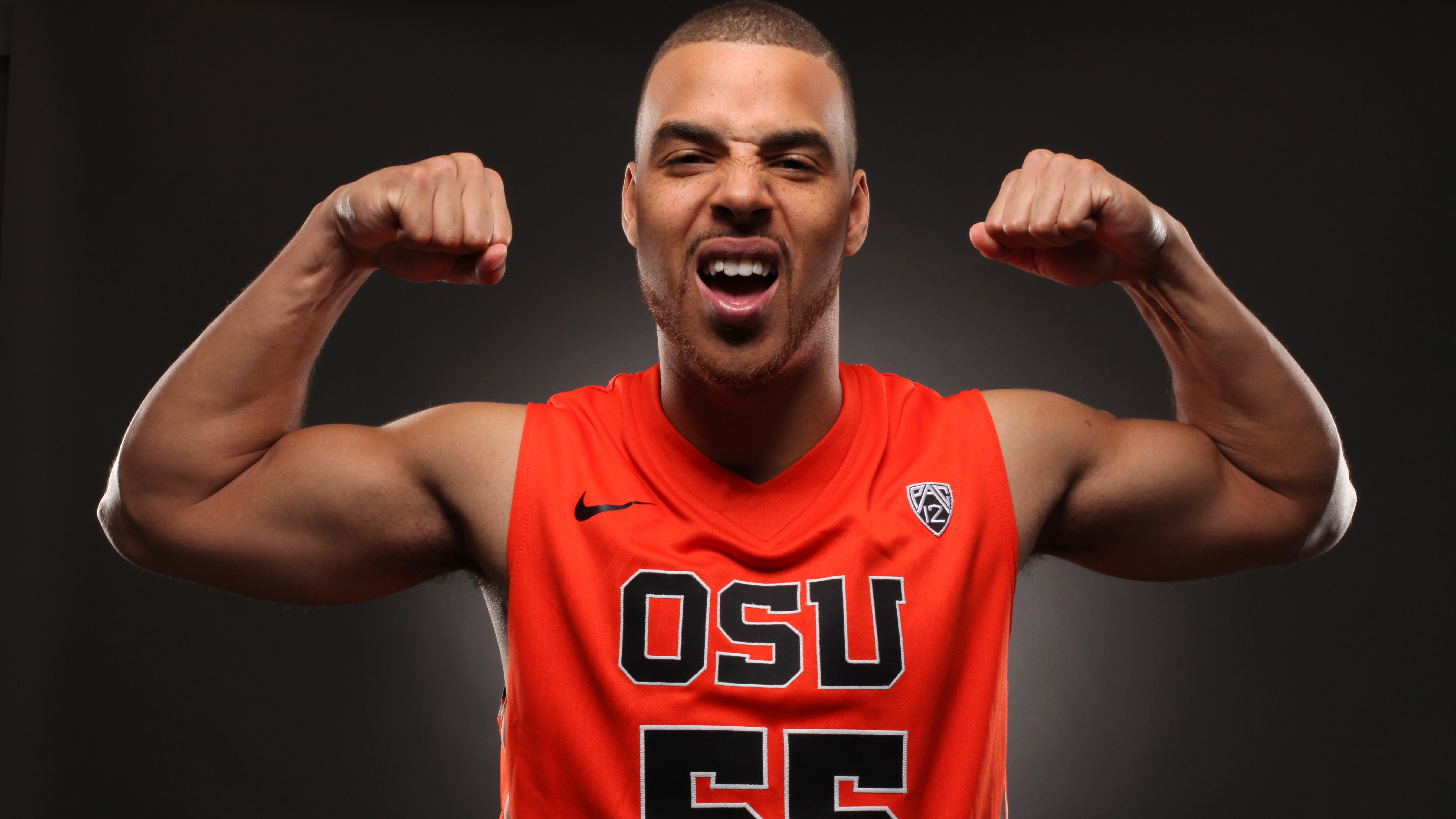
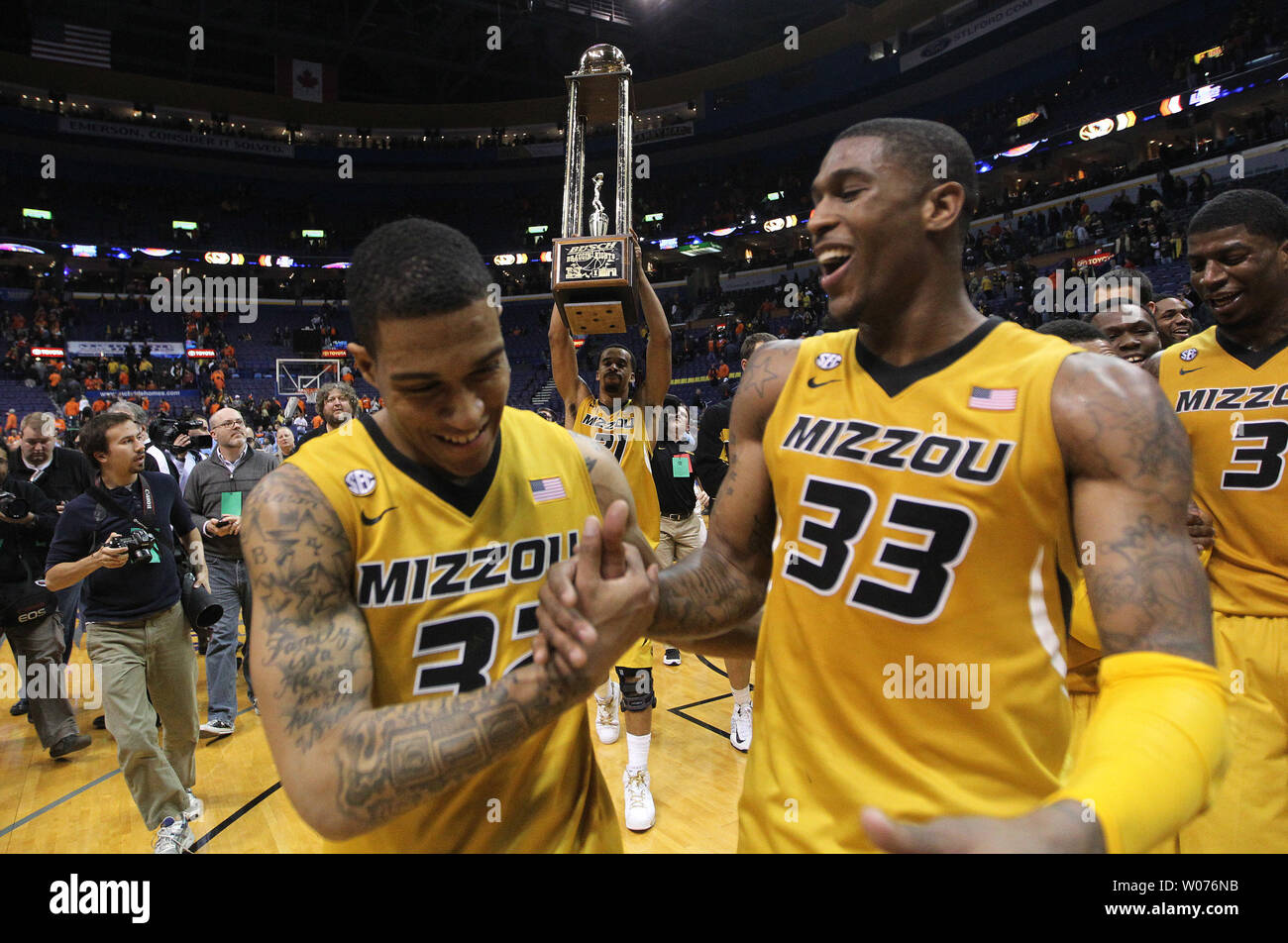


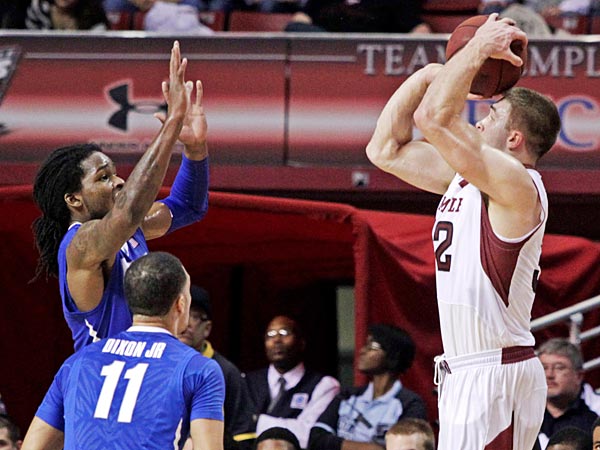
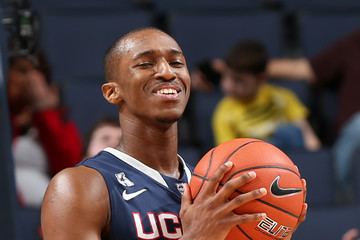

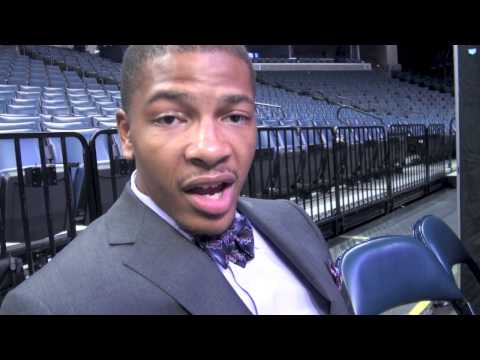
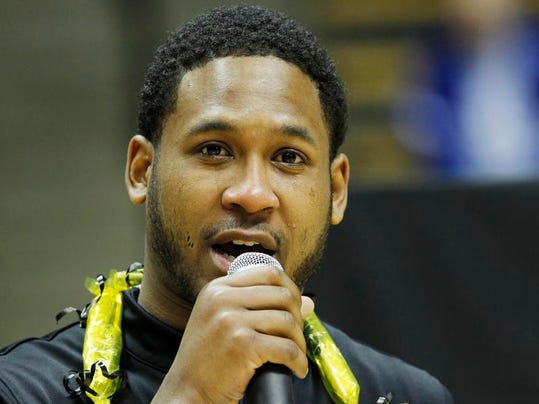
:quality(70)/arc-anglerfish-arc2-prod-tronc.s3.amazonaws.com/public/BQIBKPNDHHW5EN2G7JQPIAWNLI.jpg)
/cdn.vox-cdn.com/uploads/chorus_image/image/7022635/158014052.0.jpg)
/arc-anglerfish-arc2-prod-dmn.s3.amazonaws.com/public/DJVB6FM6OEMD4KHO24IB4T7YJM.jpg)


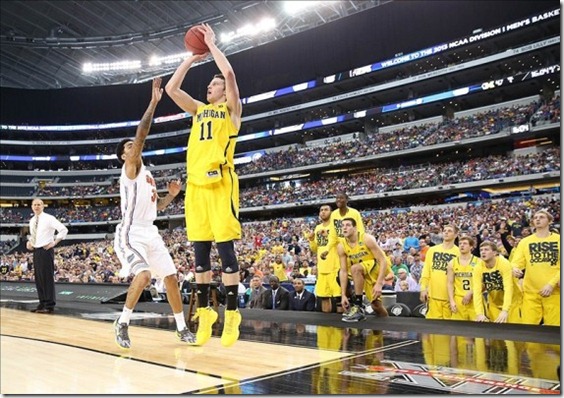


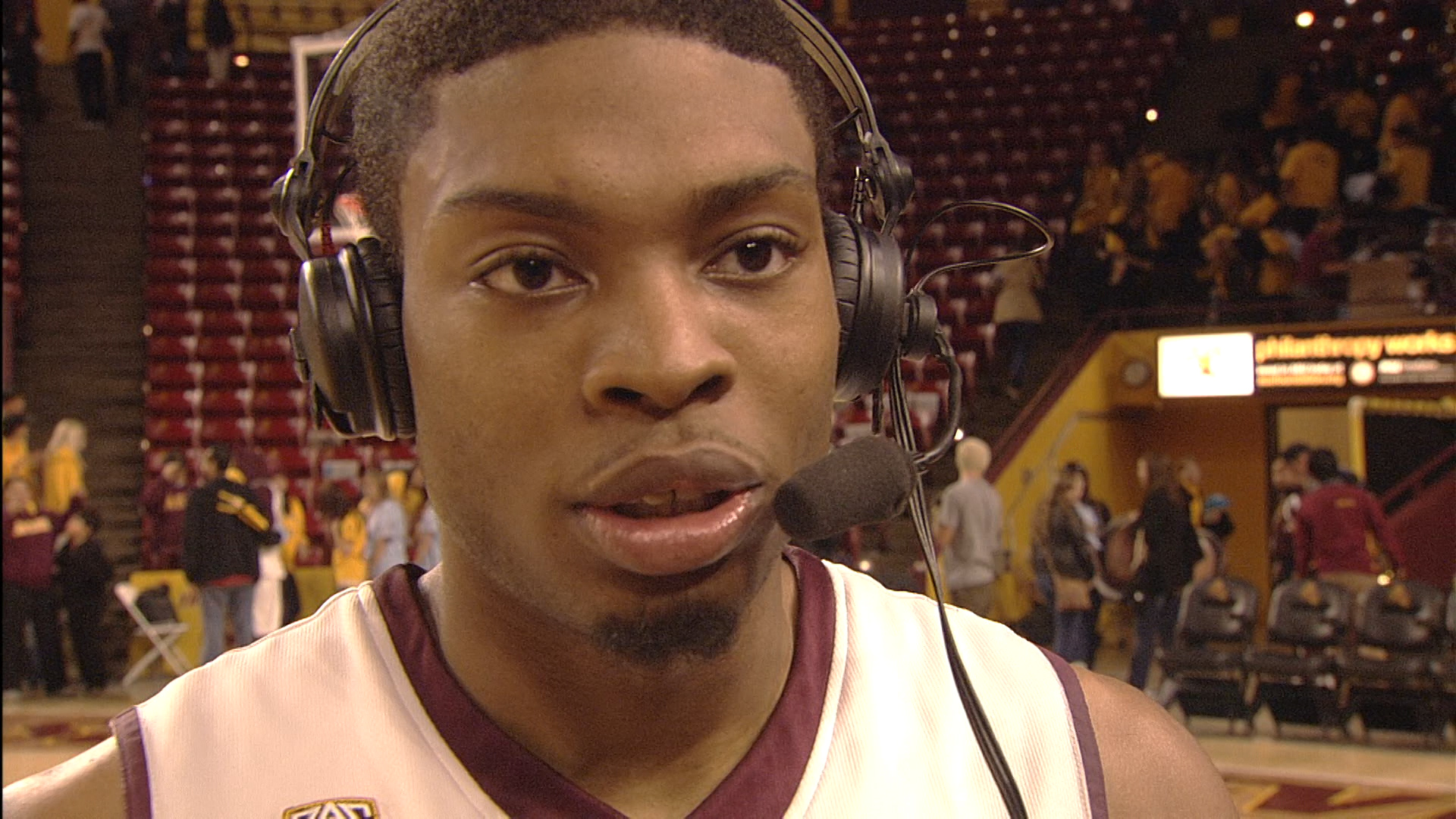
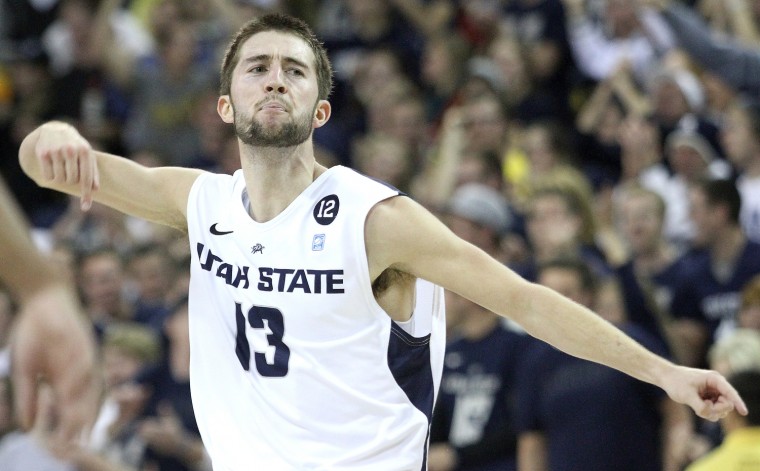


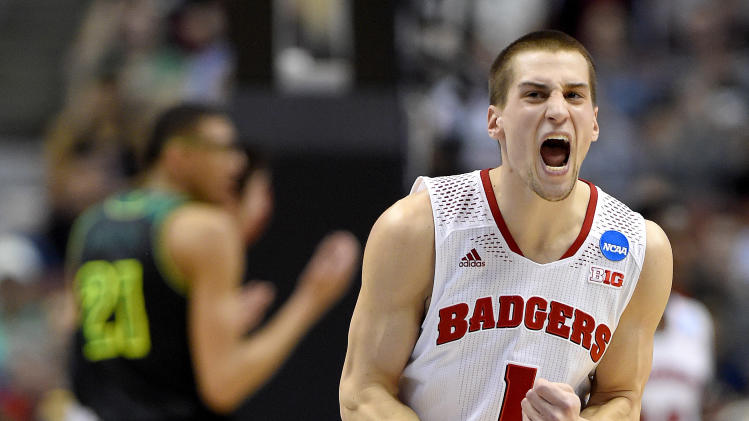


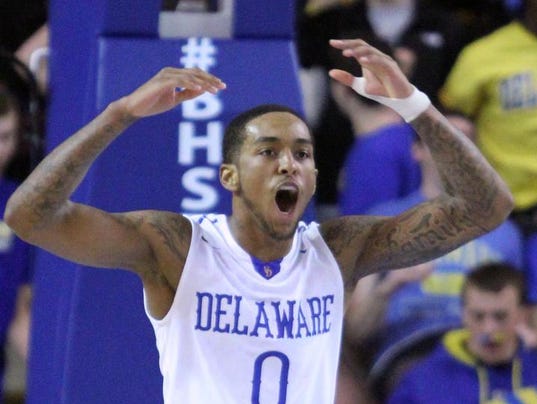

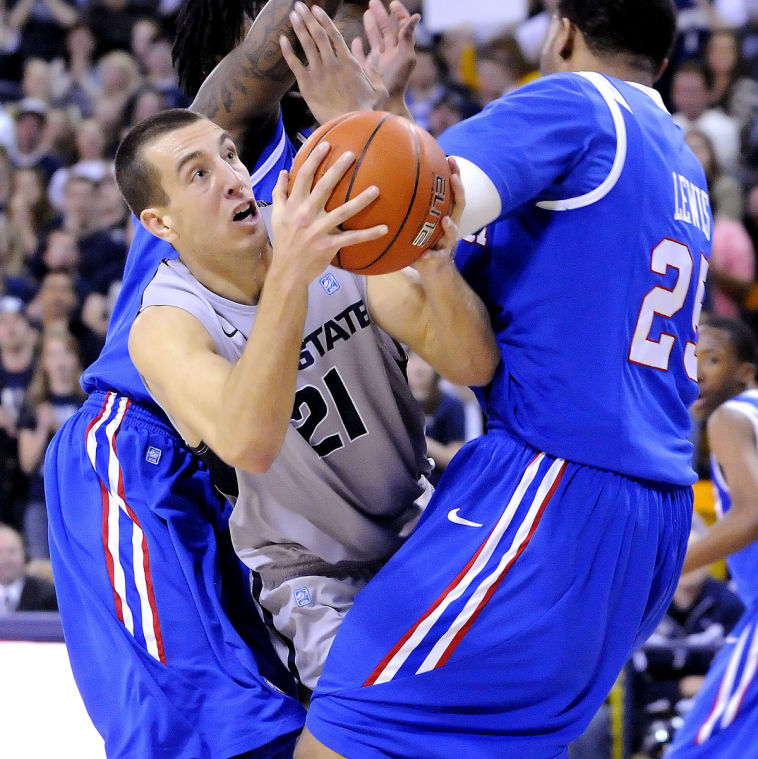


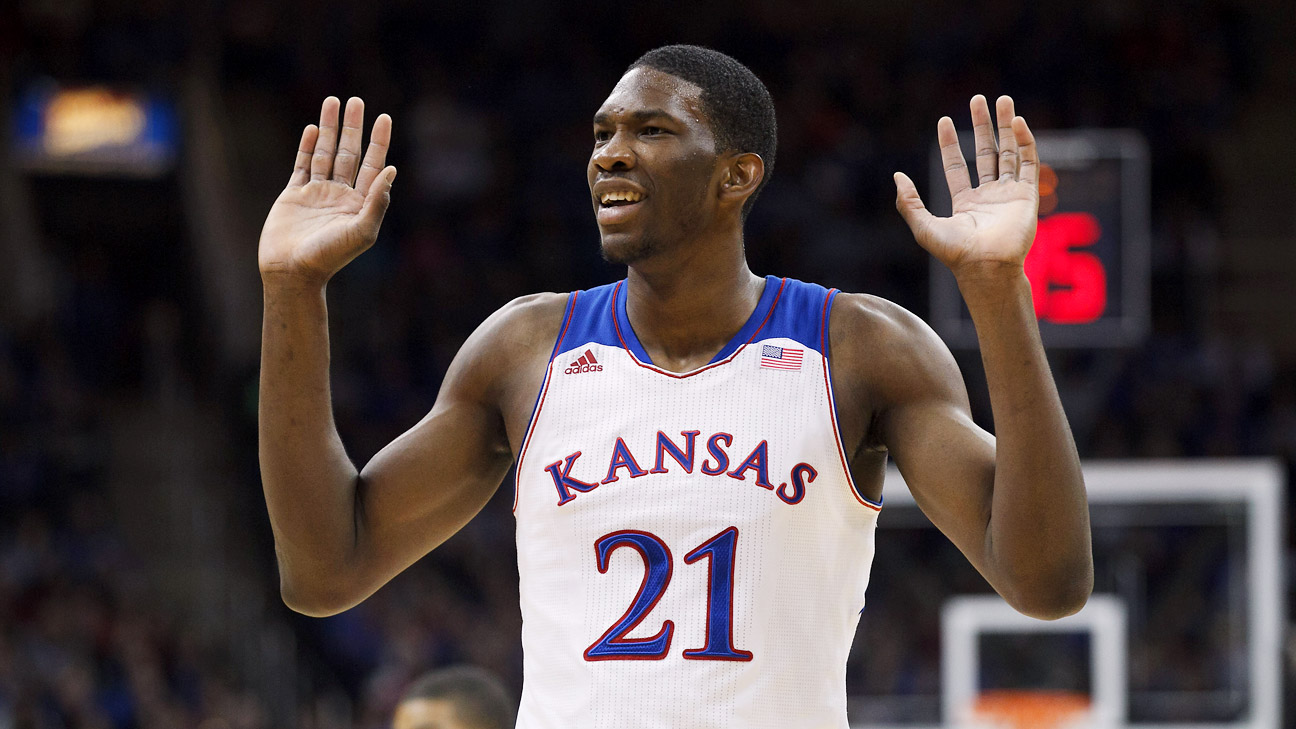


:no_upscale()/cdn.vox-cdn.com/uploads/chorus_image/image/18406843/20130116_kdl_ax4_183.0.jpg)
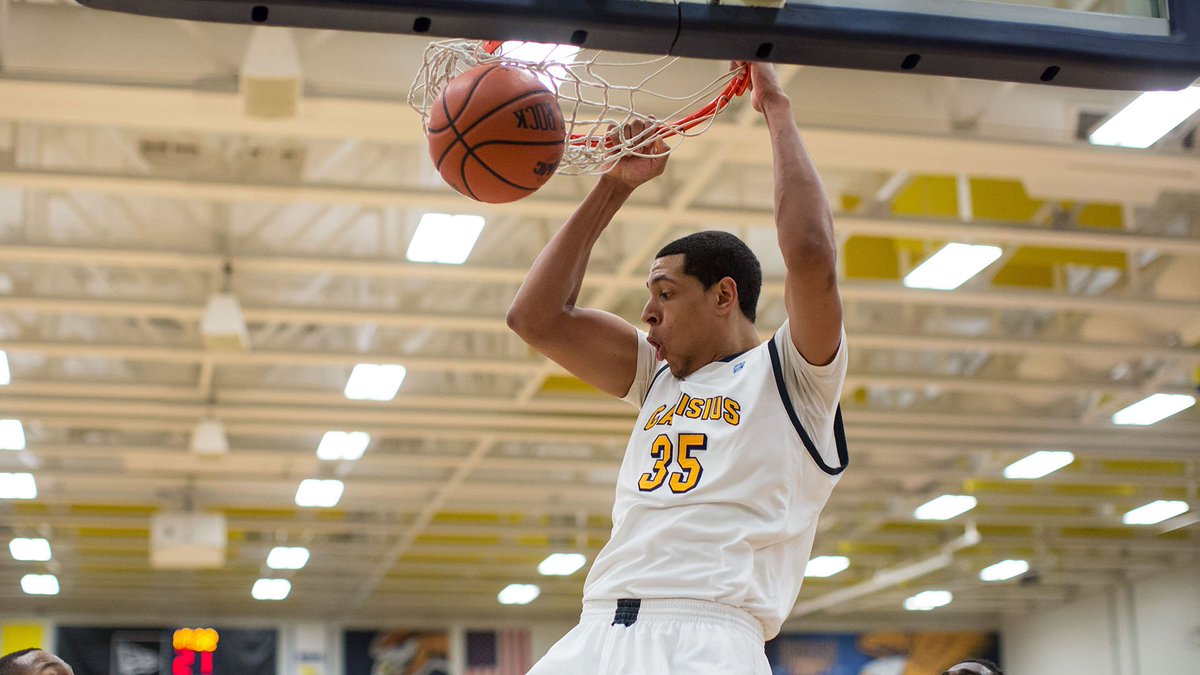


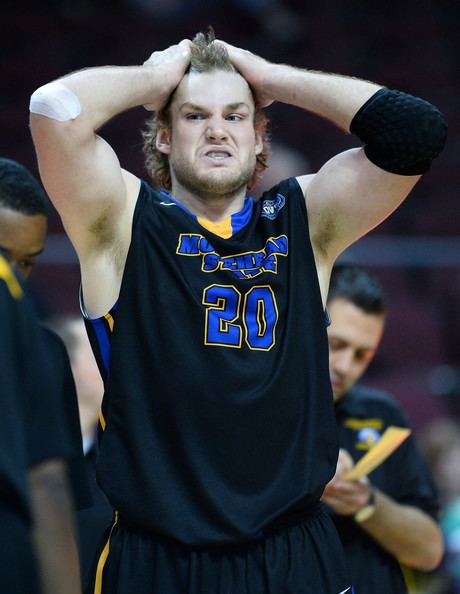



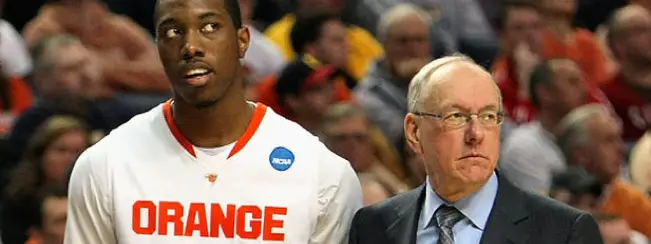
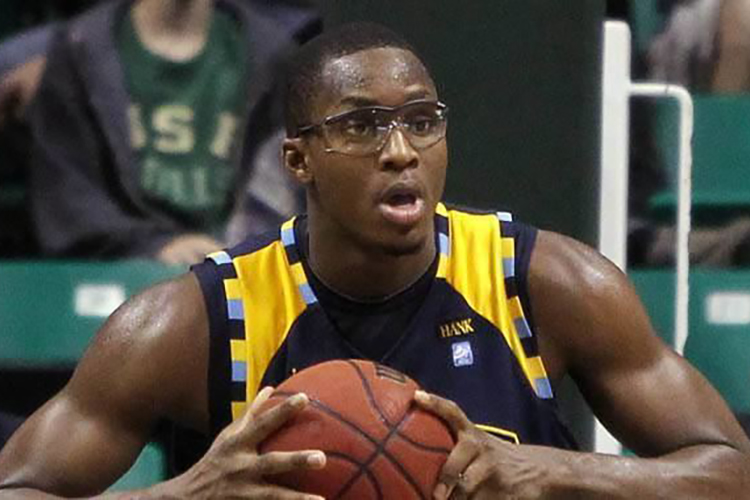
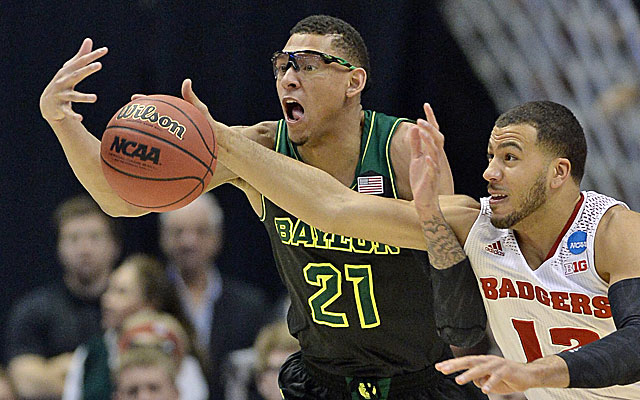


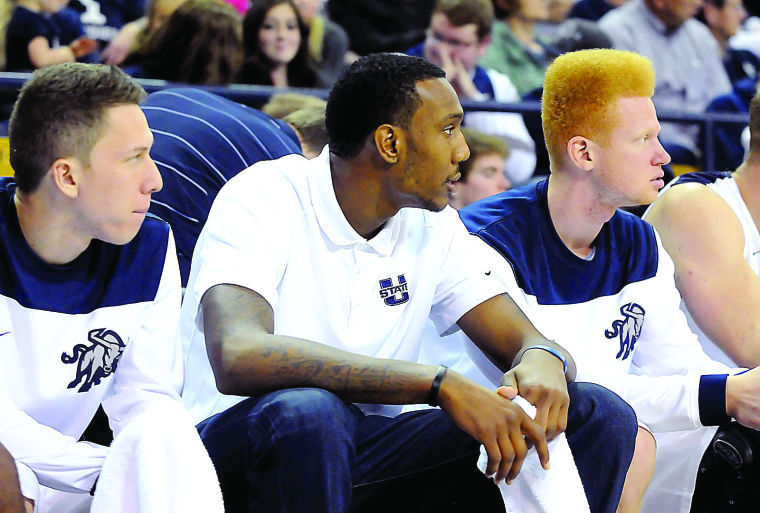
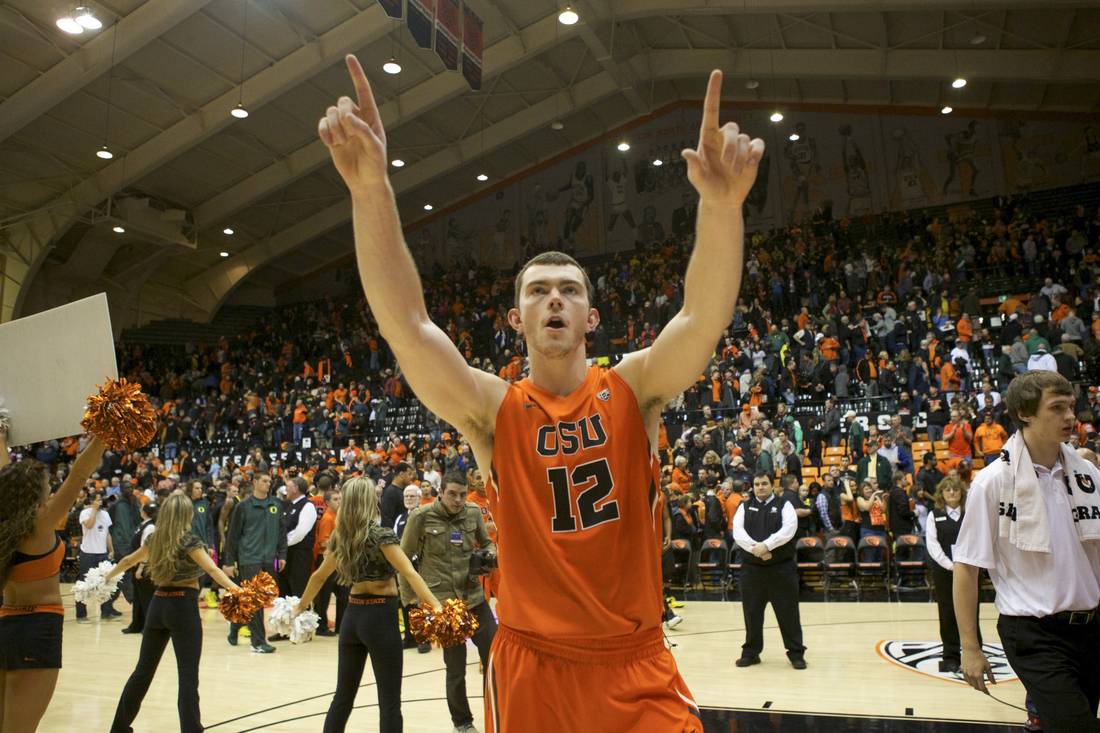



:format(jpeg)/cdn.vox-cdn.com/uploads/chorus_image/image/28306347/20131220_kkt_sh5_696.0.jpg)